How Altitude Affects Coffee Flavor: High-Grown vs Low-Grown Coffee Explained
Many specialty coffee bags print an altitude, like "1,900 meters" or "6,000 feet." It isn't just a nice detail. Elevation changes how coffee cherries grow, how dense the beans become and how they taste in your cup. I've brewed and compared high- and low-grown coffees from around the world. Here's how altitude shapes flavor, how to read it on a label, and how to brew each style at its best.
We choose products independently. We may earn a commission through links on this page; your price stays the same. Affiliate policy
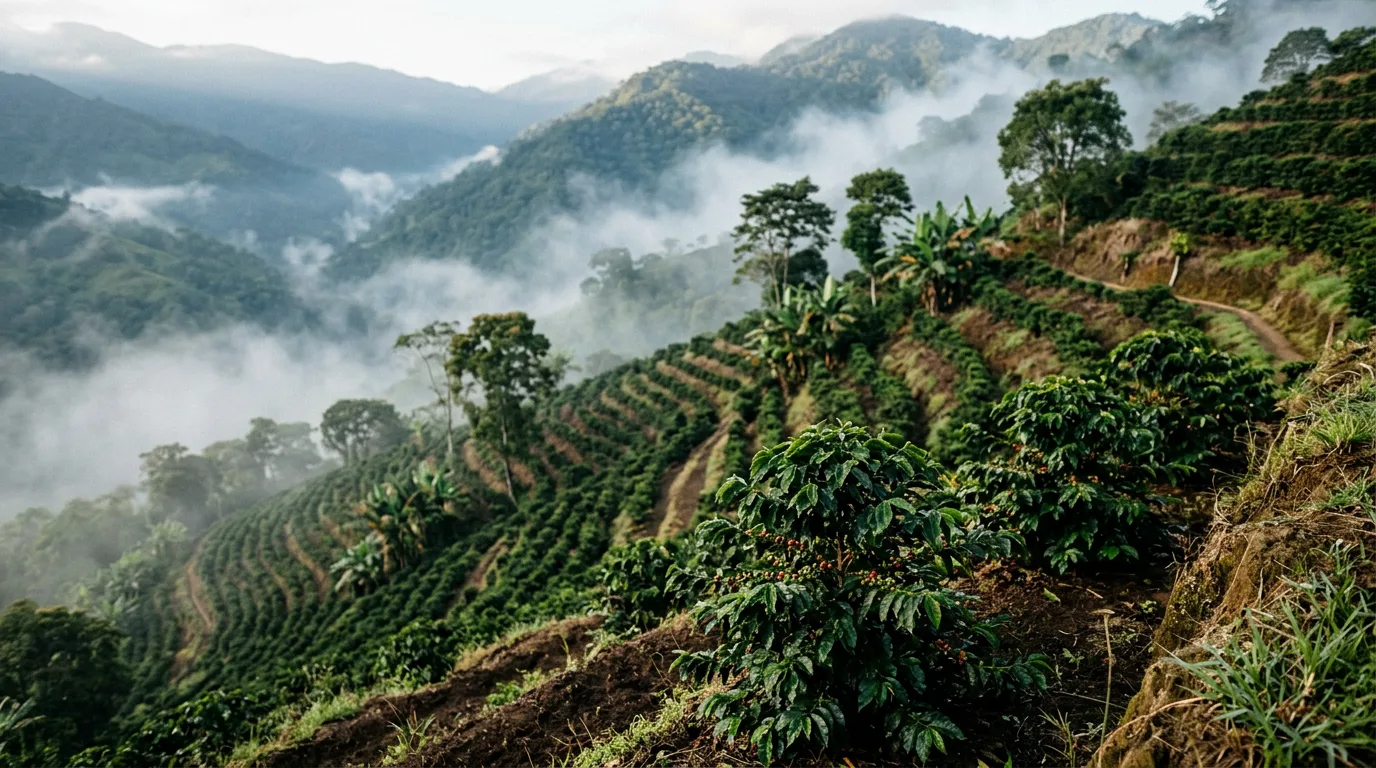
Higher altitude usually means cooler temperatures, slower cherry ripening and smaller, denser beans with more sugar, brighter acidity and more complex, fruity or floral flavors. Lower altitude usually means warmer temperatures, faster ripening and softer beans with more body, lower acidity and comforting chocolate and nutty notes. High-grown coffees (above about 4,000 feet) shine as light roasts in pour-over with hotter water. Low-grown coffees (below about 3,000 feet) shine as medium-dark roasts in espresso, milk drinks, drip and French press. Neither is better; they're different styles.
Why altitude matters in specialty coffee
For a long time, altitude was mostly a detail for growers and green coffee buyers. Today it's printed on many retail bags because it says a lot about what's in the cup.
Elevation shapes the environment a coffee plant grows in: temperature, sunlight, rainfall, air and soil. Those conditions change how slowly the fruit ripens, how dense the seed becomes and which flavor compounds develop.
In my own tastings, altitude is one of the most reliable clues I have. When I see a coffee grown at 6,000 feet, I expect brightness and complexity. When I see one grown at 2,500 feet, I expect body and chocolate. I'm right far more often than not.
Altitude is also one of the easiest facts to compare between bags. Variety names and processing terms can be confusing, but a number in feet or meters is simple. Once you know what it suggests, you can use it to find more of the coffees you love and avoid styles that do not suit you.
It isn't the only factor. Variety, processing, soil and roast all matter enormously. But altitude sets the stage for everything else. My guide to coffee growing regions and flavor covers the wider picture.
How coffee climbed the mountains
Arabica coffee originated in the highland forests of southwestern Ethiopia, roughly 4,500 to 7,000 feet above sea level. In a sense, it was a mountain plant from the very start.
As coffee spread to Yemen, then to Asia and the Americas, growers planted it wherever it would thrive. In the tropics, that often meant the cooler mountains, from the Andes to the volcanoes of Central America.
Large lowland plantations came later, especially in Brazil in the nineteenth century, when demand for affordable coffee exploded. Those vast, flatter farms made coffee a daily drink for millions.
The specialty coffee movement then shifted attention back to small, high-altitude farms, where slow growth and careful picking produced the complex flavors that roasters and coffee lovers prized.
High vs low altitude coffee at a glance
| Feature | High altitude (4,000 ft+) | Low altitude (under 3,000 ft) |
|---|---|---|
| Climate | Cool nights, mild days | Warm and steady |
| Ripening time | Slow, about 9-11 months | Faster, about 6-7 months |
| Bean structure | Small, dense, hard | Larger, softer, more porous |
| Acidity | Bright, lively | Low, mellow |
| Typical flavors | Fruity, floral, citrus, tea-like | Chocolate, nuts, caramel, earthy |
| Body | Lighter, cleaner | Fuller, heavier |
| Best roasts | Light to medium | Medium to dark |
| Best brewing | Pour-over, filter | Espresso, milk drinks, drip, French press |
Feet, meters and what the label means
Coffee altitudes are usually given in meters above sea level (m.a.s.l. or "masl") outside the United States, and often in feet on American bags. One meter is about 3.3 feet.
| Meters | Feet (approx.) | Typical category |
|---|---|---|
| Under 900 m | Under 3,000 ft | Low-grown |
| 900-1,200 m | 3,000-4,000 ft | Middle |
| 1,200-1,800 m | 4,000-6,000 ft | High-grown |
| Over 1,800 m | Over 6,000 ft | Very high-grown |
Many labels give a range, such as 1,700 to 2,000 meters, because a farm or a group of farms spans different elevations.
My side-by-side tasting
To see how much altitude shows up in the cup, I brewed three washed coffees side by side as pour-overs, all roasted light to medium by the same roaster: a Brazil from around 3,000 feet, a Colombia from around 5,500 feet and an Ethiopia from over 6,500 feet.
The Brazil was smooth and round, with milk chocolate, roasted peanut and a soft, low acidity. It was the easiest to drink and the one I'd happily have every morning.
The Colombia sat in the middle: red apple, caramel and a gentle citrus brightness, with a medium body.
The Ethiopia was the most striking: jasmine, lemon and peach, a light, tea-like body and a sparkling acidity that changed as it cooled.
Of course, origin, variety and processing differ between these coffees too, so altitude isn't the only reason they tasted different. But the pattern matched what elevation predicts almost perfectly.
Temperature and slow cherry ripening
The most important effect of altitude is temperature. For every thousand feet you climb, the air gets noticeably cooler. Mountain farms enjoy cool nights and mild days, often in the 60s and 70s Fahrenheit.
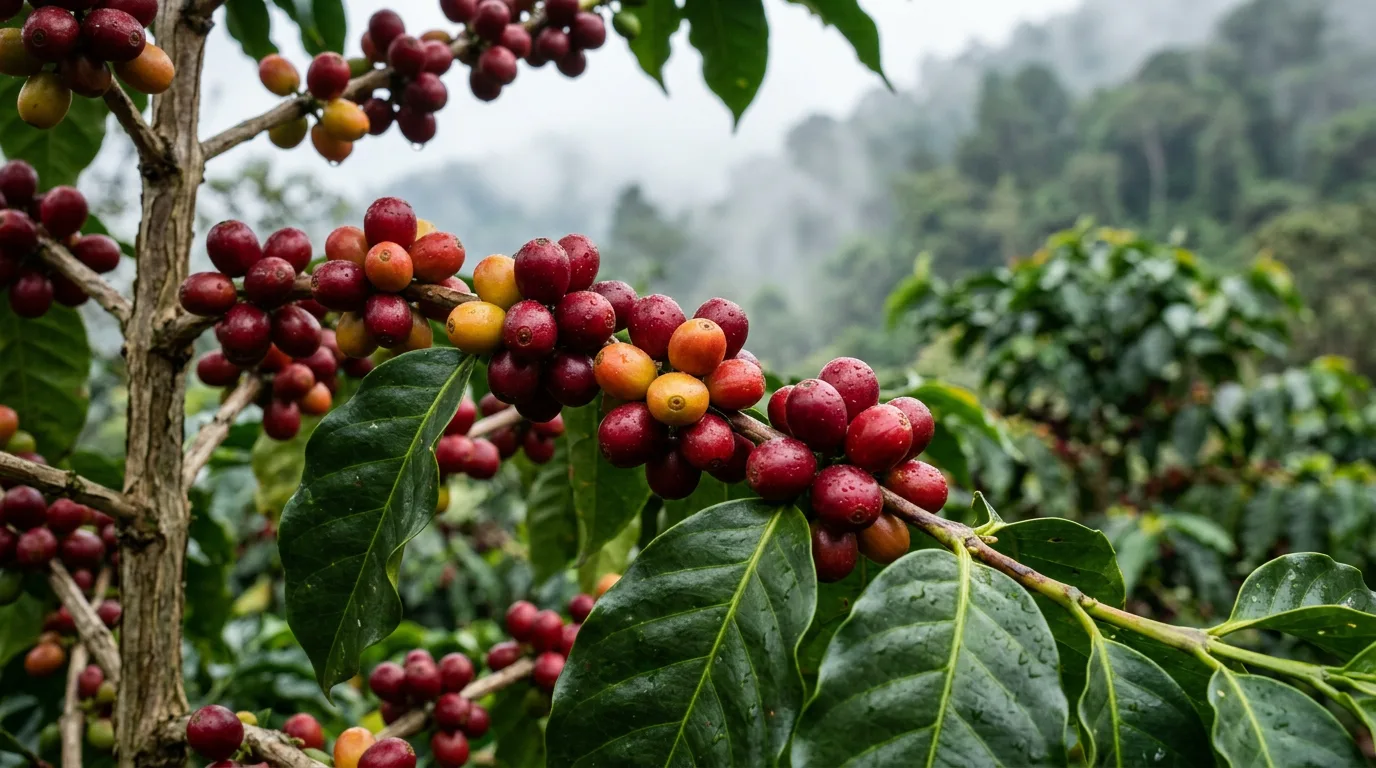
Those cooler conditions slow the plant's growth. Coffee cherries at high altitude can take 9 to 11 months to ripen, compared with about 6 to 7 months in warmer lowlands.
That extra time matters. The cherry has longer to develop sugars and complex acids inside the seed, which become the flavor compounds we taste after roasting. Slow ripening is a big part of why high-grown coffees often taste sweeter and more layered.
Cool nights play a special role. During the day, the plant produces sugars through photosynthesis. At night, cooler temperatures slow the plant's respiration, so it burns less of those sugars. More of them end up stored in the developing seed, which later caramelizes during roasting into sweetness and complexity.
In the lowlands, warmth speeds everything up. The cherries ripen faster, which suits high yields but gives less time for complex flavors to build.
Thinner air and bean density
At higher elevations, the air is thinner and contains less oxygen per breath. Combined with cooler temperatures, this slows the plant's metabolism further.
The result is a denser seed. High-grown beans tend to be smaller, harder and heavier for their size, with a tightly closed center cut. Low-grown beans tend to be larger, softer and more porous.
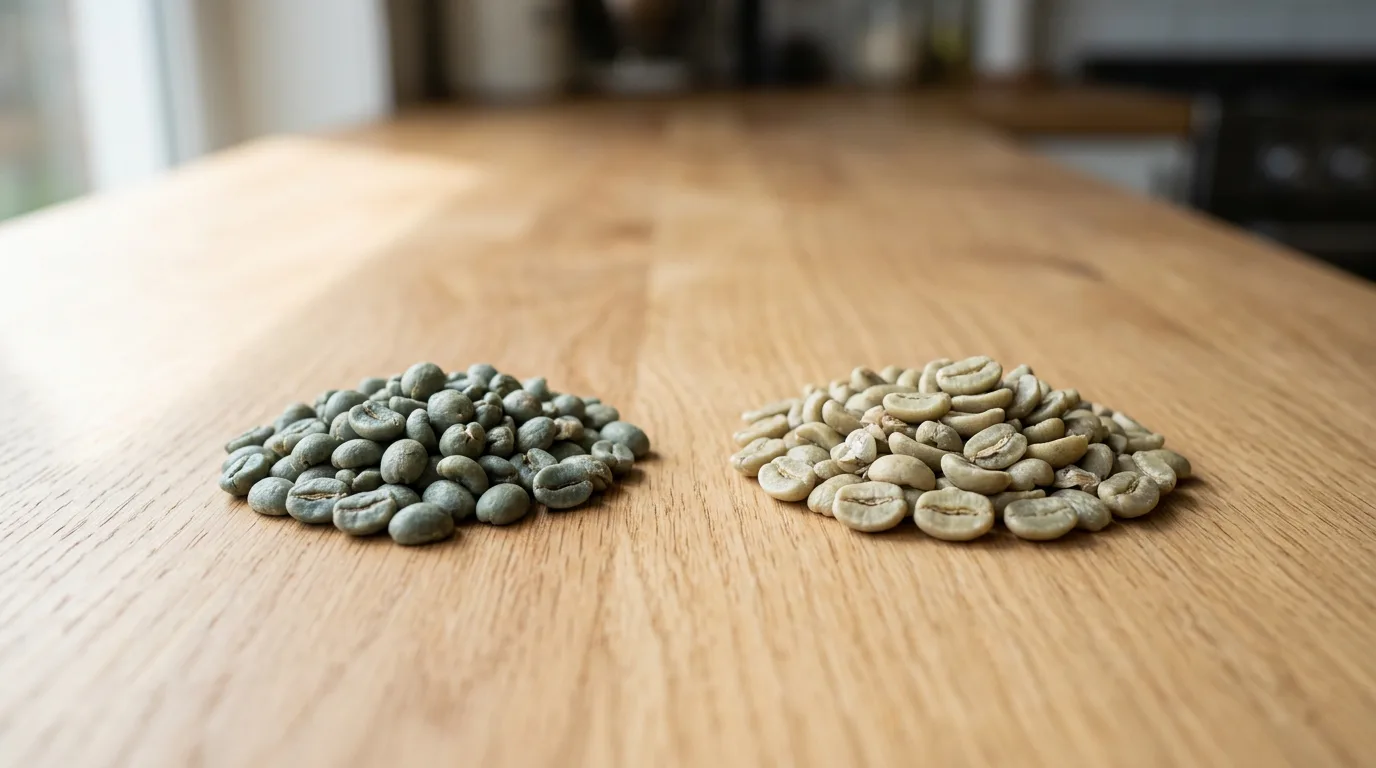
Density isn't just a physical curiosity. It affects how beans roast, how they grind and how quickly they release flavor when brewed. That's why roasters and baristas pay close attention to it.
Soil, rainfall and sunlight
Altitude often comes bundled with other growing conditions that also shape flavor.
Many high-altitude regions sit on volcanic mountains, with rich, well-draining soils full of minerals. Those soils support healthy plants and are often credited with adding complexity.
Rainfall patterns change with elevation too. Mountains catch more rain and mist, and clear wet and dry seasons help coffee flower and ripen evenly.
Sunlight is more intense at higher altitudes, but mountain mist, cloud cover and shade trees soften it. That balance of strong light and cool air is part of what makes high mountain farms so special.
Natural pest and disease resistance
Cooler mountain climates are also less friendly to many coffee pests and diseases. The coffee berry borer, a small beetle that damages cherries, and coffee leaf rust, a fungal disease, both thrive in warmer conditions.
That gives high-altitude farms a natural advantage: healthier plants, fewer damaged beans and often less need for intervention. Healthy plants generally produce cleaner, sweeter coffee.
Low-altitude farms face more pressure from pests and disease, which affects both quality and the effort required. My guide to coffee leaf rust explains how serious that disease can be.
Shade, mist and microclimates
Even on a single farm, conditions vary. A slope facing the morning sun, a valley where mist settles, or a field under tall shade trees can each produce slightly different coffee.
Shade trees slow ripening in a similar way to altitude, by keeping plants cooler. That's why shade-grown coffee at a moderate elevation can sometimes taste like coffee grown higher up.
Specialty producers increasingly separate lots by these microclimates, so you might see two coffees from the same farm with different altitudes and flavor notes on the label.
Latitude changes the numbers
Altitude doesn't work in isolation. Distance from the equator matters too.
Near the equator, it's warm year-round, so coffee needs to grow higher to find cool conditions. In Ethiopia, Kenya or Colombia, great coffee often grows at 5,000 to 7,000 feet.
Farther from the equator, temperatures are naturally cooler. In places like Hawaii or parts of Brazil, coffee can develop slow-ripening, high-quality characteristics at much lower elevations.
So "high" is relative. A coffee grown at 2,000 feet in Hawaii may behave more like a mid-altitude coffee from Central America. When comparing, think about the climate the altitude creates, not just the number.
A closer look: Hawaii and Kona
Hawaii is a perfect example of how latitude changes the meaning of altitude. Kona coffee grows on the slopes of volcanoes on the Big Island, often between about 500 and 3,000 feet.
By altitude alone, that sounds low-grown. But Hawaii sits farther from the equator than most coffee regions, and afternoon cloud cover shades the slopes. The result is mild temperatures and slow ripening, more like a mid-altitude farm elsewhere.
Kona coffee is typically smooth, sweet and gently bright, with a medium body: a balance between classic high-grown and low-grown styles.
My guide to peaberry coffee includes a Kona tasting comparison.
High-altitude coffee
Coffees from high elevations, generally farms above 4,000 feet and often up to 6,000 feet or more, are the ones many specialty roasters prize most.
They're often called "strictly high grown" (SHG) or "strictly hard bean" (SHB) in Central America, terms that reflect both the altitude and the dense, hard beans it produces.
These coffees tend to be small in volume, labor-intensive to grow on steep slopes, and highly sought after for their complexity.
High-grown flavor: acidity and aromatics
The signature of high-grown coffee is bright, lively acidity. Not sourness, but a juicy, sparkling quality, like biting into a crisp apple or a ripe berry.
Alongside that acidity come complex aromatics:
- Fruity notes like berries, stone fruit and citrus.
- Floral notes like jasmine, bergamot and honeysuckle.
- Tea-like qualities with a clean, delicate body.
- Wine-like complexity in some coffees, especially naturals.
The body is usually lighter and the finish clean. Many people find these coffees exciting and layered; others find them too bright. My guide to acidity and bitterness in coffee explains how acidity shapes flavor.
Roasting dense, high-grown beans
Dense beans need careful roasting. They absorb heat more slowly, so roasters often apply more energy early in the roast to push heat into the core.
When the internal temperature reaches roughly 385 to 400°F, the bean expands audibly in what's called first crack. Dense beans often crack more loudly and evenly.
Because their acidity and aromatics are the main attraction, high-grown coffees are usually roasted light to medium. Darker roasting burns off the delicate fruit and floral notes. My guide to how coffee is roasted explains the process.
Classic high-altitude regions
Ethiopia: Yirgacheffe
In southern Ethiopia, at about 5,500 to over 7,000 feet, Yirgacheffe produces some of the most famous floral coffees in the world. Washed lots often taste of jasmine, lemon and bergamot, with a tea-like body.
Kenya: AA grade
Grown mostly on the volcanic slopes around Mount Kenya, between about 4,500 and 6,800 feet. Kenyan coffees, especially the large AA grade, are known for intense blackcurrant, grapefruit and tomato-like savory brightness.
Guatemala: Huehuetenango
In the rugged Cuchumatanes mountains of western Guatemala, Huehuetenango is one of the highest non-volcanic growing regions in Central America. Its coffees combine bright fruit with chocolate and a clean, sweet finish.
Colombia and Peru
The Andes host many high-altitude farms. Colombian coffees from regions like Huila and Nariño often grow above 5,000 feet and taste of red fruit, caramel and citrus.
My guide to Kenyan coffee goes deeper into one of the most distinctive high-grown origins.
Brewing high-grown coffee
High-grown coffees shine in methods that highlight clarity.
Pour-over brewers like the V60, Kalita Wave and Chemex use paper filters that trap heavy oils and fine sediment, giving a clean, bright cup where delicate acidity and floral notes stand out.

- Water: slightly hotter, around 200 to 205°F (93 to 96°C), helps extract dense beans fully.
- Ratio: start around 1 ounce of coffee to 16 ounces of water (roughly 1:16).
- Grind: often slightly finer than for softer beans, to extract their sugars.
For espresso, these coffees usually want longer ratios and higher temperatures. Pulled short and cool, they can taste sharply sour. My guide to pour-over vs drip coffee covers filter brewing in detail.
High-grown coffee as espresso
High-grown coffees can make spectacular espresso, bursting with fruit and sweetness, but they're less forgiving than low-grown blends.
- Use a longer ratio, around 1:2.5 rather than 1:2.
- Brew hotter, around 200 to 203°F.
- Grind finer to account for density, but watch for channeling.
- Consider pre-infusion for more even extraction.
Pulled too short or too cool, they taste sharply sour. Pulled well, they taste like fruit juice with a caramel finish. My guide to espresso brew time covers how ratio and time work together.
Low-altitude coffee
Coffees grown at lower elevations, typically below 3,000 feet and sometimes close to sea level, make up a huge share of the world's coffee.
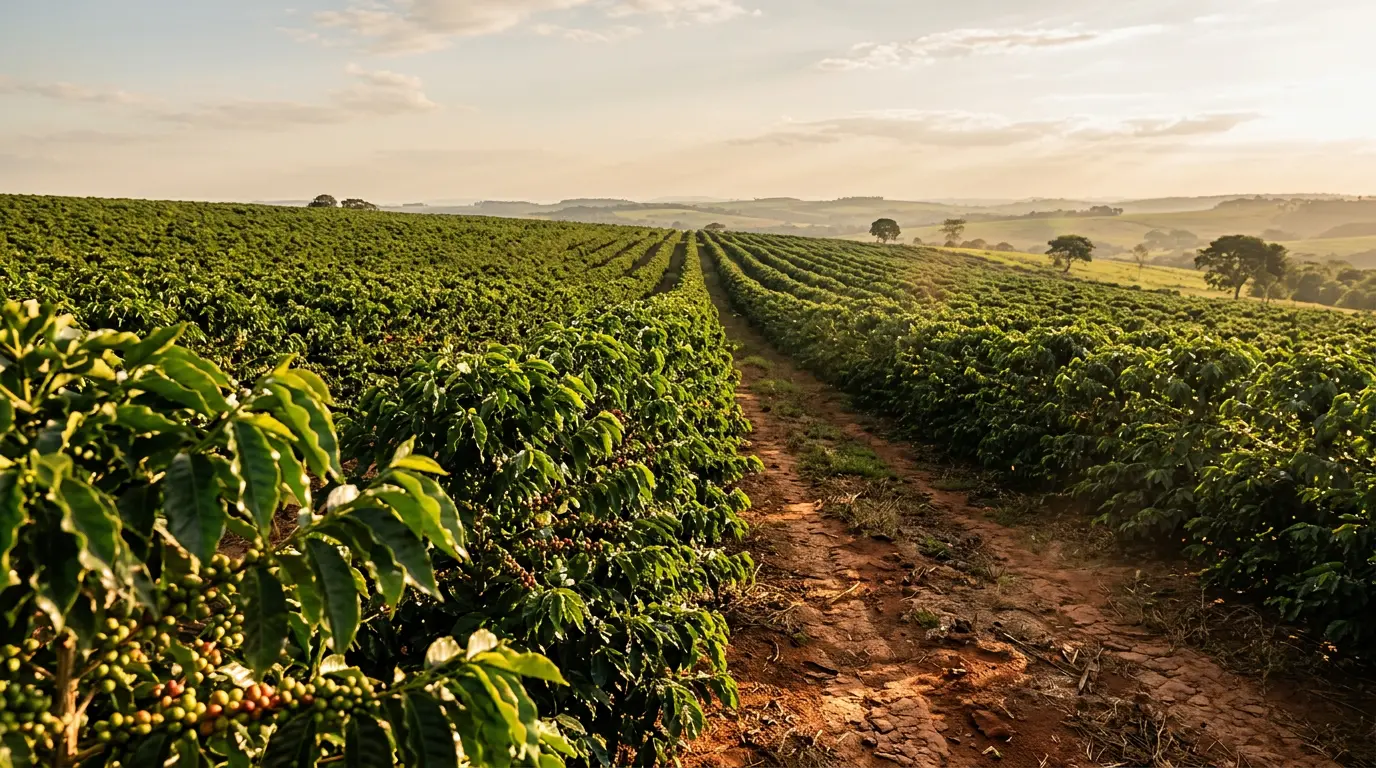
Warm temperatures and faster growth allow larger harvests, often on flatter land where mechanical harvesting is possible. That makes low-grown coffee more affordable and widely available.
It also has a flavor profile many people love: smooth, comforting and easy to drink every day.
Low-grown flavor: body, sweetness and comfort
Low-grown coffees tend to have lower acidity and a fuller, rounder body. Instead of fruit and flowers, you're more likely to taste:
- Chocolate and cocoa
- Nuts like peanut, almond and hazelnut
- Caramel and brown sugar
- Earthy or spicy notes in some origins

Low acidity also makes these coffees gentle on many stomachs and easy to drink in larger cups, which helps explain why they dominate supermarket shelves and office coffee machines around the world.
These are the flavors many people associate with "coffee" itself: warm, familiar and satisfying. They're less likely to surprise you, and less likely to disappoint.
Roasting softer, low-grown beans
Low-grown beans are softer and more porous, so they take on heat quickly. Roasters often use gentler heat to avoid scorching the outside before the inside develops.
Their softer structure and lower acidity make them well suited to medium-dark and dark roasts. Longer roasting develops caramelized sugars and chocolate notes without the sharp bitterness that dark-roasting a bright coffee can create.
That's why low-grown coffees are the backbone of many espresso blends.
Lighter roasts of low-grown coffee can work too, and some specialty roasters do it beautifully, but there is less acidity and aromatic complexity to highlight. Most of the time, a medium roast brings out the sweetest, most balanced side of these beans, with plenty of caramel and cocoa and none of the ashy edge that very dark roasting can add.
Classic low-altitude regions
Brazil: Santos and the plateaus
Brazil is the world's largest coffee producer, and much of its harvest grows on vast, rolling plateaus in states like São Paulo and Minas Gerais. Brazilian coffees are known for nutty, chocolatey sweetness and low acidity. My guide to Brazilian vs Colombian coffee compares two classic styles.
Indonesia: Java and Sumatra
Across Indonesia's volcanic islands, many traditional estates sit at lower to middle elevations. Their coffees are often full-bodied, earthy and spicy, especially when wet-hulled.
Other lowland origins
Parts of India, Vietnam and coastal Central America also grow lower-altitude coffee, including much of the world's robusta, which thrives in warm conditions.
Brewing low-grown coffee
Low-grown coffees are wonderfully versatile and forgiving.
- Espresso: their body and chocolate notes make rich, syrupy shots.
- Milk drinks: lattes and cappuccinos with low-grown coffee taste like chocolate milk in the best way.
- Drip and French press: full-bodied, comforting cups.
Use water around 195 to 200°F (90 to 93°C). Because their porous structure releases flavor quickly, slightly cooler water helps avoid harsh bitterness, and a slightly coarser grind can help too.
Altitude and processing
How coffee cherries are processed after harvest changes flavor just as much as altitude, and the two interact.
- Washed high-grown coffees highlight clarity: crisp acidity and floral notes.
- Natural high-grown coffees add intense fruit: blueberry, strawberry and wine-like sweetness.
- Natural and pulped natural low-grown coffees lean into body and chocolate, common in Brazil.
- Wet-hulled coffees, typical in Indonesia, add earthy, spicy depth.
Climate matters here too. High, cool regions dry coffee more slowly, which affects natural and honey processes. My guide to coffee processing methods explains each one.
Altitude and coffee varieties
Different coffee varieties suit different elevations. Classic arabica varieties like Typica, Bourbon and Gesha often reach their best at high altitude, where slow ripening brings out their complexity.
Some hardier hybrids and robusta grow well at lower, warmer elevations and resist diseases better, but usually produce less complex flavors.
So when you see a famous variety like Gesha grown very high, the altitude and the variety are working together. My guide to coffee varieties explains the main types.
The balanced middle ground
High and low altitudes are the two extremes, but a huge amount of excellent coffee grows in between, roughly 3,000 to 4,500 feet.
Mid-altitude coffees often combine the best of both: moderate acidity, good sweetness and a comfortable body. Think caramel, milk chocolate, red apple and gentle citrus.
Many of the world's most popular single origins sit here, including a lot of Colombian, Honduran and Brazilian specialty lots from higher plateaus. They are a great place to start if you are moving from supermarket coffee to specialty beans and are not yet sure how much brightness you enjoy.
They're often the most versatile coffees of all, tasting good as pour-over, espresso or in milk. Many house blends and everyday single origins come from this range.
Where robusta fits in
Robusta, the other main coffee species, prefers warm, low-altitude conditions, often from sea level up to around 2,000 to 3,000 feet. It tolerates heat and disease better than arabica and yields more.
Robusta tastes stronger and more bitter, with more caffeine and fuller body. It's common in espresso blends and instant coffee. Some newer "fine robusta" lots are grown and processed carefully for surprisingly good flavor.
My guide to arabica vs robusta compares the two species in detail.
What farming at high altitude is really like
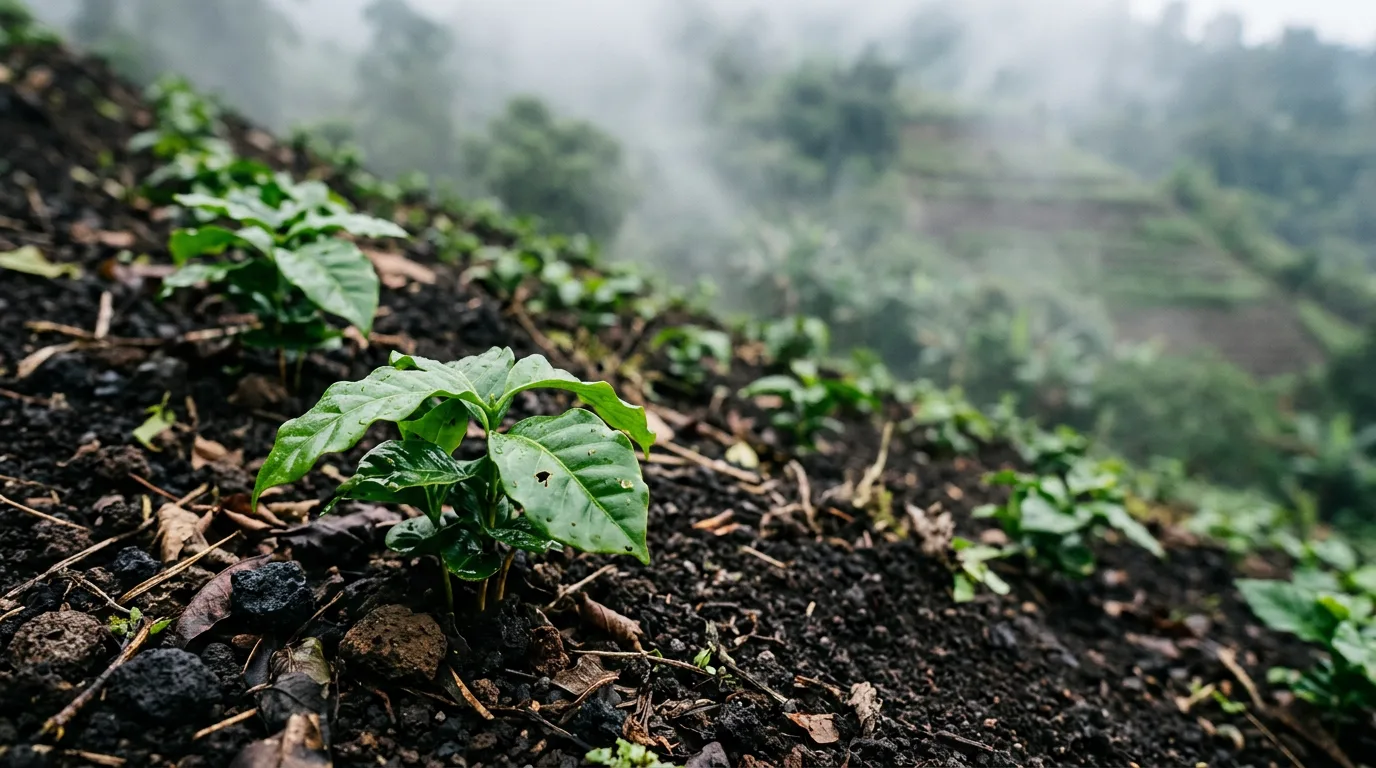
Behind every bag of high-grown coffee is a lot of hard work. Mountain farms are often small family plots on slopes so steep that terraces are cut by hand.
Because cherries ripen unevenly over a long season, pickers pass through the same plants several times, selecting only ripe fruit. Baskets are carried down narrow paths, sometimes for hours, to reach a mill.
Weather is a constant challenge. Heavy rain can wash away soil, cold snaps can damage flowers, and roads can become impassable during the harvest.
Lowland farms face their own difficulties, from heat and pests to price pressure, but large flat estates can use machines and economies of scale that mountain farmers simply can't.
Knowing this has changed how I value my coffee. That bright, complex cup carries the effort of many people on a mountainside far away.
Altitude and coffee grading
Several producing countries use altitude directly in their grading systems, because it's so closely linked to quality and bean density.
| Grade | Where used | Meaning |
|---|---|---|
| SHB (Strictly Hard Bean) | Guatemala, Costa Rica | Grown at the highest altitudes; very dense |
| SHG (Strictly High Grown) | Honduras, Mexico, others | Grown above a set altitude |
| HB / HG | Central America | Hard bean / high grown, a step lower |
Other countries grade by bean size, like Kenya's AA, or by defects. Altitude grades are a useful hint, but specialty roasters usually go further and list the exact farm and elevation.
Why high-grown coffee often costs more
High-altitude coffee is usually more expensive, for practical reasons:
- Lower yields. Slow growth means fewer cherries per plant.
- Steep terrain. Harvesting must be done by hand, often picking only ripe cherries over several passes.
- Harder logistics. Getting coffee down mountain roads to mills and ports costs more.
- Higher demand. Specialty roasters compete for the best high-grown lots.
Low-grown coffee on flat land can be harvested mechanically and in large volumes, which keeps costs down. My guide to why single-origin coffee is so expensive covers more of the economics.
Climate change and the move uphill
As average temperatures rise, many coffee regions are getting warmer. Areas that once had perfect cool conditions are becoming marginal, and pests and diseases are spreading to higher elevations.
In some countries, farmers are moving coffee higher up the mountains to find cooler conditions. That isn't always possible, because land runs out, or higher slopes are forests that shouldn't be cleared.
The link between altitude and quality makes this a serious concern for specialty coffee. My guide to climate change and the future of coffee explores what's at stake.
Choosing coffee by your taste
Thoughtfully crafted blends often combine both: a low-grown base for body and a high-grown component for brightness.
How roasters use altitude in blends
Blends often combine coffees from different altitudes on purpose. A classic espresso blend might use a low-grown Brazilian base for body and chocolate, with a smaller portion of high-grown Central American or Ethiopian coffee for brightness and aroma.
That combination gives a balanced shot that works both straight and in milk. It also lets roasters keep a consistent flavor through the year as different harvests arrive.
My guide to single origin vs blend explains the pros and cons of each approach.
Food pairings by altitude
Altitude can even guide what you eat with your coffee.
High-grown coffee
Bright, fruity coffees pair beautifully with fruit tarts, lemon cake, berries, fresh pastries and light cheeses. The acidity in both refreshes the palate.
Low-grown coffee
Chocolatey, nutty coffees love brownies, chocolate chip cookies, nut-based pastries, caramel desserts and hearty breakfasts. They echo each other's warm, roasted flavors.
In my kitchen, an Ethiopian pour-over with a slice of lemon drizzle cake and a Brazilian espresso with a square of dark chocolate are two of my favorite small pleasures.
Reading altitude on coffee labels
Specialty roasters who buy directly from farms often list the exact elevation, sometimes alongside the farm name, variety and processing method.
When reading a label:
- Check the unit. Meters and feet are very different numbers.
- Consider the region. 1,500 meters in Ethiopia and in Brazil create different climates.
- Read it with processing. A high-grown natural can taste very fruity; a high-grown washed one, very clean.
- Use it as a clue, not a guarantee. Farming, processing and roasting still matter most.
If a bag lists no altitude at all, it's often a commercial blend. That doesn't mean it's bad, but you'll have less information to go on. My guide on how to choose coffee beans covers labels in more depth.
Do high-grown beans age differently?
Dense, high-grown beans tend to hold their freshness a little longer after roasting than softer, low-grown beans. Their compact structure releases gas and aroma more slowly.
That's one reason many roasters recommend resting light-roasted high-grown coffees for a week or more before brewing, especially for espresso. They often taste best between one and four weeks after roasting.
Softer, darker-roasted low-grown coffees are usually ready sooner and peak earlier. My guide to coffee freshness and degassing explains resting in more detail.
Altitude and cold brew
Cold brew extracts slowly and gently, which mutes acidity and highlights sweetness and body. That makes low and mid-grown coffees natural choices: chocolatey, smooth and rich.
High-grown coffees can make fascinating cold brew too, with fruity, almost juice-like flavors, but some of their delicate floral notes get lost. If you love bright coffee, try it as a flash-brewed iced pour-over instead, which keeps more of that sparkle.
Adjusting grind and water for bean density
Density affects how you should brew.
Dense, high-grown beans resist extraction. To pull out their sugars without over-extracting bitter fines, many home baristas grind slightly finer for pour-over, use hotter water around 200 to 205°F and sometimes extend brew time a little.
Softer, low-grown beans release solubles quickly. Water a little cooler, around 195 to 198°F, and a slightly coarser grind help avoid harshness.
My guide to coffee grind size explains how to dial in.
Our tip: When you switch from a Brazilian to an Ethiopian, or the other way around, expect to change your grind. Starting with the same setting is the most common cause of a disappointing first cup.
Altitude glossary
Try an altitude tasting at home
- Buy two or three coffeesChoose one low-grown (under 3,000 ft), one mid (around 4,000 ft) and one high-grown (over 5,500 ft), ideally all washed and from one roaster.
- Brew them the same waySame ratio, same water, same brewer, adjusting grind only for a similar brew time.
- Taste hot and as they coolAcidity and fruit become clearer as coffee cools.
- Note acidity, body and flavorsWhich is brightest? Which is heaviest? Which tastes of chocolate, which of fruit?
- Repeat with milkMake a small latte with each and see which holds up best.
It's one of the most eye-opening coffee experiments you can do, and it only takes a morning.
Questions to ask your roaster
- What altitude was this coffee grown at?
- Is it washed, natural or honey processed?
- Which variety is it?
- How would you recommend brewing it?
- Do you have a lower-grown coffee if I want something more chocolatey?
Good roasters love these questions and usually have detailed answers.
Putting it all together
When I pick up a new bag, I read the altitude first, then the origin and processing. Together they give me a good guess at the flavor and a starting point for brewing: hotter water and a finer grind for a dense, high-grown washed coffee; cooler water and a coarser grind for a soft, low-grown natural.
That small habit has saved me many disappointing first cups. It also makes buying coffee more fun, because every label becomes a little puzzle about what the cup will taste like.
Myths about altitude
"Higher is always better"
High-grown coffee is often more complex, but many people prefer the comforting profile of low-grown coffee. Quality depends on farming and processing too.
"Low-grown coffee is low quality"
Excellent low-grown coffees exist, especially from careful farms in Brazil and elsewhere. They're simply different in style.
"Altitude decides everything"
Variety, soil, processing and roasting all shape flavor as much as elevation.
"The same altitude means the same flavor everywhere"
Latitude and local climate change what a given altitude means.
Summary reference guide
High altitude (above 4,000 feet)
- Climate: cool temperatures, thinner air, slow cherry maturation (9 to 11 months).
- Beans: small, dense, hard, with a tight center cut.
- Flavor: bright acidity, fruity and floral aromatics, lighter body.
- Origins: Ethiopia Yirgacheffe, Kenya AA, Guatemala Huehuetenango.
- Best brewing: pour-over (V60, Chemex, Kalita Wave) with hotter water, 200 to 205°F.
Low altitude (below 3,000 feet)
- Climate: warm temperatures, faster cherry maturation (6 to 7 months).
- Beans: larger, softer, more porous.
- Flavor: low acidity, chocolate, nuts and caramel, fuller body.
- Origins: Brazil Santos, Indonesia Java.
- Best brewing: espresso, milk drinks, French press and drip, 195 to 200°F.
The bottom line
Altitude is one of the clearest clues to what a coffee will taste like. Higher usually means slower growth, denser beans, brighter acidity and more complex fruit and floral notes. Lower usually means softer beans, fuller body and comforting chocolate and nut flavors.
Use it alongside origin, variety and processing, adjust your grind and water to the bean, and you will get far more out of every bag.
Frequently asked questions
Does altitude really affect coffee flavor?
Yes. It changes ripening speed, bean density and the sugars and acids that develop.
What counts as high-altitude coffee?
Generally above about 4,000 feet (1,200 meters).
Why are high-grown beans denser?
Cooler temperatures and slower growth produce harder, more compact seeds.
Is high-altitude coffee more acidic?
It usually has brighter, more noticeable acidity, which many describe as fruity or lively.
Which is better for espresso?
Low and mid-grown coffees are easier and more classic; high-grown coffees can make vibrant espresso with careful dialing in.
How do I brew high-grown coffee?
Pour-over with hotter water, around 200 to 205°F, and a slightly finer grind.
Does altitude affect caffeine?
Not in a consistent way. Species and variety matter much more.
Why is high-grown coffee often more expensive?
Lower yields, steep terrain and more manual labor raise costs.

- Michael Reynolds, comparing high- and low-grown coffees at home
- Coffee production, Wikipedia
- Coffea arabica, Wikipedia
- Coffee bean grading, Wikipedia
- Yirgacheffe, Wikipedia
Related guides
Coffee growing regions and flavor Coffee processing methods Arabica vs robustaWritten by Michael Reynolds. Last updated November 20, 2026.