Coffee Processing Methods Explained: Washed, Natural, Honey and Beyond
Before a coffee bean is ever roasted, someone has to get it out of a ripe cherry and dry it. How they do that shapes the flavor as much as where it grew. Here is how washed, natural, honey and newer fermentation methods work, and what each one tastes like.
We choose products independently. We may earn a commission through links on this page; your price stays the same. Affiliate policy
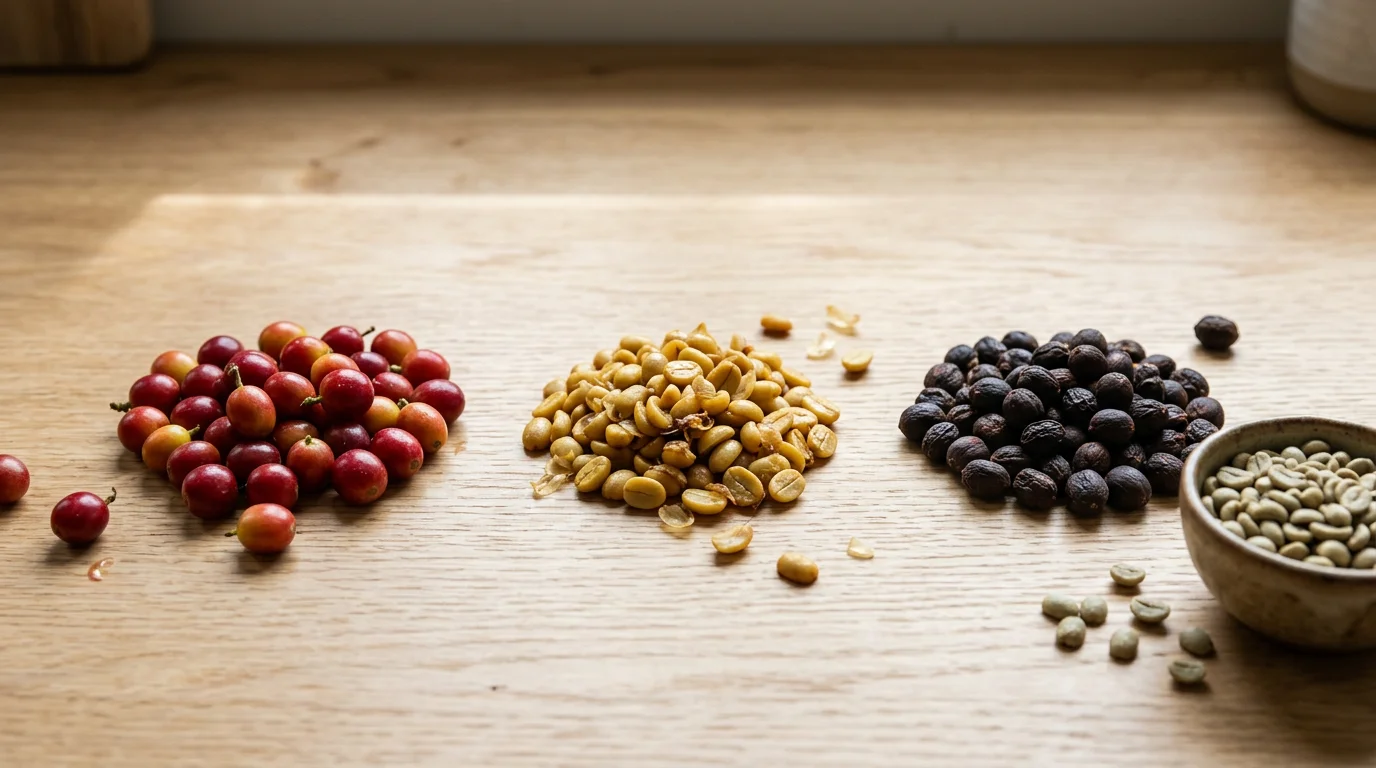
Washed coffee has its fruit removed and fermented off before drying. It tastes clean, bright and crisp, with a lighter body.
Natural coffee dries inside the whole cherry for weeks. It tastes fruity, sweet and full-bodied, sometimes wine-like or "funky".
Honey coffee has the skin removed but keeps some sticky fruit (mucilage) while drying. It sits in between: sweet, rounded and fruity, with more body than washed.
Newer methods like anaerobic fermentation and carbonic maceration push flavors further, often toward tropical fruit, spice and wine.
What coffee processing actually is
Coffee beans are seeds. They grow inside a fruit called the coffee cherry, wrapped in skin, sweet pulp, a sticky layer called mucilage and a papery shell called parchment.
Processing is everything that happens between picking that cherry and having a dry green seed ready to ship to a roaster.
Two jobs have to be done. The fruit layers have to come off, and the seed's moisture has to come down to a stable level so it won't rot during storage and transport.
That sounds purely practical. But the method a producer chooses is one of the biggest influences on how your coffee tastes.
How the fruit is removed, how long the coffee ferments and how it dries all shape sweetness, acidity, body and aroma.
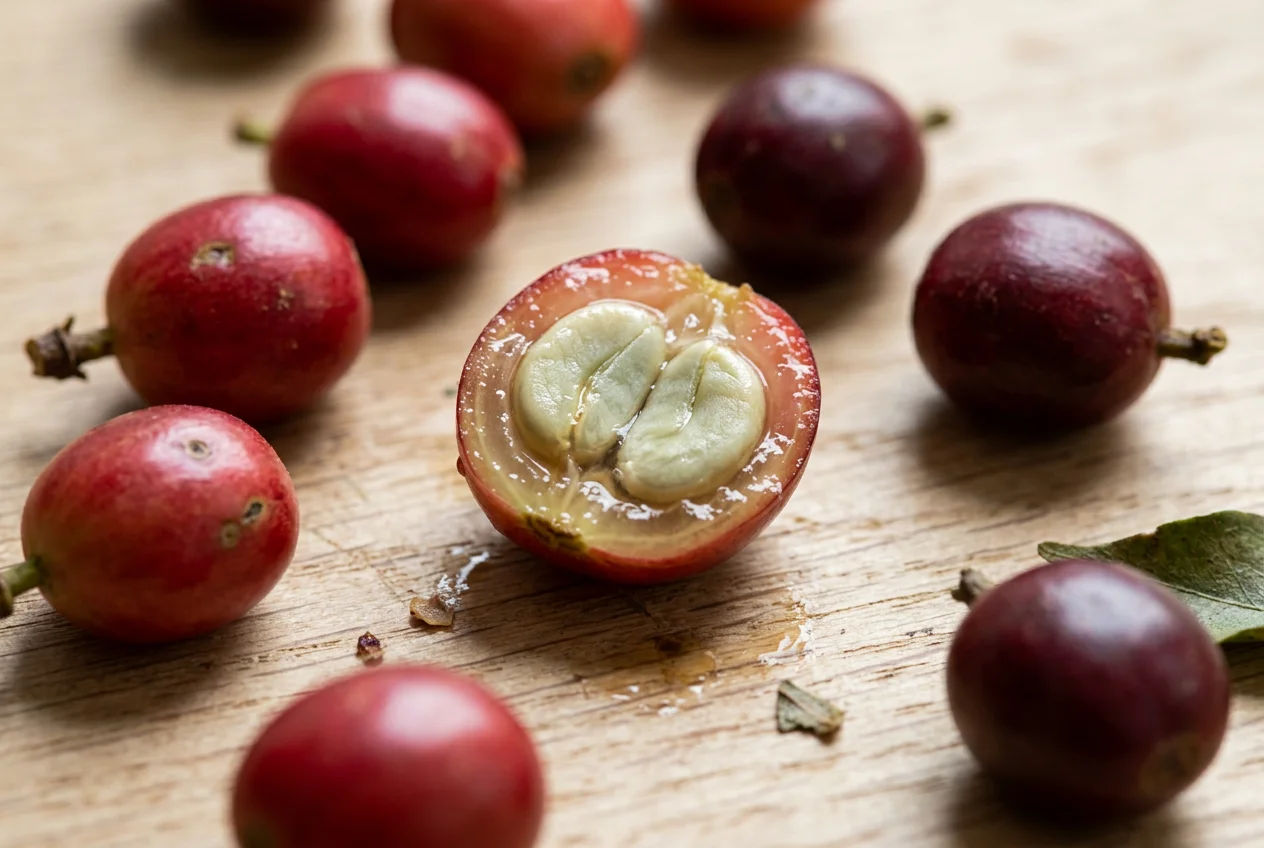
The first time I tasted the same coffee from the same farm processed two ways, washed and natural, I honestly thought they were two different countries. One was crisp and lemony, the other like blueberry jam.
That's when processing went from a footnote on the bag to one of the first things I check.
In this guide, I'll walk through each method step by step, explain what it does to flavor, and show you how to use the process line on a bag to pick coffees you'll actually enjoy. I'll also cover the less glamorous side: water use, waste and the people who do the work.
| Layer of the cherry | What it is | Removed when |
|---|---|---|
| Skin | Thin outer peel | Depulping (washed, honey) or hulling (natural) |
| Pulp | Sweet fruit flesh | Depulping or after drying |
| Mucilage | Sticky, sugary layer | Fermentation and washing, or dried on (honey) |
| Parchment | Papery shell around the seed | Hulling after drying |
| Silverskin | Thin film on the seed | Mostly comes off as chaff in roasting |
| Seed | The coffee bean | Becomes green coffee |
A short history of coffee processing
For most of coffee's history, there was only one way to process it: dry the whole cherry in the sun. That's how coffee was prepared in Ethiopia and Yemen for centuries.
Washed processing spread in the 1700s and 1800s, as coffee farming expanded in places with plenty of water. It produced cleaner, more consistent coffee that fetched higher prices in European markets, and it became the standard for "quality" coffee in much of Latin America and East Africa.
Brazil developed the pulped natural method in the 20th century as a middle path, and Costa Rican producers later refined honey processing, partly to save water and partly to create sweeter coffees for specialty buyers.
Since the 2010s, experimental fermentation has exploded. Producers have borrowed tanks, yeasts and techniques from wine and beer, and competition baristas helped make anaerobic and carbonic coffees famous.
Today, every one of these methods is in use somewhere. Old and new sit side by side on specialty menus.
The washed (wet) process
Washed processing, also called wet processing, is loved in specialty coffee for its precision and clarity.
By removing the fruit before drying, it takes the fruit's influence out of the equation. What's left is the character of the seed itself: its variety, altitude and soil.
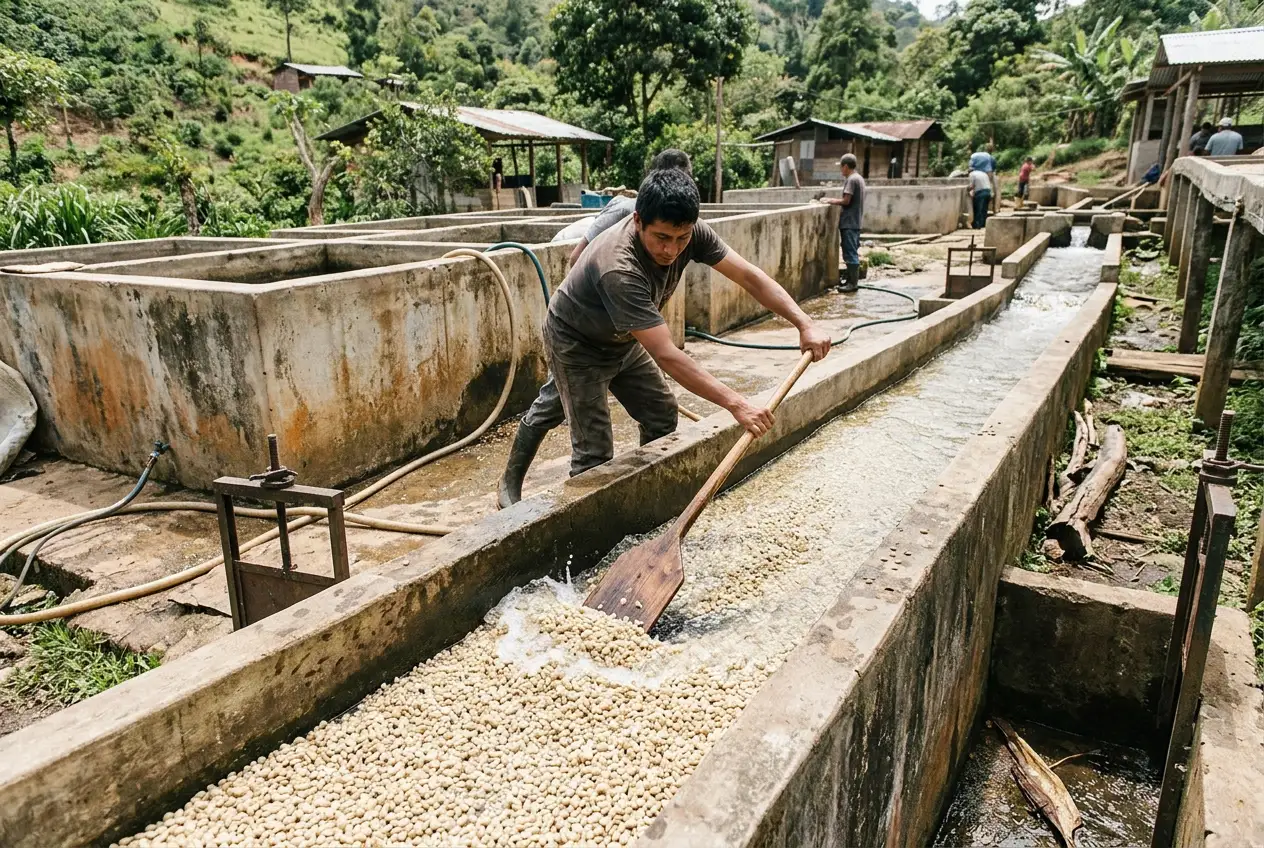
How it works, step by step
- Density sorting.Freshly picked cherries go into water channels or tanks. Ripe, dense cherries sink. Unripe, underdeveloped or damaged ones float and are skimmed off.
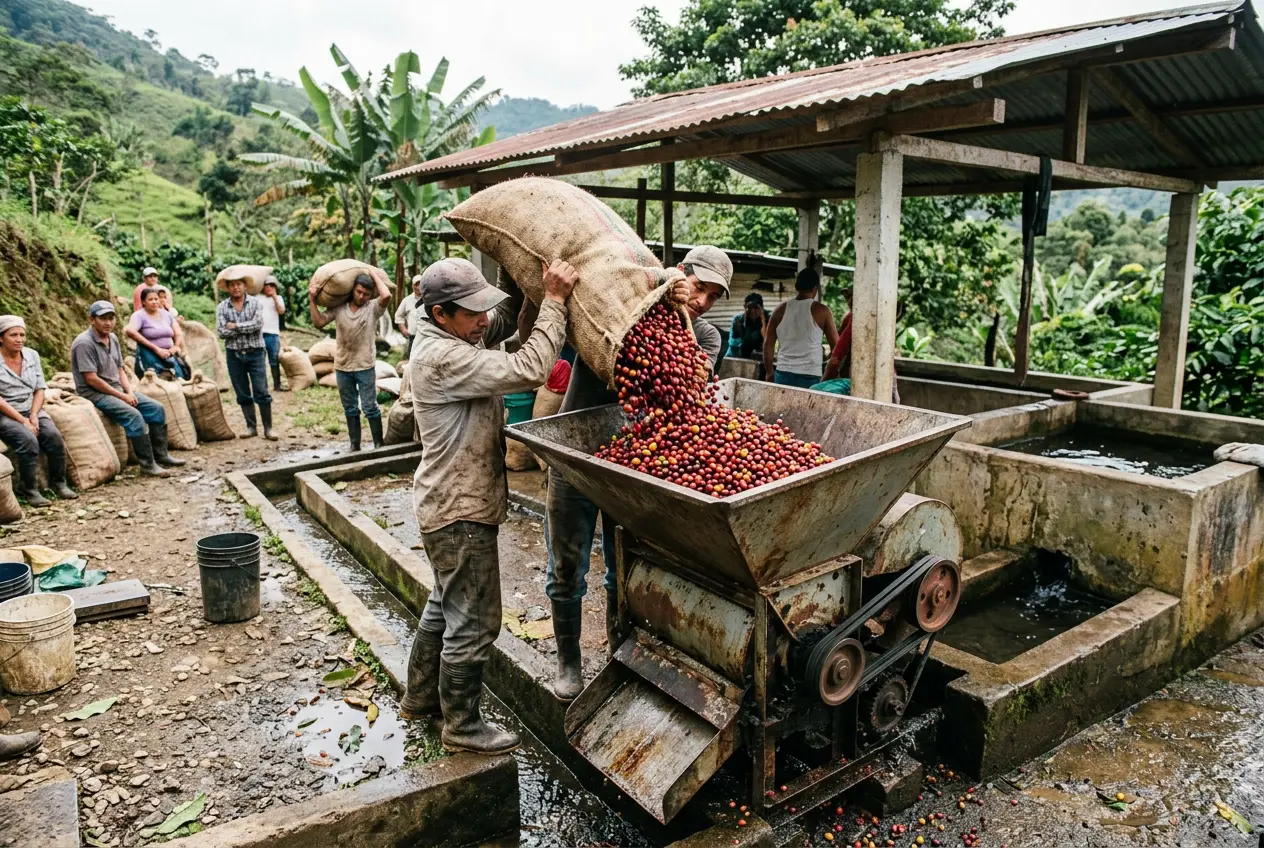
- Depulping.Machines or hand tools strip off the skin and most of the pulp.
- Fermentation.The seeds are still coated in sticky mucilage. They sit in tanks for roughly 12 to 72 hours while natural enzymes and microbes break it down.
- Washing.Once the mucilage loosens, the coffee is washed and agitated in clean water until the parchment is completely clean.
- Drying.The wet parchment coffee is spread on patios, raised beds or in mechanical dryers until it reaches a stable moisture level.
Fermentation time depends on temperature, altitude and the producer's goals. Warmer, lower farms ferment faster. Cool, high farms can take much longer.
What washed coffee tastes like
Washed coffees are known for clarity and cleanliness. Without the sugary fruit drying on the bean, you don't get heavy, fermented fruit tones.
Instead, the cup highlights bright, crisp acidity. Typical notes include citrus zest, delicate florals and a clean, refreshing finish.
Body tends to be lighter, sometimes tea-like, which lets acidity take center stage.
Why producers and roasters like it
Washed processing gives producers the most control over fermentation. That means consistency from harvest to harvest and a predictable flavor profile.
It's also very versatile in the roastery. Washed coffees work across the full range of roasts, from light and delicate to dark and bold.
Where you'll find washed coffee
Washed processing is the norm in Kenya, Colombia, most of Central America and much of Ethiopia, Rwanda and Burundi. If a specialty bag from these places doesn't mention the process, it's very likely washed.
These are great origins to start with if you want to taste clean, bright, classic specialty coffee.
The natural (dry) process
Natural processing, also called dry processing, is the oldest way to prepare coffee.
It developed in places where water was scarce, so wet processing wasn't practical. It relies entirely on sun and air to dry the whole fruit.
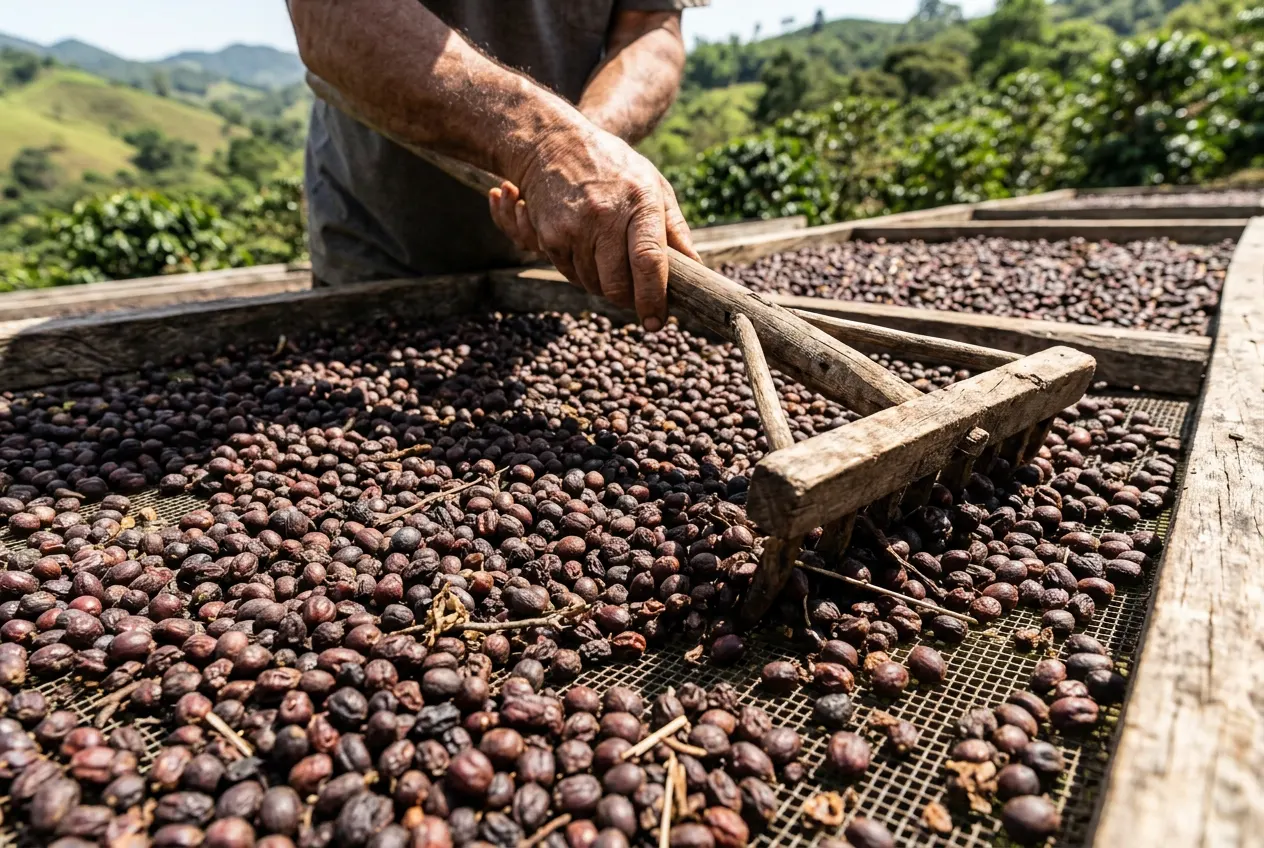
How it works, step by step
- Careful picking and sorting.With no water tank to float out bad cherries, quality starts with selective hand picking. Workers sort out unripe, overripe and insect-damaged fruit.
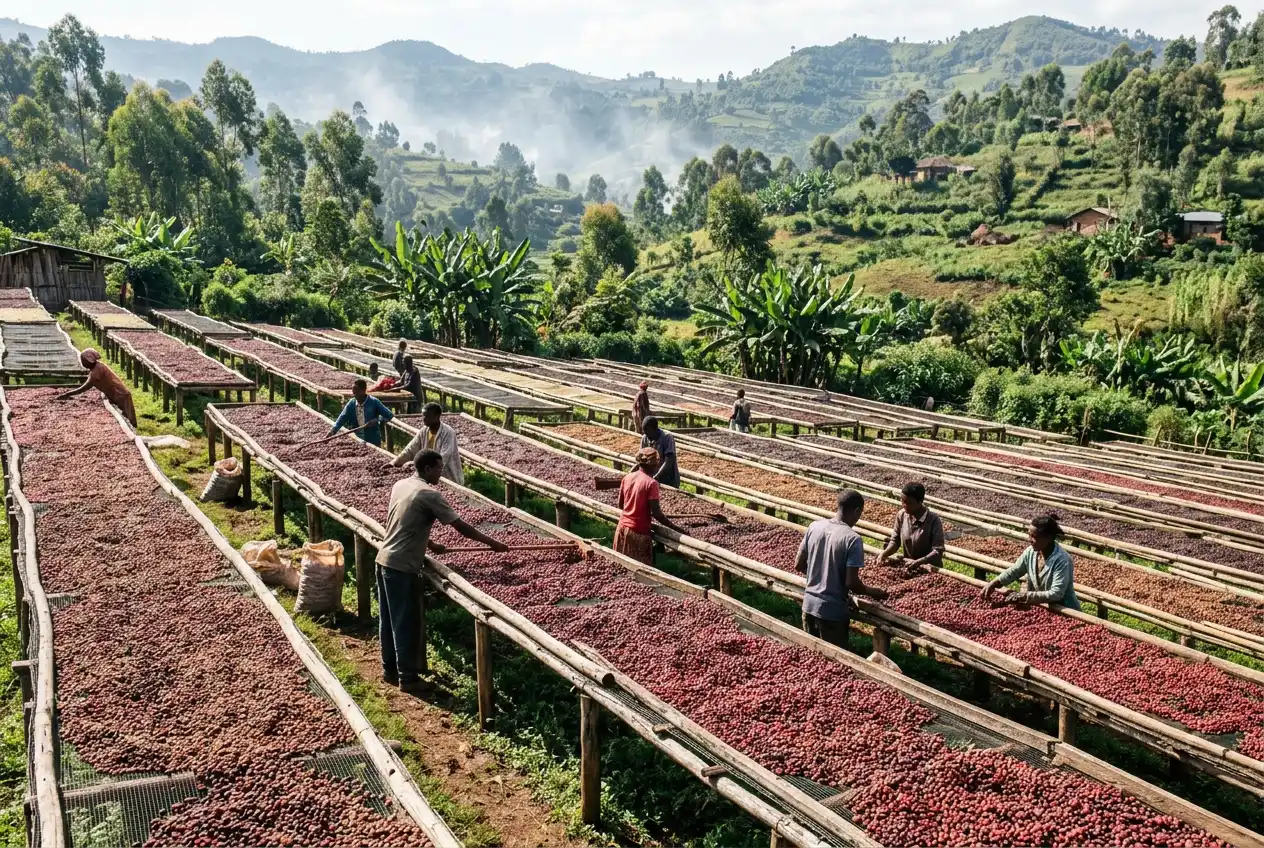
- Sun drying the whole cherry.Instead of removing skin and pulp, the whole cherry is spread in a thin layer on raised mesh beds or brick and concrete patios.
- Raking and turning.Workers turn the cherries by hand many times a day so they dry evenly and don't develop mold or runaway fermentation.
- Weeks of drying.The skin and moist pulp hold water, so drying is slow. It often takes several weeks of steady sun.
- Hulling.When the cherries are dark, wrinkled and raisin-like, machines crack off the dried skin, pulp and parchment in one go to reveal the green bean.
What natural coffee tastes like
Naturals are known for bold, intense, fruity flavors.
As the cherry slowly dries, the seed sits inside fermenting fruit. Sugars and aroma compounds from that fruit move into the seed.
The result is heavy body and rich, syrupy sweetness. Flavors often lean toward ripe berries, jammy stone fruit, tropical fruit like mango and pineapple, and wine-like notes.
Because fermentation happens inside each individual cherry, every batch takes on character from the farm's microclimate, soil and local microbes.
Why naturals matter
In regions with limited fresh water, natural processing is a vital alternative to wet milling. It uses very little water and needs less infrastructure.
It also produces a sweet, full-bodied style of coffee that many enthusiasts love.
That said, naturals divide opinion. Some people adore the fruit-bomb flavors. Others find them boozy or "funky" and prefer washed coffees.
Where you'll find natural coffee
Brazil processes a huge share of its coffee as naturals, usually giving nutty, chocolatey, low-acid cups. Ethiopia and Yemen are famous for fruitier, more aromatic naturals.
Today, producers almost everywhere make some naturals for specialty buyers, from Colombia to Panama.
Our tip: If you're unsure whether you'll like naturals, try a natural from a classic origin like Ethiopia or Brazil before a wild experimental lot. They're usually fruity but balanced.
The honey process
Honey processing sits between the crisp precision of washed coffee and the wild fruit of naturals.
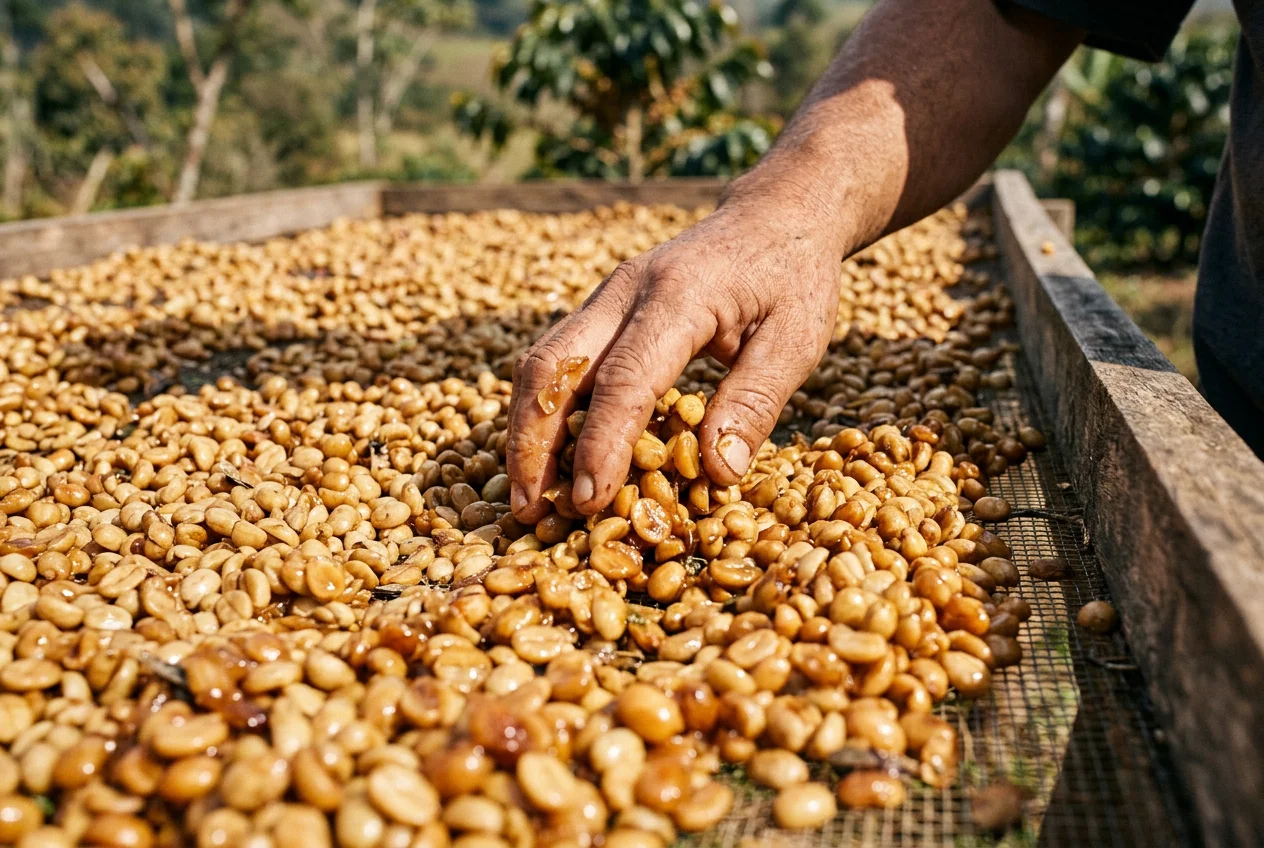
No honey is involved. The name comes from the sticky, golden mucilage left on the bean while it dries, which feels a lot like honey.
How it works
Ripe cherries are depulped to remove the skin, just like washed coffee.
But instead of fermenting and washing off the mucilage, producers skip the washing step, or remove only a set amount of pulp, and send the sticky beans straight to the drying beds.
The four honey styles
By adjusting how much mucilage stays on, and how fast the coffee dries, producers create different honey styles. They're usually named by color.
| Honey style | Mucilage left | Drying | Typical cup |
|---|---|---|---|
| White honey | Little, often 10–20% | Fast | Close to washed: bright, clean, delicate sweetness like honeydew or white grape |
| Yellow honey | Moderate | Sun, fairly quick | Balanced: brown sugar, apricot, gentle caramel |
| Red honey | A lot | Slower, partial shade | Syrupy: ripe stone fruit, raisin, dark chocolate |
| Black honey | Nearly all | Slow, shaded or covered | Bold and heavy: blackberry, fig, molasses, long finish |
Mucilage darkens as it dries and oxidizes, which is where the colors come from. Black honey dries the slowest and turns the deepest color.
Where you'll find honey coffee
Costa Rica made honey processing famous, and El Salvador, Honduras and Panama produce many excellent honeys too. You'll often see the color, like "red honey", printed right on the bag.
Why honey coffees taste so interesting
The mucilage doesn't just add sweetness. It's an active home for microbes while the coffee dries.
Yeasts and bacteria feed on the fruit sugars over days of drying, producing a wide range of aroma compounds.
That's why honey coffees can show tropical fruit, warm brown spices and gentle wine-like notes all in one cup.
Sweetness and body by process (my general experience)
A rough guide, not a rule. Variety, origin and drying skill change every lot.
Wet-hulled and pulped natural: two regional styles
Washed, natural and honey are the big three. But two regional methods are worth knowing, because you'll see them on bags.
Wet-hulled (Indonesia)
Wet hulling, known locally as giling basah, is common in Sumatra and other parts of Indonesia.
Coffee is depulped and briefly fermented, then partly dried. Instead of drying fully in parchment, it's hulled while still quite wet and finishes drying as a bare green bean.
The humid climate makes long drying difficult, so this speeds things up. The result is very distinctive: heavy body, low acidity and earthy, herbal, woody or spicy flavors.
People either love the deep, savory character or find it muddy. It's a great example of how processing and climate work together.
Pulped natural (Brazil)
Pulped natural, sometimes called semi-washed, was developed in Brazil.
Cherries are depulped like washed coffee, but the mucilage isn't fermented off. The coffee dries with it, much like a honey process.
Brazilian pulped naturals are often sweet, nutty and chocolatey, with soft acidity, which makes them popular in espresso.
| Method | Where you'll often see it | Typical cup |
|---|---|---|
| Washed | Kenya, Colombia, Central America, Ethiopia | Clean, bright, crisp |
| Natural | Ethiopia, Brazil, Yemen | Fruity, sweet, heavy |
| Honey | Costa Rica, El Salvador | Sweet, rounded, fruity |
| Pulped natural | Brazil | Nutty, chocolate, soft |
| Wet-hulled | Sumatra, Indonesia | Earthy, herbal, heavy, low acid |
Most countries use several methods. These are common associations, not rules.
Drying: the step that makes or breaks quality
Whatever the method, every coffee has to dry. Many producers will tell you drying is where good coffee is most often ruined.
The goal is to bring the seed from very wet, often over 50% moisture for fresh cherries or wet parchment, down to roughly 10 to 12%. At that level, green coffee is stable enough to store and ship.
Patios, raised beds and machines
| Drying method | How it works | Pros | Cons |
|---|---|---|---|
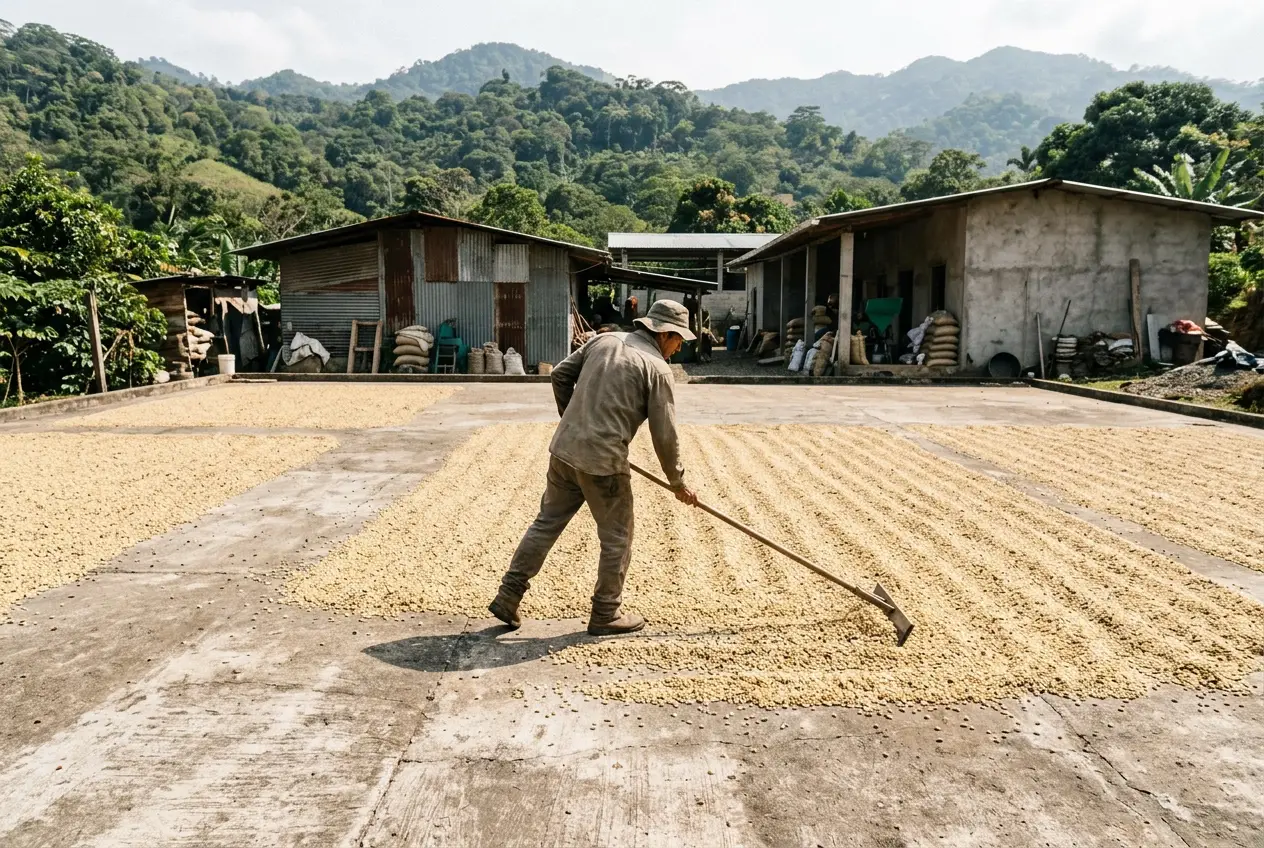
| Concrete or brick patios | Coffee spread on the ground in the sun | Cheap, large capacity | Heat from below, dust, uneven drying |
| Raised beds | Mesh tables that let air flow underneath | Even, gentle drying, cleaner | More labor and space |
| Mechanical dryers | Drums or silos with warm air | Fast, works in rain | Energy cost, risk of overheating |
| Covered or shaded beds | Raised beds under shade cloth or roofs | Slow, controlled, protects from rain | Takes longer |
Slow, even drying usually gives the best results. Drying too fast can lock in harsh flavors and shorten shelf life. Drying too slowly or unevenly risks mold and off-flavors.
Resting in parchment
After drying, many producers let coffee rest in its parchment for several weeks before hulling. In Latin America this is often called reposo.
Resting lets moisture even out inside the bean and helps stabilize flavor. Coffee that's hulled and shipped too soon can taste uneven or fade faster.
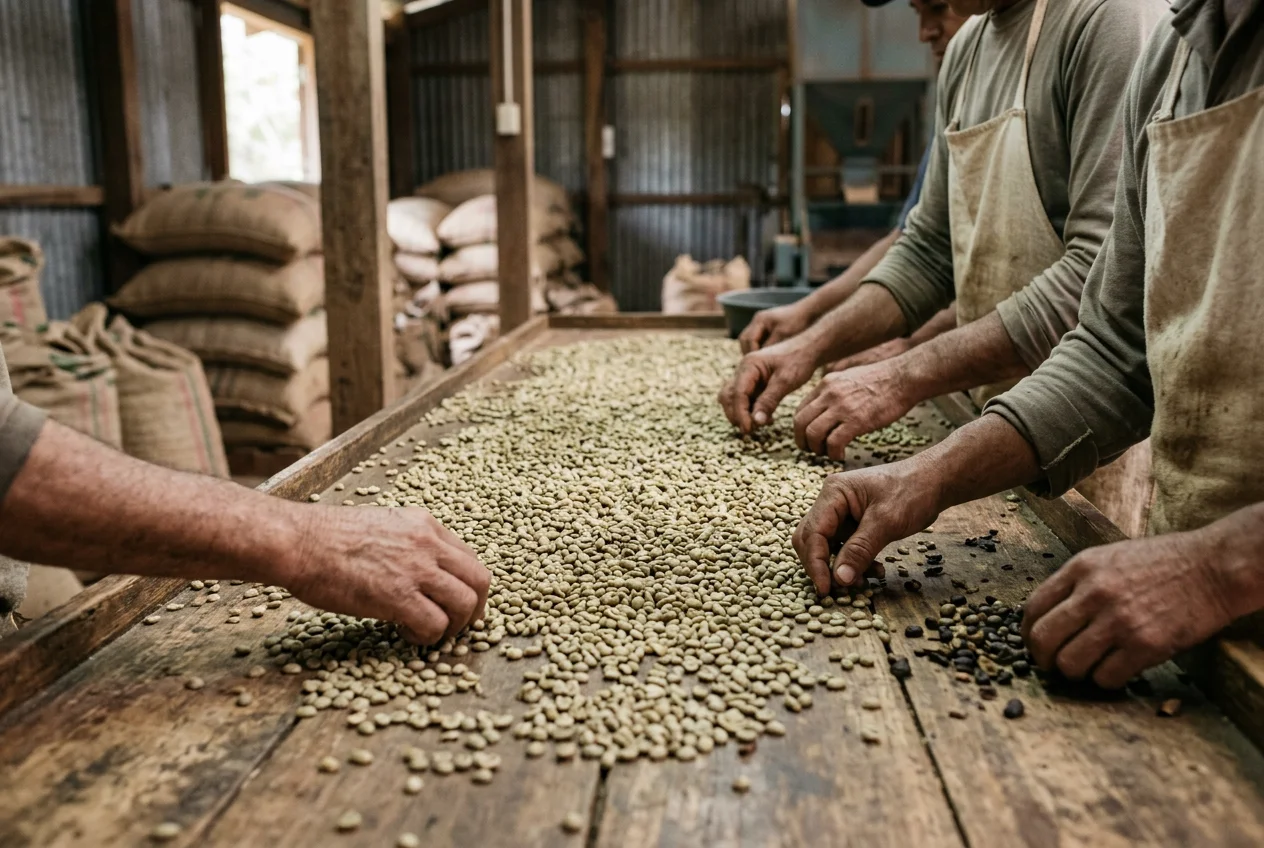
Our tip: When a roaster mentions "slow dried on raised beds" or "rested in parchment", it's usually a sign the producer took extra care. Those details often show up as sweetness and clarity in the cup.
From the mill to the roaster
Once the coffee is dry and rested, it goes to a dry mill to be prepared for export.
- Hulling.Machines remove the parchment from washed and honey coffees, or the dried husk from naturals.
- Polishing (optional).Some mills polish off the thin silverskin for appearance.
- Size grading.Screens sort beans by size. Bigger beans are often (not always) priced higher.
- Density sorting.Gravity tables separate dense, healthy beans from light, defective ones.
- Color sorting.Optical machines or skilled hand sorters remove black, sour, insect-damaged or broken beans.
- Bagging.Green coffee is packed into jute or grain-pro lined bags, ready to ship.
Specialty coffee is carefully sorted to remove defects. It's typically defined as coffee scoring 80 points or more out of 100 in a professional quality evaluation, which includes counting defects.
A careless mill can undo the work of a careful farm. A careful mill can help a good coffee taste its best.
Processing and how long green coffee lasts
Processing affects not just flavor but also how well green coffee keeps before roasting.
Well-dried washed coffees tend to be the most stable. Naturals and honeys, with more fruit sugars, can fade or develop off-notes sooner if they're stored warm or humid.
Experimental lots are often the most delicate of all. Their bright fruit and fermentation aromas can disappear within months.
That's one reason good roasters buy fresh-crop coffee, store it carefully, and sometimes vacuum pack or freeze special lots.
For you as a buyer, it means seasonal freshness matters. A natural from last year's harvest may taste flat compared with this year's.
Advanced fermentation methods
Specialty producers keep looking for new flavors. They've borrowed ideas from winemaking and brewing, and fermentation has become an exciting frontier.
Fermentation is simply microbes, mostly yeasts and bacteria, eating the sugars in the coffee fruit and turning them into acids, alcohols and aromatic esters. Those compounds help define flavor.
Anaerobic fermentation
In traditional washed and natural processing, fermentation happens in open air, with oxygen.
Anaerobic fermentation seals depulped beans, or whole cherries, inside airtight tanks with one-way valves. Gas can escape, but no air gets in.
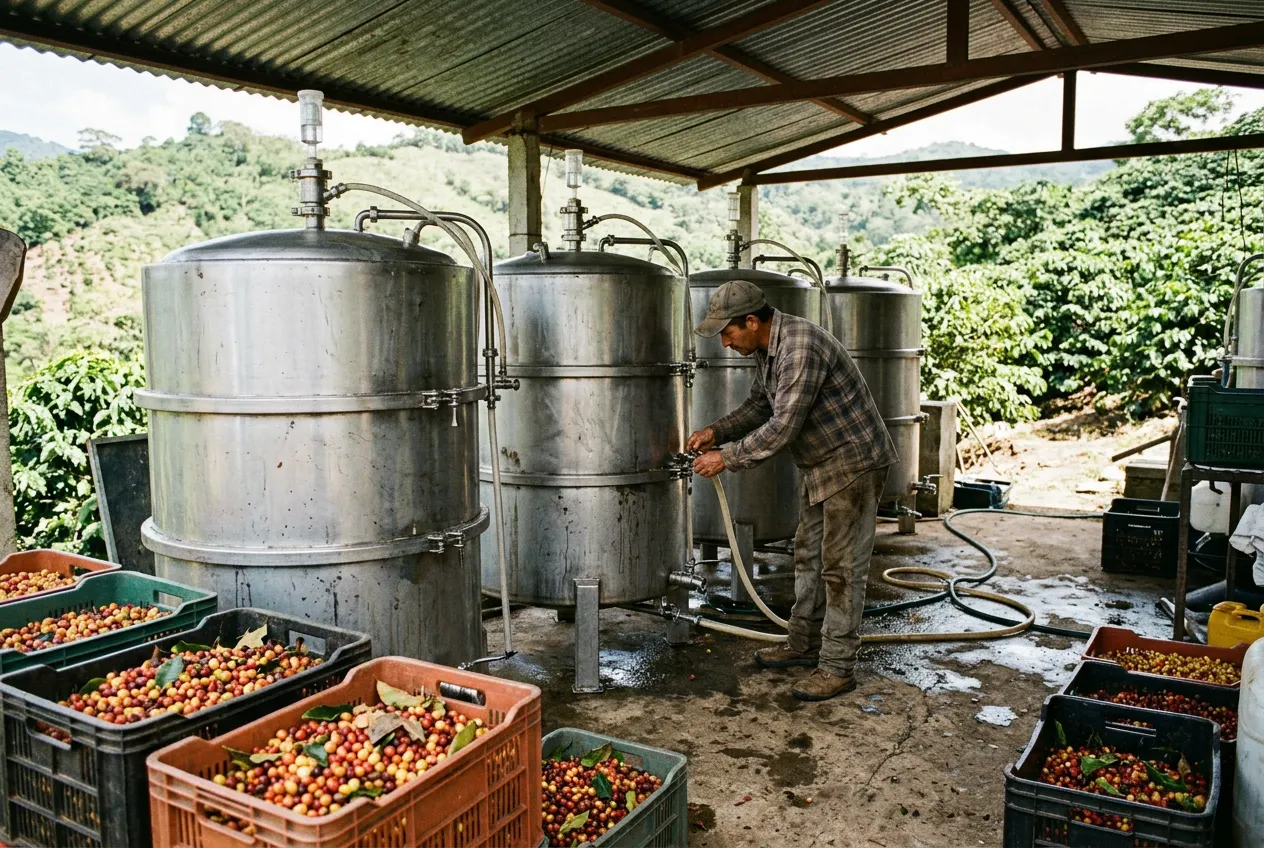
Without oxygen, different microbes take over. They work more slowly and produce different acids, like lactic acid, that don't form the same way in open air.
Anaerobic coffees are known for extra sweetness, creamy or full body and bold, unusual flavors. Think intense mango and pineapple, bright berries, and even cinnamon or bubblegum.
Every sealed tank has its own microbial ecosystem, so every lot has its own signature.
Carbonic maceration
Carbonic maceration comes straight from winemaking, especially the Beaujolais region of France.
Whole, intact cherries go into a sealed vessel, and carbon dioxide is pumped in to push out all the oxygen.
Under that blanket of CO2, fermentation starts inside each whole cherry and works outward, gently breaking down sugars before the skin bursts.
This protects delicate fruit aromas and can give the cup a lively, almost sparkling feel. Expect juicy, wine-like coffees with red berries, plums, grapes and bright citrus zest.
Other experiments
You may also see terms like "yeast inoculated", "extended fermentation", "double fermentation" or "thermal shock". These are variations where producers add specific cultures, ferment longer or change temperatures to steer flavor.
They can be delicious. But they can also mask the coffee's origin with processing flavors, so it's worth knowing what you're buying.
Our tip: Experimental lots are fun, but try them alongside a classic washed coffee from the same country. It helps you tell what comes from the farm and what comes from the process.
Processing traditions and terroir
Processing isn't just technique. It's tied to geography, climate, culture and plant diversity, all part of what people call terroir.
Monsooned Malabar (India)
On India's southwest Malabar Coast, producers use the annual monsoon to make a truly unique coffee.
After harvest, green beans are spread out in open-sided warehouses, where wet monsoon winds blow through them for months.
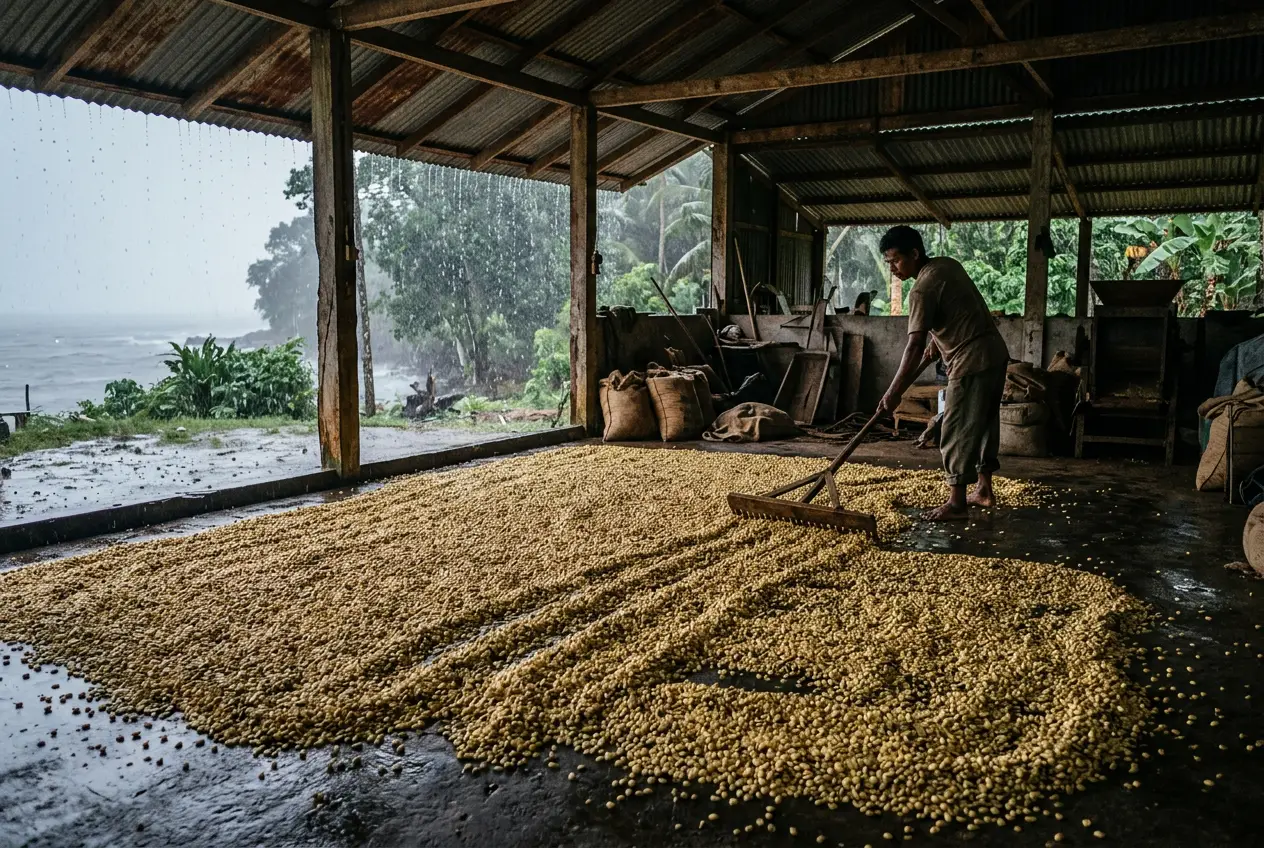
The beans absorb humidity, swell to nearly twice their size and turn pale golden-yellow. Acidity drops dramatically, and body becomes very heavy.
Monsooned Malabar is famous for an earthy, pungent aroma with warm spice, aged wood and sweet tobacco notes. It's a bold, low-acid coffee for people who enjoy earthy complexity.
Ancient dry processing (Yemen)
In Yemen, where coffee has been grown for centuries on steep, dry mountain terraces, traditional dry processing is still central.
With little water available, whole cherries dry under the intense sun on flat stone rooftops and earthen patios.
Yemeni coffees are rich in history and flavor: warm spices like cinnamon, cardamom and ginger, dried fruit, dark cocoa and wine-like depth.
Heirloom varieties and naturals (Ethiopia)
Ethiopia, the birthplace of arabica, has thousands of native heirloom varieties.
Natural processing is still common in many regions, and it's a perfect way to show off this genetic diversity.
Ethiopian naturals are loved worldwide for expressive fruit, like blueberry, strawberry, mango and guava, with heady florals and sparkling, wine-like acidity balancing their syrupy sweetness.
How processing changes what you taste
Here's a simple way to predict a coffee from its process. It's not perfect, but it works surprisingly often.
| Process | Body | Acidity | Sweetness | Typical flavors |
|---|---|---|---|---|
| Washed | Light–medium | High, crisp | Clean | Citrus, florals, tea, stone fruit |
| White/yellow honey | Medium | Medium–high | Moderate | Honeydew, apricot, caramel |
| Red/black honey | Medium–full | Medium | High | Raisin, fig, molasses, berries |
| Natural | Full | Soft, winey | High | Blueberry, strawberry, tropical, jam |
| Anaerobic | Full, creamy | Varies | High | Mango, pineapple, spice, candy |
| Carbonic maceration | Medium | Bright | High | Red berries, grape, plum, citrus |
| Wet-hulled | Heavy | Low | Medium | Earthy, herbal, cedar, spice |

Process and roast work together
Processing and roasting interact. Washed coffees often shine at light to medium roasts, where their clarity and acidity stand out.
Naturals and honeys can be roasted light too, but their fruit and sweetness also hold up well in medium roasts and espresso.
Very dark roasts flatten the differences. If you want to taste processing, choose light to medium roasts.
To understand roast levels in more detail, see my guide to coffee roast levels.
Process and brew method
For pour-over, washed coffees deliver crisp clarity, while naturals give fruit-forward, juicy cups.
For espresso, naturals, honeys and pulped naturals add sweetness and body, which is why they're popular in espresso blends.
For cold brew, naturals can be wonderful, adding fruity sweetness to a smooth, low-acid drink.
Roasting coffees from different processes
Roasters adjust their approach depending on how the coffee was processed.
Washed coffees are usually denser and more predictable. They handle a wide range of roast levels, and light roasts show off their clarity.
Naturals and honeys carry more sugar on and in the bean. They can brown faster and scorch more easily, so roasters often apply heat a bit more gently.
Experimental and anaerobic lots are often roasted light, so their unusual fruit and fermentation notes stay vivid. Roasting them dark would waste what made them special and expensive.
If you want to see what happens inside the roaster, my guide on how coffee is roasted explains it step by step.
Taste processing at home: a simple tasting flight
You don't need a lab to taste the difference. A small tasting flight teaches you more than any article, including this one.
- Pick a country.Choose one origin, like Ethiopia, Colombia or Costa Rica, to keep other variables steady.
- Buy two or three processes.Ideally a washed, a honey and a natural, roasted to similar light or medium levels.
- Brew them identically.Same grind, dose, water and brewer. A simple pour-over or AeroPress works well.
- Smell before you sip.Washed coffees often smell floral and citrusy, naturals more like jam or ripe fruit.
- Taste hot, warm and cool.Fruit and sweetness often come forward as coffee cools.
- Write one line each.Body, acidity, sweetness and the first flavor that comes to mind.
When I did this with an Ethiopian washed and natural from the same washing station, the washed one tasted like lemon tea and jasmine. The natural tasted like blueberry pancakes.
Same plant, same hillside, completely different cups. That's processing.
Environmental, economic and social challenges
Every processing method unlocks different flavors. But each also has trade-offs that producers, roasters and coffee drinkers should know about.
Water and pollution in washed processing
Washed processing is water-intensive. Depulping, fermenting and rinsing use a lot of fresh water, which can strain local rivers in the dry season.
The wastewater is full of dissolved fruit sugars and organic matter. Released untreated, it can strip oxygen from rivers and streams and harm wildlife.
Many mills now recycle water and treat wastewater, but it's an ongoing challenge.
Mold and waste in natural processing
Naturals save water, but weeks of drying leave cherries exposed to sudden rain and humidity.
Poorly managed drying can lead to mold, ruined harvests and even harmful mycotoxins. After hulling, producers also have mountains of dried husks to compost or reuse.
Consistency and wastewater in honey processing
Honey processing uses much less water than washed, but depulping still produces concentrated wastewater that needs managing.
Drying time and microbial activity change easily with the weather, so consistent honey lots take a lot of skilled labor and attention.
Money and tradition
Anaerobic and carbonic methods can fetch high prices, but they need food-grade tanks, valves, monitoring tools and know-how. Many smallholder farmers can't afford that, which widens the gap between well-funded estates and small growers.
Strong demand for experimental flavors can also push producers away from traditional methods, risking the loss of cultural heritage and authentic regional flavors.
People behind every method
Every process depends on human work: selective hand picking, raking drying beds for weeks, running mills.
Safe working conditions and fair, living wages are still urgent issues throughout the supply chain.
What can you do as a coffee drinker? Buy from roasters who name the farm or washing station and explain how the coffee was processed. Pay a little more for traceable coffee when you can. And keep an open mind about traditional methods, not just the latest trendy fermentation.
As drinkers pay more attention, roasters who share details about origin, processing and farm-level impact make it easier to support ethical, sustainable coffee.
Why producers choose one method over another
Producers don't pick a process at random. Several practical factors decide what makes sense for each farm.
- Water. Washed processing needs plenty of clean water. Where it's scarce, naturals or honeys are more practical.
- Climate. Naturals need weeks of reliable sun. In rainy or humid regions, washed or wet-hulled methods are safer.
- Infrastructure. Washing stations, depulpers, raised beds and mechanical dryers all cost money.
- Labor. Naturals and honeys need constant raking and careful drying, which takes many hands.
- Market demand. Buyers pay premiums for certain profiles. Strong demand for fruity naturals or experimental lots can change what farms produce.
- Tradition. Many regions have processing traditions going back generations, from Yemeni rooftops to Ethiopian drying beds.
In many places, small farmers don't process their own coffee at all. They sell ripe cherries to a nearby washing station or cooperative mill, which processes coffee from hundreds of farms together.
That's why so many Kenyan and Ethiopian coffees are named after washing stations rather than individual farms.
A glossary of processing words
Bags and roaster websites use a lot of processing jargon. Here's what the common terms mean.
| Term | Meaning |
|---|---|
| Cherry | The coffee fruit that holds two seeds |
| Mucilage | The sticky, sugary layer between pulp and parchment |
| Parchment | The papery shell around the seed, removed after drying |
| Depulping | Mechanically removing skin and pulp |
| Fermentation | Microbes breaking down sugars and mucilage |
| Washing station | A central mill where many farmers deliver cherries |
| Reposo | Resting dried parchment coffee before hulling |
| Hulling | Removing parchment or dried husk from the seed |
| Peaberry | A single round seed in a cherry instead of two flat ones |
| Lot or micro-lot | A batch kept separate from other coffees |
You don't need to memorize these. But knowing a few makes roaster descriptions much easier to follow.
How to use processing when you buy coffee
Once you know the basics, the process line on a bag becomes one of the most useful clues you have.
- Find the process on the label.Look for washed, natural, honey, anaerobic, carbonic or wet-hulled. Many specialty bags list it near the origin.
- Decide what you're in the mood for.Crisp and clean: washed. Sweet and fruity: natural. Something in between: honey.
- Check the tasting notes.Tropical fruit and boozy words usually point to naturals or anaerobic lots. Citrus and florals often mean washed.
- Compare side by side.Buy a washed and a natural from the same country and taste them together. It's the fastest way to learn.
- Note what you like.Over a few bags, you'll see a pattern in which processes you enjoy most.
If you need help with the rest of the label, my guide on how to choose coffee beans covers roast dates, traceability and tasting notes.
Our tip: If you've had a coffee that tasted "fermented" in a way you disliked, check the process. It was very likely a natural or anaerobic lot. A washed coffee from the same region will probably suit you better.
Questions to ask your roaster about processing
Roasters love talking about processing. These questions help you learn more about what's in your cup.
- Was this coffee washed, natural, honey or something else?
- How long did it ferment, and was it fermented with or without oxygen?
- How was it dried: patios, raised beds or machines, and how long did it take?
- Did the producer add yeasts or other cultures?
- Do you have the same coffee in a different process I could compare?
If a roaster can't tell you how a coffee was processed, it's often a sign they bought it as a generic lot. That's not always bad, but specialty roasters usually know these details.
Common myths about processing
"Natural means organic"
No. Natural refers only to drying the coffee inside the whole cherry. It says nothing about farming practices or certifications.
"Honey process uses honey"
No honey is added. The name describes the sticky mucilage left on the bean.
"Washed coffee is always better quality"
Washed coffees are often more consistent, but a carefully made natural can be just as high quality. Quality depends on care at every step.
"Fermented coffee is spoiled coffee"
All coffee processing involves some fermentation. Controlled fermentation creates flavor. Uncontrolled fermentation creates defects.
"Process doesn't matter after roasting"
Process changes the green bean's chemistry, and that carries through to the cup. Very dark roasts can hide it, but at light and medium roasts the difference is clear.
Frequently asked questions
What is coffee processing?
It's how the coffee seed is removed from the cherry and dried before roasting. The main methods are washed, natural and honey, plus newer fermentation techniques.
What is the difference between washed and natural coffee?
Washed coffee has its fruit removed before drying, so it tastes clean and bright. Natural coffee dries inside the whole cherry, so it tastes fruitier, sweeter and heavier.
What does honey process mean in coffee?
The skin is removed but some sticky mucilage stays on the bean while it dries. It creates a cup between washed and natural, sweet and rounded with some fruit.
Is honey processed coffee made with honey?
No. The name refers to the sticky, honey-like mucilage left on the bean during drying.
What does anaerobic coffee taste like?
Often very sweet and fruity, with tropical fruit like mango and pineapple, sometimes spice or candy-like notes, and a creamy body.
What is carbonic maceration coffee?
A method borrowed from winemaking where whole cherries ferment in a sealed tank filled with carbon dioxide. It tends to produce juicy, wine-like coffees with red fruit.
Which processing method is best?
There's no single best. Washed suits people who like clean, bright coffee. Naturals suit fans of fruit and body. Honey sits in between.
Why do natural coffees taste fermented?
The seed dries inside fermenting fruit for weeks, picking up fruity, winey compounds. When done well, it's pleasant; when poorly controlled, it can taste boozy or off.
What is wet-hulled coffee?
An Indonesian method where coffee is hulled while still wet and finishes drying as a bare bean. It gives heavy body, low acidity and earthy, herbal flavors.
What is Monsooned Malabar?
An Indian coffee exposed to monsoon winds for months after harvest. The beans swell and lose acidity, giving an earthy, spicy, very low-acid cup.
Does processing affect caffeine?
Not in any meaningful way. Caffeine mostly depends on species, such as arabica or robusta, and how much coffee you use.
Which process is best for espresso?
Naturals, honeys and pulped naturals are popular for espresso because they add sweetness and body. Washed coffees make brighter, more acidic shots.

- Michael Reynolds, personal notes from tastings, mill visits and producer conversations
- Peer-reviewed study comparing natural, honey and semi-washed coffees, PubMed Central
- Coffee Quality Institute, post-harvest processing resources
- Coffee Taster's Flavor Wheel, Specialty Coffee Association
Related guides
How to choose coffee beans Arabica vs robusta Coffee roast levels explainedWritten by Michael Reynolds. Last updated November 16, 2026.