How to Choose Coffee Beans: Freshness, Labels and Flavor Without the Guesswork
Picking a bag because the packaging looks nice is how most people end up with coffee they don't enjoy. Here are the rules I use to buy beans I'm likely to love, where to buy them, and how to read a coffee bag before you spend a cent.
We choose products independently. We may earn a commission through links on this page; your price stays the same. Affiliate policy
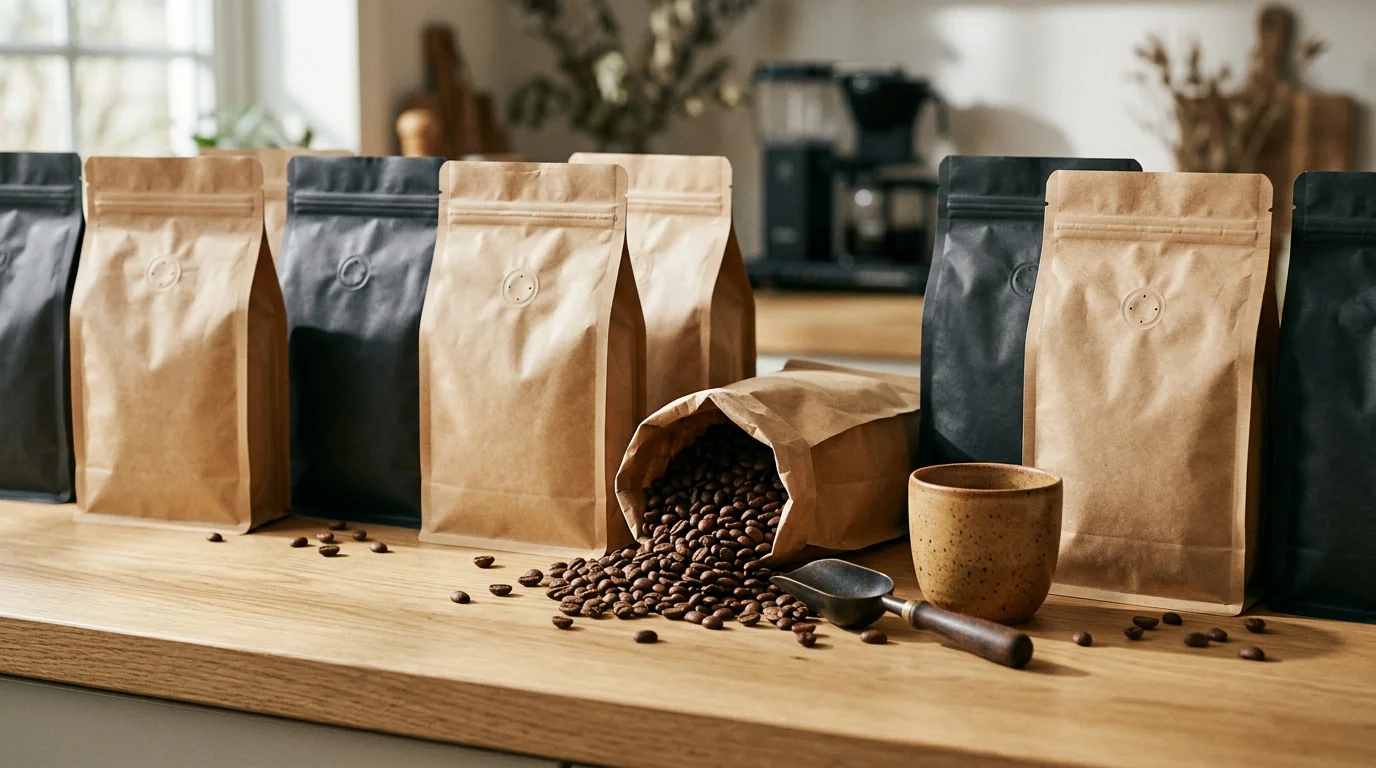
Choose fresh beans with a "roasted on" date, ideally brewed between about one and six weeks after roasting. Buy whole beans and grind them just before brewing.
Pick traceable coffee that names a farm, cooperative, washing station or at least a region, and favor roasters whose menus rotate with the seasons.
Then read the label for three deal-breakers: body (light vs heavy), acidity (fruit words vs chocolate and nut words) and process (washed is clean, natural is fruity and funky).
Stop gambling on coffee
If you already have a coffee you love, keep drinking it. Nobody should tell you what to enjoy.
But one of the best things about coffee is how different it can taste. Whatever you brew at home now, there's almost certainly something out there you'd like even more.
The problem is the coffee gamble. You stand in front of a wall of bags, pick one because the design looks nice, brew it at home and realize you don't like it at all.
I've done that more times than I want to admit. Most of those bags ended up as iced coffee I drank out of guilt.
The good news is you can avoid most of those mistakes. Learn a few simple rules, know how each kind of shop works, and learn to decode the words on the bag.
I have two biases you should know about. I'm a big fan of specialty coffee, and I've spent time around roasters watching how they taste, label and sell coffee.
Even if you prefer traditional supermarket coffee, the same principles still help: freshness, traceability and reading the label work for every kind of bean.
This guide has three parts: the golden rules of buying coffee, where to buy it, and how to decode a bag so it matches your taste.
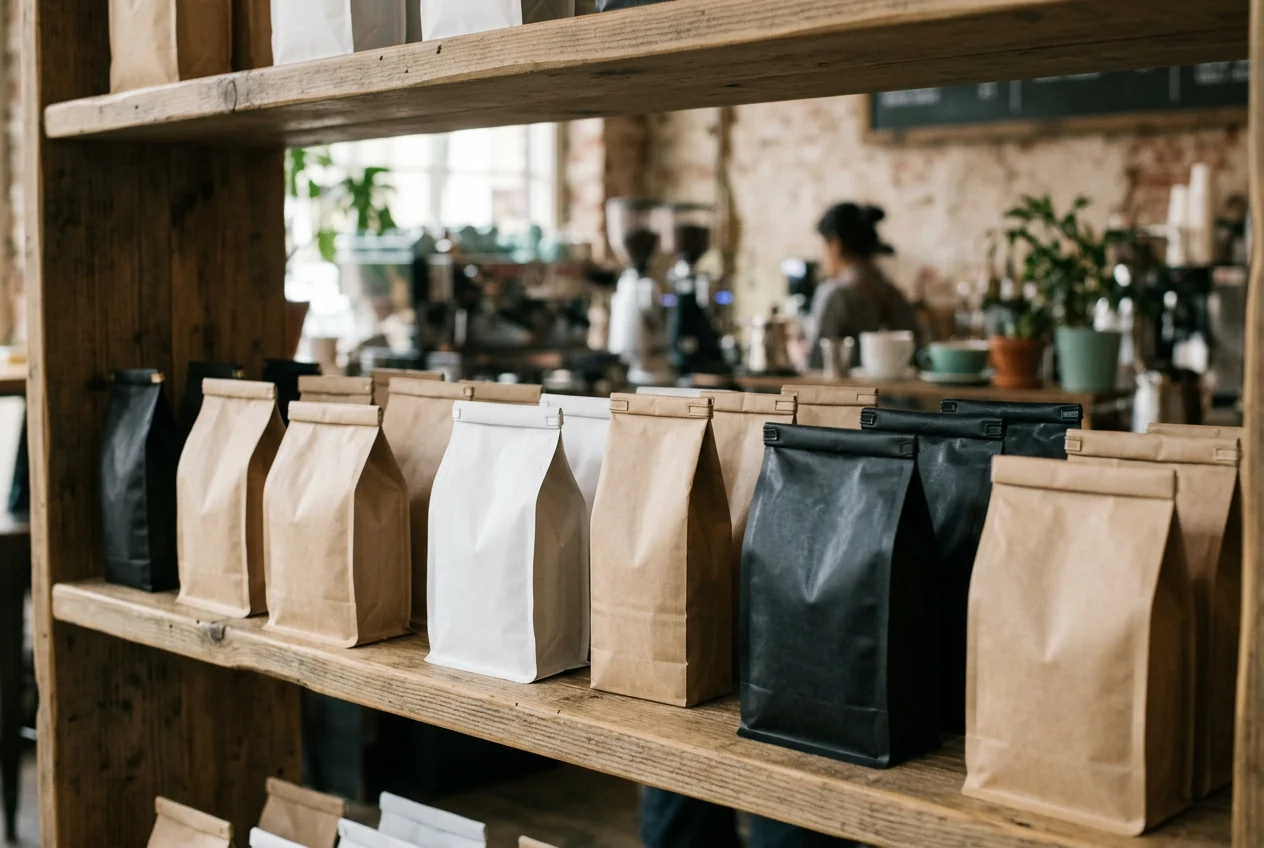
Rule 1: buy fresh (and know what fresh means)
Everyone says "buy fresh coffee". But what fresh actually means is more nuanced than most people think.
From the moment beans are roasted, their flavor starts a slow, steady decline. Two things drive it.
- Aromatics escape. The volatile compounds that make fresh coffee smell and taste complex slowly drift off into the air.
- Oils and solubles oxidize. As they react with oxygen, coffee turns flat, papery, cardboard-like and stale.
It helps to separate food safety from flavor. Roasted coffee stays safe to drink for a very long time, even years.
But "safe" doesn't mean "good". Long shelf life just means it won't make you sick, not that it tastes the way the roaster intended.
Roast date vs best before date
You'll see two very different dates, depending on where you buy.
Roasted on. Specialty roasters almost always print the exact roast date. It's the most useful freshness information you can get, because you can count the age of your beans in days or weeks.
Best before. When a roaster sells through a big supermarket chain, the retailer usually won't allow a roast date. It requires a best-before date instead, often 12, 18 or even 24 months after roasting.
That isn't the roaster's choice. It's a supply chain rule. The same coffee from the same roaster can carry a roast date when you buy it direct and a best-before date on a supermarket shelf.
With only a best-before date, you have no reliable way to know when the coffee was actually roasted.
| Date on the bag | What it tells you | How useful |
|---|---|---|
| Roasted on | Exact age of the beans | Very useful |
| Best before | Shelf life rule, not roast day | Hardly useful |
| No date | Nothing | Avoid if you can |
Why fresher isn't always better
Here's a surprise for many people. Coffee brewed on the day it was roasted usually doesn't taste its best.
During roasting, a lot of carbon dioxide builds up inside the beans. Afterward, the beans slowly release that gas. This is called degassing.
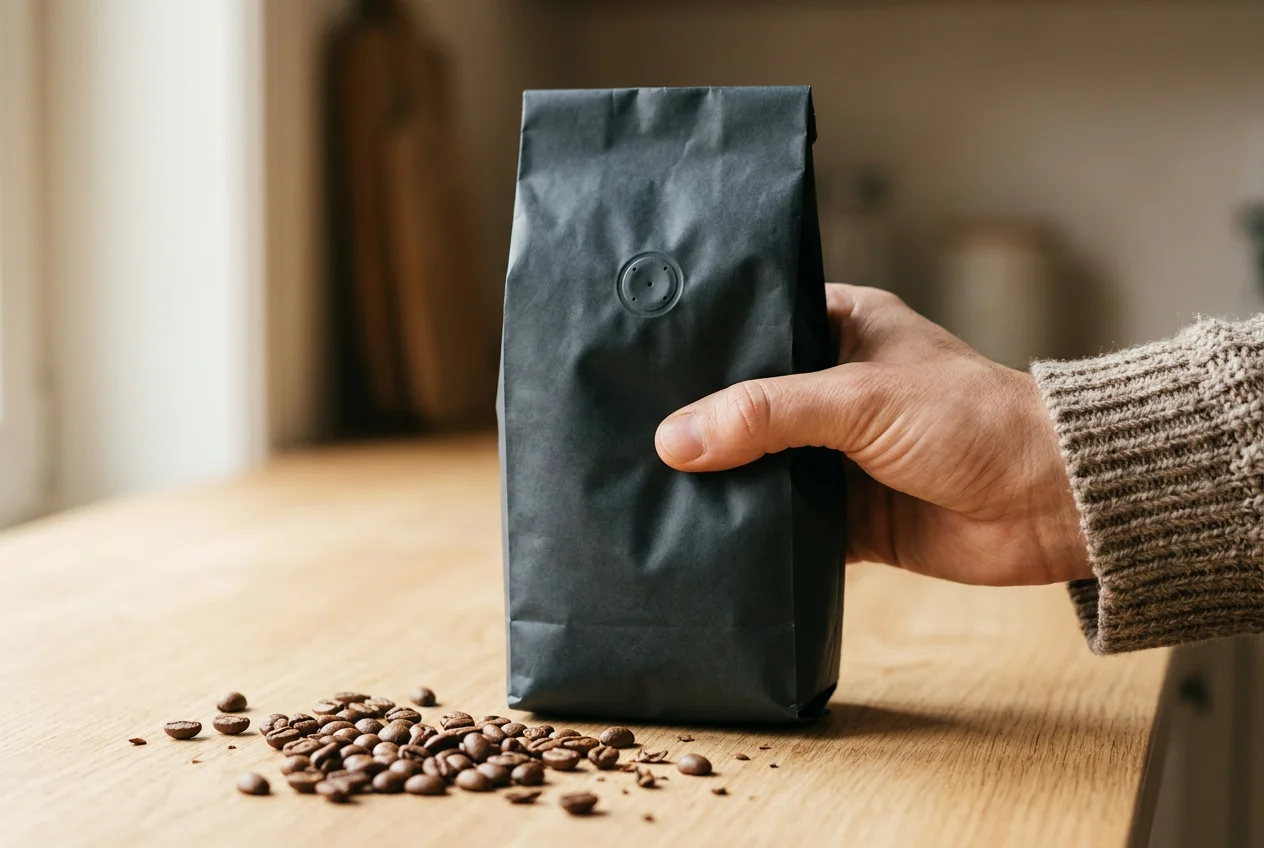
That's why nearly every coffee bag has a small one-way valve. It lets CO2 out without letting oxygen in.
A study in the Journal of Agricultural and Food Chemistry tracked this weight loss over time and found that most degassing happens in the first days after roasting, then slows down.
For espresso, very fresh beans (one to three days old) cause trouble. Under pressure, the gas rushes out, creating foam, channeling and uneven extraction. Shots get harsh or sour and are hard to dial in.
That's why most baristas and home enthusiasts rest espresso beans for 7 to 10 days, sometimes two weeks or more.
For filter coffee like drip, pour-over and French press, extra gas matters much less. You can brew good filter coffee a day or two after roasting, and it gets a little more forgiving as it rests.
The freshness window
Typical best-tasting window after roast (whole beans)
Rough guide from my own experience. Storage and roast style shift these windows.
For light to medium roasts in whole beans, the ideal window is roughly one week to six or eight weeks after roasting, depending on how well you store them.
Dark roasts go stale faster. Longer roasting makes the beans more porous and brittle, so oils move to the surface and oxidize sooner. I'd drink them within four to six weeks.
Whole bean vs pre-ground
Buying whole beans instead of pre-ground is one of the biggest upgrades you can make. There are two reasons.
Value for money. Pre-ground coffee is often packed in nitrogen to protect it on the shelf. But once you open the bag, the huge surface area oxidizes fast.
You get maybe one or two days at peak aroma. It's drinkable for weeks after, but the nuance fades, so you aren't getting what you paid for.
Whole beans keep those aromatics locked inside until the moment you grind.
Enjoyment. Grinding right before brewing fills the kitchen with aroma. It turns a morning chore into a small ritual.
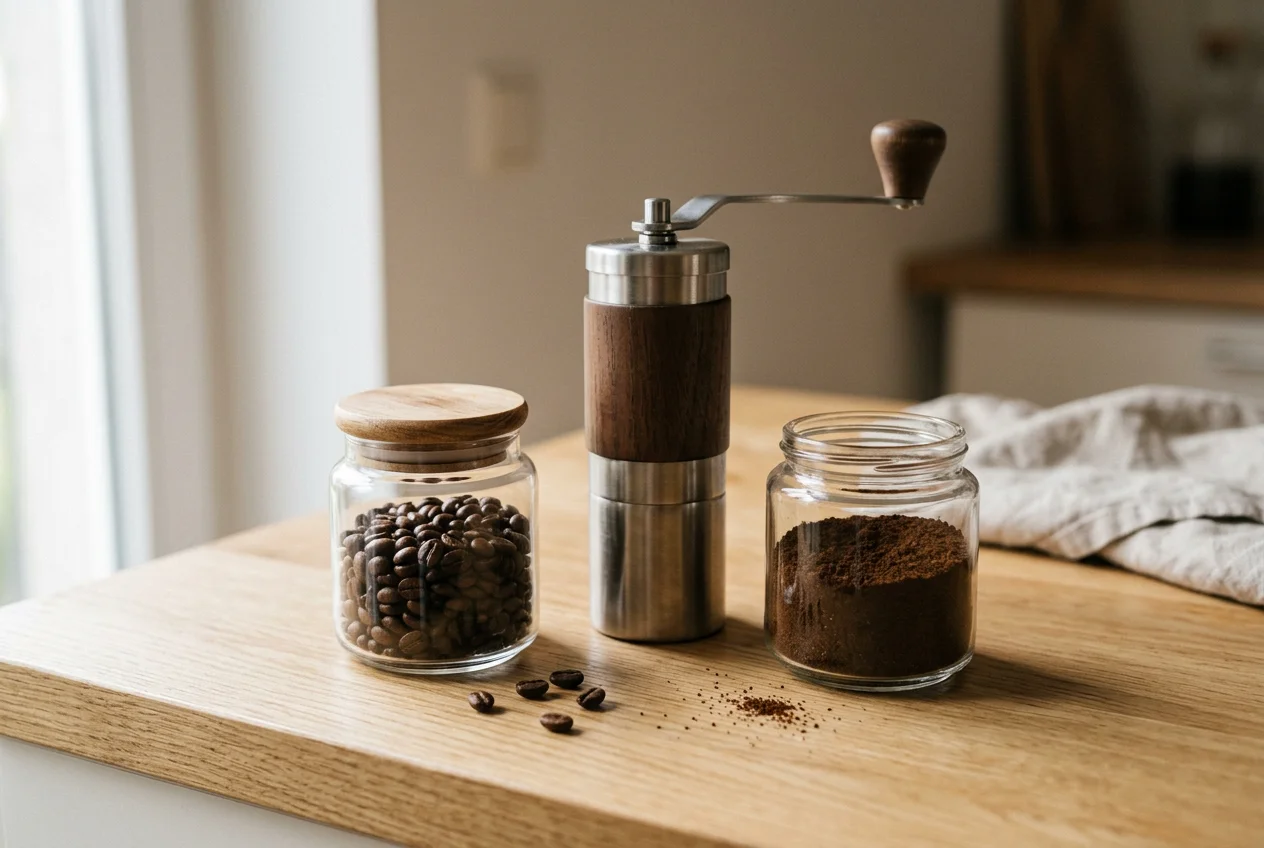
Our tip: If you don't own a grinder yet, a basic burr grinder is the best coffee purchase you can make. My burr vs blade grinder guide explains what to look for.
Rule 2: buy traceable coffee
The second rule is to buy coffee that's traceable to as specific a place as possible. Depending on the coffee, that could be:
- A single farm or estate
- A specific washing station or wet mill
- A local cooperative of smallholder farmers
- At minimum, a growing region or micro-region within a country
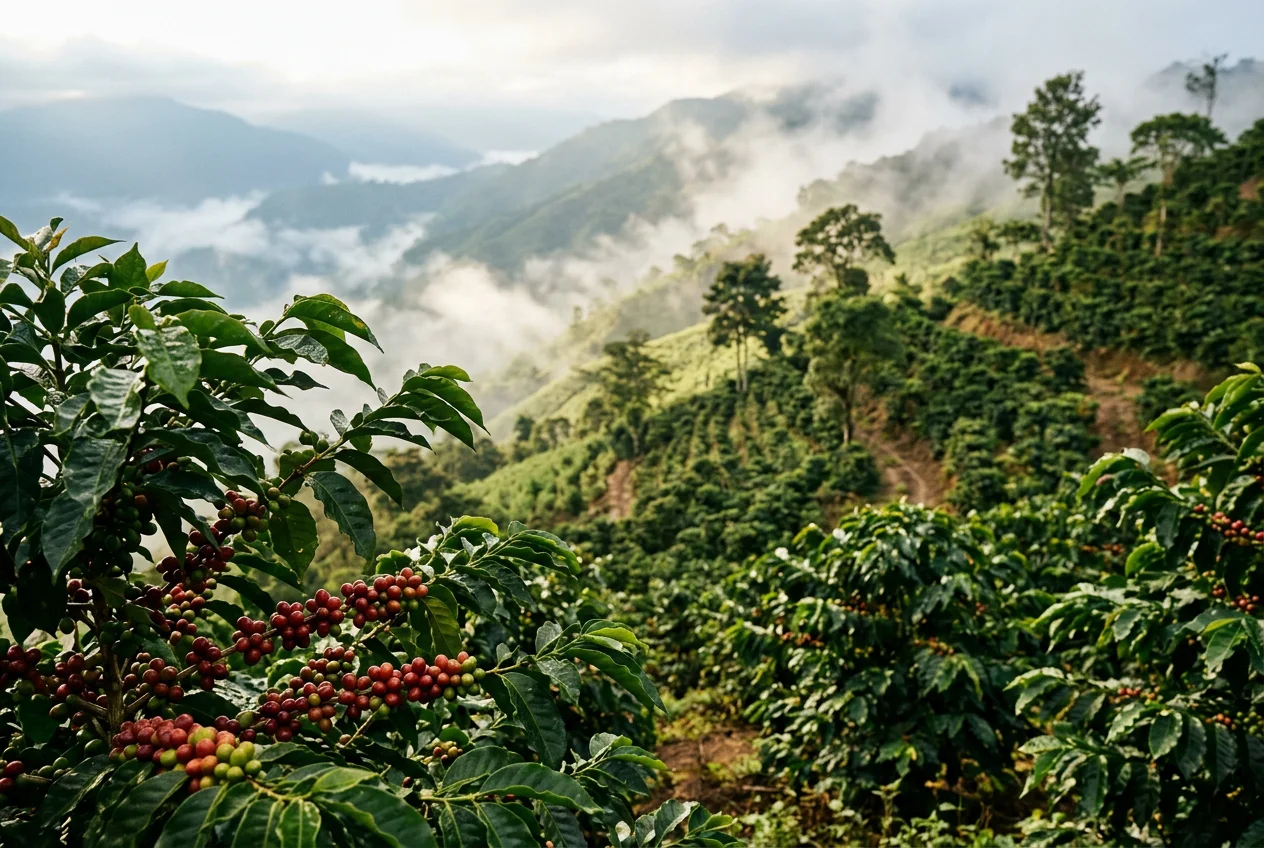
For a long time, commercial coffee was sold only by country: "Colombian", "Brazilian", "Guatemalan".
Think about how you'd feel buying a bottle of wine labeled only "France", with no region, vineyard or grape. You'd be skeptical, and rightly so.
One country holds very different climates, altitudes, soils, processing traditions and coffee varieties. Knowing only that a coffee comes from Colombia tells you little about how it will taste.
Traceability is a quality shortcut
Beyond helping you predict flavor, traceability works as a built-in quality filter.
Keeping a coffee traceable costs money and effort. Producers, exporters, importers and roasters must keep each lot separate through harvest, milling, shipping, storage and roasting, instead of mixing everything into big commodity batches.
Nobody pays to do that for bland or defective coffee. There's no point tracking a coffee that doesn't taste good enough to sell at a higher price.
So detailed origin information on a bag is a reliable sign of better quality. Spending a bit more per bag usually buys noticeably better coffee, and more of that money is likely to reach the farmers who grew it.
Rule 3: buy seasonally
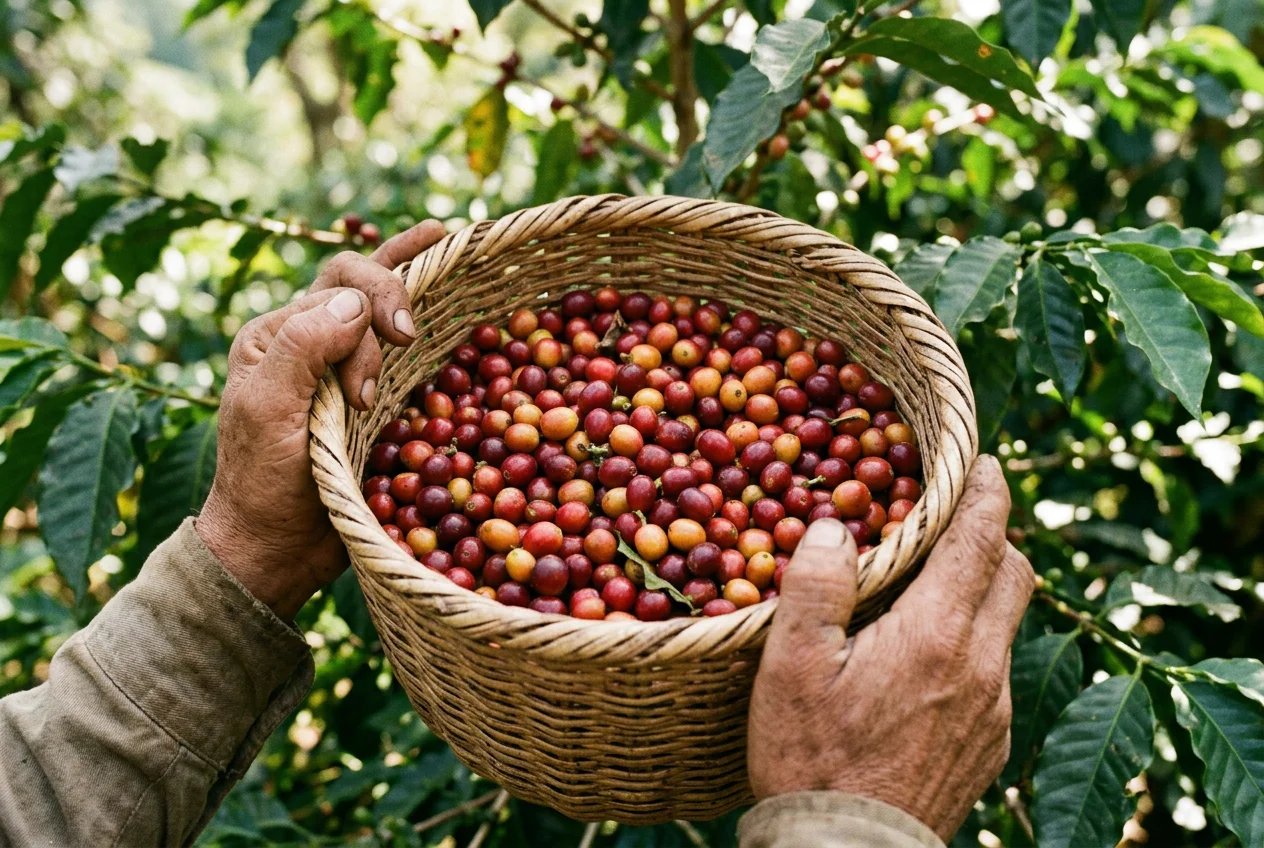
Coffee is a fruit crop, not a factory product. That's easy to forget when it comes in a shiny bag.
Coffee-growing countries sit at different latitudes with different wet and dry seasons. So they harvest at different times of year, and fresh crops arrive in consuming countries in waves.
Green, unroasted coffee lasts much longer than roasted coffee, but not forever. After many months in storage, it slowly loses vibrancy and picks up muted, woody or papery notes.
Traditionally, commercial roasters kept the same menu all year. The same "Guatemalan" stayed on the shelf for twelve months.
It might taste great for the first six or seven months after harvest. For the rest of the year, it came from aging stock that had clearly faded.
Specialty roasters work differently. They rotate coffees as new harvests arrive from different parts of the world.
You don't need to memorize harvest calendars. Just look for roasters and shops whose menus change regularly.
It can be disappointing when a favorite coffee sells out and disappears. But a rotating lineup is one of the best signs that a roaster cares about fresh green coffee.
Our tip: When a coffee you love comes back the following year, buy it again. Same farm, new harvest is one of the most fun ways to taste how weather and season change coffee.
Where to buy coffee
Where you buy decides what's available, what you pay and what freshness information you get. There are three main options: supermarkets, local coffee shops and online roasters.
The supermarket
Pros
Convenience. You're already there or ordering groceries online. No extra trip.
Price. Big chains compete hard and use their scale to keep prices low. You'll usually pay less here than anywhere else.
Cons
Coffee isn't treated as fresh food. Supermarkets file coffee with canned beans and pasta, not with bread and produce.
No roast dates. Best-before dates keep shoppers from worrying about bags that have sat in stock for months.
A slow supply chain. Coffee ships to a central warehouse, sits there, goes to a store, waits in the back room and finally lands on the shelf, often behind older bags. By the time you buy it, it can be months past roasting.
My verdict: you can find well-roasted, traceable coffee in supermarkets today, and it's worth drinking. But freshness will almost always be a compromise.
Local coffee shops and cafés
Pros
Convenience. If you already stop for a morning coffee, grabbing a bag takes no extra effort.
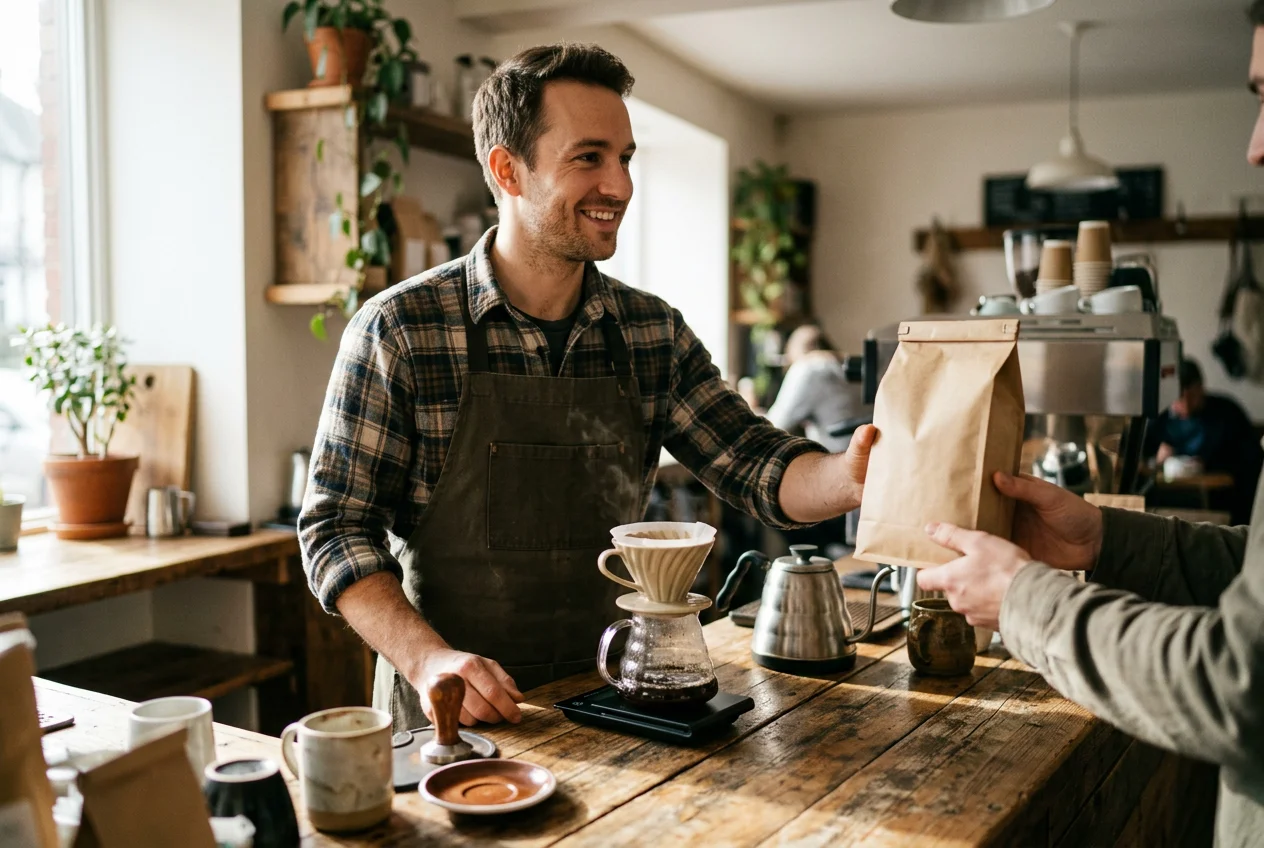
Expert advice. Good cafés have baristas who taste their coffees every day. Tell them what you've liked and they'll point you in the right direction.
Ready-to-brew freshness. Cafés sell through stock quickly and get regular deliveries. Bags on their shelves are often five to seven days off roast, rested enough to brew straight away.
Try before you buy. Many cafés brew the same coffees they sell. Order a cup, confirm you love it, then take a bag home.
Supporting local business. Your money goes to your neighborhood and its coffee community.
Cons
Limited choice. A café can only stock a handful of coffees at a time.
Higher prices. You pay normal specialty prices, not supermarket discounts.
My verdict: local cafés offer the best balance of ready-to-brew freshness, real human advice and the chance to taste first.
Online, straight from roasters
Pros
Huge variety. You can reach hundreds of roasters, every origin, process, roast style and price point.
Fair pricing. Buying direct removes middlemen.
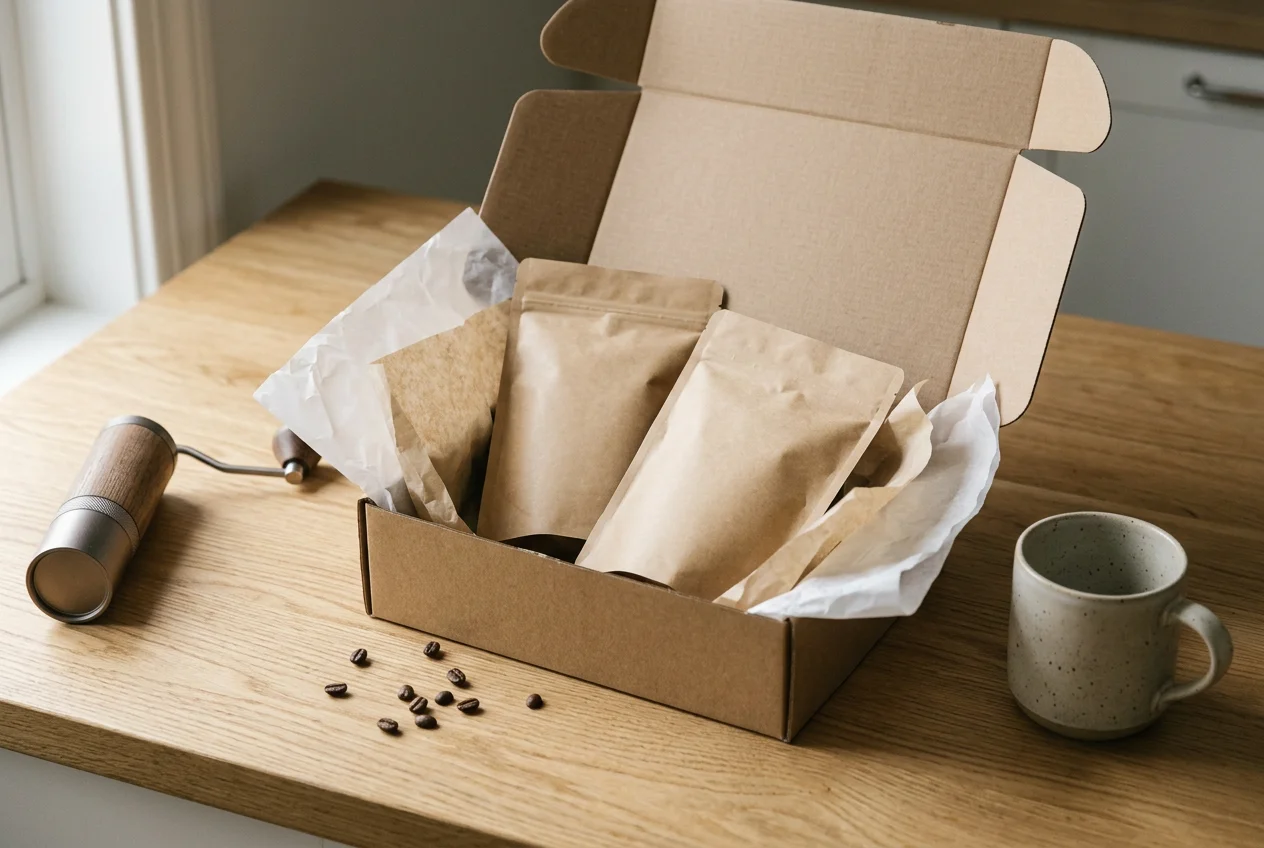
Peak freshness. Many online roasters roast to order and ship the same or next day, so beans arrive one to three days after roasting.
Subscriptions. Automatic deliveries on your schedule mean you never run out.
Cons
You need to plan. Online coffee often arrives very fresh, so you may need to let it rest for several days to a week, especially for espresso.
The smartest trick: order your next bag when you have about a week of coffee left. By the time you finish, the new bag is rested and ready.
| Where to buy | Freshness info | Choice | Price | Best for |
|---|---|---|---|---|
| Supermarket | Best before only | Medium | Lowest | Convenience |
| Local café | Roast date, rested | Small | Specialty | Brewing today, advice |
| Online roaster | Roast date, very fresh | Huge | Fair | Variety, subscriptions |
Our tip: If you drink more than one bag a month, set up a subscription for one reliable staple. Use the rest of your budget for single bags from cafés or new roasters. You get a dependable base and plenty of exploration.
Decoding a bag: roast level vs "strength"
A shelf of coffee bags can be overwhelming, because every brand uses different words. Once you can read a bag, you can predict how the coffee will taste before you buy it.
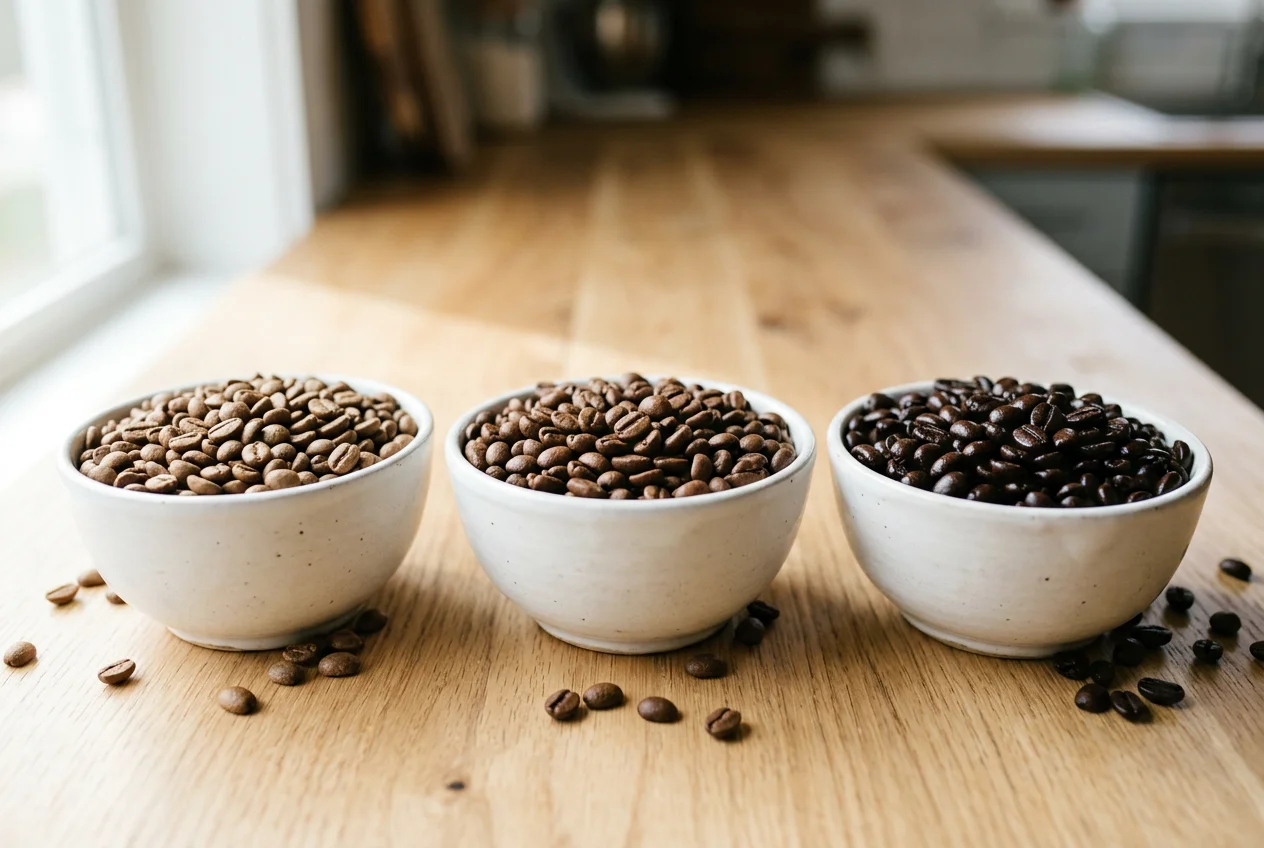
The first thing to look for is the roast level: how light or dark the beans were roasted. It runs from light to medium to dark.
How supermarkets label roast: "strength"
Many supermarket brands avoid "light", "medium" and "dark". They use a strength number instead, such as strength 3, 4 or 5 out of 5, or sometimes a scale to 10.
In specialty coffee, using "strength" this way is technically wrong. Strength means how concentrated the brewed coffee is, decided by how much coffee you use for the amount of water.
Use more coffee and less water, and your cup is stronger, whether the beans are light or dark.
Supermarket scales also rarely include strength 1 or 2, because people associate low numbers with weak coffee. So in practice the scale runs from 3 to 5.
Despite the confusing word, the numbers work as a translation: the higher the strength number, the darker the roast.
How specialty roasters label roast
Specialty roasters often don't print "light roast" on the front. They hint at roast style through brewing advice instead.
Filter or espresso. Many roast separate profiles for each. The espresso version is usually a little darker, to soften acidity under pressure.
Omni roast. Some roasters use one profile that's meant to work for both filter and espresso.
The specialty default. If a specialty bag doesn't mention roast level at all, assume light to medium. That's the standard, because it keeps sweetness and origin character without heavy bitterness. Darker roasts are almost always labeled clearly.
| Roast | Acidity | Body | Typical flavors |
|---|---|---|---|
| Light | High, bright | Lighter | Floral, fruity, tea-like |
| Medium | Balanced | Medium | Caramel, nuts, sweet fruit |
| Dark | Low | Heavier | Dark chocolate, toast, smoke |
For the full picture of every roast stage, see my guide to coffee roast levels.
Understanding tasting notes
Most specialty bags, and more and more supermarket bags, list two to four flavor words. Think "caramel, milk chocolate, hazelnut" or "blackberry, blood orange, jasmine".
These notes do two jobs at once. They try to describe the coffee using familiar foods, and they're marketing designed to make you want the bag.
Tasting notes are not flavorings
This is the most common misunderstanding I hear. "Caramel" on the label doesn't mean caramel syrup was added. "Blueberry" doesn't mean blueberry extract was sprayed on the beans.
The flavors come naturally from compounds created while the coffee grows, gets processed and is roasted. They remind your senses of those foods.
Why you can't always taste them at home
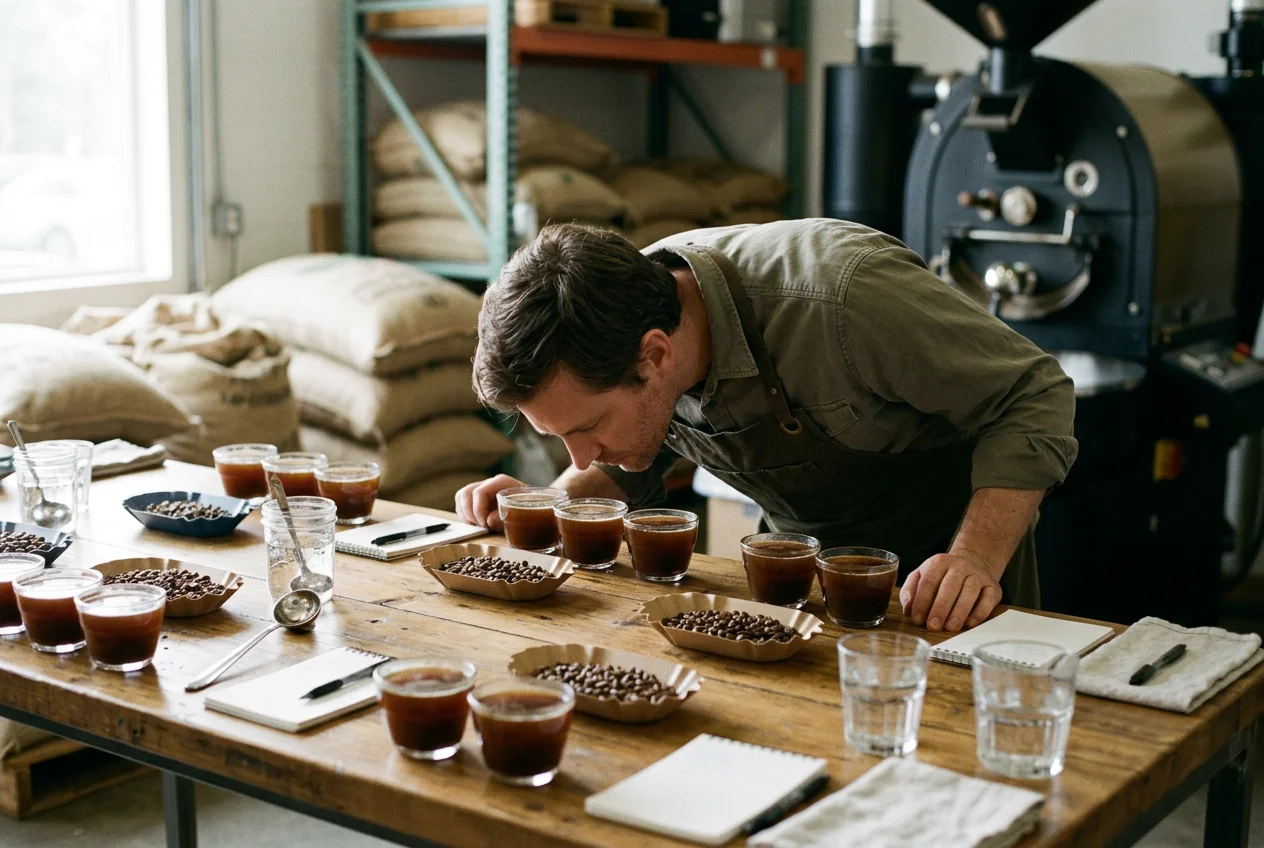
Roasters write tasting notes during cupping sessions, where they taste 10 or 20 coffees side by side.
Next to a Brazilian and a Colombian, a Kenyan's bright berry and citrus notes jump out. Brew that same Kenyan alone on a Tuesday morning, and those notes are much harder to pick out.
So don't feel bad if you can't find "red currant" in your cup. Try brewing two coffees at once and tasting them side by side. It's eye-opening.
Why the most expensive bag might not be for you
Coffee behaves differently from wine at the top end. With wine, paying more usually buys something more classic, balanced and crowd-pleasing.
With specialty coffee, the priciest and rarest bags are often the most unusual and experimental. They can taste intensely floral, tropical or wine-like, and less like "coffee".
If you're eyeing an expensive bag, read the notes carefully. Make sure you want an adventure, not a comforting traditional cup.
The three flavor triggers that predict what you'll like
You can't predict every detail of your taste. But most strong dislikes in coffee come down to three things.
Scan the label for a few key words and you can avoid what you hate, or go looking for what you love.
Trigger 1: body (light and tea-like vs heavy and creamy)
Body is the weight and texture of coffee in your mouth. Many traditional coffee drinkers dislike coffee that feels thin, delicate or tea-like.
The default: if a specialty bag says nothing about body, assume medium.
Light body words: delicate, elegant, tea-like, silky, or strong floral notes like jasmine, bergamot or honeysuckle.
Heavy body words: rich, creamy, velvety, syrupy, full-bodied.
Trigger 2: acidity (bright and fruity vs low-acid and chocolatey)
In coffee, acidity means a pleasant brightness, like biting a fresh apple or the sparkle of citrus. It doesn't mean sourness or stomach trouble.
Still, it's one of the most divisive traits. Some people crave it, others can't stand it.
The fruit words on the bag tell you a lot:
- High acidity: fresh fruit words, especially berries (blackberry, raspberry, red currant), citrus (lemon, lime, grapefruit, orange) or crisp fruit (green apple, pear).
- Mellow acidity: cooked or sweetened fruit words like jammy, stewed plum, raisin or candied orange.
- Very low acidity: no fruit words at all, just chocolate, cocoa, nuts, almond, hazelnut, caramel, toffee or molasses.
Trigger 3: fermented "funky" flavors (washed vs natural)
Perhaps the biggest divide among coffee drinkers is processing: how the seed is separated from the coffee cherry after harvest.
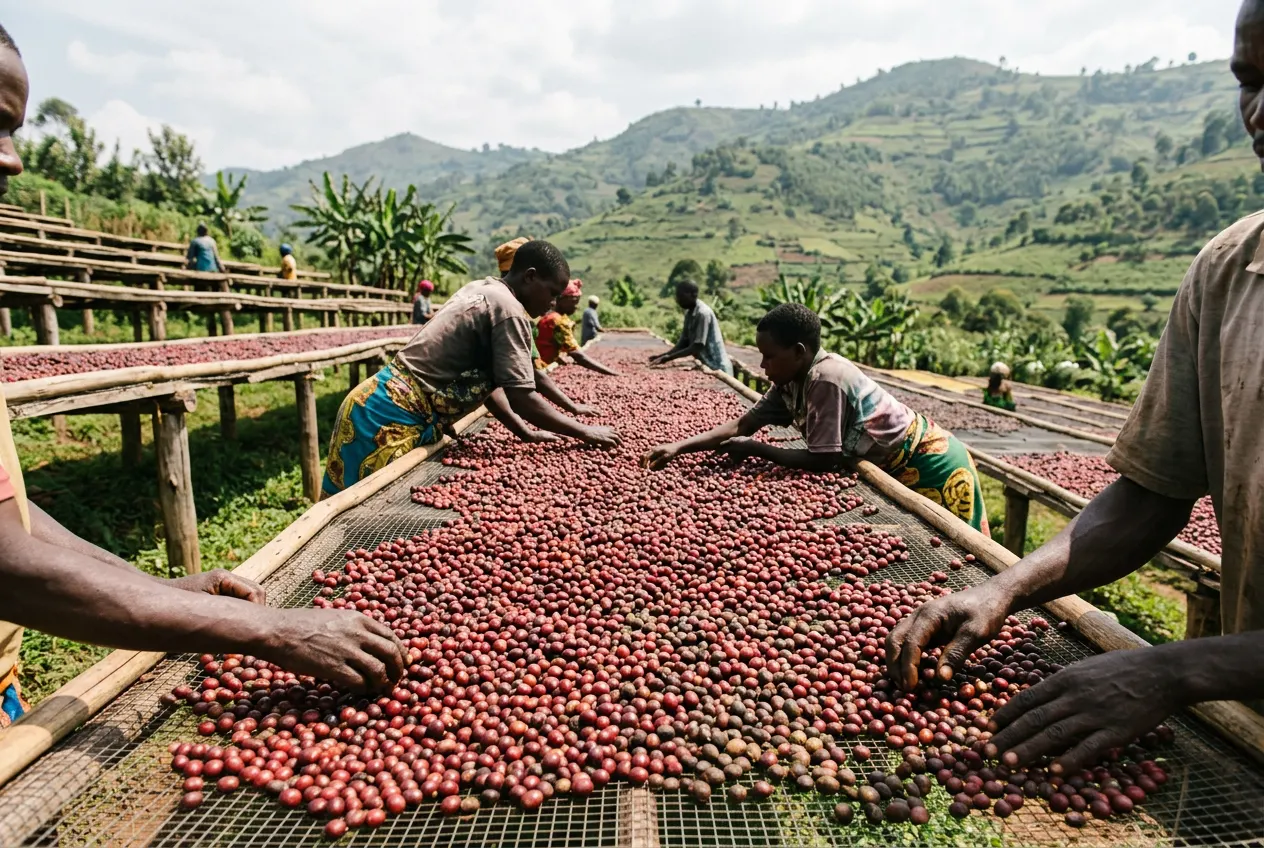
Washed (wet) process. The skin and fruit are removed with water before the beans dry. Washed coffees taste clean, crisp and focused.
Natural (dry) process. The whole cherry, skin, fruit and seed together, dries in the sun for weeks before the dried fruit is removed. Sugars and fermentation compounds move into the seed.
Naturals can taste intensely fruity, boozy, wine-like or "funky". In my notes, roughly 40% of coffee drinkers dislike these fermented notes, while others love them.
How to spot funk on a label: look for "natural", "dry process" or "anaerobic", and tropical or overripe fruit words like pineapple, mango, passionfruit, strawberry, blueberry, boozy or whiskey.
If you dislike funk, avoid naturals unless the roaster stresses a clean, classic, chocolate-and-nut cup. If you want a wild fruit bomb, a natural is your best bet.
Decoding real coffee labels
Here's how I apply these rules to typical bags. You'll see how fast you can predict what's inside.
A supermarket Kenyan coffee
Label: strength 3 of 5. Notes: zesty citrus and blackberry.
Strength 3 is light by supermarket standards, because 1 and 2 barely exist. Fresh fruit words mean bright, high acidity with a clean, crisp profile and light to medium body, no funk.
Love lively coffee? Good grocery pick. Hate acidity? Leave it.
A classic Italian supermarket blend
Label: intensity 5 of 10, medium roast. Notes: rich and full-bodied with chocolate.
"Rich and full-bodied" promises heavy body. No fruit words means very low acidity. Medium roast suggests chocolatey richness without burnt bitterness.
A safe, comforting choice for traditional coffee lovers.
A specialty washed coffee from China
Label: medium roast, washed. Notes: cherry, almond, candied orange, caramel.
Washed and medium means medium body and no funk. The fruit words lean sweet and candied, anchored by almond and caramel.
Expect mild acidity, lots of sweetness and broad appeal.
A specialty natural-process coffee
Label: light roast, natural, roasted for filter. Notes: pineapple, coconut, whiskey.
Natural plus tropical fruit plus boozy notes means strong, fermented, funky fruit. Light roast adds brightness.
Avoid if you dislike funk or acidity. Perfect if you love fruit-bomb coffees.
A supermarket espresso roast
Label: strength 4 of 5, espresso roast. Notes: rich chocolate, spice, toffee.
Espresso roast plus strength 4 means fairly dark, deeply developed but not burnt. No fruit words means very low acidity, medium to full body and pleasant bitterness, great with milk.
| Label | Roast | Acidity | Body | Funk |
|---|---|---|---|---|
| Kenyan, strength 3 | Light-ish | High | Light–medium | None |
| Italian blend, medium | Medium | Very low | Heavy | None |
| Washed China, medium | Medium | Mild | Medium | None |
| Natural, light, filter | Light | High | Medium | Strong |
| Espresso roast, strength 4 | Darkish | Very low | Medium–full | None |
Match beans to your brewer
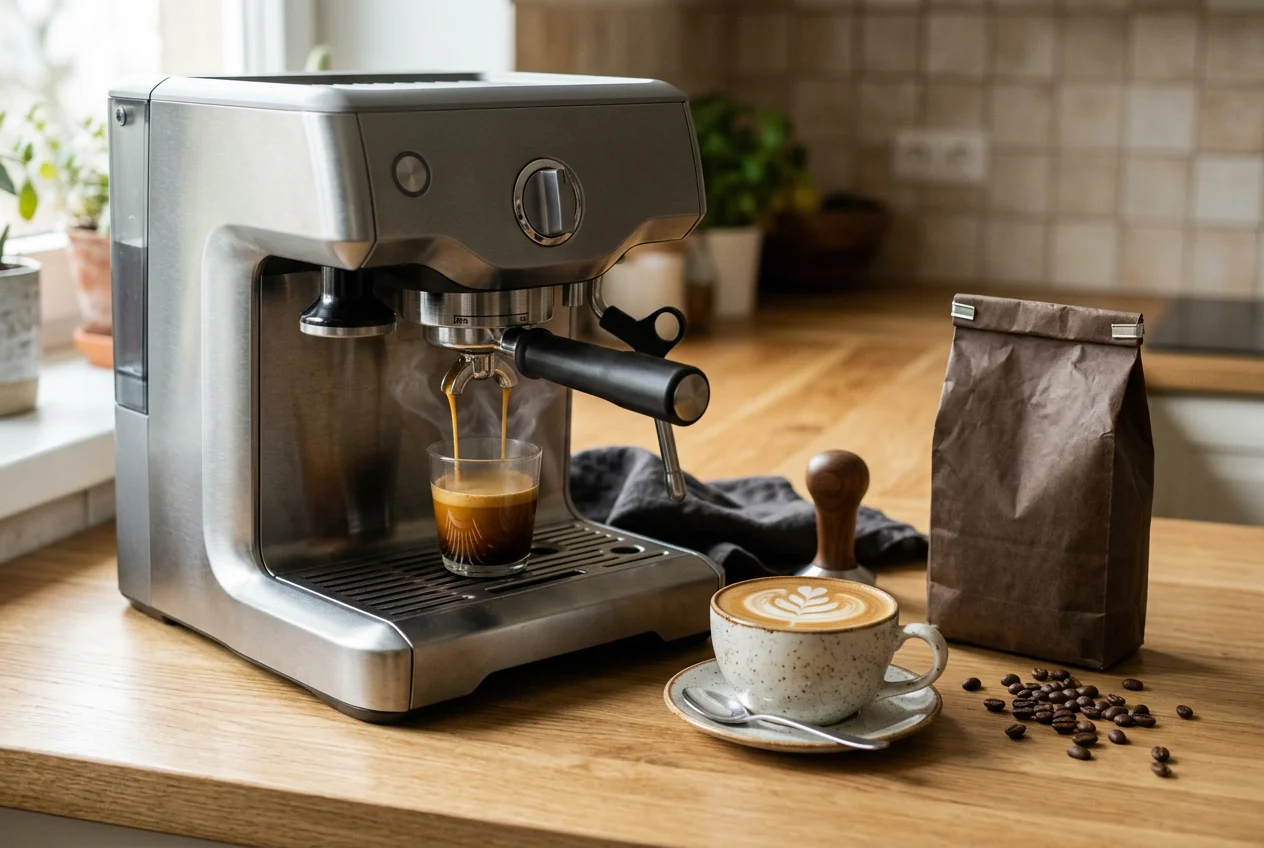
The same coffee can taste quite different depending on how you brew it. These pairings are a good starting point.
| Brewer | Roast that usually shines | Why |
|---|---|---|
| Pour-over | Light to medium | Clarity shows off origin flavors |
| Drip machine | Medium | Balanced and forgiving |
| French press | Medium to dark | Heavy body suits immersion |
| AeroPress | Almost any | Very forgiving brewer |
| Espresso | Medium, espresso roasts | Softer acidity under pressure |
| Cold brew | Medium to dark | Chocolatey, low acid, sweet |
| Milk drinks | Medium to dark | Holds up to milk |
These aren't strict rules. A bright light roast can make a stunning espresso if you like tangy shots, and dark roasts make comforting pour-overs.
But if you're new, matching roast to brewer removes one more variable.
A quick glossary of bag words
Bags are full of terms that sound technical. Here's what the most common ones mean in plain language.
| Word on the bag | What it means | What it tells you |
|---|---|---|
| Altitude or masl | Meters above sea level where it grew | Higher often means denser, brighter coffee |
| Variety or varietal | The type of coffee plant, like Bourbon or Geisha | Some varieties are known for florals or sweetness |
| Process | How the fruit was removed: washed, natural, honey | Clean vs fruity and funky |
| Honey process | Some fruit left on while drying | In between washed and natural |
| Anaerobic | Fermented without oxygen | Often intense, unusual, funky flavors |
| Lot or micro-lot | A small, separated batch | High traceability, often seasonal |
| Producer or farm | Who grew it | Best traceability |
| Roasted for filter | Roast profile for brewing, not espresso | Usually lighter |
| Espresso roast | Roast profile for espresso | Usually a bit darker |
You don't need to memorize all of this. Process, roast and tasting notes alone already tell you most of what you need.
The rest is a bonus that helps you understand why one coffee tastes so different from another.
Mistakes I see people make
Buying more than they can drink fresh
A big bag looks like good value, but if it takes two months to finish, the last half will be stale. Buy what you'll use in two to four weeks.
Trusting the front of the bag
Words like "premium", "gourmet" or "100% arabica" tell you very little. Turn the bag over and look for a roast date, origin and process.
Brewing too soon for espresso
Ultra-fresh beans make wild, foamy, sour shots. Give them a week.
Storing beans in the fridge
Fridges are humid and full of food smells. A sealed, opaque container in a cool cupboard is better for daily beans.
Choosing dark roast for "more caffeine"
Many people pick the darkest bag thinking it has more kick. Roasting barely changes caffeine per bean, and by weight the difference between light and dark is small.
Choose roast for flavor, and control strength with how much coffee you use.
Ignoring the process line
Process often decides whether you love or hate a coffee more than origin does. If you've disliked a "fruity" coffee before, check whether it was a natural, and try a washed coffee from the same country next time.
Giving up after one bad bag
One coffee you didn't like doesn't mean specialty coffee isn't for you. Use the three triggers to adjust your next choice.
How much should you spend?
Price is a fair question, because specialty coffee can look expensive next to a supermarket bag.
I think about it per cup. A typical home cup uses 15 to 20 grams of beans, so a 250 g bag makes roughly 12 to 16 cups.
Even a pricey bag usually works out far cheaper per cup than anything you'd buy in a café.
Where's the sweet spot? In my experience, mid-priced traceable coffees from a good roaster give the biggest jump in quality for the money.
Above that, you're often paying for rarity and unusual flavors rather than a "better" cup in the classic sense.
Our tip: Spend on freshness first, then on traceability. A fresh mid-range coffee nearly always beats a stale expensive one.
Single origin vs blend on the label
You'll often see either a single origin or a blend. Neither is automatically better.
A single origin comes from one place, which can be a country, a region, a cooperative or a single farm. It's the best way to taste what makes a place unique, and it usually changes with the seasons.
A blend mixes coffees from different places. Good roasters blend to create balance and consistency, often for espresso or milk drinks.
If you want a dependable daily coffee that tastes the same every month, a well-made blend is a great choice. If you want to explore, single origins are more exciting.
Even with blends, look for roasters who tell you what's inside. A blend that lists its components is usually more carefully made than one that doesn't.
Building your palate
The more coffees you taste, the easier choosing becomes. You start to recognize what you like and why.
- Keep simple notes.Write the coffee, roast, process and one line on how it tasted. A phone note is enough.
- Taste two at once.Brew small cups of two different coffees side by side. Differences jump out.
- Change one thing at a time.Try a washed and a natural from the same country, or a light and a medium roast of the same coffee.
- Let it cool.Many flavors, especially fruit and sweetness, show up better as coffee cools a little.
- Ask your barista.Tell them two coffees you liked and one you didn't. They'll usually nail your next bag.
After a few months, you'll find the label words start to "taste" in your head before you've even opened the bag.
Once you get the beans home
Choosing well is only half the job. Good beans need good storage to stay good.
Keep beans in their valved bag or an opaque airtight container, away from heat, light and moisture. A cool cupboard is perfect.
Avoid the fridge for daily beans, because of humidity and food smells. Freezing can work for beans you won't open for weeks, but only in small, well-sealed portions.
Grind only what you need, right before brewing. That one habit does more for flavor than almost anything else.
My quick buyer's checklist
- Check the date.Look for "roasted on", not best before. Aim to brew between one and six weeks off roast, with 7 to 14 days of rest for espresso.
- Buy whole beans.Grind right before brewing to keep aroma and get full value.
- Look for traceability.A farm, co-op, washing station or region beats a country name alone.
- Favor rotating menus.Shops that change their coffees regularly are buying fresh harvests.
- Match the shop to your timing.Use a café when you need to brew today and want to taste first. Order online when you have a week of beans left.
- Scan for your deal-breakers.Low acidity: chocolate, nuts, caramel. Heavy body: rich, creamy. No funk: washed, no tropical fruit words.
Follow these steps for a month or two and you'll notice something: you stop gambling. Most bags you bring home will be coffees you actually enjoy.
And when you want to understand how roast changes everything you just read on the label, my guide to how coffee is roasted is the next step.
Frequently asked questions
How do I know if coffee beans are fresh?
Look for a "roasted on" date. For most whole-bean coffee, the best window is about one to six weeks after roasting. A best-before date doesn't tell you when the coffee was roasted.
How long should I wait after the roast date?
For filter coffee, a day or two is enough. For espresso, most people rest beans for 7 to 10 days, sometimes up to two weeks, so the gas from roasting doesn't cause foamy, uneven shots.
Is whole bean coffee better than ground?
Yes. Ground coffee loses aroma quickly once opened, often within a day or two. Whole beans keep their flavor much longer and you grind them right before brewing.
What does "strength" on a coffee bag mean?
On supermarket coffee, strength usually means roast level, with higher numbers meaning darker roasts. In brewing, strength really means how concentrated your cup is, which you control with the amount of coffee you use.
Do tasting notes mean flavor was added?
No. Tasting notes describe natural flavors that remind tasters of foods like caramel or berries. Nothing is added unless the bag says "flavored".
What coffee is lowest in acidity?
Look for medium to dark roasts with notes of chocolate, cocoa, nuts, caramel or toffee, and no fruit words. Washed or classic blends from regions known for chocolatey coffee are a good start.
What is the difference between washed and natural coffee?
Washed coffee has the fruit removed before drying and tastes clean and crisp. Natural coffee dries inside the whole cherry and tastes fruitier, often boozy or funky.
Is supermarket coffee bad?
Not at all. You can find good, traceable coffee in supermarkets. The main downside is freshness, since you usually only get a best-before date and the coffee may be months old.
Where is the best place to buy coffee beans?
For coffee you can brew today and taste first, a local café. For the most variety and freshest beans, online roasters. For convenience and price, the supermarket.
Are expensive coffees always better?
Not for everyone. The priciest specialty coffees are often the most unusual, with intense floral or tropical flavors. If you like classic coffee, a mid-priced traceable bag may suit you better.
How much coffee should I buy at once?
Buy what you'll use in about two to four weeks. That keeps every cup fresh.
What does single origin mean on a bag?
It means the coffee comes from one place, which could be a country, region, cooperative or single farm. The more specific the label, the more it tells you about flavor and quality.

- Michael Reynolds, personal notes from buying, tasting and roastery visits
- Time-resolved gravimetric method to assess degassing of roasted coffee, Journal of Agricultural and Food Chemistry
- Preserving Freshness: A Race Against Time, Specialty Coffee Association
- Coffee Taster's Flavor Wheel, Specialty Coffee Association
Related guides
Coffee roast levels explained Burr vs blade grinder How coffee is roastedWritten by Michael Reynolds. Last updated November 16, 2026.