Burr vs Blade Grinder: Why the Way You Grind Changes Every Cup
Two grinders can cost the same and look alike, yet one makes balanced coffee and the other makes it sour and bitter at once. Here is what actually happens inside each one, and how to choose the right burr grinder for the way you brew.
We choose products independently. We may earn a commission through links on this page; your price stays the same. Affiliate policy
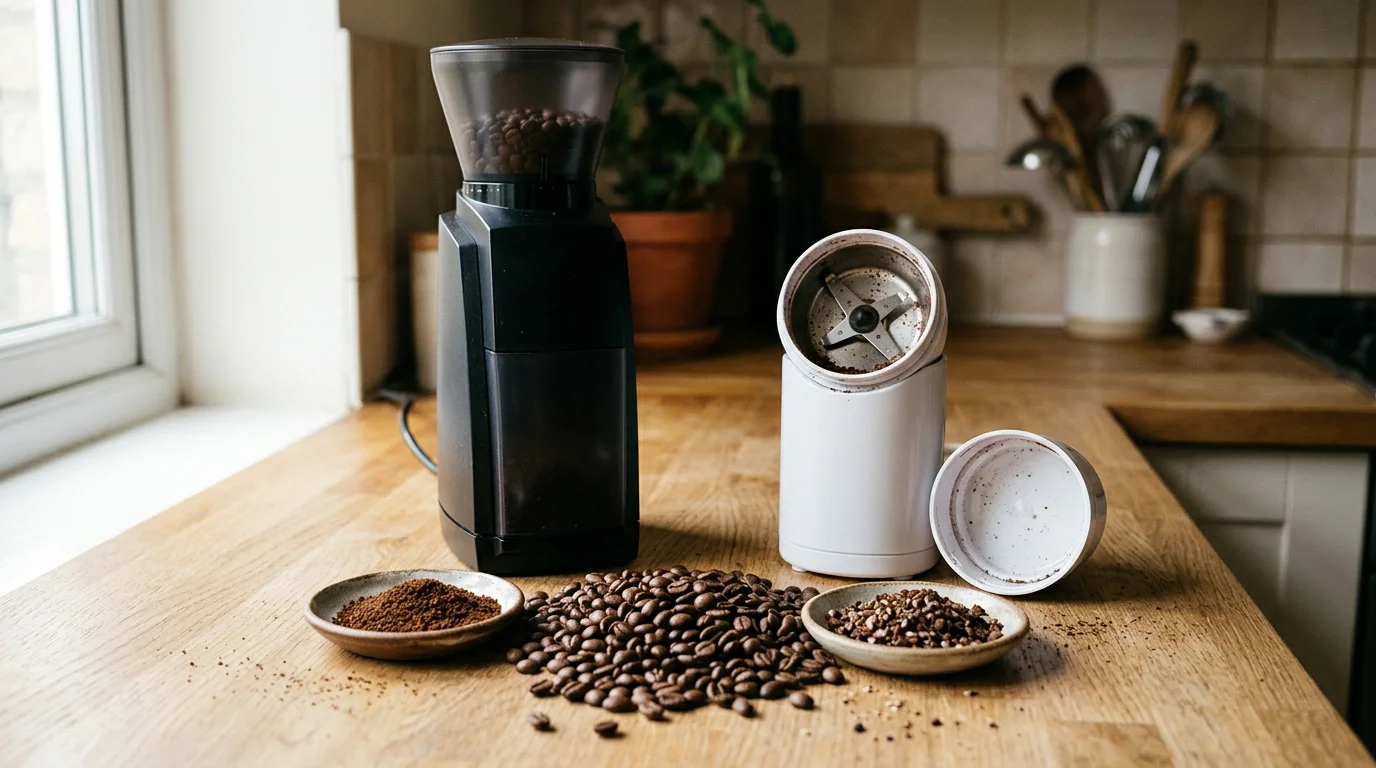
A blade grinder chops beans with a spinning propeller, so you get a random mix of dust and chunks. A burr grinder crushes beans between two burrs set at a fixed gap, so most particles come out close to the same size.
Even particles extract evenly. Uneven particles extract at different speeds, which gives you a cup that tastes sour and bitter at the same time.
For every brew method, from drip to espresso, a burr grinder is the better choice. If money is tight, a cheap burr grinder (or pre-ground coffee from a roaster) beats a blade grinder.
Two grinders, two very different jobs
When you shop for a grinder, you see two kinds straight away: burr grinders and blade grinders.
Those names have nothing to do with price, brand or whether the grinder is electric or manual. They describe the part inside that turns whole beans into grounds.
I've owned both. My first grinder was a cheap blade model that sat next to my kettle for years, and I honestly thought it was fine.
The day I swapped it for a basic burr grinder, the same beans suddenly tasted sweeter and cleaner. Nothing else in my routine changed.
That experience is why I tell everyone the same thing: understanding this one difference is the biggest step you can take toward better coffee at home.
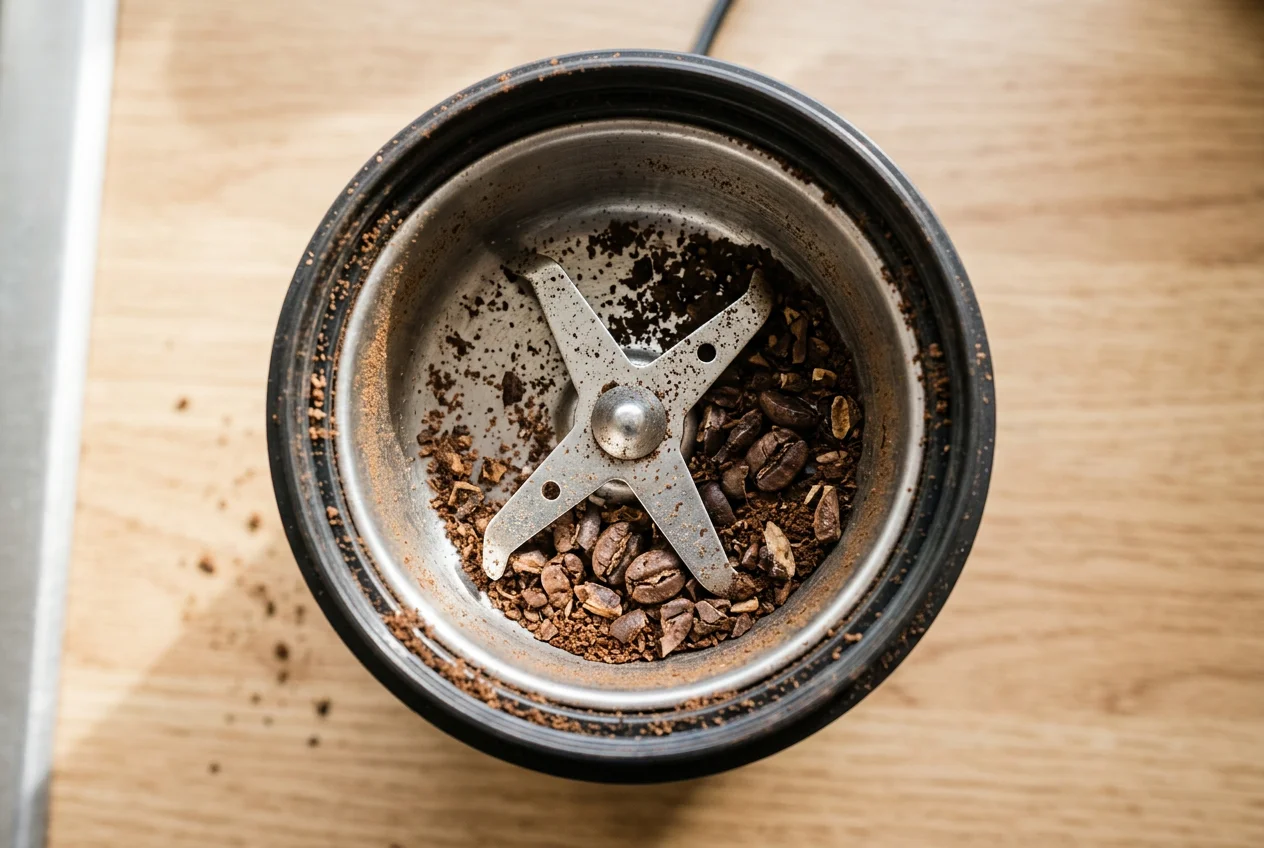
A blade grinder works like a tiny blender. A metal propeller spins fast and smashes whatever it hits.
A burr grinder works more like a mill. Two textured surfaces, either flat rings or a cone inside a ring, crush the beans until the pieces are small enough to pass through a gap you've chosen.
Both machines reduce beans to grounds. But how they get there, and what that does to flavor, could hardly be more different.
| Feature | Blade grinder | Burr grinder |
|---|---|---|
| How it works | Spinning blade chops randomly | Two burrs crush to a set gap |
| Grind size control | Only by grinding time | Dial or collar setting |
| Particle consistency | Very uneven | Mostly even |
| Fines (dust) | Lots | Fewer |
| Repeatability | Poor | Good |
| Best for | Spices, if anything | Every coffee brew method |
| Typical price | Cheap | From budget hand grinders up |
Why grind consistency decides flavor
To see why the grinder matters so much, it helps to know what brewing really is.
Brewing coffee is extraction. Hot water acts as a solvent and pulls flavor compounds, oils, acids and sugars out of the ground coffee.
Several things control how fast that happens: water temperature, brew time, stirring and your coffee-to-water ratio. But one of the biggest factors is surface area, and that's set by grind size.
Smaller pieces extract faster
When you break a bean into pieces, the total surface area exposed to water goes up dramatically.
Fine grounds have far more surface area than coarse grounds of the same weight. Water reaches more coffee at once, so extraction happens faster.
Coarse grounds expose less surface. Water works on them more slowly.
That's why espresso uses a very fine grind for a 25 to 30 second shot, while a French press uses a coarse grind for a four minute steep.
The ideal: every particle the same size
In a perfect world, every particle in your dose would be identical. They'd all absorb water and release flavor at the same rate.
Then you could stop brewing at the exact moment every particle hits its sweet spot. That's when you capture sweetness and complexity, before the harsh, drying compounds start coming out.
What uneven grounds do to your cup
A poor grinder produces a mix of big "boulders" and tiny dust. In coffee, that dust is called fines.
Those two extremes extract at very different speeds:
- Fines over-extract almost instantly. They release harsh, bitter, dry and astringent flavors.
- Boulders under-extract. Water can't reach their centers in time, so they add sour, sharp, grassy or hollow notes.
Here's the part people don't expect. Those two flaws don't cancel each other out.
You don't get a "balanced average". You get a muddled cup that tastes sour and bitter at the same time.
So the main job of any good grinder is uniformity: getting as many particles as possible into a narrow size range, so they all finish extracting together.
How much of a dose lands near the target size (illustrative)
Illustrative comparison based on typical sieve tests. Real results vary with beans, settings and grinder condition.
Research backs this up. A 2024 study in Scientific Reports on espresso found that the particle size distribution, not just the average size, shapes how coffee extracts. More fines made the coffee bed less permeable and slowed the flow.
That's useful for understanding grinders. Two grinders can produce the same average particle size and still brew very different coffee, because one makes far more dust and chunks than the other.
The potato test: chopping vs milling
I find the easiest way to explain the difference is with a potato you want to fry.
The blade approach
Imagine putting a whole potato in a bowl and hacking at it with a knife, without looking.
The more you chop, the smaller the average piece gets. But the cutting is random: the knife hits whatever is in its path.
Some pieces get struck again and again until they're mush. Others get pushed to the edge and barely get touched.
The only way to get anything close to uniform is to keep chopping until everything is a paste. You can't "set" a size. You just keep going until it looks about right.
With a blade grinder, the only things you control are how long it runs and the shape of the blade.
The burr approach
Now imagine two rigid, textured plates held a fixed distance apart. To pass between them, each piece of potato must be cut down to the width of that gap.
Once a piece is small enough, it falls through and leaves the cutting area. It doesn't get cut again.
That's exactly what burrs do with coffee. The gap sets the size, and finished particles exit the chamber.
What happens in the pan
Fry both batches and the difference is obvious.
The randomly chopped potato cooks unevenly. By the time the big chunks are soft, the tiny slivers are burnt and bitter. Take it off earlier, and the chunks are still raw in the middle.
The milled potato is all the same size. Every piece is done at the same moment, with the right texture and flavor.
Coffee grounds behave the same way in your brewer. Burr grinders help everything brew evenly, while blade grinders guarantee over-extraction and under-extraction in the same cup.
Can you fix blade-ground coffee by sifting?
Because uneven grounds hurt flavor so much, some coffee fans try to rescue them. They use fine kitchen sieves or dedicated coffee sifters to remove the sizes they don't want.
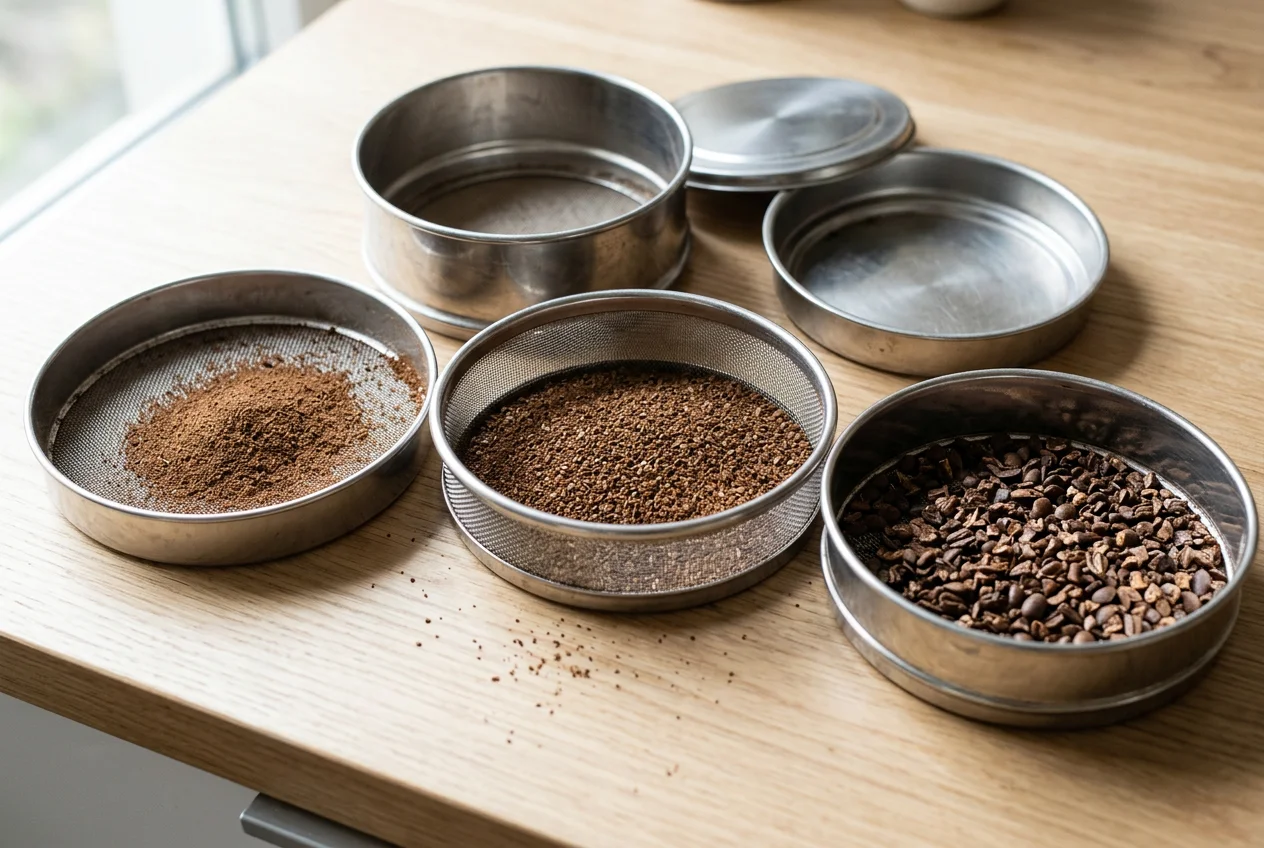
A multi-layer coffee sifter uses stacked mesh screens to split ground coffee into three groups:
- Fines.The dust that falls through the smallest screen.
- Boulders.The large pieces that stay on top of the biggest screen.
- The sweet spot.The particles caught in the middle, within a narrow, even size range.
Sifting does work. Removing the worst offenders makes the cup clearer and sweeter.
But it has real downsides for everyday use.
It takes time
Assembling, shaking and cleaning a sifter adds several minutes to your morning. On a weekday, that adds up fast.
It wastes coffee
You throw away everything outside the target range. Even with a decent burr grinder, expect to discard roughly 10 to 20% of each dose.
With blade-ground coffee, the loss easily climbs to 30 or 40%, just to get a consistent batch.
Over a year, throwing away a third of your specialty coffee becomes expensive and wasteful.
In my view, sifting to compensate for a bad grinder is a band-aid. Put that money into a capable burr grinder and you won't need to sift at all.
Our tip: If you already own a sifter, keep it for experiments. It's great for learning what fines taste like, but don't make it part of your daily routine.
What professionals use (and what to buy on a budget)
In specialty coffee, the verdict is clear. Behind the counter of any good café or roastery, you will not find a blade grinder.
Commercial bars use all sorts of grinders, with different burr sizes, motors, dosing systems and hoppers. The one constant is that they all use burrs.
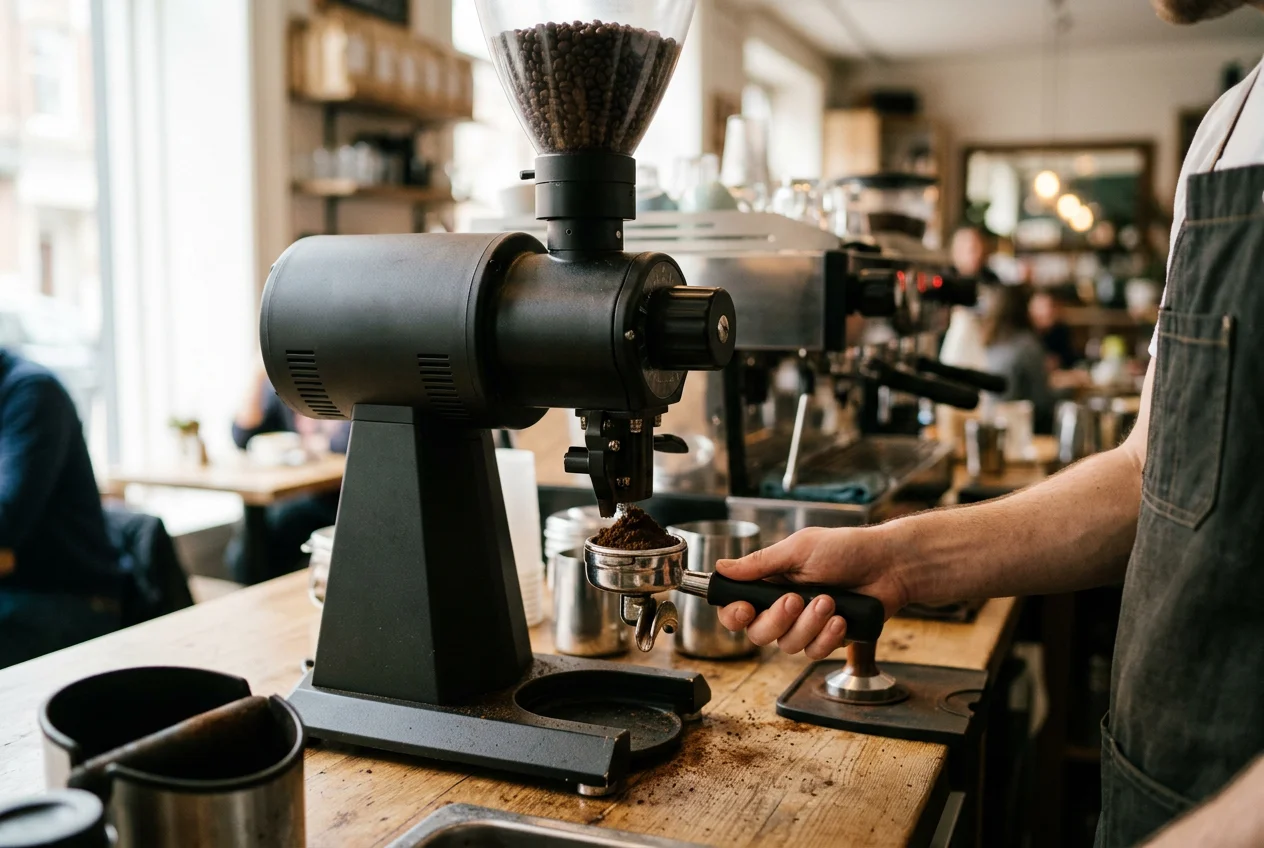
Blade grinders simply can't give the repeatable, even results a business needs. The output is too unpredictable for baristas to dial in a recipe and keep it consistent from cup to cup.
Don't buy a blade grinder as a "stepping stone"
At home on a tight budget, it's tempting to buy a cheap blade grinder for now and upgrade later.
I'd skip that step. A blade grinder isn't a reasonable temporary compromise.
If money is limited, buy an inexpensive entry-level burr grinder instead. A manual one gives you the most burr quality for the money.
Pre-ground from a roaster beats blade-ground at home
Here's an option people overlook. Buy coffee ground by your local roaster on their commercial burr grinder.
Pre-ground coffee loses some aroma over a week or two. But it will still brew a sweeter, more balanced cup than fresh beans chopped in a blade grinder.
Ask them to grind for your brew method, buy smaller bags more often, and keep the bag sealed.
| Option | Freshness | Consistency | My verdict |
|---|---|---|---|
| Blade grinder at home | Fresh | Poor | Avoid |
| Pre-ground by a roaster | Fades over 1–2 weeks | Very good | Good budget option |
| Budget burr grinder | Fresh | Good | Best value |
| Quality burr grinder | Fresh | Very good | Best long term |
Burr material: ceramic vs stainless steel
Once you've decided on a burr grinder, the choices start. The first one is what the burrs are made of.
Burrs are mostly made of hardened ceramic or machined stainless steel. Each has strengths and trade-offs.
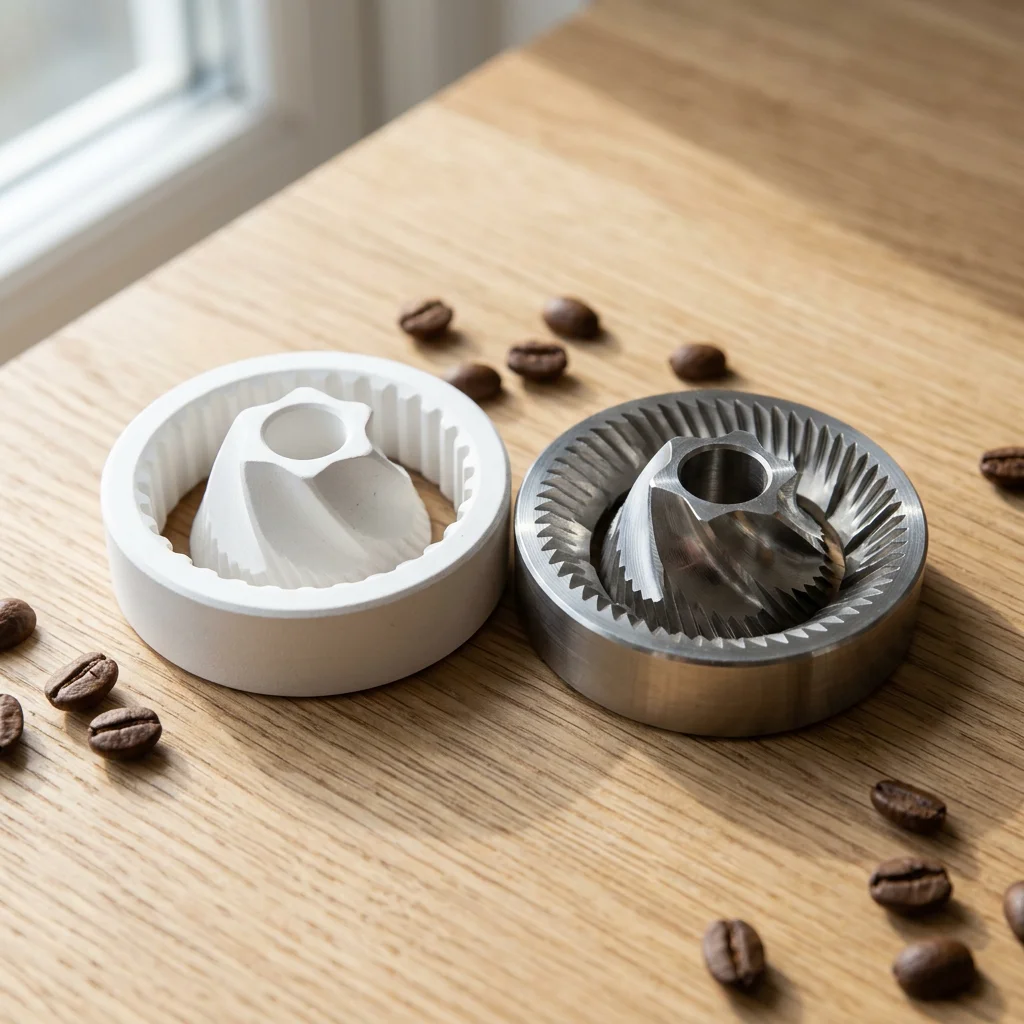
Ceramic burrs
Longevity. Ceramic is very hard and resists wear, so ceramic burrs usually keep their edges longer than standard steel.
Grind range. Ceramic burrs are molded rather than machined to razor-sharp edges, so they tend to crush rather than slice. Many struggle to produce the very fine, even grind true espresso needs.
Fragility. Ceramic is brittle. A tiny stone that slipped through processing can chip or crack it.
Stainless steel burrs
Sharpness and precision. Machined steel burrs start out much sharper. They cut beans cleanly, make fewer stray fines and stay more uniform at fine settings. That's why steel is preferred for espresso.
Wear. Steel is softer than ceramic, so the edges dull faster over years of heavy use and eventually need replacing.
Toughness. Steel won't shatter if it meets a stray pebble.
Burr wear is real, even on commercial machines. Barista Hustle reports research where sharp new burrs allowed noticeably higher extractions than burrs that had already ground well over a thousand kilos.
At home you'll grind far less, so a decent burr set lasts a long time. But if your grinder is many years old and shots run fast and taste thin, worn burrs are worth checking.
Burr shape: flat vs conical
Burrs come in two shapes, and each changes how the grinder behaves.
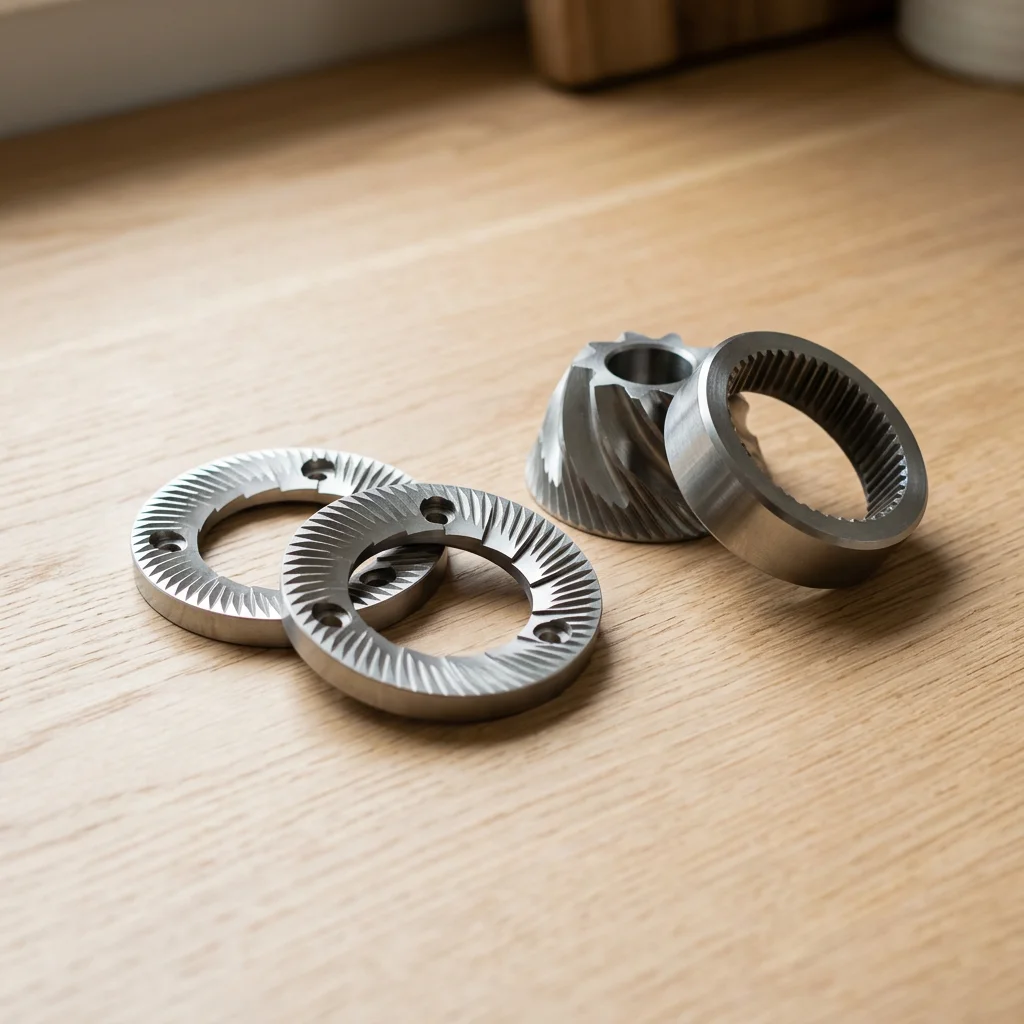
Flat burrs
A flat set has two identical rings with teeth on their faces. They sit parallel, one fixed and one spinning, and beans are thrown outward through the gap.
Advantages: flat burrs are known for very even grinds and excellent clarity and sweetness in the cup.
Drawbacks: the two rings must be perfectly parallel, which needs tight manufacturing and a rigid housing. That pushes prices up. Flat burr grinders also tend to create more heat and hold back a little more coffee inside.
Conical burrs
A conical set has an outer ring with angled teeth and a cone that sits inside it. Gravity feeds beans down through the narrowing gap.
Advantages: conical grinders are usually cheaper to make and buy. Because gravity helps, the motor can turn slower, which means less heat, less friction and less noise.
Drawbacks: they generally produce a slightly wider spread of particle sizes than high-end flat burrs. For most brew methods, they still perform very well.
| Factor | Flat burrs | Conical burrs |
|---|---|---|
| Grind evenness | Very high | High |
| Flavor style | Clarity, separation | Body, rounder cup |
| Heat and noise | More | Less |
| Retention | Slightly more | Slightly less |
| Price | Usually higher | Usually lower |
| Hand grinders | Rare | Almost all |
I wouldn't stress about this choice at entry level. A well-built conical grinder will make better coffee than a poorly aligned flat one.
Noise, and manual vs electric
Noise is something few people think about until the first early morning.
Most electric burr grinders, especially entry-level and mid-range ones, are loud. Grinding at 6 a.m. with a fast motor can wake the whole house.
If that's a concern, a manual conical hand grinder is the answer. There's no motor, just the quiet crunch of beans being milled.
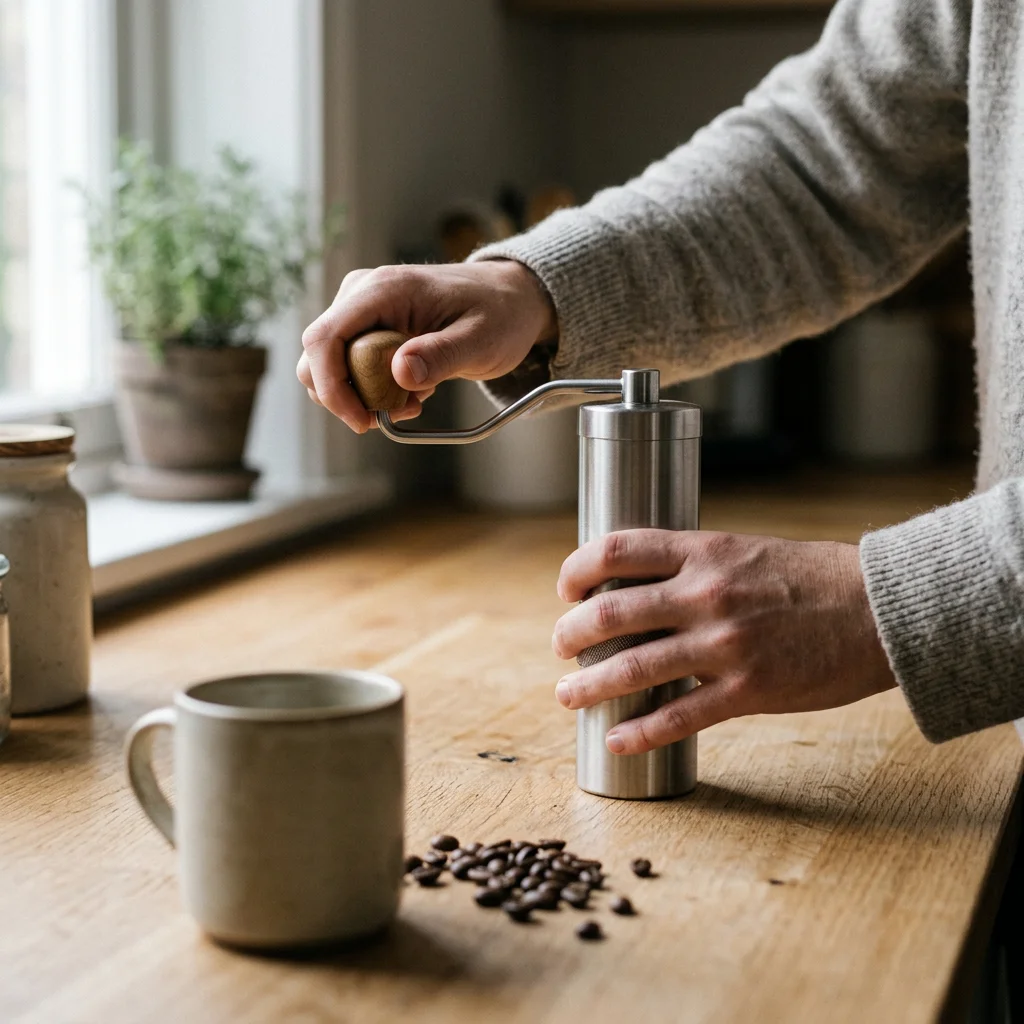
There's a second reason I love hand grinders. You aren't paying for a motor, circuit boards or a heavy housing.
So at the same price, a $100 hand grinder almost always has better burrs and build quality than a $100 electric grinder.
The trade-off is effort and time. Grinding 20 grams by hand takes me well under a minute for filter coffee, but fine espresso grinding takes longer and more muscle.
The wobble problem in budget grinders
When you shop for affordable conical grinders, especially hand grinders, check how the central shaft is supported.
In many cheap models, the shaft that holds the inner cone isn't held firmly by bearings along its length.
Without two bearings locking it in place, the cone can wobble sideways when it hits hard, dense beans.
At fine settings, the burrs are close together and support each other, so the wobble is small. Open them up for French press or cold brew, though, and the shaft has room to move.
That wobble makes the gap change constantly while you grind. The result is a very uneven coarse grind.
Popular budget ceramic hand grinders like the Hario Skerton are great value, but they're known for this wobble at coarse settings.
A practical workaround
If your budget grinder wobbles, don't force it to grind coarse. Set it to medium-fine, where the burrs steady each other and the grind is far more even.
Then adjust your recipe so the finer grind doesn't over-extract.
- Grind a bit finer than usual.Pick a medium-fine setting where the grind looks even.
- Lower the water temperature slightly.Try a few degrees cooler to slow extraction.
- Shorten the brew time.Cut steeping or drawdown time a little.
- Taste and adjust.If it's bitter, shorten further. If sour, extend slightly.
When buying, look for the words "dual bearing" or "double bearing" in the specs. It's one of the best quality signals in a budget hand grinder.
Burr size, motor and capacity
Bigger burrs don't automatically mean better-tasting coffee.
The main benefit of moving from small burrs, around 38 to 40 mm, to large commercial burrs of 64 or 83 mm is speed. More cutting surface grinds a dose much faster.
But large burrs need heavier, higher-torque motors and sturdier bodies. That means a bigger footprint on the counter and a much higher price.
At home, making one or two cups a day, commercial speed rarely matters.
Capacity matters more than you think
A more practical point is how much the grinder holds, especially with hand grinders.
Some compact travel grinders only fit enough beans for one small cup. Having to fill, grind and empty twice for one mug quickly gets tedious.
Check that the bean chamber and catch cup hold a full morning dose, typically around 20 to 40 grams of whole beans.
| Burr size | Typical grinder | Grind speed | Main trade-off |
|---|---|---|---|
| 38–40 mm | Hand and compact electric | Slow to moderate | Effort or time |
| 48–54 mm | Mid-range electric | Moderate | Size and price |
| 64 mm | Prosumer flat burr | Fast | Bulk and cost |
| 83 mm and up | Commercial | Very fast | Very bulky, expensive |
Stepped vs stepless adjustment
The last big choice is how you adjust the gap between the burrs. Grinders are either stepped or stepless.
Stepped grinders
A stepped grinder clicks into fixed positions: setting 1, setting 2, setting 3 and so on.
I think of it like paint swatches. Between white and black you get ten specific shades of grey. You can pick swatch 4 or swatch 5, but nothing in between.
Stepless grinders
A stepless grinder uses a worm gear or smooth collar with no clicks. You can stop anywhere across the whole range.
That's like a smooth gradient from white to black. You can choose any exact shade you want.
Which one do you need?
For filter coffee (drip, pour-over, French press, AeroPress), a stepped grinder is plenty precise. These methods are forgiving, and a good set of steps lets you dial in great coffee easily.
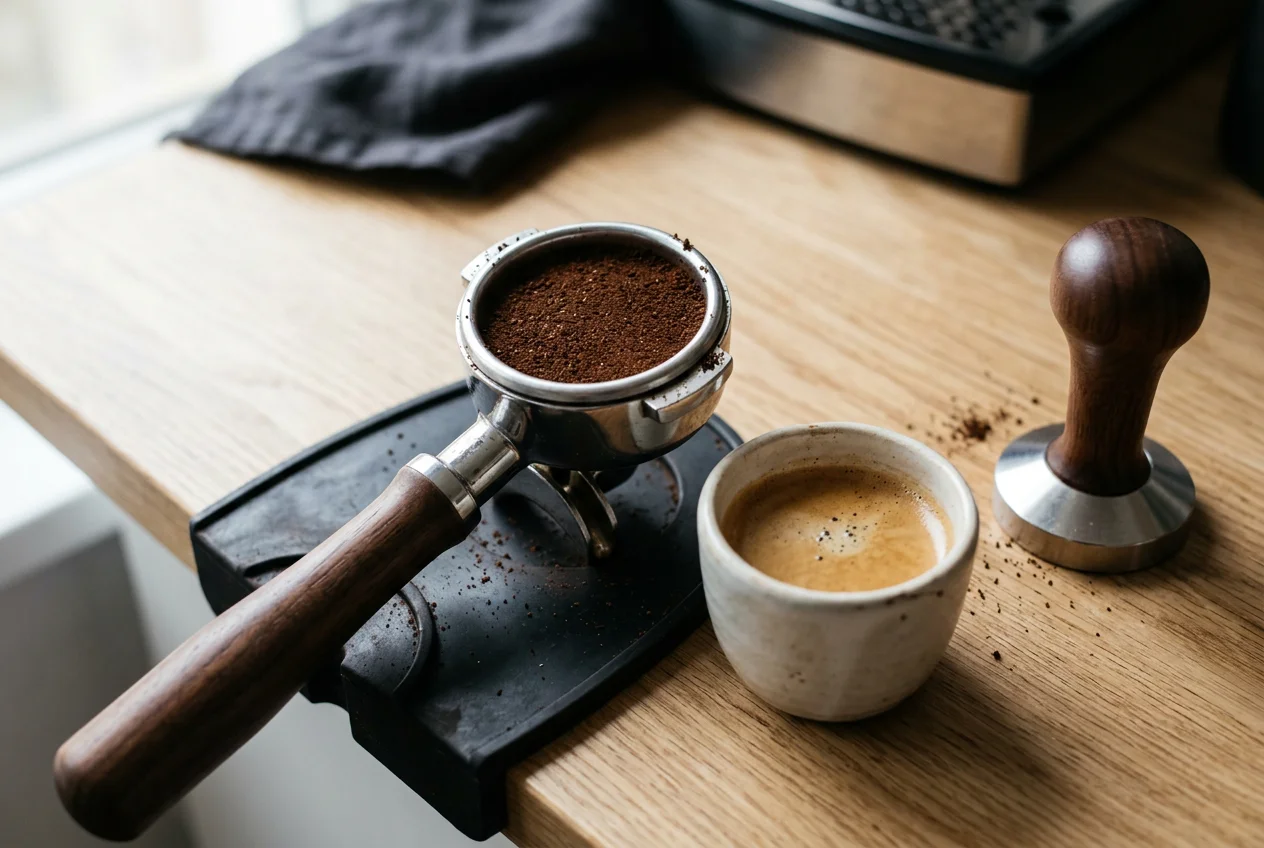
For espresso, I'd pay extra for stepless. Espresso pushes pressurized water through a tightly packed puck of fine coffee, so the margin for error is tiny.
The classic "5.5" problem
A well-known example is the Rancilio Silvia espresso machine paired with the Rancilio Rocky grinder. They're often sold together as a home barista set, but the Rocky is stepped.
You pull a shot at setting 5 and it's too fine. The machine chokes and the espresso drips out painfully slowly.
So you click once coarser to 6. That single step is too big, and the next shot gushes out in a few seconds.
The perfect setting is "5.5", and a stepped grinder simply can't stop there without modification. A stepless grinder lets you nudge the burrs by a hair and land exactly where you need to be.
Heat, static and retention
Three smaller issues come up once you own a burr grinder. None of them is a deal-breaker, but knowing about them helps.
Heat
Friction warms the burrs and the coffee. Blade grinders are the worst here, because they run until the beans are small enough, often heating them noticeably.
Burr grinders run for a shorter, controlled time. Slower conical burrs create the least heat, which is one reason they're popular at home.
Static
Freshly ground coffee loves to cling to plastic, especially in dry winter air. That means chaff and fines sticking to the chute and catch cup, and a mess on the counter.
A tiny spray of water on the beans before grinding, just a single mist on the dose, reduces static a lot. Many home baristas do this daily.
Retention
Retention is coffee that stays inside the grinder after you finish. The next time you grind, that stale coffee mixes with your fresh dose.
For a single cup, even a gram or two of old grounds can dull flavor. Low-retention grinders, or a quick purge of a few beans before your real dose, solve it.
Grind size by brew method
A burr grinder only helps if you set it right for your brewer. These are the starting points I use.
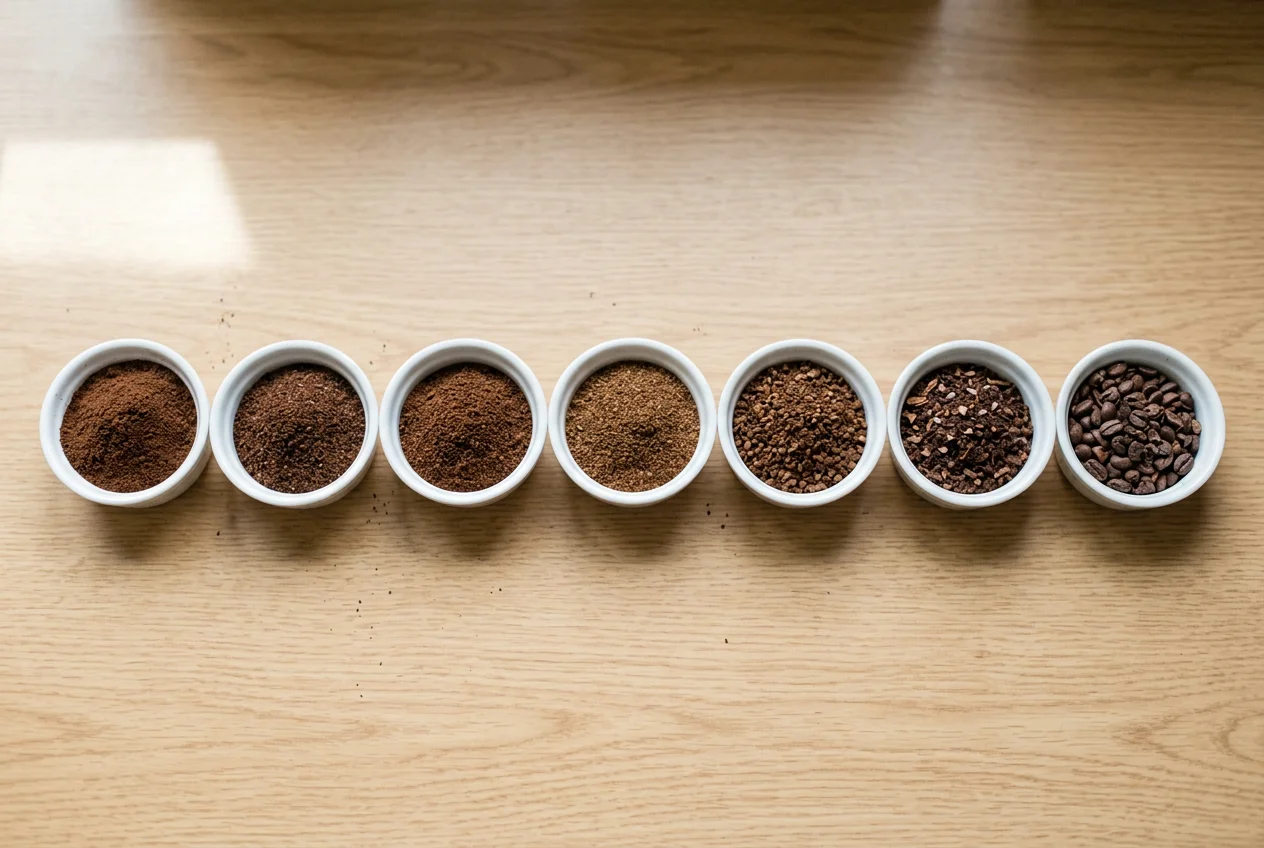
| Brew method | Grind size | Looks like | Contact time |
|---|---|---|---|
| Espresso | Fine | Fine sand, slightly clumpy | 25–30 sec |
| Moka pot | Fine to medium-fine | Table salt | 4–5 min |
| AeroPress | Medium-fine | Fine sand | 1–3 min |
| Pour-over cone | Medium-fine to medium | Sea salt | 2.5–4 min |
| Drip machine | Medium | Coarse sand | 4–6 min |
| French press | Coarse | Breadcrumbs | 4 min |
| Cold brew | Extra coarse | Cracked pepper | 12–24 hrs |
Starting points only. Every grinder's numbers differ, so adjust by taste.
Use taste to fine-tune. If your coffee is sour, thin or watery, grind finer. If it's bitter, harsh or drying, grind coarser.
Change one thing at a time. If you change grind, dose and water temperature together, you won't know what helped.
Our tip: Write down your grinder setting for each brewer on a piece of tape stuck to the grinder. It saves a lot of guessing when you switch methods.
Looking after your burr grinder
A burr grinder lasts many years if you treat it well. A little care also keeps the grind consistent.
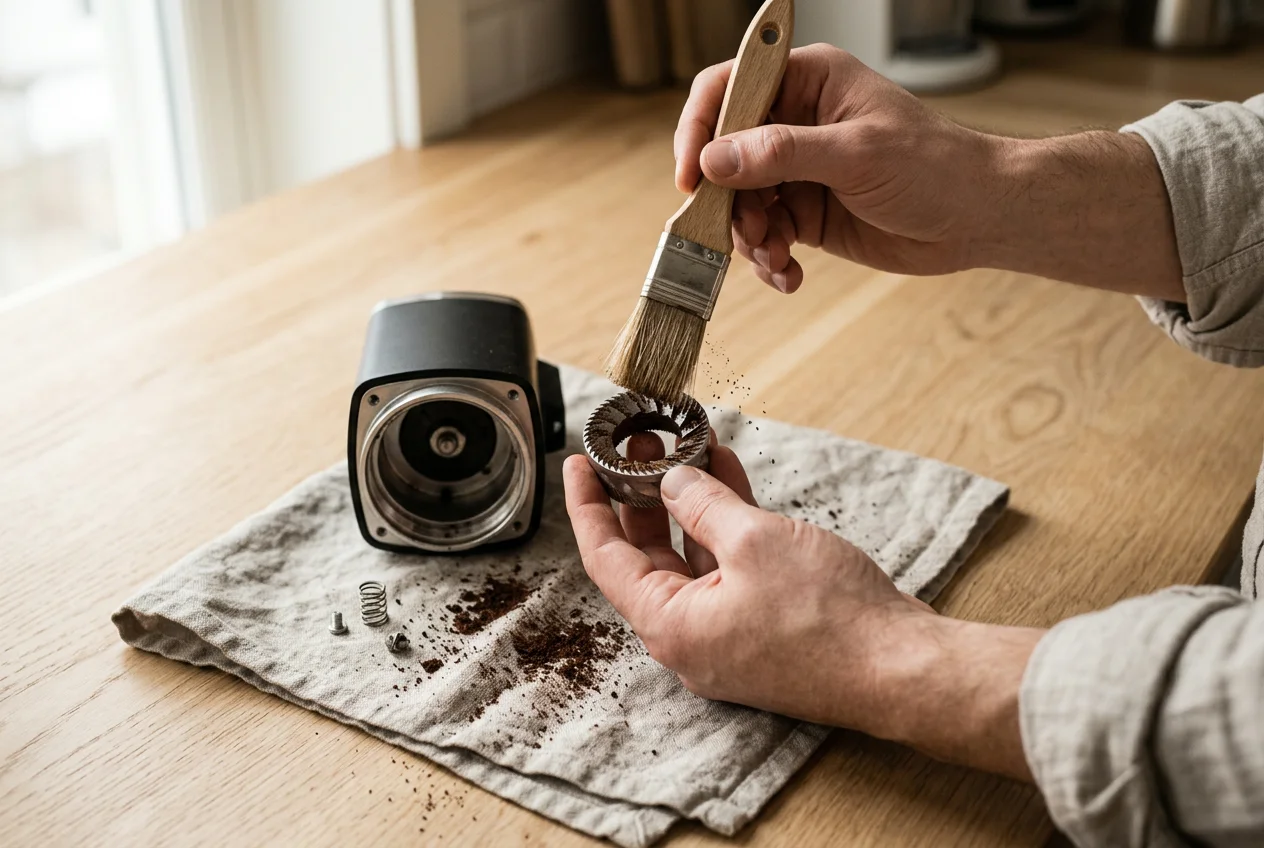
- Brush out the chamber weekly.Old grounds and oils go stale and add rancid flavors to fresh coffee.
- Deep clean every month or two.Remove the top burr (check your manual) and brush both burrs and the chute.
- Avoid water on burrs and motors.Steel burrs can rust and electronics can be damaged. Dry cleaning is safest.
- Be careful with oily dark roasts.Very oily beans can gum up burrs and chutes faster, so clean more often.
- Don't grind anything but coffee.Spices, rice or grains can damage burrs or leave lasting flavors.
- Watch for foreign objects.A stray stone can chip ceramic burrs. Steel survives better, but listen for odd noises.
Some people use grinder cleaning pellets. They can help in electric grinders, but I still brush the burrs by hand from time to time.
A sensible grinder upgrade path
You don't need commercial gear on day one. You only need to avoid the blade grinder trap.
This is the progression I recommend to friends.
- Start with an entry-level manual burr grinder.A model like the Hario Skerton is enough to learn pour-over and immersion brewing.
- Move to a durable electric burr grinder.When you brew more or move toward espresso, a workhorse like the Rancilio Rocky can last eight years or more of daily use.
- Go for a precision dual-bearing hand grinder.For top precision, portability and quiet, grinders like the Comandante C40 or Kinu M47 rival far pricier electric machines.
At every step, the grinder should match how you actually brew. A great espresso grinder is wasted if you only make French press, and the reverse is true too.
Where your money improves the cup most (my view)
My own rough sense of value per upgrade step, not measured data.
How to check your grinder at home
You don't need a lab to see how even your grinder is. A few simple checks tell you a lot.
- Spread a dose on white paper.Grind 15 to 20 grams at your usual setting and spread it thin. Look for big chunks next to fine powder.
- Rub a pinch between your fingers.Even grounds feel uniform. Lots of dust feels like flour, and boulders feel like grit.
- Look at the bottom of your cup.With French press or AeroPress, a thick layer of sludge usually means too many fines.
- Watch your pour-over drawdown.If water stalls near the end and the bed looks muddy, fines are clogging the filter.
- Brew the same beans twice.If two cups on the same setting taste noticeably different, the grinder isn't repeatable.
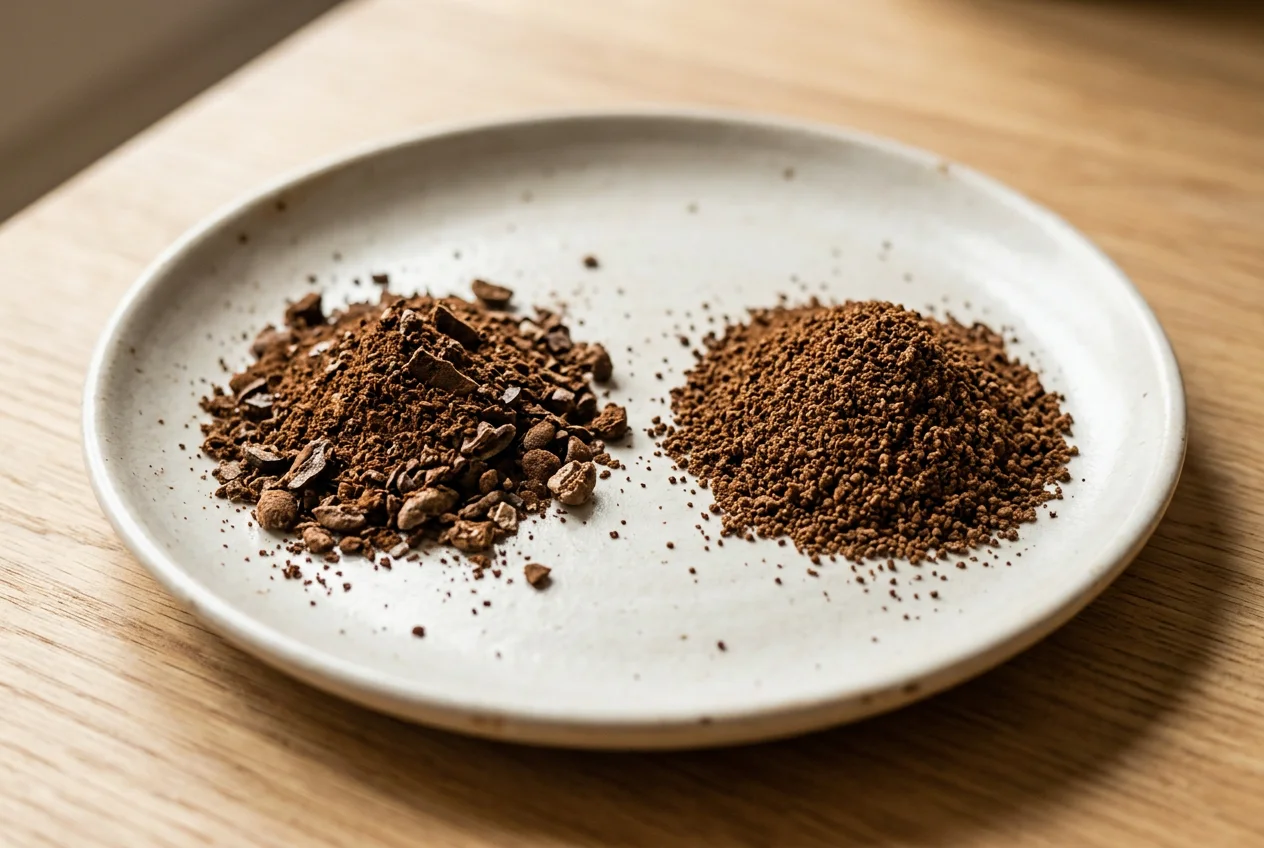
I did the paper test the day my first burr grinder arrived. The blade-ground pile looked like gravel mixed with cocoa powder, and the burr pile looked like coarse sand.
That one picture convinced me more than any spec sheet.
Our tip: Tap the side of your grinder before you take the catch cup out. Static makes fines cling to the plastic, and a gentle tap releases them so your dose is accurate.
Which grinder fits which brew method
Different brewers ask different things from a grinder. Here's how I'd match them.
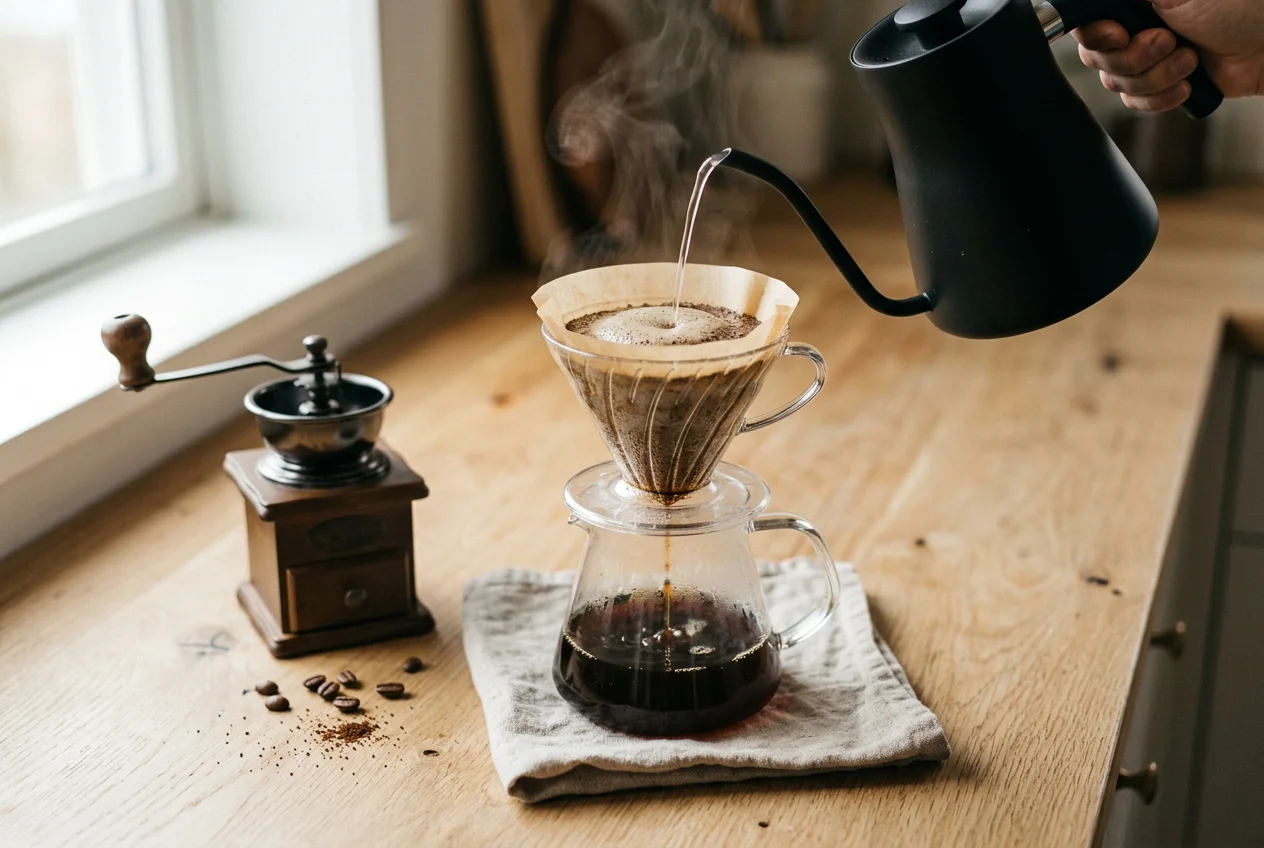
Pour-over and drip
These methods show grind quality clearly, because the coffee is clean and bright. Any decent conical burr grinder works well.
A stepped grinder is precise enough. Flat burrs add extra clarity if you want to chase delicate light roasts.
French press and cold brew
These need a coarse grind, which is exactly where budget hand grinders wobble.
Look for a grinder with dual bearings or a sturdy electric model. Fewer fines also mean less sludge in the cup.
AeroPress
The AeroPress is forgiving, so almost any burr grinder makes good coffee with it. It's the perfect partner for a compact hand grinder when you travel.
Moka pot
A moka pot needs a fine-to-medium grind, finer than drip but coarser than espresso. Most burr grinders handle it easily.
Espresso
Espresso is the most demanding. You need steel burrs, very fine and consistent grinding, and ideally stepless adjustment.
This is the one method where it's worth spending more on the grinder than on the machine.
| Brew method | Minimum grinder | Ideal grinder |
|---|---|---|
| Pour-over, drip | Budget conical burr | Good flat or conical burr |
| French press, cold brew | Dual-bearing conical | Sturdy electric burr |
| AeroPress | Any burr grinder | Compact hand grinder |
| Moka pot | Any burr grinder | Good conical burr |
| Espresso | Stepless steel burr | Premium stepless grinder |
Features worth paying for (and ones that aren't)
Grinder marketing is full of features. Some genuinely improve your coffee, others mostly improve the box.
Worth paying for
Dual bearings in hand grinders, for a stable shaft and even coarse grinds.
Steel burrs if you make espresso.
Stepless adjustment for espresso, or many fine steps.
Low retention, so little old coffee stays inside to mix with your fresh dose.
Easy burr removal for cleaning.
Nice to have, not essential
Built-in timers and dosing. Handy, but a cheap kitchen scale works just as well.
Large hoppers. Most home users single-dose anyway, and beans stay fresher in a sealed container than in a hopper.
Huge commercial burrs. Faster, but rarely a flavor difference you'll notice at home.
I'd rather have a simple grinder with great burrs than a feature-packed one with average burrs. The burrs are the part that touches your coffee.
Myths about grinders
"A blade grinder is fine if you pulse it"
Pulsing and shaking helps a little, but it can't fix the basic problem. The blade still hits beans at random, so you still get dust and chunks.
"Bigger burrs always taste better"
Bigger burrs mostly grind faster. Alignment, burr design and sharpness matter more for flavor at home.
"Ceramic burrs are better because they last longer"
They do resist wear, but they're less precise at fine settings and can chip. For espresso, steel is usually the better choice.
"Pre-ground is always worse than fresh"
Fresh grinding is best. But pre-ground from a good roaster beats fresh beans in a blade grinder.
"Expensive grinders are only for espresso"
High-end flat burr grinders can make outstanding filter coffee too. But for most home filter brewers, a good mid-range burr grinder is the sweet spot.
What this means for you
If you still own a blade grinder, the single best upgrade you can make is replacing it with any burr grinder.
Choose based on how you brew:
- Filter coffee, 1 to 2 cups a day: a good manual conical grinder with dual bearings.
- Filter coffee for the household: an electric conical burr grinder with stepped settings.
- Espresso: steel burrs and stepless adjustment, either a quality electric or a high-end hand grinder.
- Tight budget: a cheap burr grinder, or pre-ground coffee from your roaster.
And remember the other half of the equation: fresh, well-roasted beans. If you want to understand how roast affects grind and extraction, read my guide to coffee roast levels.
Grinder in hand, you'll finally taste what your beans were roasted to deliver.
Frequently asked questions
Is a burr grinder really better than a blade grinder?
Yes. Burr grinders crush beans to a set size, so the grounds are far more even. Even grounds extract evenly, which gives a sweeter, more balanced cup. Blade grinders chop randomly and create dust and chunks that make coffee taste sour and bitter at once.
Can I use a blade grinder for espresso?
No. Espresso needs a very fine, consistent grind. A blade grinder can't produce it, and the mix of dust and chunks will cause channeling and poor shots.
Can I use a blade grinder for French press?
You can, but the dust will slip through the mesh and over-extract, giving muddy, bitter coffee. A burr grinder set coarse makes a much cleaner press.
Is pre-ground coffee better than a blade grinder?
Coffee ground by a roaster on a commercial burr grinder is usually better than beans chopped in a blade grinder at home, even though it loses some aroma over a week or two.
What is the difference between flat and conical burrs?
Flat burrs are two parallel rings and tend to give a very even grind with high clarity. Conical burrs are a cone inside a ring, are usually cheaper, quieter and cooler running, and give a slightly wider range of particle sizes.
Are ceramic or steel burrs better?
Ceramic resists wear but is brittle and less precise at fine settings. Steel is sharper and better for espresso, but dulls faster over many years. For most people, steel is the safer choice.
Do I need a stepless grinder?
Only for espresso. For drip, pour-over, French press and AeroPress, a good stepped grinder is precise enough.
Why is my hand grinder uneven at coarse settings?
Many budget hand grinders lack a second bearing, so the shaft wobbles when the burrs are far apart. Grind medium-fine instead and shorten your brew time or lower the water temperature slightly.
Are hand grinders better than electric grinders?
At the same price, hand grinders usually have better burrs and build quality, and they're silent. Electric grinders are faster and easier for large amounts or daily espresso.
How often should I clean a burr grinder?
Brush it out weekly and do a deeper clean with the burrs removed every month or two. Clean more often if you use oily dark roasts.
Do grinder burrs wear out?
Yes, slowly. Home grinders take years to dull. If shots start running fast and tasting thin on an old grinder, the burrs may need replacing.
How much should I spend on a coffee grinder?
Spend what fits your brewing. A good manual burr grinder around $100 is excellent for filter coffee. Daily espresso usually needs a more capable stepless grinder.

- Michael Reynolds, personal notes from home grinding and grinder testing
- The impact of particle size distribution on espresso extraction, Scientific Reports, 2024
- Burr wear and extraction, Barista Hustle
- Protocols and Best Practices, Specialty Coffee Association
Related guides
Coffee roast levels explained How coffee is roasted Gifts for coffee loversWritten by Michael Reynolds. Last updated November 16, 2026.