Arabica vs Robusta: The Two Coffees Behind Almost Every Cup You Drink
Nearly all the coffee in the world comes from just two species. One is celebrated, the other is often dismissed. Here is how arabica and robusta really differ in flavor, caffeine, farming and price, and when robusta deserves a place in your cup.
We choose products independently. We may earn a commission through links on this page; your price stays the same. Affiliate policy
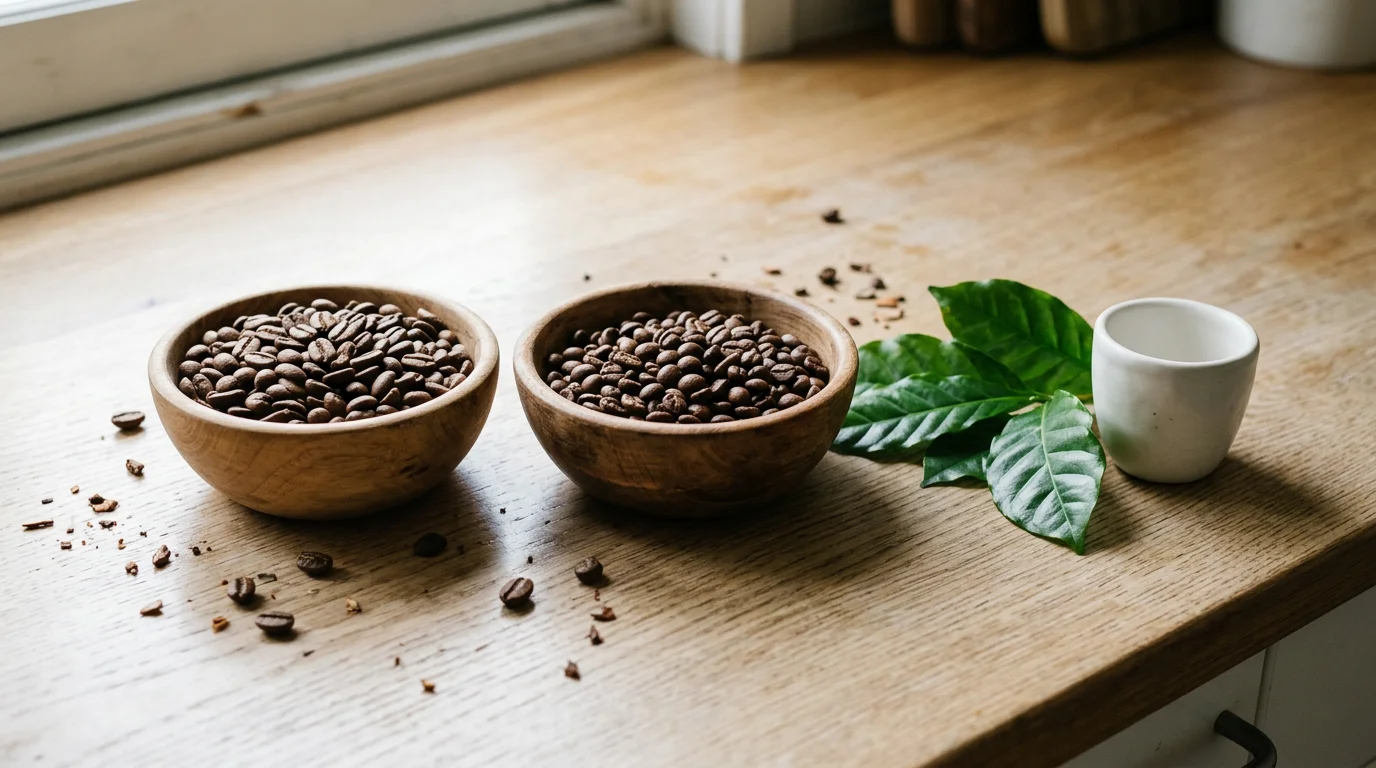
Arabica (Coffea arabica) grows high in the mountains, yields less and costs more. It tastes sweeter and more complex, with fruity, floral and bright notes.
Robusta (Coffea canephora) grows in lowlands, yields more and resists pests and disease. It tastes heavier, earthier and more bitter, and has roughly twice the caffeine.
Arabica makes up the larger share of world coffee, but robusta's share is growing. Robusta shines in espresso blends and milk drinks, and good robusta can surprise you.
Two species run the coffee world
There are more than a hundred coffee species. Scientists currently count about 124 in the Coffea genus.
Yet almost all the coffee grown, traded and drunk comes from just two of them.
They dominate the market together, but their reputations couldn't be more different. One is the gold standard of specialty and everyday coffee. The other is often treated like an unwelcome outsider.
- Coffea arabica, usually just called arabica.
- Coffea canephora, almost always called robusta.
I spent years thinking of robusta as "the bad coffee". Then a roaster friend served me a carefully roasted robusta espresso with a splash of milk, and I had to rethink a few things.
In this guide, I'll walk through where each species comes from, how they taste, how they're grown and processed, what's inside the beans, and what all of that means when you're standing in front of a shelf of coffee.
I'll also cover blends, caffeine, price and the future of coffee, because climate change is about to make this topic a lot more interesting.
By the end, you should be able to look at any bag and know roughly what to expect, whether it says "100% arabica", "espresso blend" or nothing at all.
Arabica is still my daily coffee. But understanding robusta helped me understand coffee as a whole: why blends taste the way they do, why some espresso has so much crema, and why some coffees hit harder in the morning.
Why "robusta" is technically the wrong name
A quick note on names, because it confuses a lot of people.
Strictly speaking, the species is called Coffea canephora. Robusta is one variety within that species.
Other canephora varieties include Erecta and Nganda, the last one grown notably in Uganda.
In everyday coffee talk, though, "canephora" and "robusta" are used interchangeably. Farmers, roasters and shops all call the whole species robusta, so I will too.
Both species are genetically diverse:
| Species | Common name | Example varieties |
|---|---|---|
| Coffea arabica | Arabica | Typica, Bourbon, Geisha (Gesha), Catimor and many more |
| Coffea canephora | Robusta | Robusta, Erecta, Nganda |
Despite sharing a genus and the market, the two differ in almost every way you can measure: origin, market share, flavor, chemistry, altitude, plant size, yield, pest resistance, bean shape and price.
Where they come from
Arabica: born in Ethiopia, named for Arabia
Arabica was almost certainly the first coffee species people cultivated.
Its name comes from the Arabian Peninsula, where it was first grown on a large scale, in Yemen, centuries ago. But it didn't originate there.
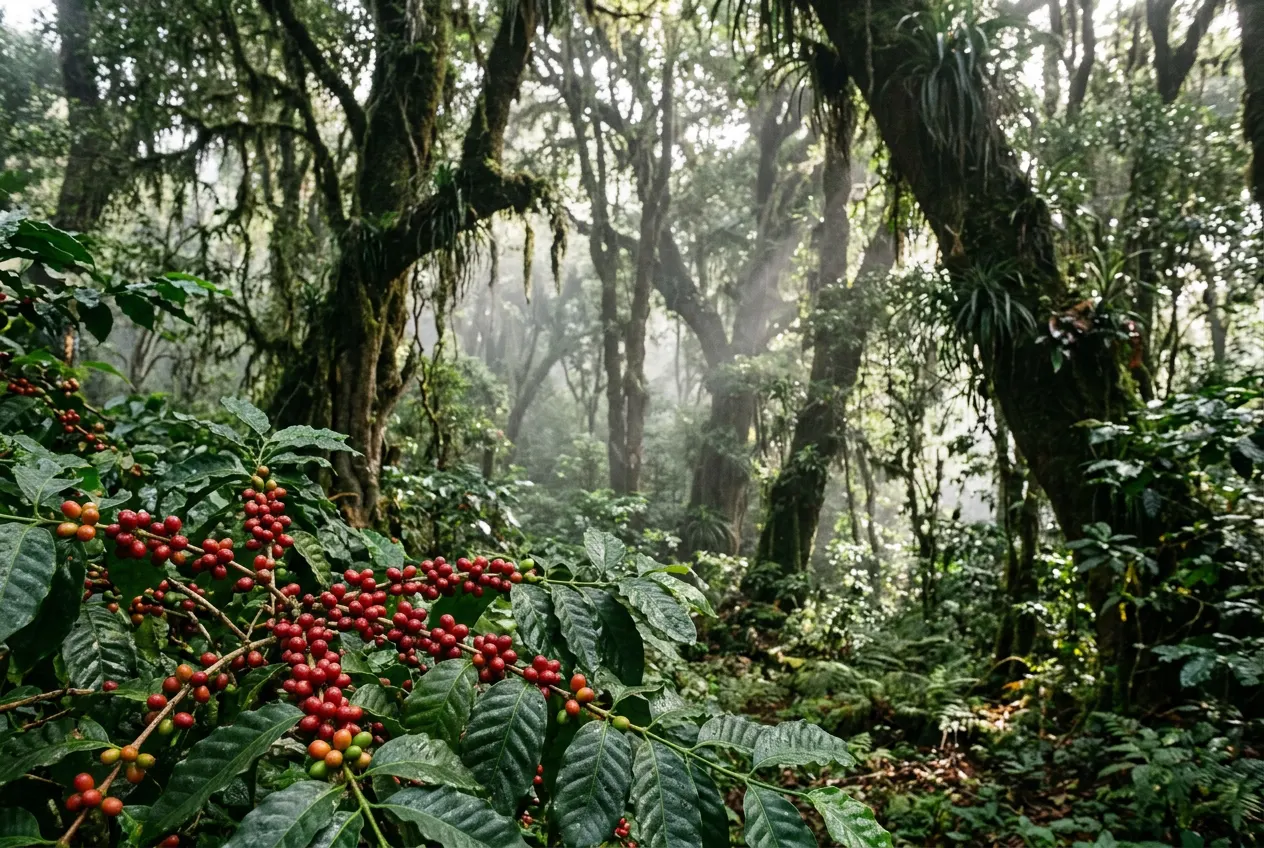
Arabica comes from the highland forests of Ethiopia. That's why Ethiopia is seen as the birthplace of coffee and the original genetic source of almost all the coffee we drink.
Traders carried plants across the Red Sea to Yemen, where cultivation took hold and the name stuck.
Robusta: a later arrival from Central Africa
Robusta grows wild in the forests of Central and sub-Saharan Africa.
Compared with arabica's centuries of cultivation, robusta came to commercial attention late. It was formally described and classified in the late 1800s.
Market share today
Share of world coffee (approximate ranges)
Ranges vary by source and year. Robusta's share has been rising.
Arabica makes up most of the world's coffee, roughly 55 to 70% depending on the source.
Robusta accounts for roughly 30 to 45%, and its share has been growing. Climate pressure on arabica regions could push that higher over the next five to ten years.
How the two species spread around the world
Coffee's journey around the globe explains a lot about where each species grows today.
For centuries, Yemen controlled the arabica trade, shipping coffee from ports like Mocha. Plants were guarded closely.
In the 1600s and 1700s, European traders and colonial powers smuggled and transported arabica plants to new places. The Dutch planted coffee in Java, and the French took plants to the island of Bourbon (now Réunion) and to the Caribbean.
From there, arabica spread across Latin America, which became the heart of world coffee production.
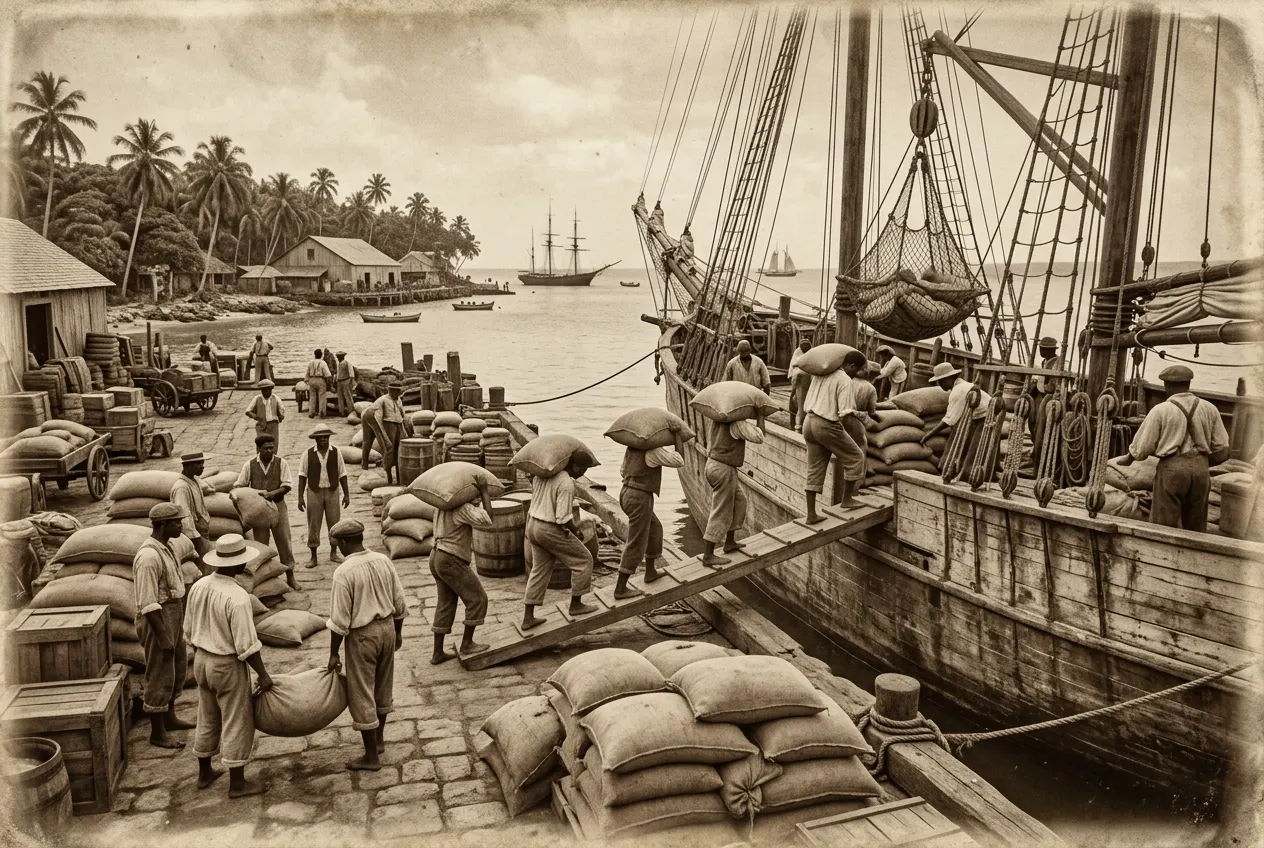
Robusta's big moment came because of disease. In the late 1800s, coffee leaf rust devastated arabica plantations in places like Ceylon (now Sri Lanka) and Java.
Farmers looked for a tougher plant. Robusta, newly described from Central Africa, resisted the rust and grew well in hot lowlands, so it was planted widely in Indonesia and later across Africa and Asia.
In the 20th century, demand for cheap coffee, instant coffee and espresso blends helped robusta grow into the huge crop it is today.
- Ethiopia.Arabica grows wild in highland forests.
- Yemen.First large-scale farming, coffee trade through Mocha.
- Java and Bourbon island.Europeans spread arabica to Asia and the Indian Ocean.
- Latin America.Arabica becomes a giant crop in Brazil, Colombia and Central America.
- Leaf rust crisis.Late 1800s disease pushes farmers toward robusta.
- Modern era.Robusta booms in Vietnam, Brazil, Indonesia and Africa.
How they taste
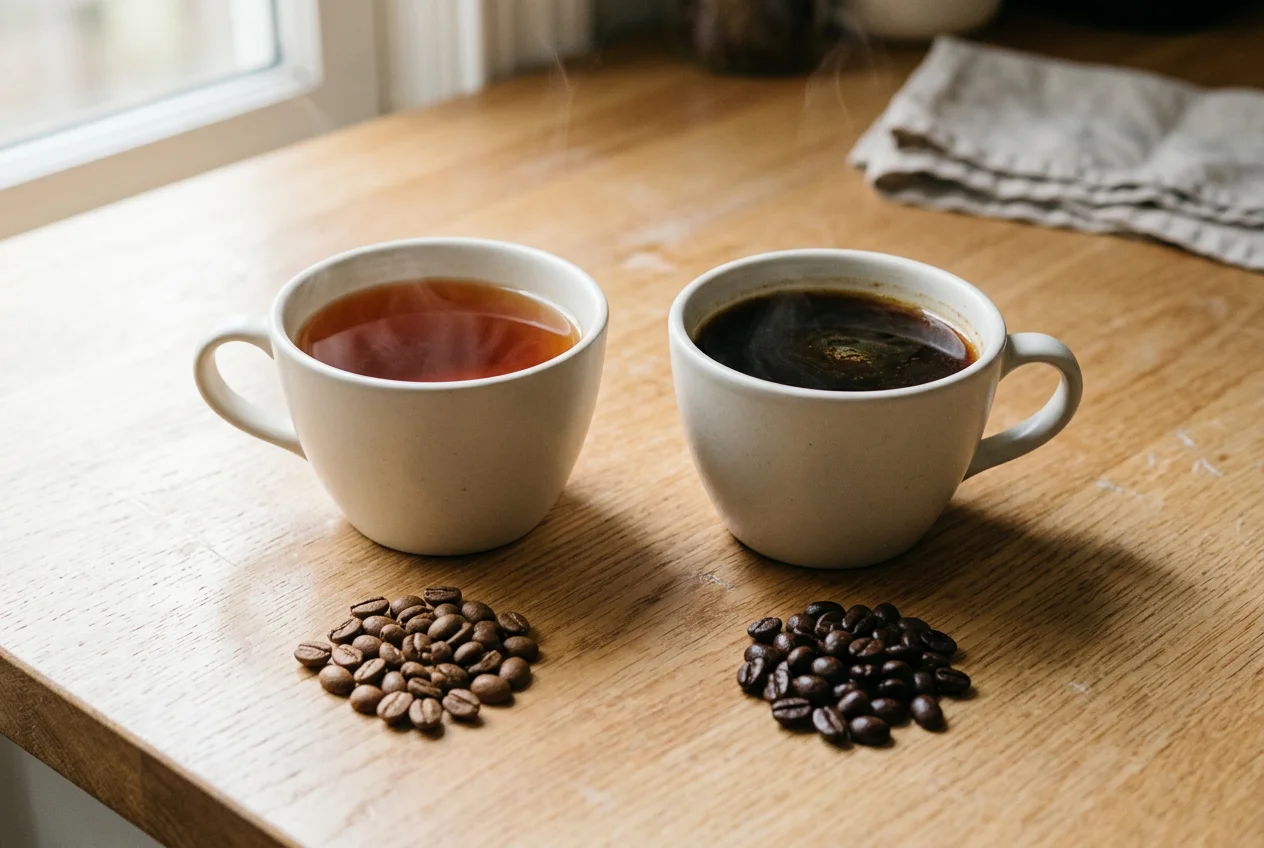
The biggest difference most people notice is in the cup. Taste is personal, but the two species sit at opposite ends of the flavor spectrum.
Arabica
- Bright, complex and nuanced.
- Naturally sweeter, thanks to more sugar.
- Often fruity, floral and pleasantly tangy or acidic.
- Capable of clean, vibrant, highly prized specialty cups.
Robusta
- Heavy, earthy, woody and spicy.
- Much more bitter and astringent than arabica.
- Often criticized in specialty circles for harsh notes, famously compared to burnt rubber or tires.
- Big body and a thick crema in espresso.
| Trait | Arabica | Robusta |
|---|---|---|
| Sweetness | Higher | Lower |
| Acidity | Bright, fruity | Low |
| Bitterness | Moderate | High |
| Body | Light to medium | Heavy |
| Typical notes | Fruit, flowers, caramel, chocolate | Wood, earth, spice, dark cocoa |
| Crema in espresso | Good | Thick and persistent |
Culture changes how robusta is enjoyed
Whether robusta tastes "good" depends a lot on how it's served.
In many coffee cultures where robusta is a staple, people balance its bitterness with milk, sweetened condensed milk, cream or sugar. Vietnamese coffee and many classic Italian espresso blends are famous examples.
With dairy and sweetness, robusta's bold, punchy character cuts through and makes a deeply satisfying drink.
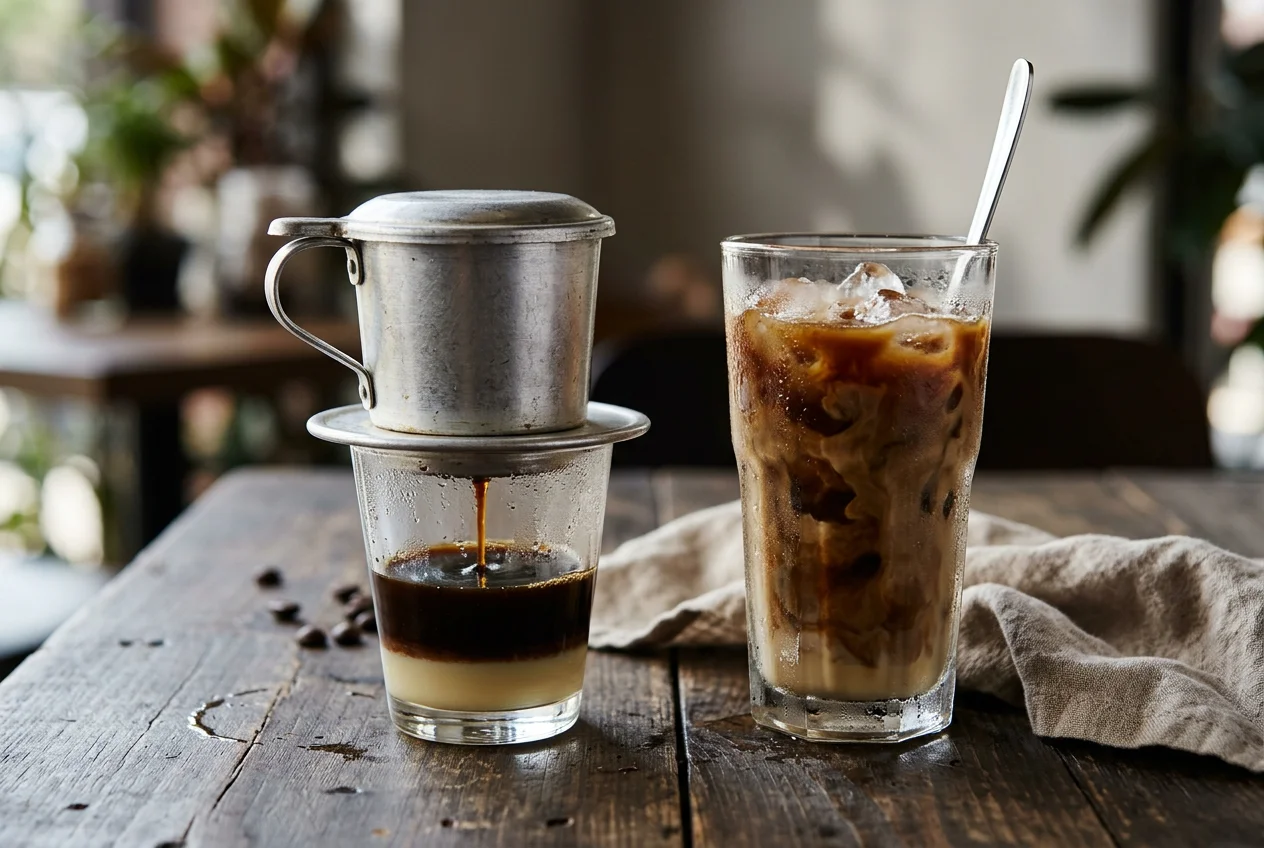
Our tip: If you think you hate robusta, try a Vietnamese-style coffee: strong robusta dripped through a small metal filter onto sweetened condensed milk, then poured over ice. It's a completely different experience.
My first real robusta
I remember my first carefully made robusta espresso clearly. I expected harsh rubber and got dark cocoa, roasted nuts and a thick, almost syrupy texture.
Black, it was too bitter for my taste. With a splash of steamed milk, it was one of the most satisfying cappuccinos I'd had in a while.
That's the key with robusta: it often shines brightest in the drinks it was traditionally made for.
Making robusta taste good
If you're used to black specialty arabica, straight robusta roasted and brewed the same way can be a shock.
To make robusta enjoyable without heavy additions, you have to adjust the whole process.
- Change the roast.Adjust heat, development time and drop temperature to tame bitterness while keeping body.
- Adjust the ratio.Often use a little less coffee or lower the strength.
- Tweak the grind.Go a bit coarser to avoid over-extracting bitter compounds.
- Control flow and contact time.Shorter contact usually helps.
- Lower the water temperature.Cooler water pulls out fewer harsh, bitter and drying compounds than near-boiling water.
- Pick the right brewer.Immersion brewers, espresso or a traditional phin filter tend to highlight body and crema better than a pour-over cone.
Don't dismiss it without trying
Despite its reputation, I'd encourage curious coffee drinkers to try good robusta at least once.
Some specialty importers and green coffee sellers offer small amounts of high-quality robusta, for example from Vietnam and India, for home roasters. Roasting and brewing a single-origin robusta teaches you a lot about how temperature, roast and extraction shape flavor.
There's also a growing "fine robusta" movement, with farmers picking only ripe cherries and processing them as carefully as specialty arabica. Those coffees can be surprisingly sweet and chocolatey.
Growing conditions and plant biology
The two species evolved in different places, so they need very different conditions.
Altitude and climate
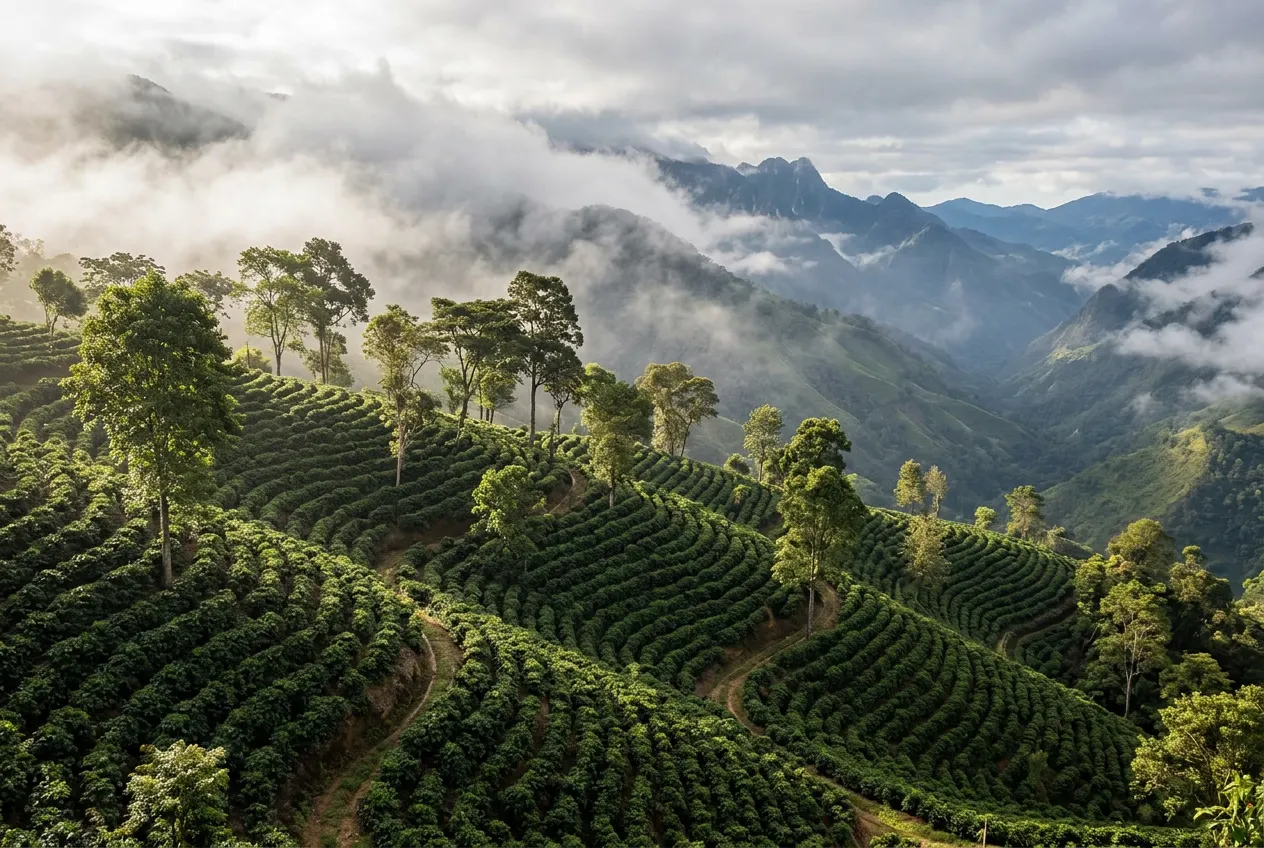
Robusta is a lowland crop. It grows from sea level up to roughly 800 meters (about 2,600 feet).
Arabica is a highland crop. It needs cooler temperatures and grows from roughly 800 meters up to 2,500 meters (about 8,200 feet) or more.
Pests and disease
Lower altitudes are warmer, with more insects, pests and fungal diseases.
Robusta evolved there, so it's naturally tough and resistant to heavy pest pressure and harsh conditions.
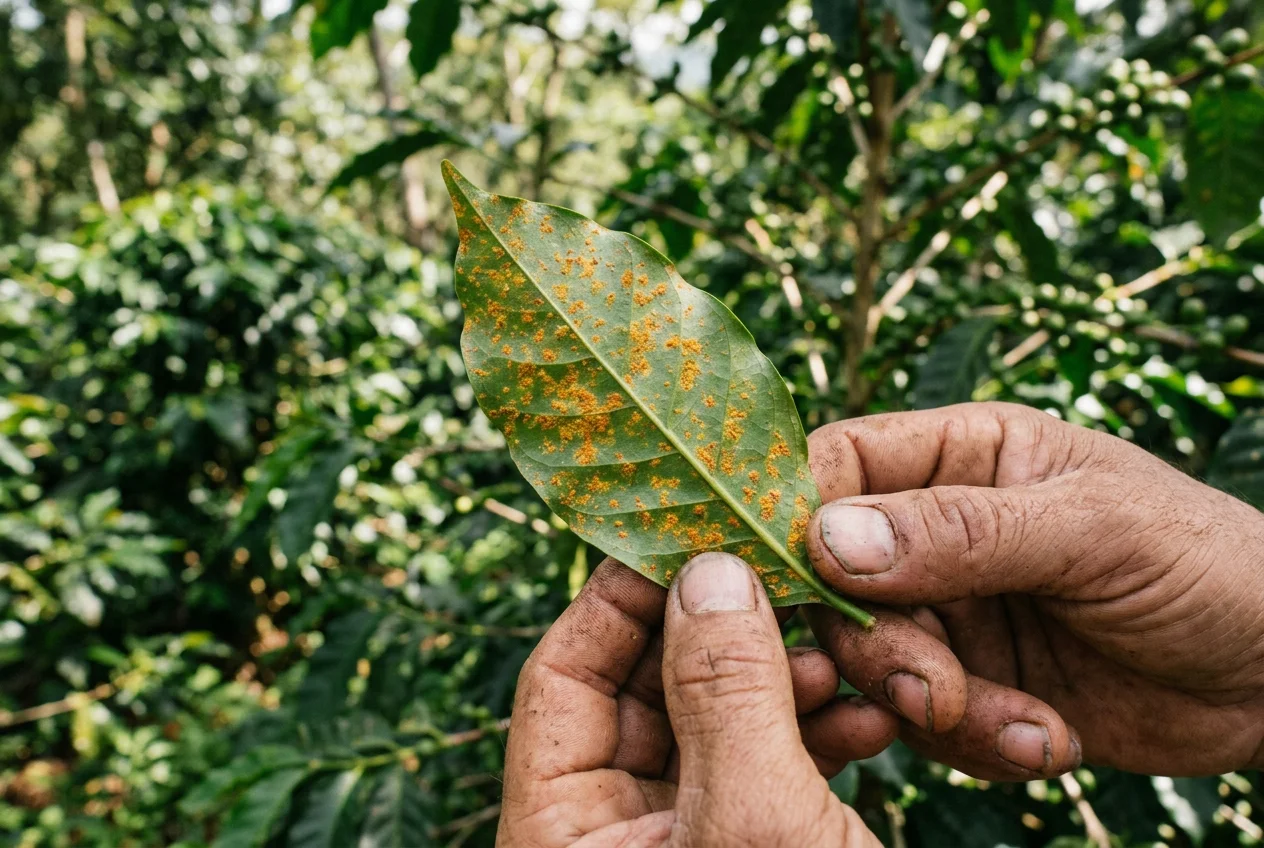
Arabica evolved in cool mountains without those threats. It's fragile, attractive to insects and vulnerable to devastating diseases like coffee leaf rust.
Tree size
Cultivated arabica trees can grow to about 6 to 8 meters (20 to 26 feet), though farmers usually prune them much shorter for easier picking.
Robusta trees are bigger and more vigorous, around 10 meters (33 feet). In the wild, both can grow even taller.
Yield
Robusta produces much more coffee per hectare.
| Yield (green coffee) | Per acre | Per hectare (approx.) |
|---|---|---|
| Robusta | 2,050–3,570 lb | 2,300–4,000 kg |
| Arabica | 1,340–2,050 lb | 1,500–2,300 kg |
Approximate ranges from my notes. Real yields vary hugely with farm, variety and weather.
Top producers
Brazil is the world's biggest arabica producer. It also grows a lot of robusta, known locally as conilon, but its huge arabica output keeps it in first place.
Vietnam is the world's largest robusta producer, supplying a big part of the global commercial market.
These rankings can change. New and growing producers, such as the Democratic Republic of the Congo, and shifting climate patterns could reshape where coffee comes from.
The chemistry: caffeine, sugar and oils
The differences in taste, pest resistance and roasting come down to what's inside the beans.
Caffeine
Arabica contains about 1.0 to 1.5% caffeine by dry weight. Robusta contains about 2.0 to 3.0%, roughly double.
In nature, caffeine isn't there to wake us up. It's a natural pesticide. It tastes bitter and is toxic to many insects.
So robusta's extra caffeine explains two things at once: its sharper bitterness and its ability to resist pests on hot, low farms.
Sugar and oils
Arabica has roughly twice the sugar (sucrose) of robusta. It also has around 60% more lipids, meaning fats and oils.
This is the main chemical reason most people prefer arabica.
During roasting, sugars feed caramelization and the Maillard reaction, which create sweetness and hundreds of aroma compounds. Arabica's extra sugar means more of those pleasant flavors.
Its extra oils carry aromas and give a smooth, rounded mouthfeel. With less sugar and fat, robusta makes fewer sweet aromatics and tastes thinner, harsher and more bitter.
Relative content (arabica = 100)
Simplified comparison based on the typical ranges above.
If you want to see how sugars turn into flavor in the roaster, my guide on how coffee is roasted walks through each stage.
Roasting arabica vs robusta
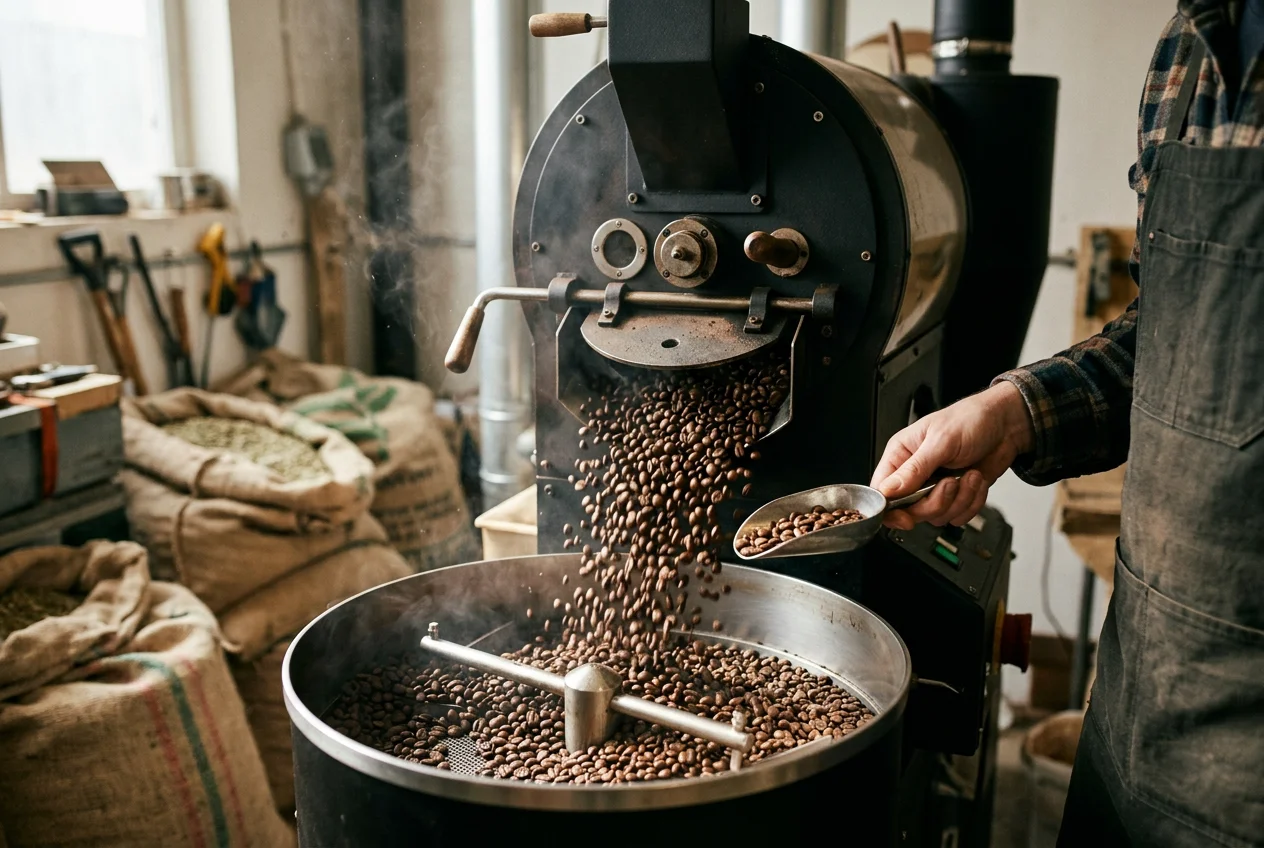
The two species behave differently in the roaster, and roasters treat them differently.
Arabica's higher sugar content means it browns and caramelizes readily. Roasters can stop at light or medium levels and still get sweetness and complexity.
Robusta has less sugar to caramelize, so light roasts can taste grainy, peanut-like or raw. Many roasters take it a little darker, but too dark brings out even more bitterness and those rubbery notes.
For blends, roasters often roast the two species separately and mix them afterward. That way each gets a profile that suits it, because robusta beans are often smaller and denser and take heat differently.
| Roasting aspect | Arabica | Robusta |
|---|---|---|
| Sugar for caramelization | More | Less |
| Light roasts | Sweet, bright, complex | Can taste grainy or raw |
| Dark roasts | Chocolatey, smoky | Very bitter, heavy |
| Blending approach | Often roasted alone | Often roasted separately, then blended |
If you'd like to understand roast levels in more detail, my guide to coffee roast levels covers each stage.
Price and value
Quality, growing difficulty and demand put the two species in completely different price brackets.
Arabica costs much more per kilo. Lower yields, vulnerability to disease and weather, and hard work harvesting on steep mountainsides push up costs. Better flavor pushes up what people will pay.
The gap can be huge. Commercial robusta can trade for as little as about $2 per pound.
At the other extreme, rare, competition-winning specialty arabica lots, such as prized Panamanian Geisha coffees, have sold for well over $1,000 per pound at auction.
That price difference is exactly why robusta appears in so many supermarket blends and instant coffees. It lets brands keep prices down and adds body and caffeine.
How to tell them apart
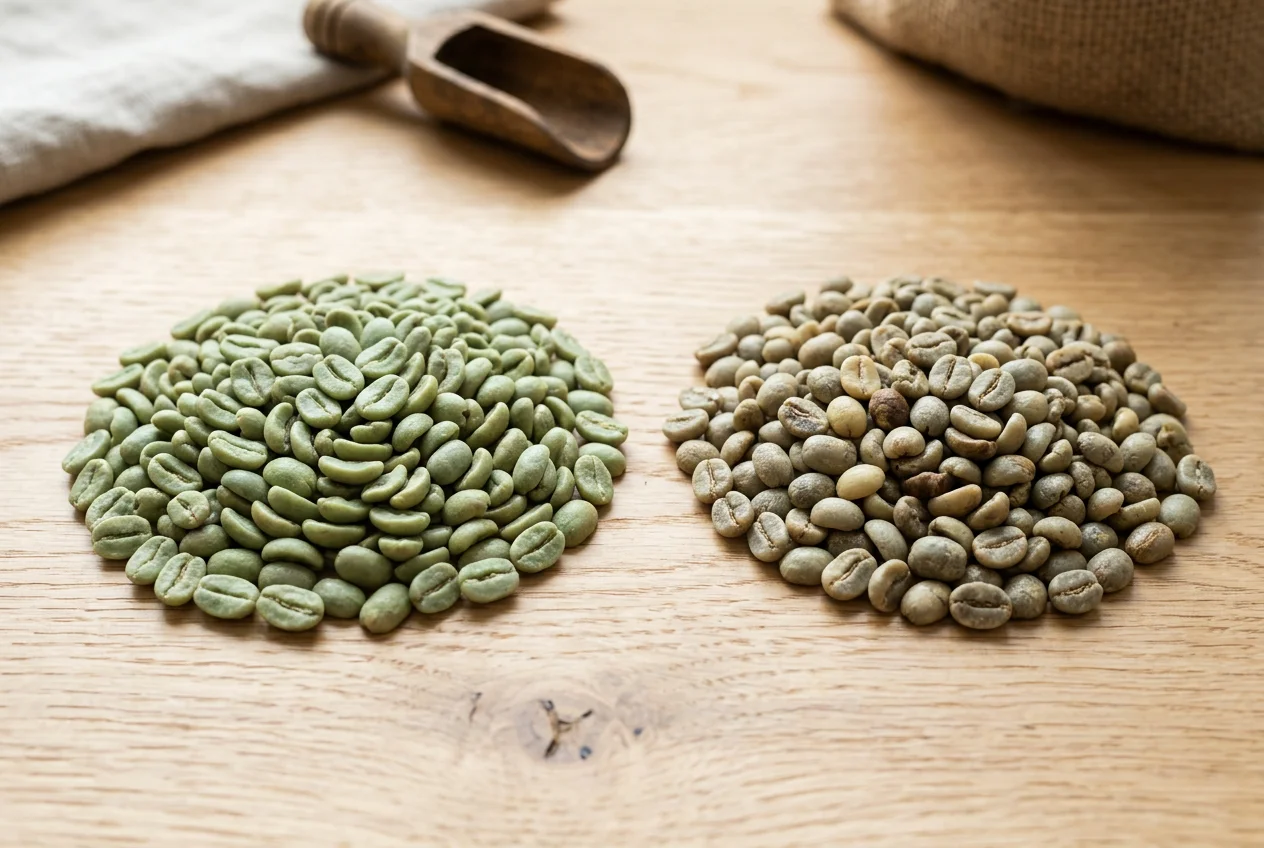
The two species differ at every stage, from the fruit on the tree to the roasted bean.
Sorting and uniformity
Specialty arabica lots, for example washed coffees from Costa Rica, Burundi or Kenya, usually look very uniform: even size, clean sorting and few defects.
Commercial robusta often looks less even, with more variation in size and color.
That's mostly about price and sorting effort, not biology. Carefully processed fine robusta can look very clean too.
Shape and center cut
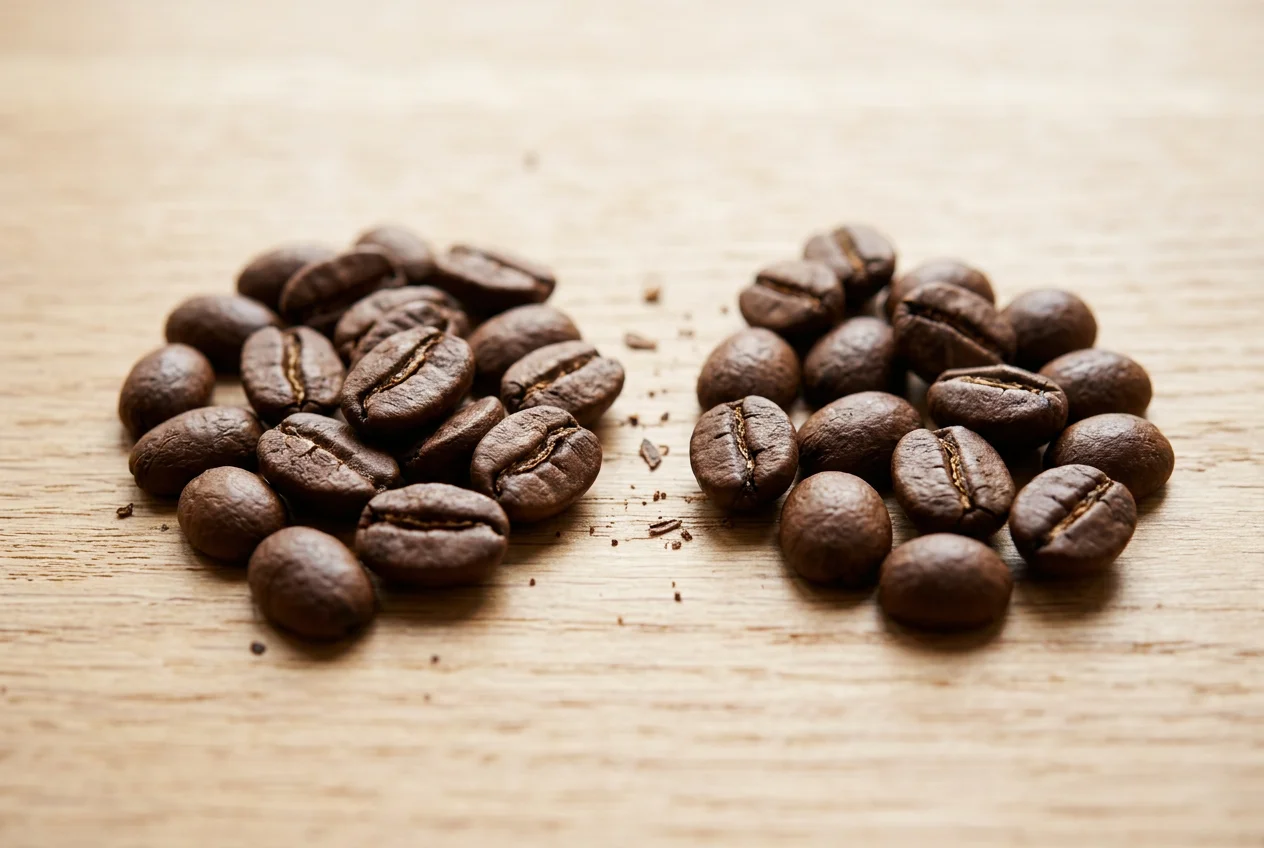
Textbooks say robusta beans are smaller and rounder, with a straight crease (center cut) on the flat side. Arabica beans are bigger, flatter and longer, with a curved, S-shaped crease.
In practice, it's not foolproof. Some robusta beans are long and look a lot like arabica once roasted. With hundreds of cultivars, there's plenty of overlap.
| Feature | Arabica | Robusta |
|---|---|---|
| Bean size | Larger | Smaller |
| Shape | Flatter, elongated | Rounder, more oval |
| Center crease | Curved, S-shaped | Straighter |
| Typical sorting | Very uniform in specialty | Often more varied |
Blends: why robusta ends up in your coffee
Even if you never buy a bag labeled robusta, you've probably drunk plenty of it.
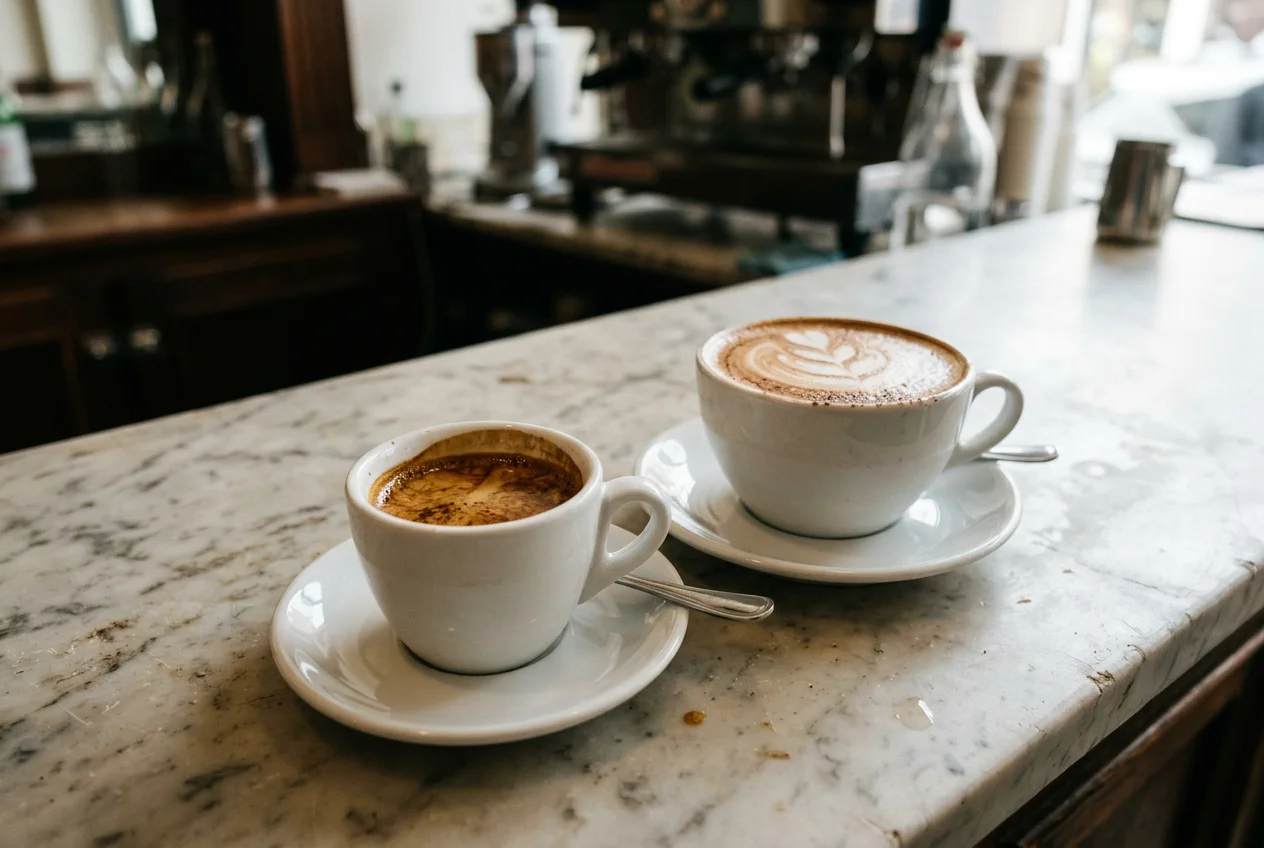
Many supermarket blends, instant coffees and classic espresso blends include some robusta.
What robusta adds
- Crema. Robusta produces a thick, long-lasting crema on espresso.
- Body. It makes coffee feel heavier and more substantial.
- Caffeine. Even a small share noticeably increases the kick.
- Bitterness that cuts through milk. In cappuccinos and lattes, a little robusta helps the coffee flavor stand up to milk.
- Lower cost. It helps keep prices down.
A typical traditional Italian-style espresso blend might be 10 to 30% robusta. Some southern Italian blends use even more.
If a bag says "100% arabica", it contains no robusta. If it doesn't say, and it's a budget blend or instant coffee, there's a good chance robusta is in there.
Common blend ratios
Roasters rarely print exact ratios, but these are typical ranges and what they usually taste like.
| Blend | Typical style | What to expect |
|---|---|---|
| 100% arabica | Specialty and many modern espresso blends | Sweet, bright, lower caffeine |
| 90/10 arabica/robusta | Classic northern Italian style | Mostly arabica with a little extra crema |
| 80/20 | Traditional espresso bar blend | Fuller body, thicker crema, more kick |
| 70/30 or more robusta | Southern Italian and budget blends | Very bold, bitter, strong with milk |
| Mostly robusta | Vietnamese and many instant coffees | Heavy, intense, high caffeine |
Our tip: If you love thick crema and strong espresso with milk, try a blend with a small share of high-quality robusta. If you drink black filter coffee and like bright, fruity flavors, stick with 100% arabica.
Arabica varieties worth knowing
"Arabica" isn't one taste. Within the species there are many varieties, and they can taste very different.
These are the names you'll see most on specialty bags.
| Variety | Background | Typical cup |
|---|---|---|
| Typica | One of the oldest cultivated forms | Clean, sweet, balanced |
| Bourbon | From the island of Bourbon (Réunion) | Sweet, round, caramel and fruit |
| Caturra | Natural Bourbon mutation, compact plant | Bright, lively, medium body |
| Geisha (Gesha) | Originally from Ethiopia, made famous in Panama | Very floral, tea-like, jasmine, citrus |
| SL28 and SL34 | Selected in Kenya | Intense, juicy, blackcurrant-like acidity |
| Catimor | Arabica-robusta related hybrid, rust resistant | Often simpler, can be good when well grown |
| Ethiopian landraces | Many local heirloom types | Floral, fruity, very diverse |
Variety is only one piece of the puzzle. Altitude, soil, weather, processing and roasting matter just as much.
But once you start noticing varieties on labels, you'll find favorites. For me, Bourbon and Kenyan SL varieties are reliable picks when I want sweetness or a juicy, fruity cup.
Our tip: When a bag lists both variety and process, you can usually predict the cup well. A washed Bourbon will be sweet and clean; a natural Geisha will be wildly floral and fruity.
How each species is usually processed
After harvest, the coffee seed must be separated from the fruit and dried. How that's done changes flavor a lot.
Specialty arabica is often washed, where the fruit is removed before drying, giving clean and bright cups. Naturals and honey processes are also common, especially for fruit-forward coffees.
Commercial robusta is very often dry processed, or natural, with whole cherries dried in the sun. It's cheaper and simpler, but if cherries are picked unripe or dried badly, it adds to robusta's harsh reputation.
Fine robusta producers do things differently. They pick only ripe cherries and use washed or honey processing with careful drying. The result is much cleaner and sweeter than the robusta most people know.
Where robusta is grown
Robusta is grown across the tropics, mostly at low altitude.
- Vietnam: the world's largest robusta producer, the backbone of much of the world's instant coffee and blends, and home of the famous phin-filter coffee culture.
- Brazil: a giant in arabica, but also a major producer of robusta, called conilon locally.
- Indonesia: robusta became important after leaf rust hit arabica farms in the 1800s.
- Uganda: one of robusta's native homelands, with wild and farmed canephora.
- India: grows both species, with robusta often shade grown alongside spices.
Arabica, by contrast, dominates in Latin America and East Africa: Brazil, Colombia, Central America, Ethiopia, Kenya and many more.
Caffeine per cup in practice
Percentages are useful, but what does twice the caffeine mean in your mug?
| Drink | 100% arabica (approx.) | With robusta (approx.) |
|---|---|---|
| Single espresso, about 7–9 g coffee | 60–80 mg | Up to 120 mg or more |
| Double espresso, about 18 g | 100–150 mg | Up to 200 mg or more |
| Brewed coffee, 240 ml | 80–100 mg | Up to 150–200 mg |
| Instant coffee, 1 tsp | Varies | Often 60–90 mg |
Rough estimates. Dose, brew method and blend ratio change the real numbers a lot.
If coffee makes you jittery, check whether your blend contains robusta. Switching to 100% arabica can make a noticeable difference without giving up coffee.
Arabica and robusta in instant coffee
Instant coffee is where robusta is most common.
Robusta's lower price, higher yield and strong body make it a natural choice for large-scale instant production. Its bitterness is also less noticeable once milk and sugar go in.
Premium instant coffees increasingly use 100% arabica, and some specialty roasters now make freeze-dried instant from high-quality arabica.
If you drink instant and want a softer, sweeter cup, look for "100% arabica" on the jar.
Taste them side by side at home
The best way to understand the difference is to taste it yourself. Reading about flavor only gets you so far, and a side-by-side tasting takes less than half an hour.
You don't need special equipment. Two mugs, a kettle and any simple brewer are enough to notice the difference straight away.
- Buy two coffees.One 100% arabica and one good-quality robusta, ideally with similar roast levels.
- Brew them the same way.French press or AeroPress works well. Same dose, grind, water and time.
- Smell the dry grounds.Arabica often smells sweeter and fruitier; robusta smells earthier and nuttier.
- Taste black first.Notice sweetness, bitterness, acidity and body.
- Add milk to both.See how robusta holds up and how arabica softens.
- Try them as espresso.If you have a machine, compare crema thickness and texture.
When I ran this test with friends, most picked arabica black. With milk, several switched to the robusta. It's a great way to find out what you actually like.
Which should you choose?
There's no single right answer. It depends on how you drink coffee.
| If you… | Choose | Why |
|---|---|---|
| Drink black filter coffee | 100% arabica | Sweetness, clarity, fruit |
| Love espresso with thick crema | Arabica blend with some robusta | Crema and body |
| Drink lots of milk drinks | Blend with a little robusta | Flavor cuts through milk |
| Want maximum caffeine | Robusta or robusta blend | About twice the caffeine |
| Want lower caffeine | 100% arabica | About half robusta's caffeine |
| Make Vietnamese iced coffee | Robusta | Bold and traditional |
| Are on a tight budget | Blend | Lower price, decent body |
If you're not sure, start with arabica. It's what most specialty roasters sell and the easiest place to explore flavor.
Then try a good robusta or robusta blend once, ideally as espresso with milk or Vietnamese-style. You'll understand why so many people around the world love it.
A simple way to explore: buy one bag of 100% arabica for your black coffee and one espresso blend with a little robusta for milk drinks. After a few weeks, you'll know exactly where each one fits in your routine.
And if caffeine matters, remember the simple rule: robusta roughly doubles it, so a blend with robusta will hit noticeably harder than the same amount of pure arabica.
For help reading roast, origin and process on the bag, see my guide on how to choose coffee beans.
Health, acidity and your stomach
The big health difference between the species is caffeine. Robusta's roughly double caffeine can mean more jitters, a faster heart rate or trouble sleeping for sensitive people.
Robusta also contains more chlorogenic acids, a group of plant compounds linked to coffee's antioxidant activity. They also add to bitterness.
Arabica usually tastes more acidic, because it has brighter fruit acids. Taste acidity isn't the same as stomach trouble, though, and people react differently.
If coffee bothers your stomach, a medium to dark roasted arabica with chocolatey notes is a good place to start. If caffeine is the problem, stay away from robusta blends or try decaf.
I'm not a doctor, so if you have a health condition, ask yours what's right for you.
Farmers, sustainability and the future of robusta
Low prices are a real problem for many coffee farmers, especially in robusta. When coffee sells for a couple of dollars per pound, there's little money left for careful picking, processing or fair wages.
That's one reason the fine robusta movement matters. Farmers who pick ripe cherries and process carefully can sell at higher prices, which rewards better work.
Robusta also has environmental advantages. It tolerates heat, needs fewer pesticides thanks to its natural resistance, and produces more coffee per hectare, which can mean less land cleared for the same amount of coffee.
As climate change squeezes arabica regions, robusta and hybrids are likely to become even more important. Better quality robusta is good news for farmers and drinkers alike.
Our tip: When you buy robusta or a blend, look for roasters who name the farm or region. Traceable robusta is far more likely to be well grown and fairly paid.
Questions to ask when you buy
Whether you're in a café, a roastery or online, a few questions tell you a lot about what's in the bag.
- Is it 100% arabica?If not, ask roughly how much robusta is in the blend.
- Where does each coffee come from?A named country, region or farm for each part of the blend is a good sign.
- How was it processed?Washed, natural or honey changes flavor as much as species does.
- When was it roasted?Freshness matters for both species. Look for a roast date.
- What is it meant for?Espresso, filter, milk drinks or Vietnamese-style coffee. Roasters design blends with a purpose.
A good roaster will happily answer all of these. If they can't, that tells you something too.
Myths about arabica and robusta
"100% arabica means high quality"
Not necessarily. Arabica can be badly grown, badly processed or stale. "100% arabica" only tells you the species, not the quality.
"Robusta is always bad"
Most cheap robusta is harsh, but carefully grown and processed fine robusta can be sweet, chocolatey and pleasant, especially as espresso.
"Robusta is only for instant coffee"
It's used a lot in instant coffee, but it's also an important part of many respected espresso traditions.
"Darker roast means more caffeine"
Caffeine comes mostly from the species, not the roast. A robusta blend will usually have far more caffeine than a dark-roasted arabica.
"You can always tell them apart by looking"
Bean shape gives clues, but it isn't reliable on its own, especially after roasting.
The future: climate, hybrids and forgotten species
Arabica and robusta dominate today, but coffee's future is changing.
Rising temperatures, shifting rainfall and aggressive diseases are putting serious pressure on traditional arabica regions. Many areas that grow good arabica today may become too hot within decades.
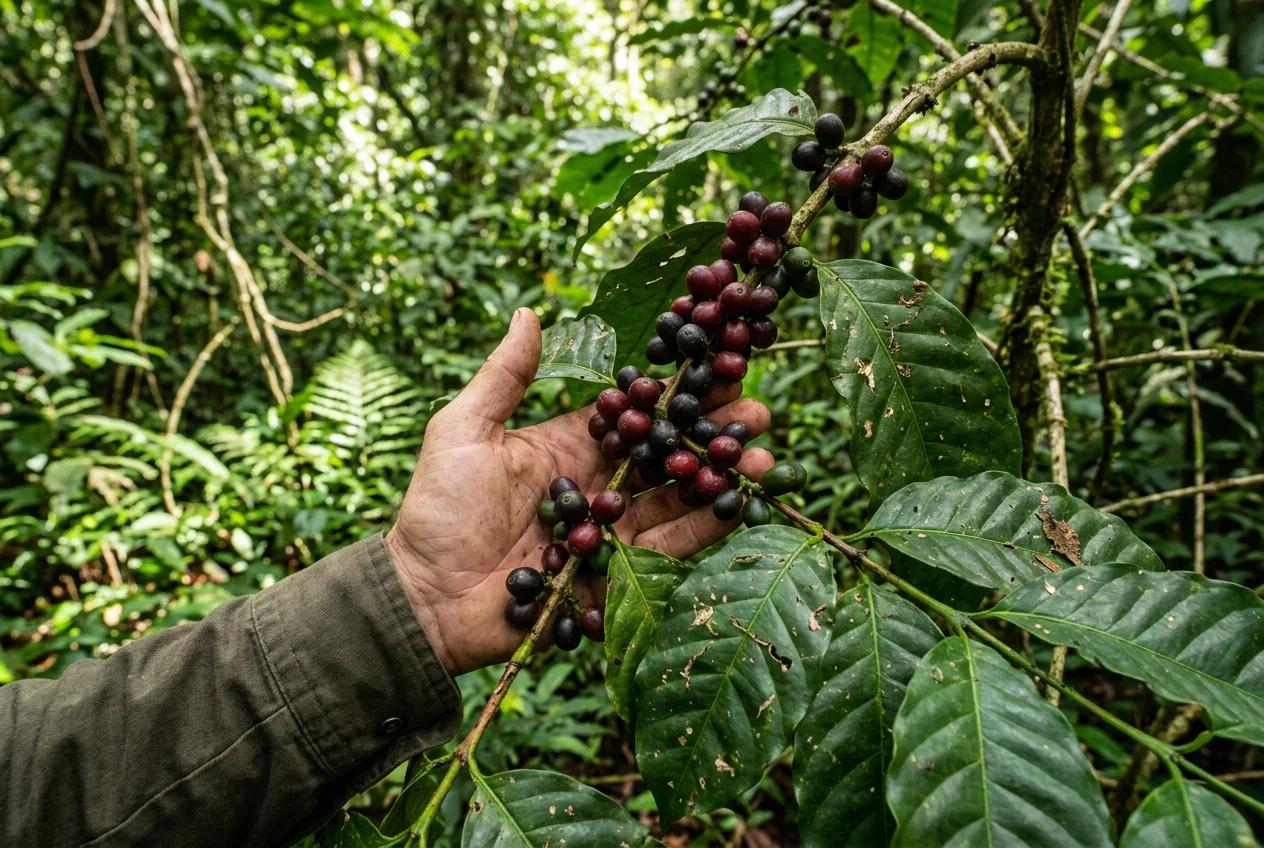
Researchers and farmers are responding in several ways.
Hybrids
Breeders are developing hybrids, such as Catimor and other arabica-robusta crosses, that combine robusta's disease resistance and climate toughness with arabica's better flavor.
New growing regions
Some countries with suitable microclimates are expanding production, including parts of Central Africa like the Congo.
Rediscovering other species
Scientists are taking a fresh look at species the market has mostly ignored:
- Coffea liberica (liberica): big beans, bold and smoky, grown in parts of Southeast Asia and West Africa.
- Coffea excelsa (excelsa): often classified as a variety of liberica, known for tart, fruity flavors.
- Coffea stenophylla: a rare West African species that's attracting attention for its heat tolerance and surprisingly sweet, arabica-like flavor.
Research published in Nature Plants found stenophylla can grow at average temperatures well above what arabica tolerates, while tasters rated its flavor as similar to good arabica. That's a big deal for coffee's future.
As breeding programs advance and wild species are rediscovered, we may see new varieties, and maybe even newly commercial species, in our cups.
My personal take
For my everyday black coffee, I choose arabica almost every time. I love the sweetness, fruit and clarity it can deliver.
But I've stopped dismissing robusta. A good robusta blend makes a fantastic cappuccino, and a Vietnamese iced coffee on a hot day is hard to beat.
The real lesson is that quality beats species. A well-grown, carefully processed and freshly roasted coffee of either species will beat a stale, careless one every time.
So taste both, notice what you like, and don't let a label tell you what you should enjoy.
Arabica vs robusta at a glance
| Category | Arabica | Robusta |
|---|---|---|
| Botanical name | Coffea arabica | Coffea canephora |
| Origin | Ethiopian highlands, first farmed in Yemen | Central and sub-Saharan African forests |
| World share | About 55–70% | About 30–45%, growing |
| Flavor | Sweet, fruity, floral, bright | Woody, earthy, spicy, bitter, heavy body |
| Caffeine | 1.0–1.5% | 2.0–3.0% |
| Sugar and oils | About 2x sugar, ~60% more lipids | About half the sugar, fewer lipids |
| Altitude | About 800–2,500 m+ | Sea level to about 800 m |
| Tree height (farmed) | About 6–8 m | About 10 m |
| Yield | Lower | Higher |
| Pest resistance | Low | High |
| Top producer | Brazil | Vietnam |
| Price | Higher, up to extreme prices for rare lots | Lower, from about $2/lb commercially |
Frequently asked questions
What is the main difference between arabica and robusta?
Arabica grows at high altitude and tastes sweeter and more complex, with fruity and floral notes. Robusta grows in lowlands, is hardier and higher yielding, and tastes more bitter and earthy with about twice the caffeine.
Which has more caffeine, arabica or robusta?
Robusta. It has roughly 2 to 3% caffeine by dry weight, compared with about 1 to 1.5% for arabica.
Is arabica better than robusta?
For most black filter coffee drinkers, arabica tastes better because it's sweeter and less bitter. Robusta has its place in espresso blends, milk drinks and traditions like Vietnamese coffee.
Why is robusta cheaper?
Robusta yields more per hectare, grows in easier lowland conditions and resists pests and disease, so it costs less to produce. Demand is also lower in the specialty market.
Is robusta used in espresso?
Yes. Many traditional espresso blends include some robusta for crema, body and a stronger kick, especially for milk drinks.
What does 100% arabica mean?
It means the coffee contains no robusta or other species. It doesn't guarantee quality or freshness.
Where does robusta coffee come from?
Robusta is native to Central and sub-Saharan Africa. Today Vietnam is the largest producer, with Brazil, Indonesia, India and Uganda also important.
Where does arabica coffee come from?
Arabica originated in the highland forests of Ethiopia and was first farmed on a large scale in Yemen. Brazil is now the largest producer.
Can you tell arabica and robusta apart by looking?
Sometimes. Robusta beans tend to be smaller and rounder with a straight crease, and arabica larger with an S-shaped crease, but there's a lot of overlap.
Is robusta coffee bad for you?
No. It simply has more caffeine. If you're sensitive to caffeine, you may prefer 100% arabica.
What is canephora?
Coffea canephora is the official species name for what most people call robusta. Robusta is technically one variety of canephora.
Will climate change affect arabica?
Yes. Arabica is sensitive to heat and disease, so researchers are developing hybrids and studying other species like stenophylla that tolerate higher temperatures.

- Michael Reynolds, personal notes from tasting, roasting and producer conversations
- Arabica-like flavour in a heat-tolerant wild coffee species, Nature Plants, 2021
- Coffee Varieties Catalog, World Coffee Research
- Coffee Taster's Flavor Wheel, Specialty Coffee Association
Related guides
How to choose coffee beans How coffee is roasted Coffee roast levels explainedWritten by Michael Reynolds. Last updated November 16, 2026.