Acidity and Bitterness in Coffee: How to Taste the Difference and Brew a Balanced Cup
Most bad cups of coffee fail in one of two directions: too sour or too bitter. Here's how to tell them apart on your tongue, why each one happens, and a simple three-cup experiment that trains your palate in ten minutes.
We choose products independently. We may earn a commission through links on this page; your price stays the same. Affiliate policy
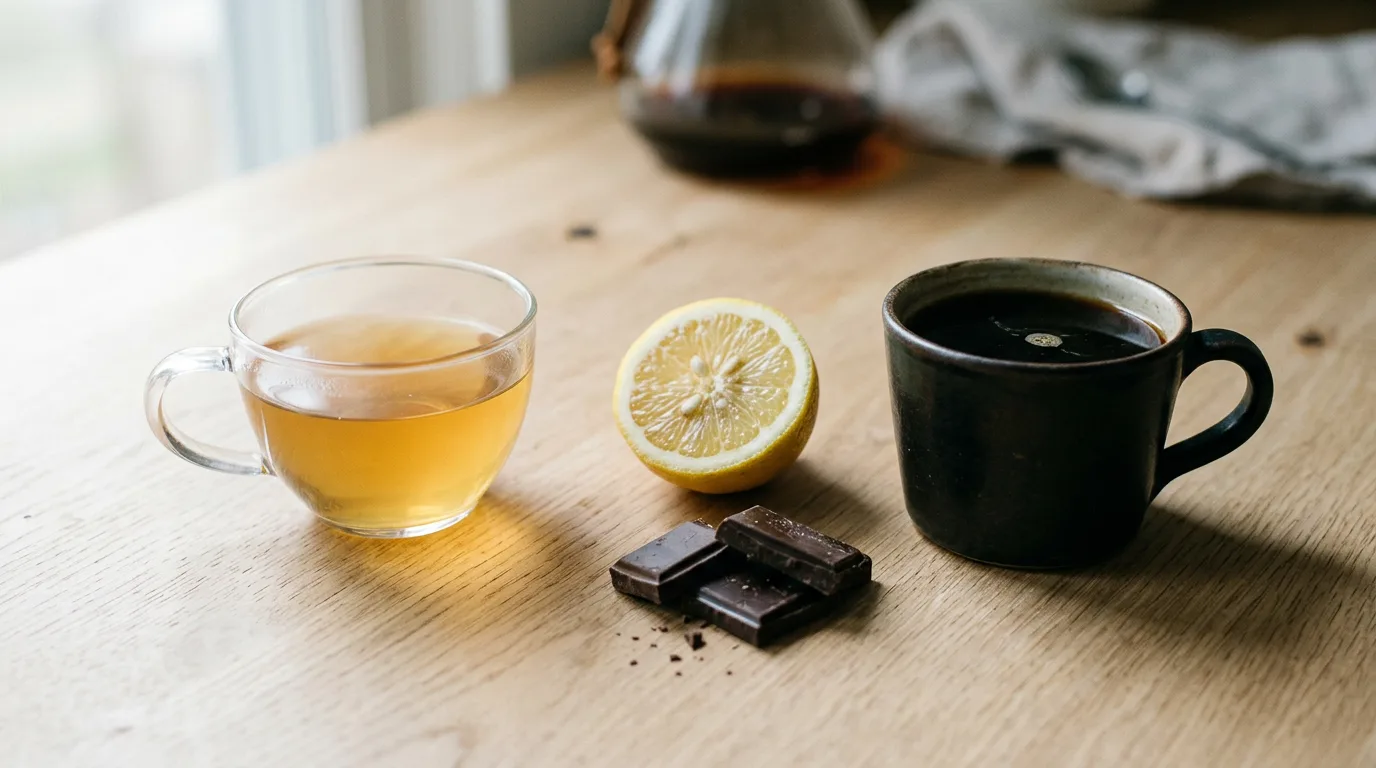
Acidity is the bright, tangy side of coffee; bitterness is the heavy, dry side. A sharp, thin, lemony cup is usually under-extracted, so grind finer or brew longer. A harsh, hollow cup that dries your mouth is usually over-extracted, so grind coarser or brew shorter. Great coffee isn't free of either. It has both, in balance, with sweetness in the middle.
Why I wrote this
When people tell me their coffee "tastes off," they usually can't say how. It's just unpleasant. And without a word for the problem, there's no way to fix it.
In almost every case, the problem is one of two things: too much sourness or too much bitterness. They feel completely different once you know what to look for, but they get mixed up all the time.
Learning to separate them is the single most useful tasting skill I know. It's what lets me dial in a new grinder or espresso machine in a few shots instead of a whole bag of beans.
This guide explains both flavors, where they come from, and how to train your palate with an experiment you can do at home with one brewer and three cups.
What you'll learn
- How acidity and bitterness feel on your tongue, and how they differ from "burnt."
- What causes each one, from the farm and the roaster to your grinder and kettle.
- The three-cup split, a simple test that isolates sour, sweet and bitter from one brew.
- Exact fixes for sour and bitter coffee, by brewing method.
Acidity vs bitterness: the basics
Your tongue reads acidity and bitterness very differently. That's the key to telling them apart.
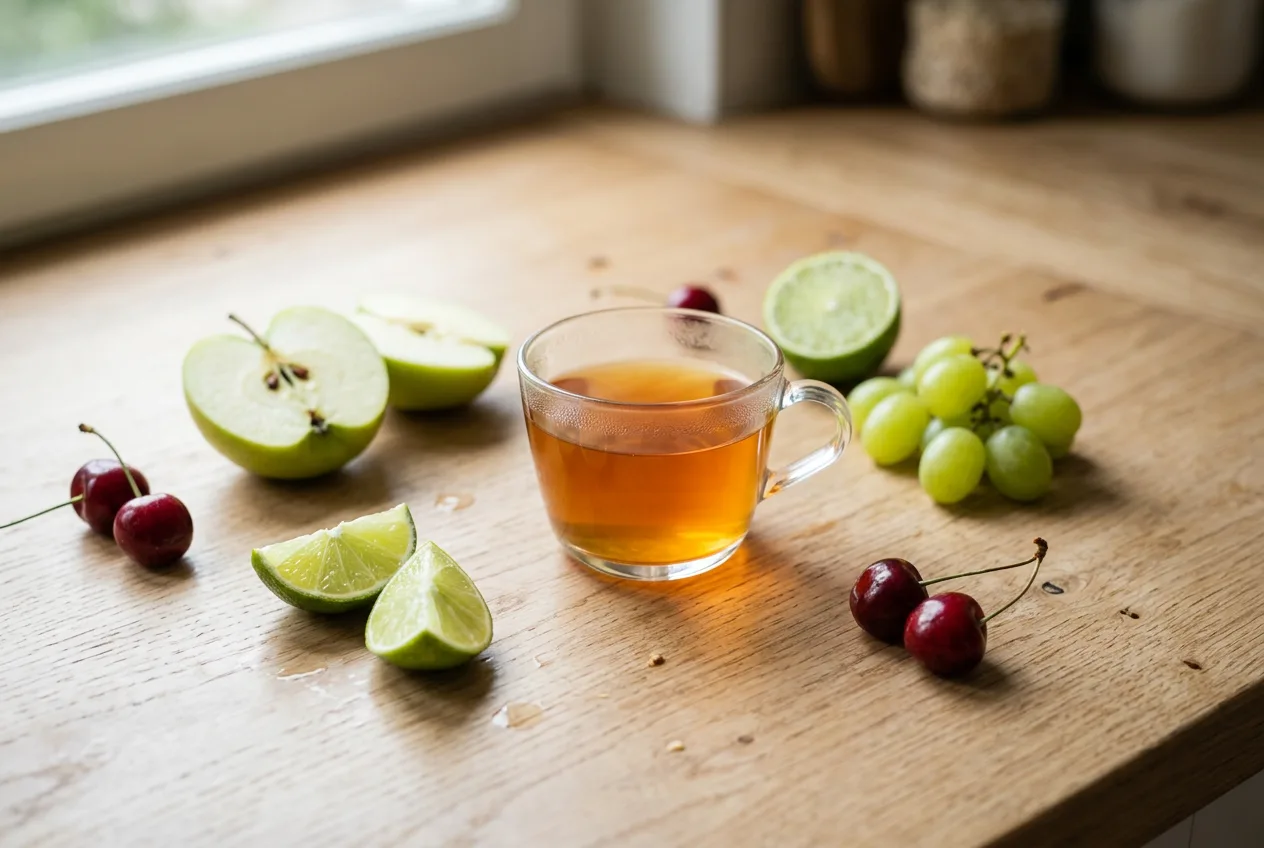
Acidity feels sharp and bright. It makes your mouth water, often along the sides of your tongue. Think of biting into a lemon or a tart green apple.
Bitterness feels heavy and lingering. It tends to sit toward the back of your tongue and throat, and too much of it leaves your mouth dry. Think of dark cocoa, tonic water or strong black tea.
| Trait | Acidity | Bitterness |
|---|---|---|
| Where you notice it | Sides and tip of the tongue | Back of the tongue and throat |
| How it feels | Bright, tangy, mouth-watering | Heavy, lingering, drying |
| Pleasant version | Citrus, green apple, cherry, grape | Dark chocolate, cocoa, nuts, spice |
| Unpleasant version | Sour, thin, vinegary, salty | Harsh, hollow, astringent, ashy |
| Usual brewing cause | Under-extraction | Over-extraction |
Acidity isn't the same as "sour"
Coffee people use "acidity" as a compliment. It means liveliness, like the snap in a good apple. "Sour" is what we call acidity that's out of balance, with nothing sweet or rich to soften it.
Bitter isn't the same as "burnt"
Burnt tastes like ash, smoke or charred toast. It usually comes from very dark roasting or a choked espresso shot. Bitterness can be clean and chocolatey. I cover burnt flavors separately in why coffee tastes bitter or sour.
Our tip: To learn the two sensations, taste a little lemon juice in water and then strong unsweetened cocoa in water, side by side. Notice where on your tongue each one lands.
Understanding acidity in coffee
In everyday talk, "acidic" sounds like a problem. It suggests heartburn and a harsh, stomach-turning cup. Too much acidity is unpleasant, it's true.
But a controlled, well-integrated level of acidity is what makes coffee taste alive. It adds brightness and structure, and it balances the natural sweetness and bitterness in the cup.
Take the acidity away and coffee tastes flat, heavy and dull. That's why most specialty roasters treat acidity as a key part of flavor rather than a flaw.
What good acidity tastes like
When it's balanced, coffee acidity tastes like fresh fruit. Common tasting notes include:
- Citrus: lemon, lime, orange, grapefruit.
- Orchard fruit: green apple, pear.
- Stone and vine fruit: cherry, plum, red grape.
- Berries: especially in many naturally processed coffees.
The acids behind the flavor
Coffee contains several different acids, and each one has its own character. You don't need to memorize them, but it helps to know they're not all the same.
| Acid | Tastes like | Notes |
|---|---|---|
| Citric | Lemon, orange | Common in high-grown arabica |
| Malic | Green apple, pear | Crisp and juicy |
| Phosphoric | Sparkling, cola-like | Often noted in Kenyan coffees |
| Acetic | Vinegar, in larger amounts | Pleasant in tiny amounts, harsh in excess |
| Chlorogenic | Slightly sour and astringent | Breaks down during roasting into bitter compounds |
What controls acidity: farm, mill and roaster
Every coffee starts with its own baseline of acidity. That baseline is set long before the beans reach your kitchen, by three main factors.
1. Origin and altitude
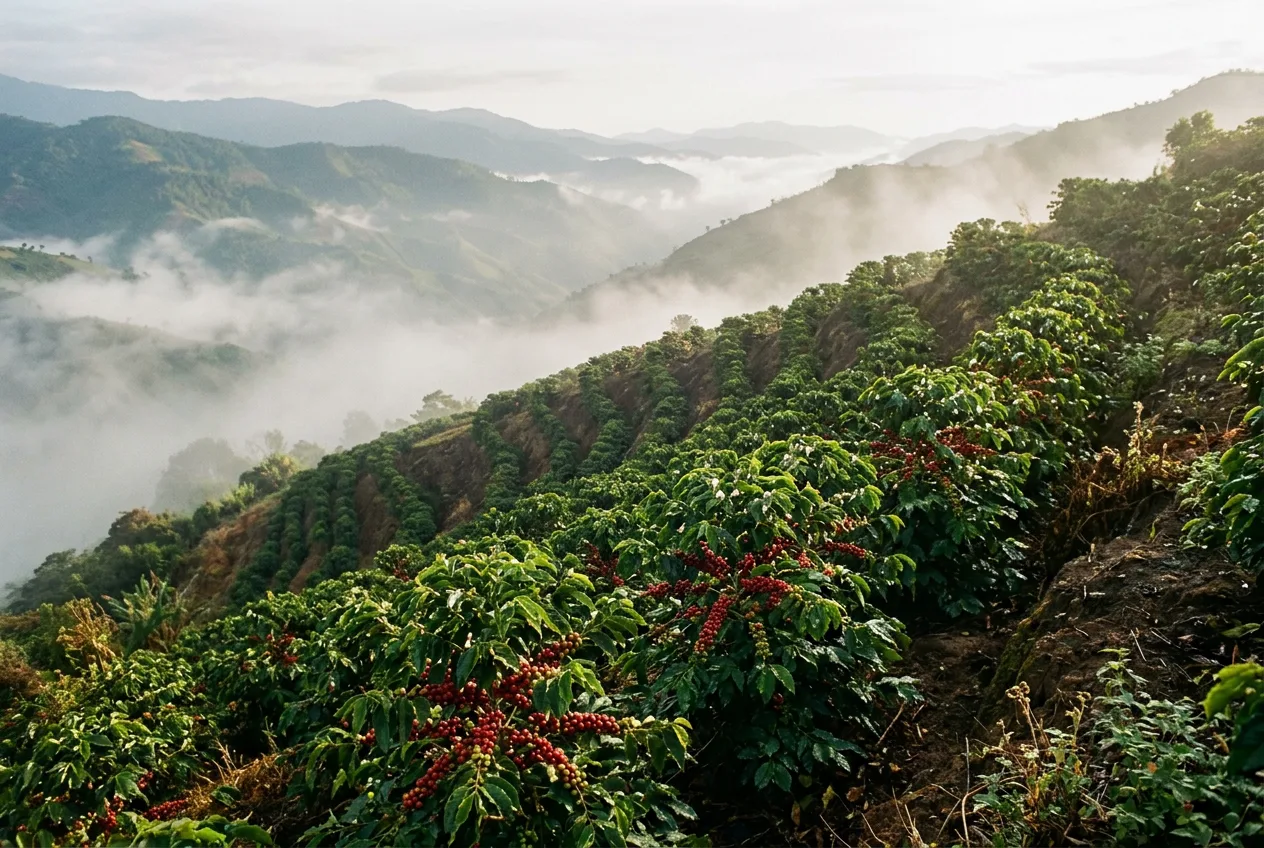
Where coffee grows has a big effect. Soil, climate and especially elevation shape how the cherries develop their organic acids.
High-altitude coffees mature more slowly in the cooler air. That slower ripening tends to build more complex, brighter acids. Many East African and Central American coffees are known for this lively character. I went through the main regions in coffee growing regions and flavor.
2. Processing method
After harvest, the seed has to be separated from the fruit. How that's done changes the acidity you taste.
- Washed coffees usually taste cleaner, with crisp, clear acidity.
- Natural coffees, dried inside the whole cherry, often taste fruitier and heavier, with softer, jammy acidity.
- Honey-processed coffees sit somewhere in between.
More detail in my guide to coffee processing methods.
3. Roast level
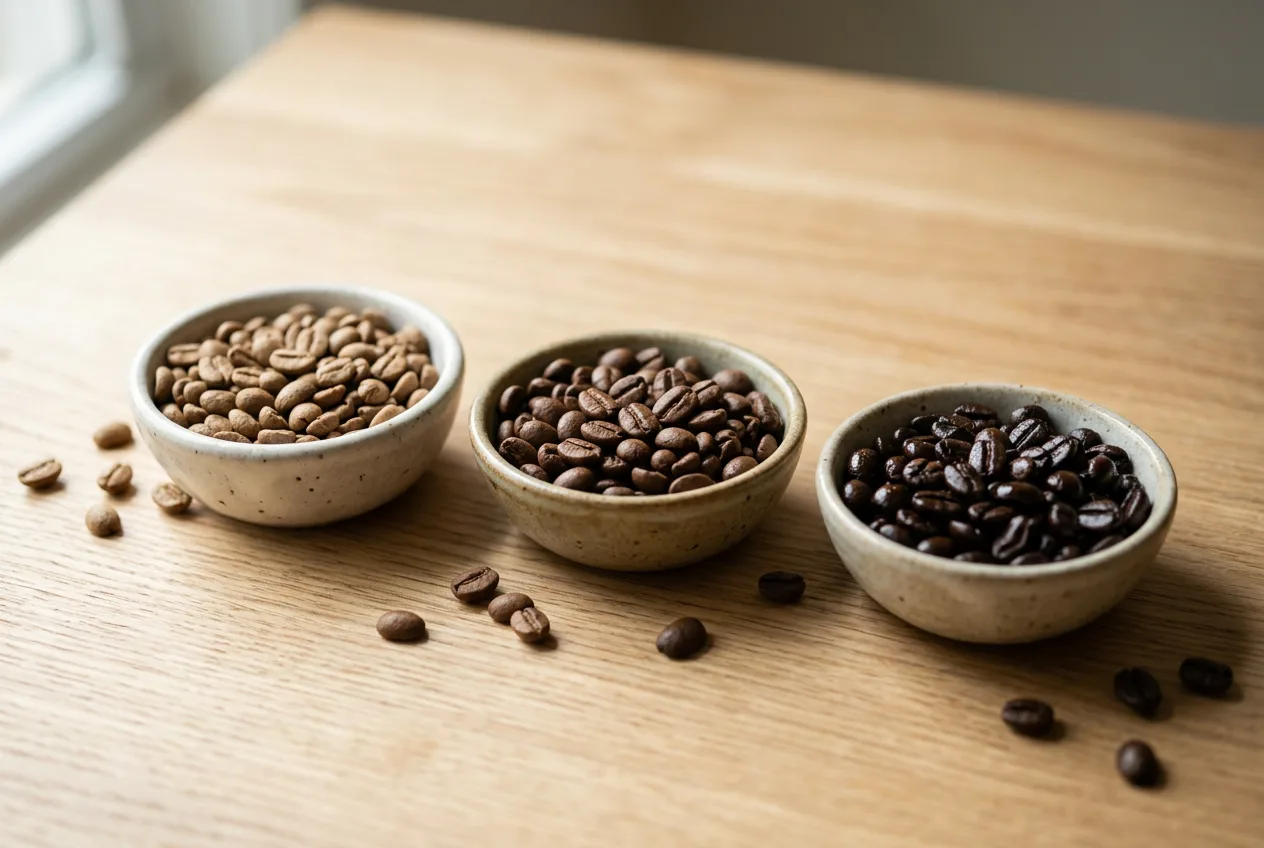
Roasting is arguably the most decisive factor. Light roasts keep more of the delicate acids found in the green bean, so they taste brighter.
As coffee roasts darker, those acids break down and caramelize. Perceived acidity drops steadily, and roasty, bitter flavors take over.
Perceived acidity by roast level
A general pattern. Origin and processing shift where any single coffee lands.
I explain the stages of roasting in more depth in coffee roast levels explained.
Sourness and under-extraction
Even a coffee with gentle natural acidity can taste aggressively sour if you brew it badly. That's where extraction comes in.
Extraction is simply hot water dissolving flavor compounds out of the grounds. But water doesn't dissolve everything at once. It pulls compounds out in a predictable order.
Acids are the most soluble, so they come out first. Most of them are extracted in roughly the first quarter of the brew time.
If the brew stops too early, you get those sharp acids without enough of the sugars and heavier compounds that bring sweetness and body. The result is thin and sour. That's under-extraction.
Common causes of under-extraction
- Grind too coarse: large particles have less surface area, and water runs past them too quickly.
- Brew time too short: the water leaves before it reaches the sweet compounds.
- Too little water: not enough water for the dose of coffee to dissolve the full range of flavors.
- Water too cool: cooler water extracts more slowly, so the same time pulls less out.
Our tip: Under-extracted coffee often tastes slightly salty as well as sour. If you notice a briny edge, think "grind finer" before anything else.
Understanding bitterness in coffee
Bitterness is the flavor that drives most people away from black coffee. It's the reason so many cups get drowned in milk, cream and sugar.
For decades, a lot of commodity coffee, the kind found in diners, gas stations and many supermarket aisles, has been roasted very dark. Dark roasting hides defects and flattens acidity. But it also strips away the coffee's natural balance and leaves it bitter and one-note.
Good bitterness exists
Too much bitterness is harsh. But a controlled amount is essential. Without it, coffee would taste like sour fruit juice.
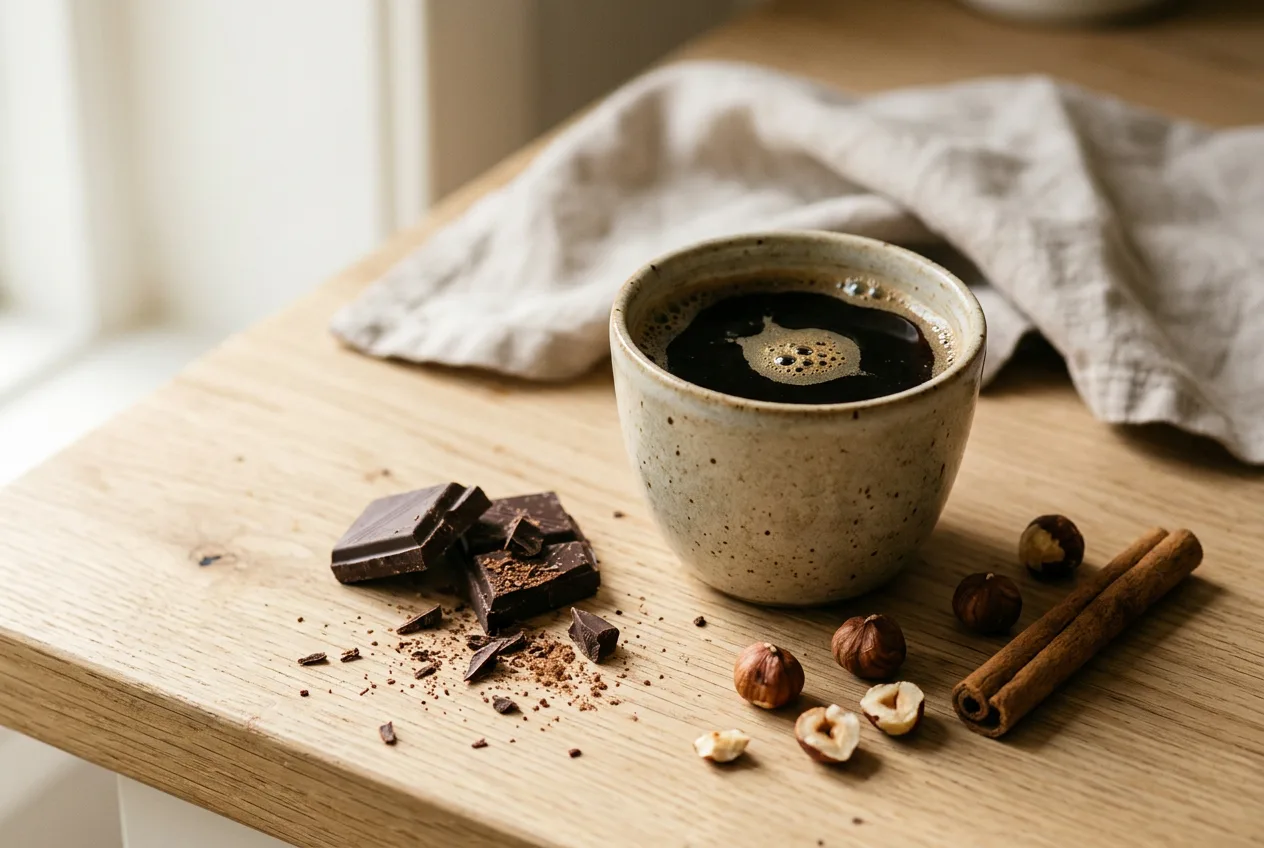
Pleasant, well-integrated bitterness shows up as rich, comforting notes:
- Dark chocolate and cocoa.
- Warm baking spices, like cinnamon and clove.
- Roasted nuts and toasted grains.
- Caramelized sugar and molasses in medium-dark roasts.
What controls bitterness: roast and species
Like acidity, bitterness depends partly on the bean and the roast before you ever brew.
Roast level
Darker roasting breaks down the bean's structure and sugars. It creates bitter compounds and, eventually, carbonized flavors. Chlorogenic acids, which are mildly sour in green coffee, turn into more bitter-tasting compounds as roasting goes on. The darker the roast, the stronger the bitterness.
Species and caffeine
Caffeine itself tastes bitter. The two main coffee species carry very different amounts.
| Species | Caffeine | Typical taste |
|---|---|---|
| Arabica | Lower, about 1.2% to 1.5% | Sweeter, more acidity and nuance |
| Robusta | Nearly double, about 2.2% to 2.7% | Harsher, heavier and more bitter |
That's why robusta-heavy blends almost always have a strong bitter backbone. I compared the two species in arabica vs robusta.
Bitterness and over-extraction
At the other end of the brewing spectrum from sourness is over-extraction.
Bitter compounds are the least soluble parts of roasted coffee. They need long contact with hot water to dissolve, so they mostly come out near the end of the brew.
When water stays with the grounds too long, it keeps pulling out these heavy, drying compounds. They swamp the acids and sugars that came out earlier, and the cup turns harsh and hollow.
Common causes of over-extraction
- Grind too fine: tiny particles pack tightly, slow the water down and expose far more surface area.
- Brew time too long: water lingering past the ideal window pulls out tannins and woody, dry flavors.
- Too much water: running extra water through the bed washes out the last bitter solids after the sugars are gone.
- Water too hot for the coffee: especially with dark roasts, which extract easily.
Our tip: The drying feeling is the giveaway. If your cheeks and tongue feel puckered and chalky after you swallow, that's astringency from over-extraction, not acidity.
The order of extraction, in one picture
Everything above comes down to one idea: different flavors leave the coffee at different times. Here's the rough sequence for a normal brew.
- Early: acids and saltsBright, sour and slightly salty compounds dissolve first, mostly in the opening part of the brew.
- Middle: sugars and bodySweetness, caramel and browning flavors from roasting come out next, along with oils that give the cup body.
- Late: bitterness and astringencyHeavier bitter compounds and drying tannins dissolve last, as the easy flavors run out.
What dominates each stage of a 3-minute brew
An illustration of which flavor stands out in each third, not a lab measurement.
A good recipe stops at the point where you've collected enough acids, plenty of sweetness and just enough bitterness to hold it all together. Too early and you're sour. Too late and you're bitter.
The three-cup experiment: taste extraction in isolation
Reading about extraction is useful. Tasting it is far better. The fastest way to train your palate is to split one brew into three cups and taste each stage on its own.
In espresso circles this is called taking "salami shots." With filter coffee, you simply swap cups under the brewer as it drips.
Choosing the coffee
Pick a coffee with noticeable brightness, so the contrast between the first and last cup is clear.
- Best: a light-to-medium roast single origin. A washed Colombian, for example from Tolima, gives clean fruit acidity and solid sweetness.
- Avoid: dark roasts. Much of their acidity has already been roasted out, so the first cup won't teach you much.
Choosing the brewer
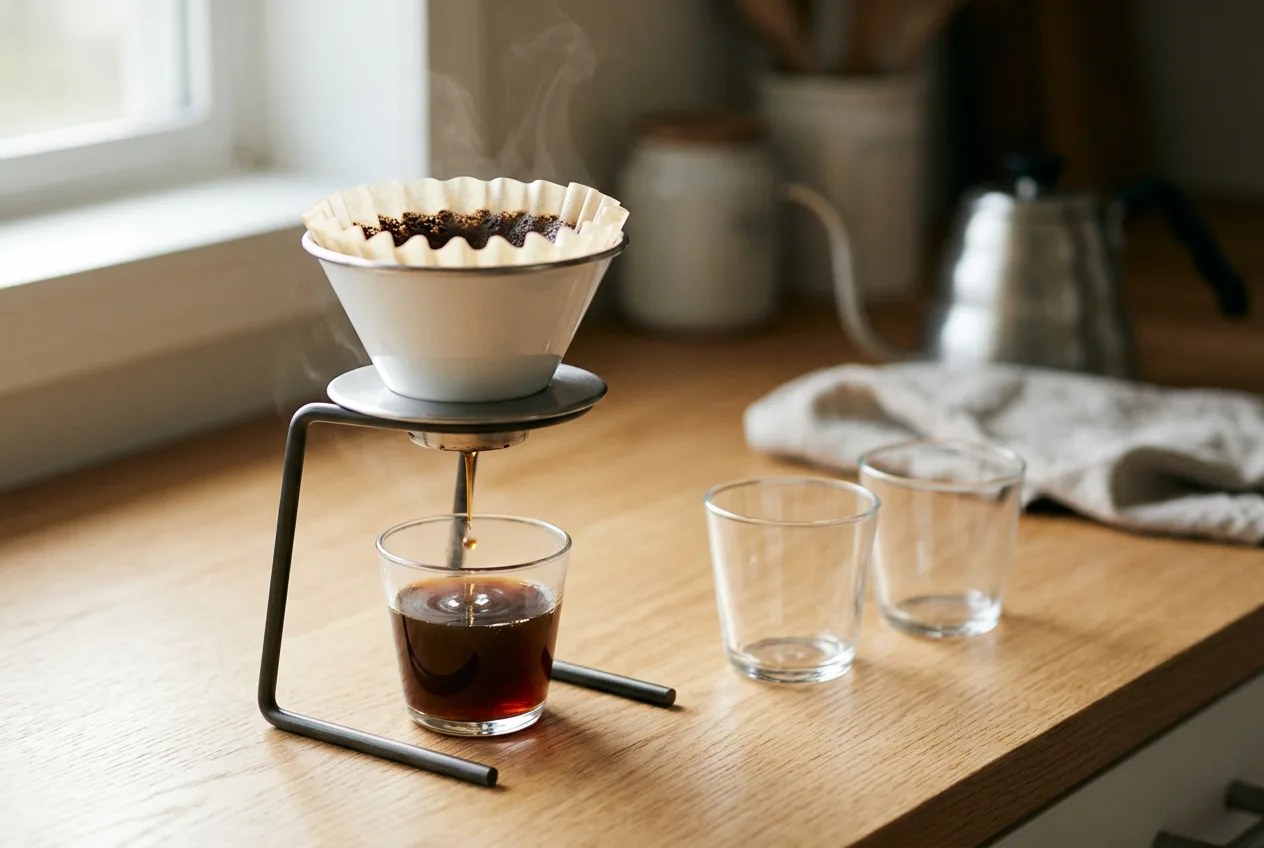
A flat-bottom pour-over or a no-bypass brewer on a drip stand works best. You can slide cups in and out underneath without disturbing the coffee bed.
You can also do this with an automatic drip machine by swapping the carafe for cups during the cycle, or with an espresso machine by moving small cups under the spouts.
The recipe
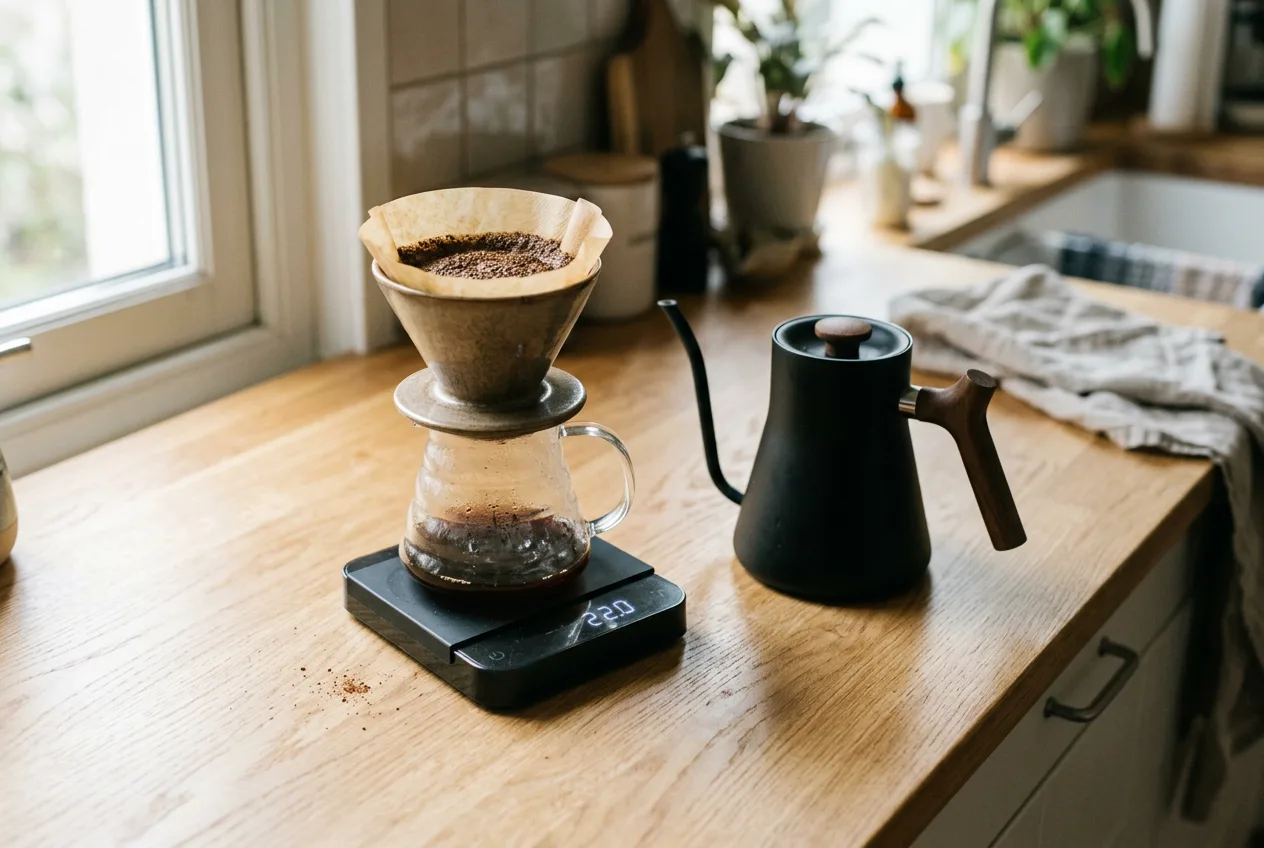
For small doses like this, weigh in grams on a pocket scale. A kitchen scale that reads in ounces isn't precise enough. Fifteen grams is about half an ounce, or roughly two and a half tablespoons of whole beans.
How to split the brew
- Set out three cupsLine them up left to right and label them Cup 1, Cup 2 and Cup 3.
- Start brewing into Cup 1Start your timer and add all 225 g of water to the brewer. Let it brew normally.
- Swap at 1:00Quickly slide Cup 1 out and put Cup 2 under the stream.
- Swap at 2:00Replace Cup 2 with Cup 3.
- Let it finishLet the rest drain into Cup 3 until the brew ends, around the 3:00 mark.
You now have three liquids from the exact same grounds: the early, middle and late extraction.
Tasting the three cups
Let the cups cool a little. Very hot coffee dulls your palate, especially for acidity. Taste them in order, and note the texture, flavor and aftertaste of each.
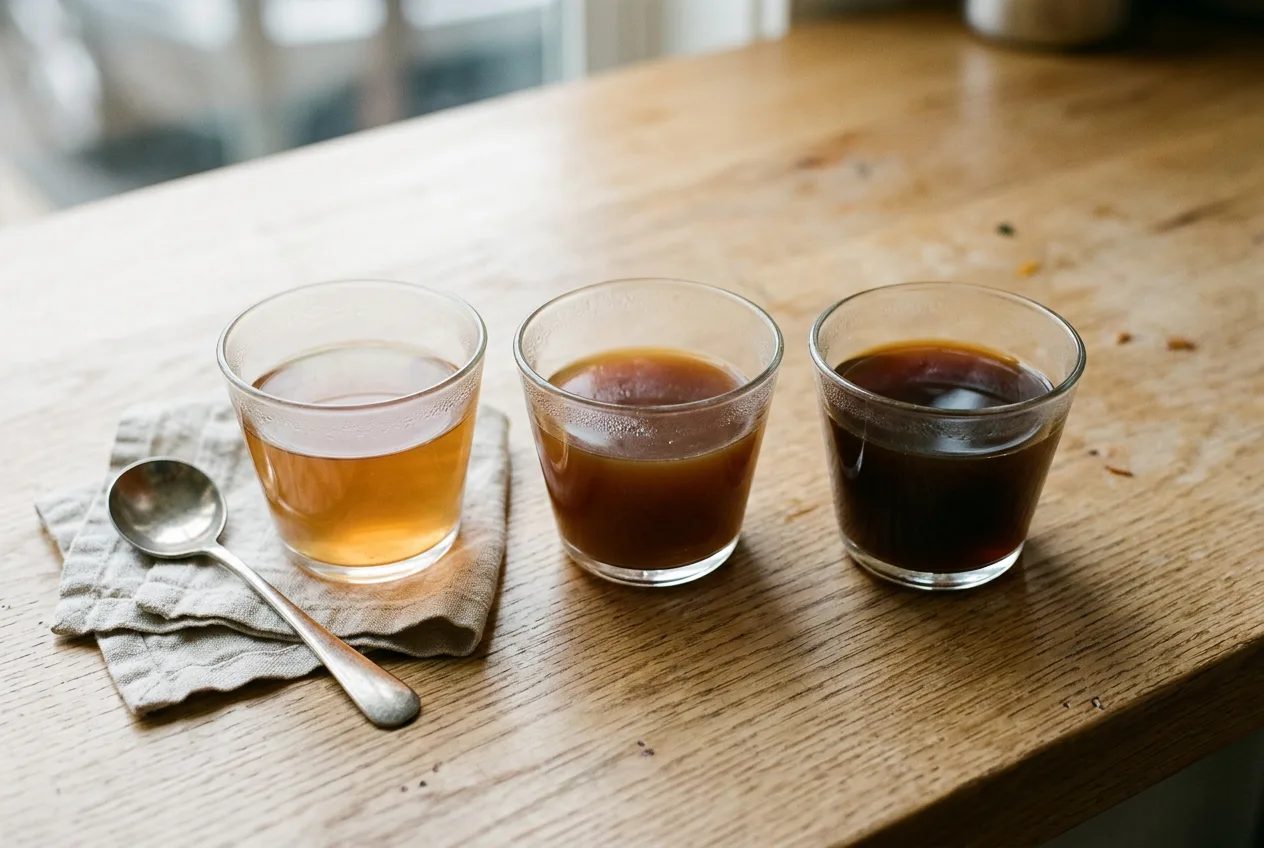
| Cup | Time | Main flavor | What it teaches you |
|---|---|---|---|
| Cup 1 | 0:00 to 1:00 | Sharp, sour, thin | What under-extraction tastes like |
| Cup 2 | 1:00 to 2:00 | Mildly sweet, a bit flat | Where sweetness and body come from |
| Cup 3 | 2:00 to 3:00 | Bitter, hollow, drying | What over-extraction tastes like |
Cup 1: pure acidity
Expect something intense and tart. This cup holds the soluble acids that rush out when hot water first hits the grounds.
There's almost no sugar or body yet to soften it, so it tastes thin and borderline unpleasant, like straight lemon juice or an unripe apple.
Remember this sensation. When a normal cup tastes sharp, thin and sour like Cup 1, it's telling you the coffee is under-extracted.
Cup 2: sweetness and structure
By the second minute, most of the bright acids have already left. The water is now dissolving sugars and the browning compounds from roasting.
Cup 2 tastes closest to "normal coffee." It's pleasantly sweet, maybe a little nutty, but oddly muted. Without Cup 1's acids, it lacks life.
The lesson: sweetness is essential, but it can't carry a cup on its own.
Cup 3: pure bitterness
In the last minute, the acids and sugars are mostly gone. The water is pulling the heaviest, least soluble compounds from the grounds.
Cup 3 tastes watery yet heavy at the same time. It's dominated by bitterness and a strong drying feeling on your tongue and cheeks, similar to a very tannic red wine.
Remember this one too. When a cup tastes hollow and bitter and leaves your mouth dry, it's over-extracted.
Putting it back together
On their own, none of the three cups is good. Cup 1 is too sour, Cup 2 too dull and Cup 3 too bitter.
Now pour all three into a larger mug and stir. Then taste again.
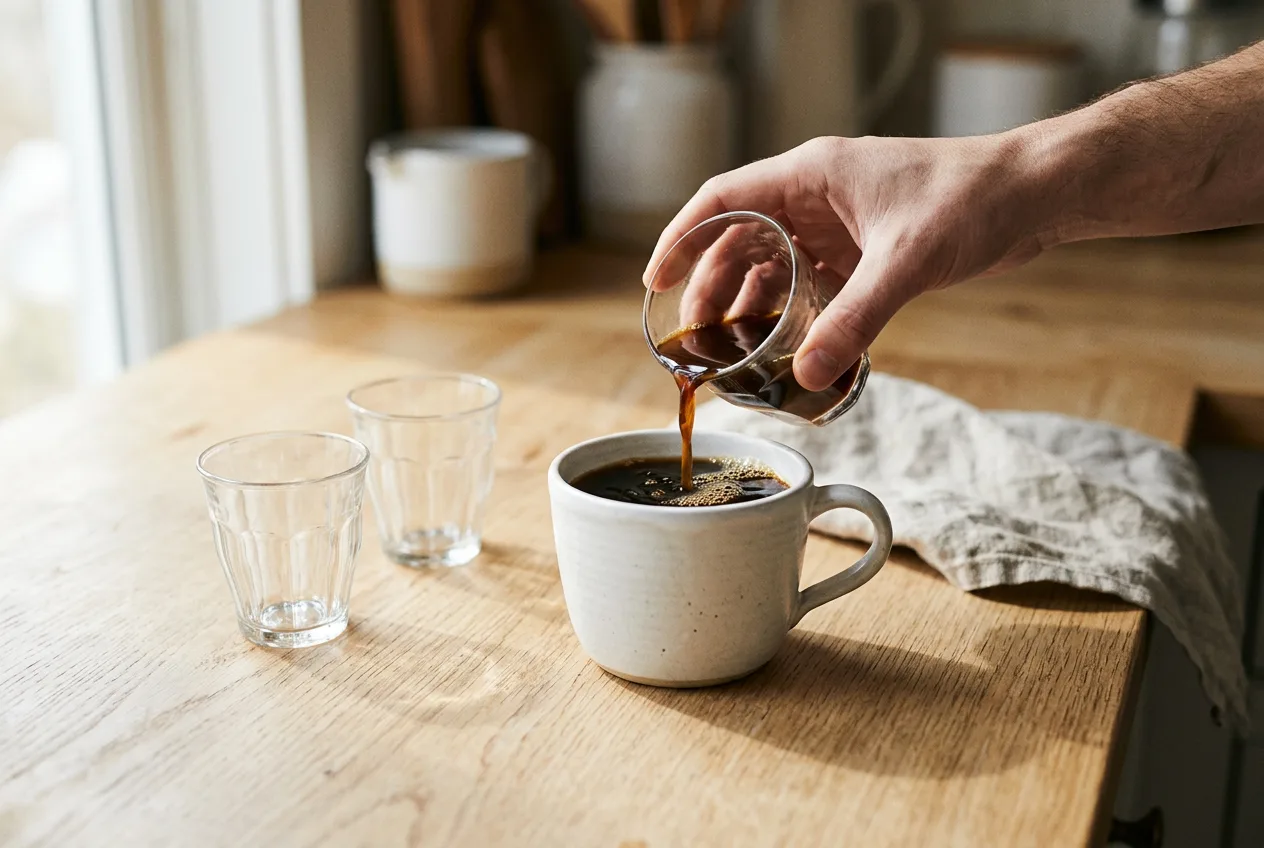
The change is immediate. Cup 1's sharp acidity gets cushioned by Cup 2's sweetness and Cup 3's weight. The acids are still there, but now they read as lively fruit instead of sourness. The bitterness turns into a chocolatey backbone and a clean finish.
The first time I did this, it changed how I think about brewing. You're not trying to remove acidity or bitterness. You're trying to collect the right amount of each.
Our tip: Try blending only Cup 1 and Cup 2, then only Cup 2 and Cup 3. The first will taste like a slightly under-extracted cup, the second like a slightly over-extracted one. It's a great way to calibrate.
Sweetness: the piece that ties it together
Most talk about coffee flavor focuses on acidity and bitterness. But the real sign of a well-brewed cup is sweetness.
Coffee doesn't contain much actual sugar once it's roasted. The sweetness you taste comes from caramelized sugars, browning compounds and aromas that your brain links to sweet things, like caramel, honey and ripe fruit.
Sweetness sits in the middle of the extraction, as Cup 2 showed. That's why both under- and over-extracted coffee taste unpleasant. The first never reaches the sweetness, and the second buries it under bitterness.
When I'm dialing in, I don't ask "is it sour?" or "is it bitter?" first. I ask "is it sweet?" If the cup tastes sweet, the acidity usually reads as fruit and the bitterness as chocolate. If it doesn't, I know which way to adjust by checking which edge sticks out.
Our tip: Sweetness is easiest to notice as the coffee cools to warm. Taste a cup at three points, hot, warm and nearly room temperature, and watch how the balance shifts.
Strength isn't the same as extraction
This trips up a lot of people. A cup can be strong and sour at the same time, or weak and bitter.
Strength is how concentrated the coffee is: how much dissolved coffee is in the water. It's mostly controlled by your ratio. More coffee per cup makes it stronger.
Extraction is how much of the grounds you actually dissolved. It's controlled by grind, time and temperature. It decides whether the cup leans sour or bitter.
| Cup tastes | Likely problem | Fix |
|---|---|---|
| Strong and sour | Too much coffee, under-extracted | More water, finer grind |
| Strong and bitter | Too much coffee, over-extracted | More water, coarser grind |
| Weak and sour | Too little coffee, under-extracted | More coffee, finer grind |
| Weak and bitter | Too little coffee, over-extracted | More coffee, coarser grind |
If your coffee tastes balanced but too strong or too weak, don't touch the grind. Just change the ratio, or add a splash of hot water to the finished cup.
Don't forget the water
Brewed coffee is about 98% water, so the water you use shapes how acidity and bitterness come across.
- Very soft or distilled water tends to extract poorly and can make coffee taste flat or sharply sour.
- Very hard water can mute acidity and make coffee taste chalky or dull. It also builds scale in machines.
- Chlorinated tap water adds off-flavors that read as harshness.
For most people, filtered tap water is the simple fix. If your coffee tastes oddly flat no matter what you try, the water is worth testing before you buy new beans or gear.
How professionals taste acidity and bitterness
Roasters and buyers judge coffee through a process called cupping. Coarse grounds are steeped in hot water in small bowls, the crust is broken and the coffee is slurped from a spoon.
The loud slurp isn't bad manners. It sprays the coffee across your whole tongue and pulls aroma up into your nose, so you notice acidity, sweetness and bitterness more clearly.
Cuppers score acidity on both intensity and quality. A coffee can have lots of acidity that's lovely, like juicy citrus, or lots that's harsh, like vinegar. The same goes for bitterness. Clean cocoa bitterness scores well, while ashy or medicinal bitterness doesn't.
You can borrow the method at home. Slurp a spoonful of your coffee loudly, then ask: where on my tongue do I feel it, and does it leave my mouth watering or dry? Those two questions sort acidity from bitterness most of the time.
What milk does to acidity and bitterness
Milk changes the balance in predictable ways. Fat and proteins coat your tongue and bind some bitter compounds, so milk drinks taste smoother and less bitter.
Milk also mutes acidity. That's why very bright, light-roasted espresso can taste odd in a latte, sometimes sour or "yogurty." Medium and medium-dark roasts, with more chocolate and caramel, usually pair better with milk.
If you drink your coffee black, you'll notice extraction problems more. If you always add milk, you can lean slightly toward a fuller extraction, since the milk will round off some bitterness.
How to fix sour, under-extracted coffee
If your everyday coffee tastes sharp, thin, salty or sour, like Cup 1, the water didn't extract enough sweetness and depth to balance the early acids. You need to push extraction further.
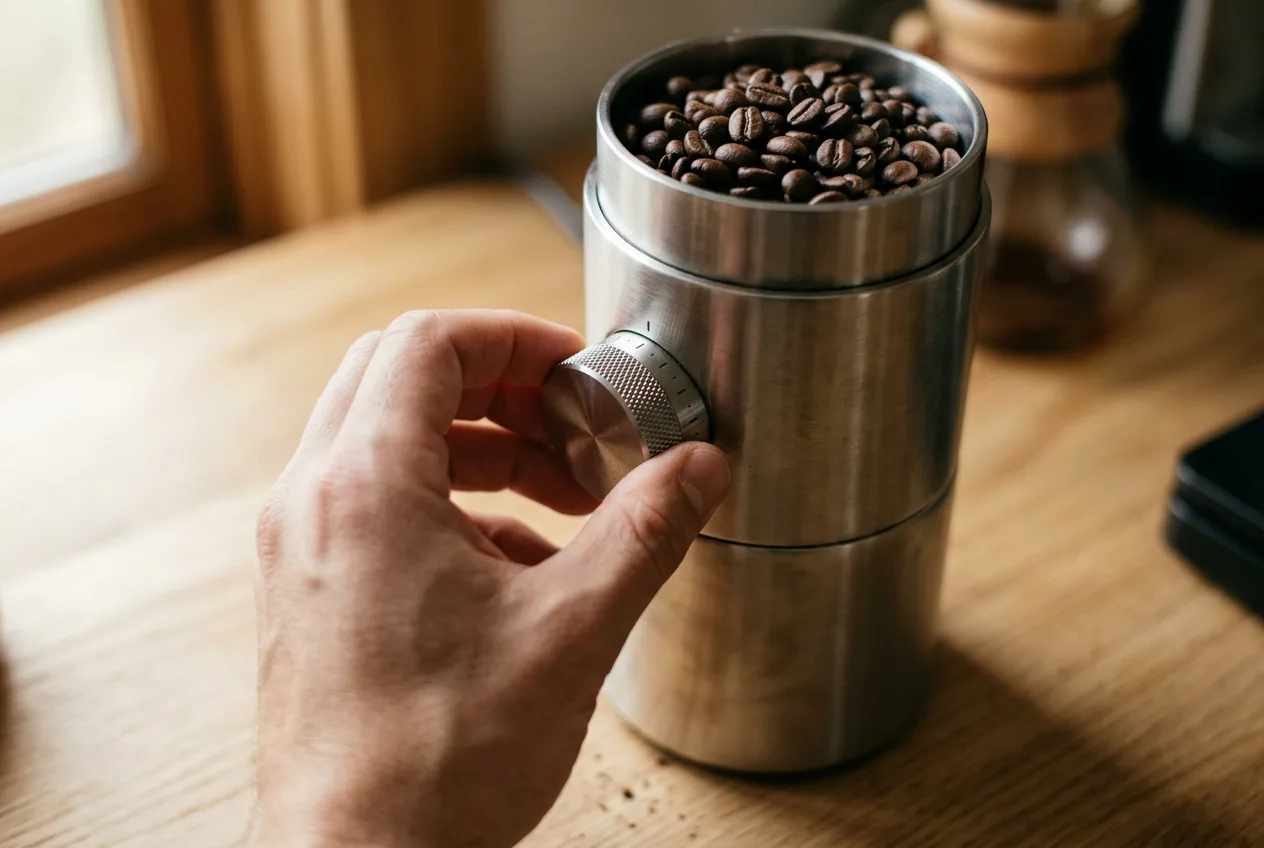
- Grind finerSmaller particles mean more surface area and a slower flow, so the water has time to reach the sugars and heavier compounds.
- Use a little more waterMoving from, say, 1:14 to 1:16 lets the water dissolve more of the coffee and rounds off sourness.
- Brew longer or stirIn a French press, steep an extra 30 to 60 seconds. In pour-over, a gentle stir or swirl increases extraction.
- Check your water temperatureIf your kettle is well below 195°F, the brew will extract slowly. Bring it closer to 200 to 205°F, especially for light roasts.
Change one thing at a time. If you grind finer and add water and extend the time all at once, you won't know which change helped.
How to fix bitter, over-extracted coffee
If your coffee tastes harsh, hollow or burnt, or leaves a chalky dryness on your tongue, like Cup 3, the water pulled too many late-stage bitter compounds. You need to pull extraction back.
- Grind coarserBigger particles let water pass through faster, cutting the brew off before the bitter tail.
- Use a little less waterA slightly tighter ratio keeps the brew from reaching the end of extraction, where the astringent tannins sit.
- Shorten the brewPlunge the French press sooner, or pour a little faster in pour-over.
- Lower the temperatureDropping from about 205°F to 195°F slows how fast heavy bitter compounds dissolve. This helps most with dark roasts.
If none of this helps, look at the beans. A very dark roast or a robusta-heavy blend will taste bitter however carefully you brew it.
| Lever | Coffee too sour | Coffee too bitter |
|---|---|---|
| Grind size | Finer | Coarser |
| Water amount | A little more | A little less |
| Brew time | Longer | Shorter |
| Temperature | Hotter (up to ~205°F) | Cooler (down to ~195°F) |
| Beans | Try a slightly darker roast | Try a lighter roast or 100% arabica |
Fixes by brew method
The same logic applies everywhere, but each brewer has its own main control. Here's where I start with each one.
| Method | Main lever | If sour | If bitter |
|---|---|---|---|
| Pour-over | Grind size | Grind finer; aim for a 3 to 3:30 total time | Grind coarser; pour a bit faster |
| Automatic drip | Grind and dose | Grind finer; check the machine reaches 195°F | Grind coarser; avoid very dark roasts |
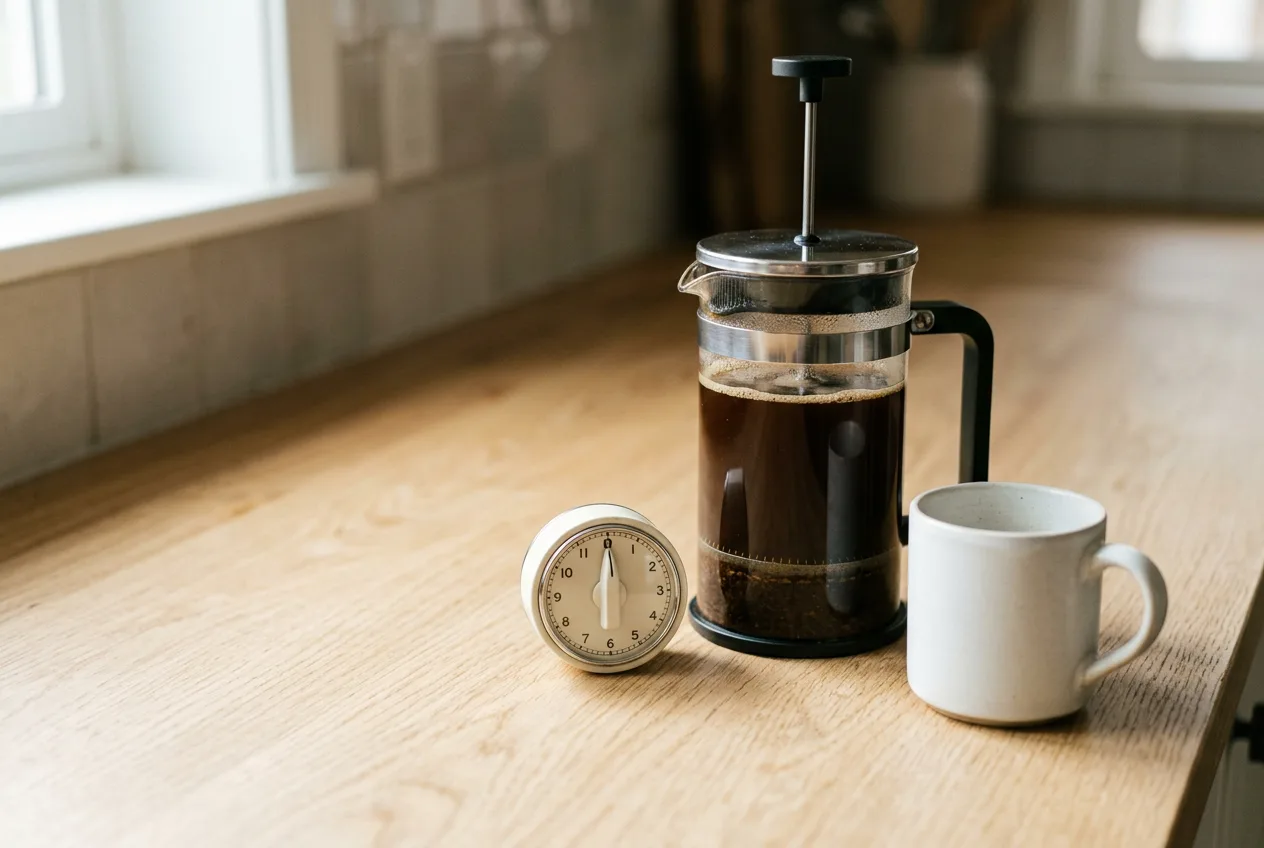
| French press | Steep time | Steep 30 to 60 seconds longer | Plunge at 4 minutes and pour right away |
| Espresso | Grind size | Grind finer so the shot runs slower | Grind coarser; stop before the stream turns pale |
| AeroPress | Time and grind | Steep longer or grind finer | Shorter steep, gentler press |
| Cold brew | Steep time | Extend toward 18 to 20 hours | Shorten toward 12 to 14 hours |
For espresso, the stakes are higher because everything happens in about 30 seconds. A few clicks on the grinder can swing a shot from sour to bitter.
Our tip: Grind quality matters as much as grind size. Blade grinders make a mix of dust and boulders, so you get sour and bitter in the same cup. A decent burr grinder is the biggest upgrade most home brewers can make. See burr vs blade grinder.
A real dial-in, step by step
Here's how this works in practice. Last month I opened a bag of washed Ethiopian coffee, a light roast with lemon and bergamot notes, and brewed it as pour-over.
- Brew 1: sharp and thin15 g coffee, 250 g water, my usual medium grind. Total time 2:20. It tasted like lemon water with no sweetness. Classic under-extraction.
- Brew 2: grind finerSame recipe, three clicks finer on the grinder. Total time 2:55. Much sweeter, with lemon now reading as fruit. Still a slightly hollow finish.
- Brew 3: hotter waterKettle raised from 198°F to 204°F, same grind. Total time 3:00. Rounder body, a honey-like sweetness and a clean, short finish.
- Brew 4: checking the edgeTwo more clicks finer to see where it tipped. Total time 3:40. A dry, bitter finish crept in, so I went back to Brew 3's settings.
Four brews, one change each time. The fourth one, where I deliberately went too far, is just as useful as the good one. It shows you where the edge is, so you know your best setting sits just before it.
What to expect from different coffees
| Coffee style | Natural acidity | Natural bitterness |
|---|---|---|
| Light roast, washed East African | High, citrus and floral | Low |
| Medium roast, Colombian or Central American | Medium, apple and red fruit | Low to medium, cocoa |
| Medium roast, Brazilian natural | Low, soft | Medium, nutty and chocolatey |
| Dark roast blend | Very low | High, roasty |
| Robusta-heavy espresso blend | Low | High, earthy |
Use this as a starting point. If a light Ethiopian tastes bright, that's the coffee. If it tastes sour and thin, that's the brew.
Acidity and your stomach
There's a common mix-up worth clearing up. "Acidity" as a taste isn't the same as how acidic coffee is chemically.
Brewed coffee typically has a pH of roughly 4.8 to 5.1. That's mildly acidic, and much less acidic than orange juice or soda. A bright, lemony light roast and a heavy dark roast can sit at very similar pH values.
So a coffee that tastes acidic isn't necessarily harder on your stomach. If coffee gives you heartburn, a few things tend to help:
- Darker roasts: some research suggests dark roasting produces compounds that may reduce stomach acid release.
- Cold brew: many people find it gentler, even though studies show its pH is similar to hot coffee.
- Drinking with food rather than on an empty stomach.
- Smaller servings, or switching some cups to decaf.
If heartburn is frequent, talk to your doctor. More on that in caffeine myths debunked.
Common mistakes when chasing balance
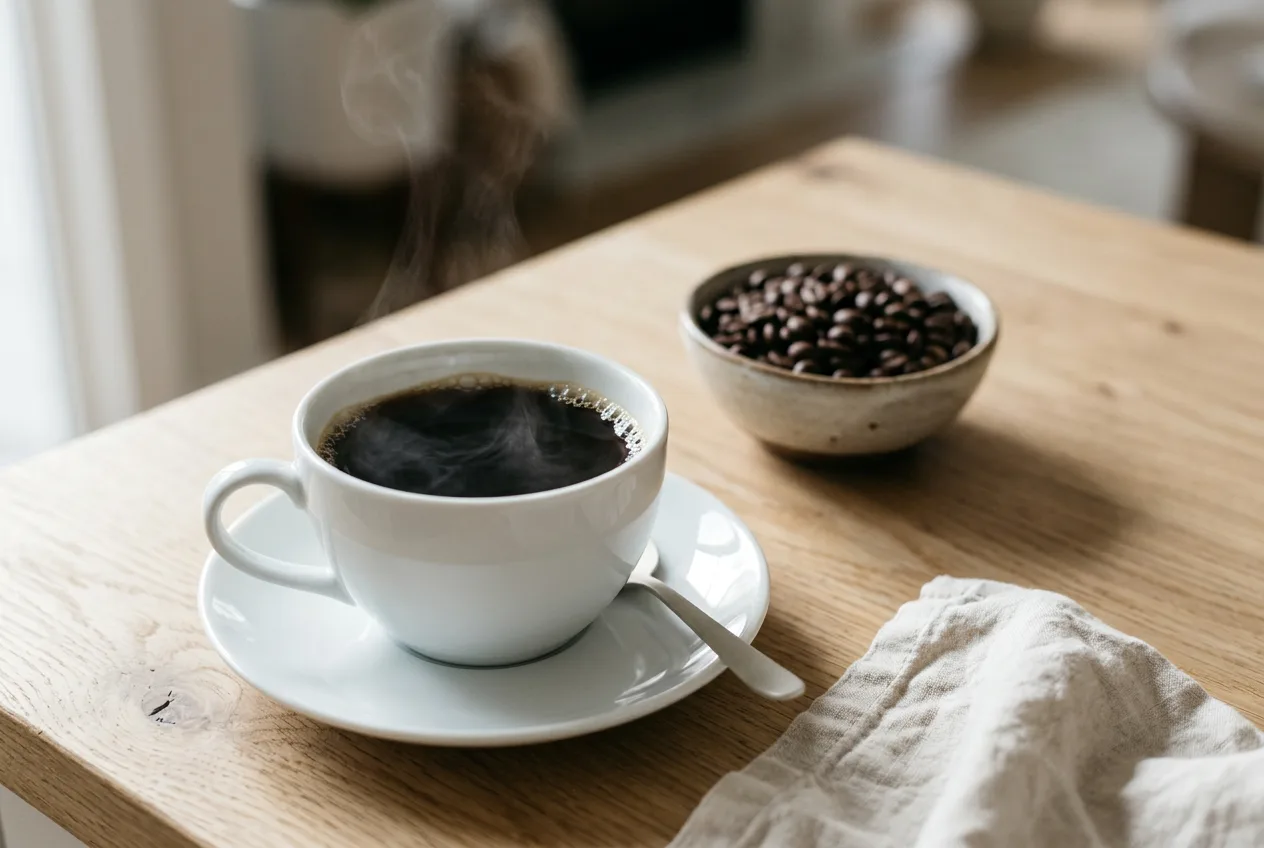
- Calling everything "bitter": many people describe sour coffee as bitter. If it's sharp and mouth-watering, it's sour. Fix it with a finer grind, not a coarser one.
- Changing several things at once: you lose track of what worked. Adjust one variable per brew.
- Tasting too hot: scalding coffee hides acidity. Let it cool a few minutes before you judge.
- Blaming the recipe for stale beans: old coffee tastes flat and bitter whatever you do. Fresh beans, ideally used within a month of roasting, make dialing in far easier.
- Fighting the roast: you can't brew bright acidity into a very dark roast. Pick beans that suit the cup you want.
- Masking instead of fixing: sugar hides bitterness and milk softens sourness, but neither fixes the brew underneath.
Our tip: A tiny pinch of salt in a bitter cup really does soften the bitterness. It's a handy rescue for office coffee, but it's not a substitute for a better brew.
Using this when you buy beans
Once you can tell acidity from bitterness, roaster labels start to make sense. Tasting notes are really a map of where a coffee sits on this scale.
- Notes like lemon, berry, stone fruit or floral point to a brighter, more acidic coffee. Great black, trickier with milk.
- Notes like chocolate, caramel, hazelnut or brown sugar point to a rounder, lower-acid coffee with gentle bitterness. Easy to brew and great in milk drinks.
- Notes like smoky, bold or intense usually mean a dark roast with strong bitterness and little acidity.
If you've found that you dislike sour coffee, don't give up on light roasts entirely. Often the coffee was fine and the brew was short. But if you simply prefer comfort over sparkle, choose beans with chocolate and nut notes and you'll be happy with far less fiddling.
My guide on how to choose coffee beans goes into reading labels in more detail.
Tasting words, explained simply
Coffee tasting has its own vocabulary, and it can feel like a secret code. These are the terms that matter most for acidity and bitterness.
You don't need fancy words to brew well. But having a few precise ones helps you notice what's going on, and it makes roaster tasting notes far more useful when you're choosing beans.
The two I'd learn first are "astringent" and "hollow." Both point to over-extraction, and both are easy to confuse with acidity until you've tasted Cup 3 from the experiment above.
The verdict
Acidity and bitterness aren't enemies. They're the two ends of the same scale, and good coffee needs both.
Sour, thin coffee usually means you stopped extracting too early. Harsh, drying coffee usually means you went too far. Once your tongue can tell the two apart, every brew becomes easy to fix.
If you only try one thing from this guide, make it the three-cup split. Ten minutes and one bag of beans will teach you more about extraction than anything you can read.
Frequently asked questions
What's the difference between acidic and sour coffee?
Acidity is a positive quality: brightness and liveliness, like fresh fruit. Sourness is acidity out of balance, usually from under-extraction, where the cup tastes sharp and thin with nothing sweet to soften it.
Why does my coffee taste sour?
Most often it's under-extracted. The grind may be too coarse, the brew too short, the water too cool, or the coffee-to-water ratio too strong. Grind finer first, then adjust time or water.
Why does my coffee taste bitter?
Usually it's over-extracted: the grind is too fine, the brew too long or the water too hot. Very dark roasts and robusta-heavy blends also taste bitter however you brew them.
Do light roasts have more acid than dark roasts?
They taste more acidic because light roasting keeps more of the bean's original acids. Dark roasting breaks those down. The actual pH of the brewed coffee is fairly similar across roasts.
Is acidic coffee bad for your stomach?
Not necessarily. Tasted acidity and chemical acidity aren't the same thing. Some people with reflux find darker roasts, cold brew, smaller cups or decaf easier, but it varies from person to person.
What is the three-cup coffee test?
You brew one coffee and catch it in three cups, swapping every minute. The first cup tastes sour, the second sweet and the third bitter. It shows you exactly what under- and over-extraction taste like.
Can I fix bitter coffee after it's brewed?
A little. A small pinch of salt reduces perceived bitterness, and milk softens it. But the real fix is to grind coarser or shorten the brew next time.
Does water temperature affect bitterness?
Yes. Hotter water extracts bitter compounds faster. Brewing a dark roast around 195°F instead of 205°F often makes it noticeably smoother.

- Michael Reynolds, notes from brewing tests and palate-training sessions
- Coffee Taster's Flavor Wheel, Specialty Coffee Association
- Acidity and antioxidant activity of cold brew coffee, Rao and Fuller, Scientific Reports (2018)
Related guides
Coffee roast levels explained Coffee processing methods Arabica vs robusta Burr vs blade grinder Coffee growing regions and flavorWritten by Michael Reynolds. Last updated November 19, 2026.