Coffee Growing Regions and Flavor: What Each Origin Tastes Like
The country on a coffee bag is a surprisingly good clue to how it will taste. Here's a world tour of the major coffee regions, what typically comes from each, the five factors that can break the rules, and a simple cheat sheet for picking beans you'll love.
We choose products independently. We may earn a commission through links on this page; your price stays the same. Affiliate policy
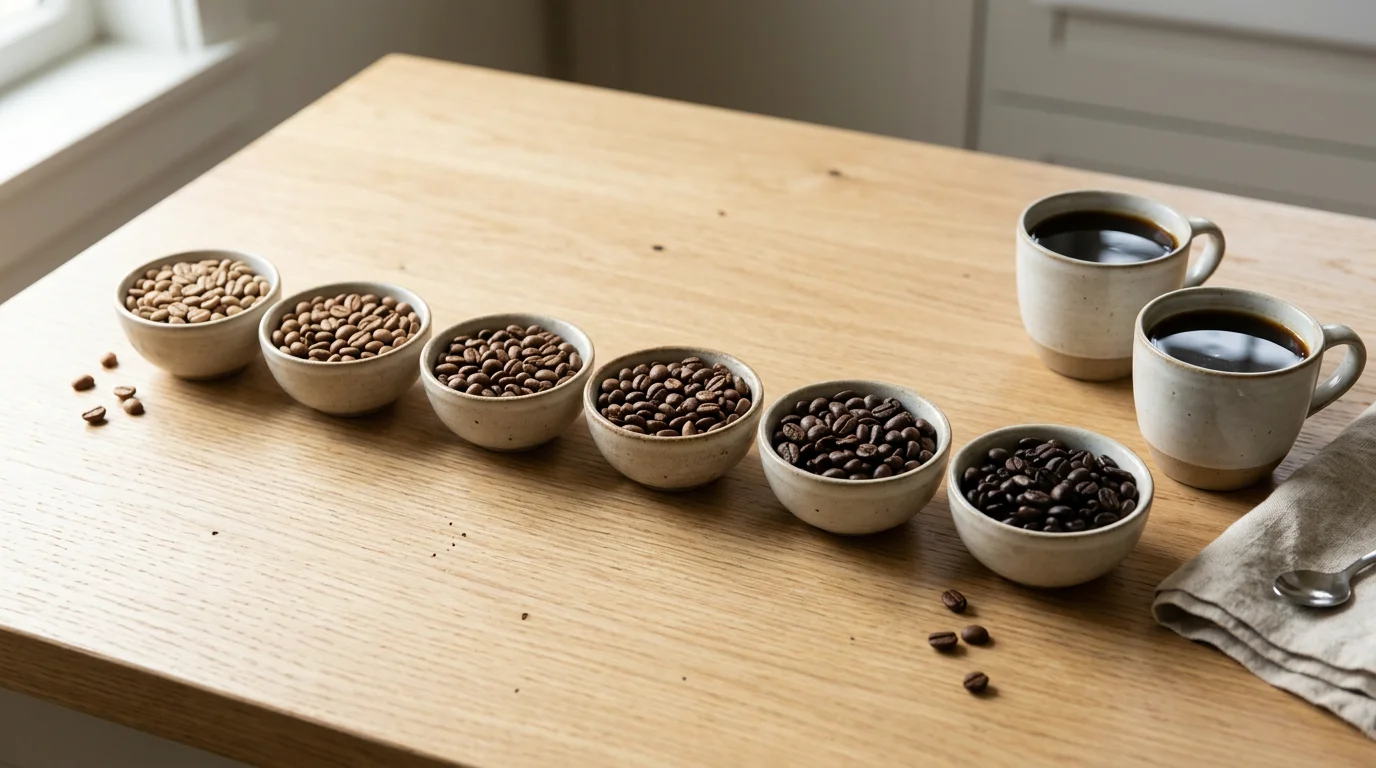
As a rule of thumb, Brazil tastes nutty and chocolatey with low acidity, Sumatra tastes like dark chocolate and earth with a heavy body, and East Africa tastes bright and fruity, with berries in Ethiopia and citrus and blackcurrant in Kenya.
Peru and Ecuador are smooth and gently fruity. Colombia and Central America range from chocolate and caramel to juicy orange, red fruit and florals at higher altitudes.
Origin is only a starting point. Processing, altitude, variety and roast can override it. A natural or honey process makes almost any coffee sweeter and fruitier, and a dark roast makes most origins taste alike.
Why origin is the best clue to flavor
Walk into a specialty coffee shop and you'll see a wall of bags with country names: Ethiopia, Colombia, Guatemala, Sumatra. Each one comes with tasting notes like "blueberry" or "milk chocolate."
Those notes are useful, but they're also subjective. And roast labels like "medium" can mean very different things from one roaster to the next.
The country of origin is often a more reliable clue. Different regions have different climates, soils, varieties and traditions, and those leave a recognizable stamp on the beans.
For years I just bought whatever bag looked nice or was on offer. Some were wonderful, some I struggled to finish, and I couldn't explain why.
When I started paying attention to origin, buying coffee stopped being a gamble. I could look at a bag and have a good idea whether I'd love it.
In this guide I'll take you around the coffee world, region by region. I'll explain the typical flavors, the factors that can change them and how to use all this when you buy.
Rules of thumb, not laws
Regional flavor profiles are general patterns. Modern farming and processing break them all the time.
A traditional Sumatran coffee, for example, is famous for deep, earthy dark chocolate. But I've tasted an experimental natural from Sumatra that tasted like strawberries and vanilla.
So use the regional profiles as a starting point, then let the bag's details refine your guess.
How to read tasting notes on the bag
Before the world tour, a quick word on tasting notes, because they cause a lot of confusion.
When a bag says "blueberry, jasmine, cane sugar," it doesn't mean anything was added. Those are flavors the roaster tasted in the coffee itself, the way a wine taster might describe a wine.
Notes are comparisons, not recipes
Tasting notes are shorthand. "Blueberry" might mean a jammy, purple-fruit sweetness rather than the exact taste of a fresh blueberry.
Different people pick up different notes. Your "orange" might be someone else's "apricot."
Group the notes
I find it easier to sort notes into a few big families:
| Family | Example notes | Usually means |
|---|---|---|
| Nutty and chocolatey | Peanut, hazelnut, cocoa, milk chocolate | Classic, low acidity, comforting |
| Caramel and sugar | Brown sugar, toffee, honey | Sweet and round |
| Citrus | Lemon, orange, grapefruit | Bright and zesty |
| Berry and red fruit | Strawberry, raspberry, blackcurrant | Juicy, fruity |
| Stone and tropical fruit | Peach, apricot, mango, passion fruit | Sweet, exotic, often natural or experimental process |
| Floral | Jasmine, bergamot, rose | Delicate, tea-like |
| Earthy and spicy | Cedar, tobacco, clove | Deep, heavy, low acidity |
Once you know which families you like, you'll notice they line up with certain regions. That's the shortcut this whole guide is built on.
The coffee belt
Coffee grows in a band around the world near the equator, often called the coffee belt or bean belt. It roughly spans the area between the Tropics of Cancer and Capricorn.
Inside this zone, coffee trees get what they need: warmth without frost, plenty of rain, and often rich volcanic or mineral soils.
Arabica, which makes up most specialty coffee, prefers higher, cooler areas within the belt. Robusta tolerates the hotter lowlands.
| Region | Major producers | Typical style |
|---|---|---|
| South America | Brazil, Colombia, Peru, Ecuador | Nutty and chocolatey to bright and fruity |
| Central America and Mexico | Guatemala, Honduras, Costa Rica, Panama, El Salvador, Nicaragua, Mexico | Sweet, balanced, often juicy and fruity |
| Africa | Ethiopia, Kenya, Uganda, Tanzania, Rwanda, Burundi | Bright, fruity, floral |
| Asia and Pacific | Vietnam, Indonesia, India, Papua New Guinea | Heavy, earthy, chocolatey, spicy |
| Islands | Hawaii, Jamaica, others | Mild, smooth, often premium-priced |
Five factors that shape (and break) regional flavor
When a coffee tastes nothing like its origin's reputation, one of these five factors is usually responsible.
1. Soil and microclimate
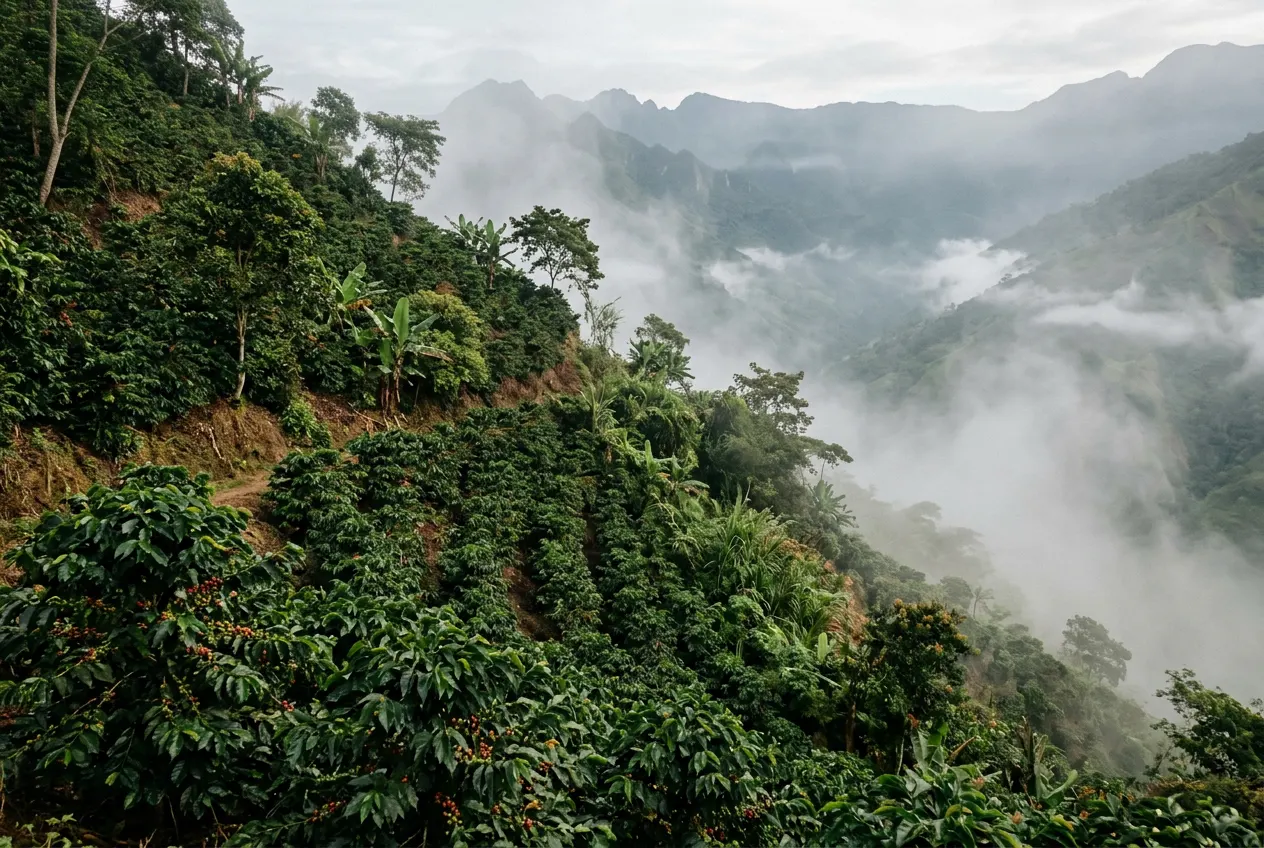
Soil feeds the tree. Volcanic soils, common in Central America and parts of East Africa and Indonesia, often support vibrant, mineral, bright coffees.
Microclimates matter too. Two farms a few miles apart can taste very different because of shade, wind, rain and sunshine.
2. Variety
Like wine grapes, coffee comes in many varieties: Bourbon, Typica, Caturra, Gesha, SL28 and many more.
Each has its own tendencies. A rare floral variety like Gesha planted in a "chocolate" region can completely change the expected profile.
3. Elevation
Higher altitude means cooler temperatures and slower ripening. Slow ripening builds denser beans with more sugars and acids.
High-grown coffees usually taste brighter, fruitier and more complex. Low-grown coffees tend to be milder, heavier and more nutty or chocolatey.
4. Processing
This is often the biggest factor of all in specialty coffee.
- Washed. Fruit removed before drying. Clean, bright, shows the origin clearly.
- Natural. Whole cherries dried with the fruit on. Sweeter, heavier, jammy fruit like strawberry or blueberry.
- Honey. Skin removed but some sticky fruit left on during drying. Sweet, balanced, syrupy.
My guide on coffee processing methods covers these and newer methods in detail.
5. Roast
Roasting is the final filter. Light roasts keep origin character: fruit, florals and bright acids.
Dark roasts caramelize and eventually burn the sugars. They mask origin differences and replace them with chocolate, caramel, smoke and roastiness. Most supermarket coffee is roasted fairly dark, which is why so many bags taste similar.
| Factor | Pushes coffee toward |
|---|---|
| High altitude | Brightness, fruit, complexity |
| Low altitude | Body, nuts, chocolate, low acidity |
| Washed process | Clarity, origin character |
| Natural process | Sweetness, jammy fruit, heavy body |
| Honey process | Sweetness, syrupy body |
| Light roast | Origin flavors, acidity |
| Dark roast | Roasty, smoky, uniform flavors |
For more on roast, see my guide to coffee roast levels.
South America: Brazil
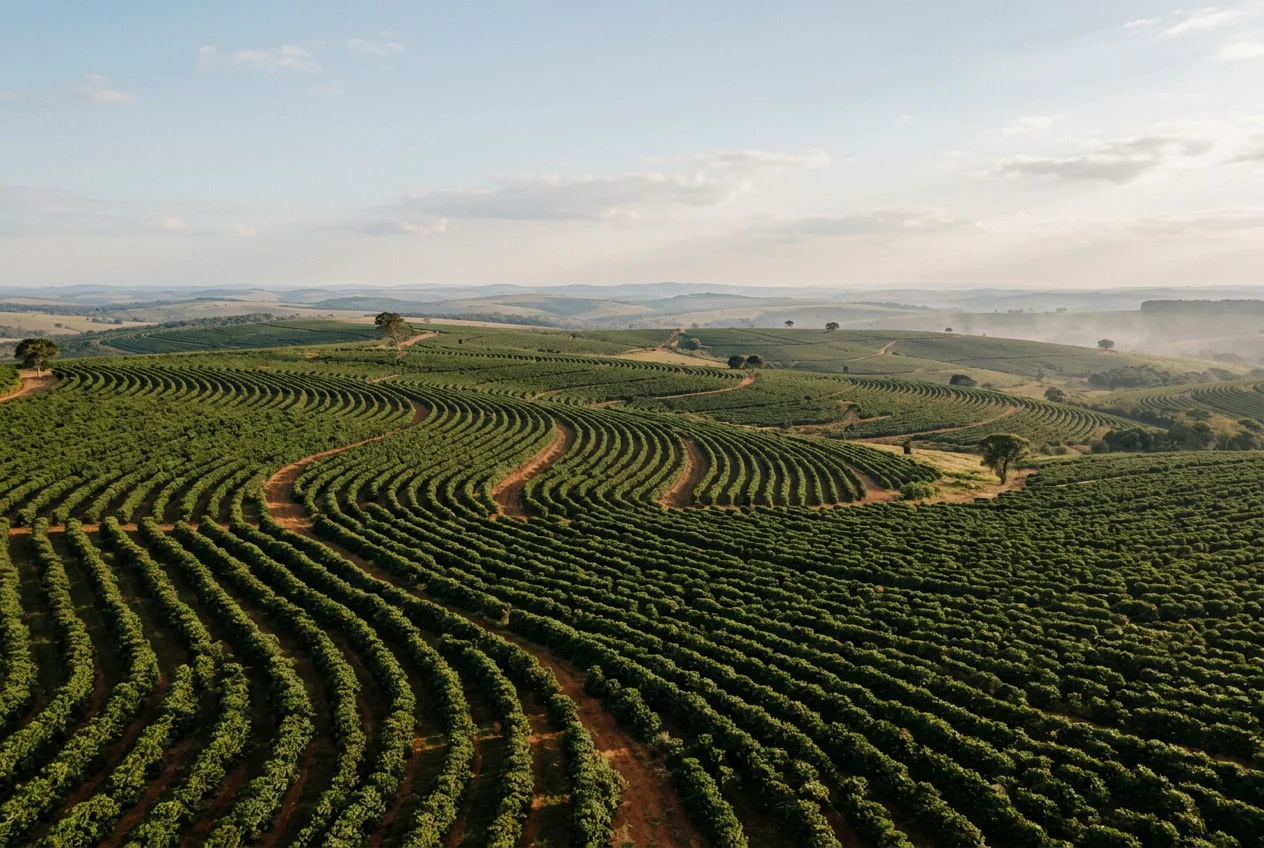
Brazil is the giant of the coffee world, producing about a third of all coffee. It supplies huge amounts of everyday commercial coffee as well as excellent specialty lots.
It's a key supplier to big coffee-drinking markets, including the espresso cultures of Europe.
Almost every coffee has some chocolate in it. What sets Brazil apart is how strongly the nutty side comes forward, often with a distinct peanut-butter note.
That nutty, low-acid, heavy profile makes Brazil the foundation of countless espresso blends. It gives crema and body, and it cuts smoothly through milk.
If you want a classic, comforting cup without sharp fruit, Brazil is the place to start.
Specialty Brazilian lots, especially carefully dried naturals from regions like Cerrado Mineiro or Sul de Minas, can add red fruit, honey or tropical notes on top of that nutty base.
Want to go deeper? See my guides on Brazilian vs Colombian coffee and how coffee is processed on Brazilian farms.
Southeast Asia: Indonesia and Sumatra
Indonesia is a major producer, and the island of Sumatra is its most famous coffee region. It's lush, wet and tropical.
If Brazil means peanut butter, Sumatra means baker's chocolate: deep, intense, unsweetened cocoa.
Roasted well, Sumatran coffee is incredibly smooth and velvety, with a long, comforting finish. It's popular in dark roasts and house blends for people who love a bold cup.
Wet hulling
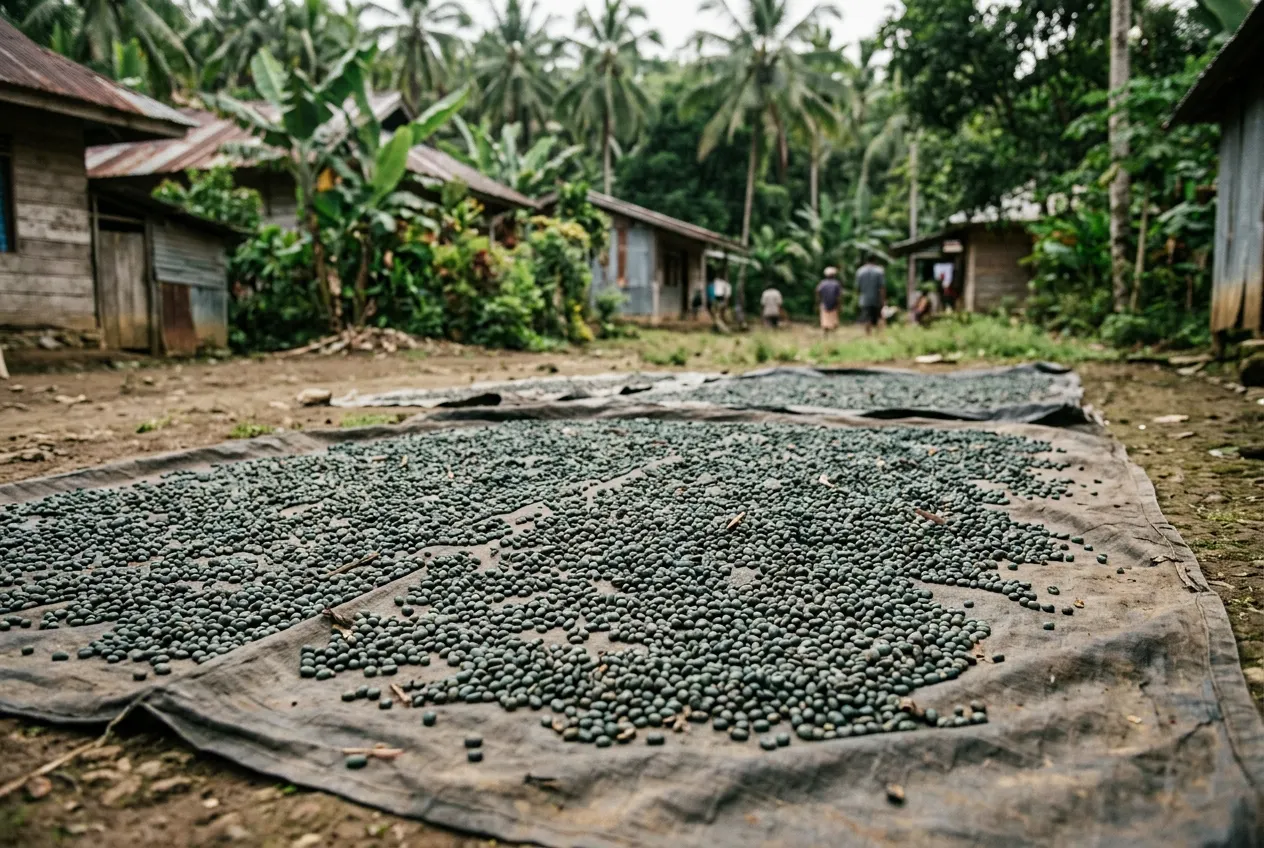
Much of Sumatra's character comes from a local method called wet hulling. Farmers remove the parchment from the beans while they're still quite moist, then finish drying the naked beans.
It's a practical answer to Sumatra's humid climate, and it gives the coffee its heavy body, earthy depth and low acidity. It's also why Sumatran green beans often look dark and bluish-green.
When Sumatra breaks the rules
Some Indonesian producers now experiment with washed and natural processing. Those coffees can taste surprisingly fruity, like the strawberry-and-vanilla natural I mentioned earlier.
But for a traditional, wet-hulled Sumatran coffee, expect rich dark chocolate and a big, smooth body.
Other Asia-Pacific origins
- Java and Sulawesi. Also Indonesian; often a bit cleaner than Sumatra, still earthy and full.
- Papua New Guinea. Often sweeter and fruitier than Indonesia, with a medium body.
- India. Known for mild, low-acid arabicas and for monsooned coffee, which is exposed to humid monsoon winds and tastes very mellow and spicy.
Vietnam: the robusta powerhouse
Vietnam is the world's second-largest coffee producer, and most of its coffee is robusta.
Typical profile
Vietnamese robusta tastes strong, bitter and earthy, with notes of dark chocolate, grain and sometimes rubber or wood. It has much more caffeine than arabica.
That's why it's widely used in instant coffee and in espresso blends that want crema and punch.
How it's drunk
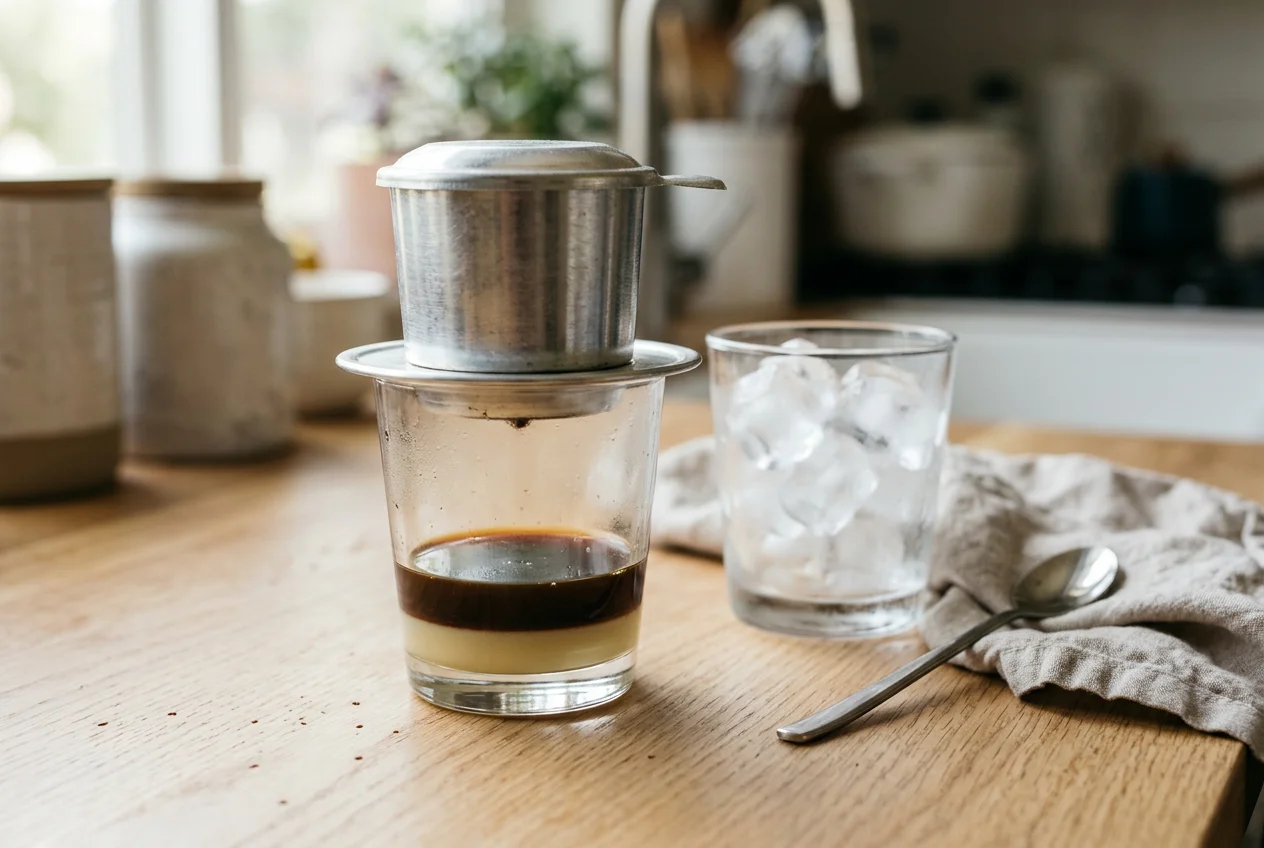
In Vietnam, coffee is often brewed slowly through a small metal filter called a phin and poured over sweetened condensed milk, hot or over ice. The sweetness balances the bitterness perfectly.
Fine robusta
A growing number of Vietnamese farms produce "fine robusta," carefully picked and processed. It can taste surprisingly sweet and chocolatey.
Vietnam also grows some arabica in highland areas like Da Lat. My guide to arabica vs robusta explains how the two species differ.
Africa: Ethiopia and the Rift Valley
Africa holds a special place in coffee. Ethiopia is the birthplace of arabica.
Many people picture Ethiopia as dry desert, but the southern coffee-growing regions are green, high and lush, with very fertile soils.
Regions like Sidama, Yirgacheffe and Guji have legendary status among specialty coffee lovers. Heading south along the Great Rift Valley, you reach Kenya, Tanzania, Rwanda, Burundi and Malawi, all known for bright coffees.
African coffees are the opposite of Brazil and Sumatra. They're fruit-forward, aromatic and noticeably higher in acidity.
Ethiopia
Ethiopian specialty coffees are famous for blueberry and raspberry, especially when natural processed. Washed Ethiopians often taste floral and tea-like, with jasmine, bergamot and lemon.
Kenya and Tanzania
Further south, the fruit often shifts toward vibrant citrus and berries. Kenyan and Tanzanian coffees frequently taste of pink grapefruit, tangerine and blackcurrant, with a juicy, mouthwatering acidity.
My full guide to Kenyan coffee explains why it tastes so intense.
Rwanda and Burundi
These smaller producers make sweet, bright coffees with red fruit, orange and black-tea notes, often a little rounder than Kenya.
Why East Africa tastes so bright
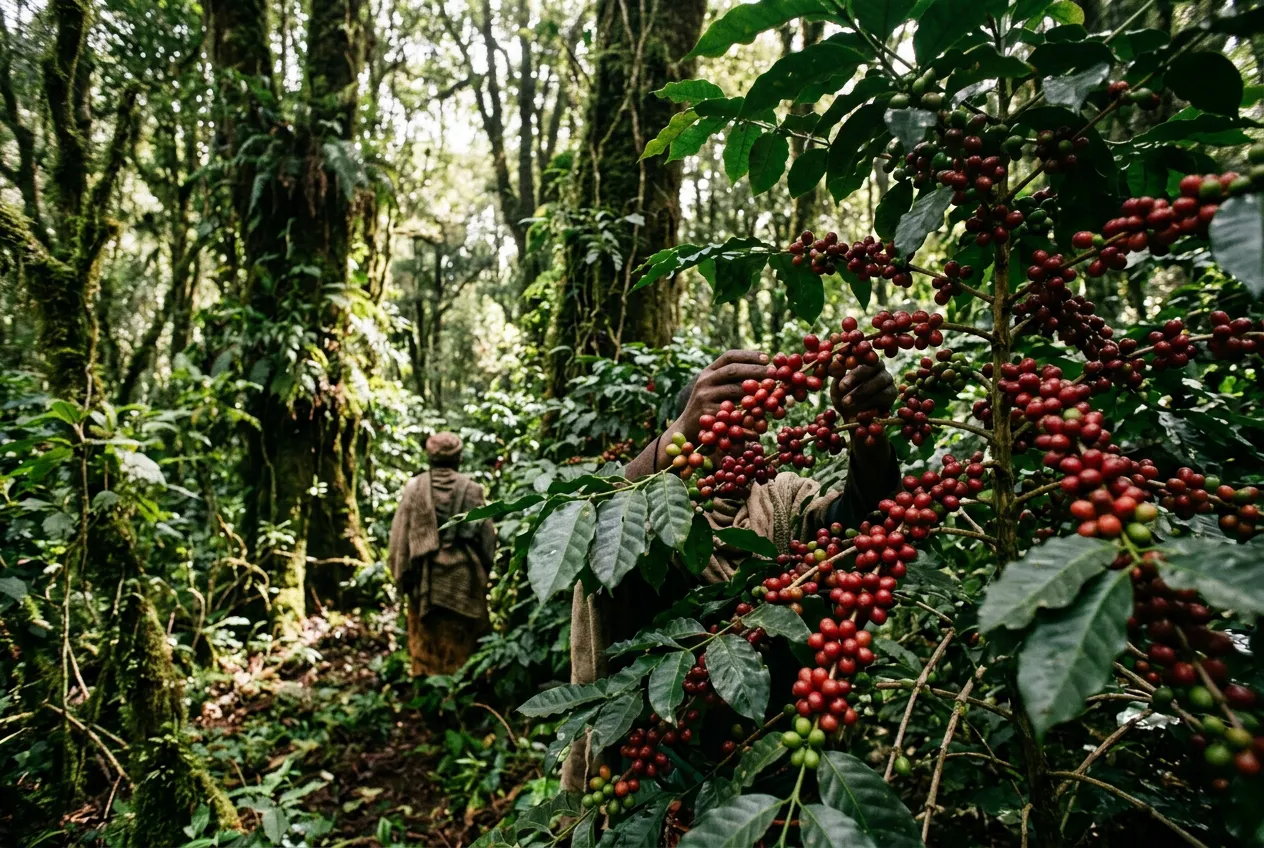
High altitudes, rich soils, unique heirloom and bred varieties, and careful washed processing all play a part. In Ethiopia, many farms grow a mix of local wild-type varieties that have never been fully catalogued, which adds to the complexity.
Who should try African coffee
If you like a lively, complex, aromatic cup that reminds you of fruit tea or a crisp white wine more than a heavy, bitter brew, East Africa is your region.
Our tip: Brew African coffees as pour-over or drip and drink them black, at least the first time. Milk can flatten the fruit and make the acidity taste odd.
Upper South America: Peru and Ecuador
Peru and Ecuador produce gentle, approachable coffees. Specialty quality in both countries is improving quickly.
These coffees are balanced and easy to drink. They don't have the punch of high-grown Central American lots, which makes them perfect for clean, everyday brews.
Peru is also one of the biggest sources of organic coffee in the world, so you'll often see organic Peruvian beans at good prices.
Why they taste softer
Many Peruvian and Ecuadorian farms are small, sit at a wide range of altitudes and grow older varieties like Typica and Bourbon alongside newer ones. Much of the coffee is washed and sold through cooperatives, which tends to give a clean but gentle cup.
High-altitude micro-lots from northern Peru or southern Ecuador can be much brighter and more complex, so it's worth looking at the altitude on the bag.
Our tip: Peruvian coffee is one of my go-to recommendations for people who find Colombian coffee a bit too bright but Brazilian coffee a bit too heavy.
Colombia
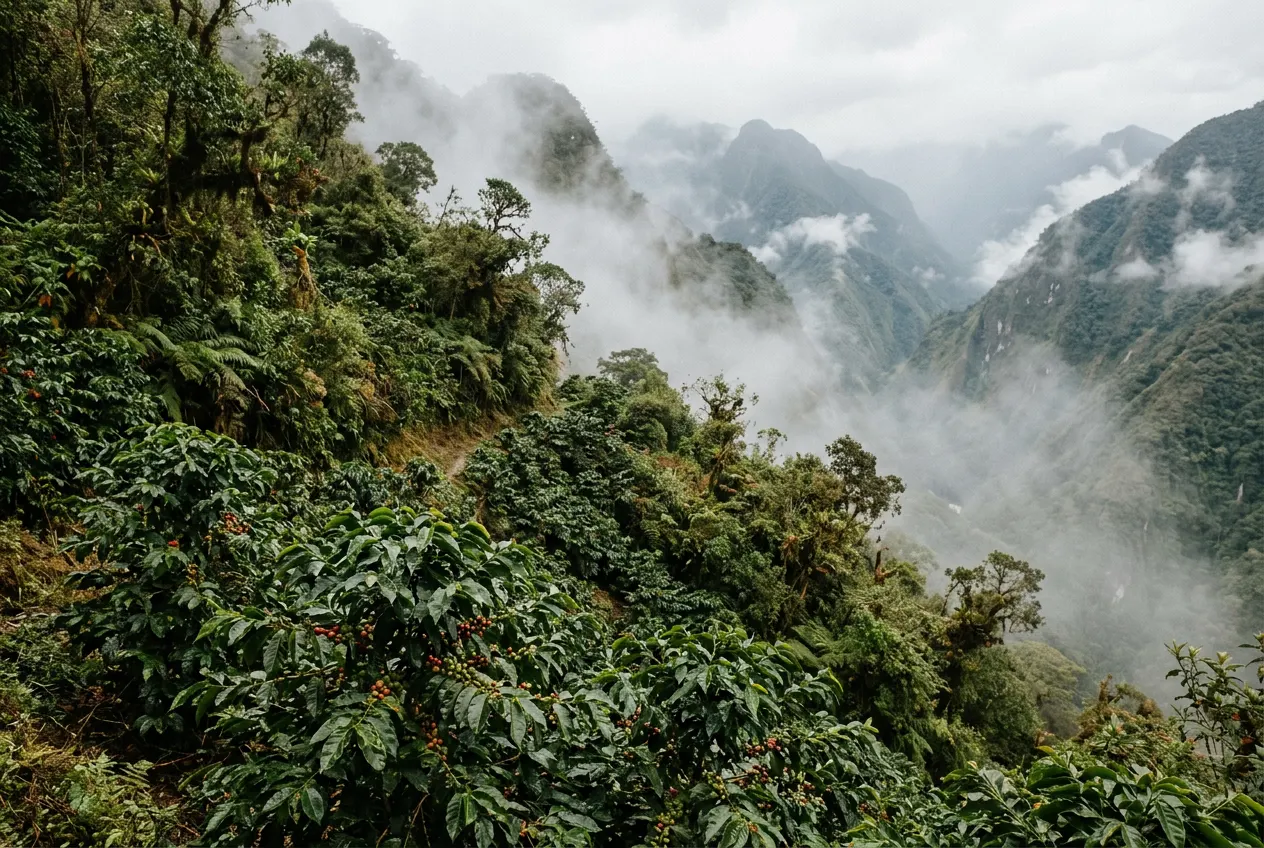
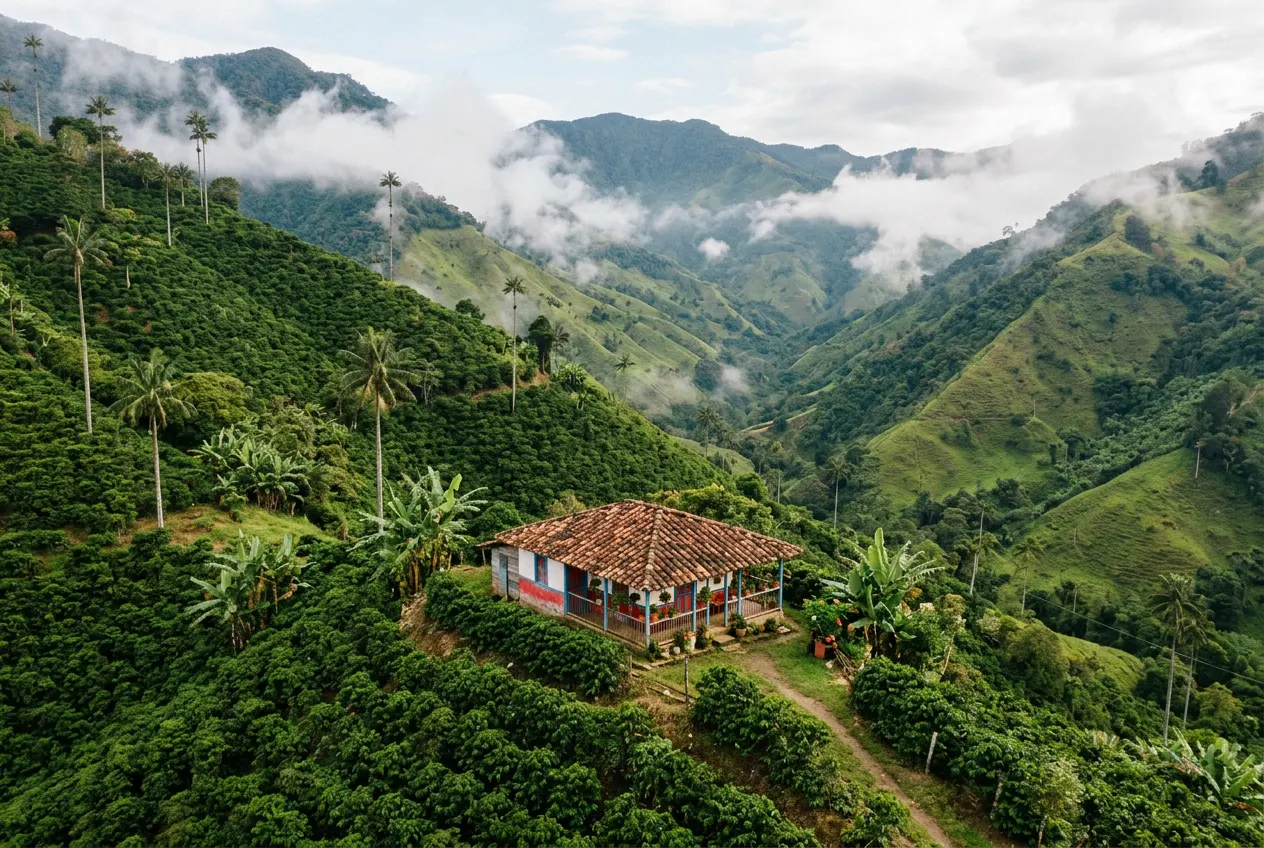
Colombia is one of the most diverse coffee countries anywhere. Its three Andean mountain ranges create countless microclimates, with famous regions like Huila, Nariño, Cauca and Antioquia.
Two kinds of Colombian coffee
Colombian flavor depends heavily on quality and altitude.
- Everyday Colombian. Lower-cost supermarket Colombian coffee usually leans toward chocolate and caramel, often roasted fairly dark.
- Specialty Colombian. Higher-end coffees from good roasters are often fruit-forward, with bright notes of sweet orange, tangerine, red fruit and sometimes tropical fruit.
Colombian farmers have also become some of the most adventurous in the world, with honey, natural and long-fermentation lots that can taste like passion fruit or rum.
Central America: Guatemala, Panama, Costa Rica and more
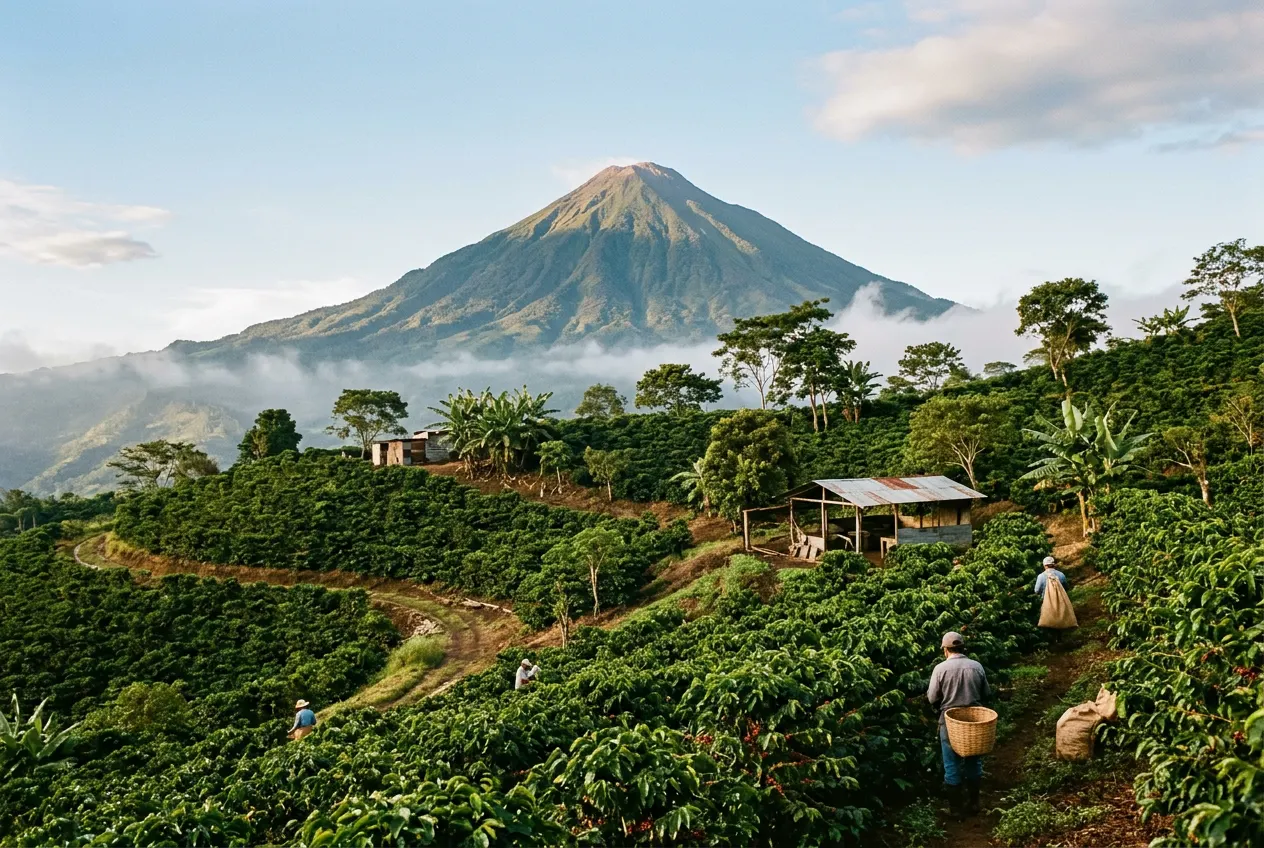
Central America is a land of volcanoes, rich volcanic soils and isolated microclimates. Countries such as Guatemala, Panama, Costa Rica, El Salvador, Nicaragua and Honduras produce some of the most sought-after specialty coffees in existence.
At the very top end, rare micro-lots from Panama and Guatemala can sell for well over a hundred dollars a pound at auction. Panama's Gesha coffees have broken price records many times.
Even washed coffees from high-elevation Guatemalan and Panamanian farms can taste remarkably juicy and fruity. Some have a structured, wine-like acidity.
Because volcanic soils and microclimates vary so much, Central America is the hardest region to pin to one flavor. That's exactly what makes it so exciting.
Why it tastes so juicy
Many Central American farms sit high on volcanic slopes, often between 4,000 and 6,000 feet. They grow sweet varieties like Bourbon, Caturra, Catuaí, Pacamara and Gesha, and most process their coffee carefully, either washed or as honey.
Add cool nights, rich soils and decades of investment in quality, and you get coffees that are sweet, clean and full of ripe fruit.
Honey processing
Costa Rica in particular made honey processing famous. Producers leave different amounts of sticky fruit on the beans, labeled white, yellow, red or black honey, from least to most fruit left on. More fruit usually means sweeter and fuller.
Country snapshots
| Country | Typical character |
|---|---|
| Guatemala | Chocolate and spice in some regions, bright fruit and florals in others |
| Costa Rica | Clean, sweet, bright; famous for honey processing |
| Panama | Floral and fruity; home of record-breaking Gesha |
| El Salvador | Sweet, soft, often Bourbon and Pacamara varieties |
| Honduras | Sweet, fruity, great value in specialty |
| Nicaragua | Balanced, chocolatey, gently fruity |
| Mexico | Light, nutty, mild; lots of organic coffee |
Famous island origins: Kona and Jamaica Blue Mountain
A few island coffees have built fame far beyond their size.
Kona, Hawaii
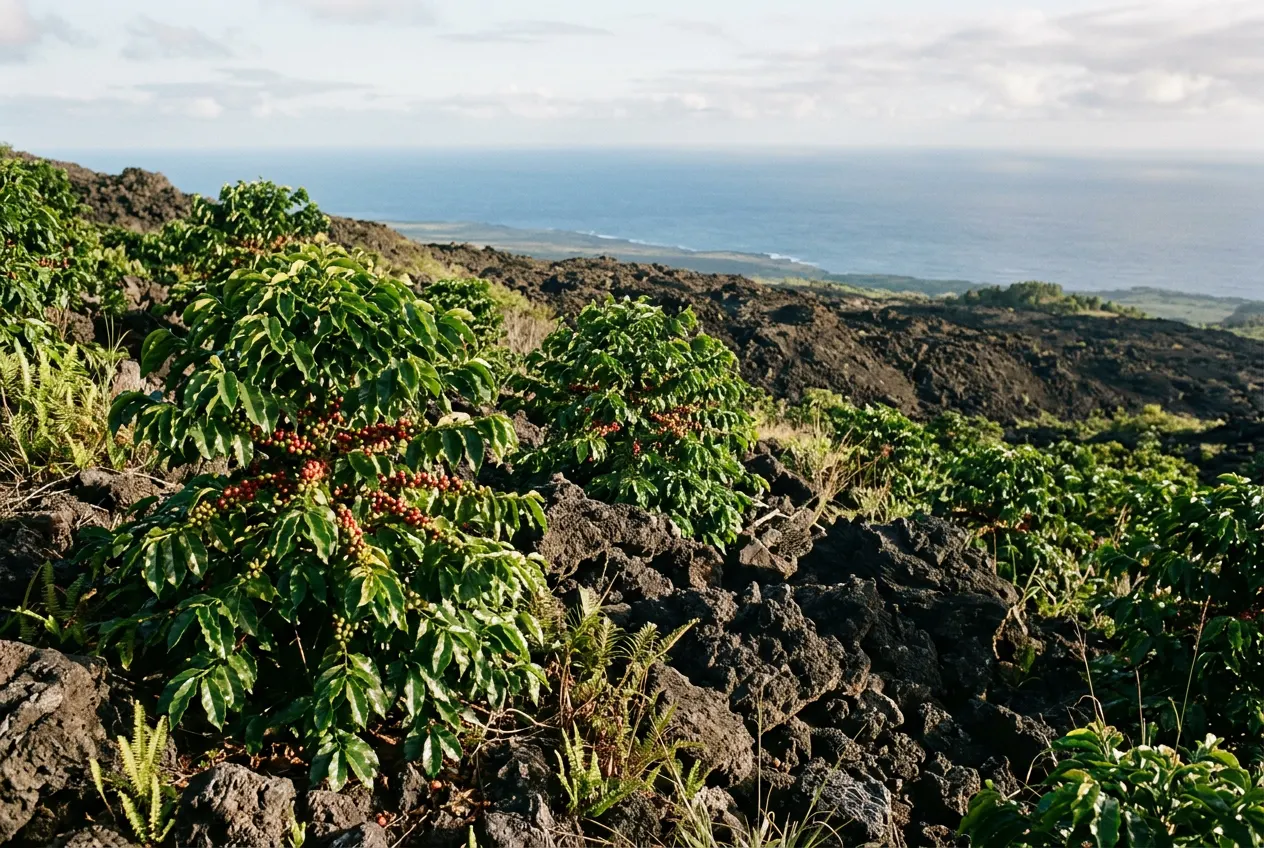
Grown on the volcanic slopes of Hawaii's Big Island, Kona is the best-known coffee grown in the United States.
It's typically smooth and mild, with sweet, nutty and cocoa notes and gentle acidity. It's expensive because land and labor in Hawaii cost far more than in most coffee countries.
Jamaica Blue Mountain
Grown in Jamaica's Blue Mountains, this coffee is famous for its mildness and lack of bitterness. Expect a clean, balanced cup with light floral and nutty notes.
It sells at a big premium, partly because supply is limited and much of it goes to Japan.
Our tip: Island coffees are often blended. A "Kona blend" may contain only 10% Kona. If you want the real thing, look for "100% Kona" or "100% Jamaica Blue Mountain."
More origins worth exploring
Beyond the big names, a few origins have become favorites of mine.
Uganda
Uganda is a major robusta producer, but its arabica from the slopes of Mount Elgon can be excellent: chocolatey, fruity and fuller-bodied than most East African coffees.
Tanzania
Tanzanian coffees, especially peaberries from the slopes of Kilimanjaro, often sit between Kenya and Ethiopia: bright citrus and berries with a medium body.
Papua New Guinea
Grown mostly by smallholders in the highlands, PNG coffees can be sweet and fruity with gentle earthiness, a nice bridge between Indonesia and Central America.
Honduras
Once known mainly for commercial coffee, Honduras now produces many excellent specialty lots at good prices: sweet, fruity and balanced.
China (Yunnan)
Yunnan in southern China grows mostly arabica and is improving fast. Expect sweet, mild coffees, sometimes with fruity naturals.
Trying a new origin is one of the cheapest adventures in coffee. Every bag teaches you something about how place shapes flavor.
Two historic origins: Yemen and India
Yemen
Yemen was the first place coffee was farmed at scale, and its coffee still tastes unlike anything else.
Most Yemeni coffee grows on dry, high mountain terraces and is natural processed. It often tastes winey, spicy and fruity, with notes of dried fruit, cinnamon, cardamom and chocolate.
Production is small and conditions are very difficult, so Yemeni coffee is rare and expensive. If you see one, it's worth trying at least once. My guide to the history of coffee explains Yemen's role in coffee's story.
India
India grows both arabica and robusta, mostly in the south, in states like Karnataka and Kerala, often under shade trees mixed with spices like pepper and cardamom.
Indian arabicas are usually mild, low in acidity and gently spicy. The famous Monsooned Malabar is exposed to damp monsoon winds for weeks, which swells the beans and gives a very mellow, earthy, low-acid cup.
When each region is freshest
Coffee is a seasonal crop. Each region harvests at a different time, and green coffee usually reaches roasters a few months after harvest.
That means different origins are at their freshest at different times of year.
| Region | Main harvest (approx.) | Usually freshest at roasters |
|---|---|---|
| Brazil | May–September | Late year to early next year |
| Colombia | Main crop and a second crop; varies by region | Several times a year |
| Central America | November–March | Spring to summer |
| Ethiopia | October–January | Spring to summer |
| Kenya | October–December, plus a smaller mid-year crop | Spring to summer |
| Sumatra and Indonesia | Varies, often much of the year | Varies |
| Peru | May–September | Late year to early next year |
| Vietnam | October–January | Early to mid-year |
Rough guide; seasons shift with altitude, region and weather.
Green coffee keeps for many months when stored well, but it slowly loses its brightness. Fruity origins like Ethiopia and Kenya taste best when the green coffee is from the latest harvest.
Our tip: Ask your roaster which coffees are "new crop." They're often the most vibrant coffees on the shelf.
How climate change is reshaping coffee regions
The coffee map isn't fixed. Climate change is already shifting where and how coffee can grow.
Moving uphill
As temperatures rise, the ideal zone for arabica moves to higher altitudes. In mountainous countries like Colombia, Ethiopia and Central America, farmers plant higher up the slopes, where there's less land available.
More extreme weather
Frosts, droughts and heavy rains are hitting farms more often. Brazil's frost in 2021 and recent droughts in several countries sent world prices sharply higher.
New varieties and new places
Researchers are breeding more heat- and disease-tolerant varieties. Robusta and its relatives, which handle heat better, are getting more attention, including higher-quality "fine robusta."
Some new regions, at higher latitudes or altitudes, are starting to grow coffee too.
What it means for you
Prices may stay more volatile, and the flavors you associate with certain regions may slowly change.
Supporting farms that invest in sustainable practices, through roasters who share where their coffee comes from, is one way to help keep great origins alive.
Pairing food with each region
A little matching goes a long way.
| Region | Pair with | Why it works |
|---|---|---|
| Brazil | Peanut butter toast, brownies, cheese bread | Echoes the nuts and chocolate |
| Sumatra | Dark chocolate, spiced cake, gingerbread | Matches earthy, spicy depth |
| Ethiopia | Blueberry muffins, lemon cake, fruit salad | Picks up berries and citrus |
| Kenya | Berry tarts, grapefruit, cheesecake | Matches or softens juicy acidity |
| Colombia | Caramel desserts, orange scones, arepas | Echoes caramel and citrus |
| Central America | Strawberry desserts, almond pastries | Highlights fruit and sweetness |
| Peru and Ecuador | Croissants, mild cheese, granola | Gentle partner for a gentle cup |
| Vietnam | Sweet pastries, condensed-milk desserts | Balances bitterness |
Our tip: When in doubt, match intensity. Bold coffees go with rich food; delicate coffees go with light, fresh food.
Cheat sheet: which region for which taste
Standing in front of a wall of coffee bags? Use this.
| If you like... | Look for | Expect |
|---|---|---|
| Nutty, comforting, classic | Brazil | Peanut butter, nuts, light chocolate; great with milk |
| Rich, dark chocolate, bold | Sumatra and Indonesia | Baker's chocolate, earth, heavy body |
| Bright, fruity, aromatic | Ethiopia, Kenya, Tanzania | Berries, citrus, florals, tea-like |
| Smooth and gently fruity | Peru, Ecuador | Silky, milk chocolate, a little orange |
| Juicy, complex, sweet fruit | Colombia, Panama, Guatemala, Costa Rica | Orange, tangerine, strawberry, jasmine |
| Strong, punchy, high caffeine | Vietnam (robusta) | Bitter chocolate, earthy |
| Mild and premium | Kona, Jamaica Blue Mountain | Clean, smooth, gentle |
Typical acidity by region (rough guide)
My own rough guide for light to medium roasts. Processing and roast shift these a lot.
How to brew each region
Different origins shine in different brewers.
| Region | Best brewers | Why |
|---|---|---|
| Brazil | Espresso, moka pot, French press | Body and low acidity, great with milk |
| Sumatra | French press, drip, cold brew | Heavy body and chocolate depth |
| Ethiopia and Kenya | Pour-over, drip | Clarity shows off fruit and florals |
| Peru and Ecuador | Drip, pour-over, AeroPress | Easy, balanced everyday cups |
| Colombia | Pour-over, drip, espresso | Versatile; bright or sweet depending on lot |
| Central America | Pour-over, espresso | Juicy sweetness and clear fruit |
| Vietnam | Phin filter, espresso blends | Strong, bitter, balanced by condensed milk |
A simple rule
Bright, fruity coffees love paper-filtered methods like pour-over. Heavy, chocolatey coffees love espresso, moka pots, French presses and milk.
If a bright coffee tastes too sharp, try a French press. If a heavy coffee tastes muddy, try a paper filter.
How roasters combine regions in blends
Many coffees you buy aren't from one region at all. They're blends, designed to balance strengths and weaknesses.
The classic espresso recipe
A typical espresso blend builds on Brazil for body, sweetness and crema. Roasters then add a Central American or Colombian coffee for sweetness and gentle fruit. Some add a little Ethiopian for aroma, or a little robusta for punch and crema.
House and breakfast blends
Breakfast blends often lean on Central and South American coffees for a smooth, balanced, medium-bodied cup.
Dark "bold" blends often use Sumatra or other Indonesian coffees for depth and heavy body.
| Region in a blend | What it adds |
|---|---|
| Brazil | Body, nuttiness, crema, low acidity |
| Colombia and Central America | Sweetness, balance, gentle fruit |
| Ethiopia or Kenya | Aroma, brightness, fruit |
| Sumatra | Depth, earthy chocolate, heavy body |
| Robusta (Vietnam, Brazil, India) | Crema, caffeine, bitterness |
Once you know the regions, you can read a blend's description and predict its taste much better. My guide on single origin vs blend explains when each makes sense.
Best regions for cold brew and decaf
Cold brew
Cold brewing mutes acidity and emphasizes body and sweetness.
- Brazil and Sumatra. Classic cold brew: smooth, chocolatey and rich. Hard to go wrong.
- Colombia and Central America. Sweet and balanced, with a little fruit.
- Ethiopia and Kenya. Surprising and refreshing, like fruity iced tea. Great in summer.
Decaf
Decaffeination softens some flavors, so it helps to start with a coffee that has plenty of character.
Colombian and Central American decafs are common and often very good. Brazilian decaf works well in espresso and milk drinks. Ethiopian decaf can keep some lovely fruit if it's well made.
My guide on how decaf coffee is made explains how the caffeine comes out.
Three buying tips that beat the map
- Check the processIf the bag says natural or honey, expect it to be sweeter and fruitier than the region's usual profile, wherever it's from.
- Check the roastLighter roasts show regional fruit and florals. Darker roasts flatten differences into roasty chocolate and smoke.
- Ask the baristaTasting notes are guidelines, and everyone tastes differently. Baristas taste their coffees every day and can steer you to a bag that fits your palate.
A few more things I look at
- Altitude. Higher usually means brighter and more complex.
- Variety. Names like Gesha, SL28 or Pink Bourbon hint at a special cup.
- Roast date. Fresh coffee shows origin character best. My guide on how to choose coffee beans covers labels in detail.
- Single origin or blend. Blends are designed for balance. Single origins show the region. See my guide on single origin vs blend.
Taste the world: an origin tasting flight
The fastest way to learn regional flavors is to taste them side by side.
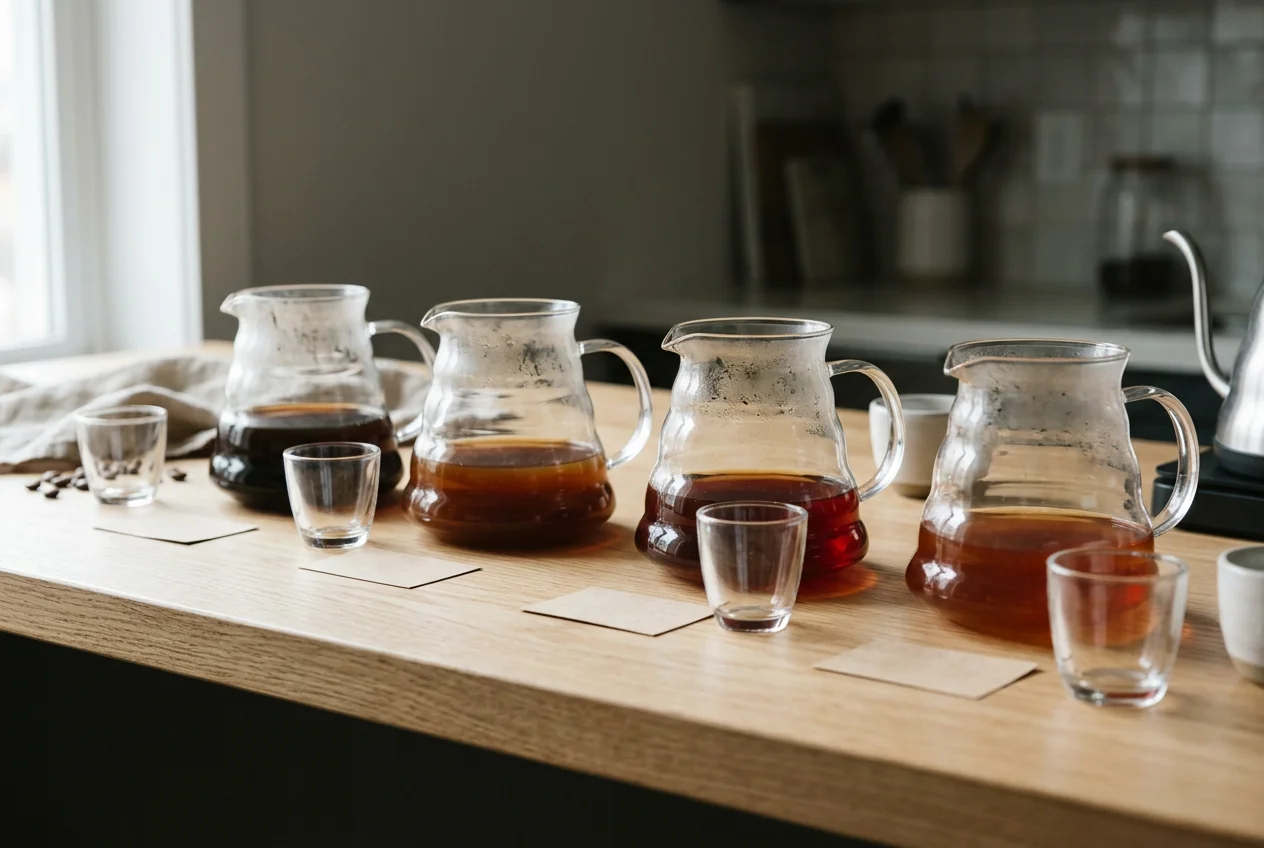
- Pick four originsTry Brazil, Sumatra, Colombia and Ethiopia. They cover most of the flavor map.
- Keep the roast similarMedium roasts from the same roaster make the comparison fair.
- Brew the same waySame brewer, dose, grind and water for each.
- Taste in orderStart with Ethiopia, then Colombia, Brazil and finally Sumatra, from brightest to heaviest.
- Note three thingsAcidity, body and the main flavor in each.
- Repeat laterTaste again as they cool. Bright coffees often get sweeter.
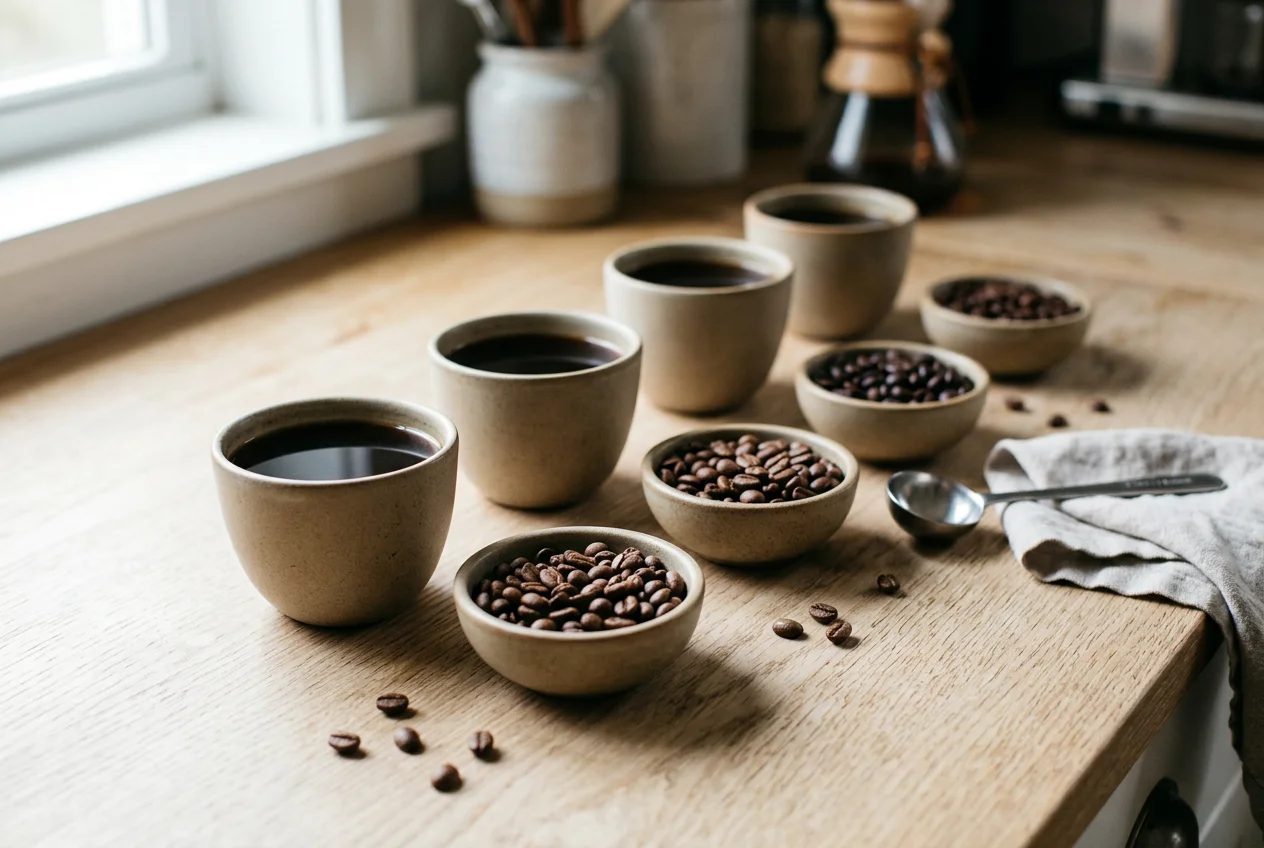
When I ran this flight for my family, the reactions were funny. One person loved the Ethiopian "fruit tea," another called it "not real coffee" and went straight back to the Sumatra. That's exactly the point: there's a region for everyone.
Coffee origin myths
"Coffee from one country always tastes the same"
Altitude, variety, processing and roast all vary within a country. Colombia alone can taste like chocolate or like passion fruit.
"African coffee is sour"
Good African coffee is bright and juicy. Sourness usually means under-extraction or a poor roast.
"Dark roast shows off the origin"
It does the opposite. Dark roasting hides origin character.
"Expensive origins always taste better"
Price often reflects scarcity and fame. A great Peruvian or Honduran coffee can beat an average Kona at a fraction of the price.
"Robusta is always bad"
Most robusta is commodity grade, but fine robusta from careful farms can be smooth, chocolatey and enjoyable.
Coffee regions at a glance
| Region | Signature flavor | Body | Acidity |
|---|---|---|---|
| Brazil | Peanut butter, nuts, milk chocolate | Heavy | Low |
| Sumatra | Baker's chocolate, earth, spice | Very full | Low |
| Vietnam | Bitter chocolate, earthy (robusta) | Heavy | Low |
| Ethiopia | Blueberry, raspberry, jasmine, lemon | Light-medium | High |
| Kenya and Tanzania | Grapefruit, tangerine, blackcurrant | Medium-full | Very high |
| Peru and Ecuador | Milk chocolate, gentle orange | Silky | Mild |
| Colombia | Chocolate and caramel to orange and red fruit | Medium | Medium-bright |
| Central America | Tangerine, strawberry, jasmine | Medium, juicy | Bright |
| Kona and Jamaica | Mild, nutty, clean | Medium | Gentle |
My bottom line
Learning the coffee map is one of the most useful things you can do as a coffee drinker. It turns a wall of bags into a simple choice.
Start with the region that sounds most like your taste, check the process and roast, and don't be afraid to ask for advice. Then branch out. Some of my favorite coffees came from regions I was sure I wouldn't like.
Frequently asked questions
Does coffee origin really affect flavor?
Yes. Climate, soil, altitude, varieties and local processing traditions give each region typical flavors, though processing and roast can override them.
Which coffee region is the least acidic?
Sumatra and Brazil are typically the lowest in acidity, with heavy bodies and chocolatey or nutty flavors.
Which coffee region is the most fruity?
East Africa, especially Ethiopia and Kenya, is known for the most fruit-forward coffees. Natural-processed coffees from anywhere can also be very fruity.
What does Ethiopian coffee taste like?
Often floral and tea-like when washed, with jasmine and lemon, and blueberry or strawberry when natural processed.
What does Sumatran coffee taste like?
Usually deep dark chocolate with earthy, cedar and spice notes, a heavy body and low acidity.
What does Colombian coffee taste like?
Everyday Colombian coffee tastes of chocolate and caramel; specialty Colombian coffee is often bright with orange, tangerine and red fruit.
What is the coffee belt?
The band around the equator, roughly between the tropics, where conditions are right for growing coffee.
Does altitude change coffee flavor?
Yes. Higher altitudes slow ripening, giving denser beans with brighter, more complex flavors.
Why does dark roast coffee taste the same everywhere?
Dark roasting caramelizes and burns sugars, replacing origin flavors with roasty, smoky, chocolatey notes.
What is the best coffee region for espresso?
Brazil is the classic espresso base. Colombia and Central America make sweeter, brighter shots.
Which coffee region is best for beginners?
Brazil or Colombia. They're balanced, familiar and easy to like.
Is Kona coffee worth the price?
100% Kona is smooth and mild, but much of its price reflects Hawaii's high costs. Many other origins offer similar quality for less.

- Michael Reynolds, origin tasting notes from home brewing
- Coffee around the world, National Geographic
- Brazil's coffee exports reach 39.25 million bags in 2023, Datamar News (Cecafé data)
- Kenya coffee report: production rebounds amid higher prices, Daily Coffee News (USDA FAS data)
Related guides
Kenyan coffee Brazilian vs Colombian coffee Coffee processing methodsWritten by Michael Reynolds. Last updated November 16, 2026.