How Coffee Is Processed on Brazilian Farms: From Tree to Export Sack
Brazil grows about a third of the world's coffee, much of it on big estates in Minas Gerais. Here's every step from flowering to shipping: how cherries are harvested, sorted, dried on patios, rested, hulled, graded and bagged, and how each step shapes the coffee in your cup.
We choose products independently. We may earn a commission through links on this page; your price stays the same. Affiliate policy
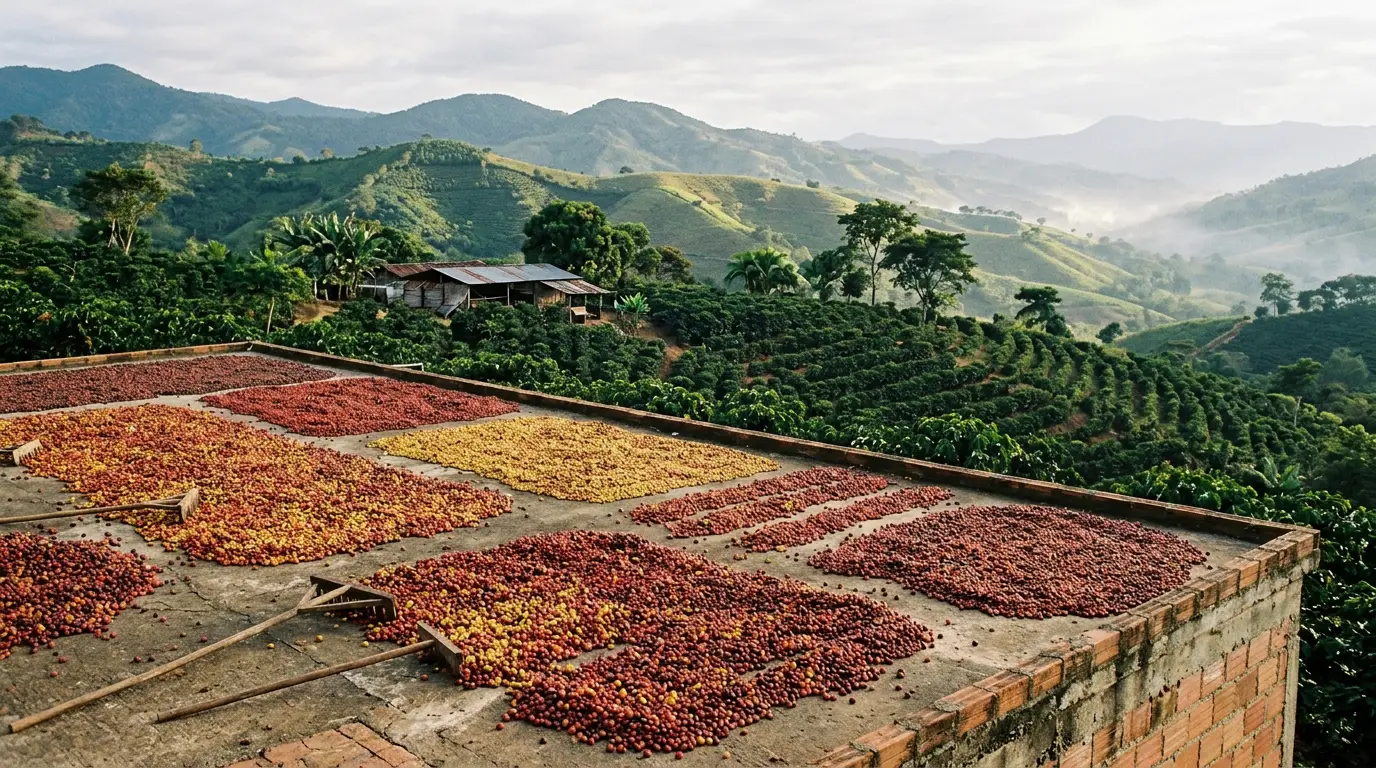
Brazilian coffee is harvested from about May to September, often by machine on flat or rolling land and by hand on steeper slopes or for specialty lots.
Most Brazilian coffee is natural (dried as whole cherries) or pulped natural (skin off, sticky fruit left on). Some is washed. Beans dry on big patios or in mechanical dryers to about 11% moisture.
After resting for weeks, the coffee is hulled, sorted by size, density and color, graded, cupped and shipped, mostly from the Port of Santos.
Why Brazilian farm processing matters to your cup
If you've ever had an espresso blend, there's a good chance some of it came from a Brazilian farm.
Brazil is the world's biggest coffee producer by far. In 2023 it exported around 39 million 60-kilogram bags, and the following harvest year set a new export record.
Most of that coffee goes through a long journey before it reaches a roaster. The steps on the farm decide a lot about how it tastes: how sweet it is, how clean, how heavy and how consistent.
Brazil also handles coffee at a scale that's hard to picture. A single large estate can harvest thousands of bags in a season, and every one of them goes through the same careful steps.
I've always found it useful to understand this process. Once you know what "natural" or "pulped natural" means on a Brazilian bag, or why "screen 17/18" appears on the label, you can predict the cup much better.
In this guide I'll follow the coffee through a typical large estate in Minas Gerais, Brazil's main coffee state, from flowering to the export sack.
If you want a broader comparison of processing methods worldwide, my guide on coffee processing methods covers them all.
The setting: Minas Gerais estates
Minas Gerais is the heartland of Brazilian coffee. It grows roughly half of all Brazil's coffee and the majority of its arabica.
Its best-known regions include:
- Sul de Minas. Hilly, historic coffee country in the south of the state, with many medium and small farms.
- Cerrado Mineiro. High, flat plateaus with a clear dry season. Very modern and highly mechanized, with a protected designation of origin.
- Matas de Minas. Steeper, greener mountains near the border with Espírito Santo, with more hand picking.
- Chapada de Minas. A northern region with newer farms on high plateaus.
Large estates there often handle the whole chain on site: farming, harvesting, wet processing, drying, dry milling, grading and sometimes even roasting and export.
Soil and climate
Many farms sit on deep, red, mineral-rich soils that drain well but hold moisture.
The climate gives lots of sun during the growing season and a predictable dry winter for the harvest. That dry winter is what makes Brazil so good at natural processing.
| Region | Landscape | Typical harvest | Typical cup |
|---|---|---|---|
| Sul de Minas | Rolling hills | Mixed machine and hand | Chocolate, caramel, nuts |
| Cerrado Mineiro | Flat high plateau | Mostly machine | Sweet, nutty, clean, consistent |
| Matas de Minas | Steep mountains | Mostly hand | Brighter, more fruit |
| Chapada de Minas | High plateau | Machine | Sweet, balanced |
Growing the coffee: planting, pruning and soil care
Good processing can't fix poor fruit. Quality starts in the field.
Varieties
Brazilian estates in Minas Gerais grow arabica. Common varieties include Catuaí, Mundo Novo, Bourbon and newer disease-resistant types such as Catucaí, Obatã and Arara.
Arabica is preferred over robusta here for its sweetness, complexity and lower bitterness. Brazil does grow lots of robusta, which Brazilians call conilon, but mainly in hotter, lower states like Espírito Santo and Rondônia.
Spacing
Trees are planted in long, evenly spaced rows. Spacing keeps roots from competing for water and nutrients and lets sunlight reach the lower branches so the fruit ripens more evenly.
It also leaves room for tractors and harvesting machines to drive between the rows.
Pruning
Field teams prune every year. They remove dead wood, unproductive shoots and crowded inner branches.
That sends the plant's energy into flowers and fruit rather than leaves. It also lets air move through the trees, which lowers humidity and reduces fungal diseases like coffee leaf rust.
Flowering
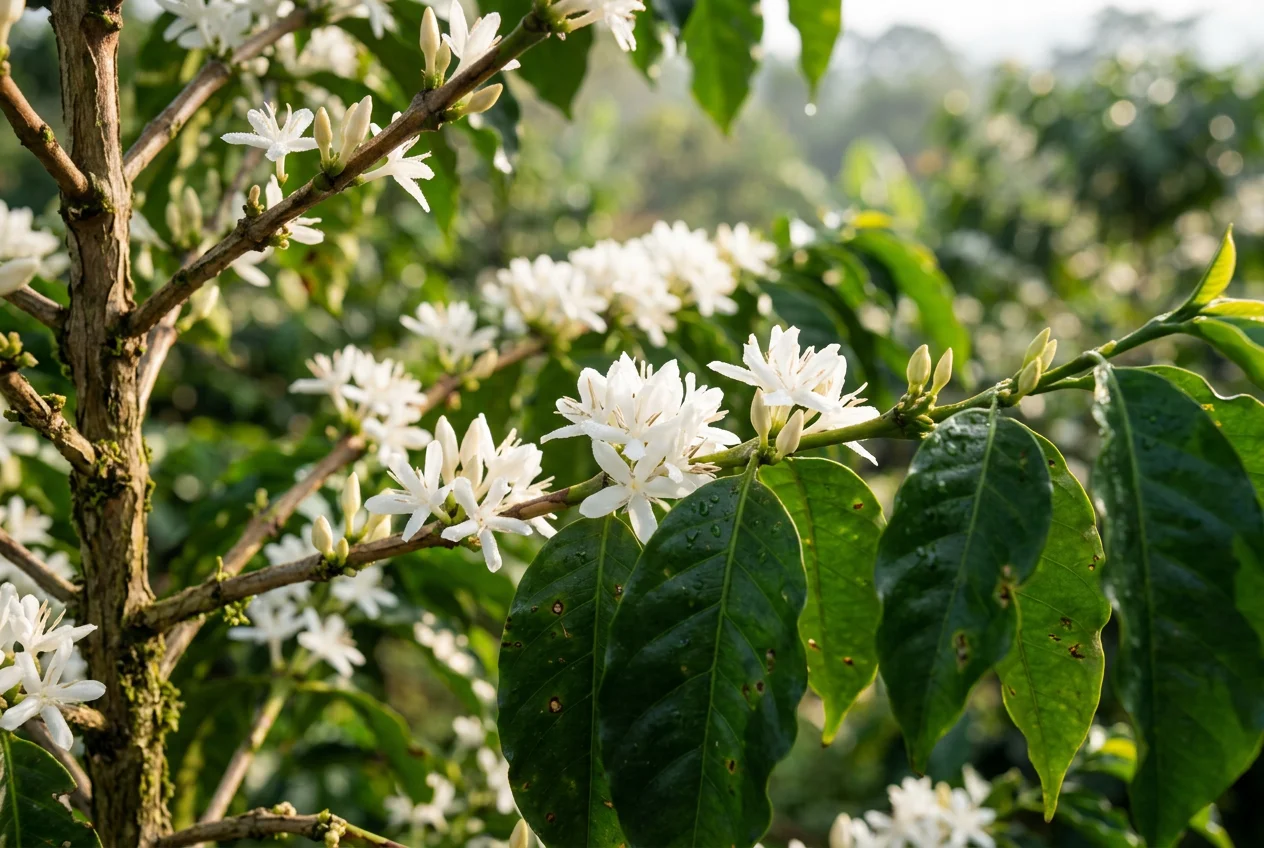
Coffee in Minas usually flowers after the first good rains of the spring, around September to November. For a few days, whole hillsides turn white and smell like jasmine.
The cherries then take roughly seven to nine months to ripen, ready for harvest the following autumn and winter.
Soil care and sustainability
Many estates now farm in ways that protect the soil over the long term:
- Composting. Coffee pulp and husks from processing are composted and spread back on the fields as natural fertilizer.
- Integrated pest management. Instead of relying only on chemicals, farms use traps to monitor pests like the coffee berry borer, encourage natural predators and keep strips of native vegetation.
- Cover crops. Grasses or legumes between rows protect the soil from erosion and add organic matter.
The people behind the process
Big Brazilian estates may be mechanized, but they still rely on skilled people at every stage.
- Agronomists. Plan planting, pruning, fertilizing and pest control, and decide when each block is ready to harvest.
- Machine operators. Run the harvesters, adjusting vibration and speed for each field and each pass.
- Pickers. On steep plots and specialty lots, they strip or select cherries by hand, often paid by the amount they pick.
- Patio crews. Rake, turn, pile and cover the drying coffee many times a day, often from early morning to sunset.
- Mill operators. Run the hullers, screens, gravity tables and color sorters.
- Cuppers and graders. Taste every lot, assign grades and decide which coffees go to which buyers.
During harvest, many estates hire seasonal workers who move between farms and regions. The work is physical and the days are long.
The best farms invest in training, safe conditions and fair pay. When you see a specialty bag naming the farm and the people behind it, that's often a sign of a farm proud of how it treats its workers.
Harvesting: machines, stripping and hand picking
The harvest is the busiest and most expensive time of the year. In Minas Gerais it usually runs from about May to September.
That's Brazil's dry winter. Growth slows, cherries ripen and the dry weather is perfect for sun-drying.
Mechanical harvesting
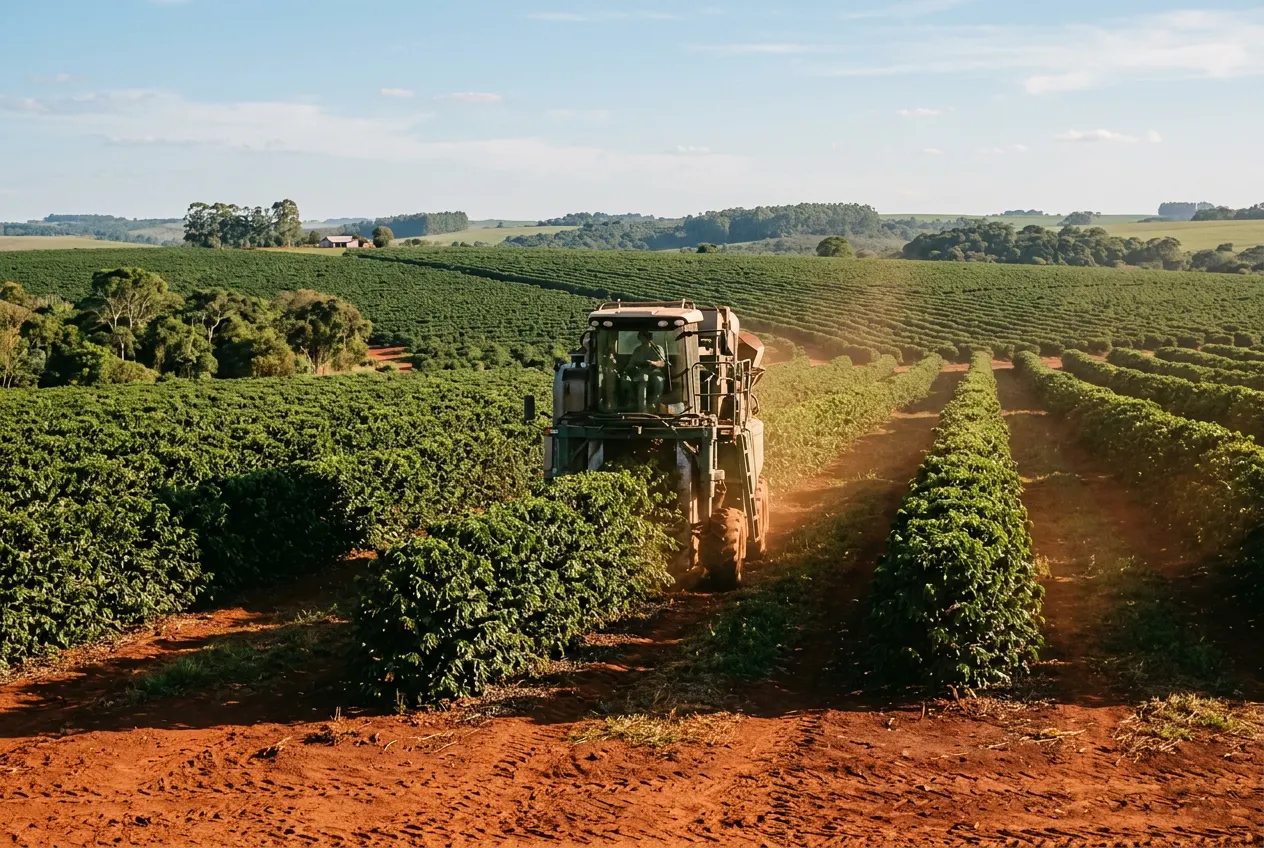
On flat and gently sloping land, most large estates use harvesting machines.
The machine drives over a row of trees. Fiberglass rods on rotating cylinders vibrate the branches at a set frequency.
Ripe cherries detach more easily than unripe ones, so the right vibration knocks off mostly ripe fruit. Operators adjust speed and vibration as the season goes on, and many farms make two or more passes.
Modern machines can level themselves to work on moderate slopes, and some measure yield as they go.
Stripping by hand
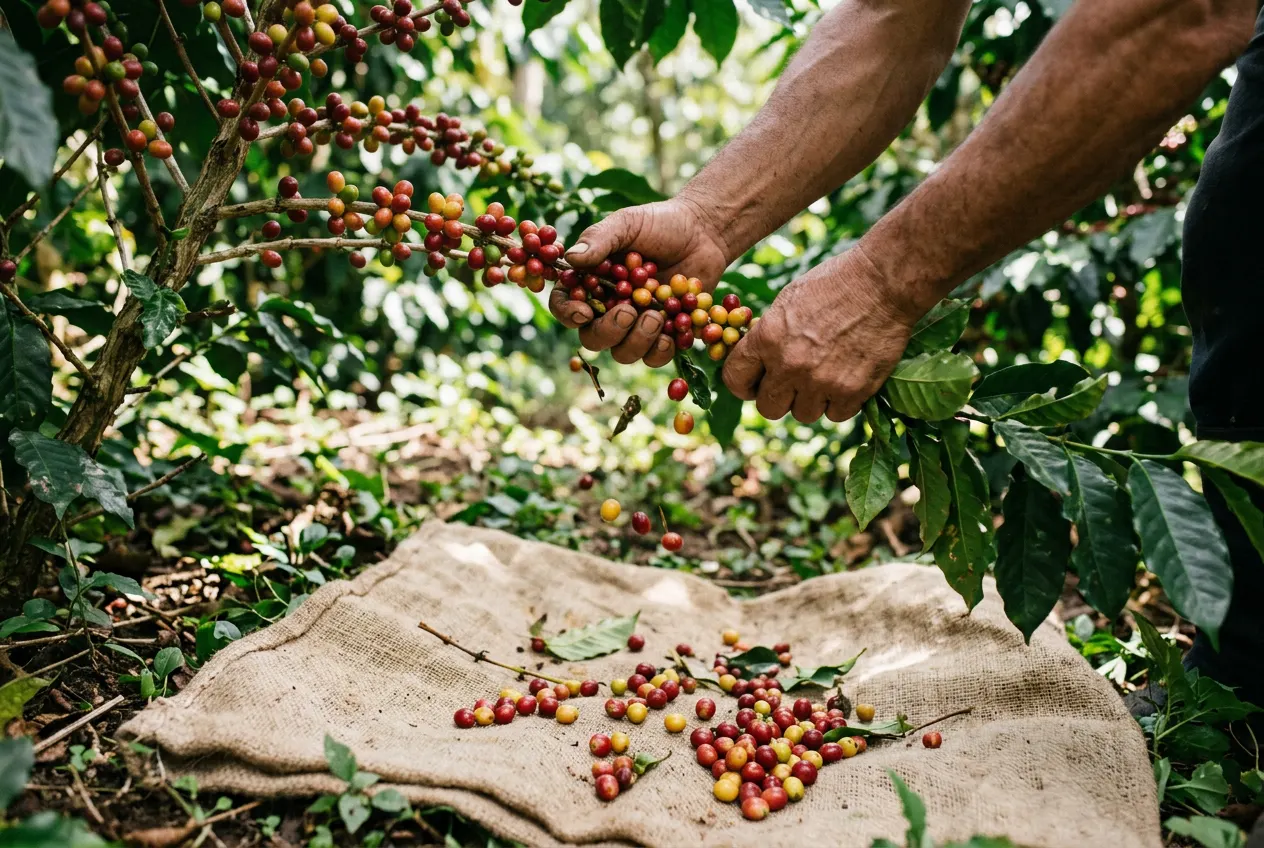
On steeper ground or smaller farms, workers often strip whole branches by hand. They run their hands along the branch and let the cherries fall onto cloths spread under the trees.
Stripping is fast, but it collects ripe, unripe and overripe cherries together. Those have to be separated later.
Selective hand picking
For top specialty lots, pickers choose only the ripe red or yellow cherries and come back to the same trees several times over the season.
It's slow and costly, but it gives the most even ripeness, which shows up as sweetness and clarity in the cup.
| Method | Speed | Selectivity | Best for |
|---|---|---|---|
| Mechanical | Very fast | Medium | Large volumes on flat land |
| Hand stripping | Fast | Low | Steep or small farms, commercial lots |
| Selective picking | Slow | High | Micro-lots and top specialty coffee |
Speed matters
Once picked, cherries start to ferment on their own. If they sit in sacks or trailers too long, they can develop sour or "fermented" defects.
Good farms move cherries to processing the same day.
Receiving and sorting the cherries
At the processing area, the first job is to separate the cherries by ripeness and density.
Cleaning
Cherries first pass over screens and fans that remove leaves, twigs, stones and dirt picked up during harvest.
The water separator
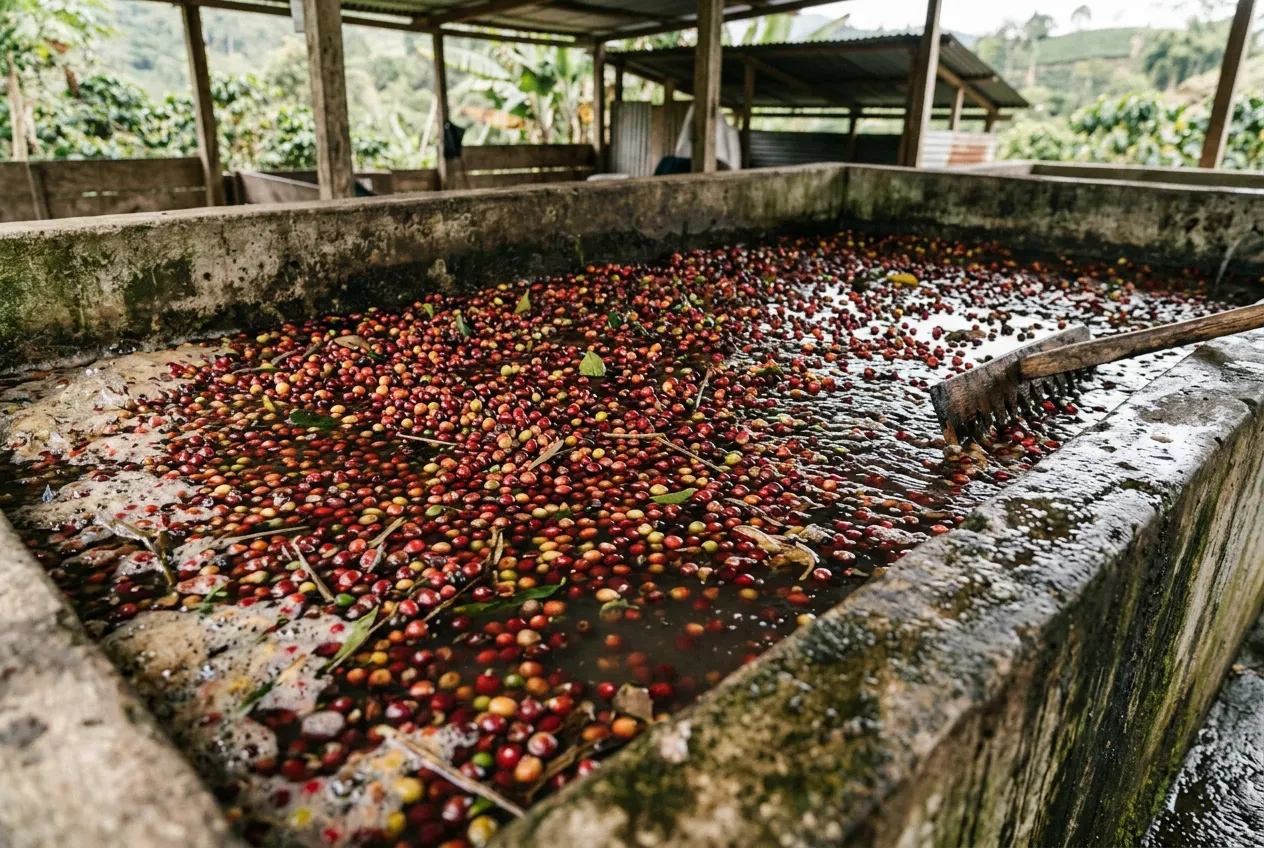
Next, many farms use a water tank, often called a siphon or washer.
Cherries are dropped into water. Ripe and unripe cherries sink. Overripe, dried-out, damaged or hollow cherries float. In Brazil, those floaters are called boia.
Floaters are skimmed off and usually dried separately as lower-grade coffee.
Separating green from ripe
The sinkers still include green, unripe cherries. Farms that want higher quality pass them through a machine that squeezes the cherries against a screen.
Ripe cherries are soft and their skin splits, so the seed and sticky fruit come out. Hard green cherries don't split and are separated.
From here, the coffee can go down three different paths: natural, pulped natural or washed.
Three processing paths: natural, pulped natural and washed
Natural (dry process)
This is the traditional Brazilian method and still the most common.
Whole cherries, skin and all, go straight to the drying patio. The fruit dries around the seed for days or weeks.
During drying, sugars and flavor compounds move from the fruit into the bean. Naturals tend to have heavy body, lots of sweetness, low acidity and notes of chocolate, nuts and dried fruit. Careful naturals can taste like strawberries or red wine.
Pulped natural
Brazil pioneered this method, sometimes called "cereja descascada" (peeled cherry).
Ripe cherries are pulped to remove the skin, but the sticky mucilage stays on the bean while it dries.
Pulped naturals sit between naturals and washed coffees: sweet and full, but a bit cleaner and more consistent than many naturals. In Central America, similar coffees are called honey processed.
Washed
Some Brazilian farms also wash their coffee, especially for certain specialty buyers.
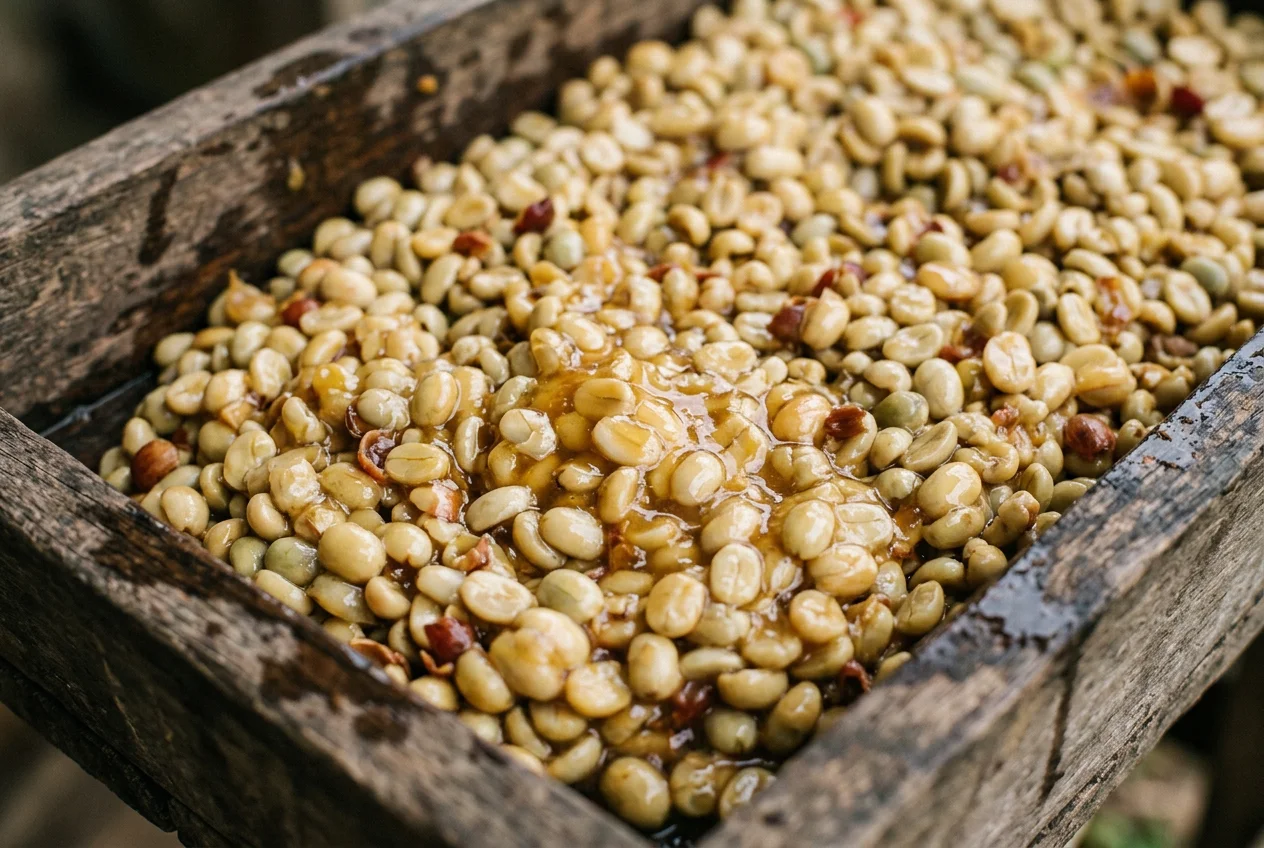
- PulpMachines rub the skin and most of the flesh off the ripe cherries.
- FermentBeans coated in mucilage go into tanks for roughly 12 to 36 hours while natural yeasts and bacteria break it down.
- MonitorStaff watch temperature and acidity so the coffee doesn't over-ferment and pick up vinegar or onion-like flavors.
- WashWater channels rinse off the remaining mucilage. Light, defective beans float off; dense beans sink.
Washed Brazilian coffees taste cleaner and brighter than naturals, with more acidity and less body.
| Method | What's removed before drying | Typical cup |
|---|---|---|
| Natural | Nothing | Heavy, sweet, chocolate, dried fruit |
| Pulped natural | Skin | Sweet, full, cleaner than natural |
| Washed | Skin and mucilage | Clean, brighter, lighter body |
Our tip: If a Brazilian bag doesn't name the process, it's very likely natural or pulped natural. Expect a smooth, chocolatey cup.
Drying on patios and in machines
Drying is where Brazilian coffee is made or ruined.
Fresh cherries hold a lot of water. Natural cherries can start around 60% moisture, and washed parchment around 50 to 55%. The goal is to bring the coffee down to about 10.5 to 11.5% moisture, so it's stable and won't grow mold.
Patio drying
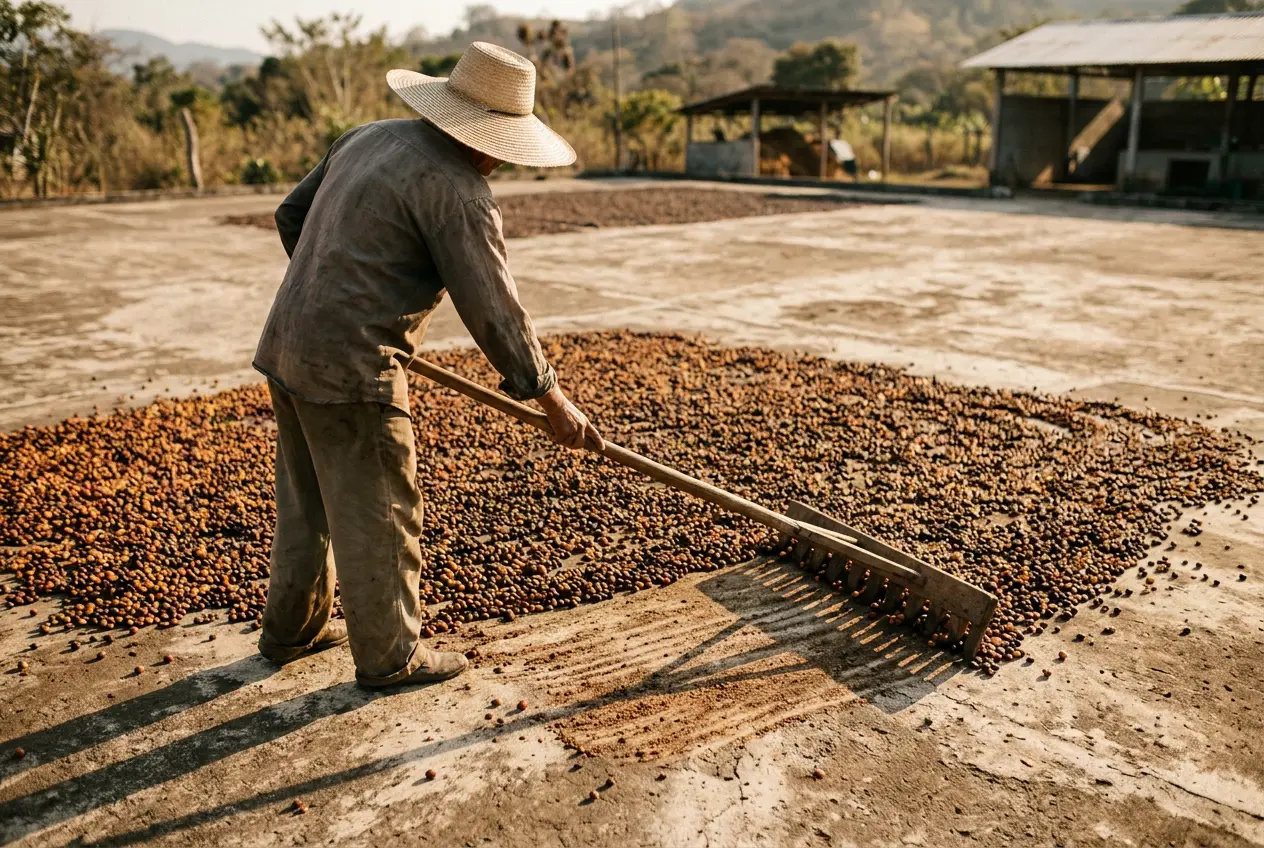
Coffee is spread in thin layers on large concrete, brick or tarmac patios called terreiros.
Workers rake and turn it many times a day with wooden rakes so every bean gets even sun and air.
In the evening, and when rain threatens, the coffee is pushed into long ridges and covered with tarps so it doesn't soak up moisture again.
Depending on sun and humidity, patio drying takes about a week for washed coffee and up to three weeks for naturals.
Raised beds
Some specialty farms dry on raised beds, often covered, which give better airflow and more control. They're slower and need more labor, so they're mostly used for small premium lots.
Mechanical dryers
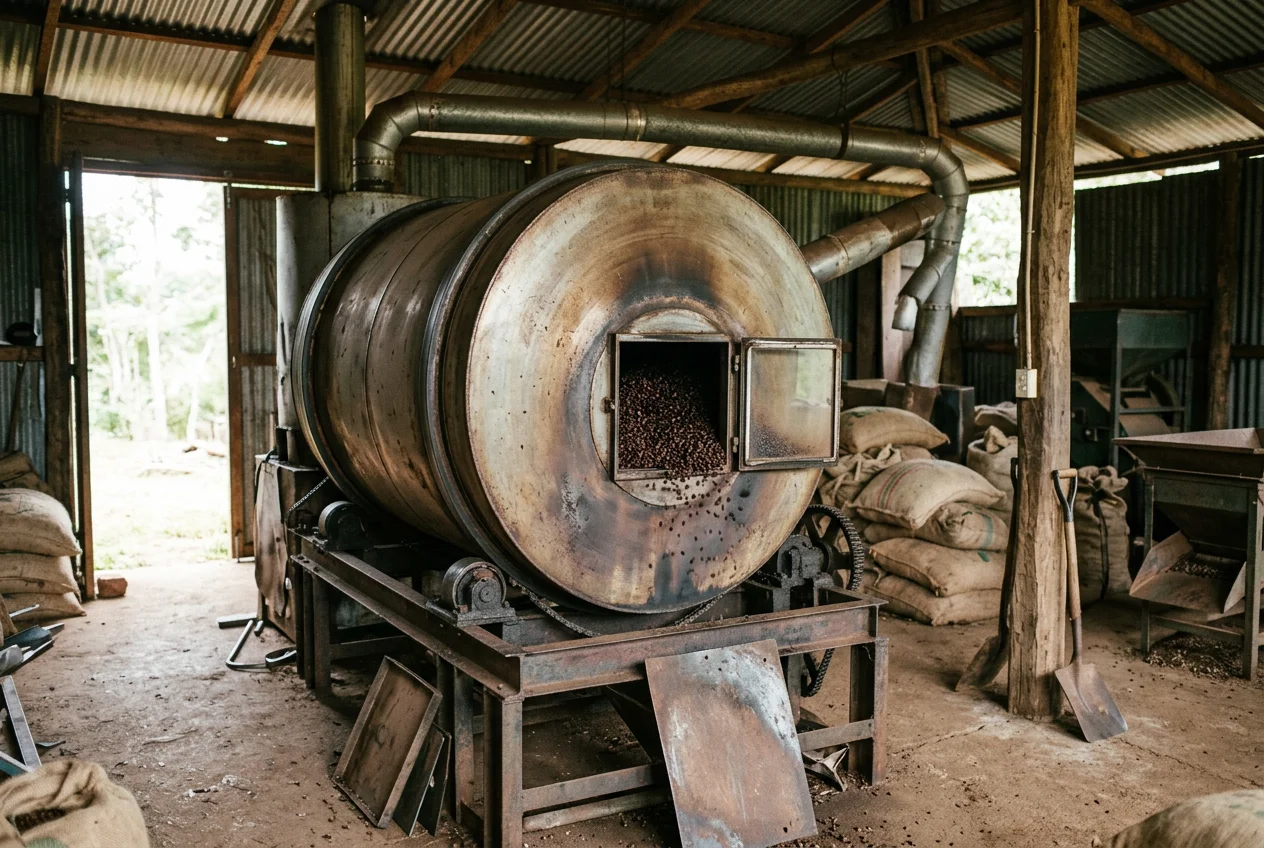
Big estates also use rotary dryers, large drums that turn the coffee in warm, indirect air.
They're often used to finish drying after a few days on the patio, or when the weather turns. Good dryers keep the temperature gentle, because too much heat damages flavor.
How farms know when it's dry
Farm staff check moisture with handheld meters, taking readings from different spots in each lot. Experienced workers can also tell a lot by the sound beans make when shaken and how they feel when bitten.
Why slow and even matters
Drying too fast can crack beans and dull flavor. Drying unevenly leaves some beans too wet, which risks mold and musty flavors.
Many quality-focused farms deliberately dry more slowly, keeping the coffee in thicker layers or in the shade at times, to protect sweetness.
Resting in wooden bins
After drying, the coffee doesn't go straight to the mill. It rests.
Dried coffee is moved into wooden bins or silos, often called tulhas. There it sits for several weeks, sometimes a month or more.
During that time, moisture evens out between the outer and inner parts of each bean, and between beans in the lot. The coffee becomes more stable and its flavor settles.
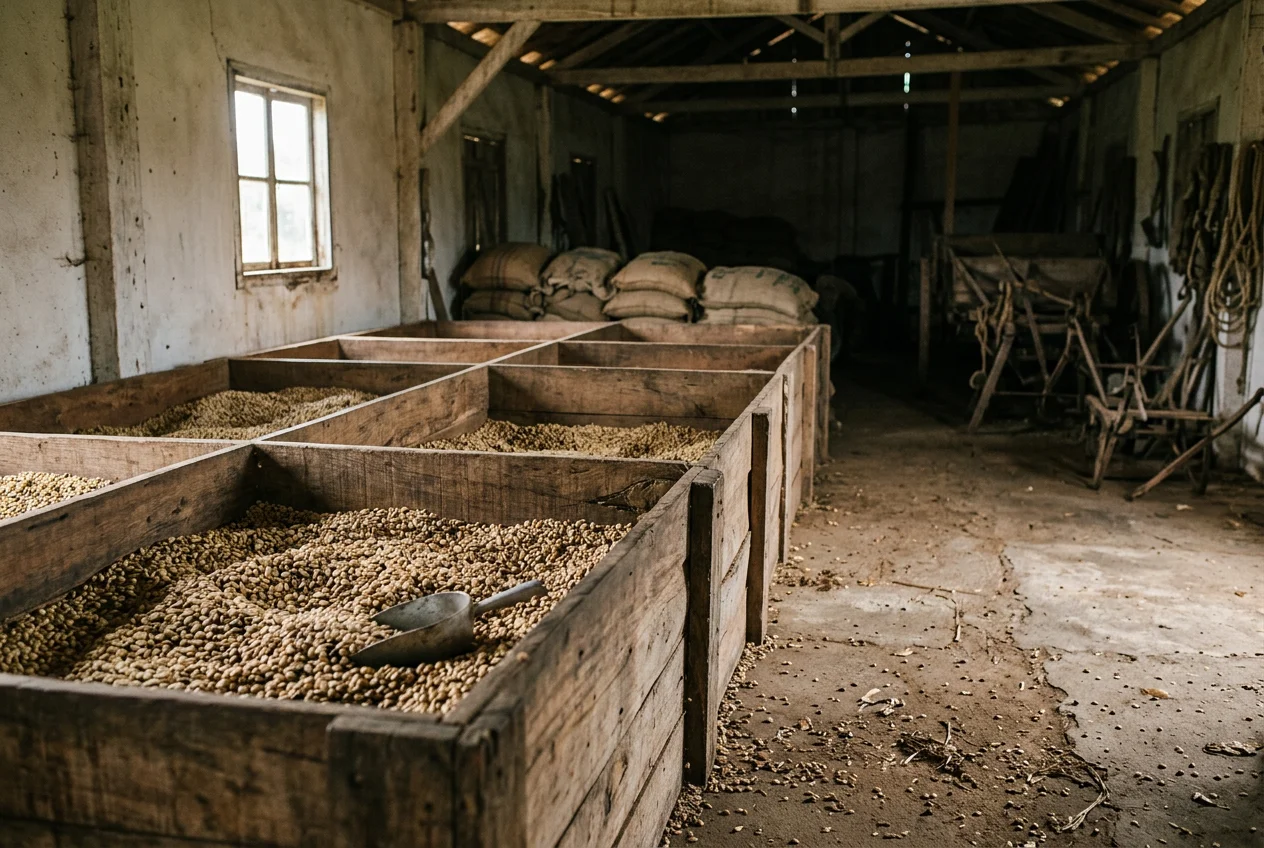
Rushing this step is a common cause of uneven roasting and dull flavors later. A lot that hasn't rested can behave differently from one bag to the next, which roasters hate.
Resting also gives the farm time to cup samples, decide on grades and find the right buyer for each lot.
Natural coffee usually rests still inside its dried fruit husk. Washed and pulped natural coffee rests inside its papery parchment layer. Both act as protective shells.
Dry milling: hulling, sizing and sorting
When the coffee is ready to sell, it goes to the dry mill.
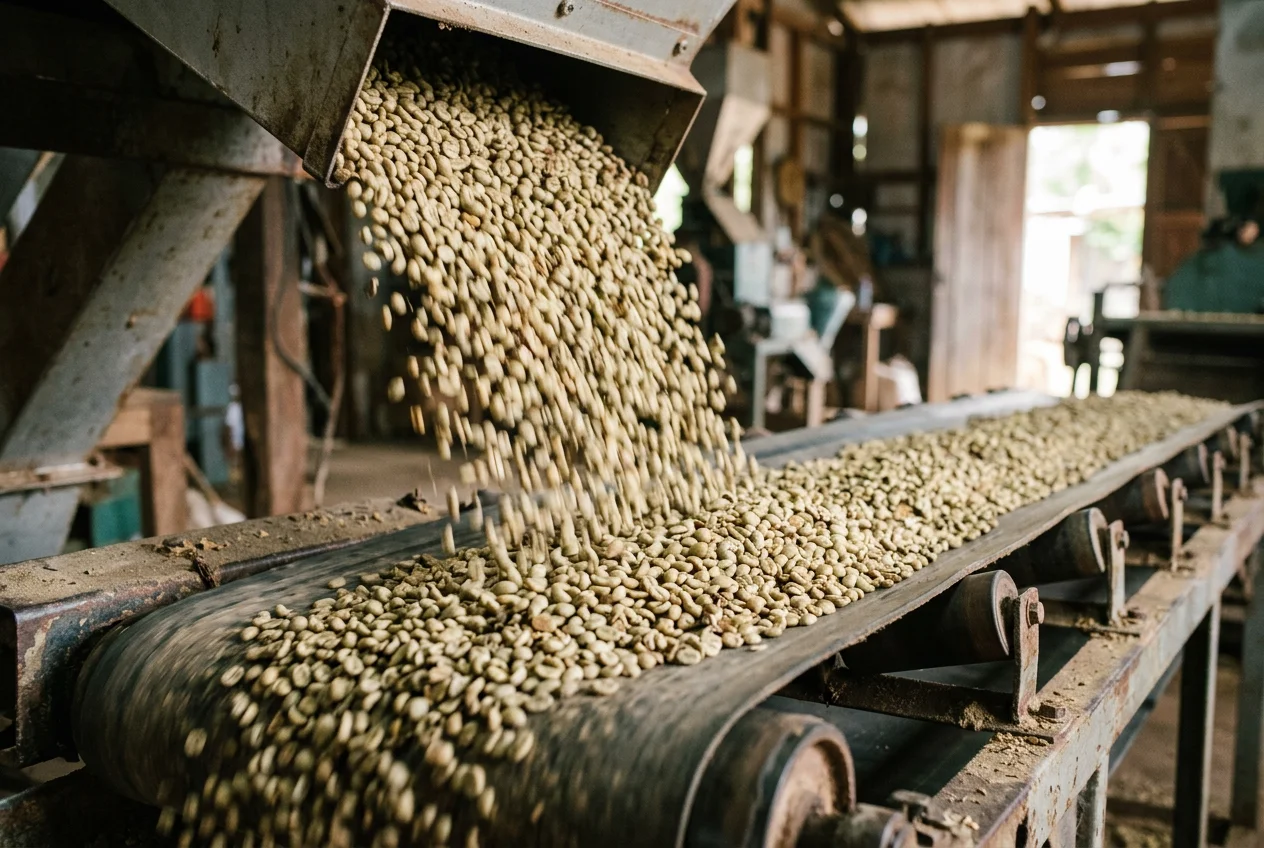
Hulling
Hulling machines use friction to remove the dry outer layers. For naturals that's the dried fruit husk; for washed and pulped naturals it's the parchment.
Polishing can also remove the thin silver skin. What's left is green coffee, the raw beans roasters buy.
Screen sizing
The green beans pass over vibrating screens with holes of different sizes, measured in 64ths of an inch. A "screen 17/18" lot means beans held on 17 and 18 screens, which are large beans.
Even size helps beans roast evenly.
Density sorting
Gravity tables tilt and vibrate so heavier, denser beans move one way and lighter ones the other. Light beans are often underdeveloped or damaged.
Optical sorting
Finally, high-speed color sorters use cameras to inspect beans one by one. When they spot a black, sour or discolored bean, a tiny jet of air knocks it out of the stream.
Some specialty lots are also sorted by hand on tables or belts.
| Step | What it does | Why it matters |
|---|---|---|
| Hulling | Removes husk or parchment | Gets to the green bean |
| Screen sizing | Sorts by bean size | Even roasting |
| Density sorting | Removes light, weak beans | Better sweetness and consistency |
| Optical sorting | Removes discolored beans | Fewer defects in the cup |
How Brazilian coffee is graded
Brazil has its own grading system that combines bean size, defects and cup quality.
Defects
A sample is checked for defects like black beans, sour beans, broken beans, insect damage, husks and stones. Each defect counts for points.
Grades such as "NY 2" or "NY 2/3" mean very few defects. Higher numbers allow more defects.
Cup quality
Graders also taste each lot. Traditional Brazilian cup classifications run from "strictly soft" (the best, very sweet and smooth) down through "soft," "softish" and "hard," to "rio," which has a harsh, medicinal taste.
Specialty buyers now often use the Specialty Coffee Association's 100-point scale too. Coffees scoring 80 or above count as specialty.
Cupping
Cupping is a standard way of tasting coffee. Roasted, ground coffee sits in bowls with hot water. Tasters break the crust, smell the aroma and slurp from spoons to judge sweetness, acidity, body and flavor.
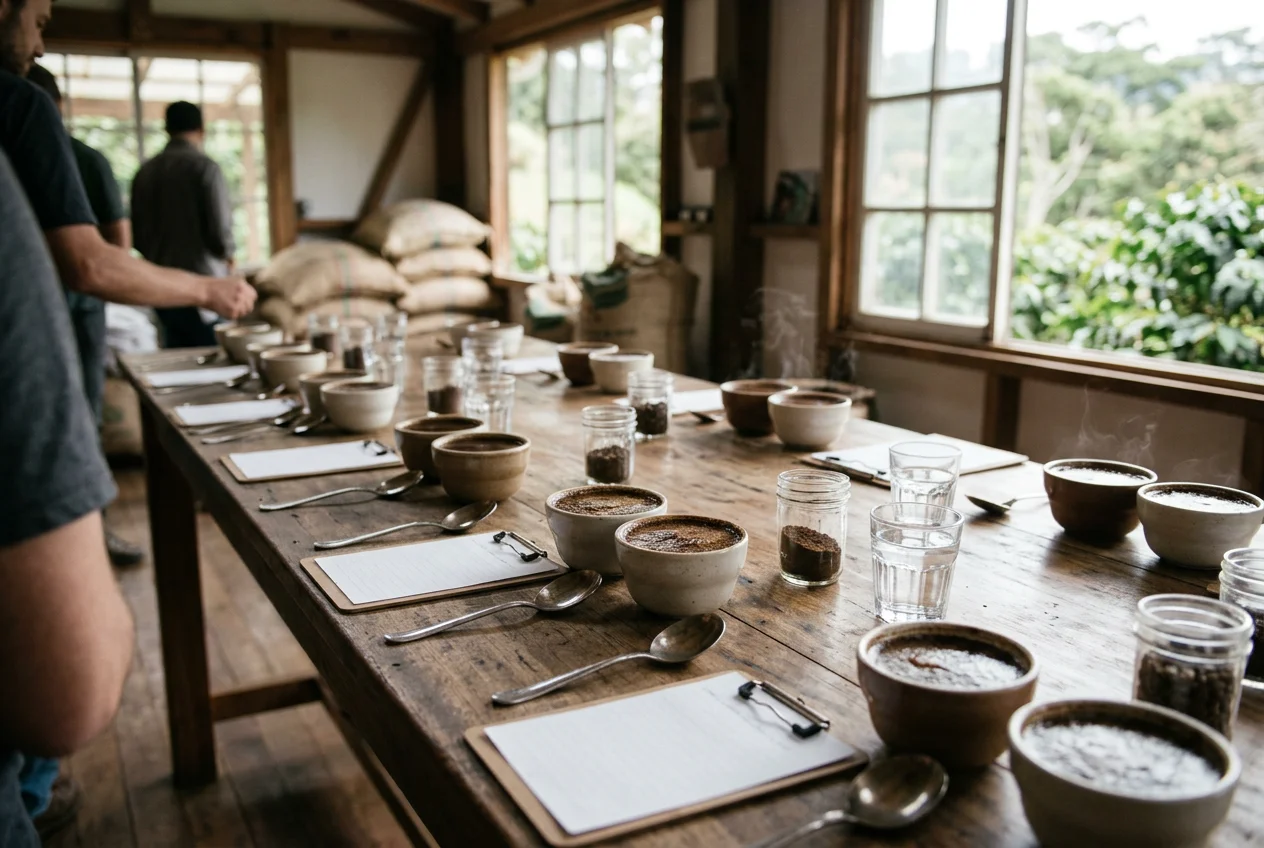
Many big estates have their own cupping labs where they taste every lot and decide how to blend, sell or roast it.
Common defects and what causes them
Most of the steps in Brazilian processing exist to prevent defects. Here are the ones farms fight hardest.
| Defect | Main cause | How it tastes |
|---|---|---|
| Black beans | Overripe or dead cherries, often from the ground | Dirty, harsh, ashy |
| Sour beans | Over-fermentation or slow drying | Vinegar-like, sour |
| Fermented taste | Cherries left too long before processing | Boozy, overripe, funky in a bad way |
| Musty or moldy | Drying too slowly or rewetting | Damp cardboard, earthy |
| Green, grassy | Too many unripe cherries | Astringent, vegetal, bitter |
| Rio flavor | Microbial contamination on some farms | Medicinal, iodine-like |
| Insect damage | Coffee berry borer | Holes in beans, dull or dirty taste |
How farms prevent them
- Fast transport from field to processing, the same day.
- Separating floaters and green cherries before drying.
- Thin, frequently turned layers on patios.
- Covering coffee at night and before rain.
- Careful moisture checks before storing.
- Sorting machines to remove the worst beans at the end.
When everything goes right, you get the clean, sweet, chocolatey cup Brazil is known for.
Specialty Brazil: experiments and competitions
Brazil isn't just about volume anymore. Its specialty sector is creative and fast-moving.
Competitions
Quality competitions such as Cup of Excellence let farms submit their best lots to international judges. Winners sell at auction for many times the normal market price.
That has pushed farms to separate their best plots, pick more carefully and experiment with processing.
New processing ideas
Brazilian specialty farms now try methods that used to be rare there:
- Anaerobic fermentation. Cherries or pulped beans ferment in sealed tanks without oxygen, giving intense, fruity, sometimes winey flavors.
- Controlled yeast fermentation. Farms add selected yeasts to steer flavor, much like winemakers do.
- Slow, shaded drying. Drying more slowly to keep sweetness and avoid harsh notes.
- Micro-lots by variety. Keeping varieties like Yellow Bourbon or Arara separate to show their character.
What this means for you
A specialty Brazilian coffee can taste very different from a supermarket one. You might find red fruit, tropical fruit or honey on top of the classic chocolate base.
If you've written off Brazil as "just a blend coffee," a natural or experimental micro-lot from a good roaster is worth a try.
How Brazil processes robusta (conilon)
Brazil is also one of the world's biggest robusta producers. Brazilians call it conilon, and it grows mainly in hotter, lower states like Espírito Santo and Rondônia.
How conilon is different
- Lower altitude and heat. Robusta loves warm, humid conditions that would stress arabica.
- Different harvest timing. Conilon is often harvested earlier, from around April.
- Mostly natural processing. Cherries are usually dried whole on patios or in dryers.
- Growing quality focus. Some farms now produce "fine robusta" with careful picking and processing, especially in Rondônia, where Indigenous producers have won recognition for high-quality robusta.
Where it ends up
Conilon is used in instant coffee, in many espresso blends for crema and body, and increasingly in specialty robusta coffees.
Brazil's conilon exports jumped sharply in 2023, as buyers looked for alternatives when robusta from other countries was scarce. My guide to arabica vs robusta explains how the two species differ.
Roasting on the farm
Most Brazilian coffee is exported green. But some estates also roast part of their crop for Brazilian shops, cafés and online customers.
What happens in the roaster
In a gas-heated rotating drum, the green beans first dry out and turn yellow, smelling grassy and bready.
Around 300°F, Maillard reactions speed up, creating hundreds of aroma compounds and turning the beans brown.
At about 385 to 400°F, the beans crack audibly, called first crack. Roasters stop anywhere from just after first crack to around second crack, depending on the style they want.
A typical roast lasts about 9 to 14 minutes.
| Roast | When it's stopped | Brazilian coffee tastes like |
|---|---|---|
| Light | Shortly after first crack | Sweet, nutty, gentle fruit |
| Medium | Between first and second crack | Milk chocolate, caramel, toasted nuts |
| Dark | At or past second crack | Bittersweet cocoa, smoky, heavy |
Cooling and packing
The beans are dumped into a cooling tray where fans pull room air through them, bringing them to room temperature in a few minutes.
They're then packed in bags with one-way valves that let carbon dioxide out without letting fresh air in. If you're curious about that gas, see my guide on coffee freshness, resting and degassing. For roasting in more depth, there's my guide on how coffee is roasted.
Bagging and export
Most Brazilian coffee leaves the country green, because green coffee stays stable for many months while roasted coffee fades in weeks.
Packing
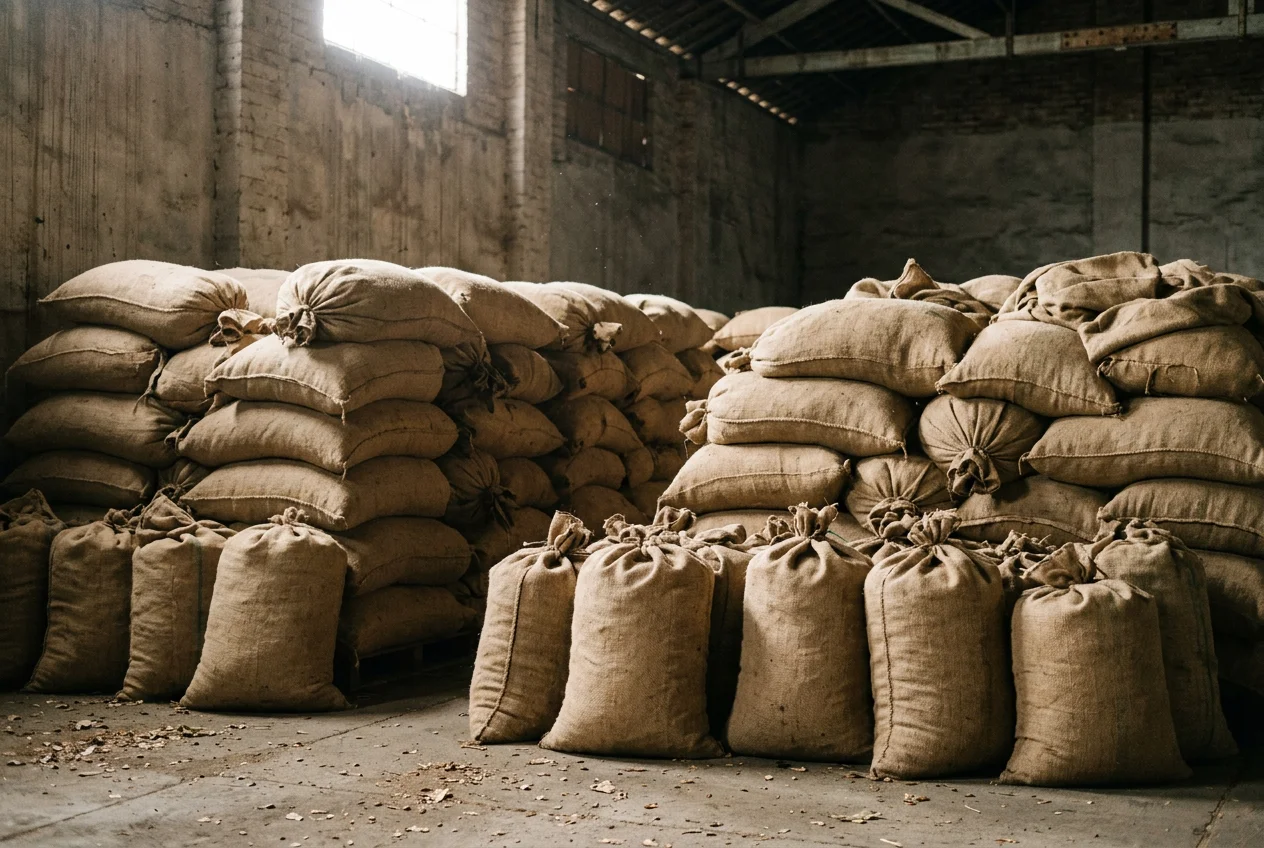
Green coffee is packed in 60-kilogram jute or sisal sacks, about 132 pounds each. Specialty lots often have a hermetic plastic liner inside the sack to protect against humidity and odors.
Big commercial shipments may be loaded loose into shipping containers fitted with a large liner, called bulk shipping.
Shipping
The Port of Santos, near São Paulo, is Brazil's main coffee port. It handles around 70% of the country's coffee exports. Rio de Janeiro is another important port.
Where it goes
The United States is usually the biggest single buyer of Brazilian coffee, along with European roasting countries like Germany, Belgium and Italy. Asian markets, including Japan and China, are growing.
The numbers
According to the Brazilian Coffee Exporters Council, Brazil exported about 39.25 million bags in 2023, earning around 8 billion US dollars.
In the 2023/24 harvest year, exports reached a record of about 47.3 million bags.
| Measure | Approximate figure |
|---|---|
| Exports in 2023 (calendar year) | 39.25 million 60 kg bags |
| Export revenue in 2023 | About US$8 billion |
| Exports in 2023/24 harvest year | About 47.3 million bags (a record) |
| Share shipped from Santos | Around 70% |
Source: Cecafé statistics as reported by Datamar News.
How each step shapes the coffee in your cup
Here's how the farm decisions show up when you brew.
| Farm decision | Effect in the cup |
|---|---|
| Machine harvest with good sorting | Sweet, consistent, mainstream quality |
| Hand-picked ripe cherries | Cleaner, sweeter, more complex |
| Natural process | Heavy body, chocolate, dried fruit, low acidity |
| Pulped natural | Sweet, round, cleaner than natural |
| Washed | Brighter, cleaner, lighter body |
| Slow, even drying | Better sweetness, fewer off-flavors |
| Long rest in bins | More stable, consistent flavor |
| Strict sorting | Fewer harsh or sour notes |
A tasting I like to do
When I can find them, I buy a Brazilian natural and a Brazilian pulped natural from the same farm or region.
Brewed side by side, the natural usually tastes heavier, with more chocolate and dried fruit. The pulped natural feels a bit cleaner and more caramel-sweet.
It's one of the easiest ways to taste how processing changes coffee without even changing the country.
Our tip: Brazilian naturals and pulped naturals are excellent for espresso. For pour-over, try a washed Brazilian or a carefully dried natural from a specialty roaster.
How to brew Brazilian coffee based on its process
Knowing the process on the bag helps you choose how to brew it.
| Process | Best brewers | My starting point |
|---|---|---|
| Natural | Espresso, moka pot, French press, cold brew | Espresso 18 g in, 38 g out in about 28 seconds |
| Pulped natural | Espresso, drip, AeroPress | Drip at 60 g per liter, medium grind |
| Washed | Pour-over, drip | Pour-over 15 g to 250 g water, 45-second bloom |
| Experimental / anaerobic | Pour-over, AeroPress | Lighter ratio, taste as it cools |
Getting the most from naturals
Brazilian naturals are forgiving and sweet. If they taste flat, extract a little more: grind finer or brew slightly longer.
In milk drinks they're hard to beat. The chocolate and nut notes turn a latte into something close to a hot chocolate.
Getting the most from washed Brazilians
Washed Brazilians can be surprisingly delicate. Treat them like a Central American coffee: a medium-light roast, careful pour-over and no milk at first.
Our tip: Rest Brazilian coffee for about four to five days for filter and around a week for espresso before judging it. Very fresh naturals can taste a bit harsh at first.
A quick glossary of Brazilian coffee terms
You'll see some of these words on Brazilian coffee bags, farm websites and tours.
Knowing a few of these makes farm descriptions and specialty labels much easier to understand.
Visiting a Brazilian coffee farm
Many Brazilian estates now welcome visitors, especially during the harvest from May to September.
What a tour usually includes
- Field walk. See the varieties up close and sometimes try picking.
- Processing area. Watch cherries move through separators, pulpers and onto the patios.
- Drying patios. See workers raking coffee and, in late afternoon, piling it up and covering it.
- Dry mill. Watch hulling and sorting machines at work.
- Roastery and cupping room. Taste different lots and roast levels.
Why it's worth it
Seeing the work involved changes how you think about a bag of coffee. It's a lot of land, labor and care for a few hundred grams of beans.
If you visit, the Sul de Minas and Cerrado Mineiro regions both have farms open to guests. Book ahead, especially in harvest season.
Challenges for Brazilian farms
Weather
Frost and drought are Brazil's biggest worries. A hard frost in 2021 damaged many farms in Minas Gerais and sent world prices up sharply.
Labor
Hand picking is getting harder to staff. That's one reason mechanization keeps growing, even on sloped land.
Costs
Fertilizer, fuel and equipment are expensive. When world prices fall, smaller farms struggle.
Sustainability and fairness
Brazil has made progress on certifications, traceability and sustainable farming. But like every coffee country, it still faces concerns about working conditions on some farms and about deforestation in parts of the country.
Buying from roasters who name the farm and explain how they source is a good way to support producers who do things well.
Myths about Brazilian coffee processing
"Machine-picked coffee is always low quality"
Machines pick a mix of ripeness, but good sorting afterward removes most unripe and overripe fruit. Plenty of excellent Brazilian coffee is machine-harvested.
"Natural coffee is dirty or unhygienic"
Naturals are dried carefully on clean patios or raised beds. When done well, they're clean, sweet and very popular with specialty roasters.
"Brazil only produces cheap coffee"
Brazil produces a lot of commercial coffee, but it also wins top international quality competitions.
"Green coffee goes stale quickly"
Green coffee is far more stable than roasted coffee. Stored well, it keeps good quality for many months, which is why it's shipped green.
"Resting is only for roasted coffee"
Brazilian farms rest their dried green coffee for weeks in bins before milling, to even out moisture. It's a different kind of rest, but it matters just as much.
The whole journey at a glance
- FloweringTrees flower after spring rains, about September to November.
- RipeningCherries ripen over roughly seven to nine months.
- HarvestMachines, hand stripping or selective picking, about May to September.
- SortingCleaning, water separation and green-cherry removal.
- ProcessingNatural, pulped natural or washed.
- DryingOn patios, raised beds or in rotary dryers to about 11% moisture.
- RestingWeeks in wooden bins to stabilize.
- Dry millingHulling, sizing, density and optical sorting.
- Grading and cuppingDefects, screen size and cup quality checked.
- Export60 kg sacks, mostly through the Port of Santos.
My bottom line
Brazil's reputation for smooth, chocolatey, dependable coffee isn't luck. It's the result of a dry harvest season, large well-run farms and processing methods, especially natural and pulped natural, that build sweetness and body.
Next time you brew a Brazilian coffee, it's worth remembering the months of work on the farm behind that comforting cup. If you want to compare it with its neighbor, see my guide to Brazilian vs Colombian coffee.
Frequently asked questions
When is coffee harvested in Brazil?
The main harvest runs from about May to September, during Brazil's dry winter.
Is Brazilian coffee picked by machine?
Much of it is, on flat and gently sloping land. Steeper farms use hand stripping, and top specialty lots are often hand-picked.
What is natural processed coffee?
Coffee dried as whole cherries with the fruit still on. It tends to taste sweet, heavy and chocolatey or fruity.
What is pulped natural coffee?
The skin is removed but the sticky mucilage stays on while the beans dry. It sits between natural and washed in flavor.
Why does Brazil use natural processing so much?
Its long, dry harvest season makes sun-drying whole cherries practical, and it needs less water than washing.
How long does coffee dry on Brazilian patios?
Roughly one to three weeks, depending on the process and weather. Mechanical dryers often finish the job.
What moisture level is dried coffee?
Around 10.5 to 11.5%, which keeps it stable and prevents mold.
What does screen 17/18 mean?
The beans are large, held by sorting screens with holes of 17 and 18 64ths of an inch.
What does NY 2/3 mean on Brazilian coffee?
It's a defect-based grade. Lower numbers mean fewer defects; NY 2 and 2/3 are high export grades.
How much coffee does Brazil export?
About 39.25 million 60 kg bags in 2023, and a record of around 47.3 million bags in the 2023/24 harvest year.
Which port ships the most Brazilian coffee?
The Port of Santos, near São Paulo, which handles around 70% of exports.
Why is coffee exported green and not roasted?
Green coffee stays stable for many months, while roasted coffee loses freshness within weeks.

- Michael Reynolds, tasting notes from Brazilian naturals, pulped naturals and washed coffees
- Brazil's coffee exports reach 39.25 million bags in 2023, Datamar News (Cecafé data)
- Brazilian coffee exports reach new heights, Datamar News (Cecafé data)
- Brazilian coffee exports grow 15.4% in November 2023, Datamar News
- Brazil's coffee exports were slightly down in 2023; robusta volumes rose 212%, Tridge (Cecafé data)
Related guides
Brazilian vs Colombian coffee Coffee processing methods How coffee is roastedWritten by Michael Reynolds. Last updated November 16, 2026.