Brazilian vs Colombian Coffee: Flavor, Growing, Processing and Which to Buy
Brazil and Colombia are South America's two coffee giants, but their beans taste very different. Here's how altitude, harvesting, processing and culture shape each cup, which one suits your brewer, and why many roasters blend the two.
We choose products independently. We may earn a commission through links on this page; your price stays the same. Affiliate policy
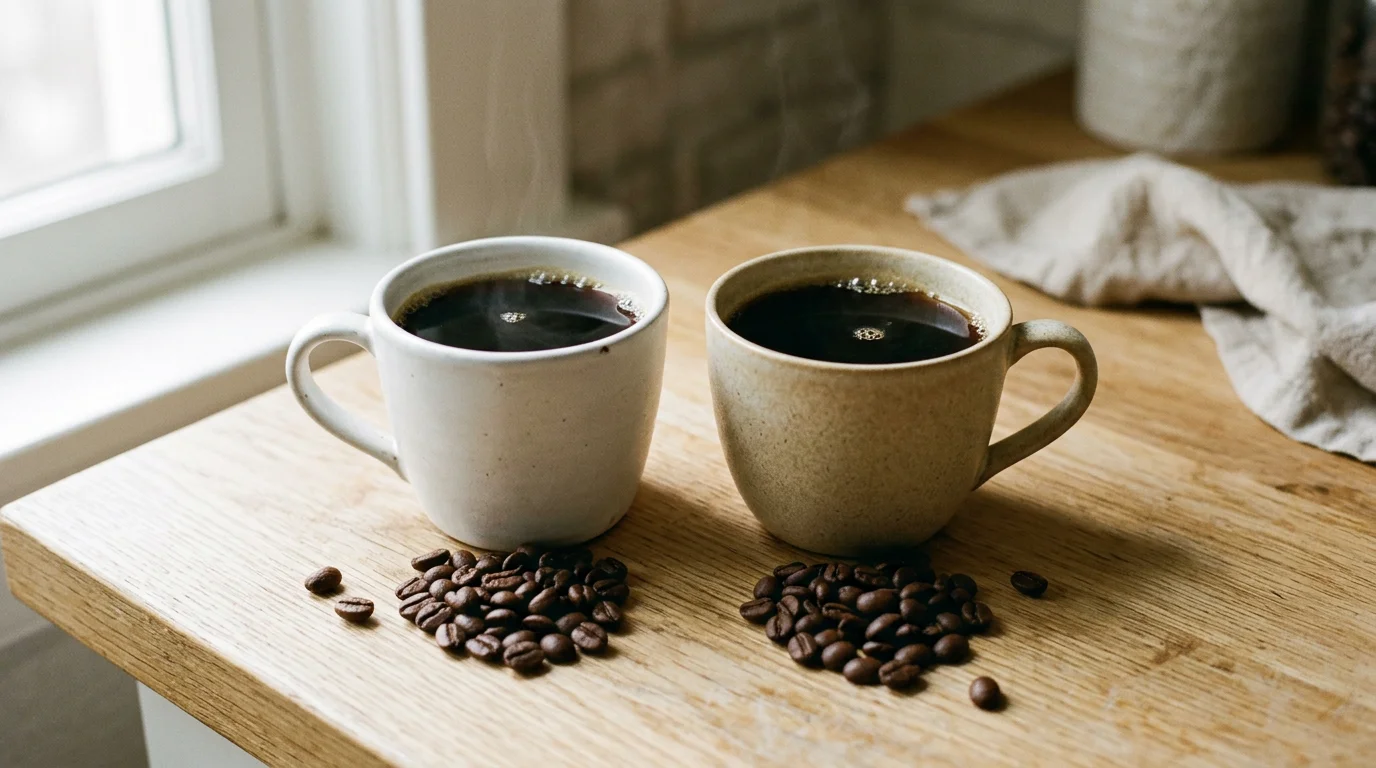
Brazilian coffee is usually nutty, chocolatey and low in acidity with a heavy body. It's grown lower, often machine-harvested and mostly natural or pulped-natural processed. It shines in espresso and milk drinks.
Colombian coffee is usually brighter, fruitier and cleaner with a medium body. It's grown high in the Andes, hand-picked and mostly washed. It shines as pour-over and black coffee.
Neither is better. Pick Brazil for comfort and crema, Colombia for brightness and clarity, or a blend for the best of both.
Two coffee giants with very different personalities
Ask a room full of coffee drinkers whether Brazilian or Colombian coffee is better and you'll start a long argument.
I've had that argument with myself many times. For years my espresso blend was mostly Brazilian, while my weekend pour-over was almost always Colombian.
That's not an accident. The two countries grow coffee in very different landscapes, pick and process it in different ways and have built different reputations around it.
Once you understand those differences, you can predict how a bag will taste before you open it. You'll also know which one to reach for depending on how you brew.
In this guide I'll compare the two origins on scale, growing conditions, varieties, harvesting, processing, flavor, culture and brewing. Then I'll give you a simple buying guide and a side-by-side tasting you can do at home.
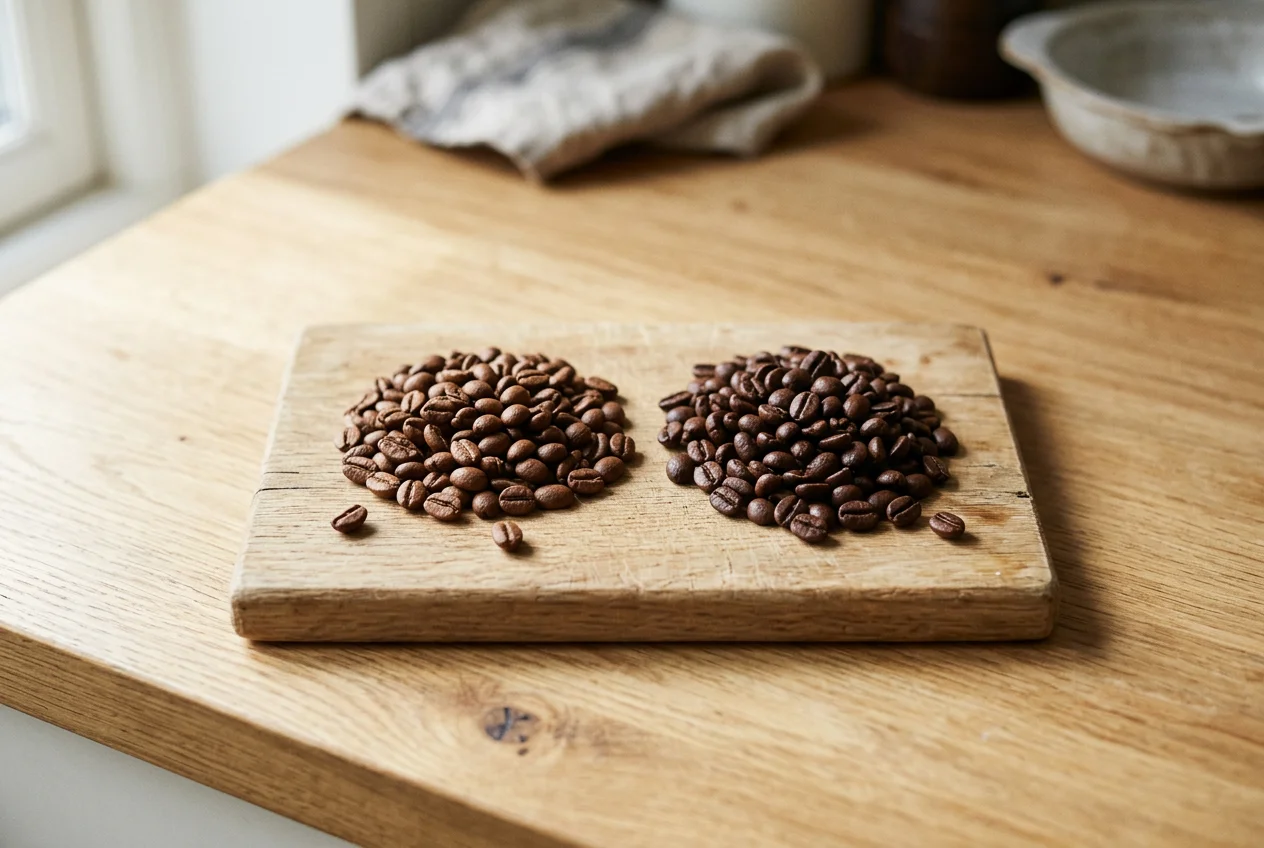
Scale and reputation: volume vs quality branding
Brazil: the engine of world coffee
Brazil is the largest coffee producer on earth by a wide margin. It grows roughly a third of all the world's coffee.
That scale is so big that weather in Brazil moves the global market. When a frost or drought hits Brazilian farms, prices rise around the world.
Brazilian coffee comes from large estates called fazendas as well as many smaller farms. Much of the industry is highly mechanized, which allows huge volumes at a relatively low cost.
You'll find Brazilian beans at every level, from cheap supermarket blends to award-winning specialty micro-lots.
In 2023 Brazil exported around 39 million 60-kilogram bags of coffee, and the following harvest year set a new record.
Colombia: the quality brand
Colombia grows much less coffee than Brazil. It usually ranks third in the world, behind Brazil and Vietnam, producing roughly 11 to 12 million bags a year.
Instead of competing on volume, Colombia built a reputation for quality.
A big part of that is the National Federation of Coffee Growers, known as the FNC, founded in 1927. It supports small farmers, funds research and sets export quality standards.
The FNC also created one of the most famous campaigns in food marketing: Juan Valdez, a coffee farmer with his mule, Conchita. Thanks to that campaign, many people learned to look for "100% Colombian coffee" on the label decades before "single origin" became a buzzword.
| Brazil | Colombia | |
|---|---|---|
| World rank | 1st | Usually 3rd |
| Share of world output | About a third | Around 7–8% |
| Typical farm | Large estates plus smallholders | Mostly small family farms |
| Reputation | Volume, consistency, blending base | Smooth, high-quality arabica |
How each country became a coffee power
Brazil
Coffee arrived in Brazil in the early 1700s. Within a century, it had spread across the country's southeast.
After independence in 1822, coffee became Brazil's main export. By the mid-1800s Brazil was the world's largest producer, a position it has never really lost.
That boom had a dark side. For decades, Brazilian coffee relied on enslaved people. When slavery finally ended in 1888, European immigrants, many of them Italian, took over much of the work on the plantations.
Over the 20th century, Brazil moved coffee further west and north as old soils wore out and frosts hit southern farms. Today the high plateaus of the Cerrado are among its most modern growing areas.
Colombia
Coffee reached Colombia in the 1700s, possibly brought by Jesuit priests, and became an important export in the late 1800s.
Unlike Brazil, Colombian coffee grew mostly on small family farms in the mountains. Those farmers needed a way to sell together and protect their prices.
That's why the FNC was founded in 1927. It bought coffee from farmers at guaranteed prices, built infrastructure and invested in research. In the 1950s it launched the Juan Valdez character, and "Colombian coffee" became a brand in its own right.
Today more than half a million families grow coffee in Colombia. It's still the backbone of many rural communities.
Where and how they're grown
Altitude and climate explain a lot of the flavor difference.
Brazil: lower, warmer and flatter
Brazil's main coffee states are Minas Gerais, São Paulo and Espírito Santo, with important areas in Bahia and Paraná too.
Most farms sit fairly low for coffee, roughly 650 to 3,900 feet above sea level. The landscape is mainly gentle hills and wide plateaus.
The climate is warm and stable, with clear wet and dry seasons.
Warmer temperatures make cherries ripen faster. The beans have less time to build complex acids and dense sugars.
The result is coffee with lower acidity, softer fruit and a rounder, heavier body.
Colombia: high in the Andes
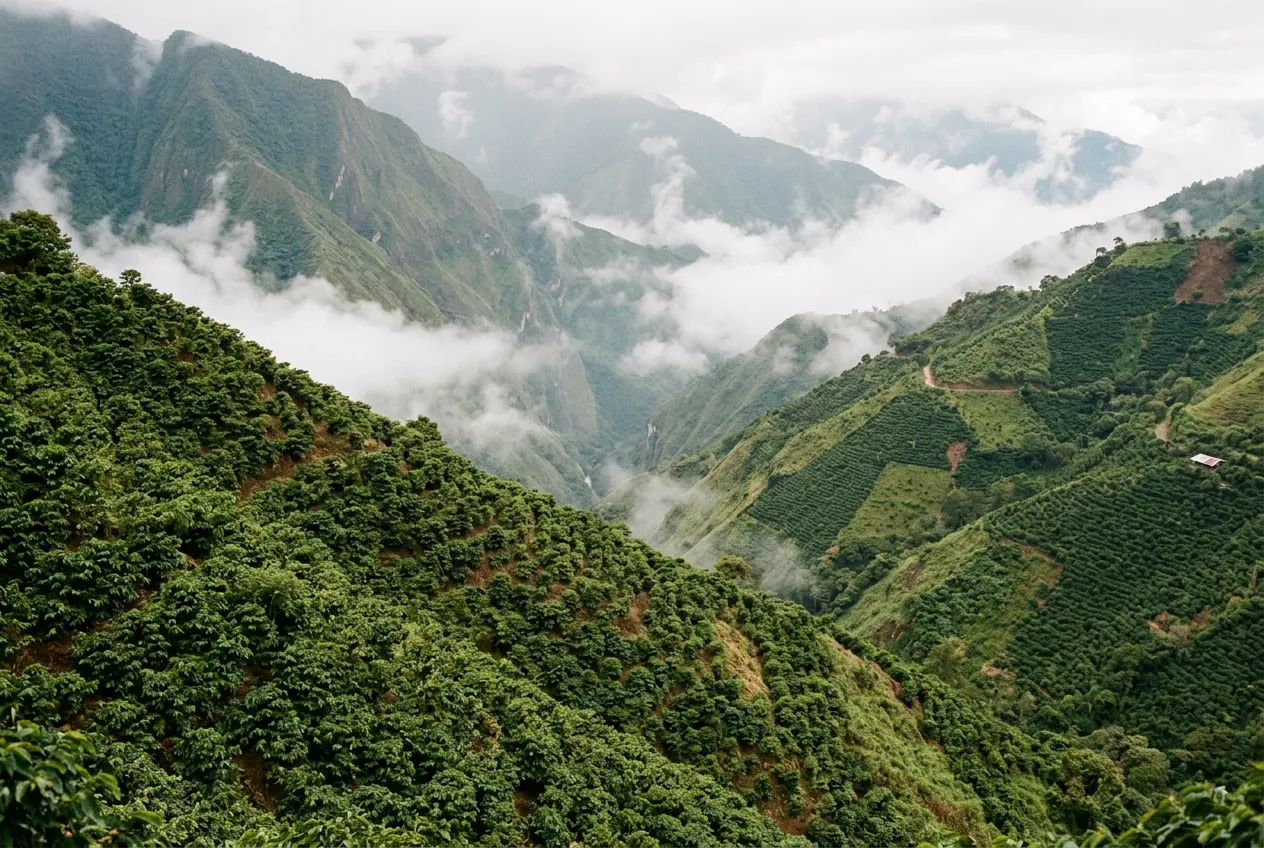
Colombia grows coffee in the Andes, which split into three mountain ranges as they run through the country.
Farms usually sit much higher, roughly 3,900 to 6,500 feet, and some specialty farms go higher still.
The soils are often rich volcanic ash, rainfall is generous and steep valleys create many different microclimates.
Cool nights and warm, sunny days slow the ripening of the cherries. That gives the beans more time to become dense and build sugars and bright organic acids.
In the cup you get more brightness, more layers of flavor and a lively, juicy acidity.
Two harvests in Colombia
Because Colombia sits so close to the equator, many regions have two harvests a year: a main crop and a smaller one called the mitaca.
That means fresh Colombian coffee arrives at roasters at different times of year. Brazil has one main harvest, roughly from May to September.
Our tip: If you see a Colombian coffee from Huila, Nariño, Cauca or Tolima, it's often from higher, cooler areas and leans fruitier. Lower regions tend to taste more chocolatey.
Species and varieties
Brazil
Brazil mostly grows arabica, but it's also one of the world's biggest robusta producers. In Brazil robusta is often called conilon, and it's grown mainly in hotter, lower areas such as Espírito Santo.
Common Brazilian arabica varieties include:
- Bourbon (red and yellow). Prized for sweetness, a velvety body and classic chocolate and caramel notes.
- Typica. An old heirloom variety with clean sweetness and good balance.
- Mundo Novo. A natural cross of Typica and Bourbon discovered in Brazil. High yields and full-bodied sweetness.
- Catuaí (red and yellow). A compact, productive variety bred in Brazil that does well in full sun. Sweet, nutty and low in acid.
Colombia
Colombia has historically grown only arabica, and that's a big part of its brand. Robusta trials have started in recent years, but Colombian coffee on the shelf is still arabica.
Common Colombian varieties include:
- Typica. The traditional variety behind the classic, balanced Colombian cup.
- Bourbon. Grown in high microclimates for more fruit and a silky body.
- Caturra. A compact natural mutation of Bourbon that can be planted densely on steep slopes, with bright acidity and clarity.
- Castillo. A disease-resistant variety developed by Colombia's coffee research center, Cenicafé, to fight coffee leaf rust while keeping the bright Colombian profile.
| Brazil | Colombia | |
|---|---|---|
| Species | Mostly arabica, plus lots of robusta (conilon) | Arabica |
| Key varieties | Bourbon, Typica, Mundo Novo, Catuaí | Typica, Bourbon, Caturra, Castillo |
| Variety goal | Yield, sweetness, body | Cup quality, rust resistance, brightness |
If you'd like more background on the two species, see my guide on arabica vs robusta.
Harvesting: machines vs hands
Brazil: often mechanical
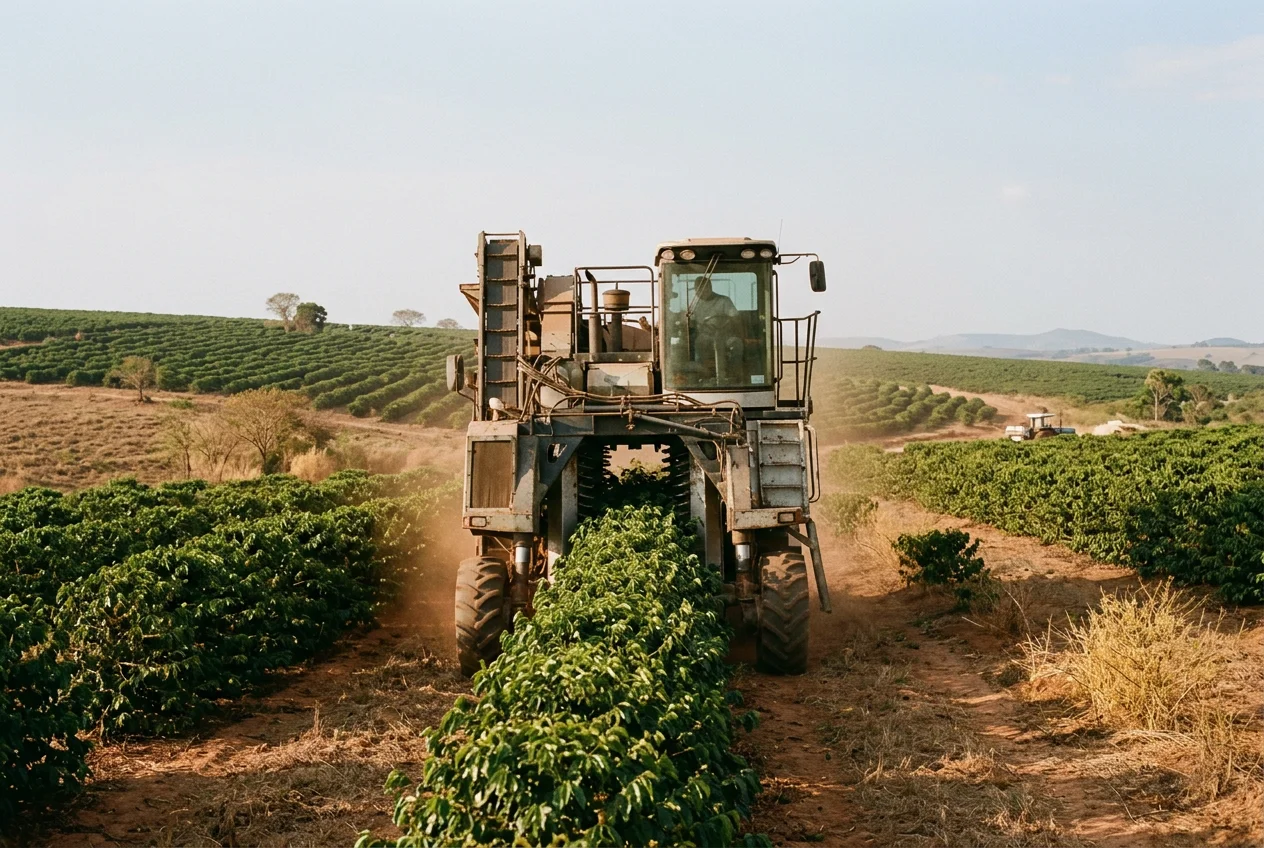
Much of Brazil's coffee land is flat or gently rolling. That allows large farms to use harvesting machines.
These machines straddle the rows and shake the trees with vibrating rods, knocking cherries off the branches. They can harvest huge areas quickly and cut labor costs dramatically.
Machines tend to pick a mix of ripe, overripe and some unripe cherries. Farms then sort the cherries carefully afterward. On steeper Brazilian land, hand picking or hand stripping is still common.
Colombia: almost always by hand
Colombia's steep mountain slopes make big harvesting machines impractical.
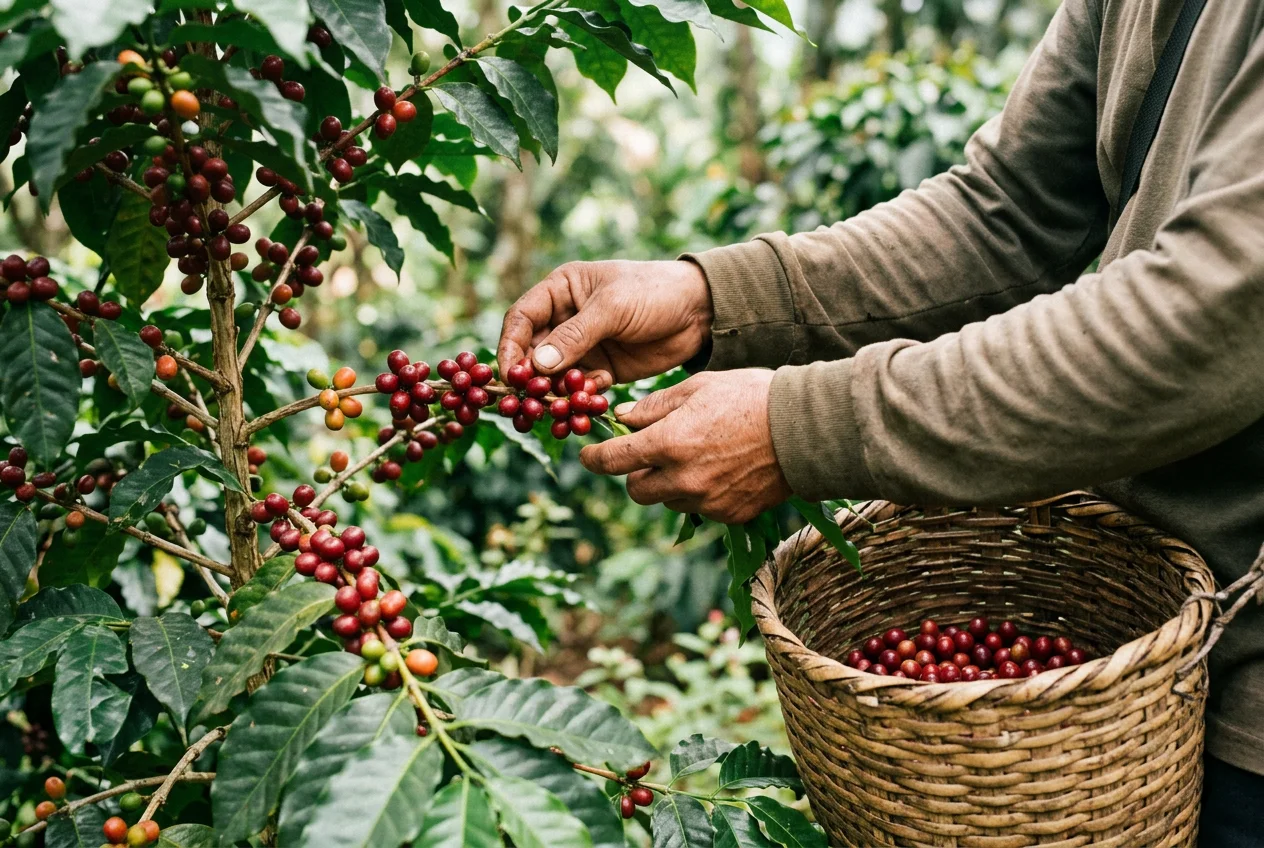
Pickers walk the rows by hand and pass the same trees several times during the season. They pick only the ripe red or yellow cherries and leave the green ones to ripen.
It's hard, slow work, but it gives very even ripeness. Even ripeness is one of the secrets of a clean, sweet cup.
Processing: natural vs washed
Processing is how the seed is separated from the fruit and dried. It shapes flavor as much as altitude does. My guide on coffee processing methods explains each one in detail.
Brazil: natural and pulped natural
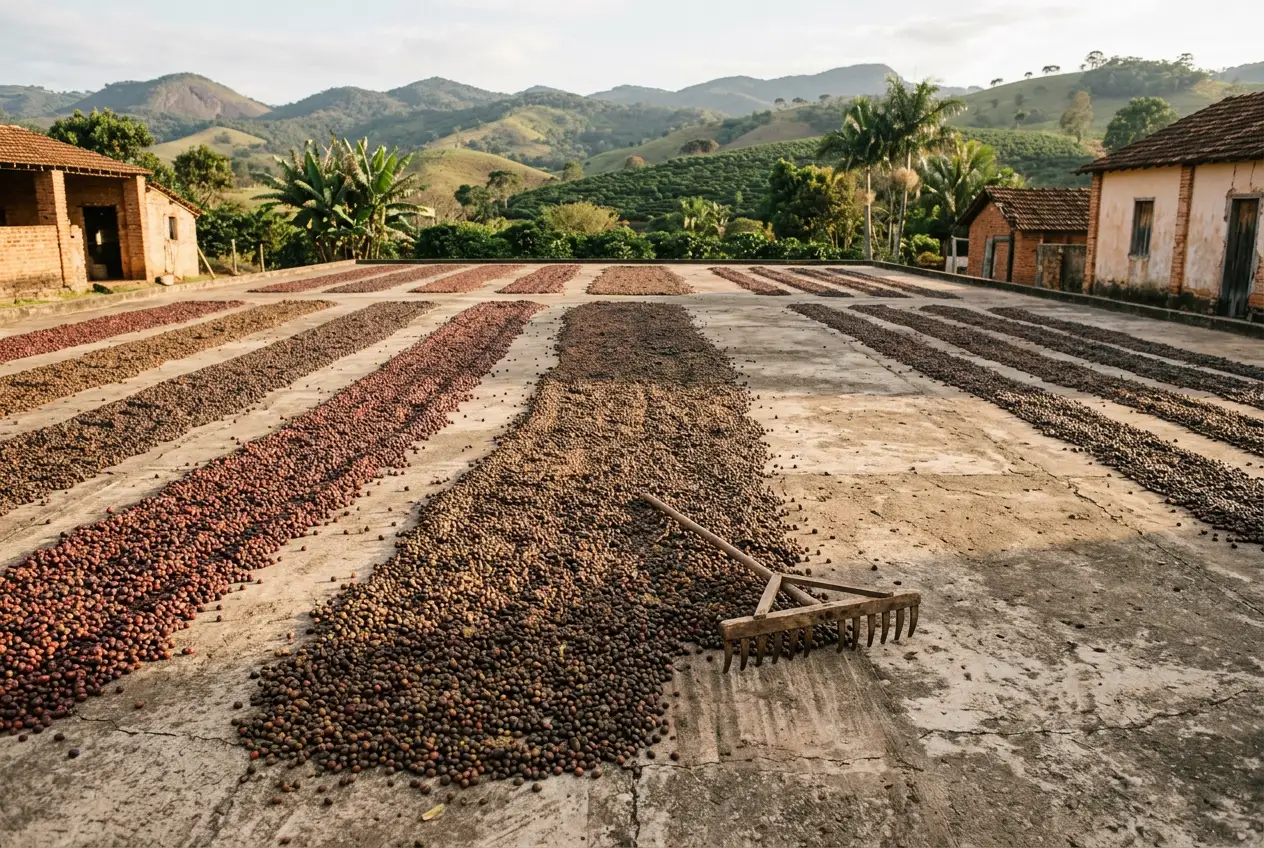
Brazil's dry harvest season makes it ideal for drying whole cherries in the sun.
- Natural (dry) process. Whole cherries are spread on big concrete or brick patios and dried with the fruit still on. Sugars and flavors from the fruit move into the seed.
- Pulped natural. Brazil pioneered this method. Machines remove the skin, but the sticky, sweet mucilage stays on while the beans dry on patios.
Both methods give Brazilian coffee extra body, sweetness and low perceived acidity, with notes of chocolate, nuts and dried fruit.
Colombia: washed
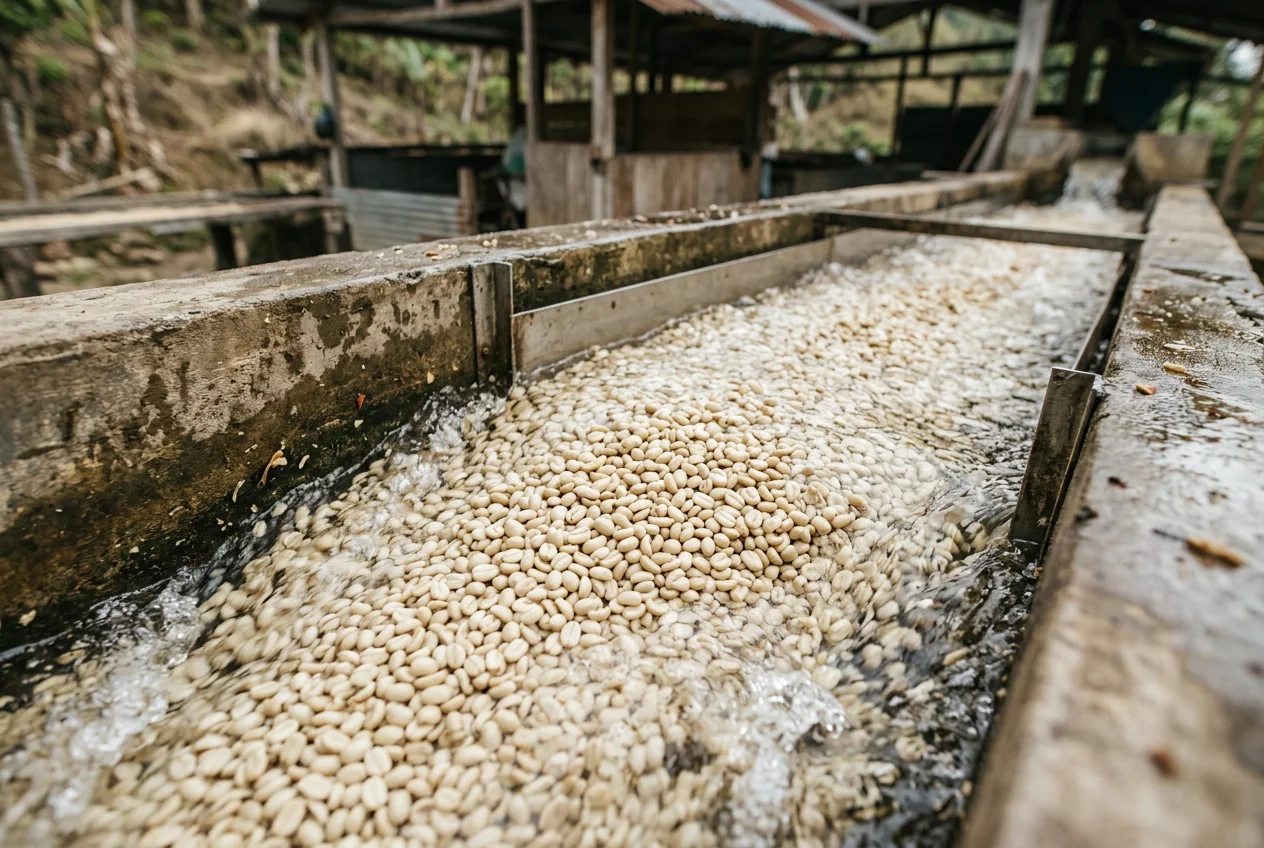
Colombia traditionally uses the washed, or wet, process.
- DepulpRight after harvest, a machine removes the skin and fruit.
- FermentBeans still coated in sticky mucilage sit in tanks for roughly 12 to 36 hours while natural microbes break it down.
- WashClean water rinses off the remaining fruit layer.
- DryBeans dry on patios, raised beds or in covered solar dryers until they're stable for storage.
Because the fruit is gone before drying, the bean's own flavors come through clearly. Washed Colombian coffee is known for being clean, bright and consistent.
The exceptions
These are the classic patterns, not hard rules. Brazil produces some excellent washed coffees, and Colombian farmers increasingly experiment with honey, natural and special fermentation processes.
If the bag lists the process, read it. It often tells you more than the country does.
How they taste: the cup side by side
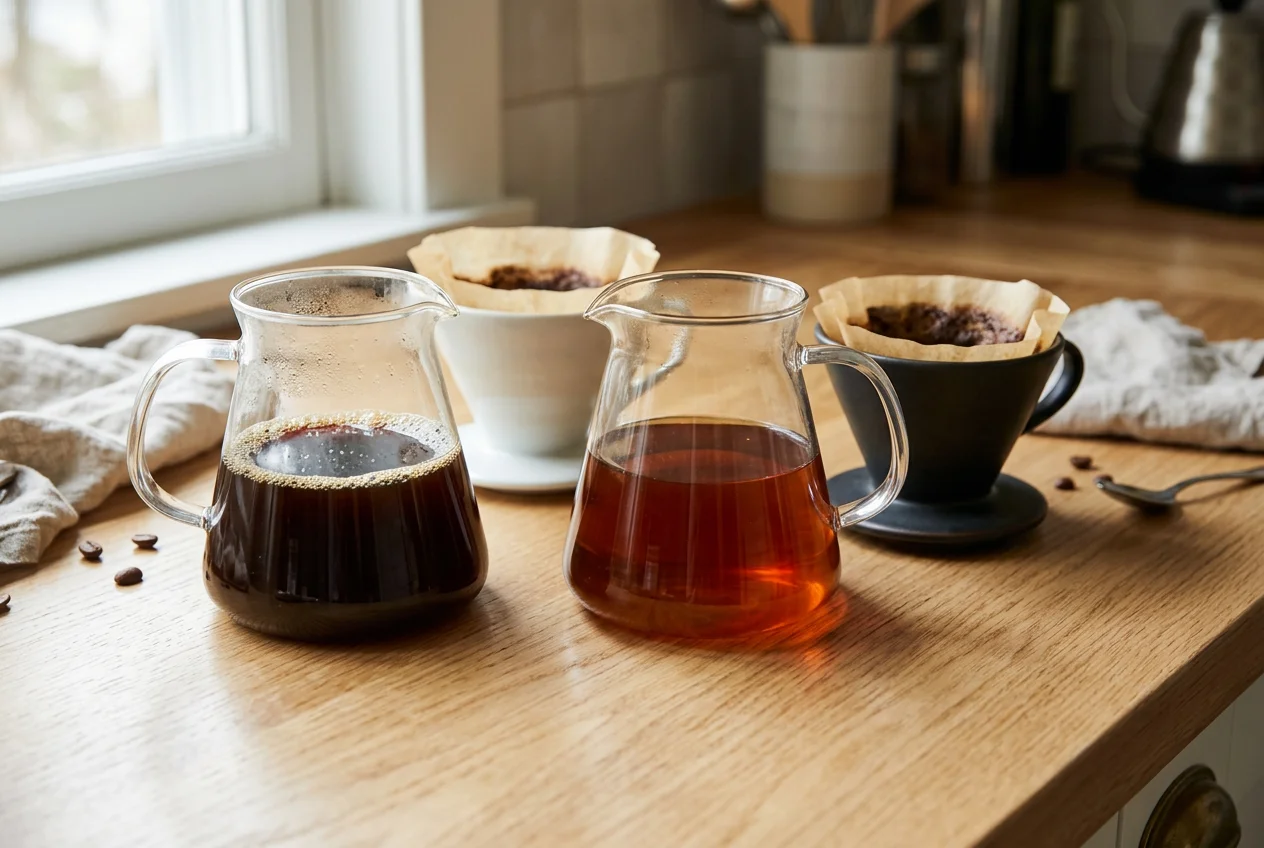
Brazilian coffee
- Main flavors. Milk and dark chocolate, roasted nuts like hazelnut, almond and peanut, brown sugar and caramel.
- Acidity. Low and gentle.
- Body. Heavy, creamy and full.
- Feel. Comforting, smooth and familiar.
Colombian coffee
- Main flavors. Orange, tangerine and other citrus, red berries such as cherry and raspberry, stone fruit, caramel and light floral notes.
- Acidity. Bright, juicy and lively.
- Body. Medium and silky.
- Feel. Clean, crisp and balanced, with a lingering finish.
How I'd rate typical examples (my tasting, rough guide)
Based on my own tastings of medium-roasted specialty coffees. Individual farms and processes vary a lot.
Grocery store vs specialty
Supermarket Colombian coffee is often roasted fairly dark, which pushes it toward chocolate and caramel and hides most of the fruit.
High-quality Colombian coffee from a specialty roaster, roasted lighter, is where the citrus, berries and florals come out. The same applies in reverse to Brazil: top Brazilian micro-lots can be surprisingly fruity.
How roast level changes each one
Roast level can push both coffees closer together or further apart.
| Roast | Brazil tastes like | Colombia tastes like |
|---|---|---|
| Light | Sweet, nutty, gentle fruit, can taste a bit flat | Bright citrus, berries, florals; at its most expressive |
| Medium | Chocolate, caramel, toasted nuts; the sweet spot for most | Caramel, orange, red fruit; balanced and sweet |
| Medium-dark | Dark chocolate, heavy body; great for espresso | Cocoa and brown sugar with fruit fading |
| Dark | Bittersweet, smoky, roasty | Smoky and bold; most origin character gone |
In my experience, Brazil is happiest at medium to medium-dark. Colombia is more versatile, but it's most interesting from light to medium.
My guide to coffee roast levels explains these roast stages in more depth.
Which brewer suits which coffee
Brazil: espresso, milk drinks and moka pot
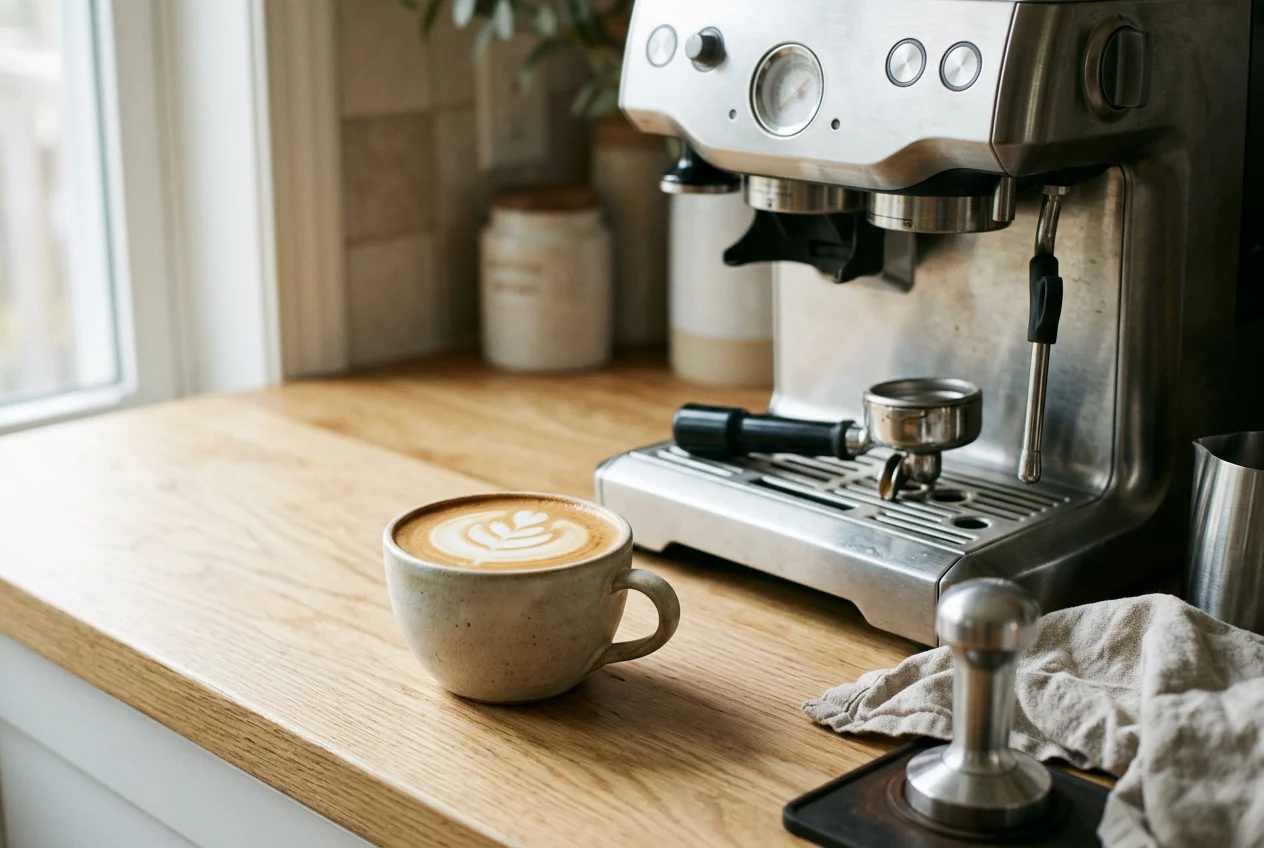
Brazil is the classic base for espresso. Its low acidity, sweetness and body give thick crema and a smooth shot.
It also cuts through steamed milk without tasting thin or sour, which makes it great for lattes, cappuccinos, flat whites and cortados.
It's excellent in a moka pot, a French press and in drip machines for people who want a classic, low-acid cup.
Colombia: pour-over, drip and black coffee
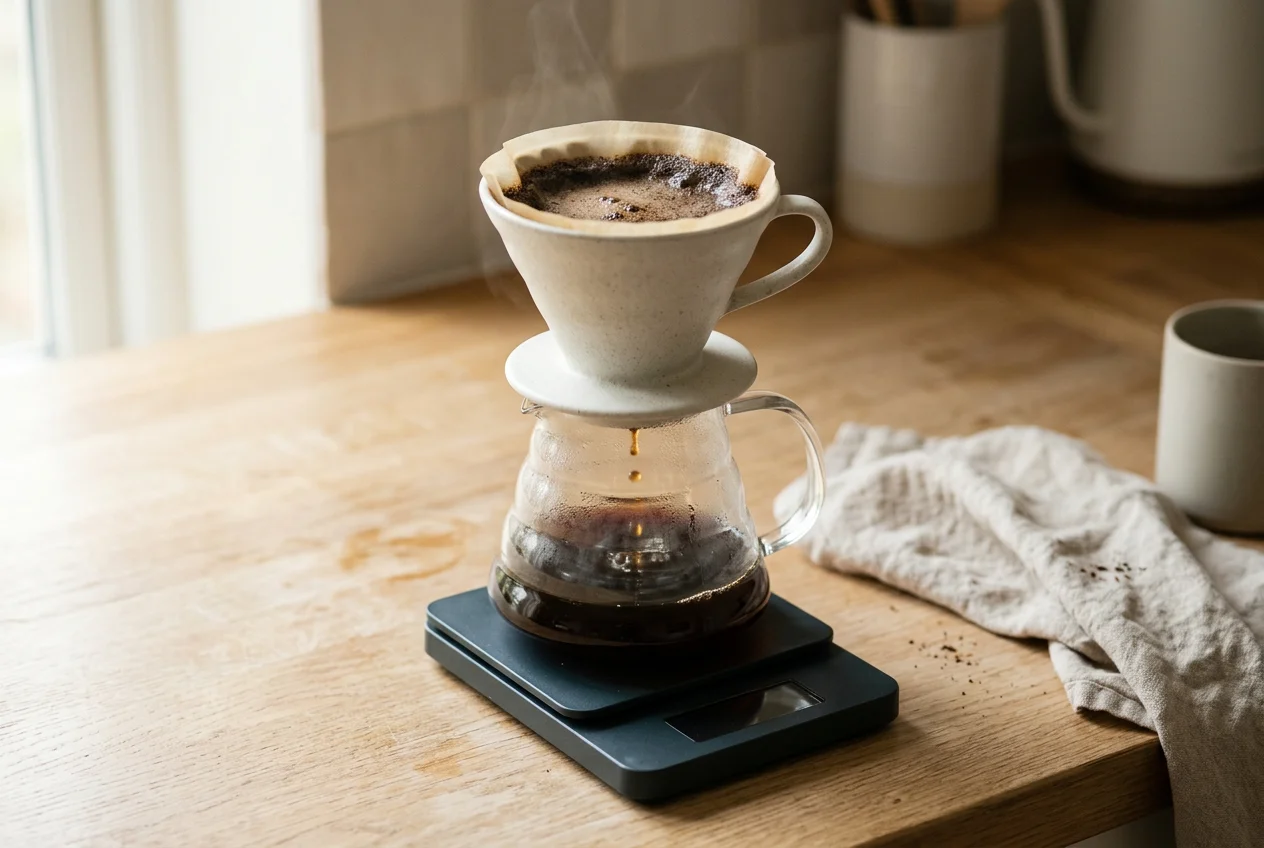
Colombian coffee shines in pour-over brewers and good drip machines, where clarity lets the fruit and floral notes come through.
It's best enjoyed black, so you can taste how it changes as it cools.
It also makes a lively espresso, especially for straight shots, though it can taste sharper in milk.
| Brewer | Brazil | Colombia |
|---|---|---|
| Espresso (straight) | Smooth, chocolatey | Bright, fruity, can be sharp |
| Milk drinks | Excellent | Good, lighter |
| Pour-over | Sweet, simple | Excellent |
| Drip machine | Comforting, classic | Bright, balanced |
| French press | Rich, heavy | Fruity with more body |
| Moka pot | Excellent | Good |
| Cold brew | Chocolatey, smooth | Fruity, refreshing |
My starting recipes
- Brazil espresso18 g in, about 36 g out in 27–30 seconds, then go a little longer if it tastes harsh.
- Colombia pour-over15 g coffee to 250 g water at around 205°F, with a 45-second bloom and a total time near 3 minutes.
- Brazil French press30 g coffee to 500 g water, 4 minutes, then skim and pour.
- Colombia drip60 g per liter, medium grind, and drink it black first.
Fresh, well-rested beans make a bigger difference than any recipe. My guide to coffee freshness and resting explains how long to wait after roasting.
Decaf and cold brew: which origin works better?
Decaf
Decaf coffee loses some flavor during processing, so starting with the right beans matters.
Colombian decaf is very common, and many of the best decafs I've tasted are Colombian. A popular method there uses ethyl acetate made from fermented sugarcane, and the coffee keeps a lot of its sweetness and fruit.
Brazilian decaf is also good, especially for espresso and milk drinks, where its chocolate notes help cover any flatness.
If you want to know how the caffeine is removed, my guide on how decaf coffee is made explains each method.
Cold brew
Cold brew mutes acidity and brings out body and sweetness.
Brazilian coffee makes a classic cold brew: smooth, chocolatey and almost syrupy. It's very hard to get wrong.
Colombian cold brew is lighter and fruitier, more like iced tea with a cocoa finish. I like it on hot summer afternoons.
Our tip: For cold brew, use a coarse grind and about 1 part coffee to 8 parts water, steep 12 to 16 hours in the fridge, then dilute to taste.
What to eat with each one
Coffee and food pairing sounds fancy, but it's really just about matching or contrasting flavors.
Brazilian coffee pairings
Brazil's chocolate, nut and caramel notes love rich, sweet food.
- Chocolate desserts. Brownies, chocolate cake and dark chocolate echo the coffee's cocoa notes.
- Nutty pastries. Almond croissants, hazelnut biscotti and pecan pie match its nuttiness.
- Breakfast. Buttery toast, pancakes or a cheese sandwich are great with a smooth Brazilian cup.
- Brazilian classics. Pão de queijo, the little cheese breads, are a natural partner for cafezinho.
Colombian coffee pairings
Colombia's brightness works well with fruit and lighter sweets.
- Fruit pastries. Berry tarts, lemon cake and orange scones pick up its citrus and red fruit notes.
- Light breakfast. Yogurt with fruit, granola or a simple croissant let the coffee shine.
- Cheese. A mild cheese or a fresh arepa balances its acidity nicely.
- Caramel. Flan or caramel desserts bring out its sweetness.
Our tip: If a coffee tastes too sharp, try it with something a little fatty, like a buttery pastry. Fat softens the impression of acidity.
Getting the best from each: common brewing problems
Each origin has its own typical problems at home. Here's how I fix them.
| Problem | Likely with | Fix |
|---|---|---|
| Tastes flat or dull | Brazil | Grind a touch finer, use slightly hotter water or a lighter roast |
| Tastes bitter and heavy | Brazil, dark roast | Coarser grind, shorter brew, or lower the dose |
| Tastes sour and thin | Colombia | Grind finer, brew longer or use hotter water |
| Tastes sharp in milk | Colombia | Use a medium roast or blend with some Brazilian coffee |
| Espresso gushes | Either, very fresh | Rest the beans longer and grind finer |
| Espresso chokes | Either | Grind coarser or reduce the dose |
Brazil tips
Brazilian coffee can taste a bit one-dimensional if you under-extract it. Give it enough contact time so the sweetness comes out.
For espresso, a slightly longer ratio, such as 1:2.2 instead of 1:2, often brings out more caramel.
Colombia tips
Colombian coffee tastes sour when it's under-extracted. If you're getting a lemony bite without sweetness, extend the brew rather than adding milk.
For pour-over, a good bloom and steady pouring matter. Very fresh Colombian coffee often needs a few extra days of rest.
Water matters
Both coffees taste better with filtered water. Very hard water dulls Colombia's brightness. Very soft water can make Brazil taste thin.
Coffee culture in each country
Brazil: cafezinho and hospitality
Coffee helped build modern Brazil. For nearly two centuries it funded railways, cities and industry.
In daily life, Brazilians drink cafezinho, a small, strong and often very sweet cup. It's offered to guests at home, in offices and in shops as a simple sign of welcome.
Colombia: cafeteros and pride
In Colombia, coffee is a source of deep national pride. Coffee farmers, the cafeteros, are seen as symbols of hard work, rural tradition and resilience.
Colombia's Coffee Cultural Landscape, in the coffee-growing heart of the country, is a UNESCO World Heritage site. Many farms there have passed down the know-how of pruning, picking and washing for generations.
Colombians traditionally drink a lot of tinto, a small cup of simple black coffee, often sold from flasks on street corners. Historically much of the best coffee was exported, but specialty cafés in cities like Bogotá and Medellín now serve top local lots too.
What this means in the cup
These cultures shaped the coffees. Brazil's love of small, sweet, strong cups suits its smooth, chocolatey beans. Colombia's focus on careful, hand-crafted quality matches its bright, clean washed coffees.
When I drink each one, I like to brew it the way it's enjoyed at home at least once: a small, sweet cafezinho for Brazil, a plain black tinto for Colombia. It's a fun way to taste the culture as well as the coffee.
Specialty coffee in Brazil and Colombia
Both countries have changed a lot in the last 20 years. They're no longer just commodity suppliers.
Brazil's specialty side
Brazil now hosts major quality competitions, such as Cup of Excellence, where farms submit their best lots to international judges. Winning lots sell at auction for prices far above the commodity market.
Some regions have protected names too. The Cerrado Mineiro, for example, has a designation of origin, a bit like the systems used for wine.
Specialty Brazilian coffees often keep the classic chocolate and nut base but add notes of red fruit, honey or tropical fruit, especially in careful natural lots.
Colombia's experimental side
Colombia has become one of the most adventurous origins in specialty coffee.
Many farmers now experiment with honey and natural processing, longer controlled fermentations and rare varieties such as Gesha, Pink Bourbon and Sidra.
Some of these coffees taste nothing like the classic Colombian cup. You might find notes like passion fruit, rum, cinnamon or strawberry candy.
Our tip: If you think you know what Colombian coffee tastes like, try a natural or experimental-fermentation lot from a specialty roaster. It can completely change your idea of the origin.
What this means for you
Country names are a starting point, not the full story. The farm, variety and process tell you much more.
When you see two bags from the same country with very different tasting notes, believe the notes. They usually reflect real differences.
Why prices differ
On the supermarket shelf, Brazilian coffee is often cheaper than Colombian. There are good reasons for that.
Why Brazil can be cheaper
- Scale. Huge volumes spread costs over more coffee.
- Mechanization. Machines harvest faster and with fewer workers.
- Natural processing. Drying cherries on patios needs less water and equipment than washing.
- Flat land. Easier logistics and transport from farm to port.
Why Colombia often costs more
- Hand picking. Every cherry is picked by hand on steep slopes, often several passes per season.
- Washing. Washed processing needs water, tanks and careful handling.
- Small farms. Many tiny farms mean more steps between grower and exporter.
- Brand premium. Decades of quality marketing let Colombian coffee command a higher price.
Specialty prices are different
At the specialty level, the gap often disappears. A top Brazilian micro-lot can cost as much as a top Colombian one, because both reflect careful farming, small batches and high quality.
If price matters to you, Brazilian coffee usually gives you the most comforting cup for your money. If clarity and brightness matter more, a good Colombian is worth the extra.
Climate and the future of both origins
Both countries face real challenges from a changing climate, but in different ways.
Brazil: frost and drought
Brazil's biggest risks are frost in the south and long droughts. A severe frost in 2021 damaged many farms and sent global prices sharply higher.
Hot, dry spells also stress trees and reduce yields. Some farms now use irrigation, shade trees and new varieties to cope.
Coffee growing is slowly shifting toward cooler or better-watered areas, and robusta is becoming more important in hotter regions.
Colombia: rain and disease
Colombia's main problems are unpredictable rain and plant disease. Too much rain at the wrong time can ruin flowering and spread fungus.
Coffee leaf rust hit Colombia hard between roughly 2008 and 2011. The answer was a huge replanting program with rust-resistant varieties like Castillo, which helped production recover.
Rising temperatures also push the best growing zones higher up the mountains, where there's less land available.
Why it matters to coffee drinkers
Weather in either country can change prices and availability on your local shelf.
It's also why research into new varieties and better farming matters. The coffee you love in ten years may come from trees that don't exist yet.
Buying guide: reading the label
Brazilian labels
- Santos. Named after Brazil's main coffee port. Usually a smooth, mild commercial or premium grade.
- Cerrado Mineiro, Sul de Minas, Mogiana. Well-known growing regions. Specialty coffees often name them.
- Natural or pulped natural. Expect body, sweetness and chocolate.
- Screen 17/18. A bean size grade. Bigger beans often roast more evenly, but size isn't a guarantee of flavor.
Colombian labels
- Supremo. The largest bean size grade.
- Excelso. A slightly smaller size grade, very common in exports. It doesn't mean lower quality in the cup.
- Huila, Nariño, Cauca, Tolima, Antioquia. Common regions. Southern, higher regions often taste brighter.
- Washed. Expect clarity and brightness. Honey or natural lots taste sweeter and fruitier.
Who should buy which
If you want a general checklist for picking any bag, see my guide on how to choose coffee beans.
Which one fits you? Five coffee drinker profiles
Here's how I'd steer friends depending on how they drink coffee.
The latte lover
You make milk drinks most mornings and want something sweet and chocolatey. Go with Brazil, or a blend that's mostly Brazilian. It won't disappear in the milk or taste sour.
The black-coffee purist
You drink filter coffee black and enjoy tasting the difference between bags. Go with Colombia, ideally a washed coffee from a high region, roasted light to medium.
The acid-sensitive drinker
You find many coffees sharp or hard on your stomach. Start with a medium-roasted Brazilian natural. Its low perceived acidity makes it gentle and smooth.
The home espresso beginner
You're still learning to dial in. Brazil is more forgiving: shots that run a little fast or slow still taste pleasant. Move to Colombian espresso once you're comfortable.
The household with mixed tastes
One person drinks lattes, another drinks black filter. A Brazil-Colombia blend is the easy peace treaty. It works in both brewers and pleases most people.
The best of both: Brazil and Colombia blends
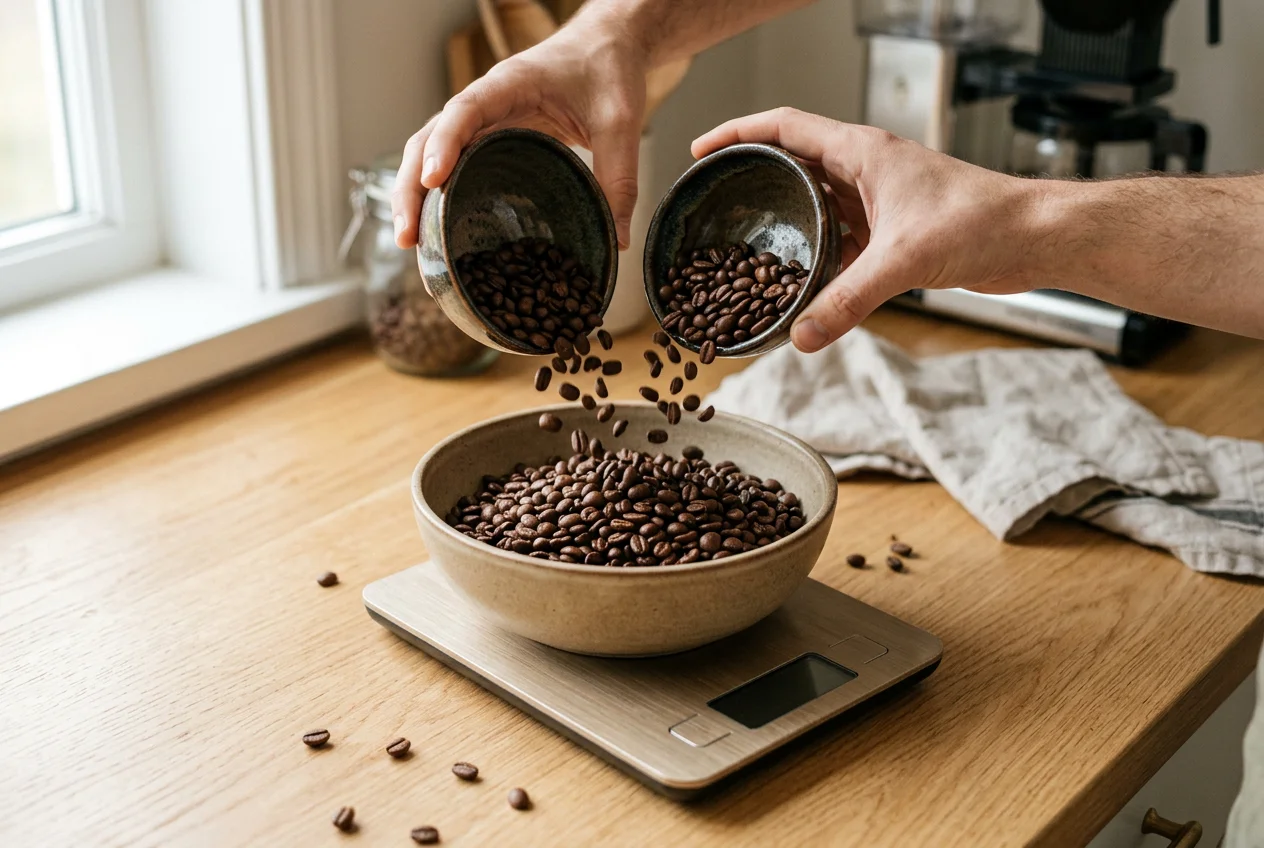
You don't actually have to choose. Many roasters deliberately blend Brazilian and Colombian beans.
The Brazilian part provides body, a creamy texture and chocolate-nut sweetness. The Colombian part adds brightness, fruit and aroma on top.
Together they make a balanced cup that works for espresso, milk drinks and drip coffee.
How I blend at home
When I have bags of both, I sometimes blend them myself.
- Start at 60/40Use 60% Brazil and 40% Colombia for espresso. It's sweet and chocolatey with a little lift.
- Flip it for filterUse 40% Brazil and 60% Colombia for pour-over or drip.
- Taste and adjustToo flat? Add Colombia. Too sharp? Add Brazil.
- Rest both firstMake sure both coffees are past their resting period, so one doesn't dominate with fresh gas.
Our tip: Blend just before grinding, not in the bag. That way you can change the ratio each day without wasting coffee. If you're curious how pros approach this, my guide to single origin vs blend covers it.
How to taste the difference at home
The best way to learn the difference is a simple side-by-side tasting.
- Buy two similar bagsPick a Brazilian and a Colombian coffee from the same roaster at a similar roast level.
- Brew them the same wayUse the same brewer, dose, water and grind. Pour-over or a simple immersion brewer works best.
- Smell firstBrazil usually smells like cocoa and nuts. Colombia often smells fruitier and brighter.
- Taste hot and coolTaste right away, then again after 10 minutes. Colombian coffee usually opens up more as it cools.
- Note body and acidityAsk which feels heavier and which tastes juicier.
- Add milk lastFinally, add a splash of milk to each. Notice which one holds up better.
When I did this with friends who swore they "just liked coffee," almost everyone could pick out which was which after a few sips.
Brazil vs Colombia myths
"Colombian coffee is always better"
Colombia has a strong quality reputation, but Brazil produces world-class specialty coffees too. Quality depends on the farm, the processing and the roaster.
"Brazilian coffee is just cheap filler"
Brazil does supply a lot of commercial coffee. But its best natural and pulped-natural lots win international competitions.
"100% Colombian means specialty"
It means the beans are from Colombia. They can still be ordinary commercial coffee, roasted dark and sold cheaply.
"Colombian coffee is too acidic for espresso"
It can be bright, but well-roasted Colombian espresso is sweet and lively. It just tastes different from a classic Brazilian shot.
"Brazilian coffee has no flavor"
Brazilian coffee is gentle, not flavorless. Its chocolate, nut and caramel notes are exactly why people love it.
Brazilian vs Colombian coffee at a glance
| Brazilian coffee | Colombian coffee | |
|---|---|---|
| World position | Largest producer, about a third of world supply | Top-tier quality origin, usually 3rd by volume |
| Altitude | About 650–3,900 ft | About 3,900–6,500 ft |
| Species | Mostly arabica plus robusta (conilon) | Arabica |
| Key varieties | Bourbon, Typica, Mundo Novo, Catuaí | Typica, Bourbon, Caturra, Castillo |
| Harvest | Often mechanical | Hand-picked |
| Processing | Natural and pulped natural | Washed |
| Flavor | Chocolate, nuts, caramel | Citrus, red fruit, caramel, floral |
| Body | Heavy | Medium |
| Acidity | Low | Bright |
| Best for | Espresso, milk drinks, moka pot | Pour-over, drip, black coffee |
My bottom line
Brazil gives coffee its comfort: body, sweetness and that classic chocolate-nut taste. Colombia gives it lift: brightness, fruit and clarity.
I keep both in my kitchen. Brazil goes into the espresso grinder, Colombia into the pour-over. When I only have room for one bag, I buy a blend of the two.
Frequently asked questions
Which is better, Brazilian or Colombian coffee?
Neither is better overall. Brazilian coffee is nuttier, chocolatier and lower in acid; Colombian coffee is brighter and fruitier. It depends on your taste and brewer.
Is Brazilian coffee less acidic than Colombian?
Usually, yes. Brazil's lower altitudes and natural processing give lower perceived acidity than high-grown, washed Colombian coffee.
Which is better for espresso?
Brazilian coffee is the classic espresso base thanks to its body, sweetness and crema. Colombian coffee makes a brighter, fruitier shot.
Which is better for pour-over?
Colombian coffee usually shines more in pour-over, where its clean, bright fruit flavors come through.
Does Colombia grow robusta?
Colombia has historically grown only arabica. Robusta trials have started in recent years, but Colombian coffee on shelves is arabica.
Why is Colombian coffee so famous?
Decades of quality control and marketing by the National Federation of Coffee Growers, including the Juan Valdez campaign, plus high-grown, washed arabica.
What does Supremo and Excelso mean?
They're Colombian bean size grades. Supremo beans are the largest; Excelso beans are slightly smaller. Size doesn't guarantee better flavor.
What does Santos mean on Brazilian coffee?
Santos is Brazil's main coffee export port. The name is used for a style of smooth, mild Brazilian coffee.
Is Brazilian coffee machine-picked?
Much of it is, on large flat or gently rolling farms. Steeper farms still pick by hand.
Can I blend Brazilian and Colombian coffee?
Yes. Many roasters do. Brazil adds body and chocolate; Colombia adds brightness and fruit.
Which has more caffeine?
Arabica from either country has similar caffeine. Brazilian blends that include robusta can have more.
Which is better with milk?
Brazilian coffee usually holds up better in milk drinks, tasting sweet and chocolatey rather than thin.

- Michael Reynolds, side-by-side tastings and brewing notes
- Brazil's coffee exports reach 39.25 million bags in 2023, Datamar News (Cecafé data)
- Brazilian coffee exports reach new heights, Datamar News (Cecafé data)
- Colombia's new government calls to grow robusta beans, StoneX
- Colombia comenzará a sembrar café robusta, El Colombiano
Related guides
Arabica vs robusta Coffee processing methods Single origin vs blendWritten by Michael Reynolds. Last updated November 16, 2026.