Single Origin vs Blend: What Really Separates Them (and Why Blends Deserve More Respect)
Many coffee lovers decide early that single origins are the "real" specialty coffee and blends are filler. The truth is messier and more interesting. Here is what single origin actually means, why great blends exist, how some roasters abuse them, and how to choose the right one for you.
We choose products independently. We may earn a commission through links on this page; your price stays the same. Affiliate policy
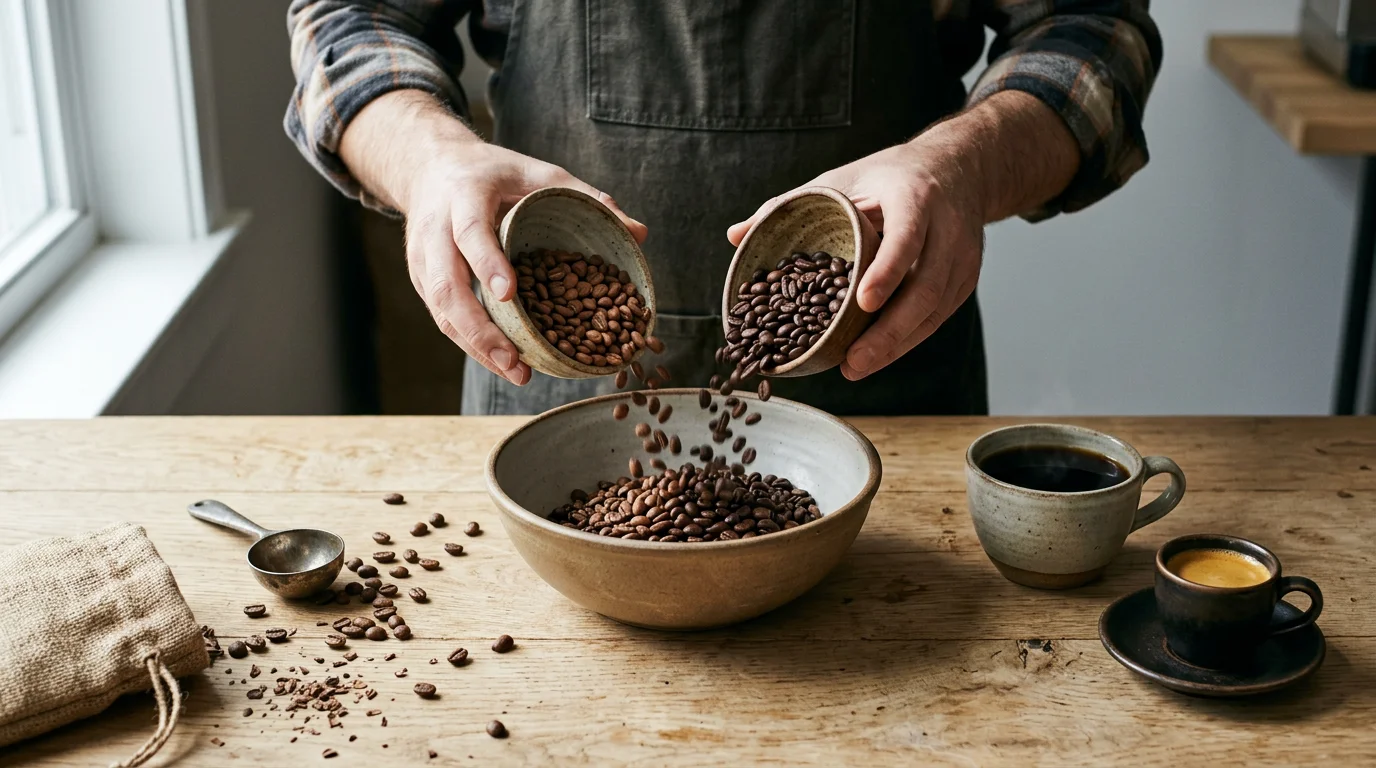
Single origin officially just means all the beans come from one country. It can still mix many farms and varieties, as with most Kenyan and Ethiopian coffees.
A blend combines coffees from different places on purpose, usually for consistency, balance or a specific flavor, especially in espresso and milk drinks.
Neither is automatically better. What matters is the quality of the green coffee, the care of the roaster and how transparent they are about what's in the bag.
The single-origin obsession
When people first fall into specialty coffee, many become almost dogmatic about single origins.
It's easy to see why. It feels like a wonderland where every bag promises a unique place, an exotic variety and a hyper-specific tasting note.
I see the same pattern again and again in cafés. A new enthusiast scans the menu for the single-origin espresso. When the barista recommends the house blend, they turn it down, convinced only a single origin is worth drinking.
I was that person for about two years. I'm a little embarrassed to admit it.
What changed my mind was a blind tasting at a roastery. I picked a house blend as my favorite espresso of the day, convinced it was a rare single origin. The roaster just smiled.
In hobby circles there's a strong bias that frames single origins as pure, artisanal and exciting, and blends as old-fashioned, second-rate or a dumping ground for leftovers.
But the reality of farming, processing and trade reveals an irony: coffee drinkers are already drinking blends almost every time they brew a bag labeled single origin.
In this guide, I'll explain what single origin really means, why skilled roasters make blends, how some companies misuse them, and how to find great coffee in both camps.
A short history of blends and single origins
For most of coffee's commercial history, blends were simply how coffee was sold.
One of the oldest known blends, Mocha-Java, combined fruity, winey coffee shipped from the Yemeni port of Mocha with earthy, full-bodied coffee from Java. Traders found the two balanced each other.
Through the 20th century, big brands built consistent blends from whatever coffee was cheapest that season. The goal was a predictable taste at a low price, and origins were rarely mentioned.
Things changed with the rise of specialty coffee in the late 20th century, and especially the so-called third wave in the 2000s.
Roasters started treating coffee like wine: naming countries, regions, farms, varieties and processes. Single origins became the symbol of quality and transparency.
That was a big step forward for farmers and drinkers. But it also gave blends an unfairly bad reputation, as if they were a relic of the cheap commodity era.
Today, the best roasters do both: they showcase single origins and build thoughtful, transparent blends with the same care.
What "single origin" really means
In the coffee industry, "single origin" doesn't necessarily mean one farm, one harvest lot or one plant variety.
Strictly speaking, it only means all the beans in the bag come from within the borders of one producing country.
Because that definition is so broad, the line between a single origin and a blend is much blurrier than most people realize.
| Label | What it usually means | How "single" it is |
|---|---|---|
| Single origin (country) | All beans from one country | Can mix many regions and farms |
| Single region | One region within a country | Many farms, often several varieties |
| Washing station or co-op | One mill, many smallholders | Hundreds of farms combined |
| Single estate or farm | One farm | Often several varieties or plots |
| Micro-lot | A small, separated part of a farm | As "single" as coffee gets |
Kenyan washing stations
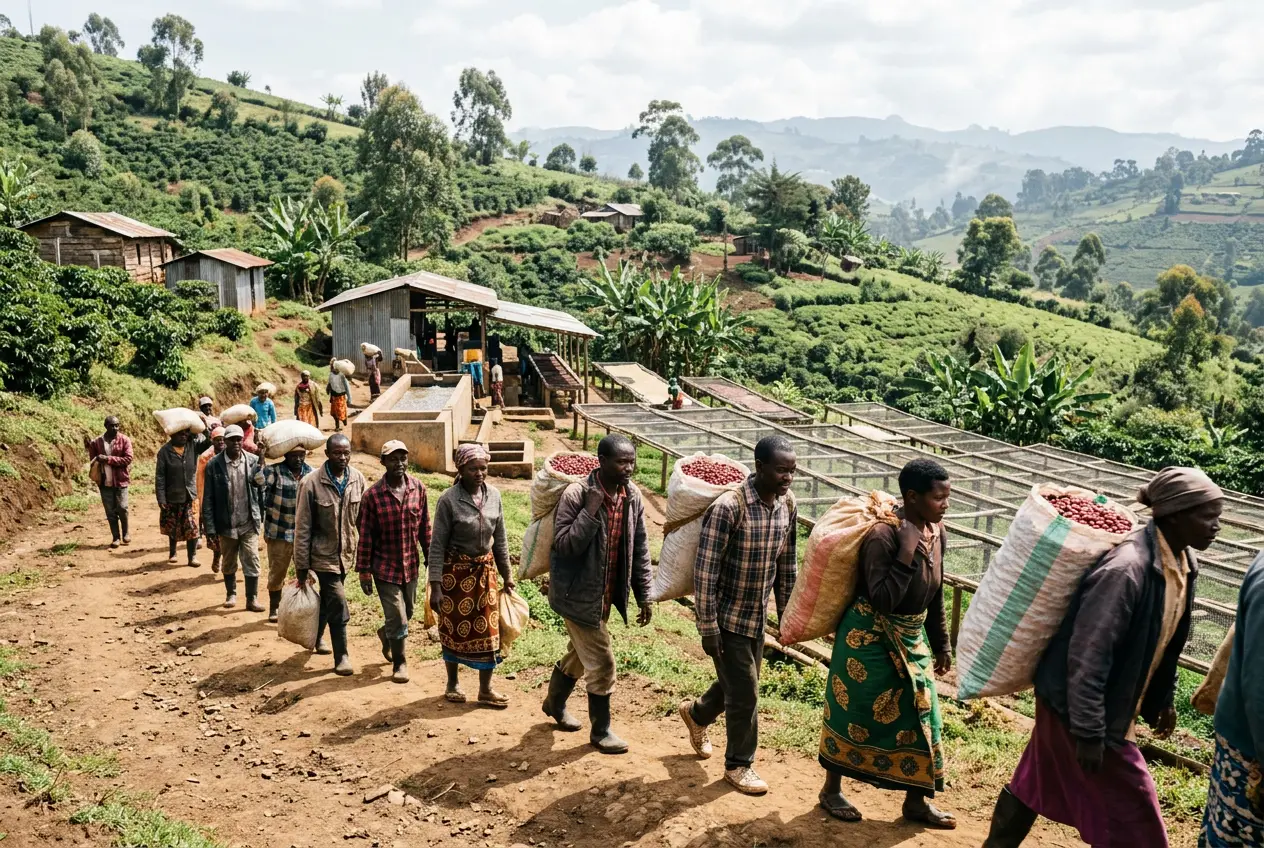
Kenyan coffees are usually named after a washing station, not a family farm.
Hundreds of smallholder farmers in the surrounding hills pick ripe cherries from small plots and deliver them to that central station.
There, cherries from all those farms are combined, pulped, fermented, washed and dried together as one regional lot.
On top of that, Kenyan coffees are almost always a mix of several varieties planted across those farms, commonly SL28, SL34, Ruiru 11 and Batian.
Ethiopian heirloom coffees
Ethiopian coffees are often labeled simply "heirloom".
That isn't one plant. It's an umbrella term for thousands of native wild and semi-wild varieties growing in forests and garden plots.
When they're harvested and processed together at local stations, these genetic types mix. Almost every traditional Ethiopian single origin is really a complex botanical blend.
Central and South American lots
In Colombia, Honduras, Peru and elsewhere, regional lots often combine several varieties grown on neighboring farms or on the same estate.
It's normal to see bags labeled something like "Castillo and Caturra", two varieties combined to create a balanced regional profile.
Roaster-made single-origin blends
Many roasters buy two separate lots from the same country, say two Ethiopians or two Colombians, and combine them.
By the strict definition, that's 100% single origin, because every bean comes from one country. But many roasters label it as a blend, because they deliberately built it from separate parts.
Our tip: If "single farm" matters to you, look for the producer's name or estate on the bag. "Single origin" alone only promises one country.
What a blend is
A blend is coffee from two or more different origins, farms or lots, combined on purpose by the roaster. The key word is "on purpose": a good blend is designed, tasted and adjusted, not thrown together.
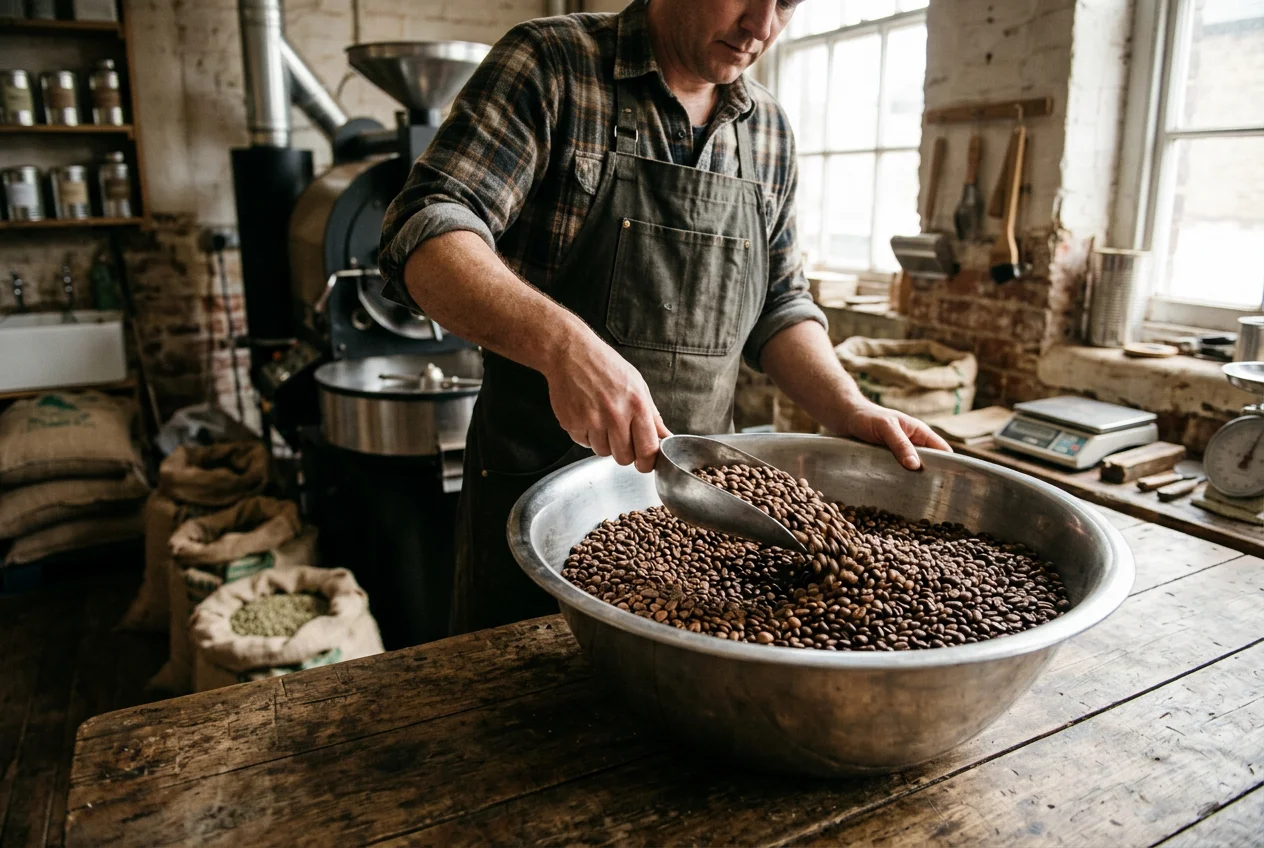
Blends can be made in two ways. Some roasters roast each component separately and mix afterward, called post-roast blending. Others mix green beans first and roast them together, called pre-roast blending.
Post-roast blending gives more control, because each coffee gets its ideal roast. Pre-roast blending is simpler and can work well when the components behave similarly.
Classic blend styles
| Blend type | Typical purpose | What it often tastes like |
|---|---|---|
| House espresso blend | Daily café espresso and milk drinks | Chocolate, caramel, nuts, balanced |
| Breakfast blend | Easy-drinking filter coffee | Medium body, mild, sweet |
| Seasonal blend | Showcase of current harvests | Changes through the year |
| Dark roast blend | Bold, traditional coffee | Smoky, bittersweet, heavy |
| Decaf blend | Consistent decaf supply | Smooth, chocolatey |
Popular single origins and what they taste like
If you want to explore single origins, these countries are great starting points. Flavors vary by farm, process and roast, but these are common patterns.
| Origin | Typical flavors | Good for |
|---|---|---|
| Ethiopia | Floral, citrus, berry, tea-like | Pour-over, light roasts |
| Kenya | Blackcurrant, grapefruit, juicy acidity | Pour-over, bold filter |
| Colombia | Caramel, red fruit, balanced | Everything, great all-rounder |
| Brazil | Nutty, chocolate, low acidity | Espresso, milk drinks, blends |
| Guatemala | Cocoa, toffee, gentle fruit | Filter and espresso |
| Costa Rica | Clean, sweet, honey and citrus | Pour-over, honey process fans |
| Sumatra | Earthy, herbal, heavy body | French press, dark roasts |
| Rwanda and Burundi | Red fruit, black tea, bright | Pour-over |
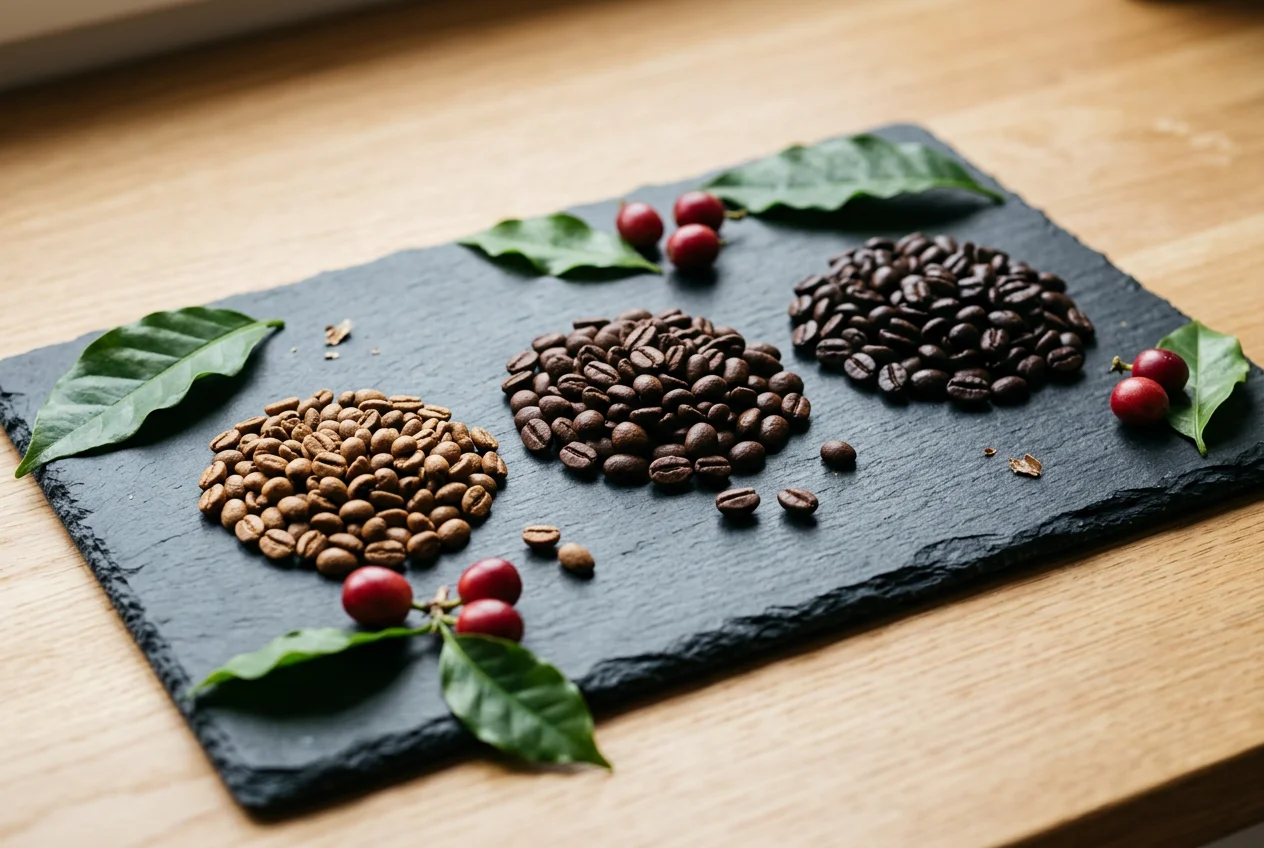
A fun way to start: buy three single origins from different continents, for example Ethiopia, Colombia and Sumatra, and brew them side by side. The differences are striking, and they'll help you understand why blending works.
Seasonality: why single origins come and go
One thing that surprises new specialty drinkers is how often their favorite single origin disappears.
That's because coffee is a seasonal crop. Each country harvests at certain times of year, and a specific farm's lot is only so big.
| Origin | Main harvest (approx.) | Often arrives fresh in shops |
|---|---|---|
| Ethiopia | October–January | Spring to summer |
| Kenya | October–December, plus a smaller fly crop | Spring to summer |
| Colombia | Varies by region, often two harvests | Much of the year |
| Brazil | May–September | Late autumn to winter |
| Central America | November–March | Summer |
Rough guide only. Timing shifts with altitude, weather and shipping.
When a single origin sells out, it's gone until next year's harvest, and next year's will taste a little different.
Blends are the opposite. They're designed so you can buy the same flavor in March and in October. That's exactly why both have a place.
The economics behind it: commodity vs specialty
To understand why blends matter, it helps to look at how the coffee trade works.
The global market splits into two tiers: commodity coffee and specialty coffee.
Commodity coffee
Commodity coffee is roughly 94% of all coffee produced and drunk worldwide.
It's traded on financial exchanges, so its base price is set by markets and speculation rather than by what it actually costs to grow.
For most coffee farmers, commodity prices don't provide a living wage.
The main exceptions are huge, flat, industrial farms, especially in parts of Brazil, where machines can strip trees quickly and cut labor costs enough to make high-volume commodity coffee pay.
Smallholders who pick by hand on steep mountains usually can't survive selling at commodity prices.
Specialty coffee
Specialty coffee is coffee that scores above 80 points on a 100-point professional quality scale. It's only about 6% of world production.
The basic idea behind specialty is simple: pay a real premium for better, carefully grown coffee, so farmers can earn a sustainable, dignified living.
It's far from perfect. Exploitation, power imbalances and inequality still exist in the specialty supply chain. But it remains the main way extra money flows back to farmers who focus on quality.
Share of world coffee (approximate)
Approximate split from my notes. Exact figures vary by year and source.
That context matters for blends. A blend can either support this system, by using good specialty coffees bought at fair prices, or undermine it, by hiding cheap commodity coffee behind specialty marketing.
Why great roasters make blends
Casual specialty drinkers often look down on blends. Meanwhile, some of the best coffee professionals in the world have embraced blending as a serious culinary tool.
Top competitors and master roasters know that combining different high-quality coffees can create flavors nature rarely produces in a single bean.
By pairing contrasting or complementary coffees, they can make flavors play off each other and fine-tune sweetness, acidity, body and aroma.
Beyond competitions, blends serve four practical jobs that keep specialty coffee going.
1. Consistency for cafés and everyday drinkers
Coffee nerds hunting rare micro-lots are a tiny share of coffee drinkers.
Most café revenue comes from espresso drinks, especially lattes, cappuccinos and flat whites.
Regular customers want their morning coffee to be a reliable anchor: comforting, delicious and the same every day.
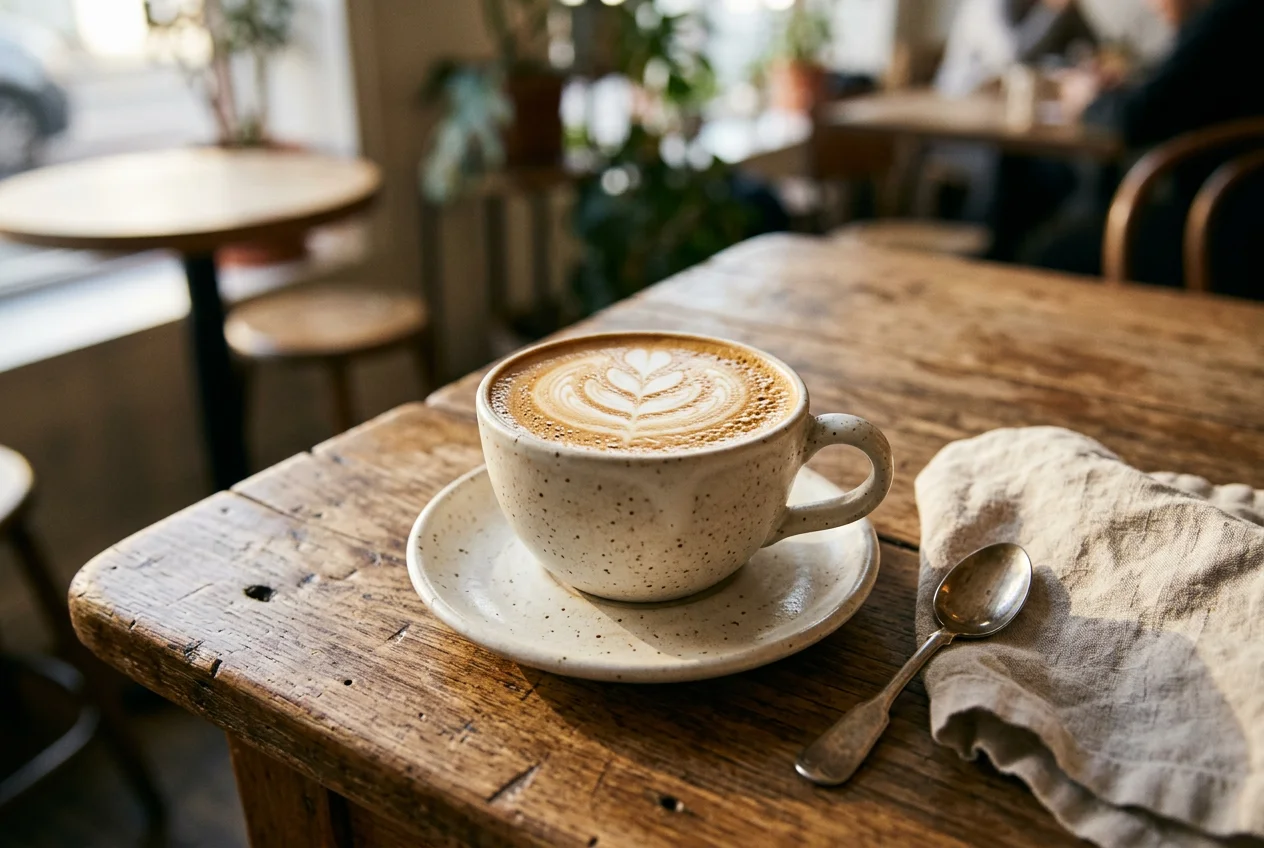
Getting that from one farm all year is almost impossible.
- Soil, rain, temperature and microclimate change every year, so a farm's harvest tastes different from season to season.
- Most producing countries, including Ethiopia, Kenya and Peru, have one main harvest a year. Some Colombian regions harvest up to three times. Once a seasonal lot sells out, it's gone until next year.
Blending solves this. A roaster builds a recipe around a target flavor, for example milk chocolate, cherry and walnut.
During regular cupping, the roaster may find a lot that fits the house blend perfectly. As one seasonal component runs low, they test and swap in a new harvest that keeps the same flavor harmony.
The café gets a seamless, reliable product 365 days a year.
2. Flavor synergy
Blending isn't about averaging two coffees. Done well, the whole becomes more than the sum of its parts.
A roaster often finds two coffees with great individual traits, perhaps one with sparkling fruit acidity and one with heavy, syrupy chocolate, but neither feels complete alone.
Combined in the right ratio, their strengths amplify each other and their weaknesses fade. The result is a balanced, layered, refreshing cup.
I've tasted blends from small specialty roasters where each component added something specific and irreplaceable, and the final cup simply couldn't have come from any single coffee.
3. Less waste of aging green coffee
Green coffee has a limited shelf life. Over months in a normal warehouse, it slowly loses moisture, vibrancy and aroma, eventually tasting papery or woody.
Roasters can freeze green coffee to keep it fresh, but commercial freezers at scale need lots of energy, money and space.
So roasters are always racing to roast and sell their green coffee before quality fades.
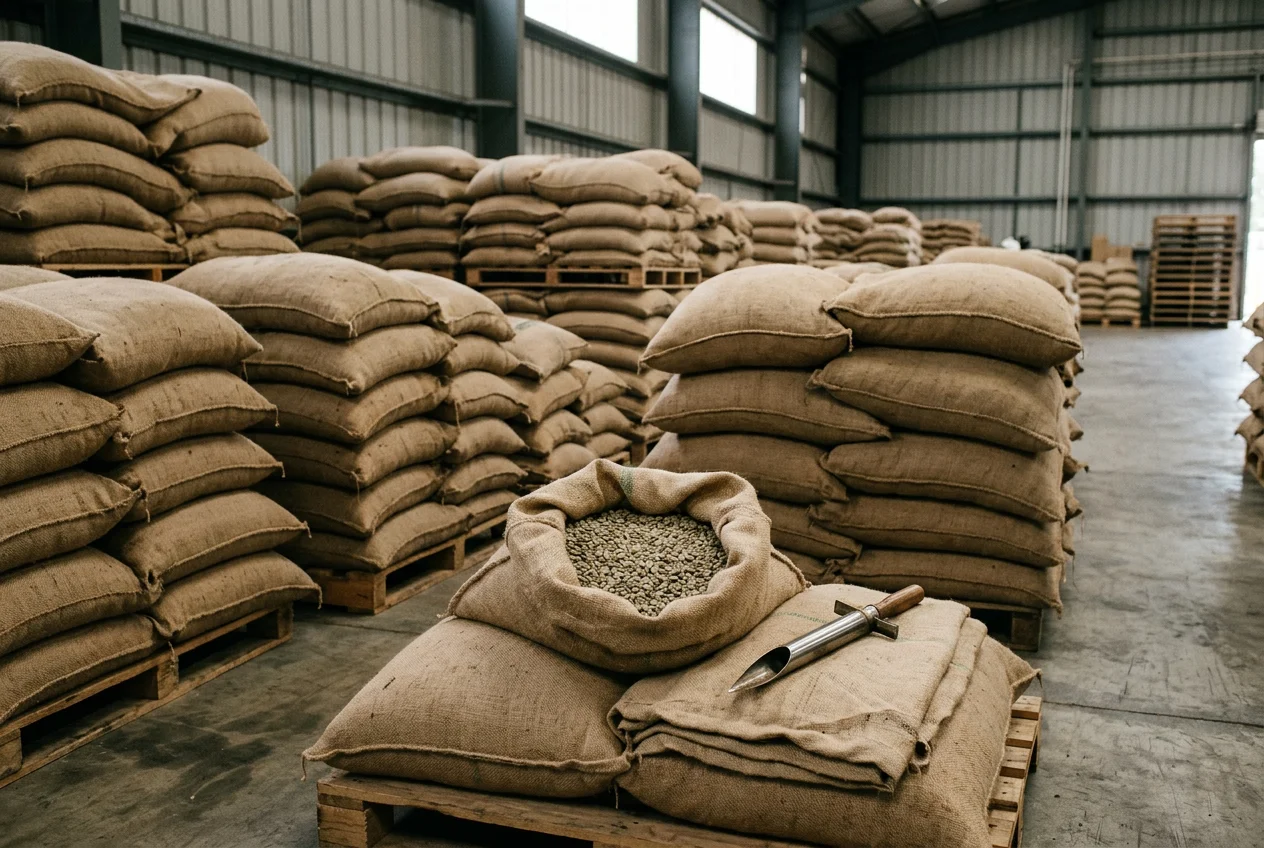
Blending helps. A roaster can pair a slightly older coffee that still has good body and sweetness with a vibrant new harvest full of fresh acidity.
The fresh coffee lifts the blend, and the older coffee provides structure. Perfectly usable crops don't go to waste.
4. Protecting farmers in a bad year
Some of the most ethical roasters make multi-year commitments to buy a producer's whole harvest, every year, whatever happens.
Coffee farming is extremely vulnerable to things farmers can't control:
- Unexpected cold snaps can damage trees with frost.
- Heatwaves and droughts can stress plants and stunt cherries.
- Pest or disease outbreaks can weaken plants and lower bean density.
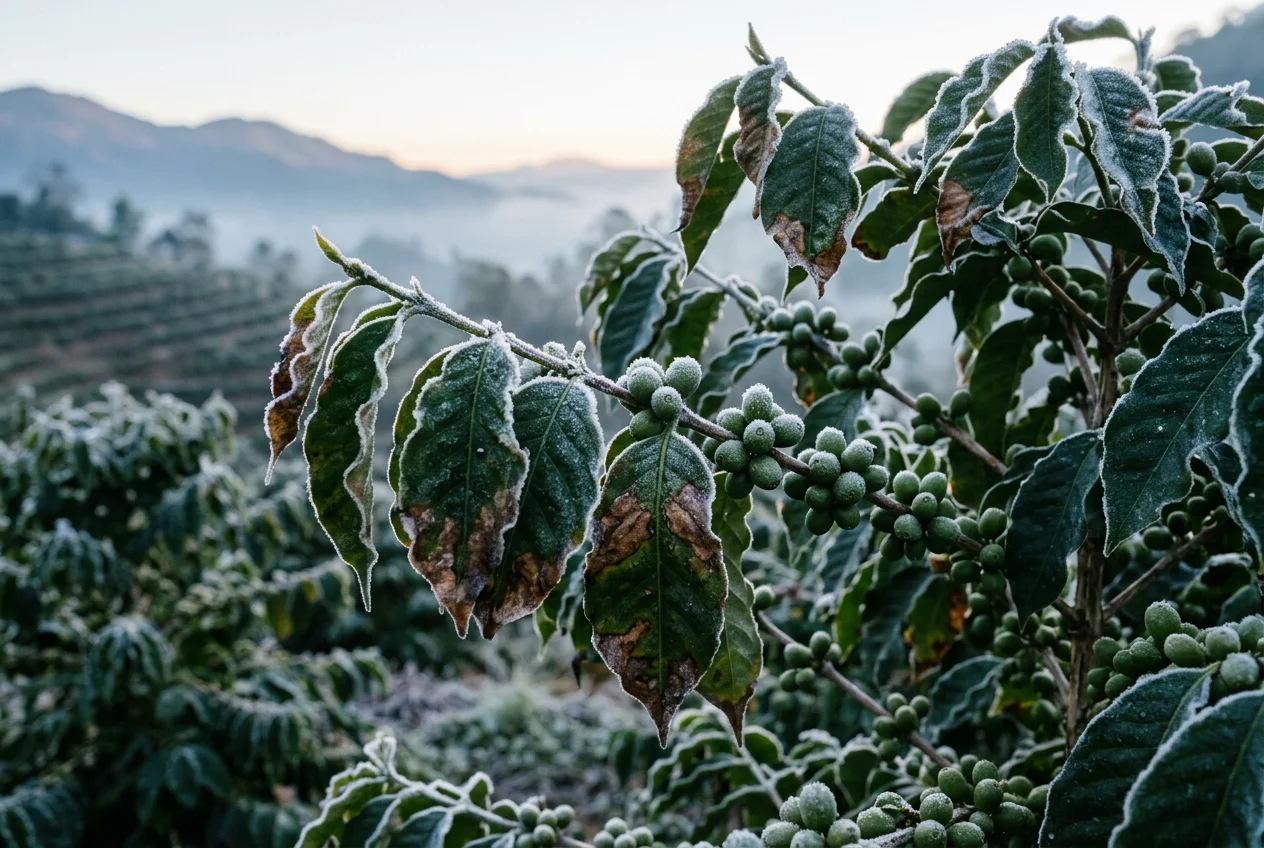
In a tough year, a farm's harvest might drop a few points, say from an 88-point standout to an 84-point lot.
Released as a single origin, critical drinkers might taste the dip and decide the farm has "lost it", hurting the producer's reputation and future prices.
By using that harvest in a well-designed blend, the roaster keeps their promise, pays a fair price, avoids waste and protects the farm's name until the next great harvest.
How roasters design a blend
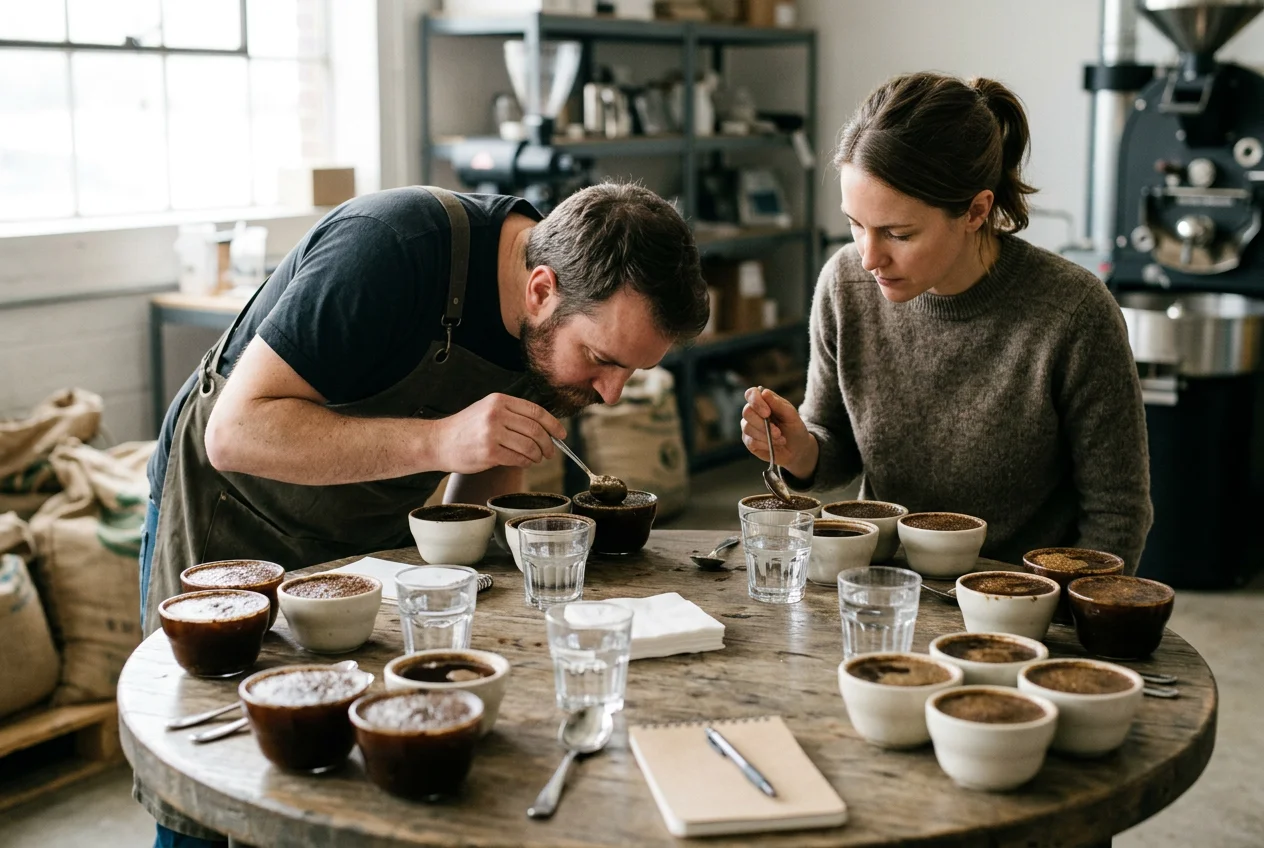
Designing a good blend is closer to cooking than most people imagine. It usually starts with a target flavor, not with a pile of leftover coffee.
- Set the goal.The roaster defines the profile they want, for example sweet milk chocolate, red fruit and a syrupy body for espresso.
- Cup potential components.They taste many green coffees side by side, looking for ones that bring the right sweetness, acidity or body.
- Choose a base.Usually a sweet, balanced coffee forms most of the blend, often from Brazil, Colombia or Central America.
- Add accents.A smaller share of a brighter or more aromatic coffee, like a washed Ethiopian or Kenyan, adds lift and complexity.
- Test ratios.They brew the components in different ratios, as espresso and filter, with and without milk.
- Fix the roast.They decide whether to roast components separately or together, and at what level.
- Keep tasting.Every new harvest, they recheck the recipe and swap components to keep the flavor steady.
It's a lot of work. That's one reason a great house blend is often the roaster's proudest product, even if it gets less attention online than their rare single origins.
| Blend role | Typical origins | What it brings |
|---|---|---|
| Base | Brazil, Colombia, Guatemala | Sweetness, body, chocolate, nuts |
| Brightener | Ethiopia, Kenya, Rwanda | Acidity, fruit, florals |
| Body booster | Sumatra, Brazil naturals, some robusta | Weight, crema, earthy depth |
| Sweetener | Honey or natural processed lots | Fruit sweetness, syrupy texture |
Blends make specialty coffee more affordable
Because blends give roasters more flexibility in sourcing and volume, they can usually be priced more affordably than rare single-farm micro-lots.
That makes specialty coffee accessible to far more everyday drinkers, who can't spend premium micro-lot prices on every bag they brew.
When done with integrity, a blend can be a point of pride rather than an afterthought on a roaster's menu.
What ethical blending looks like
Principled specialty roasters stand out through transparent, fair blending practices.
- Price floors.They refuse to buy any green coffee below a sustainable minimum price, so every blend component pays farmers fairly.
- Standalone quality.They build blends from coffees good enough to sell as single origins, not cheap filler.
- Thinner margins.They accept smaller profits on house blends to keep prices accessible without squeezing farmers.
- Producer transparency.They print the farms, washing stations, varieties and regions in the blend on the bag, so producers get credit.
How blends are abused
Blends have huge potential for great flavor and fairer supply chains. But they're also widely misused to boost profits.
The margin game
A typical specialty roastery sells a high-volume house blend alongside a rotating selection of pricier, limited single origins.
Wholesale café customers want consistency and affordability for milk drinks, so blends often make up the large majority of a roastery's volume, commonly 70 to 80%.
Many roasters start with good intentions and promise ethical sourcing across their whole range.
Over time, rising costs and financial pressure tempt owners to look hard at margins.
A convenient story takes hold: because a blend mixes several coffees, and customers will "drown it in milk anyway", the quality of the green coffee doesn't really matter.
So they quietly downgrade blend components, buying cheap, low-grade coffee at commodity prices, while still charging specialty prices.
The halo effect
This creates a deeply misleading situation.
A roastery might put most of its purchasing volume into cheap, underpaid blend coffee, while spending a small part of its budget on high-scoring, ethically sourced single origins that make up only a small share of sales.
On social media, websites and café signs, the company promotes those few single origins heavily: direct trade relationships, sustainability stories and high cupping scores.
Behind that prestige, the business makes most of its money from cheap, exploitative supply chains.
Treating blends as a dumping ground for defective beans, stale leftovers or cheap filler betrays what specialty coffee is supposed to stand for, and it misleads well-meaning customers.
Single origin vs blend: how they compare
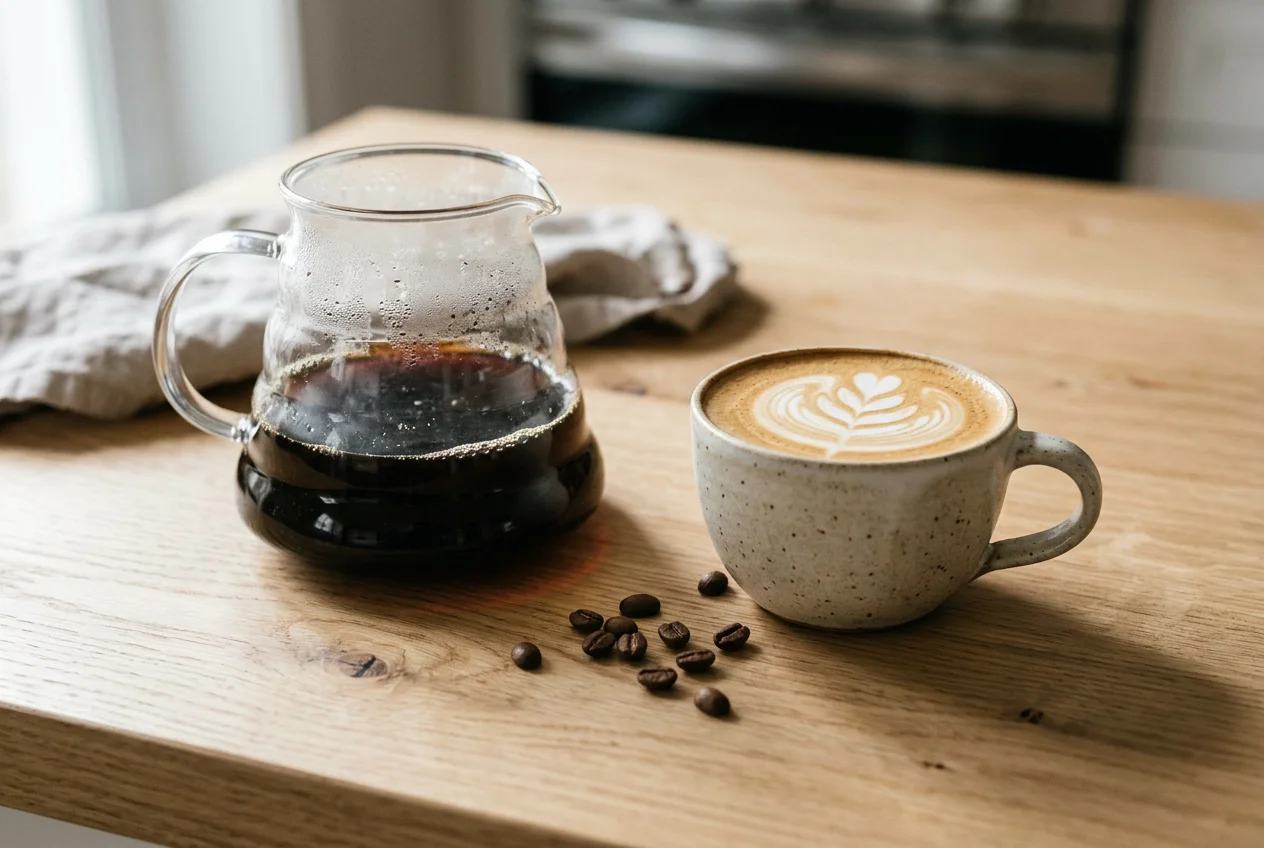
Both have strengths, and both have weaknesses. Single origins can be thrilling but inconsistent. Blends can be wonderfully balanced but sometimes hide what's inside.
Here's how I think about them when I'm deciding what to buy.
| Factor | Single origin | Blend |
|---|---|---|
| Flavor focus | One place's character | Balance and harmony |
| Consistency over the year | Changes with harvests | Designed to stay the same |
| Best for | Exploring, filter coffee, curiosity | Espresso, milk drinks, daily routine |
| Price | Often higher, especially micro-lots | Often more affordable |
| Transparency | Usually detailed | Varies a lot by roaster |
| Surprise factor | High | Low, by design |
| Risk of hidden filler | Low | Higher with careless roasters |
When I reach for a single origin
- When I'm brewing pour-over or AeroPress and want to taste a specific place.
- When I'm curious about a variety, process or new region.
- When I want to compare coffees side by side.
When I reach for a blend
- For espresso at home, especially flat whites and cappuccinos.
- When I want a reliable daily coffee that tastes the same every morning.
- When I'm buying coffee for guests or family who don't want surprises.
Which works best in your brewer?
Your brewing method is one of the easiest ways to decide between a single origin and a blend.
| Brewer | My usual pick | Why |
|---|---|---|
| Pour-over | Single origin | Clarity shows off a coffee's origin |
| Drip machine | Either | Breakfast blends are easy; single origins add interest |
| French press | Blend or chocolatey single origin | Body and sweetness shine in immersion |
| AeroPress | Either | Forgiving and great for experimenting |
| Espresso, straight | Either | Single origins for adventure, blends for balance |
| Espresso with milk | Blend | Designed to stand up to milk |
| Cold brew | Blend or Brazil/Colombia | Chocolatey, sweet, low acid |
| Moka pot | Blend | Rich, classic flavor |
None of these are strict rules. They're simply where I find each style tends to deliver the most enjoyment with the least effort.
Reading a single origin or blend label
The bag tells you a lot if you know where to look. These are the details I check first.
- Country, region and producer. The more specific, the better the traceability.
- Variety. Names like Bourbon, Caturra, SL28 or heirloom hint at flavor.
- Process. Washed, natural or honey can change flavor as much as origin.
- Altitude. Higher-grown coffee is often denser and brighter.
- Components and percentages (for blends). A transparent blend lists what's inside and roughly how much.
- Roast date. Essential for both.
- Intended use. Filter, espresso or omni roast.
If a blend label lists nothing but a name and a flavor description, ask the roaster what's in it. A good one will tell you happily.
For a deeper guide to processing words, see my article on coffee processing methods.
How to choose a great blend
To be an informed coffee drinker, drop the simple idea that single origins are good and blends are bad.
The real measure of a coffee's quality and ethics isn't whether it comes from one country or three. It's the intention, transparency and integrity of the roaster behind it.
- Look for full transparency.Good roasters proud of their blends list the origins, producers or washing stations, varieties, processes and even percentages on the bag. Vague blend labels are often a red flag.
- Research the roaster.Look for roasters who publish transparency reports, share minimum prices paid to farms and treat their blends with the same care as single origins.
- Check the roast date.Freshness matters just as much for blends.
- Match it to your brewer.Espresso blends are built for espresso and milk. Filter blends suit drip and pour-over.
- Challenge your palate.Even if you drink only single origins, buy a well-made blend from a quality-focused roaster.
- Brew it both ways.Try it as espresso and as filter coffee. You'll see how different origins can come together into something sweeter and more balanced than either alone.
If one blend disappoints you, that reflects that roaster's choices, not blending as an art.
For more on reading roast dates, tasting notes and process, see my guide on how to choose coffee beans.
Cost per cup: is single origin worth it?
Single-origin micro-lots can cost a lot per bag. But per cup, the difference is often smaller than you'd think.
A 250 g bag makes roughly 12 to 16 cups at home. Even an expensive bag usually works out cheaper per cup than a café drink.
Blends are often the best value for daily drinking, especially if you make several milk drinks a day.
My approach: a good blend for everyday espresso, and one interesting single origin a month for slow weekend pour-overs. It keeps costs sensible and coffee interesting.
Questions to ask your roaster
Roasters who care about their coffee love these questions. Their answers tell you a lot.
- What's in your house blend?Ask for countries, farms or washing stations, and rough percentages.
- How often do the components change?Good roasters rotate with fresh harvests while keeping the flavor steady.
- What do you pay for blend coffees?Ethical roasters often have a minimum price or publish transparency reports.
- Is this single origin from one farm or many?It helps you understand what "single origin" means on that bag.
- What's it designed for?Espresso, filter or both.
Building your own blend at home
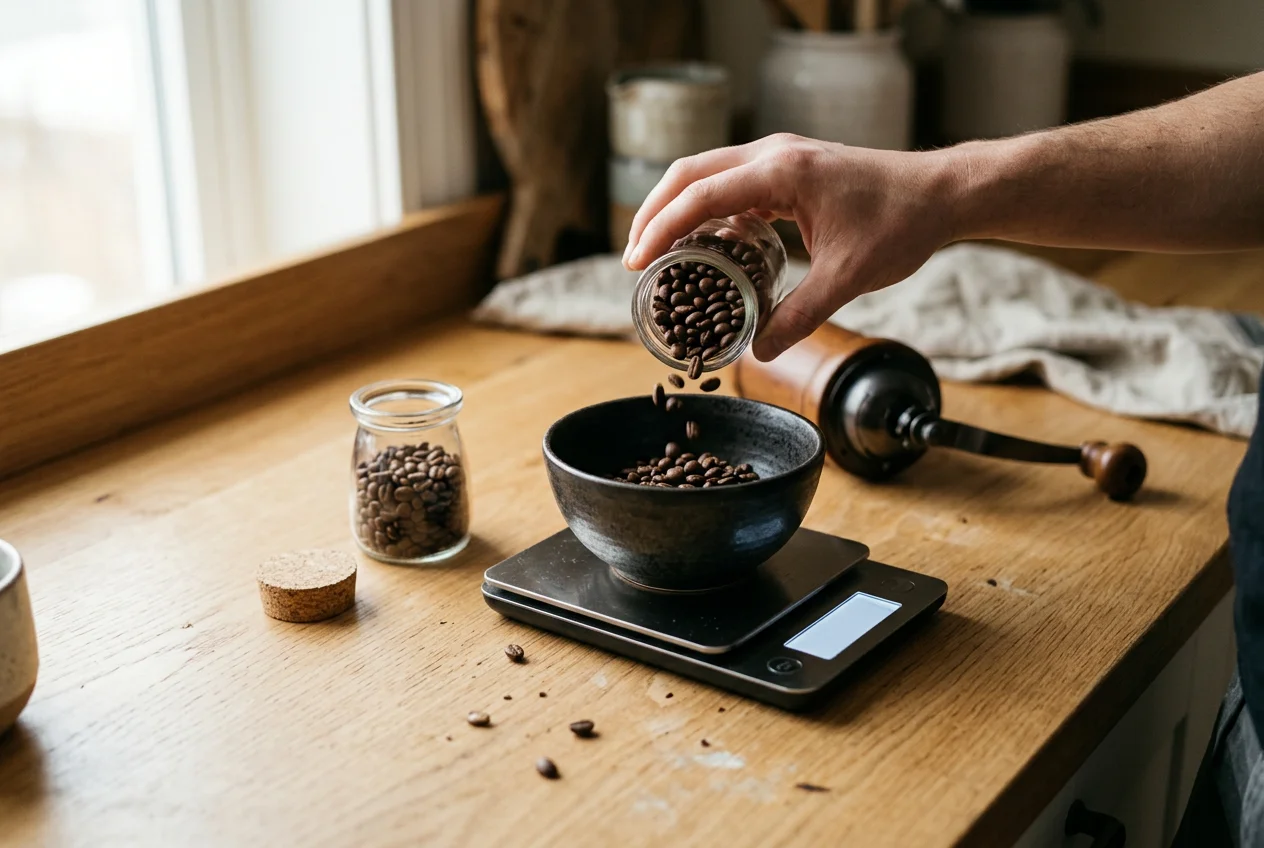
Want to understand blending from the inside? Try it yourself. It's surprisingly fun.
- Pick two contrasting coffees.For example, a bright washed Ethiopian and a chocolatey Brazilian natural.
- Brew each alone first.Note what each does well and what it lacks.
- Try a 50/50 mix.Weigh the whole beans and grind them together.
- Adjust the ratio.Try 70/30 each way. Small changes can shift the cup a lot.
- Taste with and without milk.Blends often reveal their purpose with milk.
- Write down your favorite.You've just designed your own house blend.
When I first did this, a 70/30 Brazil and Ethiopia mix made a better flat white than either coffee alone. The Brazil brought body and chocolate, the Ethiopia added a pop of fruit that cut through the milk.
Our tip: Keep the roast levels close when blending at home. Mixing a very light and a very dark roast often tastes disjointed, because they extract at different speeds.
Single origins and blends in espresso
Espresso is where the debate gets most heated.
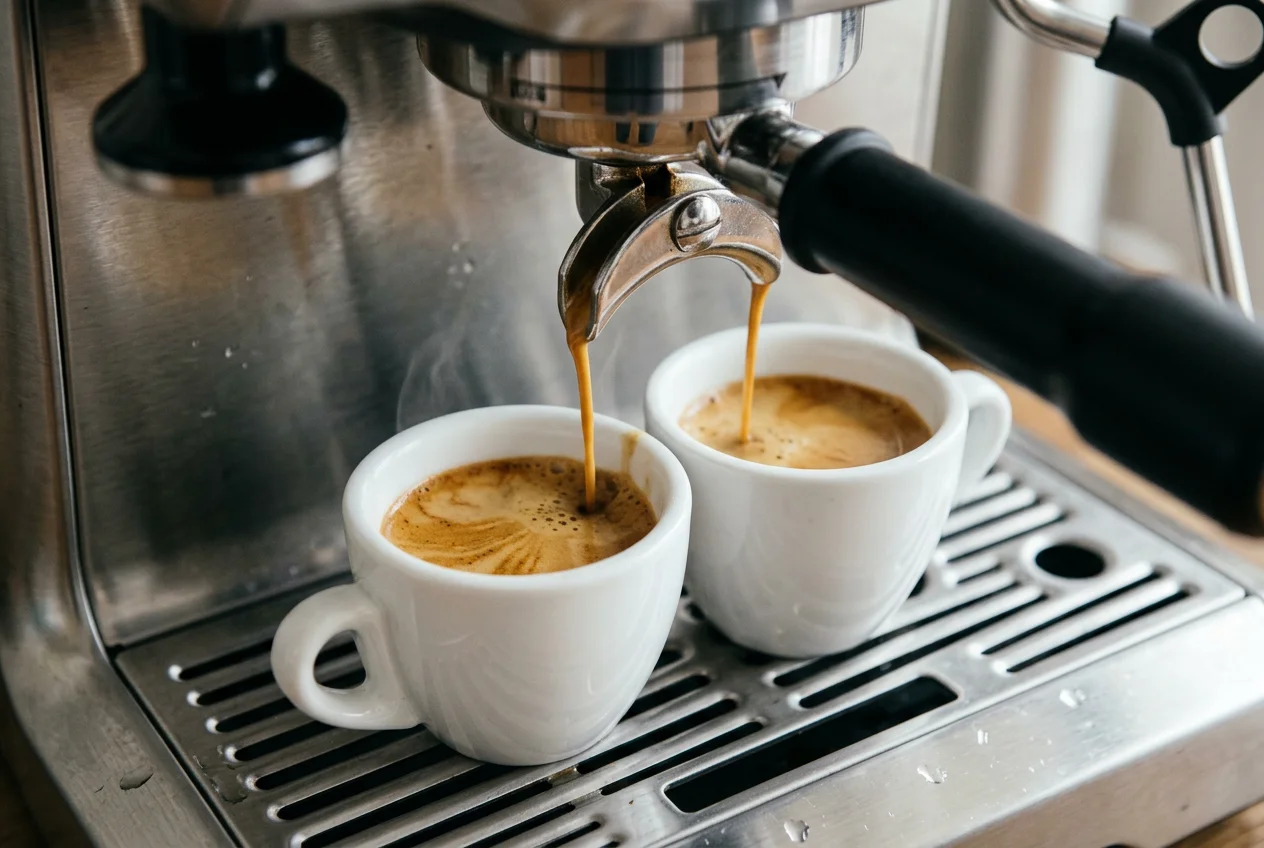
Single-origin espresso can be stunning. A bright Kenyan or floral Ethiopian shot can taste like fruit juice. But it's often intense and acidic, and it can be hard to dial in.
Blends were traditionally built for espresso. They usually aim for sweetness, body and chocolate notes that work beautifully with milk and forgive small changes in grind or dose.
| Espresso style | Single origin | Blend |
|---|---|---|
| Straight shot | Can be exciting, bright, unusual | Balanced, sweet, comforting |
| With milk | Fruit can clash or get lost | Usually designed for milk |
| Ease of dialing in | Often harder | Usually easier |
| Day-to-day consistency | Varies by bag | High |
My advice: use a well-made blend as your everyday espresso, and buy a single-origin espresso now and then when you want something special.
Freshness matters for both
Whether you buy a single origin or a blend, freshness is just as important.
Look for a roast date, buy whole beans if you can, and store them in a sealed, opaque container away from heat and light.
Blends built for espresso usually taste best after a week or so of rest. Light-roasted single origins for filter can often be brewed sooner and stay vibrant for several weeks.
And remember that the green coffee's age matters too. A great roaster rotates its blend components with fresh harvests, which is why the best house blends taste lively all year.
The future of blends and single origins
I think the old "single origin good, blend bad" divide is slowly fading.
More specialty roasters now publish full details of their blends, including farms and percentages. That transparency makes blends easier to trust and more interesting to explore.
Climate change is also playing a role. Harvests are becoming less predictable, with more frost, drought and disease. Blends give roasters flexibility to keep buying from farmers through bad years without disappointing customers.
At the same time, single origins are getting more specific than ever. Micro-lots from one plot, one variety and one experimental process are common on specialty menus.
And some roasters now make "single-origin blends", combining several lots from one country or even one farm to build a fuller picture of that place.
The result is good news for coffee drinkers: more choice, more information and more great coffee, whichever label you prefer.
Myths about single origins and blends
"Single origin means one farm"
It only guarantees one country. Many single origins combine hundreds of farms and several varieties.
"Blends are made from leftovers"
Some are. But the best blends use coffees good enough to sell on their own, chosen to work together.
"Single origins are always more ethical"
Ethics depend on what the roaster pays and how transparent they are, not on the label. An ethical blend beats an exploitative single origin.
"Blends are only for milk drinks"
Many filter blends are designed to be balanced and sweet black. And some blends make lovely straight espresso.
"Real coffee lovers only drink single origins"
Many of the world's best baristas and roasters build and drink blends. Taste decides, not labels.
My verdict
After years of switching between camps, here's where I've landed.
Single origins are the best way to explore coffee and learn how place, variety and process shape flavor. They're my favorite for filter brewing on slow mornings.
Blends are the best way to get reliable, balanced, affordable coffee every day, especially for espresso and milk drinks.
If you've only ever drunk one side, try the other this month. Buy a carefully made blend if you're a single-origin loyalist, or a single origin if blends are all you know. Brew it a few different ways and give it a week.
You may find, as I did, that the best coffee drawer has room for both.
The thing that matters most isn't the label. It's the roaster. Choose roasters who buy good coffee, pay fairly and tell you exactly what's in the bag, and you'll drink well whichever you pick.
Frequently asked questions
What does single origin coffee mean?
Strictly, it means all the beans come from one country. Many single origins are more specific, naming a region, washing station or farm, but the term alone only guarantees one country.
What is a coffee blend?
A blend combines coffees from different origins, farms or lots on purpose, usually to create consistency, balance or a particular flavor.
Is single origin better than a blend?
Not automatically. Single origins are great for exploring specific flavors, while blends excel at balance and consistency. Quality depends on the green coffee and the roaster.
Why are blends used for espresso?
Blends can be designed for sweetness, body and chocolate notes that work well with milk, and they stay consistent all year, which cafés need.
Are blends cheaper than single origins?
Often, yes. Roasters have more flexibility in sourcing blend components, which helps keep prices lower.
Can a single origin coffee be a blend?
Yes. Many single origins mix coffee from many farms and several varieties, and some roasters combine two lots from one country and call it a blend.
What should I look for on a blend label?
The countries, farms or washing stations in the blend, the varieties and processes, a roast date, and ideally the percentage of each component.
Do blends contain low-quality coffee?
Some do, especially cheap supermarket blends or careless roasters. Good roasters build blends from high-quality coffees and say so on the bag.
Is single origin espresso good?
It can be exciting and fruity, but it's often more acidic and harder to dial in. Many people prefer blends for daily espresso and milk drinks.
How can I make my own coffee blend?
Choose two contrasting coffees with similar roast levels, brew each alone, then mix them by weight in different ratios until you find a balance you like.
Why does my favorite single origin disappear?
Most single origins are seasonal. When a lot sells out, it's gone until the next harvest, which is why roasters rotate them.
Are single origins more ethical?
Not necessarily. Ethics depend on the prices paid and the transparency of the roaster, whether the coffee is a single origin or a blend.

- Michael Reynolds, personal notes from tastings, cupping and roaster conversations
- Protocols and Best Practices, Specialty Coffee Association
- Coffee Varieties Catalog, World Coffee Research
- Coffee Quality Institute, quality and grading resources
Related guides
How to choose coffee beans Coffee processing methods Arabica vs robustaWritten by Michael Reynolds. Last updated November 16, 2026.