How Decaf Coffee Is Made: The Methods, the Myths and How to Brew Great Decaf
Decaf has a bad reputation, and most of it is earned by stale, badly roasted beans. Here is how caffeine actually gets removed from coffee, how much is left, why decaf often tastes flat, and how to make decaf you genuinely enjoy.
We choose products independently. We may earn a commission through links on this page; your price stays the same. Affiliate policy
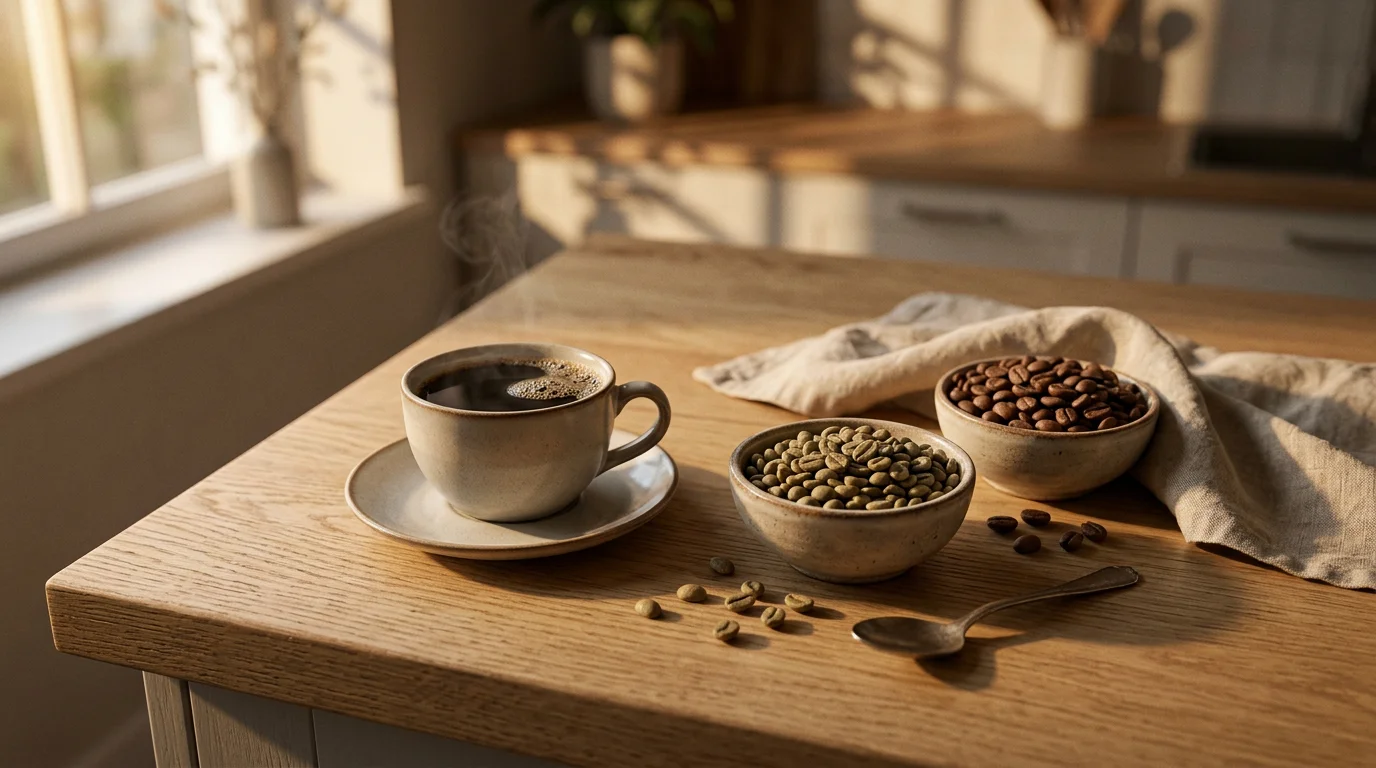
Decaf is made from green, unroasted beans. They're steamed or soaked to open them up, then the caffeine is pulled out with a solvent (ethyl acetate or methylene chloride), with water and carbon filters (Swiss Water) or with supercritical CO2. The beans are dried and then roasted like normal coffee.
Decaf isn't caffeine-free. A typical cup usually has just a few milligrams, often under 10 mg, compared with roughly 80 to 100 mg or more in regular coffee.
It often tastes flat because processing makes the beans porous, so they roast unevenly and go stale fast. Buy from roasters who care about decaf, freeze it in portions and grind it fresh.
Why decaf deserves a second chance
Decaf is oddly divisive. Mention it among coffee people and someone will joke "death before decaf".
Honestly, the skepticism is understandable. Most decaf served in cafés, restaurants and homes is disappointing: flat, woody, burnt or stale.
But I've come to see dedicated decaf drinkers as some of the purest coffee lovers around. They drink coffee for flavor and ritual, not for a chemical boost.
And when decaf is sourced, processed, roasted and brewed well, it can be every bit as complex and enjoyable as regular specialty coffee.
I drink it most afternoons now. A pour-over at 3 p.m. that doesn't wreck my sleep is one of my favorite small pleasures.
If you only see coffee as a caffeine delivery system, you miss everything else: where it grows, how it's processed, how it's roasted and how you brew it. Decaf keeps all of that.
A short history of decaf
Commercial decaf began in 1905 in Bremen, Germany, with a coffee merchant named Ludwig Roselius.
His story goes like this: a shipment of green coffee got soaked in seawater during transport. When he roasted the salvaged beans, they had lost most of their caffeine but still tasted surprisingly good.
Roselius patented an industrial method. Green beans were steamed or soaked in hot water or brine to swell them, then treated with benzene, a chemical solvent that bonded with the caffeine and carried it out.
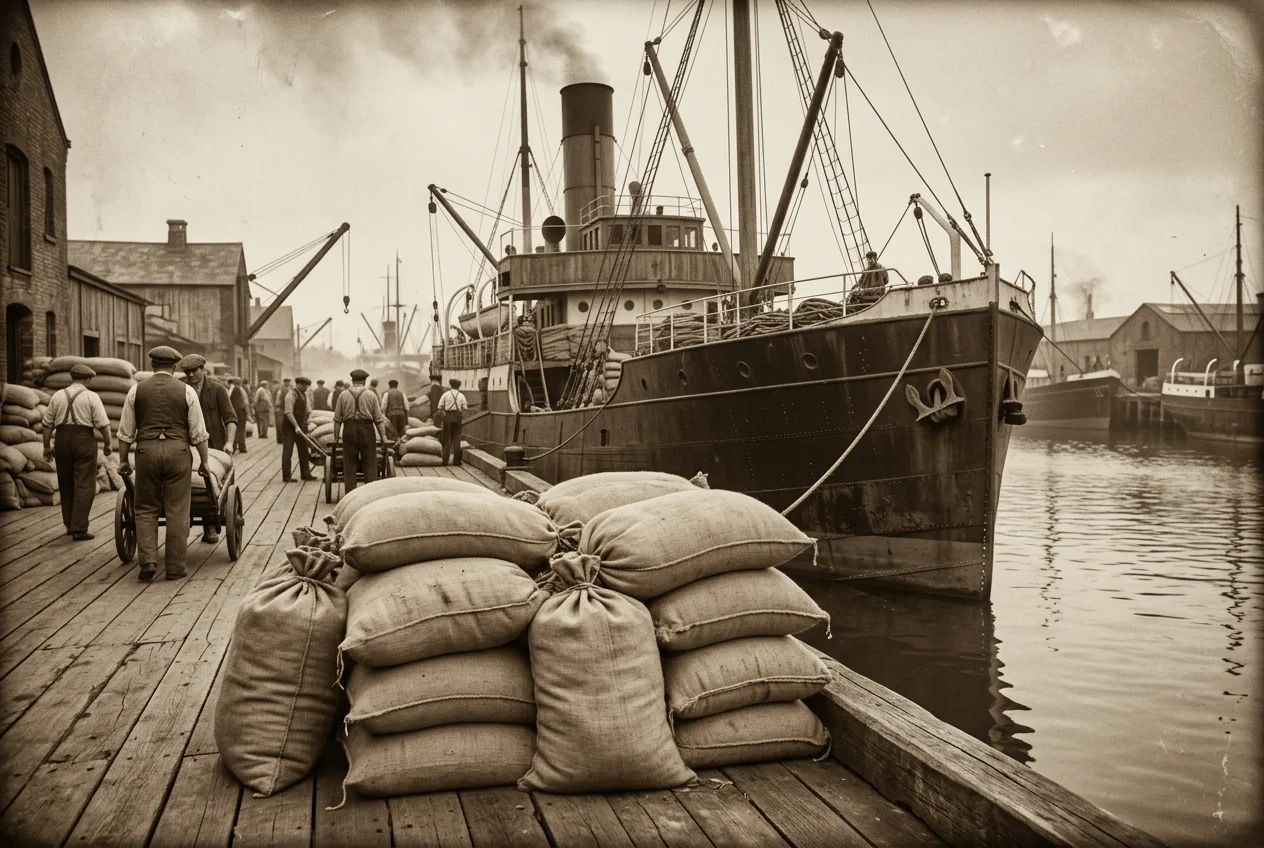
He founded a company called Kaffee HAG to sell it. A sister brand, Sanka, from the French "sans caféine" (without caffeine), later made decaf hugely popular in the United States.
Early ads promoted decaf as the healthier choice. The irony is that benzene was later identified as a serious carcinogen and banned from food processing.
Benzene is long gone. But Roselius's basic blueprint still underpins every decaf method today:
- Open the bean.Hydrate the dense green seed with steam or hot water so the inside becomes reachable.
- Extract the caffeine.Use a solvent, water or CO2 to pull caffeine out selectively.
- Remove the extraction agent.Rinse, steam or depressurize so nothing unwanted stays behind.
- Dry the beans.Bring moisture back down so the green coffee can be stored, shipped and roasted.
Through the 20th century, decaf became an everyday product. Instant decaf in jars sat in kitchens and diners everywhere, and for many people that's still what "decaf" means.
New methods arrived over time. Water-based decaffeination was developed in Switzerland and commercialized in the 1980s, and supercritical CO2 extraction was developed in Germany in the 1970s.
Today the picture is changing again. Specialty roasters treat decaf as a coffee in its own right, with named origins, tasting notes and dedicated roast profiles.
Step one in every method: opening the bean
Whatever the method, decaffeination always starts with green coffee, never roasted coffee.
Raw coffee seeds are extremely dense. Nothing can get in or out until they've been softened and swollen.
So the beans are steamed or soaked first. Water makes them expand, opening up their internal structure so the caffeine can be reached.
This step matters for flavor later. Soaking and stripping compounds changes the bean's structure for good, and that's part of why decaf behaves differently in the roaster.
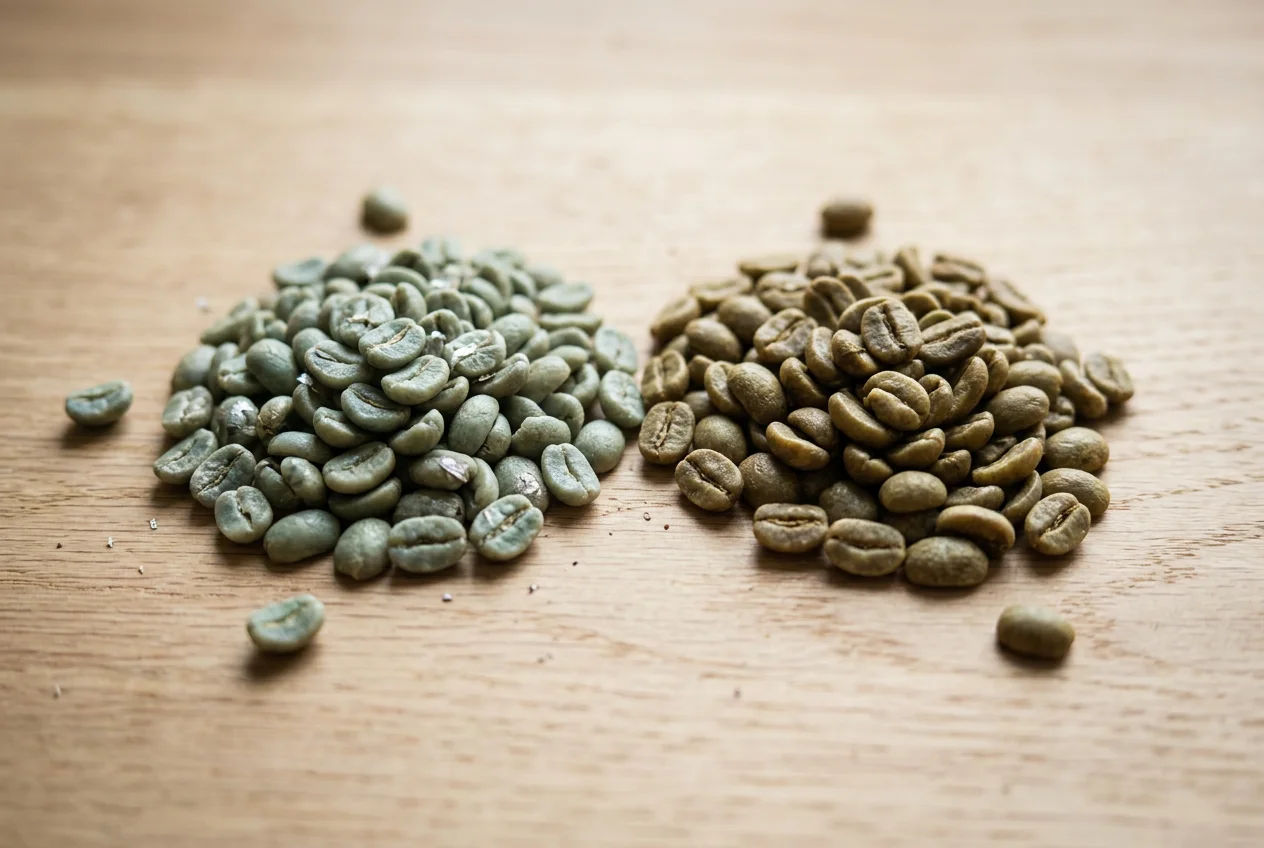
| Feature | Regular green coffee | Decaf green coffee |
|---|---|---|
| Color | Bright green to blue-green | Duller olive or brownish-green |
| Structure | Dense, intact | More porous, more brittle |
| Moisture behavior | Predictable | Changed by processing |
| Roasting | Standard profiles work | Needs a gentler, tailored profile |
Method 1: solvent decaf
After benzene was banned, chemical solvents remained the main way to decaffeinate. Today there are two you'll see.
Methylene chloride (dichloromethane)
Methylene chloride, also called dichloromethane, became the standard solvent after benzene.
Steamed green beans are rinsed with it, the solvent bonds with the caffeine, and the beans are then steamed and dried to drive the solvent off.
It's an industrial chemical you wouldn't want to consume in concentrated form. But the amounts left in coffee are tiny, and they're regulated.
In the United States, the FDA allows up to 10 parts per million of residual methylene chloride in decaffeinated roasted coffee. European rules are stricter, at 2 milligrams per kilogram.
In my notes from roaster conversations, well-run facilities typically end up far below those limits. Roasting, at temperatures well above the solvent's boiling point, drives off even more.
For context, people breathe in small amounts of it from the air in many cities every day.
Still, the name sounds scary on a label. That's a big reason it has fallen out of favor in specialty coffee.
Ethyl acetate (the "sugarcane process")
Ethyl acetate has become the friendlier-sounding successor. You'll often see it on bags as "sugarcane process" or "natural decaf".
It's an ester that occurs naturally in ripening fruit, and the version used for coffee is often made by fermenting sugarcane.
Yes, concentrated ethyl acetate is also used in some nail polish removers. In food processing, though, it's considered benign.
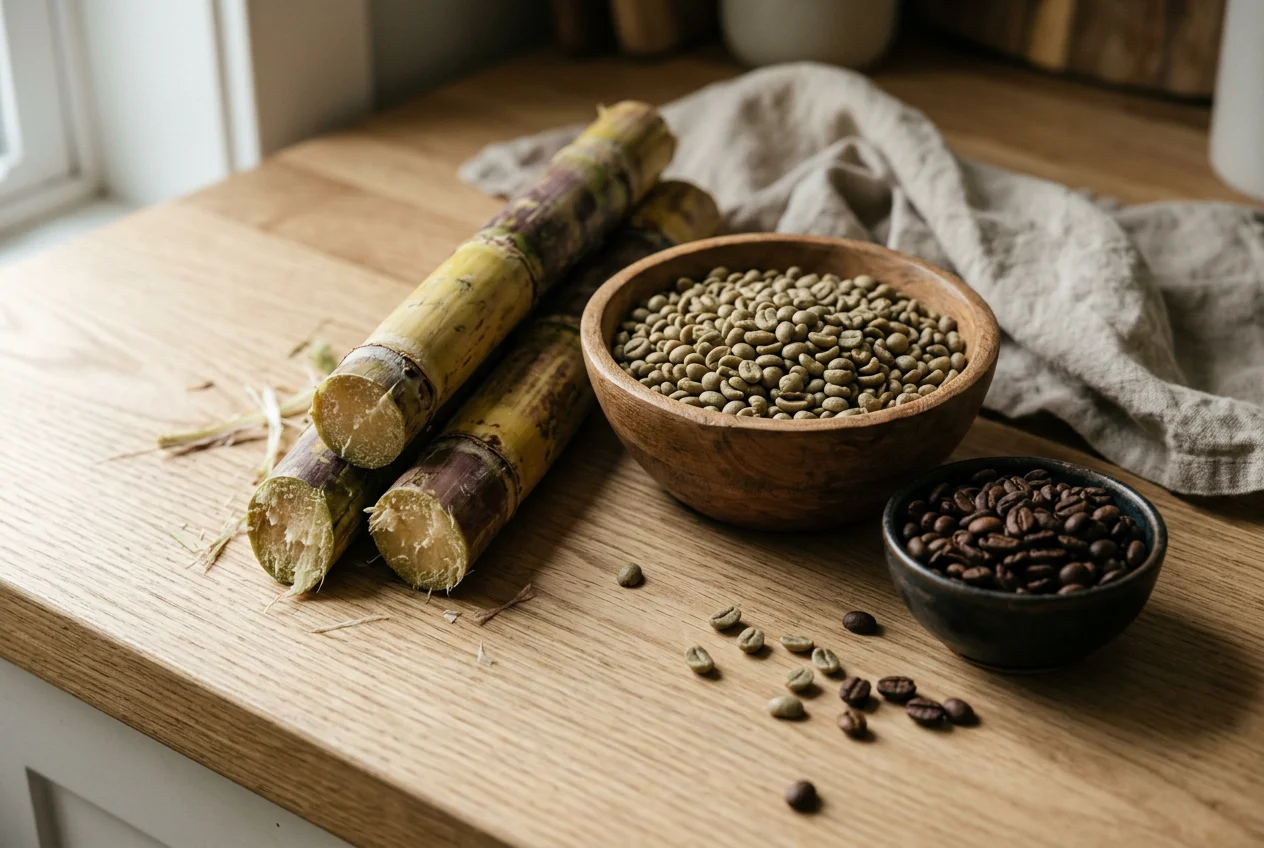
- Steam the green beans.This opens their pores.
- Wash with ethyl acetate.Repeated washes dissolve the caffeine.
- Steam again.A second steaming removes leftover solvent.
- Dry the beans.They're ready to ship and roast.
The caffeine that's removed is captured and sold separately.
Colombia produces a lot of both specialty coffee and sugarcane, so much Colombian decaf uses this method. Many people, me included, find it often leaves a gentle sweetness in the cup.
Method 2: the Swiss Water process
The Swiss Water process uses no added solvents. It relies on water, solubility, osmosis and activated carbon filters.
It's clever, and it's easiest to follow step by step.
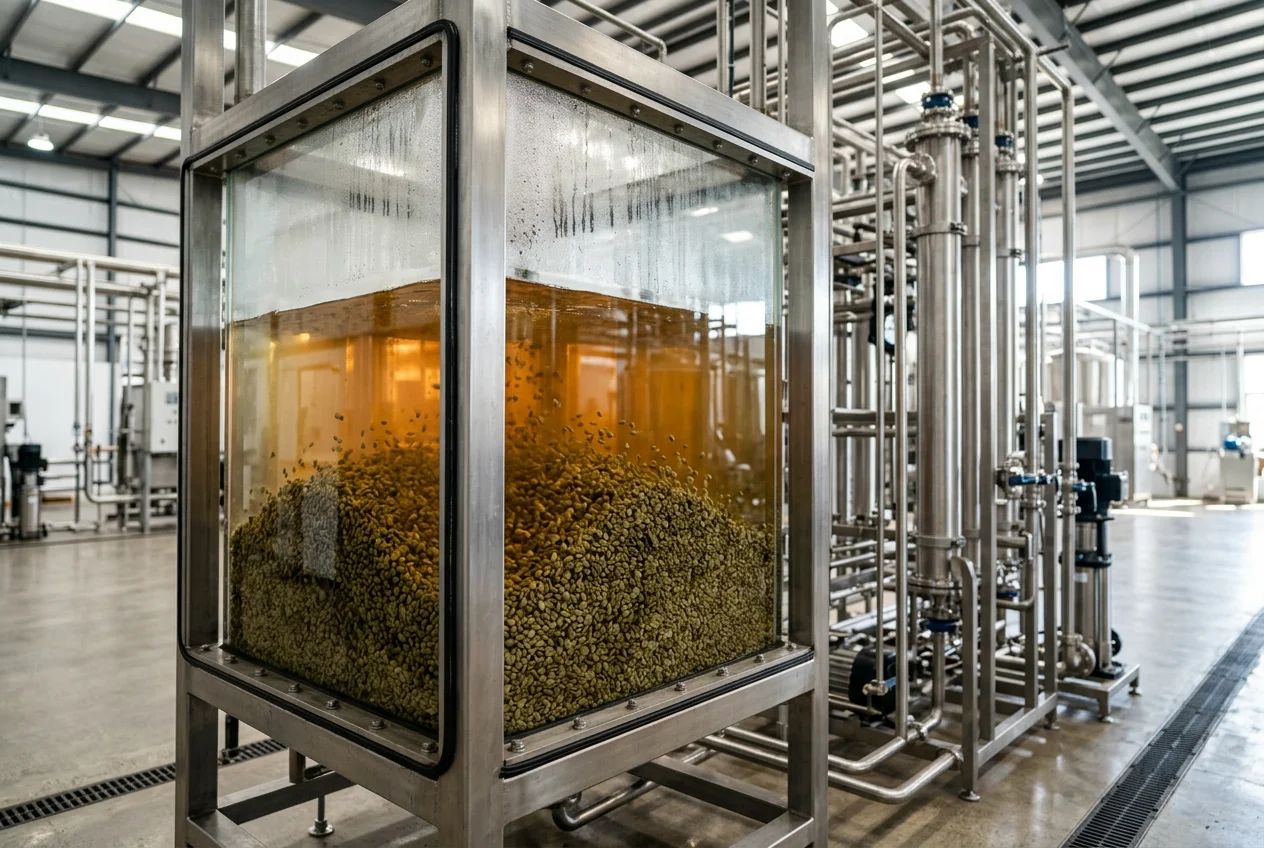
- Make the flavor-rich water.A first batch of green beans is soaked in hot water until both caffeine and flavor compounds (sugars, acids, aromatics) dissolve out.
- Discard those beans.The stripped beans are thrown away. What's left is a liquid full of coffee solids, called green coffee extract.
- Filter out the caffeine.The extract runs through activated carbon filters sized to trap caffeine molecules while letting smaller flavor compounds pass.
- Soak fresh beans.New green beans go into this caffeine-free, flavor-saturated water.
- Let osmosis do the work.The water is already full of flavor compounds, so flavor stays in the beans. But it has no caffeine, so caffeine moves out of the beans into the water.
- Repeat until done.The cycle runs across several tanks until almost all the caffeine is gone. Caffeine captured in the filters is sold to drink and pharmaceutical companies.
Many shoppers prefer Swiss Water because "water" sounds reassuring.
That's fine, but I want to be clear: all three main methods produce safe, high-quality coffee when they're done carefully. The method on the bag matters less than the quality of the beans and the roast.
Method 3: supercritical carbon dioxide
The third method uses carbon dioxide in a special state.
Normally, CO2 goes straight from solid (dry ice) to gas without becoming liquid. But at controlled high temperatures and very high pressures inside special vessels, it becomes a "supercritical" fluid.
In that state, it's as dense as a liquid but flows and spreads like a gas.
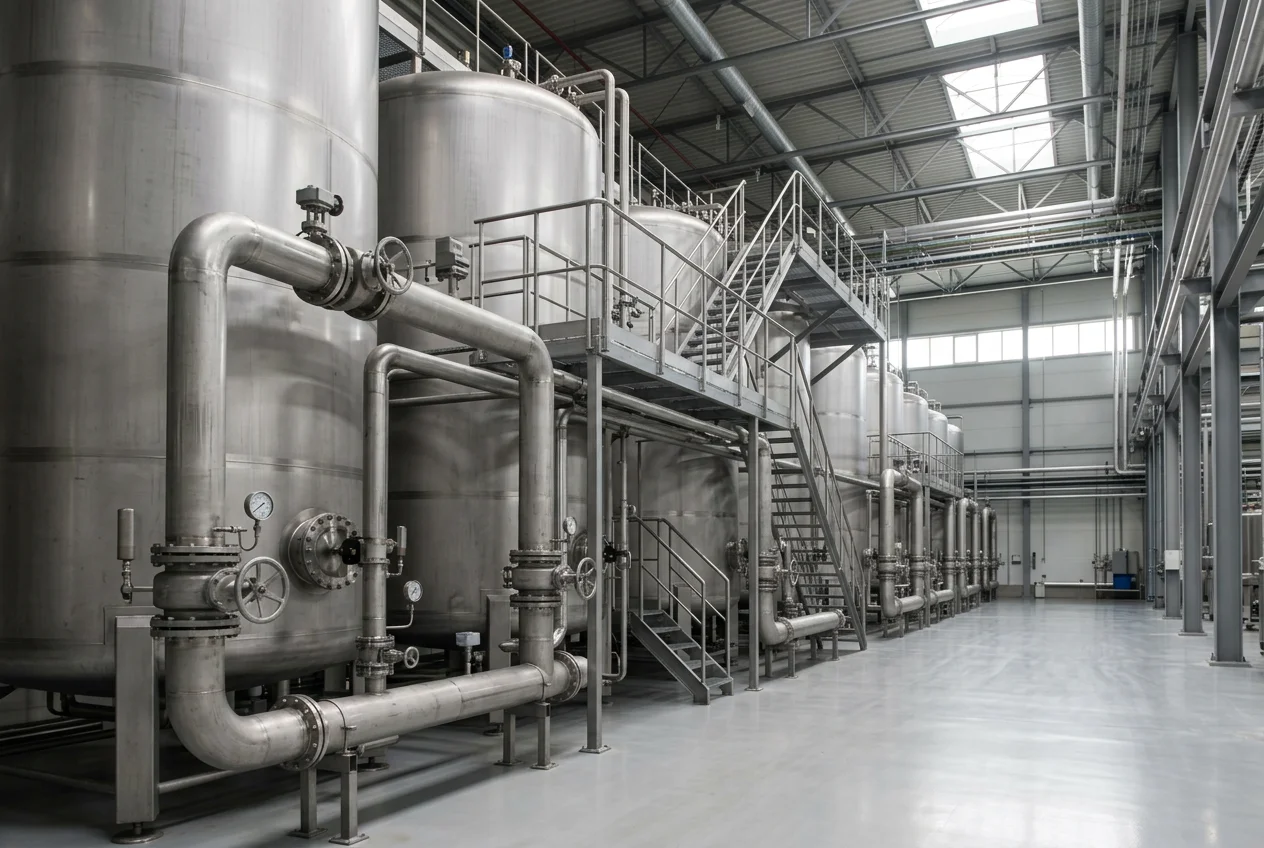
Mixed with water, supercritical CO2 seeps into the swollen green beans. It bonds selectively with caffeine and leaves most of the larger flavor-carrying carbohydrates and proteins in place.
When extraction is finished, the pressure is released. The CO2 turns back into a gas, separates from the caffeine and is captured to be used again in a closed loop.
Because CO2 is already in the air we breathe, this method carries little stigma. It's widely seen as an efficient, clean industrial technique, and it's often used for large volumes.
| Method | What removes caffeine | You may see on the bag | Typical reputation |
|---|---|---|---|
| Methylene chloride | Chemical solvent | "Decaf" or "European process" | Effective, name puts people off |
| Ethyl acetate | Solvent from sugarcane | "Sugarcane" or "natural decaf" | Often sweet, popular in specialty |
| Swiss Water | Water and carbon filters | "Swiss Water" or "water process" | Chemical-free, very popular |
| Supercritical CO2 | Pressurized CO2 | "CO2 process" | Clean, efficient, large scale |
Where decaf beans come from
Decaf isn't a type of coffee plant. Any green coffee can be decaffeinated, from cheap commodity beans to excellent single-farm lots.
That's why decaf quality varies so much. The process can't add flavor that wasn't there to begin with.
For decades, many companies sent their lowest-grade beans to be decaffeinated. Nobody expected much from decaf, so few people invested in it.
That's changing. Specialty roasters now choose good coffees on purpose, send them to a decaf facility, and roast them with their own profile.
You'll see more and more single-origin decafs on shelves: Colombia, Peru, Mexico, Ethiopia and Brazil are common.
Who actually does the decaffeinating
Roasters almost never decaffeinate coffee themselves. It takes industrial equipment and a lot of volume.
Instead, green coffee is shipped to specialized decaf plants, often in Germany, Switzerland, Canada, Mexico or Colombia, and then sent on to roasters.
That extra journey and handling is one more reason decaf costs a little more than the same coffee with its caffeine.
| Common decaf origin | Method you often see | Typical cup |
|---|---|---|
| Colombia | Ethyl acetate (sugarcane) | Sweet, caramel, gentle fruit |
| Mexico | Water process | Nutty, chocolate, mild |
| Peru | Swiss Water | Soft, sweet, cocoa |
| Ethiopia | Swiss Water or ethyl acetate | Floral, fruity, lighter body |
| Brazil | CO2 or solvent | Nutty, chocolatey, low acidity |
Typical pairings I see on shelves, not fixed rules.
What happens to the caffeine?
People are often surprised to learn the caffeine isn't thrown away.
Caffeine removed during decaffeination is valuable. It's recovered, purified and sold to companies that make soft drinks, energy drinks, medicines and even cosmetics.
In the Swiss Water process, caffeine is captured in the carbon filters and recovered when the filters are regenerated. With CO2 and solvent methods, it's separated from the extraction agent.
So in a strange way, your evening decaf may be helping caffeinate someone else's morning energy drink.
Our tip: If sustainability matters to you, look for decaf facilities that reuse their water, carbon or CO2 in closed loops. Many do, and roasters often mention it on their websites.
How much caffeine is in decaf?
Decaf is not caffeine-free. Trace amounts always remain.
What "99.7% caffeine-free" really means
Many bags say "99.7% caffeine-free". This comes from a common European standard: coffee can be called decaf when caffeine is no more than 0.3% of the dry weight.
Regular arabica contains roughly 1 to 2% caffeine by weight. So "99.7% caffeine-free" means the beans themselves are at least 99.7% something other than caffeine.
It doesn't mean 99.7% of the original caffeine was removed. Depending on the starting beans and standard, the real reduction is often in the range of about 80 to 97%. In the US, decaf is generally expected to have about 97% of its caffeine removed.
What's in your cup
In practice, an 8 oz (240 ml) cup of brewed decaf usually has well under 20 mg of caffeine, and often less than 10 mg.
A study in the Journal of Analytical Toxicology tested decaf drinks from different coffee shops. Most contained some caffeine, with 16 oz servings measuring up to about 14 mg.
Even espresso stays low. In my own notes, a double shot of ethyl acetate decaf (about 18 g of coffee into 36 g of espresso) came in around 4 to 5 mg, compared with roughly 100 to 150 mg in a regular double.
Typical caffeine per serving (approximate)
Ranges vary widely with beans, dose and brew method. Bars are scaled roughly for comparison.
If you're very sensitive, or avoiding caffeine for medical reasons, keep in mind that several cups of decaf can add up. Five to ten cups could approach the caffeine in one regular cup.
Is decaf still good for you?
Decaf removes the obvious caffeine side effects: trouble falling asleep, lighter deep sleep, jitters and anxiety for sensitive people.
But it keeps most of the other compounds in coffee.
The most important are chlorogenic acids, a group of polyphenols that coffee plants make to defend themselves. Well-processed decaf still contains plenty of them.
Research on diet and the gut microbiome suggests polyphenols like these can act as food for beneficial gut bacteria. That supports a more diverse microbiome, which is linked to wider metabolic and immune benefits.
I'm not a doctor, and the science is still developing. But it's reassuring that good decaf lets you enjoy coffee in the afternoon or evening without giving up much besides the caffeine.
Decaf and your stomach
Some people switch to decaf because regular coffee upsets their stomach. Caffeine can play a part, so decaf helps some people.
But coffee contains many other compounds that affect digestion, so decaf doesn't solve it for everyone. If acidity is the issue, a medium roast decaf with chocolatey, nutty notes is usually the gentlest choice.
Decaf and hydration
Without much caffeine, decaf behaves much like any other warm drink in terms of fluid. It's an easy way to keep a coffee habit going late in the day without thinking twice.
Our tip: If you love coffee but sleep badly, try a simple rule: regular coffee before lunch, decaf after 2 p.m. It's the easiest change I've ever made to my sleep.
Why so much decaf tastes bad
The main reason decaf tastes flat, woody or burnt is what processing does to the bean.
Steaming, soaking and stripping out compounds permanently changes the green bean's structure. It comes out duller in color and much more porous and brittle.
It roasts differently
Because the beans' density and moisture have changed, heat moves through them faster and differently in the roaster.
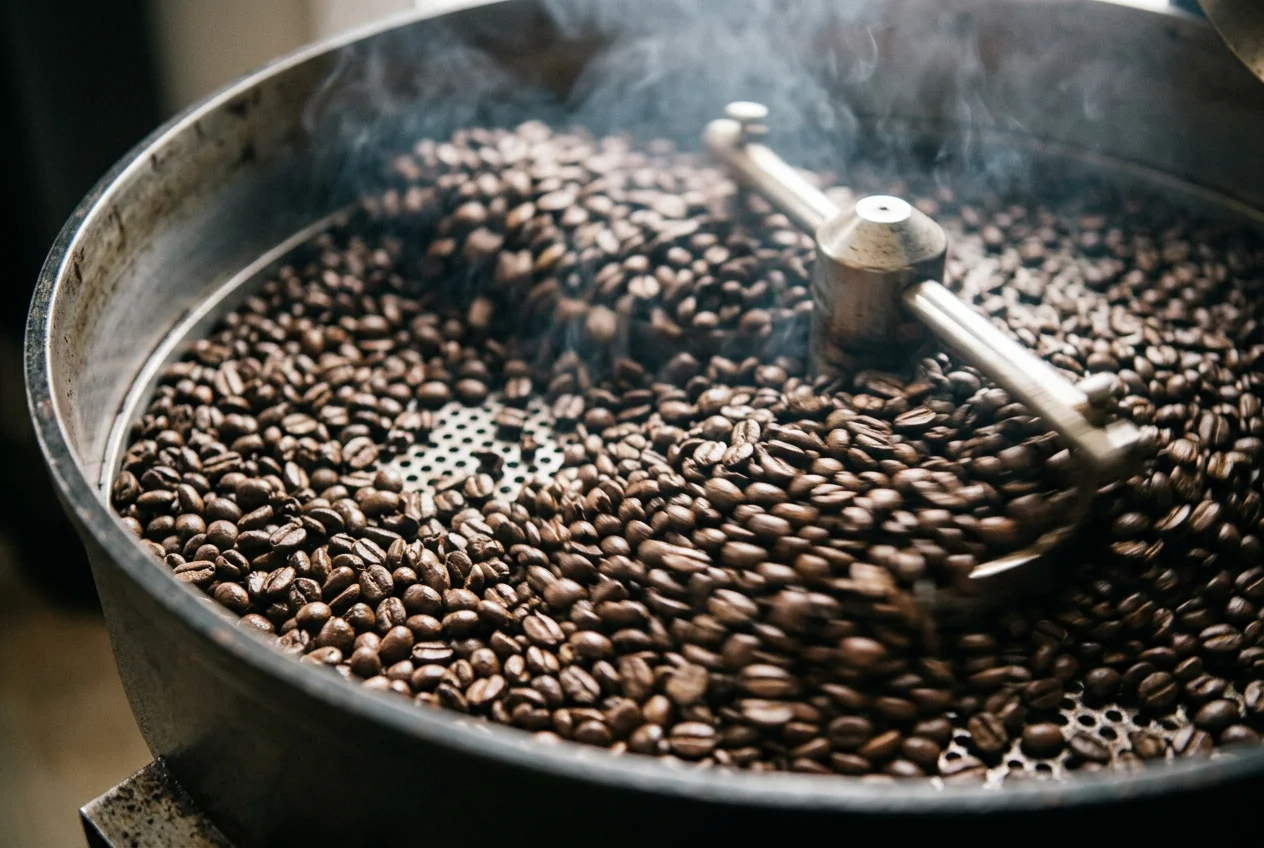
A roaster who uses a normal profile can easily scorch the outside or overdevelop the sugars. The result is hollow, ashy or baked flavors.
It fools the eye
Decaf also gives misleading color cues. The damaged cell walls let oils move to the surface quickly after roasting.
So a medium-roast decaf can look shiny and oily like a very dark French roast, even when the inside is actually light or medium.
Roasters who judge by outside color often get it wrong. That's why decaf from a roaster who simply follows their usual routine can be so inconsistent.
Why decaf goes stale so fast
Porous beans have another downside: oxygen gets inside them much faster than in dense regular beans.
Oxidation strips delicate aromatics and turns surface oils rancid. Decaf stales faster, especially dark-roasted decaf.
In my experience, unprotected decaf can start losing its brightness and taste papery within about two weeks of roasting.
The café problem
Here's where things go wrong in many cafés.
In the 1980s, decaf made up a much bigger share of coffee drinking in the US. Today, in specialty cafés, it's often a small fraction of what's sold.
With slow sales, cafés often buy big bags that sit open in a hopper or bin for weeks. Some use pre-ground decaf in single-serve sachets, which oxidizes almost immediately.
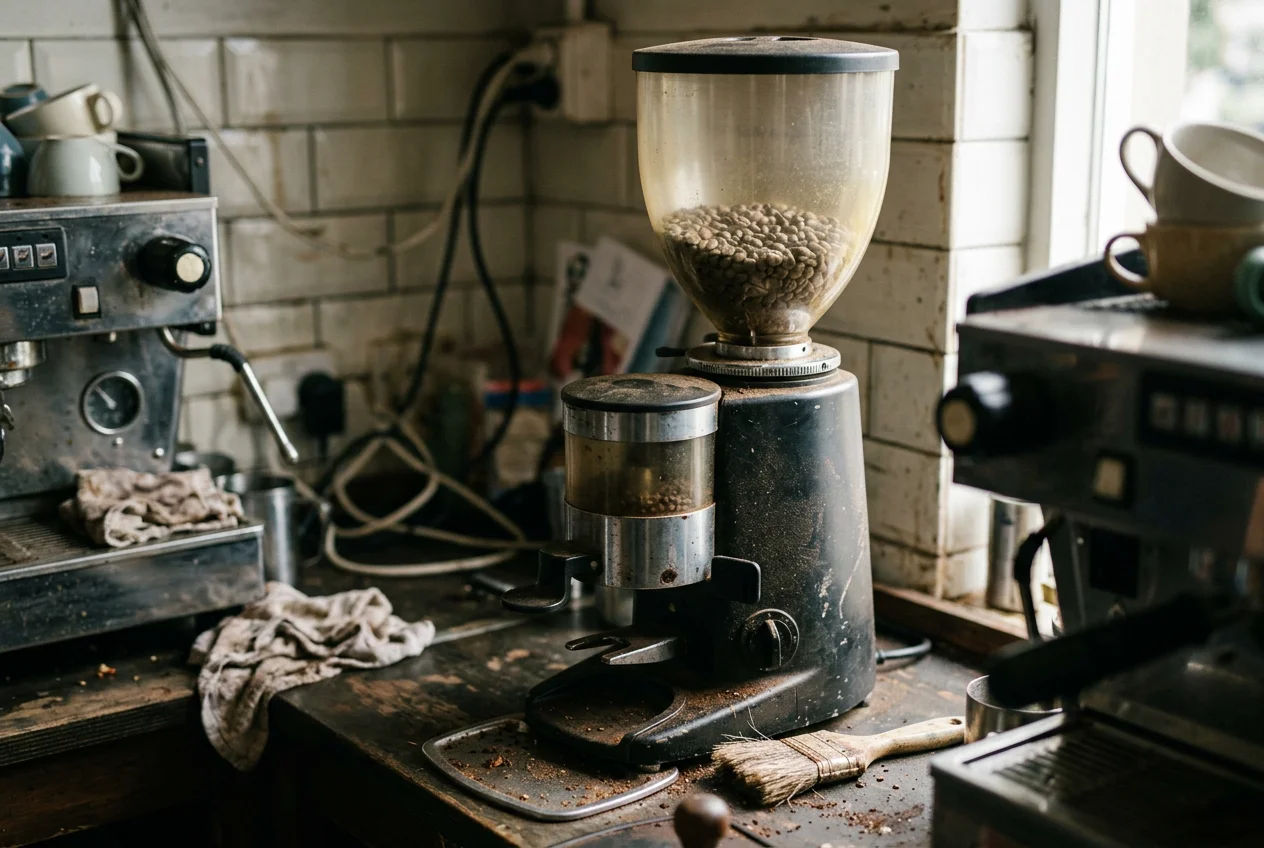
The result is a vicious cycle. Cafés serve stale decaf, customers decide all decaf is bad and stop ordering it, and owners see no reason to invest in fresh, high-quality decaf.
Our tip: Ask your café how often they open a new bag of decaf. A good café will be happy to tell you, and some keep decaf in a smaller, separate grinder.
How to make great decaf at home
Great decaf at home doesn't need special equipment. It needs care with buying, storing and dialing in.
Buy from roasters who care about decaf
This is the biggest factor. Look for roasters who buy high-quality specialty lots specifically for decaf and develop separate roast profiles for them.
Ask in coffee communities which roasters are proud of their decaf. Those roasters usually say on the bag which method they used and where the coffee comes from.
Freeze it in portions
Because decaf oxidizes fast at room temperature, the freezer is your friend.
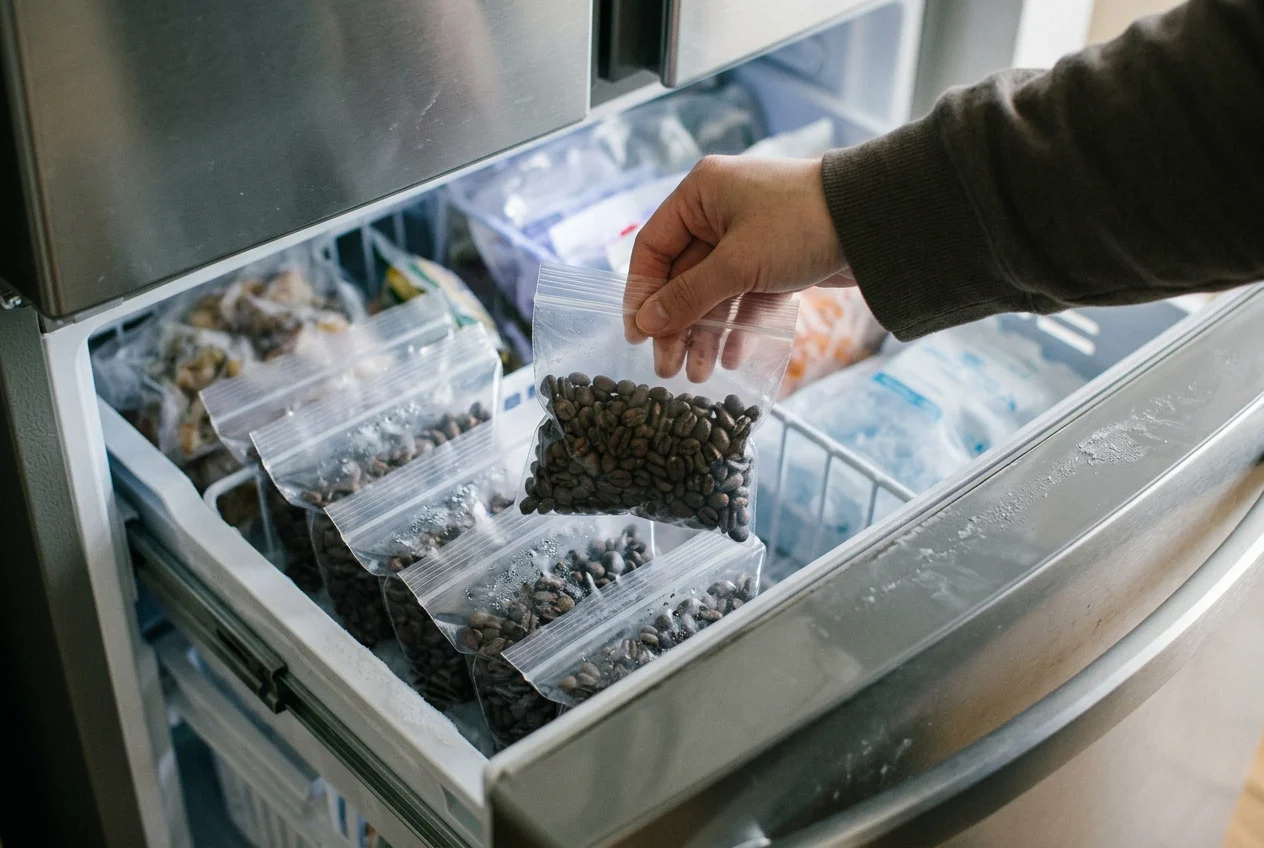
- Portion it as soon as it arrives.Split fresh decaf into single-use or few-day portions.
- Seal it airtight.Use small zip bags with the air pressed out, or small airtight containers.
- Freeze straight away.Freezing slows oxidation and keeps roast aromas for months.
- Take out one portion at a time.Don't return thawed beans to the freezer.
- Grind from frozen or let it warm sealed.Keep the bag closed while it warms so condensation doesn't form on the beans.
Grind fresh with a burr grinder
Never buy pre-ground decaf. It stales even faster than regular pre-ground coffee.
Despite the porous structure, studies of particle size show whole-bean decaf grinds much like regular coffee at a similar roast. So your usual burr grinder works perfectly.
If you're unsure what grinder to use, my burr vs blade grinder guide explains it.
Dial in, don't copy
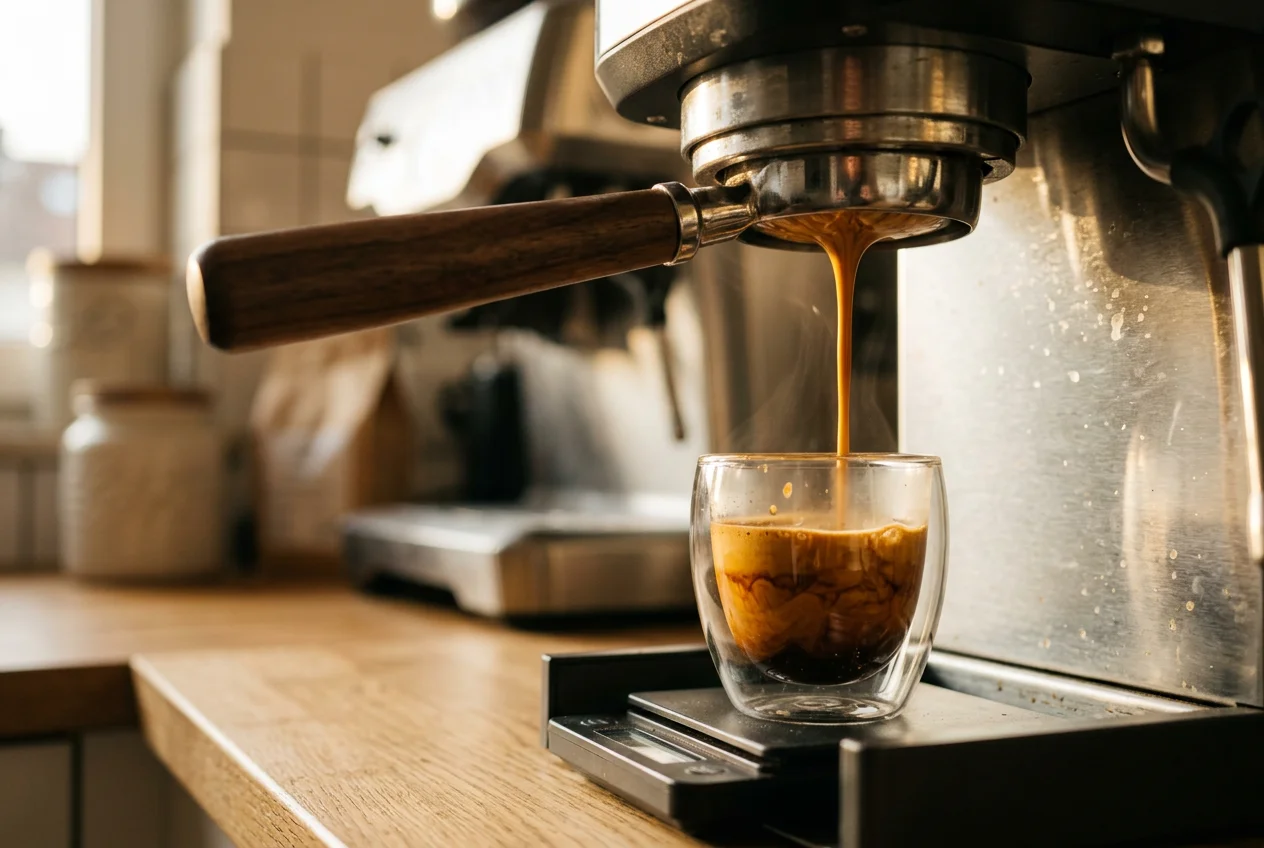
Decaf is more porous and dissolves differently, so water extracts it differently, sometimes faster, and espresso pucks can resist differently.
Expect to adjust. Try your grind a little finer or coarser, tweak the ratio, or change the water temperature. Taste and balance sweetness and acidity rather than copying a recipe you use for regular beans.
| Problem | Likely cause | Try this |
|---|---|---|
| Thin, sour | Under-extracted | Grind finer or use hotter water |
| Bitter, ashy | Over-extracted or dark roast | Grind coarser, slightly cooler water |
| Papery, flat | Stale beans | Fresher beans, freeze in portions |
| Espresso runs too fast | Porous, quick-flowing puck | Grind finer, raise the dose slightly |
Decaf for every brew method
Decaf works in every brewer. You just need to adjust a little, because it extracts differently.
Pour-over and drip
Start with your normal recipe, then taste. Decaf often extracts a bit faster, so if it tastes harsh, grind slightly coarser or drop the water temperature a few degrees.
Light to medium roasted specialty decaf is lovely as pour-over. You'll be surprised how much fruit and sweetness can come through.
French press and AeroPress
Immersion brewers are very forgiving with decaf. They're a great place to start if you're new to it.
Keep the steep time normal and adjust grind first. Medium roasts give a rich, rounded cup.
Espresso
Espresso is the hardest, because decaf pucks can flow faster and behave less predictably.
Use fresh beans with some rest after roasting, grind a little finer than for your regular espresso, and consider a slightly higher dose. Then taste and adjust in small steps.
Cold brew
Decaf cold brew is underrated. Long, cold extraction gives a smooth, sweet result and hides some of decaf's weaknesses.
It's perfect for summer evenings when you want something coffee-like without being up at midnight.
| Brew method | Starting adjustment for decaf | Notes |
|---|---|---|
| Pour-over | Slightly coarser or cooler | Light-medium roasts shine |
| Drip machine | Normal grind, then adjust | Use fresh beans, not a hopper |
| French press | Normal, adjust grind first | Very forgiving |
| AeroPress | Normal, lower temperature if bitter | Great for testing new decaf |
| Espresso | Finer grind, slightly higher dose | Most sensitive, needs dialing in |
| Cold brew | Normal coarse grind | Smooth and sweet |
Half-caf and low-caffeine alternatives
Decaf isn't the only way to cut back. Depending on why you want less caffeine, these options might suit you better.
Half-caf
Mix regular and decaf beans 50/50 before grinding. You get roughly half the caffeine with the full ritual of your normal coffee.
Some roasters sell ready-made half-caf blends. I prefer mixing my own so I can choose the ratio.
Smaller doses or shorter drinks
A single espresso instead of a double, or a smaller mug, reduces caffeine without changing what you drink.
Naturally low-caffeine coffees
A few arabica varieties naturally contain less caffeine. The best known is Laurina, also called Bourbon Pointu, which has roughly half the caffeine of typical arabica.
They're rare and usually expensive, but interesting if you want lower caffeine without any processing.
Arabica instead of robusta
If you drink blends with robusta, switching to 100% arabica lowers caffeine. Robusta contains roughly twice as much caffeine as arabica.
Who decaf is for
Decaf isn't only for people who "can't handle" coffee. In my experience, it suits a lot of different people.
- Afternoon and evening coffee lovers who want the taste and ritual without losing sleep.
- Caffeine-sensitive people who get jittery, anxious or have a racing heart after regular coffee.
- People cutting back who still want two or three cups a day.
- Anyone advised by a doctor to limit caffeine, for example during pregnancy or with some heart or sleep conditions. Check with your doctor how much is right for you.
- Coffee hobbyists who want to keep brewing and tasting all day without overdoing it.
If you're avoiding caffeine for medical reasons, remember that decaf still contains a little. Several cups a day add up.
How to taste decaf side by side
The best way to find decaf you like is to compare. It also helps you notice how good decaf can be.
- Buy two different decafs.Ideally one Swiss Water and one ethyl acetate, or two different origins.
- Brew them the same way.Same dose, grind, water and brewer, at the same time.
- Taste as they cool.Sweetness and fruit often show more as the coffee cools a little.
- Note what you like.Body, sweetness, acidity, any woody or papery notes.
- Add a regular coffee.For fun, brew a caffeinated version of a similar coffee and taste blind. Many people can't tell which is which.
The first time I did a blind taste test with friends, half of them picked a fresh decaf as their favorite. It changed how they thought about decaf completely.
Decaf myths I hear often
"Decaf has zero caffeine"
It doesn't. It has very little, usually a few milligrams per cup, but not zero.
"Decaf is full of chemicals"
Even solvent methods leave only tiny, regulated traces, and roasting drives off more. Swiss Water and CO2 methods use no added chemical solvents at all.
"Decaf is made from worse beans"
Historically, decaf often used low-grade beans. Today, many specialty roasters decaffeinate excellent coffees on purpose.
"Decaf can't taste good"
Fresh, well-roasted specialty decaf can be sweet, fruity and complex. Most bad decaf is just stale or over-roasted.
"Decaf is a rip-off because it costs more"
Decaf costs more because of an extra processing step, an extra shipment and smaller roasting batches. You're paying for real work, not a markup on less coffee.
"You can't make good espresso with decaf"
You can. It's a bit harder to dial in, but fresh specialty decaf espresso can be sweet and syrupy, especially with milk.
"Dark decaf is stronger"
A darker roast tastes more bitter, not more caffeinated. With decaf, darker roasts actually go stale faster.
The journey of a decaf bean, farm to cup
It helps to see the whole path in one place. Here's how a decaf bean usually gets to your cup.
- Grown and harvested.Coffee cherries are picked on a farm, exactly like regular coffee.
- Processed at origin.The fruit is removed (washed, natural or honey) and the seeds are dried into green coffee.
- Exported as green coffee.Bags of green beans ship to an importer or straight to a decaf facility.
- Decaffeinated.The beans are steamed or soaked, the caffeine is extracted, and the beans are dried again.
- Shipped to the roaster.The decaf green coffee goes to roasters, often a second international trip.
- Roasted gently.A good roaster uses a profile designed for decaf's porous beans.
- Packed and sold.Ideally in valved bags with a roast date, ready for you to freeze in portions.
- Brewed at home.Ground fresh and dialed in, it's ready to enjoy any time of day.
Every extra step costs time and money. That's why decaf often costs a bit more, and why freshness at the end matters so much.
How to read a decaf label
Decaf bags carry extra information beyond the usual roast and tasting notes. These are the things I look for.
| On the label | What it tells you | What I look for |
|---|---|---|
| Decaf method | How the caffeine was removed | Any named method; avoid bags that don't say |
| Origin | Where the coffee was grown | A country plus a region or co-op |
| Roast date | How fresh it is | Within the last few weeks |
| Roast level | Light, medium or dark | Light to medium for flavor and shelf life |
| Tasting notes | Expected flavors | Sweet notes like caramel, cocoa, fruit |
| "99.7% caffeine-free" | Meets a common decaf standard | Nice to see, but not a quality sign |
A bag that names its method, origin and roast date usually comes from a roaster who takes decaf seriously. A bag that says only "Decaf" in big letters often doesn't.
Common decaf brewing mistakes
Using the same recipe as regular coffee
Decaf extracts differently. Use your normal recipe as a starting point, then adjust grind and temperature by taste.
Leaving it in the cupboard for months
Decaf goes stale quickly. If a bag lasts you more than two or three weeks, freeze most of it.
Buying very dark decaf by default
Dark decaf often tastes ashy and goes stale even faster. Try a medium roast first.
Giving up after one bad cup
A disappointing café decaf says more about how it was stored than about decaf itself. Try a fresh bag from a specialty roaster at home.
Choosing a decaf: my checklist
- Check the roast date.Freshness matters even more for decaf. Aim to brew within a few weeks, or freeze it.
- Look at the origin.A specific country, region or farm suggests the roaster chose a good coffee to decaffeinate.
- Note the method.Swiss Water, sugarcane (ethyl acetate) and CO2 all make good decaf. Pick the one you're comfortable with.
- Prefer light to medium.They keep more flavor and stale more slowly than very dark roasts.
- Buy smaller bags.Unless you'll freeze them, smaller bags are fresher to the last cup.
If you want help reading the rest of the label, my guide on how to choose coffee beans covers roast, tasting notes and process.
A decaf routine that works
This is roughly what I do, and it's made decaf a real part of my day rather than a sad compromise.
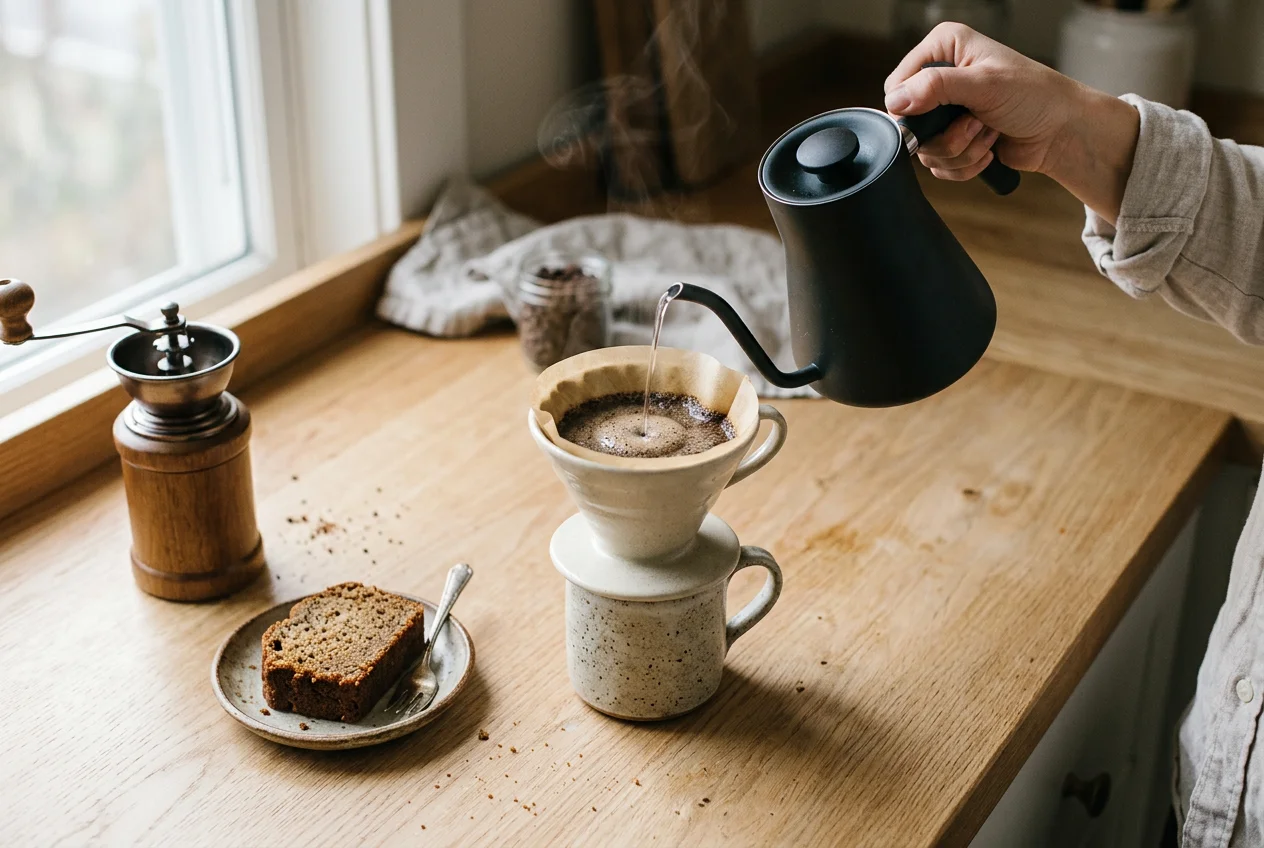
- I order a bag of specialty decaf every few weeks from a roaster known for good decaf.
- When it arrives, I split it into small portions and freeze most of it straight away.
- Each afternoon, I take one portion, grind it fresh, and brew a pour-over or AeroPress.
- I adjust grind and temperature until it tastes sweet and clean, then keep those settings.
It takes a minute or two more than reaching for an old jar of pre-ground decaf. The difference in the cup is enormous.
And I sleep just as well as I did before I started drinking it.
If you've written decaf off after years of bad café cups, give it one honest try at home: a fresh bag from a roaster who cares, frozen in portions, ground fresh and brewed with a little patience. I think you'll be surprised.
Frequently asked questions
How is decaf coffee made?
Green coffee beans are steamed or soaked to open them, then caffeine is removed with a solvent (ethyl acetate or methylene chloride), with water and carbon filters (Swiss Water), or with supercritical CO2. The beans are dried and roasted afterward.
Does decaf coffee have caffeine?
Yes, a little. Most cups of brewed decaf have well under 20 mg and often less than 10 mg, compared with about 80 to 100 mg or more in regular coffee.
What does 99.7% caffeine-free mean?
It means caffeine makes up no more than 0.3% of the beans' dry weight. It doesn't mean 99.7% of the original caffeine was removed.
Which decaf method is best?
All of the main methods make safe, good coffee when done carefully. Swiss Water is popular because it uses no added solvents, and ethyl acetate decaf is often praised for sweetness. The quality of the beans and roast matters more.
Is methylene chloride in decaf safe?
Residues are tightly regulated, at up to 10 ppm in the US and 2 mg per kg in the EU, and well-run facilities stay below that. Roasting removes even more. If it bothers you, choose Swiss Water, CO2 or sugarcane decaf.
Why does decaf taste different?
Processing makes the beans porous and brittle, so they roast less evenly and go stale faster. Badly roasted or old decaf tastes flat, woody or burnt.
Is decaf coffee healthy?
Decaf keeps most of coffee's polyphenols, such as chlorogenic acids, while removing most of the caffeine. It's a good option if caffeine affects your sleep or anxiety.
How should I store decaf beans?
Freeze them in small airtight portions as soon as you get them, and take out one portion at a time. Decaf stales faster than regular coffee.
Can I make espresso with decaf?
Yes. Use fresh beans from a roaster with a good decaf espresso, and expect to adjust grind and dose because decaf pucks can flow differently.
Who invented decaf?
Commercial decaf began in 1905 with Ludwig Roselius in Bremen, Germany, who founded Kaffee HAG.
Is decaf made from roasted or green beans?
Green beans. Caffeine is removed before roasting.
Can I drink decaf at night?
Most people can. A cup usually has only a few milligrams of caffeine, but very sensitive people may still notice several cups.

- Michael Reynolds, personal notes from tasting decaf and roaster conversations
- Caffeine content of decaffeinated coffee, Journal of Analytical Toxicology, 2006
- 21 CFR 173.255 Methylene chloride, US Code of Federal Regulations
- Swiss Water Decaf, Swiss Water Decaffeinated Coffee Company
Related guides
How to choose coffee beans Burr vs blade grinder How coffee is roastedWritten by Michael Reynolds. Last updated November 16, 2026.