The History of Coffee: From an Ethiopian Forest to Your Morning Cup
Coffee went from a wild berry in the Ethiopian highlands to the world's favorite daily ritual in a few hundred years. Here's the full story: the legends, the bans, the smugglers, the colonies, the coffeehouses that shaped modern politics, and what it all means for the cup on your counter.
We choose products independently. We may earn a commission through links on this page; your price stays the same. Affiliate policy
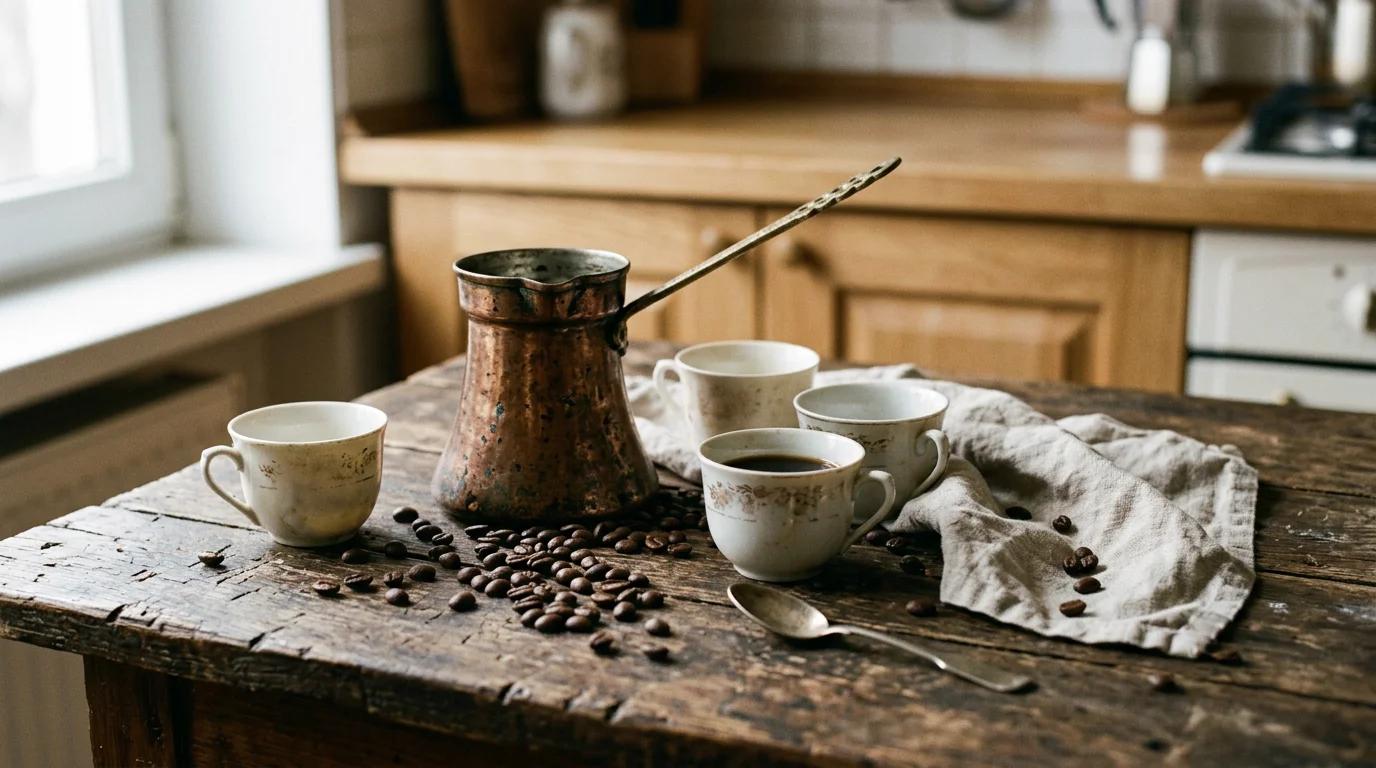
Coffee comes from the Coffea plant, native to the highlands of Ethiopia. The famous story of Kaldi and his dancing goats is a legend written down centuries later.
The first reliable evidence of brewed coffee comes from Sufi monasteries in Yemen in the mid-1400s. From there it spread through Mecca, Cairo and Constantinople, then into Europe in the 1600s.
Dutch, French and Portuguese colonies moved coffee around the tropics, often on the back of enslaved labor. By the mid-1800s Brazil was the world's biggest producer, and it still is today.
Why coffee's history is worth knowing
Coffee is one of the most traded farm products on earth. More than 125 million people work somewhere in the coffee chain, and the world drinks hundreds of billions of cups a year.
That makes it easy to forget that coffee was unknown to most of the world until roughly 500 years ago.
I got hooked on coffee history the same way I got hooked on brewing: one question led to another. Why is it called mocha? Why do Americans drink coffee while the British drink tea? Why does Brazil grow so much of it?
The answers turn out to be a story about religion, trade, empire, revolution and science. Some of it is inspiring. Some of it, especially the role of slavery, is very dark.
In this guide I'll walk through that story in order, separate the legends from the history, and finish with what it all means when you choose beans today.
Where coffee began: the Ethiopian highlands
People have been getting caffeine from plants since long before written history. Tea, cocoa, yerba mate and kola nuts all have deep roots.
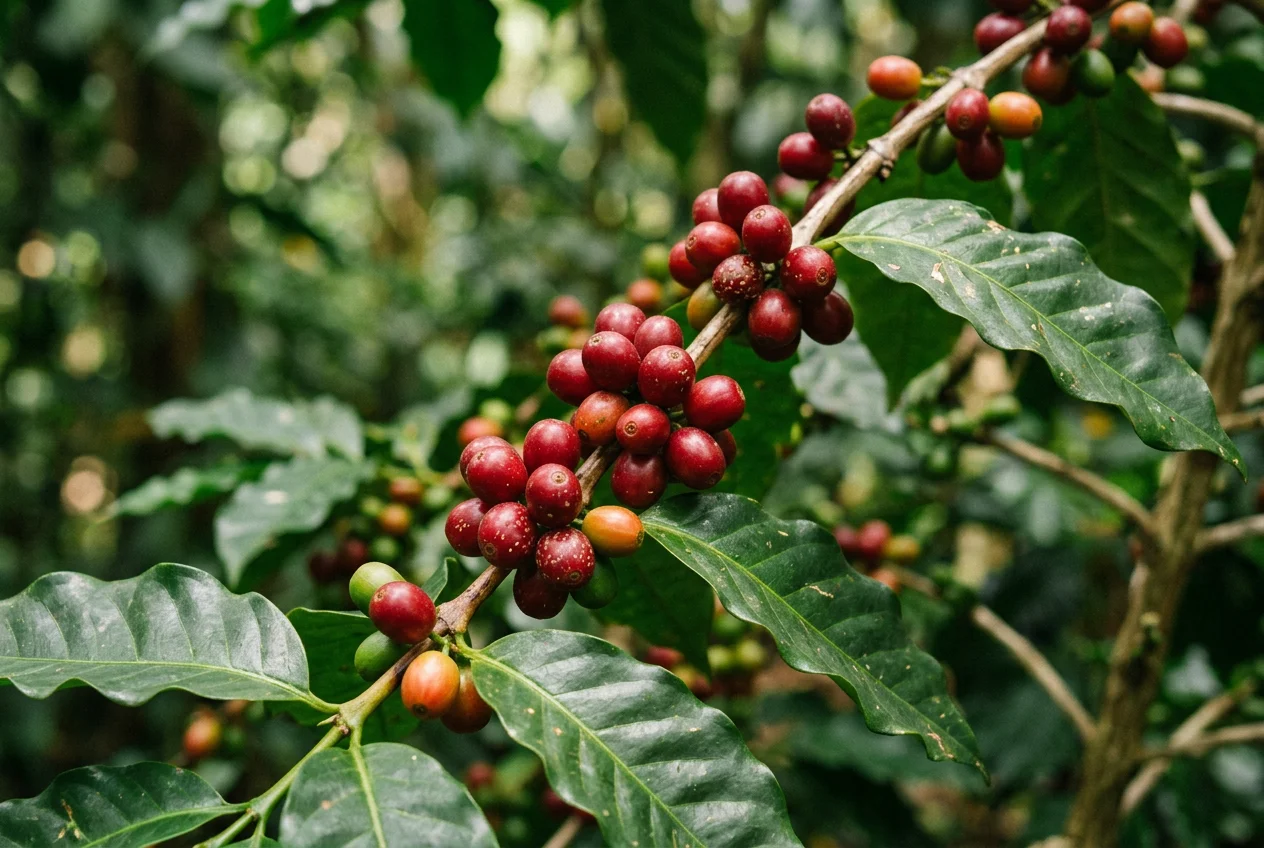
Coffee is a newer arrival on the world stage. Its story begins with the Coffea plant, a small tree that grows wild in the forests of southwestern Ethiopia, in what is now the Oromia region.
The fruit of the tree is a small cherry that turns bright red when ripe. Inside are two seeds. We call them beans, but botanically they're seeds.
The legend of Kaldi
The most famous origin story is about a goat herder named Kaldi, said to have lived somewhere between the 6th and 9th centuries.
In the tale, Kaldi notices his goats prancing with unusual energy after eating red berries from an unfamiliar shrub. He tries the berries himself, feels the same buzz and takes them to a nearby monastery.
A skeptical monk throws the berries into the fire. The smell of the roasting seeds fills the room, the monks rake them out, grind them and mix them with hot water. The first cup of coffee is born.
It's a lovely story. It's also almost certainly invented. The earliest written version appears in European writing from the late 1600s, roughly a thousand years after Kaldi was supposed to have lived.
The biology behind the legend
Even if Kaldi never existed, the effect in the story is real.
Caffeine evolved in the coffee plant as a natural defense. For many insects that chew the leaves and seeds, it acts like a pesticide that disrupts their nervous systems.
For much bigger animals, like goats and people, the same dose has a far milder effect. Instead of harm, it brings alertness and a pleasant lift. That's the accident of chemistry the whole coffee industry is built on.
How coffee was first used
Historians believe local Ethiopian groups, most likely the Oromo people, were the first to use coffee cherries for energy.
They didn't brew the drink we know. Early uses included chewing the cherries or mixing the crushed fruit with animal fat into energy-rich balls, a practical snack for long journeys.
Ethiopia still has one of the world's richest coffee cultures. The traditional coffee ceremony, with beans roasted in a pan, ground by hand and brewed in a clay jebena, is a social ritual in its own right.

Our tip: If you want to taste where coffee began, try a washed or natural coffee from Ethiopia. Floral, citrus and berry notes are common, and they show what wild-origin arabica can do.
Across the Red Sea: coffee in Yemen and the Islamic world
The leap from chewed berry to brewed drink happened across the Red Sea, in the Arabian Peninsula.
By around the 10th century, Arab writers seem to have known about the plant and its stimulating effects. The Persian physician Al-Razi is often credited with describing it, although historians debate exactly what plant he meant.
Where the word coffee comes from
The Arabic word for the drink was qahwa. Interestingly, the word was already in use for wine before it became attached to coffee.
Through trade, qahwa became kahve in Turkish, koffie in Dutch and eventually coffee in English. Almost every language today uses a version of that same root.
A 500-year gap
Here history gets murky. Coffee historians have pointed out a long gap, roughly from the 10th to the 15th century, where written records about the beans and the drink are very thin.
Folk tales fill the space. One tells of Sheikh Omar, an exiled mystic who survived in the desert by chewing coffee berries and boiling them into a broth, then shared the drink with his people.
Sufi monasteries in Yemen
The first solid evidence of coffee being roasted and brewed the way we know comes from Sufi monasteries in Yemen in the mid-1400s.
Sufi mystics drank coffee to stay awake through late-night prayers and to keep their focus during fasting, including during Ramadan. It was also believed to have medicinal benefits.
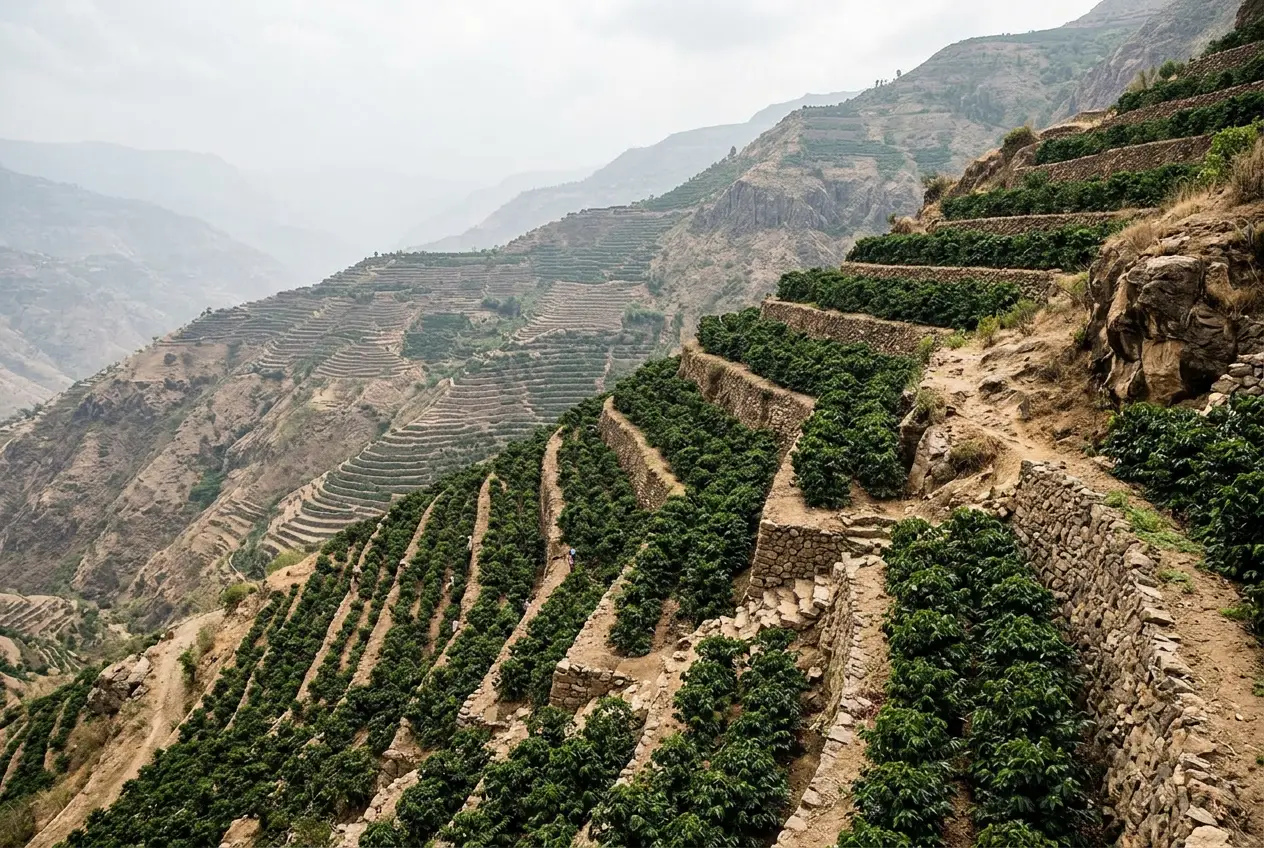
Yemen also became the first place where coffee was farmed on a serious scale, on steep mountain terraces that still produce some of the world's most distinctive coffee.
Mocha and Mecca
From the Yemeni highlands, coffee flowed through the port of Mocha. For centuries, coffee from that port was so famous that "mocha" became a name for coffee itself.
From Yemen the drink moved north to Mecca. Because Mecca drew pilgrims and merchants from across the Muslim world, they carried coffee home to Cairo, Damascus, Baghdad and beyond.
The first coffeehouses, and the first coffee bans
Islamic law forbids alcohol, so coffee quickly filled an important social gap. It moved from the monastery into everyday life.
The birth of the coffeehouse
Dedicated public coffeehouses appeared to meet the demand. They were the world's first cafés.
These were men's spaces where people from every class mixed. They played chess and backgammon, listened to music, told stories and argued about religion and politics.
Women mostly drank coffee at home. In rare cases, women performed music in coffeehouses from behind screens.
Coffee meets its critics
Coffee's quick rise brought fierce opposition.
Some conservative scholars argued that if coffee changed your state of mind, the ban on intoxicants should apply to it just like wine.
Rulers had another worry. Coffeehouses were places where people met freely, swapped news and criticized those in power. To a nervous governor, that looked a lot like a breeding ground for rebellion.
The 1511 Mecca ban
In 1511, the governor of Mecca banned coffee and closed the coffeehouses, largely out of fear of political dissent.
Similar bans popped up in Cairo and elsewhere in the region over the following decades. In the harshest cases, selling or drinking coffee could bring severe punishment.
None of the bans lasted. Coffee was simply too popular, and the authorities eventually gave up.
This pattern, coffee spreads, rulers panic, coffee wins, would repeat itself again and again in Europe.
How the Ottoman Empire spread coffee
The Ottoman Empire was the main engine that carried coffee west.
After the Ottomans took control of Yemen in the 1530s, coffee became a valuable part of their trade. Syrian merchants are said to have opened the first coffeehouses in Constantinople, today's Istanbul, in the 1550s.
The city took to coffee with enthusiasm. Coffeehouses became part of daily urban life, with storytellers, musicians and long conversations over small cups.
Turkish coffee
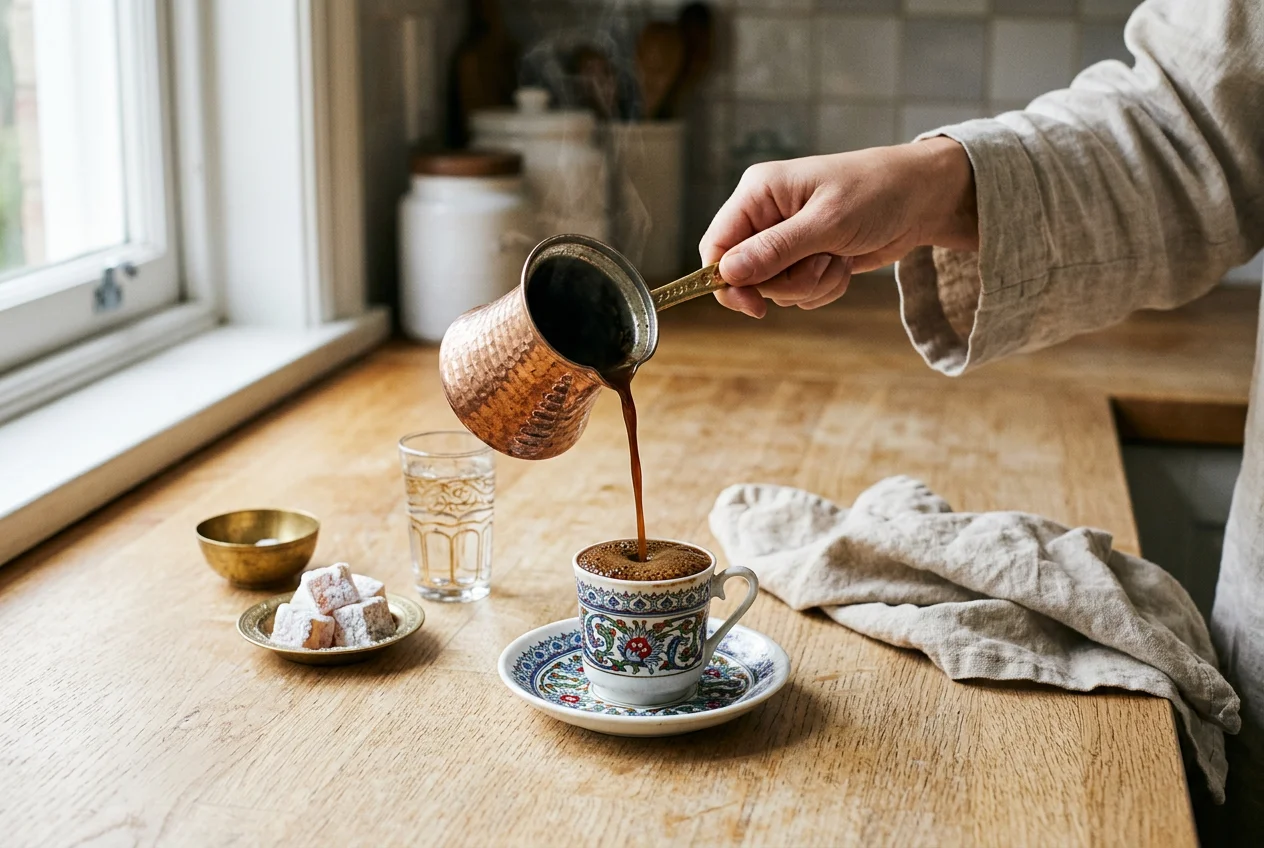
Ottoman-style coffee was ground very fine and simmered in a small pot, often with sugar, then served unfiltered with the grounds settling in the cup.
That method survives today as Turkish coffee, made in a long-handled pot called a cezve or ibrik. It's one of the oldest brewing methods still in everyday use.
European diplomats, merchants and travelers who visited Constantinople wrote home about this strange, dark, bitter drink. Their stories helped build curiosity in Europe before coffee itself arrived.
How coffee crossed into Europe
Coffee entered Christian Europe through both war and trade.
Malta
One story points to Malta. After a failed Ottoman siege of the island in 1565, Turkish prisoners held by the Knights of Saint John are said to have introduced their captors to coffee.
Venice
The bigger channel was trade. Venetian merchants had close commercial links with the Ottoman Empire, and by the late 1500s they were bringing coffee beans into Italy.
At first coffee was sold as an exotic, expensive luxury, partly as medicine.
The pope's blessing
Not everyone in Europe was pleased. Some Christian clergy called coffee the "bitter invention of Satan" because of its link with the Muslim world.
According to a popular story, advisors around 1600 asked Pope Clement VIII to condemn the drink. The pope insisted on tasting it first.
He liked it so much that he supposedly said it would be a shame to leave such a drink to non-Christians, and gave it his blessing instead.
Historians treat the details with caution, but the outcome is clear. Coffee spread rapidly through Italy and France. Italy would later give the world espresso.
The Battle of Vienna
Coffee's arrival in Central Europe has its own legend. In 1683, a huge Ottoman army besieged Vienna and was defeated by a coalition of Christian forces.
The retreating army left supplies behind, including sacks of strange beans. In the story, soldiers took them for animal feed until Jerzy Franciszek Kulczycki, who had lived among the Ottomans, recognized them as coffee.
He is said to have used them to open one of Vienna's first coffeehouses. Like Kaldi, the story is probably more romance than record. Early Viennese coffeehouses were likely opened by Armenian and other merchants too.
Either way, Vienna developed one of Europe's great coffeehouse cultures, which UNESCO now recognizes as intangible cultural heritage.
Penny universities, philosophers and angry kings
The coffeehouse boom
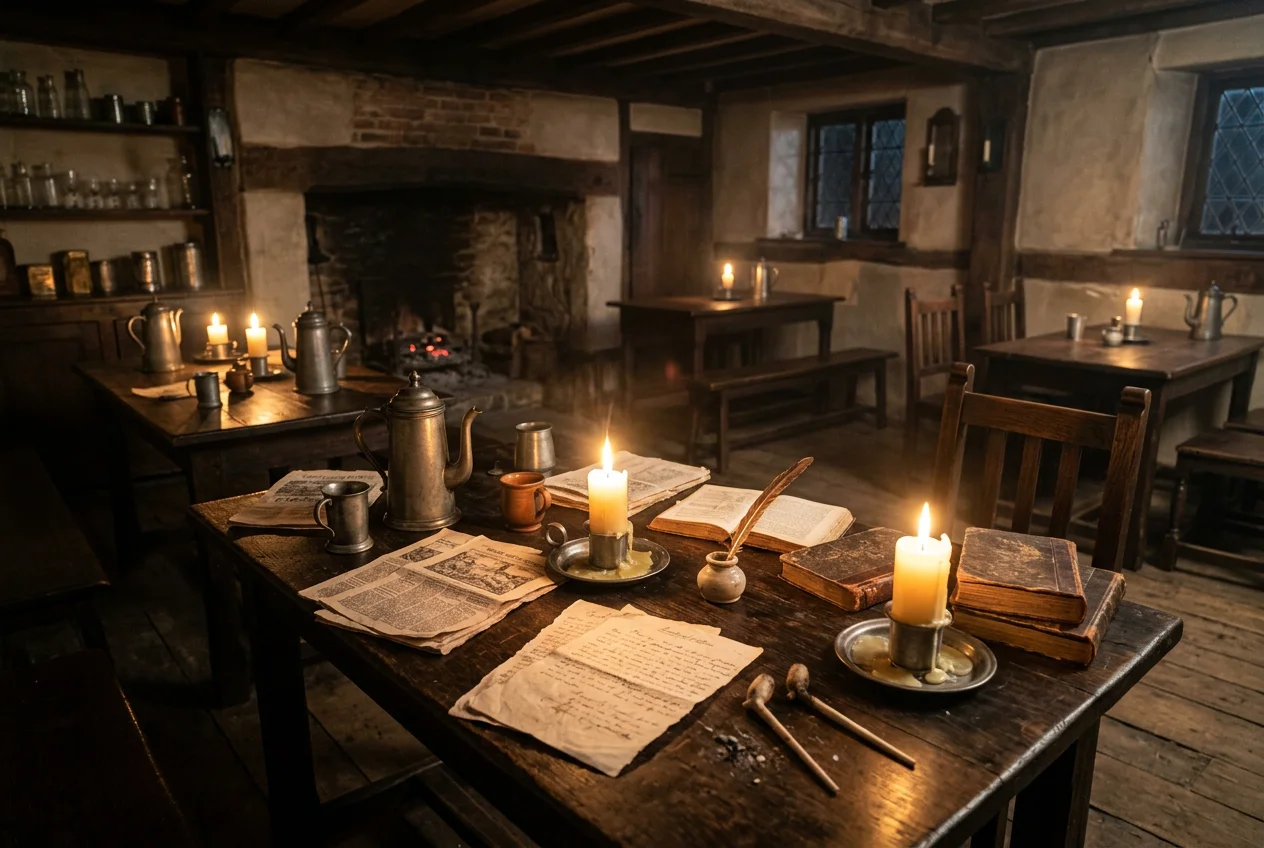
The first European coffeehouses opened in the mid-1600s. Venice usually gets credit for an early one, with Oxford following around 1650 and London in 1652.
Within decades, thousands had opened across Western Europe.
Europe already had taverns for drinking alcohol, so coffeehouses took on a different, soberer character. They became places for news, business and debate.
In England they were nicknamed "penny universities." For the price of a cup, about a penny, you could sit for hours listening to scholars, merchants, scientists and writers argue about the issues of the day.
Business born in coffeehouses
Some coffeehouses turned into business hubs. Ship owners, merchants and insurers met in them to trade news and make deals.
Several famous financial institutions in London trace their roots to coffeehouse gatherings of this kind.
Charles II tries a ban
Just like the governor of Mecca, English royalty grew nervous.
In 1675, King Charles II ordered all coffeehouses closed, calling them places where false news and seditious talk spread. He had good reason to fear dissent: his father, Charles I, had been executed after the English Civil War.
The public backlash was immediate and came from every level of society. The king backed down before the ban took effect.
The French Enlightenment
In Paris, coffeehouses such as Café Procope became meeting places for thinkers like Voltaire, Diderot and Rousseau. The ideas discussed there helped lay the groundwork for the French Revolution.
Voltaire was famous for his coffee habit and was said to drink many cups a day.
Frederick the Great's beer manifesto
Voltaire's friend, King Frederick the Great of Prussia, took the opposite view. He worried about money leaving the country to pay for imported beans.
In 1777 he urged his people to go back to beer, the drink he said he and his ancestors had been raised on. He later restricted coffee roasting and used officials nicknamed "coffee sniffers" to hunt down illegal roasters.
A sober alternative
Despite the critics, many reformers welcomed coffee. Before it arrived, beer and ale were common daytime drinks. Coffee gave workers and thinkers a stimulating option that didn't leave them drunk.
Breaking the monopoly: smugglers and colonial plantations
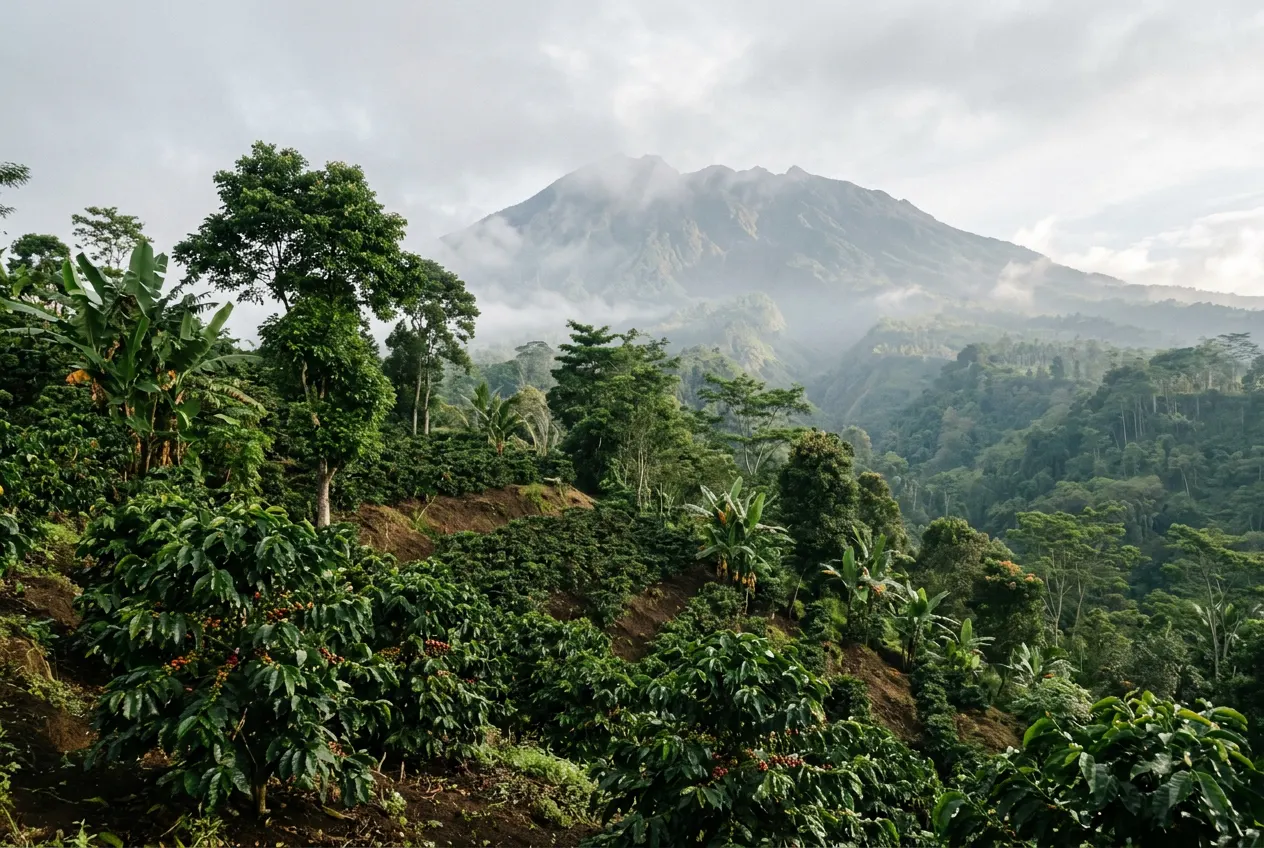
For a long time, almost all the world's coffee came from Yemen. The trade was very profitable, and Yemen guarded it closely.
Exported beans were reportedly boiled or parched so they couldn't sprout. Without fertile seeds, nobody else could start a plantation.
Baba Budan
That monopoly didn't last. According to Indian tradition, a Muslim pilgrim named Baba Budan smuggled seven fertile coffee seeds out of Arabia in the 1600s, hidden on his body.
He planted them in the hills of southern India, in what is now Karnataka. The hills there still carry his name, and India is still a coffee producer.
The Dutch take coffee global
In 1616, Dutch merchant Pieter van den Broecke obtained live coffee plants in Mocha and took them back to the Netherlands.
The plants grew well in Amsterdam greenhouses, but Northern Europe was far too cold for real farming.
The Dutch East India Company saw the opportunity. It planted coffee in its tropical colonies, first in Ceylon (today's Sri Lanka) and then on the Indonesian island of Java, and later in Suriname in South America.
Java coffee became so famous that "java" turned into slang for coffee, especially in the United States.
A seedling across the Atlantic
Other European powers wanted their own supply.
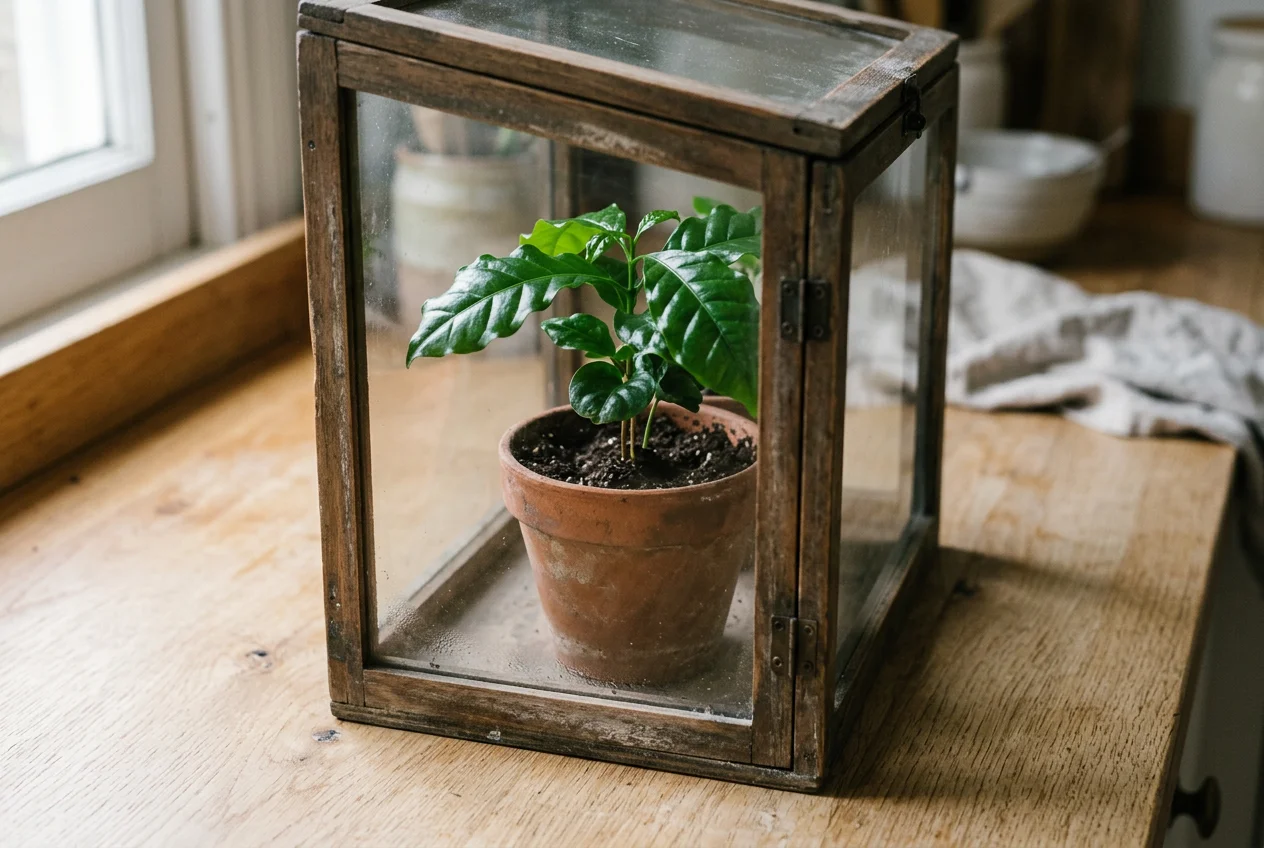
In the early 1720s, French naval officer Gabriel de Clieu carried a coffee seedling from Paris to the Caribbean island of Martinique.
In his own telling, drinking water ran low during a hard voyage, and he shared his ration with the plant to keep it alive. Others were probably bringing coffee to the Americas at the same time, but de Clieu's plant is often described as the ancestor of many trees in the Caribbean and Latin America.
The human cost
This part of the story must be told plainly. Colonial coffee was built largely on enslaved labor.
France's colony of Saint-Domingue, today's Haiti, became the world's biggest coffee producer in the late 1700s, supplying around half the world's coffee. That output depended on brutal slavery.
The Haitian Revolution ended slavery there and disrupted colonial production. Coffee farming then shifted to other places, above all Brazil.
Why Americans drink coffee: tea, taxes and a revolution
In the 1600s and 1700s, coffee faced stiff competition from tea, which the British East India Company imported from China.
Britain became a tea-drinking nation, and the habit crossed the Atlantic to its North American colonies.
The Boston Tea Party
That changed after Britain passed the Tea Act of 1773. In December of that year, colonists dumped chests of British tea into Boston Harbor in protest against taxation without representation.
Drinking tea quickly became unpatriotic. Coffee became the drink of the revolution.
In a 1774 letter to his wife Abigail, John Adams wrote that tea had to be given up and that he needed to wean himself off it.
Coffee wasn't always easy to get during the war, but the preference stuck. More than two centuries later, the United States is one of the world's biggest coffee markets.
The rise of Brazil and the coffee belt
Brazil becomes the giant
Coffee reached Brazil in the 1700s, according to legend via a Portuguese officer who charmed a cutting out of French Guiana.
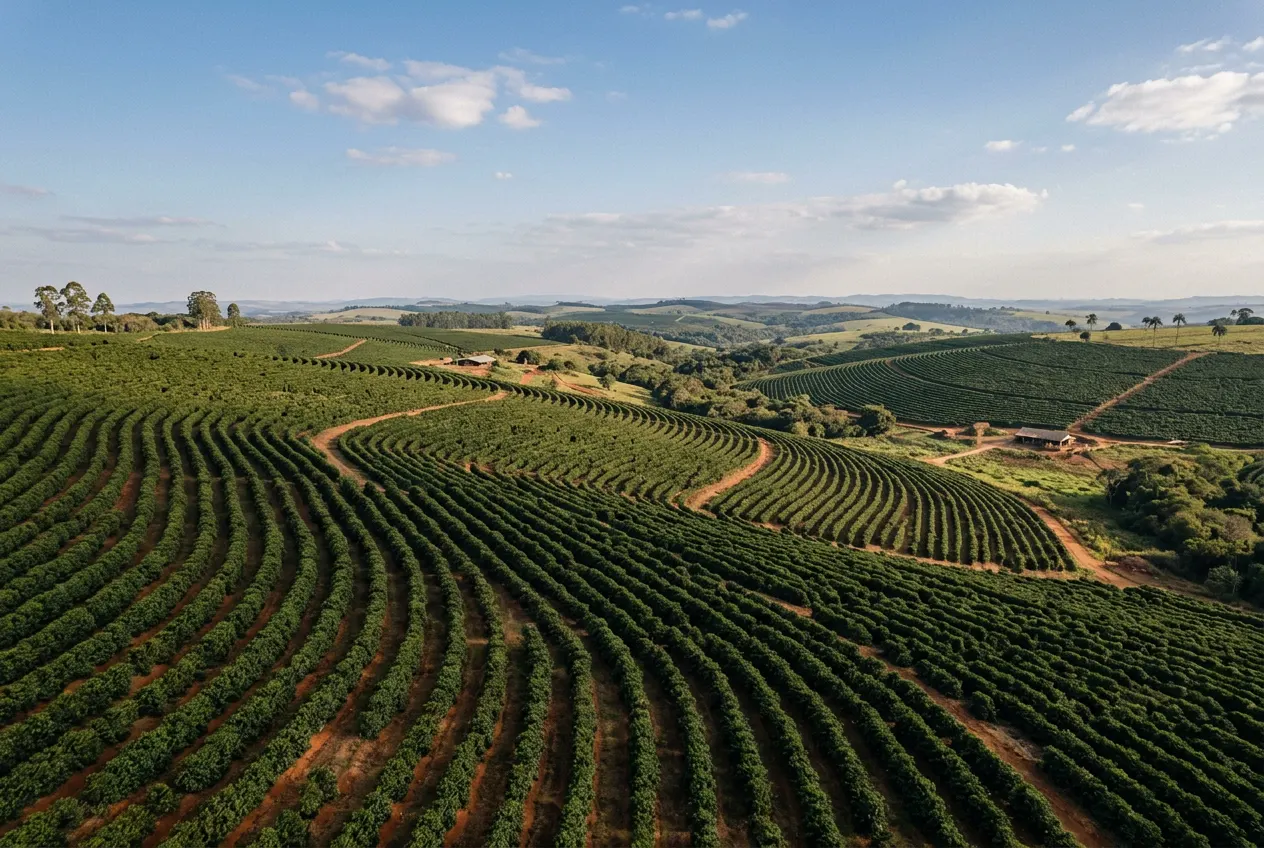
After independence from Portugal in 1822, Brazil's coffee industry exploded. Huge areas of warm, fertile land were turned into plantations, and by the mid-1800s Brazil was the world's leading producer.
Built on slavery
Brazil's coffee boom also depended heavily on enslaved people brought from Africa. Powerful coffee planters resisted abolition for decades.
Brazil was the last country in the Western Hemisphere to abolish slavery, with the Golden Law of 1888. By then, immigrant wage labor, much of it from Italy and other parts of Europe, was taking over on the plantations.
A century of dominance
For much of the period from the late 1800s to the mid-1900s, Brazil exported more coffee than the rest of the world combined.
It still produces roughly a third of the world's coffee. If you've drunk an espresso blend, you've almost certainly had Brazilian coffee.
The coffee belt
Today's other big producers include Vietnam, Colombia, Indonesia and Ethiopia. They all sit inside the coffee belt, the band around the globe between the Tropics of Cancer and Capricorn.
That zone offers the warmth, rainfall and often volcanic soils coffee trees need. My guide on how to choose coffee beans explains how origin shows up in the cup.
Science, caffeine and a world-wide drink
Caffeine is discovered
In 1819, German chemist Friedlieb Ferdinand Runge isolated caffeine from coffee for the first time.
He reportedly did it at the suggestion of the writer Johann Wolfgang von Goethe, who gave him a box of coffee beans to analyze.
Coffee reaches Japan
Japan knew of coffee through Dutch traders at Nagasaki from the 1600s, but it was a curiosity there for a long time.
It only began to spread after Japan opened its ports to foreign trade in 1858. Today Japan is one of the world's most sophisticated coffee markets.
The industrial era
As production grew in the 1800s, coffee got cheaper. It turned from a luxury into an everyday staple.
Factory workers on long shifts relied on it, and so did the growing cities. Coffee fueled the industrial revolution in a very literal way.
New ways to brew
The 1800s and early 1900s brought a wave of brewing inventions: drip pots, percolators, vacuum brewers and early espresso machines in Italy.
Later in the 1900s came instant coffee, vacuum-sealed tins, home drip machines and, eventually, the specialty coffee movement that cares about origin, freshness and roasting. You can see how the roasting side developed in my guide on how coffee is roasted.
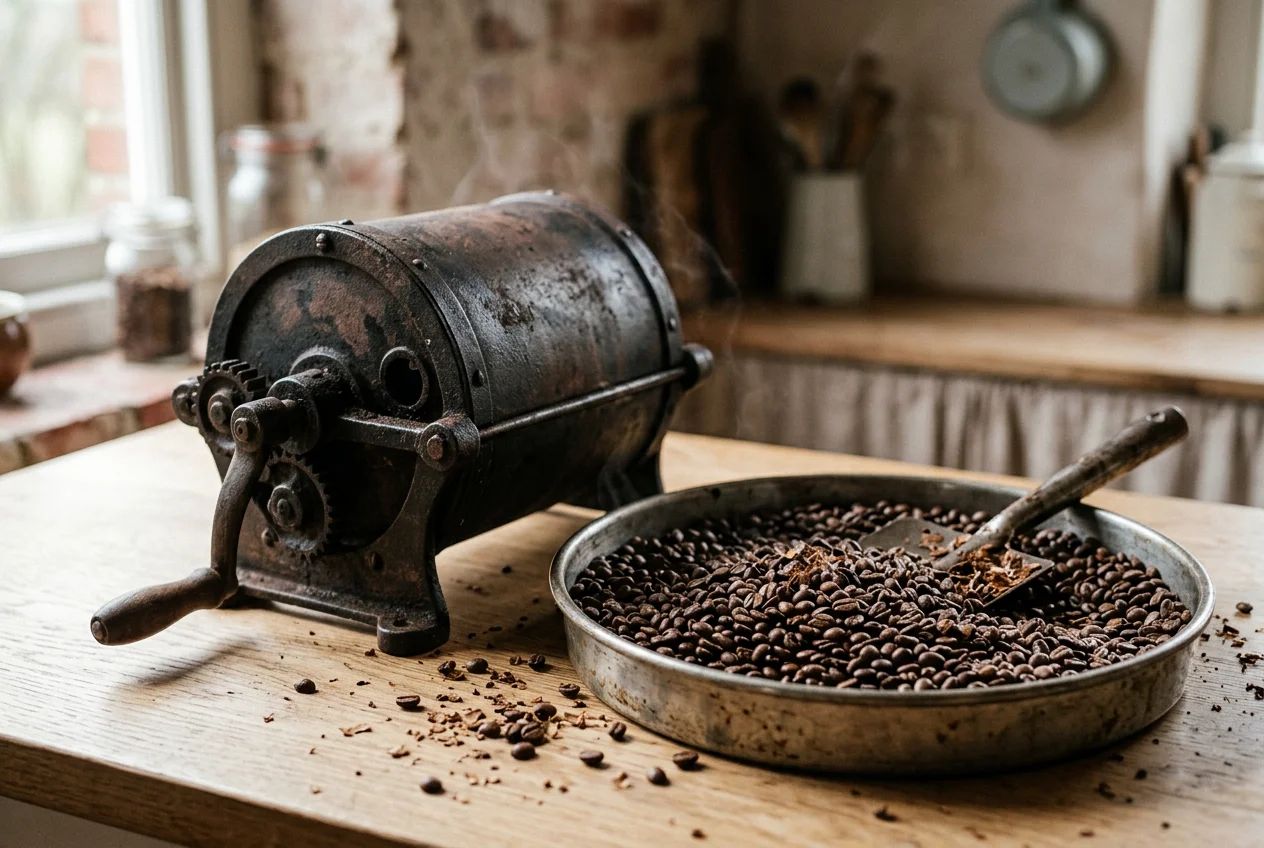
The 20th century: espresso, instant coffee and the specialty movement
The last hundred-odd years changed coffee as much as the previous four hundred.
Espresso
Italian inventors in the early 1900s built machines that forced steam and hot water through ground coffee to make a fast, strong cup for busy bars.
After the Second World War, lever machines that used real pressure produced the crema-topped espresso we know today. The espresso bar became a symbol of Italian life and later spread around the world.
Instant and canned coffee
Soluble coffee had been tinkered with since the 1800s, but it took off in the 20th century. Soldiers in both world wars carried it, and after the war it became a staple in kitchens everywhere.
At the same time, vacuum-sealed cans let big brands sell pre-ground coffee across whole countries. Convenience won, but freshness often lost.
Coffee as a global commodity
Coffee prices swung wildly through the 1900s, with frosts in Brazil and wars causing booms and crashes. Producing and consuming countries signed international coffee agreements from the 1960s to try to stabilize prices with export quotas.
When the quota system collapsed in 1989, prices fell sharply and many farmers struggled. That crisis helped fuel interest in fair trade and direct trade.
The specialty coffee movement
From the 1970s onward, a growing group of roasters and cafés started treating coffee more like wine. They cared about origin, variety, processing, freshness and careful brewing.
The coffee chains of the 1990s brought espresso drinks to the mainstream. Smaller roasters then pushed further, with lighter roasts, single-origin coffees and direct relationships with farmers.
Today you can buy a single farm's coffee, roasted a few days ago, and brew it at home with gear that would have amazed a 1950s café owner. If you want to understand what fresh really means, my guide to coffee freshness, resting and degassing covers it.

Home brewing comes of age
For most of history, people drank coffee the way their region made it. Now home brewers mix traditions freely: a Japanese pour-over in the morning, an Italian moka pot at lunch and a cold brew in summer.
That freedom is one of the best things about coffee today. And it only exists because of everything that came before.
The coffee species that made history
There are many species in the Coffea genus, but almost all the coffee we drink comes from two of them.
| Species | Share of production | Character |
|---|---|---|
| Arabica (Coffea arabica) | Roughly 60–65% | Sweeter, more complex, more acidity; needs higher altitude |
| Robusta (Coffea canephora) | Most of the rest | Hardier, more caffeine, more bitter and earthy |
| Liberica (Coffea liberica) | Very small | Large beans, smoky, fruity or woody notes |
| Excelsa (now grouped with Liberica) | Very small | Tart, fruity, unusual; mostly Southeast Asia |
Arabica is the species from Ethiopia and Yemen that traveled with the colonial powers. It's delicate and prefers high, cool growing areas.
Robusta was discovered later in Central and West Africa. It thrives at lower altitudes, resists disease better and carries much more caffeine. It's common in instant coffee and in many espresso blends.
Liberica and Excelsa are niche coffees grown mostly in parts of Southeast Asia and West Africa. They're worth trying if you see them, just for the experience.
If you want the full comparison, my guide on arabica vs robusta goes much deeper.
Coffee today: who grows it and who drinks it
Coffee is now grown in more than 50 countries and drunk almost everywhere.
Where it's grown
Brazil leads by a wide margin. Vietnam is second, producing mostly robusta. Colombia, Indonesia and Ethiopia are also major producers.
Who drinks the most
The biggest drinkers per person aren't in the countries that grow it. They're in Northern Europe.
Finland usually tops the rankings at around 12 kilograms of coffee per person per year, roughly 26 pounds. That works out to about four cups a day for the average Finn. Norway, Iceland, Denmark, Sweden and the Netherlands follow closely.
In total volume, the United States is one of the largest markets in the world.
| Country | Coffee per person per year (approx.) | Note |
|---|---|---|
| Finland | About 12 kg | Long-time world leader |
| Norway | About 9–10 kg | Strong filter-coffee culture |
| Iceland | About 9 kg | Small population, big habit |
| Denmark | About 8–9 kg | Coffee with almost every meal |
| Netherlands | About 8 kg | Highest outside the Nordics |
Figures vary by source and year. They're rough per-capita estimates.
Cultures of coffee
Each coffee country has built its own rituals. Italy has the espresso bar. Turkey and Greece keep the cezve alive. Ethiopia has its ceremony. Brazil serves tiny sweet cafezinhos. The Nordics drink light-roasted filter coffee all day long.

Coffee and health: from wild claims to modern science
Since the very beginning, people have treated coffee as much like medicine as a drink. That led to some wild claims.
Old fears
Early critics blamed coffee for all kinds of problems, from exhaustion and impotence to the drying up of the brain and even paralysis.
Old promises
Supporters went just as far the other way. Coffee was promoted as a cure for the plague and other diseases.
What we know now
Modern research is much calmer. For most healthy adults, moderate coffee drinking appears to be safe.
An 8-ounce cup of brewed coffee typically contains around 95 milligrams of caffeine, roughly twice a typical cup of black tea. Many health authorities consider up to about 400 milligrams of caffeine a day, roughly three to four cups, a reasonable limit for healthy adults.
Large observational studies have linked regular, moderate coffee drinking with a lower risk of several chronic diseases and even longer life. Researchers are careful to point out that these studies show associations, not proof, because coffee drinkers may differ in other ways too.
Who should be careful
Coffee isn't for everyone in large amounts. It can worsen acid reflux, anxiety and sleep problems, and raise heart rate. Pregnant people are usually advised to limit caffeine.
Pure caffeine powders, pills and strong energy products are a different story from brewed coffee. They make it far easier to take a dangerous dose, so they deserve real caution.
If you have a health condition, it's worth asking your doctor what amount is right for you.
A coffee history timeline
Here's the whole story at a glance. Some early dates are traditional rather than certain.
| When | What happened |
|---|---|
| Before 1000 (legend) | Kaldi's goats and coffee's discovery in Ethiopia |
| Around 900s | Arab writers appear to describe the coffee plant |
| Mid-1400s | Sufis in Yemen brew roasted coffee; first solid evidence |
| 1511 | Governor of Mecca bans coffee and coffeehouses |
| 1550s | Coffeehouses open in Constantinople |
| Late 1500s | Venetian traders bring coffee into Italy |
| 1616 | Pieter van den Broecke takes coffee plants to the Netherlands |
| 1600s | Baba Budan plants smuggled seeds in southern India |
| Around 1650–1652 | First coffeehouses in Oxford and London |
| 1675 | Charles II tries and fails to close England's coffeehouses |
| 1683 | Siege of Vienna and the birth of Viennese coffee culture |
| 1696–1700s | Dutch plantations in Java take off |
| 1720s | Gabriel de Clieu brings coffee to Martinique |
| 1773 | Boston Tea Party pushes Americans toward coffee |
| 1777 | Frederick the Great urges Prussians back to beer |
| 1819 | Runge isolates caffeine |
| Mid-1800s | Brazil becomes the world's biggest producer |
| 1858 | Japan opens to trade and coffee starts to spread |
| 1888 | Brazil abolishes slavery |
| Today | Brazil grows about a third of the world's coffee |
Coffee legends vs what we actually know
Coffee history is full of great stories. Here's how I sort them.
| Story | Verdict |
|---|---|
| Kaldi and the dancing goats | Legend, first written down in the late 1600s |
| Sufis in Yemen drank coffee for night prayers | Well documented |
| Pope Clement VIII "baptized" coffee | Popular tradition, details uncertain |
| Kulczycki found coffee after the siege of Vienna | Mostly legend |
| Charles II tried to ban coffeehouses | Documented |
| De Clieu shared his water with a seedling | His own account; plausible but romanticized |
| Baba Budan smuggled seven seeds | Strong tradition in India |
| Boston Tea Party pushed Americans to coffee | Broadly true, with other factors too |
None of this makes the legends less fun. It just helps to know which stories you're telling as stories.
What coffee's history means for the coffee you buy today
History isn't just trivia. A lot of it still shapes what ends up in your cup.
Origin names come from history
Names like Mocha, Java and Kona all point back to the history of where coffee was traded and grown. Today they're mostly marketing, so check what's actually in the bag.
Arabica's long journey explains its genetics
Much of the world's arabica descends from a small number of plants carried by traders and colonists. That narrow genetic base makes many farms vulnerable to diseases like coffee leaf rust. It's one reason growers and scientists are working on new, resistant varieties.
The roast style you like has roots too
Dark Italian espresso roasts, light Nordic filter roasts and Turkish coffee all grew out of local history and taste. None is "correct." My guide to coffee roast levels explains how they differ.
Fair pay is still an issue
Coffee was built on colonial plantations and enslaved labor. Many farmers today still earn very little for their crop.
When you can, buying from roasters who are open about where their coffee comes from and what farmers are paid is a small way to do better than history did.
How I use this at home
I like to brew a "history flight" every now and then: an Ethiopian coffee, a Yemeni or other Arabian-style coffee if I can find one, a Javanese coffee and a Brazilian one.
Tasting them side by side is a fun way to follow coffee's route around the world, and it makes every cup feel a bit more connected to the story.
Our tip: If you try a history flight, brew all coffees the same way, ideally as pour-over, so the differences come from the beans and not your method.
Frequently asked questions
Where did coffee originate?
Coffee comes from the Coffea plant, which grows wild in the highlands of southwestern Ethiopia. Brewing roasted coffee began later in Yemen.
Is the story of Kaldi and the goats true?
Probably not. The Kaldi story first appears in writing in the late 1600s, long after the events it describes.
When did people start drinking coffee?
The first solid evidence of brewed coffee comes from Sufi monasteries in Yemen in the mid-1400s, though people may have used coffee cherries earlier.
Where does the word coffee come from?
From the Arabic qahwa, which passed into Turkish as kahve and Dutch as koffie before becoming coffee in English.
When did coffee arrive in Europe?
Venetian merchants were importing coffee by the late 1500s, and coffeehouses spread across Europe in the mid-1600s.
Why were coffeehouses called penny universities?
In England, a cup cost about a penny, and for that price you could listen to and join debates among scholars, merchants and writers.
Why did rulers try to ban coffee?
Mostly fear of political dissent in coffeehouses, along with religious objections in some places and worries about money leaving the country.
How did coffee spread around the world?
Through Ottoman trade, Venetian merchants, smuggled seeds and above all colonial plantations set up by the Dutch, French and Portuguese.
Why do Americans drink more coffee than tea?
After the Boston Tea Party in 1773, tea became a symbol of British rule and coffee became the patriotic choice.
When did Brazil become the biggest coffee producer?
By the mid-1800s, after its independence in 1822. It still grows roughly a third of the world's coffee.
Which country drinks the most coffee?
Per person, Finland, at around 12 kilograms a year. In total volume, the United States is one of the largest markets.
Who discovered caffeine?
German chemist Friedlieb Ferdinand Runge isolated caffeine from coffee in 1819.

- Michael Reynolds, personal notes from home brewing and origin tastings
- The History of Coffee, National Coffee Association
- The History of Coffee, Part I, Saveur
- Who discovered coffee?, Mental Floss
- Scandinavian countries remain world's top coffee consumers per capita, StoneX
Related guides
Arabica vs robusta How coffee is roasted Coffee processing methodsWritten by Michael Reynolds. Last updated November 16, 2026.