Kenyan Coffee Explained: Flavor, Varieties, AA Grades and How to Brew It
Kenyan coffee is famous for juicy blackcurrant acidity, a syrupy body and a big, fruity aroma. Here's what makes it taste that way: the altitude, the SL28 and SL34 varieties, the double-washed process, the grading system, the auction and how to brew it at home.
We choose products independently. We may earn a commission through links on this page; your price stays the same. Affiliate policy
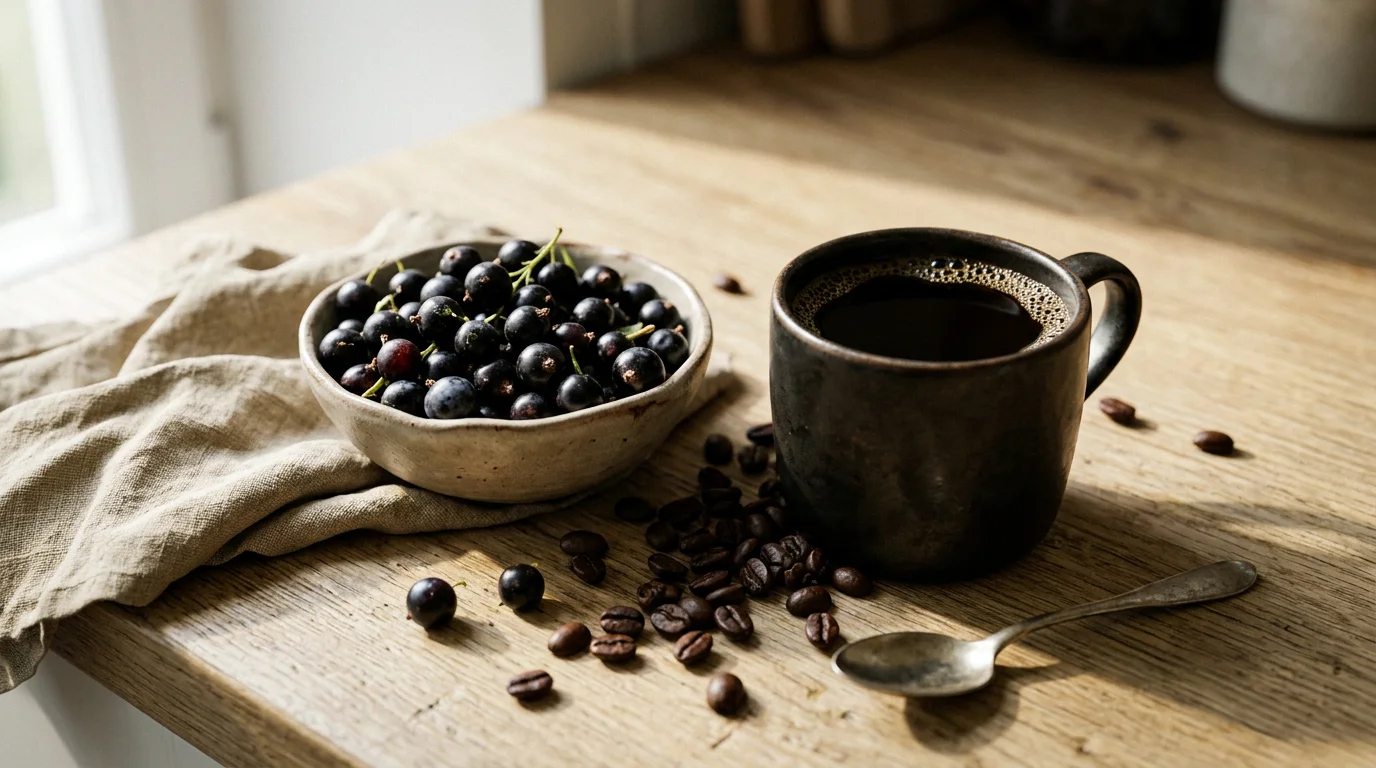
Kenyan coffee is high-grown, washed arabica known for bright, juicy acidity, a rich body and notes of blackcurrant, grapefruit and red fruit.
The flavor comes from high altitude (about 4,600–6,500 ft), famous varieties like SL28 and SL34, a careful double-fermented washed process and strict size grading such as AA, AB and PB.
For the best experience, buy a recent-harvest AA or PB from a named cooperative or estate, roast light to medium, and brew it as pour-over or drip.
Why coffee lovers get excited about Kenya
The first time I brewed a good Kenyan coffee, I genuinely thought I'd made a mistake. It tasted like blackcurrant juice and pink grapefruit, with a body like syrup.
That's the thing about Kenya. It doesn't taste like "coffee" in the way most people expect, and once you've had a great one, it's hard to forget.
Kenyan coffee has a big reputation among specialty roasters and coffee drinkers. Many put it among the very best origins in the world.
But for something so celebrated, most people know surprisingly little about why it tastes the way it does.
In this guide I'll explain the flavor, the altitude, the varieties, the processing, the grading system, how it's sold and how to brew it at home. By the end you'll know exactly what to look for on the bag.
How I got hooked
After that first cup I went on a bit of a Kenya binge. I bought AA, AB and PB lots from different regions and brewed them side by side.
What surprised me most was how different they were. Some were all blackcurrant and syrup, others more like grapefruit and black tea. A couple even had a savory, almost tomato-like edge.
That variety is a big part of why Kenyan coffee keeps roasters and home brewers coming back.
Taste vs coffee taste
A lot of people say they drink coffee because they like the taste. But much of what's served in cafés is sweetened, flavored or mostly milk.
A clean, well-brewed Kenyan coffee is a great way to discover what coffee itself can taste like: naturally sweet, bright and aromatic, without anything added.
A short history of coffee in Kenya
Coffee is native to neighboring Ethiopia, but it came to Kenya relatively late.
Missionaries and settlers
Coffee was introduced to Kenya in the 1890s, with French missionaries often credited with early plantings near Nairobi. Seeds are thought to have come partly via Réunion (then called Bourbon) and from Yemeni stock.
In the colonial era, coffee farming expanded on large estates owned by European settlers in the central highlands.
Africans shut out
For decades, colonial rules made it very hard for African farmers to grow coffee themselves. Coffee was largely reserved for settler estates.
That changed in the 1950s, when colonial agricultural reforms opened coffee growing to African smallholders on a larger scale.
Production grew quickly. Smallholders organized into cooperatives, which became the backbone of the industry.
After independence
After independence in 1963, cooperatives and the auction system became central to Kenyan coffee. The country built a reputation for some of the most consistent high-quality washed coffees in the world.
Production peaked in the late 1980s. Since then, low prices, management problems and urban growth have shrunk the area under coffee. Recent reforms aim to reverse that trend.
Research that shaped the cup
Kenya's coffee research has been world-leading. The Scott Labs selections of the 1930s gave the world SL28 and SL34. Later, the Coffee Research Station at Ruiru produced Ruiru 11 and Batian.
Few countries have influenced the genetics of specialty coffee as much as Kenya.
The signature Kenyan flavor
Great Kenyan coffee combines several qualities that rarely show up together so strongly.
- Bright acidity. A sparkling, juicy, sometimes wine-like brightness. In coffee, acidity means liveliness, not sourness.
- Rich body. Despite the brightness, top Kenyans feel full and syrupy in the mouth.
- Complex flavor. Layers of fruit, sweetness and sometimes savory notes like tomato.
- Big aroma. Freshly ground Kenyan beans smell intensely fruity and floral.
The blackcurrant note
If one flavor defines Kenya, it's blackcurrant, sometimes described as cassis. It's a deep, jammy, tart-sweet berry flavor.
You'll also often find grapefruit, red currant, plum, rhubarb, blackberry and sometimes a tomato-like savoriness.
Coffee researchers often link Kenya's bright, juicy character to its acids. Kenyan coffees are frequently described as having notable phosphoric and malic acid, which can give that sparkling, juicy feel.
How Kenyan coffee compares (my tasting, rough guide)
Based on my own tastings of light to medium roasted washed Kenyan AA and PB coffees.
Sweetness and grade
Kenyan coffee can be wonderfully sweet as well as bright. But quality varies a lot by grade. Top grades like AA, AB and PB from good cooperatives are where the classic sweetness shines.
Lower commercial grades can taste flat, woody or harsh. That's why the grade on the bag matters so much for Kenya.
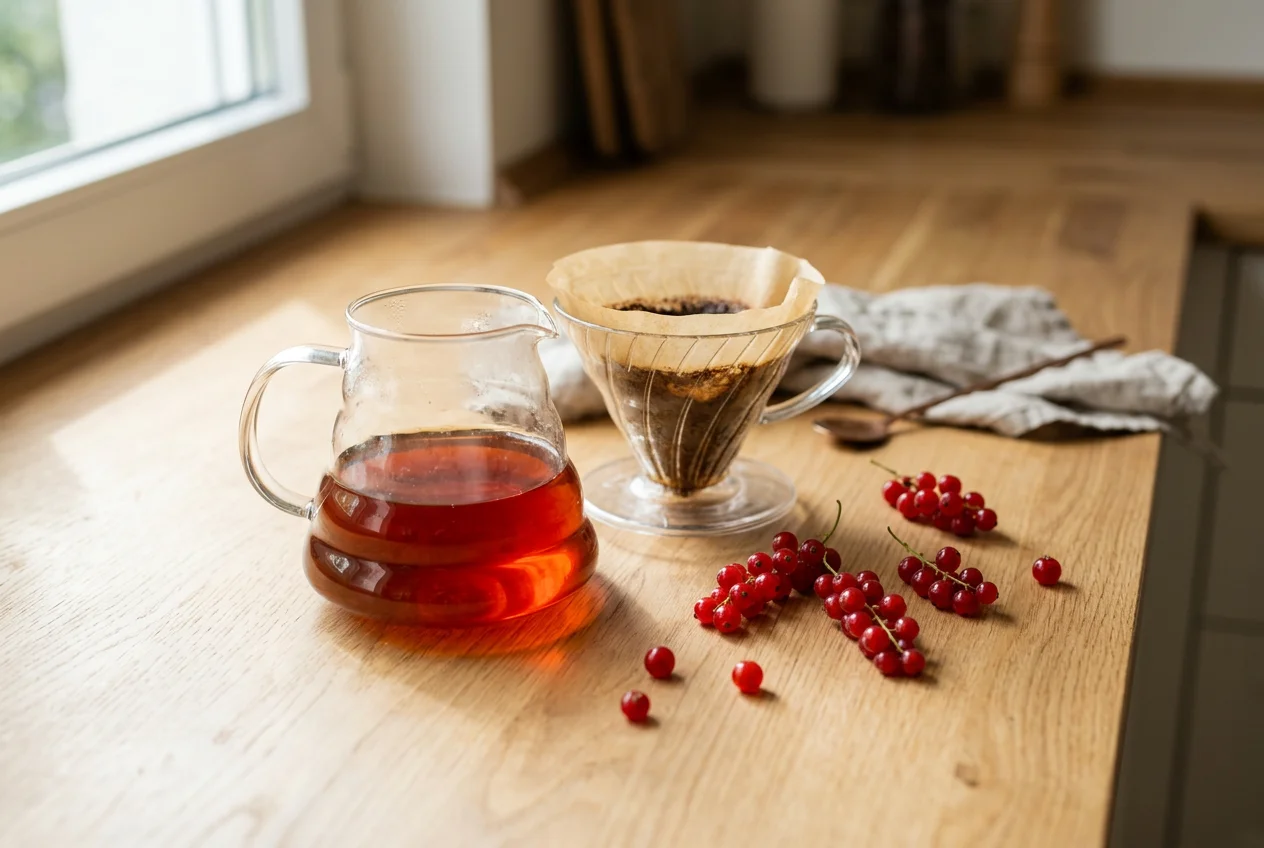
Understanding Kenyan acidity
Kenyan coffee is the best example I know of why "acidity" isn't a bad word in coffee.
Bright vs sour
Bright acidity tastes juicy, like biting into a ripe berry or grapefruit. It makes your mouth water and makes the coffee feel alive.
Sour tastes thin and harsh, like unripe fruit. In coffee, sourness usually comes from under-extraction, not from the beans themselves.
The acids in coffee
Coffee contains several kinds of acids. Here's a simple way to think about them.
| Acid | Tastes a bit like | Where you notice it |
|---|---|---|
| Citric | Lemon, orange, grapefruit | Citrusy brightness |
| Malic | Green apple, pear, stone fruit | Crisp, juicy freshness |
| Phosphoric | Sparkling, cola-like | Effervescent, lively feel |
| Acetic | Vinegar in high amounts | Winey in small amounts, harsh in large |
| Chlorogenic | Bitter-sour | More prominent in lighter roasts and robusta |
Kenyan coffees are often described as having a sparkling, juicy acidity. Many tasters link that to phosphoric and malic acids.
Acidity and your stomach
Coffee's "acidity" in the cup isn't the same as how acidic it is for your stomach. Many people with sensitive stomachs find darker roasts or cold brew gentler.
If Kenyan coffee bothers you, try it as cold brew, which tastes softer.
High altitude: Strictly High Grown and Strictly Hard Bean
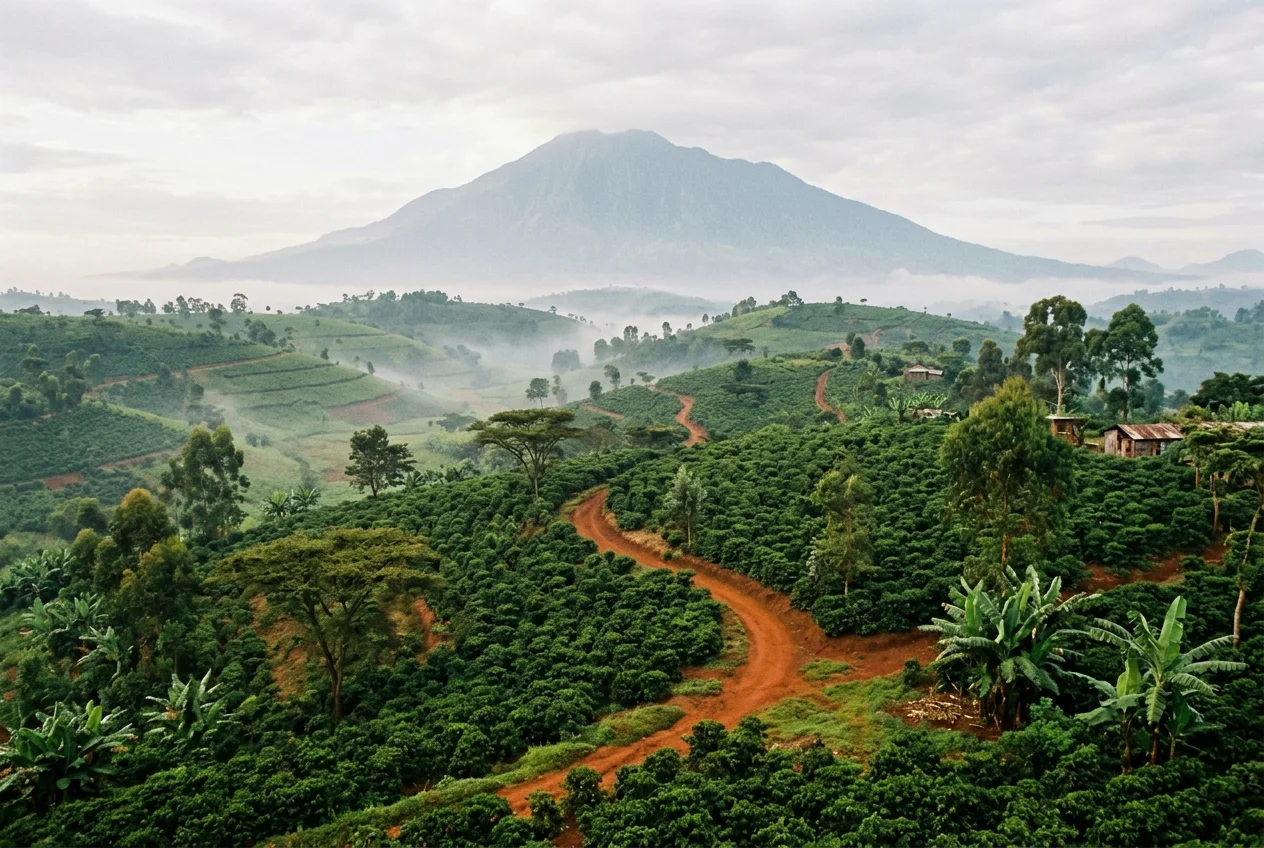
Most Kenyan coffee grows high in the central highlands, roughly 4,600 to 6,500 feet above sea level.
At that height, two common quality terms apply:
- Strictly High Grown (SHG). Coffee grown at high elevation.
- Strictly Hard Bean (SHB). Beans that are very hard and dense because they grew slowly at altitude.
Why altitude matters
Up high, nights are cool and days are sunny. That temperature swing slows down how fast the cherries ripen.
Slow ripening has two big benefits:
- Denser beansThe bean's structure grows tight and hard. Dense beans can take more heat in the roaster and develop more complex sugars.
- More sugar and acidThe fruit stays on the tree longer, so the seed builds more sugars and organic acids from the rich volcanic soil.
The result is a sweeter, brighter, more flavorful cup than most low-grown coffees.
Our tip: Dense, high-grown Kenyan beans usually need a bit more rest after roasting. For espresso, I wait at least 10 days. My guide on coffee freshness and resting explains why.
Kenya's coffee regions
Kenya's coffee is concentrated in the central highlands around Mount Kenya and the Aberdare Range, plus some western areas.
| Region | Where | Typical character |
|---|---|---|
| Nyeri | Slopes of Mount Kenya and the Aberdares | Intense blackcurrant, heavy body, very sought after |
| Kirinyaga | Southern slopes of Mount Kenya | Juicy, bright, red fruit and citrus |
| Embu and Meru | Eastern slopes of Mount Kenya | Sweet, fruity, sometimes more floral |
| Kiambu | North of Nairobi | Classic, balanced, older estates |
| Murang'a | Central highlands | Bright, sweet and fruity |
| Thika and Ruiru | Near Nairobi | Estate coffees, research station home |
| Mount Elgon and Kisii | Western Kenya | Softer, rounder cups |
Nyeri and Kirinyaga coffees are often the most prized by specialty roasters. When I see a Nyeri AA, I usually expect a big blackcurrant cup.
The country's coffee area is fairly small, roughly 105,000 hectares in recent years, and some of it has been lost to housing near Nairobi.
Factories and cooperatives
In Kenya, a "factory" is what other countries call a wet mill. It's where smallholder farmers bring their cherries to be pulped, fermented, washed and dried.
Most Kenyan coffee comes from small farms organized into cooperatives, each with one or more factories. A minority comes from larger private estates.
On good specialty bags you'll often see the factory name, like a little village address for your coffee.
The five key Kenyan coffee varieties
All of Kenya's specialty coffee is arabica. Within arabica, a handful of varieties dominate.
A variety, or cultivar, is a genetic type within a species, a bit like Cabernet Sauvignon and Pinot Noir in wine. Different varieties taste different, grow differently and resist disease differently.
SL28
SL28 was selected in the 1930s by Scott Agricultural Laboratories in Kenya. It's widely considered one of the best-tasting coffee varieties in the world.
It's responsible for much of Kenya's classic blackcurrant intensity and sweetness. It also tolerates drought better than many varieties.
SL34
SL34, another Scott Labs selection, also gives excellent cup quality: complex fruit, bright acidity and a velvety body.
It does better in wetter areas than SL28. Both SL28 and SL34 are vulnerable to coffee berry disease and coffee leaf rust, which makes them costly to protect.
K7
K7 was selected for resistance to some diseases in lower areas. Its cup quality is good but generally not at the SL28 and SL34 level.
Ruiru 11
Released in 1985 by Kenya's Coffee Research Station in Ruiru, Ruiru 11 was bred to resist both coffee berry disease and leaf rust.
It's compact, so farmers can plant more trees per acre. Its cup quality is decent, though many roasters still prefer SL varieties.
Batian
Batian, released in 2010 and named after the highest peak of Mount Kenya, is the newest major variety.
It combines disease resistance with large beans and cup quality closer to the SL varieties. Unlike Ruiru 11, it's not a hybrid that has to be re-created each time, so farmers can grow it from its own seed.
| Variety | Released | Strength | Weakness |
|---|---|---|---|
| SL28 | 1930s | Outstanding flavor, drought tolerant | Disease-prone |
| SL34 | 1930s | Excellent flavor, likes wetter areas | Disease-prone |
| K7 | Older selection | Some disease resistance | Lower cup quality |
| Ruiru 11 | 1985 | Disease resistant, high yield | Cup quality less prized |
| Batian | 2010 | Resistant with strong cup quality | Still being adopted |
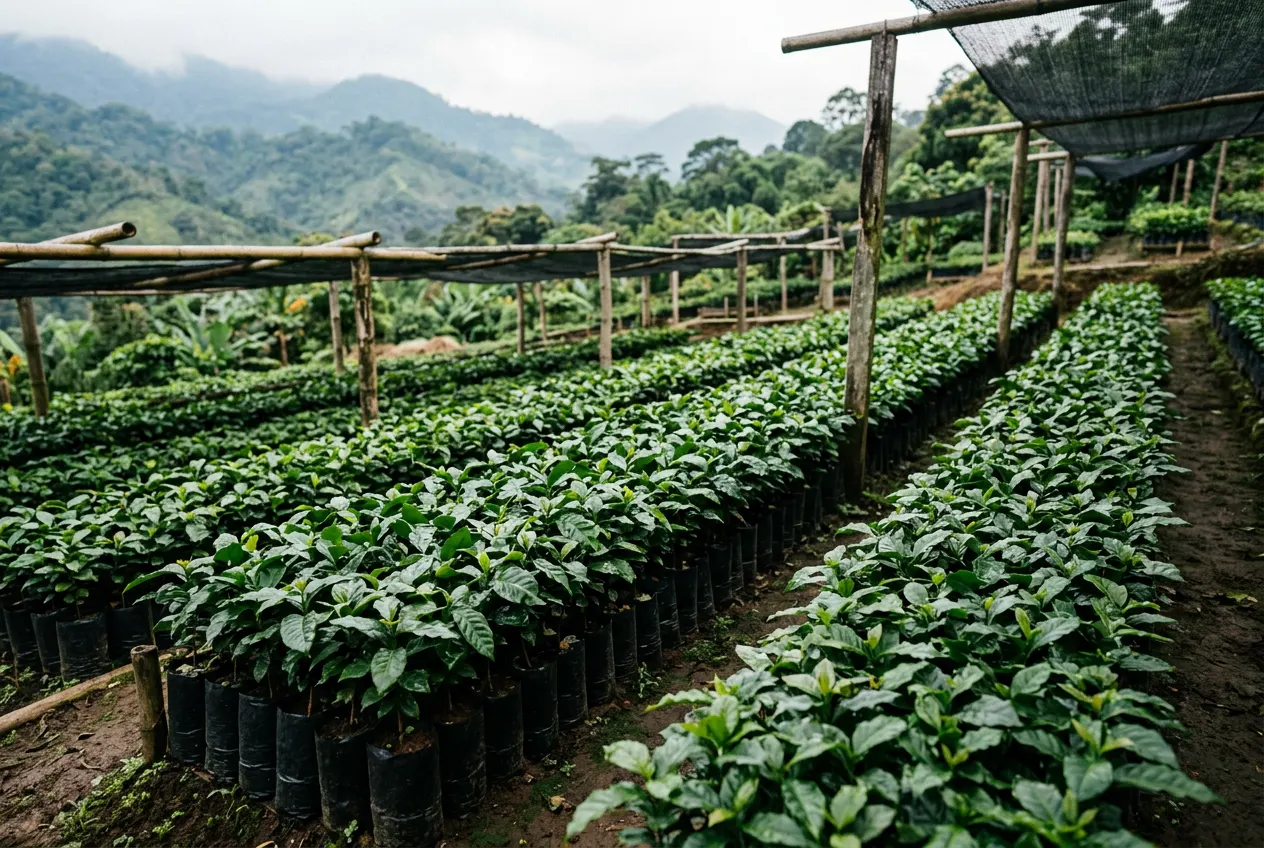
Many Kenyan lots mix varieties, often SL28, SL34, Ruiru 11 and Batian together. If a bag lists only SL28 and SL34, expect a classic, intense cup.
Kenya's washed process
Almost all Kenyan specialty coffee is washed, also called wet processed. Kenya's version is especially thorough.
- PulpRipe cherries are pulped within hours of picking to remove the skin and most of the fruit.
- FermentBeans still coated in sticky mucilage ferment in tanks, often for 24 to 72 hours, while natural microbes break down the sugary layer.
- Wash and gradeBeans are washed in long channels. Denser, better beans sink and lighter ones float away, so washing also sorts quality.
- SoakMany factories soak the clean beans in fresh water for another 12 to 24 hours. This extra step, often called Kenyan double fermentation, is thought to boost clarity and acidity.
- DryBeans in their parchment skin dry slowly on raised mesh beds in the sun until they reach about 10 to 12% moisture.
- MillJust before export, the dry parchment is milled off to reveal the green coffee bean.
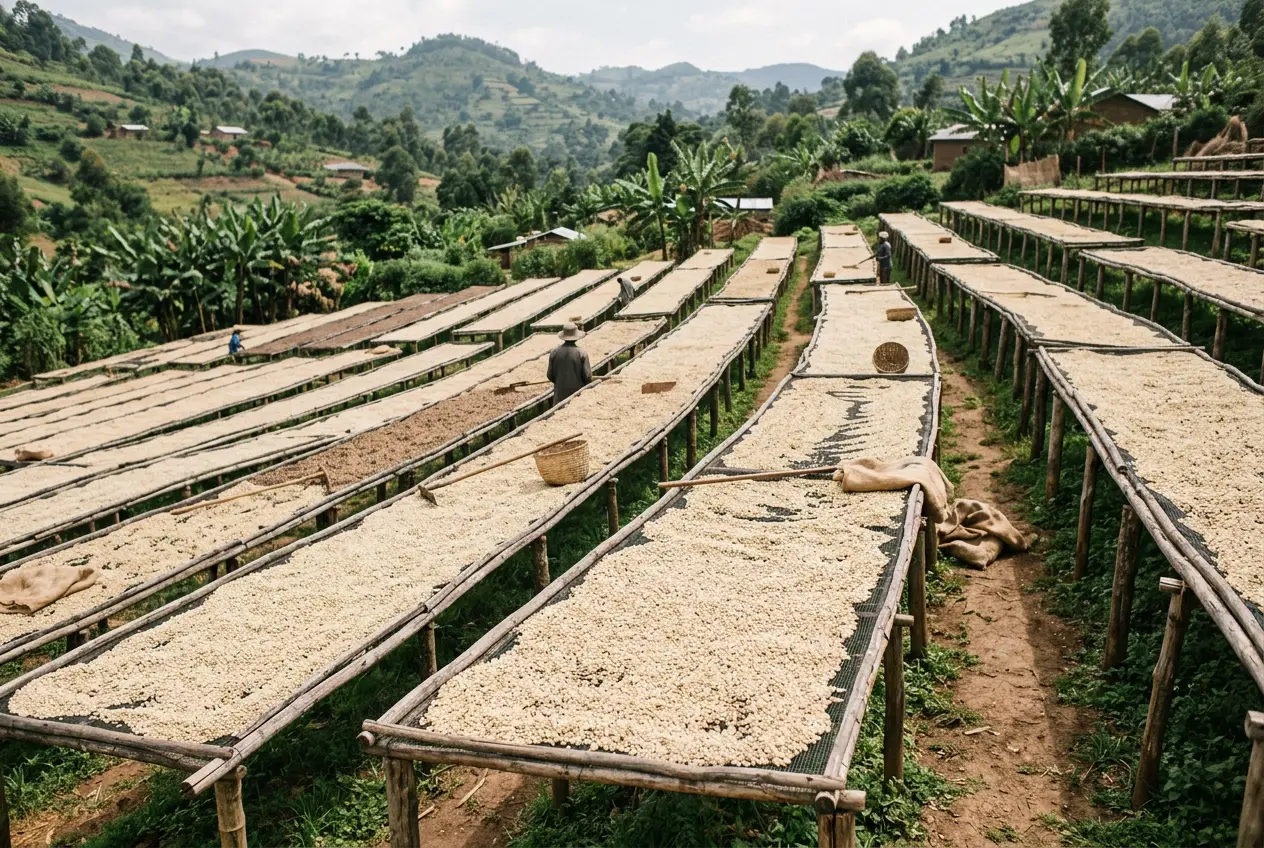
How it shapes flavor
Because the fruit is removed before drying, the seed doesn't pick up heavy fermented-fruit flavors. That gives Kenyan coffee its trademark profile:
- Clean taste. Clear, transparent flavors where berries, citrus and florals stand out.
- Brisk mouthfeel. Washed coffees feel crisper and lighter than naturals, although top Kenyans still have good body.
- Preserved acidity. The washed process keeps Kenya's sparkling acidity front and center.
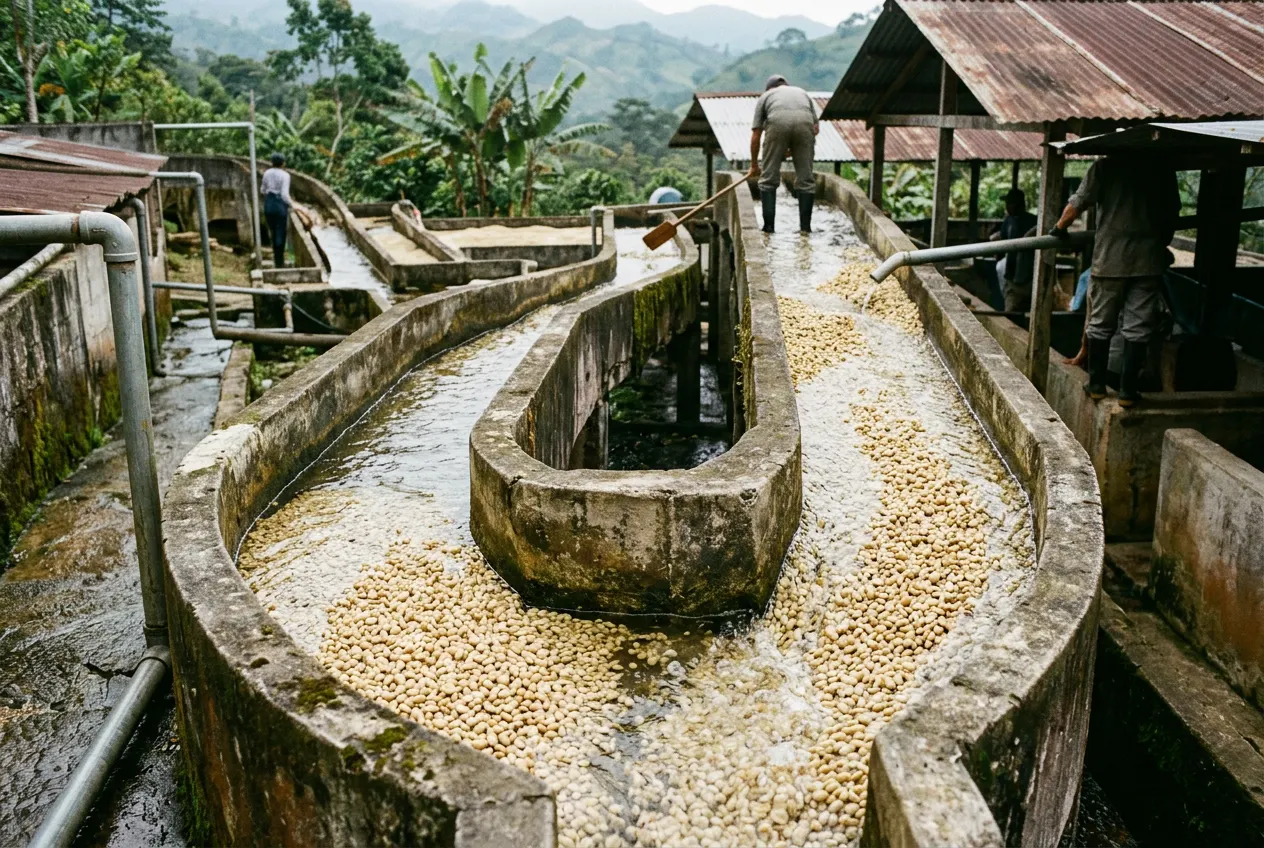
If you want a broader look at washed, natural and honey methods, see my guide on coffee processing methods.
Kenya's connection to Ethiopia
Kenyan and Ethiopian coffees are often compared, and they're closely related.
Ethiopia is the birthplace of arabica. Much of the world's arabica genetics, including Kenya's, trace back to Ethiopian and Yemeni plants in some way.
In the cup, both countries are known for intense fruit, complex aromas and bright acidity.
How they differ
In my experience, Ethiopian coffees often lean floral and tea-like, with jasmine, bergamot, lemon and stone fruit, especially in washed coffees. Natural Ethiopians can taste like blueberry jam.
Kenyan coffees usually lean deeper and juicier: blackcurrant, grapefruit, tomato and red fruit, with more body and a punchier acidity.
Kenya's own path
Kenya developed its own identity in the 20th century thanks to the Scott Labs varieties. SL28 and SL34 were selected in the 1930s and spread widely in the following decades.
They suited Kenya's volcanic highlands so well that they became the foundation of the modern Kenyan cup.
| Kenya | Ethiopia | |
|---|---|---|
| Typical process | Washed | Washed and natural |
| Signature notes | Blackcurrant, grapefruit, red fruit | Jasmine, bergamot, lemon, blueberry |
| Body | Medium-full, syrupy | Light to medium, tea-like |
| Acidity | Very bright, juicy | Bright, often delicate |
| Varieties | SL28, SL34, Ruiru 11, Batian | Mostly local heirloom varieties |
| Home coffee culture | Mostly tea | Strong coffee ceremony culture |
The Kenyan grading system: AA, AB, PB and more
Kenya sorts its green coffee by bean size and density before export. It's one of the strictest grading systems in the coffee world.
Why size matters
In the roaster, small beans heat up faster than big ones. If a batch mixes sizes, the small beans can scorch before the big ones are fully roasted.
When beans are sorted to one size, they roast evenly. That helps bring out sweetness and clarity.
The main grades
| Grade | What it is | What to expect |
|---|---|---|
| E (Elephant) | Very large beans, often two seeds fused into one | Rare, roasted separately |
| AA | Largest standard beans, screen 17–18 | The classic premium Kenyan grade |
| AB | Mix of A and B sizes, screen 15–16 | Excellent value, often very good |
| PB (Peaberry) | Single round seed instead of two flat ones | Concentrated, sweet, bright |
| C | Smaller beans | Lower grade, more commercial |
| TT and T | Lighter or broken beans | Lower quality |
| MH and ML (Mbuni) | Cherries dried whole, not washed | Commercial, often harsh or woody |
Screen numbers refer to hole sizes in sorting screens, measured in 64ths of an inch.
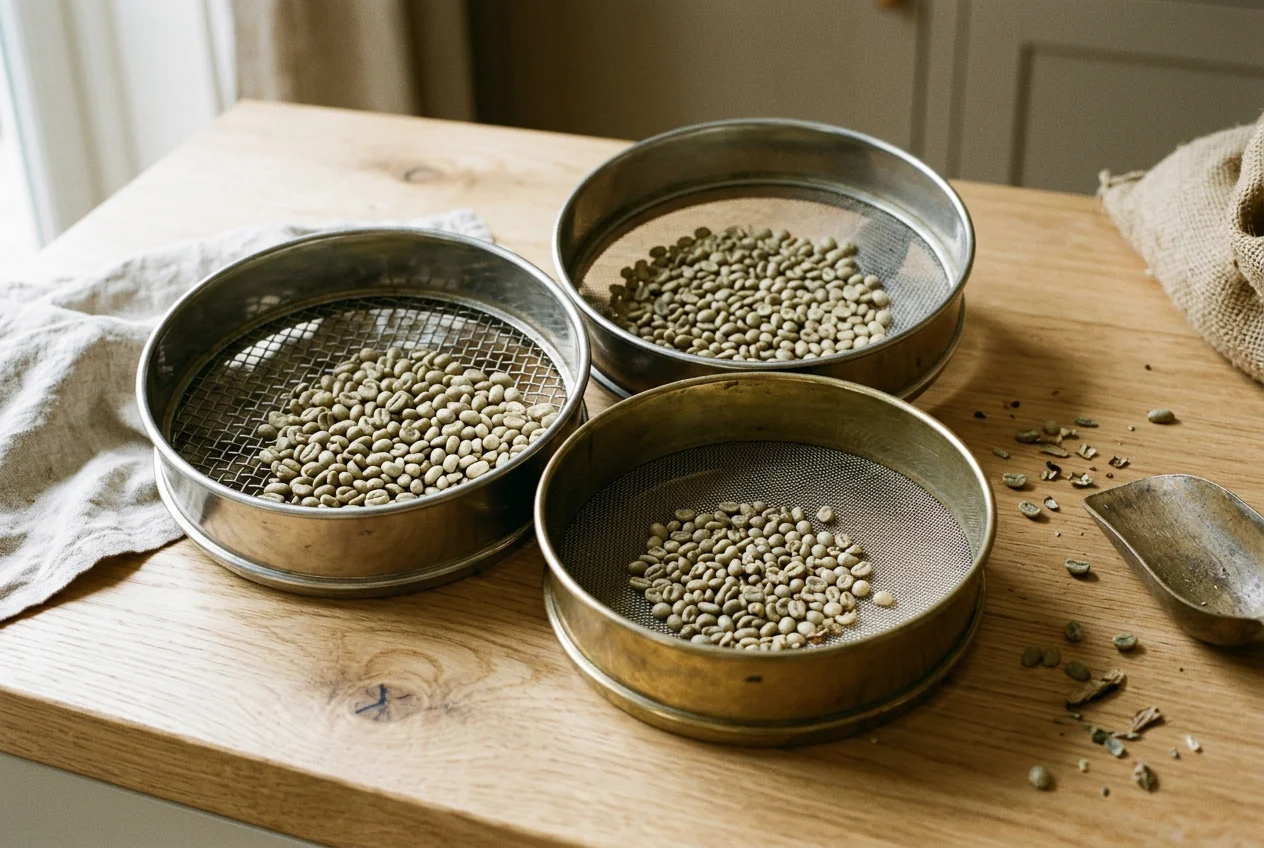
Peaberries
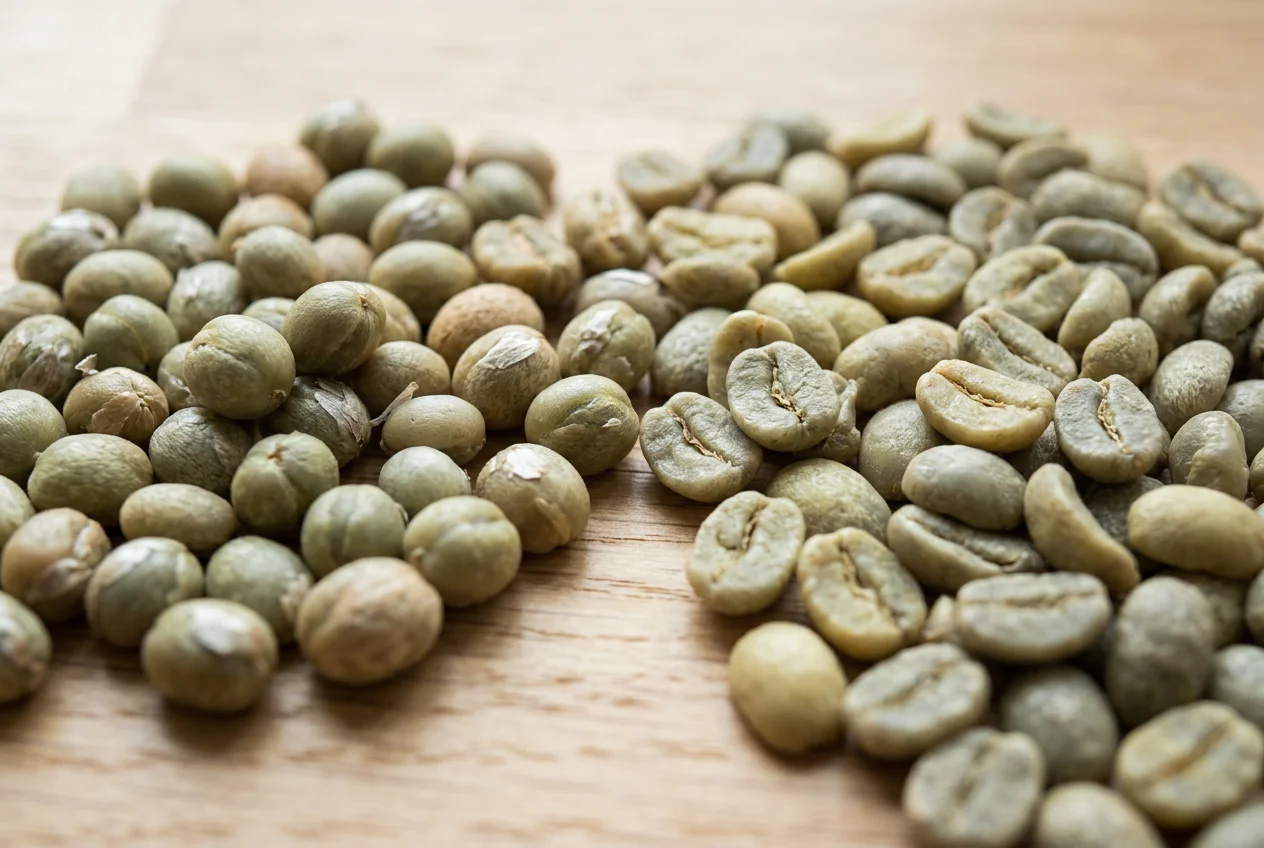
Normally a coffee cherry holds two flat-sided seeds. Occasionally, roughly 5 to 10% of the time, only one round seed develops.
These peaberries are sorted out as PB. Many people find Kenya PB extra sweet and concentrated. Their round shape also rolls evenly in the roaster.
Grade isn't everything
AA is famous, but size doesn't guarantee flavor. A well-processed AB from a top factory can beat a mediocre AA.
I look at the region, factory and roaster's tasting notes as well as the grade. Still, for a first Kenyan, an AA or PB from a good roaster is a safe bet.
How Kenyan coffee is sold
Kenya has an unusual system for selling coffee.
Most of the crop is sold through the Nairobi Coffee Exchange, a weekly auction where licensed buyers bid on lots. Coffee can also be sold directly to buyers abroad.
Most Kenyan coffee comes from smallholder farmers organized in cooperatives, with the rest from private estates.
Why the auction matters
The auction rewards quality. Buyers taste samples before bidding, and top lots fetch premium prices.
It also means individual factories and cooperatives can build reputations over the years. Some names show up again and again on specialty menus.
Reforms and farmer pay
Kenya's coffee sector has been through many reforms. A long-standing concern has been how much of the final price reaches farmers after cooperatives, millers, marketers and brokers take their share.
Recent changes include a reorganized exchange and a direct settlement system meant to pay farmers faster and more transparently.
Who buys Kenyan coffee
Kenya exports the vast majority of its crop. Recent data shows the United States as the largest single buyer, followed by countries like Belgium and Germany.
Why Kenyans mostly drink tea
Here's a surprising fact: Kenya grows some of the world's most sought-after coffee, but most Kenyans drink tea.
Kenya is one of the world's biggest black tea exporters. At home, the everyday drink is chai: hot, milky, sweet tea.
Domestic coffee drinking is growing in cities, but it's still small. Recent estimates put local consumption at only a few percent of the harvest, so over 90% of Kenya's coffee is exported.

That's very different from neighboring Ethiopia, which drinks about half of its own coffee.
For coffee lovers abroad, it means almost all of Kenya's best coffee ends up on the international market.
How much coffee Kenya grows
Kenya is not a big producer by volume. A typical recent harvest is under a million 60-kilogram bags. Brazil produces many times that.
Combined with strong demand from specialty roasters, that limited supply helps explain why Kenyan coffee often costs more.
Kenya vs other East African coffees
If you love Kenyan coffee, its neighbors are worth exploring too. They share some of the same brightness but each has its own style.
| Origin | Typical character | How it compares to Kenya |
|---|---|---|
| Ethiopia | Floral, tea-like, lemon, blueberry in naturals | Lighter and more delicate |
| Tanzania | Bright citrus, blackcurrant at times, medium body | Often similar, a little softer |
| Rwanda | Red fruit, black tea, orange, sweet | Rounder, gentler acidity |
| Burundi | Juicy red fruit, florals, sometimes savory | Similar brightness, lighter body |
| Uganda (arabica) | Chocolate and fruit, heavier body | Less acidic, more rounded |
My favorite contrasts
Kenya next to a Rwandan coffee is a lovely comparison. Both are bright and fruity, but Rwanda usually feels softer and more tea-like, while Kenya hits harder.
Tanzanian peaberry is another fun one. It sometimes gets close to Kenya's blackcurrant style, often at a lower price.
What to eat with Kenyan coffee
Kenyan coffee's fruit and acidity work best with foods that either echo or balance them.
- Berry desserts. Blackcurrant or raspberry tarts mirror Kenya's signature fruit.
- Citrus bakes. Lemon drizzle cake or orange scones bring out the grapefruit notes.
- Dark chocolate. A square of 70% chocolate adds depth and makes the coffee taste sweeter.
- Creamy foods. Cheesecake, yogurt or a buttery croissant softens the acidity.
- Savory breakfast. Eggs and toast work too, especially with a medium-roasted Kenyan.
Our tip: Avoid very sweet, sugary desserts with a light-roasted Kenyan. They can make the coffee taste sour by comparison.
Fixing common problems with Kenyan coffee
| Problem | Likely cause | Fix |
|---|---|---|
| Sour and thin | Under-extracted | Grind finer, brew longer, use hotter water |
| Harsh and bitter | Over-extracted or too dark a roast | Grind coarser, shorten brew, buy a lighter roast |
| Flat, no fruit | Stale or old beans | Buy fresher coffee, grind just before brewing |
| Wild, uneven espresso | Too fresh | Rest beans 10–14 days |
| Too sharp in milk | Light roast acidity | Use a medium roast or more milk |
| Tastes like tomato | Can be normal for some Kenyans | Try another lot if you dislike it |
The most common mistake I see is under-extraction. Because Kenyan coffee is so bright, people assume the sourness is normal. Push the extraction a little and it usually turns sweet and juicy.
How Kenyan coffee responds to roasting
Kenyan coffee is dense, so roasters usually treat it with care.
| Roast | What you get |
|---|---|
| Light | Maximum blackcurrant, grapefruit and floral notes; very bright |
| Medium-light | Juicy fruit with more sweetness; my favorite for filter |
| Medium | Red fruit, brown sugar and a heavier body; great all-rounder |
| Dark | Fruit mostly gone; bold, smoky, a waste of what makes Kenya special |
I'd avoid dark-roasted Kenyan coffee. You'll pay a premium for flavors the roast has burned away.
If you're unsure how roast changes flavor in general, my guide to coffee roast levels walks through it.
How to brew Kenyan coffee
Kenyan coffee shines in brewers that highlight clarity.
Pour-over
This is my favorite way to brew Kenya.
- Ratio15 g coffee to 250 g water.
- WaterAround 200–205°F, filtered.
- GrindMedium-fine, like table salt.
- BloomPour about 45 g water and wait 45 seconds.
- PourAdd the rest in slow circles, finishing around 3 minutes total.
- Taste as it coolsKenyan coffee often gets sweeter and juicier as it cools.

Drip machine
Kenya works beautifully in a good drip brewer. Use around 60 g per liter and a medium grind.
Espresso
Kenyan espresso is intense, juicy and acidic. It can be thrilling as a straight shot, though some find it too sharp.
Try a slightly longer ratio, such as 1:2.5, and hotter water to round it out. In milk, it can taste like berry yogurt, which some people love and some don't.
AeroPress and immersion
An AeroPress or French press gives a fuller, rounder Kenyan cup with softer acidity. Good if pour-over feels too bright.
Cold brew
Kenyan cold brew is surprisingly refreshing, almost like a berry iced tea. Steep coarse coffee about 12 to 16 hours in the fridge.

Our tip: If Kenyan coffee tastes sour, don't give up on it. Grind a little finer or brew a little longer. Under-extracted Kenya is sharp; properly extracted Kenya is sweet and juicy.
Why Kenyan coffee costs more, and whether it's worth it
Kenyan coffee is usually more expensive than coffee from Brazil or Colombia. A few things drive that.
Limited supply
Kenya produces under a million bags in a typical year. That's a small slice of the world's coffee, and the best AA and PB lots are a small slice of that.
Strong demand
Specialty roasters around the world want Kenyan coffee for their menus. Competition for top lots at the Nairobi auction pushes prices up.
Careful processing
Hand-picking, washing, soaking, slow drying on raised beds and strict grading all take labor and time.
Is it worth it?
For black filter coffee, I think a good Kenyan is one of the best-value treats in coffee. You get a level of flavor intensity that very few origins can match.
For milk drinks or dark roasts, though, I'd save your money. Much of what you're paying for gets lost.
| How you drink | Is Kenyan coffee worth it? |
|---|---|
| Black pour-over or drip | Yes, absolutely |
| Straight espresso | Yes, if you like bright shots |
| Lattes and cappuccinos | Usually not; choose a cheaper, chocolatey coffee |
| Dark roast fan | No; the roast hides its character |
| Cold brew | Yes, for a fruity, refreshing glass |
How to buy great Kenyan coffee
What to look for on the bag
- Grade. AA, AB or PB for specialty quality.
- Region. Nyeri, Kirinyaga, Embu, Murang'a or Kiambu.
- Factory or estate name. A sign of traceability.
- Varieties. SL28 and SL34 for classic intensity; Batian and Ruiru 11 are fine too.
- Process. Washed is the classic Kenyan style.
- Harvest and roast date. Kenya's main crop is harvested roughly from October to December, with a smaller crop in some areas mid-year. Fresh-crop coffee usually reaches roasters a few months later.
What to be cautious about
- "Kenya style" or "Kenya blend." May contain only a little Kenyan coffee.
- No grade listed on a cheap bag. Could be a low grade.
- Very dark roast. Hides what makes Kenya worth buying.
My general guide on how to choose coffee beans covers roast dates and labels for any origin.
Keeping Kenyan coffee fresh
Kenyan coffee's fruit and floral aromas are its biggest asset, and they're also the first things to fade.
Rest first
Kenyan beans are dense and hold their gas longer. For pour-over I wait about a week after roasting. For espresso, I wait 10 to 14 days.
Then drink it fairly soon
Once rested, I aim to finish a bag within about three to four weeks. After that, the blackcurrant and grapefruit notes start to fade into a more generic sweetness.
Store it well
Keep beans in an airtight, opaque container away from heat and light. If you have more than you can drink in a few weeks, freeze sealed portions after they've rested.
My guide on how to store coffee beans covers containers and freezing in detail.
Our tip: Grind Kenyan coffee right before brewing. Ground coffee loses its bright aromatics within minutes, and with Kenya that's exactly what you're paying for.
Challenges facing Kenyan coffee
Kenyan coffee's reputation is strong, but the industry faces real pressures.
Shrinking land
Coffee land has shrunk significantly since its peak in the late 1980s. Housing and other crops have replaced farms, especially near Nairobi in areas like Kiambu.
Farmer income
Many smallholders earn little from their coffee after costs and fees. When prices are low, some neglect their trees or switch to other crops.
Disease and climate
SL28 and SL34 are vulnerable to coffee berry disease and leaf rust. Changing rainfall and higher temperatures add pressure.
Resistant varieties like Batian help, and research continues.
Signs of recovery
Higher world coffee prices in recent years and new reforms have encouraged some farmers to invest in their trees again. Forecasts point to production rising again.
For coffee drinkers, supporting roasters who pay well and share where their Kenyan coffee comes from is one way to help keep these farms going.
A Kenyan tasting flight at home
If you want to really understand Kenya, try a small flight.
- Kenya AAThe classic: blackcurrant, grapefruit, syrupy body.
- Kenya PBCompare it with the AA. Notice if it tastes more concentrated or sweeter.
- Ethiopia washedA contrast: more floral and tea-like.
- Colombia washedAnother contrast: rounder, with caramel and orange.
Brew all four the same way. You'll quickly start to recognize the Kenyan "punch."
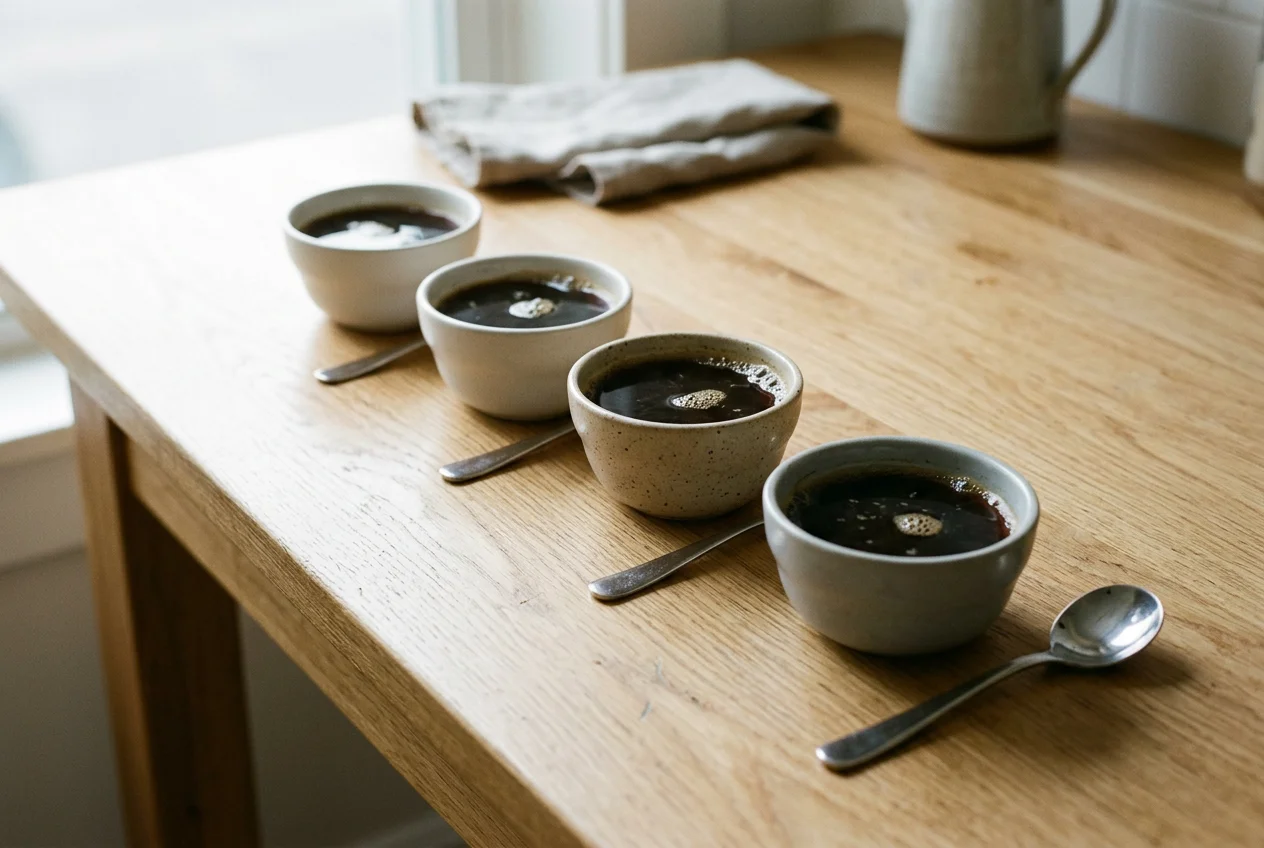
I did this with a group of friends once, and the Kenyan coffee was easily the most talked-about. Some loved it, a couple found it too wild. Either way, nobody forgot it.
Kenyan coffee myths
"Kenyan coffee is sour"
Good Kenyan coffee is bright, not sour. If it tastes sour and thin, it's usually under-extracted or too fresh.
"AA always means the best"
AA is a size grade. It's a good sign, but a great AB or PB can beat an average AA.
"Kenyan coffee is too strong"
Kenyan coffee has intense flavor, not necessarily more caffeine. It's arabica, with typical arabica caffeine levels.
"Kenyans drink a lot of their own coffee"
Most Kenyans drink tea. Nearly all the coffee is exported.
"All Kenyan coffee tastes the same"
Kenyan coffees vary a lot by region, factory, variety and year. A Nyeri SL28 can taste very different from a Kiambu estate coffee or a Batian-heavy lot. That's part of the fun of exploring them.
"Peaberries come from special trees"
Peaberries grow on the same trees as normal beans. They're a natural quirk where only one seed develops in the cherry, and they're sorted out afterward.
"Dark roast brings out Kenya's richness"
Dark roasting buries Kenya's fruit. Light to medium roasts show it best.
Kenyan coffee at a glance
| Feature | Kenyan coffee |
|---|---|
| Species | Arabica |
| Altitude | About 4,600–6,500 ft |
| Key regions | Nyeri, Kirinyaga, Embu, Meru, Murang'a, Kiambu |
| Key varieties | SL28, SL34, K7, Ruiru 11, Batian |
| Process | Washed, often double-fermented, dried on raised beds |
| Top grades | AA, AB, PB |
| Flavor | Blackcurrant, grapefruit, red fruit, sometimes tomato |
| Body | Medium to full, syrupy |
| Acidity | Very bright and juicy |
| Best brew | Pour-over, drip, AeroPress |
| Best roast | Light to medium |
My bottom line
Kenyan coffee is one of the most exciting origins you can buy. It's bright, juicy and full of character.
If you've only had smooth, chocolatey coffees, a good Kenyan AA brewed as pour-over is a real eye-opener. Start there, taste it as it cools and see what you think.
Frequently asked questions
What does Kenyan coffee taste like?
Typically bright and juicy, with notes of blackcurrant, grapefruit and red fruit, a syrupy body and a big fruity aroma.
What does Kenya AA mean?
AA is Kenya's largest standard bean size grade. It's often associated with premium quality, though size alone doesn't guarantee flavor.
What is Kenya PB?
PB stands for peaberry, a single round seed that develops instead of the usual two flat ones. Many find it extra sweet and concentrated.
Is Kenyan coffee arabica or robusta?
Kenyan specialty coffee is arabica. Robusta makes up only a tiny share of Kenya's production.
What are SL28 and SL34?
Coffee varieties selected by Scott Agricultural Laboratories in Kenya in the 1930s, famous for outstanding flavor but vulnerable to disease.
Why is Kenyan coffee so acidic?
High altitude, the SL varieties and the washed process all preserve bright acids. In good coffee this tastes juicy, not sour.
Is Kenyan coffee good for espresso?
It makes a vivid, fruity espresso. Some love it; others find it too sharp, especially in milk.
How should I brew Kenyan coffee?
Pour-over or a good drip machine shows off its clarity best. Use a light to medium roast and filtered water.
Why is Kenyan coffee expensive?
Limited production, strong demand from specialty roasters, careful processing and a quality-focused auction system.
Do Kenyans drink coffee?
Mostly tea. Domestic coffee drinking is growing in cities, but over 90% of the crop is exported.
When is Kenyan coffee harvested?
The main harvest runs roughly from October to December, with a smaller crop in some areas in the middle of the year.
How is Kenyan coffee different from Ethiopian?
Kenyan coffee tends to be juicier with blackcurrant and grapefruit; Ethiopian coffee is often more floral and tea-like.

- Michael Reynolds, tasting notes from brewing Kenyan coffees at home
- Kenya coffee report: production rebounds amid higher prices, Daily Coffee News (USDA FAS data)
- Coffee Development and Marketing Strategy (draft), Kenya Ministry of Agriculture and Livestock Development
- Coffee sector records mixed performance amid reforms, Nation
Related guides
Coffee processing methods How to choose coffee beans Coffee roast levels explainedWritten by Michael Reynolds. Last updated November 16, 2026.