How to Store Coffee Beans: Keep Them Fresh, Consistent and Full of Flavor
Good beans go stale fast in the wrong place, and bad storage can also wreck your espresso consistency from one shot to the next. Here are the six rules I follow, the truth about the fridge and freezer, why your grinder's hopper is the worst spot of all, and the setup I use every day.
We choose products independently. We may earn a commission through links on this page; your price stays the same. Affiliate policy
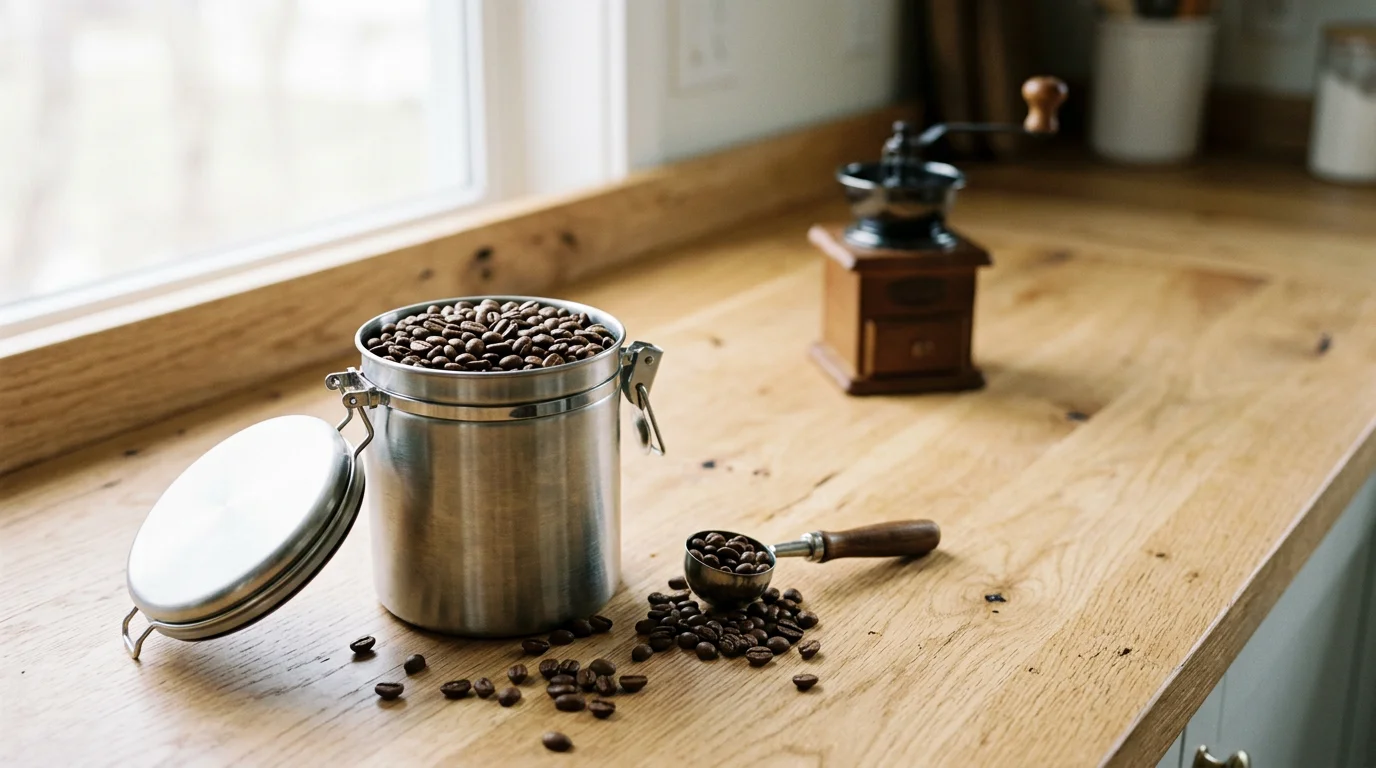
Store whole beans in an airtight, opaque container that lets you push out extra air, in a cool, dry, dark place away from the stove, sunlight and steam.
Don't keep daily beans in the fridge. Use the freezer only for longer-term storage, in sealed portions, and let them thaw before opening.
Don't store beans in your grinder hopper overnight. Keep the main supply sealed and add only what you'll use that day.
Why storage matters more than you think
Most coffee drinkers know beans go stale. Fewer realize how much storage affects day-to-day brewing.
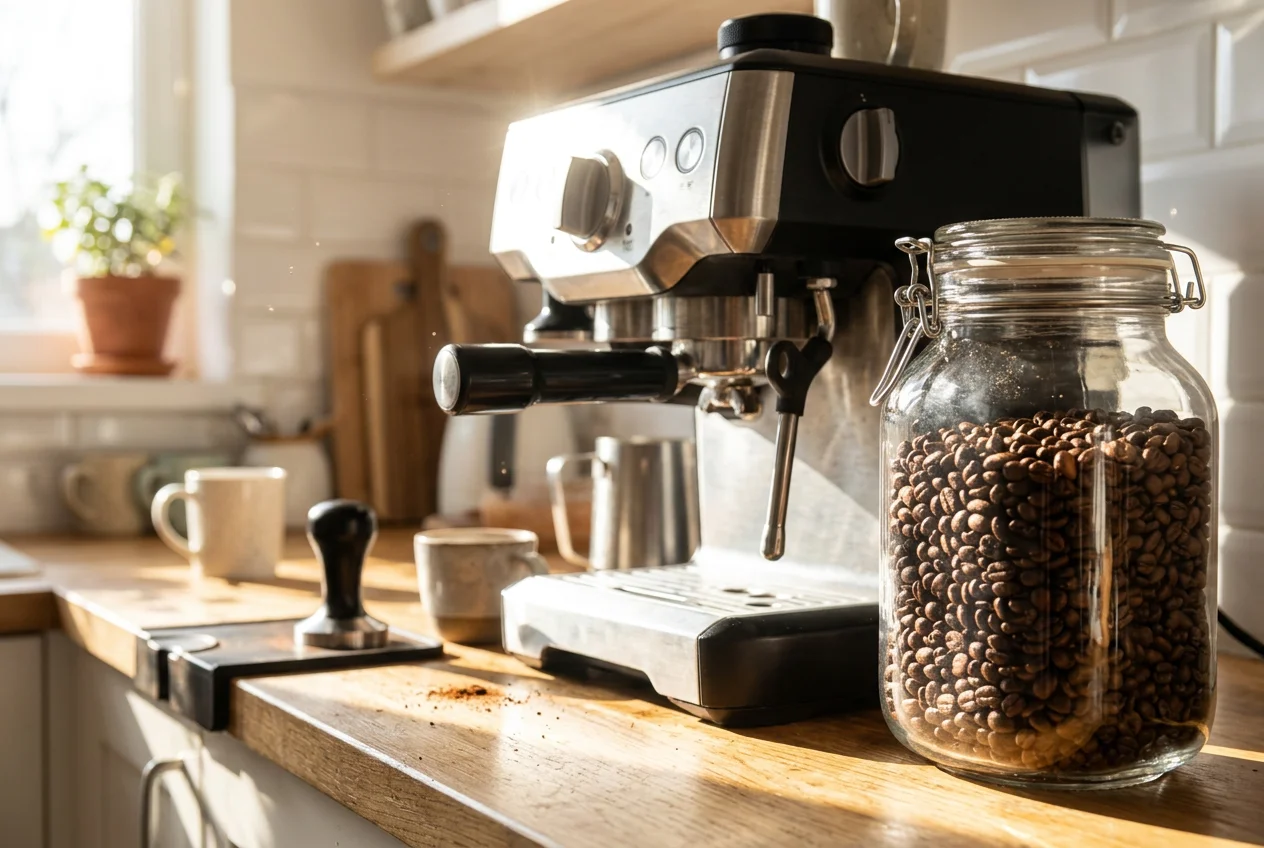
For years I kept my beans in a clear jar on the counter, right next to the espresso machine. It looked lovely. It was also slowly ruining my coffee.
When I switched to proper storage, two things happened. My coffee tasted noticeably fresher for longer, and my espresso stopped behaving like it had a mind of its own.
In this guide I'll cover what makes coffee go stale, the six rules I use to judge any storage spot, the fridge and freezer question, the problem with hoppers, the containers worth buying and a simple daily routine. I'll also share how to spot stale beans, how much to buy and a small experiment I ran at home.
Here's why storage deserves attention.
It slows staling
From the moment beans are roasted, they start aging. Good storage protects the volatile aromas, natural oils and complex flavors for much longer.
It prevents dialing-in headaches
Dialing in espresso depends on precise grind size, dose and extraction time.
When beans are stored badly, their physical properties change through the day. One shot is perfect, the next gushes or chokes, and you keep chasing your grinder setting.
It simplifies your routine
When beans live in a stable, controlled place, extractions stay predictable. You save time, and you waste less coffee on sink shots.
What actually makes coffee go stale
To store coffee well, it helps to know the enemies.
- Oxygen. The main cause of staling. It reacts with the oils and soluble compounds in the beans, turning flavors flat, papery and eventually rancid.
- Light. Sunlight and strong indoor light break down delicate compounds.
- Heat. Warmth speeds up every chemical reaction, including staling and oil breakdown.
- Moisture. Roasted beans are porous and absorb humidity and odors, which changes how they grind and taste.
- Time. Even in perfect storage, aromas slowly fade.
There's one more thing to understand: degassing. Freshly roasted beans release carbon dioxide for days after roasting.
A study in the Journal of Agricultural and Food Chemistry measured this gas loss over time and found it's fastest in the first days, then slows down. That's why quality bags have a one-way valve: it lets the gas out without letting fresh air back in. My guide to coffee freshness, resting and degassing covers this in detail.
How quickly coffee loses its best aroma (my rough experience)
Rough guide based on my own tasting. Roast level and bean freshness shift these numbers.
The six golden rules of coffee storage
I judge every storage spot and container against these six rules. If a method breaks several of them, it's not a good home for your coffee.
Rule 1: always store whole beans
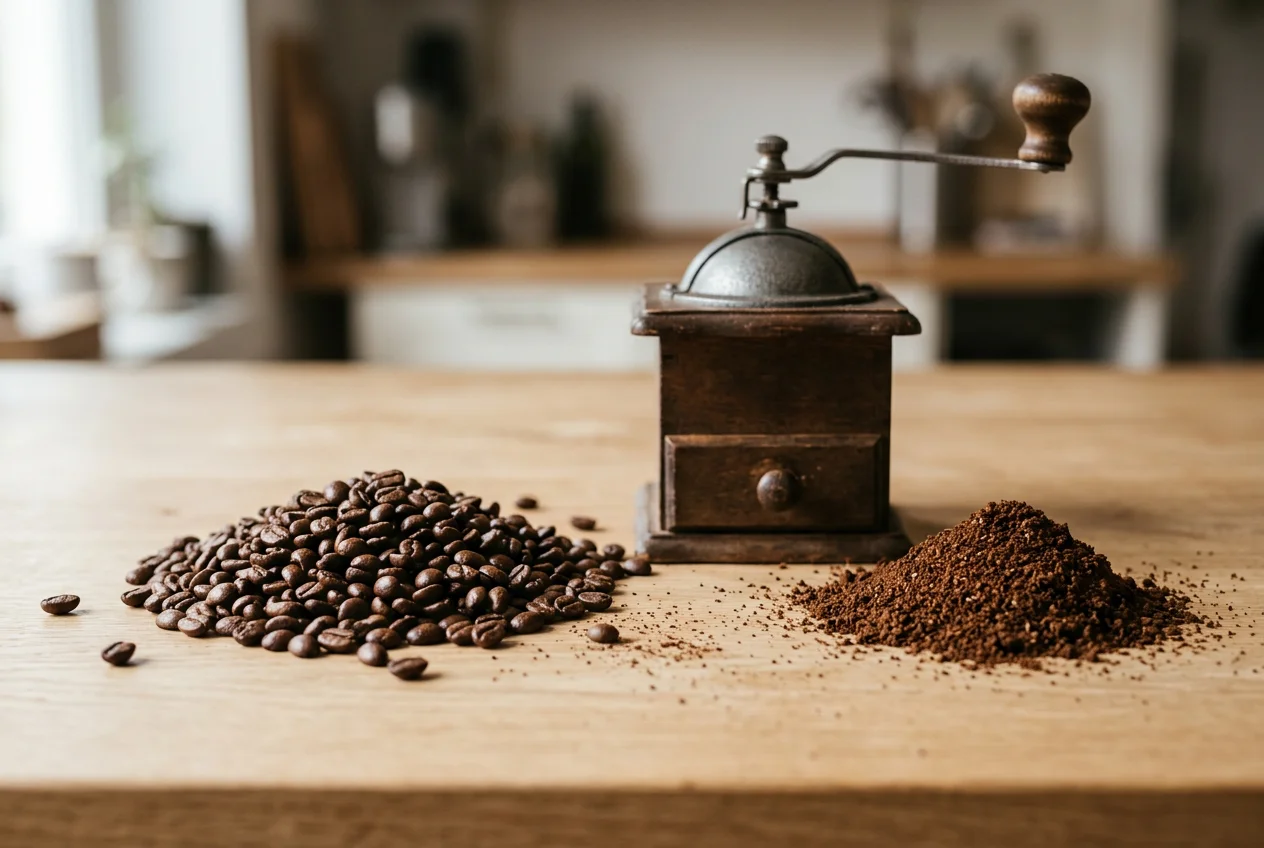
Buy and store whole beans, not pre-ground coffee.
Grinding massively increases the surface area exposed to air. With so much more surface, oxidation speeds up, and ground coffee loses aroma in hours or days instead of weeks.
A grinder, and grinding right before brewing, is one of the biggest upgrades any coffee drinker can make. If you're choosing one, my burr vs blade grinder guide explains what to look for.
Rule 2: keep beans airtight
Oxygen is fresh coffee's main enemy. Staling happens mostly through oxidation, when oxygen reacts with the oils and solubles inside the beans.
A truly airtight container stops fresh oxygen from constantly reaching your coffee.
Rule 3: push out extra air
An ordinary airtight jar is better than nothing, but it still traps a lot of air inside with the beans, especially as the jar empties.
The less oxygen in the container, the slower the staling. The best containers let you actively push air out so the beans sit in as little oxygen as possible.
Rule 4: avoid bright light
Light speeds up the breakdown of roasted coffee. Both sunlight and bright kitchen lights do damage.
Use opaque containers, or keep beans in a dark cupboard or pantry.
Rule 5: avoid moisture
Roasted beans are porous and hygroscopic, meaning they soak up moisture and smells from their surroundings.
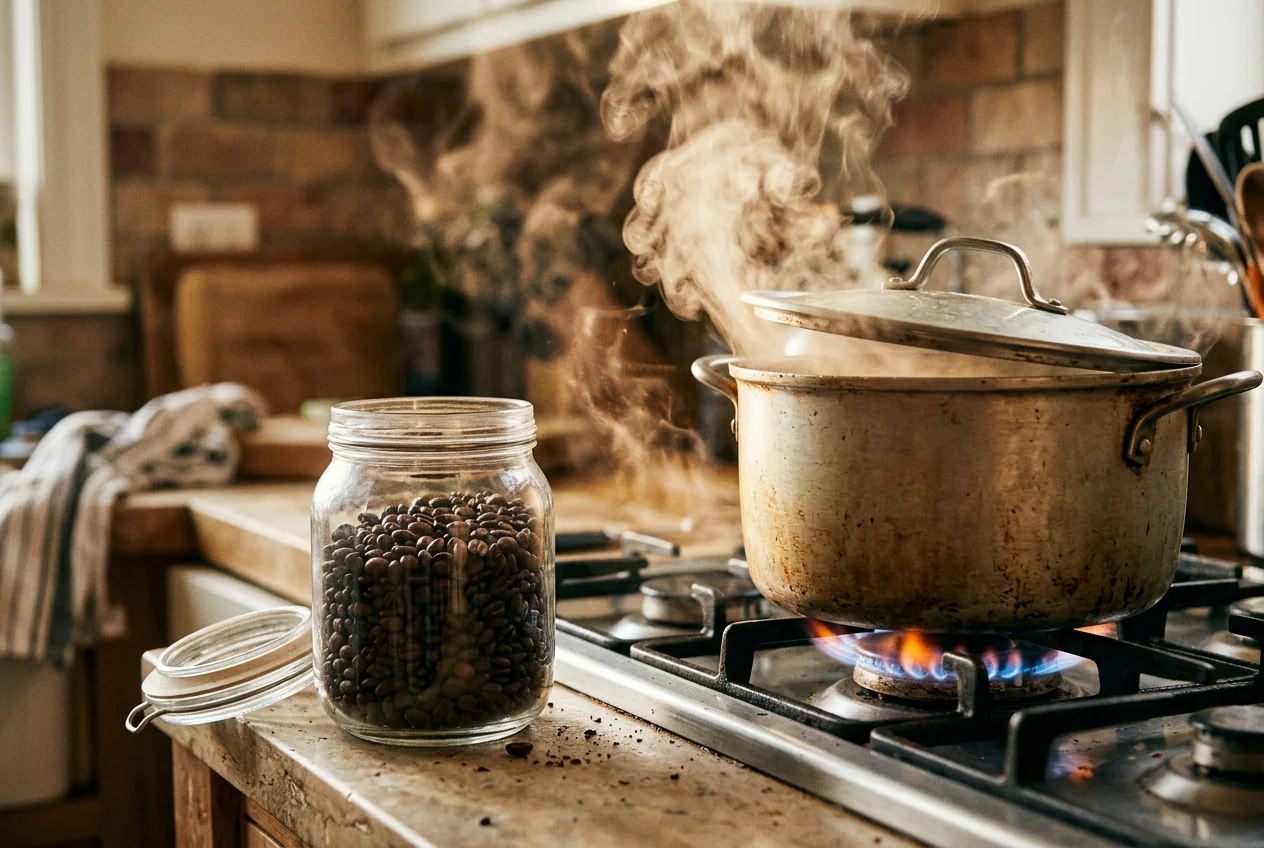
Coffee shouldn't meet water until the moment you brew. That includes steam from a kettle or espresso machine drifting over an open container. Avoid damp spots and places where humidity swings through the day, because moisture changes how brittle the beans are and ruins grind consistency.
Rule 6: avoid heat
Heat speeds up staling and oil breakdown. Store coffee somewhere cool with a stable temperature.
Like wine, coffee likes stability. Never keep it next to the stove, oven, radiator, dishwasher or in direct sun on the counter.
| Rule | Why it matters | Easy fix |
|---|---|---|
| Whole beans | Less surface for oxygen | Grind right before brewing |
| Airtight | Blocks fresh oxygen | Sealed canister or bag |
| Push out air | Less oxygen inside | Plunger or valve lid |
| No light | Light breaks down compounds | Opaque container, dark cupboard |
| No moisture | Changes grind and taste | Dry spot, no fridge |
| No heat | Speeds up staling | Away from stove and sun |
Fridge vs freezer
One of the most common questions I get: should coffee go in the fridge or freezer? They affect coffee very differently.
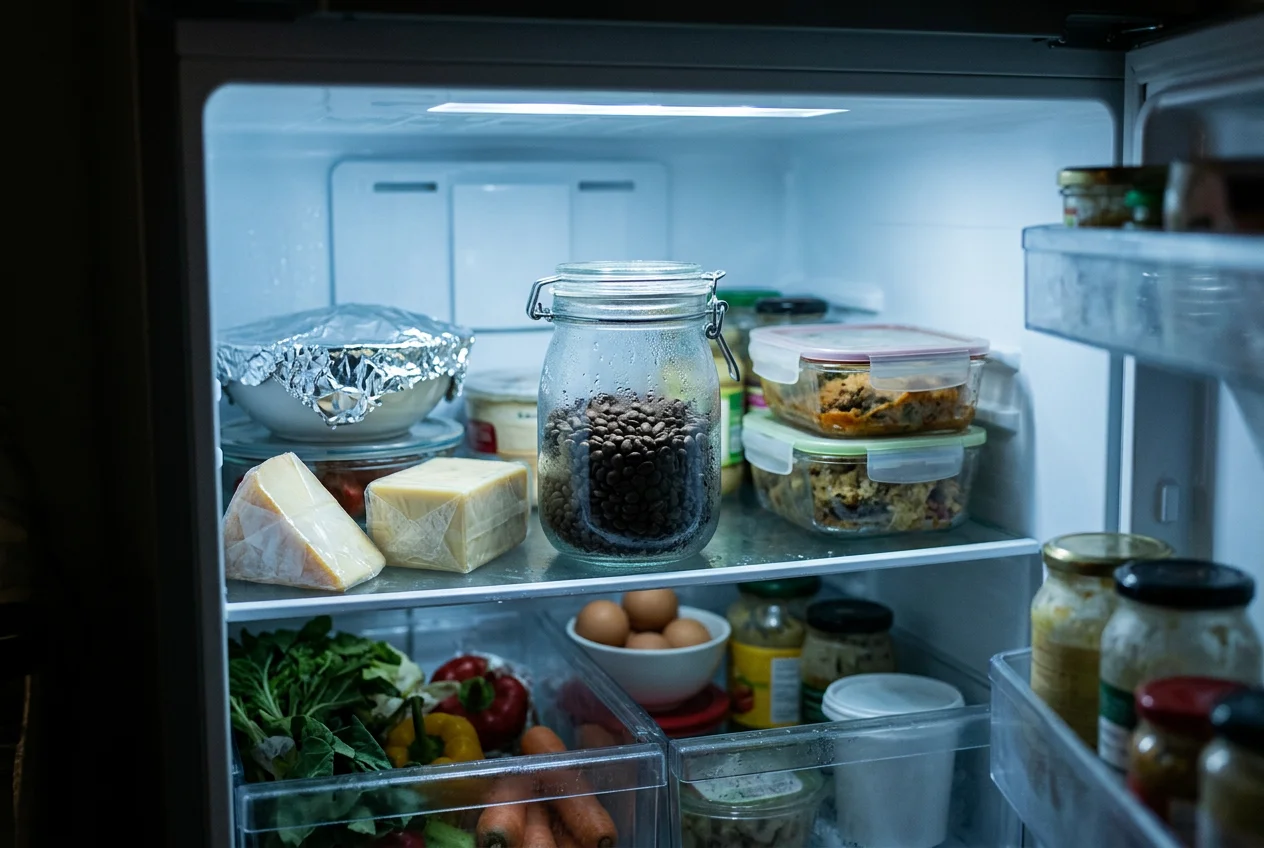
The fridge: strongly discouraged
Keeping daily beans in a normal kitchen fridge breaks several rules at once.
Fridges are humid, and opening the door switches on a bright light. They're also full of food smells that porous beans happily absorb.
Even in a dark airtight container, there's a bigger problem. Every time you take cold beans out into a warm room, open the lid and put them back, condensation forms and humidity inside the container swings.
And a fridge doesn't seem to slow staling in any meaningful way compared with a cool, dark pantry. So you get all the downsides with no real benefit.
The freezer: good for longer-term storage only
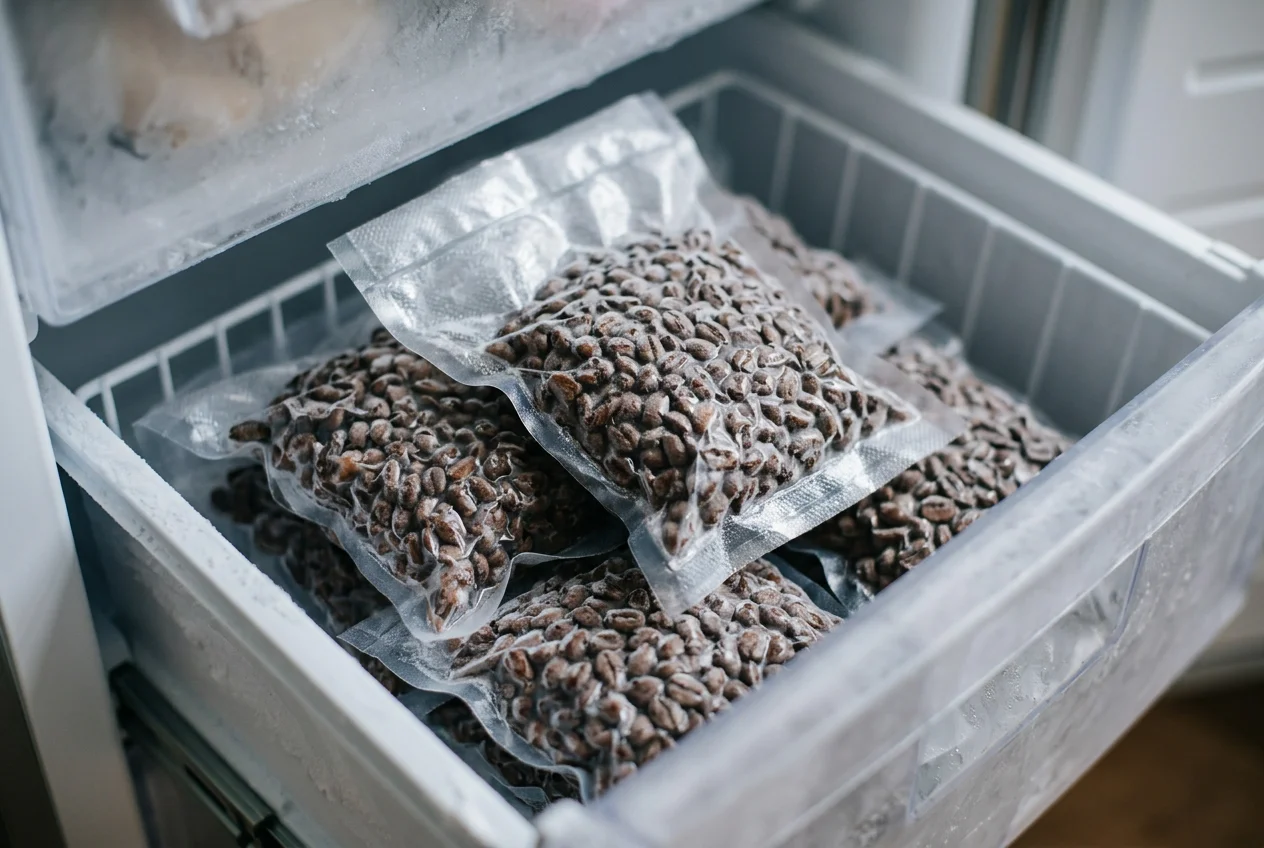
Freezing can effectively pause aging. It's useful if you buy in bulk or want to save a special coffee for weeks or months.
But it's not practical for beans you use every day, and it only works if you follow some strict rules.
- Seal completely.Use an airtight, moisture-proof package, ideally vacuum sealed, before the beans go in.
- Protect the package.Make sure it can't be punctured, torn or crushed by other frozen items.
- Freeze in portions.Split beans into single-use or few-day portions, so you only thaw what you need.
- Thaw before opening.Let the sealed package reach room temperature before you open it. Opening it cold makes warm, humid air condense right onto the beans.
- Use thawed beans quickly.Once opened, treat them like fresh beans and use them within a week or two.
- Never refreeze.Freezing and thawing again damages the beans and adds moisture.
Our tip: Some home baristas grind straight from frozen, single-dose portions. It can work very well, especially for espresso, but only with small, well-sealed portions that go back into the freezer immediately.
| Storage spot | Good for | Verdict |
|---|---|---|
| Cool, dark cupboard | Daily beans | Best for everyday use |
| Countertop in a clear jar | Nothing really | Avoid |
| Fridge | Nothing | Avoid |
| Freezer, sealed portions | Bulk or special coffees | Good long-term option |
| Grinder hopper | A few hours' worth | Never for storage |
Why your grinder hopper is the worst place for beans
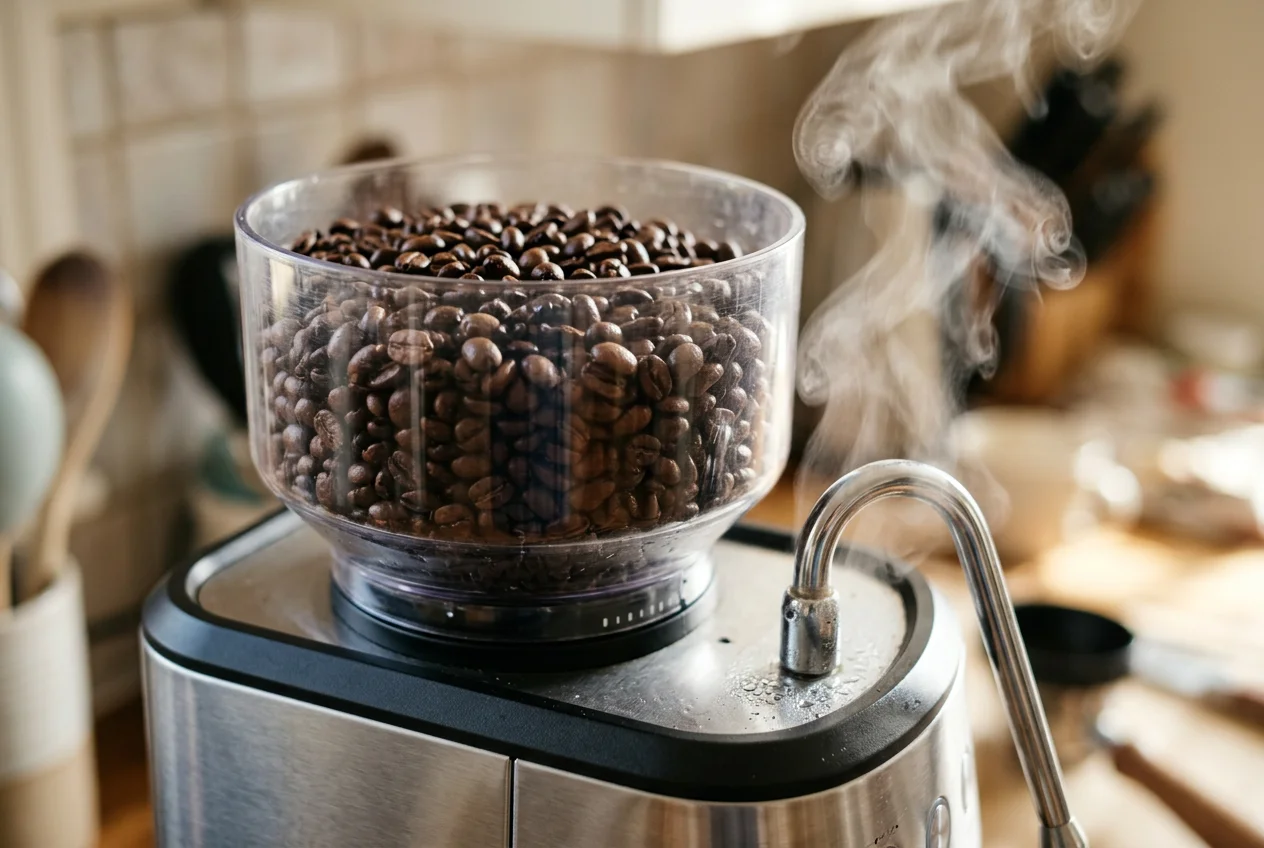
For many home espresso makers, especially people with bean-to-cup machines or espresso machines with built-in grinders, the hopper is where beans live.
Unfortunately, it's one of the worst places you can store coffee.
Almost every case of beans going stale quickly, or frustrating shot-to-shot inconsistency, that I've helped friends with traced back to a full bag sitting in the hopper.
The lid myth
Many owners think their hopper is safe because the lid has a rubber or silicone gasket.
The top may seal well. But people forget the bottom: there's no airtight seal there at all.
The bottom of the hopper leads straight into the burrs, chute and exit. If ground coffee can get out, air can get in. Air molecules are far smaller than even the finest espresso grind, so oxygen moves freely up into the hopper.
How hoppers break every rule
| Rule | What happens in a hopper |
|---|---|
| Airtight | Oxygen enters through the burrs and chute |
| Push out air | As beans are used, empty space fills with air |
| No light | Clear or tinted plastic lets light hit the beans all day |
| No heat | Many sit on top of machines that heat up and cool down |
| No moisture | Steam and vapor from brewing change humidity constantly |
On bean-to-cup machines and espresso machines with built-in grinders, the hopper often sits right above or inside a machine that heats to near boiling for brewing and steaming, then cools when switched off. Some hoppers sit right next to warm internal parts.
What it does to your espresso
Storing beans in the hopper often causes mysterious dialing-in problems.
You dial in a great shot in the morning. Two hours later, without touching anything, the next shot runs far too fast or chokes the machine.
Many things affect espresso, but shifting temperature and humidity in the hopper change how beans fracture in the grinder. Machines with integrated grinders are especially prone, because the beans sit right in the machine's heating cycles.
Our tip: If your espresso drifts during the day, try this experiment for a week: keep beans in a sealed canister and load the hopper with only what you need each morning. Many people find their "grinder problem" simply disappears.
Why storage changes how coffee grinds
This part surprised me most when I started paying attention.
Beans that absorb moisture become slightly less brittle. Beans that dry out or warm up become more brittle. That changes how they shatter in the grinder.
More brittle beans tend to produce more fines, which slow espresso down. Less brittle beans can make coarser particles, which speed it up.
So when storage conditions swing, your grind effectively changes even though your grinder setting doesn't. That's why stable storage leads to stable espresso.
For filter coffee the effect is smaller, but you'll still notice more consistent drawdown times and flavors when beans are stored well.
The best day-to-day storage
Instead of emptying a whole bag into the hopper, keep beans in a dedicated storage container on the counter or in a cool cupboard. If it lives on the counter, pick a spot away from the machine, the stove and the window.
Option 1: the original bag (okay for the short term)
Many specialty roasters use foil-lined bags with a one-way degassing valve and a resealable zip strip.
You can store beans in the bag by squeezing out as much air as possible through the valve and closing the zip.
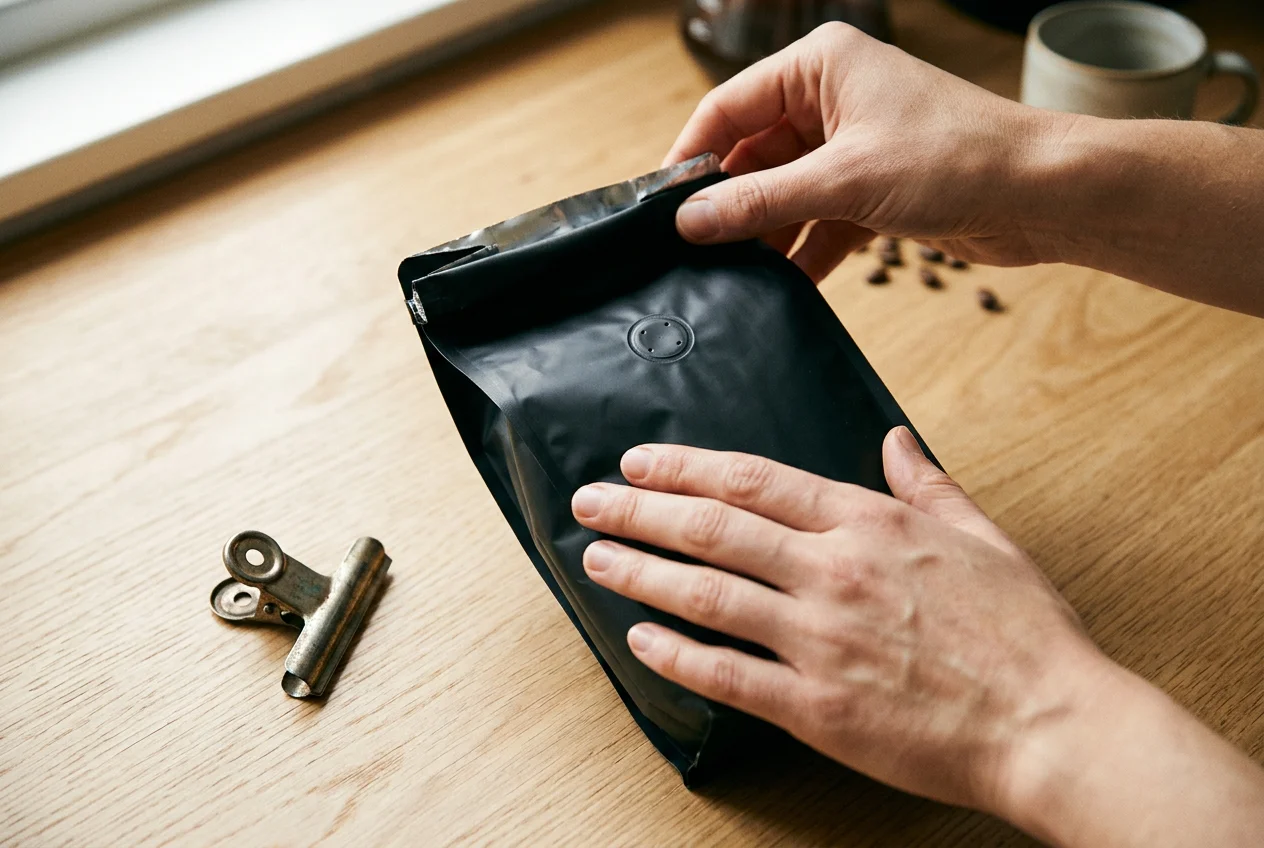
It's not ideal, though. Zip strips can be unreliable. It's very common to think a bag is sealed, only to find it popped slightly open overnight.
If you use the bag, fold it down tightly over the beans and add a clip as backup.
Option 2: an airtight canister that pushes out air (best overall)
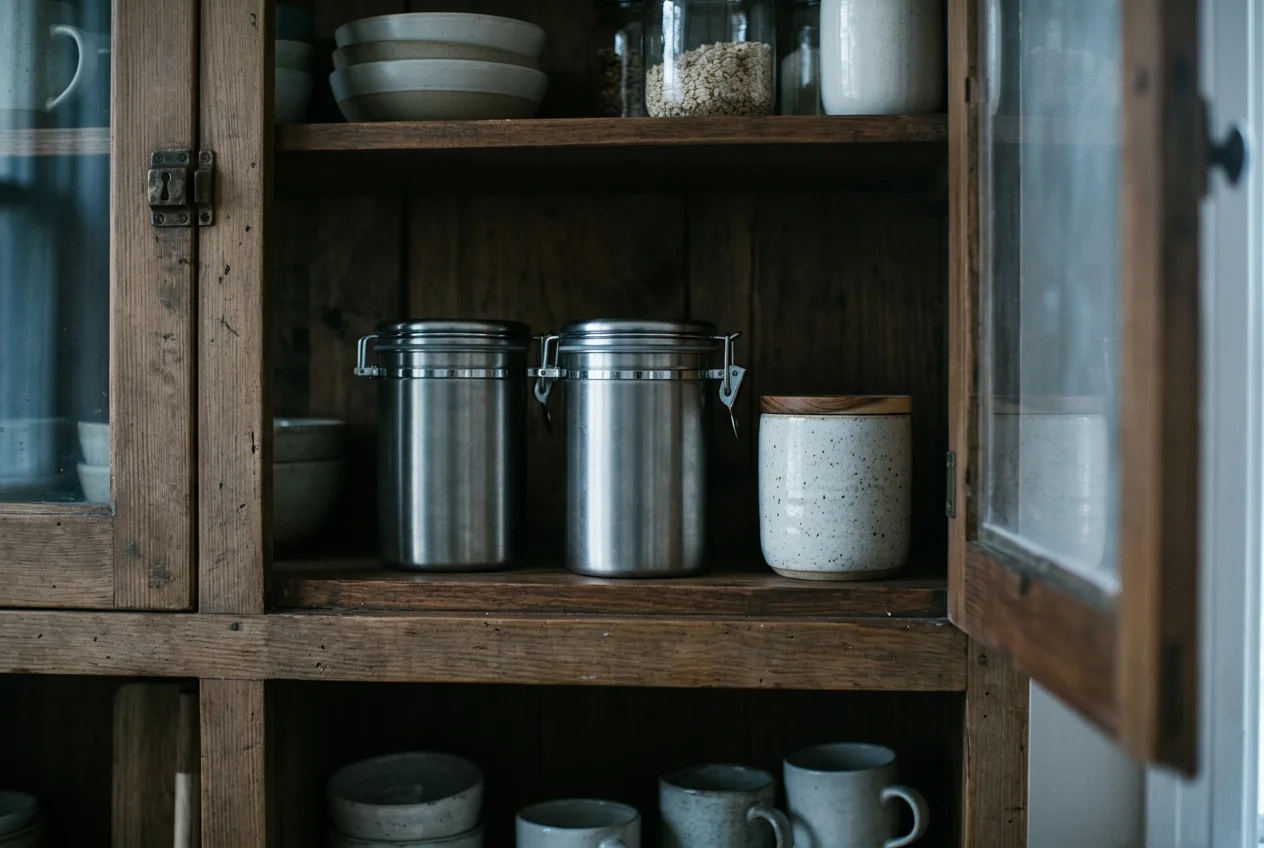
The best way to store daily beans is a dedicated coffee canister that blocks light, keeps air out and helps push oxygen out.
There are two common styles.
Lid-valve canisters have a button or valve on the outer lid that lets air escape as you press the lid down. They're affordable and much better than a hopper, but they still leave a pocket of air above the beans.
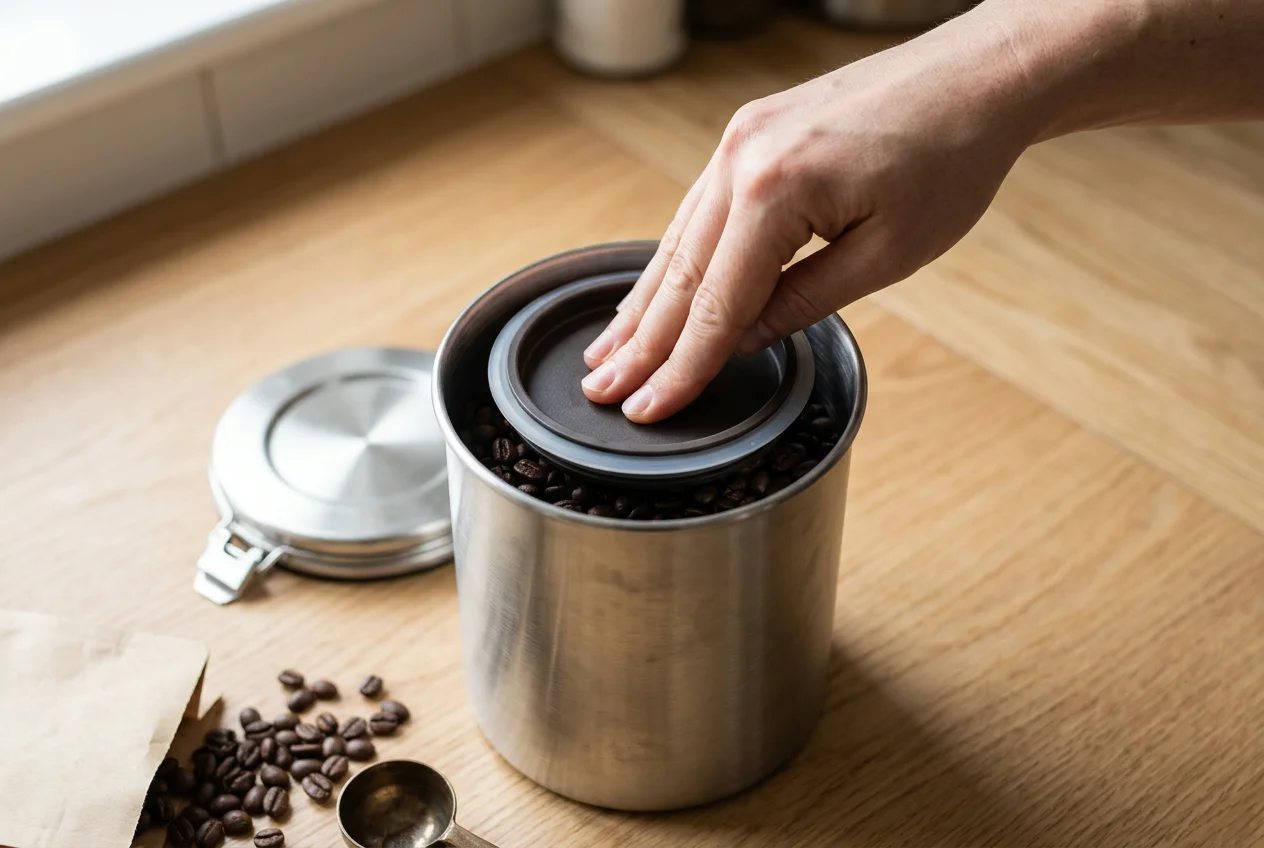
Plunger-seal canisters have a second inner lid with a rubber gasket and one-way valve. You press it down inside the canister until it rests right on the beans, pushing almost all the air out.
Material matters
Stainless steel canisters are better than clear or tinted plastic. Solid steel blocks all light and insulates better against temperature changes.
Ceramic is also fine if it's opaque and has a good seal. Glass looks nice, but only if it's kept in a dark cupboard.
Storage gadgets: what's worth it
There's a whole world of coffee storage gear. Here's my take on what actually helps.
Vacuum canisters
Some canisters have a built-in pump that pulls air out. They work well, but very fresh beans keep releasing CO2, which can puff the canister back up. They shine for beans that are a week or more off roast.
Plunger and valve canisters
My favorite for daily use. Simple, reliable and no batteries or pumps.
Single-dose tubes
Small sealed tubes or jars that each hold one dose. Great for freezing and for people who rotate several coffees. More fiddly day to day.
Vacuum sealers
Kitchen vacuum sealers are excellent for freezing coffee in portions. If you freeze often, it's a worthwhile tool.
Things I'd skip
Decorative clear jars, fancy hoppers marketed as "storage" and any container without a proper seal.
| Gadget | Best for | Worth it? |
|---|---|---|
| Plunger canister | Daily beans | Yes, best all-rounder |
| Valve-lid canister | Daily beans on a budget | Yes |
| Vacuum canister | Beans a week+ off roast | Nice to have |
| Single-dose tubes | Freezing, many coffees | Yes for enthusiasts |
| Vacuum sealer | Freezing portions | Yes if you freeze often |
| Clear decorative jar | Looks | No |
A practical daily workflow
You don't need a strict single-dose routine, weighing every dose into separate containers, to benefit from good storage.
Here's the middle ground I use every day.
- Keep the bulk sealed.The main supply stays in an airtight, light-proof canister in a cool cupboard.
- Load only today's beans.Each morning, pour roughly what you'll use that day into the hopper or straight into your grinder.
- Reseal straight away.Press the plunger down or squeeze out air before putting the canister back.
- Clear the hopper at night.If anything's left, return it to the canister or use it the next morning first.
- Open new bags only when needed.Leave the next bag sealed until the current canister is nearly empty.
Even if a handful of beans sits in the hopper for a few hours in the morning, keeping the main supply protected makes a huge difference to freshness and espresso consistency.
What roasters do to protect freshness
Good roasters work hard to deliver fresh coffee. Knowing what they do helps you continue the job at home.
- Valved bags. One-way valves let CO2 out without letting oxygen in.
- Foil or multi-layer packaging. It blocks light, oxygen and moisture far better than paper alone.
- Nitrogen flushing. Some roasters flush bags with nitrogen before sealing to push out oxygen.
- Roast dates. Printing the roast date lets you judge freshness yourself.
- Roast to order. Many specialty roasters roast after you order, so beans arrive just days old.
Once you open the bag, though, freshness is in your hands. The best packaging in the world can't help once beans sit open on a sunny counter.
When to open a fresh bag
Resist the urge to open a new bag the moment it arrives.
Freshly roasted beans release carbon dioxide for days after roasting. Quality bags have a one-way valve that lets that gas out without letting outside air in.
While the bag stays sealed, no fresh air gets in. The escaping gas doesn't flush out the oxygen that was already inside, but the beans aren't exposed to a constant supply of new air either.
The moment you open the bag, fresh oxygen rushes in and staling speeds up. So keep unopened bags sealed in a cool, dark place until you actually need them.
This also fits nicely with resting. Espresso beans usually taste best after about a week or two off roast, so a sealed bag can rest while you finish the previous one.
If you're still learning how to judge freshness when buying, my guide on how to choose coffee beans covers roast dates and what "fresh" really means.
Buy the right amount
The easiest way to keep coffee fresh is not to have too much of it.
I aim to finish an opened bag within two to four weeks. Here's a rough guide to how much that means.
| How you drink | Coffee per week (approx.) | Good bag size |
|---|---|---|
| 1 filter cup a day | About 105–140 g | 250 g every 2 weeks |
| 2 filter cups a day | About 210–280 g | 250 g weekly or 500 g every 2 weeks |
| 1 double espresso a day | About 125 g | 250 g every 2 weeks |
| 2 milk drinks a day | About 250 g | 500 g every 2 weeks |
| A household of coffee drinkers | 500 g or more | 1 kg, half frozen in portions |
Based on about 15–20 g per filter cup and 18 g per double espresso.
If a deal on a big bag is too good to miss, freeze half in sealed portions the day you open it. You get the savings without the stale coffee.
How long do coffee beans last?
How long beans stay at their best depends on roast level, storage and whether they're whole or ground.
| Coffee | Storage | Best within (approx.) |
|---|---|---|
| Whole beans, light–medium roast | Airtight, opaque, cool | About 1–6 weeks after roast |
| Whole beans, dark roast | Airtight, opaque, cool | About 1–4 weeks after roast |
| Whole beans, sealed unopened bag | Cool, dark | Several weeks, longer than opened |
| Whole beans, frozen portions | Vacuum sealed | Several months |
| Pre-ground, opened | Any | 1–2 days at peak, flat after a week |
| Decaf whole beans | Airtight or frozen | Stales faster, freeze if slow to use |
My own rough guide. Coffee stays safe much longer, but flavor fades.
Remember that "safe" and "good" are different. Old coffee won't make you sick, but it will taste flat, papery or stale.
Dark roasts go stale faster because longer roasting makes them more porous and brings oils to the surface, where they oxidize. Decaf is similar, which is why I freeze it in portions. My guide on how decaf coffee is made explains why.
How to tell if your beans are stale
You don't need a lab to spot stale coffee. Your senses and your brewer tell you a lot.
- Smell the bag.Fresh beans smell sweet, rich and complex. Stale beans smell faint, flat, dusty or like cardboard.
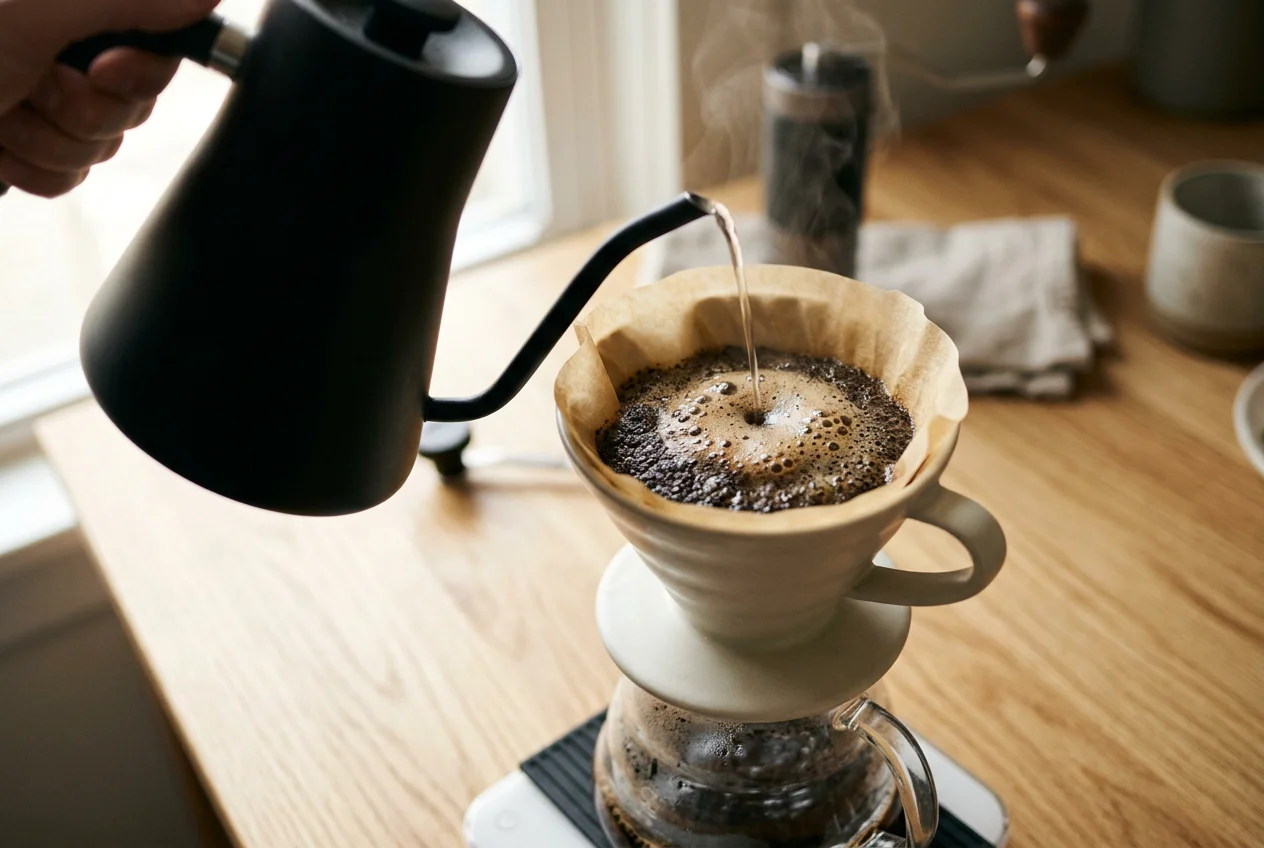
- Watch the bloom.With pour-over, fresh coffee puffs up and bubbles when hot water hits it. Stale coffee barely rises.
- Check espresso crema.Fresh beans give thick, lasting crema. Stale beans give thin, pale crema that disappears quickly.
- Look at the surface.Medium and dark roasts that suddenly look very oily, with a rancid smell, are past their best.
- Taste it.Flat, papery, woody or bitter-without-sweetness flavors are classic signs of stale coffee.
- Notice your espresso speed.Shots that keep running faster at the same setting can be a sign beans are aging.
If your beans show several of these signs, they're not unsafe. They're just past their best. Use them for cold brew or milk drinks, where staleness is less obvious, and buy smaller amounts next time.
Storage mistakes I see all the time
Beautiful clear jars on the counter
They look great on social media, but sunlight and kitchen light shorten your coffee's life. If you love a glass jar, keep it in a cupboard.
Storing beans next to the espresso machine
Machines get hot and release steam. A spot a meter away, or in a cupboard, is much better.
Buying too much at once
A huge bag is only good value if you finish it while it's fresh. For most people, buying every two to four weeks works best.
Grinding a whole week's coffee at once
It's tempting for convenience, but ground coffee loses aroma in a day or two. Grind per brew.
Refreezing beans
Thawing and refreezing adds moisture each time. Freeze in portions and use each one once.
Mixing old and new beans
Topping up a canister with fresh beans means the old ones at the bottom keep aging. Finish the old beans first, then clean the canister and refill.
Keep your canister and grinder clean
Coffee oils build up on canister walls and inside grinders. Over time they go rancid and can make fresh beans taste stale.
- Wash canisters with warm water and mild soap between bags, then dry them completely before refilling.
- Never add fresh beans on top of old ones. Empty, clean and refill.
- Brush out your grinder weekly and clean the burrs every month or two.
- Check the rubber seals on canister lids and replace them if they crack or lose their grip.
A clean, dry, well-sealed container is half the battle. The other half is putting it in the right place.
Storing several coffees at once
If you like having a few coffees on the go, perhaps an espresso blend, a filter single origin and a decaf, storage gets a little trickier.
- Keep one open per type.Have one open espresso coffee and one open filter coffee at a time, each in its own canister.
- Freeze the rest.Split extra bags into sealed portions and freeze them.
- Label by roast date.A piece of tape with the roast date on each canister or portion keeps things clear.
- Rotate oldest first.Always open the bag or portion with the oldest roast date next.
- Clean between coffees.Wipe out canisters between bags so old oils don't taint fresh beans.
This setup lets me keep three or four coffees in the house without any of them going stale before I get to it.
Storing beans for different routines
The best setup depends on how much coffee you drink and how you brew.
| Your routine | My recommended setup |
|---|---|
| 1–2 filter cups a day | One opaque canister in a cupboard, buy small bags often |
| Daily espresso | Plunger canister, load hopper daily, rest new bags |
| Bean-to-cup machine | Canister nearby, never fill the hopper for more than a day |
| Several coffees at once | Freeze extras in sealed portions, keep one open at a time |
| Occasional coffee drinker | Buy small bags, freeze half straight away |
| Decaf in the afternoon | Freeze in single portions, take one per day |
Storing coffee in different climates and seasons
Where you live changes how careful you need to be.
Hot, humid places and summers
Heat and humidity are a double hit for coffee. In summer, keep beans in the coolest, driest cupboard you have, away from the stove and windows.
If your kitchen gets very warm, buy smaller amounts more often, or freeze part of each bag in sealed portions.
Dry winters and heated homes
Dry air means more static when grinding, and heated homes can still be warm near radiators. Keep beans away from heaters and consider a quick spritz of water on the dose before grinding to reduce static.
Kitchens with big temperature swings
If your kitchen gets hot while cooking and cold at night, a cupboard in another room, like a hallway or pantry, can be more stable.
Our tip: Put your hand on the cupboard you plan to use while the oven is on. If it feels warm, it's too warm for coffee.
Coffee at the office and on the road
Good storage doesn't stop at home.
At the office
Office kitchens are often warm, bright and shared. Bring a small opaque canister or a tightly sealed bag with just a few days' coffee.
Keep it in your desk drawer rather than next to the communal kettle or microwave.
When traveling
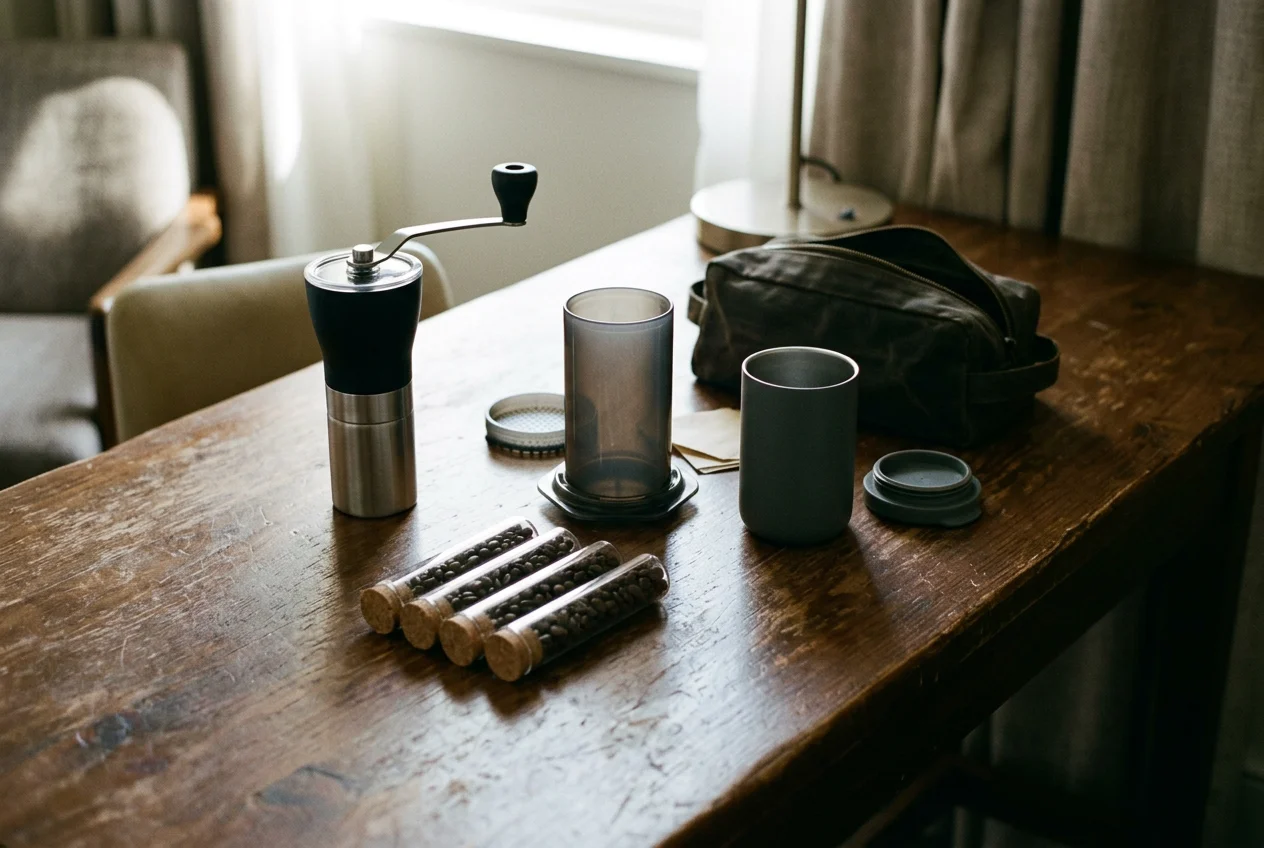
For trips, I pre-portion whole beans into small airtight bags or tubes, one per brew. They pack easily, stay fresh and pair nicely with a hand grinder and an AeroPress.
If you can't bring a grinder, ask a local roaster to grind a small amount for your brewer. It's better than any hotel sachet.
If you roast at home: storing green coffee
Home roasters have a second storage question: unroasted green beans.
Green coffee is much more stable than roasted coffee. Stored well, it can keep good quality for many months, though it slowly loses vibrancy and can start tasting papery or woody after a long time.
- Keep green beans in a cool, dry, dark place with stable temperature.
- Use breathable sacks or, better, airtight bags if your home is humid.
- Avoid strong smells nearby, since green coffee also absorbs odors.
- Roast older green coffee first and buy only what you can roast within several months.
Once roasted, treat the beans like any other fresh coffee and follow the six rules above. My guide on how coffee is roasted explains what happens in between.
My own storage experiment
A while ago I split one bag of medium-roast beans three ways for two weeks: a clear jar on the counter next to the espresso machine, the original bag clipped shut in a cupboard, and a stainless plunger canister in the same cupboard.
After one week, the clear jar beans already tasted flatter and my shots ran noticeably faster. The bag and canister were close.
After two weeks, the canister beans were clearly the best: sweeter, with more aroma and steadier shots. The clipped bag was decent. The jar beans tasted papery.
It wasn't a lab test, but it convinced me. Since then, every coffee I buy goes into a proper canister the day I open it.
Coffee storage myths
"The fridge keeps coffee fresh"
It doesn't help, and humidity, smells and condensation make things worse. A cool cupboard is better.
"Freezing ruins coffee"
Freezing ruins coffee only when it's done badly. Sealed portions, thawed before opening and never refrozen, keep flavor very well.
"Oily beans are fresher"
Oil on the surface usually means a darker roast or older beans, not freshness. Oily beans also go stale faster.
"The valve on the bag lets the coffee breathe, so it stays fresh forever"
The valve lets gas out and keeps air from coming in while the bag is sealed. Once you open it, the clock speeds up.
"Vacuum sealing whole bags straight from the roaster is best"
Very fresh beans keep releasing gas, which can puff up or burst vacuum bags. Let beans rest a few days, or use bags with valves.
"Coffee goes bad like milk"
Roasted coffee stays safe for a very long time. It just loses flavor. Storage is about taste, not safety.
My summary checklist
- Buy whole beans.Grind right before brewing.
- Leave new bags sealed.Open them only when you're ready to use them.
- Use a proper canister.Opaque, ideally stainless steel, airtight, with a way to push out air.
- Store cool, dry and dark.Away from sunlight, stoves, ovens and steam.
- Skip the fridge.Use the freezer only for longer-term storage, sealed and thawed before opening.
- Don't store beans in the hopper.Load only what you'll brew that day.
None of this needs expensive gear. A decent canister, a cool cupboard and a few habits are enough to make a real difference.
Follow these and you'll taste the difference within a week. Your coffee will stay fresher, your espresso will behave more consistently, and you'll waste fewer beans.
Frequently asked questions
What is the best way to store coffee beans?
Keep whole beans in an airtight, opaque container that lets you push out extra air, in a cool, dry, dark place away from heat and sunlight.
Should I store coffee beans in the fridge?
No. Fridges are humid and full of odors, and taking beans in and out causes condensation. A cool, dark cupboard is better for daily beans.
Can I freeze coffee beans?
Yes, for longer-term storage. Seal them airtight in portions, let each portion thaw to room temperature before opening and never refreeze.
How long do coffee beans stay fresh?
Whole beans usually taste best within about one to six weeks of roasting when stored well. Dark roasts and decaf fade faster.
How long does ground coffee stay fresh?
Ground coffee loses much of its aroma within a day or two of opening. It's still drinkable for a while, but it tastes noticeably flatter.
Is it okay to keep beans in my espresso machine hopper?
Only for a few hours. Hoppers aren't airtight at the bottom, let in light and sit near heat and steam, so beans go stale faster and espresso becomes inconsistent.
Are glass jars good for storing coffee?
Only if they're airtight and kept in a dark cupboard. Clear jars on the counter let light damage the beans.
Should I keep coffee in its original bag?
It's fine short term if it has a one-way valve and you press out the air and seal it well, but zip strips can fail. A dedicated canister is better.
Why does my espresso change during the day?
Often because beans in the hopper are exposed to changing heat, humidity and air. Keep beans sealed and load only what you need.
When should I open a new bag of coffee?
Only when you're ready to use it. A sealed bag with a valve keeps fresh air out while the beans degas.
Does storing coffee in the freezer change the flavor?
Properly sealed and thawed portions keep flavor very well. Problems come from moisture when bags are opened cold or refrozen.
What container should I buy for coffee beans?
An opaque stainless steel canister with an airtight seal, ideally with an inner plunger lid that pushes out the air.

- Michael Reynolds, personal notes from home brewing and storage tests
- Time-resolved gravimetric method to assess degassing of roasted coffee, Journal of Agricultural and Food Chemistry
- Preserving Freshness: A Race Against Time, Specialty Coffee Association
- How to Store Coffee, National Coffee Association
Related guides
How to choose coffee beans Burr vs blade grinder How decaf coffee is madeWritten by Michael Reynolds. Last updated November 16, 2026.