Why Does My Coffee Taste Bitter or Sour? How to Diagnose and Fix Bitter, Sour and Burnt Coffee
A bad cup of coffee is usually bitter, sour or burnt, and each one has different causes and opposite fixes. This is my troubleshooting guide for home brewers, from the beans in the bag to the puck in your portafilter.
We choose products independently. We may earn a commission through links on this page; your price stays the same. Affiliate policy
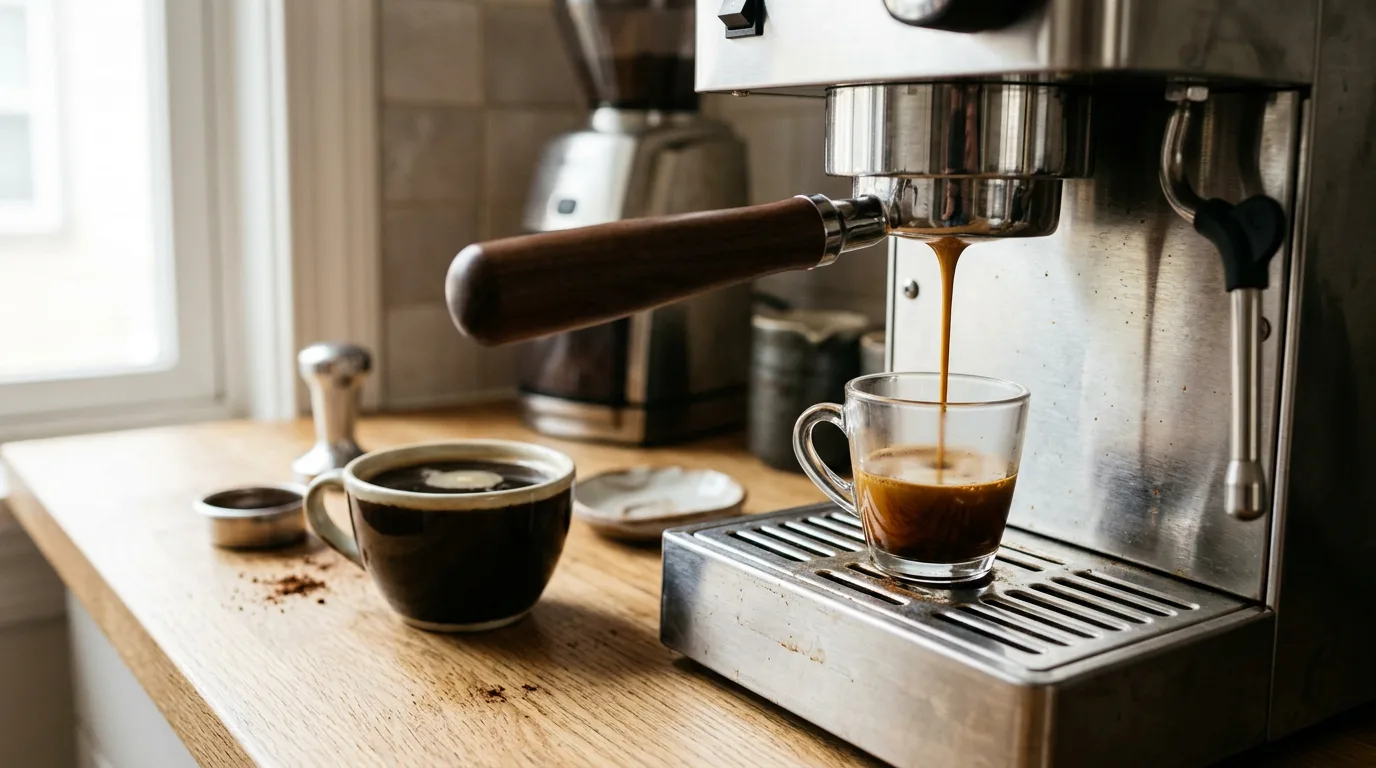
Bitter coffee is usually over-extracted, sour coffee is usually under-extracted, and burnt coffee comes from very dark roasts or a choked espresso shot. For bitter, grind coarser or brew shorter. For sour, grind finer, bloom your coffee and let fresh beans rest. For burnt, choose a lighter roast or stop over-dosing and over-tamping. Change one thing at a time.
Why I wrote this
Getting coffee from a bag of beans into a mug involves a surprising number of steps. The species of plant, the roast, the grind, the water temperature, the tamp, the brew time. Every one of them changes the flavor.
Because so many things interact, random guessing rarely fixes a bad cup. I've watched friends grind finer, add more coffee and tamp harder all at once, then wonder why things got worse.
The way out is to diagnose first, then fix. That starts with knowing exactly what you're tasting.
I spend most of my week dialing in espresso machines and brewers for reviews, so I've made every one of these mistakes many times. This is the process I actually use.
What this guide covers
- How to tell bitter, sour and burnt apart, because the fixes are opposites.
- Bean causes: robusta, dark roasts and beans that are too fresh.
- Brewing causes: grind, time, blooming and extraction.
- Espresso diagnostics: what your shot and your spent puck are telling you.
Step one: is it bitter, sour or burnt?
Many people lump every unpleasant coffee taste together. To an untrained palate, "bitter" and "sour" both just mean "bad." But in brewing terms they sit at opposite ends of the scale.
That matters, because the fix for bitter coffee will make sour coffee worse, and the other way round. So take a slow sip and pay attention to what your tongue is actually doing.
| Flavor | What it feels like | Think of |
|---|---|---|
| Bitter | Heavy, lingering and dry, mostly at the back of the tongue and throat | Unsweetened cocoa, tonic water, stewed black tea |
| Sour | Sharp, tangy and puckering along the sides of the tongue; makes your mouth water | Lemon juice, green apple, vinegar |
| Burnt | Ashy, smoky and charred; coats the mouth and hides any sweetness | Burnt toast, campfire smoke, an ashtray |
Once you've named the flavor, you've already cut the list of suspects by two thirds. If you'd like to train this skill properly, I walk through a simple tasting exercise in acidity and bitterness in coffee.
Our tip: Taste your coffee once it has cooled a little. Very hot coffee masks sourness and exaggerates bitterness, which leads to the wrong diagnosis.
Quick diagnosis chart
If you're in a hurry, start here. Find what you taste or see, then jump to the matching section for the full explanation.
| What you notice | Most likely cause | First fix |
|---|---|---|
| Bitter, dry finish | Over-extraction | Grind coarser or brew shorter |
| Bitter and harsh whatever you do | Robusta-heavy or very dark beans | Switch to 100% arabica, medium roast |
| Sour, thin, a bit salty | Under-extraction | Grind finer |
| Sour with very fresh beans | Trapped CO2 | Bloom, or rest the beans longer |
| Espresso gushes in 10 to 15 seconds | Grind too coarse | Grind finer |
| Espresso foams wildly | Beans too fresh | Rest 7 to 14 days after roast |
| Ashy, smoky, charred | Very dark roast | Choose a lighter roast |
| Espresso only drips | Choked shot | Less coffee, lighter tamp or coarser grind |
Why coffee tastes bitter
Bitterness is the flavor most people associate with coffee. For decades, the standard morning cup was dark, heavy and bitter, and it needed cream and sugar to be drinkable.
But strong bitterness isn't a requirement of good coffee. When it dominates, it almost always comes from one of two places: the beans you bought, or how long the water spent with them.
Bean cause: robusta vs arabica
To understand where bitterness starts, look at the plant. Much mass-market coffee has historically relied on Coffea canephora, better known as robusta.
As the name suggests, robusta is tough. It resists disease, grows at lower altitudes and yields well. The flavor is just as robust: heavy, earthy and aggressive.
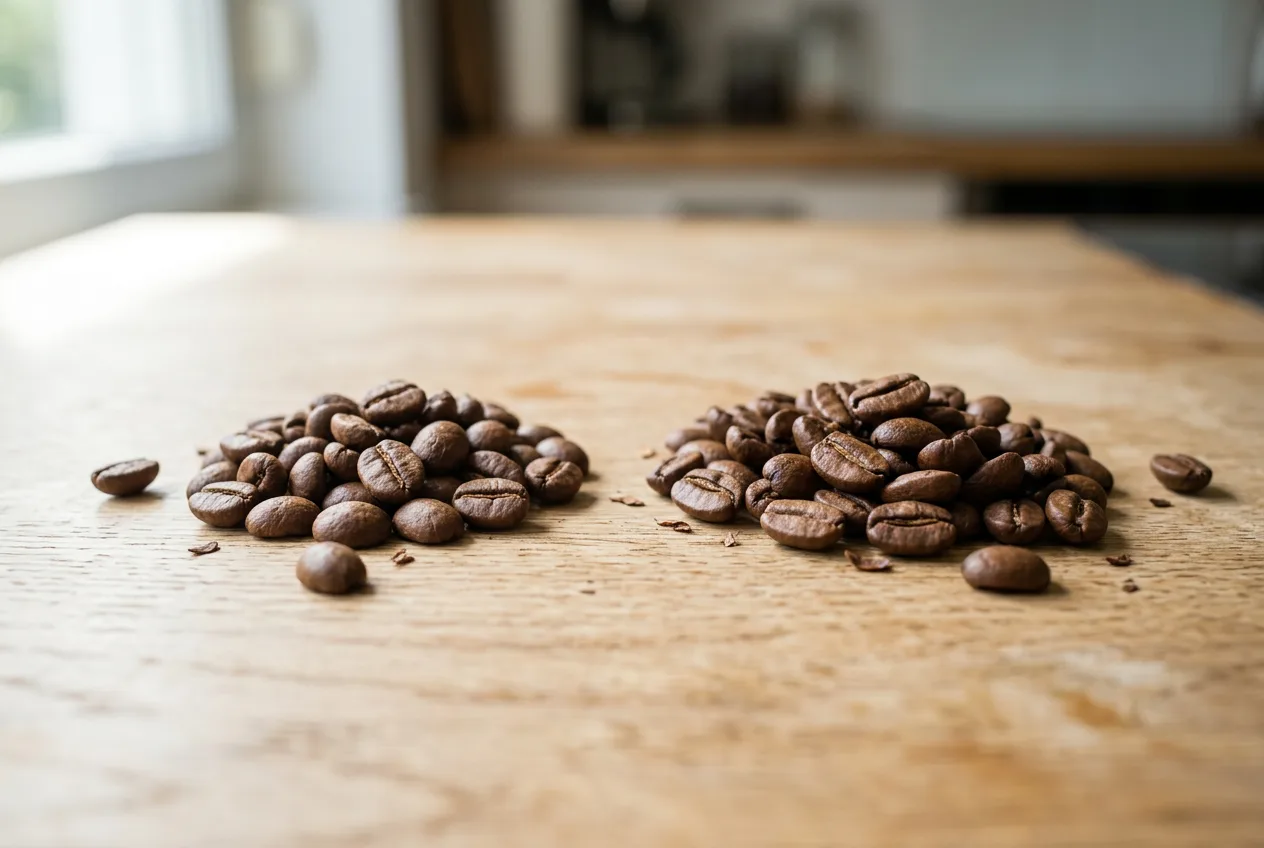
Chemically, robusta has roughly twice the caffeine of arabica and much higher levels of chlorogenic acids. Caffeine tastes bitter on its own. Chlorogenic acids break down during roasting and brewing into compounds that add more bitterness and astringency.
So if your coffee contains a lot of robusta, which is common in budget supermarket brands and traditional dark Italian espresso blends, a strong bitter backbone is unavoidable.
| Trait | Arabica | Robusta |
|---|---|---|
| Caffeine | About half of robusta | About double arabica |
| Chlorogenic acids | Lower | Much higher |
| Growing altitude | Higher, more delicate | Lower, hardier |
| Typical flavor | Sweeter; fruit, floral, chocolate, nut | Earthy, woody, strongly bitter |
| Where you find it | Specialty and most premium coffee | Budget blends, instant, some espresso blends |
Over the past decade, specialty coffee has made arabica far easier to buy. Arabica grows higher up, needs more care and produces sweeter beans with fruit, floral, chocolate and nut notes. Properly brewed, 100% arabica should have only a mild bitterness that balances its sweetness.
I compared the two species in detail in arabica vs robusta.
Our tip: Check the bag. If it doesn't say "100% arabica," assume there's robusta in it. Not always bad, especially for crema, but it explains a lot of bitterness.
Brewing cause: over-extraction
If you're already using good arabica and still getting harsh bitterness, the culprit is almost certainly over-extraction from too much contact time.
Extraction is hot water dissolving flavor out of the grounds. Different compounds dissolve at different speeds:
- First: fruit acids and saltsThe bright and sour notes come out almost immediately.
- Second: sugars and oilsSweetness, body and balance follow in the middle of the brew.
- Last: fibers, tannins and heavy compoundsBitterness and astringency dissolve at the end.
When water stays with the grounds too long, it strips out the sugars and keeps going into that bitter tail. The longer it lingers, the harsher the cup.
What over-extraction does to flavor
An illustration of balance, not a lab measurement.
Fixing a bitter French press
In a French press, also called a plunger or cafetière, the grounds sit fully under water for the whole brew. That makes over-extraction easy.
The most common mistake I see isn't the steep at all. It's leaving the coffee in the press after plunging. The grounds at the bottom keep extracting, so the second cup from the pot is always more bitter than the first.
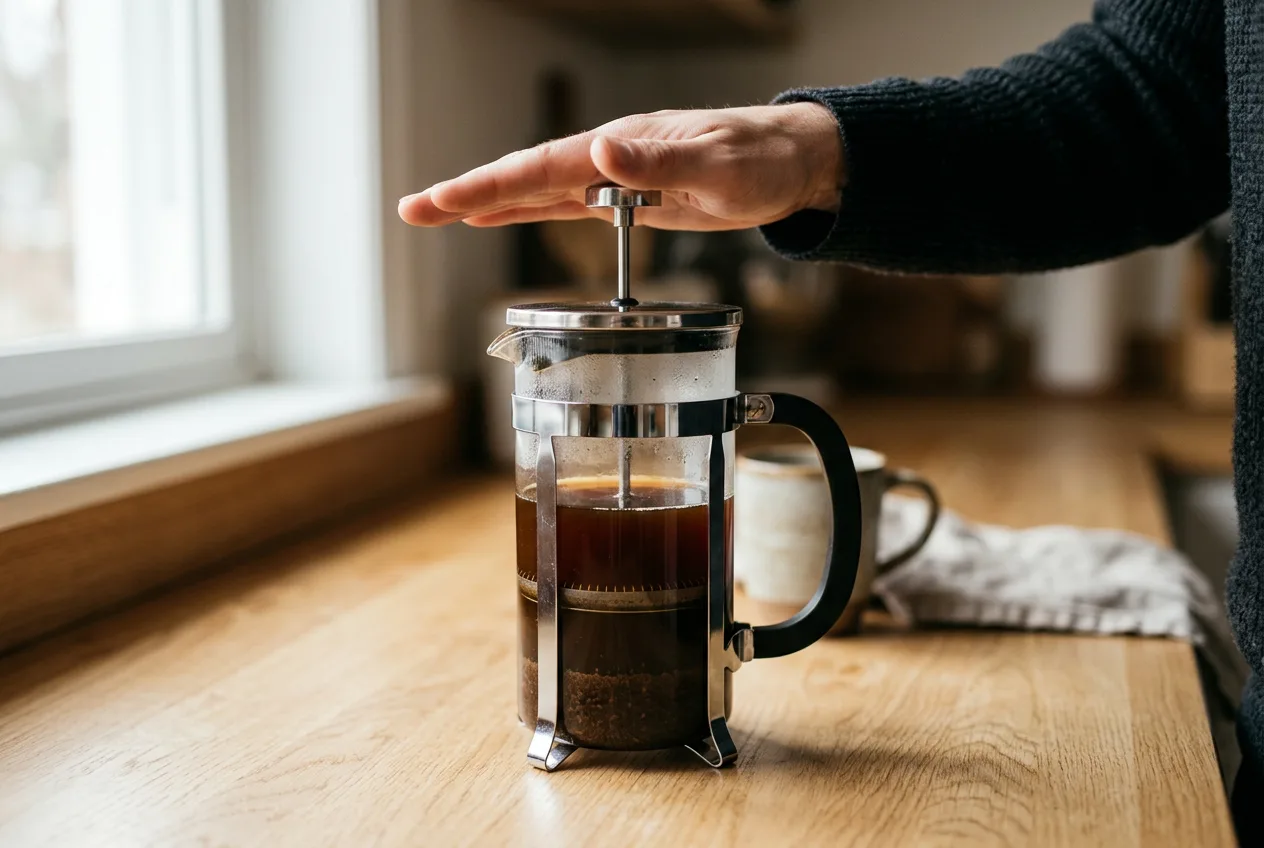
- Time the steepUse a timer and aim for four minutes before you press.
- Press gentlyPush the plunger down slowly and steadily. Forcing it can stir up fines that add bitterness and grit.
- Pour it all outDecant everything into mugs or a thermal carafe right away, so the water stops touching the grounds.
- Check the grindFrench press needs a coarse grind, like rough sea salt. Fine grounds over-extract and slip through the mesh.
Our tip: If you want press coffee to stay warm, pour it into a preheated thermal carafe, not back over the grounds. It's the single biggest fix for bitter French press.
Fixing bitter espresso
With espresso, over-extraction happens when the shot runs too slowly or too long. Watch the stream as it pours.
A good shot starts dark and rich, often with "tiger stripes" in the crema. As the shot nears its end, the stream turns pale, thin and watery. Baristas call this "blonding."
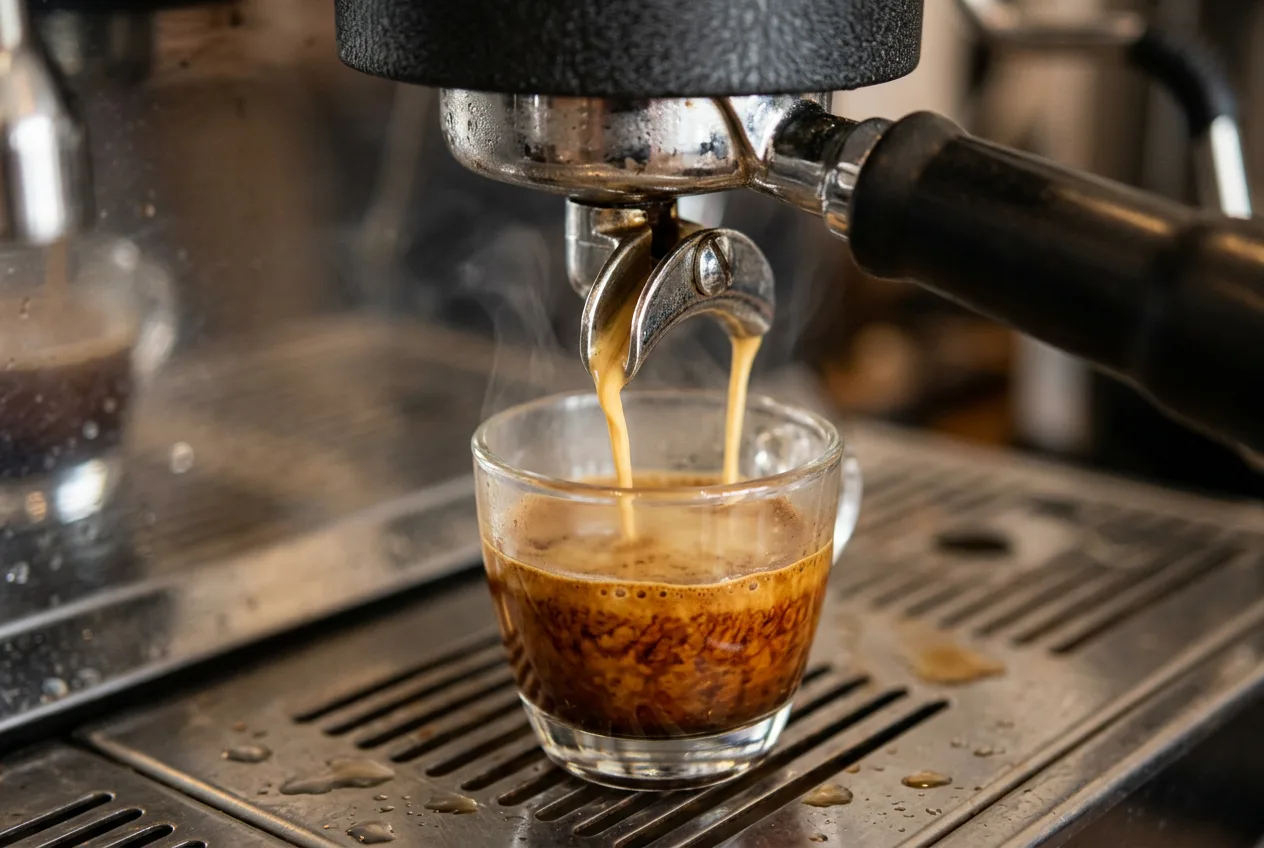
That pale tail is where the most bitter compounds and harsh tannins sit. Letting the machine keep running past this point pours bitterness straight into your cup.
What to do
- Grind slightly coarser so the water flows through the puck a little faster.
- Aim for about 1 fluid ounce (2 tablespoons) in about 30 seconds from the moment you start the pump.
- Stop the shot when it blonds, even if your target volume isn't reached yet.
Keeping the shot tight within that 30-second window cuts off the bitter tail. Most home machines I test are happiest somewhere between 25 and 32 seconds.
Why coffee tastes sour
If bitterness comes from pulling too much out of the beans, sourness comes from the opposite: not pulling out enough. A sour cup tastes sharp, thin and underdeveloped, with none of the sweet body that rounds out good coffee.
There are two main causes. One is trapped gas in very fresh coffee. The other is a grind that's too coarse.
Sour cause 1: trapped carbon dioxide
Roasting creates a lot of carbon dioxide inside each bean. When hot water hits freshly ground coffee, that gas rushes out.
If there's a lot of gas, or the brew is fast, the escaping CO2 pushes water away from the grounds. The water can't soak in properly to dissolve sugars and oils, so extraction stays shallow and uneven.
Some of that CO2 also dissolves into the coffee and forms carbonic acid, the same thing that gives sparkling water its bite. In coffee, it adds a sharp, sour edge.
This is why "fresher is better" has a limit. Coffee needs a short rest after roasting before it brews at its best. I covered this in depth in coffee freshness, resting and degassing.
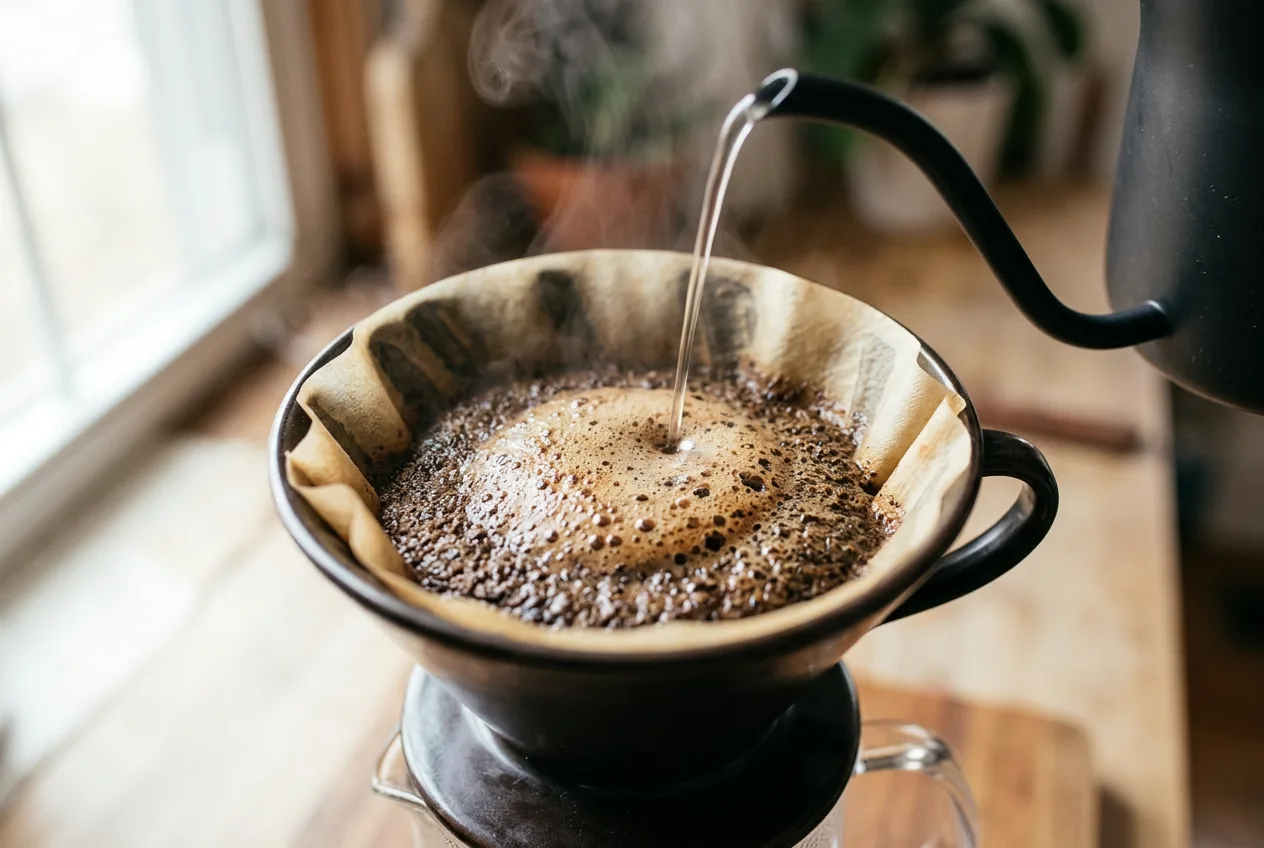
The fix: bloom your coffee
With a French press or pour-over, dumping all your water in at once traps that escaping gas in the slurry. The result is uneven extraction and a sour cup.
The solution is a "bloom," a short pre-soak at the start of the brew.
- Wet the groundsPour just enough hot water to soak all the coffee, about 1.5 to 2 fl oz (3 to 4 tablespoons) for a standard pot, or roughly twice the weight of your coffee.
- Wait 30 to 60 secondsLeave it alone. You'll see the bed swell, bubble and foam as the gas escapes.
- Continue the brewOnce the bubbling settles, add the rest of the water and brew as normal.
The bloom gives the gas a head start, so the water can do its real job afterwards. It's one of the easiest upgrades in home brewing.
Our tip: The bloom is also a freshness test. A big, bubbly dome means fresh beans. Almost no rise means the coffee is getting stale.
Resting beans for espresso
Espresso is far more sensitive to trapped gas than filter coffee. Instead of gentle gravity, the machine forces water through a tight puck at about 9 bars of pressure.
With very fresh beans, that pressure forces all the gas out at once. The shot turns foamy, chaotic and hard to control, and it usually tastes sour.
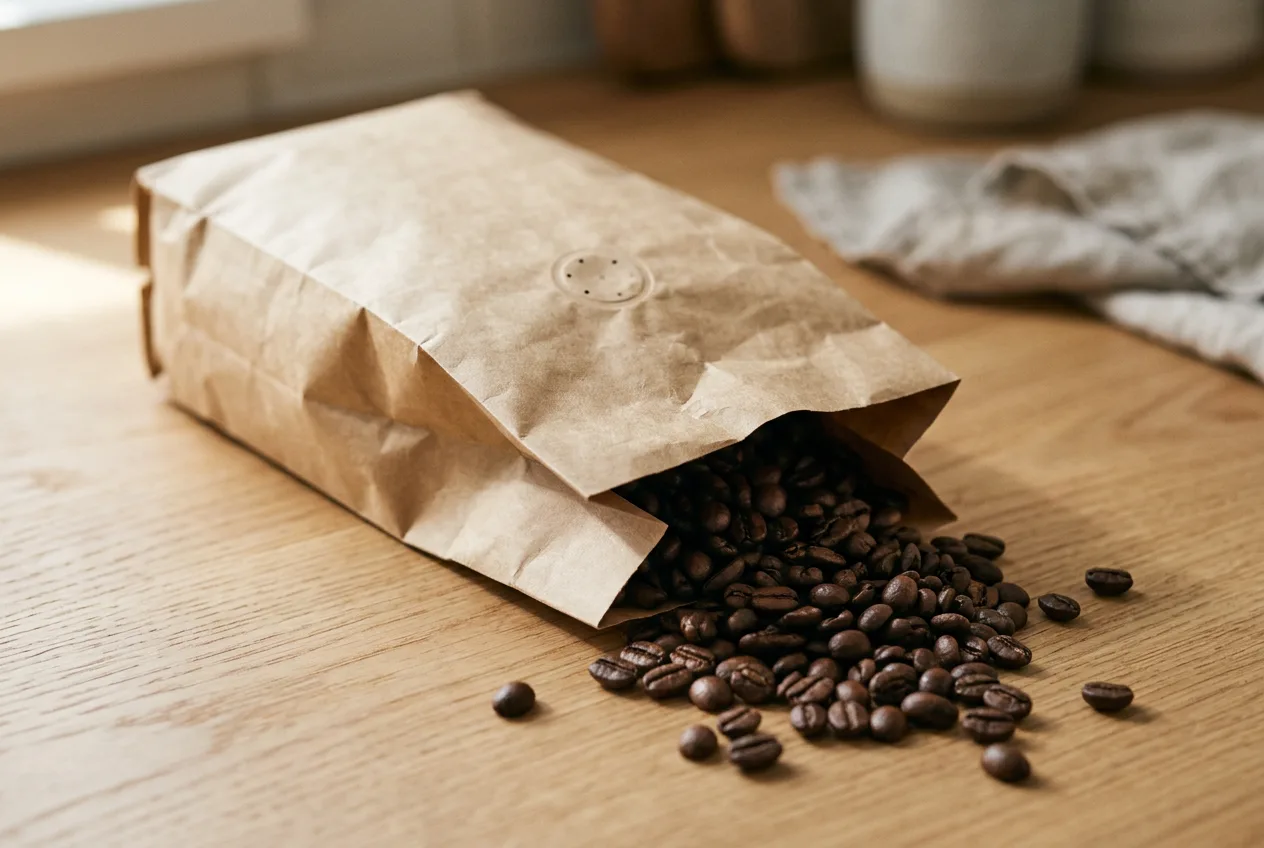
So beans for espresso need to rest and degas in their bag after roasting.
Signs your beans are too fresh
You can see it as soon as you pull a shot. The stream foams wildly. You get big bubbles, very pale yellow or white crema, and liquid rushing over the edge of the cup.
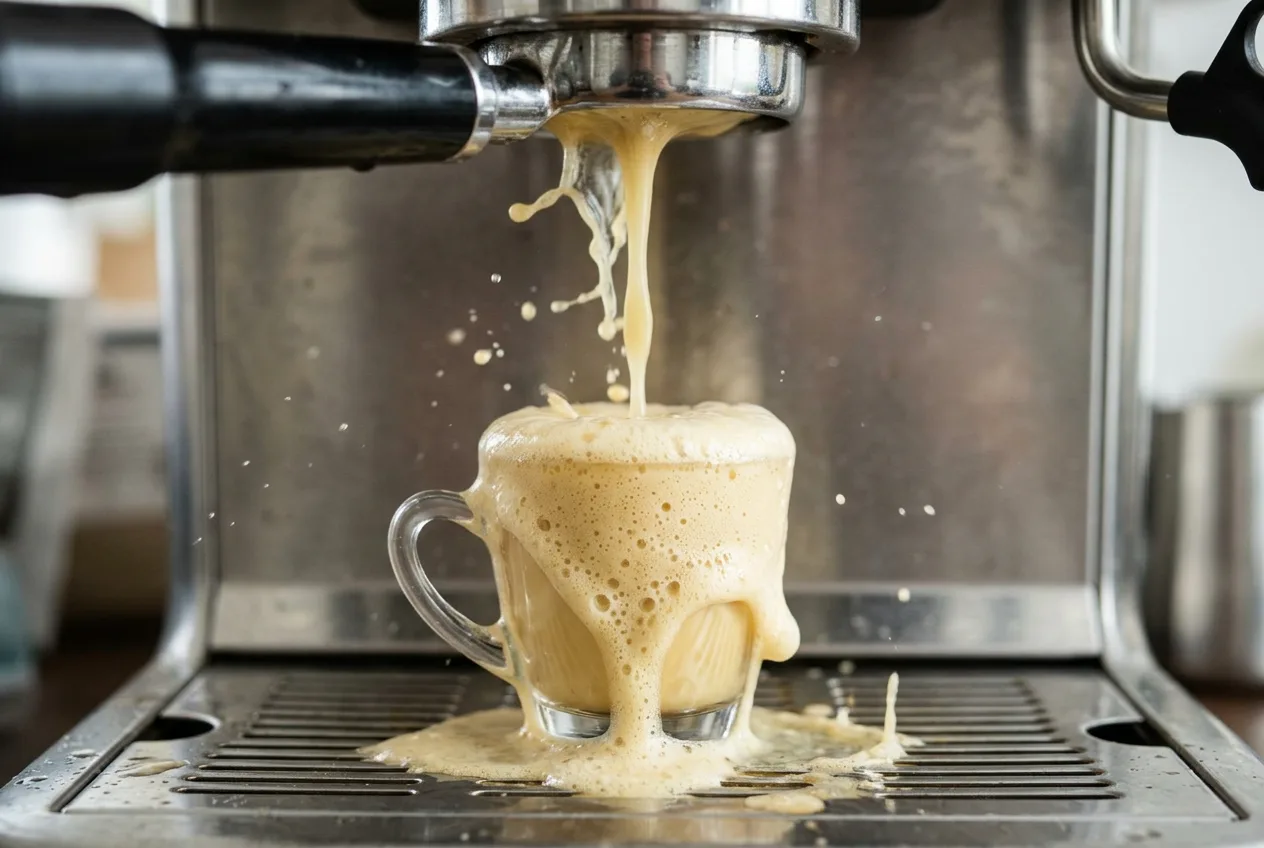
What a rested shot looks like
Properly rested beans pour in a calm, steady, even stream. It shouldn't look thin and watery, and it shouldn't billow and foam over the cup.
If your shots look like the first description, the grinder probably isn't the problem. Give the bag a few more days.
Sour cause 2: grind too coarse
The second big cause of sour coffee is a grind that's too coarse for your method. Extraction depends on surface area.
Coarse grounds are big chunks rather than fine grains. Hot water rushes past them, washing off the fast-dissolving acids on the outside but never reaching the sweet oils and sugars deeper inside each particle.
Signs of a too-coarse espresso grind
- The coffee gushes out almost as soon as you start the pump, like water from a tap.
- The stream sprays at odd angles instead of forming a neat, single flow.
- There's no syrupy texture, none of that warm-honey look of a good shot.
- The shot finishes in 10 to 15 seconds and tastes thin, pale and sharply sour.
The fix: grind finer. Smaller particles mean more surface area and a slower flow, so the water has time to pull out the sweet oils that balance the acidity.
The same applies to filter coffee. If your pour-over drains in under two minutes and tastes sour, go a few steps finer.
| Method | Grind size | Feels like |
|---|---|---|
| Espresso | Fine | Powdered sugar to fine table salt |
| Moka pot | Fine to medium-fine | Table salt |
| Pour-over | Medium-fine to medium | Sand |
| Drip machine | Medium | Coarse sand |
| French press | Coarse | Rough sea salt |
| Cold brew | Extra coarse | Cracked peppercorns |
Our tip: A blade grinder produces both chunks and dust, so you can get sourness and bitterness in the same cup. A burr grinder fixes more "mystery" flavor problems than any other upgrade. See burr vs blade grinder.
Why coffee tastes burnt
A burnt, smoky taste is different from plain bitterness. Bitterness feels dry and astringent. Burnt tastes like charred toast, ash or campfire smoke.
It comes from two very different places: the roaster's drum, or too much resistance inside your espresso machine.
Burnt cause 1: the roast
Roasting is a balancing act between developing sweetness and burning off acidity. Push it too far and you get carbon.
As mentioned above, many supermarket blends rely on cheaper robusta. Because robusta is naturally harsh, commercial roasters often take it very dark, into dark, French or Italian roast territory, to hide some of its earthy rawness.
The side effect of roasting well past second crack is carbonization. The sugars and oils on the bean's surface scorch. You end up with shiny, oily, almost black beans that taste deeply roasted and distinctly burnt.
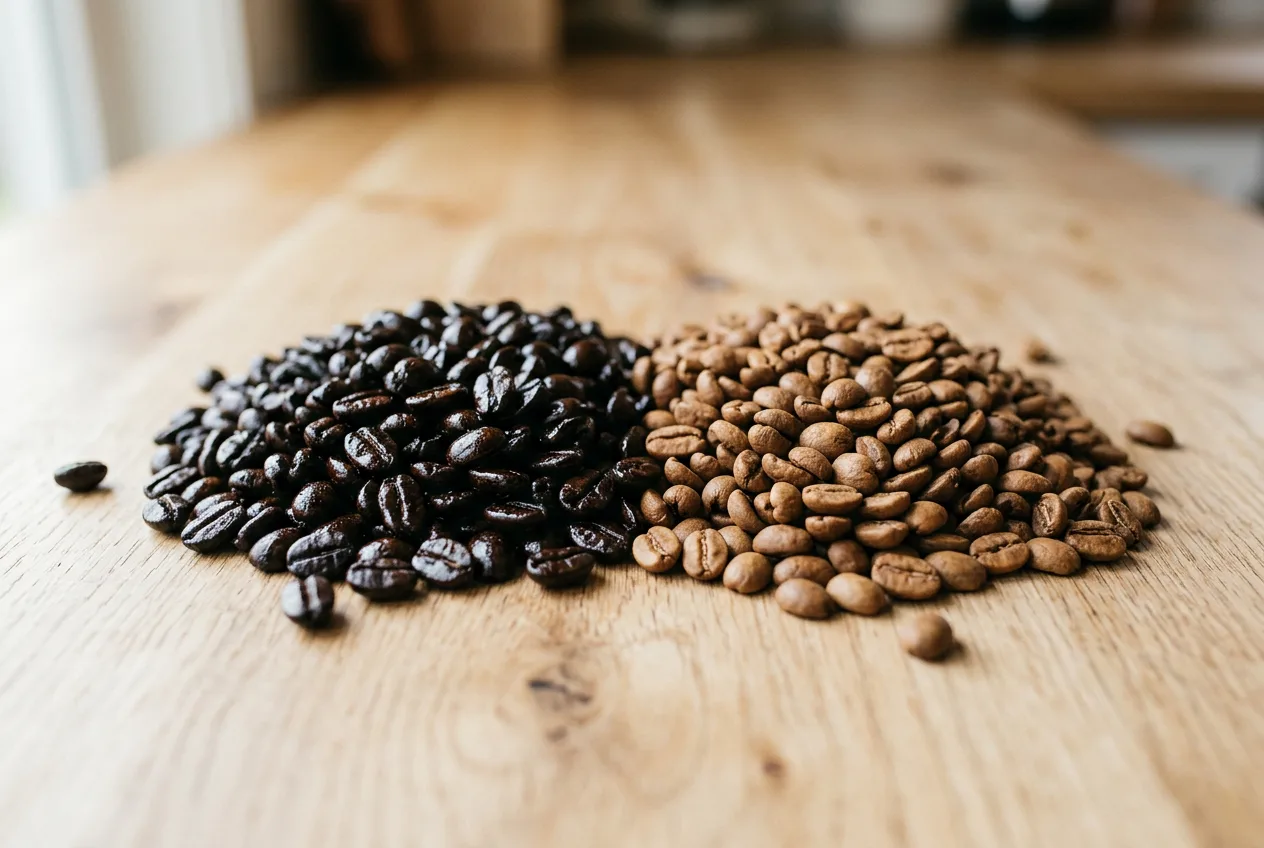
The fix: if you don't like smoky, charred notes, move away from dark supermarket roasts and try a light or medium roast of 100% arabica. Medium roasts caramelize the sugars without scorching the bean. My guide to coffee roast levels shows how flavor changes along the way.
Burnt cause 2: a choked espresso shot
You can still get a burnt taste from good, medium-roasted arabica. In espresso, it happens when the coffee bed is packed so tightly that water can barely get through.
The water stalls against the hot shower screen and sits in the puck, effectively over-cooking the grounds. What finally drips out is dark, bitter and burnt.
What a choked shot looks like
A healthy shot hesitates for a few seconds, releases a drop or two, then joins into a steady, even stream.
A choked shot doesn't. The machine strains and sounds labored, and the coffee only drips out slowly, drop by drop, without ever forming a stream.
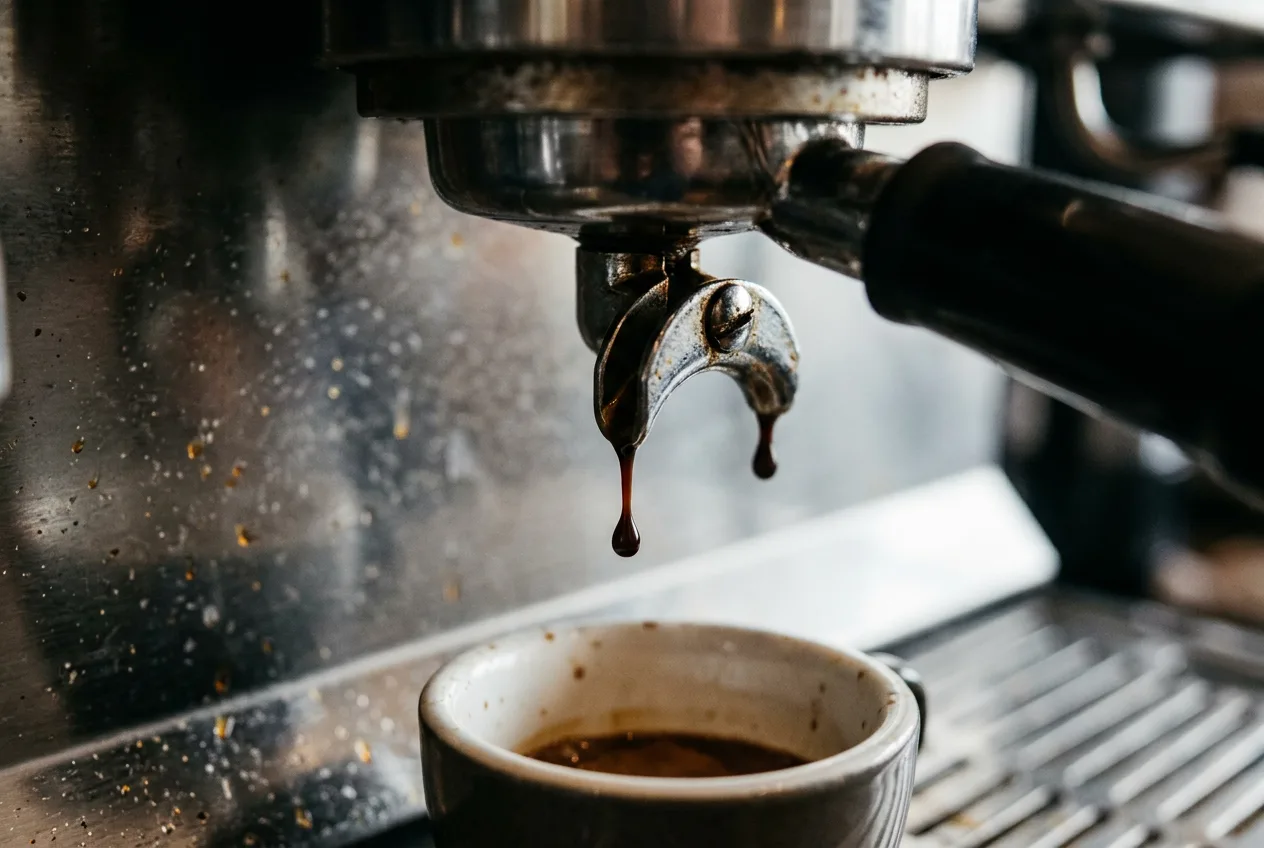
Three mistakes that choke a shot
- Over-dosingToo many grams of coffee in the basket.
- Over-tampingPressing far too hard, so the coffee becomes a solid brick.
- Grinding too fineGrinding to a powder that blocks water completely.
Reading the puck: your best clue
When a shot tastes burnt or chokes, the spent puck in your portafilter tells you exactly what went wrong. Knock it out and look before you clean up.
Diagnosis 1: dry, crumbly puck = over-dosing
If the puck is very dry and hard and breaks into crumbly chunks, you used too much coffee.
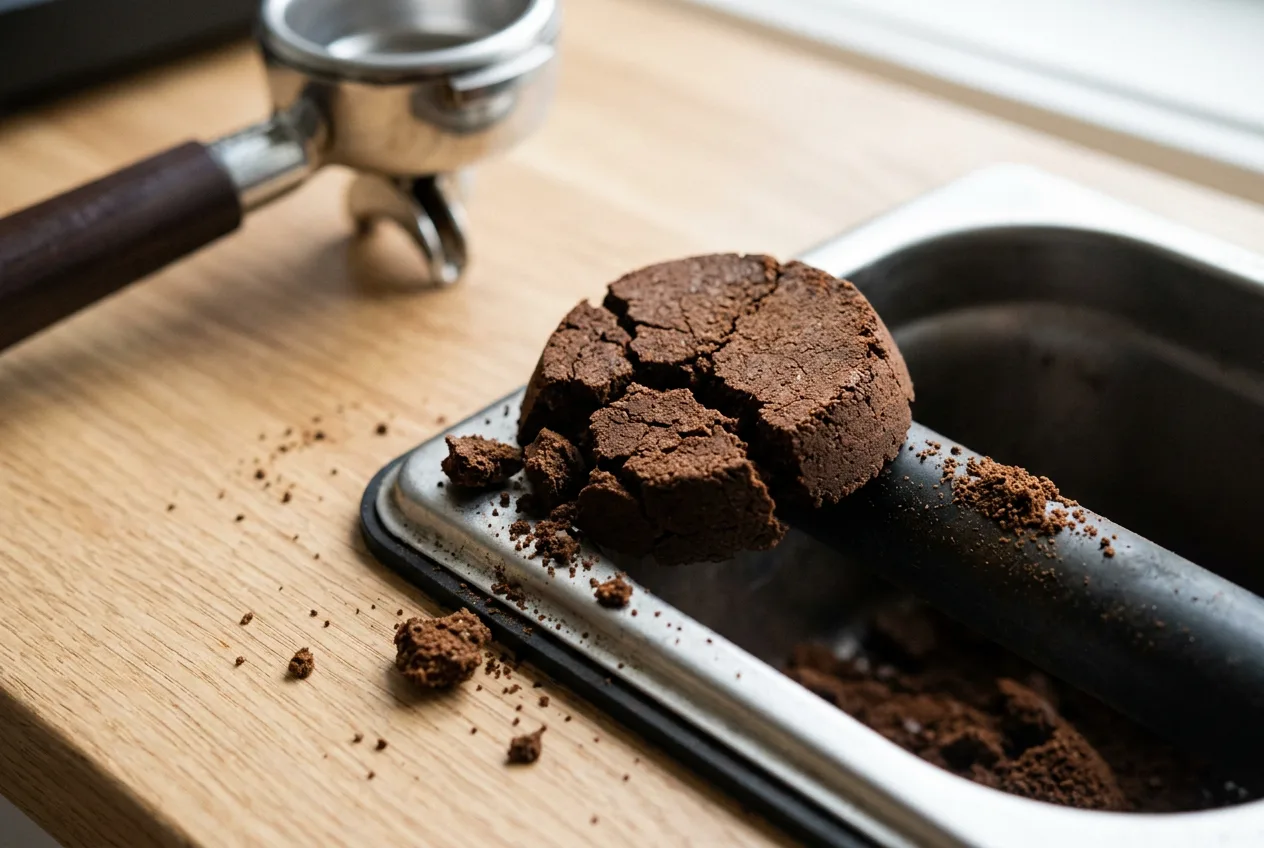
With too much coffee in the basket, the dry grounds press right up against the shower screen when you lock in the portafilter. There's no headspace for water to spread out. It forces its way through a few narrow channels, scorching some coffee and leaving other pockets dry.
The fix: use less coffee. With a scale, drop the dose by 1 to 2 grams. Without one, level the basket cleanly so there's a small gap between the tamped coffee and the rim.
Diagnosis 2: sloppy, muddy puck = grind too fine
If you find a pool of water sitting on top of a wet, soupy puck, the grind is too fine, or you tamped far too hard.
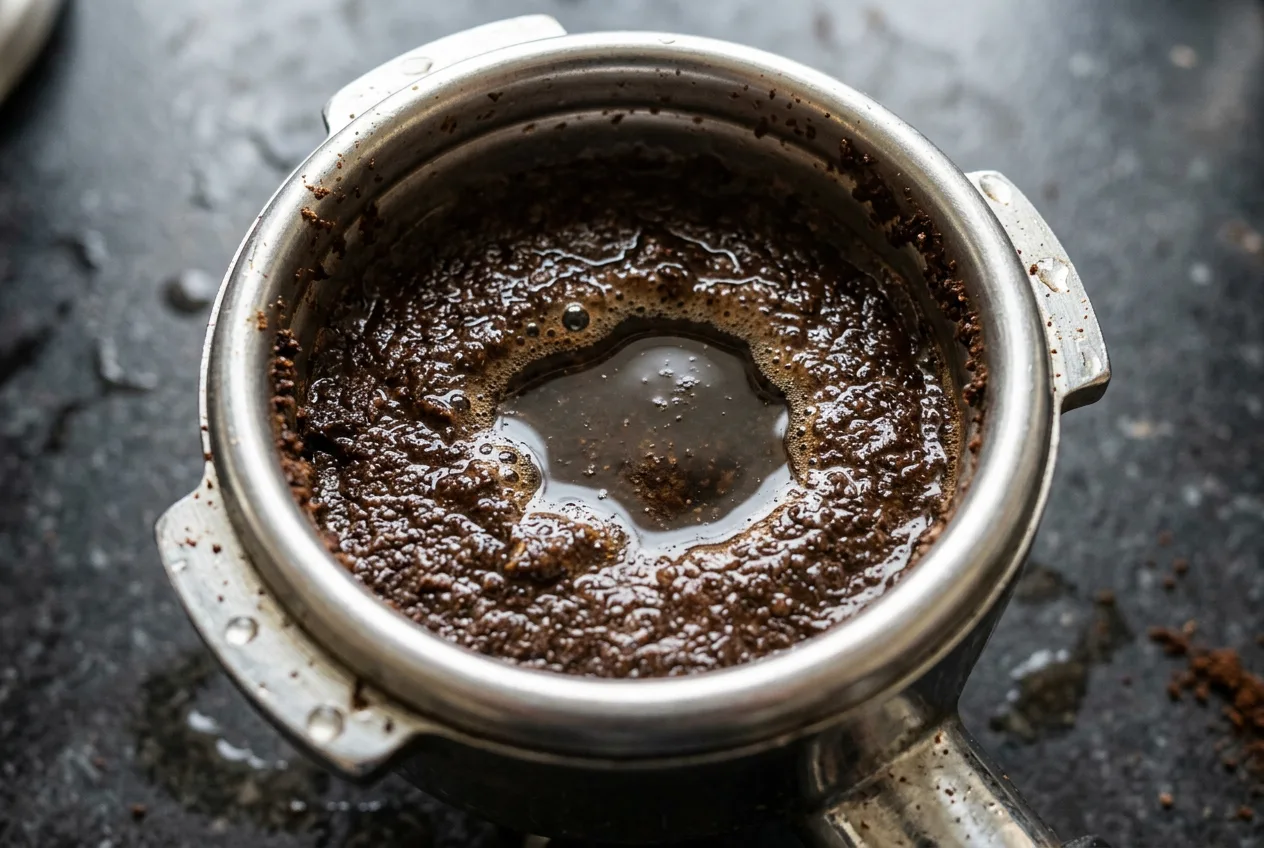
The particles were so fine they sealed together like wet clay. Pressurized water sat on top, unable to push through, slowly scorching the top layer while barely dripping out the bottom.
The fix: grind slightly coarser to open up paths for the water, and stop leaning your full body weight on the tamper.
| Puck looks | Meaning | Fix |
|---|---|---|
| Firm, damp, holds its shape | Healthy shot | Nothing; judge by taste |
| Dry, hard, crumbly | Over-dosed | Remove 1 to 2 g of coffee |
| Soupy with water on top | Grind too fine or tamp too hard | Grind coarser, tamp lighter |
| Small holes or cracks | Channeling | Distribute grounds evenly, tamp level |
One honest caveat: puck appearance is a clue, not a verdict. Some machines leave wet pucks no matter what. Always trust the taste in the cup over the look of the puck.
The real secret: change one variable at a time
The way to get rid of bitter, sour and burnt coffee for good is variable isolation. The biggest home-barista mistake is changing three things at once: grinding finer, adding more coffee and tamping harder on the same shot.
When you change several things together, you never learn which one helped or hurt. So lock down everything you can, and steer with just one control.
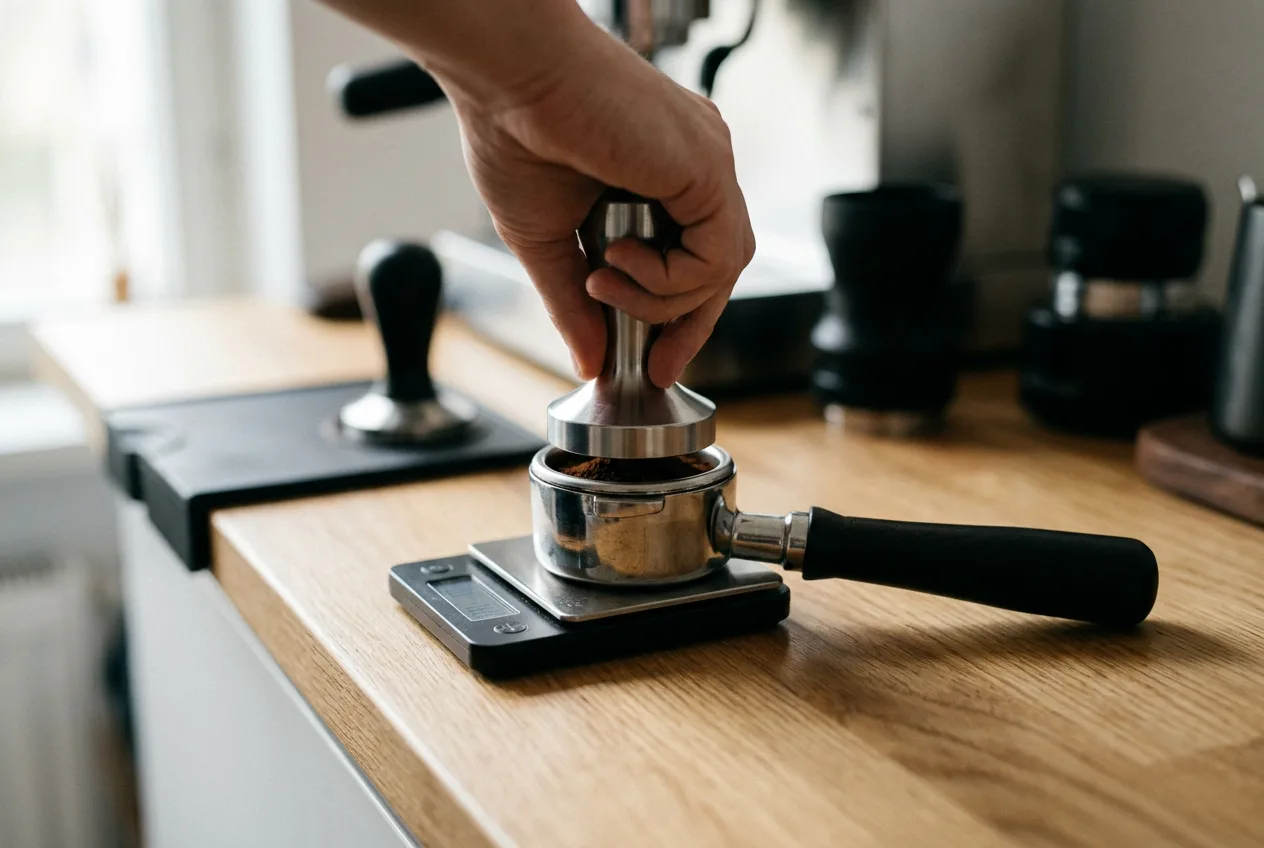
- Standardize your doseUse the exact same weight of coffee every time. A small scale that reads to 0.1 g is easiest. Without a scale, fill to the same line and sweep off the excess with a flat finger every time.
- Standardize your tampTamping doesn't need strength. Its job is to remove air pockets and make a flat, level surface so water flows evenly. Press firmly and level, and stop once the coffee stops compressing.
- Steer with the grinder onlyOnce dose and tamp are consistent, leave them alone. Your grind dial becomes your only steering wheel.
Our tip: Keep a sticky note on your grinder with the bean name, the setting and the shot time. When you open a new bag, you'll have a starting point instead of a guess.
Channeling: sour and bitter in the same shot
Sometimes an espresso tastes sour and bitter at once. That confusing mix usually means channeling.
Channeling happens when water finds an easy path through the puck, such as a crack, a loose patch or a gap at the edge of the basket. Most of the water rushes through that channel, over-extracting the coffee around it. The rest of the puck barely gets touched and stays under-extracted.
So you get bitterness from one part of the puck and sourness from another, in the same cup. Grinding finer or coarser won't fix it, because the problem is uneven flow, not the average extraction.
How to prevent channeling
- Break up clumps in the ground coffee before tamping. A simple stirring tool with thin needles works well.
- Distribute evenly so the bed is flat before you tamp, not piled up in the middle.
- Tamp level. A tilted tamp leaves one side thinner, and water takes the shortest route.
- Don't knock the portafilter after tamping, which can crack the puck.
With a bottomless portafilter you can actually see channeling. Thin jets of coffee spray sideways from the bottom of the basket instead of one even cone.
Bitter or sour by brewing method
The principles are the same everywhere, but each brewer has its own habits. Here's what usually goes wrong with each one I test.
| Method | Usually bitter because | Usually sour because |
|---|---|---|
| Espresso | Shot runs too long or blonds into the cup | Grind too coarse or beans too fresh |
| French press | Coffee left on the grounds after plunging | Steep too short or no bloom |
| Pour-over | Grind too fine, drawdown too slow | Grind too coarse, water drains too fast |
| Drip machine | Coffee held on a hot plate | Machine doesn't heat water enough |
| Moka pot | Left on the heat until it sputters | Heat too low, very coarse grind |
| AeroPress | Long steep with a fine grind | Very short steep with a coarse grind |
| Cold brew | Steeped well beyond 24 hours | Steeped too short or ground too coarse |
A note on the moka pot
The moka pot deserves a special mention, because it's a bitterness trap. Most people leave it on the stove until it gurgles and sputters. That last burst forces steam through the coffee and adds a harsh, burnt edge.
Start with pre-heated water in the base, use medium heat, and take it off as soon as the stream turns pale and starts to hiss. Cooling the base under a cold tap stops the brew immediately.
Milk, sugar and the masking trap
It's tempting to fix a bad cup with milk and sugar. Milk softens bitterness and blunts sourness. Sugar covers almost everything.
That's fine as a rescue. But it hides the problem, so you keep making the same mistake every morning and keep paying for good beans you never actually taste.
Try this once: brew your usual cup, then taste a spoonful black before adding anything. If it's clearly sour or bitter, fix the brew first. You may find you need far less milk and sugar than you thought.
Our tip: A tiny pinch of salt reduces perceived bitterness without adding sweetness. It's a good emergency fix for office or diner coffee you can't re-brew.
A real example: dialing in a new espresso bag
Here's how the process looked the last time I opened a new bag of medium-roast Brazilian espresso beans, roasted nine days earlier.
- Shot 1: 18 g in, 38 g out, 19 secondsSour and thin, with a sprayed stream. Too coarse. I went two steps finer.
- Shot 2: 18 g in, 36 g out, 26 secondsMuch sweeter, chocolate and nuts, with a hint of brightness. Close.
- Shot 3: 18 g in, 36 g out, 29 secondsOne more small step finer. Sweet, rich and balanced. I kept this setting.
- Shot 4: checking the edgeTwo steps finer again: 40 seconds, dry, bitter finish and a crumbly puck. I went back to shot 3.
The dose, tamp and output stayed the same for all four shots. Only the grind changed, so each shot taught me something. That's the whole method in practice.
When the problem isn't the coffee
Before you rip up your recipe, check yourself. Your palate changes more than you'd think.
- Toothpaste makes coffee taste harsh and bitter for a while after brushing.
- Sweet or acidic food right before a sip makes coffee taste more bitter or more sour by contrast.
- A cold or congestion dulls aroma, so coffee tastes flat and more bitter.
- Very hot coffee hides sweetness and acidity, as mentioned earlier.
When I'm judging coffee for a review, I taste it first thing, before breakfast, with a glass of water to rinse between sips. It sounds fussy, but it makes the differences much easier to hear.
Buying beans that are easier to brew well
Some coffees are simply more forgiving than others. If you're tired of fighting your brew, start with beans that work with you.
- Look for a roast date, not just a best-before date. For filter, one to four weeks after roasting is the sweet spot. For espresso, one to five weeks.
- Choose medium roasts if you want the least drama. They have enough sweetness to cover small extraction errors and less sharp acidity than light roasts.
- Pick 100% arabica if bitterness bothers you.
- Buy smaller bags you'll finish within a month, so you're never brewing stale coffee.
- Choose chocolate and nut tasting notes for milk drinks, and fruit or floral notes if you drink black and enjoy brightness.
There's more on reading labels in how to choose coffee beans.
Two checklists to keep by the grinder
If it's sour
- Grind a step finer.
- Bloom for 30 to 60 seconds with fresh beans.
- Check the water is at least 195°F.
- Brew a little longer, or use a little more water.
- For espresso, give very fresh beans a few more days.
If it's bitter or burnt
- Grind a step coarser.
- Shorten the brew and pour off the grounds right away.
- Stop espresso shots before they turn pale.
- Lower the dose if the puck is dry and crumbly; tamp lighter if it's soupy.
- Try a lighter roast or 100% arabica beans.
Print them, stick them inside a cupboard door, and you'll rarely need the rest of this guide.
Other culprits worth checking
Most bad cups trace back to the beans or the extraction. But if you've fixed those and something still tastes off, these are the next places I look.
Stale beans
Old coffee tastes flat, papery and often bitter, because the aromas that carry sweetness have faded. Ground coffee goes stale fastest, within days. Whole beans are best within about a month of roasting. See how to store coffee beans.
Dirty equipment
Coffee oils build up in grinders, portafilters, carafes and drip machines. Over time they go rancid and add a stale, bitter, almost metallic taste to every cup. Backflushing an espresso machine and descaling a drip machine make a bigger difference than most people expect.
Water
Coffee is about 98% water. Chlorinated tap water adds harshness, very hard water makes coffee dull and chalky, and very soft or distilled water can make it taste sharp and thin. Filtered tap water is a good default.
Temperature
Water that's too hot, near a full boil, extracts bitterness quickly, especially from dark roasts. Water that's too cool, below about 195°F, under-extracts and tastes sour. Many cheap drip machines never get hot enough, which is a hidden cause of sour coffee.
Holding coffee on a hot plate
Coffee left on a warming plate keeps cooking. After 20 or 30 minutes it turns bitter and burnt-tasting, even if it was brewed perfectly. A thermal carafe keeps it hot without the damage.
| Culprit | Taste it causes | Fix |
|---|---|---|
| Stale beans | Flat, papery, bitter | Buy smaller bags, grind fresh |
| Old coffee oils | Rancid, metallic, bitter | Clean and descale regularly |
| Chlorinated water | Harsh, chemical | Use filtered water |
| Water too cool | Sour, thin | Aim for 195 to 205°F |
| Hot plate | Bitter, burnt | Use a thermal carafe |
My troubleshooting routine, start to finish
When a new bag of beans or a new machine gives me a bad cup, I work through the same short list, in this order. It saves a lot of wasted coffee.
- Name the flavorBitter, sour or burnt? Let it cool and taste it slowly before changing anything.
- Check the beansRoast date, roast level and whether it's 100% arabica. Too fresh, too old or too dark explains a lot.
- Check the basicsDose, water amount and temperature. Make sure they match your usual recipe.
- Adjust the grindFiner for sour, coarser for bitter. One small step at a time.
- Look at the evidenceFor espresso, watch the flow and check the puck. For filter, check the total brew time.
- Clean, then re-testIf nothing makes sense, clean the gear and brew again before blaming the beans.
Nine times out of ten, I'm done by step four.
A word on expectations
One last thing before the verdict. Not every hint of bitterness or acidity is a mistake.
A bright Kenyan or Ethiopian light roast is supposed to taste lively, sometimes almost like citrus juice. A traditional Italian espresso blend is supposed to taste bold, with a cocoa-like bitter finish. If you judge them by the same standard, you'll "fix" coffees that weren't broken.
The real question is whether the flavor feels balanced and pleasant, or harsh and one-sided. Brightness with sweetness behind it is good acidity. Bitterness that tastes like dark chocolate is good bitterness. It's only when one of them takes over, leaves your mouth dry or tastes like vinegar or ash that you have a problem to solve.
Read the roaster's tasting notes, taste with that in mind, and adjust only when the cup falls short of them.
The verdict
Bitter, sour and burnt coffee each have clear causes, and they need different fixes. Bitterness usually means over-extraction or robusta-heavy, dark beans. Sourness usually means under-extraction, trapped gas or too coarse a grind. Burnt flavors come from very dark roasts or choked espresso.
Taste carefully, change one variable at a time, and let your equipment show you the evidence. Keep your beans fresh but properly rested, match your grind to your brewer, respect brew time, and you'll stop guessing and start getting a sweet, balanced cup every morning.
Frequently asked questions
Why does my coffee taste bitter?
Usually because it's over-extracted: the grind is too fine, the brew too long, or the coffee sat on the grounds or a hot plate. Robusta-heavy or very dark roasted beans also taste bitter however you brew them.
Why does my coffee taste sour?
Most often it's under-extracted. The grind may be too coarse, the brew too fast, or the water too cool. Very fresh beans full of carbon dioxide can also taste sour, especially as espresso.
What's the difference between bitter and burnt coffee?
Bitter feels dry and lingering, like cocoa or strong tea. Burnt tastes ashy and smoky, like charred toast. Burnt flavors come from very dark roasting or a choked espresso shot.
How long should espresso beans rest after roasting?
At least seven days at room temperature, and up to about 14 days in cold weather or for very light roasts. Beans that are too fresh make foamy, sour shots.
How long should an espresso shot take?
A common target is about 1 fluid ounce in around 30 seconds. Under 20 seconds usually tastes sour; past 35 seconds usually tastes bitter.
Does blooming coffee really matter?
Yes, especially with fresh beans. A 30 to 60 second bloom lets carbon dioxide escape so the water can extract evenly, which reduces sourness.
Why is my French press coffee bitter?
Most often because the coffee stays on the grounds after plunging, or the grind is too fine. Steep for four minutes, plunge, and pour everything out right away.
Is dark roast coffee always bitter?
Dark roasts are naturally more bitter and roasty than lighter roasts, and very dark ones can taste burnt. Brewing them with slightly cooler water and a coarser grind helps.

- Michael Reynolds, notes from daily espresso and filter coffee testing
- Coffee Taster's Flavor Wheel, Specialty Coffee Association
Related guides
Acidity and bitterness in coffee Coffee freshness, resting and degassing Arabica vs robusta Coffee roast levels explained Burr vs blade grinderWritten by Michael Reynolds. Last updated November 19, 2026.