Coffee Leaf Rust and Coffee Diseases: What They Are and Why They Matter
A tiny orange fungus once wiped out an entire country's coffee industry, and in recent years it has cut harvests across Latin America by up to 40 percent. Here's what coffee leaf rust is, how farmers fight it, the other diseases that threaten coffee, and what it all means for the people who grow your coffee.
We choose products independently. We may earn a commission through links on this page; your price stays the same. Affiliate policy
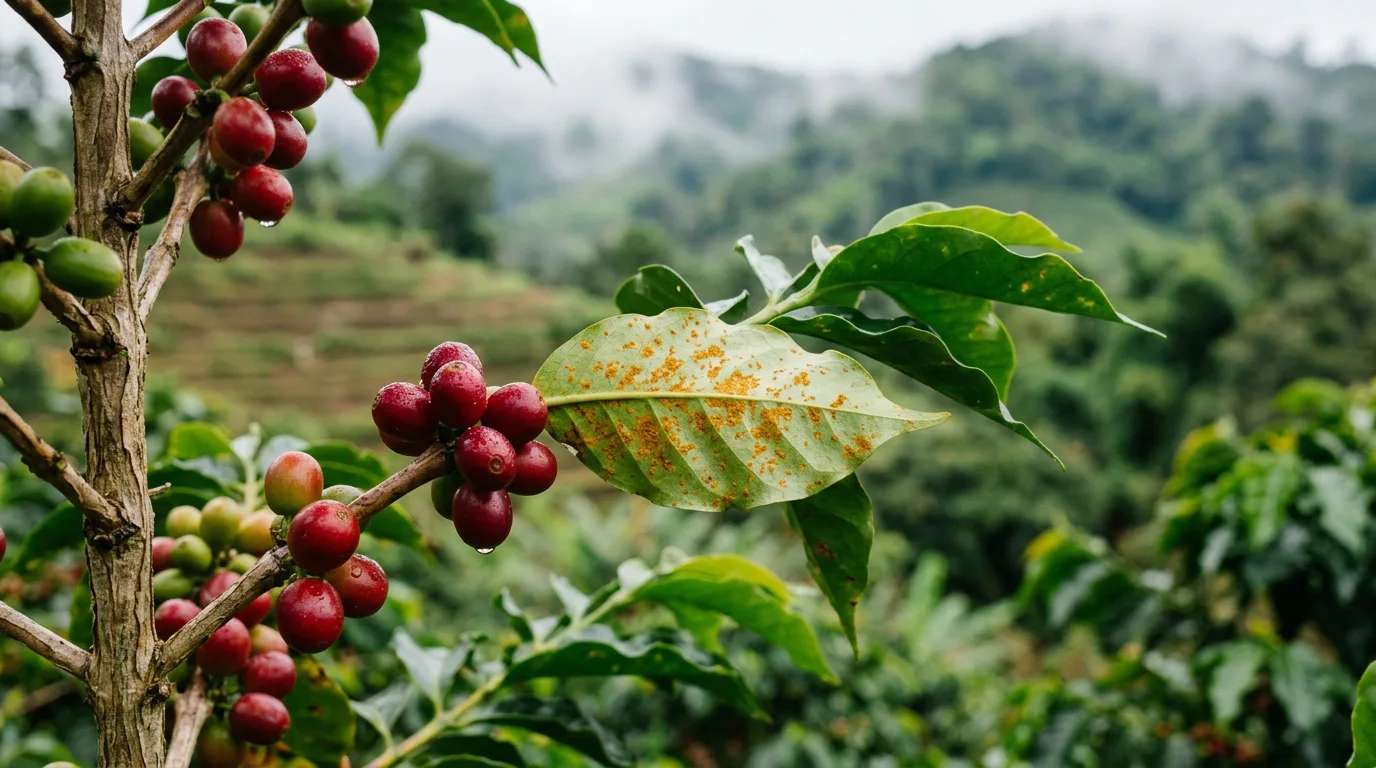
Coffee leaf rust (called roya in Spanish) is a fungal disease that attacks coffee leaves, causing orange, powdery spots and making trees drop their leaves. Without leaves, trees can't produce a good crop.
It wiped out coffee in Ceylon (Sri Lanka) in the 1800s, and a major outbreak from 2012 cut harvests across parts of Latin America by an estimated 15 to 40 percent, pushing many farming families into hardship.
There's no single cure. Farmers manage rust with good farm practices, fungicides where appropriate, resistant varieties, shared information and financial support. Because it hits incomes and food security, rust is as much a human crisis as a plant disease.
Why I wrote this
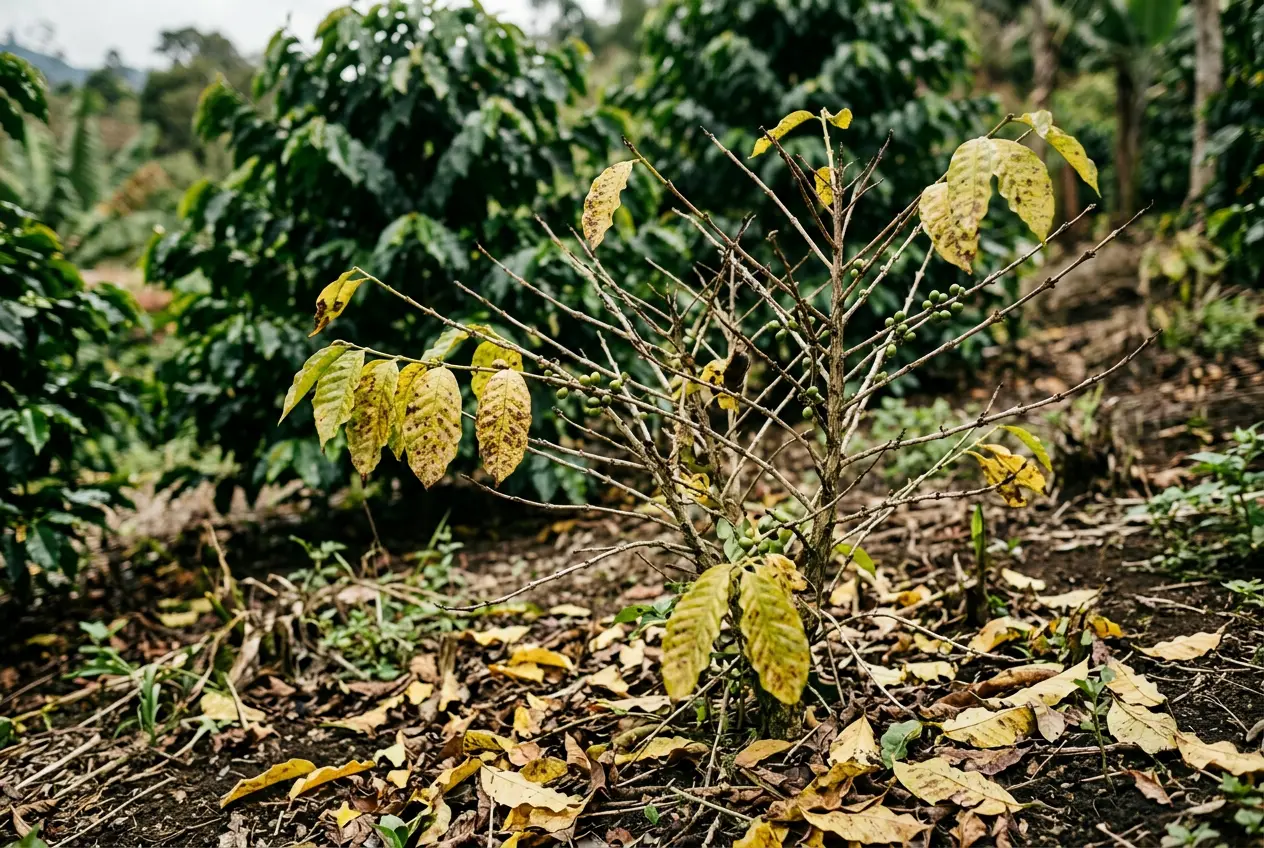
A few years ago, I walked through a coffee farm in Central America with the farmer who owned it. Half the trees on one slope were nearly bare. Thin branches, a few yellow leaves, a scattering of green cherries.
"Roya," he said, and turned over a leaf to show me the orange dust underneath. That farm had lost most of its harvest two years running.
We tend to think of coffee as a bag on a shelf. But behind every bag is a plant that can get sick, and a family whose income depends on whether it does.
Since then I've asked about rust on almost every farm visit and in conversations with importers and roasters. The stories vary, but the pattern is the same: the disease hits the trees first, then the family budget, then the whole community.
This guide explains coffee leaf rust and the other diseases that threaten coffee, how farmers and researchers are responding, and why it matters to anyone who drinks coffee.
What you'll learn
- What coffee leaf rust is and how to recognize it
- How it destroyed a coffee empire in the 1800s
- How recent outbreaks hit Latin American farms
- How farmers manage rust, conventionally and organically
- Why resistant varieties are promising but complicated
- The human cost, including the "thin months" of hunger
- Other coffee diseases and pests worth knowing about
- What roasters and drinkers can do
What coffee leaf rust is
Coffee leaf rust is caused by a parasitic fungus called Hemileia vastatrix. It lives on coffee leaves, feeding on the living plant.
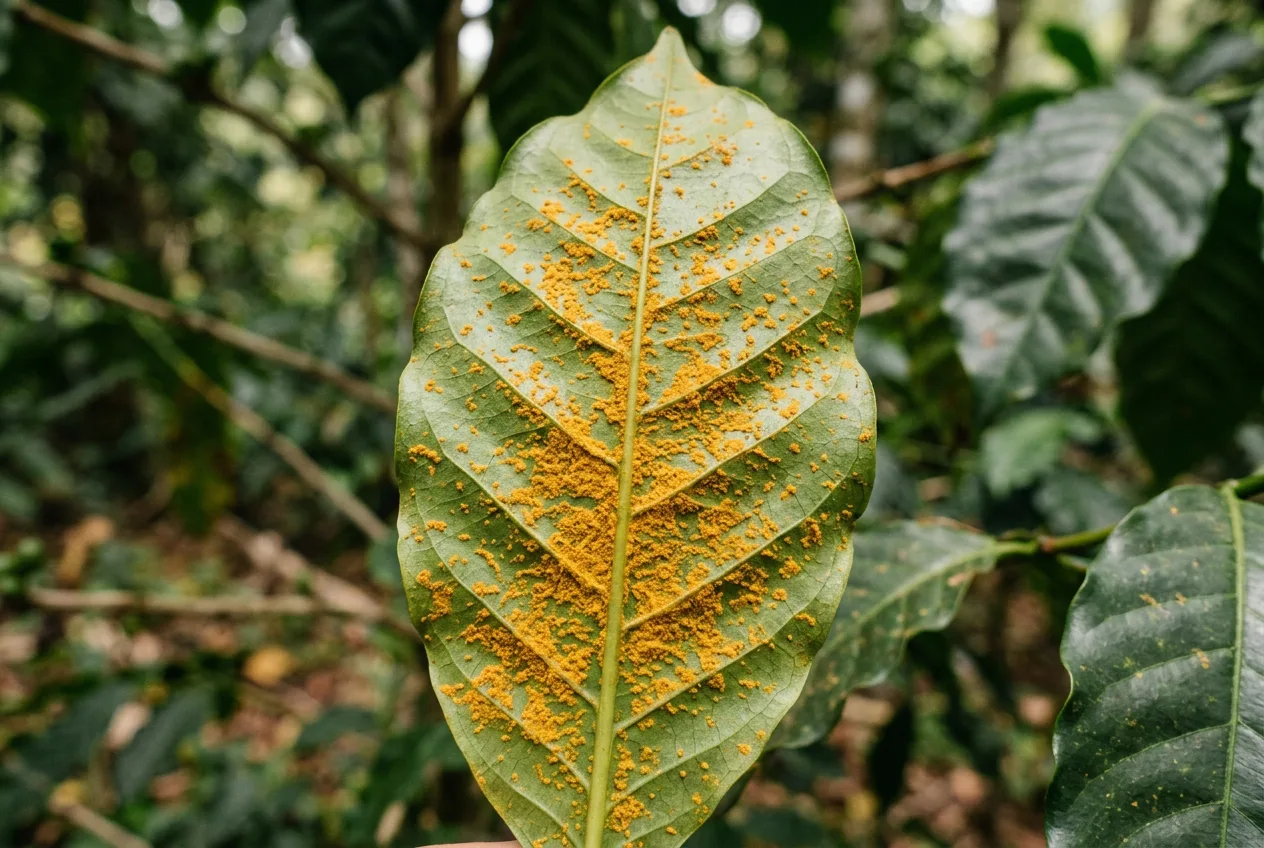
How it harms the plant
- Spores land on leavesRust spores are carried by wind, rain, insects, animals and even on workers' clothes.
- They infect the leafWith moisture and the right temperatures, spores germinate and enter the leaf from underneath.
- Orange spots formYellow-orange powdery patches appear on the underside, releasing new spores.
- Leaves fallBadly infected leaves drop off. The tree loses its ability to photosynthesize.
- Yields collapseA weakened tree produces fewer, poorer cherries, often for more than one season.
Rust is what scientists call an obligate parasite: it can only survive on living coffee plants. That means it spreads from tree to tree and farm to farm wherever coffee grows, rather than living in the soil.
Rust rarely kills a tree outright. Instead, it starves it, which can be just as devastating for a farmer. And because coffee trees take years to recover, one bad outbreak can affect several harvests.
Classic arabica varieties like Typica, Bourbon and Caturra are especially vulnerable. My guide to coffee varieties explains why so much of the world's arabica shares this weakness.
How to recognize coffee leaf rust
| Stage | What you see |
|---|---|
| Early | Small pale yellow spots on the top of the leaf |
| Developing | Bright orange, powdery patches on the underside that rub off on your finger |
| Advanced | Spots merge, centers turn brown and dry, leaves yellow |
| Severe | Heavy leaf drop, bare branches, few cherries |
It's easy to confuse early rust with other leaf problems like nutrient deficiencies or sun scorch. The difference is the powder: rust spores rub off as an orange dust, while most other problems leave only discolored leaf tissue.
The orange powder on the underside is the giveaway. On a farm, it's often first spotted on the lower, shadier branches where humidity stays high.
Our tip: If you grow a coffee houseplant and see orange powder under the leaves, isolate it from other plants and remove affected leaves. Indoor rust is rare, but worth catching early. My guide on how the coffee plant grows covers other houseplant problems.
A brief history: from Ceylon to Central America
Coffee leaf rust has been known since the 19th century, and its history shows just how much damage it can do.
The fall of Ceylon's coffee
In 1869, Ceylon, today's Sri Lanka, was one of the world's biggest coffee producers. That year, small yellow spots began appearing on coffee leaves.
The fungus spread across the island's plantations. Scientists worked out what caused it, but planters had no way to stop it. Within a couple of decades, coffee had almost disappeared from the island.
At the time, very little was known about the disease. A young scientist sent from England worked out that a fungus caused it and mapped its life cycle, but there were no effective treatments. Spores drifted on the wind and rain, on workers and animals, and newly planted areas were soon infected too.
Many plantations switched to tea. That's a big part of why Sri Lanka became famous for Ceylon tea rather than coffee.
Spreading around the world
From there, rust spread through coffee-growing regions in Asia and Africa. It reached the Americas in the 20th century, and coffee-producing countries developed different ways of limiting it.
The modern Latin American crisis
Starting around 2012, a severe outbreak swept through Mexico, Central America and parts of South America. Areas that had rarely seen serious rust, including some higher-altitude farms, were hit hard. Warmer temperatures and unusual rainfall are thought to have helped it spread.
| When | Where | What happened |
|---|---|---|
| 1869 onward | Ceylon (Sri Lanka) | Rust destroyed the coffee industry, planters switched to tea |
| Late 1800s to early 1900s | Asia and Africa | Rust spread through many coffee regions |
| 20th century | The Americas | Rust arrived, countries developed control strategies |
| 2012 onward | Mexico, Central America, parts of South America | Major outbreak, harvests fell sharply, families hit hard |
The damage in Latin America
The reported damage across affected parts of Mexico, Central America and South America was severe. Harvests in affected areas fell by an estimated 15 to 40 percent during the worst of the outbreak, and some individual farms lost far more.
Estimated harvest loss in affected areas
Regional estimates for the period discussed. Individual farms saw losses well outside this range in both directions.
Losses ripple through the whole chain
Rust can reduce harvests, weaken incomes, affect quality, raise production costs and threaten the food security of farming households, all at once.
What makes rust spread
Rust doesn't strike every farm equally. Certain conditions let it explode.
| Condition | Effect on rust |
|---|---|
| Warm temperatures | Rust grows fastest in warm, mild conditions typical of mid-altitude coffee farms |
| Wet leaves | Spores need water on the leaf to germinate, so rain, dew and humidity help |
| Rising temperatures at altitude | Warmer weather lets rust thrive higher up than it used to |
| Weak, old or underfed trees | Less able to resist or recover |
| Heavy crop load | Trees carrying lots of fruit can be more susceptible |
| Dense planting with poor airflow | Keeps leaves wet longer |
| Susceptible varieties | Typica, Bourbon and Caturra are highly vulnerable |
Many of these are made worse by low coffee prices. When farmers can't afford fertilizer, pruning labor or fungicides, trees get weaker and rust finds an easier target. The disease and the economics feed each other.
Why there's no single fix
There is no one treatment that eliminates rust everywhere. It has to be managed as an ongoing part of farming life.
Fungicides: useful, but not simple
Chemical fungicides are a common way to control rust. But using them well raises real questions:
- Which product is suitable for this farm?
- When and how often should it be applied?
- Can the farmer afford the product, the equipment and the labor?
Wrong or badly timed applications can waste money and still leave trees unprotected.
The organic challenge
Organic farmers face a different problem. They can't use conventional fungicides without risking their certification, which often earns them a better price. They need effective methods that fit organic standards, and the need is especially urgent where coffee is a community's main income.
Every farm is different
The right approach depends on:
| Factor | Why it matters |
|---|---|
| Elevation and climate | Rust thrives in certain temperature and humidity ranges |
| Shade | Changes humidity and leaf wetness |
| Tree age | Older, weaker trees are more vulnerable |
| Variety | Some are far more susceptible than others |
| Labor and money | Decides what's realistically possible |
| Access to supplies | Remote farms may struggle to get inputs on time |
Advice that works on one farm may not work on the next. That's why local, practical guidance matters so much.
How farmers manage rust
Good rust management usually combines several approaches, often called integrated management.
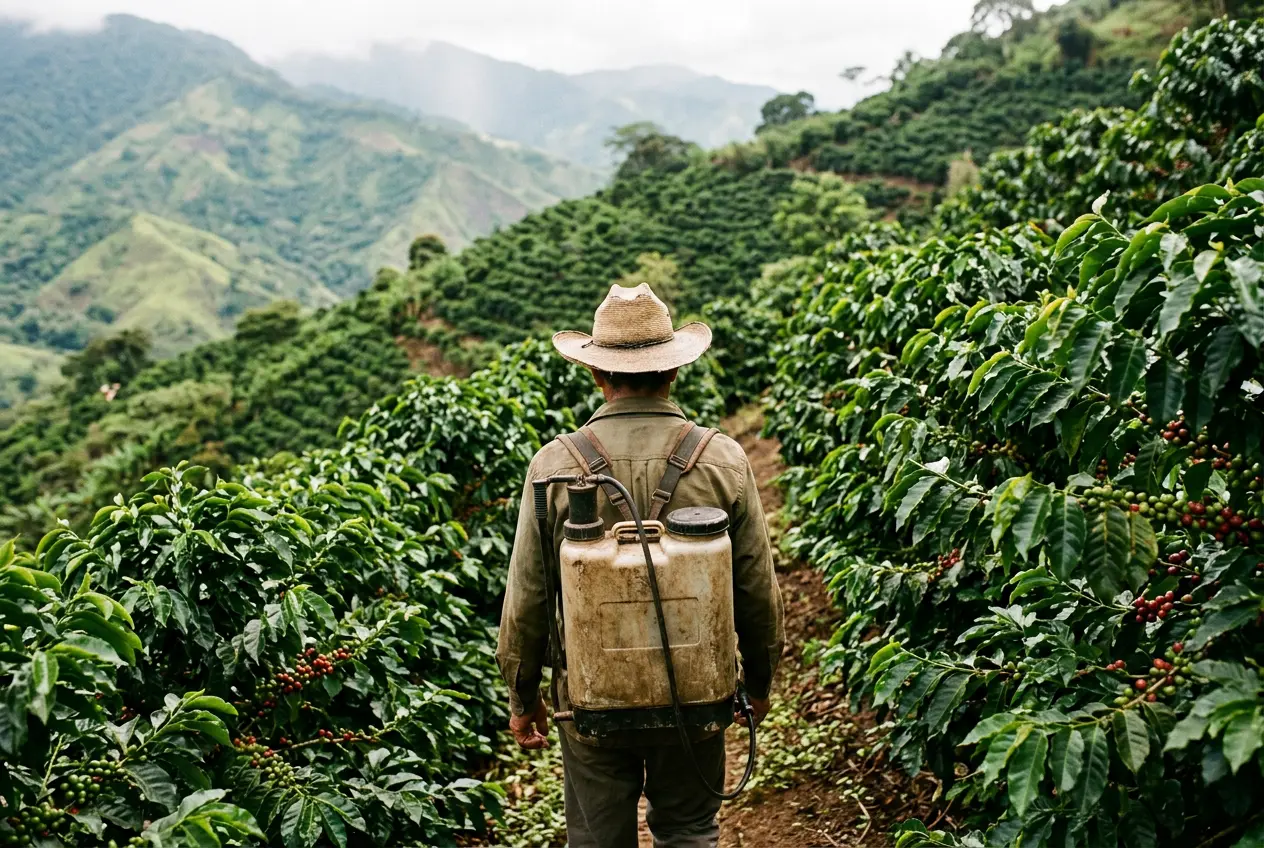
- Healthy, well-fed treesStrong, well-nourished plants resist infection better and recover faster.
- Pruning and renovationRemoving old, weak growth and replacing exhausted trees improves airflow and vigor.
- Shade managementBalancing shade so the canopy isn't too damp helps reduce leaf wetness.
- MonitoringRegularly checking leaves lets farmers act before an outbreak explodes.
- Well-timed fungicidesWhere appropriate, applied at the right moment with the right product.
- Organic optionsApproaches compatible with organic standards, adapted to local conditions.
- Resistant varietiesReplanting with varieties that resist rust, where they suit the farm.
Knowing isn't enough
One early priority in the response was helping farmers actually get the resources they needed. Financing allowed some growers to buy fungicides and equipment.
Technical manuals were written for farmers and agricultural specialists, explaining the disease and how to apply different measures. Other guides focused on simple methods using locally available materials.
The best advice is clear, affordable and realistic for a real farm. It explains not just what to do, but why, and what the limits are.
Farmers teaching farmers
Some of the most valuable advice comes from other growers. A farmer who has battled rust can share what worked, what didn't and how they adapted the official recommendations. That advice carries weight because it comes from someone who knows the realities of coffee farming.
Organic approaches in practice
Organic farmers can't reach for most conventional fungicides, so they rely on a mix of prevention and approved treatments. Exact rules depend on the certifier, so farmers always need to check what's allowed.
- Plant nutrition: compost and organic fertilizers to keep trees strong and better able to resist infection.
- Shade and airflow: managing shade trees and pruning so leaves dry faster after rain.
- Removing infected material: pruning out badly affected branches and renovating exhausted trees.
- Approved products: some mineral-based treatments are permitted under many organic standards, used carefully and within limits.
- Biological controls: research into beneficial fungi and microbes that compete with or attack rust.
- Resistant varieties: often the most powerful long-term organic tool, when they suit the farm.
Organic rust control is harder and often slower. That's one reason organic farmers were hit especially hard in the outbreak, and why practical organic options are such a research priority.
Resistant varieties and the question of cup quality
Plant breeding is a key part of the long-term answer. Some varieties resist rust under particular conditions.
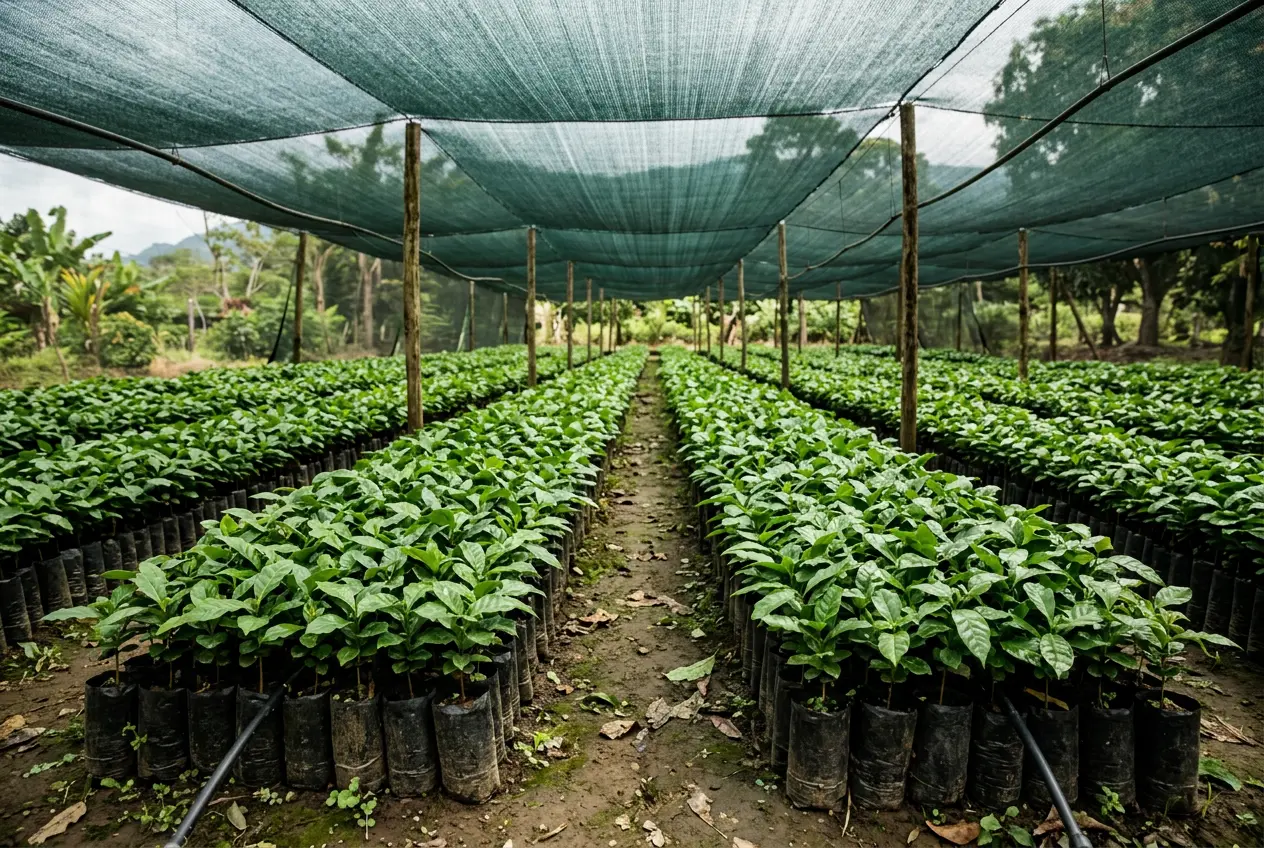
The Castillo example
Castillo, for example, has shown effective resistance in the mountains of Colombia. But that doesn't automatically mean it will thrive everywhere in Latin America.
Varieties need to be tested where farmers will actually grow them. Climate, elevation, soil, disease pressure and farm management all affect performance.
Why farmers hesitate to replant
Replanting a farm is a huge decision. New trees take years to produce. And many growers have heirloom varieties valued for their flavor, reputation or local history.
Before switching, farmers need to know:
- Yield and how long the plants stay productive
- Plant health and actual disease resistance on their land
- Production costs
- Cup quality, and whether buyers will pay for it
Buyers, in turn, need confidence that new varieties can meet quality expectations. Good research looks at both: resilience on the farm and flavor in the cup.
Testing across many places
International variety trials, run in many locations at once, help identify which varieties perform where. Sharing results across countries reduces the risk of farmers investing years in a variety that doesn't suit their farm.
| Classic susceptible varieties | Rust-resistant varieties | |
|---|---|---|
| Examples | Typica, Bourbon, Caturra | Castillo, Catimor types, newer hybrids |
| Rust risk | High | Lower, depends on location and rust strain |
| Cup reputation | Well established | Varies, improving with selection |
| Replanting cost | None if already planted | High, and years before first harvest |
| Buyer familiarity | High | Growing |
Resistance isn't permanent either. The rust fungus evolves, and new strains can eventually overcome some resistance. That's why breeding is never "finished."
What recovery looks like on a farm
Recovering from a serious rust outbreak isn't a single step. It's a multi-year process, and every stage costs money before it earns any.
- Year 1: stabilizeTreat remaining healthy trees, prune or stump badly damaged ones, and protect whatever harvest is left.
- Year 1 to 2: replantRaise or buy seedlings, ideally of a variety suited to the farm, and plant them out. Income stays low.
- Years 2 to 3: growYoung trees need fertilizer, weeding and care, but produce little or nothing yet.
- Years 3 to 4: first harvestsNew trees begin to fruit. Income slowly returns.
- Year 5 and beyond: full productionIf all goes well, the farm is productive again, and hopefully more resilient than before.
That's why recovery financing has to be patient. A loan that expects repayment after one season simply doesn't match how coffee trees grow.
A coordinated response
Rust doesn't respect borders, so isolated responses leave neighbors exposed. The response to the Latin American outbreak brought together more than 20 institutions in coordinated international work.
A regional action plan organized activities in several areas:
Industry meetings and regional gatherings brought farmers, technical experts, governments, producer organizations, researchers and exporters into the same room to assess the crisis and plan next steps.
Cooperation also crossed borders. Collaboration between the Dominican Republic and Haiti, for example, supported an effort to tackle rust across their shared island.
Getting information to farmers
A big part of the response was simply raising awareness. Some communities had never dealt with serious rust and didn't know what to look for, especially at higher altitudes where it hadn't been a problem before.
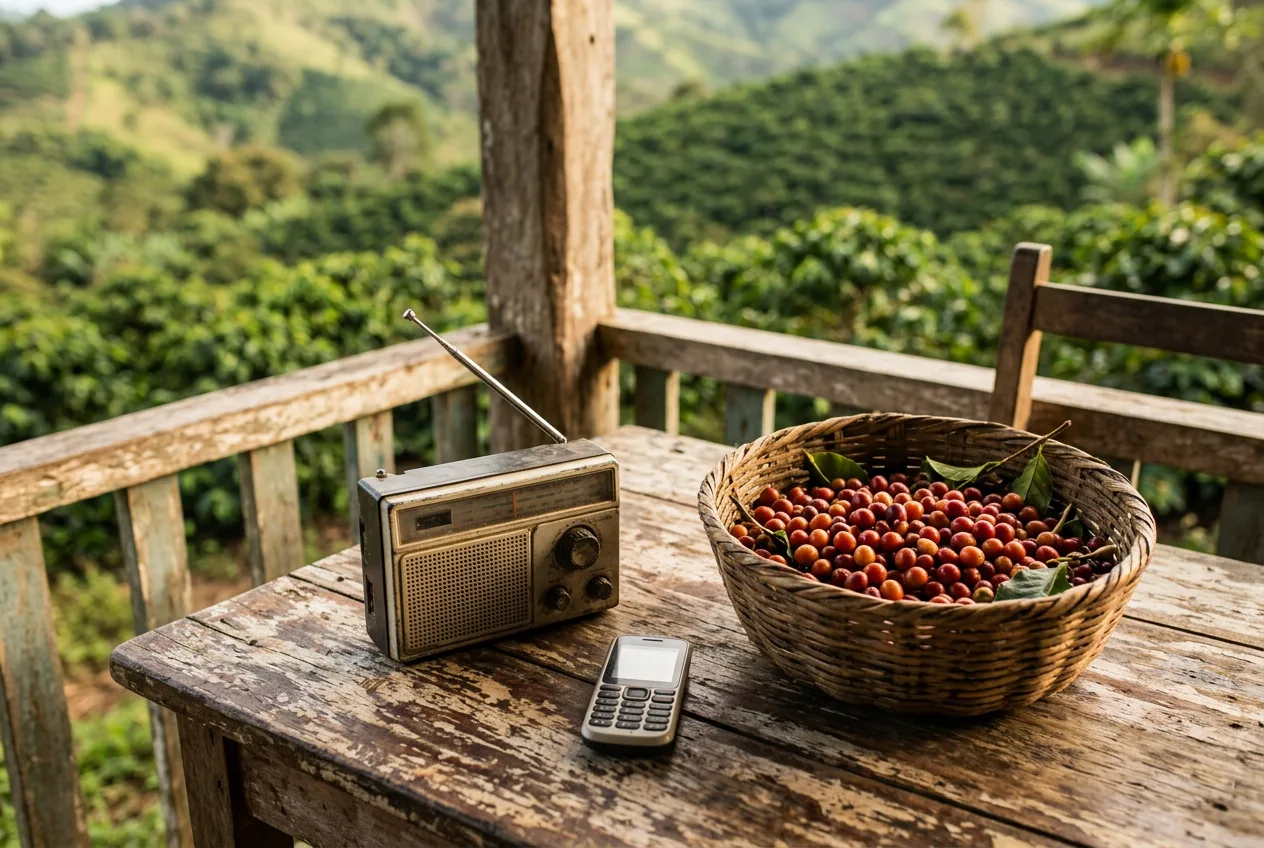
Using every channel
| Channel | Why it works |
|---|---|
| Radio campaigns | Reaches rural areas with little internet, simple and approachable |
| Audio and podcast-style programs | Farmers listen when convenient and replay useful advice |
| Mobile devices | Easy to carry and share audio and messages |
| Farmer-to-farmer recordings | Practical advice from growers who've been through it |
| Websites | Updates and guidance available anytime |
| Bulletins, magazines and posters | Distributed in communities and at farm supply stores |
| In-person meetings | Discussion, questions and trust |
The lesson is that no single channel reaches everyone. Combining radio, mobile audio, the web, printed materials and face-to-face conversations gives timely information the best chance of reaching the farmers who need it.
Early warning and a changing climate
A series of international and national meetings helped organize the response. One major international rust summit brought together more than 300 stakeholders to acknowledge the scale of the crisis and plan a way forward.
Why climate matters
Changes in temperature, rainfall and humidity affect how diseases spread and how severe they become. Rust is one example of the wider risks coffee regions face as the climate shifts. My guide to climate change and the future of coffee covers this in depth.
Early-warning systems
One important outcome of the coordinated work was an early-warning system. Shared protocols and standards help national institutions monitor disease and climate risks consistently.
- MonitorTrack disease levels and weather conditions in a consistent way.
- CompareShare data across regions to spot emerging problems.
- WarnAlert farmers and institutions before damage becomes severe.
- ActTurn warnings into timely, practical support on the ground.
The best systems look beyond the disease itself, assessing the likely economic and social impact too. A warning is only valuable if it leads to help.
Rust and coffee quality
Rust doesn't just reduce how much coffee a farm produces. It can also affect quality.
Weakened trees can produce cherries that ripen unevenly or develop poorly, and disease stress may be linked to defects in the finished coffee.
That matters because specialty markets pay for distinctive flavor and consistent standards. If a farm loses both volume and quality, the financial blow is much bigger than the lost pounds alone. There's less coffee to sell, and some of what's left may not earn its usual premium.
Good research connects all of it: plant health, farm productivity, processing and cup quality. A disease-resistant variety that tastes poor won't appeal to farmers chasing specialty prices. A delicious variety that keeps getting wiped out isn't sustainable either.
A farmer's year with rust
To make it concrete, here's how rust shapes a typical year for a smallholder in a Central American coffee region, based on what farmers have described to me.
| Period | On the farm | Rust pressure | For the family |
|---|---|---|---|
| Harvest season | Picking ripe cherries in several passes | Lower after the rains | Main income arrives |
| After harvest | Pruning, renovation, fertilizing | Lower | Money must be budgeted for the year |
| Start of rains | Flowering, new leaves, first fungicide or organic treatments | Rising | Savings start to shrink |
| Peak rains | Monitoring leaves, treating outbreaks | Highest | The thin months begin |
| Before harvest | Cherries ripening, leaf drop shows the damage | High | Food and cash at their tightest |
A simplified, general picture. Seasons and timing vary a lot between countries and altitudes.
Notice how the most expensive work, treating and monitoring during the rains, falls exactly when families have the least money. That timing is a big reason why credit and financial support matter so much.
The human cost: los meses flacos
This is the part of the rust story that stays with me most.
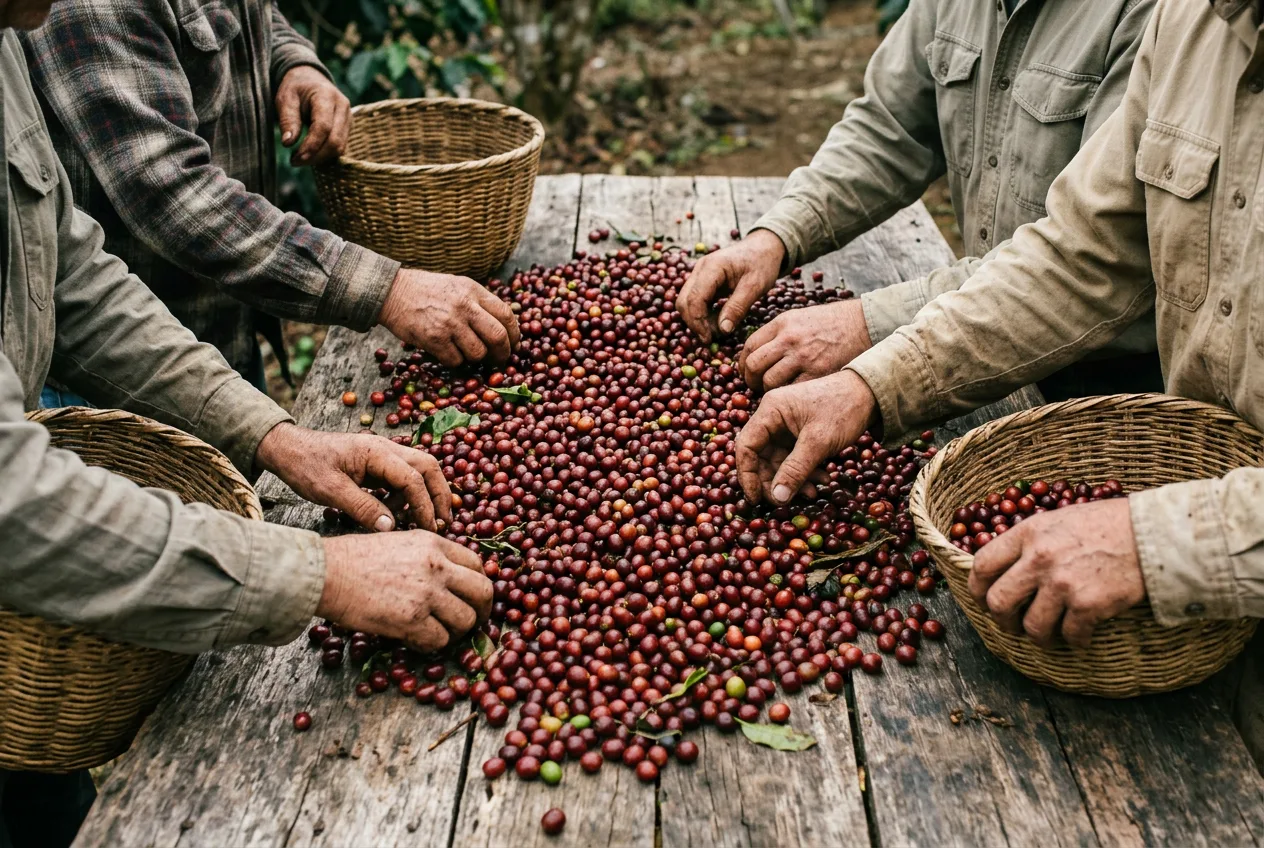
Many smallholder coffee farmers receive most of their yearly income in one go, after the harvest. That money has to last until the next harvest.
In parts of Latin America, the stretch when money and food run low is known as los meses flacos, "the thin months."
Hunger that grew longer
Research in Guatemala, El Salvador, Honduras and Nicaragua looked at how the rust crisis affected families. Households were spending a larger share of their income on food, leaving less for farm upkeep, health care, transportation and education.
Most striking of all: in some affected situations, the period of food insecurity stretched from roughly four months to as many as nine.
Reported months of food insecurity in some affected households
A seasonal problem was becoming a year-round one. When harvest income falls, every member of a household feels it. Children may have less food and miss school. Adults struggle to keep up the farm that supports the family.
Two kinds of help
Both matter. Support has to respond to the urgency of hunger while also tackling the conditions that leave families vulnerable in the first place.
Financial resilience
Money is part of recovery too. One coffee farmer resilience initiative brought public and private partners together and raised more than $7 million, aiming to direct more than $10 million in loans to producer organizations across Latin America.
It was expected to reach 50 producer organizations representing more than 200,000 coffee growers.
More than emergency cash
- Short-term creditCovers urgent costs while production is down.
- Long-term financingPays for rehabilitation, replanting and better practices that take several seasons to pay off.
- Financial trainingHelps organizations and households make the most of their resources.
- Income diversificationFamilies that rely only on coffee are most exposed when a harvest fails. Other income reduces that risk.
But loans alone aren't enough if farmers can't realistically repay them. Financing has to go with realistic recovery plans, sound technical advice and an understanding of local markets. The aim is resilience, not more debt.
Other coffee diseases and pests
Leaf rust gets the most attention, but it's far from the only threat coffee farmers face.
Coffee berry disease
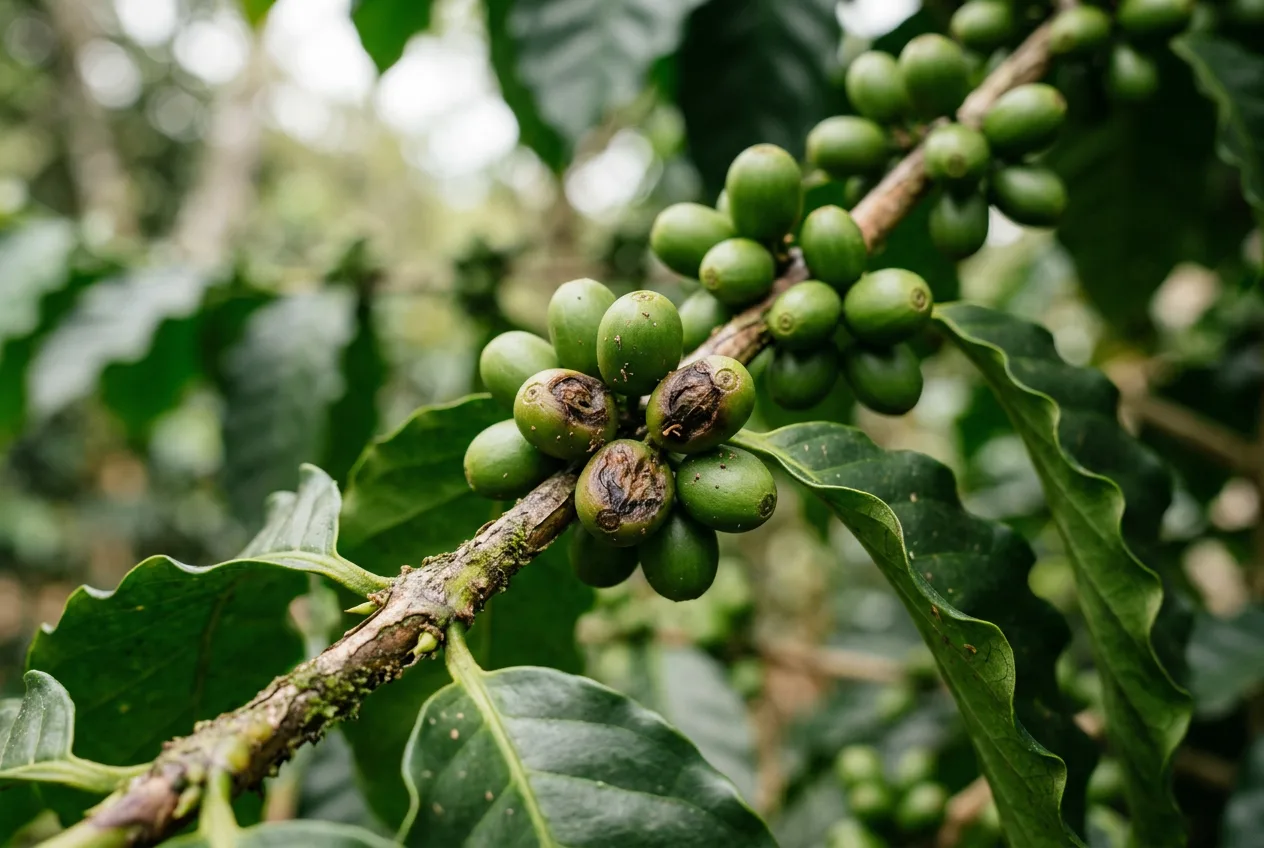
Coffee berry disease is a fungal disease that attacks the developing cherries rather than the leaves, causing dark, sunken lesions that can destroy much of a crop. It's mainly a problem in parts of Africa, especially at higher altitudes. Some Kenyan varieties were bred specifically to resist it.
Coffee berry borer
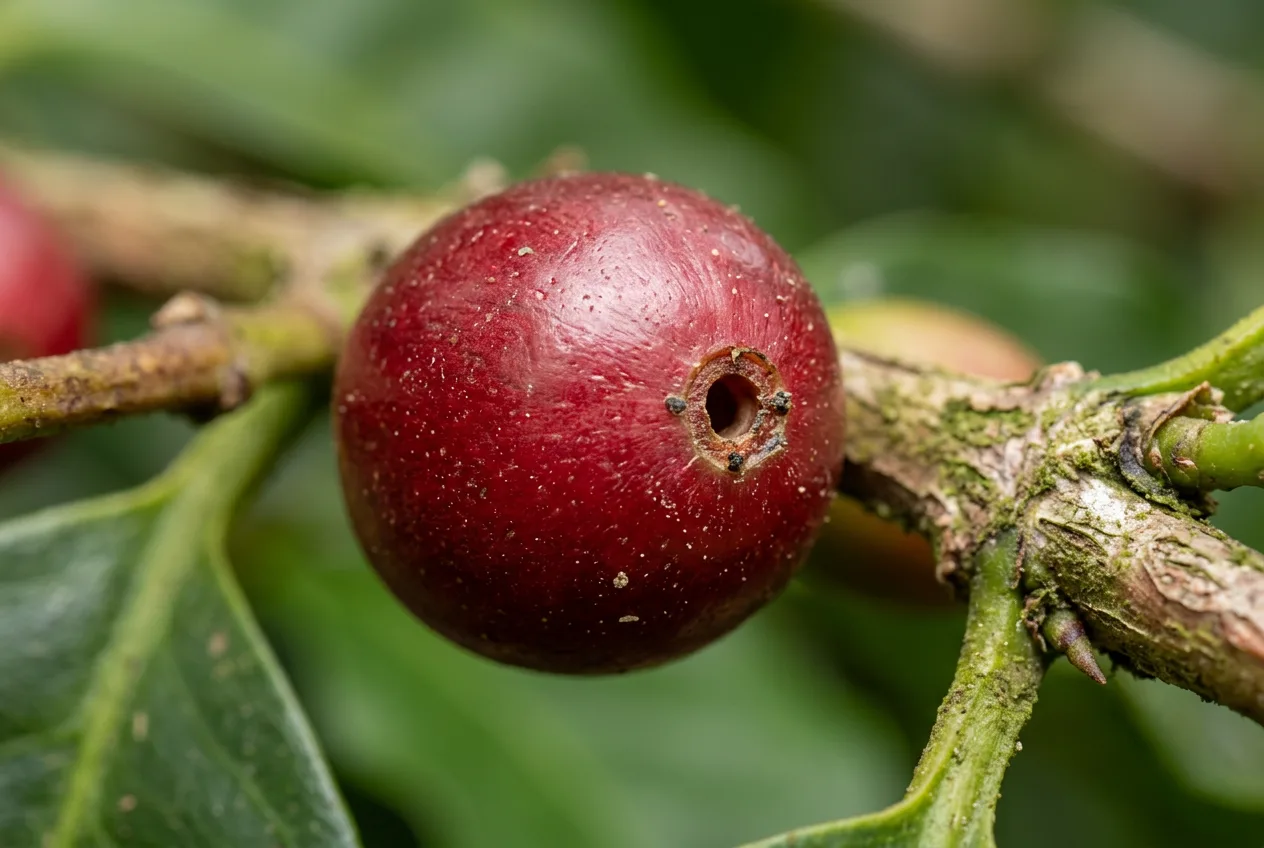
The coffee berry borer is a tiny beetle, not a fungus. The female bores into the cherry and lays eggs inside the bean, and the larvae eat it from within. Damaged beans lose weight and quality. It's one of the most damaging coffee pests worldwide, and warmer temperatures are helping it reach higher altitudes.
Other threats
| Threat | Type | What it attacks | Where it's a concern |
|---|---|---|---|
| Coffee leaf rust | Fungus | Leaves, causing leaf drop | Almost all arabica regions |
| Coffee berry disease | Fungus | Developing cherries | Parts of Africa |
| Coffee berry borer | Insect | Beans inside the cherry | Most coffee regions |
| Coffee wilt disease | Fungus | The tree's vascular system, killing it | Parts of Central and East Africa, especially robusta |
| American leaf spot | Fungus | Leaves and cherries, causing round spots | Humid areas of Latin America |
| Root-knot and other nematodes | Microscopic worms | Roots | Many regions |
| Leaf miners | Insect | Leaves, creating tunnels | Many regions, worse in dry conditions |
Many of the same principles apply to all of them: healthy trees, monitoring, good farm hygiene, resistant varieties where available, and sharing knowledge between farmers.
Responsibility across the supply chain
Farmers feel rust first and worst. But the effects travel all the way to your kitchen, so responsibility is shared.
| Who | How they can help |
|---|---|
| Buyers and importers | Keep talking to producer partners, share information, offer stable long-term relationships |
| Roasters | See lower volumes as a sign of hardship, not just a supply hiccup, and stay loyal through recovery |
| Producer organizations | Connect members to advice, financing and markets |
| Governments and institutions | Fund monitoring, research, extension services and emergency aid |
| Researchers | Develop local knowledge and share it in practical ways |
| Companies | Contribute funding, expertise and lasting commercial relationships |
The most effective response is collaborative and long term. Attention that fades once the headlines do won't help farmers who are still replanting years later.
Steady investment in healthy farms, resilient varieties, farmer knowledge and rural livelihoods benefits everyone in coffee, including the people who drink it.
Rust in the news: why it keeps coming back
Every few years, coffee leaf rust appears in headlines again, often alongside stories about rising coffee prices or farmers leaving the land. There are a few reasons it never really goes away.
- The fungus adapts. New strains can overcome resistance that once worked, so breeders have to keep developing new varieties.
- Weather keeps shifting. Unusual rain and warmer temperatures can trigger outbreaks in places that seemed safe.
- Prices swing. When coffee prices are low, farmers can't afford the care that keeps trees healthy, and rust takes advantage.
- Coffee is a long-term crop. Trees take years to replace, so the effects of one bad outbreak linger long after the headlines fade.
So when you read about rust in the future, it's rarely a brand-new story. It's the next chapter of a challenge coffee farmers have lived with for more than 150 years, and one they'll keep managing with the help, or without the help, of everyone else in the chain.
What rust teaches us about coffee's future
The rust crisis is a preview of the challenges coffee will face more often as the climate changes. It also points to what works.
- Diversity is protectionRelying on a few susceptible varieties made the outbreak far worse. More genetic diversity spreads the risk.
- Prevention beats rescueHealthy, well-managed farms and early warnings cost less than recovering from a collapse.
- Knowledge has to travelThe best research is useless if it doesn't reach farmers in a form they can use.
- Farm health and family health are linkedPlant disease quickly becomes hunger, debt and migration if families have no buffer.
- Fair prices make resilience possibleFarmers who earn enough can invest in pruning, nutrition and replanting before disaster strikes.
These same lessons apply to drought, new pests and whatever comes next. In that sense, rust has given the coffee world a hard but valuable education.
Common myths about coffee leaf rust
| Myth | Reality |
|---|---|
| "Rust makes coffee unsafe to drink" | It's a plant disease. It harms harvests and incomes, not the safety of your cup. |
| "Spraying fixes rust" | Fungicides help when used well, but they're only one part of managing it. |
| "High-altitude farms are safe" | Warmer conditions have let rust reach farms that rarely saw it before. |
| "Resistant varieties taste bad" | Early ones had a mixed reputation, but many modern resistant varieties cup very well. |
| "Once a farm recovers, the problem is over" | Rust is a permanent risk that has to be managed year after year. |
| "It's only a farmer's problem" | Losses ripple through cooperatives, exporters, roasters and, eventually, drinkers. |
Questions to ask your roaster
If you want to know how the coffee you buy connects to all of this, a good roaster will be happy to talk. Try asking:
- How long have you worked with this farm or cooperative?Long relationships usually mean more stable support through bad years.
- Has rust or weather affected them recently?It shows whether the roaster stays in touch with producers.
- Do you buy any rust-resistant varieties?A sign the roaster is helping farmers make sustainable choices.
- How do you set the price you pay?Transparent roasters can explain how much reaches the farm.
You'll learn a lot about your coffee from the answers, and you'll signal to roasters that their customers care about the people behind the beans.
What it means for you as a coffee drinker
Rust can feel very far away when you're making your morning cup. But your choices do reach farms.
- Buy traceable coffeeCoffees that name the farm or cooperative usually come with more direct, stable relationships.
- Support long-term roastersRoasters who buy from the same producers year after year help them recover from bad seasons.
- Be open to new varietiesTry coffees made from rust-resistant varieties. Your demand helps make replanting viable for farmers.
- Understand price changesWhen good coffee gets more expensive, disease and weather on farms are often part of the reason.
- Learn where it comes fromAsk your roaster how their partners are doing. The answer tells you a lot.
My guides to fair trade coffee and why single-origin coffee is so expensive go further into how your money reaches farmers.
Our tip: Next time a roaster offers a coffee from a rust-resistant variety like Castillo, give it a try. Many are genuinely delicious, and buying them supports farmers who made a tough, expensive decision to replant.
Key takeaways
- Coffee leaf rust is a fungal disease that strips coffee trees of their leaves and slashes harvests.
- It destroyed Ceylon's coffee in the 1800s and cut harvests by an estimated 15 to 40 percent in affected parts of Latin America in recent years.
- There's no single fix. Management combines healthy trees, monitoring, well-timed fungicides, organic options and support.
- Resistant varieties like Castillo are promising, but must be tested locally and deliver good cup quality.
- Coordination across more than 20 institutions, multi-channel communication and early-warning systems strengthen the response.
- Rust is a human crisis. In some households, the "thin months" of food insecurity stretched from about four to as many as nine.
- Credit, training and income diversification help families recover and prepare for future shocks.
- Other threats include coffee berry disease, coffee berry borer, coffee wilt and more.
- Everyone in the supply chain, including drinkers, has a role in supporting resilient coffee communities.
The next time you enjoy a great cup from Guatemala, Honduras or Colombia, it's worth remembering that it may come from a farm that fought its way back from rust, one pruned tree and one replanted seedling at a time.
Living with rust means treating it as a permanent risk to manage, not a one-time emergency. Resilience can't be built by farmers alone. It depends on cooperation across the whole coffee chain, and a lasting commitment to the people who grow our coffee.
Frequently asked questions
What is coffee leaf rust?
Coffee leaf rust, or roya, is a disease caused by the fungus Hemileia vastatrix. It creates orange powdery spots on the underside of coffee leaves, causes leaf drop and can sharply reduce harvests.
Can coffee leaf rust be cured?
There is no permanent cure. Farmers manage it with healthy trees, pruning, shade management, monitoring, well-timed fungicides or organic methods, and resistant varieties.
Does coffee leaf rust affect the taste of coffee?
Indirectly, yes. Weakened trees can produce poorer, unevenly ripened cherries, and disease stress may be linked to defects, so rust can reduce quality as well as quantity.
Is coffee leaf rust harmful to people?
No. It is a plant disease and does not make coffee unsafe to drink. Its harm to people is economic, through lost harvests and income.
What happened to coffee in Ceylon?
From 1869, leaf rust spread through Ceylon's coffee plantations. Within a couple of decades coffee had almost disappeared from the island, and many plantations switched to tea.
Which coffee varieties resist leaf rust?
Varieties descended from the Timor hybrid, such as Catimor types and Colombia's Castillo, show resistance in many conditions. Resistance depends on location and can be overcome by new rust strains over time.
What are the thin months?
Los meses flacos, or the thin months, is the period between coffee harvests when farming families' money and food run low. Rust-related losses stretched this period from about four to as many as nine months for some households.
What other diseases affect coffee?
Major threats include coffee berry disease, the coffee berry borer beetle, coffee wilt disease, American leaf spot, nematodes and leaf miners.

- Michael Reynolds, farm visits and conversations with coffee producers and importers
- NPR: Coffee rust threatens Latin American crop; 150 years ago, it wiped out an empire
- World Coffee Research: Arabica coffee varieties (rust resistance data)
Related guides
Coffee varieties explained Climate change and the future of coffee How the coffee plant growsWritten by Michael Reynolds. Last updated November 19, 2026.