Fair Trade Coffee Explained: How Fairtrade Works, What It Costs and Whether It Tastes Better
Fair trade coffee promises a better deal for the farmers who grow it. Here's how the Fairtrade system actually works: the minimum price, the premium, the cooperative rules, the audits, what it adds to the cost of your cup, how it compares with other labels and whether it tastes any different.
We choose products independently. We may earn a commission through links on this page; your price stays the same. Affiliate policy
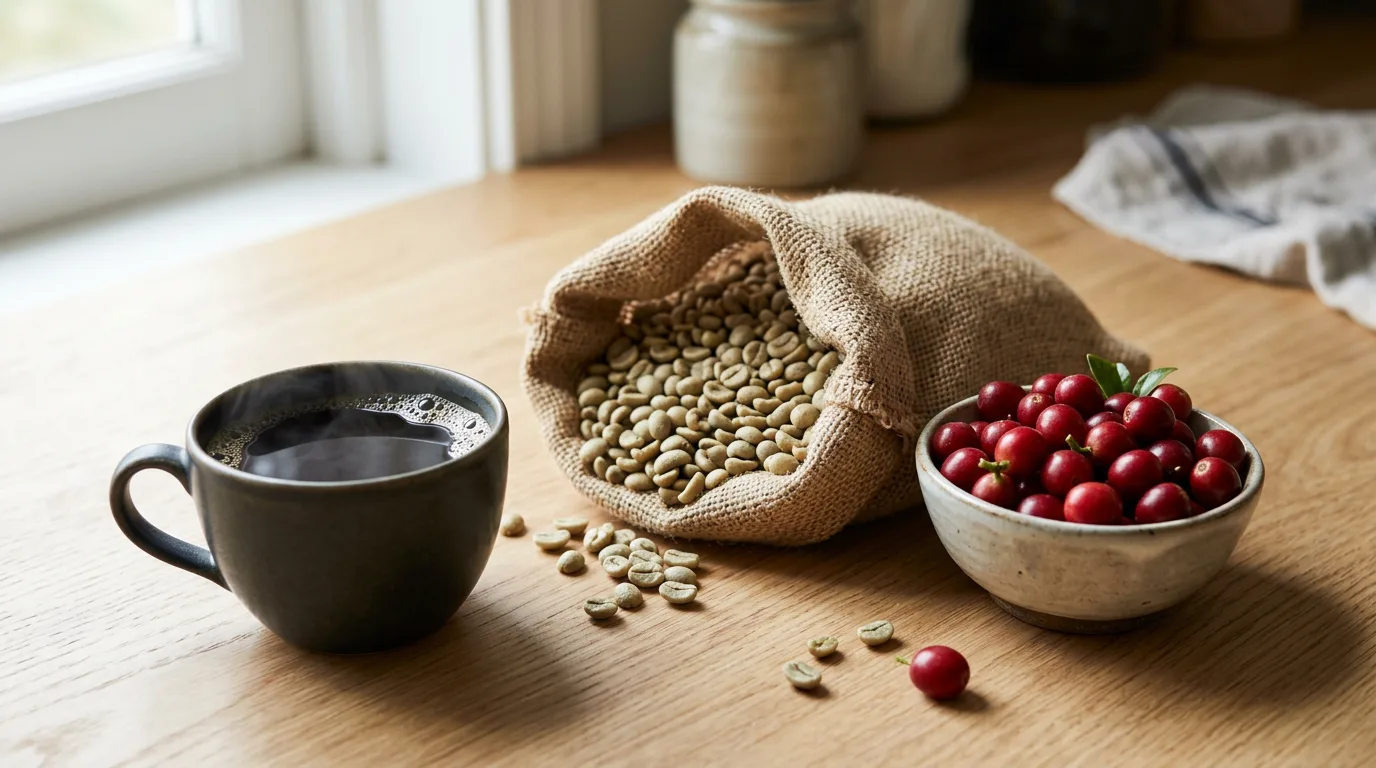
Fairtrade is a certification system that gives small coffee farmers' cooperatives a guaranteed minimum price, an extra Fairtrade Premium of 20 cents per pound to invest as they choose, and rules on democracy, labor and the environment.
For washed arabica, the minimum price is $1.80 per pound, rising to $2.00 per pound from December 1, 2026. When the market price is higher, buyers pay the market price plus the premium.
Fairtrade is about how coffee is traded, not how it tastes. Certified coffee ranges from everyday supermarket blends to specialty lots, so judge the flavor by the roaster, origin and roast date, and the label by what it promises.
What the fair trade label is really trying to fix
For years I picked coffee by the roast level and the price. If a bag had a fair trade logo, I took it as a nice bonus, a bit like a recycling symbol. I never really knew what it meant.
That changed when I visited a roaster who buys from small cooperatives. He told me that in a bad year, the price on the world market can drop below what it costs a family to grow their coffee. A label that guarantees a floor price, he said, can be the difference between a farm surviving and a farm being abandoned.
I went home and read the actual Fairtrade standards and price documents. Some of what I'd assumed was right. Some of it was wrong. And a lot of it was more interesting than I expected.
In this guide I'll walk through what fair trade coffee is, how the minimum price and premium work, who can get certified, how the coffee is tracked from farm to bag, what it adds to the price of your cup and whether it tastes better. I'll also cover the criticisms, because there are real ones, and the other labels you'll see on coffee bags.
Fair trade vs Fairtrade
You'll see two spellings, and they mean slightly different things:
- Fair trade (two words). The broader movement for fairer trading relationships with producers in poorer countries.
- Fairtrade (one word). The certification system run by Fairtrade International, with its own standards, prices and label.
- Fair Trade USA. A separate US certifier that split from Fairtrade International in 2011 and runs its own rules.
In this guide, "Fairtrade" means the Fairtrade International system unless I say otherwise. I'll cover Fair Trade USA and other labels later on.
Why coffee farmers need a safety net
To understand fair trade, you first need to understand how most coffee is priced.
Green coffee is a global commodity. The benchmark price for arabica is set on the futures market in New York, often called the C price. Exporters and importers price most contracts from it, adding or subtracting a differential for quality and origin.
That benchmark moves a lot. It reacts to weather in Brazil, currency swings, speculation and shifts in supply and demand that have nothing to do with any single farm.
How wild the swings are
- In 2001, arabica fell to a 30-year low of about 45 cents a pound.
- In 2011, it climbed to almost $3.09 a pound.
- In 2019 and 2020, it spent months below $1 a pound, well under what many farmers need to cover their costs.
- In late 2024 and 2025 it hit record highs above $4 a pound, then fell back.
- In early November 2026, arabica futures were trading at around $2.80 a pound.
For a big trading house, those swings are a risk to manage. For a family with two hectares of coffee, they decide whether the kids stay in school this year.
Why small farmers are so exposed
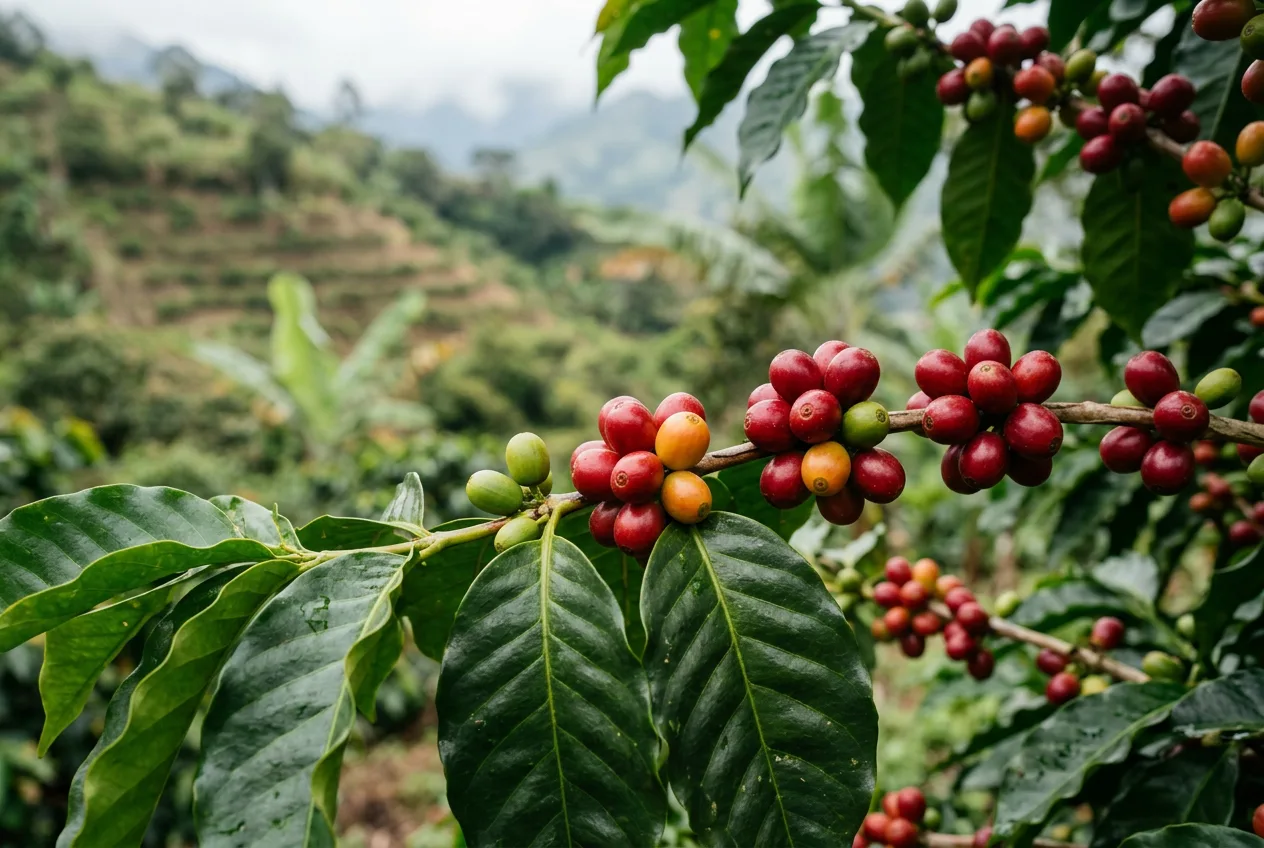
Most of the world's coffee comes from small farms. These farmers usually have little cash in reserve, little bargaining power and few ways to hedge against falling prices.
When prices crash, they often sell at a loss, cut back on fertilizer and pruning, or leave coffee for other crops or city jobs. That hurts the next harvests too.
Fairtrade was designed as a structural fix for exactly this problem: a price floor, a fixed extra payment and stronger farmer organizations.
Where fair trade coffee came from
Fair trade began long before the label. After World War II, church groups and charities started selling crafts from poor communities directly to buyers in Europe and North America, cutting out middlemen.
The first label: Max Havelaar
Coffee became the breakthrough product. In 1988, a Dutch initiative called Max Havelaar launched the first fair trade certification label, working with a coffee cooperative in Mexico.
The idea was simple: instead of selling fair trade coffee only in specialist shops, put a trusted label on coffee sold in ordinary supermarkets. Similar labels soon appeared in other countries.
Fairtrade International
In 1997, the national labeling groups joined forces under one umbrella, now called Fairtrade International, based in Bonn, Germany.
Later, the job of checking compliance was given to a separate, independent certifier called FLOCERT. That separation, one body setting the rules and another checking them, is still a key part of the system.
Producers now hold half the votes in Fairtrade International's General Assembly, so farmers have a real say in how the system is run.
The 2011 split
In 2011, the main US certifier, then called TransFair USA, left Fairtrade International and became Fair Trade USA.
The biggest disagreement was about coffee estates. Fairtrade International certifies coffee only from small-farmer organizations. Fair Trade USA wanted to also certify larger estates and farms that rely on hired workers, arguing it would reach more people. Critics said it would undercut small cooperatives.
Both systems still exist, with their own labels and rules. That's why you'll see different fair trade logos on coffee in the US.
The three core pieces: minimum price, premium and standards
Fairtrade coffee rests on three pillars. Once you understand these, the rest of the system makes sense.
- The Fairtrade Minimum PriceA floor price that buyers must pay the cooperative for coffee sold on Fairtrade terms, even when the market falls below it.
- The Fairtrade PremiumA fixed extra amount, paid on top of the price, that the cooperative's members decide how to spend.
- The StandardsRules for farmer organizations and traders covering democracy, labor rights, the environment, traceability and fair contracts.
Who pays what
The Fairtrade price is usually expressed FOB, meaning the price for green coffee loaded onto a ship in the producing country. It's paid by the first buyer, usually an importer, to the farmers' cooperative.
The cooperative then pays its members for their coffee, after covering its own costs such as processing, transport, export and certification.
That detail matters. The minimum price goes to the cooperative, not straight into each farmer's pocket. How much each farmer earns depends on the cooperative, its costs and what share of its coffee it actually sells as Fairtrade.
How the Fairtrade Minimum Price works
The Fairtrade Minimum Price is the headline feature. It acts as a safety net when the world price is low.
The rule is simple: buyers pay the Fairtrade Minimum Price or the market price, whichever is higher.
Current prices
Fairtrade raised its coffee prices in August 2023, for the first time since 2011. In July 2026 it announced a second increase that applies to contracts from December 1, 2026.
| Coffee type | Minimum price until Nov 30, 2026 | Minimum price from Dec 1, 2026 |
|---|---|---|
| Washed arabica | $1.80 per lb | $2.00 per lb |
| Natural arabica | $1.75 per lb | $1.95 per lb |
| Washed robusta | $1.25 per lb | $1.35 per lb |
| Natural robusta | $1.20 per lb | $1.30 per lb |
| Fairtrade Premium (all) | +$0.20 per lb | +$0.20 per lb |
| Organic differential | +$0.40 per lb | +$0.40 per lb |
Prices are FOB per pound of green coffee for Fairtrade contracts. Washed arabica makes up more than 80% of all Fairtrade coffee sold.
How the price was set
Fairtrade bases its minimum price on studies of what it costs farmers to produce coffee sustainably. For the 2023 increase it calculated an average cost of about $1.76 per pound for conventional washed arabica. The 2026 review used cost data from 57 cooperatives in 13 countries.
In other words, the minimum is designed to cover the basic cost of growing coffee responsibly, not to make farmers rich.
Two examples
What a cooperative receives for 1 lb of washed arabica (from Dec 1, 2026)
Simplified example before differentials, costs and fees. Organic coffee would add 40 cents in each Fairtrade case.
When the market is low, as in 2019, Fairtrade makes a huge difference. When the market is high, as it is now, the minimum price doesn't kick in, and the main benefit is the premium on top.
Our tip: When you see headlines that coffee prices are at record highs, remember that's the futures price. The Fairtrade minimum matters most when prices crash, which is exactly when farmers need it.
The Fairtrade Premium and what it pays for
The Fairtrade Premium is an extra 20 cents per pound paid on top of the coffee price, whether that's the minimum or the market price. For organic coffee, another 40 cents is added on top of that.
The premium goes into a shared fund. Cooperative members vote democratically on how to spend it, which is one reason Fairtrade requires the organization to be run democratically.
In coffee, at least a quarter of the premium is meant to go towards improving productivity or quality. The rest can go where the community decides it's needed most.
Typical uses
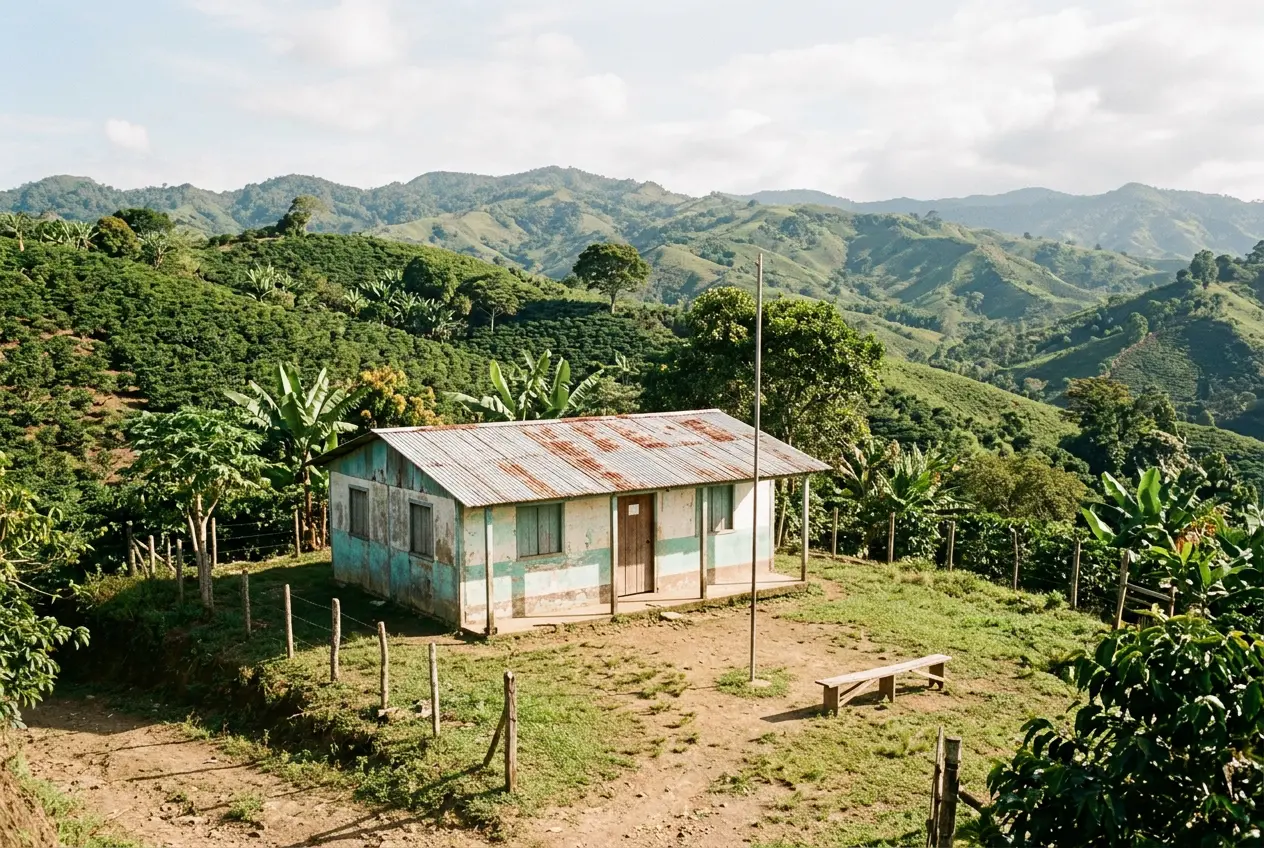
- Community projects. Building or repairing schools, funding scholarships, health clinics, clean water systems and roads.
- Farm support. Seedlings, fertilizer, training and help replanting old or diseased trees.
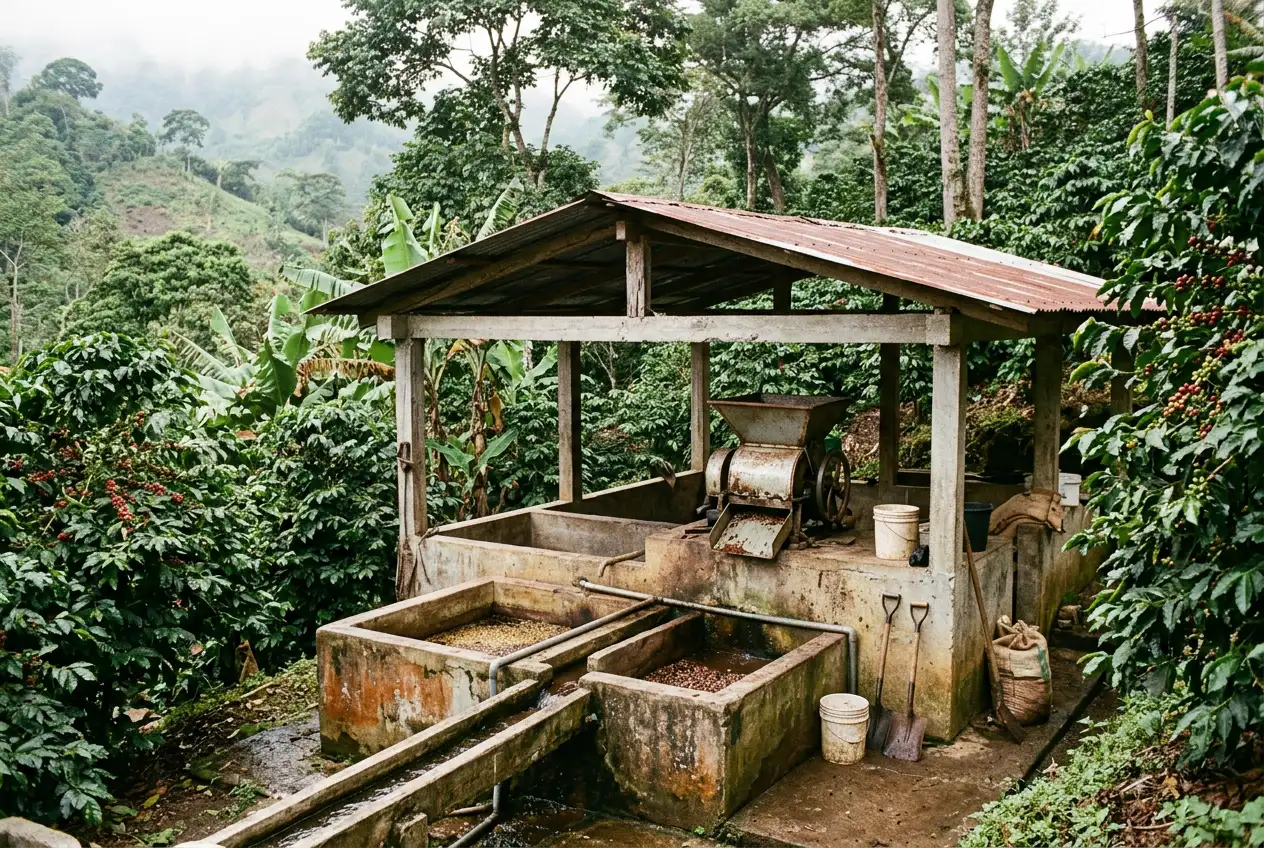
- Shared equipment. Wet mills, drying beds, warehouses, trucks and cupping labs.
- Business strength. Credit for members, export capacity and quality control so the cooperative can sell more coffee at better prices.
- Climate adaptation. Shade trees, soil and water protection, and more resilient varieties.
How much money is it?
It adds up. Fairtrade coffee cooperatives earned €82.4 million (about $95 million) in Fairtrade Premium in 2023 and more than €57 million in 2024. Across all Fairtrade products, producer organizations earned more than €1 billion in premiums between 2021 and 2025.
Because the premium is a fixed amount per pound, the total each year depends on how much coffee cooperatives manage to sell on Fairtrade terms.
The rules for coffee farmers' cooperatives
Fairtrade International only certifies coffee from small-scale producer organizations, usually cooperatives. It doesn't certify large coffee plantations.
The smallholder rules
- Membership. At least two-thirds of the members must be small-scale farmers who mainly work their land with their own family's labor rather than permanent hired workers.
- Volume. At least half of the Fairtrade coffee the organization sells must come from those small-scale members, so larger landowners can't dominate a cooperative just to gain access to the label.
- Democracy. Members must have a real voice. The organization holds general assemblies, elects its leaders and votes on how to spend the premium.
- Transparency. Accounts, premium spending and decisions must be open to members.
Labor rights
Even small farms hire help at harvest time. The standards cover those workers too:
- No forced labor and no exploitative child labor.
- No discrimination.
- Freedom to join a union and bargain collectively.
- Safe working conditions, especially when handling chemicals.
Fairtrade also works on prevention and remediation of child labor in high-risk regions, rather than just punishing a cooperative and walking away.
Who's in the system
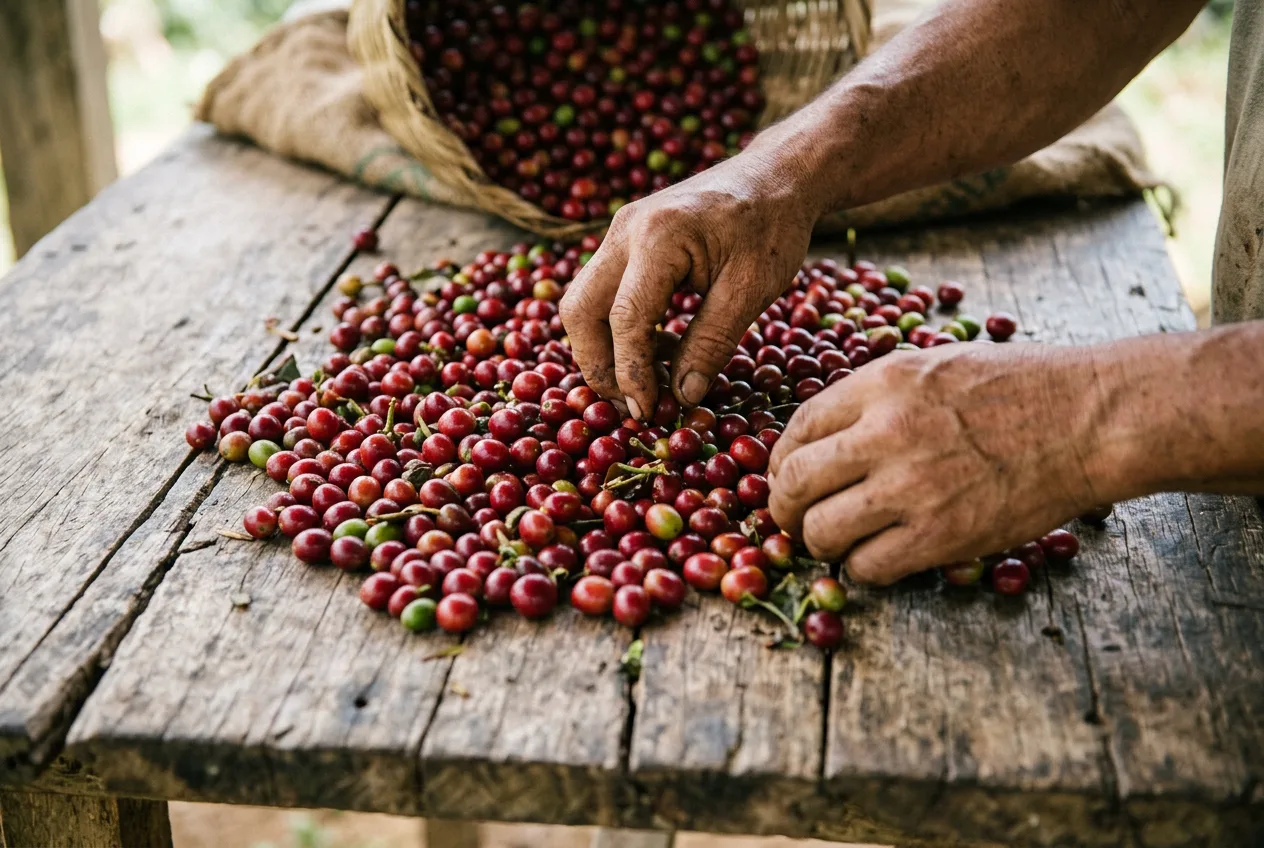
Fairtrade reports about 775,000 coffee farmers in 592 producer organizations. Around two-thirds of those farmers are in Africa and the Middle East, though most of the organizations are in Latin America and the Caribbean, where cooperatives tend to be smaller. Peru, Colombia and Honduras are among the biggest Fairtrade coffee origins.
About 22% of Fairtrade coffee farmers are women, and more than half of Fairtrade coffee is also certified organic.
Environmental standards for Fairtrade coffee
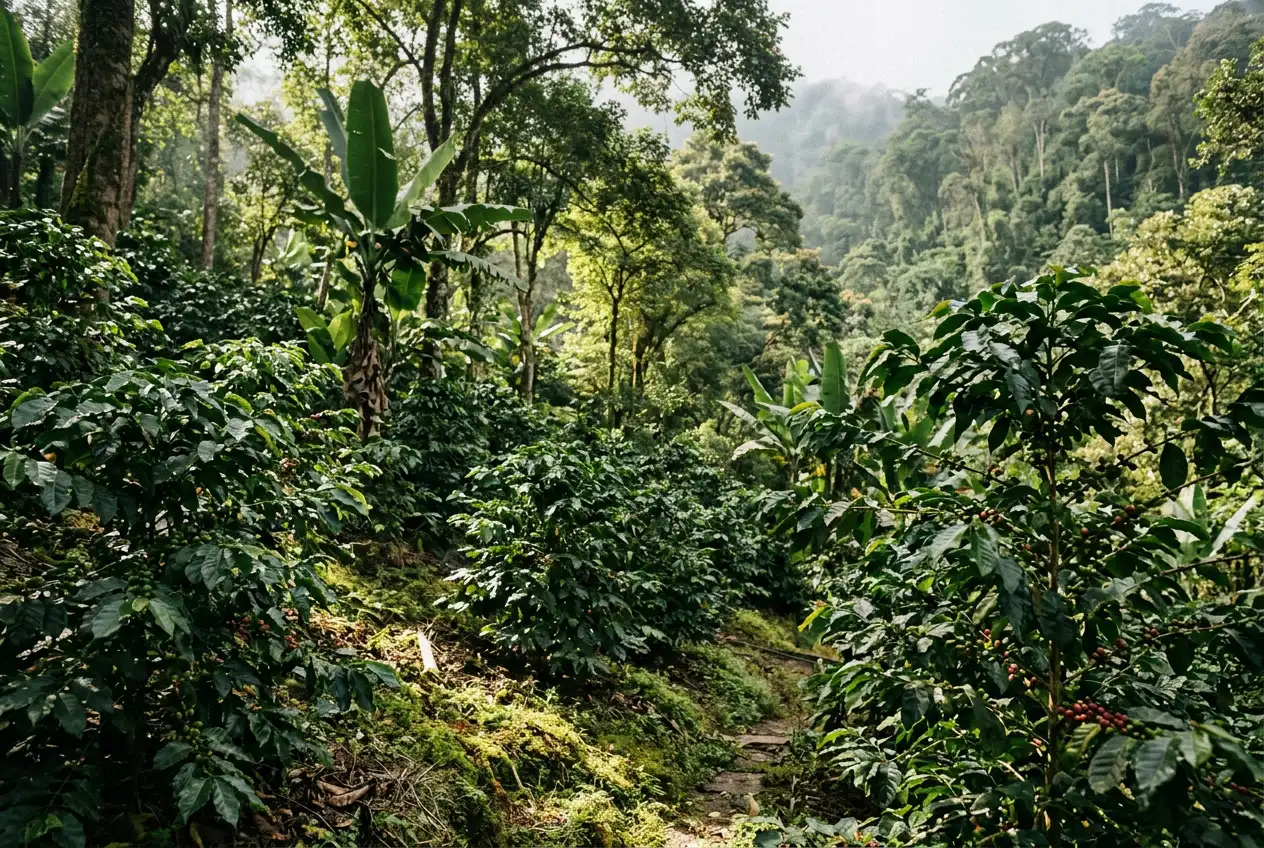
Fairtrade isn't an organic label, but its standards include a long list of environmental rules that cooperatives are audited against.
- Hazardous chemicals. A list of banned pesticides, with others restricted. Farmers are trained in integrated pest management to reduce chemical use.
- Soil and water. Measures against erosion, protection of water sources and careful wastewater handling at wet mills.
- Biodiversity. Protection of forests and buffer zones, and no clearing of protected areas for coffee.
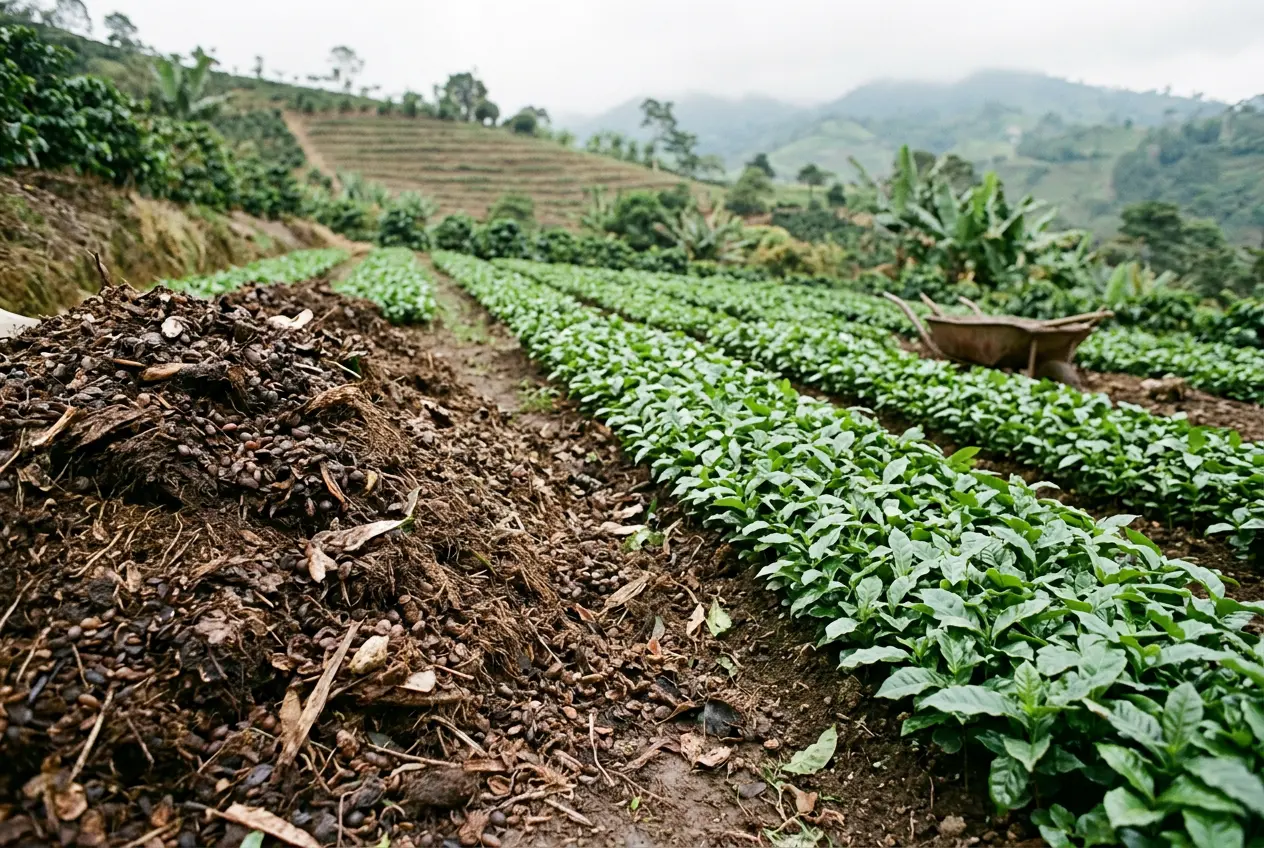
- Waste. Safe handling of chemical containers and composting of organic waste such as coffee pulp.
- No GMOs. Genetically modified crops aren't allowed.
- Climate. Support for climate adaptation and more efficient use of energy in processing.
Fairtrade and organic
Because the organic differential adds another 40 cents a pound, many cooperatives go for both certifications. More than half of all Fairtrade coffee produced is also organic.
On a bag, the two labels mean different things. Fairtrade covers how the coffee is traded and how farmer organizations work. Organic covers how it's grown.
How certification and audits work
A label is only as good as the checking behind it. Fairtrade keeps rule-setting and checking separate.
Separate roles
- Fairtrade International writes the standards and sets the minimum prices and premiums, after consulting producers and traders.
- FLOCERT, an independent certifier, audits farmer organizations and traders against those standards.
- National Fairtrade organizations license companies to use the Fairtrade Mark on products in their country.
For cooperatives
- ApplyThe farmer organization applies to FLOCERT and pays an application fee.
- Initial auditAuditors visit to check governance, records, labor practices and environmental rules.
- CertificationIf it passes, the organization is certified and can sell coffee on Fairtrade terms.
- Ongoing auditsRegular follow-up audits, some unannounced, check that the cooperative keeps meeting the standards.
Cooperatives pay their own certification fees. That's one of the criticisms of the system, which I'll come back to.
For roasters and brands
Companies that buy, roast or sell Fairtrade coffee have their own obligations:
- Pay at least the Fairtrade Minimum Price and Premium to the cooperative.
- Keep Fairtrade coffee separate and traceable through their supply chain.
- Report purchases and keep contracts and records for audits.
- Get a license to use the Fairtrade Mark on their packaging and pay a license fee.
Traders and roasters are audited too, so that every pound sold as Fairtrade can be matched to a pound bought on Fairtrade terms.
Tracing Fairtrade coffee from farm to bag
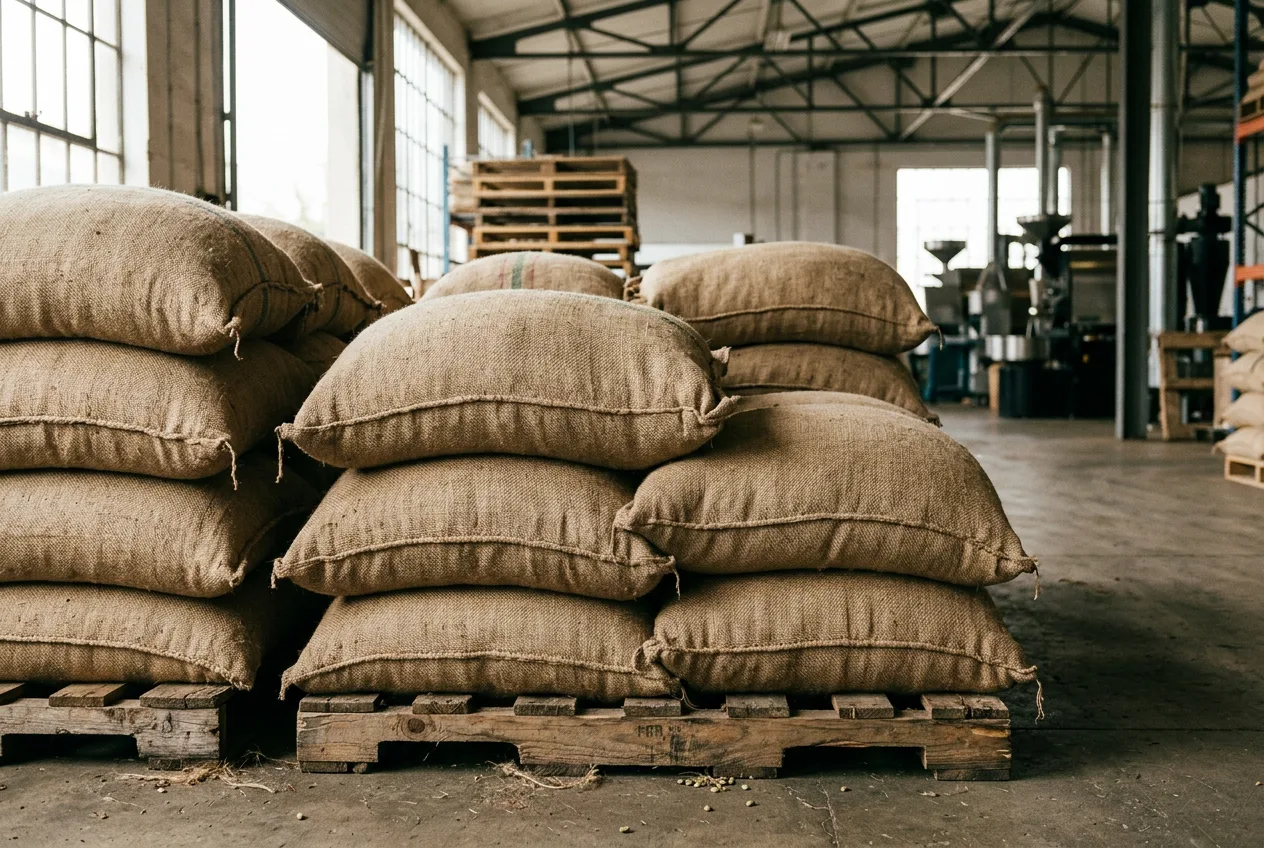
For coffee sold with the Fairtrade Mark, Fairtrade requires physical traceability. The coffee in the bag has to be the coffee that was bought on Fairtrade terms, kept separate at every step.
How it's tracked
- At the cooperative. Members' deliveries are recorded and Fairtrade lots are kept apart.
- At export and import. Contracts, invoices and shipping documents link each lot to the certified seller.
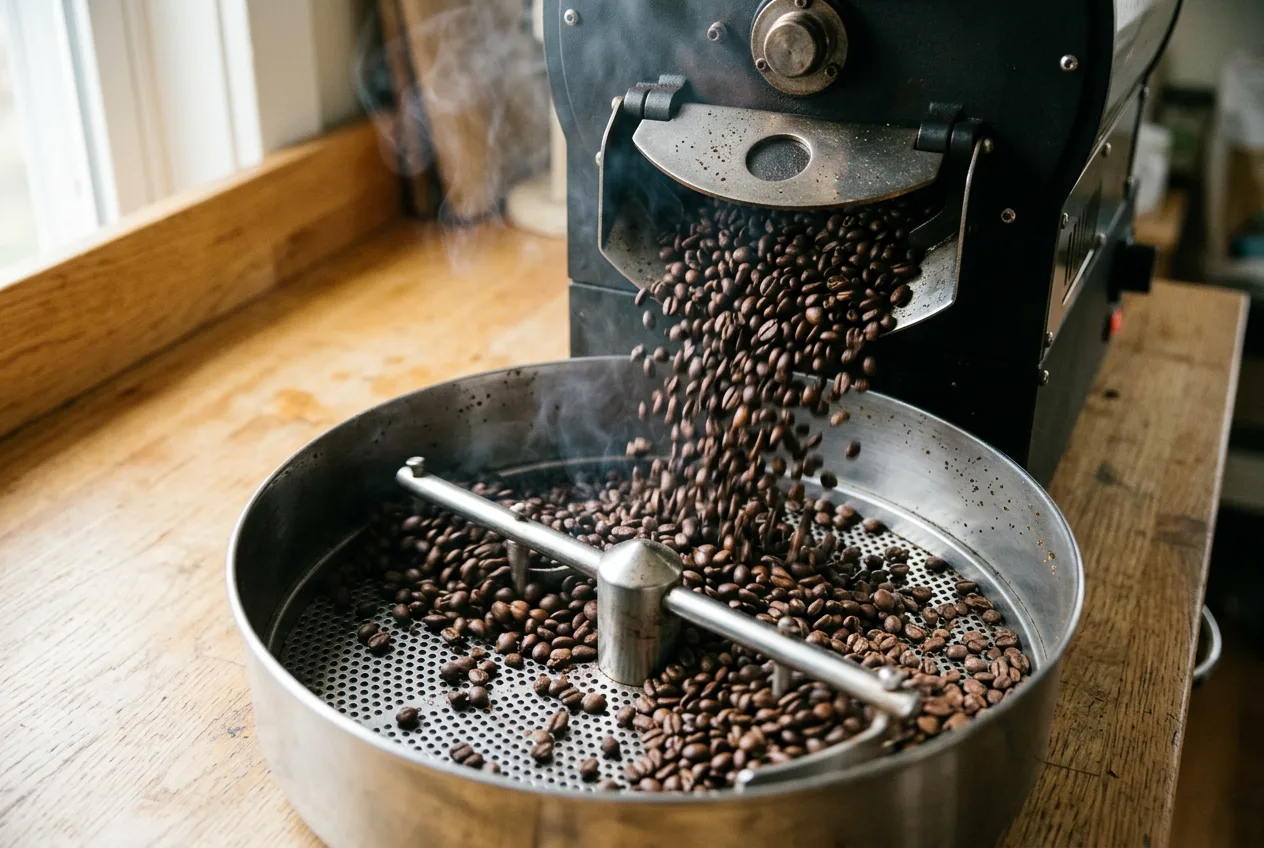
- At the roastery. Green coffee is stored and roasted separately or tracked by batch, and roasting records show which lots went into which product.
- Online. Traders and licensees report their transactions in FLOCERT's systems so auditors can check that volumes match.
What traceability does and doesn't tell you
Traceability means the coffee is certified and was bought on Fairtrade terms. It doesn't necessarily tell you which farm grew it, how it was processed or how it tastes.
Some roasters share lots more, such as the cooperative's name, region, varieties and processing method. If a Fairtrade bag also names the cooperative, that's usually a good sign the roaster cares about the relationship, not just the logo.
How much more Fairtrade coffee costs
Fairtrade coffee usually costs a bit more than similar non-certified coffee. But how much more is often less than people think.
At the farm gate
At today's high market prices, the minimum price isn't the issue. The fixed extras are the premium of 20 cents a pound, plus 40 cents if organic, plus certification costs along the chain.
At wholesale
For cafés, offices and hotels buying roasted coffee in bulk, Fairtrade coffee often costs roughly 75 cents to $2 more per pound than non-certified coffee of a similar grade. That covers the premium, the license fee, separate handling and smaller lot sizes.
Per cup
A pound of roasted coffee makes about 30 to 40 cups. So even a $2 difference per pound works out to only about 5 to 7 cents a cup, and the premium that goes to the cooperative is less than a cent a cup.
| Cost item | Rough amount | Per cup (about 35 cups per lb) |
|---|---|---|
| Fairtrade Premium | 20¢ per lb green | Under 1¢ |
| Organic differential | 40¢ per lb green | About 1¢ |
| Typical wholesale difference | 75¢ to $2 per lb roasted | About 2¢ to 6¢ |
| Retail difference | Often $1 to $3 per bag | A few cents |
Rough estimates. Roasted coffee loses about 15 to 20% of its weight during roasting, so a pound of roasted coffee starts as a bit more than a pound of green.
Why retail prices can vary more
In supermarkets, the gap between a Fairtrade bag and a similar non-certified one can be larger or smaller than the cost difference. Retailers set prices based on brand, positioning and what shoppers will pay, not just costs.
That means a higher price doesn't automatically mean more money for farmers. The premium the cooperative receives is fixed; the markup in the shop isn't.
Our tip: If you want to know where your money goes, buy from roasters that publish what they pay farmers. Some share the FOB price per pound for every coffee they sell.
How much work goes into a cup of coffee
It's easy to forget how much human work sits behind a few cents of coffee.
A coffee tree takes three to four years to produce a decent crop. Each tree gives maybe a pound or two of green coffee a year, depending on the farm and variety.
On a small farm, most of that coffee is picked by hand, often several times as the cherries ripen. Then it's pulped, fermented, washed or dried, sorted, bagged and carried to the cooperative, often on foot or by mule.
One pound of roasted coffee can easily represent the yearly crop of one or two trees and many hours of hand work.
Seen that way, a guaranteed floor of $2.00 a pound for washed arabica doesn't seem extravagant. It's closer to the basic cost of doing the work properly.
Does Fairtrade coffee taste better?
This is one of the most common questions I get, and the honest answer is: not inherently.
Fairtrade standards don't include cupping scores or flavor requirements. A cooperative isn't refused certification because its coffee tastes ordinary, and certification doesn't make a dull coffee taste great.
The quality spectrum
Because flavor isn't part of the rules, Fairtrade coffee covers the whole quality range:
- Commodity grade. Large-volume coffee for supermarket blends and instant coffee.
- Good everyday coffee. Clean, balanced coffee for cafés and offices.
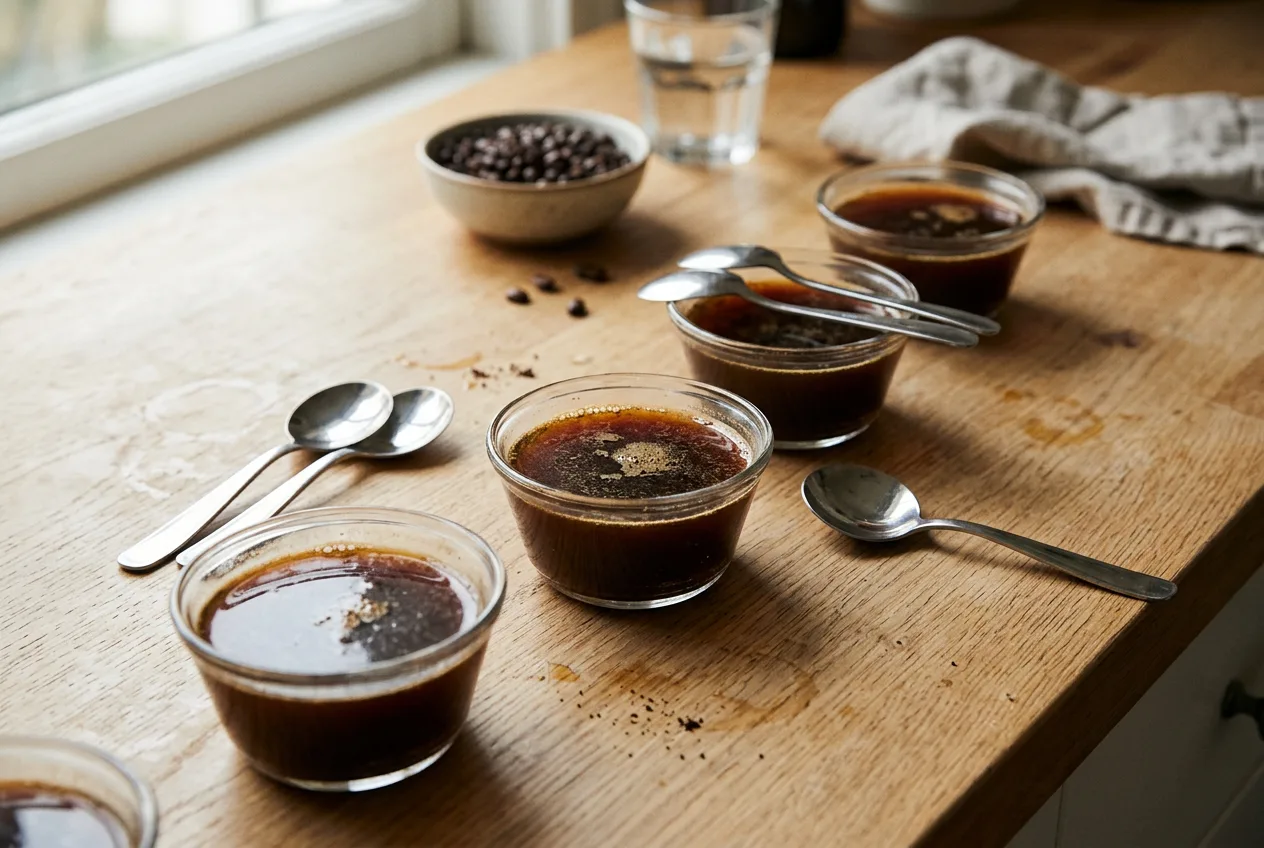
- Specialty grade. Some cooperatives produce lots scoring 80 points or more, and specialty roasters buy them as single origins.
If you want to know what that 80-point standard means, see my guide to specialty coffee.
How Fairtrade can improve quality over time
Fairtrade can still lead to better coffee indirectly:
- Investment. Premiums often pay for wet mills, drying beds and cupping labs that improve consistency.
- Training. Better pruning, picking and processing practices lead to cleaner, sweeter coffee.
- Stability. A price floor lets farmers keep up with fertilizer and care even in bad years, rather than neglecting their trees.
- Relationships. Longer-term buyers can reward quality with higher prices on top of the Fairtrade terms.
What actually decides the flavor
The things that decide how a coffee tastes are the same with or without the label: origin, altitude, variety, processing, roast level and freshness. My guide on coffee growing regions and flavor covers what different origins taste like.
In my own tastings, the best Fairtrade coffees I've had were single-origin lots from Peruvian and Honduran cooperatives, sold by roasters who named the cooperative and printed a recent roast date. The worst were stale supermarket blends where the label was the only thing the bag had going for it.
Our tip: Treat the Fairtrade label as information about how the coffee was traded. Use the roast date, origin and roaster's tasting notes to judge how it will taste.
The case against Fairtrade, and the responses
Fairtrade has strong supporters and serious critics. Here are the main criticisms and how supporters usually respond.
1. Only part of the coffee sells as Fairtrade
Cooperatives often can't sell all their certified coffee on Fairtrade terms, because there aren't enough buyers. Only around 30% of the coffee produced by Fairtrade coffee cooperatives is sold on Fairtrade terms. The rest sells as regular coffee, even though the cooperative paid to certify it.
The response: Fairtrade says the answer is more demand, which is why it campaigns for companies to buy more.
2. The benefits per farmer can be small
Studies on Fairtrade's effect on farmer incomes have mixed results. Benefits are spread across many members, part goes to cooperative costs, and only some coffee earns the premium.
The response: Supporters point to stronger cooperatives, better services, community projects and protection in price crashes as benefits that don't show up in simple income comparisons.
3. Certification costs fall on farmers
Cooperatives pay their own certification fees, which can be a burden for small or new groups.
The response: Fairtrade has support funds for some producers, and argues independent audits are necessary for a credible label.
4. It excludes hired workers on estates
Because Fairtrade International only certifies small-farmer organizations in coffee, workers on larger estates aren't covered.
The response: Fairtrade says its focus on smallholders protects the farmers most exposed to the market. Fair Trade USA took the opposite view and certifies some estates.
5. It doesn't reward quality directly
Critics in specialty coffee argue that a fixed minimum doesn't encourage quality, and that great coffee should earn far more than the floor.
The response: Nothing stops buyers paying more than the minimum, and many specialty roasters do, using Fairtrade as a base rather than a ceiling.
My own view: Fairtrade isn't a magic fix, but it's a meaningful safety net and one of the few labels with a clear, published price floor. It works best when roasters buy consistently and pay attention to quality too.
Fairtrade vs other coffee labels and models
Fairtrade isn't the only ethical label on coffee bags. Here's how the main ones compare.
| Label or model | Main focus | Price floor? | Who it covers |
|---|---|---|---|
| Fairtrade (International) | Fair trading terms, democratic cooperatives | Yes, plus premium | Small-farmer organizations only |
| Fair Trade USA | Fair trading terms, wider reach | Yes, plus premium | Cooperatives, estates and independent farms |
| Small Producers' Symbol (SPP) | Farmer-owned fair trade label | Yes | Small-producer organizations only |
| Rainforest Alliance | Environment, farm practices, worker welfare | No minimum price | Farms of all sizes |
| USDA Organic / EU Organic | Growing without synthetic chemicals | No | Farms of all sizes |
| Direct trade | Roaster buys directly, often pays for quality | Set by each roaster | Varies, not independently certified |
Fair Trade USA prices
Fair Trade USA uses its own price schedule. When Fairtrade International raised its prices in 2023, Fair Trade USA kept its washed arabica minimum at $1.40 a pound with a 20-cent premium, at least at first. If you buy in the US, check which label is on the bag, because the terms aren't identical.
Direct trade
Many specialty roasters say they buy "direct trade." That usually means they buy from specific farms or cooperatives, visit them and pay well above market for quality.
Done well, it can pay farmers much more than Fairtrade. But it's not a certified term, so there's no independent check. The best direct-trade roasters publish the prices they pay. Without that, it's just a phrase.
Can a coffee have several labels?
Yes. It's common to see Fairtrade and organic together, and some coffees also carry Rainforest Alliance or a direct-trade story. Each label covers something different.
How to buy fair trade coffee that's actually good
If you want to support fairer trading and still enjoy what's in your cup, here's what I look for.
- Check the labelLook for the Fairtrade Mark, Fair Trade USA or the Small Producers' Symbol, and know which one you're buying.
- Look for the cooperative's nameBags that name the cooperative and region usually come from roasters with closer relationships.
- Check the roast dateFair trade doesn't help a stale coffee. Aim for beans roasted in the last few weeks.
- Pick the right roastLight to medium roasts show origin flavor; darker roasts are better for milk drinks.
- Buy whole beansGrind just before brewing for the best flavor.
- Ask your roasterGood roasters are happy to tell you what they pay and why they buy from a particular cooperative.
For cafés and offices
- Ask for a sample cupping. Compare Fairtrade options against your current coffee before switching.
- Check the whole range. Many suppliers offer Fairtrade espresso blends and single origins.
- Tell customers. If you pay more for Fairtrade, explain what it supports on your menu or bags.
- Mind the label rules. If you want to use the Fairtrade Mark on your own packaging, you'll need a license.
For more on reading coffee labels in general, see my guide on how to choose coffee beans.
How I brew Fairtrade coffee at home
There's nothing special about brewing Fairtrade coffee; it's coffee like any other. But because so many Fairtrade coffees come from Latin American cooperatives, I tend to brew them in a way that brings out their sweetness.
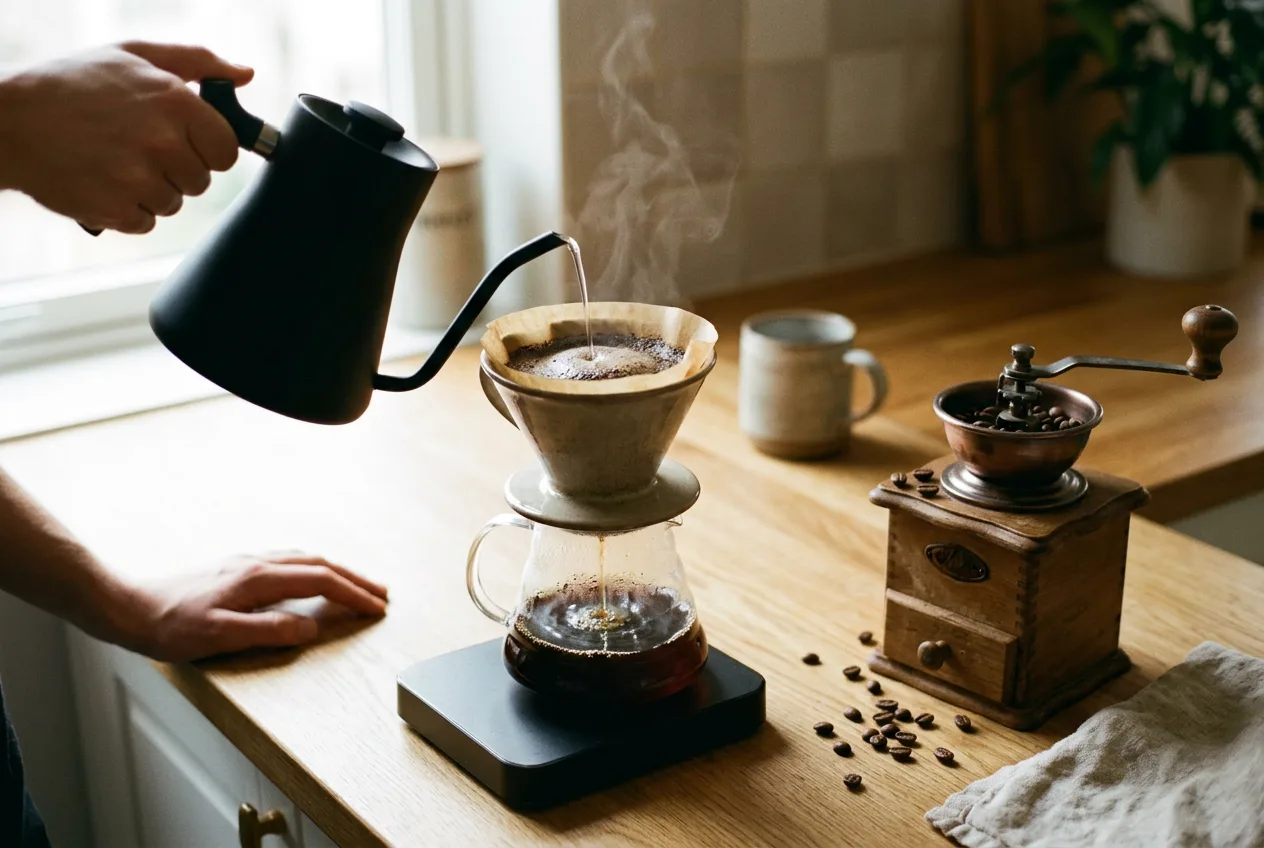
My go-to pour-over
- Ratio. 15 g coffee to 250 g water.
- Grind. Medium-fine, like table salt.
- Water. Filtered, around 200°F.
- Bloom. 40 to 45 g water, wait 30 to 45 seconds.
- Total time. About 3 minutes.
A good Fairtrade Peruvian or Honduran coffee brewed like this usually tastes of milk chocolate, caramel and a little citrus.
For milk drinks
Many Fairtrade espresso blends are designed for lattes and cappuccinos, with chocolate and nut notes that cut through milk. A medium to medium-dark roast works well.
Keep it fresh
Store beans in an airtight, opaque container away from heat and light, and finish an opened bag within a few weeks. My guide on how to store coffee beans goes into more detail.
Fair trade coffee myths
"Fairtrade means the farmer gets most of the price"
The Fairtrade price is for green coffee at export. Roasting, shipping, packaging, retail and taxes still make up most of the shelf price, as they do for any coffee.
"Fairtrade coffee is always organic"
No. Many Fairtrade coffees are organic too, but they're separate certifications.
"Fairtrade coffee is lower quality"
Not necessarily. Quality depends on the cooperative, the lot and the roaster. Some Fairtrade coffees are excellent specialty coffees.
"Fairtrade coffee is always better quality"
Also not true. Flavor isn't part of the standard.
"The premium goes straight to each farmer"
The premium goes to the cooperative, and members vote on how to use it. Often it pays for shared projects rather than individual cash.
"Fairtrade only matters when prices are low"
The minimum price matters most when prices are low. The premium, the democratic rules, labor protections and environmental standards apply every year.
"All fair trade labels are the same"
Fairtrade International, Fair Trade USA and the Small Producers' Symbol have different rules and prices.
Fair trade coffee at a glance
| Feature | Fairtrade coffee |
|---|---|
| Who runs it | Fairtrade International, with FLOCERT as independent certifier |
| Who can be certified | Small-scale farmer organizations only |
| Minimum price (washed arabica) | $1.80/lb, $2.00/lb from Dec 1, 2026 |
| Fairtrade Premium | 20¢/lb, decided democratically by members |
| Organic bonus | 40¢/lb extra if also organic |
| Price rule | Minimum price or market price, whichever is higher |
| Traceability | Physical traceability for labeled coffee |
| Taste | Not part of the standard; ranges from commodity to specialty |
| Extra cost per cup | Usually a few cents |
My bottom line
Fair trade coffee isn't a guarantee of great flavor, and it won't fix every problem in the coffee chain. But Fairtrade gives small farmers something most of them don't otherwise have: a published price floor, a premium they control and a stronger organization behind them.
If you care about where your coffee comes from, buying Fairtrade from a good roaster is an easy, low-cost way to support that. Pair the label with a fresh roast date and a named origin, and you can feel good about the cup and enjoy it too.
Frequently asked questions
What is fair trade coffee?
Coffee certified under a fair trade system, usually Fairtrade, which guarantees small farmers' cooperatives a minimum price, an extra premium and fair trading conditions.
What is the Fairtrade minimum price for coffee?
For washed arabica it's $1.80 per pound, rising to $2.00 per pound for contracts from December 1, 2026. Buyers pay the market price instead if it's higher.
What is the Fairtrade Premium?
An extra 20 cents per pound paid to the cooperative on top of the coffee price, which members vote on how to invest.
Does fair trade coffee taste better?
Not inherently. Flavor isn't part of the standards, so quality depends on the origin, cooperative, roaster and freshness.
Is fair trade coffee organic?
Not always. Fairtrade and organic are separate certifications, though more than half of Fairtrade coffee is also organic.
How much more does fair trade coffee cost?
Usually a little more. Per cup, the difference is typically a few cents.
What's the difference between Fairtrade and Fair Trade USA?
They're separate certifiers. Fairtrade International only certifies small-farmer organizations in coffee; Fair Trade USA also certifies some estates and uses its own prices.
Who checks that fair trade rules are followed?
For Fairtrade, an independent certifier called FLOCERT audits cooperatives, traders and roasters.
Do farmers get the whole Fairtrade price?
The price is paid to the cooperative, which pays members after covering its costs. The premium goes into a shared fund.
Is fair trade better than direct trade?
They're different. Fairtrade has a certified price floor; direct trade can pay more but isn't independently checked unless the roaster publishes its prices.
Can coffee estates be Fairtrade certified?
Not under Fairtrade International's coffee standards, which only cover small-farmer organizations. Fair Trade USA certifies some estates.
Is fair trade coffee worth buying?
If you want to support fairer trading for small farmers, it's an inexpensive way to do it. Choose a good roaster and a fresh roast date for great flavor too.

- Michael Reynolds, notes from buying and brewing Fairtrade coffees at home
- Fairtrade strengthens safety net for coffee farmers, Fairtrade International
- New Fairtrade Prices for Coffee: Q&A (March 2023), Fairtrade International
- Fairtrade Coffee: Impact at a glance 2025, Fairtrade International
- Changes to the Standard for Small-scale Producer Organizations, Fairtrade International
- Fairtrade plans major standards overhaul for coffee and other crops, Daily Coffee News
- Fair Trade USA freezes coffee prices and premiums until the end of 2023, World Coffee Portal
- Arabica coffee futures hover at over 1-month lows, Trading Economics
Related guides
What is specialty coffee How to choose coffee beans Coffee growing regions and flavorWritten by Michael Reynolds. Last updated November 16, 2026.