What Is Specialty Coffee? The 80-Point Standard, the Movement and How to Get Started
Specialty coffee is a grade, a supply chain and a movement all at once. Here's where the term came from, how coffee earns the specialty label, who handles it from farm to cup, why it costs more, and a simple step-by-step way to get into it at home.
We choose products independently. We may earn a commission through links on this page; your price stays the same. Affiliate policy
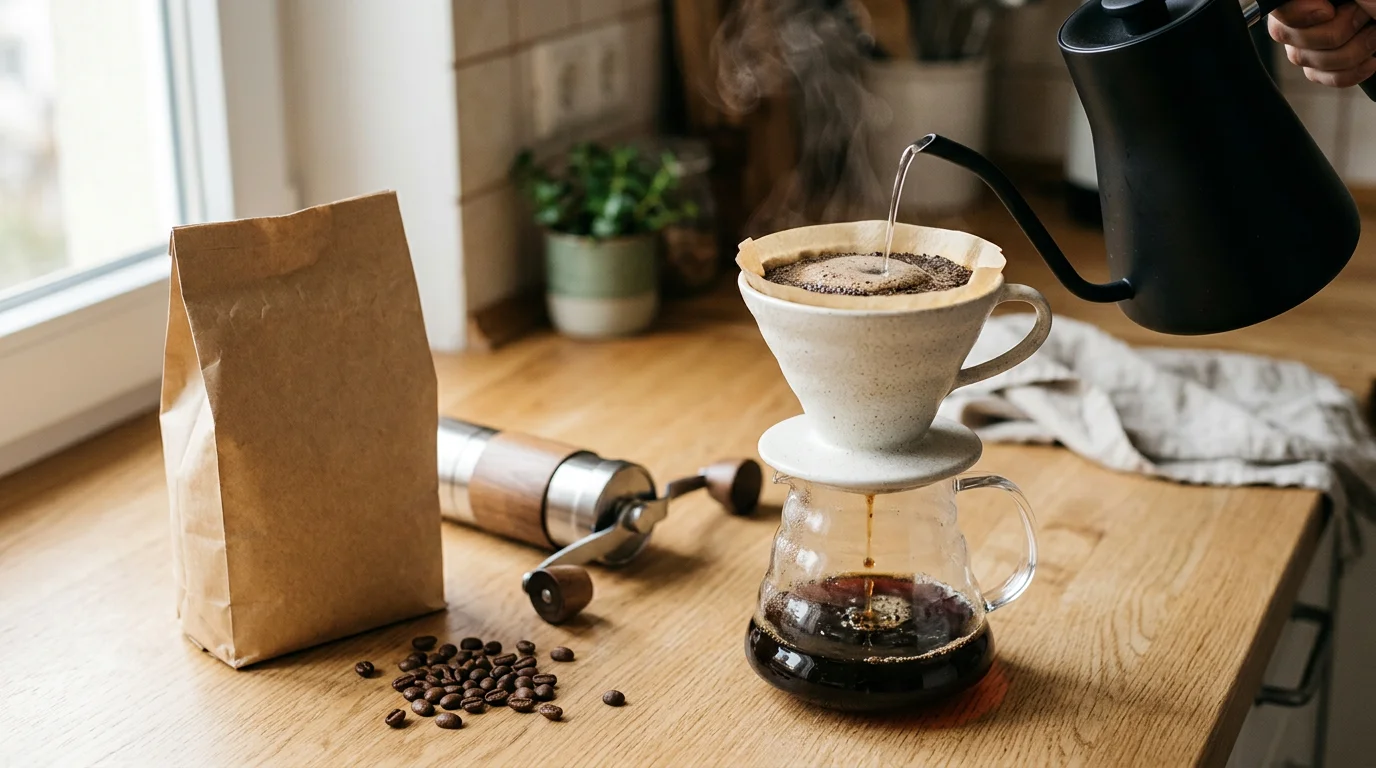
Technically, specialty coffee is coffee that scores 80 points or more out of 100 when tasted by trained graders, with no primary defects and no more than 5 full defects in a 350 g green sample.
In practice it's also a movement built on quality, traceability and fair relationships between farmers, importers, roasters, baristas and you. The term was coined by importer Erna Knutsen in 1974.
To get into it: visit a local roaster, try coffee black, taste widely without overthinking, and learn a little about the seed-to-cup journey.
Why specialty coffee can feel like a mystery
For a long time my coffee came from a drive-thru: dark roast, plenty of cream, two sugars. It was fine. It woke me up.
Then a friend dragged me into a small independent café, and I felt completely lost.
The menu had pour-over on it, which I'd never seen. The bags on the shelf didn't just say "dark roast" or "breakfast blend." They listed a country, a farm or lot, a variety and something called "washed" or "natural."
None of that told me what the coffee would taste like. But it was obvious that someone cared a lot about it.
Behind the counter, the barista weighed the beans, weighed the water and timed the brew. It felt more like watching a cook than a fast-food line.
That first pour-over tasted like nothing I'd had before: bright, sweet and fruity, with no milk or sugar needed.
If you've had a similar experience, this guide is for you. I'll explain what specialty coffee actually means, where it came from and how to start enjoying it without feeling intimidated.
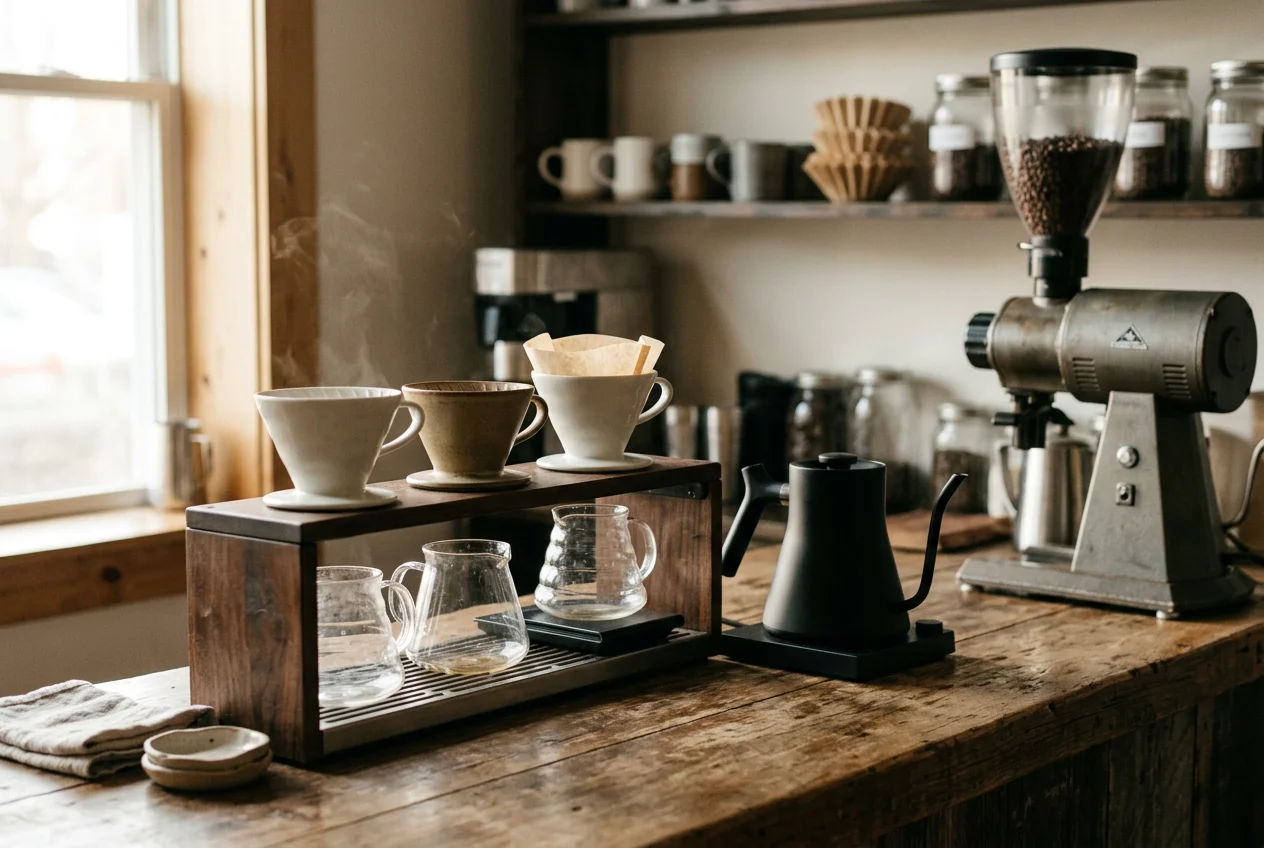
What makes independent cafés different
- Unfamiliar brew methods. Pour-over, batch brew from single origins and sometimes siphons or AeroPress.
- Detailed labels. Country, region, farm, variety, processing method, altitude and roast date.
- Precise brewing. Baristas weigh coffee and water and control temperature and time.
- Curious staff. Most are happy to explain what they're serving and why.
Where the term specialty coffee came from
"Specialty coffee" isn't a vague marketing phrase. It has a clear origin.
Erna Knutsen, 1974
The term was coined by Erna Knutsen, a green coffee importer in California, in an interview with the Tea & Coffee Trade Journal in 1974.
At the time, the coffee business was dominated by a handful of giant companies. They bought, roasted and sold huge amounts of cheap, commodity-grade coffee, mostly pre-ground in cans.
Small artisan roasters were largely ignored. Their orders were too small to interest the big traders.
A new business model
Knutsen did something different. She bought small lots of exceptional green coffee and sold them directly to those small roasters.
These coffees tasted distinctly better than commodity blends. Crucially, many could be traced back to particular farms, regions and lots.
She used the word "specialty" to describe these standout coffees grown in special microclimates.
Going to origin
Knutsen and those who followed her started a new tradition: traveling to coffee-growing countries to meet the farmers who grew the beans.
Being able to say you'd visited the farm and built a relationship with the producer became a hallmark of specialty coffee.
That changed how farmers were seen. It brought new respect for the skill and work needed to grow great coffee, and more awareness of how vital farmers are to the whole chain.
Why her timing mattered
In the 1970s, many people were unhappy with stale, canned coffee. A handful of small roasters on the American West Coast were already roasting fresh, higher-quality beans for local customers.
Knutsen gave them access to better green coffee and gave the whole idea a name. That combination helped turn scattered small businesses into a recognizable movement.
From a few roasters to a global movement
In 1982 a group of roasters and importers founded the Specialty Coffee Association of America. It later merged with its European counterpart to form today's Specialty Coffee Association, the SCA.
What began as a small niche is now a global industry, with tens of thousands of independent roasters in North America alone and specialty cafés in almost every big city in the world.
The technical definition: grading and the 80-point line
Specialty coffee has a technical meaning based on how green coffee looks and how it tastes.
Step 1: physical grading
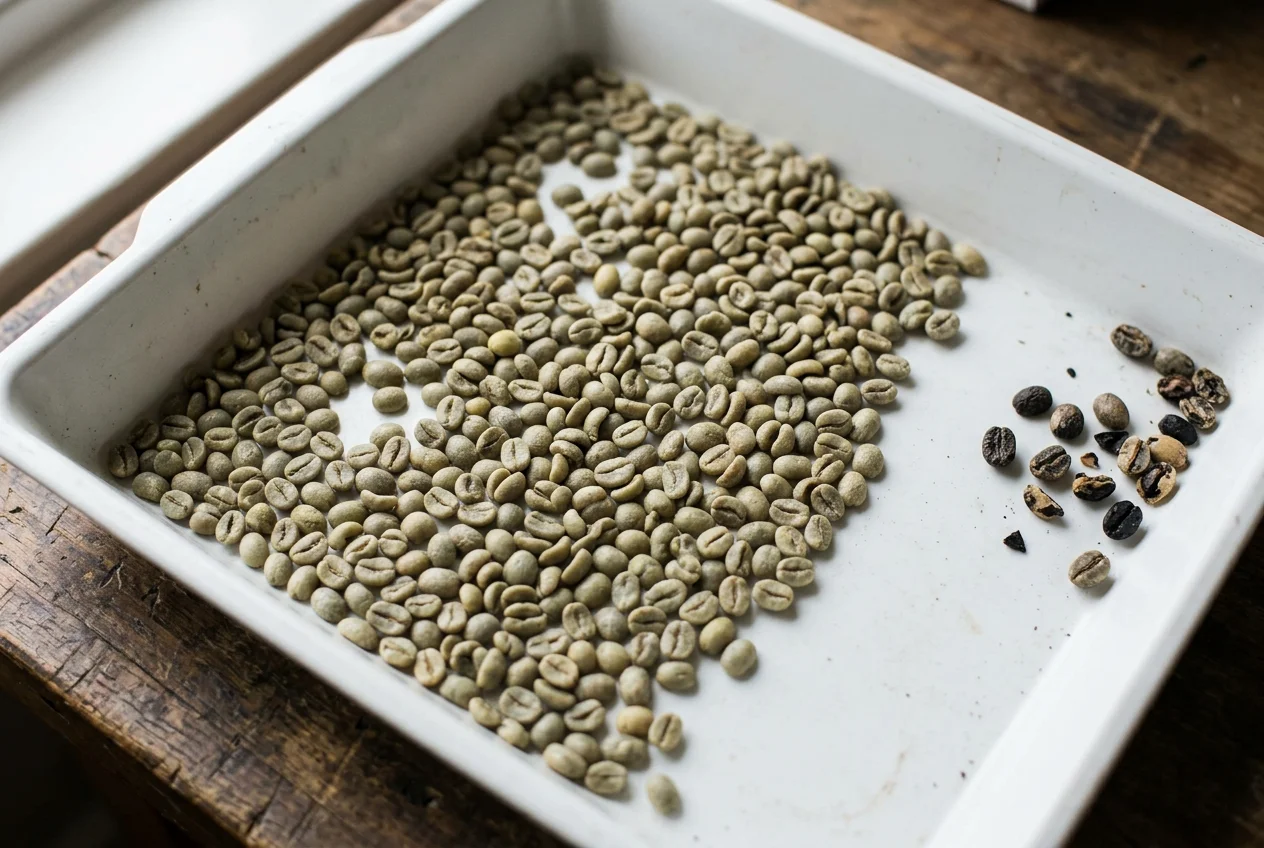
A grader takes a 350-gram sample of green, unroasted coffee and inspects it bean by bean.
They look for defects. These come in two groups:
- Primary (category 1) defects. Serious problems such as full black beans, full sour beans, dried cherries or pods, severe insect damage, fungus and foreign matter like stones or sticks.
- Secondary (category 2) defects. Smaller problems such as partial black or sour beans, broken or chipped beans, shells, slight insect damage and floaters.
To be specialty grade, a sample must have zero primary defects and no more than five full defects in total. Several minor defects can add up to one "full" defect.
Who does the grading
Grading is done by trained, often certified tasters. For years the best known were Q graders, who passed demanding exams in tasting, smelling and green grading. Today the SCA runs this certification.
Many importers and roasters also train their own staff to grade coffees the same way, so they can compare lots fairly.
Step 2: cupping and scoring
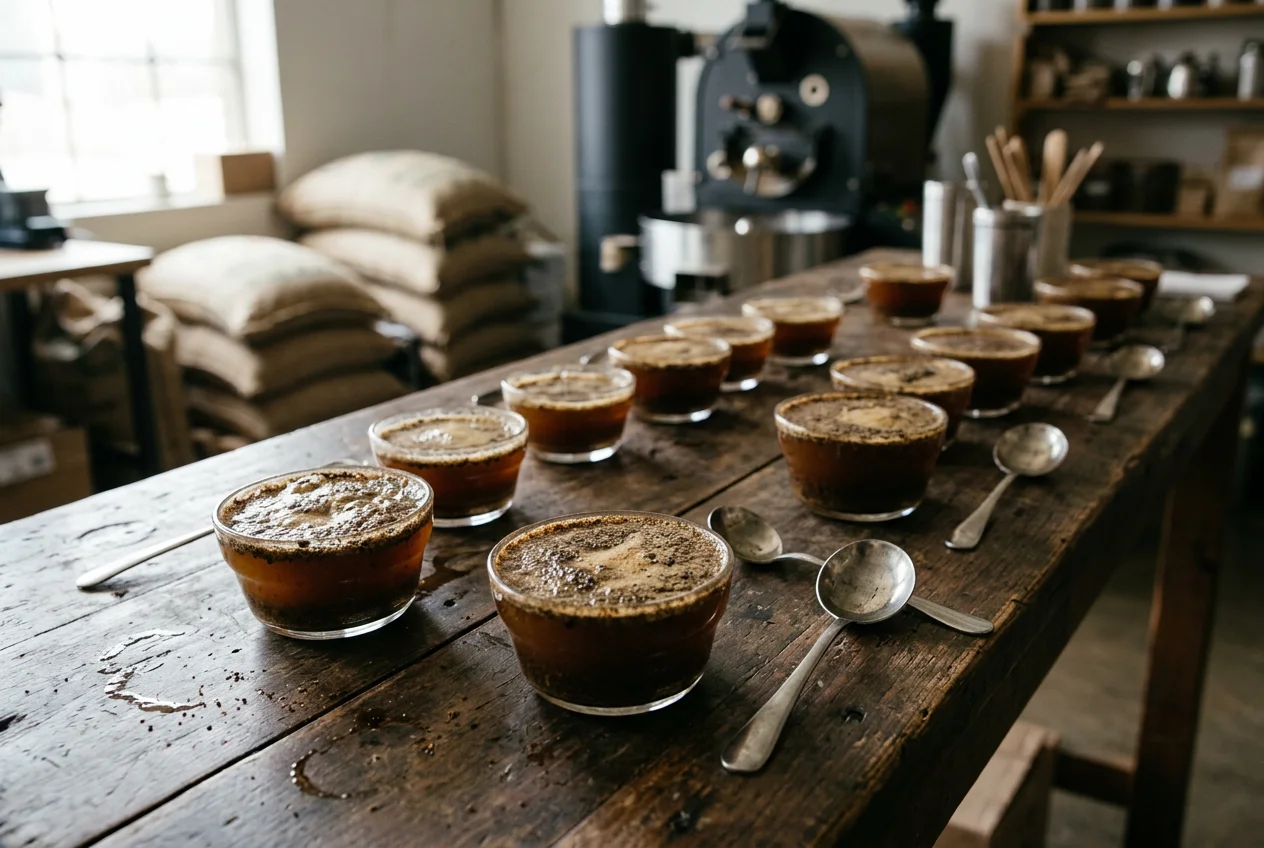
Next, the coffee is roasted lightly and tasted using a standard method called cupping.
For many years, cuppers used a 100-point form. They scored attributes like fragrance and aroma, flavor, aftertaste, acidity, body, balance, uniformity, clean cup and sweetness, then subtracted points for any taints or faults.
Coffee that scored 80 points or more was graded specialty. Below 80, it was considered commercial or premium coffee.
| Score | Common description | What it usually means |
|---|---|---|
| 90–100 | Outstanding | Rare, exceptional coffees, often sold at auction |
| 85–89.99 | Excellent | Very distinctive, high-end specialty |
| 80–84.99 | Very good | Solid, clean specialty coffee |
| Below 80 | Not specialty | Commercial or premium coffee |
The newer Coffee Value Assessment
In 2024 the SCA adopted a newer system called the Coffee Value Assessment. It separates a coffee's physical quality, a description of its flavors and a judgment of how much tasters like it, and also considers things like traceability and certifications.
In practice, most traders and roasters still talk about the 80-point line. When you see "86 points" on a bag, it's using that familiar scale.
What the grade doesn't tell you
A score tells you about quality, not taste preference. An 87-point natural Ethiopian and an 87-point Brazilian can taste completely different, and you might love one and dislike the other.
That's why the tasting notes and origin information on the bag matter just as much as the number.
Specialty coffee as a movement
Grading standards matter, but specialty coffee is best understood as a movement rather than a single dictionary definition.
It rests on three ideas.
- Quality firstPutting flavor potential and good farming ahead of sheer volume.
- TraceabilityKnowing where, how and by whom the coffee was grown and processed.
- Human connectionBuilding fair, open relationships between farmers, importers, roasters, baristas and drinkers.
When those three come together, you tend to get coffee that tastes better and a supply chain that treats people better.
How it changed the industry
Fifty years ago, coffee in many countries meant a few big brands in cans. Today you can buy a single farm's coffee from a small roaster down the street, roasted a few days ago.
That's a huge shift, and it happened because many people across the chain decided quality and transparency were worth the extra effort.
The specialty chain: five links from farm to cup
The specialty coffee world often describes quality as the result of many parts working in harmony. If one link fails, the cup suffers.
A great roaster can't fix badly grown coffee, and a great farmer's work can be ruined by poor roasting or brewing.
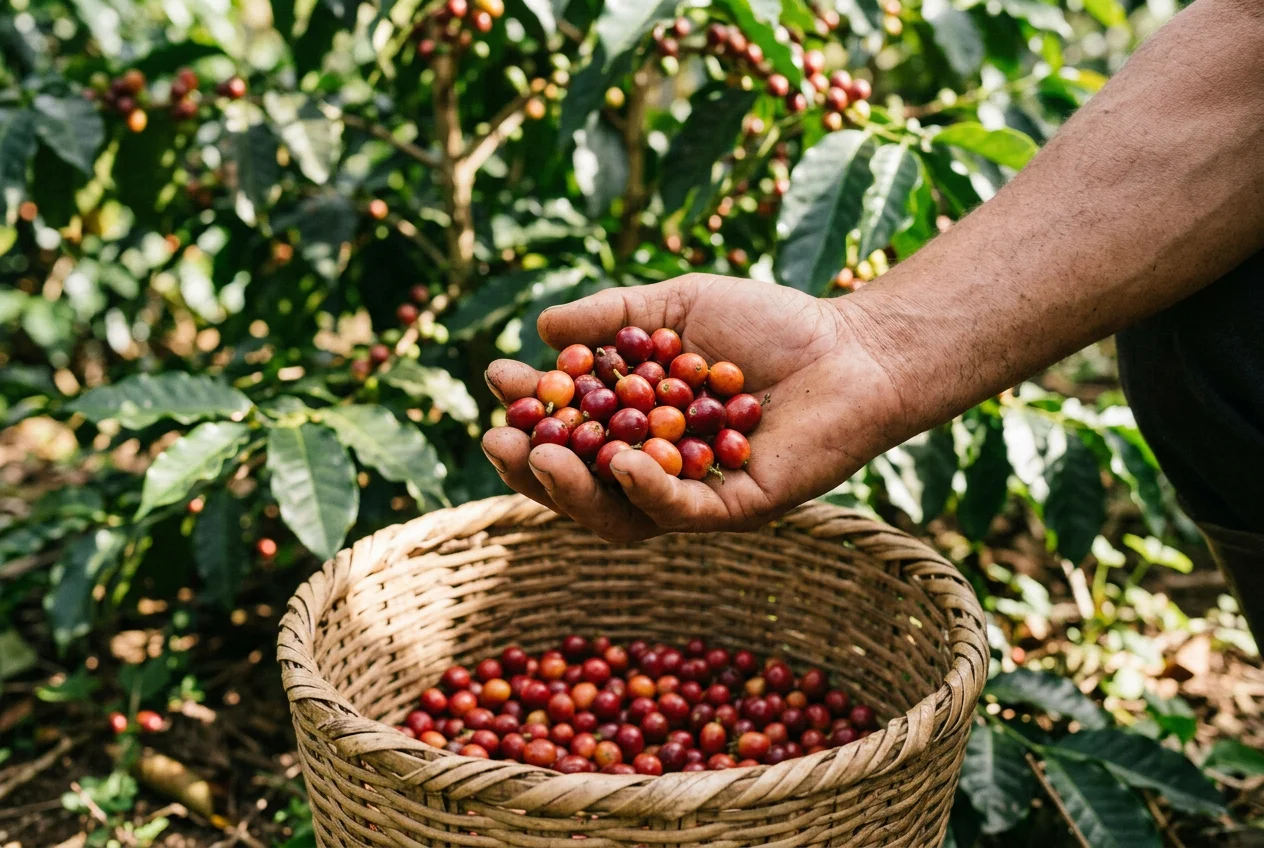
Link 1: the farmer
Everything starts at origin. Farmers grow coffee in specific soils, climates and often high altitudes.
They prune the trees, pick ripe cherries at the right time and process the coffee carefully, removing the fruit and drying the seeds to the right moisture.
Their decisions set the maximum flavor potential of the coffee. Nobody later in the chain can add quality that isn't there.
Link 2: the importer
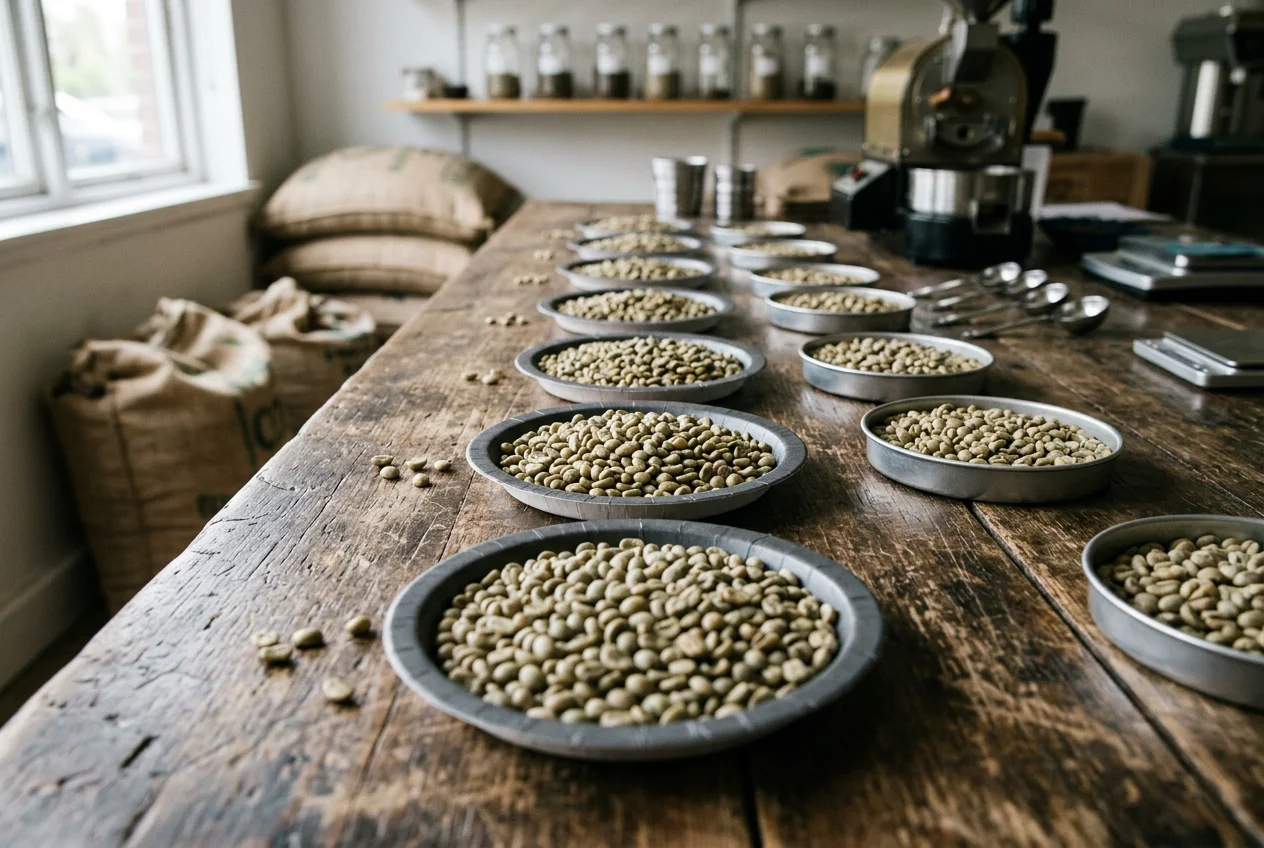
Farmers sell their dried green coffee to exporters and importers, often through cooperatives.
Importers cup and grade samples to check quality, defects and flavor. They also handle financing, shipping and the complicated paperwork of moving coffee across the world.
Good specialty importers build long-term relationships with producers and help them reach roasters who will pay for quality.
Link 3: the roaster
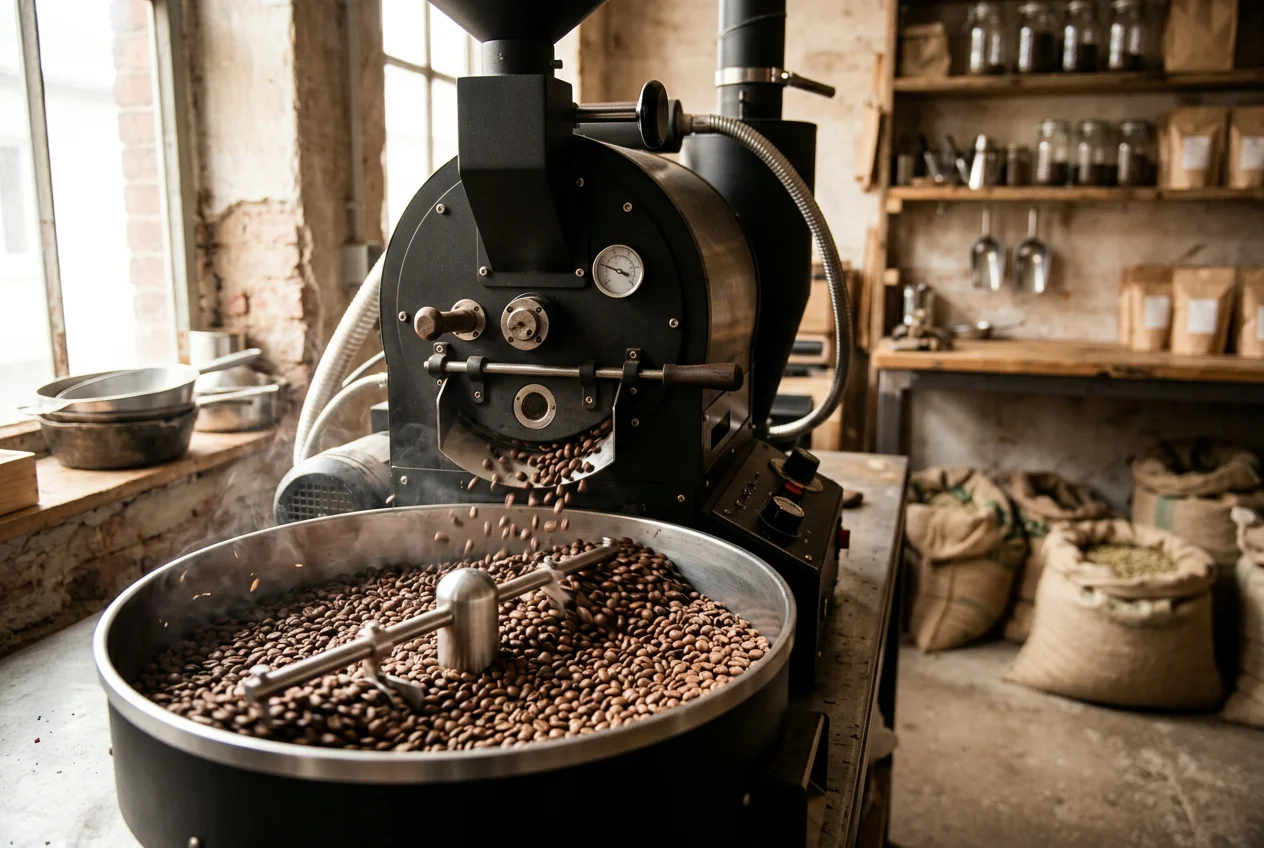
Roasters buy the green coffee and transform it with heat. They control time and temperature to turn hard, grassy green seeds into aromatic brown beans.
A skilled specialty roaster aims to highlight the coffee's origin flavors without scorching or muting them. That usually means lighter to medium roasts compared with traditional commercial coffee.
My guide on how coffee is roasted explains the process step by step.
Link 4: the barista
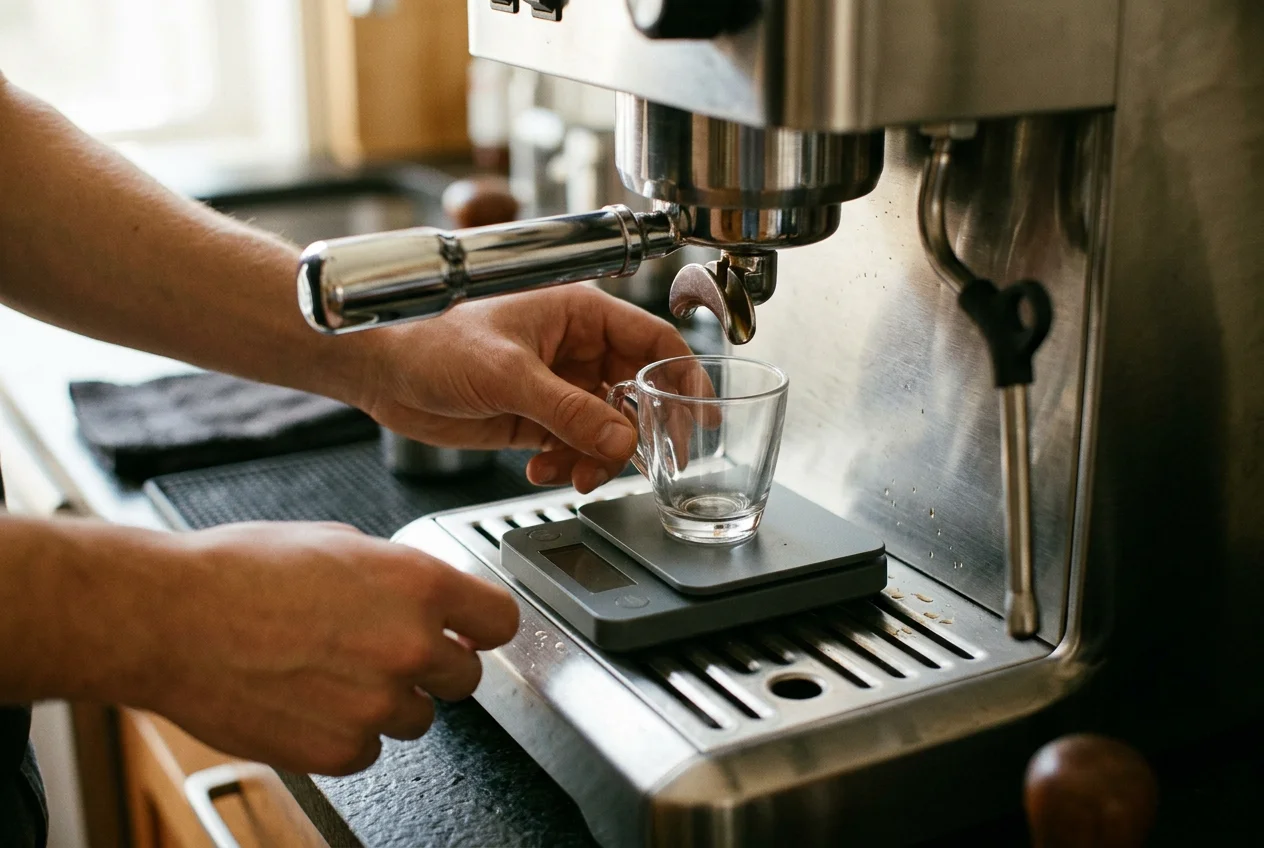
The barista turns roasted beans into a drink. They grind to the right size, weigh the dose, control water temperature and ratio, and adjust as the beans age.
Their job is to make sure all the work done by the farmer, importer and roaster actually shows up in the cup.
Link 5: you
Many people think the chain ends with the barista. It doesn't. The drinker is the final link.
Without people who seek out, value and pay for specialty coffee, the economics of the whole chain fall apart. Your choices are what make the extra effort worthwhile for everyone upstream.
| Link | Main job | How quality can be lost |
|---|---|---|
| Farmer | Grow, pick and process | Unripe cherries, poor drying |
| Importer | Grade, finance, ship | Bad storage, long delays |
| Roaster | Develop flavor with heat | Burnt or underdeveloped roasts |
| Barista | Brew and serve | Wrong grind, ratio or water |
| Drinker | Choose, store, brew, value | Stale beans, poor storage, no demand |
How to taste specialty coffee
You don't need training to taste coffee well. A few simple habits help a lot.
- Smell firstBefore you sip, smell the dry grounds and then the brewed coffee. Aroma tells you a lot about flavor.
- Let it cool a littleVery hot coffee hides flavors. Taste it again after a few minutes, and again when it's warm rather than hot.
- SlurpSlurping sprays coffee across your tongue and pulls aroma into your nose. It looks silly, but it works.
- Notice acidityIs it bright and juicy like fruit, or soft and round?
- Notice sweetnessDoes it remind you of caramel, honey, chocolate or ripe fruit?
- Notice bodyDoes it feel light like tea, or heavy like whole milk?
- Notice the finishWhat flavor lingers after you swallow, and is it pleasant?
Use simple words
Start with big families: chocolatey, nutty, fruity, floral, caramel, earthy. Only then try to narrow it down, like "orange" instead of "fruity."
The SCA's coffee taster's flavor wheel is a handy reference if you want more words, but you don't need it to enjoy coffee.
Temperature changes everything
The same cup can taste quite different as it cools. Bright, fruity coffees often get sweeter and juicier at lower temperatures, while flaws like bitterness also become easier to notice.
Compare, don't judge in isolation
Tasting two coffees side by side makes differences much clearer. Brew a Brazilian and an Ethiopian the same way and the contrast jumps out.
Our tip: Keep a short note on your phone for each coffee you try: origin, process and one or two words about the taste. After a few months you'll see clear patterns in what you like.
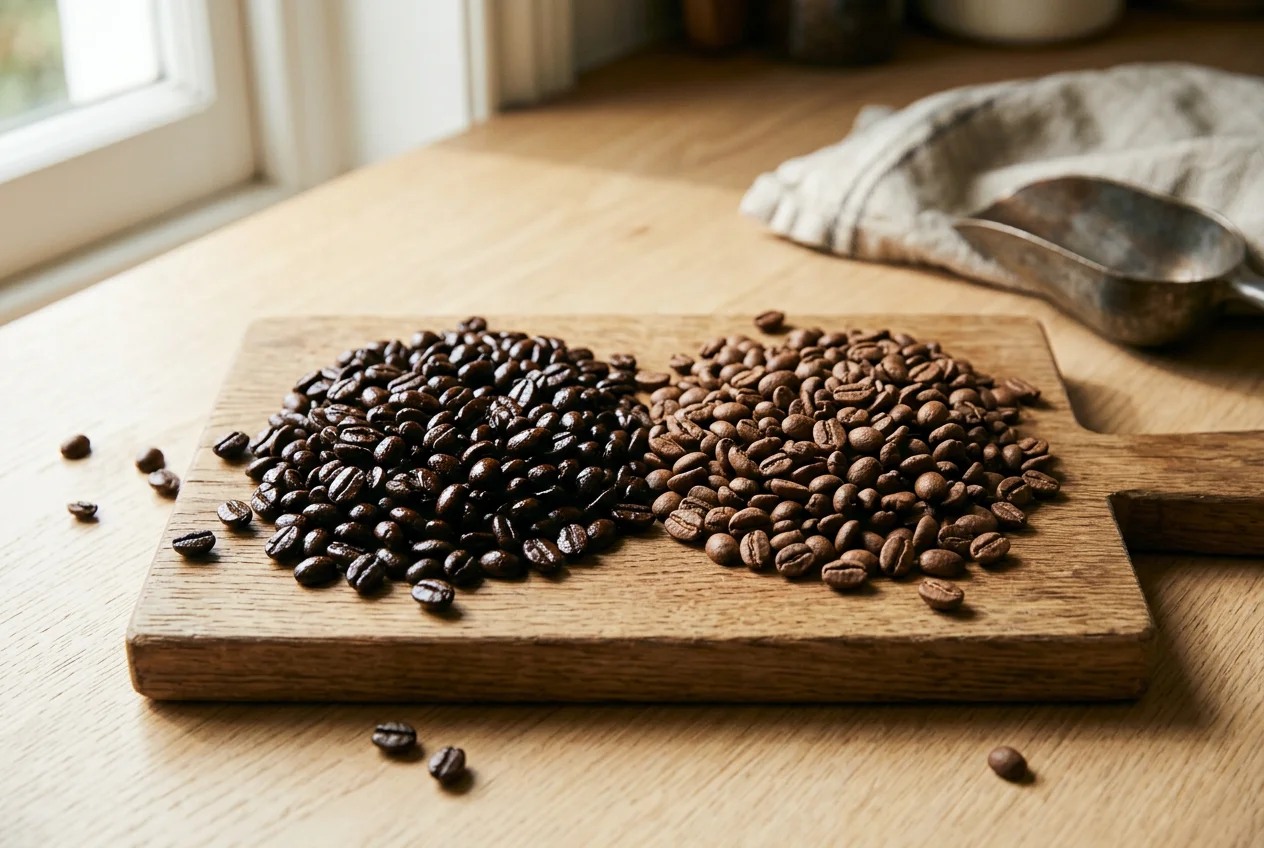
Specialty vs commercial coffee
What's the actual difference between a bag of specialty coffee and a can of supermarket coffee?
| Specialty coffee | Commercial coffee | |
|---|---|---|
| Grade | 80+ points, very few defects | Lower grades, more defects allowed |
| Species | Almost always arabica (some fine robusta) | Arabica and robusta, often blended |
| Traceability | Country, region, often farm and lot | Often just "100% arabica" or a blend name |
| Roast | Light to medium, dated | Often dark, best-before date only |
| Freshness | Sold within weeks of roasting | Can be months old |
| Flavor | Distinct origin and processing character | Uniform roasty, bitter taste |
| Price | Higher | Lower |
| Farmer pay | Often higher, sometimes direct | Usually commodity price |
Premium and gourmet aren't the same thing
Words like "premium," "gourmet" and "artisan" on a bag have no official definition. They're marketing terms.
"Specialty" has a defined meaning in the trade, even if companies don't always use it carefully. Look for details like origin, process and roast date rather than adjectives.
Where specialty gets blurry
Some large chains sell coffees that meet specialty standards, and some small roasters sell coffee that doesn't. A score on paper also doesn't guarantee freshness or good roasting.
In practice, I judge specialty coffee by the whole package: quality beans, careful roasting, freshness and transparency.
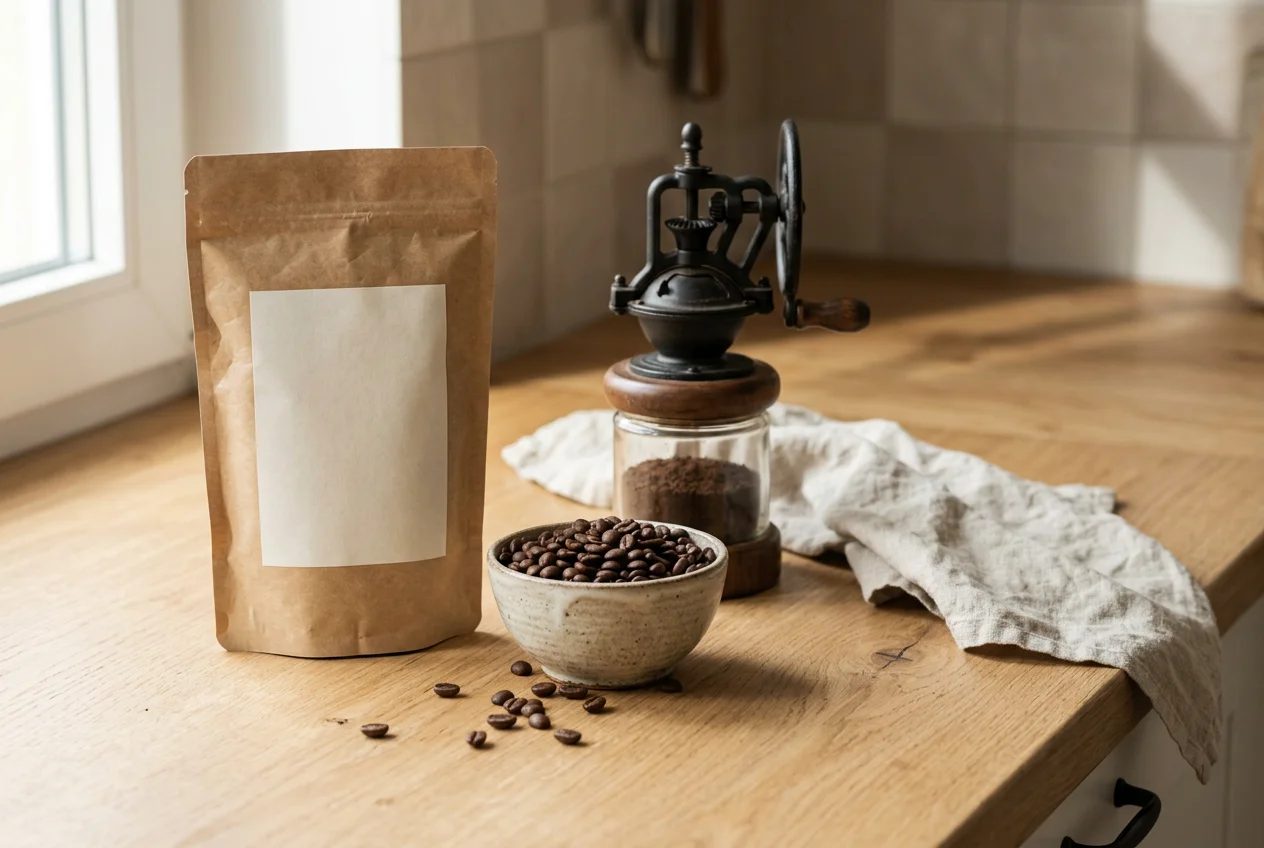
How to read a specialty coffee bag
A good rule of thumb: the more specific information on the bag, the more likely the roaster cares about quality and sourcing.
What the details tell you
- Process tells you a lot about flavor. Washed coffees are usually cleaner and brighter. Naturals are sweeter and fruitier. My guide on coffee processing methods explains them.
- Origin gives you a general flavor direction. See my guide on coffee growing regions and flavor.
- Roast date tells you about freshness. Specialty coffee usually tastes best from a few days to about a month after roasting. My guide on coffee freshness and resting explains why.
Our tip: If a bag only shows a best-before date a year away, it's probably not fresh specialty coffee, whatever the front says.
How to get into specialty coffee: four steps
You don't need expensive gear or a big vocabulary. Here's the simple path I recommend to friends.
Step 1: visit a local roaster or specialty café
The best way in is a local independent roaster or café.
Ask what they have right now and what they'd recommend. Most people who work at quality-focused roasteries love talking about their coffee.
Look for places that are open and passionate about where their coffee comes from.
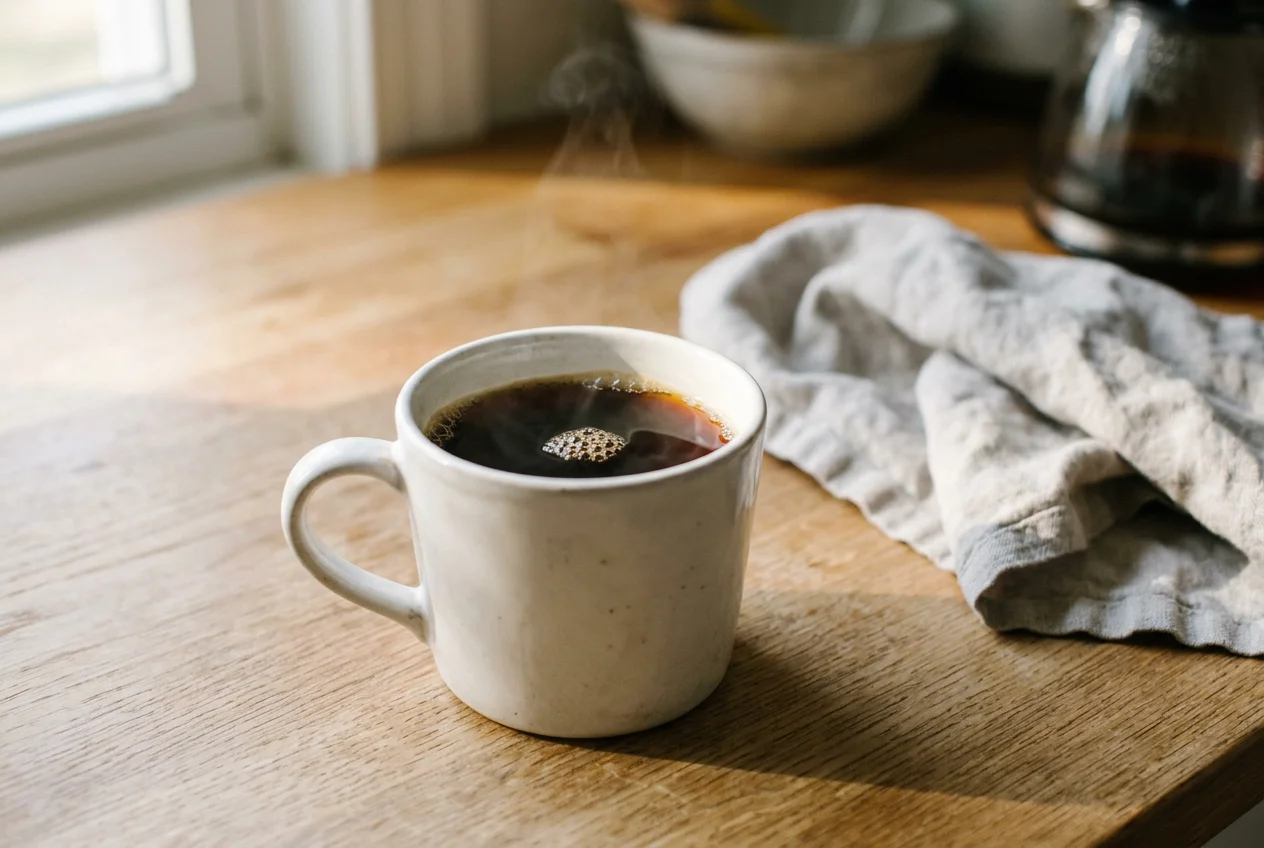
Step 2: try drinking it black
To really taste specialty coffee, try it without milk, cream or sugar, at least sometimes.
Milk and sugar are lovely, but they cover up the subtle flavors that make good beans special.
If you're used to sweet, creamy coffee, this can take some getting used to. Start with a coffee described as chocolatey or caramel, which feels familiar, then work toward fruitier ones.
Step 3: taste widely, without overthinking
Try as many coffees as you can from different regions, like East Africa, Central America, South America and Indonesia, and different processes, like washed, natural and honey.
You don't need to learn roast curves or extraction science. Just pick a bag that sounds interesting, brew it and notice what you taste.
Most people are amazed at how different coffees can be, from bright citrus and florals to chocolate, berries and nuts.
Step 4: learn about the journey from seed to cup
If you want to go deeper, learn how coffee travels from the farm to your mug.
Understanding the work behind each bag, from picking and processing to roasting, changes how you value it. My guides on processing, roasting and the history of coffee are good places to start.
Brewing specialty coffee at home
Good specialty coffee doesn't need fancy equipment, but a few basics make a big difference.
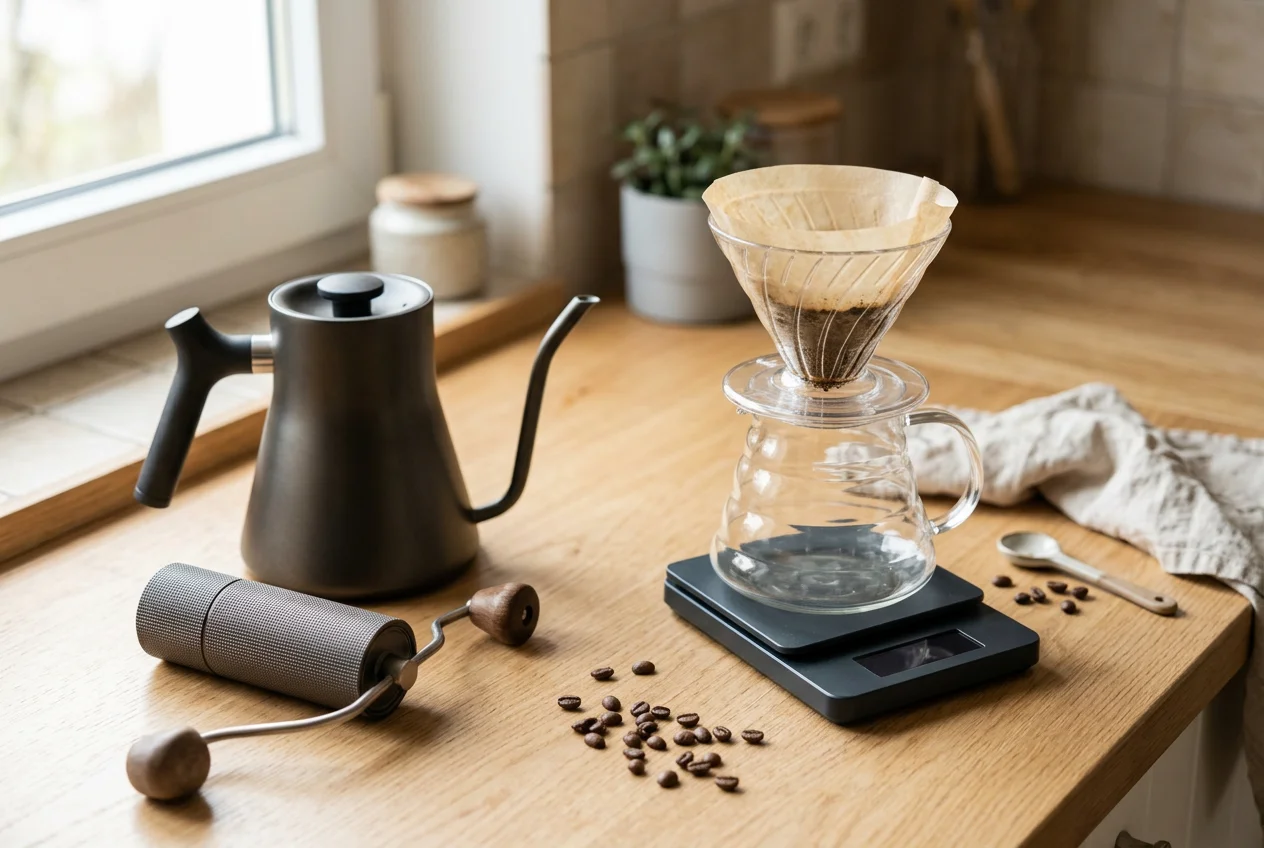
The essentials
- A burr grinderGrinding just before brewing is the single biggest upgrade. A burr grinder gives even particles. My burr vs blade grinder guide explains why.
- A scaleWeighing coffee and water makes your cup repeatable. A cheap kitchen scale works.
- A simple brewerA pour-over cone, an AeroPress or a French press is enough to start.
- Good waterFiltered water makes coffee taste cleaner and sweeter.
- Fresh beansBuy small amounts often and check the roast date.
A simple starting recipe
For pour-over or drip, use about 1 gram of coffee for every 16 grams of water. That's 15 grams of coffee to 250 grams of water for one mug.
Use water just off the boil, around 200 to 205°F, and a medium grind for drip or medium-fine for pour-over. Taste, then adjust: grind finer if it's sour and thin, coarser if it's bitter and harsh.
Espresso at home
Specialty espresso at home is rewarding but takes more practice and better equipment, especially a capable grinder. If you're starting out, filter brewing is the easier and cheaper way to taste what specialty coffee is about.
Store it well
Keep beans in an airtight, opaque container in a cool cupboard. Avoid the fridge. My guide on how to store coffee beans covers this.
Our tip: Don't buy more than you'll drink in two to four weeks. Specialty coffee's best flavors fade faster than you might think.
Specialty coffee around the world
Specialty coffee started in North America, but it's now global.
Northern Europe
The Nordic countries drink more coffee per person than anywhere else and helped popularize very light, clean, fruity roasts. Oslo, Copenhagen and Stockholm have influential roasters.
Australia and New Zealand
Specialty coffee is mainstream there, built on a strong espresso and flat-white culture. Many cities have more independent cafés than chain outlets.
Asia
Japan has a long tradition of careful hand brewing. South Korea, China, Taiwan and Southeast Asia are among the fastest-growing specialty markets.
Producing countries
More and more coffee-growing countries, like Colombia, Brazil, Ethiopia and Kenya, now have their own specialty cafés serving local coffee. That's a big change from the days when nearly all the best beans were exported.
Buying specialty coffee online and by subscription
If you don't have a good roaster nearby, buying online works well.
What to look for
- Roast date and shipping. The best roasters roast to order or ship within a few days of roasting.
- Detailed descriptions. Origin, process, variety, altitude and tasting notes.
- Small bag sizes. So you can try more coffees before they go stale.
- Clear sourcing information. Who grew it and how the roaster works with them.
Subscriptions
Many roasters offer subscriptions that send a fresh coffee every week, two weeks or month. Some let you choose a flavor style, like "chocolatey" or "fruity."
Subscriptions are a great way to taste widely without having to choose every time. Just match the amount to how much you drink, so bags don't pile up.
Our tip: When a bag arrives, check the roast date and give it a few days to rest before you judge it, especially for espresso.
Why specialty coffee costs more
Specialty coffee usually costs more than supermarket coffee, both as beans and in cafés. There are good reasons.
Where the extra money goes
- More careful farming. Picking only ripe cherries, often by hand, and careful processing take more labor.
- Higher prices for farmers. Specialty buyers often pay well above the commodity price for quality.
- Smaller lots. Keeping coffees separate by farm or variety means smaller batches and more handling.
- Quality control. Grading, cupping and sorting at every stage.
- Fresh roasting. Small roasters roast in small batches and sell quickly.
- Skilled brewing. Baristas trained to get the best from each coffee.
Why paying more matters
When farmers are paid fairly for quality, they can afford to keep investing in careful farming, selective picking and sustainable practices.
When prices fall to rock-bottom commodity levels, farmers often have no choice but to chase volume over quality, just to survive. Some give up coffee altogether.
Buying traceable, high-quality coffee is one practical way to support a better system.
Rough idea of how a specialty bag's price can break down (my illustration)
A simplified illustration, not real data. Actual splits vary widely by coffee, roaster and country.
Ethics, direct trade and certifications
Specialty coffee often talks about fairness and sustainability. Here's how to make sense of the terms.
Direct trade
Some roasters buy directly from farmers or work closely with a specific importer and producer group. They often pay higher prices and share details about the relationship.
"Direct trade" isn't a certified label, so it depends on trust and transparency. Good roasters explain what it means for them.
Certifications
Labels like Fairtrade, organic and Rainforest Alliance set rules for minimum prices, environmental practices or working conditions.
They can be valuable, but a certified coffee isn't automatically specialty grade, and many excellent specialty coffees aren't certified because small farms can't afford the fees.
What I look for
I trust roasters who tell me who grew the coffee, roughly what they paid or how they work with the producer, and who come back to the same farms year after year.
Long-term relationships usually matter more than any single label.
Sustainability on the farm
Many specialty producers also invest in shade trees, composting, water-saving processing and biodiversity. Better prices for quality help make those investments possible.
Climate change is putting pressure on many coffee farms. Specialty buyers who commit to farms over many years give producers the stability to adapt, plant new varieties and protect their land.
Ask questions
If a roaster's website says "ethically sourced" without any details, it's fair to ask what that means. The best roasters are happy to explain.
First, second and third wave coffee
You'll often hear specialty coffee described in "waves." It's a simplified way to tell the story.
| Wave | Roughly when | What it means |
|---|---|---|
| First wave | Early to mid 1900s | Coffee as an everyday commodity: canned, pre-ground, instant |
| Second wave | 1960s–1990s | Coffeehouses, espresso drinks, darker roasts, origin names begin to appear |
| Third wave | 2000s onward | Coffee treated like wine: origin, farm, process, lighter roasts, careful brewing |
| Fourth wave and beyond | Recent years | Debated: science, sustainability, experimental processing, at-home precision |
These waves overlap, and people argue about the details. But they show how coffee moved from a simple commodity to something people explore like wine or craft beer.
Common beginner mistakes
I made most of these myself when I started.
Buying too much at once
A big bag feels like good value, but specialty coffee's best flavors fade within a few weeks of opening. Buy smaller bags more often.
Using pre-ground coffee
Ground coffee loses aroma quickly. If you can, grind just before brewing.
Brewing without measuring
Scooping by eye makes every cup different. A scale lets you repeat what works and fix what doesn't.
Judging a coffee too early
Very fresh coffee can taste sharp or sour. Give it a few days of rest, or try it again a week later.
Giving up on "sour" coffee
Often the problem is under-extraction. Grind a little finer or brew a little longer before deciding you don't like a coffee.
Chasing gear instead of beans
A new brewer is fun, but fresh, good beans and a decent grinder make a much bigger difference.
Feeling you have to like everything
You don't. Some people love wild, fruity naturals; others prefer chocolatey washed coffees. Specialty is about finding what you enjoy.
Can robusta be specialty coffee?
Specialty coffee has traditionally meant arabica. Robusta was seen as a cheap, harsh filler for instant coffee and commercial blends.
That's changing. Some producers in countries like Uganda, India, Vietnam and Brazil now grow and process robusta with the same care specialty arabica gets.
The result, often called fine robusta, can be smooth, sweet and chocolatey, with lots of body and crema. There's even a separate grading system for it.
It's still a small niche, but worth trying if you like bold espresso. My guide on arabica vs robusta explains the differences between the two species.
Specialty coffee myths
"Specialty coffee is pretentious"
It doesn't have to be. You don't need fancy words or expensive gadgets. If you like the taste, you're in.
"Specialty means light roast only"
Lighter roasts are common because they show origin flavors, but specialty coffee can be roasted medium or even darker for espresso.
"Specialty coffee is always sour"
Good specialty coffee is bright and sweet. Sourness usually means under-extraction or very fresh beans.
"You can't have milk in specialty coffee"
Of course you can. A flat white with specialty espresso is delicious. Tasting it black sometimes just helps you learn the coffee.
"Expensive gear makes better coffee"
Fresh beans, a decent grinder and a simple brewer get you most of the way. Skill and good beans matter more than shiny equipment.
"Specialty is just a marketing word"
Unlike "premium" or "gourmet," specialty has a defined meaning in the coffee trade: a graded, high-quality coffee scoring 80 points or more.
Your quick-start checklist
- Find two or three local roastersLook for independent roasters or specialty cafés near you.
- Order a single-origin coffee blackTry a pour-over or batch brew and notice what you taste.
- Ask for a recommendationTell the barista what you already like, chocolatey and nutty or bright and fruity.
- Read the bagLook for origin, process, variety and roast date.
- Buy a small bagBrew it at home and taste it over a couple of weeks.
- Try something different nextPick a new region or process each time.
- Enjoy the journeyLearn at your own pace and support the people who bring coffee from farm to cup.
My bottom line
Specialty coffee is a quality grade, but it's also a mindset: caring where coffee comes from, how it's made and who made it.
Approach it like wine or artisan cheese. There's a whole world of flavors to explore, and every bag is a small adventure.
You don't need to become an expert. Just stay curious, drink what you enjoy and keep tasting. The best cup of coffee is still the one you enjoy most.
Frequently asked questions
What is specialty coffee in simple terms?
High-quality coffee that scores 80 points or more out of 100 when graded by trained tasters, with almost no defects, and is usually traceable to its origin.
Who coined the term specialty coffee?
Green coffee importer Erna Knutsen, in an interview with the Tea & Coffee Trade Journal in 1974.
What does 80 points mean on a coffee bag?
It's a cupping score. 80 to 84.99 is very good specialty coffee, 85 to 89.99 is excellent and 90 or more is outstanding.
How many defects can specialty coffee have?
No primary defects and no more than five full defects in a 350-gram sample of green coffee.
Is specialty coffee always arabica?
Almost always, though some carefully grown and processed fine robusta also meets high quality standards.
Is specialty coffee the same as premium or gourmet coffee?
No. Premium and gourmet are marketing terms without official definitions. Specialty has a defined grading meaning in the coffee trade.
Why is specialty coffee more expensive?
Careful farming and processing, higher prices for farmers, small batches, quality control, fresh roasting and skilled brewing all cost more.
Do I need special equipment for specialty coffee?
No. A burr grinder, a scale and a simple brewer like a pour-over cone or French press are enough.
Should I drink specialty coffee black?
Try it black sometimes to taste its natural flavors, but milk and sugar are fine if you enjoy them.
What is third wave coffee?
A movement from the 2000s that treats coffee like wine, focusing on origin, processing, lighter roasts and careful brewing.
How fresh should specialty coffee be?
Most specialty coffee tastes best from a few days to about a month after its roast date.
Where can I buy specialty coffee?
From independent roasters, specialty cafés and many online roasters that list origin, process and roast date.

- Michael Reynolds, notes from buying and brewing specialty coffee at home
- Specialty coffee, Wikipedia
- Evolving the Concept of Specialty Coffee, Part I: Green Coffee Quality, Roast Magazine
- Scoring specialty coffee: what do the numbers mean?, Royal Coffee
- Definitions of specialty coffee, International Coffee Organization
- Know your women in coffee history, Trade Coffee
Related guides
How to choose coffee beans Coffee processing methods Coffee growing regions and flavorWritten by Michael Reynolds. Last updated November 16, 2026.