Climate Change and the Future of Coffee: Risks, New Species and What Comes Next
Rising temperatures, drought and disease are already changing where and how coffee can grow. Here's what's at stake, how farmers and scientists are adapting, and why a forgotten coffee species from Sierra Leone might matter for your future cup.
We choose products independently. We may earn a commission through links on this page; your price stays the same. Affiliate policy
Climate change is one of the biggest threats coffee has ever faced. Research suggests around half of the land suitable for coffee today could become unsuitable by 2050, mainly because of heat, drought, erratic rain and disease.
There's no single fix. The strongest response combines farm-level adaptation (shade, irrigation, mulch), new and more resilient coffee varieties and species, careful plant breeding, forest protection and cutting greenhouse gas emissions.
One of the most hopeful leads is Coffea stenophylla, a nearly forgotten species that tolerates far more heat than arabica while still tasting excellent. But turning it into a reliable crop could take 10 to 20 years.
Why I wrote this
I've written a lot about how to brew, store and choose coffee. But there's a bigger question hanging over all of it: will the coffee we love still be around, and affordable, in 20 or 30 years?
That's not a dramatic headline. It's what researchers, farmers and roasters talk about when you sit down with them.
I've heard growers describe rainy seasons that no longer arrive on time. I've heard roasters worry about lots they can no longer source. And I've watched coffee prices swing in ways that make everyone nervous.
So I went through the research and my own notes to answer a simple question: what's actually happening to coffee, and what's being done about it?
What you'll learn
- Why coffee is so sensitive to climate change
- The three main ways farmers and scientists are adapting
- Why a "lost" species called stenophylla is getting so much attention
- How plant breeding and gene editing could help, and why it takes so long
- Why protecting forests matters for the future of coffee
- What beanless and lab-grown coffee are, and their trade-offs
- Practical things you can do as a coffee drinker
A quick note: climate science uses Celsius, but I've converted the key temperature figures to Fahrenheit where it helps, since most of my readers are in the US.
What's at stake: coffee by the numbers
Coffee is one of the world's most important agricultural commodities. It's easy to forget that every cup starts as a fruit on a tree, usually on a small farm in the tropics.
Here's the scale we're talking about:
That last point matters more than it seems. A coffee tree planted today will still be producing in the 2050s. Farmers have to plant for a climate that doesn't exist yet.
So climate change isn't only an environmental issue for coffee. It affects supply, prices, rural jobs, farm incomes and the long-term stability of the entire coffee business.
For the millions of families who depend on coffee, it's an economic question first.
Our tip: Next time you open a bag of beans, look for the country and, if it's listed, the farm or cooperative. Coffee becomes far more real when you picture the people who grew it.
How climate change hurts coffee
Arabica, which makes up most specialty coffee, is a fussy plant. It evolved in the cool, shaded highland forests of Ethiopia and South Sudan.
It likes a fairly narrow band of temperatures, reliable rain and a dry season at the right time. Push it outside that band and quality and yield both suffer.
The main threats
- Rising temperaturesHeat speeds up cherry ripening, which can leave less time for flavor to develop. It also stresses the plant and lowers yields. Parts of East Africa have been warming faster than the global average.
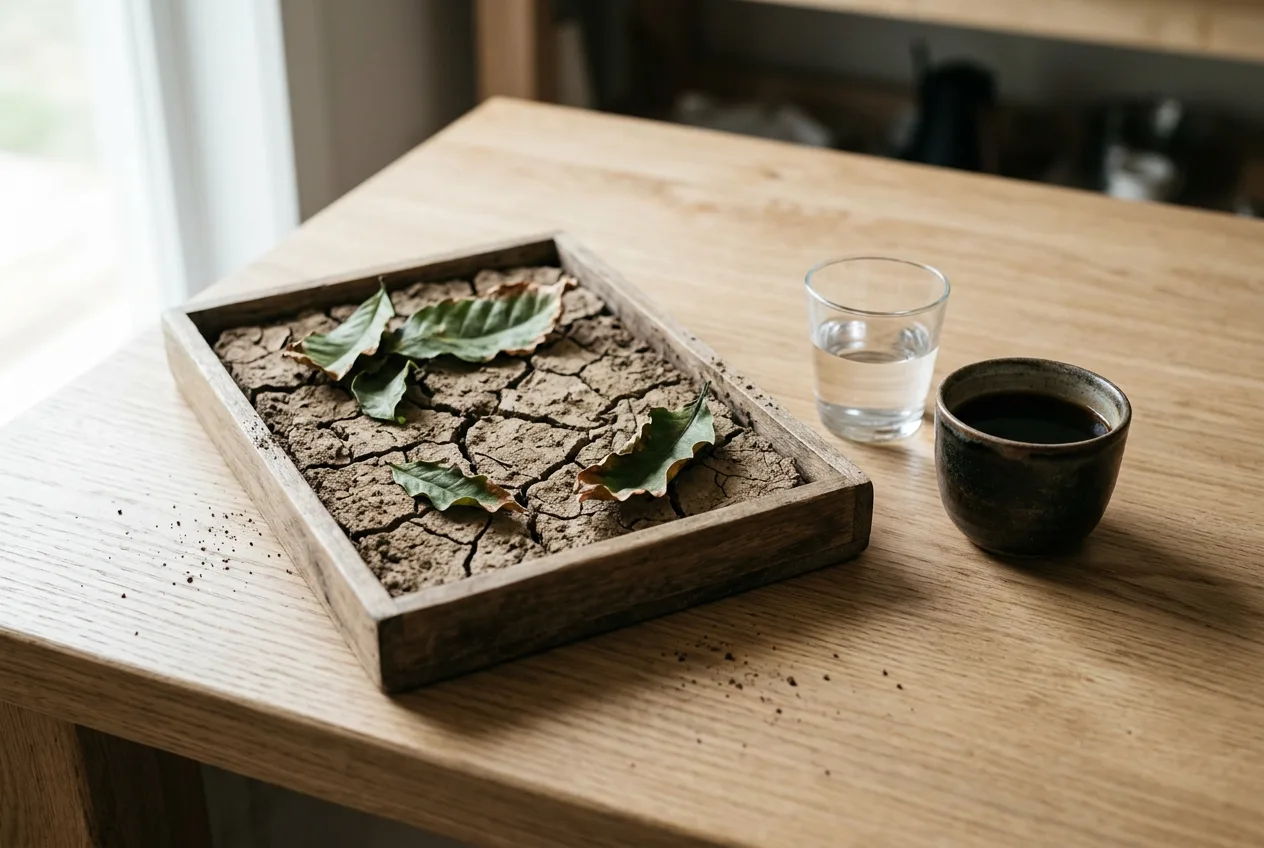
- DroughtMany coffee regions that are already prone to drought are expected to see more frequent and more severe dry spells. Coffee needs water at key moments, especially flowering and early fruit growth.
- Erratic rainfallRain arriving too early, too late or all at once can trigger uneven flowering, wash away soil and make harvest timing unpredictable.
- Storms and floodingExtreme weather can damage trees, roads and processing equipment, and disrupt the whole harvest.
- FrostEven in a warming world, cold snaps still happen. A single frost in a major growing region can wipe out a large share of a harvest and send prices soaring.
- Pests and diseaseWarmer, wetter conditions can help pests like the coffee berry borer and diseases like coffee leaf rust spread to places they couldn't reach before.
Why unpredictability is the real enemy
When I talk to farmers, they rarely complain about one hot year. What wears them down is not knowing what's coming.
Farming is a series of bets: when to plant, when to fertilize, whether to invest in irrigation, how much to borrow, when to hire pickers. Erratic weather makes every one of those decisions harder.
And for families living close to the edge financially, one bad season can mean taking on debt or leaving coffee altogether.
How much land is at risk?
Several studies have modeled where coffee will be able to grow in the future. A widely cited one projected that climate change could reduce the global area suitable for coffee by about 50% across different emissions scenarios.
The impacts are expected to be worst at low altitudes and near the equator in lowland areas. Major producing regions in Brazil and Vietnam could lose a lot of suitable land.
Some high-altitude areas in East Africa and Asia may become more suitable. But many of those are covered in forest, which creates a whole new problem I'll come back to.
Warming rate per decade (figures discussed in my research notes)
Approximate figures. Regional warming rates vary by location, period and dataset.
Our tip: If a coffee you love suddenly tastes different from one harvest to the next, weather is often part of the reason. Ask your roaster. Good roasters are usually happy to explain what changed.
The three main ways coffee can adapt
Research on coffee and climate risk tends to group the responses into three broad paths. Most real-world solutions combine all three.
| Path | What it means | Examples | Main limit |
|---|---|---|---|
| Adapt the farm | Improve conditions around existing plants | Shade trees, irrigation, mulch | Costs money and only buys so much time |
| Change the crop | Plant something better suited to the new climate | New arabica cultivars, robusta, liberica, hybrids | Flavor, market demand and years of waiting |
| Move production | Grow coffee where the climate is becoming suitable | Higher elevations in Ethiopia | Risk of clearing forests, new infrastructure needed |
Let's look at each one.
Path 1: Adapting the farm
The first and most immediate option is to change the environment around the coffee plants that are already in the ground.
Shade
Arabica naturally grows under a forest canopy. Adding shade trees can lower the temperature around the coffee plants by several degrees, reduce water loss and protect the soil.
Shade-grown coffee also tends to ripen more slowly, which many roasters believe helps flavor. The trade-off is often lower yields per acre.
Irrigation
In drier regions, irrigation can keep plants alive through a poor rainy season and help flowering happen evenly.
But irrigation needs water sources, pumps, energy and money. In regions where water itself is becoming scarce, it can create new conflicts.
Mulch and soil care
Covering the soil with mulch, such as pruned branches, leaves or coffee pulp, keeps moisture in, cools the ground and feeds the soil as it breaks down.
It's one of the cheapest and most effective tools a small farmer has.
Our tip: Look for "shade-grown" or agroforestry coffees. They're often sweeter and more complex, and you're supporting a farming style that's more resilient to heat.
Path 2: Changing the crop
If the farm can't be made suitable for the plant, the next step is to change the plant.
New arabica varieties
Farmers can switch to an arabica variety that's better suited to local conditions. Some newer varieties and F1 hybrids are bred for disease resistance, heat tolerance or higher yields, while trying to keep good cup quality.
Switching to robusta
Robusta handles warmer, lower-altitude conditions better than arabica and resists some strains of coffee leaf rust. That's why many farmers in hot regions have already moved to it.
The downside is flavor. Robusta tends to be more bitter and less sweet, and it usually sells for less. I cover the differences in detail in my arabica vs robusta guide.
Recent research also suggests robusta may be less heat-tolerant than once assumed, so it isn't a simple escape route.
Other species and hybrids
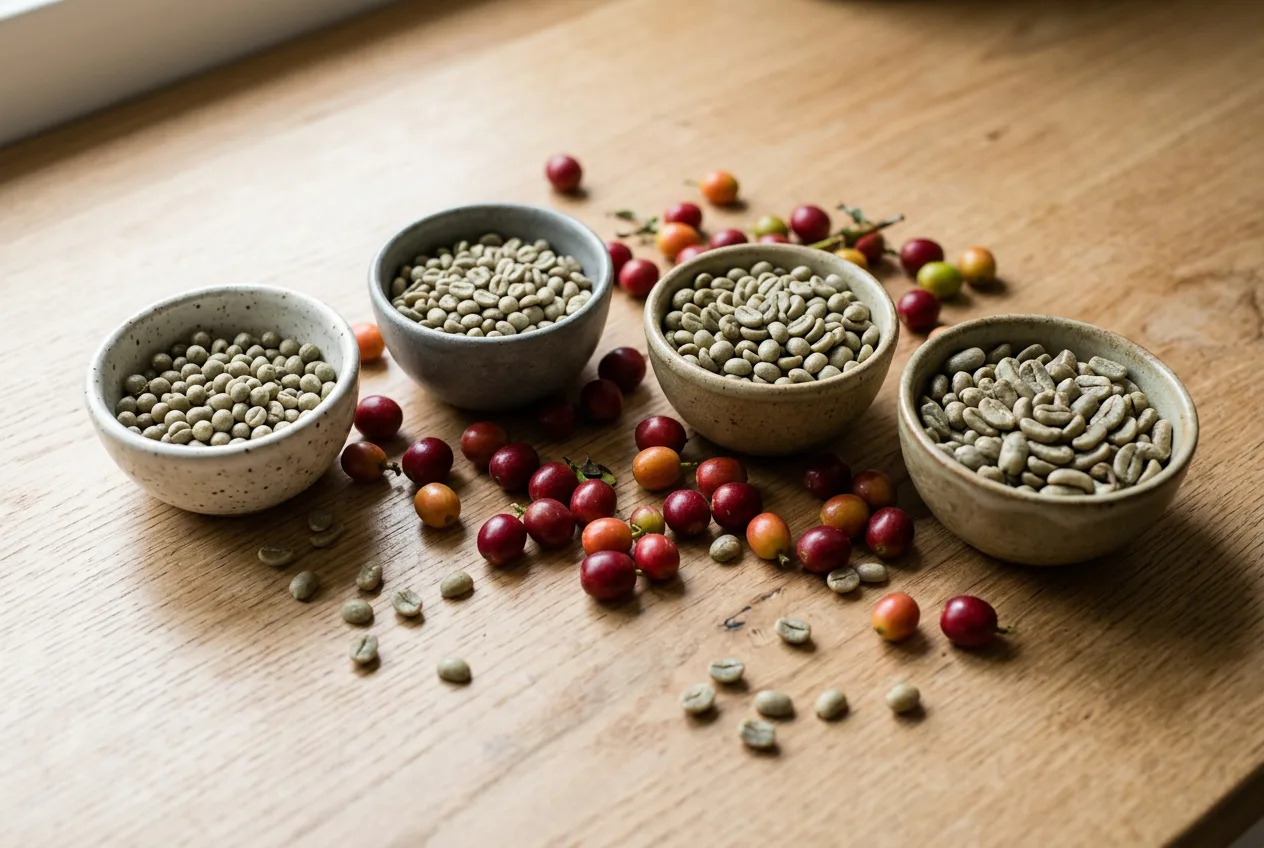
There are around 130 known coffee species. Almost all the world's coffee comes from just two of them.
That's a risky position. Relying on so few species means one disease or one climate shift can affect a huge share of global supply.
Greater crop diversity gives farmers more options and spreads the risk. It's the same logic as not putting all your savings into one stock.
Path 3: Moving coffee uphill
As temperatures and rainfall shift, some traditional coffee areas will become less suitable, while other places become more suitable.
In mountainous countries, that often means moving uphill, where it's cooler.
The Ethiopian example
This shift is already being observed in parts of East Africa, including Ethiopia, the birthplace of arabica.
Coffee-growing potential has been identified at higher elevations than were traditionally considered typical. The upper limit discussed in the research has moved from about 6,560 feet to around 8,530 feet.
Upper elevation considered for coffee in parts of Ethiopia
The catch
Moving coffee sounds simple on a map. In reality it's anything but.
- Higher land may already be farmed for food, or may be protected forest
- New areas need roads, processing stations and trained workers
- Farmers can't simply pick up their land and move
- Mountains run out. Eventually there's no higher ground left
Moving production can help in some places, but it can't be the whole answer.
Stenophylla: the forgotten coffee that might help
This is the part of the climate story I find most exciting.
Coffee wasn't always a two-species business. In the past, species like Coffea stenophylla and liberica were grown much more widely.
A coffee that disappeared
Stenophylla was grown commercially in parts of Upper West Africa, including Sierra Leone, until around the early 1900s. By the 1920s, it had largely fallen out of cultivation, partly because robusta took over.
Historical accounts described its flavor as excellent. Some even claimed it tasted better than arabica.
It was last recorded in the wild in Sierra Leone in 1954. Then it effectively vanished.
Rediscovered in 2018
In 2018, after a difficult search through historical records and forests, scientists found it again in Sierra Leone. At the main target site, they found only a single plant.
When researchers studied it, two things stood out.
- It handles much more heatStenophylla grows at an average annual temperature roughly 11 to 12°F (about 6 to 7°C) higher than arabica. That's a huge difference in a warming world.
- It tastes like good arabicaIn blind tastings, expert panels found its flavor comparable to high-quality arabica. That's what makes it special: most heat-tolerant coffees taste much worse.
- It may resist leaf rustOlder reports suggest stenophylla may have some resistance to coffee leaf rust, a disease that has devastated coffee crops in many countries.
| Species | Climate preference | Flavor reputation | Share of today's market |
|---|---|---|---|
| Arabica | Cool tropical highlands | Sweet, complex, aromatic | Majority |
| Robusta | Warm, humid lowlands | Bitter, strong, heavy | Most of the rest |
| Liberica | Hot, humid lowlands | Bold, fruity, sometimes smoky | Very small |
| Stenophylla | Much warmer than arabica | Arabica-like in blind tastings | Almost none (yet) |
Stenophylla is still endangered in the wild. If its last forests disappear, so does a resource that could help coffee survive the century.
Our tip: If you ever see a stenophylla or liberica coffee from a specialty roaster, buy a small bag. Tasting these species helps create the market demand farmers need to grow them.
Liberica and the value of diversification
Arabica and robusta aren't going to disappear under ordinary circumstances. But some farmers will need extra coffee crops that can cope with harsher conditions.
Liberica is having a moment
Of all the alternative species, liberica is the one attracting the most attention right now.
Farmers in countries including Uganda and South Sudan have shown real interest in it, in some cases preferring it to robusta. Some liberica varieties have good flavor, and demand appears to be growing.
Liberica may become commercially important sooner than other alternatives, simply because it's already grown in some places and buyers are starting to look for it.
Most species are still a mystery
Of the roughly 130 known coffee species, many have never been properly tested for farming potential. Nobody knows yet which ones might be useful.
That's both a worry and an opportunity. The next great coffee crop might already exist in a forest somewhere, waiting to be studied.
Start now, not later
Here's the uncomfortable part. A truly transformative new coffee crop could take decades to develop.
That means the work needs to start well before current farms hit their worst climate pressures. Waiting until arabica fails would be far too late.
Breeding, selection and gene editing
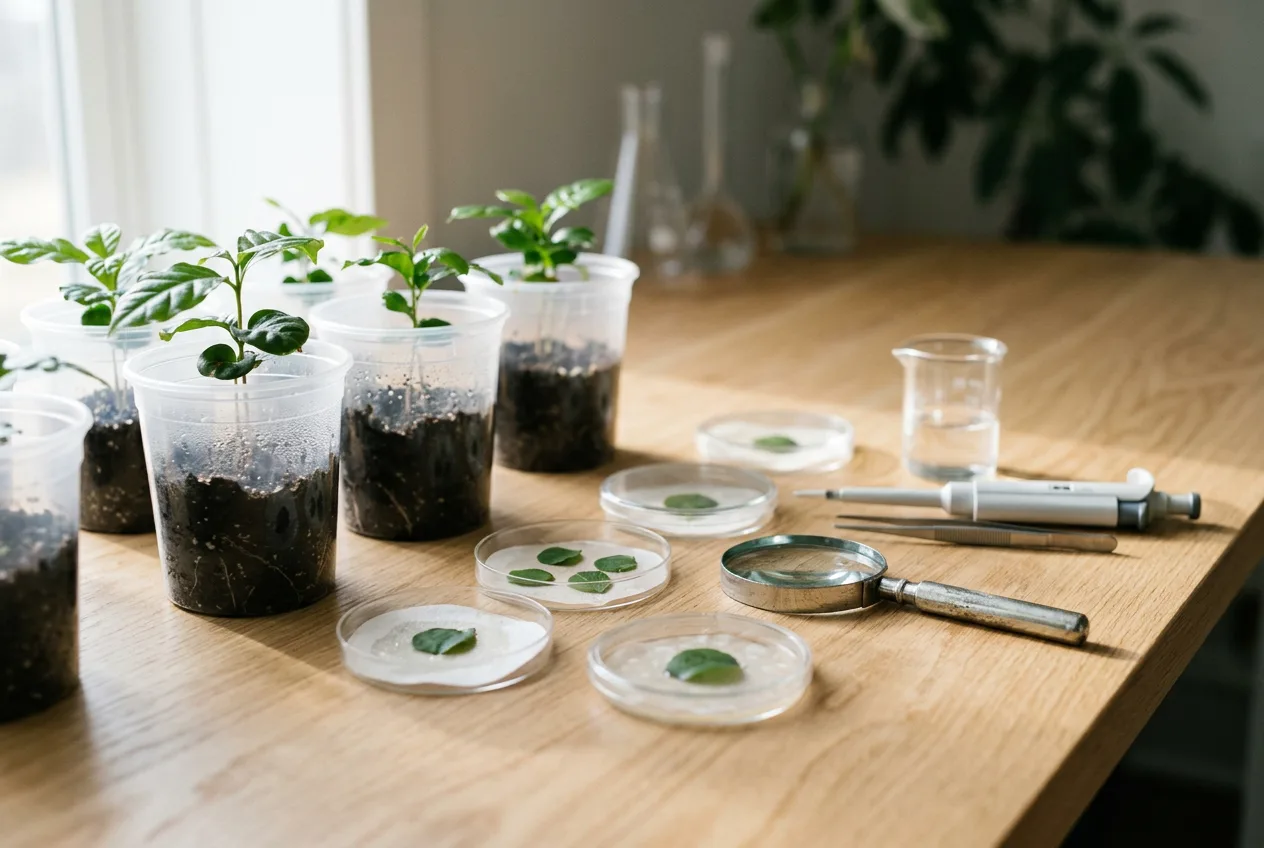
Plant breeding aims to improve traits like disease resistance, drought and heat tolerance, flavor and yield. There are two broad approaches.
Conventional breeding and selection
Traditional breeders choose plants that already show useful characteristics, then cross and select them over many generations.
It works with the genetic diversity that already exists. It's proven and widely accepted, but it's slow, especially for a tree crop that takes years to produce fruit.
Gene editing
Gene editing offers a more targeted approach. Tools use proteins called nucleases, guided by RNA, to find and change specific sequences in a plant's DNA.
With coffee genomes now mapped, researchers can look for genes linked to a weakness or a useful trait.
For example, if a variety is vulnerable to a disease, researchers can investigate the genetic reason for that vulnerability and target the relevant gene.
The starting point still matters
Gene editing isn't magic. If you start with a poor-quality plant, you'll probably end up with a slightly better poor-quality plant.
Editing a high-quality coffee line with good flavor and solid agricultural traits is much more likely to produce something commercially valuable.
Unintended effects
Plants are complex. Changing one gene can affect other things.
A change that improves rust resistance might, for example, reduce yield. Every edit needs careful testing in the field over several seasons.
| Conventional breeding | Gene editing | |
|---|---|---|
| How it works | Select and cross plants with useful traits | Change specific DNA sequences |
| Precision | Lower, many genes change at once | High, targets specific genes |
| Speed | Slow, many generations | Faster to create, still slow to test |
| Public acceptance | High | Mixed |
| Regulation | Well established | Still evolving in many countries |
Why new coffee crops take decades
People are often surprised by how slow this all is. Coffee isn't wheat. You can't run a new generation every season.
The stenophylla timeline
- Grow from seedPlants have to be raised from seed and grow to maturity before they produce any coffee.
- First harvests (4 to 7 years)Depending on conditions, initial production could become possible in roughly four to seven years.
- Compare and selectResearchers compare plants from different places and pick the best for productivity, flavor and disease resistance.
- Propagate the bestThe strongest plants are multiplied in larger numbers for wider trials.
- Develop a reliable crop (10 to 20 years)Turning that into a consistently productive, profitable crop could take 10, 15 or even 20 more years of selection and development.
Coffee is a woody plant, and woody plants are generally harder to modify and slower to improve than simpler crops.
That's why researchers keep stressing the same message: the time to start is now.
Regulation and public trust in gene editing
Even if scientists create a better coffee plant, it still has to be allowed onto the market and accepted by people who drink it.
A regulatory grey area
Gene editing can involve a genetic-modification step during development, even if the final plant no longer contains any introduced genetic material.
That raises tricky questions. Should the final plant be treated like a GMO, or like a conventionally bred variety?
Governments and regulators in Europe, the UK and elsewhere have been reviewing how to classify these newer techniques. Their decisions will shape:
- How much money goes into coffee research
- How quickly new varieties can be developed
- Whether edited coffee can be imported and sold in key markets
Public skepticism
Many consumers remain wary of genetic engineering after decades of controversy. That's a real obstacle, especially for a product as tied to origin and naturalness as specialty coffee.
Whatever the rules end up being, any new crop still needs proper assessment for human and environmental safety. That's non-negotiable.
Adaptation is not enough: we also need to cut emissions
Everything I've described so far is about adaptation, helping coffee cope with a changing climate.
But adaptation has limits. It can't replace mitigation, actually reducing greenhouse gas emissions.
The temperature thresholds
The long-term goal discussed in the research is reaching net-zero emissions by 2050 or earlier.
If emissions continue, global warming could pass 2.7°F (1.5°C) and potentially head toward 3.6°F (2°C) by mid-century or later.
Beyond those levels, researchers warn that coffee production could face a severe crisis that no amount of shade trees or new varieties can fully fix.
How the outlook changes with warming (simplified)
A simplified illustration of the risk levels discussed in climate and coffee research, not a precise forecast.
Coffee, forests and biodiversity
Coffee grows across the tropics, in some of the most biodiverse places on Earth. That makes how and where it's grown a big deal.
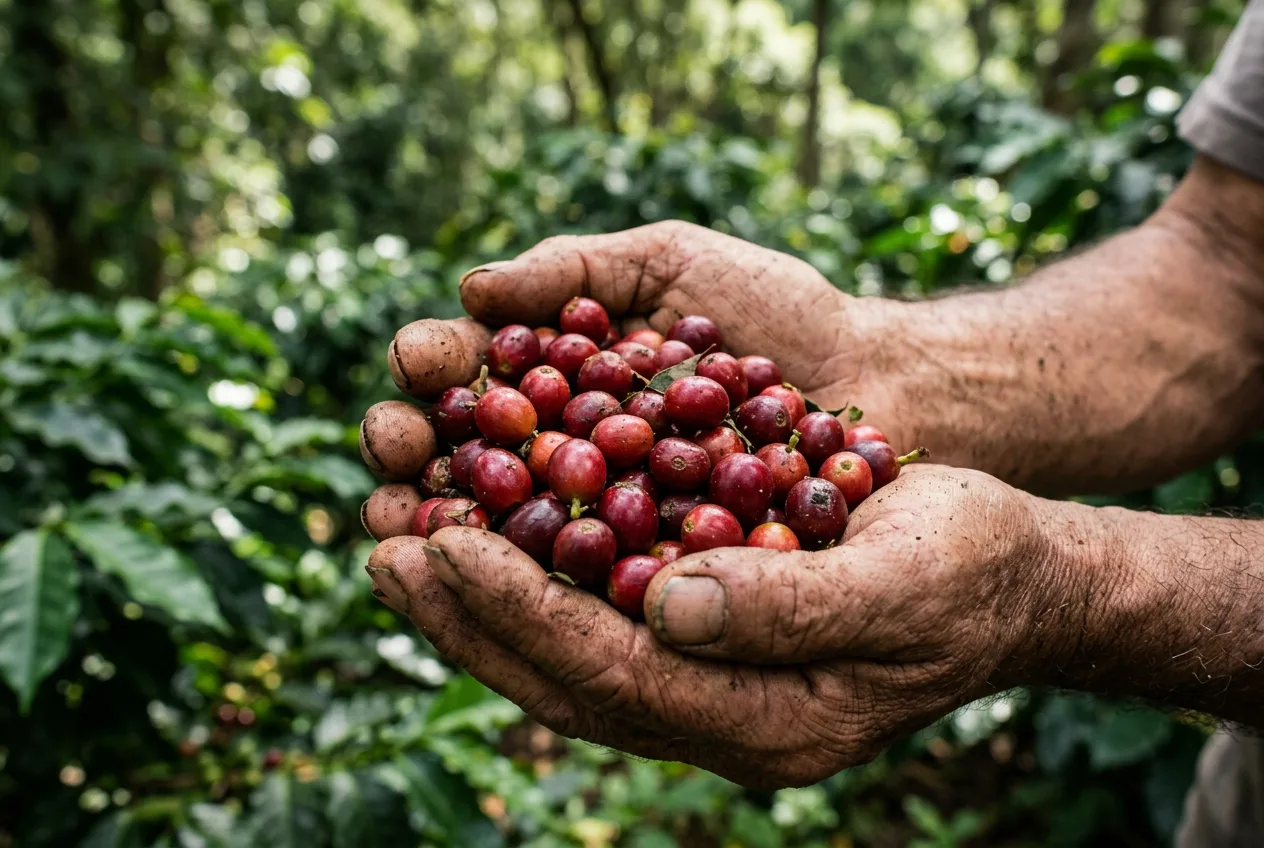
Clearing rainforest makes things worse
Remember those higher areas that might become suitable for coffee? Many of them are covered in forest.
Clearing primary rainforest for new plantations releases stored carbon and destroys complex ecosystems. It speeds up the very climate change that's pushing coffee uphill in the first place.
The first priority should always be to protect existing forests, soils and ecosystems.
Forest coffee in Ethiopia
In Ethiopia, a lot of coffee is grown within forest or agroforestry systems, sometimes under a near-natural canopy.
These systems provide environmental and community benefits that are very different from high-input, full-sun plantations with little or no shade. They store carbon, protect water and support wildlife.
Forests hold the genes of future coffee
There's another reason forests matter: they're a genetic library.
Wild coffee species, like stenophylla, live in these forests. They may carry the traits we'll need to breed the next generation of coffee: heat tolerance, drought tolerance and disease resistance.
Stenophylla is already endangered in the wild. Further deforestation could wipe out a resource we can't recreate.
Protecting natural habitats isn't separate from protecting agriculture. It's directly connected.
Our tip: Bird-friendly and agroforestry certifications focus specifically on shade and habitat. If you care about forests, they're worth looking for on the bag.
Responsible tree planting and supply chain transparency
Tree planting has become a very popular climate pledge, including among coffee companies. Done well, it helps. Done badly, it can do more harm than good.
Protect first, plant second
Preserving existing forests should always come before planting new trees as a replacement for ecosystems that have already been lost. A young plantation is not the same as an old forest.
The right tree, right place, right reason
Good tree planting needs planning and local knowledge. Which species, where, when and why all matter.
Modern mapping and modeling tools can assess whether a location is suitable and whether new trees are likely to thrive under future climate conditions, not just today's.
Labels aren't always enough
Certification labels don't always make it clear whether your purchase actually supports good environmental outcomes.
Better traceability, knowing exactly which farm or cooperative your coffee came from and how it was grown, helps buyers and drinkers make more informed choices.
What the coffee industry needs to do
Lots of organizations are working on coffee sustainability. The problem is that their messages and priorities don't always line up.
For a coffee buyer or roaster, it can be hard to know which projects actually deserve investment.
Practical priorities
- CoordinateA shared, evidence-based industry plan would help set clear priorities instead of a patchwork of competing initiatives.
- Fund researchResearch institutions need support to develop and test resilient plant material that resists disease, pests, drought and heat.
- Put farmers firstNew crops are only useful if they grow reliably, produce something people want to buy and make economic sense for the farmer.
- Invest in livelihoodsIndustry money should support both agricultural resilience and the incomes of the people who grow coffee.
- Accept the costThere may be some extra cost for consumers. But investing in biodiversity, lower emissions and resilient farming is necessary for the industry's long-term survival.
What independent roasters can do
Smaller roasters have a surprising amount of influence because they buy directly and tell their customers the story behind each coffee.
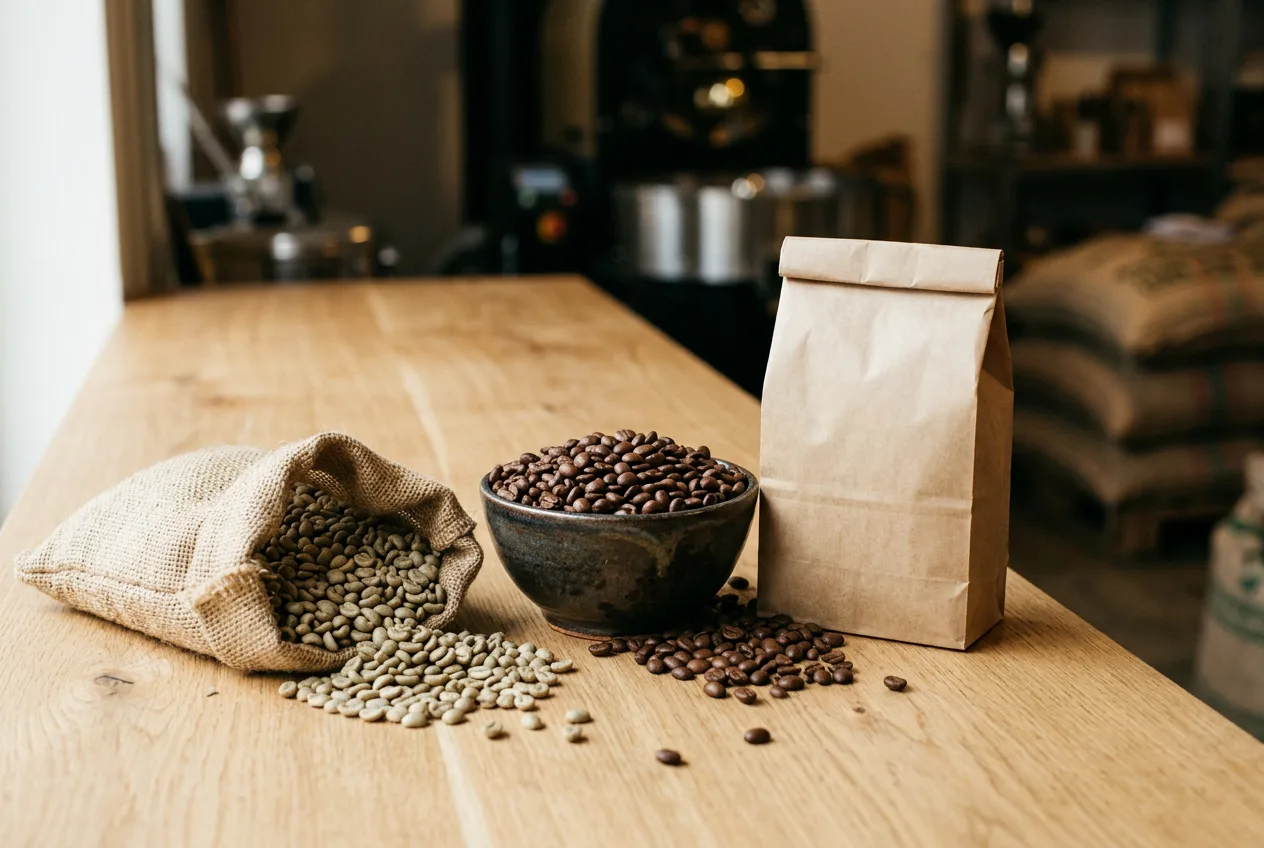
- Prioritize producers who protect habitats, restore degraded land or farm in ways that benefit local ecosystems
- Learn and share where each coffee comes from and how it connects to local economies and ecology
- Build long-term relationships with farms instead of buying on price alone
- Try alternative species and climate-resilient varieties when they become available
Drinkers increasingly want to know about origin and growing conditions. That's an opportunity for roasters to reward the farmers doing things right.
Beanless and lab-grown coffee: a real alternative?
A newer idea is to make something that tastes like coffee without growing coffee beans at all.
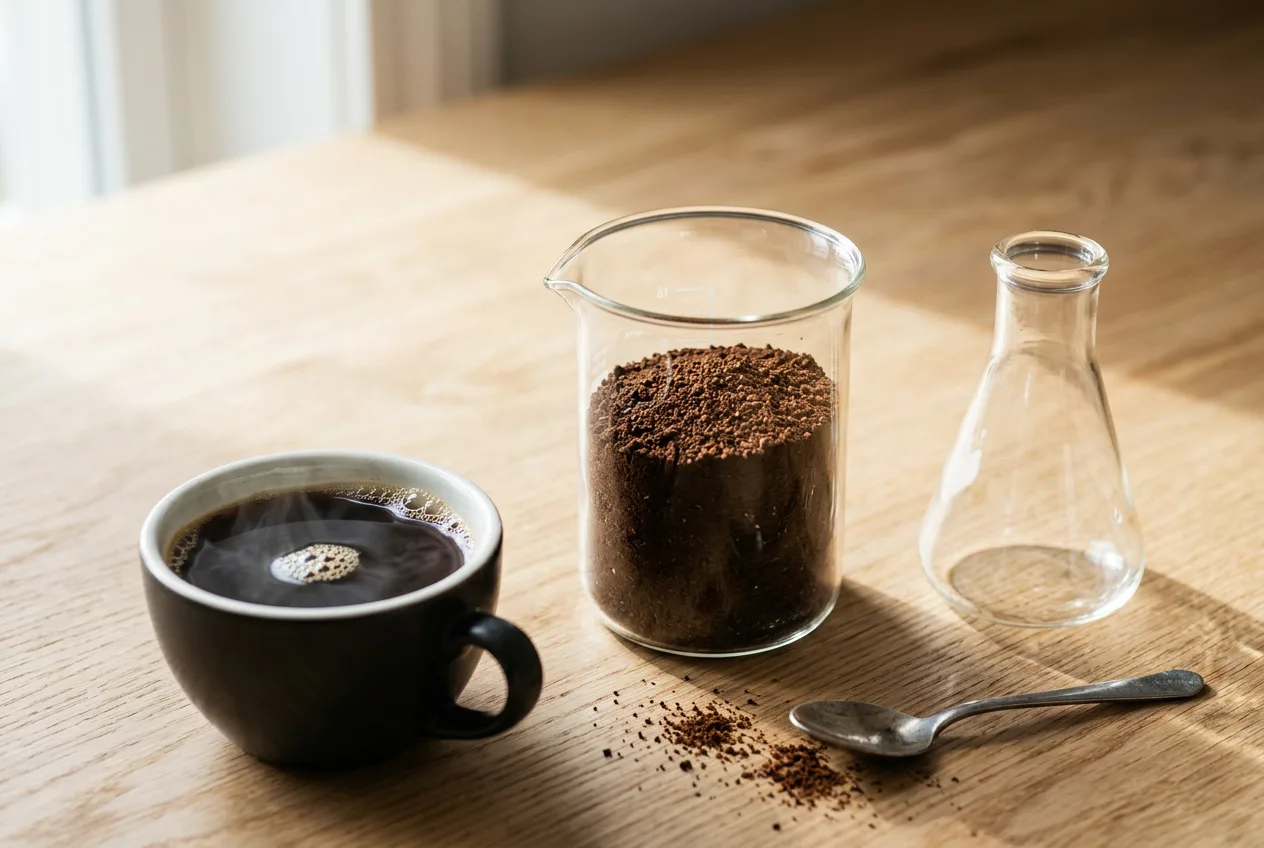
The main approaches
The promise
These products are often marketed as ways to reduce deforestation, water use, fertilizer and fossil fuel inputs.
The questions
Those claims need transparent evidence. Bioreactors and processing plants also use energy and resources. Without clear information on inputs, it's hard to know the real environmental impact.
There's also a human question. A big shift from farm-grown coffee to lab production could hurt the livelihoods of the many millions of people who depend on coffee farming.
My view: beanless coffee is an interesting experiment and may find a niche. But it isn't a replacement for helping real coffee farms adapt.
How climate change is hitting the major coffee regions
Climate change doesn't affect every coffee region in the same way. Here's a quick tour of what's happening in some of the places your coffee most likely comes from.
Brazil: drought, heat and frost
Brazil is the world's largest coffee producer, so what happens there moves prices everywhere.
Much of Brazil's coffee grows at relatively low altitudes in hot, dry areas, which are exactly the zones climate models flag as most at risk. In recent years, the country has dealt with severe droughts and damaging frosts, sometimes in the same season.
When Brazil has a poor harvest, coffee prices worldwide tend to jump. Many of the price spikes people noticed at the supermarket in recent years trace back to weather there.
Vietnam: robusta under pressure
Vietnam is the biggest robusta producer, and a lot of instant coffee and espresso blends depend on it.
Its main growing area, the Central Highlands, has faced dry seasons that strain water supplies for irrigation. Some farmers have already switched part of their land to more profitable or less thirsty crops.
Colombia and Central America: rust and rain
In Colombia and Central America, coffee grows on steep mountain slopes, often on small family farms.
Warmer, wetter conditions helped trigger a major coffee leaf rust epidemic across Central America in the early 2010s. It wiped out a large share of the harvest in some countries and pushed many families into hardship.
Erratic rainfall also makes flowering and harvest timing less predictable, which raises costs for farmers who depend on seasonal pickers.
East Africa: faster warming, new high ground
Ethiopia, Kenya, Uganda and their neighbors produce some of the world's most prized coffees.
Parts of the region are warming faster than the global average. At the same time, higher elevations are becoming suitable for coffee, which is why the debate about protecting forests is so important there.
| Region | Main coffee | Biggest climate pressures | Common responses |
|---|---|---|---|
| Brazil | Arabica and robusta | Drought, heat, frost | Irrigation, new varieties, moving south and uphill |
| Vietnam | Robusta | Dry seasons, water stress | Water-saving irrigation, intercropping |
| Colombia | Arabica | Erratic rain, leaf rust | Rust-resistant varieties, shade |
| Central America | Arabica | Leaf rust, storms, heat | Resistant varieties, renovation of old farms |
| East Africa | Arabica, robusta, liberica | Fast warming, drought | Forest coffee, higher elevations, alternative species |
Our tip: Spread your buying across a few origins. If one region has a bad year, you'll still have coffee you enjoy, and you'll learn how differently each region tastes. My guide to coffee growing regions and flavor is a good place to start.
What the next few decades could look like
Nobody can predict exactly how coffee will change. But based on the research and the timelines involved, here's a realistic picture of how things could unfold.
- The next 5 yearsMore price volatility as droughts, frosts and disease hit specific regions. Farmers keep adding shade, mulch and irrigation where they can afford it. Early stenophylla plantings produce their first small harvests.
- 5 to 15 yearsRust-resistant and heat-tolerant arabica varieties spread more widely. Liberica and other alternative coffees start appearing more often on specialty menus. Rules on gene-edited crops become clearer in major markets.
- 15 to 30 yearsSome lowland regions shift away from coffee entirely, while higher and cooler areas grow in importance. If research has been funded well, new species and improved varieties could become reliable commercial crops.
- Beyond 2050The outcome depends heavily on how much global warming is limited. Below about 2.7°F of warming, adaptation can do a lot. Well above 3.6°F, many coffee regions could face a crisis no single solution can fix.
The encouraging part is that most of the tools already exist. What's needed is money, coordination and time, and time is the one thing coffee can't easily make up.
That's why I think it's worth paying attention now, while the choices we make as drinkers, roasters and companies can still shape the result.
Common myths about coffee and climate change
| Myth | Reality |
|---|---|
| "Coffee will be extinct by 2050" | Coffee won't vanish, but much of today's growing land may become unsuitable and prices could rise. |
| "Farmers can just move higher" | Higher land is limited, often forested or used for food, and mountains eventually run out. |
| "Robusta will save us" | Robusta helps in hot lowlands, but it tastes different, sells for less and has its own heat limits. |
| "Lab coffee will replace farms" | Beanless coffee is still niche, its footprint needs proof, and millions of farmers depend on real coffee. |
| "There's nothing drinkers can do" | Buying traceable, fairly priced, shade-grown coffee sends money to farms that are adapting. |
The truth sits between panic and complacency. Coffee faces a serious, long-term challenge, and the response is already underway. Whether it's fast enough depends on choices being made right now.
What you can do as a coffee drinker
It's easy to feel powerless about something as big as climate change. But coffee drinkers collectively decide what gets grown and how.
- Buy traceable coffeeChoose coffees that name the farm, cooperative or region. Traceability rewards producers who invest in quality and sustainability.
- Pay a fair priceVery cheap coffee often means someone in the supply chain isn't being paid enough to invest in adaptation.
- Try new species and varietiesLiberica, stenophylla and new resilient varieties need curious drinkers to build demand.
- Look for shade-grown coffeeAgroforestry and bird-friendly coffees support forests and biodiversity.
- Waste lessBrew only what you'll drink and store your beans properly. Every wasted cup carries the full footprint of growing, shipping and roasting.
- Ask questionsAsk your roaster where their coffee comes from and how they work with farmers. Good roasters love that conversation.
Our tip: Buy whole beans in smaller bags and grind fresh. You'll waste less coffee to staleness, and each cup will taste better. If you need help, start with my guide on how to choose coffee beans.
Key takeaways
- Coffee is highly sensitive to climate, especially arabica, and plantations last decades, so farmers plant for a future climate.
- Around half of today's suitable coffee land could become unsuitable by 2050 in some projections.
- Heat, drought, erratic rain, storms, frost and disease are the main threats. Unpredictability is the hardest part for farmers.
- Three adaptation paths: adapt the farm, change the crop and move production.
- Stenophylla tolerates far more heat than arabica and tastes comparable, but needs 10 to 20 years of development.
- Liberica may become commercially important sooner.
- Gene editing could speed up breeding, but faces regulatory and public trust questions.
- Adaptation isn't enough. Emissions must fall too.
- Protecting forests preserves both the climate and the wild genes future coffee may need.
- Beanless coffee is an experiment with real questions about its footprint and its impact on farmers.
The central issue is the long-term survival of coffee and the communities that depend on it. Climate resilience, biodiversity and lower emissions aren't optional extras. They're the foundation of coffee's future.
Frequently asked questions
Will coffee disappear because of climate change?
Coffee is very unlikely to disappear, but it could become more expensive and harder to grow in many current regions. Research suggests around half of the land suitable for coffee today could become unsuitable by 2050 without adaptation.
Why is arabica coffee so vulnerable?
Arabica evolved in cool, shaded highland forests and prefers a narrow temperature range with reliable rain. Heat, drought and erratic weather reduce both yield and quality, and warmer conditions help diseases like leaf rust spread.
What is Coffea stenophylla?
Stenophylla is a rare coffee species from Upper West Africa. It was rediscovered in Sierra Leone in 2018 and grows at temperatures roughly 11 to 12°F higher than arabica, while tasting comparable in blind tastings.
Can I buy stenophylla coffee?
Only in very small quantities, if at all. It is still being studied and propagated, and developing it into a reliable commercial crop could take 10 to 20 years.
Is robusta the answer to climate change?
Robusta tolerates more heat than arabica and resists some leaf rust strains, but it usually tastes more bitter and sells for less. Recent research also suggests it may be less heat-tolerant than once believed.
Is shade-grown coffee better for the climate?
Shade-grown and agroforestry coffee generally stores more carbon, protects soil and water, supports biodiversity and keeps coffee plants cooler. It often yields less per acre, which is why it can cost more.
What is beanless coffee?
Beanless coffee is a coffee-like drink made without coffee beans, using plant ingredients and flavor compounds, lab-grown coffee cells or fermentation. Its environmental benefits still need transparent evidence.
Will climate change make coffee more expensive?
Very likely, at least at times. Droughts, frosts and poor harvests in major producing countries have already caused sharp price spikes, and long-term pressure on suitable land adds to the risk.

- Michael Reynolds, research notes on coffee and climate change
- CIRAD: Forgotten coffee species could help futureproof coffee
- Phys.org: Forgotten species could future-proof coffee in a warming world
- World Coffee Research: Pinpointing the most vulnerable coffee zones
- Bunn et al. (2015), A bitter cup, Climatic Change
Related guides
Arabica vs robusta Coffee growing regions and flavor Coffee culture around the worldWritten by Michael Reynolds. Last updated November 19, 2026.