Coffee Culture Around the World: Rituals, Cafes and Traditions from Naples to Yemen
Coffee is never just a drink. From a deadline cafe in Tokyo to the back rooms of New York bodegas, from 30-second espressos in Naples to Irish coffee in San Francisco, here's how people around the world drink, share and build their lives around coffee.
We choose products independently. We may earn a commission through links on this page; your price stays the same. Affiliate policy
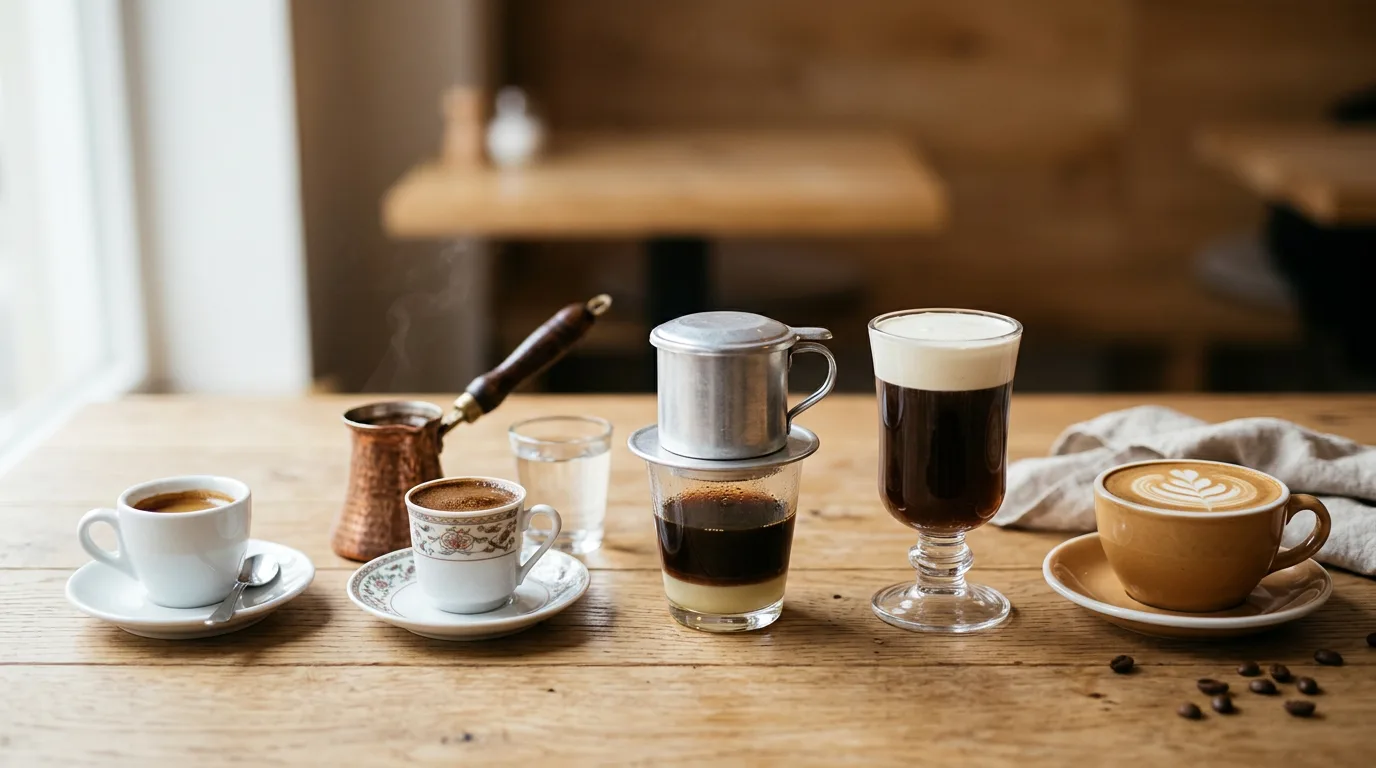
Coffee culture is everything that surrounds the cup: where people drink coffee, who they drink it with, how they make it and what it means to them.
In Naples it's a 30-second espresso at the bar. In Yemen and among Yemeni families abroad it's heritage, hospitality and rare beans kept for people you trust. In Tokyo it can even be a paid workspace that keeps you on deadline. In much of the US it's convenience: instant coffee, pods and seasonal lattes.
The common thread: coffee's value is never only about flavor or price. It also comes from tradition, craft, convenience, identity and the people you share it with.
Why I wrote this
Most of what I write for HouseholdMe is practical. Roast levels, grinders, storage, brewing.
But every time I travel, the thing that sticks with me isn't the gear. It's how differently people treat the same drink.
In one city, coffee is a quick shot at a marble counter on the way to work. In another, it's a slow ceremony that takes an hour. Somewhere else, it's a jar in the cupboard you only open when you've run out of beans.
I started keeping notes on these differences years ago. This article pulls them together, alongside the history and research behind some of the most interesting coffee traditions I know of.
You won't find a single "right" way to drink coffee here. That's the point.
What you'll learn
- What people actually mean by "coffee culture"
- How cafes can be built around a need, like Tokyo's deadline cafe for writers
- How professional tasters, and now machines, judge flavor
- Why Yemeni coffee is often kept behind the counter in New York
- What makes espresso in Naples a social ritual, not just a drink
- The stories behind instant coffee, Irish coffee, pumpkin spice and coffee pods
- How coffee can become an act of kindness
A quick note: this is a culture and history piece, not a buying guide. I've kept it focused on the stories and what you can take from them into your own coffee routine.
What "coffee culture" actually means
Coffee culture isn't limited to the beverage itself.
It includes the places where people work, meet and take breaks. It includes the rituals that go with the cup, like standing at a bar, sharing a pot or reading the grounds afterwards.
It also covers identity. For many communities, the way they make coffee is a way of saying who they are and where they come from.
And it covers habits. Instant coffee, coffee pods and seasonal drinks are part of coffee culture too, even if specialty coffee fans sometimes look down on them.
The five layers of coffee culture
- PlaceCafes, bars, kitchens, offices and back rooms. Where you drink coffee shapes how you drink it.
- RitualThe steps around the drink: how it's prepared, served, shared and finished. A ritual turns a drink into an occasion.
- CraftThe skill that goes into sourcing, roasting, tasting and brewing. This is where precision and experience come in.
- ConvenienceInventions like instant coffee and single-serve machines that change daily routines without erasing older ones.
- ConnectionCoffee as a reason to meet, to welcome someone, or simply to show someone you care.
Every story in this article fits into one or more of these layers. Keep them in mind as you read and you'll start spotting them in your own life too.
Our tip: Next time you visit a new city, skip the chain cafe for one morning. Order whatever the locals order, the way they order it. You'll learn more about the place in five minutes than from most guidebooks.
Tokyo's deadline cafe: coffee as a workplace
Tokyo has cafes for almost everything. Cats, owls, hedgehogs, maid service, retro video games.
One of the most interesting ones I came across has nothing to do with animals or entertainment. It's built around finishing your work.

How the Manuscript Cafe works
The Manuscript Cafe is designed for people who need to finish a writing project before a deadline. Writers, students, illustrators, anyone with a blank page they keep avoiding.
Customers pay around $25 per hour. In return they get fast Wi-Fi, air-cooled computer stands and a structured, work-focused environment.
Here's the twist. When you register, you can ask the owner to check on your progress. About every 30 minutes, they'll come by and ask how it's going.
Why it works
The cafe tackles a problem every writer knows: procrastination. A blank screen invites you to check your phone, tidy your desk or make another coffee.
The cafe adds two kinds of pressure. First, someone is going to ask how your work is going. Second, you're paying by the hour, so wasted time literally costs money.
One customer came in to finish a lecture due the next day. Another was working on a 24-page manga. One finished his assignment in about an hour and a half and credited the deadline and the fee for helping him focus.
The location itself isn't glamorous. It's in an ordinary suburban area, and traffic noise is part of the background.
But in a crowded city like Tokyo, a place that's designed for focus is worth more than a pretty interior.
The bigger lesson
The Manuscript Cafe shows that a cafe can be designed around a specific need.
A cafe can be a workplace, a social space, a refuge or, in this case, a tool for building better habits. The coffee is almost secondary. What you're really buying is the environment.
I think about this whenever I work from a cafe. The ones I'm most productive in aren't the most beautiful. They're the ones where the atmosphere tells me it's time to work.
Our tip: You can borrow the Tokyo trick at home. Brew a fresh cup, set a 30-minute timer, and ask a friend or partner to message you when it goes off to ask how far you've got. It sounds silly. It works.
How professionals judge taste
Behind every consistent coffee or tea brand is a group of people whose job is to taste. A lot.
Taste evaluation is a real skill. It combines sensory judgment, years of experience and a consistent method.
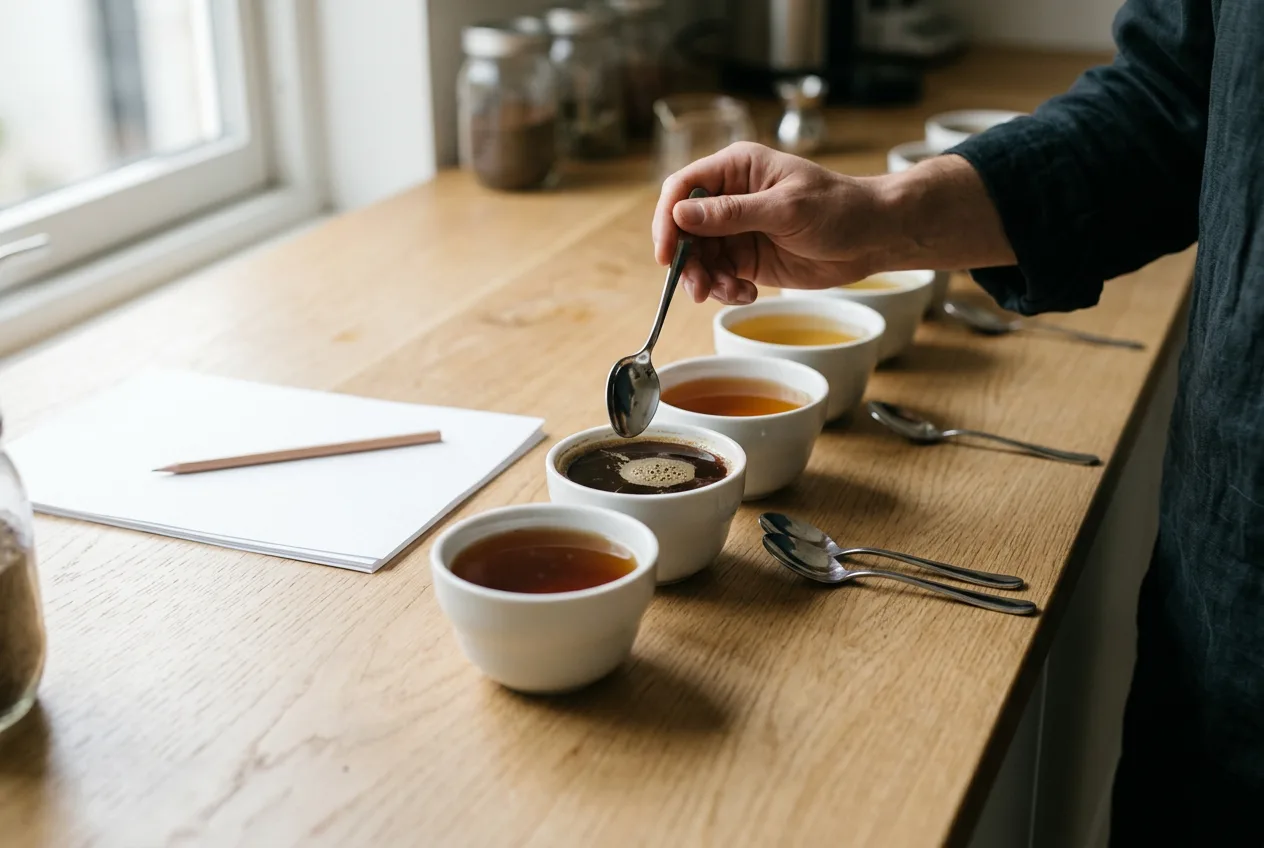
What tea tasters can teach coffee lovers
Tea tasting is a good example of how specialists compare batches. It's closely related to coffee cupping, which I'll cover in more detail in a separate article.
An experienced tea taster scores several characteristics, each on a scale from 1 to 40:
| Characteristic | What it describes | Coffee equivalent |
|---|---|---|
| Zing | The strength or impact of flavor as it hits the mouth | Intensity, brightness |
| Body | The weight or fullness of the drink | Body, mouthfeel |
| Color | The visual depth and tone of the liquor | Crema color in espresso |
| Sparkle | How bright and clear the drink looks | Clarity of a filter brew |
Tasters also use words like soft, stewy, thin, dull or strong. These descriptions capture things that are hard to express with numbers alone.
Experience makes the difference
A beginner might score a flavor much lower than an expert would. The gap closes only with years of side-by-side comparisons.
One tea specialist built his skill by tasting hundreds of brews every single day over a long career. His palate was considered so valuable that his company insured his taste buds for nearly $1.5 million.
That sounds extreme. But it makes sense when you see what's at stake.
Why consistency matters so much
When you buy the same coffee or tea again, you expect it to taste the same as last time.
That's harder than it sounds. Every harvest is slightly different. A small change in raw ingredients can noticeably change the finished drink.
So companies compare batches and adjust blends until each production run matches the flavor profile they want. For products sold at huge scale, this is essential work.
Food companies use the same kind of sensory testing when they develop new products. They use trained tasters, aroma assessments and consumer groups to decide whether people will like a flavor.
The limits of human taste
Human judgment isn't perfectly objective. People disagree about what they taste.
A note that's obvious to one person can be almost invisible to another. I've seen this many times at tastings: someone gets blueberry, the person next to them gets nothing but "coffee."
That subjectivity is exactly why companies have started looking at technology to measure taste.
Our tip: Train your own palate with side-by-side tasting. Brew two different coffees the same way and taste them back to back. Comparing is far easier than describing a single cup in isolation.
Machines that taste: technology and flavor
Researchers are building electronic systems that analyze drinks by their chemistry.
IBM's electronic tongue
One example is Hypertaste, an electronic tongue developed at an IBM research lab in Switzerland.
It collects chemical information from a liquid in under two minutes. Artificial intelligence then compares that "fingerprint" with data from other liquids.
The system can estimate things like whether a wine is likely to come from a particular country. It can also be trained to tell strong coffee from mild coffee, or decaf from espresso.
The uses go beyond flavor. The same kind of tool could check whether a drink is safe, or whether a bottle actually contains what its label says.
Why automation is attractive
- SpeedA machine can analyze a sample in minutes, without a full laboratory.
- ScaleIt can process many samples in a day without getting tired.
- RepeatabilityIt applies the exact same method every time. No bad days, no head colds, no palate fatigue.
Why copying human taste is hard
Flavor involves far more than the tongue.
Your tongue has thousands of taste buds. Your nose adds hundreds of types of smell receptors. Together, they can distinguish an enormous range of aromas.
That's why coffee tastes flat when you have a cold. Most of what we call "flavor" is actually smell.
A Silicon Valley company called Aromyx is working on this problem. Its approach reproduces the biological receptors involved in taste and smell, then measures how they respond to different substances.
The goal is to give food and drink companies a digital picture of how a recipe might be adjusted to appeal to particular customers.
Partners, not replacements
I don't think machines will replace human tasters anytime soon. And the people building these tools don't seem to think so either.
Human experts bring experience, creativity and the ability to judge a flavor in context. Technology adds precise measurement and can spot patterns people miss.
The real challenge is combining objective data with the richness of human experience. That's true in a lab, and it's true in your kitchen.
Yemeni coffee and the hidden traditions of New York bodegas
This is one of my favorite coffee stories, because it's hiding in plain sight.
Walk into some Yemeni-owned bodegas in New York and you'll find a standard coffee counter. Usually Colombian coffee, often served with cream and sugar.
But in a back room, the owners, their families and trusted friends are drinking something very different: Yemeni coffee, prepared the traditional way.
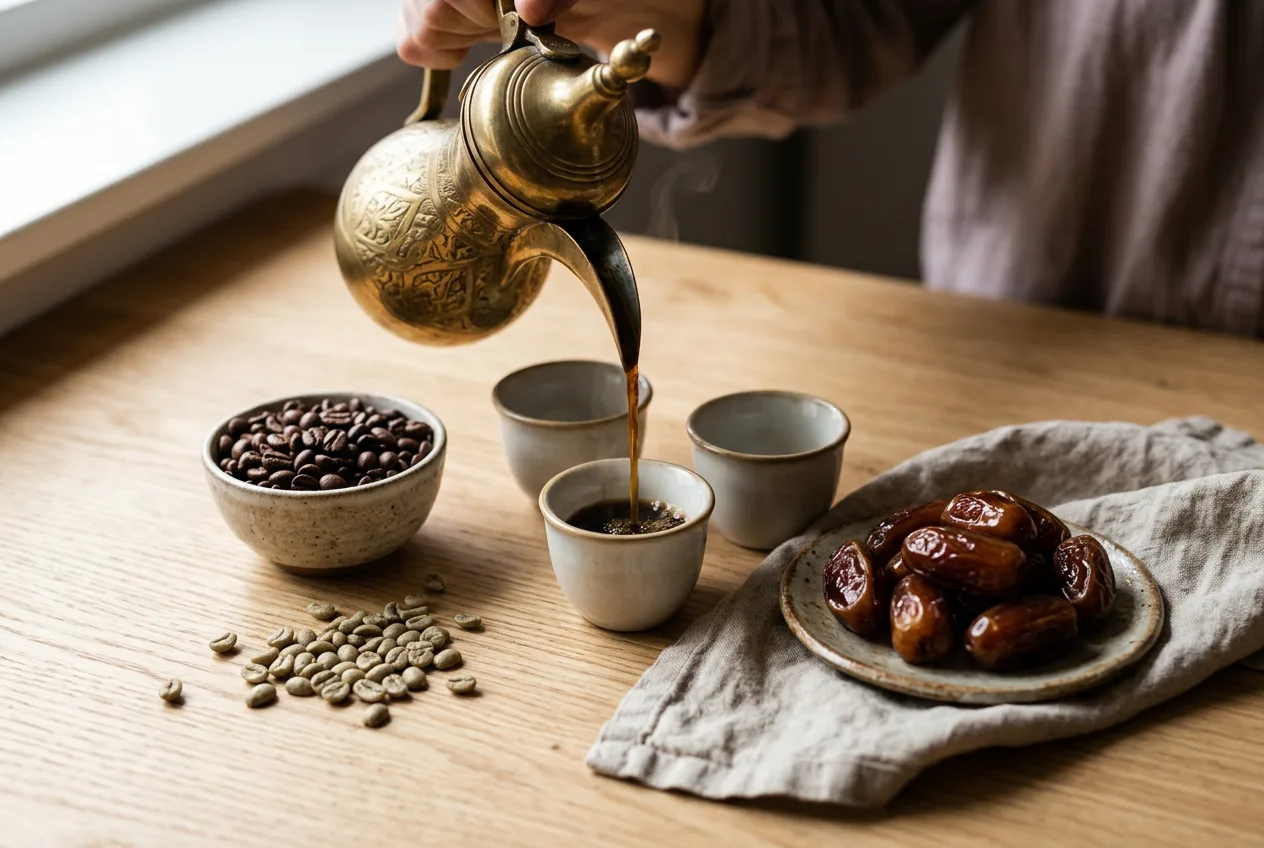
A long history
Yemeni coffee has a strong cultural identity and a very long history. Coffee drinking in Yemen is commonly traced back to around the middle of the 14th century.
Many Yemeni merchants and coffee drinkers see their country's beans as foundational to coffee history itself. The port of Mocha, on Yemen's Red Sea coast, gave its name to coffee terms still used around the world.
What Yemeni coffee tastes like
Yemeni coffee is known for relatively low acidity and natural sweetness. Some drinkers find it easier on the stomach than brighter, more acidic coffees.
The flavor varies a lot by region, variety, roast and preparation. A shop might keep several kinds, each with a different grind size, roast level, strength and smoothness.
Some are mellow enough to drink black. Others are so concentrated that a small cup delivers a big hit of flavor. One comparison I heard: a single serving of a strong Yemeni coffee can have the impact of a much larger, stronger order from a big coffee chain.
Why it's kept behind the counter
The short version: it's rare and expensive.
Civil war, drought and rising shipping costs have made exporting coffee from Yemen very difficult. One importer reported that a shipment of Yemeni beans cost about $400,000, compared with roughly $60,000 for a Colombian shipment of a similar size.
Reported cost of a similar-sized coffee shipment
Figures as reported by one importer. Real costs vary by shipment, year and route.
At that price difference, Yemeni coffee can't compete as a cheap, everyday counter drink.
So many bodega owners serve the affordable coffee their customers expect at the front, and keep their special Yemeni beans for family, friends and trusted visitors.
Value beyond price
What I love about this story is what it says about value.
The back-room coffee isn't about profit. It's about heritage, hospitality and memory. Being offered a cup is a sign of trust.
A product can carry cultural and emotional value that has nothing to do with its price tag. Anyone who has a "special occasion" coffee in their cupboard understands this.
Yemen's farmers and the rise of Yemeni specialty coffee
The bodega story has a second half. It's about the farmers who grow Yemeni coffee and the difficult road from their terraces to a specialty cafe.
Terraces and tradition
Yemen's coffee traditions are tied to mountain villages and steep, hand-built terraces where coffee has been grown for generations.
Some historical accounts identify Yemeni farmers as among the very first people to cultivate coffee as a crop.
Cut off from the world
Political instability and conflict cut many of these farmers off from international markets for years.
That isolation hurt quality. Harvesting and processing became inconsistent, and in some places standards had slipped.
One entrepreneur's journey
An American coffee entrepreneur with family roots in Yemen became fascinated by his heritage after seeing an old image of a Yemeni monk holding a cup of coffee.
It brought back family stories and childhood memories of picking coffee cherries with his grandmother.
He went on to travel through about 32 regions of Yemen to learn about the farms and reconnect with the country's coffee heritage.
What actually helped farmers
Buying beans wasn't enough. The farmers needed practical support to improve quality:
- Raised drying bedsDrying cherries off the ground improves airflow and hygiene, which leads to cleaner, more even flavor.
- Moisture analyzersChecking moisture levels helps farmers know when beans are properly dried and safe to store and ship.
- Small loansCredit helped families with major life costs. In one arrangement, loans helped pay for six weddings, repaid in coffee cherries.
This relationship depended on trust and a shared commitment to making better coffee.
Getting the beans out was dangerous because of the conflict. The entrepreneur eventually escaped by boat across the Red Sea, carrying coffee from the villages with him.
For the farming communities, that journey mattered. It showed he was serious about bringing their coffee to the wider world.
The $16 cup
Once the coffee reached the United States, specialty roasters recognized its quality. One early buyer called it exceptional, and a cup was later sold for about $16.
That price reflected several things:
- Paying farmers fairly
- Transporting beans from remote mountain villages
- The difficulty and risk of exporting from a country in conflict
- The coffee's genuine quality and rarity
Here's the key principle, and it applies far beyond Yemen. People may pay more when they understand the social impact of a coffee. But the coffee still has to taste excellent.
Supporting farmers means helping them produce coffee good enough to earn a premium. Good intentions alone don't sell a $16 cup twice.
Our tip: If you see a Yemeni coffee from a specialty roaster, try it as a pour-over or in a small, strong cup without milk first. Its sweetness and low acidity are easy to miss under cream and sugar.
Espresso in Naples: fast, serious and everywhere
If you want to understand how coffee can be woven into daily life, go to Naples.
In Naples, espresso is part of local identity. It's treated with the same pride as the city's other famous food: pizza.
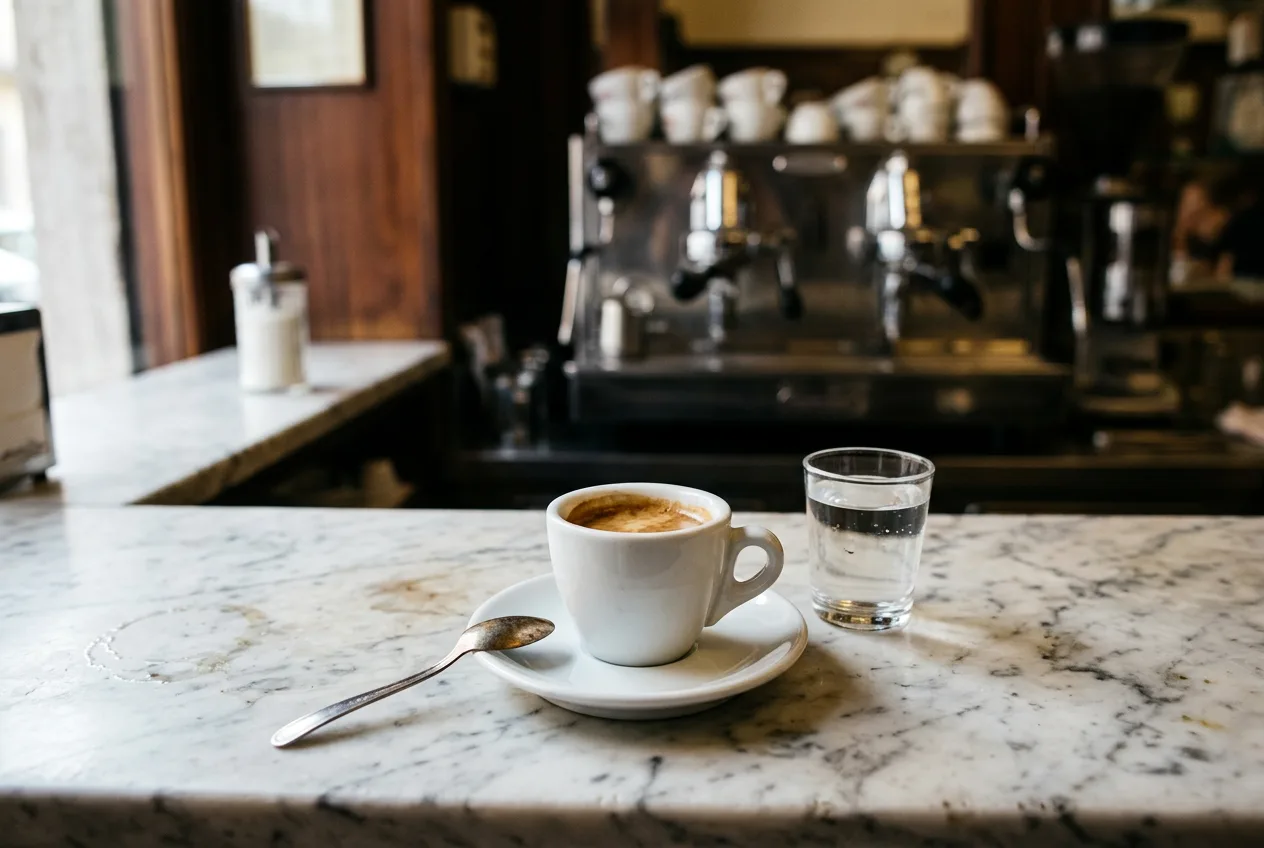
Historic cafes as social landmarks
Some of the city's historic cafes were founded before modern Italy existed, back when Naples was the capital of its own kingdom.
These cafes aren't museums. People still stop in every day, often several times.
Ordering coffee in Naples
You don't order "an espresso." You order un caffè, a coffee. Espresso is simply what coffee is.
It's prepared in roughly 30 seconds, and often drunk almost as quickly, standing at the bar.
But fast doesn't mean casual. Coffee professionals there are quick to point out how much work happens before the cup reaches you: choosing beans, roasting, grinding and dialing in the extraction.
What a good espresso should taste like
A good espresso balances three things: bitterness, sourness and sweetness.
Too much bitterness and it's harsh. Too much sourness and it's thin and sharp. Sweetness is what ties it together.
Baristas there may drink many cups during a shift. Experience helps them notice small details in each one, the way a sommelier notices small differences between wines.
Expression under pressure
Espresso is made by forcing hot water through finely ground coffee under pressure.
The name is often linked to the idea of something "expressed," pressed out under pressure. It's a nice way to remember the method.
More than 140 variables
Italian coffee specialists have developed very precise practices for controlling espresso. Over 140 factors can influence the final cup.
| Variable group | Examples | What changes in the cup |
|---|---|---|
| Beans | Origin, variety, processing, blend | Base flavor, sweetness, acidity |
| Roast | Roast level and development | Bitterness, body, caramel notes |
| Grind | Grind size and consistency | Flow speed, extraction, balance |
| Water | Minerals, temperature | Clarity, acidity, extraction |
| Equipment | Machine, basket, pressure | Stability and repeatability |
| Extraction | Dose, yield, time | Strength and overall balance |
Coffee education programs teach these variables and show how small changes affect flavor. If you've ever struggled to dial in an espresso machine at home, you've met a few of those 140 factors personally.
Scale behind the small cup
There's a striking contrast in Italian coffee.
Large Italian coffee companies source beans from around two dozen countries and hold enough stock to make hundreds of millions of cups. Yet the end result is a tiny, carefully made cup at a neighborhood bar.
Italian cities also love to argue about which one serves the best coffee. That rivalry is part of the fun.
To me, Naples sums up something important: espresso is both a technical craft and a deeply social ritual. You don't have to choose.
Our tip: When you're in Italy, drink your espresso standing at the bar. It's how locals do it, it's usually cheaper than table service, and it's the best way to see the ritual up close.
Instant coffee: the convenience revolution
Specialty coffee fans love to dismiss instant coffee. But it's one of the most important coffee inventions ever made.
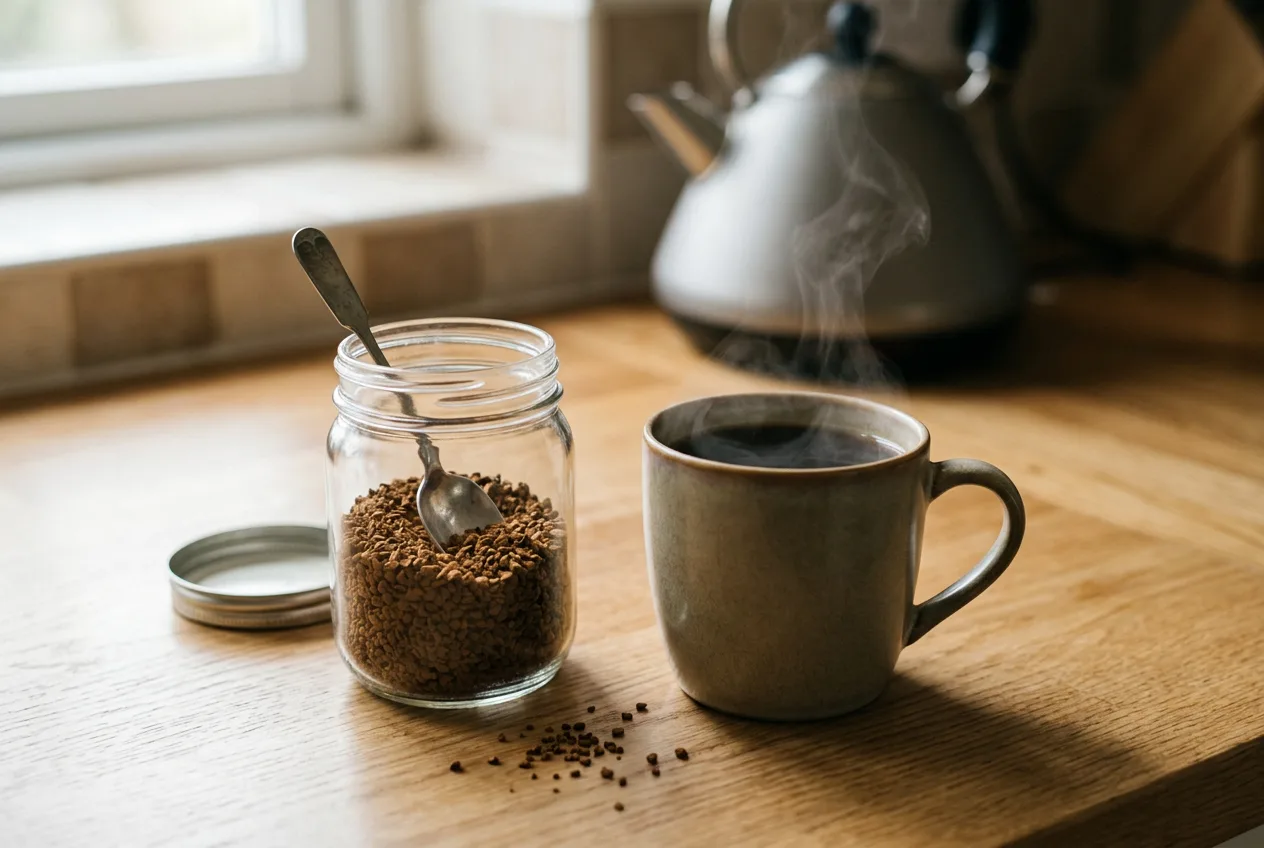
A patent from Chicago
On August 11, 1903, Chicago chemist Satori Kato received a US patent for a method of making instant coffee.
His method addressed the spoilage problems that had ruined earlier attempts. (Historians have since found an even earlier soluble coffee patent from New Zealand, but Kato's work is the one most often linked to the American story.)
Kato's own brand never became a big commercial success. But the brands that came after him did.
How advertising made it a pantry staple
Advertising, and later television commercials, turned instant coffee into a familiar household item.
Its appeal was simple:
- Long shelf life
- No grinder, no brewer, no filters
- Ready in the time it takes to boil water
- Easy to keep as a backup for occasional use
A jar could sit in a cupboard for months until someone needed it.
Different purpose, not "worse coffee"
People who grind fresh beans and brew with a French press or pour-over often think of instant coffee as inferior. In terms of flavor, it usually is.
But that's comparing two different things. Instant coffee isn't trying to replace the full brewing ritual. It's aimed at speed and convenience.
The history of instant coffee shows how technology can change a household routine without wiping out older preferences. Most coffee lovers I know have a bag of good beans and an emergency jar of instant somewhere.
Our tip: If you use instant, dissolve it in a splash of cool water first, then top up with hot water just off the boil. It tastes noticeably smoother than pouring boiling water straight onto the powder.
Irish coffee and the Buena Vista Cafe
Some drinks become inseparable from a single place. Irish coffee and San Francisco's Buena Vista Cafe are a perfect example.
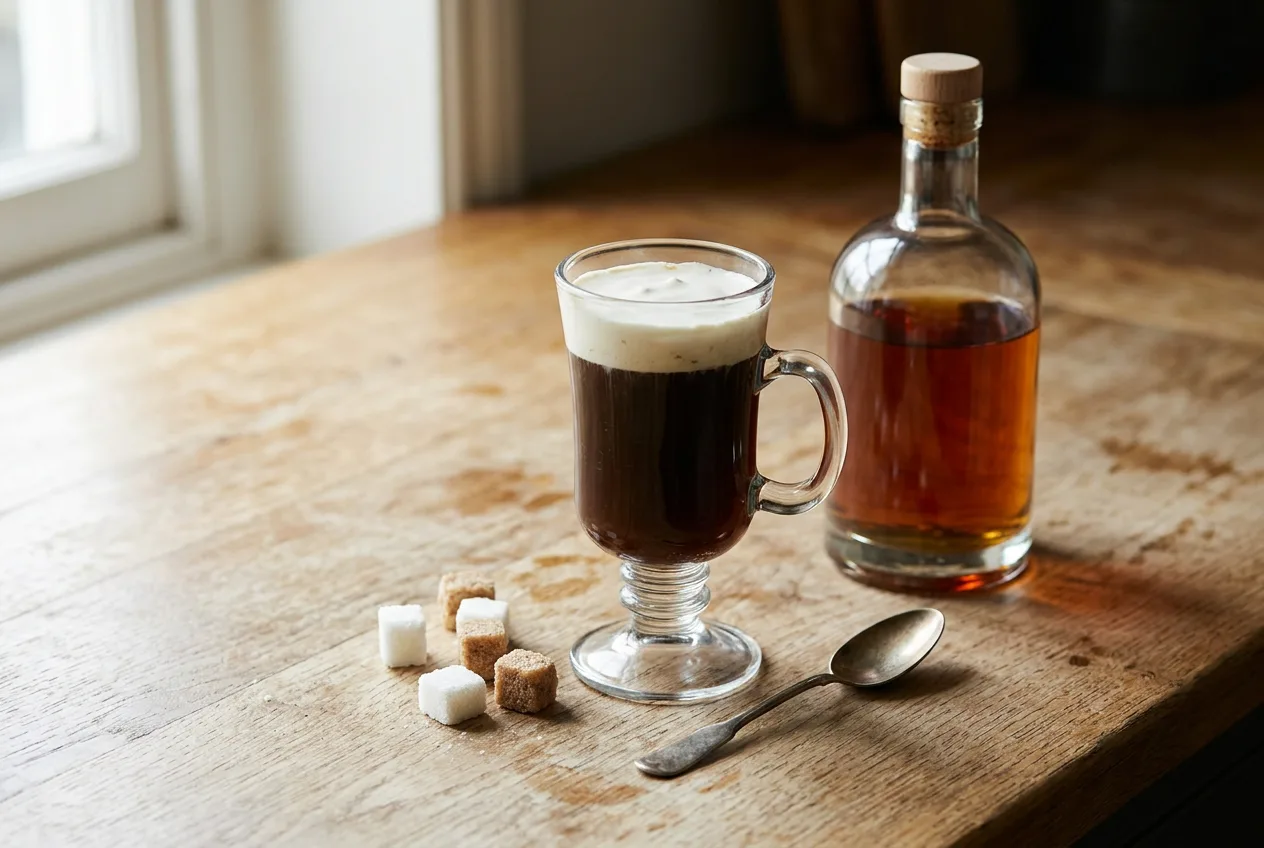
A cafe by the cable cars
The Buena Vista opened in 1916. Its spot near the city's cable cars made it a natural stop for locals and visitors.
Its fame, though, comes from one drink.
How Irish coffee reached America
Irish coffee originated in Ireland. It reached the United States in 1952, after an American newspaper reporter encountered it and helped pass the recipe to the right people in San Francisco.
The Buena Vista adopted it, and the rest is history.
The classic recipe
- Warm the glassA pre-heated glass keeps the drink hot to the last sip.
- Add two sugarsSugar isn't only for sweetness. It helps the cream float on top.
- Pour hot coffeeFill the glass most of the way with freshly brewed coffee and stir to dissolve the sugar.
- Add Irish whiskeyA measure of Irish whiskey goes in next.
- Float the creamLightly whipped heavy cream is poured gently on top so it sits in a separate layer. You drink the hot coffee through the cool cream.
The cream is the hardest part. It needs to be whipped just enough to float but still pour. Doing that consistently, thousands of times, takes real care.
Millions of glasses
One Buena Vista bartender with more than 40 years behind the bar estimated he had made between four and five million Irish coffees.
The cafe reportedly goes through about 100 bottles of Irish whiskey a day, which makes it one of the biggest commercial users of Irish whiskey anywhere.
A later owner admitted he first saw the drink as a sound business opportunity. Over time, he came to love it as a wonderful drink in its own right.
Why it lasts
The recipe is simple. Anyone can make it at home.
But people still line up at the Buena Vista because they want the experience: the historic room, the line of glasses on the bar, the ritual of watching it made.
Irish coffee shows how a simple recipe becomes an institution through consistency, atmosphere and tradition.
Our tip: At home, pour the cream over the back of a warm spoon held just above the coffee. It spreads the flow so the cream settles on top instead of sinking.
Pumpkin spice: how a seasonal flavor took over
No look at modern coffee culture would be complete without pumpkin spice.
The pumpkin spice latte, launched by Starbucks in 2003, pushed the flavor far beyond pumpkin pie. It became an unofficial signal that autumn had started.
There's no pumpkin in pumpkin spice
The name is misleading. Pumpkin pie spice doesn't normally contain any pumpkin at all.
A common blend contains:
It was created to season pumpkin pies. Its warm, familiar taste became so tied to fall that it outgrew the pie.
From latte to... deodorant?
Once the latte became a hit, pumpkin spice spread everywhere: cookies, snack cakes, cereal, candy and drinks.
It then jumped into categories with no link to food at all, including body lotion, deodorant and even pet shampoo.
Sales of pumpkin pie spice reached record levels.
What it tells us about coffee culture
Pumpkin spice shows the power of seasonal flavors and branding.
People don't just buy the taste. They buy the feeling: autumn, comfort, familiar routines. A successful seasonal coffee can become a wider marketing trend, and sometimes push companies into products that feel a little excessive.
Whether you love it or roll your eyes at it, pumpkin spice is a real part of coffee culture.
Our tip: Make your own pumpkin spice by mixing cinnamon, ginger, nutmeg and allspice. A pinch stirred into the ground coffee before brewing adds aroma without any syrup or sugar.
Single-serve machines and the age of convenience
If instant coffee was the convenience revolution of the 20th century, coffee pods are the 21st-century version.
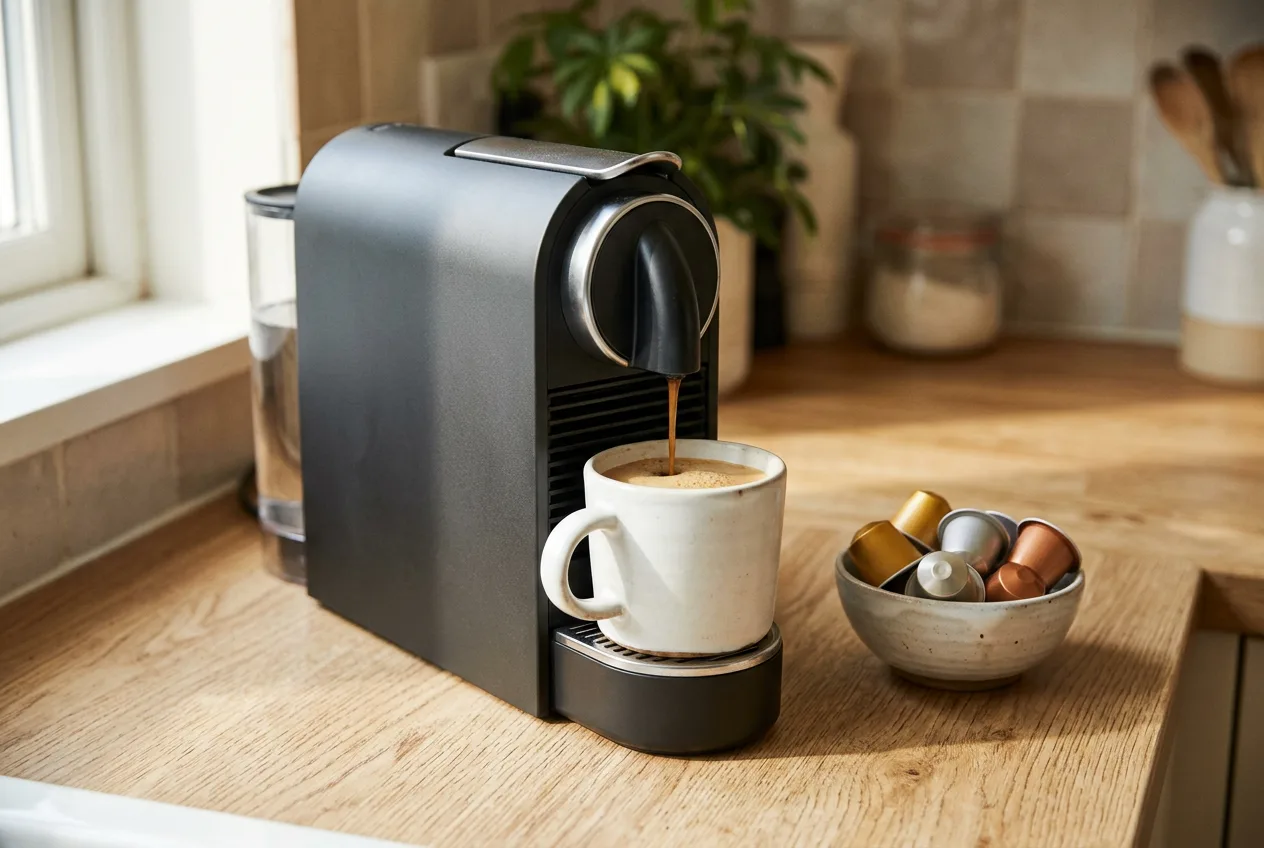
One cup, one button
Single-serve machines changed how many American households make coffee. Insert a capsule, close the handle, press a button. A cup is ready in under a minute.
That's especially attractive first thing in the morning, when nobody wants to measure grounds, brew a full pot or clean equipment.
Simple to use, complex inside
The user's job is simple. The engineering isn't.
The machine has to manage electrical input and heat precisely, so water reaches the right temperature and the drink is dispensed reliably, cup after cup.
A huge market
During the period covered in my notes, single-serve machines were in about one in three American homes. They built a multibillion-dollar business, and consumers spent billions on capsules alone.
Pod ranges also brought a wave of flavors, including seasonal and dessert-style options.
The trade-offs
| Factor | Single-serve pods | Brewing from a bag | Coffee shop |
|---|---|---|---|
| Speed | Under a minute | 3 to 6 minutes | Depends on the line |
| Cost per cup | Medium | Lowest | Highest |
| Flavor variety | Very wide | Depends on what you buy | Wide |
| Portion control | Excellent | Manual | Set sizes |
| Packaging waste | High | Low | Cups and lids |
A pod cup usually costs less than a coffee shop drink but more than brewing from a bag of ground coffee.
The biggest concern is waste. What happens to millions of used pods? Manufacturers have responded with recyclable capsule systems and recyclability goals, but it remains the main downside.
The success of single-serve machines shows something interesting: convenience can create demand for a product people didn't know they wanted.
Our tip: If you love your pod machine but hate the waste, look for a refillable capsule. You fill it with your own ground coffee, which also cuts the cost per cup.
Coffee rituals around the world
My notes focus on a handful of places. But they're part of a much bigger map. Here are some of the coffee rituals I find most fascinating, and how they compare.
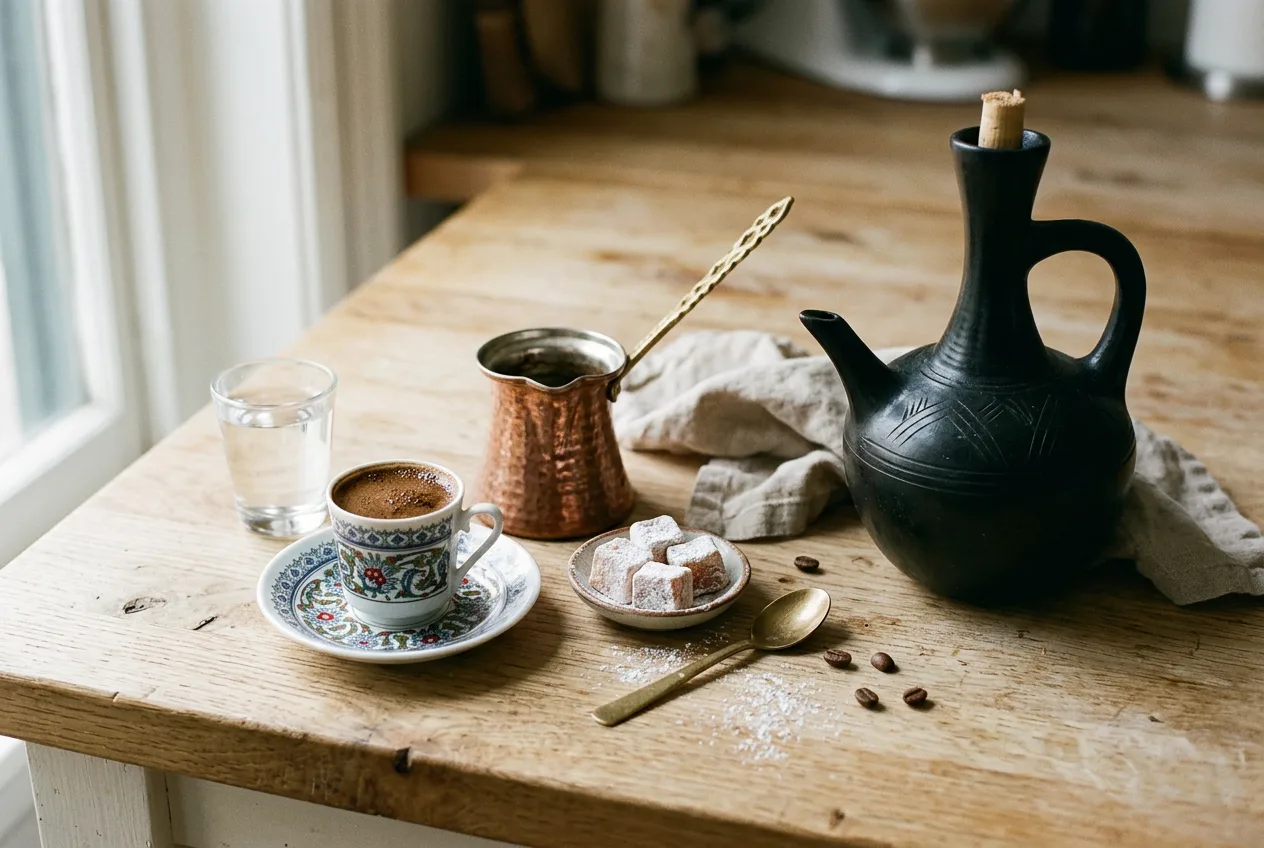
Turkey: coffee, foam and fortune
Turkish coffee is ground to a fine powder, then brewed slowly with cold water and sugar in a small pot until a foam forms.
It's served in small cups, usually with a glass of water. The grounds settle at the bottom, and in many homes they're used afterwards to tell fortunes.
Turkish coffee culture is recognized by UNESCO as part of the world's intangible cultural heritage. It's a symbol of hospitality and friendship, and it plays a role at engagements and holidays.
Ethiopia: the coffee ceremony
In Ethiopia, coffee is often prepared in a ceremony that can last an hour or more.
Green beans are roasted in a pan, the smoke is shared with guests, the beans are ground by hand, and the coffee is brewed in a clay pot called a jebena. Traditionally, several rounds are served.
It's less about caffeine and more about time spent together.
Sweden and Finland: fika and many cups
In Sweden, fika is the habit of taking a coffee break, usually with something sweet like a cinnamon bun. It's a social pause built into the workday.
Finland is known for drinking more coffee per person than almost anywhere else, often light-roasted filter coffee, drunk throughout the day and at work breaks.
Vietnam: slow drip and condensed milk
Vietnamese coffee is often brewed through a small metal drip filter called a phin, straight into a cup with sweetened condensed milk. Over ice, it becomes cà phê sữa đá.
Hanoi is also known for egg coffee, topped with a whipped mix of egg yolk and sugar.
Australia and New Zealand: the flat white
The flat white, espresso with a thin layer of velvety milk, became the signature drink of cafe culture in Australia and New Zealand before spreading worldwide.
Colombia: the everyday tinto
In Colombia, one of the world's great coffee producers, the everyday cup is often a tinto: a small, simple black coffee, sometimes sweetened, sold cheaply on street corners.
| Place | Typical drink | The ritual | What it says |
|---|---|---|---|
| Naples | Un caffè (espresso) | Standing at the bar, fast | Craft and daily pride |
| Yemen | Traditional Yemeni coffee | Shared with family and trusted guests | Heritage and hospitality |
| Turkey | Turkish coffee | Small cups, water, fortune telling | Friendship and celebration |
| Ethiopia | Jebena coffee | Roasted and brewed in a ceremony | Time together |
| Sweden | Filter coffee | Fika break with something sweet | Balance and pause |
| Vietnam | Phin coffee | Slow drip over condensed milk | Patience and sweetness |
| Tokyo | Whatever keeps you going | Paid focus space | Productivity |
| San Francisco | Irish coffee | Historic bar, cream on top | Tradition and place |
| US homes | Pods, instant, seasonal lattes | One button, on the go | Convenience |
Our tip: Pick one ritual from this table and try it at home for a week. A Swedish-style fika break at 3 pm, or a slow Vietnamese phin coffee on Sunday morning, can change how you feel about your daily cup.
Coffee as kindness and human connection
I want to end the stories with one that has nothing to do with origin, technique or price.
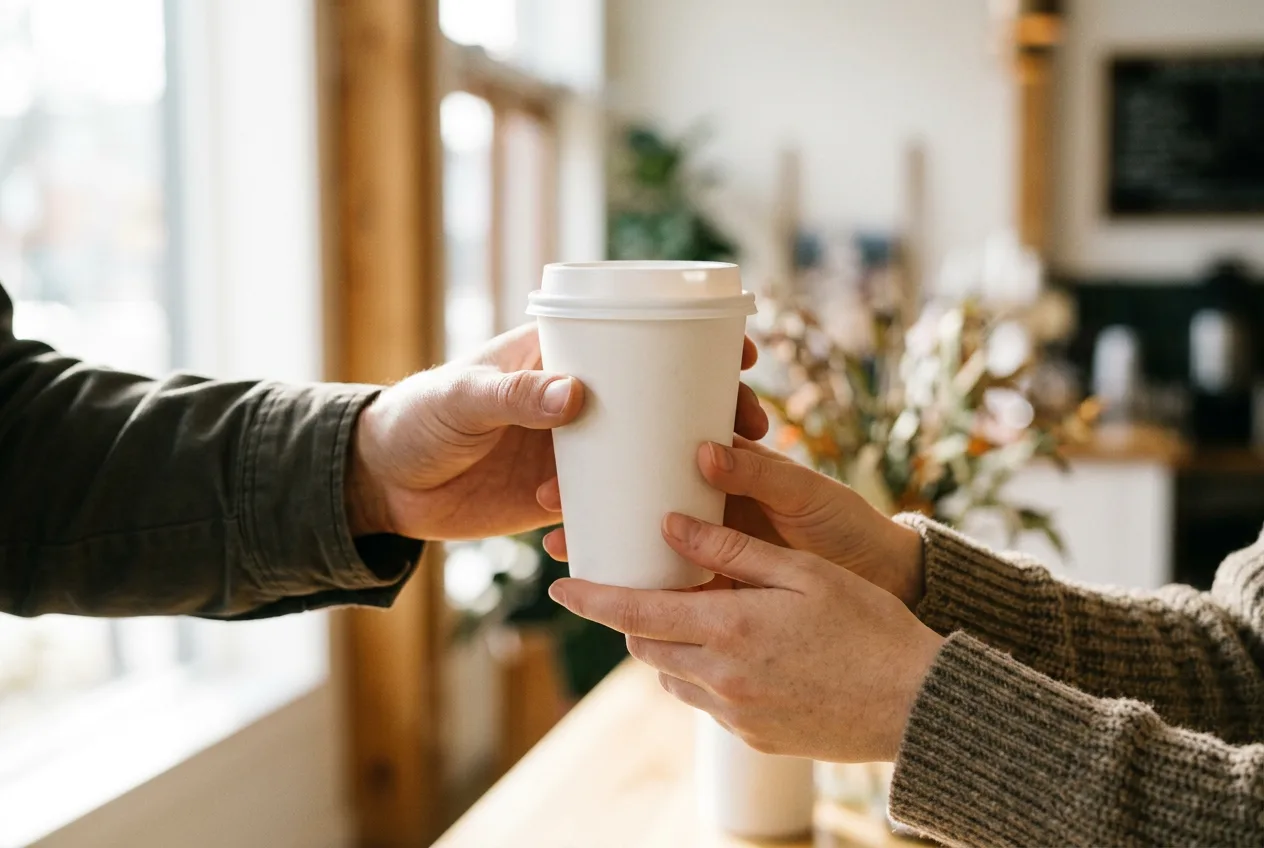
A retired audiovisual specialist started buying drinks for cancer patients after going with his father to chemotherapy appointments.
His father recovered. But the experience stayed with him, so he kept going.
How it worked
He'd take orders from patients at the hospital, buy the drinks with his own money and bring them back. Over time, he expanded to a second hospital.
He spent around $10,000 of his own money on these drinks.
There was no business plan and no expectation of being paid back. He called it one of the best jobs he'd ever had, even though he was the one paying.
Patients often tried to pay him, not realizing he'd already covered the cost.
Coffee as a vehicle
An oncologist at the hospital put it beautifully: the coffee was a vehicle for the relationship.
What mattered was the human contact. Someone remembered patients, asked what they wanted and took the time to bring it.
One older patient said the gesture made her feel that somebody cared. Many others said the same.
A cup of coffee is cheap compared with medical care. But the attention behind it can mean a great deal.
I think this is the purest form of coffee culture there is. Not a technique, not a trend. Just a reason to connect.
Our tip: Bring someone a coffee this week who isn't expecting it: a neighbor, a colleague having a rough day, a friend in hospital. It's the cheapest kindness I know.
Bringing world coffee culture into your own kitchen
You don't need to travel to enjoy these traditions. Here's how I bring a bit of each into my own routine.
- Make one coffee a ritualPick one cup a day that you never rush. No phone, no laptop. Like the Ethiopian ceremony, it's about the time, not the caffeine.
- Taste side by sideBorrow the professional taster's method. Compare two coffees at once and note differences in body, sweetness and acidity.
- Respect the espressoIf you have an espresso machine, aim for the Neapolitan balance of bitter, sour and sweet. Adjust one variable at a time.
- Keep a "special" coffeeLike the bodega owners with their Yemeni beans, keep a small bag of something rare for guests and occasions.
- Use convenience wiselyThere's nothing wrong with pods or instant on busy mornings. Just keep good beans around for when you have time.
- Learn where it comes fromRead the origin on your bag. Knowing the farm or region makes the cup more meaningful and helps you support good producers.
- Share itThe common thread in nearly every tradition is sharing. Make an extra cup.
If you'd like to go deeper on the practical side, my guides on coffee roast levels, choosing coffee beans and coffee growing regions are good next steps.
Key takeaways
- Coffee culture is shaped by local history, social habits, technology, economics and personal relationships.
- Cafes can be built around a need, like Tokyo's deadline cafe that sells focus by the hour.
- Professional tasting depends on experience and a consistent method. Consistency is what keeps your favorite coffee tasting the same.
- Technology like electronic tongues can measure flavor chemistry, but human judgment still matters.
- Yemeni coffee shows how heritage, conflict, shipping costs and farmer relationships shape price and availability.
- Naples proves espresso can be both a precise craft and an everyday ritual.
- Instant coffee and pods reflect the lasting demand for convenience, with trade-offs in flavor, cost and waste.
- Irish coffee shows how a simple recipe can become an institution through consistency and place.
- Pumpkin spice shows how seasonal flavors and branding can reach far beyond coffee.
- Coffee can be kindness. Sometimes the cup is just a vehicle for showing someone you care.
Across all these stories, coffee's value isn't set by flavor or price alone. It comes from tradition, craft, convenience, identity, shared experience and care for others.
Frequently asked questions
Which country has the strongest coffee culture?
It depends on what you mean by strong. Italy is famous for espresso ritual, Ethiopia and Yemen for heritage and ceremony, Turkey for its UNESCO-recognized tradition, and the Nordic countries for sheer consumption per person. Each has a deep culture of its own.
Why do people in Italy drink espresso standing up?
Standing at the bar is quick, social and usually cheaper than table service. Espresso takes about 30 seconds to make and is often finished almost as fast, so it fits naturally into a short stop on the way somewhere.
Why is Yemeni coffee so expensive?
Supply is limited and exporting is very difficult because of conflict, drought and high shipping costs. One importer reported a Yemeni shipment cost about $400,000 versus roughly $60,000 for a similar Colombian shipment. Fair pay for farmers and the coffee's quality and rarity add to the price.
Who invented instant coffee?
Chicago chemist Satori Kato received a US patent for a method of making instant coffee on August 11, 1903, though historians have also found an earlier soluble coffee patent from New Zealand. Later brands and heavy advertising made instant coffee a household staple.
What is in a classic Irish coffee?
Hot coffee, two sugars, Irish whiskey and a layer of lightly whipped heavy cream floated on top. The Buena Vista Cafe in San Francisco helped make it famous in the US after it arrived in 1952.
Does pumpkin spice contain pumpkin?
Usually not. Pumpkin pie spice is typically a blend of cinnamon, ginger, nutmeg and allspice. It was created to season pumpkin pie, which is where the name comes from.
Are coffee pods bad for the environment?
Single-use pods create a lot of packaging waste, which is their main downside. Many manufacturers now offer recyclable capsules or recycling programs, and refillable pods let you use your own ground coffee.
What is fika?
Fika is the Swedish tradition of taking a coffee break, usually with something sweet such as a cinnamon bun. It's a social pause built into the day, often with colleagues or friends.

- Michael Reynolds, travel and tasting notes on coffee culture
- UNESCO: Turkish coffee culture and tradition
- IBM Research: Hypertaste, an AI-assisted e-tongue
- CBS News Almanac: Instant coffee
- Wikipedia: Satori Kato
Related guides
Coffee growing regions and flavor Arabica vs robusta Coffee roast levels explainedWritten by Michael Reynolds. Last updated November 19, 2026.