Peaberry Coffee Explained: What It Is, How It Tastes and Whether It's Worth the Price
Most coffee cherries hold two flat-sided beans. Every so often, a cherry grows just one small, round bean instead: a peaberry. Roasters often sell them separately at a premium, with claims of richer flavor and more caffeine. I compared peaberry and regular beans from the same harvest side by side. Here's what peaberries really are, what's myth, and what you can actually taste.
We choose products independently. We may earn a commission through links on this page; your price stays the same. Affiliate policy
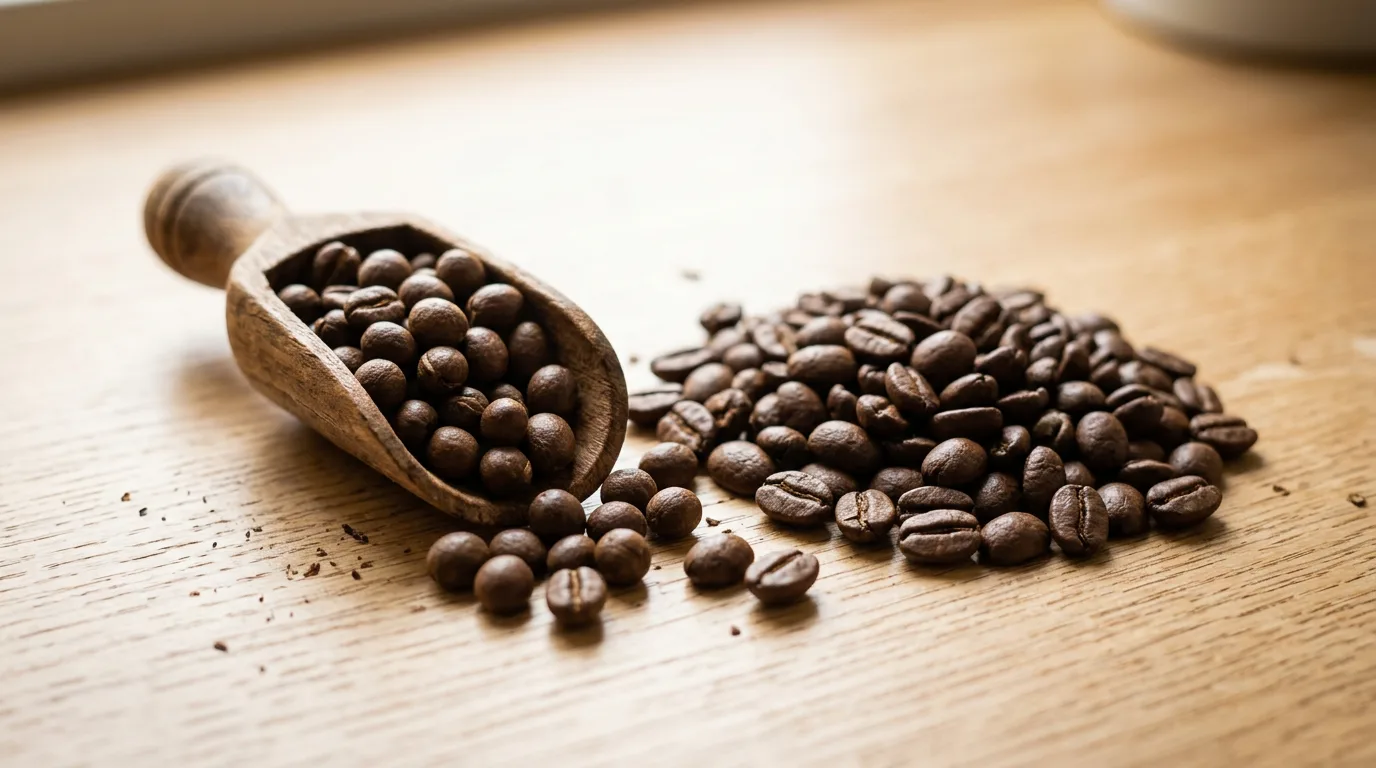
A peaberry is a natural mutation where a coffee cherry grows one small, round seed instead of the usual two flat ones. It happens in roughly 6 to 10 percent of cherries and isn't a separate species or variety. Peaberries are sorted out by screens, which takes extra work, so separated lots cost more. Claims that they have more caffeine or more concentrated nutrients aren't backed by solid research. In my side-by-side tasting of the same coffee, the peaberry was noticeably brighter, livelier and a little lighter in body, with a slightly shorter finish. Different, not automatically better.
What is peaberry coffee?
If you've browsed specialty coffee, you've probably seen "peaberry" on a bag, often with a higher price. Tanzanian Peaberry and Kona Peaberry are two of the best known.
A peaberry is simply a coffee bean that grew alone inside its cherry. Normally, each cherry contains two seeds that grow facing each other, which flattens one side of each bean. When only one seed develops, it has the whole space to itself and grows small, round and oval, like a little pea. Hence the name.
Peaberries have a mystique in the coffee world. Some say they taste sweeter and more concentrated. Others say they're just a curiosity with a marketing premium. As usual, the truth is somewhere in between.
Part of the confusion comes from how peaberries are marketed. Bags often describe them with words like "concentrated," "rare" or "the best beans on the tree." Some of that is true, some is exaggerated, and some has never been tested. It is easy to pay a premium without knowing what you are actually getting.
To find out, I compared peaberry and regular beans from the same farm and harvest, roasted the same way and brewed side by side.
My first peaberry
The first peaberry I bought was a Tanzanian, years ago, from a small local roaster. I chose it mostly because the label made it sound rare and special, and the beans looked so different: tiny, round and almost polished.
The coffee was bright and lemony, with a black tea finish. I loved it, but I had nothing to compare it with, so I couldn't tell whether the peaberry shape had anything to do with it.
That question stayed with me. It's why, for this guide, I insisted on comparing peaberry and regular beans from the same farm and harvest. Only then can you see what the shape itself contributes.
A short history of the peaberry
Peaberries have always existed; they're as old as the coffee plant itself. For most of coffee's history, nobody paid them much attention. They simply went into the sack with everything else.
As coffee trading became more organized, exporters began sorting beans by size and shape to sell more uniform lots. Peaberries, with their distinctive round form, naturally ended up separated in some origins.
East Africa, especially Tanzania and Kenya, built a reputation for peaberry lots in the twentieth century. Importers and roasters in Europe and North America began marketing them as something special, and "peaberry" became a recognized name on coffee bags.
Today, specialty roasters sell peaberries from many origins, and they remain one of the easiest ways to taste how a single variable, bean shape, can change a coffee.
Peaberry vs regular beans at a glance
| Feature | Regular (flat) beans | Peaberry |
|---|---|---|
| Seeds per cherry | Two | One |
| Shape | One flat side, one rounded side | Small, round or oval |
| Share of harvest | About 90-94% | About 6-10% |
| Species or variety | Any | Same as the plant; just a mutation |
| Roasting | Can roast slightly less evenly | Rolls evenly in the drum |
| Flavor (my test) | Fuller, rounder, longer finish | Brighter, juicier, lighter |
| Price | Standard | Usually a premium |
Arabica and the coffee cherry
In specialty coffee, almost everything served is Coffea arabica, the arabica species, which includes many varieties such as Typica, Bourbon and Gesha. Robusta, the other main species, is far more common in commercial and instant coffee.
Coffee "beans" aren't really beans at all. They're the seeds of a small, red or yellow fruit called the coffee cherry. Inside each cherry, under the skin and sweet pulp, sit the seeds, wrapped in a thin parchment layer and a delicate silver skin.
Peaberries can occur in any species or variety. They're a quirk of how the seeds develop, not a type of plant. My guide to coffee varieties explains the plants themselves.
Inside the coffee cherry
To understand peaberries, it helps to know what's inside a coffee cherry, from the outside in:
- Skin: the thin outer layer, red or yellow when ripe.
- Pulp: sweet, fleshy fruit, removed during processing.
- Mucilage: a sticky, sugary layer around the seeds.
- Parchment: a papery shell protecting each seed.
- Silver skin: a delicate film right on the seed, which becomes chaff during roasting.
- Seed: the green coffee bean itself, usually two per cherry.
In a peaberry cherry, all of these layers are present, but they surround one round seed instead of two flat ones.
How normal coffee beans form
A coffee flower is normally pollinated in a way that lets two ovules develop inside the cherry. Both grow into seeds at the same time.
As they grow, they press against each other inside the small fruit. The contact flattens the side where they meet, and each seed develops a rounded back and a flat face with a crease running down the middle.
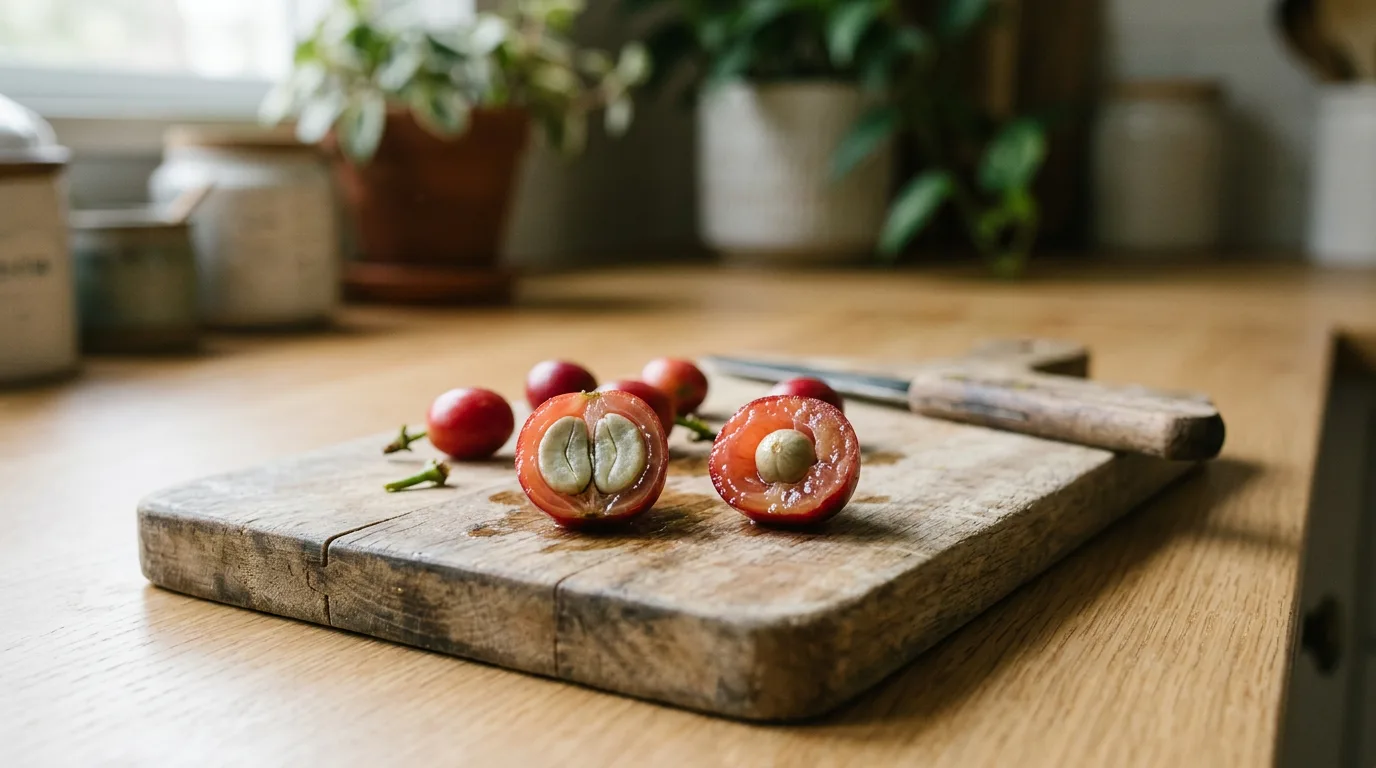
That's the classic coffee bean shape you know: oval, with one flat side and a center line.
How peaberries form
Sometimes only one of the two ovules develops into a seed. The other doesn't grow, or isn't fertilized.
With no partner to press against, the single seed fills the cherry on its own. It grows round or oval, with no flat face, and often a curled line down its length instead of a straight crease.
If you cut open a peaberry cherry, the difference is obvious. Instead of two seeds sitting face to face like the halves of a peanut, there is one smooth, rounded seed filling the space. It looks almost like a small olive stone.
The causes aren't fully understood. Incomplete pollination, genetics, nutrient availability and environmental stress have all been suggested. It's a natural mutation rather than a disease or defect.
How common are peaberries?
Peaberries make up roughly 6 to 10 percent of a typical coffee harvest. The exact share depends on the plant, the variety, the microclimate and growing conditions.
Some plants produce more, especially those at the ends of branches or under stress. But no farm produces only peaberries; they always come mixed in with regular beans.
That small share is the key to their scarcity and price.
How to recognize peaberries
Once you know what to look for, they're easy to spot.
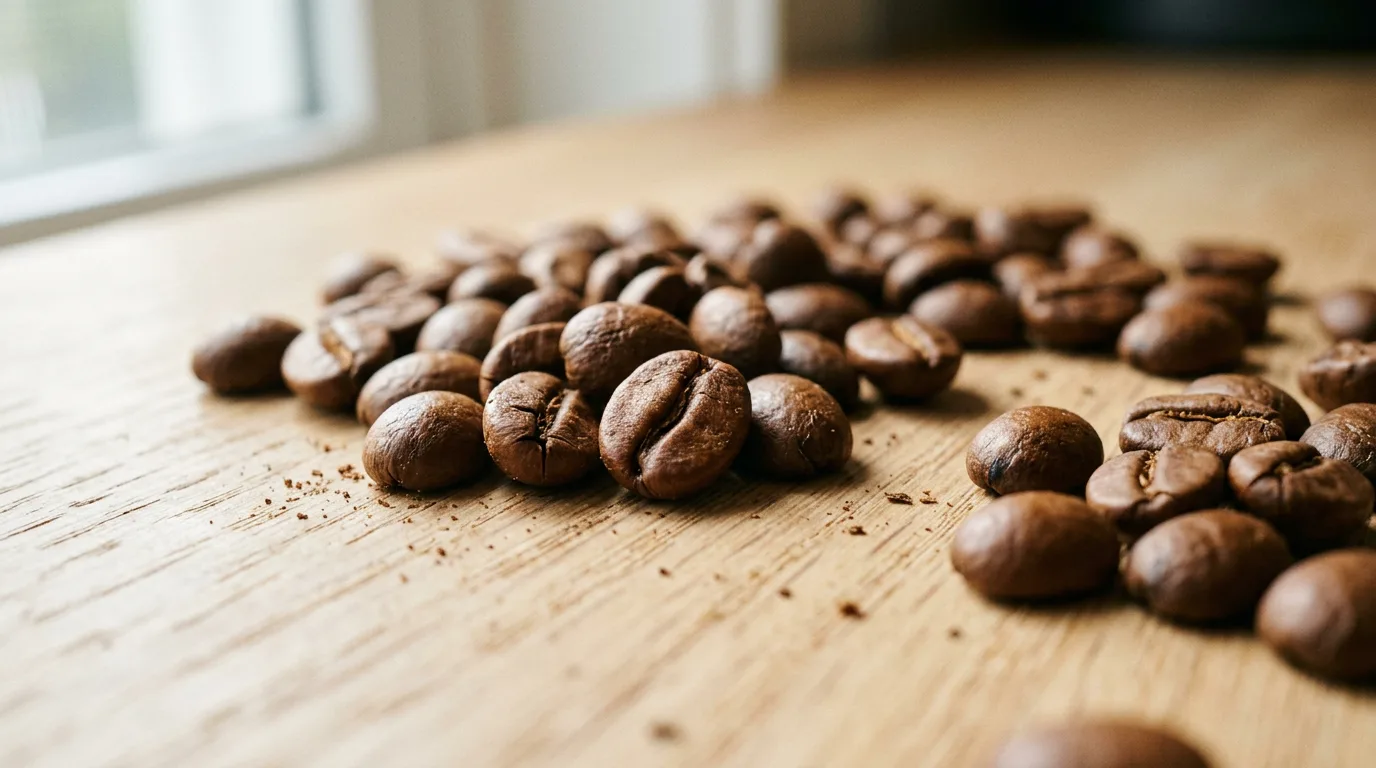
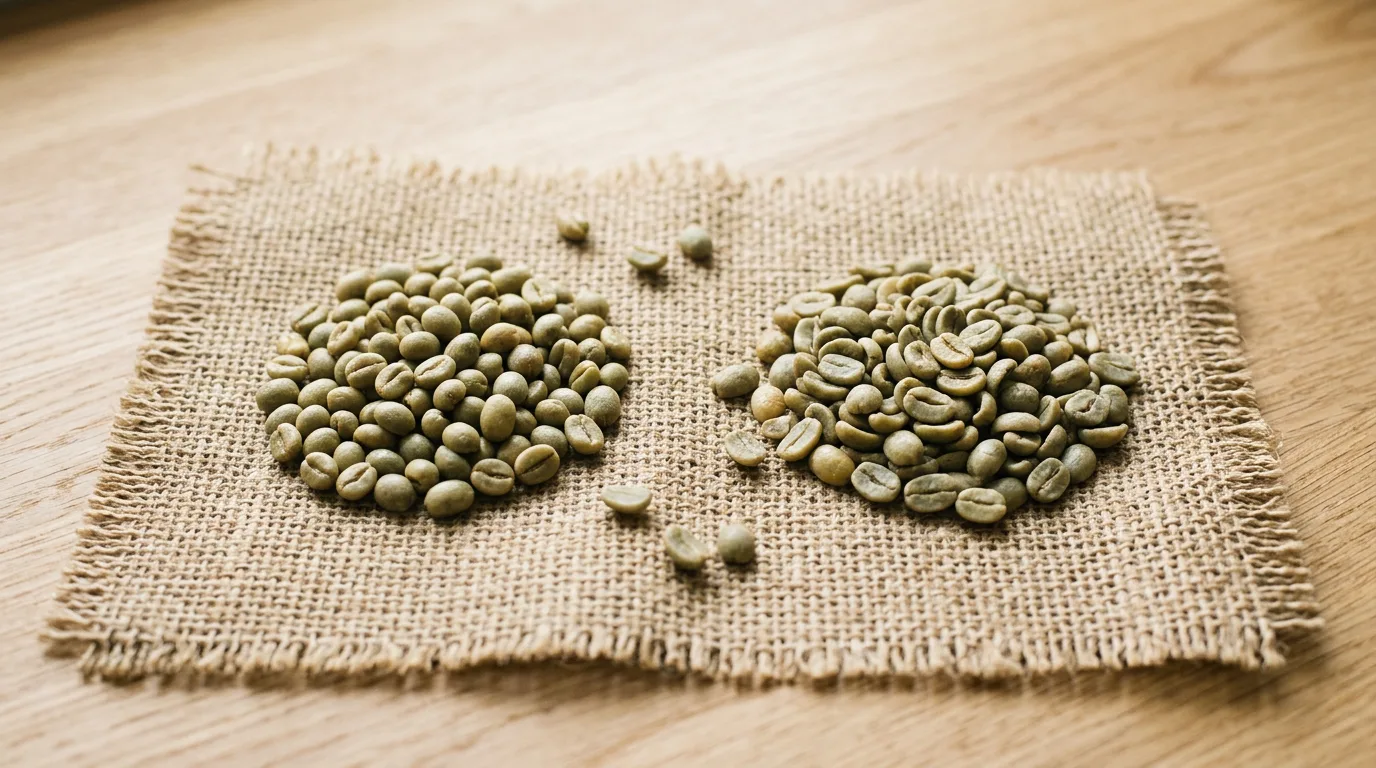
- Shape: round or oval, like a small pea or rugby ball, with no flat side.
- Size: usually smaller than regular beans from the same plant.
- Center line: often curved or twisted rather than straight.
- In the bag: a separated peaberry lot looks very uniform, almost like small round pellets.
Look closely at almost any bag of regular coffee and you'll probably find a few peaberries mixed in.
Other coffee bean oddities
Peaberries aren't the only unusual beans you might find.
- Elephant beans: unusually large, misshapen beans formed when two seeds grow intertwined. They often break apart during roasting and are usually sorted out as defects.
- Triangular beans: occasionally a cherry contains three seeds, which press into wedge shapes.
- Maragogype: not a mutation but a variety with naturally huge beans, sometimes called "elephant bean" coffee too.
Of these, peaberries are by far the most common and the only ones regularly sold as a premium specialty product.
Unseparated harvests
On most farms, peaberries are never separated. They're harvested, processed and sold together with regular beans.
That's perfectly fine. In a mixed lot, the small share of peaberries simply blends into the overall flavor. Most of the coffee you've ever drunk has contained some.
Separation only happens when a producer or exporter decides the extra work is worthwhile, usually because peaberries sell at a premium in their market.
Do a few peaberries in a regular bag matter?
Not really. In a mixed lot, peaberries make up such a small share that they blend into the overall flavor.
The only practical effect is in roasting and grinding: a mix of shapes and sizes can roast and grind very slightly less evenly than a perfectly uniform lot. For most home brewing, you won't notice.
Specialty mills often sort by size anyway to make lots more uniform, which is good for roasting consistency whether or not they sell the peaberries separately.
Sorting and screen grading
Because peaberries are smaller and rounder, they can be separated mechanically during green coffee sorting.
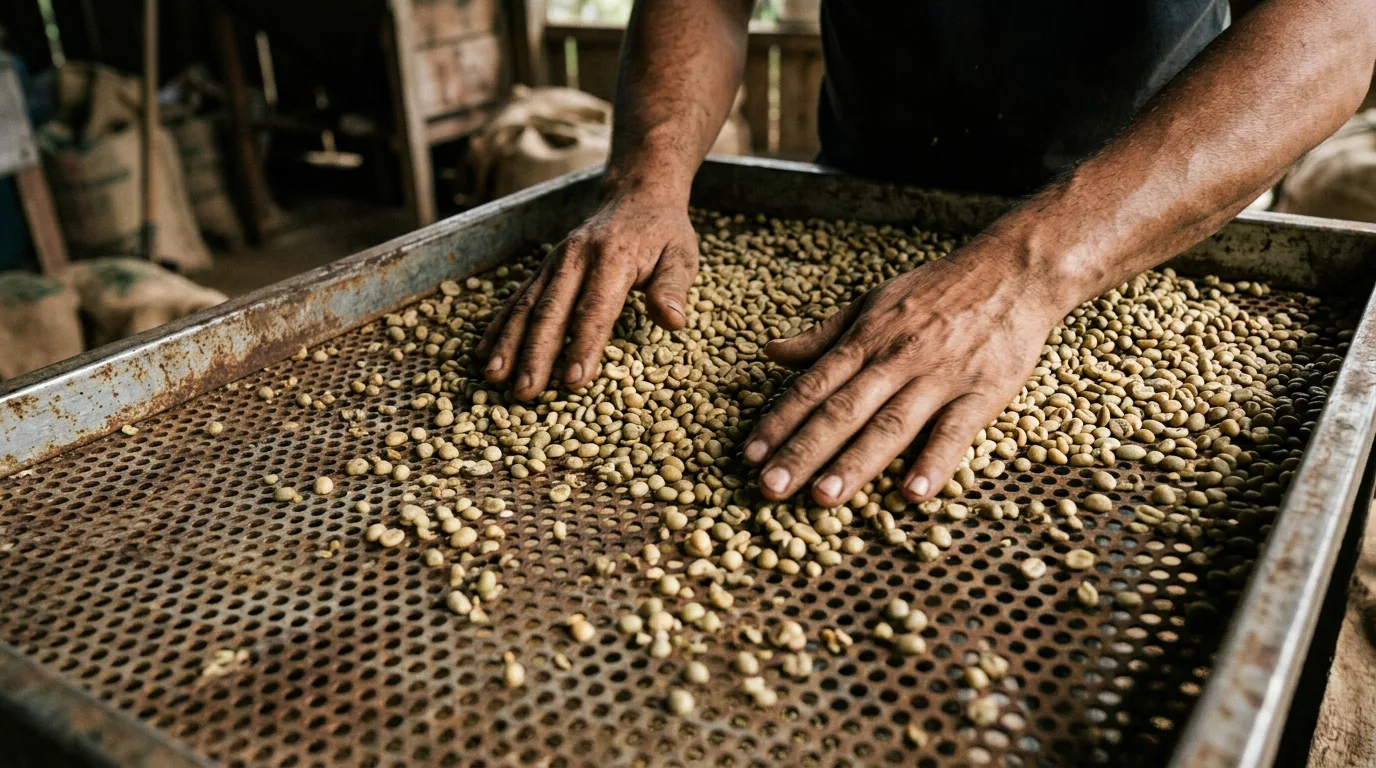
Coffee is graded using screens: metal sheets with holes of a specific size. Beans that pass through one screen but not the next fall into a size grade.
For peaberries, mills use screens with long, slotted holes. Round peaberries roll through the slots while flat beans don't, so the two shapes separate.
After mechanical screening, many mills do a final hand sort on tables or conveyor belts, removing broken beans, defects and any flat beans that slipped through. That last step is slow, careful work, and it is a big part of why clean peaberry lots look so uniform.
Many origins then label these lots "PB," such as Kenya PB or Tanzania PB, alongside grades like AA and AB for larger flat beans.
What farmers think of peaberries
From a farmer's point of view, peaberries are a mixed blessing.
On one hand, a cherry with one seed produces less coffee by weight than a cherry with two. A plant with many peaberries yields slightly less.
On the other hand, if a farm or cooperative can separate and sell its peaberries at a premium, they can become a valuable product line. That's especially true in origins where buyers specifically seek out peaberry lots.
For many smallholders, though, sorting isn't practical. Without access to the right equipment or buyers willing to pay more, peaberries simply stay in the mixed lot.
Why peaberries cost more
Separated peaberry lots almost always carry a premium. The reasons are mostly practical:
- Extra labor and equipment. Sorting needs specialized screens and, often, careful hand-picking to remove misshapen beans.
- Small volume. Only that 6 to 10 percent of the harvest becomes peaberry, so lots are small.
- Demand. Peaberries have a loyal following and a reputation that roasters can market.
There is also a hidden cost at the farm level. Separating peaberries means the remaining flat-bean lot loses some volume, and every extra sorting step adds handling time at the mill. Those costs are passed along the supply chain, from exporter to importer to roaster, before the coffee reaches your kitchen.
So part of the price reflects genuine extra work, and part reflects rarity and reputation. Whether it's worth it for you depends on whether you enjoy the flavor difference, which I'll get to shortly.
The nutrient concentration theory
Peaberry fans often argue that because the cherry puts all its energy and nutrients into one seed instead of two, the peaberry becomes denser and richer in flavor compounds.
It's an appealing idea, and it sounds logical. But it remains largely anecdotal. There's a notable lack of rigorous, peer-reviewed studies comparing the exact chemistry of a peaberry with a flat bean from the same harvest.
That doesn't mean peaberries taste the same as regular beans. My tasting suggests they don't. It means we can't confidently explain why with chemistry yet.
Do peaberries have more caffeine?
Alongside the flavor theory, you'll often read that peaberries contain more caffeine than regular beans from the same plant.
There's no solid evidence for this. Caffeine depends mainly on species (robusta has roughly twice as much as arabica) and variety. Any difference between a peaberry and a flat bean from the same plant would likely be small and wouldn't change how a cup affects you.
If you want more or less caffeine, choose your species, roast and brew strength rather than bean shape. My guide to caffeine myths covers this in more detail.
Are peaberries denser?
Many roasters report that peaberries feel slightly denser and heavier for their size than flat beans from the same lot. Their compact, round shape has less surface area relative to volume.
Denser beans typically need a bit more energy to roast through and can taste brighter, which fits what I tasted. But density varies a lot between farms and altitudes, so it's not a universal rule.
My guide to how altitude affects coffee flavor explains how bean density affects taste and roasting.
What science does and doesn't know
Here's an honest summary of the evidence:
- Known: peaberries form when only one seed develops in a cherry, and they make up a small share of harvests.
- Known: their round shape helps them roll and roast evenly.
- Likely: they're often slightly smaller and denser than flat beans from the same lot.
- Unproven: that they contain more nutrients, sugars or flavor compounds.
- Unproven: that they contain meaningfully more caffeine.
What remains is tasting. Careful side-by-side comparisons, like mine, suggest a real difference in the cup, even if the full explanation isn't settled.
Why shape matters in roasting
There is one area where peaberry's shape clearly makes a difference: roasting.
Most roasters tumble beans inside a rotating drum at well above 400°F. Round peaberries roll smoothly and turn over constantly, so every surface gets similar contact with the hot drum and air.
Flat beans tend to slide and land on their flat sides, which can make heat transfer slightly less even. Peaberries' compact, round shape and uniform size help them roast very evenly.
Many roasters believe that even roasting is one reason peaberries can taste cleaner and brighter. It's a more convincing explanation than the nutrient theory, though still not proven. My guide to how coffee is roasted explains roasting in more detail.
Our tip: Because peaberries are small and dense, roasters often treat them as a separate lot with their own roast profile. A peaberry roasted exactly like its flat counterpart may not show its best.
How roasters handle peaberries
Good roasters treat peaberry as its own coffee, not just a smaller version of the regular lot.
- Separate roast profiles account for the smaller size and density.
- Smaller batch sizes are common, as peaberry lots are limited.
- Lighter to medium roasts are popular to highlight brightness.
- Careful cupping compares the peaberry with its flat-bean sibling to decide how to present it.
If a roaster offers both versions from one farm, they've usually tuned each roast to show its strengths, which makes for a great comparison.
Famous peaberry origins
Tanzania
Tanzanian Peaberry is probably the most famous. Grown on the slopes of Kilimanjaro and Mount Meru, it's known for bright, wine-like acidity, citrus and berry notes and a medium body.
Kenya
Kenya PB lots offer the intense blackcurrant and citrus character of Kenyan coffee in a peaberry form. My guide to Kenyan coffee covers the origin.
Hawaii (Kona)
Kona Peaberry is a prized and expensive lot from Hawaii's Big Island, smooth and sweet with a lively edge.
Others
Papua New Guinea and some Indonesian islands also produce peaberry lots with a heavier, earthier character, a good reminder that origin shapes flavor far more than bean shape does.
Peaberry lots also come from Colombia, Costa Rica, Papua New Guinea, Brazil and elsewhere. Any coffee-growing region can produce them.
A closer look at Tanzanian peaberry
Tanzanian Peaberry is the coffee that made peaberries famous for many coffee drinkers. It's grown mostly on the volcanic slopes of Mount Kilimanjaro and Mount Meru, often at high altitude, on small farms and cooperatives.
The coffee is typically washed, which highlights its bright, wine-like acidity. Common tasting notes include blackcurrant, lemon, black tea and a gentle chocolate finish.
Many coffee lovers try their first peaberry from Tanzania, and it's a good place to start: widely available and clearly distinctive.
Kona coffee: a case study
Kona makes an ideal test case because the same farms sell both regular and peaberry lots from the same harvest.
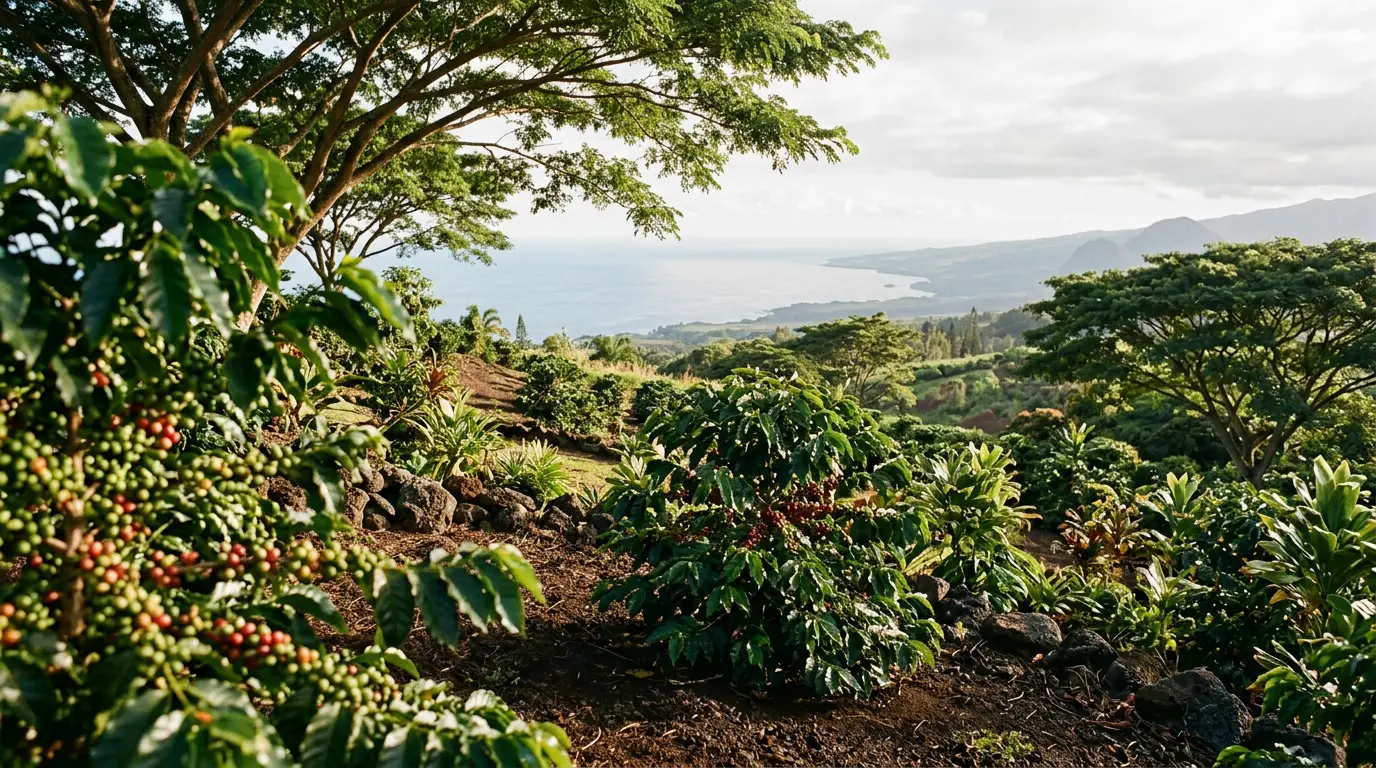
Hawaii is the only US state with the tropical climate and volcanic geography to grow coffee commercially at scale. Kona's porous volcanic soil, mild temperatures, sunny mornings and cloudy afternoons create excellent conditions on the slopes of Hualalai and Mauna Loa.
Because labor costs in the US are much higher than in most producing countries, and the official Kona growing area is small and strictly defined, Kona is among the more expensive coffees in the world. A one-pound bag of authentic estate Kona commonly sells for a high price.
That price makes it a target for "Kona blends," which may contain only about 10 percent Kona coffee mixed with cheaper beans. If you want the real thing, look for "100% Kona" on the label. My guide to the most expensive coffees in the world covers Kona and others.
Kona grades explained
Kona coffee has its own grading system, based mainly on bean size, shape and defects. The main grades are:
- Extra Fancy: the largest flat beans with the fewest defects; the top grade.
- Fancy: slightly smaller flat beans, still very high quality.
- Number 1: smaller flat beans with a few more allowed defects.
- Peaberry: round beans, separated by shape, often split into Peaberry Number 1 and Peaberry Prime.
- Prime: the lowest grade sold as pure Kona, allowing more defects.
That's why comparing Extra Fancy and Peaberry from the same farm is such a clean test: both are top-quality beans from the same harvest, differing mainly in shape.
My comparison setup
For a fair test, I used two one-pound bags of 100% estate-grown Kona coffee from the same producer:
- Bag A: Kona Extra FancyThe top grade of regular flat beans.
- Bag B: 100% Kona PeaberryThe small, round beans separated from the same harvest.
Both were roasted to a similar medium level by the same roaster. I brewed them side by side as pour-overs with filtered water at about 200°F, using the same ratio and adjusting the grind slightly so both brews finished in the same time.
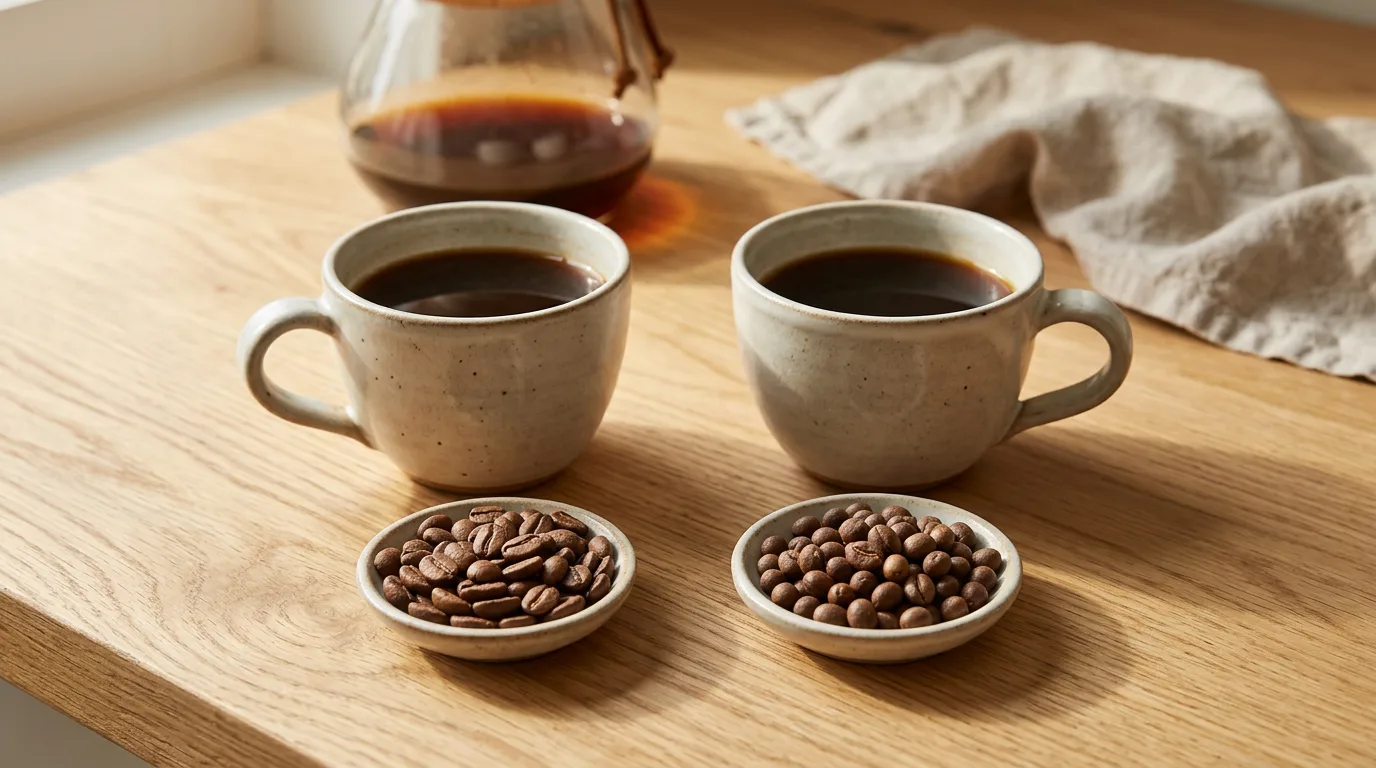
I tasted both hot, warm and cool, then repeated the test over three mornings. On the last day, my partner set up the cups so I didn't know which was which.
Tasting: classic Kona Extra Fancy
- First impression: immediately smooth, rich and approachable, with the classic character that makes Kona famous.
- Body and mouthfeel: noticeably fuller and rounder than the peaberry, coating the tongue with a velvety, comforting weight.
- Acidity: very mild and balanced, never overwhelming the sweetness.
- Finish: longer and cleaner, lingering pleasantly well after swallowing.
Tasting: 100% Kona Peaberry
- First impression: the same smooth, rich volcanic-soil character, clearly the same core coffee.
- Body and mouthfeel: slightly lighter and quicker across the tongue.
- Acidity: noticeably brighter, livelier and a little more acidic, with a juicier quality and a spark of vibrancy missing from the flat-bean version.
- Finish: crisp and clean, though slightly shorter than the regular Kona.
What the tasting showed
I went in half expecting two identical cups and a marketing story. That's not what I found. Even blind, I could pick the peaberry every time by its brighter, juicier acidity and lighter body.
Kona Extra Fancy vs Kona Peaberry (my impressions)
My partner, tasting blind on the last morning, described the peaberry as "the zippy one" and the Extra Fancy as "the cozy one." That sums up the difference better than any tasting notes I could write. Neither of us found one clearly superior; we simply reached for different cups depending on our mood.
Which did I prefer? It depended on the morning. With breakfast, the fuller Extra Fancy felt more satisfying. On its own in the afternoon, the brighter peaberry felt more exciting.
Interestingly, the differences grew as the cups cooled. Hot, the two coffees were close. Warm, the peaberry's brightness became more obvious, and by the time both were near room temperature, its acidity and juiciness stood out clearly against the rounder, heavier Extra Fancy.
The difference was real but not dramatic. If you handed someone just one cup, they'd simply say "nice Kona." Side by side, the contrast was clear.
Brewing peaberry coffee
Because peaberries often taste brighter and lighter, methods that highlight clarity suit them well.
- Pour-over: my favorite for peaberry, showing off the lively acidity. Try about 1:16 with water at 200 to 205°F.
- AeroPress: clean and sweet, with a bit more body.
- Espresso: can be vibrant and fruity; a slightly longer ratio and hotter water help.
- French press: adds body, which balances peaberry's lighter mouthfeel.
Water quality matters with delicate coffees like these. Filtered water with moderate minerals lets the brightness come through without harshness. Very soft water can make the cup taste flat, and very hard water can mute the fruit. My guide to water chemistry for coffee explains what to aim for.
If you buy an expensive peaberry, I'd avoid drowning it in a big milky latte, where its subtle brightness gets lost.
Peaberry as espresso
I also pulled the Kona peaberry and Extra Fancy as espresso. The differences were similar to the pour-over, but more intense.
The peaberry shot was juicy and lively, almost like a fruit-forward single origin. The Extra Fancy shot was rounder, with more body and a longer chocolate finish.
For peaberry espresso, I found a slightly longer ratio (around 1:2.3) and a temperature near 200°F worked best, balancing its brightness with sweetness. In milk, the Extra Fancy was the clear winner. My guide to espresso brew time covers dialing in.
Grinding peaberries
Peaberries are small and often dense, so they can behave a little differently in your grinder.
In my test, I needed to grind the peaberry about one step finer to match the brew time of the regular beans. Small, round beans can also feed more evenly into burrs, which may help consistency.
Don't assume your usual setting will work. Brew once, check the time and taste, and adjust. My guide to coffee grind size explains how.
Storing peaberry beans
Peaberries store just like regular coffee: whole beans, in an airtight container, away from light, heat and moisture.
Because peaberry lots are often expensive and bought in small quantities, it's worth using them within a few weeks of roasting, when their brightness is at its peak. My guide on how to store coffee beans explains the details.
Food pairing with peaberry
Peaberry's brighter, juicier character pairs beautifully with light, fruity foods: lemon cake, berry tarts, fresh croissants or a bowl of summer fruit.
The fuller regular beans from the same farm stand up better to richer foods like chocolate, nut pastries or a cooked breakfast. If you buy both, try them with different foods and see how each changes.
Practical buying advice
- Buy from specialty roasters who list the origin, farm and roast date.
- Check that it's 100% peaberry and, for Kona, "100% Kona," not a blend.
- Compare with the regular lot. If a roaster sells both from the same farm, buy small bags of each and taste side by side.
- Look at the beans. A genuine peaberry lot should look uniformly small and round.
- Buy whole beans and grind fresh; peaberry's brightness fades quickly once ground.
My guide on how to choose coffee beans covers labels and freshness in more detail.
Getting good value from peaberry
Because peaberries cost more, a few habits help you get your money's worth.
- Buy small bags so you finish them while they're fresh.
- Brew methods that highlight clarity, such as pour-over, rather than big milky drinks.
- Dial in carefully on the first cups; a well-brewed peaberry shows its character best.
- Compare with a cheaper regular lot to decide whether the premium is worth it for you.
If you find you prefer the regular beans, that's a happy result: better coffee for less money.
Peaberry as a gift
Peaberry makes a lovely gift for a coffee lover. It has a story, it looks distinctive, and it's something many people haven't tried.
For an extra-special present, pair a bag of peaberry with a bag of regular beans from the same farm and a note suggesting a side-by-side tasting. My guide to gifts for coffee lovers has more ideas.
Is peaberry coffee worth it?
If you love bright, lively coffee and you're curious, yes, at least once. Tasting a peaberry next to its regular counterpart is a fun, eye-opening experience.
If you prefer rich, full-bodied, chocolatey coffee, a regular lot from the same farm may suit you better, and cost less.
And if you're buying peaberry for extra caffeine or nutrition, save your money. Those claims aren't supported.
Run your own peaberry tasting
- Buy both versionsA peaberry and a regular lot from the same farm or region, ideally from the same roaster.
- Brew identicallySame ratio and water; adjust grind so both brews take the same time.
- Taste blindAsk someone to label the cups underneath.
- Compare as they coolAcidity and finish change as coffee cools.
- Decide what you preferNot which is "better," but which you enjoy more.
Peaberry glossary
What peaberries teach us about coffee
Peaberries are a small, natural experiment. The same plant, the same farm, the same harvest and the same roast, yet the cup changes because of the shape of a single seed. Few comparisons show so clearly how sensitive coffee is to small details.
Once you have tasted that difference, it becomes easier to appreciate other subtle variables too, from roast date and grind size to water and brewing temperature. In that sense, a bag of peaberries is as much a lesson as a treat.
Myths about peaberries
"Peaberry is a special variety"
It's a natural mutation that occurs in any variety.
"Peaberries have much more caffeine"
There's no solid evidence for meaningful differences.
"Peaberries always taste better"
They often taste brighter and lighter. Better depends on your taste.
"Peaberries are a defect"
They're a natural variation, not a quality problem. Many are among the most prized lots.
The verdict
Peaberry coffee is a real, natural curiosity: a single round seed in a cherry that usually holds two. It makes up only a small part of each harvest, and separating it takes extra work, which explains much of its premium.
The popular claims about more caffeine and concentrated nutrients aren't backed by good evidence. But in my side-by-side tasting, the difference in the cup was genuine: the peaberry was brighter, juicier and lighter, the regular beans fuller and longer.
For me, the most valuable thing about peaberries is what they teach. Tasting two versions of the same coffee, separated only by the shape of the seed, is a reminder of how many small details shape what ends up in your cup: altitude, variety, processing, roasting, grinding and brewing all play their part.
Think of peaberry not as better coffee but as a different expression of the same coffee. If that brightness appeals to you, it's well worth a try.
Frequently asked questions
What is a peaberry coffee bean?
A single, round seed that grows alone in a coffee cherry instead of the usual two flat seeds.
How common are peaberries?
About 6 to 10 percent of a typical harvest.
Do peaberries taste different?
In my comparison, they were brighter and lighter-bodied, with a shorter finish.
Do peaberries have more caffeine?
There's no solid evidence of a meaningful difference.
Why is peaberry coffee more expensive?
Sorting takes extra work and lots are small, plus demand is high.
Is peaberry a type of coffee plant?
No. It's a natural mutation that can happen in any variety.
What is the most famous peaberry coffee?
Tanzanian Peaberry and Kona Peaberry are the best known.
How should I brew peaberry coffee?
Pour-over shows off its brightness well; grind a touch finer than usual.

- Michael Reynolds, side-by-side tasting of Kona Extra Fancy and Kona Peaberry
- Peaberry, Wikipedia
- Kona coffee, Wikipedia
- Coffea arabica, Wikipedia
- Coffee bean, Wikipedia
Related guides
How altitude affects coffee flavor Geisha (Gesha) coffee Most expensive coffees in the worldWritten by Michael Reynolds. Last updated November 20, 2026.