Geisha (Gesha) Coffee Explained: Origin, Flavor, Price and How to Brew It
Geisha is the coffee that made judges think someone had slipped jasmine tea into their cups. Here's where it comes from, why one family farm in Panama made it famous, what it really tastes like, why it costs so much, and how to brew it at home without wasting a single gram.
We choose products independently. We may earn a commission through links on this page; your price stays the same. Affiliate policy
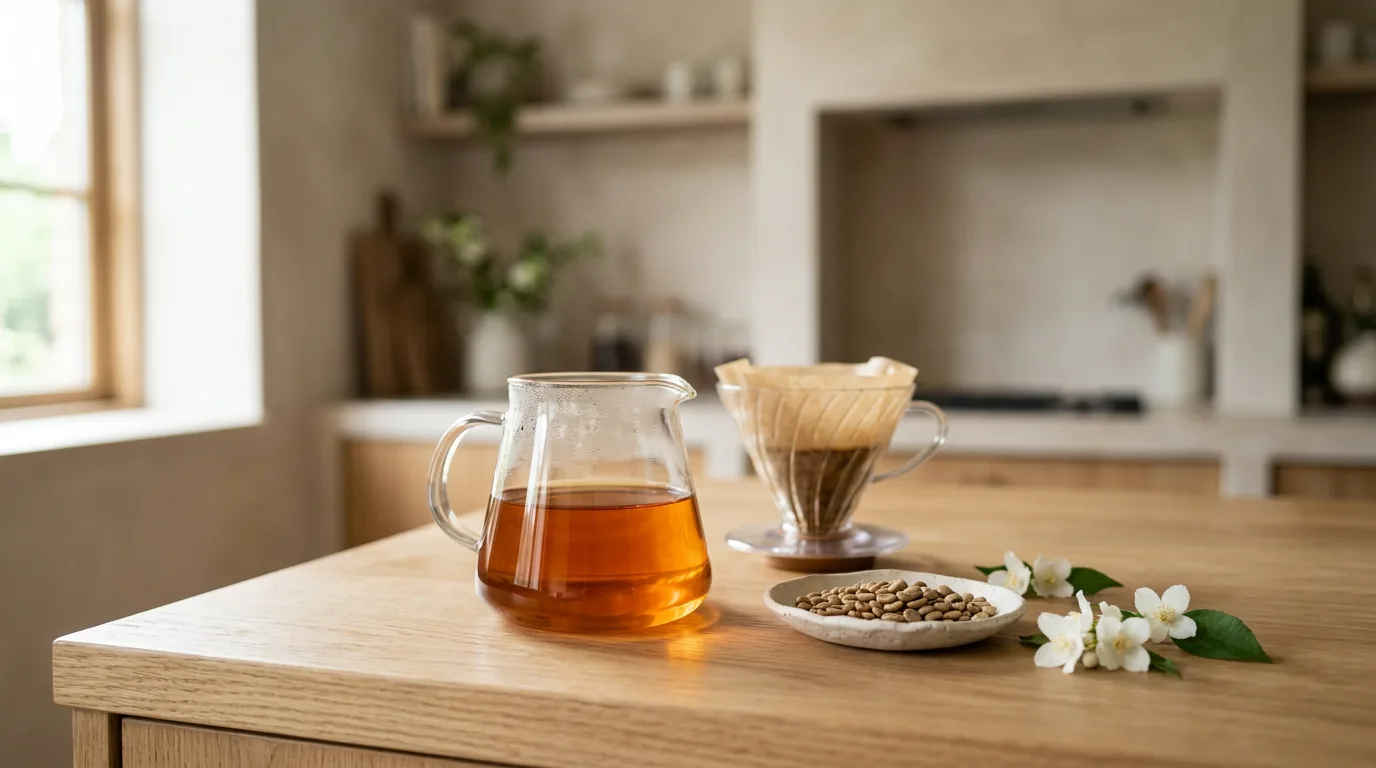
Geisha (also spelled Gesha) is a variety of arabica coffee that originally grew wild in the forests around Gesha in southwestern Ethiopia. It's famous for a light, tea-like body and an intense aroma of jasmine, bergamot, peach and citrus.
The variety sat almost forgotten in Central America for decades, until the Peterson family of Hacienda La Esmeralda in Panama entered a pure Geisha lot into the Best of Panama competition in 2004. It won, sold for a then-record $21 a pound, and turned Geisha into the most prized coffee in the world.
Today, top Panama Geisha lots sell for thousands of dollars per kilogram at auction, while retail bags usually cost $40 to $100+ for 12 ounces. It's expensive because the trees yield little, need very high altitude and careful farming, and because the best lots score extremely well in blind tastings.
Why I wrote this guide
I still remember my first good cup of Panama Geisha. I ground the beans, and the smell coming out of the grinder made me stop and check the bag. It smelled like a flower shop, not like coffee.
Then I brewed it as a pour-over, and it tasted like a cross between Earl Grey tea, ripe peach and lemon. It was light and silky, and it kept changing as it cooled.
Since then I've tasted Geishas from Panama, Colombia, Ethiopia and Costa Rica. Some were stunning. A few were honestly forgettable, despite the big price tag and the famous name on the bag.
That's why I wanted to write a proper explainer. Geisha has a great story, but it also has a lot of hype, confusing labels and a spelling debate that never seems to end.
What this guide covers
- Where Geisha comes from, and how a wild Ethiopian coffee ended up on a Panamanian mountain.
- How one family farm made it famous, and how its auction prices climbed from $21 a pound to thousands of dollars per kilo.
- What it actually tastes like, and why some Geishas taste nothing like the legend.
- Why it's so expensive, and what you should and shouldn't pay.
- How to buy and brew it, with my own recipe for getting the most from a small, pricey bag.
What is Geisha coffee?
Geisha isn't a brand, a roast or a brewing style. It's a variety of coffee plant, in the same way that Pinot Noir is a variety of grape or Honeycrisp is a variety of apple.
Like most specialty coffee, it belongs to the species Coffea arabica. But within arabica, Geisha is genetically and sensorially quite different from the classic varieties grown across Latin America, such as Typica, Bourbon and Caturra.
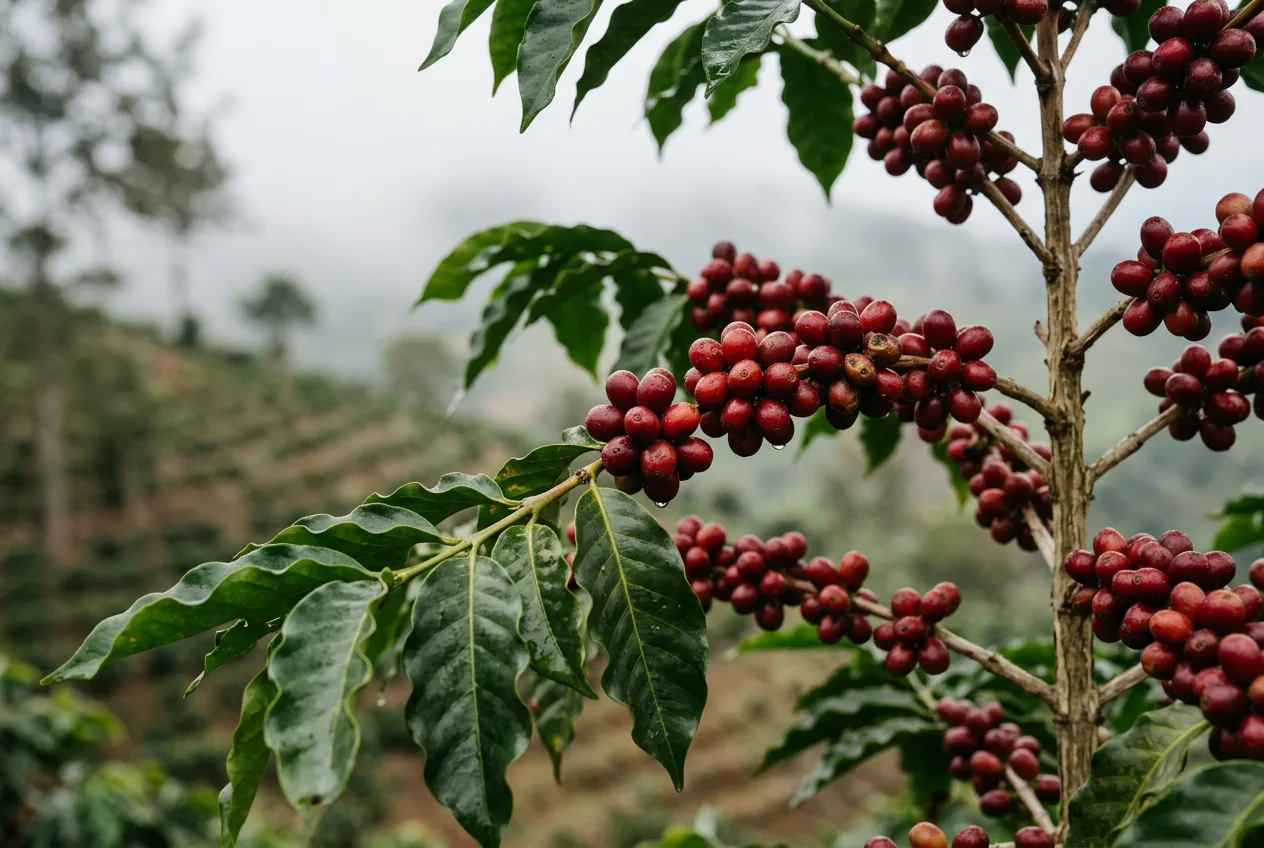
The trees are tall and slender, with long, thin branches and elongated leaves. The beans are often a little longer and narrower than typical arabica beans.
What really sets Geisha apart, though, is the cup. A well-grown, well-processed Geisha tastes more like a fine floral tea than a typical coffee. It's delicate, perfumed and bright, with very little bitterness.
Geisha at a glance
Our tip: When you see "Geisha" on a bag, read it like a grape variety on a wine label. It tells you what was planted, not how well it was grown, processed or roasted.
Where Geisha sits on the coffee family tree
To understand why Geisha is so distinctive, it helps to zoom out. Almost all the coffee we drink comes from two species.
- Coffea arabicaThe species behind nearly all specialty coffee. Sweeter, more aromatic and more complex, but fragile and best grown at altitude.
- Coffea canephora (robusta)Hardier, higher in caffeine and more bitter. Mostly used in instant coffee and some espresso blends.
If you want the full comparison, my guide to arabica vs robusta goes through it in detail.
Over centuries, natural mutations, cross-breeding and farmer selection created hundreds of arabica varieties. Most of the arabica grown in Latin America and Asia descends from a tiny group of plants that left Yemen in the 1600s and 1700s.
That makes most commercial arabica remarkably similar genetically. Typica and Bourbon, and everything bred from them, are close relatives.
The wild Ethiopian branch
Geisha comes from a different part of the tree. It's one of the Ethiopian accessions: wild coffee plants collected directly from the forests of Ethiopia, where arabica first evolved.
In the coffee trade, coffees from this branch are often called Ethiopian heirloom or landrace varieties. They were never bred on a plantation. They grew naturally in the forest understory, and each forest population can be genetically different from the next.
| Group | Examples | Where it comes from |
|---|---|---|
| Typica and Bourbon family | Typica, Bourbon, Caturra, Catuai | Descendants of plants taken from Yemen |
| Hybrids with robusta genes | Catimor, Sarchimor, Castillo | Bred for disease resistance and yield |
| Ethiopian landraces | Geisha, many Ethiopian heirlooms | Wild forest populations in Ethiopia |
That wild background is a big part of Geisha's appeal. It carries genetic traits, and flavor compounds, that the Yemen-descended varieties simply don't have.
From Ethiopia to Panama: Geisha's long journey
Here's the part of the story I find most surprising. Nobody moved Geisha around the world because of its flavor. It traveled because scientists hoped it could protect farms from disease.
The timeline
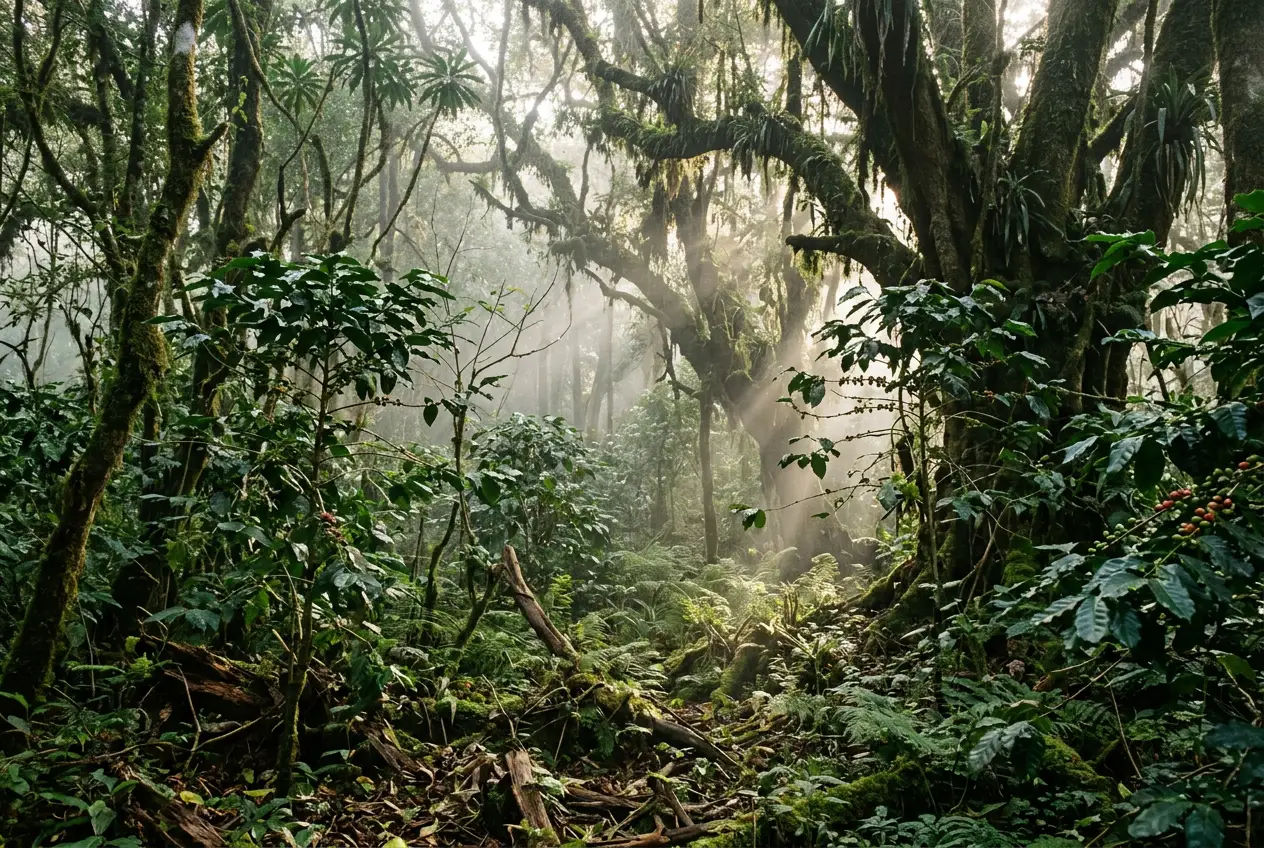
- 1930s: collected in EthiopiaSeeds were gathered from wild coffee trees in the forests near Gesha, in southwestern Ethiopia, during expeditions looking for disease-resistant plants.
- 1930s to 1950s: tested in TanzaniaThe seeds went to the Lyamungu research station in what was then Tanganyika, where researchers studied how the plants grew and resisted disease.
- 1953: logged in Costa RicaPlants grown in Tanzania were sent to CATIE, a tropical agriculture research center in Turrialba, Costa Rica. There they were cataloged in the gene bank as accession T2722.
- 1960s: shared with PanamaCATIE distributed Geisha seeds to farmers and extension programs in Panama and elsewhere in Central America.
- 1960s to 1990s: ignoredFarmers planted some Geisha but rarely valued it. The trees ended up in scattered plots, mixed into ordinary harvests.
- 2004: rediscoveredHacienda La Esmeralda entered a separately harvested Geisha lot into the Best of Panama competition, and everything changed.
Why researchers wanted it
When CATIE handed out Geisha seeds, the selling point was resistance to coffee leaf rust, a fungus known scientifically as Hemileia vastatrix.
Leaf rust covers the undersides of coffee leaves in orange powder. The leaves drop early, the tree can't photosynthesize properly, the harvest shrinks, and badly hit trees can die.
For farmers in the 1960s, that threat was very real. A variety that could stand up to rust sounded like exactly what they needed.
Our tip: If you enjoy the history behind your coffee, my history of coffee guide covers how arabica spread from Ethiopia and Yemen to the rest of the world. Geisha is a much later chapter of that same story.
Why farmers ignored Geisha for 40 years
Even with its rust resistance, Geisha didn't catch on. Through the 1960s, 1970s and 1980s, most Panamanian farmers saw it as a bit of a nuisance.
There were two big reasons.
1. Fragile trees
Geisha trees have long, thin, brittle branches. A heavy crop of cherries or a strong mountain wind can snap them. That means more damaged trees and more work keeping them alive.
2. Low yields
Compared with the productive varieties farmers were planting at the time, Geisha produced far fewer cherries per tree and per acre.
The commodity trap
The real problem was how coffee was sold. Back then, almost all coffee was traded as a bulk commodity. Farmers were paid by weight, and a pound of exceptional coffee earned about the same as a pound of ordinary coffee.
In that system, planting a fragile, low-yielding tree made no sense. Why grow less coffee if you can't get paid more for it?
So Geisha trees survived quietly in odd corners of farms. Their cherries were picked along with everything else, and their unusual flavor disappeared into big, blended lots.
The specialty coffee movement eventually changed that, by paying farmers for quality instead of weight. My guide to what specialty coffee is explains how that shift happened.
The Peterson family and Hacienda La Esmeralda
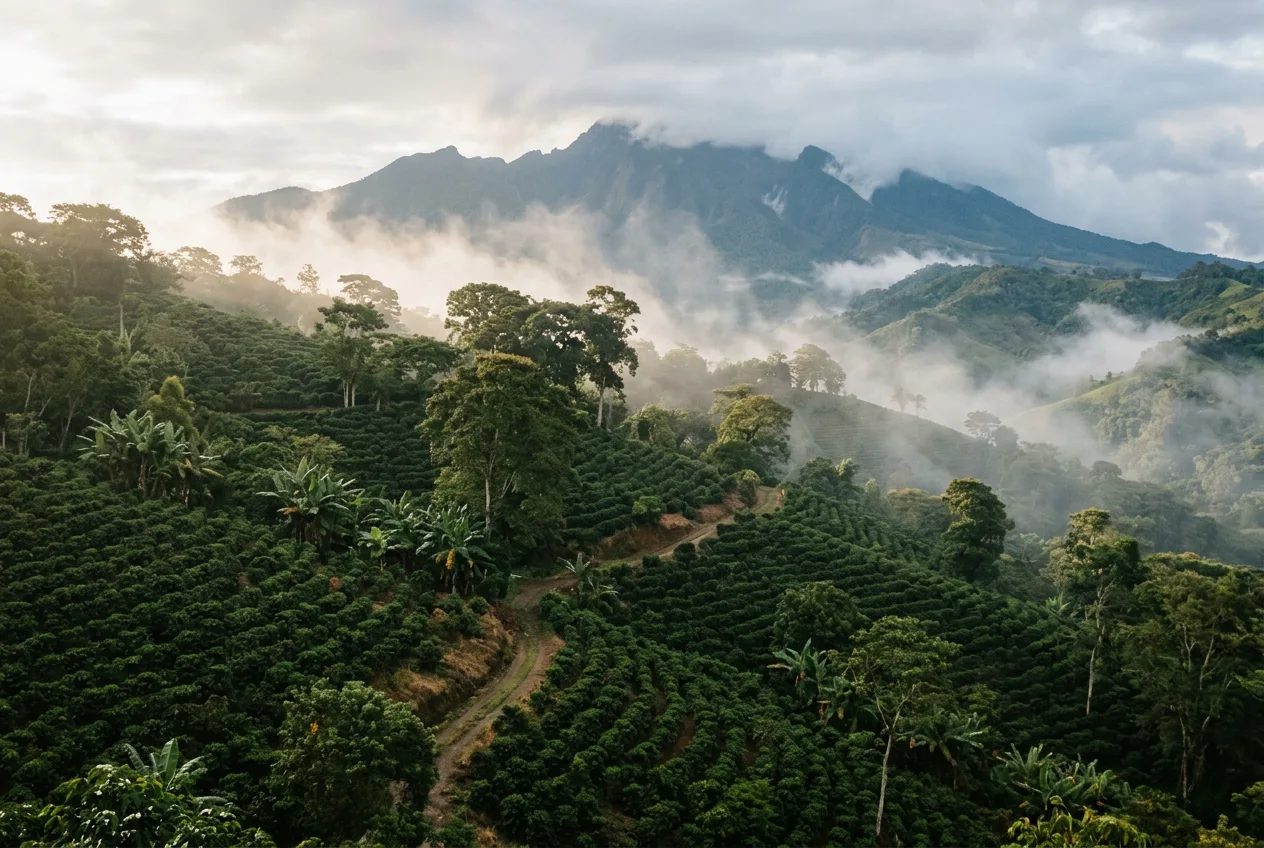
Geisha's turnaround is tied to one family and one farm in the highlands of Boquete, in western Panama, on the slopes of the Barú volcano.
A retirement project
The story starts with Rudolph Peterson, a Swedish-born banker who built a career in California. In 1967 he bought Hacienda La Esmeralda in Boquete as a place to retire to.
At first it wasn't really a coffee business. The family's main activity was dairy farming, and that's still an important part of what they do in Panama today.
Price Peterson takes over
In the 1970s, Rudolph's son Price Peterson took on a much more hands-on role. He had a scientific background, and he brought a curious, experimental approach to running the farm.
In the mid-1980s, the family decided to diversify and planted much more coffee. Boquete already had a long coffee history, and the cool, misty climate suited it well.
The 1996 purchase
The key moment came in 1996. The family bought a neighboring high-altitude farm called Jaramillo.
Jaramillo already had mature coffee trees, planted decades earlier. Many of them had held up well where other trees had been hit hard by rust. They were Geisha.
The 2004 breakthrough
For several years after buying Jaramillo, the Petersons did what nearly every farm did. They picked the Geisha cherries along with everything else and blended them into their regular coffee.
Separating the lots
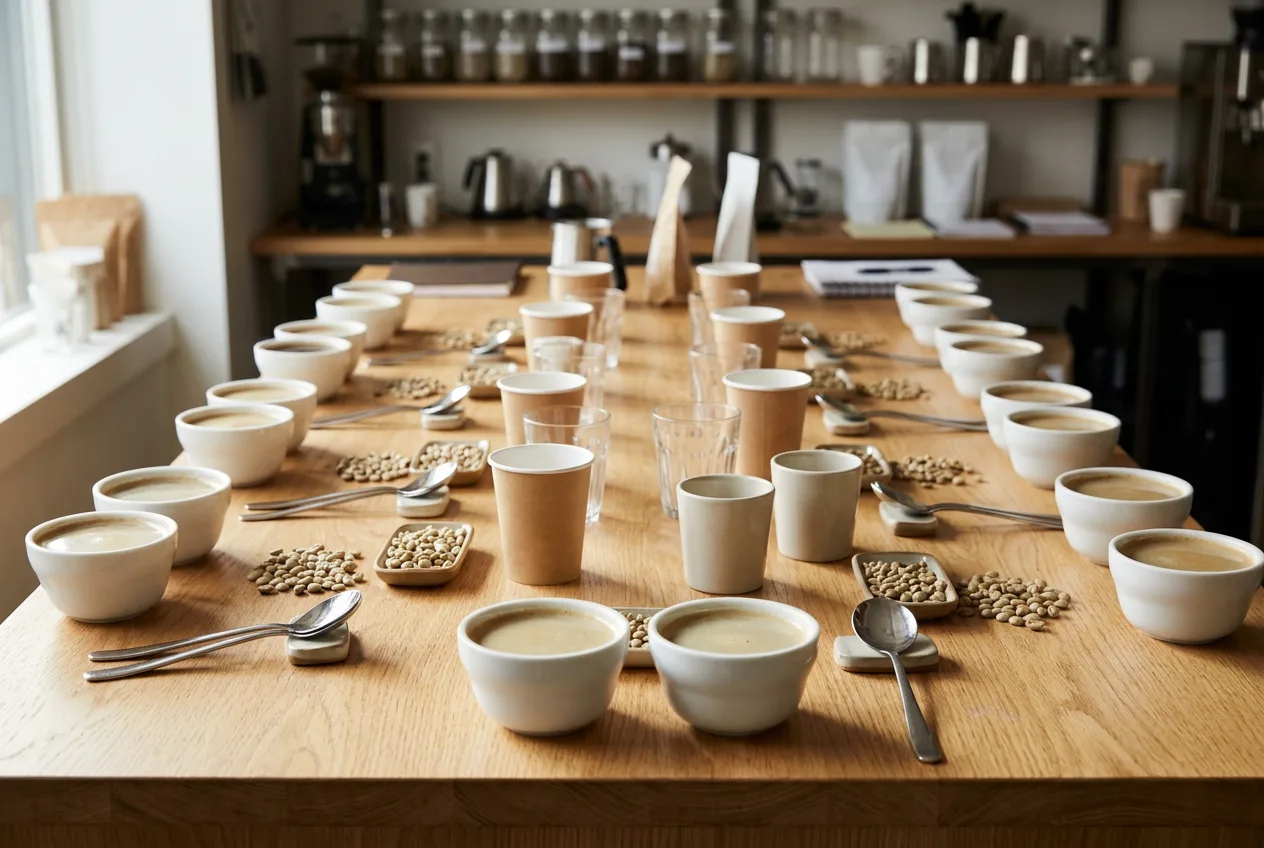
That changed when Price's son Daniel pushed for a more careful approach. Instead of mixing all the harvests, the family started picking, processing and tasting small lots from different plots and elevations separately.
The idea was simple: find out which parts of the farm, and which varieties, produced the best coffee.
When they tasted the Geisha from Jaramillo on its own, the result stunned them. Without ordinary coffee diluting it, the Geisha was intensely floral, fruity and sweet, unlike anything they'd tasted from Central America.
The competition
In 2004, the family entered this Geisha into the Best of Panama competition, where international buyers and cuppers taste and score the country's best coffees blind.
The judges' reaction became coffee legend. Accounts describe an intense berry fragrance as soon as the coffee was ground, then strawberry and citrus blossom when the hot water hit, and a crisp, sweet, sparkling acidity in the cup.
It was so floral and tea-like that some cuppers reportedly wondered whether it had been flavored. One judge famously called it "God in a cup."
The auction
The lot scored 95.6 points and went to the online auction that followed. A group of American specialty roasters paid $21 a pound for the green coffee.
That sounds modest now, but at the time it was a world record. Commodity coffee was trading for well under a dollar a pound.
Our tip: The lesson from Esmeralda applies at home too. If you buy two coffees, taste them side by side before you decide whether one is special. Differences that disappear in a blend jump out in a direct comparison.
Two decades of auction records
The Petersons kept entering Geisha into Best of Panama, and kept winning. Their prices rose almost every year, and other Panamanian farms soon joined the race.
Record Best of Panama prices for Geisha (green coffee, per pound)
Highest prices at the Best of Panama auction. The 2024 and 2025 results were reported per kilogram ($10,013 and $30,204) and converted to pounds here.
The 2025 record was a washed Geisha from Hacienda La Esmeralda that scored 98 points, the highest ever at Best of Panama. The 20 kg lot sold for $604,080.
To put that in perspective, that's about $30,204 per kilogram of green coffee. Even after roasting, a single cup brewed with 15 g of those beans would cost hundreds of dollars.
What the records changed
- Panama's reputation. A small producer best known for its canal became the world's most watched coffee origin.
- Farmers' incomes. High-scoring lots showed that quality could earn many times the commodity price.
- Competitions. Geisha became the go-to variety for barista and brewing championships around the world.
- Planting decisions. Farms across Latin America, Africa and Asia started planting Geisha.
I cover Esmeralda alongside other record-breakers in my guide to the most expensive coffees in the world.
What Geisha coffee tastes like
This is the question everyone asks, and the honest answer is: it depends on the Geisha. But a great one has a very recognizable style.
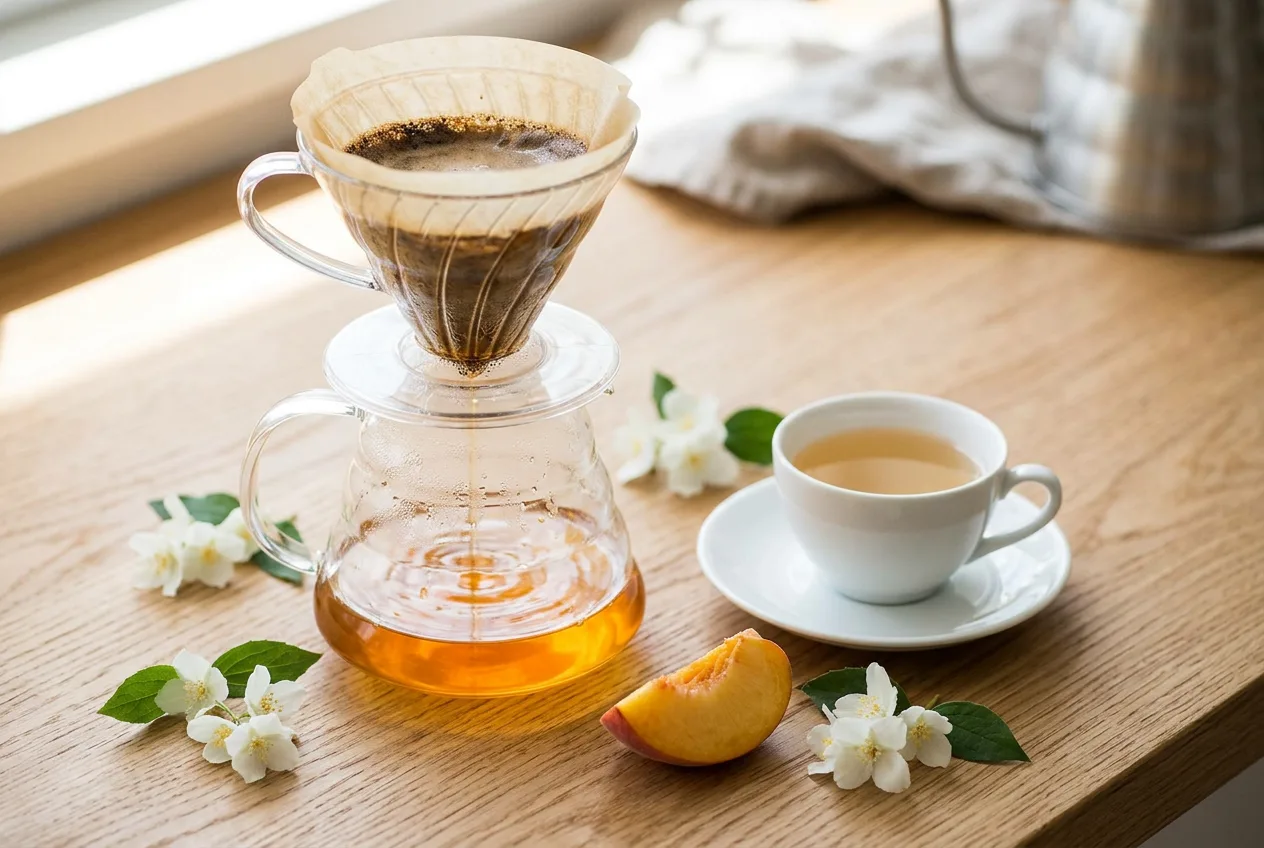
The classic Panama Geisha profile
- Aroma. Jasmine, orange blossom and other white flowers. Often the first thing you notice, straight from the grinder.
- Flavor. Bergamot (the Earl Grey note), peach, apricot, papaya, mango, lemon, lime and honey.
- Acidity. Bright and juicy, but clean and sweet rather than sour.
- Body. Light and silky. Many people compare it to black or oolong tea.
- Finish. Long and sweet, with florals that linger after you swallow.
How it compares with other coffees
| Coffee | Typical flavors | Body | Acidity |
|---|---|---|---|
| Panama Geisha (washed) | Jasmine, bergamot, peach, citrus | Light, tea-like | Bright, sweet |
| Washed Ethiopian heirloom | Lemon, black tea, floral | Light | Bright |
| Kenyan SL28/SL34 | Blackcurrant, grapefruit, tomato | Medium, juicy | Very bright |
| Colombian Caturra | Red apple, caramel, cocoa | Medium | Medium-bright |
| Brazilian natural | Chocolate, nuts, brown sugar | Heavy | Low |
If you like the brightness of Kenyan coffee but want something more floral and delicate, Geisha is a natural next step. My guide to Kenyan coffee covers that style.
How a classic washed Panama Geisha usually scores on my tasting sheet (out of 10)
My own rough scale for comparing coffees at home, not an official cupping score.
Why some Geishas disappoint
I've had Geishas that tasted like a nice, clean Central American coffee, and nothing more. That's not unusual. The jasmine-and-bergamot magic depends on several things lining up:
- The right genetics (more on that below).
- Very high altitude and a cool climate.
- Careful picking of only ripe cherries.
- Clean, precise processing.
- A light roast that protects the aromatics.
- Fresh beans and gentle brewing.
Miss one or two of these, and the delicate flavors fade fast. That's why two bags labeled "Geisha" can taste completely different.
Our tip: Taste Geisha black and let it cool. The florals and fruit often become much clearer at around 120 to 140°F than when the cup is piping hot.
What Geisha needs to grow well
After Esmeralda's success, farmers everywhere rushed to plant Geisha. Many learned the hard way that the variety is fussy.
Altitude
Geisha needs to be grown high. In Central America, the best results usually come from farms above about 5,000 feet.
Cooler temperatures slow down how fast the cherries ripen. That gives the seed more time to build sugars, acids and aromatic compounds. Grown lower and warmer, Geisha often loses its floral delicacy and tastes flat.
The same principle applies to all coffee, which I explain in my guide to coffee growing regions and flavor. Geisha is just especially sensitive to it.
Hands-on farming
Because the branches are brittle, yields are low and the trees are vulnerable to wind, Geisha needs constant attention.
- Careful pruningShaping the tree so branches can carry fruit without snapping.
- Shade and windbreaksProtecting the delicate trees from strong mountain winds and harsh sun.
- Targeted feedingPrecise fertilizing to support healthy growth without forcing yield.
- Selective hand pickingSeveral passes through the trees, picking only fully ripe cherries each time.
- SortingRemoving underripe, overripe and damaged cherries and beans by hand.
Disease
Geisha's rust resistance was the reason it was spread in the first place, and it's usually described as moderate rather than complete. It's also susceptible to some other diseases and pests, so it still needs good farm management.
Not all Geisha is the same: T2722 and genetics
This is the part of the Geisha story most coffee drinkers never hear, and it explains a lot about why quality varies so much.
What T2722 means
When Geisha arrived at CATIE in Costa Rica in 1953, the sample was given an accession number: T2722. That's the specific line that later went to Panama and ended up on the Jaramillo farm.
So when people talk about "Panama Geisha," they usually mean coffee descended from T2722.
The problem with the name
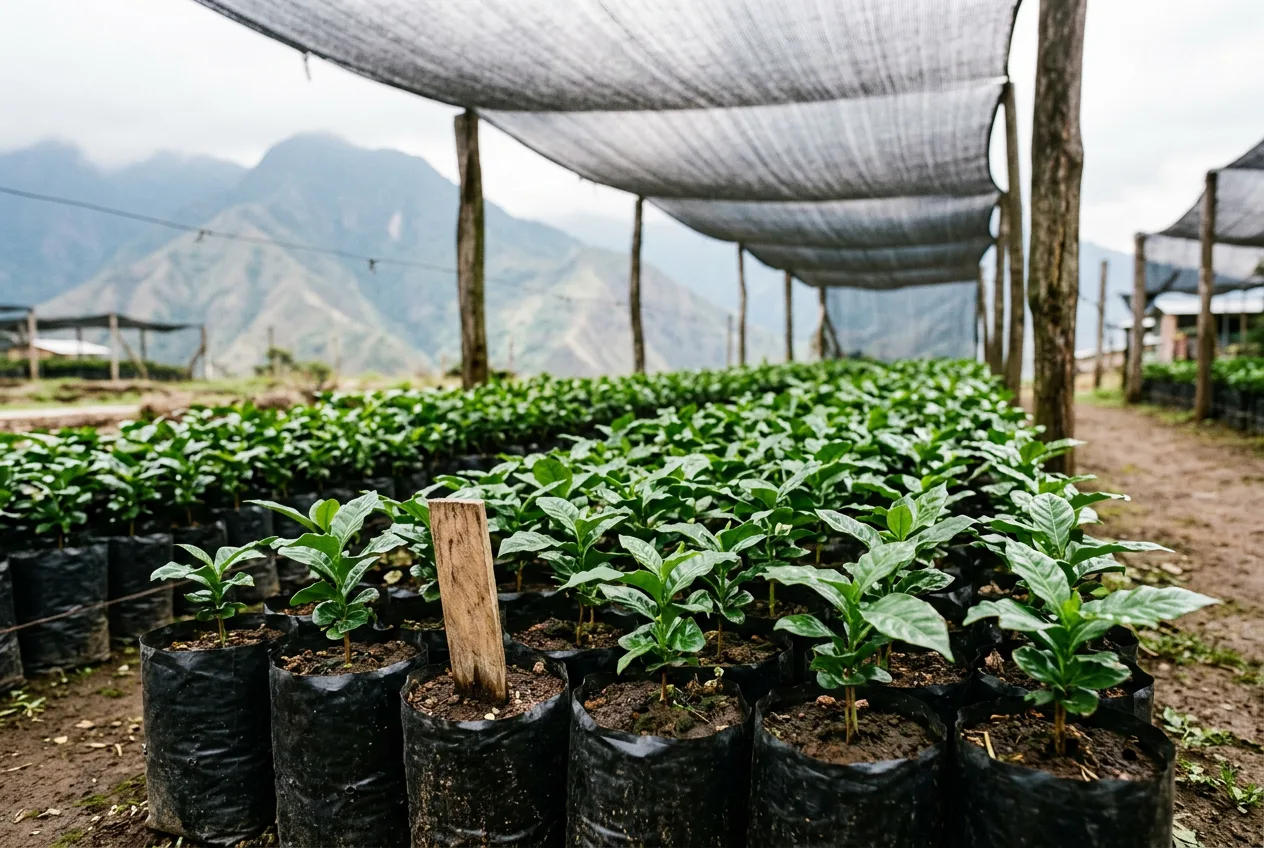
Once Geisha became famous, demand for seeds exploded. Nurseries and farmers started selling plants called "Geisha" that didn't always come from T2722.
Some came from other wild coffee collected in the same part of Ethiopia. Others were simply mislabeled, or crossed with other varieties along the way.
Modern DNA fingerprinting can now show whether a plant genuinely descends from T2722. Testing by World Coffee Research has found that many trees sold as Geisha don't match that original sample.
| Type | What it is | What to expect |
|---|---|---|
| T2722 Geisha | Direct descendant of the CATIE sample | Highest potential for the classic jasmine and bergamot cup |
| Other Ethiopian "Gesha" accessions | Related wild coffee from the same region | Can be excellent, but often a different style |
| Mislabeled or crossed plants | Plants sold as Geisha without verified lineage | Unpredictable; sometimes just ordinary coffee |
Is non-T2722 Geisha worse?
Not necessarily. Some other Ethiopian accessions produce outstanding, award-winning coffee when they're grown high and processed carefully.
But T2722, grown in Panama's volcanic highlands, is the version that set the benchmark. If you want that classic profile, knowing the lineage helps.
Our tip: Good roasters will tell you where their Geisha came from: the farm, the altitude and sometimes the genetic line. If a bag says only "Geisha" and nothing else, treat the name as a hint, not a promise.
Where Geisha grows today
Panama is still the spiritual home of Geisha, but you'll now find it from many origins. Each one tends to have its own character.
| Origin | Typical style | Notes |
|---|---|---|
| Panama | Intensely floral, bergamot, stone fruit | The benchmark; Boquete and Volcán are the main areas |
| Colombia | Floral and juicy, often a little fuller | Fast-growing source; good value for the quality |
| Costa Rica | Clean, sweet, citrusy | Close to CATIE, where Geisha first arrived in the Americas |
| Ethiopia | Floral, tea-like, sometimes wilder | The Gesha region now produces and exports its own coffee |
| Guatemala, Peru, Bolivia | Varies by farm | Smaller amounts, often from specialty-focused farms |
| Asia and Africa | Varies widely | Plantings in places like Malawi, Taiwan and China |
My personal favorites are still Panamanian, but some of the best value Geisha I've bought recently came from Colombia. It wasn't quite as perfumed, but it was sweet, juicy and about half the price.
Processing and roasting Geisha
Variety sets the potential. Processing and roasting decide how much of it ends up in your cup.
Washed, natural and beyond
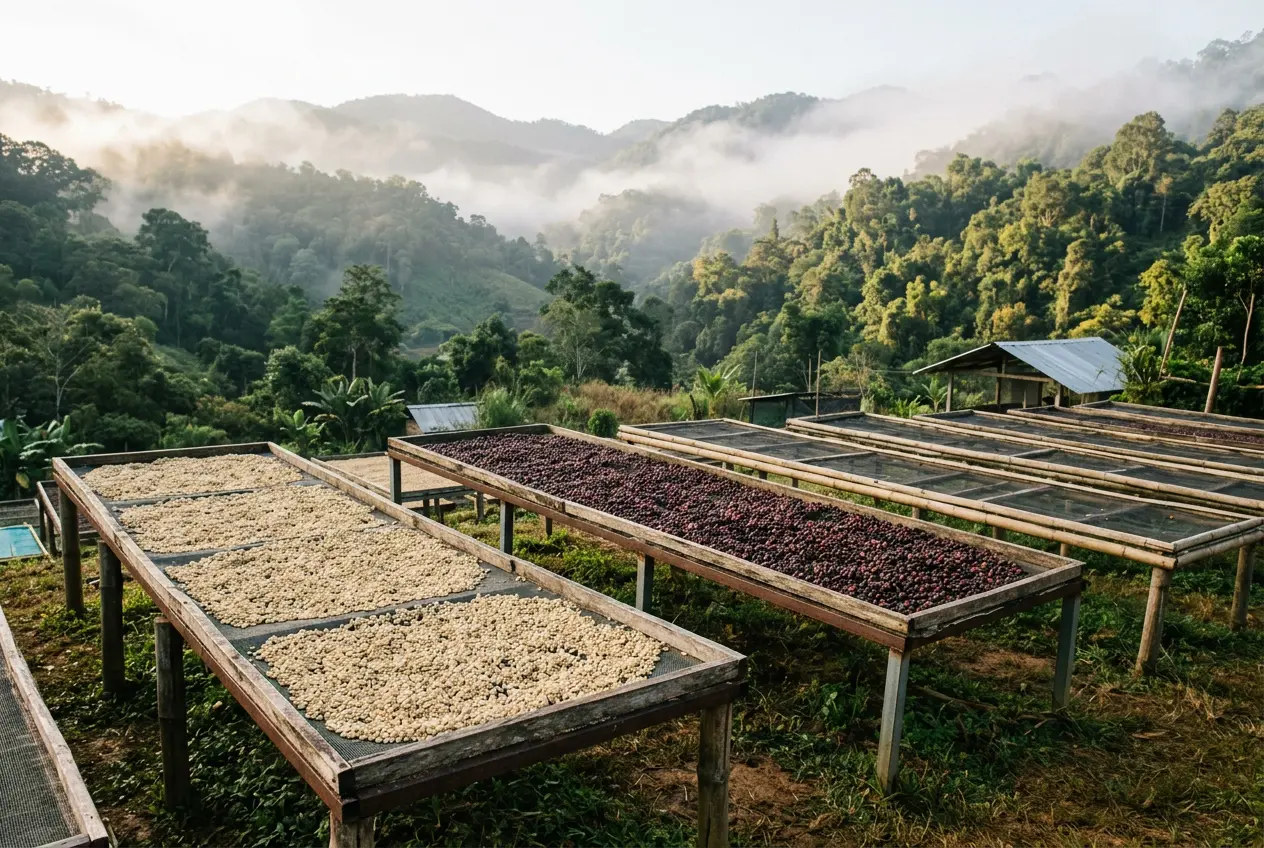
- Washed. The fruit is removed before drying. This gives the cleanest, most transparent cup and is the classic way to show Geisha's florals.
- Natural. The whole cherry dries around the seed. Expect riper fruit, berries and tropical notes, sometimes at the expense of some floral clarity.
- Honey. Some fruit is left on during drying, landing between washed and natural.
- Experimental fermentations. Anaerobic and other controlled fermentations add intense, sometimes boozy fruit flavors. Fun, but they can mask the variety.
I explain how each of these works in my guide to coffee processing methods.
Roast level
Almost every specialty roaster roasts Geisha light. That's not snobbery. Floral aromatics are fragile, and darker roasting quickly replaces them with roasty, bittersweet flavors.
A dark-roasted Geisha would taste much like any other dark roast, which would be a very expensive way to drink ordinary coffee. My guide to coffee roast levels shows how flavor changes as roasts get darker.
Our tip: If it's your first Geisha, choose a washed lot. It gives you the clearest picture of what the variety tastes like before you start exploring naturals and experimental processes.
Why Geisha coffee is so expensive
In a specialty café, a cup of Geisha can easily cost $10 to $15 or more. A 12-ounce bag of whole beans often runs from $60 to well over $100. Here's where that money goes.
The real costs
- Low yieldsEach tree produces relatively little fruit, so every pound costs more to grow.
- Difficult farmingHigh-altitude land, fragile trees, windbreaks and constant care all add cost.
- LaborSelective picking and hand sorting take many more hours than mechanized harvesting.
- Small lotsTop Geishas are processed and sold in tiny batches, which raises costs at every step.
- Auction pricesRoasters often pay auction or direct-trade premiums to secure the best lots, and that cost is passed on.
The prestige factor
There's also the name. After twenty years of headlines, "Geisha" has almost mythical status. For many buyers, the word alone suggests a special experience.
That creates a temptation. Some sellers charge a lot for low-grown, unverified or poorly processed Geisha simply because the name sells.
The best specialty roasters do the opposite. They buy Geisha based on blind cupping scores, not on the label, so that when they charge a high price, the coffee earns it.
What I think is a fair price
| Type of Geisha | Typical retail price | Cost per 15 g cup |
|---|---|---|
| Colombian or Costa Rican Geisha | $20 to $40 per 4 to 8 oz | $2 to $4 |
| Good Panama Geisha | $40 to $80 per 8 to 12 oz | $3 to $6 |
| Famous estate lot (e.g. Esmeralda) | $60 to $100+ for 100 to 250 g | $6 to $15 |
| Competition or auction-winning lot | Often sold in small tins at very high prices | $20 and up |
Approximate ranges based on what I've seen from specialty roasters. Prices change every harvest.
For comparison, a decent specialty single origin costs about $1 per cup at home. My guide to why single-origin coffee is so expensive breaks down where that money goes.
How to buy good Geisha coffee
Because the name is so often stretched, buying Geisha takes a bit more care than buying regular coffee. Here's my checklist.
What to look for on the bag
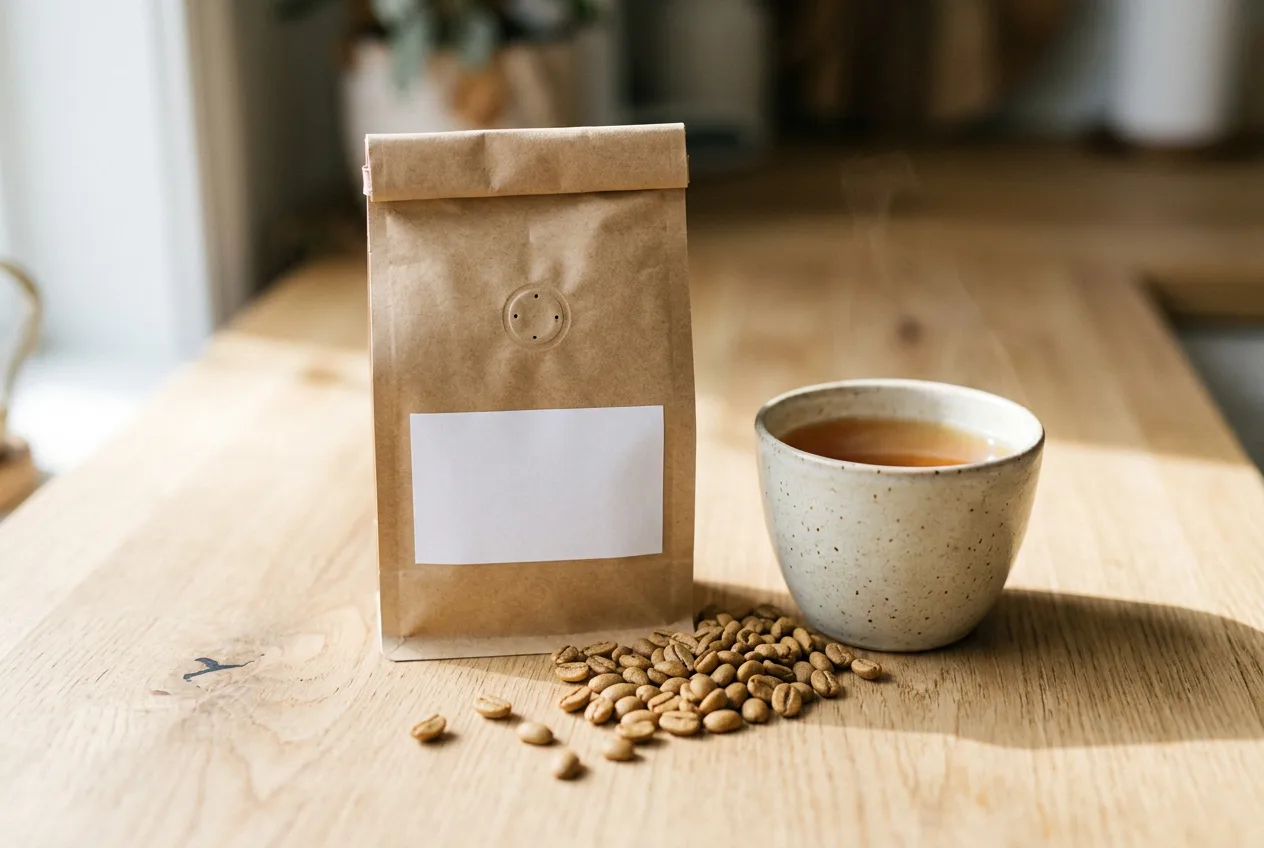
- Farm or producer name. Not just "Panama" or "Colombia."
- Altitude. Ideally around 5,000 feet or higher for Central American Geisha.
- Process. Washed for clarity, natural for fruit.
- Roast date. Within the last four weeks, and ideally a week or two old.
- Tasting notes. Look for florals, bergamot and stone fruit. If the notes say "dark chocolate and nuts," it's probably not the classic style.
- Small bag sizes. Many roasters sell Geisha in 100 g or 4 oz bags, which is perfect for trying it.
Red flags
- "Geisha blend" with no information on how much Geisha is in it.
- Dark roasts or pre-ground Geisha.
- No roast date, or a "best before" date a year away.
- Huge bags at suspiciously low prices.
My general guide on how to choose coffee beans covers labels in more detail.
Our tip: Order Geisha by the cup at a good specialty café before you buy a bag. If you love it, ask the barista which roaster they use and how they brew it.
How to brew Geisha coffee at home
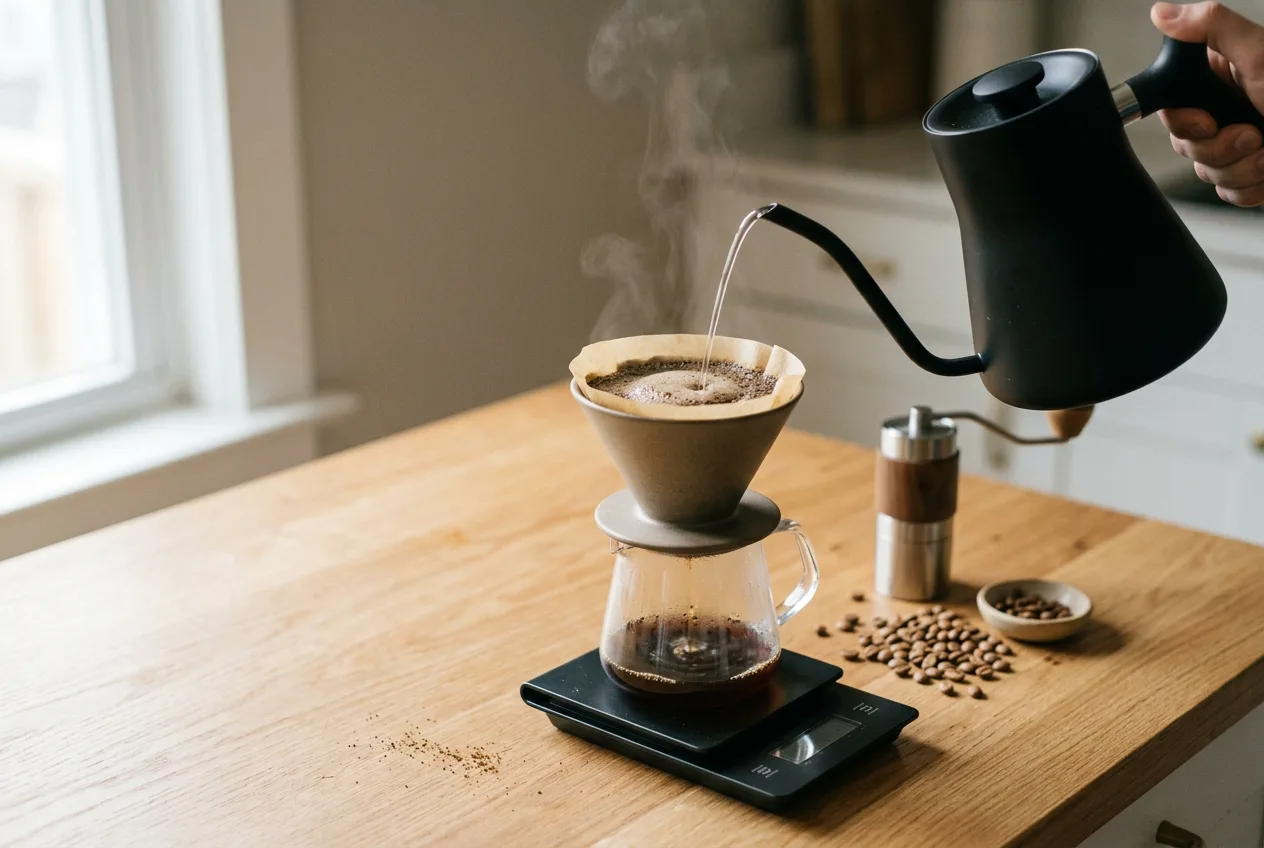
Geisha rewards gentle, precise brewing. You don't need fancy gear, but a scale, a decent grinder and a pour-over dripper will make a big difference.
My pour-over recipe
- Rest the beansLight, dense Geisha usually tastes best 7 to 14 days after roasting. My guide to coffee resting and degassing explains why.
- Weigh15 g of coffee to 250 g of water, a ratio of about 1:16.5. Some people go a little stronger, at 1:15.
- Grind freshMedium-fine, similar to table salt. A burr grinder gives a more even grind than a blade grinder; I compare them in my burr vs blade grinder guide.
- Heat the waterAround 200 to 205°F, using filtered water with moderate minerals.
- BloomPour about 40 g of water to wet all the grounds and wait 30 to 45 seconds.
- Pour slowlyAdd the rest of the water in slow, steady circles, finishing by about 1:45.
- Let it drainAim for a total brew time of roughly 2:30 to 3:15.
- Taste as it coolsSip at different temperatures. The florals usually get stronger as the cup cools.
Adjusting your brew
| If it tastes | Try this |
|---|---|
| Sour, thin or sharp | Grind a little finer or use slightly hotter water |
| Bitter, dry or flat | Grind a little coarser or pour faster |
| Weak and watery | Use a stronger ratio, such as 1:15 |
| Muted, no florals | Check the roast date and let the cup cool before judging |
Other brewing methods
- Pour-over. My first choice. It highlights clarity and aroma.
- AeroPress. Works well with a longer, gentler brew.
- French press. Fine, but the heavier body can hide some delicacy.
- Espresso. Possible and can be stunning, but very light Geishas are hard to dial in and you'll use a lot of expensive beans.
- Milk drinks. I'd avoid them. Milk covers exactly the flavors you paid for.
Storing an expensive bag
Keep Geisha in an airtight, opaque container away from heat and light. If you won't finish it within a few weeks, freeze portions in small airtight bags once it has rested. My guide to storing coffee beans walks through it.
Our tip: Use a clear glass server and cup when you brew Geisha. Its color is usually a bright, tea-like amber, and watching it is part of the fun.
Gesha or Geisha: which spelling is right?
You'll see both spellings on bags, menus and in competitions. Both are accepted, but they come from different places.
| Spelling | Where it comes from | Who uses it |
|---|---|---|
| Geisha | Colonial-era records and CATIE seed documents | Many Panamanian farms and older labels |
| Gesha | The name of the region in Ethiopia | Ethiopian producers and many specialty roasters today |
Why "Geisha" became common
British colonial officials and researchers, and later CATIE, wrote the name as "Geisha" in their logs and research papers. Seed packets sent across Latin America carried that spelling, so it stuck for decades.
Why many roasters now write "Gesha"
The variety is named after the Gesha area in southwestern Ethiopia, which is usually written without the "i." A growing number of roasters, importers and writers prefer "Gesha" to honor that origin and to avoid an unrelated association with Japanese geisha.
In this guide I use "Geisha" mostly because that's what most people search for. Either way, both names refer to the same coffee.
Is Geisha coffee worth it?
For me, a good Geisha is one of the few luxury coffees that genuinely earns its price. Unlike novelty coffees, its reputation was built in blind tastings, again and again, over twenty years.
Who will love it
- People who drink their coffee black.
- Tea lovers, especially fans of Earl Grey and jasmine tea.
- Anyone who enjoys bright, fruity, light-roasted coffee.
- Home brewers who like experimenting with pour-over.
Who might not
- People who prefer dark, chocolaty, heavy coffee.
- Anyone who mostly drinks lattes or cappuccinos.
- Those who only brew with a basic drip machine and pre-ground coffee.
My recommendation
Start small. Buy a 100 g bag of a washed Panama or Colombian Geisha from a roaster that names the farm and gives a roast date. Brew it carefully as a pour-over, side by side with a coffee you know well.
If it clicks, you'll know within one sip. If it doesn't, you've spent about the cost of a couple of café lattes to find out, and that's a pretty good deal for one of coffee's great experiences.
Geisha also makes a lovely gift for coffee people. I list more ideas in my gifts for coffee lovers guide.
Geisha coffee at a glance
Frequently asked questions
What is Geisha coffee?
Geisha, or Gesha, is a variety of arabica coffee that originally grew wild in the Gesha area of southwestern Ethiopia. It's known for a light, tea-like body and strong floral and fruity flavors such as jasmine, bergamot and peach.
Why is Geisha coffee so expensive?
The trees have low yields and fragile branches, and they need very high altitude and careful hand picking. Top lots also score extremely well in blind competitions, which drives auction prices up, and the famous name adds a prestige premium.
What does Geisha coffee taste like?
A classic washed Panama Geisha tastes of jasmine and other white flowers, bergamot (like Earl Grey tea), peach, apricot, tropical fruit and citrus, with a light, silky body and a sweet, bright acidity.
Is it spelled Gesha or Geisha?
Both are used. "Geisha" comes from colonial-era and CATIE records, while "Gesha" reflects the name of the region in Ethiopia. Many specialty roasters now prefer "Gesha."
Where does Geisha coffee come from?
It originated in Ethiopia, traveled to Tanzania and then Costa Rica in 1953, and was distributed in Panama in the 1960s. Panama, especially Boquete, made it famous, but it's now grown in Colombia, Costa Rica, Ethiopia and many other countries.
What is T2722 Geisha?
T2722 is the accession number given to the Geisha sample cataloged at CATIE in Costa Rica in 1953. Most classic Panama Geisha descends from it, and DNA testing can confirm whether a plant shares that lineage.
What was the record price for Geisha coffee?
In 2025, a washed Geisha from Hacienda La Esmeralda sold for $30,204 per kilogram of green coffee at the Best of Panama auction, about $13,705 a pound.
How should I brew Geisha coffee?
Brew it black as a pour-over with about 15 g of coffee to 250 g of water at 200 to 205°F, using a medium-fine grind. Let the cup cool a little before judging the flavor.
Can you make espresso with Geisha?
Yes, but very light Geisha roasts can be tricky to dial in, and espresso uses more coffee per cup. Most people get more out of it as a filter coffee.
Does Geisha coffee have more caffeine?
No. It's an arabica variety with caffeine levels similar to other arabica coffees, and much less than robusta.

- Michael Reynolds, notes from tasting Panama, Colombian and Ethiopian Geisha at home
- Our story, Hacienda La Esmeralda
- Esmeralda Special, Panama, Coffee Review
- Understanding the Geisha cultivar, Coffee Review
- The coffee roaster's complete guide to coffee varieties and cultivars, Royal Coffee
- Geisha, Barista Hustle
- CCRE Working Paper No. 2, Borlaug Institute, Texas A&M University
- Best of Panama auction sees world-record price, Global Coffee Report (2025)
- Geisha (coffee), Wikipedia
Related guides
The most expensive coffees in the world Coffee processing methods What is specialty coffeeWritten by Michael Reynolds. Last updated November 19, 2026.