Vietnamese Coffee Culture: The Phin, Condensed Milk, Egg Coffee and How Vietnam Became a Coffee Giant
Vietnamese coffee is strong, slow and sweet, and almost every part of it has a story. The metal phin filter, the condensed milk and the egg coffee all started as answers to hard times. Here's how a colonial crop became a national ritual, a global export engine and now a serious specialty scene.
We choose products independently. We may earn a commission through links on this page; your price stays the same. Affiliate policy
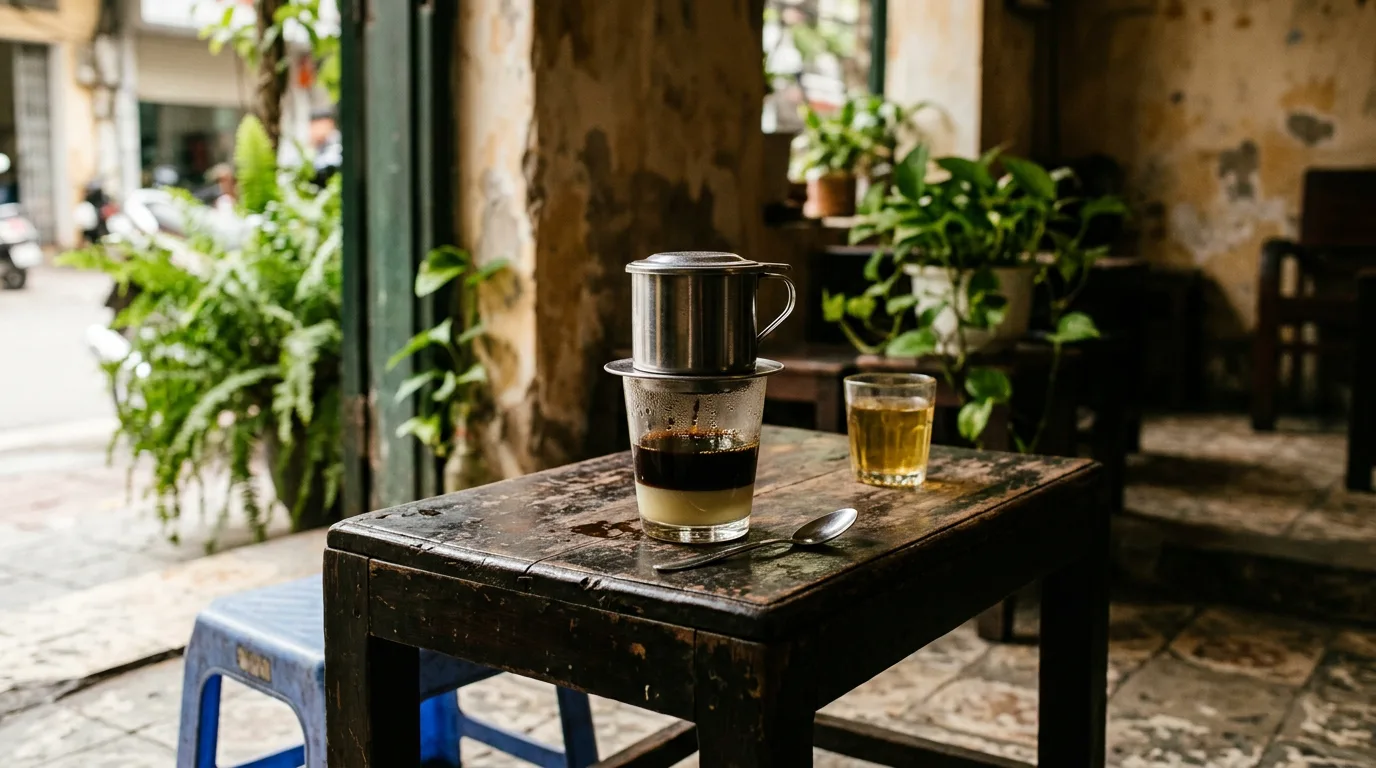
Vietnamese coffee is usually dark-roasted robusta, brewed slowly through a small metal phin filter and sweetened with condensed milk, hot or over ice. The French brought coffee and the phin in the 1800s. Scarcity added the condensed milk and egg coffee. A Cold War deal with East Germany and the Doi Moi reforms turned Vietnam into the world's second-largest coffee exporter. Today, Hanoi and Ho Chi Minh City also have a serious specialty scene.
Why I wrote this
The first time I ordered a ca phe sua da in Hanoi, I sat on a plastic stool the height of a shoebox and watched a small metal filter drip, one drop at a time, onto a layer of condensed milk. It took so long that I almost asked if something was wrong.
Then I stirred it over ice and took a sip. It was the strongest, sweetest, most chocolatey coffee I'd ever had. I ordered a second one before I'd finished the first.
What surprised me later was how much history sits in that glass. The filter is French. The condensed milk is a wartime and tropical-climate fix. The beans are mostly robusta because of a fungus, a war and, of all things, East Germany.
Back home, I bought a few phin filters and spent months brewing with them. I also started buying Vietnamese specialty beans, which taste nothing like the dark, bitter coffee I first drank. This guide puts all of that together.
What you'll learn
- How coffee came to Vietnam and why it stayed.
- How the phin filter works and why condensed milk became standard.
- The surprising Cold War story behind Vietnam's robusta boom.
- Every drink on the menu, from ca phe den to egg coffee.
- How to make Vietnamese coffee at home, step by step.
Vietnamese coffee at a glance
If you only have a minute, this table sums up what makes coffee in Vietnam different from coffee almost anywhere else.
| Feature | Traditional Vietnamese coffee |
|---|---|
| Main bean | Robusta, mostly from the Central Highlands |
| Roast | Dark, heavy, often smoky and nutty |
| Brewer | The phin, a small gravity-fed metal filter |
| Sweetener | Sweetened condensed milk, or sugar |
| Served | Hot (nong) or over ice (da) |
| Where | Sidewalk stools, tiny tube-house cafes, everywhere |
| Pace | Slow: you wait for the drip and you sit a while |
Compare that with Italy, where coffee is a quick espresso at the counter. In Vietnam, the coffee itself forces you to slow down. I cover the Italian side in Italian coffee culture.
How coffee arrived: the French, 1857
Coffee came to Vietnam with French colonists in 1857. They saw that the tropical climate and fertile soil were well suited to coffee, and they started planting.
The first plantations weren't where you'd expect. They were in northern provinces such as Ninh Binh and Quang Binh, a long way from the regions that grow most of Vietnam's coffee today.
The French planted arabica. For the colonial administration, coffee was simply a cash crop: grown for export to Europe and for French expatriates living in Indochina. Nobody planned for the Vietnamese to become coffee drinkers.
But they did, and fast. Locals developed a taste for it, and a homegrown cafe culture began to take shape alongside the colonial one.
Hanoi's first cafes and the tube house
Some of the oldest family cafes in Hanoi show exactly where coffee turned from an export commodity into an everyday habit. Cafe Duy Tri is a good example. It has been family-run since 1936, close to ninety years.
It sits inside a classic Hanoi tube house. These buildings are famously narrow, roughly six and a half feet wide at the front, but they stretch far back from the street.
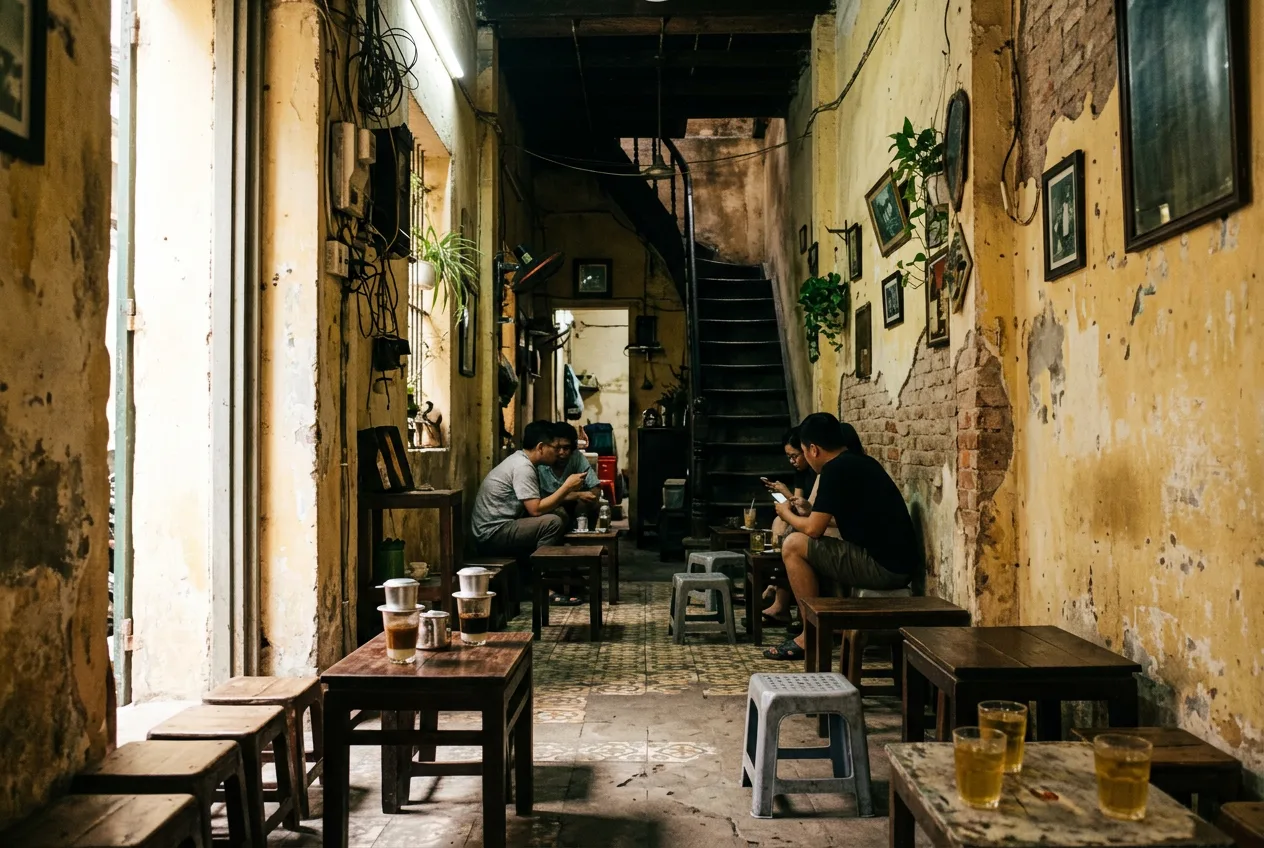
In cafes like this, staircases run right through the family's living space. You climb past someone's kitchen to reach a tiny upstairs room with a few low tables. It feels less like a business and more like drinking coffee in someone's home.
That intimacy is still a big part of Hanoi coffee culture. Many of the best cafes are small, family-run and a little hard to find.
Our tip: In Hanoi, look up. Some of the best cafes are on the second or third floor of a tube house, with only a small sign at street level.
The phin filter: coffee that makes you wait
Along with the beans, the French brought the brewer that still defines Vietnamese coffee: the phin. It's a small metal cup with a perforated base, a press plate that sits on the grounds, and a lid.
The phin works by gravity alone. You set it on top of a cup or glass, add ground coffee and hot water, and the coffee drips slowly through into the cup below.
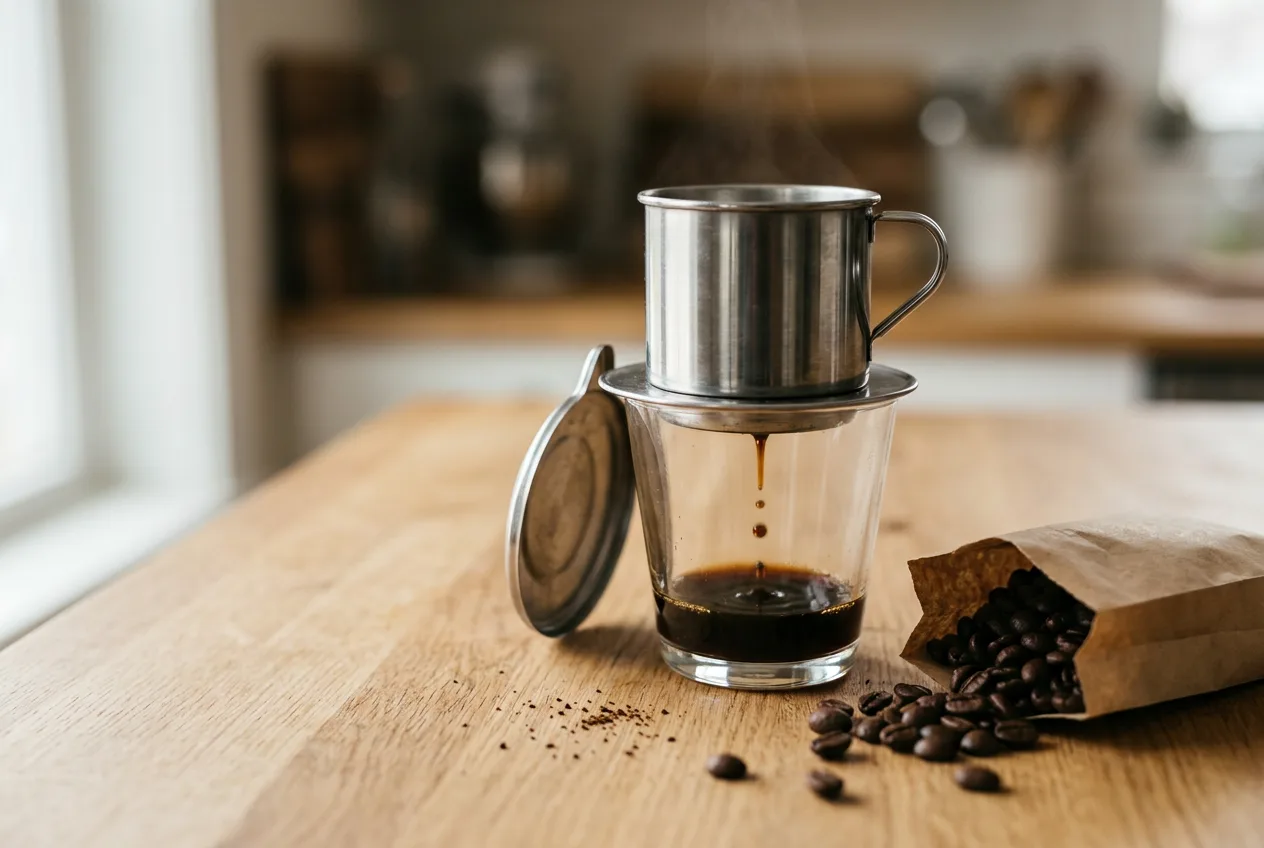
It's slow. A single cup often takes four to five minutes, sometimes longer. Rather than seeing that as a flaw, people built the ritual around it. You sit, watch the street and wait. The pause is part of the drink.
The parts of a phin
The press is the clever part. It sits on top of the coffee and controls how fast the water passes through. Some phins have a screw-down press, others a loose one that simply rests on the grounds.
The result sits somewhere between espresso and drip coffee. It's thick, concentrated and full-bodied, but without espresso's pressure or crema. A typical phin makes a small amount of very strong coffee, which is exactly what you want when you add sweet milk or ice.
Why condensed milk? A fix for heat and scarcity
The hardware was French, but what went into the cup was Vietnamese, and it was driven by necessity.
During the colonial era and for decades after, fresh milk was scarce in Vietnam. Refrigeration was rare, and fresh dairy spoils quickly in tropical heat. So people reached for something that didn't need a fridge: canned sweetened condensed milk.
It was shelf-stable, easy to find and already sweet. A spoonful or two at the bottom of the glass, coffee dripped on top, a quick stir, and you had a rich, sweet, creamy drink without any fresh milk at all.
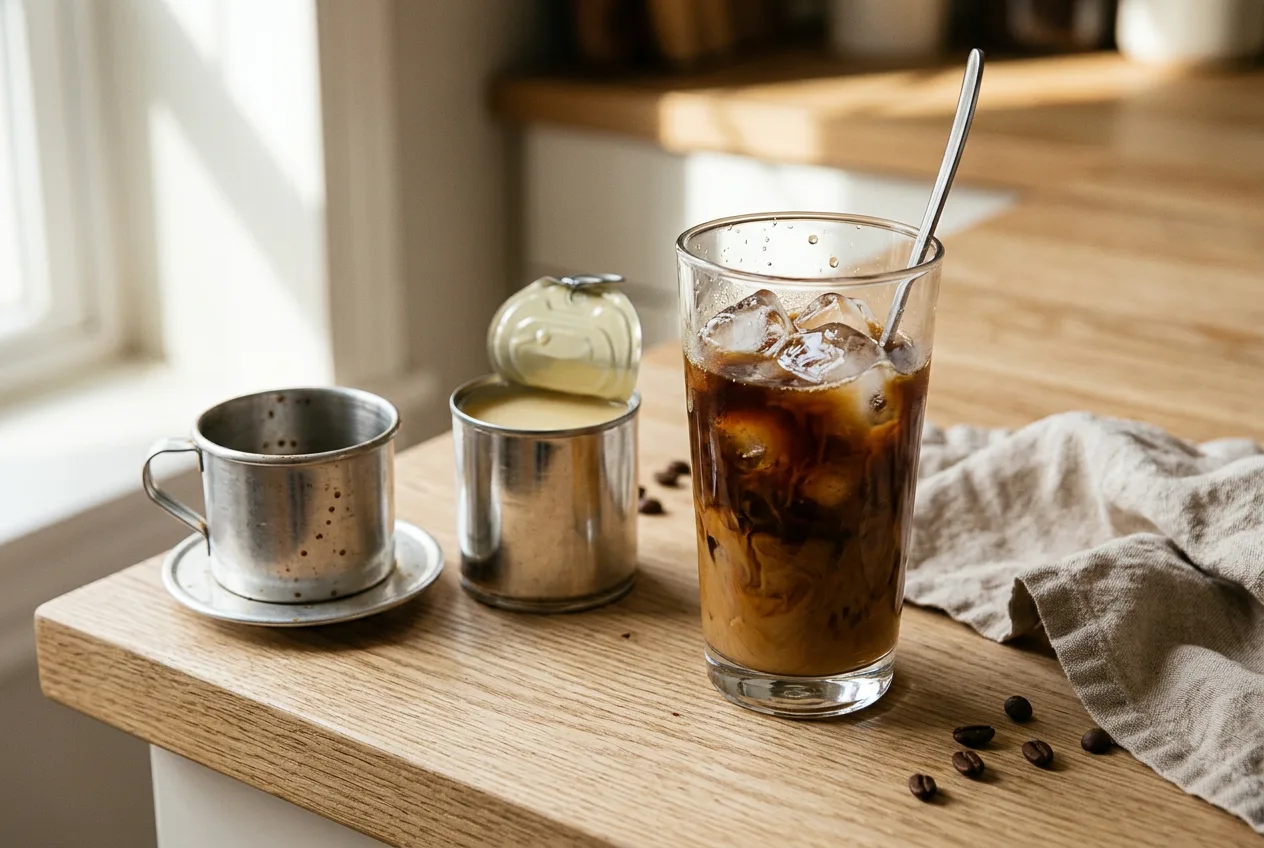
That practical swap locked in the flavor of Vietnamese coffee for more than a century. It's why the classic drinks are ca phe sua nong, hot coffee with condensed milk, and ca phe sua da, the iced version that most visitors fall in love with.
Our tip: Don't stir the condensed milk in until the phin has finished dripping. You'll see the two layers, and you can judge how strong the coffee is before you mix.
How traditional Vietnamese coffee tastes, and why
Traditional Vietnamese roasts are dark, heavy, a little smoky and intensely bitter. That holds even when they're made with arabica, but it's especially true of robusta, the bean most Vietnamese coffee is made from.
You'll often taste strong nutty notes, dark chocolate and something almost like toasted grain. Some traditional roasters also roast beans with a little butter, sugar or other additions, which adds to the caramelized, slightly oily character. That practice varies a lot between brands.
On its own, that cup can be harsh. The condensed milk is what balances it. Its sweetness tames the bitterness, and its thick texture rounds out the body. Together they taste of caramel and chocolate rather than of sugar and bitter coffee.
How the classic cup is balanced (my tasting impressions)
If you want to understand why robusta tastes so different from arabica, I break it down in arabica vs robusta. For how roast level shapes bitterness, see coffee roast levels explained.
The Central Highlands: the heart of Vietnamese coffee
In the late 1800s and early 1900s, coffee growing moved south into the Central Highlands. It turned out to be the perfect home.
The region has high plateaus and deep, red volcanic basalt soil that holds water and nutrients well. It became, and still is, the center of Vietnam's coffee industry. Provinces such as Dak Lak, Lam Dong, Gia Lai and Dak Nong grow the bulk of the country's beans.
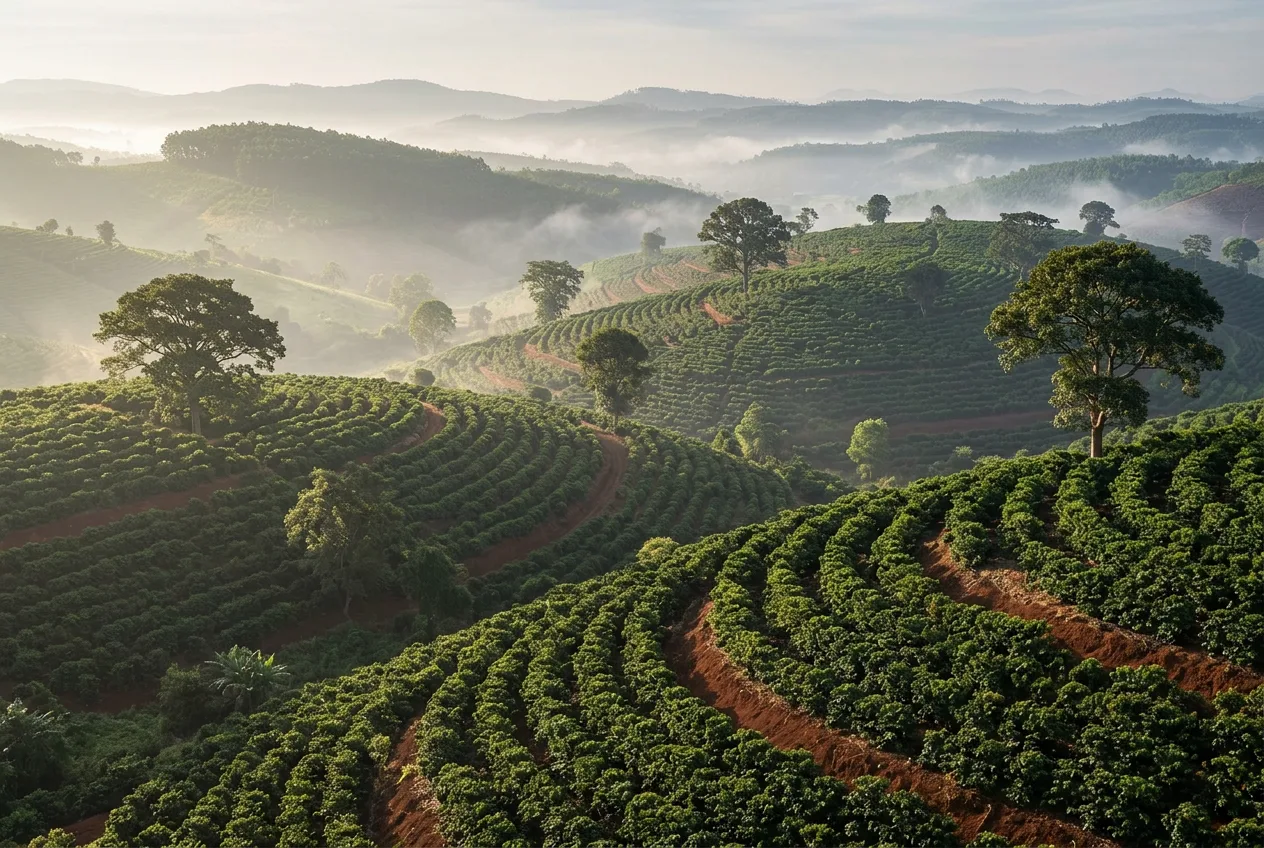
Production grew to an industrial scale. By 1940, Vietnam was producing about 2,000 tons of coffee a year. That sounds like a lot, but it's tiny compared with what was to come.
The city of Buon Ma Thuot, in Dak Lak province, became the unofficial coffee capital. Today it hosts coffee festivals and museums, and many of Vietnam's biggest coffee companies started there.
If you're curious how growing conditions shape flavor more generally, see how the coffee plant grows.
Leaf rust and the switch to robusta
The early boom didn't last. First came coffee leaf rust, a fungal disease that attacks arabica leaves, weakens the trees and slashes harvests. It wiped out a huge share of Vietnam's arabica.
Farmers had to adapt or lose their livelihoods. They moved away from fragile arabica and planted hardier, more disease-resistant species: robusta and, to a lesser extent, liberica.
That decision shaped everything that followed. Vietnamese coffee became robusta coffee, and the dark, strong, condensed-milk style grew up around that bean. I explain how the disease works in coffee leaf rust.
Decades of war and a collapsed industry
Then came the conflicts that defined Vietnam's twentieth century: the Second World War and Japanese occupation, the First Indochina War against France, and finally the Vietnam War.
Infrastructure was destroyed and almost every domestic industry collapsed. Coffee plantations were bombed, burned or abandoned. Exports dried up.
By the time the country was reunified in 1975, the coffee industry was in ruins. It's worth remembering this when you sip a sweet iced coffee in Hanoi today. The scale of what came next was a rebuild from almost nothing.
The East German coffee deal
After reunification, the government made agricultural recovery a priority. Coffee looked like a strategic export crop that could bring in badly needed foreign currency.
The problem was that war had stripped Vietnam of the machinery, processing plants and technical know-how needed to grow coffee at scale. Help came from an unexpected place: East Germany, the German Democratic Republic.
East Germany's coffee crisis
In the late 1970s, East Germany had a coffee problem. World coffee prices had spiked, hard currency was scarce, and imports had become very expensive. Coffee can't grow in Central Europe's climate, so there was no local fix.
The government tried to stretch supplies with a state-mandated blend called Mischkaffee, a mix of real coffee with roasted grains, peas and chicory. People hated it.
What started as a consumer complaint turned into a political worry. Leaders feared that if the state couldn't provide something as basic as a decent cup of coffee, people would start to lose faith in the system. For more on chicory and grain coffee, see my guide to coffee substitutes and alternatives.
The deal
East Germany turned to Vietnam, a socialist ally that was now at peace, had the right climate and already knew how to grow coffee.
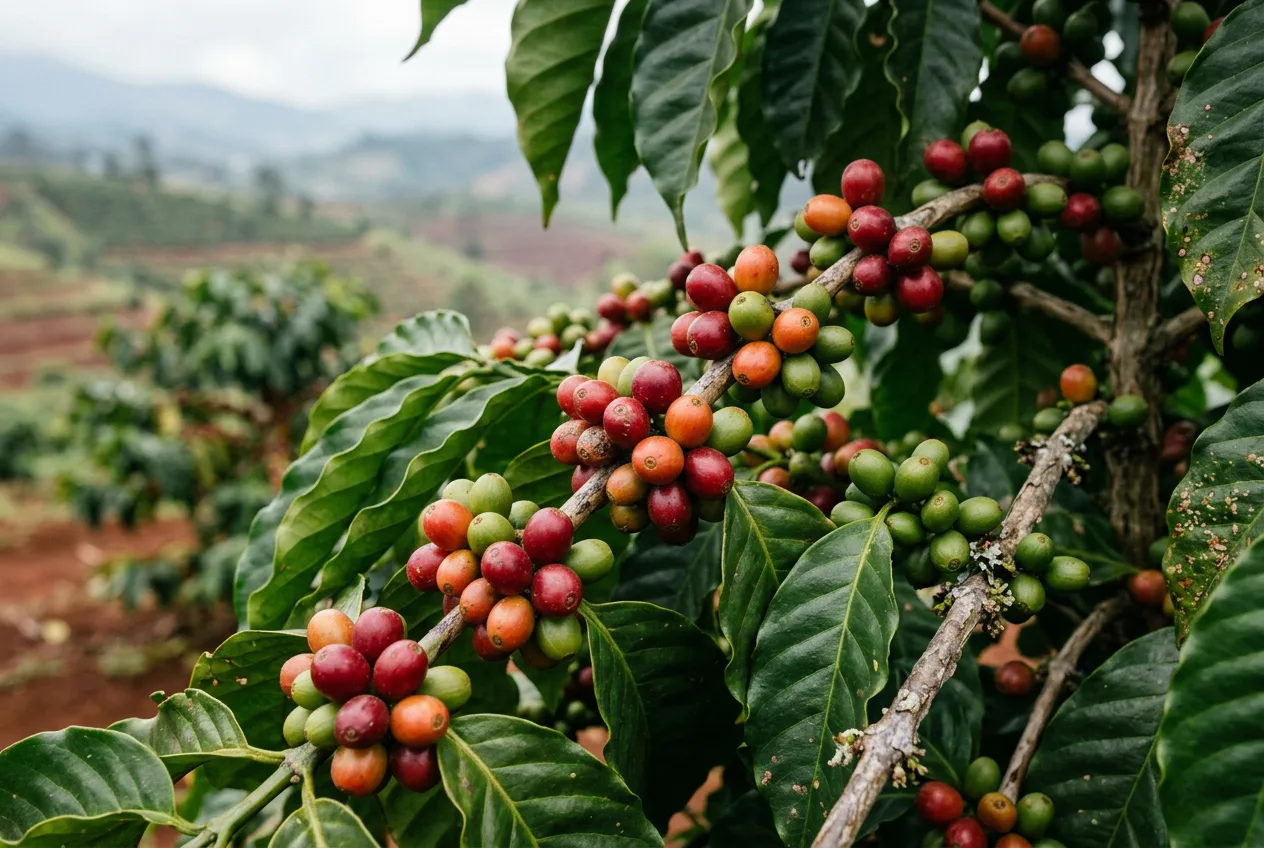
East Germany invested tens of millions of dollars. It shipped farm equipment, processing machinery, trucks and agronomists. In return, it was promised half of Vietnam's future coffee harvests.
Why the plan was built on robusta
The rebuilding plan leaned heavily on robusta. It's more bitter than arabica and has nearly twice the caffeine, but it had every practical advantage the two countries needed.
| Trait | Robusta | Arabica |
|---|---|---|
| Hardiness | Tough, resists disease | Delicate, vulnerable to leaf rust |
| Altitude | Thrives lower down | Prefers higher elevations |
| Yield | Much higher | Lower |
| Harvesting | Better suited to mechanized methods | Often hand-picked |
| Caffeine | Nearly double | Lower |
| Flavor | Bitter, heavy, nutty | Sweeter, more acidic, more aromatic |
For East Germany, robusta meant lots of coffee, quickly, to meet huge demand at home. For Vietnam, it meant foreign aid, jobs and a rebuilt farming sector. On paper, it worked for everyone.
A buyer that vanished
Coffee trees take several years to mature and bear a full crop. That delay created one of the great ironies of the Cold War.
By the time the big, German-funded plantations were ready for their first major harvests in 1989 and 1990, the Berlin Wall had fallen. Within a year, East Germany no longer existed.
Vietnam was left with mountains of coffee and no buyer. It's hard to imagine a worse piece of timing for a farming project designed around one customer.
But the farms, drying yards and processing plants were still there. And Vietnam itself was changing.
Doi Moi and the export boom
In 1986, Vietnam launched Doi Moi, which means "renovation." It was a series of sweeping market reforms that legalized private business, opened domestic markets and reconnected Vietnamese companies with the world economy.
Those reforms let private traders turn the East German-built infrastructure into a business. They began selling huge volumes of unroasted green robusta directly to large multinational food and beverage companies.
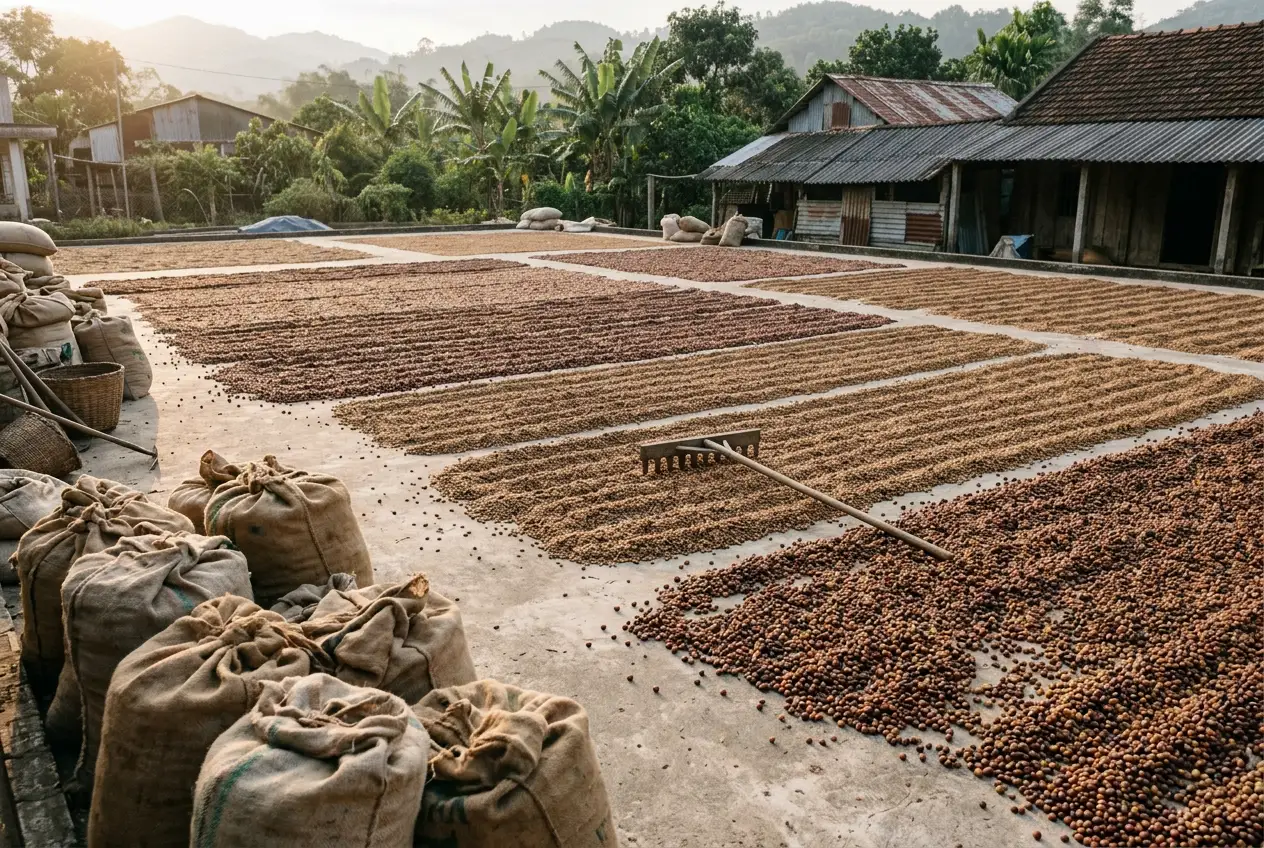
The growth was explosive. Between 1986 and 1996, Vietnamese coffee production grew by more than 20 percent every year. By the end of the 1990s, a country whose coffee industry had been in ruins twenty-five years earlier was the world's second-largest exporter, behind only Brazil.
Vietnam's coffee story in rough numbers
Much of that coffee ended up in instant coffee and in blends sold around the world, often without anyone knowing it came from Vietnam. If you've ever drunk a supermarket instant coffee, there's a decent chance some of it was Vietnamese robusta. I cover the process in how instant coffee is made.
Vietnam's own coffee brands: Trung Nguyen and G7
For years the boom was about selling raw beans. Foreign companies roasted, branded and sold the coffee, and kept most of the profit.
That started to change in 1996, when Trung Nguyen was founded in Buon Ma Thuot. It used the same robusta and the same farming infrastructure, but with a new goal: to roast, package, brand and sell its own finished coffee, at home and abroad.
Its big breakthrough came in 2003 with G7, an instant coffee line. To prove it could compete with foreign brands, the company held a public blind taste test in Ho Chi Minh City. People tasted G7 next to leading international instant coffees without knowing which was which.
According to the company, 89 percent of participants preferred G7, including over the biggest global label.
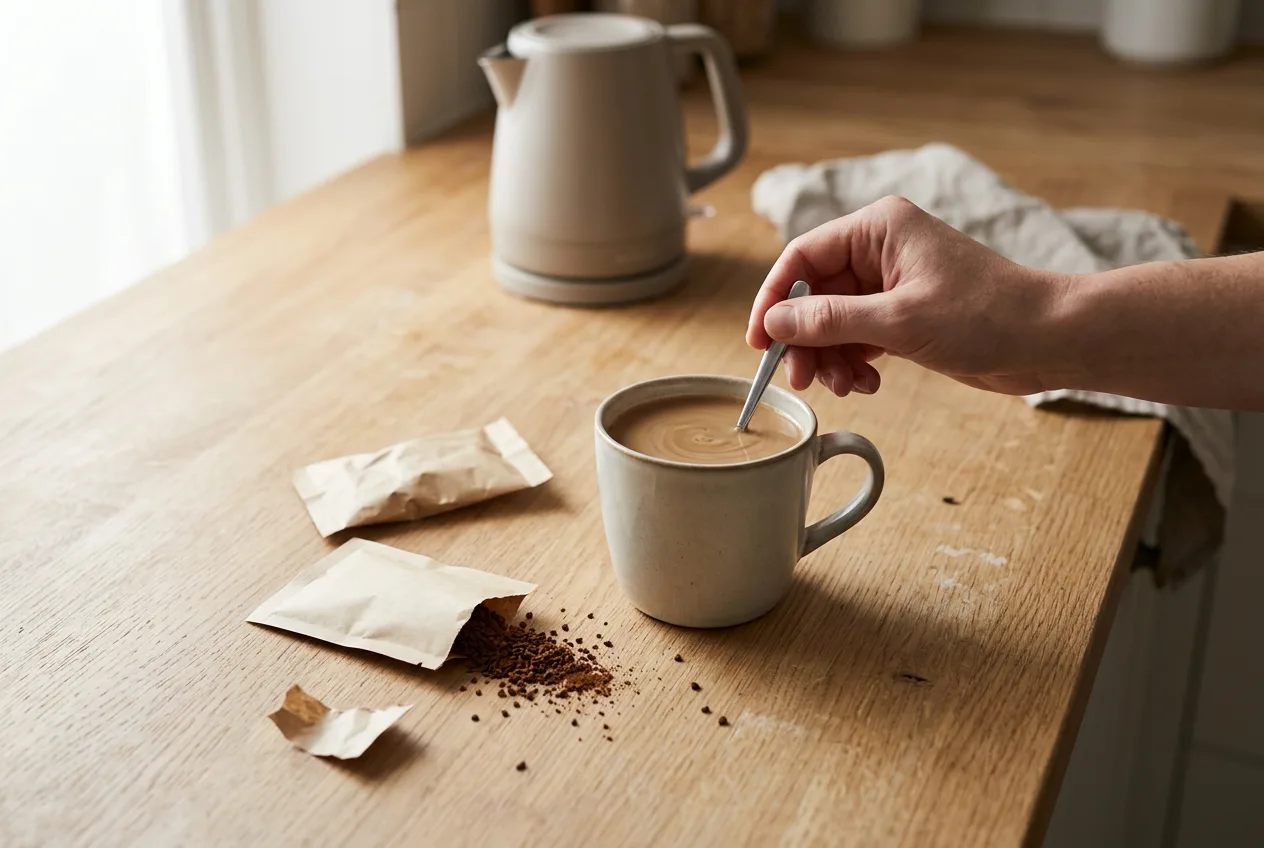
G7 became a point of national pride. It became the coffee families kept in the kitchen and served to guests, especially in "three-in-one" packets with coffee, non-dairy creamer and sugar already mixed. It was also exported around the world, proof that a Vietnamese brand could compete internationally.
Today you'll see three-in-one sachets everywhere in Vietnam, from offices to train carriages. They're not specialty coffee, but they're a big part of everyday coffee culture.
Street cafe culture: plastic stools and slow afternoons
Walk through any Vietnamese city and you'll see coffee everywhere. Some of it is in modern cafes, but much of it happens on the sidewalk: a few tiny plastic stools, a low table, a vendor with a tray of phins and a cooler of ice.
The stools are low, the coffee is cheap, and people sit for a long time. They chat, read, watch the traffic, play cards or just look at their phones. Unlike in Italy, nobody expects you to drink and leave.
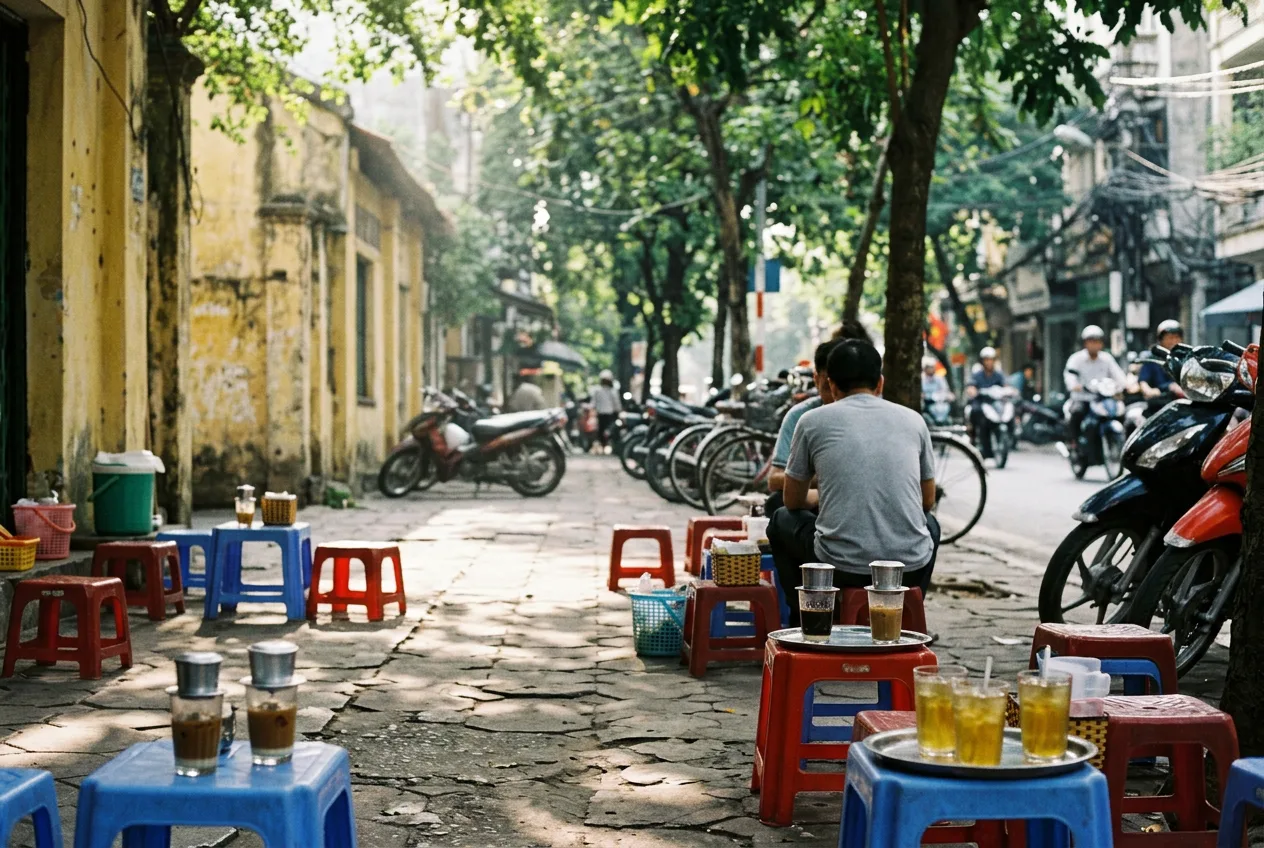
Hanoi and Ho Chi Minh City feel a little different. In my experience, Hanoi leans toward hot coffee, egg coffee and tiny, old-fashioned cafes, especially in the cooler months. Saigon is hotter and faster, and iced coffee, bac xiu and big, busy cafes dominate.
| Feature | Hanoi | Ho Chi Minh City |
|---|---|---|
| Signature drink | Egg coffee, hot sua nong in winter | Ca phe sua da, bac xiu |
| Typical cafe | Tiny, old, often upstairs in a tube house | Sidewalk stools and large, modern cafes |
| Climate | Has a real cool season | Hot year-round |
| Specialty scene | Strong, many small roasters | Strong, many roasters and big chains |
Our tip: Sit facing the street. Half the pleasure of a Vietnamese sidewalk coffee is watching the scooters go by.
The specialty wave: from quantity to quality
From colonial plantations to East German aid to three-in-one packets, the story of Vietnamese coffee was about volume: tons harvested, tons exported.
In the early 2000s, a new generation of small roasters and cafes started asking a different question. Not how much coffee Vietnam could produce, but how good it could be.
Oriberry in Hanoi was one of the pioneers. It grew out of a community development project in Quang Tri province, and it focused on teaching farmers sustainable practices, supporting cooperatives and building direct-trade supply chains so growers could earn a fair living.
This was Vietnam's entry into what's often called the third wave of coffee: an emphasis on quality, careful roasting and transparency about where beans come from. In these cafes, bags are labeled with regions such as Quang Tri, Son La or Dien Bien, so you know exactly where your cup started.
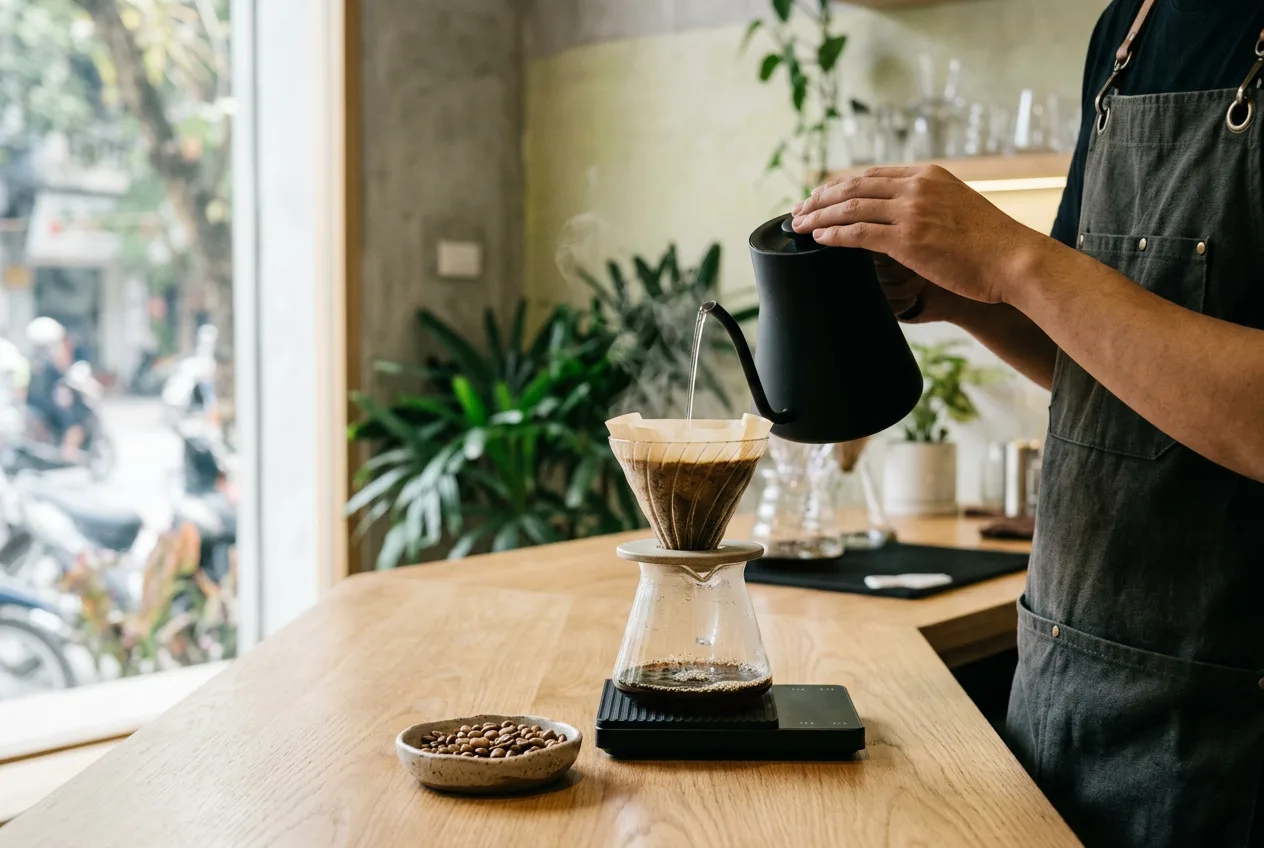
What I like most is that Vietnam did this on its own terms. The best specialty cafes don't just copy Western cafe design. They mix pour-over and espresso with Vietnamese ingredients, Vietnamese beans and, often, the phin itself. For what "specialty" actually means, see what is specialty coffee.
Northern arabica: light, floral and surprising
While the Central Highlands grow robusta, specialty roasters have put the spotlight on high-altitude arabica from the north and center, from provinces such as Son La, Dien Bien and Quang Tri, and from the cooler hills around Da Lat in Lam Dong.
Brewed by pour-over rather than in a phin, these coffees taste completely different from the classic dark cup. They're light, delicate and floral, with gentle sweetness.
What stands out to me is their balance. They don't have the sharp, sour acidity or the intense fruitiness of many East African coffees. They're clean and easy to drink, which makes them a good first step if you're new to lighter roasts.
Specialty roasters handle them carefully at every stage, from picking ripe cherries to choosing the right processing method. That care is what turns a cheap export commodity into a craft product that farmers and drinkers can be proud of.
Liberica: Vietnam's "jackfruit coffee"
Most of the world's coffee trade runs on arabica and robusta, but there are more than 120 recognized coffee species. One of the rarest still grown in Vietnam is liberica.
Liberica comes from West Africa and was widely grown in the Philippines during the Spanish colonial era. It was one of the first species the French planted in Vietnam. Locals called it ca phe mit, or jackfruit coffee, because of its aroma.
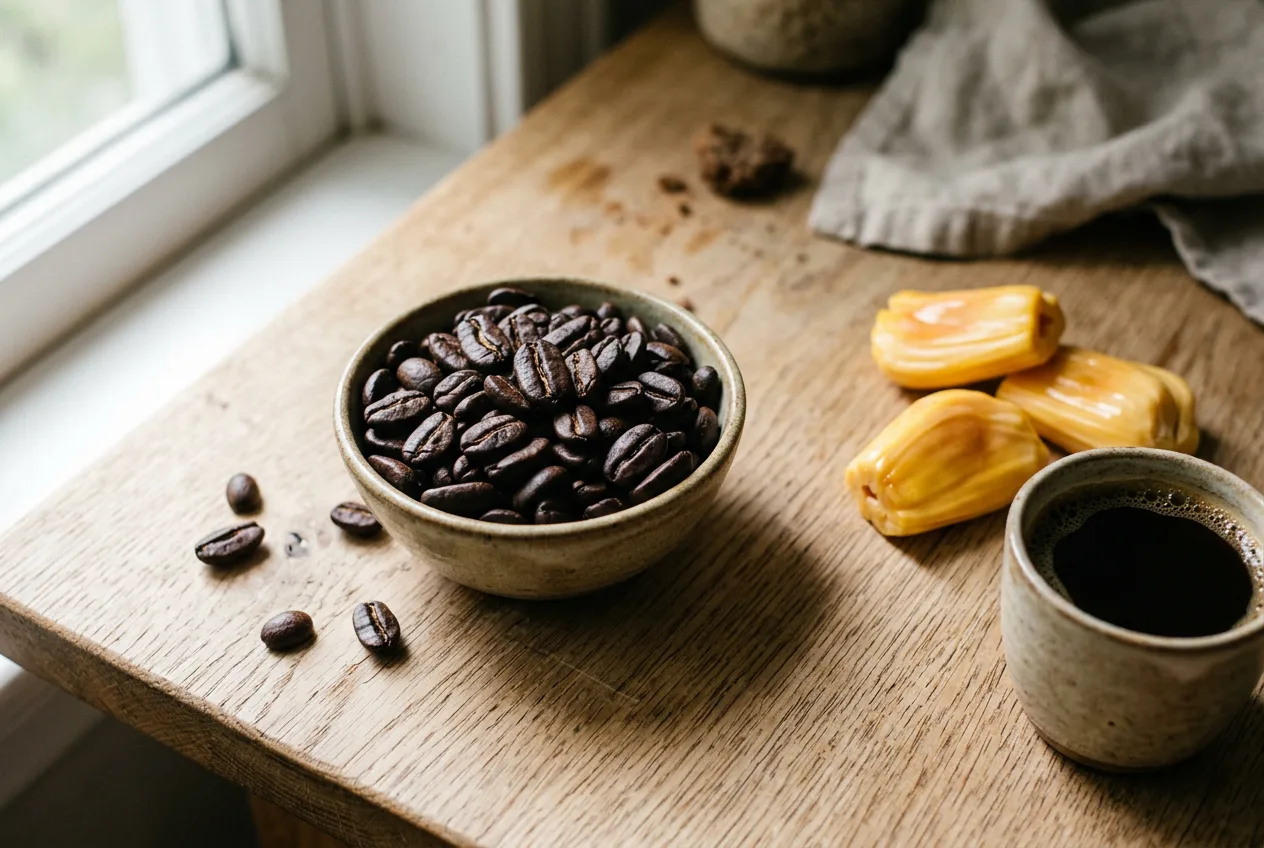
When leaf rust destroyed arabica in the 1940s, liberica production briefly grew alongside robusta. Like robusta, it's tough, resists disease and grows well at low altitudes.
Why liberica never took off
- Huge trees: liberica can grow up to about 65 feet tall, roughly a six-story building.
- Uneven ripening: cherries on the same tree ripen at different times.
- Hand-picking only: because of the size and uneven ripening, it can't be harvested by machine.
- Low yields: lots of hard work for comparatively little coffee.
Today liberica makes up only about 1.5 percent of world coffee production, and only a handful of countries grow it. A few specialty cafes in Hanoi's Hoan Kiem district keep it on the menu.
If you get the chance, try it. Brewed well, it has a light, fruity aroma with grassy, grainy and vegetal notes, followed by floral and woody flavors that really do remind me of jackfruit. It's unusual, and not for everyone, but it's a taste of coffee history. More on species in coffee varieties.
Fine robusta: rehabilitating the bean that built Vietnam
The most precise end of the scene is in places like Phin Bar by Refined, near Hanoi's Temple of Literature. Baristas weigh every dose, control water temperature carefully and time extractions to the second, logging every variable of the roast, grind and pour.
That level of rigor would fit right in among the specialty cafes of Melbourne, Vienna or Tokyo. And like cafes in those cities, some Hanoi shops now import single-origin beans from around the world and roast them in-house.
That's a real milestone. Vietnam is no longer just a supplier of raw beans. It's a sophisticated coffee culture in its own right, as both a producer and a demanding consumer.
But the most ambitious goal of Vietnam's specialty roasters isn't importing foreign coffee. It's fixing robusta's reputation.
For decades, critics dismissed robusta as cheap and harsh, fit only for instant coffee or hiding under sugar and condensed milk. Vietnamese roasters are showing that when robusta is picked ripe, processed carefully and roasted well, it can stand next to good arabica.
The first fine robusta I tasted black surprised me. There was a quick hint of herbal bitterness that faded within a second, then a full, rich body with chocolate and nutty sweetness. It didn't need milk or sugar at all.
Our tip: If you think you dislike robusta, try a specialty-grade Vietnamese robusta as a pour-over or espresso, black. It's a completely different drink from a dark commodity roast.
Egg, salt and coconut coffee: Vietnam's inventive drinks
Alongside the specialty wave, Vietnam's tradition of creative coffee drinks is as strong as ever. Many started as clever answers to shortages, and they've become destinations in their own right.
Egg coffee (ca phe trung)
Egg coffee was invented in Hanoi in the 1940s, when fresh milk was severely rationed. Strong coffee is topped with a thick, creamy layer of egg yolk whipped with sugar, often with a little condensed milk. It tastes like a coffee tiramisu you drink.
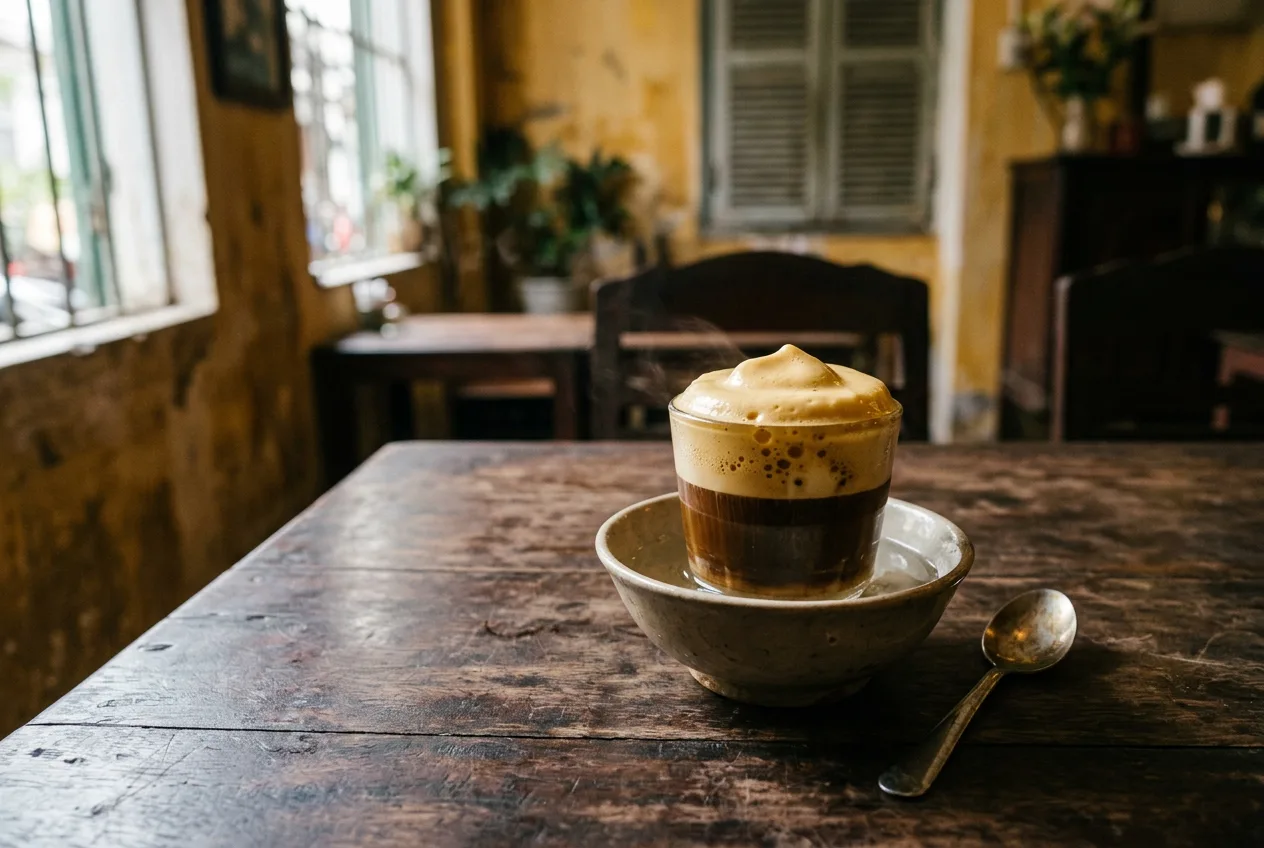
It's usually served in a small cup sitting in a bowl of hot water to keep it warm. You eat the top with a spoon, then drink the coffee underneath, or stir it all together.
Salt coffee (ca phe muoi)
Salt coffee comes from Hue, in central Vietnam. Phin coffee or espresso is mixed with condensed milk and topped with a lightly salted cream foam. The pinch of salt cuts the bitterness and makes the sweetness taste rounder. It sounds strange but it works, in the same way salted caramel does.
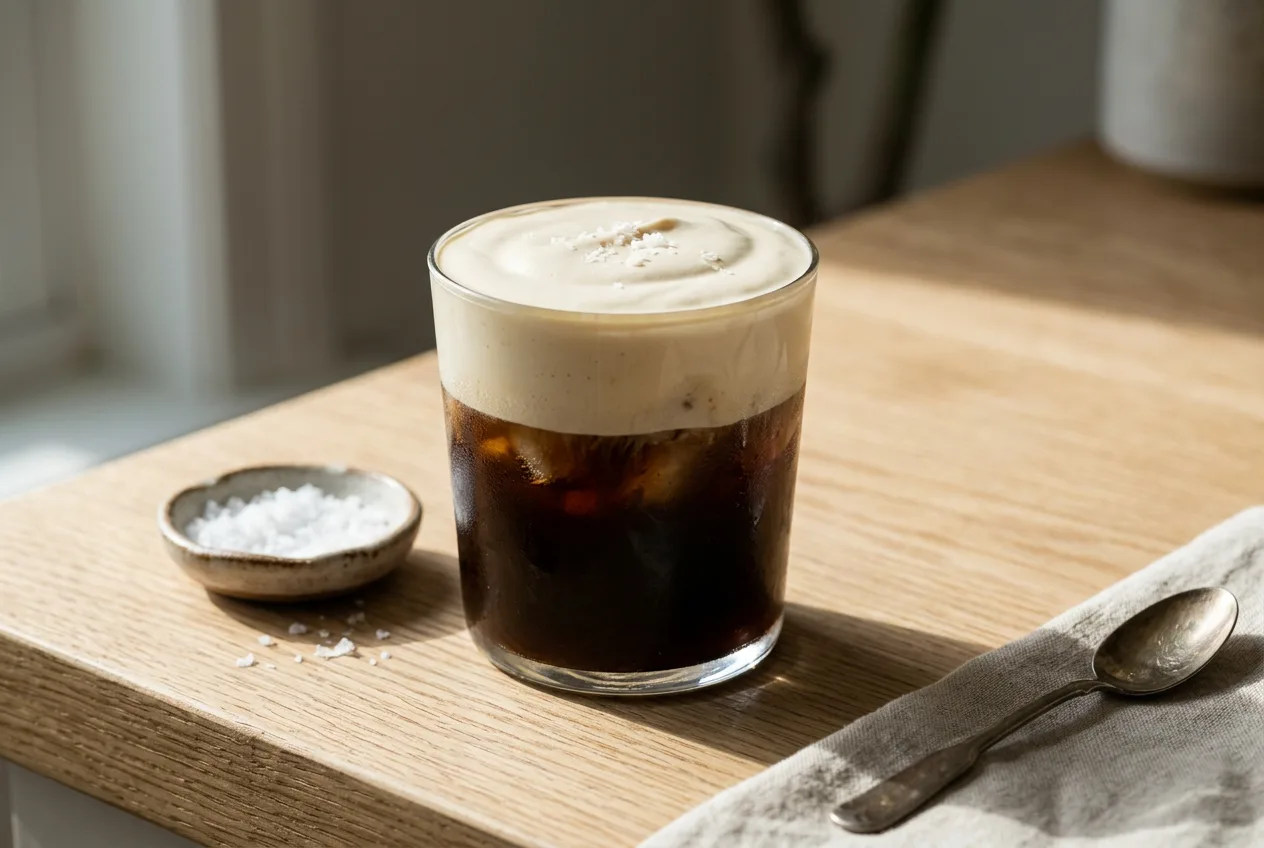
Coconut coffee (ca phe cot dua)
Coconut coffee is a southern, tropical twist: strong coffee blended with sweet coconut cream, or with frozen coconut milk into a slushy. On a hot afternoon it's one of the most refreshing drinks I know.
Fruit and spirit infusions
Modern roasters keep experimenting. Some infuse beans during processing with local flavors such as lychee or melon. Others age green coffee in whiskey barrels. They're not traditional, but they fit perfectly into a culture that has always reinvented coffee.
How to make egg coffee at home
- Brew strong coffeeMake about 50 ml of strong phin coffee, moka pot coffee or a double espresso. Keep the cup warm in a bowl of hot water.
- Whisk the yolkWhisk one very fresh egg yolk with about two teaspoons of sugar and one to two teaspoons of condensed milk.
- Beat until pale and thickUse an electric whisk or milk frother for three to five minutes until it's light, thick and holds soft peaks.
- Spoon it on topGently spoon the cream over the hot coffee so it floats.
- Serve right awayEat the foam with a spoon, then drink the coffee, or stir it in.
Use pasteurized eggs if raw yolk is a concern for you or anyone you're serving.
How to make Vietnamese coffee at home
You don't need much: a phin filter, strong dark-roasted coffee, sweetened condensed milk and hot water. Phins are cheap and last for years. This is the method I've settled on after a lot of experimenting.
What you need for one cup
- Add condensed milk to the glassSpoon one to two tablespoons into a heatproof glass or cup.
- Add the coffee to the phinPut the phin on the glass, add the ground coffee, shake it level and place the press on top.
- BloomPour in a splash of hot water, just enough to wet the grounds. Wait about 30 seconds while the coffee swells.
- Fill and coverFill the phin with hot water and put the lid on to keep the heat in.
- Wait for the dripIt should drip steadily, not run. If it pours through in a minute, grind finer or press tighter. If it barely drips after ten minutes, grind coarser.
- Stir and serveRemove the phin (set it on the upturned lid), stir the coffee into the milk and drink hot, or pour over a glass full of ice.
Use a darker roast, ideally a Vietnamese robusta or robusta blend, for the classic taste. Arabica works too, but it will taste lighter and won't stand up to the milk as well.
The grind matters more than you'd think. Too fine and the phin clogs; too coarse and you get weak, thin coffee. My guide to coffee brewing ratios explains how strength and ratio work if you want to tweak it.
Our tip: Pre-heat the phin and the glass with hot water before you start. A phin is thin metal, and a cold one loses a lot of heat during the long drip.
Ordering coffee in Vietnam: words and tips
Ordering is easy once you know a few words. Vietnamese is tonal, so don't worry about perfect pronunciation. Pointing and smiling works too.
- Expect strong coffee. Robusta has a lot of caffeine. One glass is plenty for most visitors.
- Ask for less sweet. "It ngot" if you find the standard sua da too sugary.
- Take your time. Nobody will rush you off a sidewalk stool.
- Pay when you leave. At most street cafes you pay at the end.
- Try something new each day. Egg coffee in Hanoi, salt coffee in Hue, coconut coffee in the south.
Our tip: If you're sensitive to caffeine, avoid a second sua da late in the afternoon. A single glass of strong robusta can contain more caffeine than a typical espresso. See how much coffee is too much.
Myths about Vietnamese coffee
- "Vietnamese coffee is a type of bean." It's a style: mostly robusta, dark roast, phin-brewed and often with condensed milk. Vietnam also grows arabica and liberica.
- "Robusta is always bad coffee." Commodity robusta can be harsh, but carefully grown and processed fine robusta can be excellent, even black.
- "Egg coffee tastes eggy." Made well, it tastes like sweet custard or tiramisu, not like eggs.
- "The phin is a Vietnamese invention." The basic design came with the French, but Vietnam made it its own and it's now one of the country's coffee symbols.
- "Vietnamese coffee is always sweet." Ca phe den, black coffee, is common, and many specialty cafes serve coffee without any milk or sugar.
Timeline: Vietnam's coffee history
| When | What happened |
|---|---|
| 1857 | French colonists bring coffee to Vietnam, first in the north |
| Late 1800s - early 1900s | Growing moves to the Central Highlands |
| 1936 | Cafe Duy Tri opens in a Hanoi tube house |
| 1940 | Production reaches about 2,000 tons a year |
| 1940s | Leaf rust hits arabica; robusta and liberica take over; egg coffee is invented in Hanoi |
| 1940s - 1975 | Decades of war leave the industry in ruins |
| Late 1970s - 1980s | East Germany funds robusta plantations in return for half the future harvests |
| 1986 | Doi Moi reforms open the economy |
| 1989 - 1990 | First big harvests arrive as East Germany collapses |
| 1996 | Trung Nguyen founded in Buon Ma Thuot |
| Late 1990s | Vietnam becomes the world's second-largest coffee exporter |
| 2003 | G7 instant coffee launches |
| 2000s - today | Specialty roasters, northern arabica, liberica and fine robusta |
The verdict
Vietnamese coffee is one of the most distinctive coffee cultures in the world. It's slow where Italy is fast, sweet where Scandinavia is plain, and strong in a way few other places dare.
Almost every detail tells a story. The phin is a colonial leftover that became a ritual. Condensed milk and egg coffee are answers to scarcity. The robusta fields exist because of a fungus, a war and a Cold War coffee crisis in East Germany. And the specialty cafes of Hanoi show a country now confident enough to teach the world something new about coffee.
If you visit, sit on a low stool, order a ca phe sua da and let it drip. If you can't, buy a phin, a can of condensed milk and some dark robusta. Five slow minutes later, you'll understand why so many people fall for it.
Frequently asked questions
What makes Vietnamese coffee different?
It's usually dark-roasted robusta, brewed slowly through a metal phin filter and mixed with sweetened condensed milk, hot or over ice. The result is very strong, thick and sweet.
Why do Vietnamese use condensed milk in coffee?
Fresh milk was scarce and refrigeration rare in the tropical heat, so shelf-stable sweetened condensed milk became the standard. It also balances the bitterness of dark robusta.
Is Vietnamese coffee stronger than regular coffee?
Usually, yes. Robusta has nearly twice the caffeine of arabica, and the phin makes a small, concentrated cup.
What is a phin filter?
A small metal drip filter that sits on a cup. Hot water drips slowly through the coffee by gravity, usually in four to five minutes.
What does egg coffee taste like?
Like a sweet, creamy custard or tiramisu on top of strong coffee. It doesn't taste eggy when made well.
What is bac xiu?
A southern Vietnamese drink with mostly milk and a little coffee, sweeter and milder than ca phe sua da.
Does Vietnam grow arabica?
Yes. Most of its coffee is robusta, but arabica grows in higher areas such as Son La, Dien Bien, Quang Tri and around Da Lat.
Can I make Vietnamese coffee without a phin?
You can get close with a moka pot or a strong pour-over, then add condensed milk and ice. The phin gives the most authentic texture.

- Michael Reynolds, notes from Hanoi cafe visits and home phin brewing
- Coffee production in Vietnam, Wikipedia
- Vietnamese iced coffee, Wikipedia
- Egg coffee, Wikipedia
- Coffea liberica, Wikipedia
- Doi Moi, Wikipedia
- Trung Nguyen, Wikipedia
Related guides
Arabica vs robusta Coffee culture around the world Italian coffee cultureWritten by Michael Reynolds. Last updated November 20, 2026.