Coffee Substitutes and Alternatives: Chicory, Barley, Peanut, Acorn and Dandelion Tested
From wartime chicory to roasted peanut "coffee," people have brewed almost anything dark and roasty when real coffee was scarce. Today, many drink substitutes to avoid caffeine. I tasted instant grain drinks, specialty brew-at-home alternatives and even roasted my own chicory root. Here's what each one is like, how to make it and which comes closest to coffee.
We choose products independently. We may earn a commission through links on this page; your price stays the same. Affiliate policy
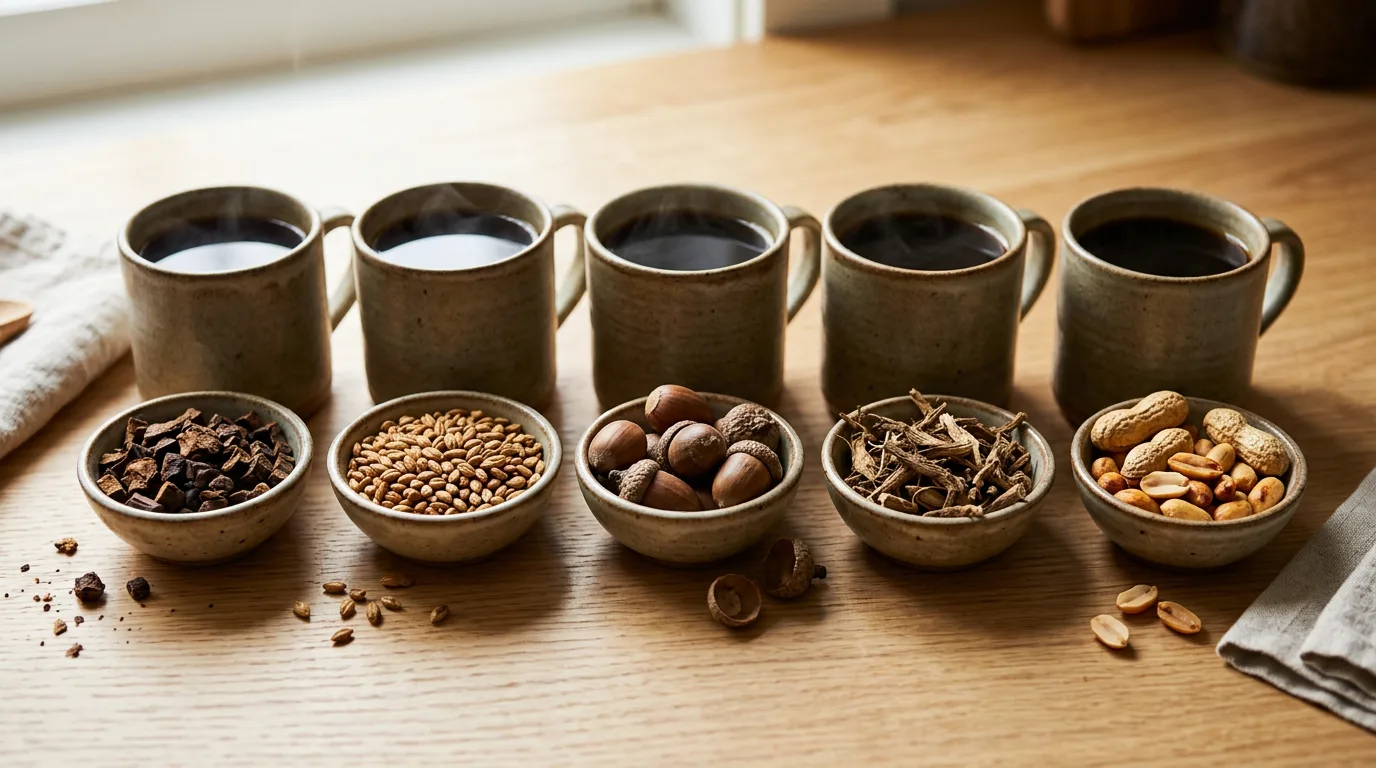
No coffee substitute tastes exactly like coffee, but some come surprisingly close. Roasted peanut "coffee" was the closest in my tests, especially with milk. Instant barley and chicory drinks are convenient but woody and bitter. Pure roasted chicory is extremely dark, heavy and bitter, and works best blended with real coffee. Acorn coffee tastes mostly of its spices, and raw dandelion root makes a bitter herbal tea rather than coffee. Italian caffè d'orzo, made from roasted barley, is a pleasant caffeine-free espresso alternative.
Why I tested them
I'm a coffee lover, so you might wonder why I'd spend a week drinking things that aren't coffee. Two reasons.
First, readers often ask me what to drink when they need to cut caffeine completely, for pregnancy, sleep, anxiety or medical reasons, but still want the ritual of a dark, warm morning drink. Decaf works for many people, but some want something naturally free of caffeine.
Second, coffee substitutes are fascinating history. They've been used to stretch coffee in wartime, to cheat customers, and to keep a ritual alive when coffee was impossible to buy. Tasting them is like tasting the history of coffee from the other side.
There's also a personal reason. My grandparents talked about the "fake coffee" of wartime and the years after, made from roasted grains and roots, and how precious real coffee felt when it finally came back. I'd never actually tasted what they described. Roasting chicory in my own oven and brewing it felt like a small way of connecting with that story, and it gave me a new appreciation for the cup of coffee I take for granted every morning.
I tried commercial instant powders, specialty ground alternatives brewed in a pour-over, and even roasted raw chicory root in my oven. This is what I found.
What you'll learn
- Why coffee substitutes exist, then and now.
- How the main substitutes taste, honestly.
- How to brew each one for the best result.
- How to roast your own chicory root at home.
- Which comes closest to real coffee.
How I tested
To keep the comparison fair, I tasted every substitute black first, then with a splash of whole milk. For instant products I followed the package instructions with water just off the boil, then again at around 140°F. For the ground products I used a pour-over cone with a paper filter and weighed both the dose and the water, adjusting strength where the first cup was clearly too weak or too strong.
I tasted them alongside a cup of medium-roast filter coffee as a reference, and scored each on how much it looked, smelled and tasted like coffee, as well as how much I simply enjoyed it as a drink in its own right. Those two scores were often very different, which turned out to be one of the most interesting findings.
Coffee substitutes around the world and through history
| Where and when | Substitute | Why |
|---|---|---|
| France, early 1800s | Roasted chicory | Napoleonic blockades |
| US South, 1860s | Chicory, roasted grains, sweet potato, acorns | Civil War blockades |
| Germany, world wars | "Ersatzkaffee" from grains, chicory and roots | Shortages and rationing |
| Finland, 1940s | Roasted grains, chicory, chaga | Wartime rationing |
| East Germany, 1970s | Mischkaffee, a coffee and grain blend | Hard currency shortage |
| Italy, ongoing | Caffè d'orzo | Tradition and caffeine-free choice |
German speakers even have a nickname for grain coffee: "Muckefuck," a playful word for weak or fake coffee. In Finland, where coffee rationing lasted until the early 1950s, the return of real coffee was celebrated. I tell that story in why Finland drinks the most coffee.
Three tiers of coffee substitutes
To make sense of the options, I grouped them by how much effort they take.
| Tier | What it is | Examples | Effort |
|---|---|---|---|
| 1 | Instant soluble powders | Barley, rye and chicory drinks; pure instant chicory | Just add water |
| 2 | Pre-ground alternatives to brew | Peanut coffee, acorn coffee, dandelion root | Brew like coffee |
| 3 | Roast your own | Chicory root from scratch | Roast, grind, brew |
A history of scarcity and fraud
For most of history, people didn't drink coffee substitutes because they liked them. They drank them because they had to, or because they were tricked.
Stretching scarce coffee
Wars and blockades regularly cut countries off from coffee. When that happened, people turned to local roots, grains and nuts. Usually these weren't full replacements but extenders, mixed with whatever real coffee was left to keep the morning ritual going.
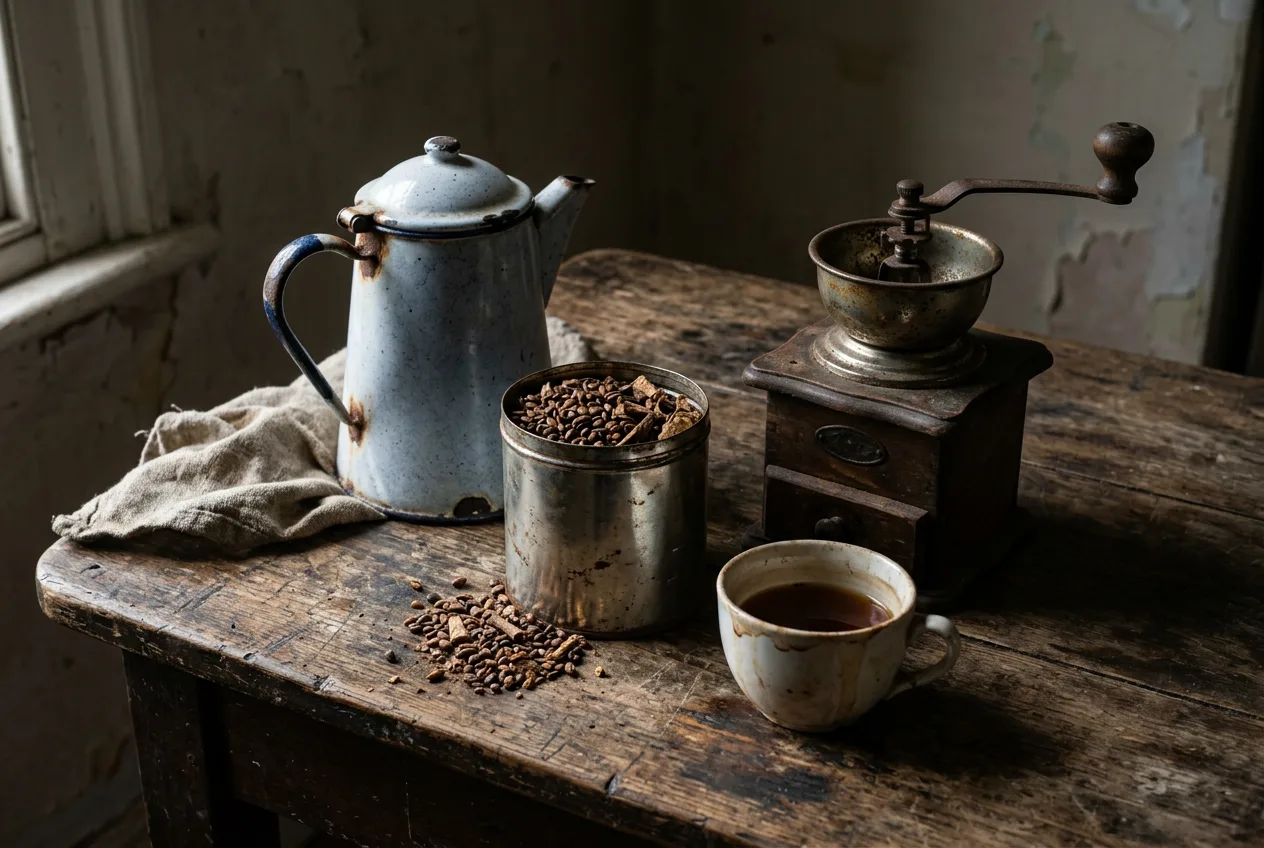
Examples are everywhere: chicory in Napoleonic France, roasted grains and chicory in wartime Europe, chaga mushroom in wartime Finland and the infamous Mischkaffee blend in 1970s East Germany. I tell that last story in Vietnamese coffee culture, because it's how Vietnam's robusta boom began.
Cheating customers
Because coffee was expensive and imported, dishonest merchants often bulked out ground coffee with cheap fillers, especially roasted chicory. Adding cheap roasted roots to real coffee boosted profits and was hard for customers to detect.
There's even an irony here: an 1864 book on coffee and chicory noted that once chicory became valuable as a coffee filler, some sellers started adulterating the chicory itself with cheaper roasted grains and coffee husks.
Why people drink them today
Food fraud in coffee is far less of a concern today. Modern drinkers choose substitutes for different reasons.
- Avoiding caffeine completely: for sleep, pregnancy, anxiety, heart rhythm issues or medical advice.
- Naturally caffeine-free: some people prefer a drink that never contained caffeine to decaffeinated coffee.
- Keeping the ritual: a dark, warm, roasty drink in a favorite mug, without the stimulant.
- Curiosity and tradition: drinks like caffè d'orzo and New Orleans chicory coffee are part of local culture.
For many people, the most important test is visual. A good substitute should at least look like coffee: dark, opaque and brown. If it looks like pale tea, it doesn't satisfy the same craving. If you just want less caffeine rather than none, see how decaf coffee is made or mushroom coffee explained.
Tier one: instant grain and chicory drinks
The easiest place to start is instant coffee substitutes: spray-dried or freeze-dried powders made from roasted grains and roots. You just add hot water.
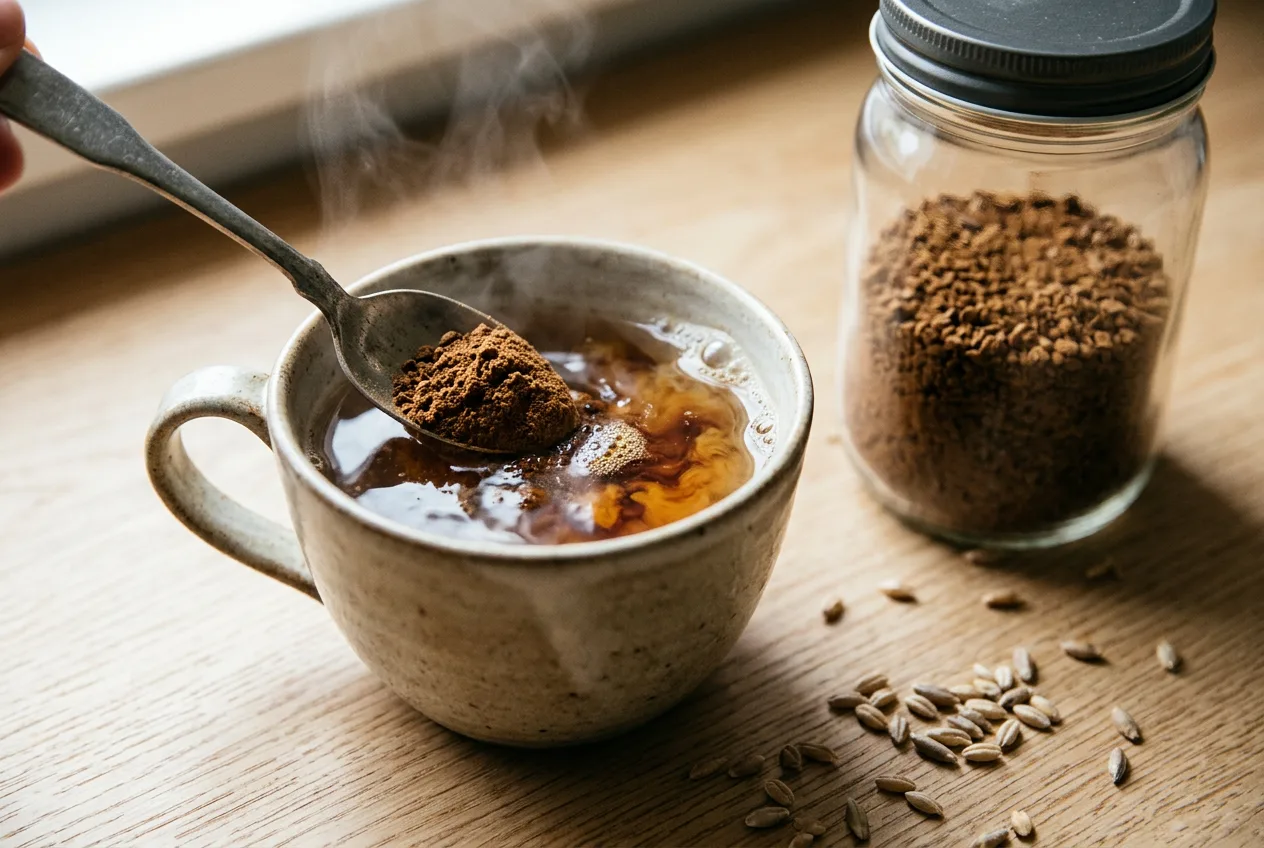
These powders are made in much the same way as instant coffee. The grains and roots are roasted, ground and brewed in large extractors, and the concentrated liquid is then spray-dried or freeze-dried into a soluble powder. That's why they dissolve completely and leave no grounds, and why they keep for a long time in a sealed jar. If you're curious about the process, my guide to how instant coffee is made walks through each step.
Because they're so quick, instant substitutes are the easiest way to test whether you like the general style before buying anything more specialized. A single jar lasts for dozens of cups.
A tip on water temperature
With ground coffee, water temperature affects extraction. With instant powders, everything is already extracted; the water just dissolves it. Boiling water (212°F) isn't necessary and just means waiting for it to cool. Water around 140°F dissolves the powder just as well, and you can drink it right away.
Barley, rye and chicory blends
The classic instant substitutes combine roasted barley, roasted rye and chicory root. They dissolve into a convincingly dark, coffee-like drink.
The flavor is another story. They taste woody and herbal, with a clear bitterness. Underneath the bitterness is a slightly odd sweetness from the natural sugars in the roasted grains. It's pleasant enough with milk, but nobody would mistake it for coffee.
Different brands use different ratios. Blends with more chicory taste more herbal, slightly medicinal and more bitter. Blends with more grain are rounder and sweeter.
Pure instant chicory
Tasting pure instant chicory on its own was enlightening, because it shows exactly what chicory brings to blends.
It's strangely sweet and intensely herbal, almost botanical. The closest comparison I could think of was coriander seed: a savory, herbal oddness. It tastes nothing like coffee at all.
That explains a lot. In traditional coffee-and-chicory blends, it's the real coffee that carries the coffee flavor. Chicory adds darkness, body and bitterness, but not coffee taste.
Tier two: brew-at-home alternatives
A growing number of producers make ground, non-coffee products designed to be brewed exactly like coffee, in a pour-over cone, French press or immersion brewer. These felt much more like a "real" coffee ritual.
Roasted peanut "coffee"
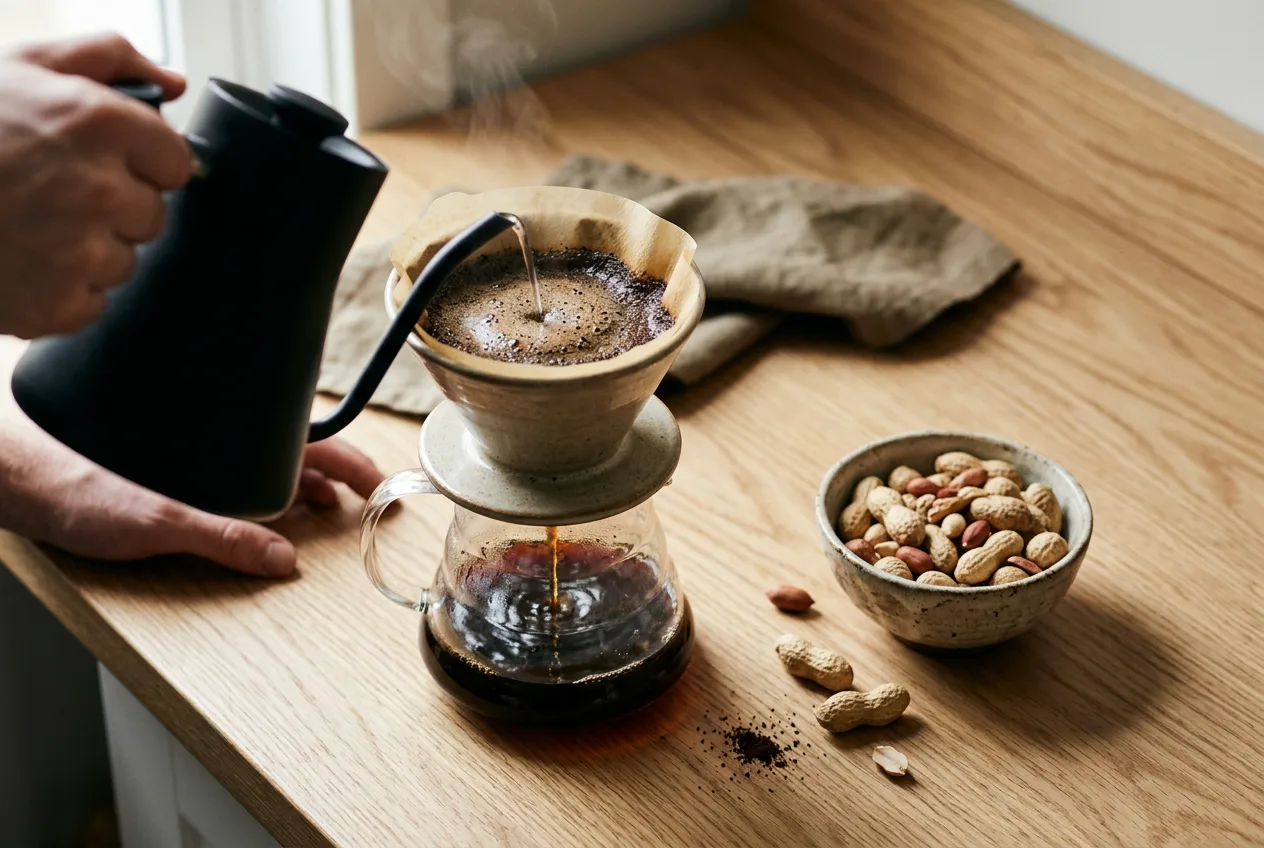
This was the biggest surprise of my tests. Invented by an American peanut farmer, it's made entirely from roasted, ground peanuts processed to brew like filter coffee.
How it's made
Whole peanuts are full of oil, which would make a greasy, unpleasant brew and clog paper filters. So most of the oil is pressed out first. The remaining defatted peanut solids, rich in protein and carbohydrates, are then roasted. During roasting, Maillard reactions between proteins and sugars brown the peanuts and create soluble flavor compounds, much as with coffee.
How it brews
Dry, it smells remarkably like dark-roasted coffee, with only a hint of nuttiness. When you pour water over it, though, there's almost no bloom, because there's no trapped carbon dioxide like in fresh coffee. The wet grounds smell slightly oxidized alongside the roasty notes.
How it tastes
In the cup, it looks convincingly like black coffee, just a little lighter. The aroma mixes roasted peanuts, a little sesame, something almost like barbecue and genuine coffee-like roastiness. On the palate, it has pleasant body and clear nuttiness. Of everything I tried, it came closest to real coffee.
At a normal coffee ratio, about 2.1 ounces per 34 fluid ounces of water, it tasted a little weak and overly dark-roasted, with roasty bitterness dominating. Increasing the dose to about 2.7 ounces per 34 ounces, and adding a splash of milk, brought it remarkably close to a comforting cup of coffee.
Our tip: Brew peanut coffee stronger than you'd brew coffee and add milk. And obviously, avoid it completely if you or anyone you're serving has a peanut allergy.
Spiced acorn coffee
Acorn coffee has deep roots in European foraging, particularly in times of scarcity. Commercial versions usually blend roasted acorns with warm spices; the one I tried was about 98.5% acorn and 1.5% spice.
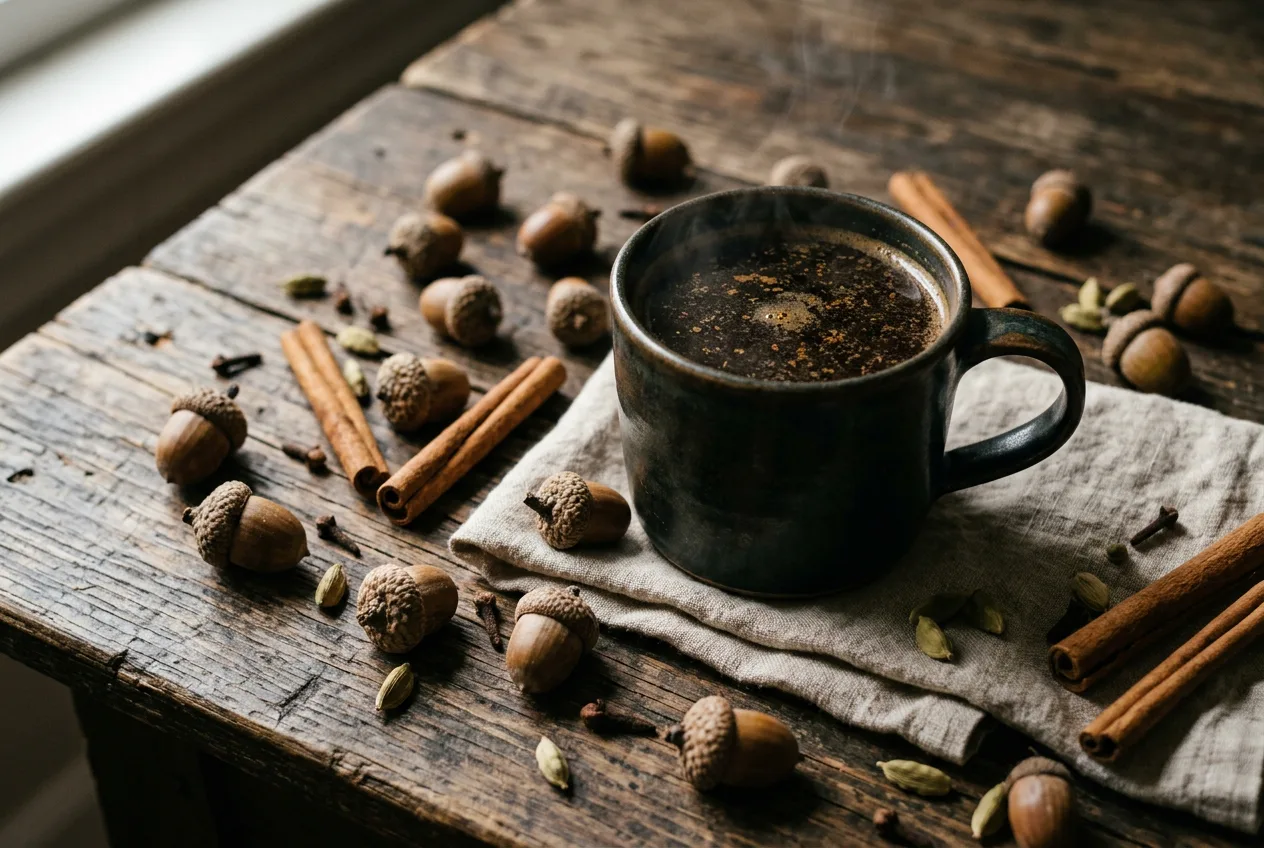
The dry grounds smell mainly of clove, with cardamom, ginger and cinnamon behind it. Because spices leave oils behind, brew spiced substitutes in separate equipment, or clean your grinder and brewer well afterward.
It's usually ground into a very fine, almost muddy powder. The traditional method is to boil it directly in water and drink it unfiltered, letting the sediment settle. I brewed it through a paper filter instead, which worked but slowed the drawdown a lot.
In the cup it looks like a dark coffee, but the flavor is all spice. Look past the clove and cinnamon and the acorn itself is surprisingly mild and neutral, not very bitter, best described as tasting like "the color brown." Cozy, but not coffee.
Dandelion root
Dandelion root is widely sold as an herbal coffee alternative, both as roasted instant powders and as chopped, dried raw root for steeping.
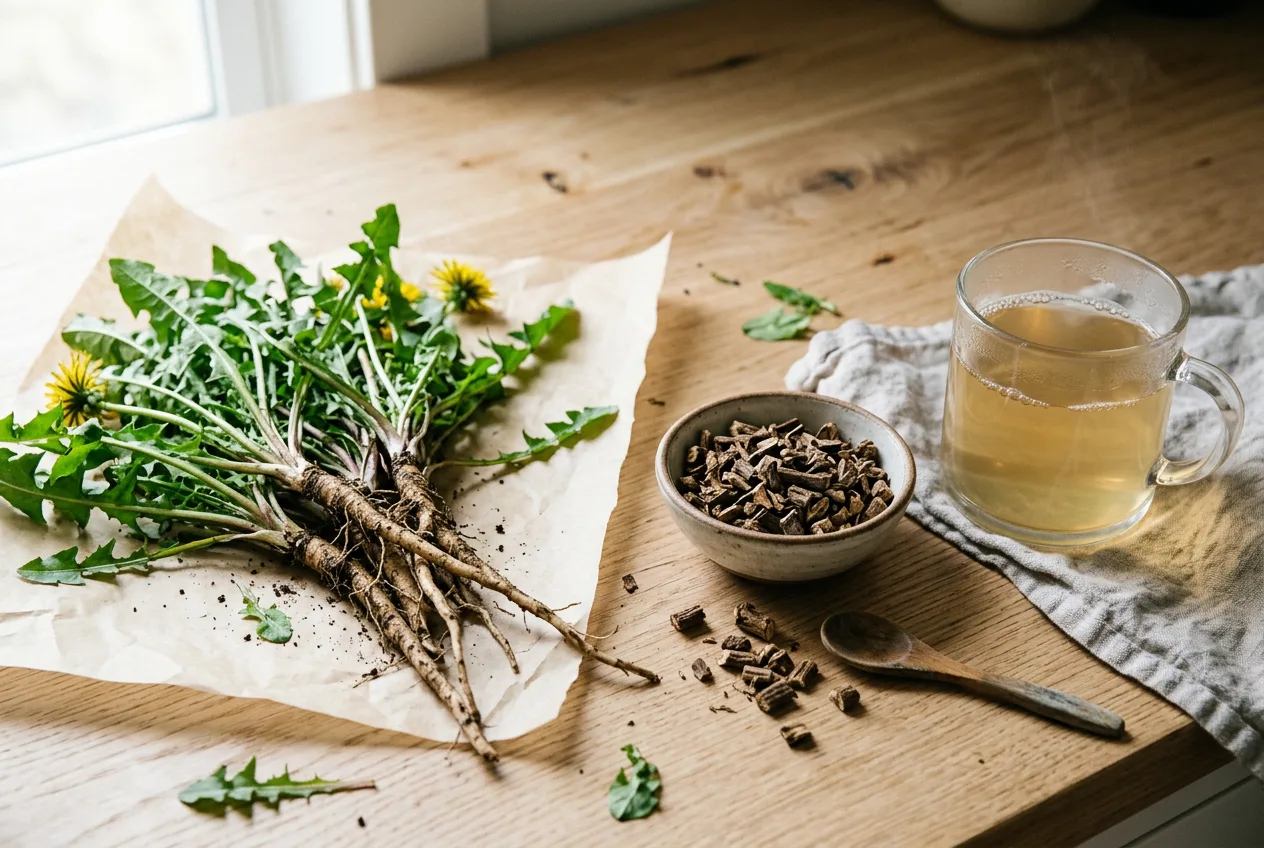
I steeped 1 to 2 teaspoons of raw dried root in hot water for 3 to 10 minutes. The result was a pale, translucent drink that looked like herbal tea. It fails the visual test of a coffee substitute right away.
It smells strongly herbal, very like gentian, the bitter root used in Italian amaro liqueurs. It tastes distinctly bitter and complex. With sugar, it became something like a non-alcoholic amaro, which I actually enjoyed, but it's an herbal tea, not a coffee alternative.
Dandelion is also one of the easiest substitutes to forage, since the plants grow almost everywhere. Roots dug in autumn tend to be the most flavorful. Scrub them well, chop them into small pieces, dry them and then roast them until they're deep brown before grinding. Roasting turns the pale, bitter root into something darker, sweeter and much more coffee-like than the raw infusion I tasted.
Roasted instant dandelion drinks are darker but, in my experience, taste flat and nondescript. For dandelion to work as a coffee stand-in, the root needs to be properly roasted and ground before brewing.
Tier three: roasting chicory root at home
Chicory is the king of coffee substitutes, with the longest history and the widest use. To really understand it, I roasted raw chicory root myself.
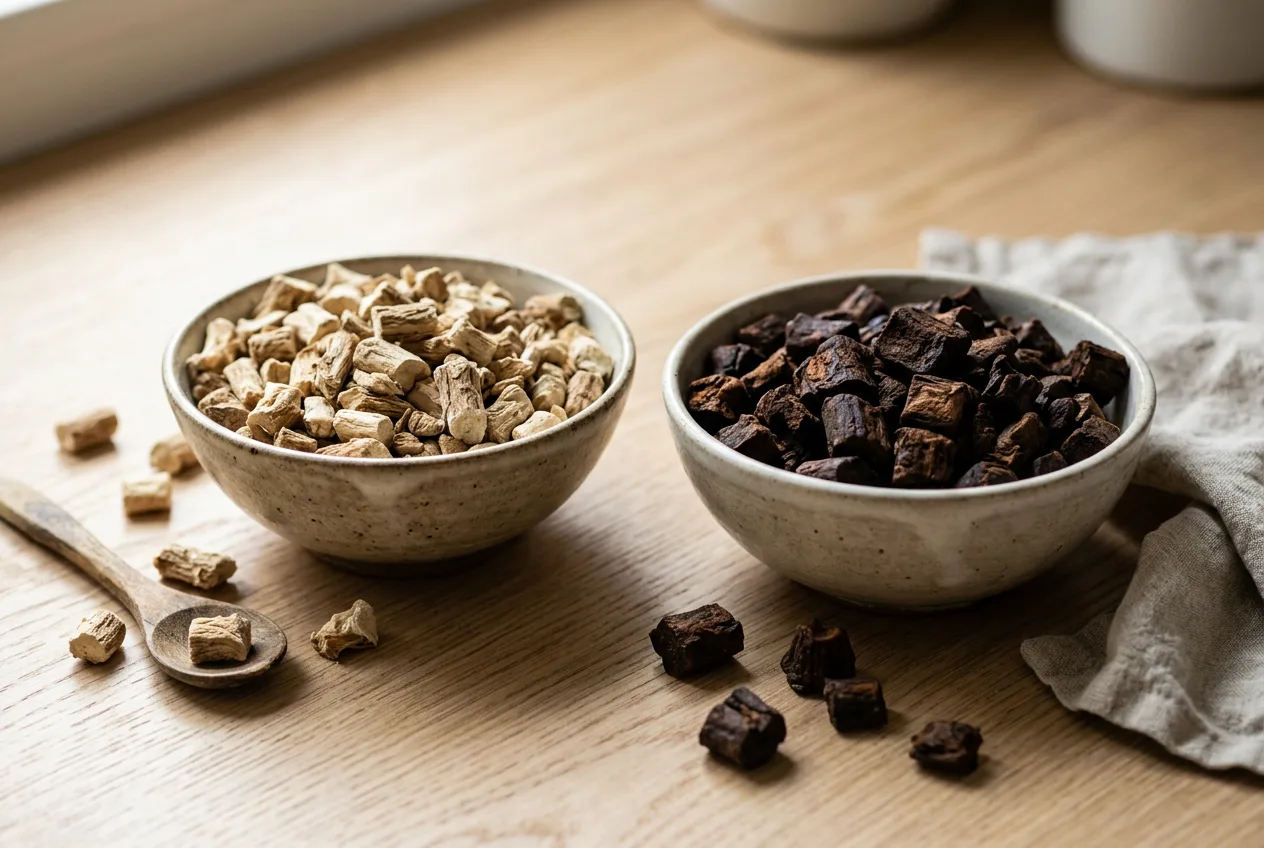
Chicory comes from the taproot of the Cichorium intybus plant, a relative of endive and radicchio. The roots are dug up, chopped and dried into hard, pale, woody nuggets. Roasting transforms them, developing color, flavor and solubility.
Chicory's place in history
- The Napoleonic Wars: naval blockades cut France off from colonial coffee, and the French turned to roasted chicory to stretch their supplies.
- The American Civil War: Union blockades of Southern ports, including New Orleans, a major coffee hub, cut supplies. New Orleans adopted the French habit of mixing chicory into coffee, and it became a lasting local tradition.
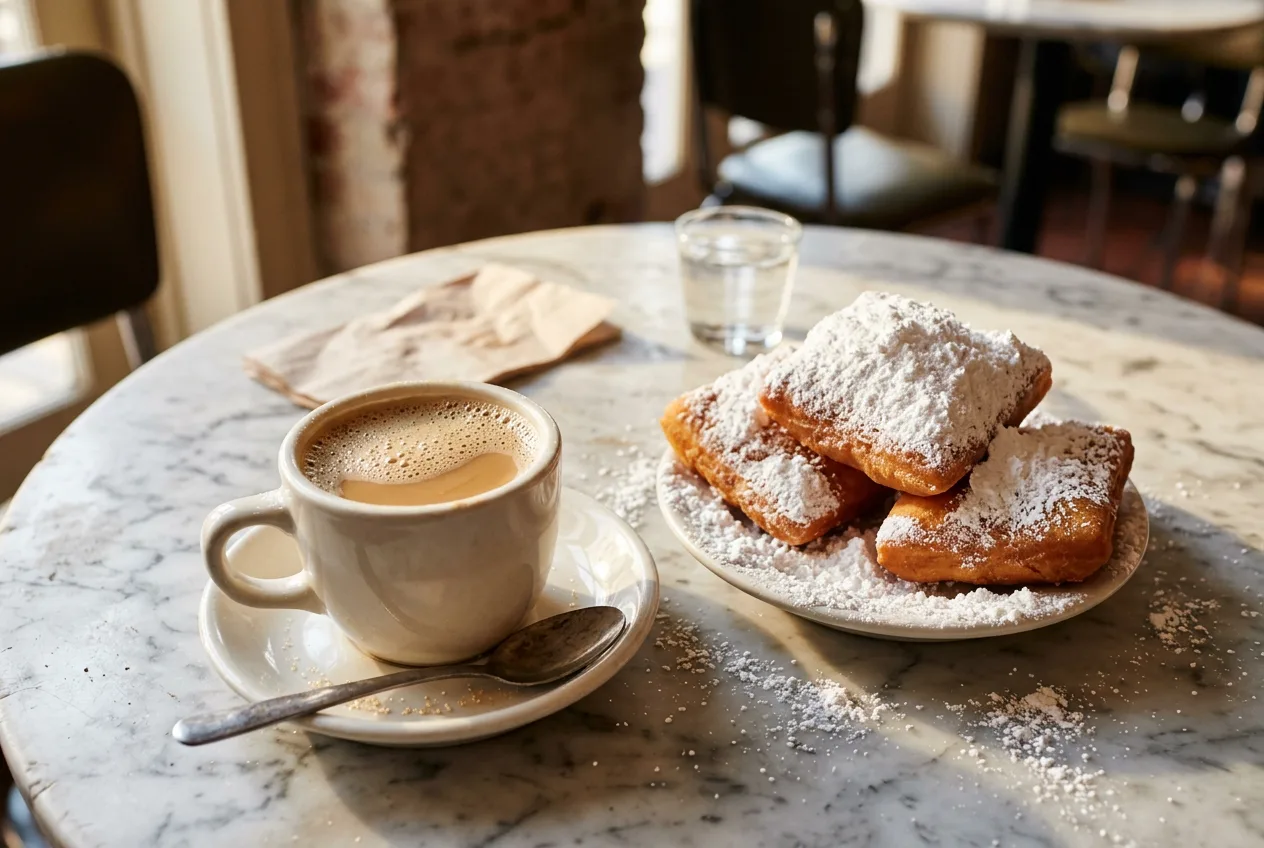
- Today: chicory coffee is still a New Orleans classic, often served as café au lait with beignets. In the UK, a liquid coffee-and-chicory extract has long been used for baking and desserts.
How I roasted chicory at home
A dedicated roaster gives more even results, but a regular kitchen oven works well enough to see how chicory develops.
- Spread it outAbout 3.5 ounces of dried chicory root pieces in a single layer on a baking sheet.
- Roast at 350°FPut the tray in a preheated oven.
- Test as you goI pulled a few pieces every 5 minutes to grind and brew, to see how the flavor changed.
- Stop at about 30 minutesEarlier, it lacked depth; much later, harsh bitterness took over.
- Cool and grindLet it cool fully, then grind like coffee.
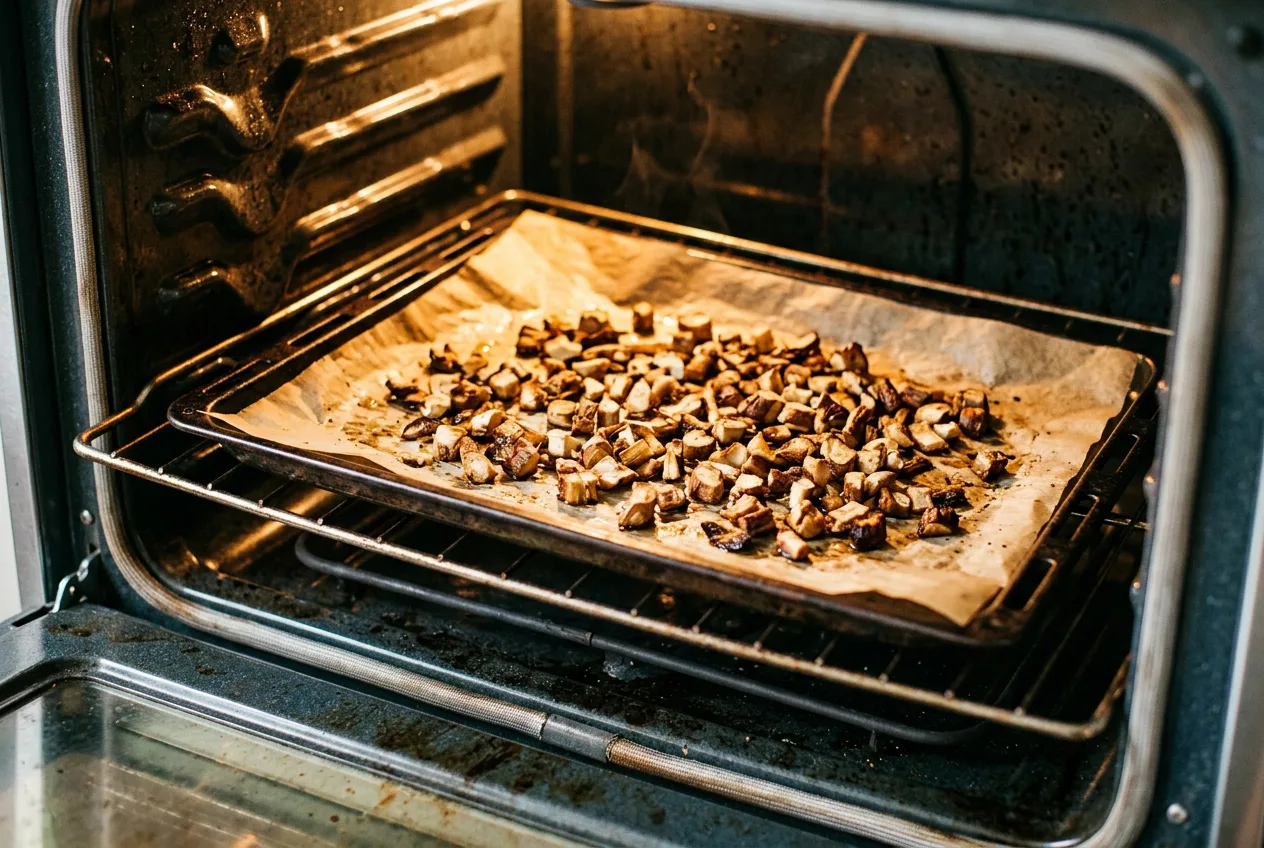
Thirty minutes struck a balance between caramelizing the root's natural sugars and avoiding burning. Chicory is rich in inulin, a type of fiber that breaks down into fructose with heat, which is part of why roasted chicory tastes sweet and caramel-like.
My roast lost about 22% of its weight, mostly water. The 1864 book "Coffee and Chicory" describes commercial roasters of the time roasting chicory until it lost 25 to 30%, so my roast was a little lighter than theirs.
Our tip: Open a window or turn on the extractor fan. Roasting chicory smells a lot like burnt sugar, and it lingers.
Brewing and tasting pure chicory
The ground chicory looked like a light-to-medium coffee roast. Brewing it was a shock.
Using only about 0.7 ounces (around 2 tablespoons) in a pour-over cone, the liquid came out pitch black and thick, like dark molasses.
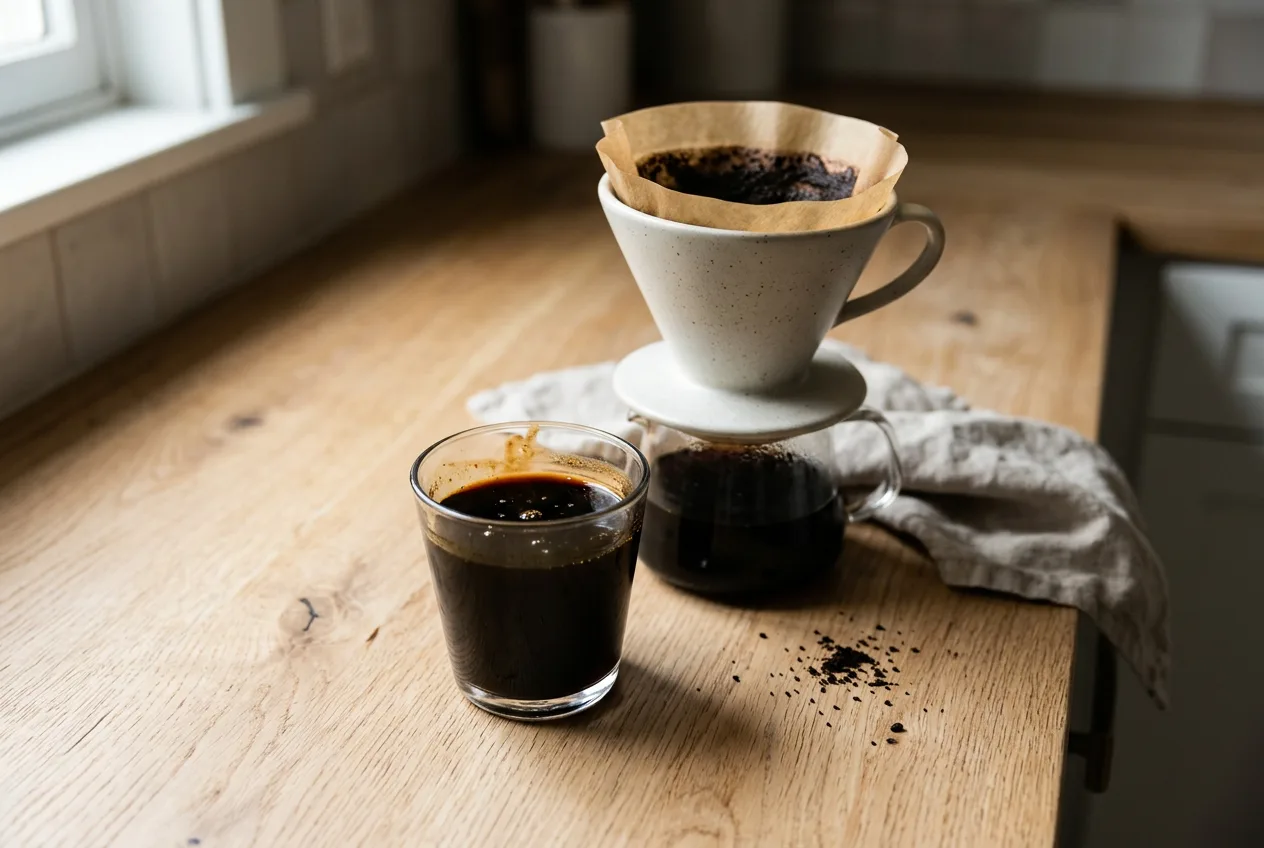
That's because roasted chicory is incredibly soluble. Historical sources put it at 45 to 60% water-soluble material, two to three times what you typically extract from coffee, which is usually around 18 to 22%. Much more of the chicory ends up in your cup.
How much dissolves into the cup (approximate)
It smelled strongly of dark molasses and burnt sugar. On the palate, it was heavy and syrupy with zero acidity, and it was bitter, intensely and relentlessly, like chewing endive or radicchio, with a burnt-sugar finish.
At coffee strength, pure chicory is too much for most people. And that's the point: it was never really meant to be drunk alone. Its extreme solubility, dark color, heavy body and bitterness made it ideal for stretching thin coffee and making a weak brew look and feel stronger.
If you want to understand why some coffees extract more than others, see coffee extraction explained.
Caffè d'orzo: Italy's barley "espresso"
Another traditional substitute deserves its own section. Caffè d'orzo, made from roasted, ground barley, is common across Italy and found in parts of Spain and Portugal too.
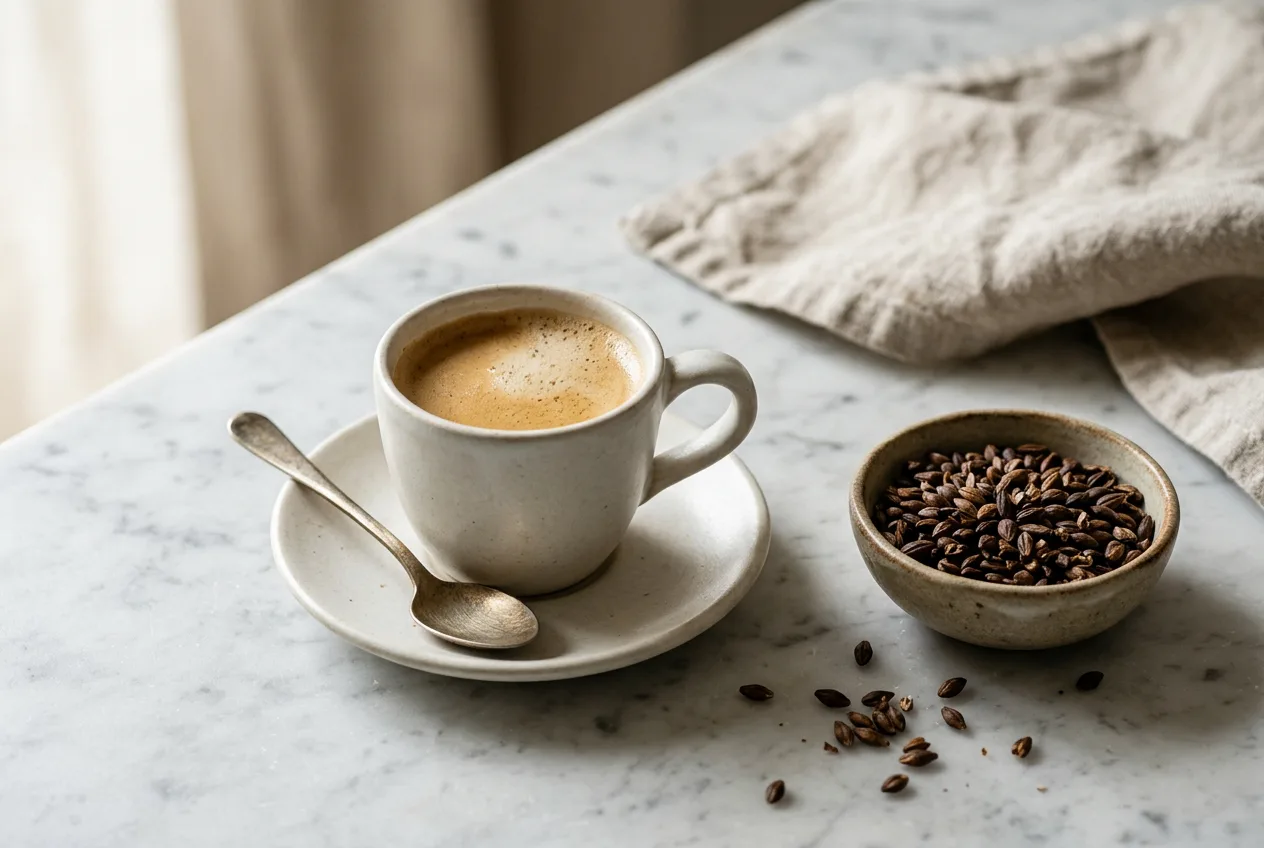
Unlike instant barley powders, orzo is ground to brew in espresso machines, moka pots or special bar machines. It makes a caffeine-free, dark drink topped with a light foam, letting people keep the espresso ritual without caffeine.
You can also buy instant orzo for home, and some Italian supermarkets sell capsules for pod machines. The freshly brewed version in a moka pot is the best I tried at home: darker, toastier and closer to the drink you'd get in an Italian bar. A small cup after dinner is a lovely way to end a meal without keeping yourself awake.
It tastes toasty, a bit cereal-like and gently bitter, with none of coffee's acidity. Children, older people and anyone avoiding caffeine order it in Italian bars without a second glance. I describe how Italians use it in Italian coffee culture.
Other alternatives worth knowing
- Roasted rye or wheat: common in European grain coffees, similar to barley but earthier.
- Carob: roasted carob pods, naturally sweet and chocolatey, often blended with grains.
- Mushroom blends without coffee: chaga or reishi with cacao or grains.
- Roasted date seeds: a traditional drink in parts of the Middle East and North Africa.
- Lupin: roasted lupin seeds, used historically in parts of Europe.
- Herbal "coffees": blends of roasted roots, grains and spices sold as coffee-style herbal teas.
Growing your own chicory
If you have a garden, chicory is surprisingly easy to grow. It's a hardy perennial with pretty blue flowers, and it grows wild along roadsides in much of Europe and North America.
- Sow in springSow root chicory varieties in well-drained soil in a sunny spot.
- Let the roots growLeave the plants through summer so the taproots thicken.
- Harvest in autumnDig up the roots, wash them well and trim off the tops.
- Chop and dryCut into small, even pieces and dry slowly in a low oven or dehydrator until hard.
- Roast and grindRoast at 350°F for about 30 minutes, cool and grind.
Only harvest wild plants where you're sure the ground is clean and you have permission, and make sure you've identified the plant correctly.
Learning to enjoy them on their own terms
The biggest lesson from my tests was about expectations. When I tasted each substitute as "fake coffee," almost all of them disappointed me. When I tasted them as their own drinks, several were genuinely enjoyable.
Instant grain drinks are cozy and malty with milk on a cold evening. Orzo is a lovely, toasty after-dinner drink. Dandelion root with a little honey is a refreshing bitter tonic. Acorn coffee is like a spiced winter drink. Even pure chicory, used in tiny amounts, makes an interesting addition to desserts and sauces.
If you're switching away from coffee, give yourself a week or two with any of them. Taste buds adapt, and the ritual of a warm, dark drink often matters more than the exact flavor.
What substitutes cost
Most coffee substitutes are affordable. Instant grain drinks and orzo usually cost about the same as, or less than, a mid-range coffee per cup. Specialty products such as peanut coffee and spiced acorn coffee tend to cost more, closer to specialty coffee. Roasting your own chicory is the cheapest option of all if you can buy or grow raw roots.
Because roasted chicory is so soluble, a little goes a long way, which makes it especially economical when used as a coffee extender.
Ordering substitutes when you're out
In most cafes, your caffeine-free options are decaf, herbal tea or hot chocolate. But in some places, substitutes are standard menu items.
- Italy: ask for "un orzo" or "orzo in tazza grande" for a larger cup. Many bars serve it.
- New Orleans: chicory coffee is standard at classic cafés, often with beignets.
- Germany and Austria: grain coffee is common at health food cafés and some bakeries.
- Health food and vegan cafés: often offer dandelion or mushroom-based "coffees."
All coffee substitutes compared
| Substitute | Looks like coffee? | Taste | Effort | Closeness to coffee |
|---|---|---|---|---|
| Instant barley, rye and chicory | Yes | Woody, herbal, bitter, grain-sweet | Very low | Low |
| Pure instant chicory | Yes | Herbal, coriander-like, oddly sweet | Very low | Very low |
| Roasted peanut coffee | Yes | Roasty, nutty, full-bodied | Medium | Highest |
| Spiced acorn coffee | Yes | Mostly clove and spice, mild base | Medium | Low |
| Raw dandelion root | No, pale | Bitter, herbal, gentian-like | Low | Very low |
| Home-roasted chicory | Yes, pitch black | Molasses, burnt sugar, very bitter | High | Low alone, good in blends |
| Caffè d'orzo | Yes | Toasty, cereal, gently bitter | Low to medium | Medium |
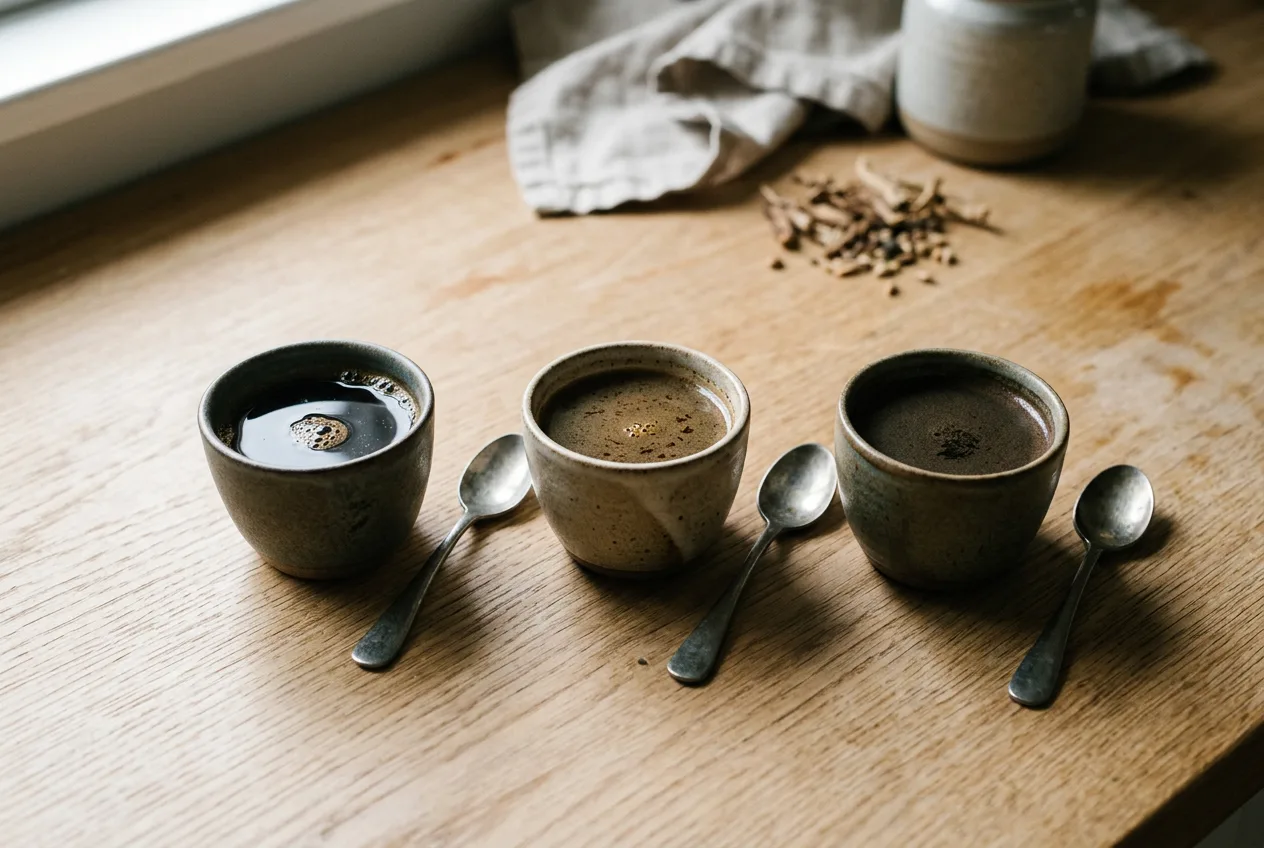
Why nothing tastes exactly like coffee
Roasting creates many of the same types of flavor compounds in grains, roots and nuts as it does in coffee. The Maillard reaction between sugars and proteins, and caramelization of sugars, produce browned, toasty, bitter and sweet notes in all of them. That's why many substitutes smell convincingly roasty.
But coffee beans have a unique chemistry. They contain chlorogenic acids, which break down during roasting into compounds that give coffee its particular bitterness and some of its acidity. They contain oils that carry aroma. And coffee develops hundreds of aromatic compounds, a mix that no root or grain reproduces.
Substitutes also lack coffee's bright acidity, which is a big part of what makes a good cup taste lively rather than flat. That's why many substitutes taste heavy, sweet or bitter but somehow "dull" next to coffee. For more on that, see acidity and bitterness in coffee.
Which tastes most like coffee?
Closeness to real coffee (my tasting, out of 10)
If you want something that genuinely reminds you of coffee, roasted peanut coffee with milk was the clear winner. For a caffeine-free espresso ritual, caffè d'orzo is lovely. For convenience, instant grain drinks are easy, as long as you expect their own woody flavor rather than coffee.
Blending substitutes with real coffee
Historically, most substitutes were mixed with coffee, not used alone, and that's still the best way to use chicory in particular.
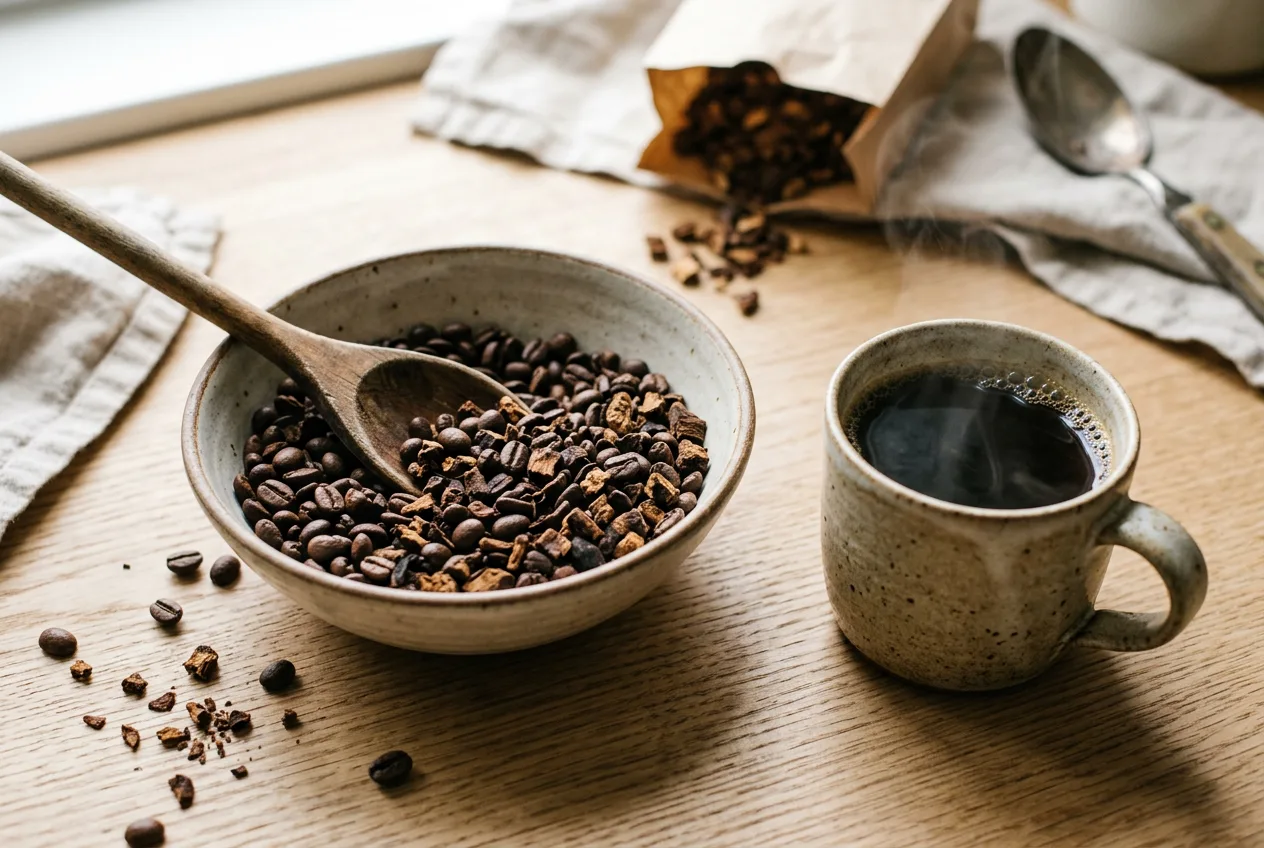
- New Orleans style: roughly 70 to 80% coffee with 20 to 30% roasted chicory. Darker, heavier and a little bitter, great with hot milk.
- Half and half: 50% coffee and 50% grain substitute, a simple way to halve caffeine.
- Caffeine taper: gradually increase the substitute over several weeks if you're cutting caffeine.
Because chicory is so soluble, use less than you think. A small amount darkens and strengthens a pot of coffee noticeably.
Three recipes to try
New Orleans café au lait with chicory
- BlendMix roughly 3 parts dark-roast ground coffee with 1 part ground roasted chicory.
- BrewBrew in a drip machine or French press as you normally would.
- Add hot milkPour equal parts coffee and hot, steamed milk into a large cup.
- Serve with something sweetBeignets are traditional; any pastry works.
Orzo in a moka pot
- Fill with waterFill the moka pot base with hot water up to the valve.
- Add ground orzoFill the basket with ground roasted barley, without pressing.
- Brew on medium heatRemove when it starts to gurgle, just like coffee.
- ServeDrink short like espresso, or add steamed milk for an orzo latte.
Peanut coffee latte
- Brew strongBrew peanut coffee at about 1.25 ounces per 16 fluid ounces of water.
- Add milkTop with steamed or warm milk.
- OptionalA small drizzle of honey and a pinch of cinnamon round it out.
For more on moka pots, see moka pot vs espresso.
Using substitutes to cut back on caffeine
If you want to quit or seriously reduce caffeine, going cold turkey can bring headaches and fatigue for a few days. Substitutes make a gradual taper easier.
- Week 1Replace 25% of your ground coffee with a grain or chicory substitute.
- Week 2Move to 50:50.
- Week 3Use 75% substitute, or switch your afternoon cup entirely.
- Week 4Switch fully to a caffeine-free substitute or decaf.
Because the ritual stays the same, the same mug, the same time and the same warm, dark drink, it's often easier than people expect. If you're cutting caffeine for health reasons, follow your doctor's advice on how quickly to do it.
How to choose a coffee substitute
Tips for better results
- Instant powders: use hot rather than boiling water and add milk.
- Peanut coffee: brew stronger than coffee, use a slightly lighter roast if available, add milk.
- Acorn coffee: boil traditionally or brew through a filter; clean equipment afterward.
- Dandelion root: roast it before brewing if you want it to resemble coffee.
- Chicory: use a small dose alone, or blend with coffee.
- Orzo: brew in a moka pot or espresso machine for the classic Italian version.
- All of them: judge them as their own drinks, not as copies of coffee.
Cooking and baking with substitutes
Coffee substitutes aren't only for drinking. Their roasty, bitter, caramel notes work well in the kitchen.
- Chicory in desserts: a little brewed chicory adds depth to chocolate cakes, brownies and tiramisu-style desserts.
- Coffee-and-chicory extract: traditionally used in British baking for coffee cakes and icing.
- Orzo in desserts: barley "coffee" makes a gentle, caffeine-free flavoring for puddings and ice cream.
- Dandelion root in sauces: a small amount adds bitterness to rich braises, much like a dash of amaro.
- Grain coffee for kids' treats: a caffeine-free way to give "coffee" flavor to desserts for children.
Start with small amounts. Chicory in particular is strong, and a teaspoon of the brew goes a long way in a cake batter.
Health notes
Most coffee substitutes are naturally caffeine-free, which makes them useful for anyone who needs to avoid caffeine. A few points to keep in mind:
- Gluten: barley and rye contain gluten, so grain coffees aren't suitable for people with celiac disease.
- Allergies: peanut coffee is obviously off-limits for peanut allergies.
- Chicory and inulin: chicory contains inulin, a fiber that can cause gas or bloating in some people.
- Herbal roots: dandelion and other herbal roots may interact with some medications; check with a pharmacist if you take regular medication or are pregnant.
For more on caffeine itself, see caffeine myths debunked.
Myths about coffee substitutes
- "Chicory coffee tastes like coffee." Pure chicory tastes bitter and burnt-sugary; coffee carries the coffee flavor in blends.
- "Dandelion coffee is just like coffee." Raw dandelion root makes a pale, bitter herbal tea.
- "All substitutes are caffeine-free." Most are, but blends that include real coffee are not.
- "Substitutes were invented for health reasons." Historically, scarcity and fraud mattered far more.
- "You can use them exactly like coffee." Most need different doses and methods.
The verdict
No substitute fully replaces coffee, and the best ones don't try too hard. Roasted peanut coffee came closest in my tests, especially with milk. Caffè d'orzo is a lovely caffeine-free espresso ritual. Instant grain drinks are convenient and pleasant in their own woody way.
Chicory is fascinating: pitch black, molasses-like and fiercely bitter on its own, but brilliant as a coffee extender, just as it was in wartime France and blockaded New Orleans. Acorn coffee is mostly about its spices, and raw dandelion root is a good bitter tea rather than a coffee stand-in.
Most of all, these drinks are a reminder of how much people have always valued the coffee ritual. When the real thing disappeared, they didn't give up the morning cup. They roasted whatever they could find, brewed it dark and kept the habit alive until coffee came back. That instinct is still with us today, whether we're cutting caffeine for health or simply curious about what else a warm, dark drink can be.
If you need to avoid caffeine, start with peanut coffee or orzo. If you just want a little less caffeine, try blending chicory or barley with your regular coffee. And if you love history, roast some chicory at home. It's the closest you'll get to tasting coffee's long, strange past.
Frequently asked questions
What is the best coffee substitute?
In my tests, roasted peanut coffee tasted closest to coffee. Caffè d'orzo is a great caffeine-free espresso alternative.
Is chicory coffee caffeine-free?
Pure chicory is caffeine-free. Chicory coffee blends contain caffeine from the real coffee in them.
Why did people drink chicory instead of coffee?
To stretch scarce coffee during wars and blockades, and sometimes because merchants used it as a cheap filler.
Does dandelion coffee taste like coffee?
Not raw. It makes a pale, bitter herbal tea. Roasted dandelion is darker but still quite different.
What is caffè d'orzo?
A caffeine-free Italian drink made from roasted barley, brewed like espresso or in a moka pot.
Can I roast chicory root at home?
Yes. Roast dried chicory pieces at 350°F for about 30 minutes, cool, grind and brew a small dose.
Are coffee substitutes gluten-free?
Not all. Barley and rye contain gluten. Chicory, peanut, acorn and dandelion are naturally gluten-free, but check labels.
What substitute is best with milk?
Peanut coffee and instant grain drinks both work well with milk, as does chicory in a café au lait.

- Michael Reynolds, side-by-side tastings and home roasting of chicory root
- Coffee substitute, Wikipedia
- Chicory, Wikipedia
- Barley tea and caffè d'orzo, Wikipedia
- Inulin, Wikipedia
- Acorn, Wikipedia
Related guides
How decaf coffee is made Mushroom coffee explained Italian coffee cultureWritten by Michael Reynolds. Last updated November 20, 2026.