How Instant Coffee Is Made: From Bean to Granule, Spray-Dried vs Freeze-Dried
Instant coffee is real coffee, brewed in a factory on a huge scale and then dried into powder or granules. Here's every step of the process, why freeze-dried tastes different from spray-dried, and how to make a jar of instant taste noticeably better.
We choose products independently. We may earn a commission through links on this page; your price stays the same. Affiliate policy
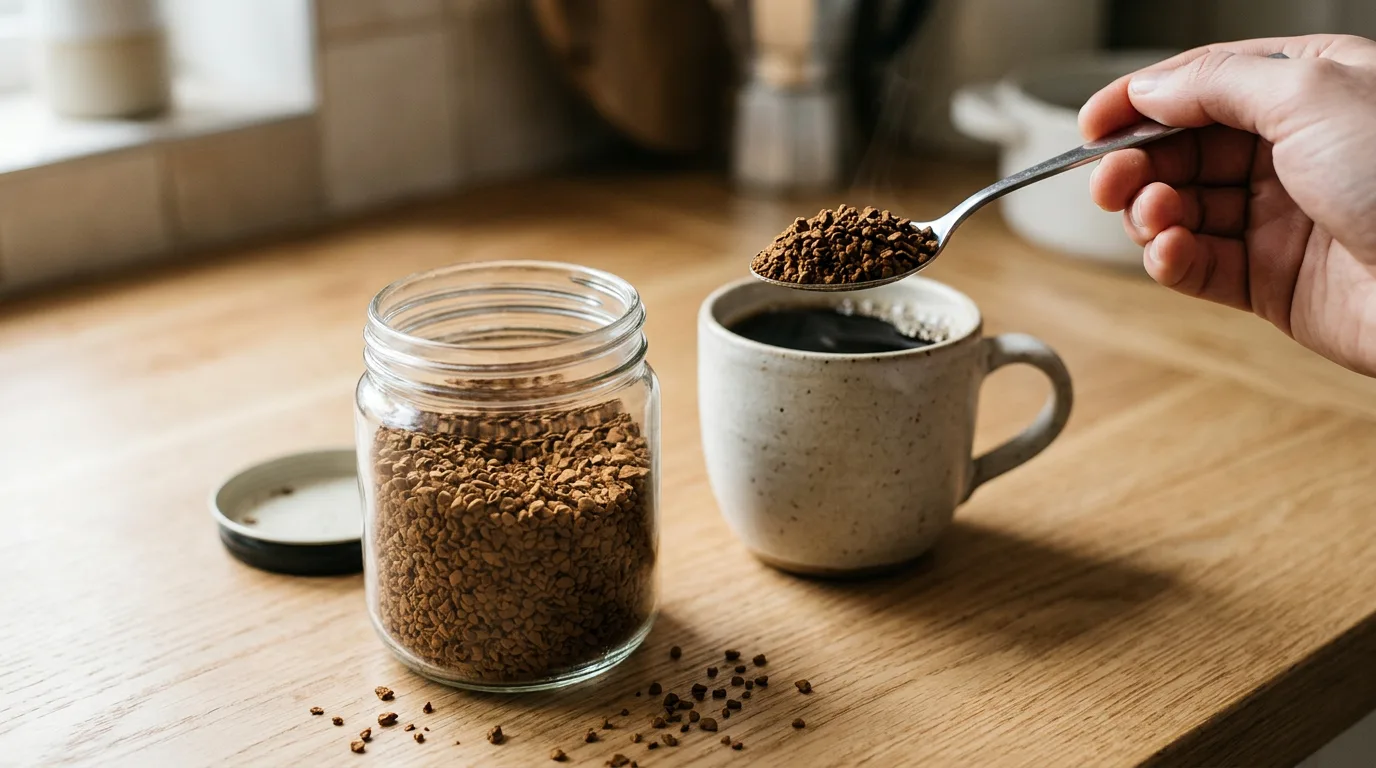
Instant coffee is made by brewing a very strong coffee in industrial extractors, concentrating it, and then drying it into a soluble powder or granules. Spray drying blasts the coffee through hot air into fine powder. Freeze drying freezes the coffee and removes the ice under vacuum, which keeps more aroma and usually tastes better. Add hot water and you're simply rehydrating coffee that was already brewed.
Why I wrote this
I spend most of my time with espresso machines and burr grinders, so you might expect me to look down on instant coffee. I don't. It's one of the most popular coffee formats on Earth, and in many countries it's what most people drink at home.
It's also a genuinely clever piece of food technology. Turning a brewed drink into a shelf-stable powder that dissolves in seconds is not simple, and the process has a big impact on the final taste.
I wanted to understand exactly how it's made, why some jars taste so much better than others, and whether there's anything you can do at home to improve it. There is, and it's easier than you'd think.
I also tasted a range of instant coffees side by side, from budget powders to specialty freeze-dried single origins, to see how big the differences really are. The results surprised me, and they changed which jar I keep in my travel bag.
What this guide covers
- Every step of production, from green beans to the jar.
- Spray-dried vs freeze-dried, and how to tell them apart.
- Caffeine, health and how instant compares with brewed coffee.
- Simple tricks to make your instant coffee taste better.
What instant coffee actually is
Instant coffee is dried coffee extract. Somebody has already done the brewing for you. All the water has been removed, leaving the dissolved coffee solids behind in a form that dissolves again when you add water.
That's the key difference from ground coffee. Ground coffee contains the whole bean, most of which is insoluble plant fiber. You brew it, keep the liquid and throw the grounds away. Instant coffee is only the part that dissolved, so nothing is left over.
It's often called soluble coffee in the industry, which is a more accurate name. It isn't made from a special type of coffee. It's the same coffee plants, roasted and brewed, just processed further.
A useful way to think about it is like dried soup or stock cubes. The cooking has already happened in a big kitchen somewhere else. At home, you only add hot water to bring it back. That convenience is the whole point, and it is also why the quality of that factory "cooking" decides most of what ends up in your mug. Beans, roast, extraction and drying method all leave their mark on the flavor long before the jar reaches your shelf.
Our tip: Check the ingredients list. Good instant coffee should say only "coffee" or "100% coffee." Some products, especially sachets, add sugar, creamer or flavorings.
The process at a glance
- Source green beansOften robusta or a robusta-arabica blend, sometimes 100% arabica for premium products.
- Roast and grindBeans are roasted in large batches and ground fairly coarse.
- ExtractHot water under pressure brews a very strong coffee in tall extraction columns.
- Recover aromaVolatile aroma compounds are captured so they can be added back later.
- ConcentrateSome of the water is removed to make a thick coffee concentrate.
- DryThe concentrate is spray-dried into powder or freeze-dried into granules.
- PackThe coffee is sealed in jars, tins or sachets, often with an inert gas, to keep out moisture and oxygen.
Let's look at each step in more detail.
Step 1: choosing the beans
Instant coffee producers buy green coffee like any other roaster. Historically, most instant coffee used robusta, and many budget products still do.
There are good reasons for that. Robusta is cheaper, it gives a higher yield of soluble solids, and its strong, heavy flavor survives the long industrial process well. It also has roughly twice the caffeine of arabica.
Premium instant coffees often use a high share of arabica, or 100% arabica, for a smoother, more aromatic cup. A new wave of specialty instant brands even uses single-origin, lightly roasted beans and freeze-drying to keep delicate flavors.
I explain the differences between the two species in arabica vs robusta.
Step 2: roasting and grinding
The green beans are roasted in large industrial roasters, often several hundred kilograms at a time. Most instant coffee is roasted to a medium or medium-dark level, which gives a robust flavor that holds up through processing.
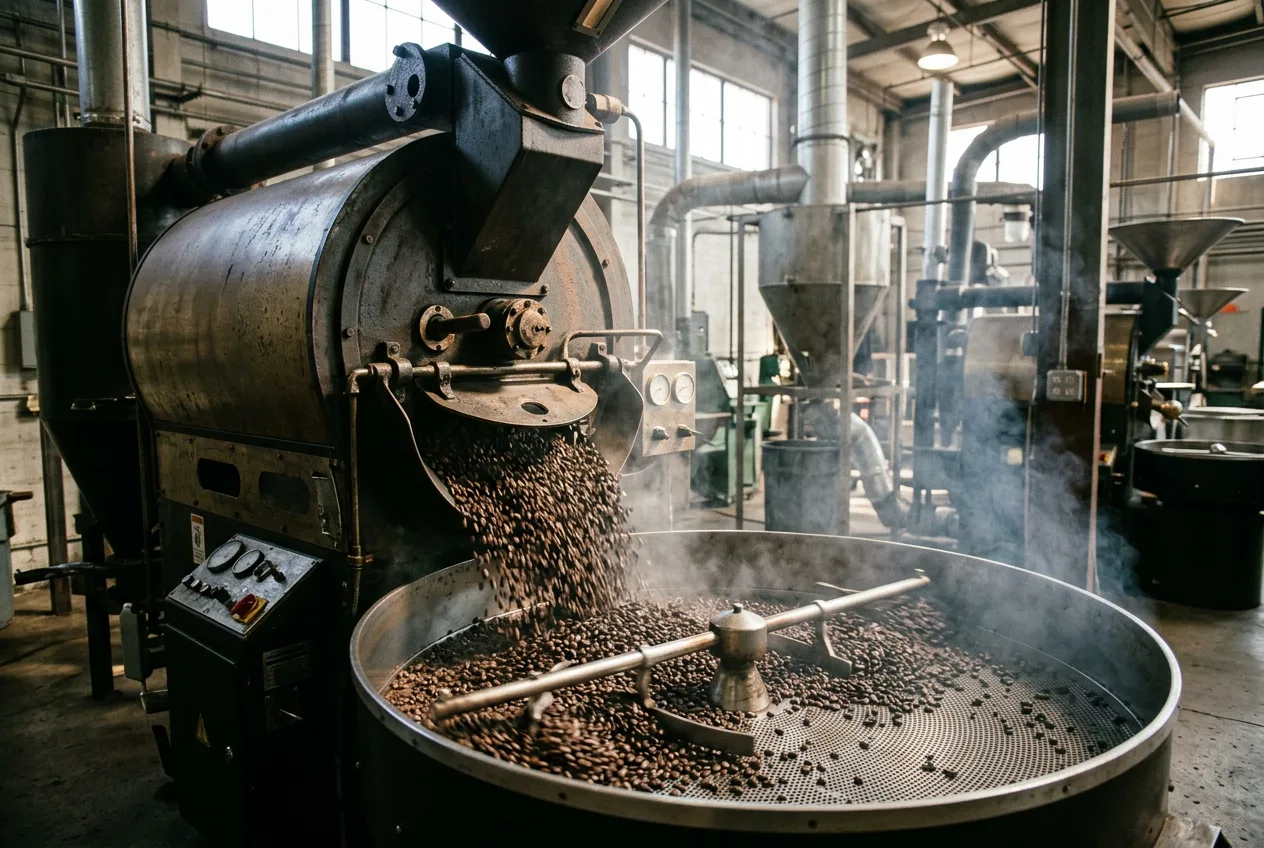
After roasting and cooling, the beans are ground. The grind is relatively coarse compared with espresso. Too fine and the grounds would clog the extraction columns and stop the water flowing through.
Roasting decisions matter a lot for instant coffee, because heavy processing tends to flatten subtle flavors. Producers often choose roasts that taste bold and simple, so the final cup is still recognizable as coffee.
Step 3: industrial brewing (extraction)
This is where instant coffee becomes very different from home brewing. The ground coffee is loaded into a series of tall, stainless steel extraction columns, linked together in a sequence.
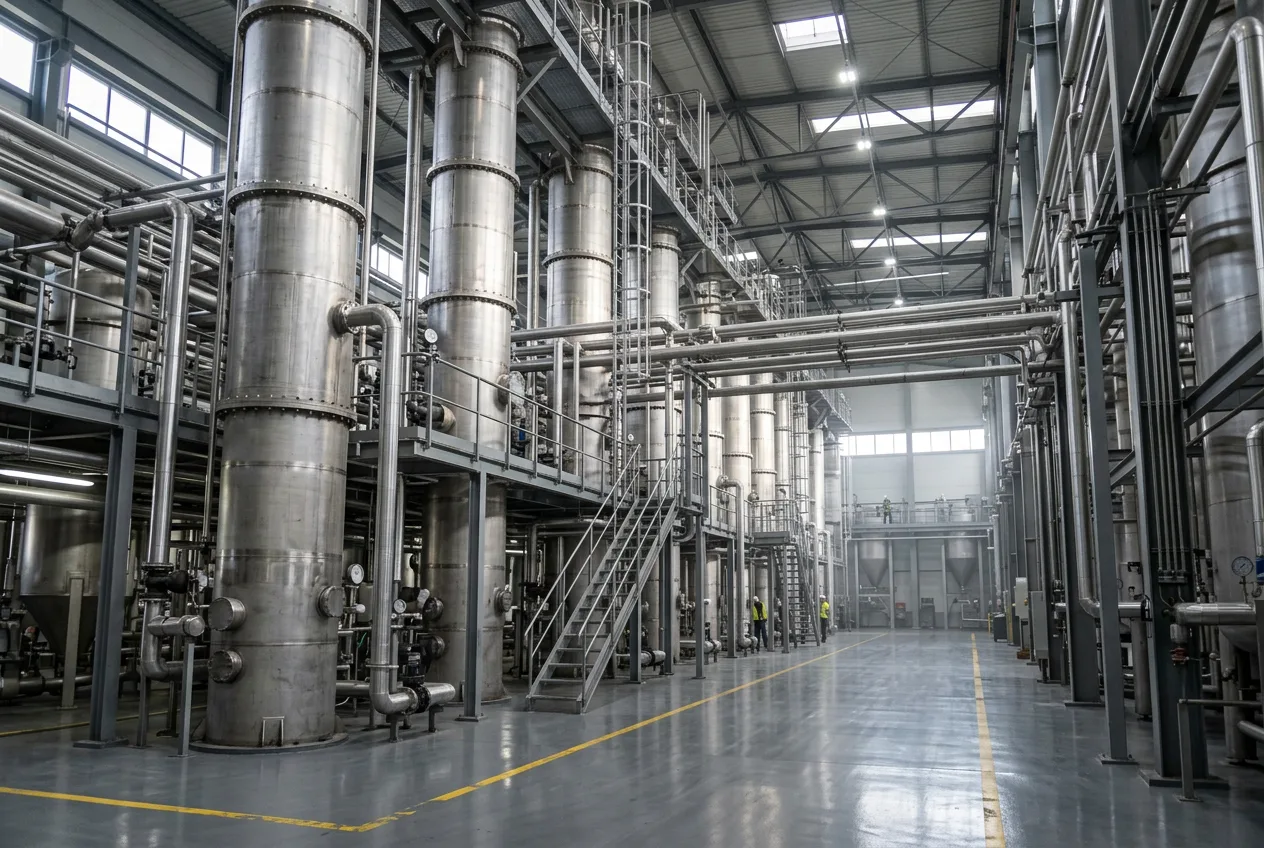
Hot water is pumped through the columns under pressure. The freshest water meets the most exhausted coffee first, then flows on to fresher and fresher grounds. This counter-current setup extracts as much as possible from the coffee.
Temperatures in the later stages can go well above the boiling point of water, which is possible because the system is pressurized. At these temperatures, the water breaks down and dissolves compounds that a normal brew would leave behind.
| Feature | Home brewing | Instant coffee extraction |
|---|---|---|
| Water temperature | About 195 to 205°F | Much hotter in later stages, under pressure |
| Share of coffee dissolved | About 18% to 22% | Often well over 40% |
| Strength of the brew | About 1% to 1.5% dissolved solids | Many times stronger |
| Goal | Best flavor | High yield plus acceptable flavor |
That very high extraction is efficient, but it's also one reason instant coffee can taste flatter, woodier or more bitter than fresh coffee. It includes compounds a café barista would deliberately avoid. I explain the basics of extraction in acidity and bitterness in coffee.
Step 4: aroma recovery
Coffee's aroma is made of hundreds of volatile compounds that evaporate easily. Heating, concentrating and drying would destroy most of them, so better producers capture them first.
Aroma recovery can happen at several points. Some aromas are drawn off from the ground coffee with steam before extraction. Others are stripped from the first part of the extract. They're condensed and stored separately, then blended back into the concentrate just before drying.
This is one of the main reasons some instant coffees smell much more like real coffee when you open the jar. It's also why the aroma fades quickly after opening: it's a fragile layer, not a deep part of the granule.
Step 5: concentrating the coffee
The liquid that comes out of the extraction columns is very strong, but it's still mostly water. Removing all of that water by drying would be slow and expensive, so producers first make it more concentrated.
- Evaporation: the extract is heated under a vacuum, which lets water boil off at a lower temperature. It's efficient but can affect flavor.
- Freeze concentration: the extract is cooled until pure water forms ice crystals, which are then separated out. It's gentler on flavor and often used for premium products.
- Membrane filtration: water is pushed through fine membranes that hold back the coffee solids.
The result is a thick, syrupy coffee concentrate, ready for drying.
Quality control along the way
Because instant coffee is made in such large volumes, consistency is a big part of the job. Producers test at nearly every stage.
- Green coffee is sampled, roasted and cupped before purchase, just as specialty roasters do.
- Roast color is measured with instruments to keep batches the same.
- The extract is checked for strength and yield, and tasted by trained panels.
- The finished powder or granules are tested for moisture, density, color, solubility and flavor.
That's why a jar of a given brand tastes almost identical from one year to the next. It's a strength of instant coffee: you know exactly what you're getting, every single time. It's also why the overall style tends to be safe and familiar rather than adventurous.
Step 6a: spray drying
Spray drying is the older, faster and cheaper method. It's used for most budget instant coffee and fine instant powders.
- Atomize the concentrateThe coffee concentrate is sprayed as a fine mist from the top of a very tall drying tower.
- Dry in hot airVery hot air flows through the tower. As the droplets fall, their water evaporates in seconds.
- Collect the powderDry coffee particles land at the bottom as a fine powder.
- Agglomerate (optional)The powder is moistened slightly with steam so the particles clump into larger granules that dissolve easily and look more like freeze-dried coffee.
Spray drying is efficient, but the hot air drives off more of the remaining aroma. Spray-dried coffee often tastes flatter and more bitter than freeze-dried.
Step 6b: freeze drying
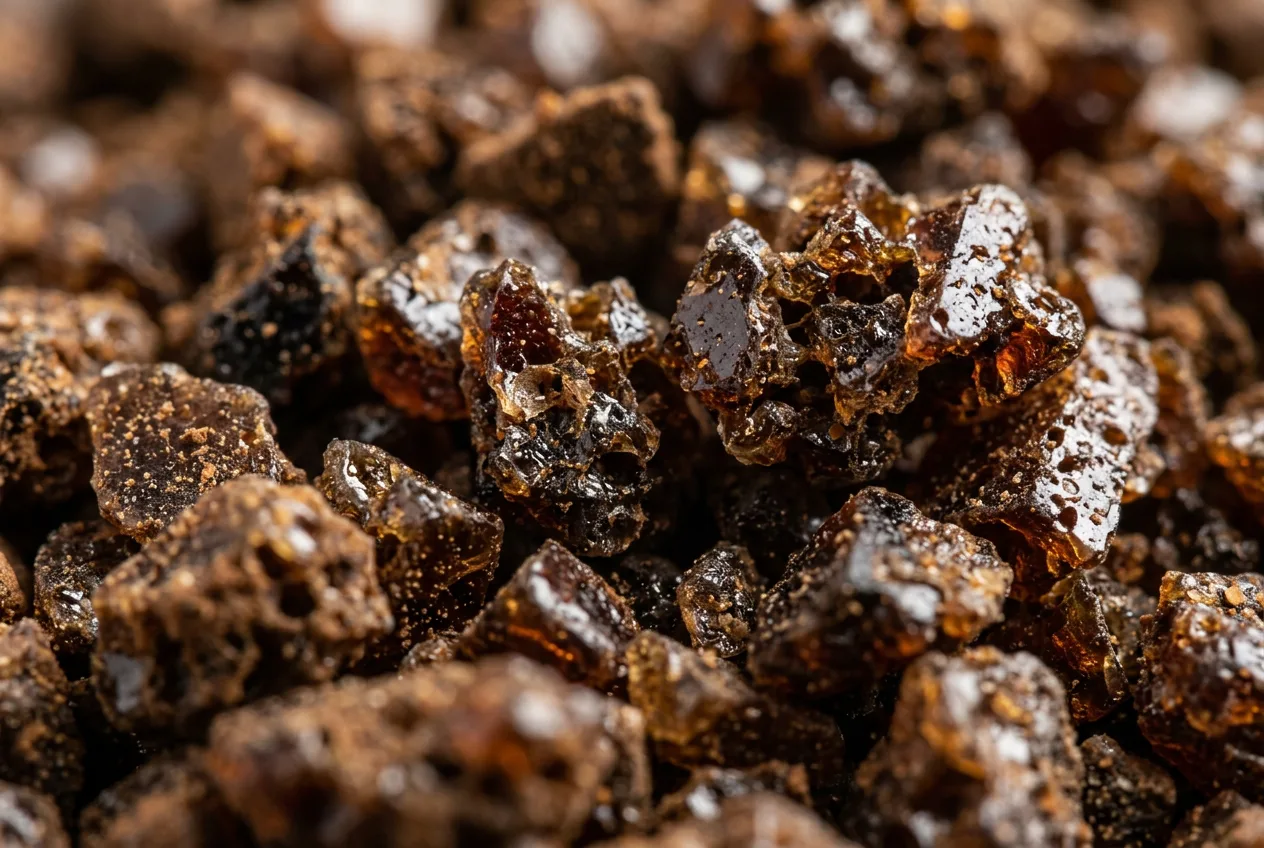
Freeze drying is slower and more expensive, but gentler. It's used for most premium instant coffees and the larger, dark, crystal-like granules.
- Freeze the concentrateThe coffee concentrate is frozen to very low temperatures, often around -40°F, sometimes first as a slush and then as solid slabs.
- Break into granulesThe frozen coffee is broken and ground into small frozen pieces of the desired size.
- Dry under vacuumThe frozen granules go into a vacuum chamber. With gentle heat, the ice turns straight into vapor without melting, a process called sublimation.
- FinishWhat's left are dry, porous coffee granules that keep their shape and much of their flavor.
Because the coffee never gets very hot during drying, more of its aroma survives. That's why freeze-dried instant coffee usually smells and tastes closer to brewed coffee.
Spray-dried vs freeze-dried
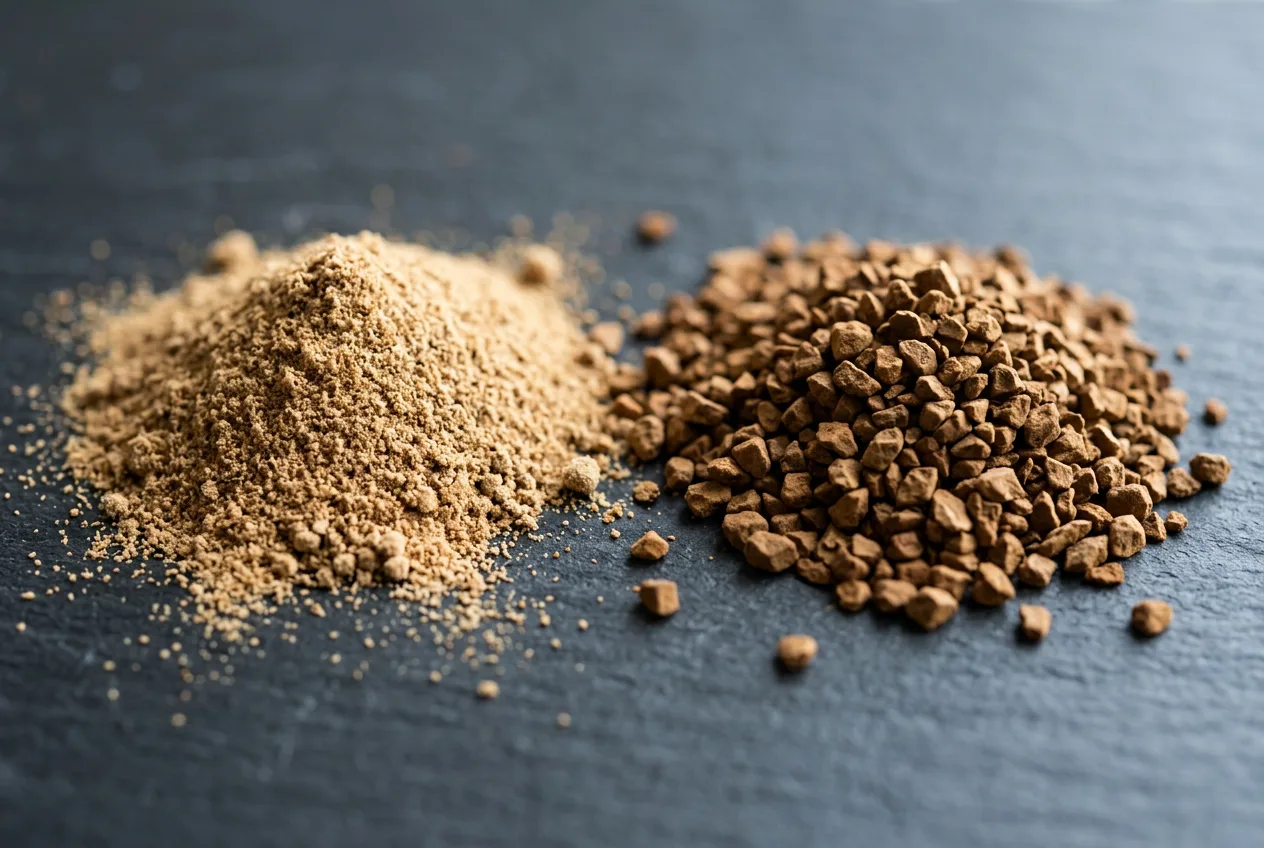
| Feature | Spray-dried | Freeze-dried |
|---|---|---|
| Looks like | Fine powder or small rounded granules | Larger, angular, glassy crystals |
| Color | Lighter brown | Darker brown |
| Drying temperature | Very hot air | Frozen, then vacuum |
| Aroma kept | Less | More |
| Flavor | Flatter, more bitter | Fuller, smoother |
| Price | Lower | Higher |
| Dissolves | Very fast, can clump | Fast, rarely clumps |
In my tasting, the freeze-dried coffees were clearly better as black coffee. With plenty of milk and sugar, the difference shrank a lot. If you drink instant black, it's worth paying the extra for freeze-dried.
Our tip: Look at the granules. Dark, angular, glassy pieces are almost always freeze-dried. Round, light, uniform granules are usually agglomerated spray-dried coffee.
Step 7: packing
Instant coffee is very hygroscopic, which means it pulls moisture out of the air. Left open, it soon turns sticky and clumps into a solid lump. Oxygen also dulls its flavor over time.
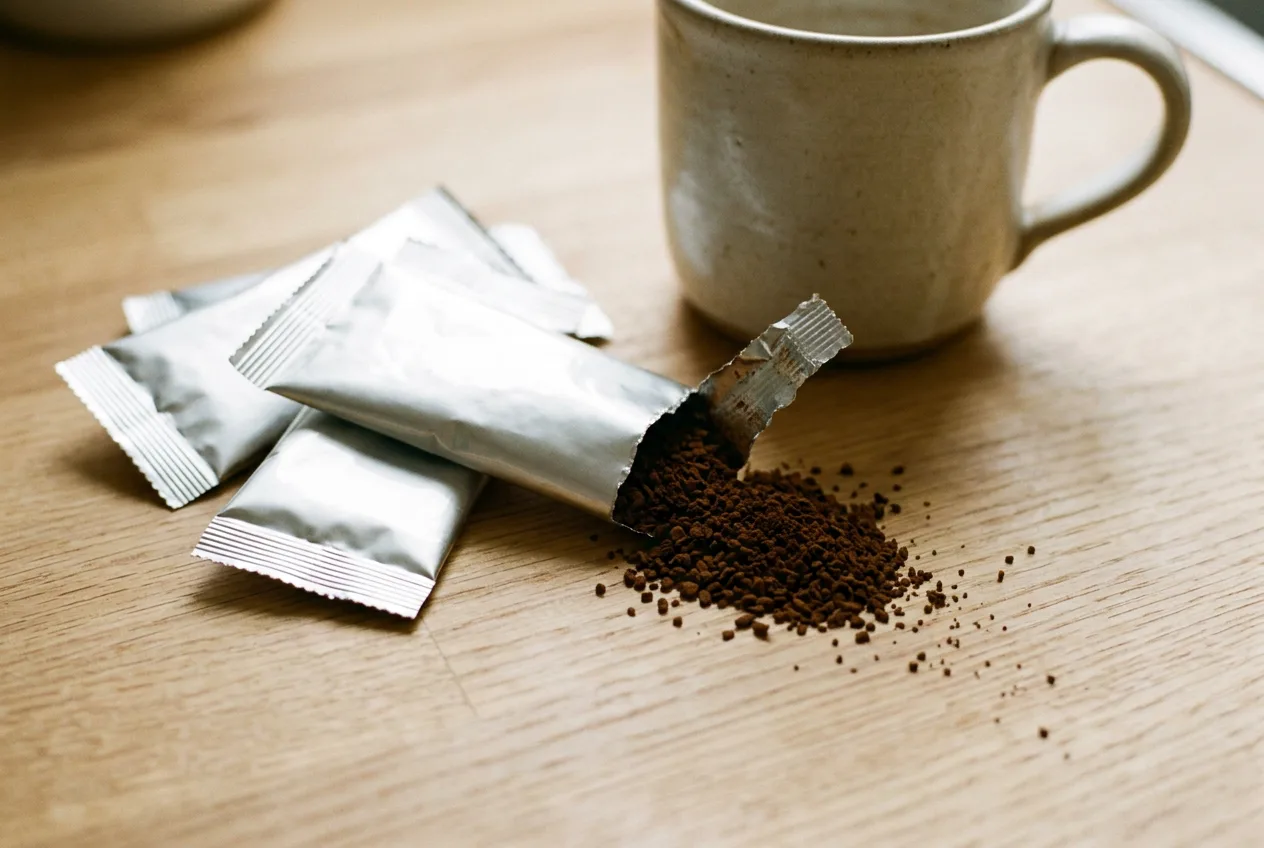
So it's packed carefully. Jars and tins are usually sealed with a foil membrane, and many producers flush the container with nitrogen or carbon dioxide to push out oxygen. Single-serve sachets are sealed individually.
Sealed, instant coffee keeps for a very long time, often well over a year. Once opened, it's best used within a few weeks to a couple of months, with the lid tightly closed between uses.
Packaging also explains the little burst of coffee smell when you first break the foil seal. The aroma added back before drying has been trapped in the jar since the factory. That first sniff is the best the coffee will ever smell, and each time you open the lid afterwards, a little more of it escapes. It is a good reason to buy smaller jars and close them quickly.
Types of instant coffee
| Type | What it is | Best for |
|---|---|---|
| Spray-dried powder | Fine powder from spray drying | Budget, baking, cold drinks |
| Agglomerated granules | Spray-dried powder clumped into granules | Everyday mugs |
| Freeze-dried granules | Crystals from freeze drying | Black coffee, better flavor |
| Microground blends | Instant mixed with very finely ground roasted coffee | A fuller, more brewed-like taste |
| Specialty instant | High-quality single origins, often freeze-dried | Travel and camping for coffee lovers |
| 3-in-1 sachets | Instant coffee with sugar and creamer | Convenience |
| Instant espresso powder | Very fine, dark, strong powder | Baking and desserts |
A short history of instant coffee
People were trying to make "soluble coffee" as early as the 18th and 19th centuries, but early versions were mostly coffee concentrates and pastes rather than dry powders.
In the 1890s, a New Zealander named David Strang patented a dry "soluble coffee powder." Around 1901, Satori Kato, a Japanese chemist working in Chicago, presented a soluble coffee at the Pan-American Exposition. In 1910, George Constant Washington, a Belgian-born inventor living in the US, launched one of the first commercially successful instant coffees.
Instant coffee gained huge popularity during the World Wars, when it was included in soldiers' rations because it was light, compact and quick. In 1938, a major Swiss food company launched a spray-dried instant coffee that became a global household name.
Freeze-drying arrived in the 1960s, bringing a noticeable jump in flavor. Today instant coffee is a huge global industry, especially popular in the UK, Russia, Japan, much of Asia and many emerging coffee markets.
Caffeine and health
Caffeine
Instant coffee usually has a little less caffeine per cup than brewed coffee, mainly because people use a small amount of granules.
Typical caffeine per 8 oz cup
Typical values. A heaped spoonful, or a robusta-heavy product, can carry much more.
Robusta-based instant coffees can be on the higher side, and adding two heaped spoons can easily double the dose. For context on sensible daily amounts, see caffeine myths debunked.
Health
Instant coffee is still coffee, and research generally suggests it shares many of the associations seen with brewed coffee, such as antioxidants and links to lower risk of some diseases. It's also naturally almost calorie-free when drunk black.
One thing often mentioned is acrylamide, a compound that forms naturally when foods like coffee, bread and potatoes are roasted or baked. Several analyses have found instant coffee powder can contain more acrylamide per gram than roasted coffee. Because you use only a small amount per cup, the difference in a normal diet is modest, but it's one reason to enjoy instant in moderation rather than by the potful.
The bigger health factor is usually what you add. Many 3-in-1 sachets contain a surprising amount of sugar and creamer.
Instant vs brewed coffee
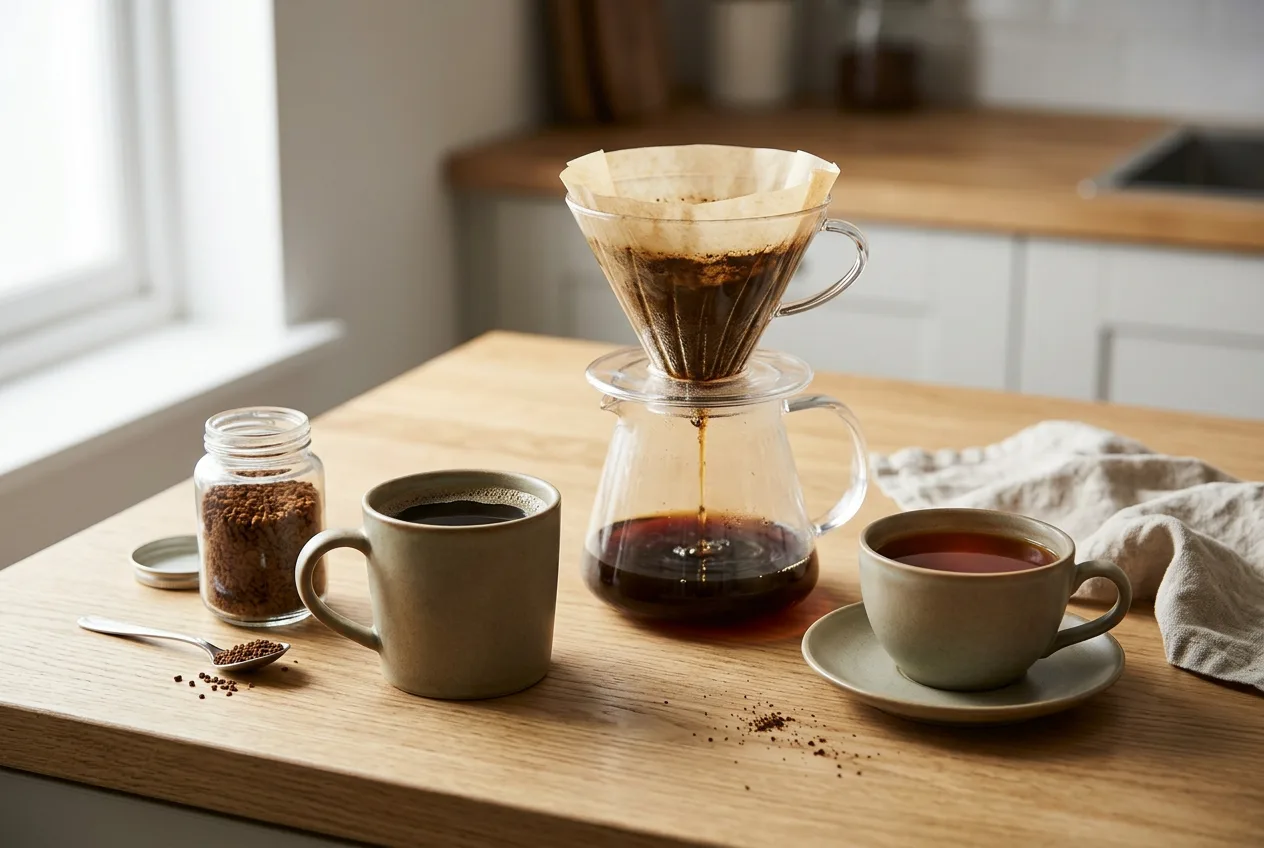
| Feature | Instant coffee | Brewed coffee |
|---|---|---|
| Time to make | About 30 seconds | 3 to 10 minutes |
| Equipment | Kettle and mug | Grinder, brewer, filter |
| Flavor | Simpler, flatter, sometimes bitter | Fuller, more aromatic and complex |
| Consistency | Very consistent | Depends on your technique |
| Shelf life | Long | Beans best within weeks |
| Cost per cup | Usually low | Low to moderate |
| Waste | No grounds | Grounds and filters |
Fresh brewed coffee wins on flavor almost every time. Instant wins on speed, convenience, portability and shelf life. They're different tools, and plenty of coffee lovers keep a jar of good instant for travel, camping or the office.

My instant coffee taste test
To see how much the type really matters, I tasted five kinds of instant coffee side by side, all made the same way: 2 g per 7 oz of water at about 185°F, black first, then with a splash of milk.
| Type | Black | With milk |
|---|---|---|
| Budget spray-dried powder | Flat, bitter, slightly papery | Drinkable, mostly "coffee-flavored" |
| Agglomerated granules | A little rounder, still harsh | Fine for everyday |
| Freeze-dried blend | Smoother, some caramel | Pleasant, balanced |
| Microground blend | Fuller body, more "brewed" aroma | The most like a filter coffee latte |
| Specialty freeze-dried single origin | Noticeably fruity and sweet | Very good, though the fruit fades |
The gap between the cheapest and the best was bigger than I expected. The specialty instant wasn't as good as a fresh pour-over of the same beans, but it was far closer than I'd have guessed, and well above some brewed coffees I've had in hotel rooms.
With milk, the differences shrank a lot. If you always add milk and sugar, a mid-priced freeze-dried coffee is plenty. If you drink it black, the extra cost of a better product is easy to taste.
How to choose a good instant coffee
Supermarket shelves can be confusing. These are the clues I look for on the label.
- Freeze-dried: usually the single biggest step up in flavor.
- 100% arabica or a named origin: generally smoother and more aromatic than unspecified blends.
- Ingredients that say only "coffee": no added sugar, creamer or flavorings unless you want them.
- A sealed inner membrane: a sign the jar was packed to keep moisture and oxygen out.
- A size you'll finish within a couple of months: big jars are cheaper, but the aroma fades once opened.
- Microground if you want body: blends with finely ground coffee taste more like brewed coffee, but leave a little sediment.
Price is a rough guide but not a guarantee. A mid-priced freeze-dried coffee can beat an expensive spray-dried one. When in doubt, buy a small jar or a few sachets and taste before committing.
Where instant coffee is most popular, and why
Instant coffee's share of the market varies enormously around the world. In countries with strong espresso or filter traditions, like Italy, Scandinavia and parts of the US, it's a small slice. In others, it's the default.
The UK has long been one of the biggest instant coffee markets in Europe, and many British homes still keep a jar next to the kettle. In parts of Asia, Eastern Europe, the Middle East and Africa, instant coffee is often the most common way people drink coffee at home.
The reasons are practical. Instant coffee is cheap, doesn't need any equipment beyond a kettle, keeps for a long time, and works well in hot climates and small kitchens. In many places, it was also the first form of coffee widely available, so it shaped people's idea of what coffee tastes like.
Interestingly, some of the world's biggest coffee-producing countries also drink a lot of instant coffee, as local roasted coffee culture is still developing and instant is affordable and familiar.
The economics of instant coffee
Instant coffee makes a lot of sense from a production point of view. Because industrial extraction dissolves a much larger share of each bean than home brewing does, producers get more drinkable coffee out of every kilogram of green coffee.
The finished product is light and compact, so it's cheap to ship and store, and it doesn't spoil quickly. That's why instant coffee often costs less per cup than brewed coffee, even after all the extra processing.
Robusta fits this model well. It's cheaper to grow and buy, gives a high yield of soluble solids, and its bold flavor survives processing. The trade-off is taste. Premium instant products pay more for arabica and gentler processing, and charge more as a result.
Is instant coffee better for the environment?
It's a mixed picture. Making instant coffee uses a lot of energy, especially for concentrating and drying, and freeze drying is particularly energy-intensive.
On the other hand, instant coffee is very efficient with beans, it's light to transport, and at home you only boil the water you need. There are no filters or grounds to throw away. Some life-cycle studies have found instant coffee compares reasonably well with other methods once you count wasted brewed coffee and the energy used by machines kept on all day.
The biggest environmental factor for any coffee is usually how it's grown. Whatever format you drink, buying from producers with sustainable farming practices matters more than the brewing method.
How to store instant coffee
- Keep the lid tightly closed and close it as soon as you've taken a spoonful.
- Use a dry spoon. Even a few drops of water start clumping.
- Store it in a cool, dry cupboard, away from the kettle's steam and the stove.
- Don't keep it in the fridge. Taking it in and out causes condensation, which makes it clump.
- Buy sizes you'll finish in a few weeks to a couple of months for the best aroma.
If your instant has turned into a solid lump, it's usually still safe as long as it smells normal. Break it up or dissolve a chunk in hot water. But the flavor will have faded, so it's a sign to buy a smaller jar next time. For whole beans, see how to store coffee beans.
Decaf instant coffee
Decaf instant is made the same way, except the green beans are decaffeinated before roasting. It's one of the most popular forms of decaf, especially for evening drinks.
A cup typically contains only a few milligrams of caffeine. Quality varies as much as with regular instant, so freeze-dried decaf is again usually the better-tasting choice. I explain how beans are decaffeinated in how decaf coffee is made.
What happens when you add water
When you pour water onto instant coffee, you're reversing the drying process. The dry coffee solids absorb water and dissolve, turning back into liquid coffee in a few seconds.
Freeze-dried granules dissolve especially quickly because they're full of tiny pores left behind by the ice. Water rushes into those pores and breaks the granules apart. Very fine spray-dried powder can clump instead, because the outside of each clump gets wet and sticky before water reaches the middle. That's why stirring it into a small splash of water first works so well.
You may notice a light foam on top, especially if you pour quickly. That's air trapped in the granules and whipped into the liquid. It's not crema in the espresso sense, but it adds a nice texture. Whipping instant with sugar and a little water turns that same effect into the thick foam of dalgona coffee.
Water temperature affects taste even though no brewing is happening. Boiling water can scorch delicate aromas and make the cup taste harsher, which is why slightly cooler water usually gives a smoother result.
Instant coffee drinks around the world
Some of the world's most popular coffee drinks are built on instant coffee rather than brewed coffee.
- Greek frappé: instant coffee shaken hard with water, sugar and ice until it forms a thick foam, served with milk if you like. It was reportedly invented by accident at a trade fair in Greece in the 1950s.
- Dalgona coffee: instant coffee, sugar and hot water whipped into a stiff foam and spooned over milk. It went viral around the world in 2020.
- Indian beaten coffee: instant coffee and sugar beaten with a few drops of water into a pale paste, then topped with hot milk for a frothy cup.
- British "milky coffee": instant with plenty of milk, often made in a mug with a kettle, a staple in homes and offices.
- Instant iced coffee in Southeast Asia: often sweetened with condensed milk and served over lots of ice.
All of these work because instant coffee dissolves easily and foams well, which ground coffee simply can't do.
My camping coffee routine
When I'm hiking or camping, I leave the grinder at home and bring a small tin of good freeze-dried instant. Here's the routine that works best for me.
- Pre-portion at homeMeasure 2 to 3 g per cup into small reusable bags or a tiny tin, so you don't need a spoon or a scale outdoors.
- Boil, then waitLet the water rest off the stove for about a minute before pouring.
- Dissolve in a splash firstAdd a little water, swirl to dissolve, then fill the mug.
- Bring powdered milk if you like it whiteIt dissolves well and keeps without refrigeration.
On a cold morning by a lake, it tastes better than it has any right to.
Common mistakes with instant coffee
- Using boiling water straight from the kettle, which makes it taste harsher.
- Guessing the amount, which makes every cup different. Measure once to find your ratio.
- Using a wet spoon, which starts the whole jar clumping.
- Leaving the lid off while you make your drink.
- Buying a huge jar you won't finish for months, so the last half tastes stale.
- Adding milk first and coffee second with powders, which can leave undissolved lumps.
Is it worth switching to brewed coffee?
If you enjoy your instant coffee, there's no need to switch. But if you're curious, the step up doesn't have to be expensive or complicated.
A simple pour-over cone or a French press, a bag of freshly roasted beans and a basic burr grinder will give you a dramatically more flavorful cup for not much more effort, maybe three or four extra minutes. Many people keep both: brewed coffee for slow weekend mornings, instant for busy weekdays and travel.
If you'd like help choosing beans, my guide on how to choose coffee beans is a good place to start.
How to make instant coffee taste better
Most people make instant coffee with boiling water and a casual spoonful. A few small changes make a surprisingly big difference.
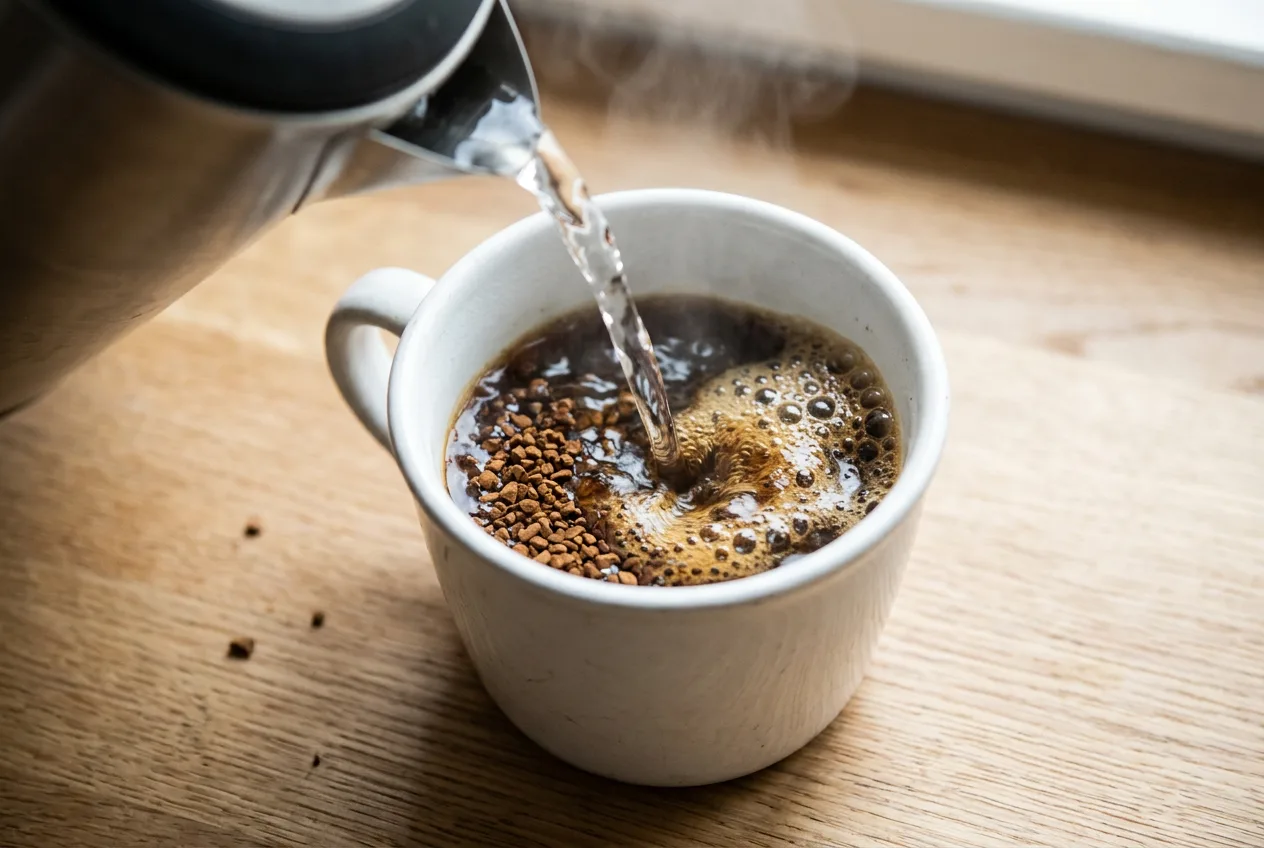
- Measure itStart with about 2 g, roughly a level teaspoon of granules, per 6 to 8 oz of water. Adjust to taste, but measure so you can repeat what you like.
- Make a paste firstStir the granules with a splash of cold or room-temperature water until dissolved. This prevents clumps and seems to soften harsh notes.
- Don't use boiling waterLet the kettle rest for 30 to 60 seconds after boiling. Water around 175 to 195°F tastes smoother.
- Use filtered waterInstant coffee is almost all water, so chlorinated or very hard water shows up clearly.
- Try a pinch of saltA tiny pinch reduces bitterness without making the coffee taste salty.
- Add milk thoughtfullyWarm milk, or even a little frothed milk, makes instant taste much richer.
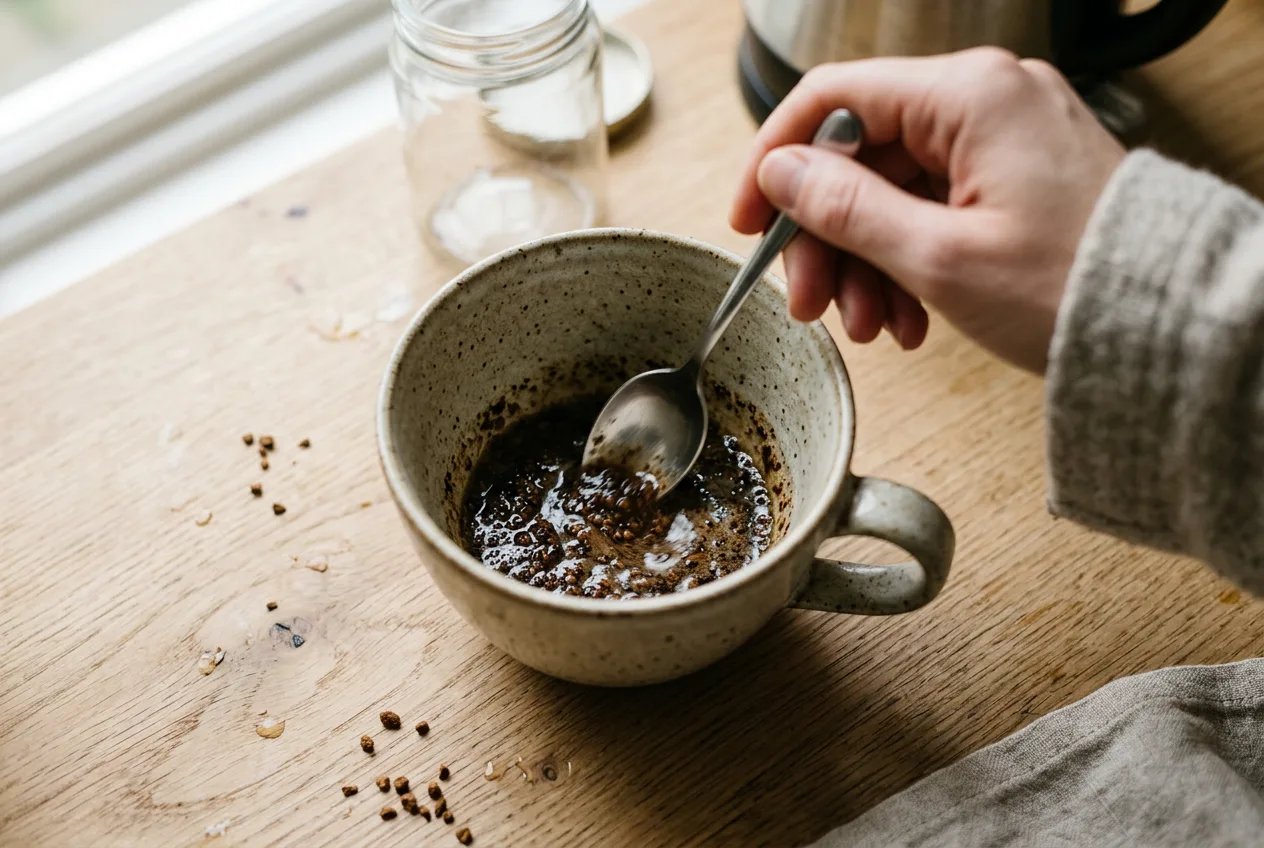
Our tip: Buy freeze-dried, 100% coffee, and store the jar tightly closed in a cool, dry cupboard. Moisture is the fastest way to ruin it.
Clever uses for instant coffee
Instant coffee is a secret weapon in the kitchen, not just a quick drink.
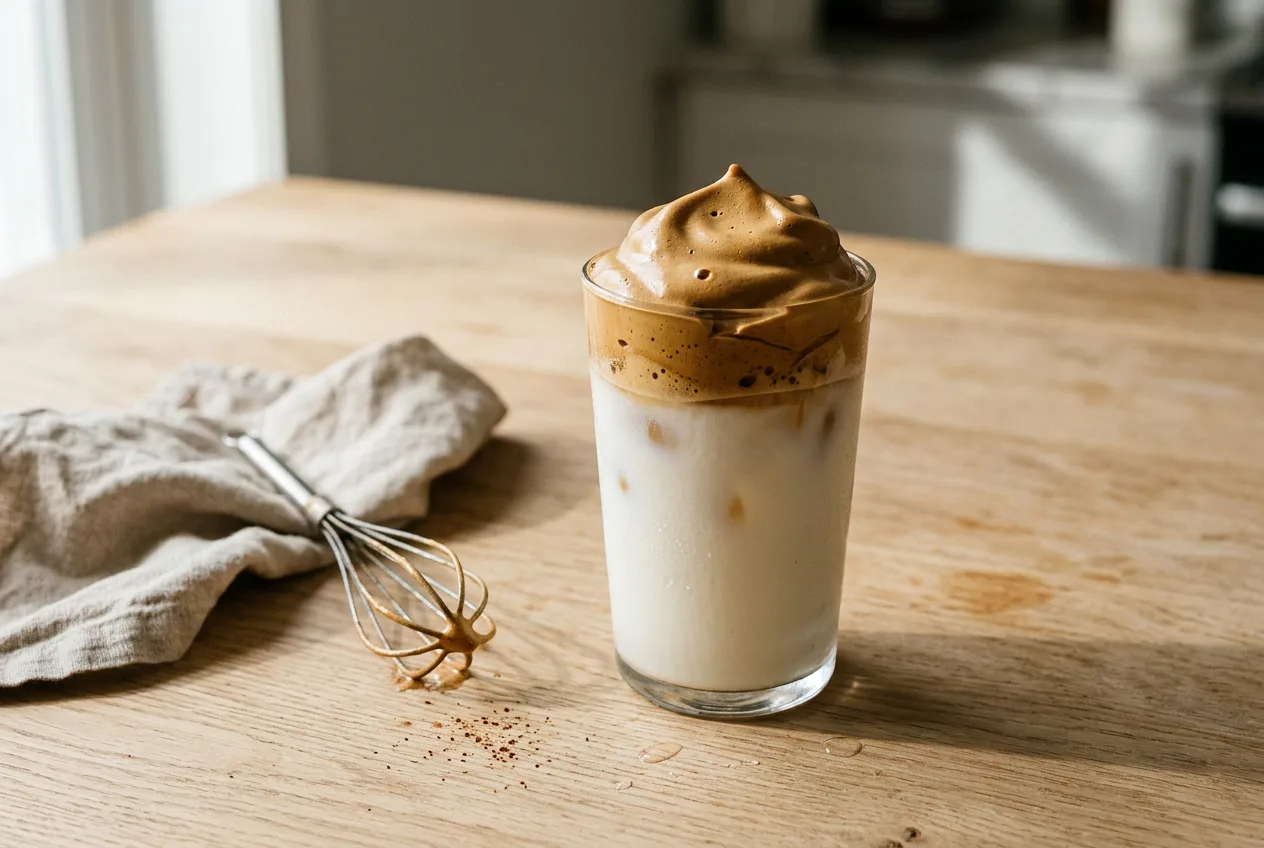
Whipped dalgona coffee
Whisk equal parts instant coffee, sugar and hot water, about two tablespoons each, until thick and pale. Spoon it over cold milk. It only works with instant, because the dissolved solids are what hold the foam.
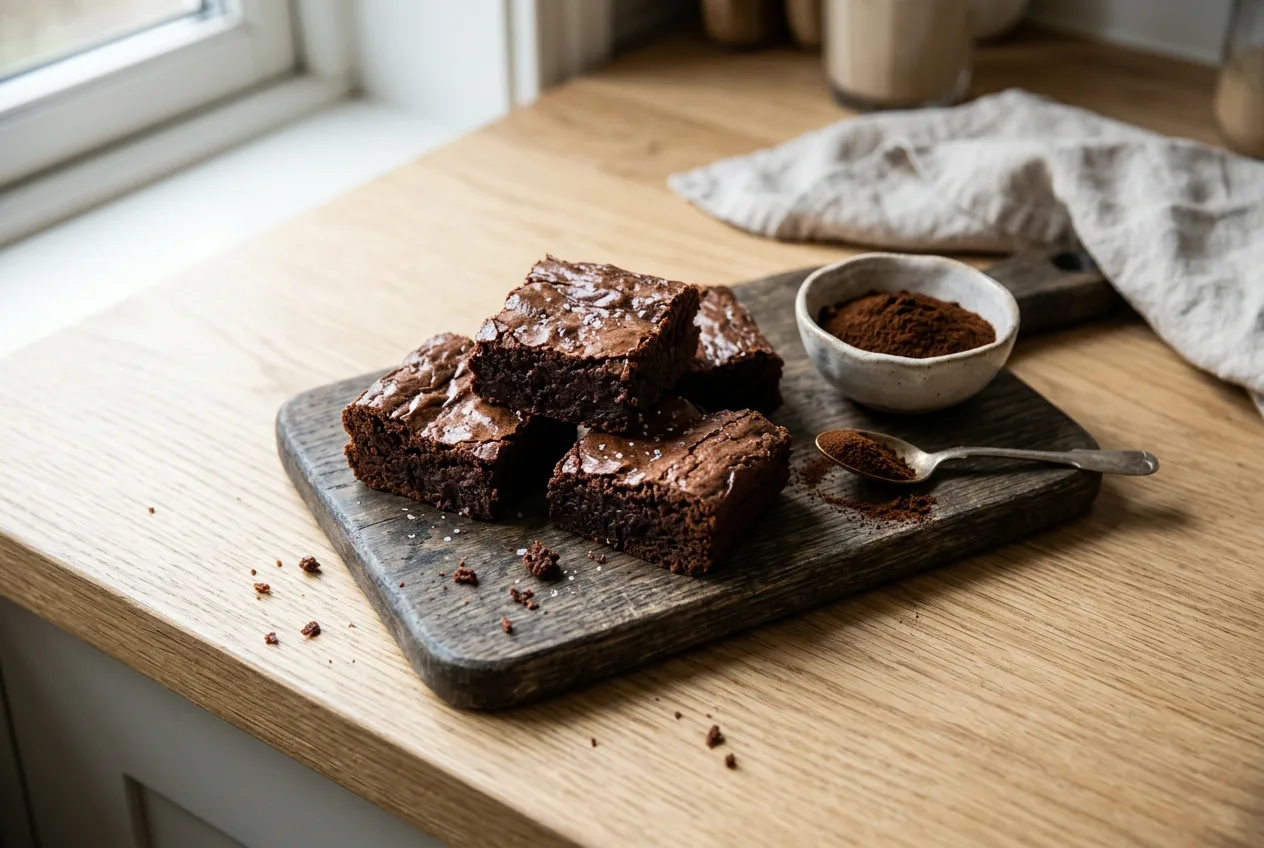
Baking
A teaspoon of instant coffee or instant espresso powder makes chocolate cakes, brownies and cookies taste deeper and more chocolatey, without an obvious coffee flavor.
Iced coffee in seconds
Dissolve instant in a little hot water, then add cold water or milk and ice. It's the fastest iced coffee there is. For a comparison with other cold methods, see iced coffee vs cold brew.
Travel and camping
Light, compact and mess-free, instant coffee is ideal when you can't bring a grinder and brewer. A good freeze-dried single origin makes a surprisingly pleasant camp coffee.
Savory cooking
A little instant coffee in a spice rub for beef or in a chili adds depth and a subtle roasted note.
Instant coffee myths
- "Instant coffee isn't real coffee." It is. It's brewed coffee with the water removed.
- "It's full of chemicals." Plain instant coffee is just coffee. Check the label for additives in flavored or 3-in-1 products.
- "It has more caffeine." Usually a little less per cup, unless you use a lot of it.
- "All instant tastes the same." Bean choice, roast and drying method make a big difference.
- "It goes off quickly once opened." It lasts weeks to months if kept dry and sealed, though aroma fades gradually.
The verdict
Instant coffee is real coffee, brewed on an industrial scale, concentrated and dried. Spray drying makes a cheaper, flatter powder; freeze drying makes darker granules that keep more aroma and taste better.
It won't replace a freshly ground pour-over or espresso for flavor. But for speed, convenience, travel and baking, it's genuinely useful. Choose freeze-dried 100% coffee, measure it, skip the boiling water, and your everyday mug will taste noticeably better.
Knowing how it is made also helps you shop. Once you understand that freeze drying protects aroma, that robusta-heavy blends taste bolder and more bitter, and that aroma fades once the jar is open, the shelf becomes much easier to navigate. Pick a freeze-dried coffee, buy a size you will finish within a couple of months, keep it dry, and treat it with the same small care you would give fresh coffee. It will reward you with a better cup in thirty seconds, wherever you are, whether that is your office, a hotel room or a campsite.
Frequently asked questions
How is instant coffee made?
Coffee is roasted, ground and brewed in large extraction columns to make a strong coffee. That brew is concentrated and then dried, either by spraying it into hot air (spray drying) or by freezing it and removing the ice under vacuum (freeze drying).
Is instant coffee real coffee?
Yes. It's made from roasted coffee beans and is simply brewed coffee with the water removed.
What is the difference between spray-dried and freeze-dried coffee?
Spray-dried coffee is dried with hot air and usually tastes flatter. Freeze-dried coffee is frozen and dried under vacuum, which keeps more aroma and generally tastes better.
Does instant coffee have less caffeine?
Usually a little less per cup, around 60 to 80 mg in 8 oz compared with about 80 to 100 mg for brewed coffee. Using more granules raises it.
Is instant coffee bad for you?
For most people, no. It shares many of the potential benefits of brewed coffee. Watch the sugar in sweetened sachets, and enjoy it in moderation.
How long does instant coffee last?
Sealed, it lasts a year or more. Once opened, keep it dry and tightly closed, and use it within a few weeks to a couple of months for the best flavor.
Why does instant coffee clump?
It absorbs moisture from the air. Close the lid quickly and use a dry spoon to keep it free-flowing.
Can I use instant coffee for baking?
Yes. A teaspoon of instant coffee or instant espresso powder deepens chocolate flavor in cakes, brownies and cookies.

- Michael Reynolds, notes from instant coffee taste tests
- Instant coffee, Wikipedia
- Spilling the Beans: How Much Caffeine is Too Much?, U.S. Food and Drug Administration
Related guides
Arabica vs robusta How coffee is roasted Iced coffee vs cold brew Caffeine myths debunked How decaf coffee is madeWritten by Michael Reynolds. Last updated November 19, 2026.