Iced Coffee vs Cold Brew: Taste, Caffeine, Acidity and How to Make Both
They both arrive cold, over ice, in a tall glass. But iced coffee is brewed hot and chilled, while cold brew never sees heat at all. That one difference changes the flavor, the caffeine, the prep time and how long it keeps.
We choose products independently. We may earn a commission through links on this page; your price stays the same. Affiliate policy
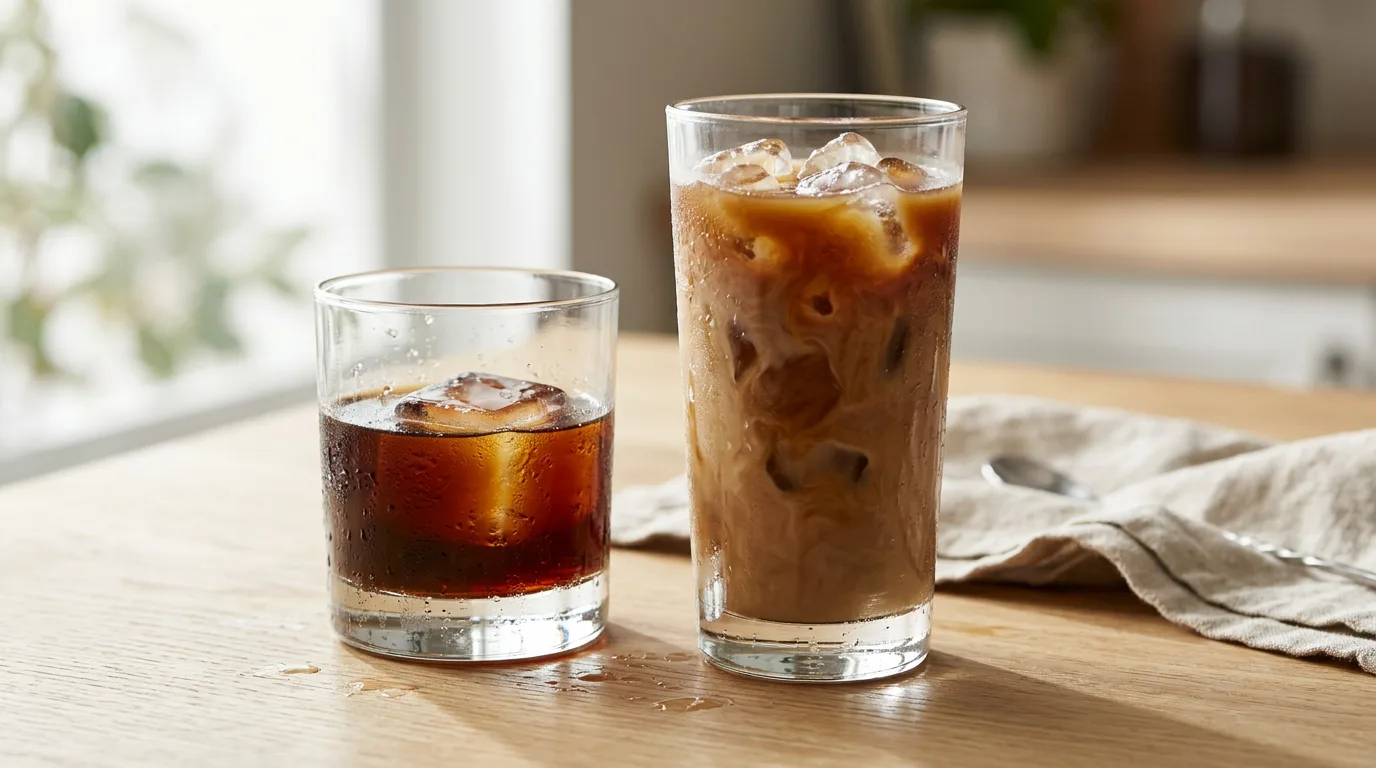
Iced coffee is hot coffee cooled down; cold brew is coffee steeped in cold water for 12 to 24 hours. Iced coffee tastes brighter, more aromatic and more like your usual cup. Cold brew tastes smoother, sweeter and less bitter, and it often has more caffeine per glass because it's made with more coffee. Iced coffee takes minutes; cold brew takes planning but keeps for over a week.
Why I wrote this
Every summer, my coffee routine flips. Hot drinks go out, and the fridge fills up with jars of cold brew and pitchers of iced coffee. Readers ask the same question every year: which one is better?
The honest answer is that they're different drinks with different strengths. I spent one summer making both side by side, with the same beans, to pin down exactly how they differ.
If you've ever ordered a cold brew expecting a mild drink and felt your heart race, or made iced coffee at home that tasted thin and watery, this guide is for you.
To keep the comparison fair, every taste test in this guide uses the same beans, ground fresh, with filtered water and the same ice. The only differences are the brewing temperature, the time and the ratio, which is exactly what separates these two drinks.
What this guide covers
- How each drink is made and why the method matters.
- Taste, acidity and caffeine, compared honestly.
- Step-by-step recipes for both, with ratios.
- How to avoid watery iced coffee and how long cold brew keeps.
Iced coffee vs cold brew at a glance
| Feature | Iced coffee | Cold brew |
|---|---|---|
| Brewing water | Hot, about 195 to 205°F | Cold or room temperature |
| Brew time | 3 to 5 minutes | 12 to 24 hours |
| Grind | Medium to medium-fine | Coarse to extra coarse |
| Flavor | Bright, aromatic, crisp | Smooth, chocolatey, mellow |
| Perceived acidity | Higher | Lower |
| Bitterness | Moderate | Low |
| Caffeine per 16 oz | About 120 to 170 mg | About 150 to 250 mg |
| Keeps in the fridge | A day or two | Up to about 2 weeks as concentrate |
Caffeine figures vary hugely with the recipe and the beans. Treat them as typical café ranges, not fixed values.
What is iced coffee?
Iced coffee is regular hot-brewed coffee that's been chilled and served over ice. It can be made with drip, pour-over, French press, AeroPress or espresso. The defining feature is that hot water does the extraction.
There are two main ways to make it:
- Brew and chill: brew coffee as usual, let it cool or refrigerate it, then pour over ice. Simple, but slow-cooled coffee can taste flat or stale.
- Flash brew (Japanese iced coffee): brew hot coffee directly onto ice, using less hot water so the melting ice makes up the rest. It chills the coffee instantly and locks in aroma.
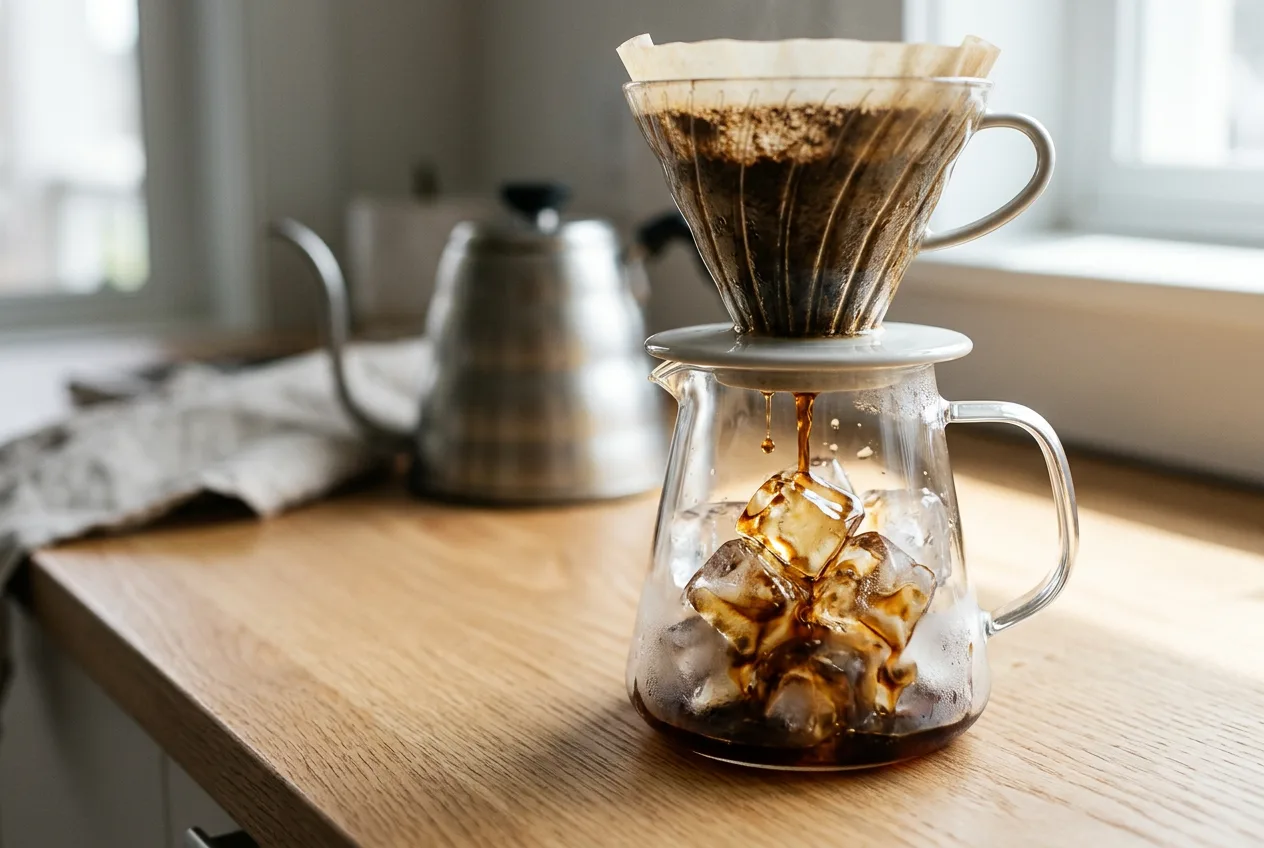
Flash brewing is my favorite method by a long way. It keeps the bright, fruity notes that make hot coffee interesting, and it's ready in five minutes.
Our tip: Never pour freshly brewed hot coffee over a glass of ice at normal strength. Half the ice melts and you get weak, watery coffee. Brew it stronger, or flash brew.
What is cold brew?
Cold brew is made without heat. Coarsely ground coffee steeps in cold or room-temperature water for 12 to 24 hours, then it's filtered. The result is usually a concentrate that you dilute with water or milk.
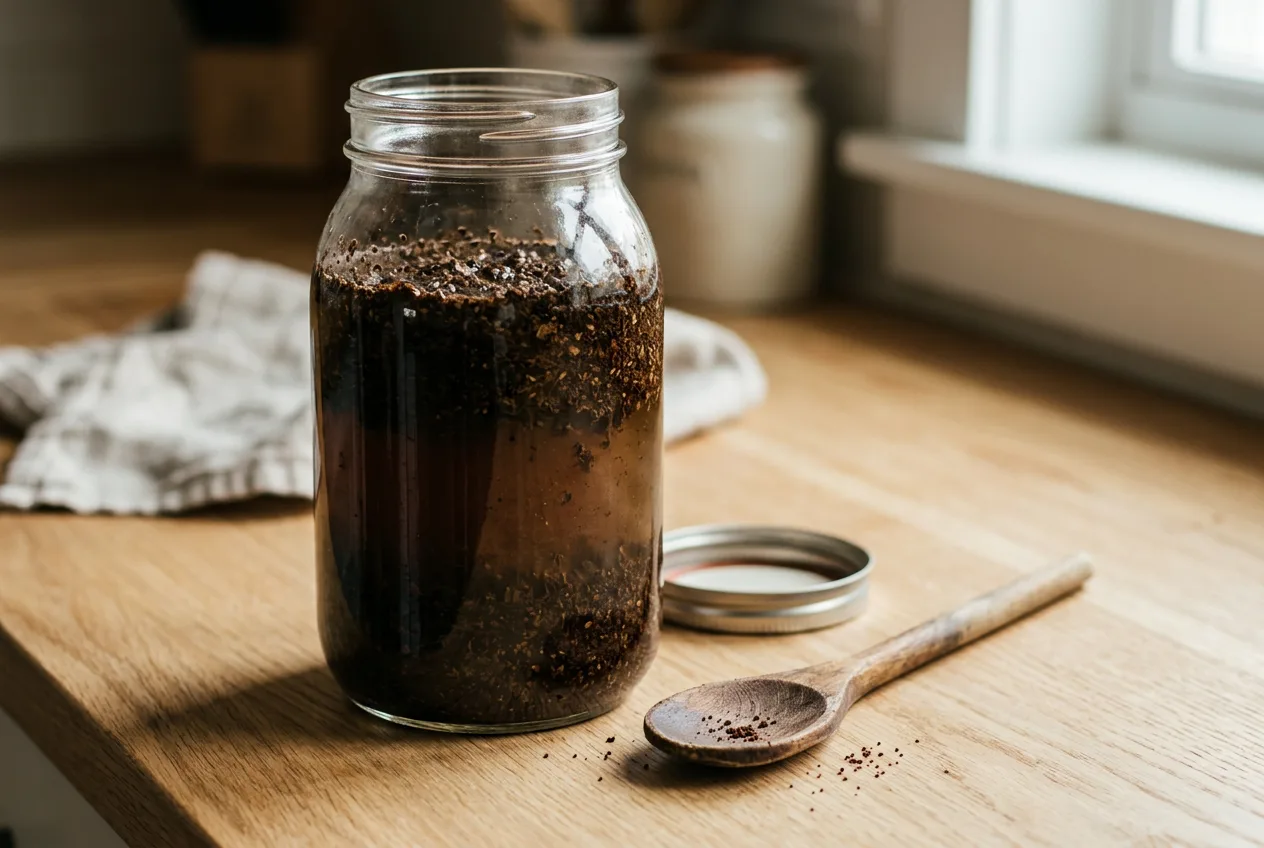
Because cold water extracts much more slowly than hot water, cold brew needs a long time and a lot of coffee. Typical concentrates use a coffee-to-water ratio of about 1:4 to 1:8, compared with roughly 1:16 for normal hot coffee.
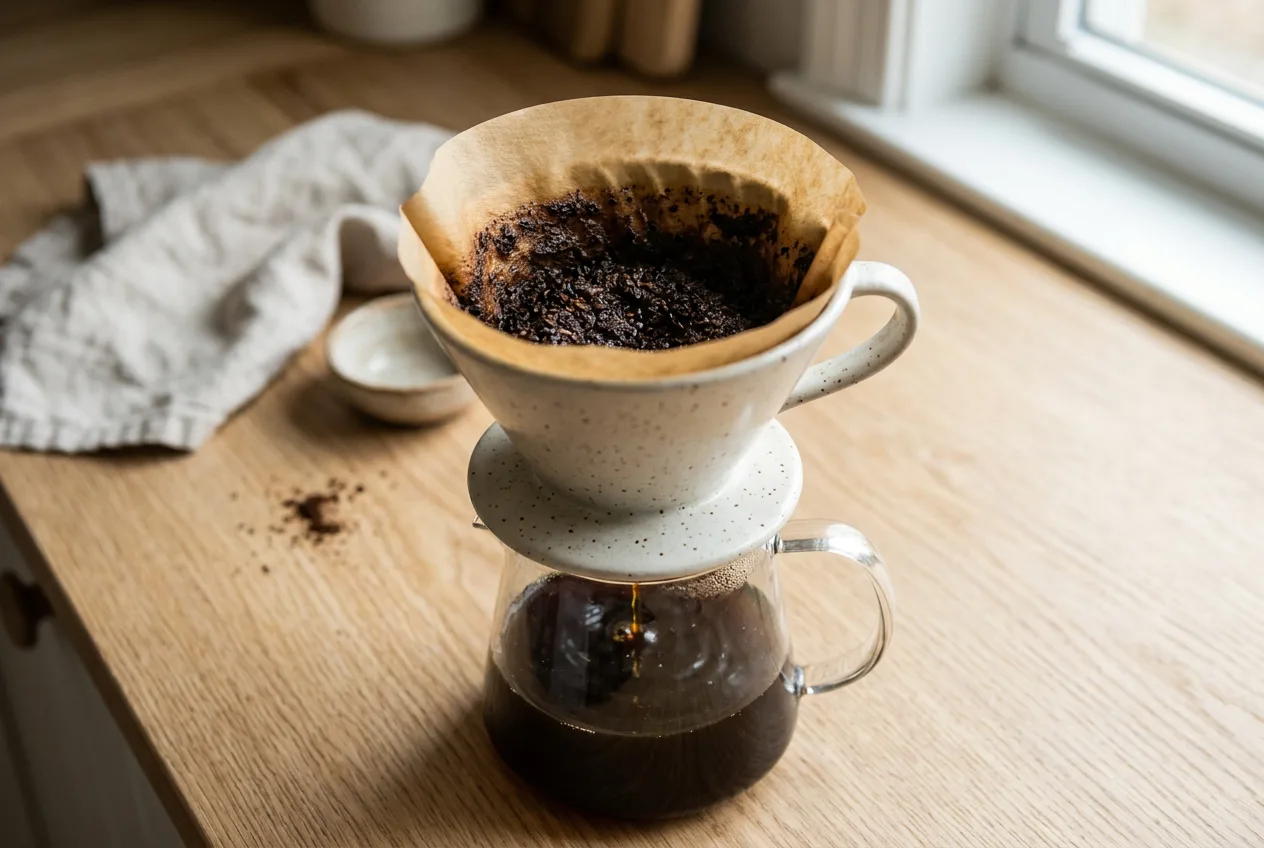
Once filtered, cold brew concentrate keeps well in the fridge, which makes it a favorite for people who want grab-and-go coffee all week.
Why heat changes the taste
Temperature affects which compounds dissolve from the grounds and how fast. That's why the same beans taste so different brewed hot or cold.
- Hot water quickly dissolves acids, aromatic oils and bitter compounds. You get a lively, complex cup with more aroma and more bite.
- Cold water dissolves sugars and many flavor compounds slowly, but it pulls fewer of the harsh, bitter compounds and fewer of the volatile aromatics.
- Time compensates for the cold. Over many hours, cold water extracts enough flavor and caffeine to make a rich drink, just a different one.
There's another factor. Many of the most delicate aromas in coffee are released by heat. Cold brew has less of that bright, floral, fruity top note, which is why it tastes rounder and simpler, often like chocolate and nuts.
How they taste side by side
I made both drinks with the same washed Colombian coffee, diluted to a similar strength and served over the same ice.
| Trait | Flash-brewed iced coffee | Cold brew |
|---|---|---|
| Aroma | Strong and fragrant | Subtle |
| Flavor notes | Red apple, caramel, citrus | Milk chocolate, nuts, molasses |
| Acidity | Bright and crisp | Low and soft |
| Bitterness | Mild | Very low |
| Body | Light, clean | Fuller, rounder |
| Finish | Refreshing, short | Sweet, lingering |
Neither was "better." The iced coffee tasted like the Colombian I know and love, just cold. The cold brew tasted like a different, gentler coffee, easier to drink in big gulps on a hot day.
Acidity and your stomach
Cold brew is often marketed as "low acid" and easier on the stomach. There's some truth to this, but it's more nuanced than the marketing suggests.
Research comparing hot and cold brew coffee has found that their pH levels are quite similar, both mildly acidic. Hot brew tended to have slightly higher titratable acidity and more antioxidants. So cold brew isn't dramatically less acidic chemically.
What people taste is lower perceived acidity: less brightness and sharpness on the tongue. Many people with sensitive stomachs do say cold brew sits better with them, possibly because it has fewer of certain bitter and harsh compounds.
If coffee regularly gives you heartburn, cold brew is worth trying, but it's not a guaranteed fix. I explain the difference between taste acidity and chemical acidity in acidity and bitterness in coffee.
Which has more caffeine?
This is where many people get caught out. Cold brew is often stronger in caffeine, even though it tastes milder.
Cold water actually extracts caffeine less efficiently than hot water. But cold brew recipes use far more coffee, often two to three times as much per cup of finished drink. And many cafés serve cold brew in large cups with little dilution.
Typical caffeine in a 16 oz serving
Rough ranges. Recipe, dilution and beans change the numbers a lot.
At home, you control this. Dilute cold brew concentrate 1:1 or 1:2 with water, and you can match or undercut iced coffee. Drink concentrate straight, and you could be well over 200 mg in one glass.
For context on safe daily amounts, see caffeine myths debunked.
How to make iced coffee (flash brew method)
This is my go-to recipe for a pour-over or drip machine. It makes about one large glass.
- Put ice in the carafeWeigh or measure the ice into the server or jug under your brewer.
- Grind a little finer than usualWith less hot water, a finer grind keeps extraction on track.
- Brew with hot water onto the iceUse water around 200°F. The coffee drips straight onto the ice and chills instantly.
- Swirl and serveSwirl until most of the ice has melted, then pour over fresh ice in a glass.
With a drip machine, put ice in the carafe and use about 60% of your usual water with your normal amount of coffee. With espresso, pull a double shot straight over ice and top with cold water for an iced americano.
How to make cold brew at home
You don't need special equipment. A large jar and a filter are enough.
- Grind coarseAim for coarse, like rough sea salt or cracked pepper. Fine grounds make muddy, bitter cold brew that's hard to filter.
- Combine and stirAdd the coffee to a jar, pour in the water and stir so all the grounds are wet.
- SteepCover and leave at room temperature or in the fridge. Room temperature extracts a little faster; the fridge gives a cleaner taste.
- FilterPour through a fine-mesh sieve, then through a paper filter or cloth for a clean result.
- Dilute and serveMix about 1 part concentrate with 1 to 2 parts water or milk, over ice.
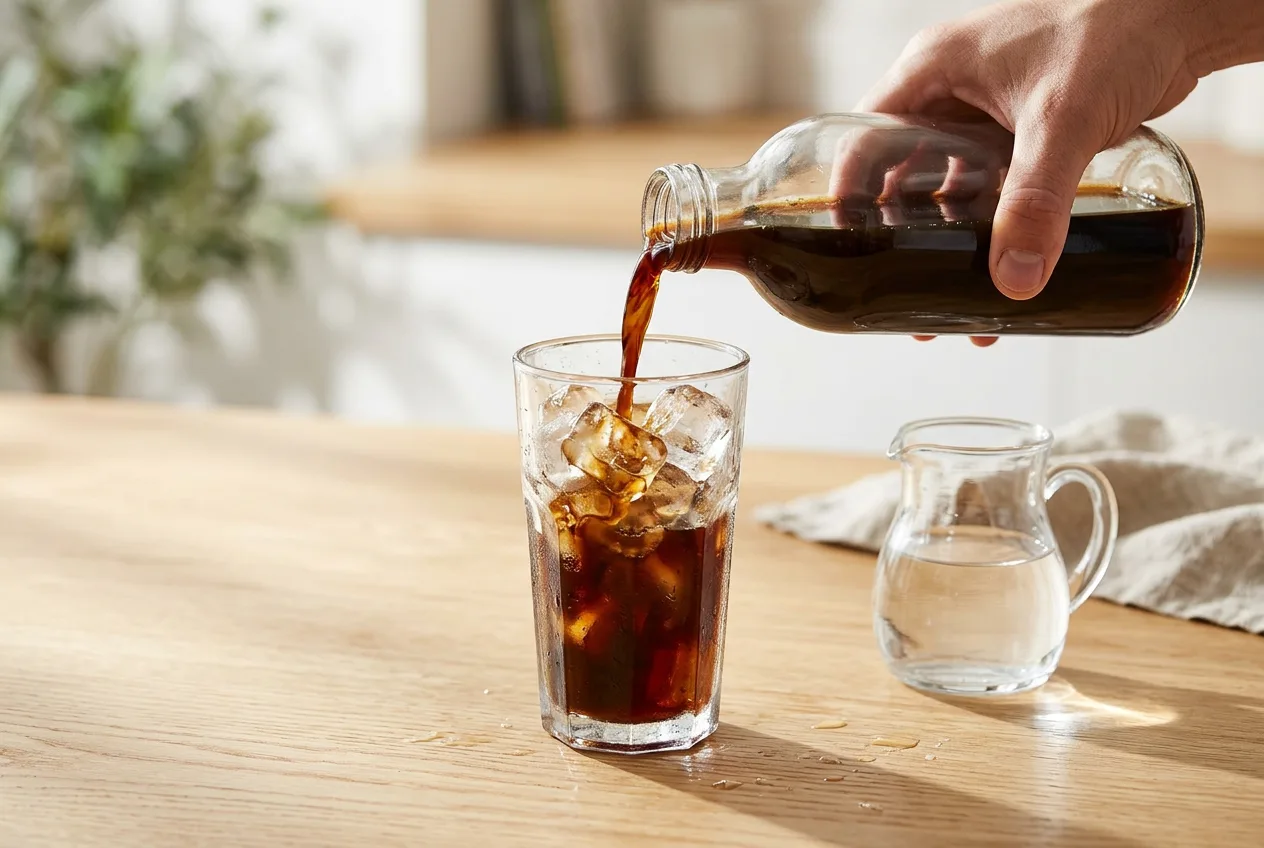
Our tip: A French press makes cold brew easy. Steep the coffee in the press overnight, then plunge and pour through a paper filter to catch the fines.
Grind and ratio, explained
The grind and ratio are where most homemade cold coffee goes wrong.
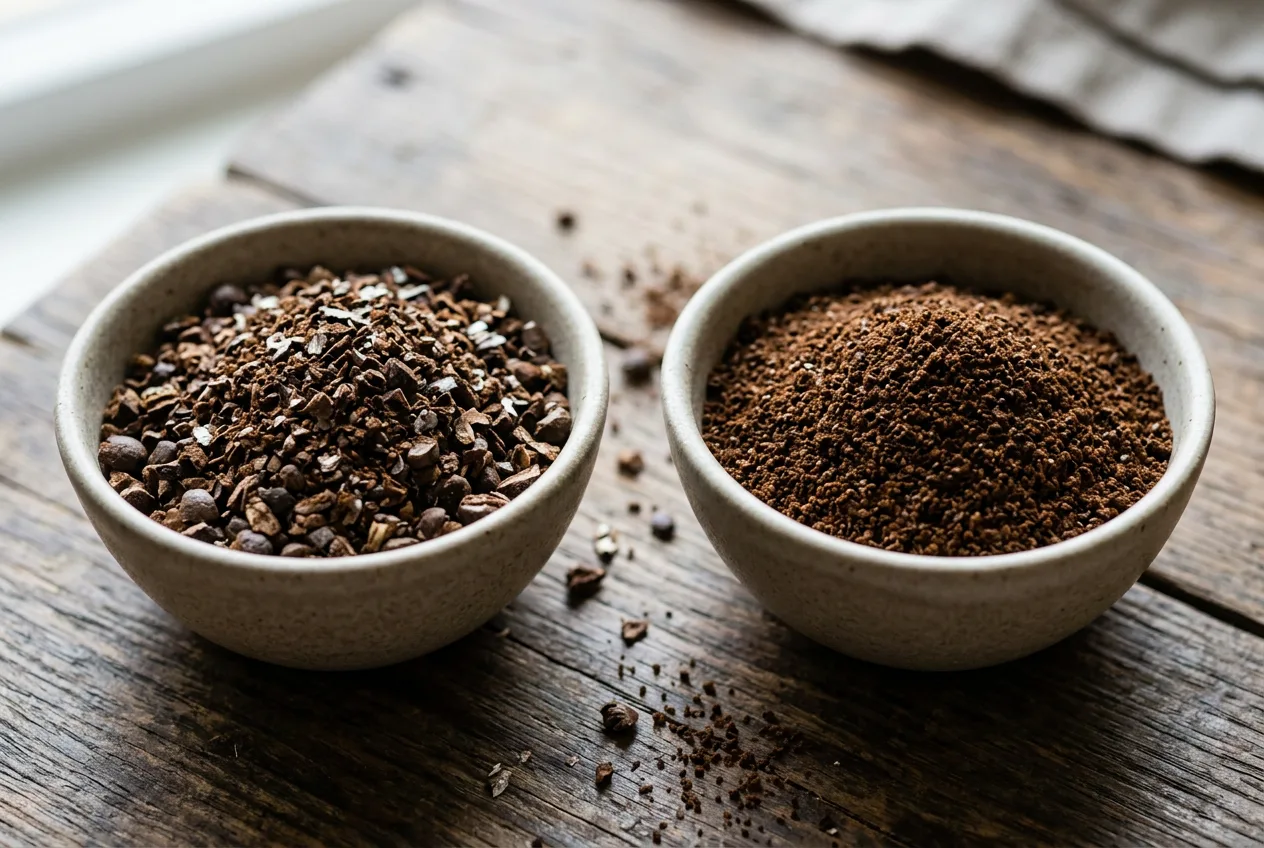
| Drink | Grind | Ratio | If it tastes weak | If it tastes bitter |
|---|---|---|---|---|
| Flash iced coffee | Medium-fine | ~1:16 incl. ice | More coffee or less ice | Grind coarser |
| Cold brew concentrate | Coarse | 1:4 to 1:8 | Steep longer or use more coffee | Shorter steep or coarser grind |
| Ready-to-drink cold brew | Coarse | 1:12 to 1:15 | Steep longer | Steep shorter |
Cold brew is forgiving, but it's not immune to over-extraction. Steeping beyond about 24 hours, especially at room temperature, often brings out woody, bitter and stale flavors.
How to avoid watery iced coffee
Ice melts. That's the biggest enemy of good iced coffee. A few simple habits make a big difference.
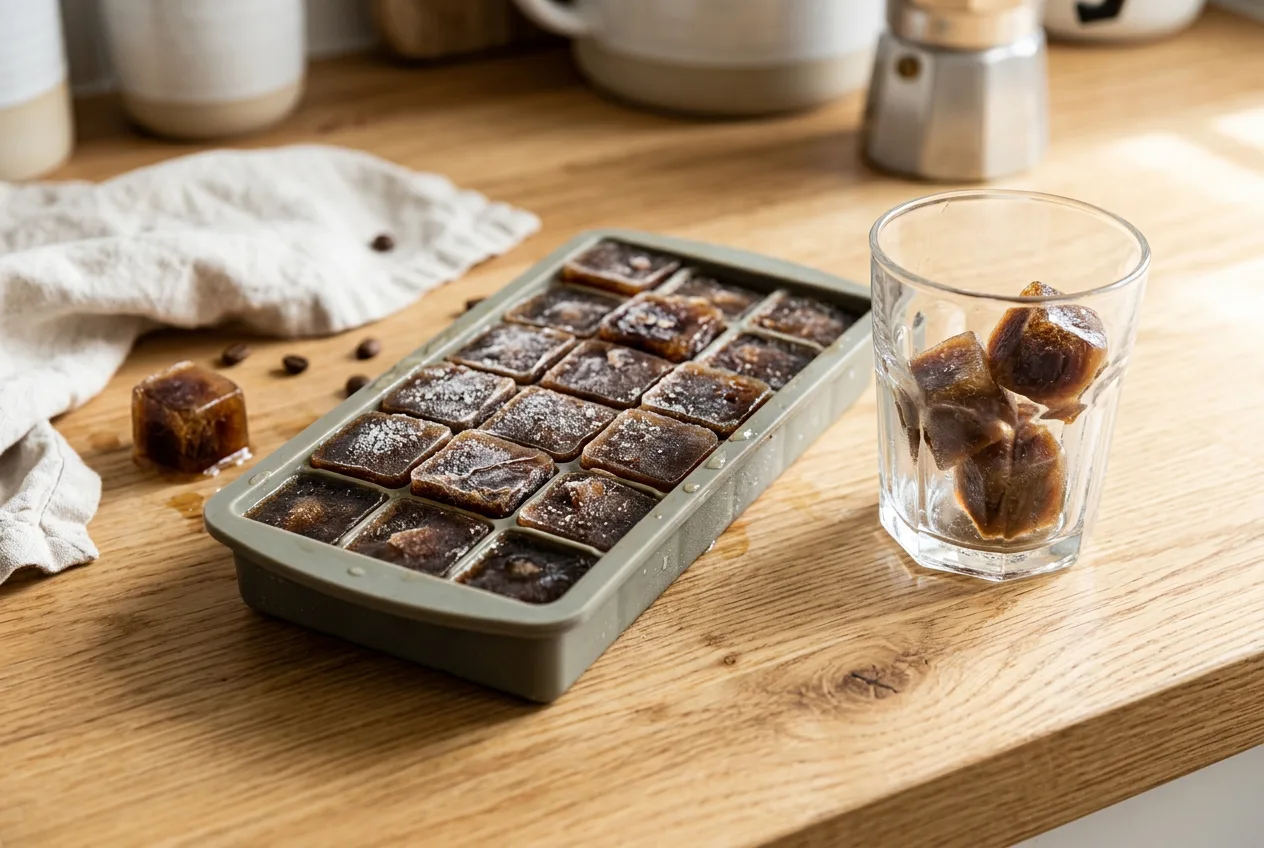
- Brew stronger: account for the ice in your recipe, as in the flash brew method above.
- Use bigger ice: large cubes melt more slowly than small ones or crushed ice.
- Make coffee ice cubes: freeze leftover coffee or cold brew in a tray. As they melt, they add coffee instead of water.
- Chill your glass: a cold glass keeps the ice from melting so fast.
- Serve cold brew diluted with cold liquids: it's already cold, so it melts ice slowly.
How long they keep
This is one of cold brew's biggest advantages.
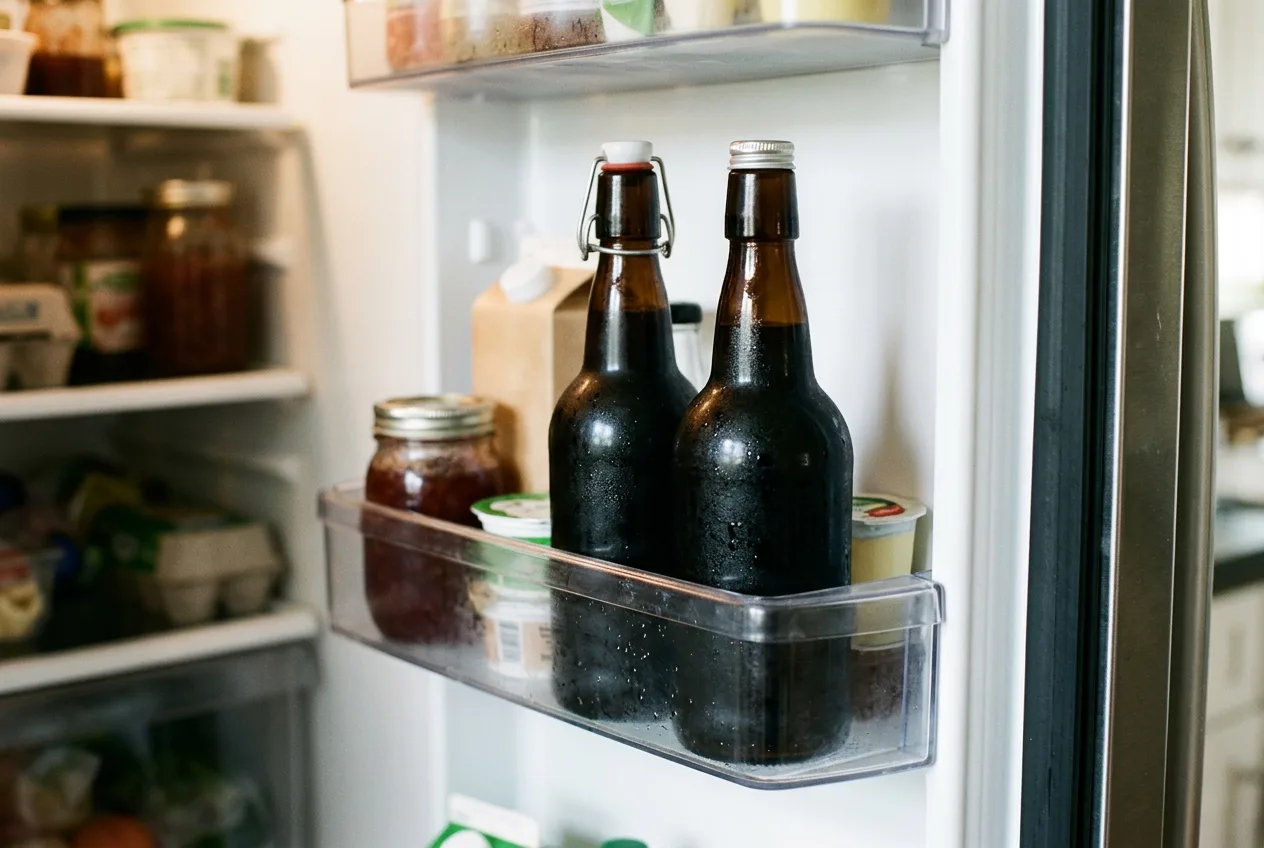
| Drink | Fridge life | Notes |
|---|---|---|
| Flash-brewed iced coffee | Best same day; 1 to 2 days | Loses aroma quickly and turns flat |
| Cold brew concentrate | About 1 to 2 weeks | Keep sealed; flavor fades gradually |
| Diluted cold brew | 3 to 5 days | Dilute as you go for best taste |
| Cold brew with milk | Same as the milk | Add milk just before drinking |
Always store cold coffee in a sealed glass bottle or jar in the fridge. Plastic can pick up and pass on flavors, and open containers absorb fridge smells.
Best beans for each
Different beans suit different methods, because each method highlights different flavors.
| Drink | Great choices | Why |
|---|---|---|
| Iced coffee | Light to medium roasts, fruity East African coffees | Hot brewing keeps their bright, juicy character |
| Cold brew | Medium to dark roasts, Brazilian and Colombian coffees | Chocolate and nut notes shine; little acidity to lose |
Very light, floral coffees can taste flat as cold brew, because the aromatics that make them special need heat. Very dark roasts can taste harsh as iced coffee but smooth and chocolatey as cold brew.
For more on how roast affects flavor, see coffee roast levels explained, and for origins, coffee growing regions and flavor.
Milk and sweeteners
Both drinks take milk well, but they behave differently.
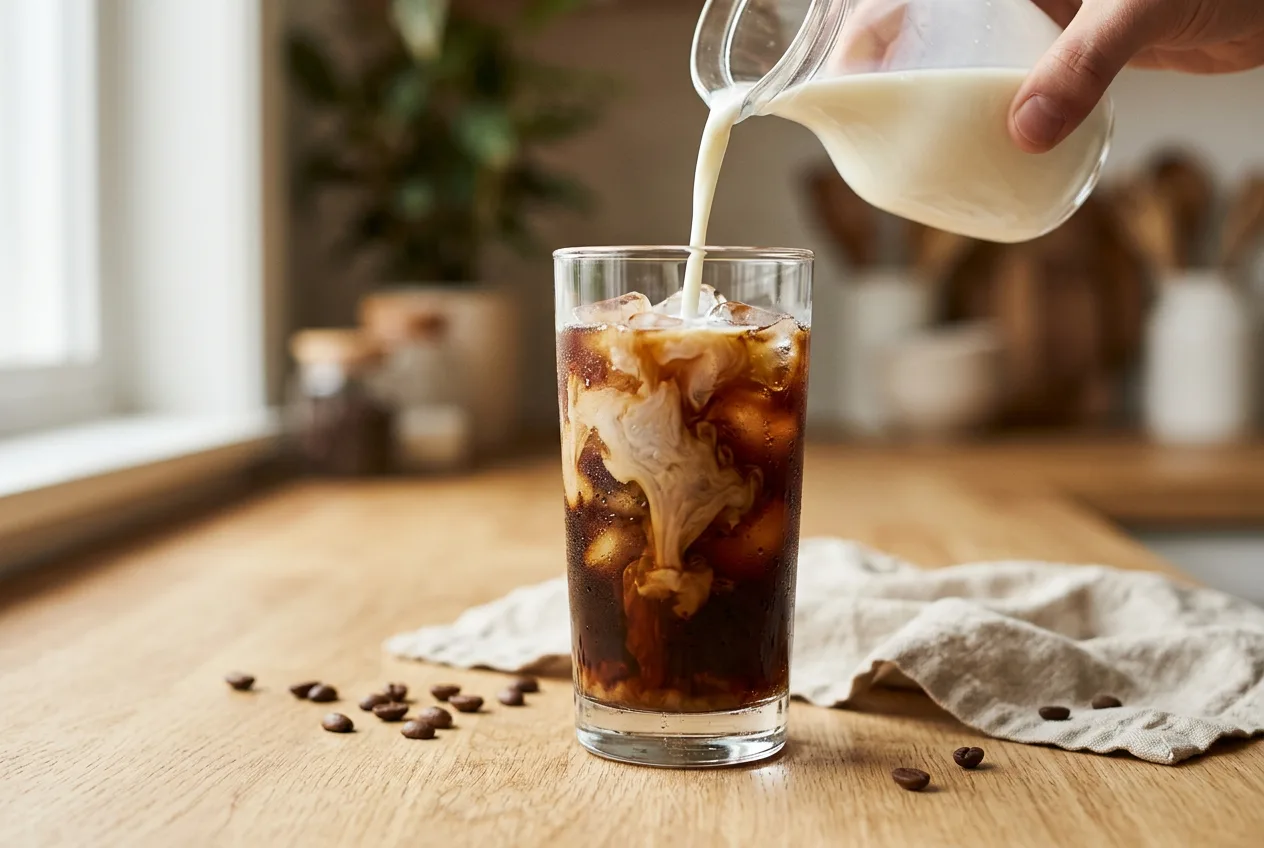
- Cold brew with milk tastes like chocolate milk with a coffee kick. Its low acidity means milk never tastes curdled or sour.
- Iced coffee with milk keeps more of the coffee's character, but very bright coffees can clash with milk.
- Sweeteners don't dissolve well in cold drinks. Use simple syrup, made by dissolving equal parts sugar and hot water, or sweeten hot coffee before flash brewing.
Cold foam, made by frothing cold milk until thick, is a nice topping for either. A handheld frother does the job in about 30 seconds.
Nitro cold brew and cold drip
Nitro cold brew
Nitro cold brew is cold brew infused with nitrogen gas and served from a tap, like a stout beer. The tiny nitrogen bubbles create a cascading effect in the glass and a thick, creamy head.
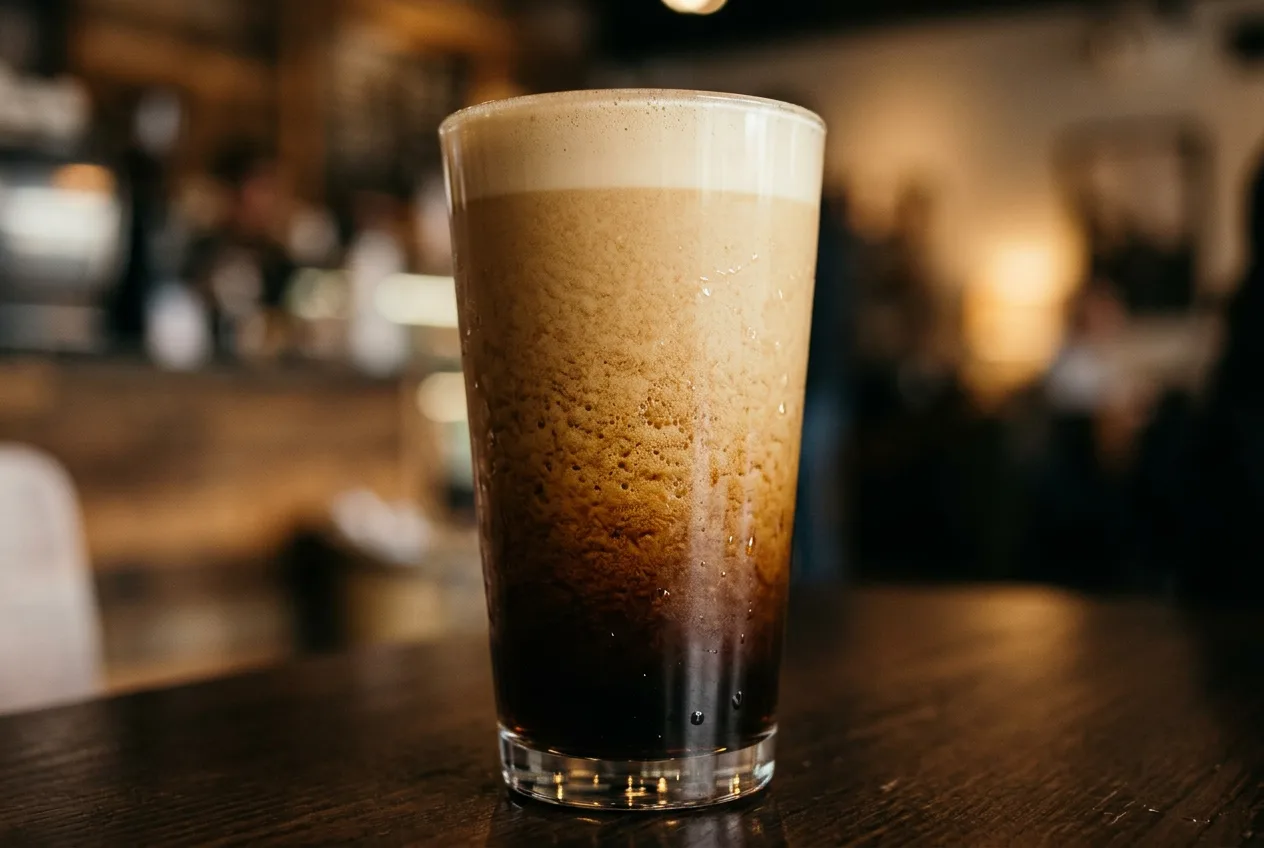
The nitrogen adds a silky, almost creamy texture without milk and makes the coffee taste a little sweeter. It's usually served without ice, so the foam stays intact.
Cold drip (Kyoto-style)
Cold drip is a slow method where ice water drips through a bed of coffee one drop at a time, often over 3 to 12 hours, using tall glass towers.
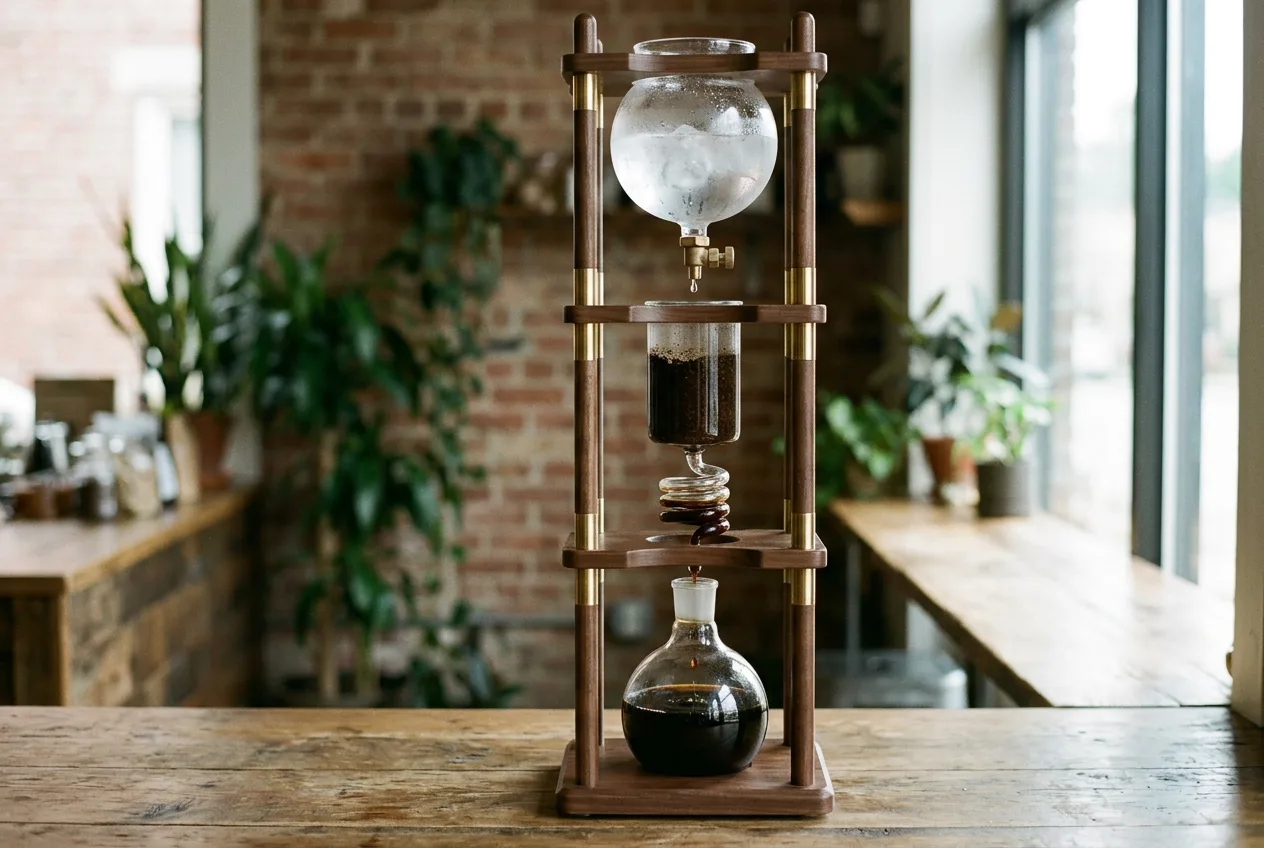
Unlike immersion cold brew, the water passes through the coffee rather than sitting in it. The result is often cleaner and more aromatic, sometimes with a slightly wine-like character. It's beautiful to watch, but the equipment is pricey and fiddly.
Cost and convenience
The two drinks fit into a day very differently.
- Iced coffee uses about the same amount of coffee as a hot cup. It's quick to make on demand, but best fresh.
- Cold brew uses two to three times more coffee per serving, so it costs more per glass. But one batch on Sunday covers the whole week.
Café cold brew is usually pricier than iced coffee, partly because of the extra beans and partly because it takes up fridge space and planning.
Which should you choose?
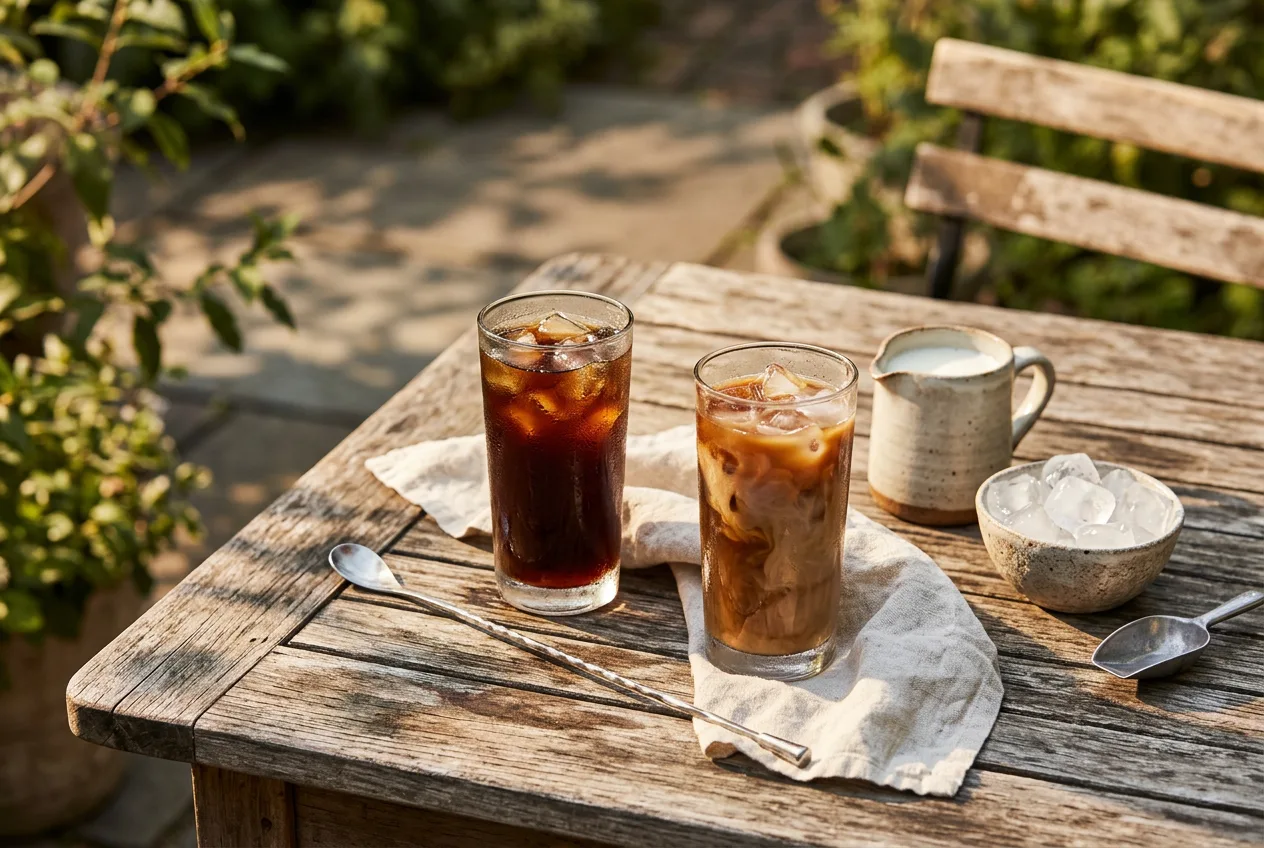
In my house, there's room for both. A jar of cold brew lives in the fridge from June to September for quick afternoon glasses with milk. On weekends, when I have time, I flash brew a light Ethiopian over ice and enjoy all its fruit and florals.
Common mistakes
- Pouring normal-strength hot coffee over ice, which gives a weak, watery drink.
- Grinding too fine for cold brew, which makes it muddy, bitter and slow to filter.
- Steeping cold brew too long, beyond about 24 hours, which brings out woody flavors.
- Leaving cold coffee uncovered, which lets it absorb fridge smells.
- Drinking concentrate undiluted without realizing how much caffeine it has.
- Using stale beans, which taste flat however you brew them.
A short history of cold coffee
Cold coffee isn't a modern café invention. People have been chilling coffee for at least two centuries.
One early example is mazagran, a sweetened cold coffee associated with French soldiers in Algeria in the 1840s. It was coffee mixed with cold water, sometimes with lemon, and it later turned up in cafés in France, Portugal and beyond.
Japan has a long tradition of cold coffee too. Slow-drip "Kyoto-style" coffee became a café specialty there, and Japanese baristas popularized the flash brew method of brewing hot coffee directly onto ice, which is why it's still often called Japanese iced coffee.
Modern home cold brew got a boost in the 1960s, when an American chemical engineer developed a simple cold brewing system to make a smoother, less acidic coffee concentrate. It quietly found fans for decades.
Then, in the 2010s, cold brew exploded. Specialty cafés started offering it, big chains added it to menus, and bottled and canned versions filled supermarket fridges. Today, cold coffee is a huge share of coffee sales in warm months, and for many younger drinkers, all year round.
Cold coffee around the world
Iced coffee and cold brew are just two members of a big global family. These are a few of my favorites.
| Drink | Where | What it is |
|---|---|---|
| Cà phê sữa đá | Vietnam | Strong drip coffee from a small metal filter with sweetened condensed milk, over ice |
| Frappé | Greece | Instant coffee shaken with water, sugar and ice into a thick foam |
| Freddo espresso | Greece | Espresso blended or shaken with ice and served over fresh ice |
| Caffè shakerato | Italy | Espresso shaken hard with ice and a little sugar, strained into a glass |
| Thai iced coffee | Thailand | Strong, often spiced coffee with sweetened condensed or evaporated milk |
| Japanese iced coffee | Japan | Hot coffee brewed directly onto ice |
If you enjoy cold brew with milk, try Vietnamese iced coffee. If you enjoy iced espresso, a shakerato is a lovely, frothy upgrade that takes thirty seconds and a jar with a lid.
Iced espresso drinks
If you own an espresso machine, you have a third option alongside iced coffee and cold brew: iced espresso drinks.
- Iced americano: a double shot pulled over ice and topped with cold water. Bold and clean.
- Iced latte: a double shot over ice with cold milk. Creamy and refreshing.
- Shakerato: espresso shaken with ice and a little sugar until frothy, then strained.
- Espresso tonic: espresso poured gently over tonic water and ice. Bitter, bright and fizzy.
Espresso over ice tastes more intense and roasty than flash-brewed filter coffee, and much brighter than cold brew. It's a good middle ground if you want strength without waiting overnight. I compare americanos and long blacks in detail in americano vs long black.
Cold brew equipment options
You can make excellent cold brew with a jar and a sieve, but dedicated gear makes it tidier.
| Option | Pros | Cons |
|---|---|---|
| Mason jar and filter | Cheap, flexible batch size | Filtering is messy |
| French press | Built-in filter, easy plunge | Fines get through; small batches |
| Cold brew pitcher with mesh insert | Easy to use and clean, fits in the fridge | Slightly cloudy result |
| Large immersion system with felt filter | Very clean concentrate, big batches | Bulky, filters need replacing |
| Slow-drip tower | Clean, aromatic, impressive | Expensive and fiddly |
For most people, a cold brew pitcher with a mesh insert is the sweet spot. Add coffee to the insert, fill with water, leave it in the fridge overnight, then lift out the grounds.
Simple cold coffee recipes to try
Vanilla sweet cream cold brew
Mix 2 tablespoons of cream, 1 tablespoon of milk and 1 teaspoon of vanilla syrup. Froth briefly and pour over a glass of diluted cold brew on ice. It sits on top like a soft cloud.
Cold brew mocha
Stir a tablespoon of chocolate syrup into cold milk, add cold brew concentrate and ice. Cold brew's chocolatey notes make this taste richer than a hot mocha.
Citrus iced coffee
Flash brew a fruity light roast over ice and add a strip of orange peel. It highlights the coffee's natural citrus notes.
Coffee tonic
Fill a glass with ice and tonic water, then slowly pour cold brew or a shot of espresso on top. Stir gently. It's bitter, bubbly and very refreshing.
Our tip: Keep a small jar of simple syrup in the fridge all summer. It dissolves instantly in cold drinks, unlike sugar.
Troubleshooting cold coffee
| Problem | Likely cause | Fix |
|---|---|---|
| Iced coffee watery | Normal-strength coffee poured on ice | Flash brew with less hot water and ice in the carafe |
| Iced coffee sour | Grind too coarse for the shorter brew | Grind a little finer |
| Cold brew weak | Too little coffee or too short a steep | Use a stronger ratio or steep a few hours longer |
| Cold brew bitter or woody | Steeped too long or ground too fine | Steep 14 to 18 hours, grind coarser |
| Cold brew muddy | Fines got through the filter | Filter a second time through paper |
| Tastes like the fridge | Stored uncovered or in plastic | Use a sealed glass bottle |
What I learned from a summer of testing
Over one summer, I made more than forty batches of cold brew and countless iced coffees. A few lessons stuck.
- Fridge steeping beats counter steeping for flavor. It takes a few hours longer but tastes cleaner and keeps longer.
- 16 hours was my sweet spot. Under 12 tasted thin; over 22 started tasting woody.
- A 1:6 concentrate diluted 1:1 was the most versatile. Strong enough for milk, pleasant with water.
- Flash brew needs a finer grind than my normal pour-over, roughly two steps on my grinder.
- Fresh beans matter more for iced coffee than for cold brew. Cold brew hides staleness a little; iced coffee shows it.
A note on health
Plain iced coffee and cold brew have almost no calories. The extras are what add up: sweet cream, syrups and flavored milks can turn a cold coffee into a dessert.
The other thing to watch is caffeine. Cold brew's smooth taste makes it easy to drink a lot quickly, and a large café cold brew can approach half of the 400 mg daily amount the FDA cites for healthy adults. Dilute generously and pay attention to cup size.
Making iced coffee with the brewer you already own
You don't need a pour-over setup to make great iced coffee. The flash brew idea works with almost any brewer. The rule is always the same: use your normal amount of coffee, replace part of the hot water with ice, and grind a little finer to compensate.
Automatic drip machine
Put ice in the carafe, about a third to a half of your usual water weight. Fill the reservoir with the rest of the water, add your normal dose of coffee, and brew straight onto the ice. Swirl and serve. Many newer machines have an "over ice" setting that does the math for you.
AeroPress
Brew a strong, concentrated coffee with a short steep, then press it directly onto a glass of ice. Add a splash of cold water to taste. It's fast, clean and great for single servings.
French press
Brew with about half the usual water at double strength, steep for four minutes, then pour over a big glass of ice. The body is heavier than flash-brewed pour-over, which works nicely with milk.
Moka pot
Brew as normal and pour over ice, then top with cold water or milk. The result is bold and roasty, close to an iced americano.
Capsule machine
Run an espresso-size capsule over a glass full of ice, then add cold water or milk. Avoid running large cups over ice, which tends to make weak, watery coffee.
Why cooled leftover coffee tastes worse
Plenty of people make iced coffee by putting the morning's leftovers in the fridge. It works, but it rarely tastes great, and there are good reasons for that.
As hot coffee sits, it slowly oxidizes. Aromatic compounds escape into the air, and others change chemically. The coffee loses its fresh, fruity notes and picks up a flat, slightly stale or sour taste. The longer it stays warm, the faster this happens.
Flash brewing avoids most of this by cooling the coffee within seconds, while the aromas are still trapped in the liquid. Cold brew avoids it in a different way, because it never gets hot in the first place.
If you do chill leftovers, cover the jug and refrigerate it quickly rather than leaving it on a warming plate. It won't match a fresh flash brew, but it'll taste noticeably better.
My weekly cold brew routine
Here's the low-effort routine I settled on after a summer of experiments. It takes about ten minutes of hands-on time per week.
- Sunday evening: grind and steepGrind 150 g of a medium-roast Brazilian coarse, add it to a cold brew pitcher with 900 g of filtered water, stir and put it in the fridge.
- Monday morning: filterLift out the mesh insert after about 14 to 16 hours, then pour the concentrate through a paper filter into a sealed glass bottle.
- Every day: dilute and drinkMix one part concentrate with one part cold water or milk over ice.
- By the weekend: finish or freezeFreeze any leftover concentrate into ice cubes for next week's iced lattes.
That batch makes about eight to ten glasses, enough for a weekday coffee plus a few extras.
Serving and glassware
Presentation changes how cold coffee feels to drink. A tall, thin glass shows off the color and keeps the ice packed, so it melts more slowly. A heavy tumbler with one large cube looks elegant and dilutes even less.
Double-walled glasses are useful for iced coffee, because they don't sweat on the table and keep the drink cold for longer. For nitro-style or shaken drinks, a wide glass shows off the foam.
Reusable straws are worth having if you drink a lot of iced coffee. They make it easier to drink without the ice hitting your teeth, and they help prevent coffee stains on your teeth too.
Decaf cold brew and iced coffee
Both methods work well with decaf beans, and decaf cold brew is a great afternoon or evening option in summer. Because cold brew is naturally smooth, it hides some of the flatness that lower-quality decaf can have.
Remember that decaf still contains a little caffeine, and cold brew uses a lot of coffee, so a large glass of decaf cold brew isn't completely caffeine-free. If you want to understand how decaf works, see how decaf coffee is made.
Cold coffee myths
- "Cold brew is just iced coffee." No. One is brewed hot and chilled; the other never sees heat. They taste noticeably different.
- "Cold brew has less caffeine because it tastes milder." Usually the opposite, because it's brewed with more coffee.
- "Cold brew isn't acidic at all." It tastes less acidic, but its pH is similar to hot coffee.
- "You need special beans for cold brew." Any beans work. Medium and darker roasts just tend to taste best.
- "Longer steeping always means stronger and better." Past about 24 hours, cold brew gets more bitter and woody, not better.
- "Iced coffee has to be weak." Only if you pour normal-strength coffee over ice. Flash brewing fixes that.
Cold coffee for a crowd
If you're hosting a summer brunch or a backyard party, cold brew is the easy winner. Make a large batch of concentrate a day ahead, keep it chilled, and set up a little station: a pitcher of concentrate, a jug of cold water, a jug of milk, a bowl of ice and some simple syrup.
Guests can mix their own to taste, and you don't have to stand at a brewer. A batch made with 300 g of coffee and 1.8 liters of water gives about 15 to 20 glasses once diluted.
For a smaller group of coffee lovers, flash-brewed iced coffee is more impressive. Brew one large batch in a big carafe over plenty of ice and serve immediately, so everyone gets it at its brightest and most aromatic.
How cafés make them
It helps to know what you're getting when you order out, because café methods vary a lot.
Many busy cafés make "iced coffee" by brewing a big batch of strong hot coffee early in the day, chilling it in the fridge, and pouring it over ice to order. It's convenient, but by afternoon it can taste a little flat. Specialty cafés more often flash brew to order or use iced espresso instead.
Café cold brew is usually made in large batches with commercial immersion systems, then stored as concentrate and diluted at the counter. Some cafés serve it barely diluted, which is why a café cold brew can feel much stronger than one made at home.
If you're sensitive to caffeine, it's worth asking how strong the cold brew is, or ordering a small size. And if you love bright flavors, ask whether the iced coffee is brewed fresh or from a chilled batch.
The verdict
Iced coffee and cold brew are both great cold drinks, made in completely different ways. Iced coffee is hot coffee, chilled fast. It's quick, bright and aromatic, and it tastes like the beans you chose. Cold brew is steeped cold for hours. It's smooth, sweet and low in bitterness, keeps for days and often packs more caffeine.
If you want flavor and speed, flash brew your iced coffee. If you want convenience and smoothness, make a jar of cold brew. And if you can't decide, do what I do: keep cold brew in the fridge for weekdays and enjoy a fresh iced pour-over on the weekend.
Whichever you choose, the same few habits make the biggest difference: fresh beans, the right grind, a ratio that accounts for ice, and sealed glass storage in the fridge. Get those right, and your homemade cold coffee will easily beat most café versions, at a fraction of the price, all summer long.
Frequently asked questions
What is the difference between iced coffee and cold brew?
Iced coffee is brewed with hot water and then chilled. Cold brew is made by steeping coarse coffee in cold water for 12 to 24 hours, without heat. Iced coffee tastes brighter; cold brew tastes smoother.
Does cold brew have more caffeine than iced coffee?
Often, yes, because cold brew uses much more coffee per serving. But it depends on dilution. Diluted cold brew can have the same or less caffeine than iced coffee.
Is cold brew less acidic?
It tastes less acidic, and many people find it gentler. Studies show the pH of hot and cold brew is fairly similar, so the difference is mostly in perceived acidity.
How long does cold brew last in the fridge?
Cold brew concentrate keeps for about one to two weeks in a sealed container. Diluted cold brew is best within three to five days.
Can I just put hot coffee in the fridge to make iced coffee?
You can, but slowly cooled coffee often tastes flat. Brewing hot coffee directly onto ice, the flash brew method, keeps more flavor.
What grind should I use for cold brew?
Coarse, similar to rough sea salt or cracked pepper. Finer grounds make cold brew bitter and hard to filter.
Can I make cold brew in the fridge?
Yes. Steeping in the fridge takes a little longer, around 18 to 24 hours, but often gives a cleaner taste than steeping at room temperature.
What is nitro cold brew?
Cold brew infused with nitrogen and served from a tap. It has a creamy texture and a foamy head, without milk.

- Michael Reynolds, notes from summer iced coffee and cold brew tests
- Acidity and antioxidant activity of cold brew coffee, Rao and Fuller, Scientific Reports (2018)
- Spilling the Beans: How Much Caffeine is Too Much?, U.S. Food and Drug Administration
Related guides
Americano vs long black Acidity and bitterness in coffee Caffeine myths debunked Coffee roast levels explained How to store coffee beansWritten by Michael Reynolds. Last updated November 19, 2026.