Americano vs Long Black: The Real Difference, How They Taste and How to Make Both
Both are espresso and hot water. Yet order one in New York and the other in Melbourne and you'll get two noticeably different cups. The difference comes down to the order you pour, how much water you use, and what that does to the crema.
We choose products independently. We may earn a commission through links on this page; your price stays the same. Affiliate policy
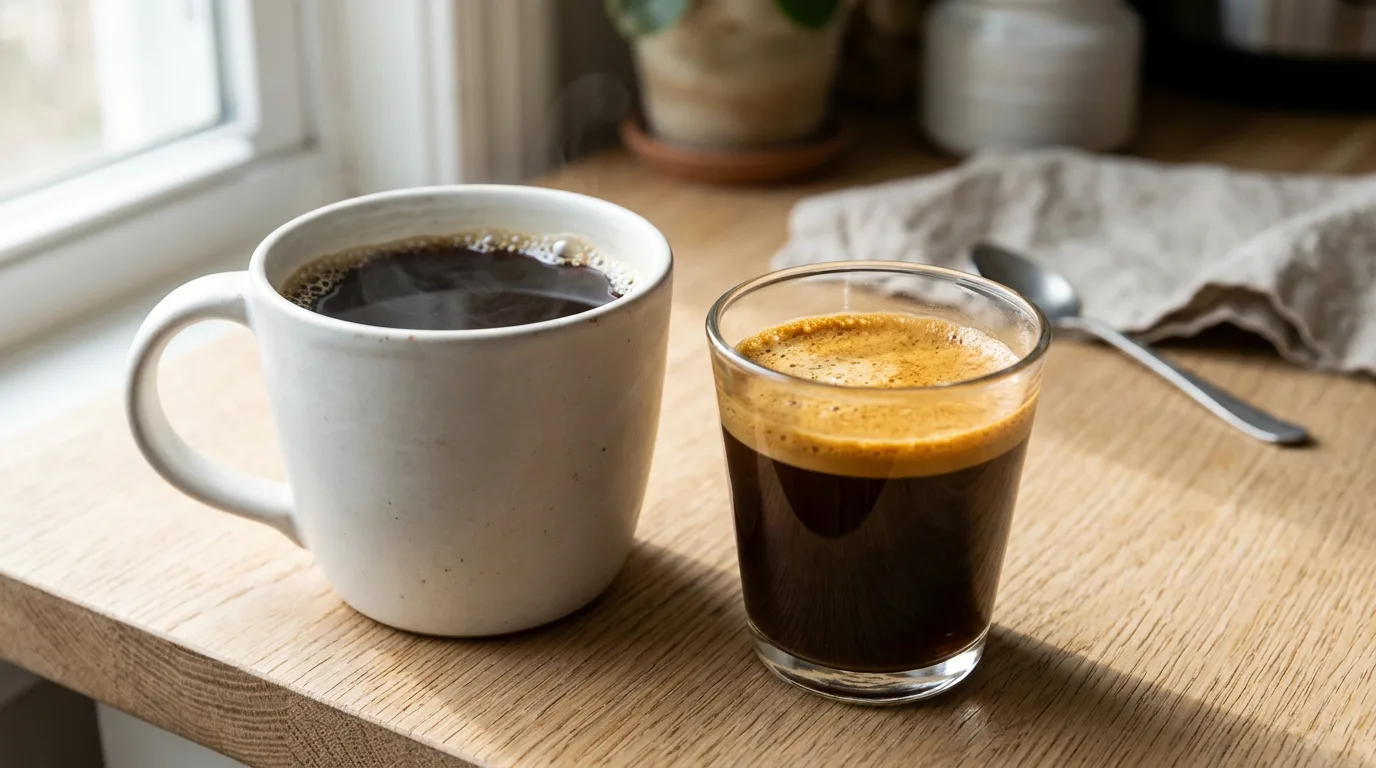
An americano is espresso topped up with hot water; a long black is espresso poured on top of hot water. The long black usually uses less water, so it's stronger, and pouring the shot last keeps the crema floating on top. The americano is larger, milder and smoother, with most of its crema broken up. Same ingredients, different order, different cup.
Why I wrote this
I drink more americanos than any other espresso drink. When I'm testing a machine all morning, a long, black, easy coffee is what I reach for between tasting shots.
The first time I ordered a long black in Australia, I expected the same thing. What arrived was smaller, stronger, with a thick tan layer of crema on top. It tasted noticeably richer.
The two drinks are made from the same two ingredients, so it's fair to ask whether the difference really matters. After a lot of side-by-side cups at home, my answer is yes, but probably less than coffee forums suggest. This guide explains exactly what changes and why.
What you'll learn
- How each drink is built, step by step.
- Why pouring order changes the crema, aroma and texture.
- Typical ratios and sizes in different countries.
- How to make both at home, with or without an espresso machine's hot water spout.
Americano vs long black at a glance
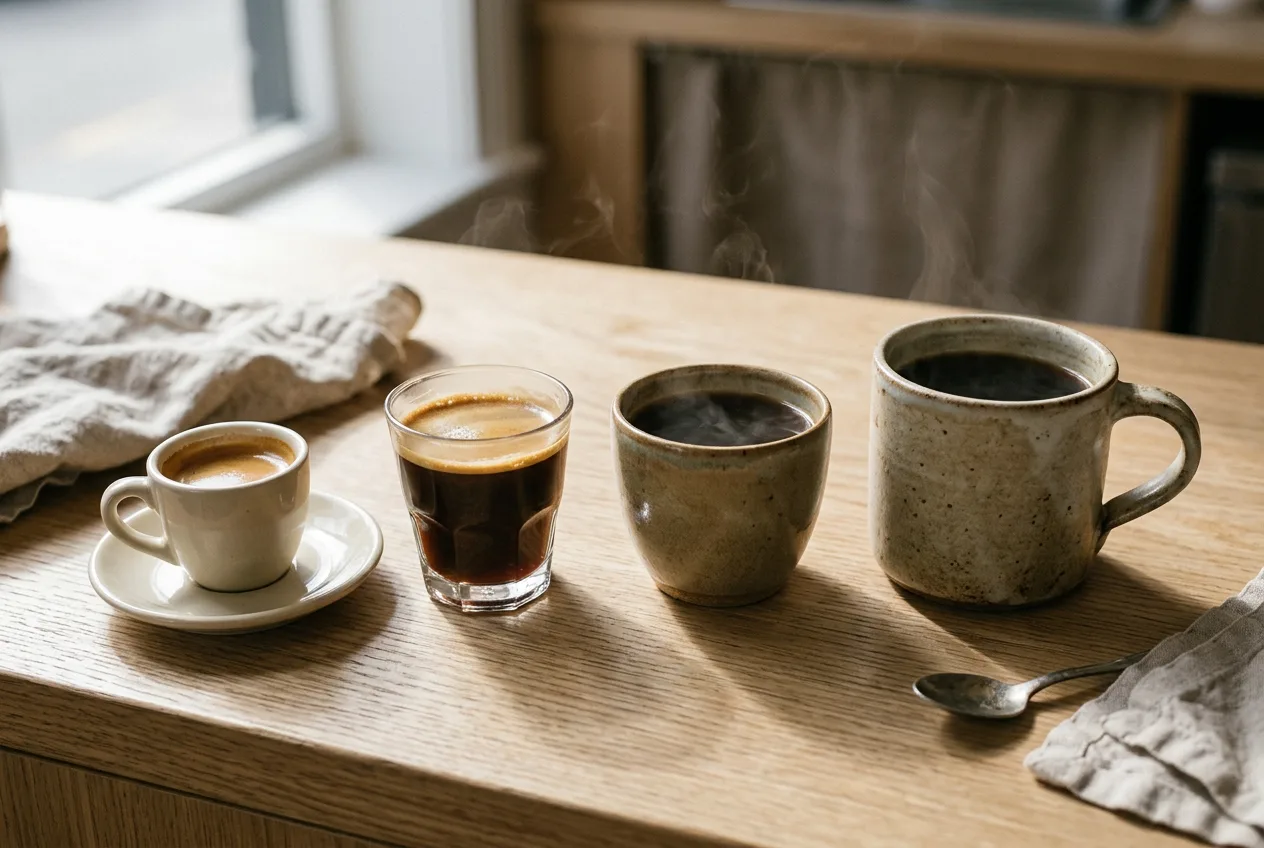
| Feature | Americano | Long black |
|---|---|---|
| Order of pouring | Espresso first, water added on top | Hot water first, espresso poured on top |
| Typical espresso | Single or double | Almost always a double, often ristretto |
| Typical water | 4 to 10 fl oz or more | About 3 to 4 fl oz |
| Typical size | 8 to 16 fl oz | 5 to 6 fl oz |
| Crema | Mostly broken up | Largely intact on top |
| Strength | Milder | Stronger, more intense |
| Where it's common | US, Europe, worldwide | Australia and New Zealand |
The two biggest differences are the pouring order and the amount of water. Everything else, from the crema to the strength, follows from those two choices.
What is an americano?
An americano, or caffè americano, is espresso diluted with hot water. You pull a shot, or two, into a cup, then top it up with hot water to the size you want.
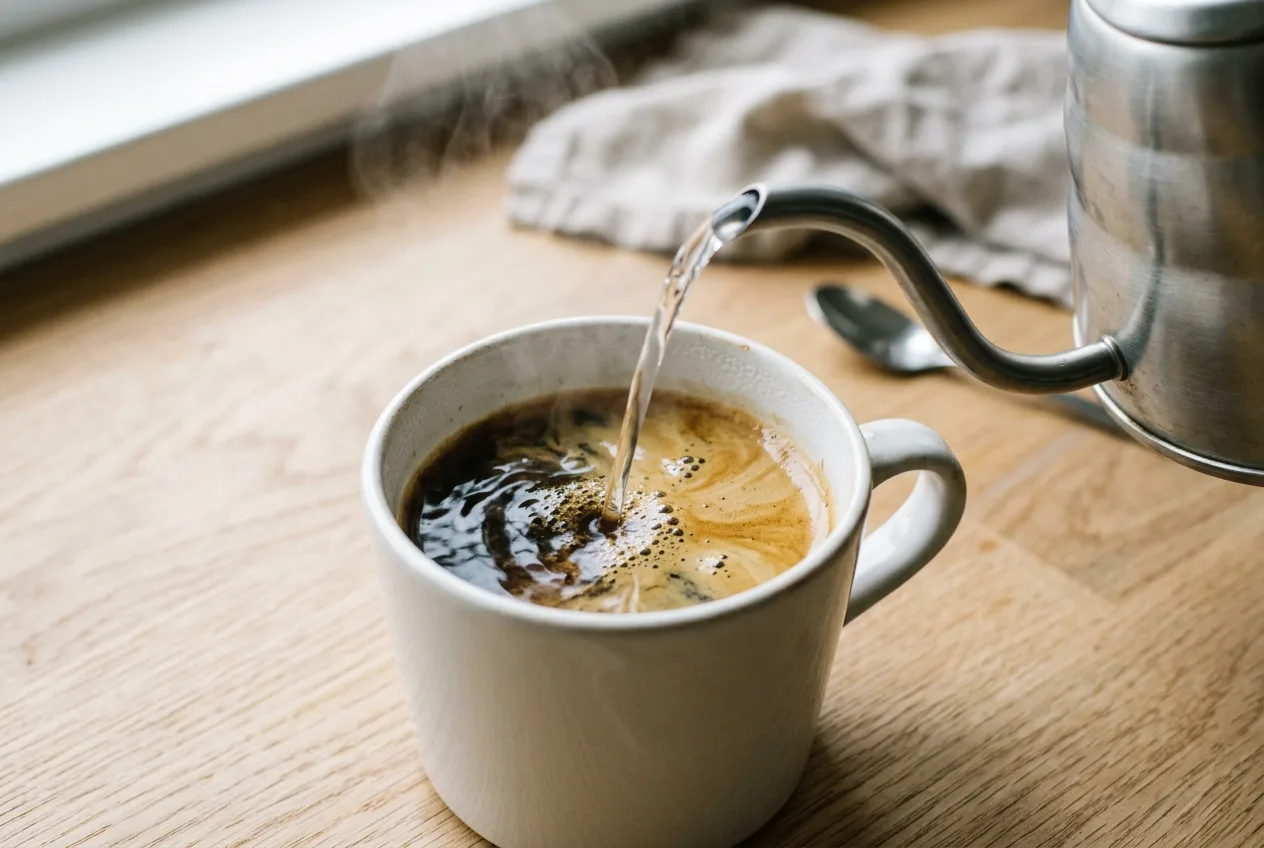
The result is a long, black coffee with a similar strength to drip coffee, but a different character. It keeps espresso's roasted, rounded flavor and a little body, without the intensity of a straight shot.
There's no single official ratio. In a US café, a 12-ounce americano usually holds a double shot and around 8 to 10 ounces of water. In much of Europe it's smaller, often a single or double in a 6 to 8 ounce cup.
Is it always espresso first?
Traditionally, yes. Many cafés today actually pour the water first, then add the shots on top, because it looks nicer and keeps more crema. At that point, the only real difference from a long black is the amount of water. Don't be surprised if your local café's americano looks a lot like a long black.
What is a long black?
A long black is the Australian and New Zealand take on a black espresso drink. The barista fills a cup with a small amount of hot water first, then pulls a double shot of espresso directly on top.
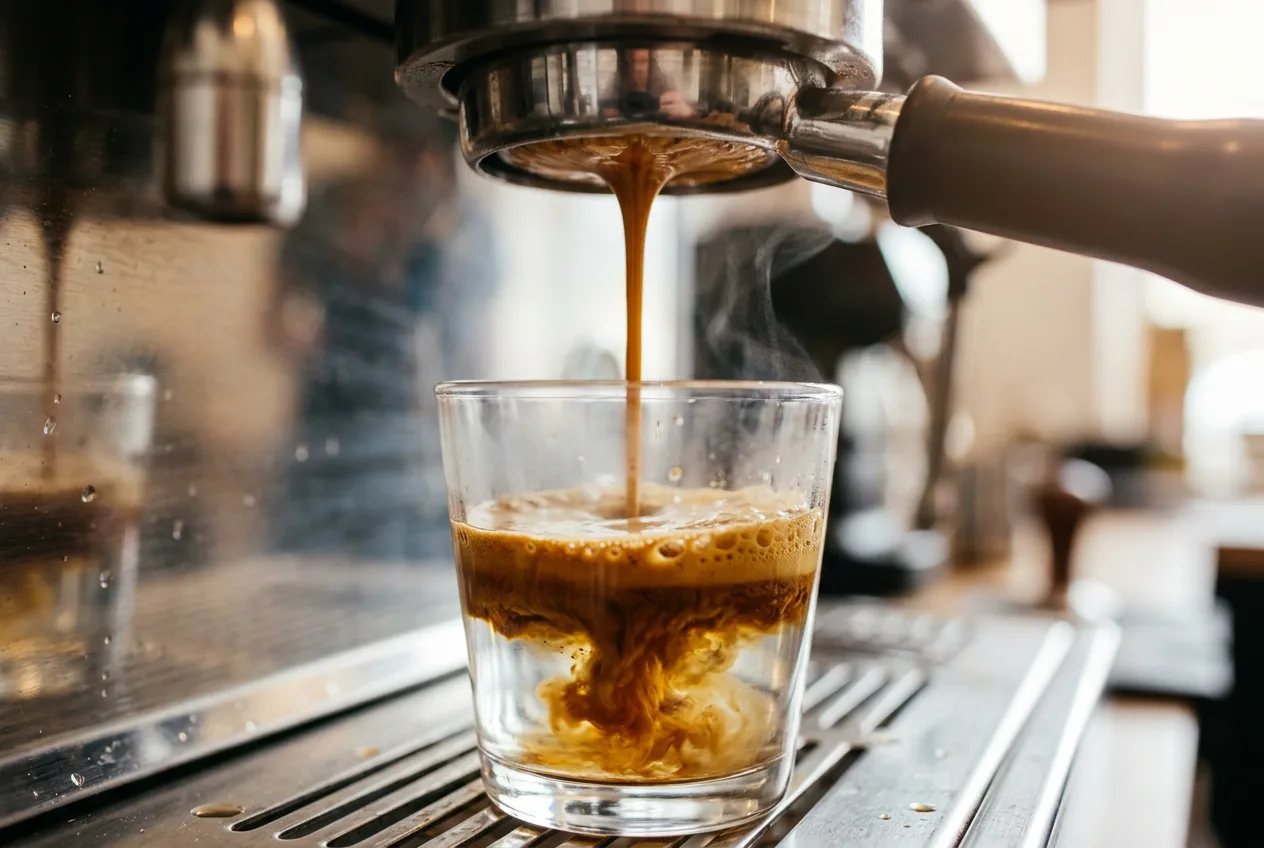
Because the espresso goes in last, the crema lands on top of the water and stays there. A long black arrives with a thick golden-brown layer, much like a straight espresso, just in a bigger cup.
It also uses less water than most americanos, usually about 3 to 4 ounces, so it's stronger and more concentrated. Many cafés make long blacks with ristretto shots, which makes them even richer and sweeter.
Our tip: If you want a stronger, more aromatic black coffee than an americano but find straight espresso too much, a long black is the sweet spot.
Why pouring order matters
It sounds like a small detail. Does it really matter whether the water or the coffee goes in first? It does, for three reasons.
- Crema survives or doesn'tPouring water onto espresso churns the crema and breaks most of it up. Pouring espresso onto water lets the crema float gently on top.
- Aroma is kept or releasedIntact crema traps aroma and releases it as you drink. When crema breaks, more of the aroma escapes before the cup reaches you.
- Temperature changesEspresso poured onto water that has cooled slightly in the cup lands at a gentler temperature, which some people find smoother. Very hot water poured onto espresso can scald it a little.
The effect on flavor is real but subtle. In my blind tastings, most people could tell the two apart when the ratios were very different, but struggled when the ratio was the same and only the order changed.
What happens to the crema
Crema is the visual difference you'll notice first. On a long black it sits on the surface as a smooth, unbroken tan layer.
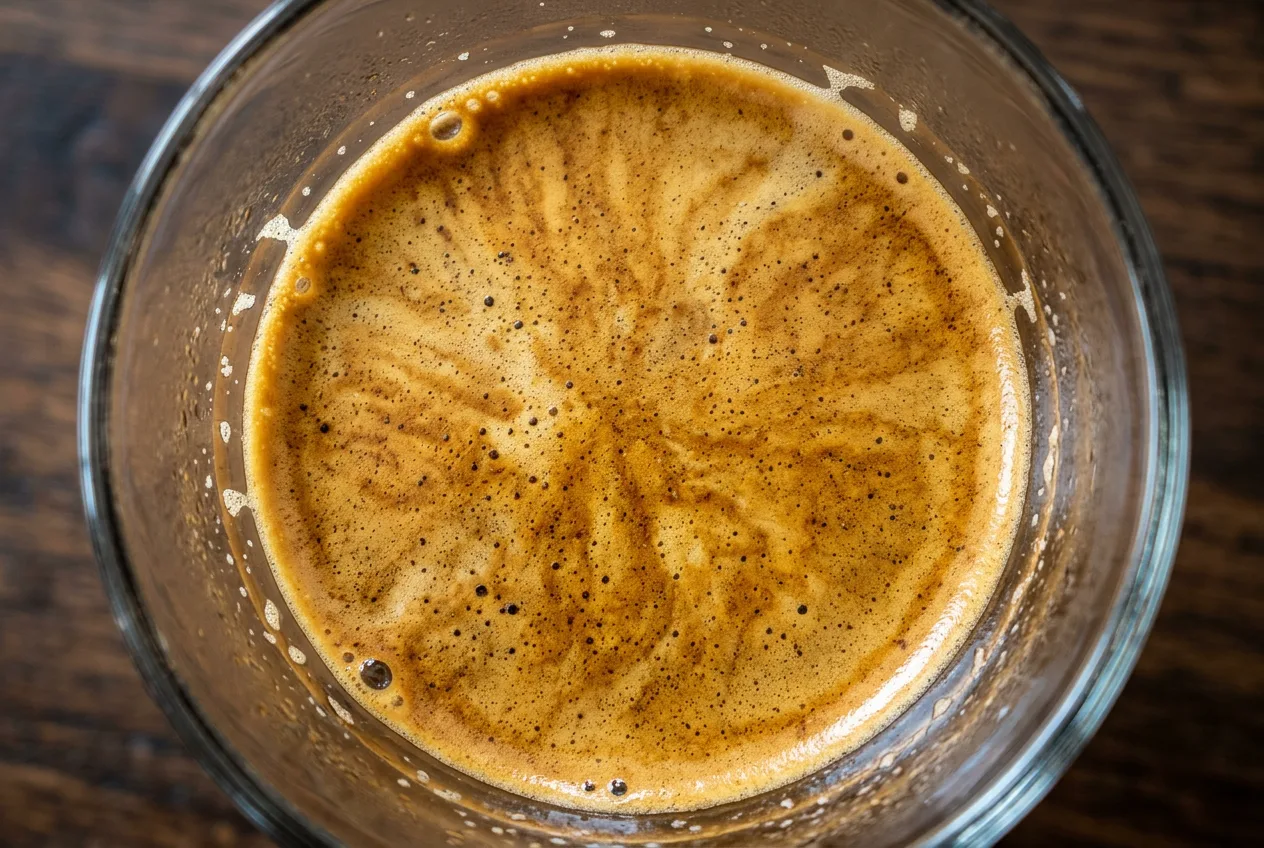
On a classic americano, the crema gets hit by a stream of hot water. Most of it breaks into small patches or dissolves into the coffee, leaving a darker surface with a few light flecks.
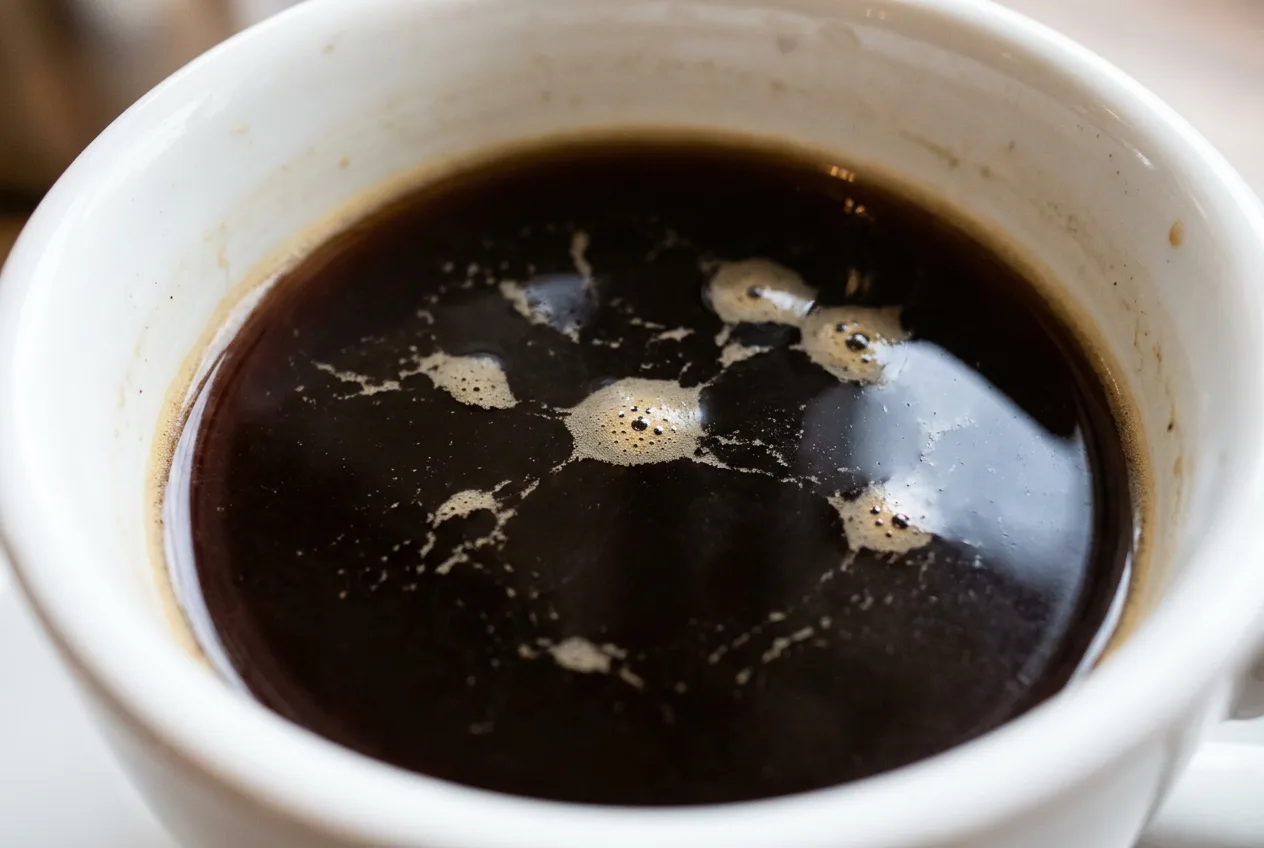
Is crema better or worse to keep? It depends on your taste. Crema adds aroma and a soft, foamy mouthfeel, but on its own it tastes a bit bitter and dry. Some people like americanos precisely because breaking the crema makes the cup smoother.
If you want to know more about what crema is made of, see espresso crema explained.
Ratios, size and strength
The amount of water is the biggest factor in how strong each drink tastes. Here are typical recipes using a double espresso of about 1.5 to 2 fl oz.
| Drink | Espresso | Water | Espresso to water |
|---|---|---|---|
| Long black | Double, often ristretto | 3 to 4 fl oz | About 1:2 |
| Small americano | Double | 4 to 6 fl oz | About 1:3 |
| Regular americano | Double | 8 to 10 fl oz | About 1:5 |
| Large americano | Double or triple | 12 to 14 fl oz | About 1:5 to 1:7 |
How strong it tastes, same double shot
Strength here means concentration per sip. The caffeine in the cup stays the same as long as the shots are the same.
If an americano tastes watery to you, the fix is usually less water or an extra shot, not a different drink.
How they taste side by side
I made both drinks with the same medium-roast Brazilian espresso, the same double shot recipe and water at the same temperature. The only differences were the order and the amount of water.
| Trait | Americano (1:5) | Long black (1:2) |
|---|---|---|
| Aroma | Softer | Stronger, more roasty |
| Body | Light, like filter coffee | Fuller, slightly creamy |
| Flavor intensity | Mellow | Bold |
| Bitterness | Low | Moderate, from the crema |
| Sweetness | Easy to notice as it cools | Concentrated |
| Best for | Slow sipping, larger cups | A quick, intense black coffee |
The americano tasted like a clean, rounded mug of coffee, with chocolate and nut notes that grew as it cooled. The long black tasted like a softened espresso: rich, aromatic and a little bitter at first, then sweet.
When I made both at the same ratio, the difference shrank a lot. The long black was a touch more aromatic and had a creamier first sip. After a minute of drinking, they were hard to tell apart.
Which has more caffeine?
Water doesn't add caffeine. So the caffeine in either drink depends only on the espresso shots used.
- A single shot usually has around 60 to 65 mg of caffeine.
- A double shot usually has around 120 to 130 mg.
- A long black almost always uses a double, so about 120 to 130 mg.
- An americano can be a single or a double, so anywhere from about 60 to 130 mg, or more if the café adds extra shots for larger sizes.
The long black tastes stronger because there's less water, but a large americano with the same double shot has the same caffeine. Ristretto shots carry slightly less caffeine than normal shots, but the difference is small.
For more on caffeine in different drinks, see caffeine myths debunked.
Where they come from
The americano
The popular story is that American soldiers in Italy during the Second World War found local espresso too strong. They asked for hot water to stretch it into something closer to the drip coffee they knew from home. Italian baristas called the result a caffè americano.
Like many coffee origin stories, it's hard to prove. But the name stuck, and the drink spread around the world with the rise of espresso bars and coffee chains.
The long black
The long black grew up in the café cultures of Australia and New Zealand, where espresso drinks dominate and drip coffee is less common. Baristas there wanted a black coffee that kept the character of espresso, including its crema.
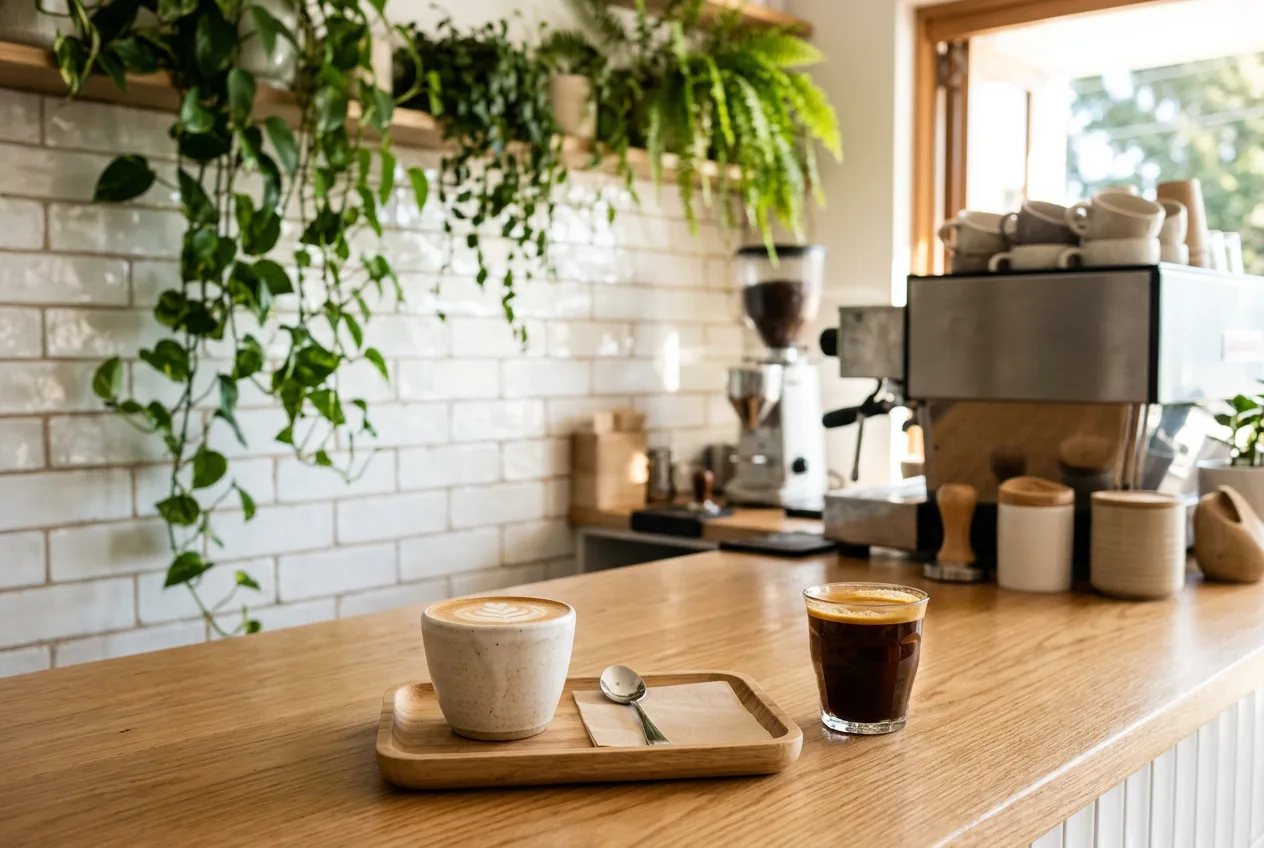
Pouring the shot onto water was the solution. It's now a standard menu item across both countries, and it has spread to specialty cafés in the UK, Asia and parts of the US.
How to make an americano at home
You need an espresso machine, or a strong espresso-style coffee from a moka pot or capsule machine, plus hot water.
- Preheat your mugRinse it with hot water. A warm mug keeps the drink hot for longer.
- Pull a double espressoAbout 18 g of coffee to roughly 36 g of espresso in 25 to 30 seconds is a good starting point.
- Heat the waterUse water just off the boil, around 195 to 205°F.
- Add the waterPour 4 to 10 fl oz of hot water onto the espresso, depending on how strong you like it.
- Taste and adjustToo strong? Add a splash of water. Too weak? Use less water next time, or a stronger shot.
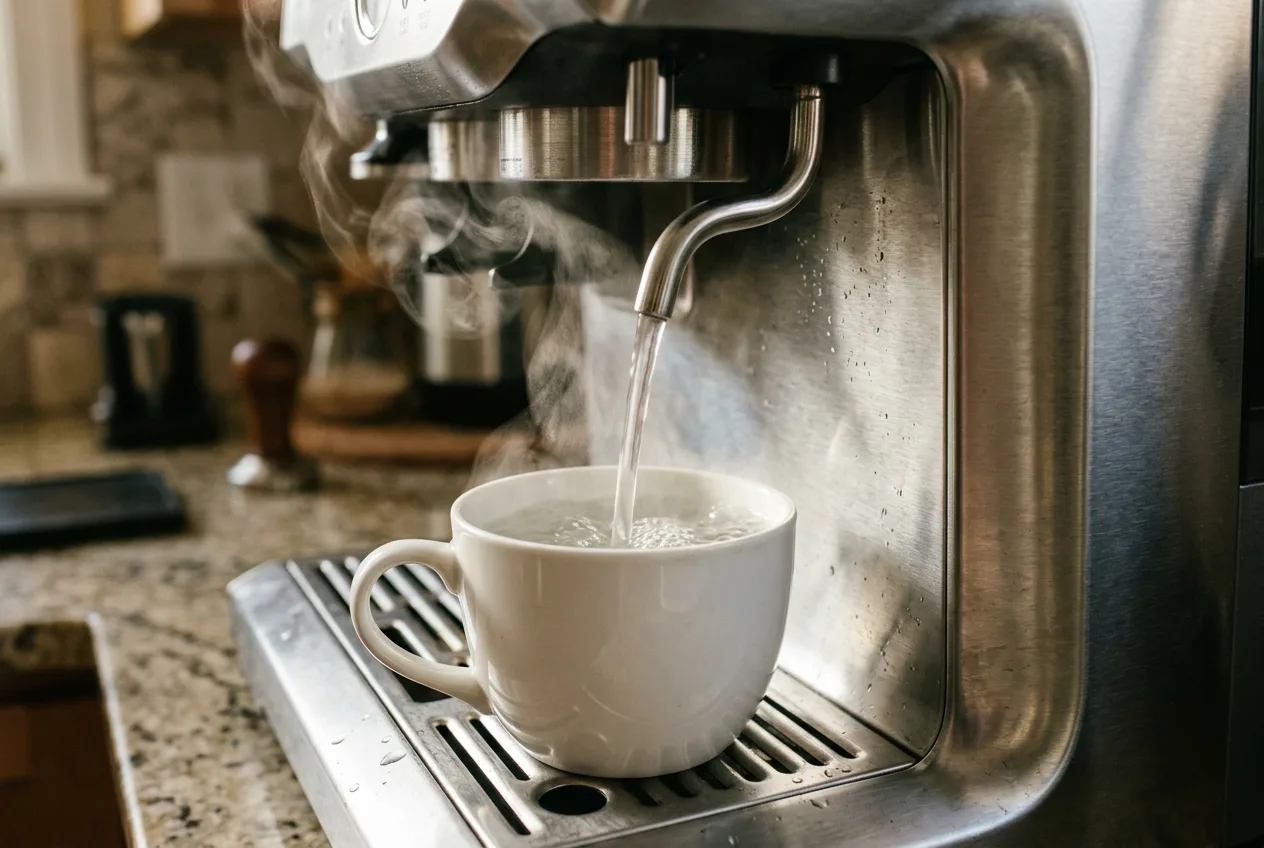
If your machine has a hot water spout, it's convenient, but the water is sometimes cooler or slightly flat-tasting. A kettle with filtered water often gives a better result.
Our tip: For a smoother americano, pour the water in first anyway. You'll keep more aroma, and the cup will taste a little rounder.
How to make a long black at home
- Choose a small cup or glassAround 6 to 7 fl oz capacity is ideal. A glass lets you see the crema.
- Add hot water firstPour in about 3 to 4 fl oz of hot water. Let it sit for a few seconds so it isn't scalding.
- Pull a double shot on topPlace the cup directly under the portafilter and brew the espresso straight onto the water.
- Consider a ristrettoGrinding a little finer and stopping at about 25 g of espresso gives a sweeter, richer long black.
- Serve without stirringLeave the crema intact and drink it as it is.
If your cup doesn't fit under the portafilter, pull the shot into a small jug or shot glass and pour it gently onto the water. Pour slowly against the side of the cup to keep as much crema as possible.
Water temperature matters more than you think
The water you add isn't brewing anything, but it still changes the taste. Boiling water poured onto espresso can make it taste harsher and flatter. Water that's too cool leaves you with a lukewarm drink.
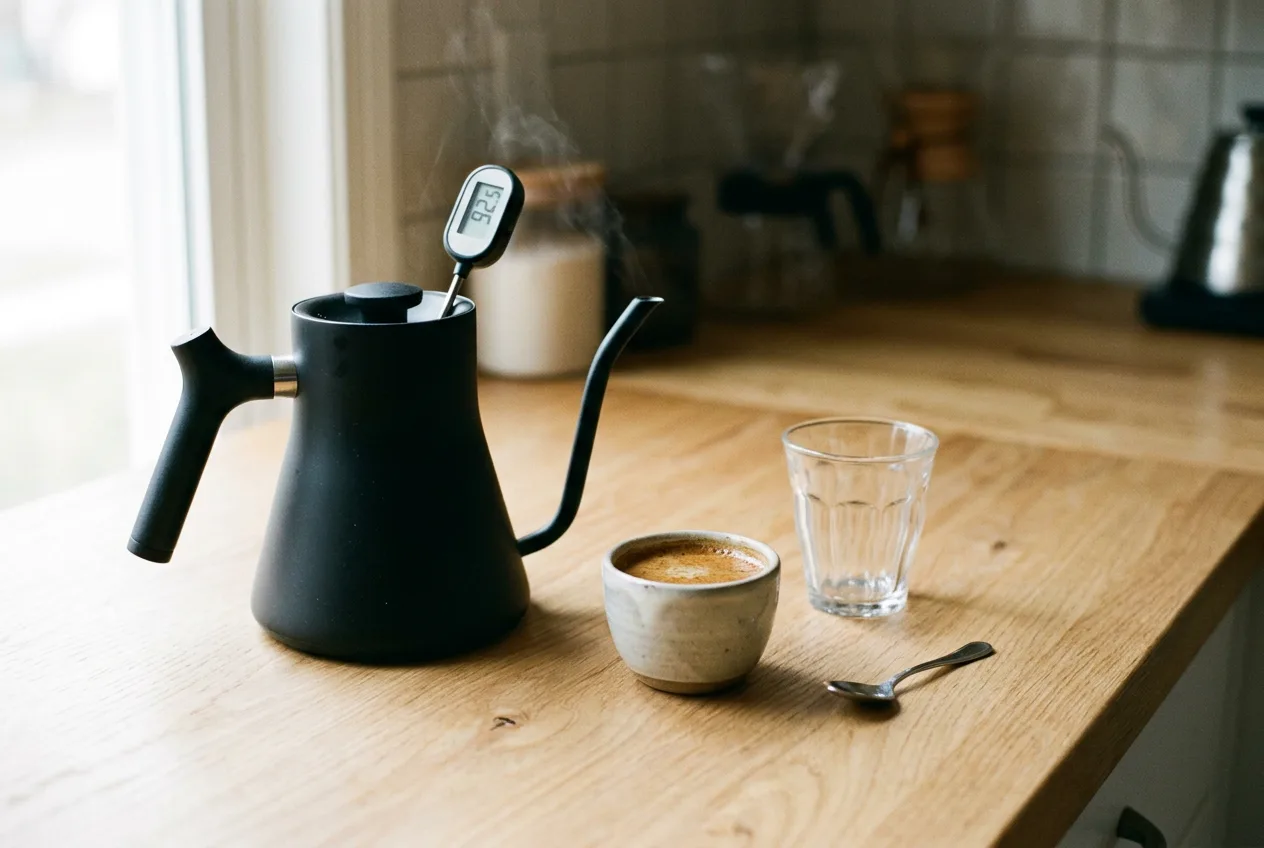
- For an americano: water around 185 to 200°F works well. Let a kettle rest for 30 to 60 seconds after boiling.
- For a long black: the water sits in the cup for a moment before the shot lands, so starting near 200°F is fine.
- Use filtered water where you can. It makes up most of the drink, so chlorine or heavy minerals show up clearly.
One small habit makes a big difference: taste your americano a couple of minutes after making it, not straight away. Both drinks open up as they cool slightly.
Best beans for each drink
Diluting espresso changes which beans taste best. Water softens bitterness but also spreads out flavor, so bland beans taste even blander in a big americano.
| Drink | Great choices | Why |
|---|---|---|
| Americano | Medium roasts, fruity single origins, light espresso roasts | Dilution brings out clarity and sweetness, a bit like filter coffee |
| Long black | Medium to medium-dark espresso blends | Less water, so chocolate and caramel notes stay bold |
| Either | Avoid very stale or very dark oily beans | Water exposes flat, ashy flavors |
My favorite americanos come from washed Ethiopian or Kenyan espresso roasts. Diluted, they taste bright and juicy, almost like a strong pour-over. For long blacks, I prefer a chocolatey Brazilian or Colombian blend.
If your espresso shot itself tastes sour or bitter, water won't fix it. Dial the shot in first using why coffee tastes bitter or sour.
Can you add milk?
Of course. It's your coffee. Both drinks are traditionally served black, but plenty of people add a splash of milk.
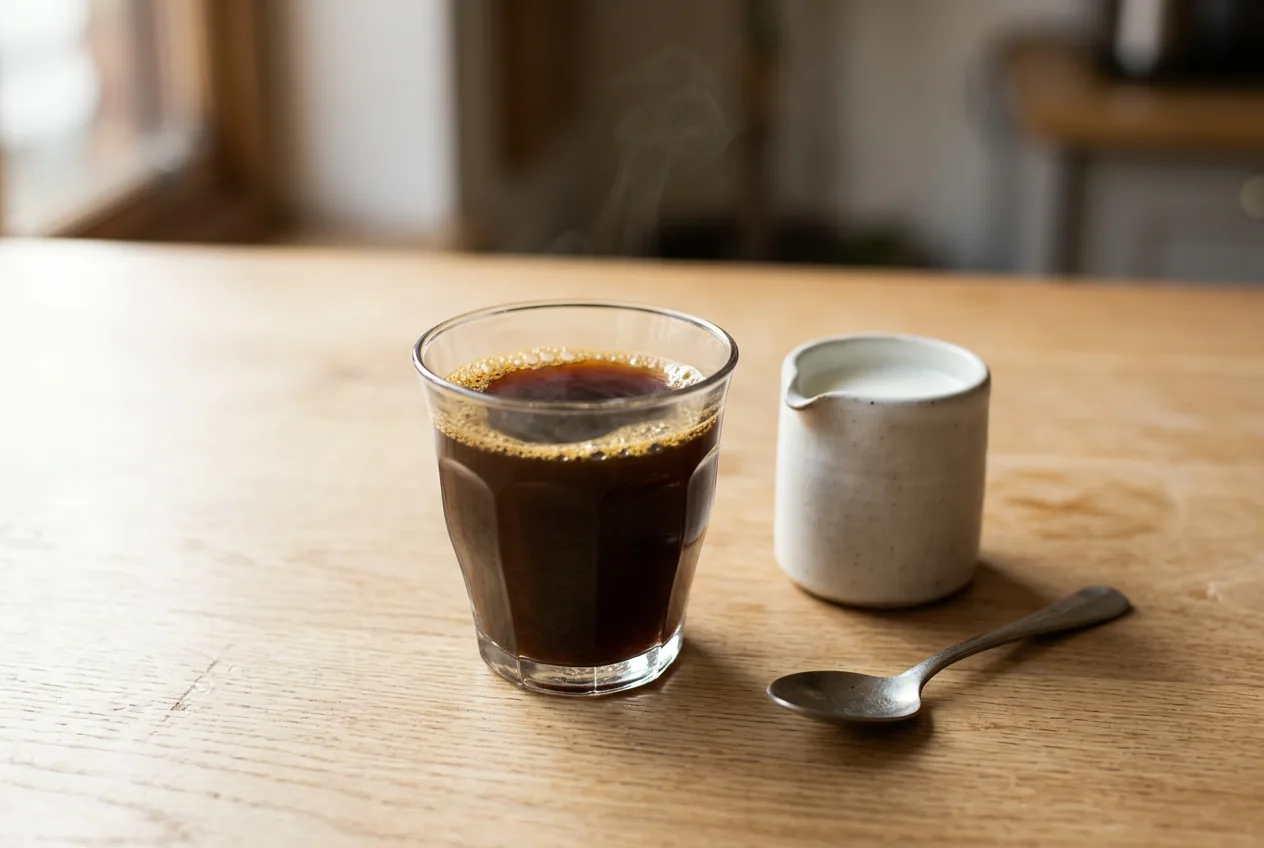
An americano with a little milk is sometimes called a "white americano" in the UK. A long black with milk on the side is common in Australia too, though if you want milk regularly, a flat white might suit you better.
Cold milk cools the drink quickly, so warm it slightly or add only a splash. With a long black, add milk gently at the edge of the cup if you want to keep some crema on top.
Iced americano and iced long black
Both drinks work well cold. An iced americano is one of the most popular summer coffees, and for good reason: it's refreshing and easy to make.
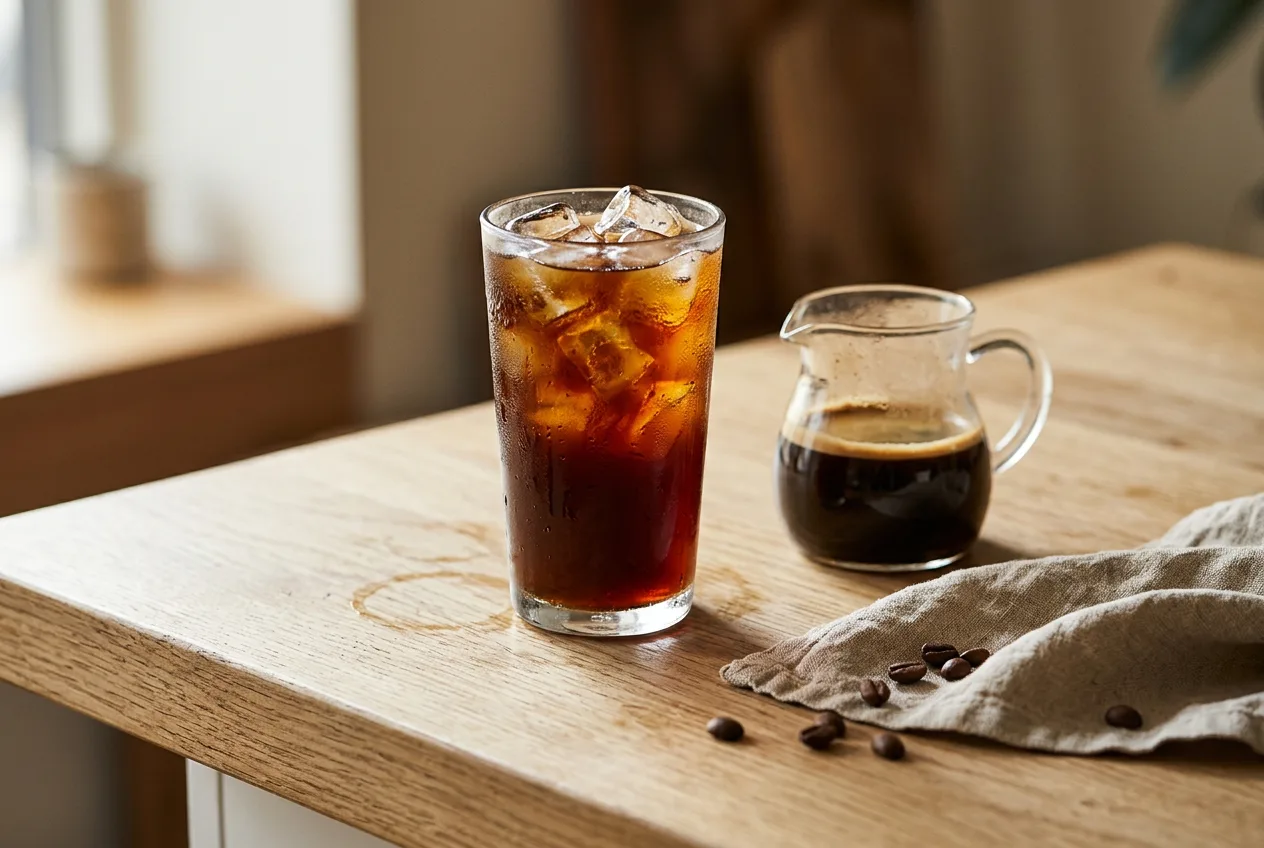
- Fill a tall glass with icePlenty of ice cools the coffee quickly without too much melting.
- Add cold waterAbout 4 to 6 fl oz for an americano, 2 to 3 fl oz for an iced long black.
- Pour the espresso on topPulling the shot directly over the water and ice keeps a little foam on the surface.
- Stir and tasteAdd more water or ice to adjust strength.
Iced drinks dull sweetness and aroma, so a slightly stronger ratio usually tastes better cold. For a different style of cold coffee, compare this with cold brew, which tastes smoother and less acidic.
Americano vs filter coffee
An americano is often described as "espresso made to taste like drip coffee." The strength can be similar, but the taste isn't the same.
| Trait | Americano | Filter coffee |
|---|---|---|
| How it's brewed | Pressurized espresso, then diluted | Gravity, water passing through medium grounds |
| Body | Slightly heavier, a bit of oil | Lighter, cleaner with a paper filter |
| Flavor | Roasty, rounded, caramelized | Clearer, brighter, more nuanced |
| Speed | About a minute | 3 to 6 minutes |
| Best for | Single cups, espresso machine owners | Several cups, lighter roasts |
If you own an espresso machine and only want one long black coffee, an americano is fast and excellent. If you're making coffee for several people or love delicate light roasts, filter coffee is often better.
Lungo, red eye and other cousins
A few other drinks get confused with americanos and long blacks.
| Drink | What it is | How it differs |
|---|---|---|
| Lungo | A long espresso, with extra water run through the coffee | More extraction, more bitterness, smaller than most americanos |
| Red eye | Drip coffee with a shot of espresso added | Much more caffeine, coffee instead of water |
| Café allongé | French long espresso | Usually closer to a lungo |
| Café crème (Swiss) | Long coffee brewed through an espresso machine | All the water passes through the coffee |
The key question is whether the extra water goes through the coffee or gets added afterwards. Through the coffee changes the extraction. Added afterwards only changes the strength. More detail in ristretto vs espresso vs lungo.
The espresso inside matters most
It's easy to focus on the water, but both drinks are only as good as the espresso in them. Water makes flaws easier to taste, not harder.
A sour, under-extracted shot becomes a thin, sharp americano. A bitter, over-extracted shot becomes a harsh, hollow one. A stale shot becomes a flat cup that no amount of water adjustment can rescue.
For a long black, a ristretto or a slightly short double is a smart choice. It's sweeter and richer, so it still tastes full after dilution. For an americano, a standard 1:2 shot is usually best. It has enough clarity to taste good diluted, without the intensity becoming too much.
If you're using a capsule machine, use espresso capsules rather than lungo capsules for both drinks, then add the water yourself. Lungo capsules are designed to be brewed long and taste more bitter when used this way.
Our tip: Taste the shot on its own before you add water. If you wouldn't enjoy a small sip of it, fix the shot first.
The Australian and New Zealand coffee menu
The long black makes more sense when you see where it sits on a typical Australian or New Zealand café menu. Drip coffee is rare. Nearly everything starts with espresso.
| Menu name | What you get |
|---|---|
| Short black | A straight espresso |
| Long black | Double espresso poured over hot water |
| Flat white | Espresso with a thin layer of velvety steamed milk |
| Piccolo | A ristretto topped with steamed milk in a small glass |
| Long macchiato | A double espresso with a dash of milk, often in a glass |
| Magic (Melbourne) | A double ristretto with steamed milk in a small cup |
In that context, the long black is the default black coffee. It's what you order when you want coffee without milk but don't want a tiny espresso. Americanos do appear on some menus, but locals mostly stick to the long black.
Ordering around the world
Names travel, but recipes don't always travel with them. Here's what I've found when ordering in different places.
- United States: the americano is a standard menu item, usually large and fairly mild. Long blacks appear in specialty cafés, often run by Australians or New Zealanders.
- United Kingdom: americanos are everywhere. Many cafés ask "with milk or without?" and a long black is increasingly common in specialty shops.
- Italy: you can order a caffè americano in tourist areas, but locals usually drink espresso. Asking for "un caffè lungo" gets a longer espresso instead.
- Spain and Portugal: a café americano is common. It's often smaller and stronger than a US version.
- Asia: both drinks are widely available in modern cafés, and iced americanos are hugely popular.
If you're unsure, describe what you want. "A double shot with a little hot water, shot on top" gets you a long black almost anywhere.
What happened in my blind tasting
I wanted to know how much the pouring order mattered on its own, so I set up a simple blind test with six friends who drink black coffee regularly.
- Round 1: different ratiosA long black at about 1:2 against an americano at about 1:5. Everyone correctly picked the long black as "stronger and creamier."
- Round 2: same ratio, different orderBoth at about 1:3, one with water first and one with espresso first. Only two of six could reliably tell which was which.
- Round 3: preferenceFour preferred the long black for a short morning coffee. Five preferred the americano for a coffee to sip at a desk.
My takeaway: the ratio drives most of the difference you taste. The pouring order adds a nice touch of aroma and texture at the start of the cup, and it's worth doing, but it's not a dramatic change.
Cups, glasses and serving
Presentation is part of the difference. A long black is traditionally served in a small glass or a 6 to 7 ounce cup, so you can see the crema and the dark coffee below. An americano usually comes in a regular mug or a larger cup.
The size of the cup also guides the ratio. A small glass naturally limits how much water you can add, which is part of why long blacks stay strong. A big mug invites a big pour.
Whatever you use, preheat it. Pour hot water in, let it sit while you grind and pull the shot, then tip it out or use it as the base for your long black. A warm cup keeps both drinks tasting better for longer.
Thick ceramic holds heat best for an americano you plan to sip slowly. Thin glass looks beautiful for a long black, but it loses heat faster, which is fine for a drink you will finish in a few minutes. Double-walled glasses are a good middle ground: they show off the crema, keep the coffee hot and stay cool enough to hold.
No hot water spout? No problem
Many compact espresso machines don't have a separate hot water outlet. A few have one, but it uses the steam boiler and gives water that's very hot or a little spluttery.
An electric kettle is the simplest answer. Boil it, let it rest briefly, and pour. A gooseneck kettle gives you more control, which is handy for long blacks where you want to add the water first and leave room for the shot.
Avoid running water through the group head to make an americano. That water is meant for brewing and often tastes of old coffee oils. It also flushes heat out of the machine right before you want to pull a shot.
Sugar, syrups and other additions
Both drinks are a blank canvas. A little sugar softens bitterness and brings out chocolate notes, especially in a long black. Syrups like vanilla or caramel are more common in americanos, particularly iced ones.
If you're watching calories, these black drinks are about as light as coffee gets, with only a few calories before you add anything. That makes them an easy everyday choice compared with large milk drinks.
A pinch of salt is an old trick for reducing bitterness in harsh coffee. It works surprisingly well on an over-extracted americano, though fixing the shot is still the better solution.
Troubleshooting your americano or long black
| Problem | Likely cause | Fix |
|---|---|---|
| Tastes watery | Too much water or a weak shot | Use less water or a double ristretto |
| Tastes sour | Under-extracted espresso | Grind finer for the shot |
| Tastes harsh or burnt | Over-extracted shot or boiling water | Grind coarser and let the kettle rest |
| Tastes flat | Stale beans or flat-tasting water | Fresher beans and filtered water |
| No crema on a long black | Shot poured too fast or old beans | Brew directly onto the water, use fresh beans |
| Goes cold fast | Cold cup or cool water | Preheat the cup and use hotter water |
Variations worth trying
Once you've got the basics down, a few twists are worth a try, especially in warm weather or when you want something a little different.
- Sparkling americano: espresso poured over ice and chilled sparkling water. Bright and refreshing, with a hint of bitterness.
- Citrus americano: a strip of orange peel twisted over an iced americano. The oils lift chocolatey espresso nicely.
- Honey long black: a small spoon of honey dissolved in the hot water before the shot goes in. Gentle sweetness without syrup.
- Half-and-half americano: half hot water, half hot milk. Lighter than a latte, richer than a white americano.
None of these are traditional, and purists may wince. But they're good examples of how flexible these two simple drinks can be.
Making americanos for a group
One downside of espresso drinks is that you make them one at a time. If you're serving four or five people, there's a faster way to make americanos.
- Pull all the shots into one jugPull double shots one after another into a small warmed jug.
- Pre-pour hot water into each mugFill each warmed mug with the amount of water you want.
- Divide the espressoPour the espresso evenly between the mugs, on top of the water.
It's not quite as good as a fresh long black made shot by shot, but it keeps everyone's coffee hot and arrives at the table together.
A note on health and acidity
Black espresso drinks are about as simple as coffee gets: coffee and water, with only a few calories. For most healthy adults, the main thing to watch is total caffeine, not the drink itself.
Some people find diluted espresso easier on the stomach than straight shots, because it's less concentrated. Others find a long black's intensity is fine as long as they drink it with food. As always, listen to your body, and if coffee regularly causes heartburn or discomfort, talk to your doctor. My article on acidity and bitterness in coffee explains the difference between taste acidity and stomach acidity.
Quick glossary
What to look for in a machine for black coffee
If americanos and long blacks are your main drinks, you don't need a machine built for milk. What you need is good espresso and an easy source of hot water.
- Stable temperature: consistent shots matter more than anything when you drink coffee black. Machines with PID temperature control make this easier.
- Room under the spout: for long blacks, you want enough height to fit a small glass or cup directly under the portafilter.
- A good grinder: a burr grinder that can grind fine and consistently will improve your americanos more than any machine feature.
- Hot water outlet: nice to have, but a kettle does the job just as well.
Bean-to-cup machines often have an americano button that pulls a shot and adds hot water automatically. They're convenient, and many let you choose the water amount. Check whether the water is added before or after the coffee if you care about crema.
Decaf americanos and long blacks
Both drinks work well with decaf. Because they're black, they show off a good decaf better than milk drinks do, and they let you enjoy a long coffee in the afternoon without affecting your sleep.
Decaf espresso tends to make thinner crema, so a decaf long black may not look as dramatic. The flavor is what counts, and a well-made decaf americano can be every bit as satisfying as the regular version. If you're curious how decaf is made, see how decaf coffee is made.
Which should you order?
My own habit: a long black first thing, when I want flavor and focus, and an americano later in the morning, when I want something long and easy to sip while I work.
Common mistakes
- Too much water: the most common reason an americano tastes thin. Start with less and add more.
- Boiling water: it flattens the flavor and can taste harsh. Let the kettle rest.
- A bad shot: water can't fix a sour or bitter espresso. Get the shot right first.
- Using a lungo instead: running lots of water through the coffee isn't the same as adding it afterwards, and usually tastes more bitter.
- Cold cups: a long black in a cold glass loses heat fast. Preheat with hot water.
The verdict
The americano and the long black are close cousins. Both are espresso and hot water. The long black puts water in first and uses less of it, so it's stronger and keeps its crema. The americano adds water to the espresso, usually more of it, so it's milder, longer and smoother.
Neither is better. If you want espresso character in a slightly longer cup, choose a long black. If you want an easy, everyday black coffee, choose an americano. At home, play with the order and the ratio until you find your version.
A good way to start is to make both on the same morning with the same beans. Make a long black with about 3 ounces of water and a double shot poured on top. Then make an americano with the same shot and about 8 ounces of water added afterwards. Taste them side by side, then again after a few minutes as they cool.
Most people find they clearly prefer one style for the first coffee of the day and the other for later. Once you know which is which for you, ordering in any café, anywhere in the world, gets a lot easier. And if the café gets it wrong, you will know exactly what to ask for next time: more water, less water, or the shot on top.
Frequently asked questions
What is the difference between an americano and a long black?
An americano is espresso with hot water added on top, usually more water. A long black is hot water with espresso poured on top, usually less water, so it's stronger and keeps its crema.
Is a long black stronger than an americano?
It tastes stronger because it uses less water. If both use the same double shot, the caffeine is the same.
Why is it called a long black?
It's an Australian and New Zealand name for a black coffee that's longer than an espresso. "Short black" is the local name for a straight espresso.
Why is it called an americano?
The popular story is that American soldiers in Italy during the Second World War diluted espresso with water to make it more like the coffee they drank at home.
Does pouring order really change the taste?
A little. Pouring espresso onto water keeps the crema and aroma, which makes the first sips richer. The amount of water makes a bigger difference than the order.
How much water goes in an americano?
There's no fixed rule. Most cafés use about 4 to 10 fl oz of water with a double shot. Start with less and add more to taste.
Can I make an americano without an espresso machine?
You can make something similar with strong moka pot coffee or a capsule espresso diluted with hot water. It won't be identical but can be very good.
Is a long black the same as a lungo?
No. A lungo runs more water through the coffee during brewing. A long black adds a normal shot to hot water afterwards, so it tastes cleaner and less bitter.

- Michael Reynolds, notes from side-by-side brewing tests
- Caffè Americano, Wikipedia
- Long black, Wikipedia
Related guides
Ristretto vs espresso vs lungo Espresso crema explained Why coffee tastes bitter or sour Caffeine myths debunked Acidity and bitterness in coffeeWritten by Michael Reynolds. Last updated November 19, 2026.