Ristretto vs Espresso vs Lungo: Size, Taste, Caffeine and How to Make Each One
Same coffee, same machine, three very different drinks. The only real difference is how much water passes through the grounds, yet it changes the flavor, strength and texture of the cup completely. Here's how they compare and how to pull each one at home.
We choose products independently. We may earn a commission through links on this page; your price stays the same. Affiliate policy
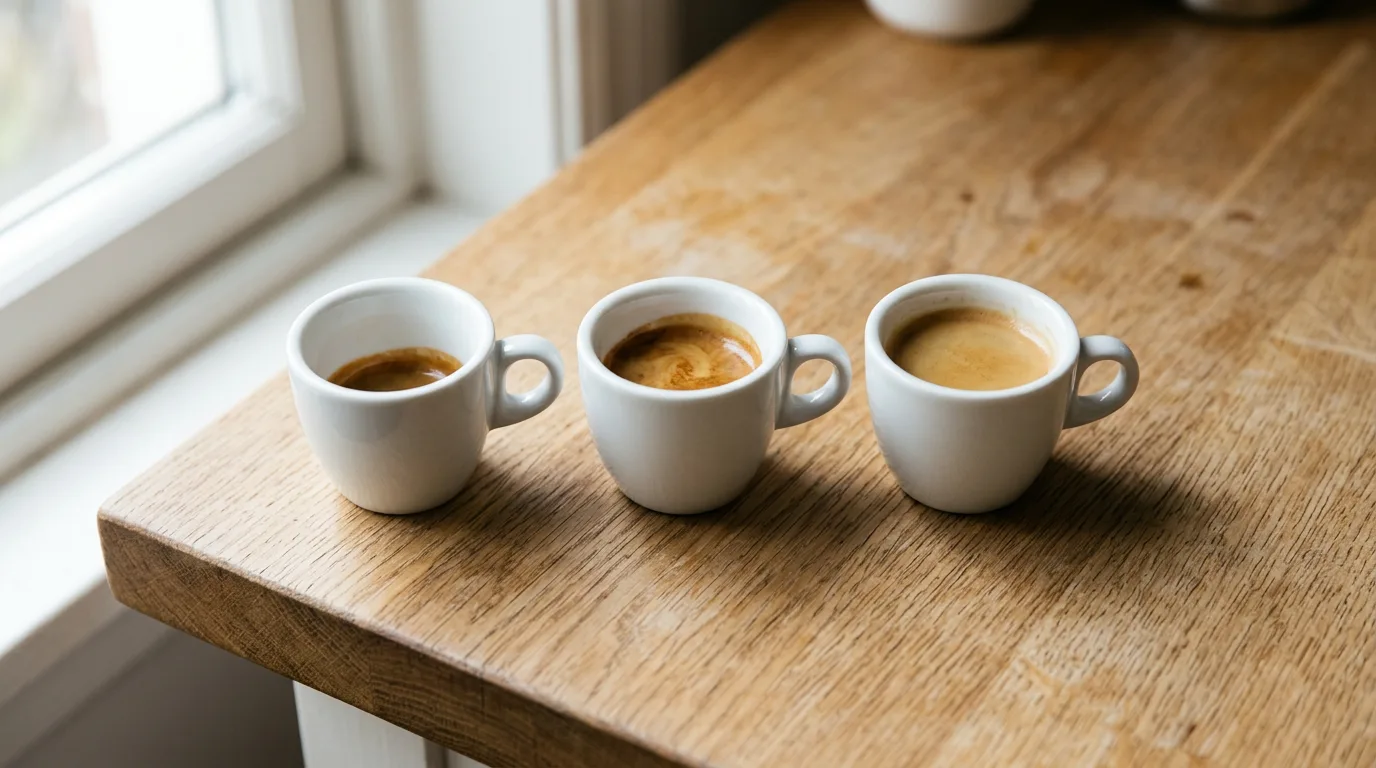
A ristretto is a short, concentrated espresso; a lungo is a long, diluted one. With the same dose of coffee, a ristretto uses about half the water of an espresso (roughly a 1:1 ratio), a normal espresso uses about twice the coffee's weight in liquid (1:2), and a lungo uses three times or more (1:3 or longer). Ristretto tastes thicker and sweeter, espresso balanced, and lungo lighter but more bitter.
Why I wrote this
When I test an espresso machine, I pull all three of these shots with the same beans. It's one of the best ways to see how a machine handles flow and temperature.
It's also one of the most common questions I get from readers. Many machines have "ristretto" and "lungo" buttons, and capsule boxes are labeled with these words, but few people know what they actually change.
The answer is simpler than the Italian names make it sound. All three are espresso. They differ in how much water flows through the coffee, and that one change reshapes almost everything about the drink.
There's also a lot of conflicting advice online. Some sources define these shots by volume, some by time, some by weight. Some say a ristretto has more caffeine, others say less. Cafés in different countries pour different sizes under the same name.
So in this guide I'll give you the modern, weight-based definitions that most specialty baristas use, plus the traditional volume-based ones, and explain where they overlap. I'll also share what I've actually tasted pulling these shots side by side on more than a dozen machines over the past year.
If you only remember one thing, make it this: the beans and the grinder matter more than the label on the button. A well-made lungo will always beat a badly made ristretto.
What this guide covers
- Exact ratios, volumes and times for each shot.
- How each one tastes, and why.
- Which has the most caffeine, which surprises a lot of people.
- How to pull each shot at home, step by step.
- When to choose which, black or with milk.
Ristretto vs espresso vs lungo at a glance
Here's the whole comparison in one table. The numbers are typical starting points for a double shot made with about 18 g of coffee.
| Feature | Ristretto | Espresso | Lungo |
|---|---|---|---|
| Meaning | "Restricted" | "Pressed out" | "Long" |
| Ratio (coffee : liquid) | About 1:1 to 1:1.5 | About 1:2 | About 1:3 to 1:4 |
| Liquid from 18 g | 18 to 27 g | About 36 g | 54 to 72 g |
| Approx. volume (double) | About 0.7 to 1 fl oz | About 1.5 to 2 fl oz | About 2.5 to 3.5 fl oz |
| Typical shot time | 15 to 20 seconds | 25 to 30 seconds | 40 to 60 seconds |
| Body | Thick, syrupy | Full, rich | Thinner, lighter |
| Flavor | Intense, sweet, bright | Balanced | Milder, more bitter |
| Total caffeine | Slightly lower | Baseline | Slightly higher |
Our tip: Think of these as points on a sliding scale, not three fixed recipes. Many baristas pull shots at 1:1.7 or 1:2.5 to suit a particular coffee.
It's all about the brew ratio
The cleanest way to define these drinks is by brew ratio: the weight of ground coffee compared with the weight of liquid espresso in the cup.
Modern baristas weigh both. If you put 18 g of coffee in the basket and get 36 g of espresso out, that's a 1:2 ratio, a standard espresso. Stop at 18 g out and it's a 1:1 ristretto. Let it run to 54 g and it's a 1:3 lungo.
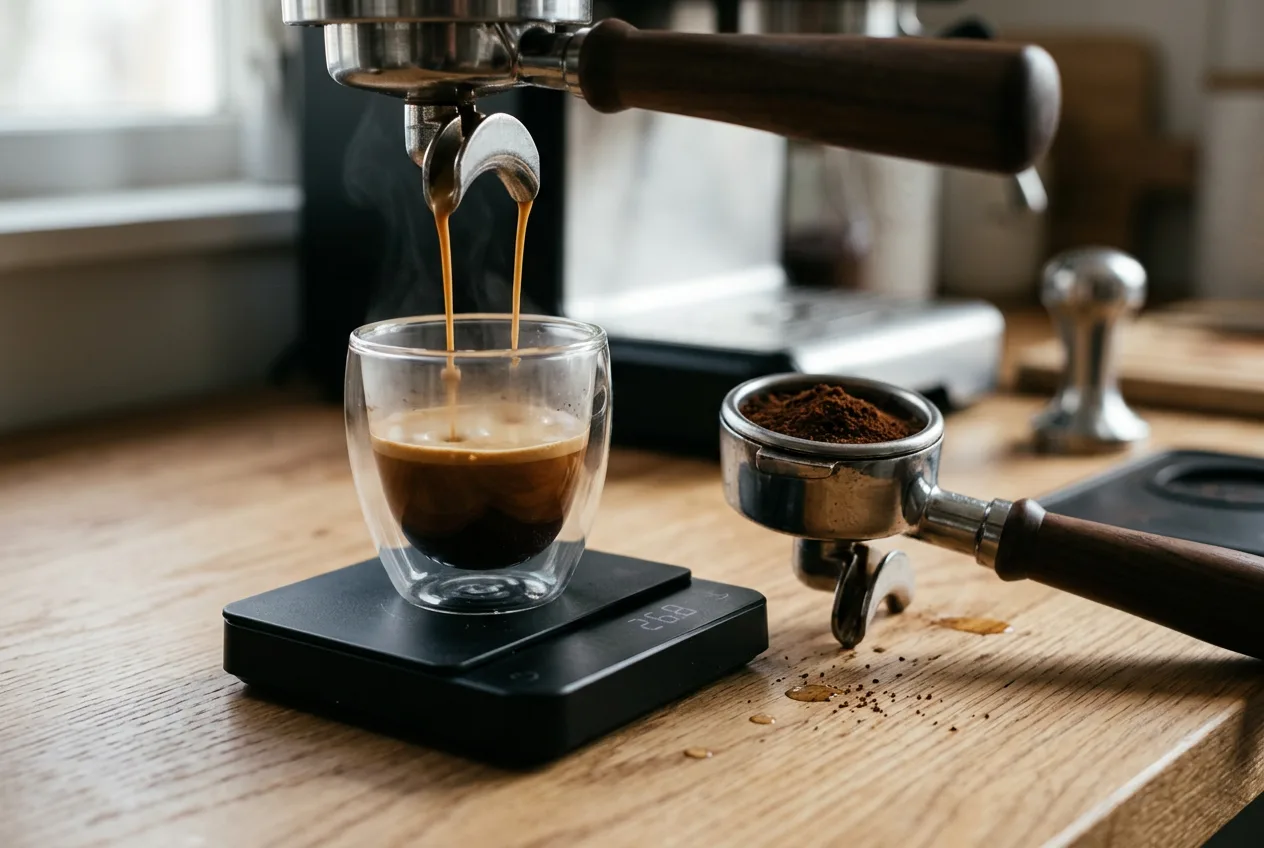
Weight is more reliable than volume, because crema makes volume misleading. A fresh shot can look twice as big as it really is because of all the foam on top.
Liquid out from an 18 g dose
Weights of the finished espresso, measured on a scale under the cup.
Older definitions use volume instead: around 1 fl oz (30 ml) for a single espresso, about half that for a single ristretto and about double for a single lungo. Those still work as a rough guide if you don't have a scale.
A small digital scale is one of the cheapest upgrades you can make for espresso. Put it under the cup, zero it, and pull the shot. Watching the numbers climb makes it easy to stop at exactly the ratio you want, and it removes the guesswork that crema adds when you judge by eye. After a week of weighing, most people start to recognize their target shot by sight anyway.
What is a ristretto?
Ristretto means "restricted" or "narrowed" in Italian. It's an espresso where the flow of water is cut short, so you get a smaller, more concentrated shot.
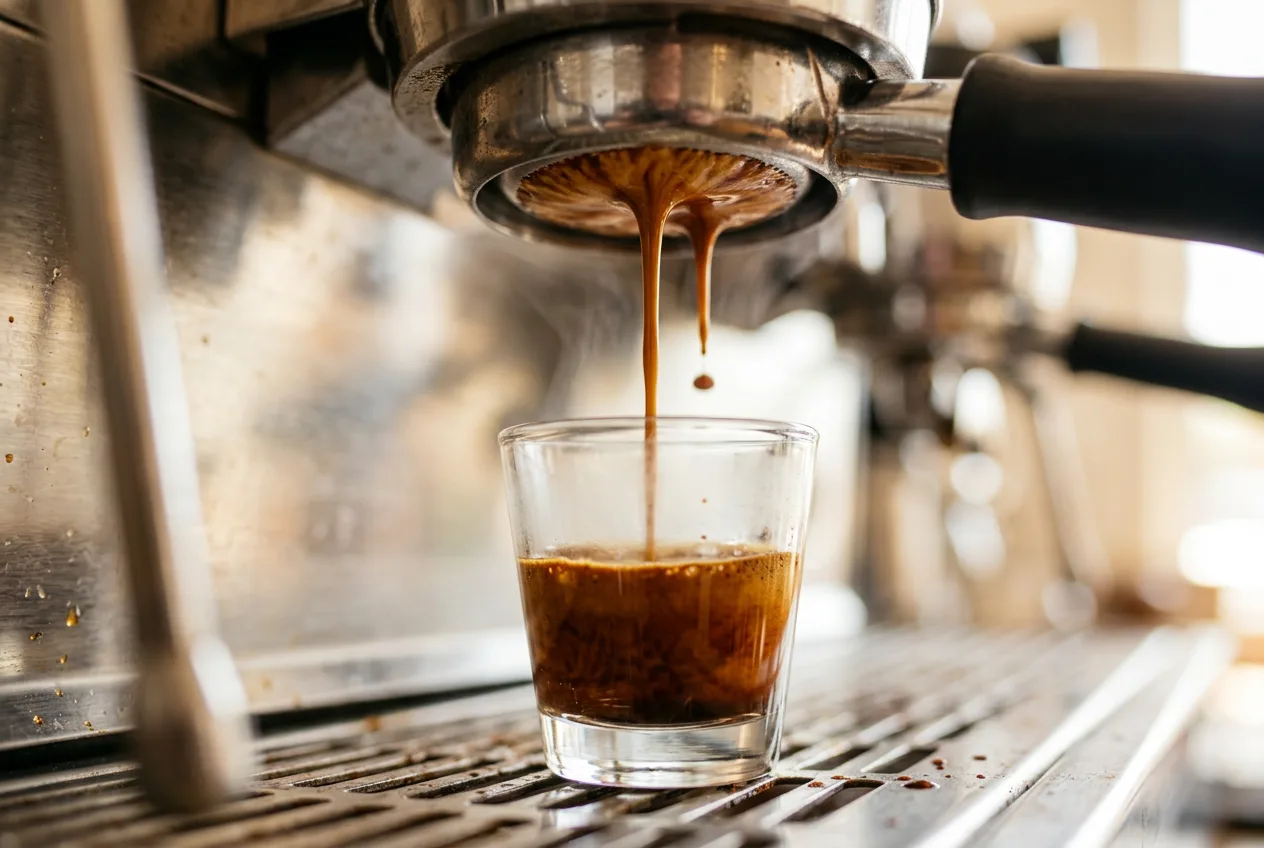
A ristretto uses the same amount of coffee as a normal espresso but roughly half the water. The result is about a sip or two of thick, syrupy coffee with a dense, dark crema.
Because the shot ends early, it captures the first, most soluble part of the extraction: acids, sugars and aromatic oils. It skips most of the heavier, more bitter compounds that come out later.
Two ways to make one
- Stop the shot early: keep your normal grind and simply end the shot at about half the usual weight. Quick and easy, but it can taste a little sharp.
- Grind finer: grind finer so the shot runs for a similar time to a normal espresso but produces less liquid. This is closer to the traditional Italian approach and usually tastes sweeter and rounder.
What it tastes like
Intense, sweet and heavy, with a lingering finish. Fruity coffees taste juicier, and chocolatey coffees taste like melted dark chocolate. Many people find a ristretto less bitter than a normal espresso, even though it's stronger.
Our tip: If a ristretto tastes sour rather than sweet, grind finer instead of just cutting the shot shorter. The extra contact time pulls more sweetness into that small volume.
What is an espresso?
Espresso is the standard. In Italy it's simply "un caffè." It's made by forcing hot water at about 9 bars of pressure through finely ground coffee for around 25 to 30 seconds.
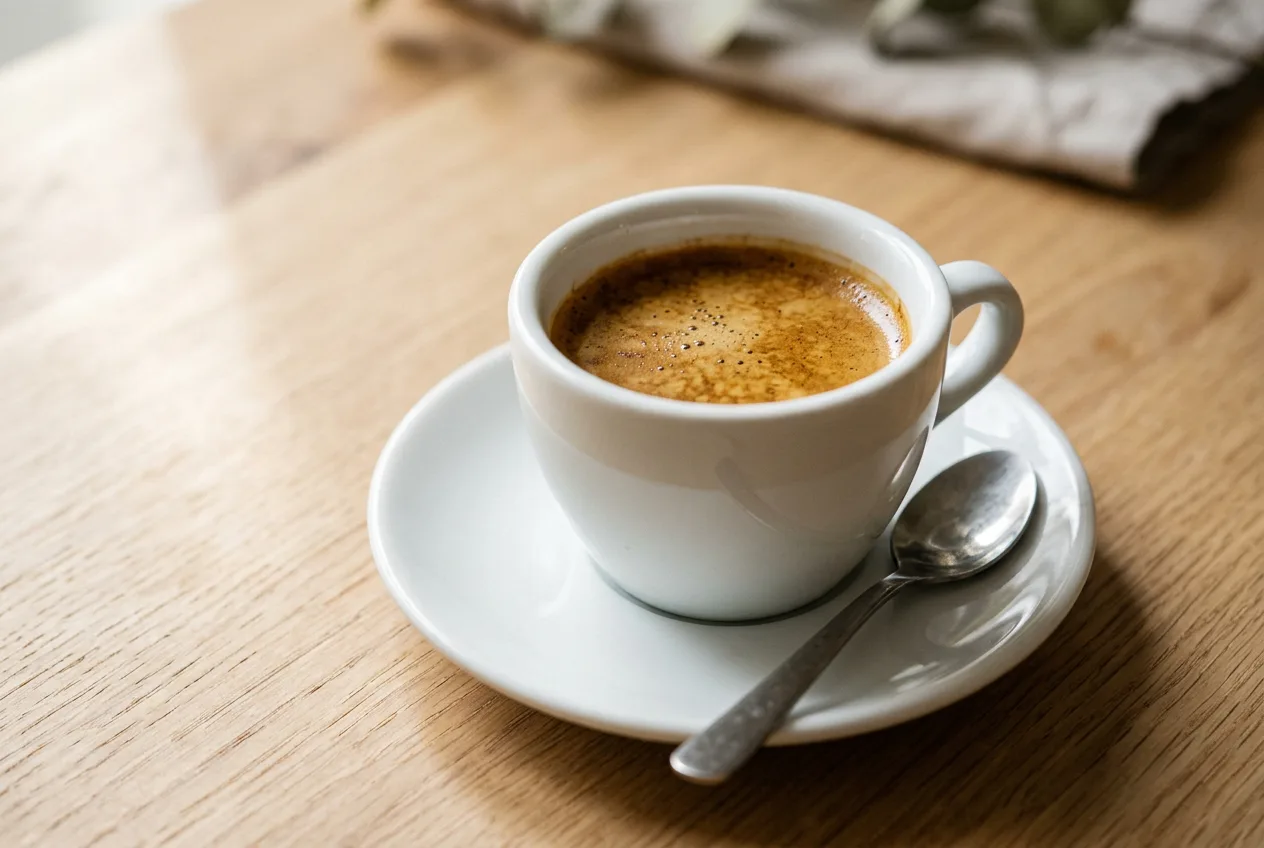
The modern benchmark is a 1:2 ratio. For a double shot, that's about 18 g of coffee producing about 36 g of espresso. A single shot is about 7 to 9 g producing 14 to 18 g, roughly 1 fl oz with crema.
The goal is balance. The shot runs long enough to collect plenty of sweetness and body, but stops before the heavy bitter compounds take over. You get acidity, sweetness and a pleasant bitterness in one small cup.
Single, double and the "doppio"
In Italy, a single shot is still the default. In most other countries, cafés pull doubles as standard and serve them as "espresso." A doppio is simply a double espresso.
When people outside Italy say "espresso," they usually mean a double. When I give numbers in this guide, I'm using a double unless I say otherwise.
What is a lungo?
Lungo means "long." It's an espresso where you let more water run through the coffee, so the shot is larger and lighter. In France it's often called a café allongé.
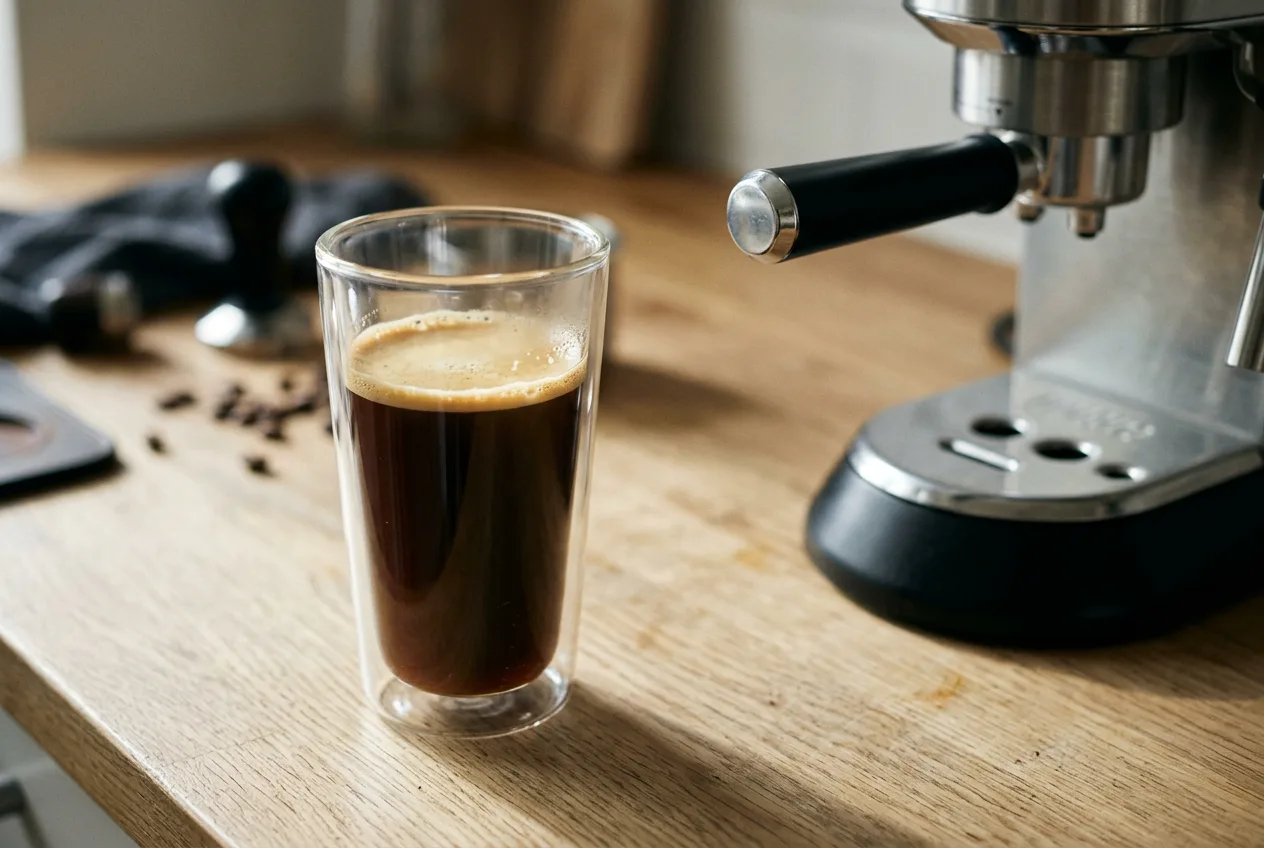
A lungo uses the same dose as an espresso but two to three times the water, so the ratio is around 1:3 to 1:4. The shot runs for 40 seconds to a minute or more.
All that extra water keeps extracting after a normal espresso would stop. It dilutes the shot and pulls out more of the late, bitter and drying compounds.
What it tastes like
Lighter in body, less intense and less syrupy, but often more bitter and a little drier. With the right coffee it can be lovely: a mellow, long drink that's still clearly espresso. With the wrong coffee it tastes harsh and hollow.
Our tip: If your lungo tastes harsh, grind a little coarser than you would for a normal espresso. That lets the extra water pass through faster and keeps bitterness under control.
How they taste side by side
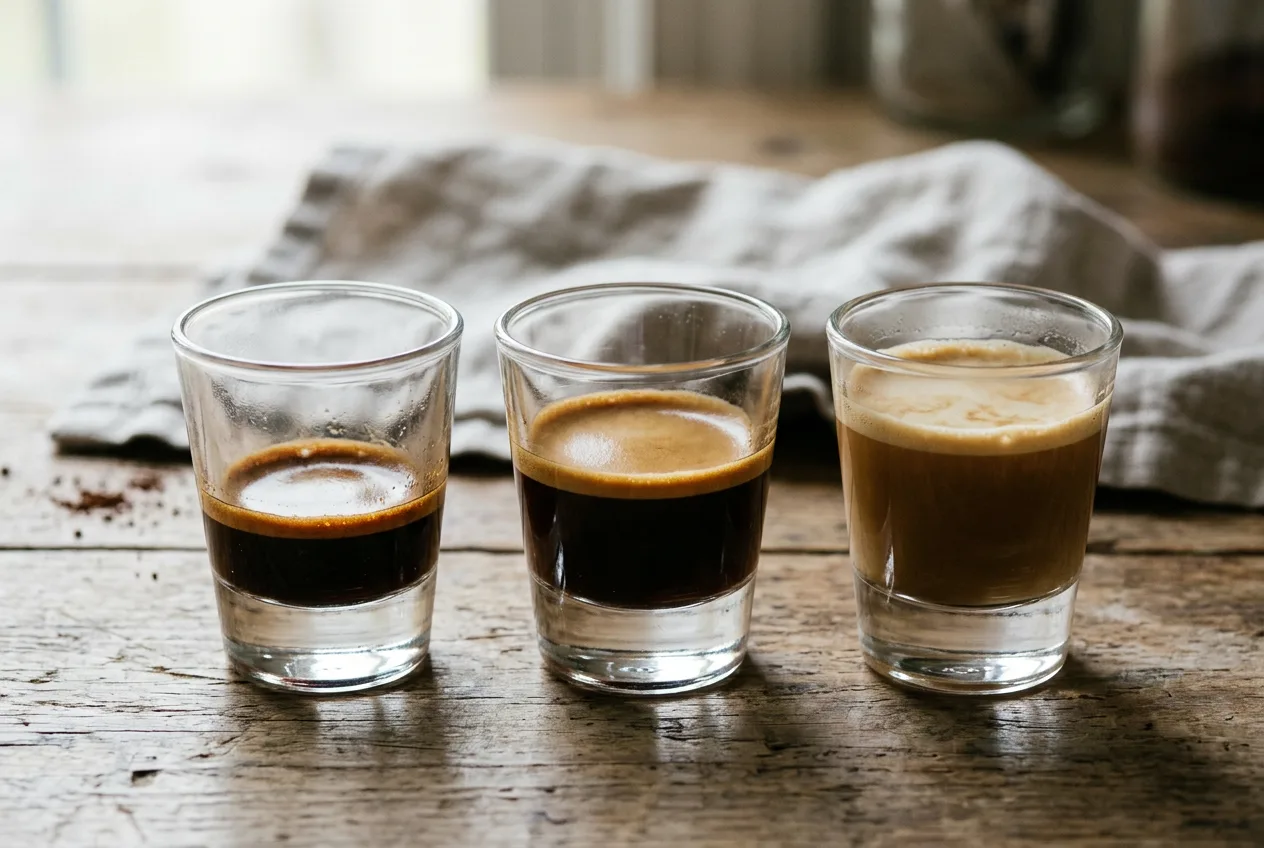
Pulled from the same beans, the three shots taste like close relatives with very different personalities.
| Trait | Ristretto | Espresso | Lungo |
|---|---|---|---|
| Intensity | Highest | High | Moderate |
| Sweetness | High | Medium to high | Lower |
| Acidity | Most noticeable | Balanced | Muted |
| Bitterness | Lowest | Moderate | Highest |
| Body | Syrupy | Full | Light |
| Finish | Long and sweet | Medium | Drier |
When I ran this test with a medium-roast Colombian, the ristretto tasted like cherry and dark chocolate syrup, the espresso like milk chocolate with a bit of red fruit, and the lungo like cocoa powder with a dry, slightly woody finish.
Why the taste changes so much
The reason comes down to extraction order. Hot water doesn't dissolve everything from the coffee at once.
- First come acids and aromaticsBright, fruity and fragrant compounds dissolve quickly at the start of the shot.
- Then sugars and bodySweetness, caramel notes and oils follow in the middle.
- Last come bitter and drying compoundsHeavier compounds and tannins dissolve slowly near the end.
A ristretto stops early, so it's mostly the first two stages, packed into a small volume. An espresso goes a bit further for balance. A lungo runs well into the third stage, adding bitterness while diluting everything with extra water.
I go deeper into extraction and how to taste it in acidity and bitterness in coffee.
Which has the most caffeine?
Most people assume the most intense-tasting shot, the ristretto, has the most caffeine. It's actually the other way round, although the differences are smaller than you might expect.
Caffeine dissolves easily, so most of it comes out in the first part of the shot. A longer shot keeps pulling a little more. So, with the same dose:
- Ristretto: slightly less total caffeine, because the shot stops early.
- Espresso: the baseline, around 60 to 65 mg for a single and roughly double for a double, though it varies a lot with the beans.
- Lungo: slightly more total caffeine, because extra water keeps extracting.
Approximate total caffeine, same 18 g dose
Illustrative only. The dose and the beans affect caffeine far more than shot length. Robusta blends carry roughly twice the caffeine of arabica.
In practice, the beans and the dose matter far more than the shot style. A double ristretto of a robusta blend can easily have more caffeine than a single lungo of 100% arabica.
For a broader look at caffeine in different drinks, see caffeine myths debunked.
Strength isn't the same as caffeine
"Strong" coffee can mean two different things, and that's where the confusion comes from.
Strength in coffee terms means concentration: how much dissolved coffee there is per sip. By that measure, the ristretto is the strongest and the lungo is the weakest.
Caffeine is the total amount of stimulant in the whole cup. By that measure, the lungo usually edges ahead, because there's more liquid and slightly more extraction.
How to pull a ristretto at home
You'll get the best ristretto with a burr grinder, a scale and fresh beans. Here's my method for a double.
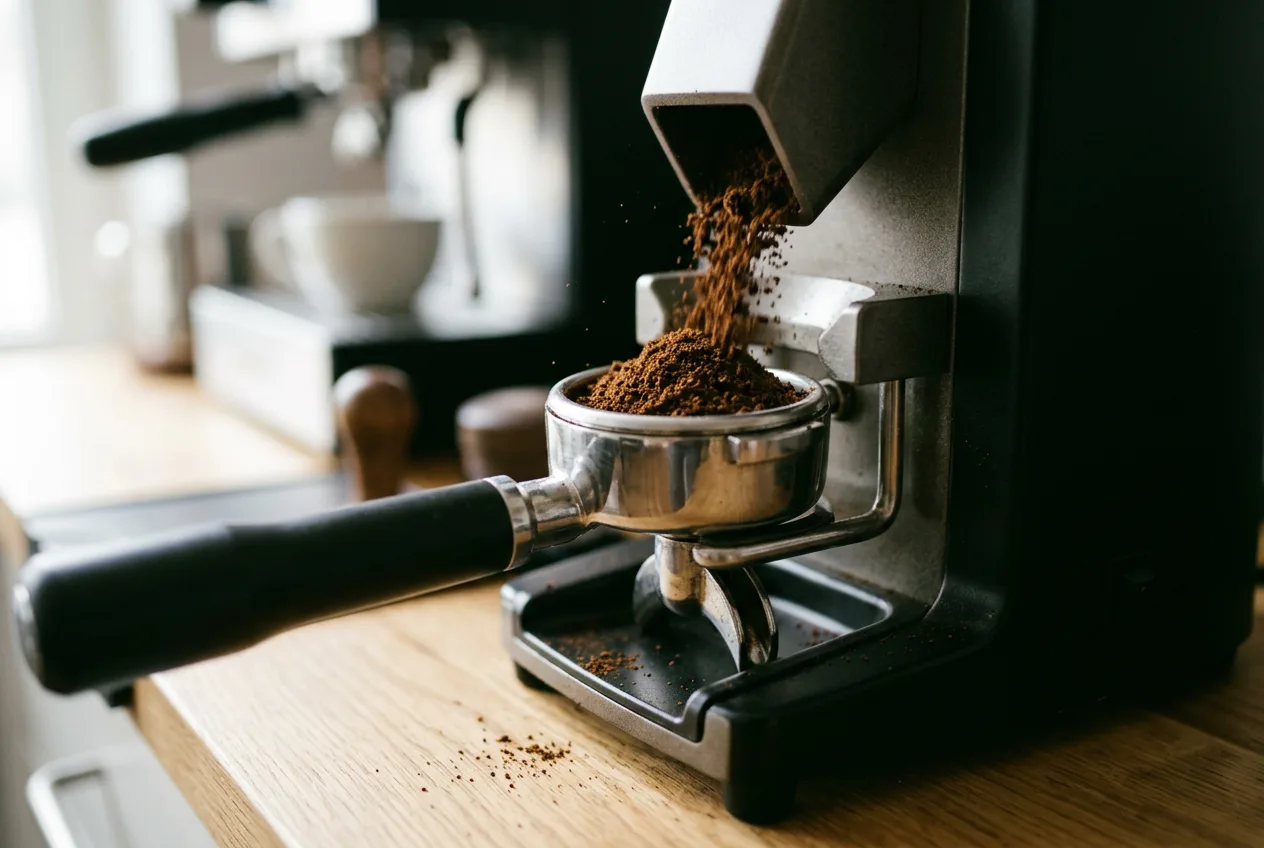
- Dose 18 g of coffeeUse the same dose as your normal double, so you can compare.
- Grind a few steps finerFiner than your normal espresso setting, so the shot runs slowly.
- Distribute and tamp evenlyA level, even puck matters even more with a fine grind, because it's easier to choke.
- Aim for 18 to 27 g outPut the cup on a scale and stop the shot at your target weight.
- Check the timeAim for about 20 to 30 seconds. Much faster and it'll taste sour; much slower and it'll taste harsh.
If your machine has a "ristretto" or small-cup button, it usually just stops the water earlier. That works, but you'll often get better results by also grinding finer.
How to pull a standard espresso
- Warm up the machineGive it 15 to 30 minutes and run a blank shot to heat the group and portafilter.
- Dose 18 g into a double basketGrind fresh, straight into the portafilter.
- Distribute and tampBreak up clumps, level the bed and tamp firmly and evenly.
- Brew to about 36 gStart the shot and stop it at roughly double the dose by weight.
- Aim for 25 to 30 secondsFaster and sour means grind finer. Slower and bitter means grind coarser.
If shots taste wrong, my guide to why coffee tastes bitter or sour walks through the fixes.
How to pull a lungo
The lungo is the trickiest of the three to get right, because it's easy to over-extract.
- Dose 18 gThe same dose as your espresso.
- Grind slightly coarserA step or two coarser than your espresso setting, so the extra water can flow freely.
- Brew to 54 to 72 gThat's three to four times the dose.
- Aim for 35 to 50 secondsIf it runs much longer, it'll turn harsh. Go coarser.
- Taste the finishA good lungo should finish clean, not dry and astringent.
Our tip: Lighter roasts often make better lungos than dark roasts. They extract more slowly, so the extra water brings out more sweetness and fruit instead of just more bitterness.
Best beans for each shot
Different beans shine in different shot lengths. These are the pairings that work best in my experience.
| Shot | Works best with | Why |
|---|---|---|
| Ristretto | Medium to medium-dark roasts, chocolatey blends | Concentrates sweetness and body; very light roasts can taste sharp |
| Espresso | Almost anything roasted for espresso | The ratio most beans are developed for |
| Lungo | Light to medium roasts, fruity single origins | Extra water draws out sweetness without as much bitterness |
Dark roasts are the hardest to pull long. They extract fast, so a lungo of a dark Italian blend often tastes burnt and ashy. If you love dark roasts, stick to ristretto and espresso.
Bean freshness matters for all three. Very fresh beans make foamy, unstable shots, and stale beans make thin, flat ones. More in espresso crema explained.
Ristretto, espresso and lungo in milk drinks
Milk changes which shot works best. Milk softens bitterness and mutes acidity, so it rewards a sweet, concentrated base.
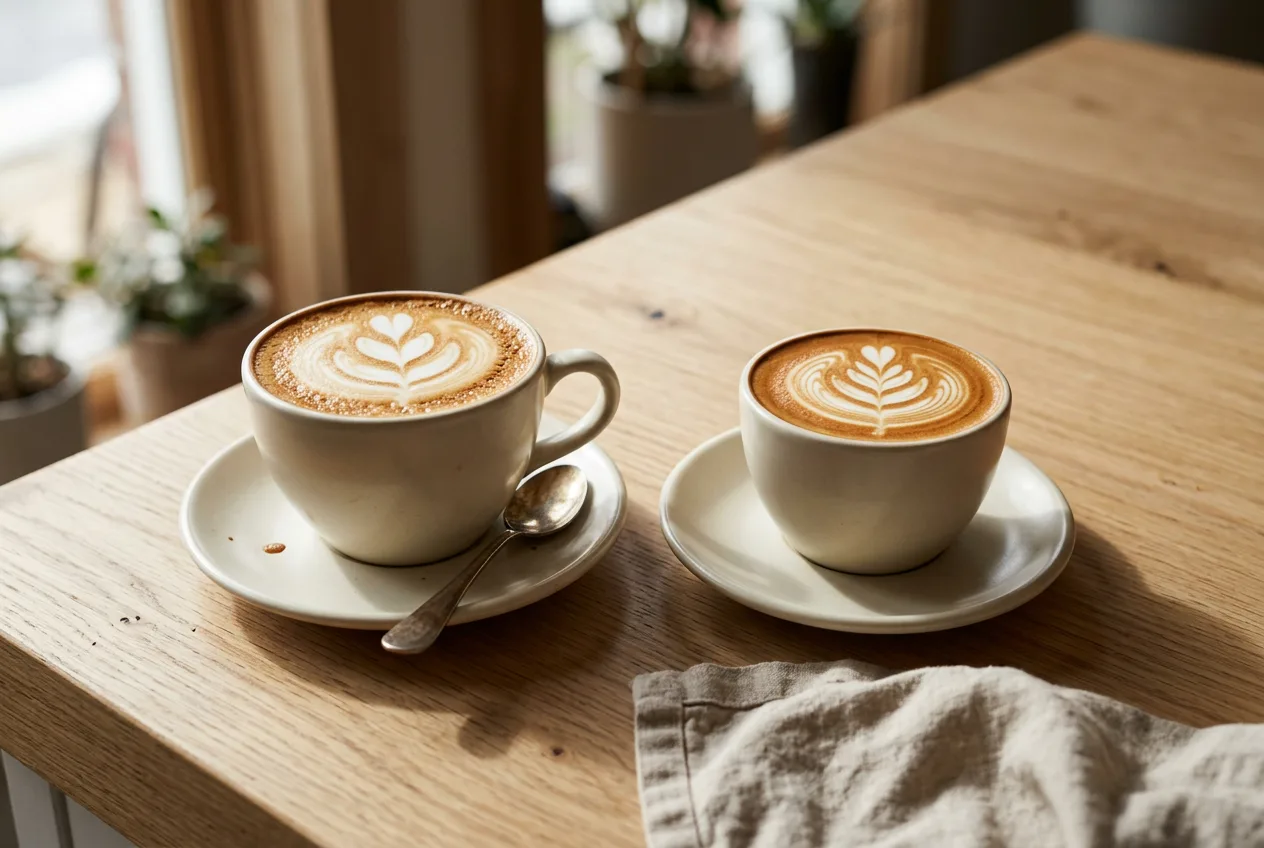
- Ristretto shots are popular in flat whites and cortados. Their sweetness and body cut through milk without much bitterness.
- Standard espresso is the base for most cappuccinos and lattes and works well for almost everything.
- Lungo shots are rarely used with milk. The extra water thins out the coffee flavor, and the extra bitterness can taste flat under milk.
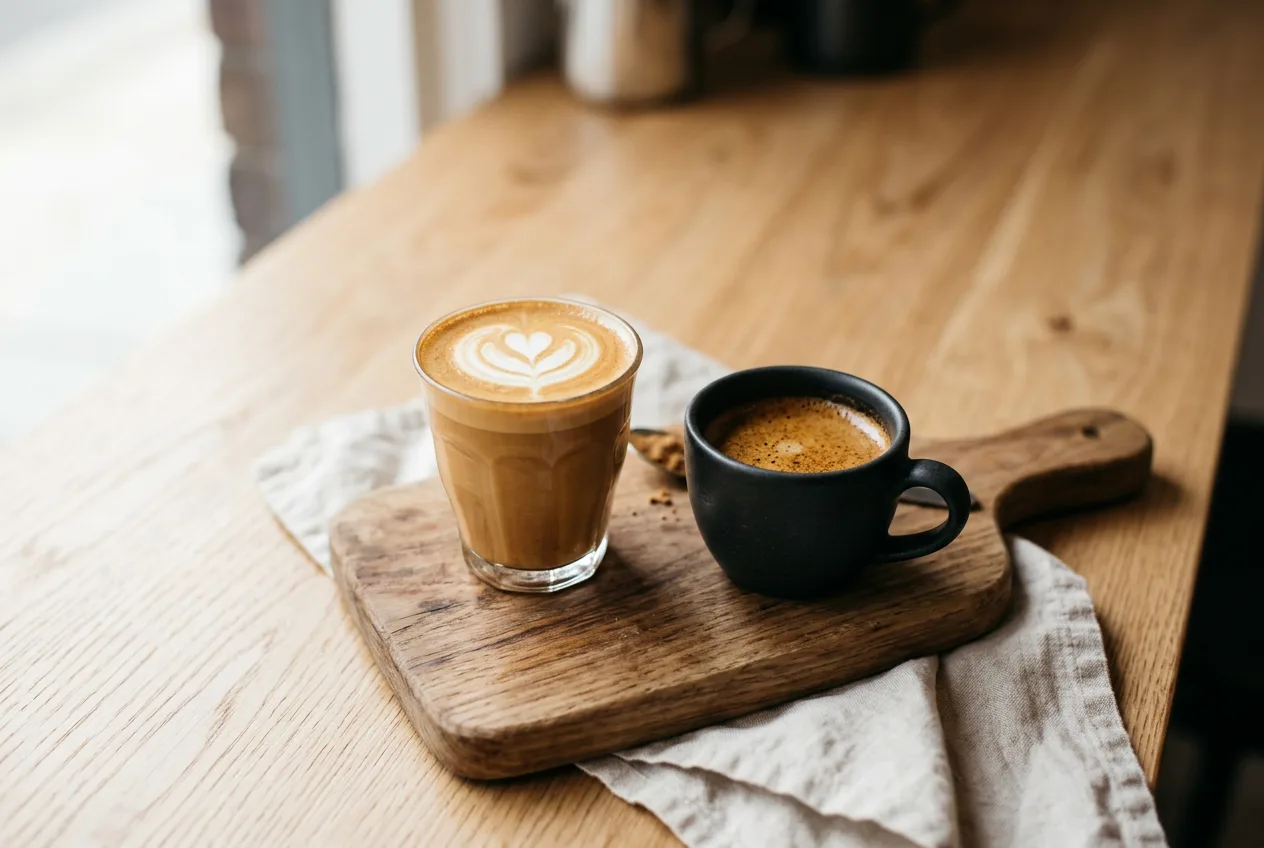
If your latte tastes weak or milky, switching to a double ristretto is one of the easiest fixes. You get more coffee flavor in the cup without adding bitterness.
Lungo vs americano: not the same drink
People often confuse a lungo with an americano because both are longer, lighter espresso drinks. But they're made very differently.
| Feature | Lungo | Americano |
|---|---|---|
| How it's made | Extra water runs through the coffee | Hot water is added to a finished espresso |
| Extraction | Higher, more bitter compounds | Same as a normal espresso |
| Size | Small to medium, about 2 to 3.5 fl oz | Larger, often 6 to 12 fl oz |
| Taste | More bitter, fuller | Cleaner, more like strong filter coffee |
If you want a bigger, milder black coffee from an espresso machine, an americano is usually the better choice. It keeps the balanced extraction of a normal shot and simply dilutes it.
Capsule machine sizes explained
Capsule machines use the same names, but the sizes are set by the machine and the capsule rather than by weight.
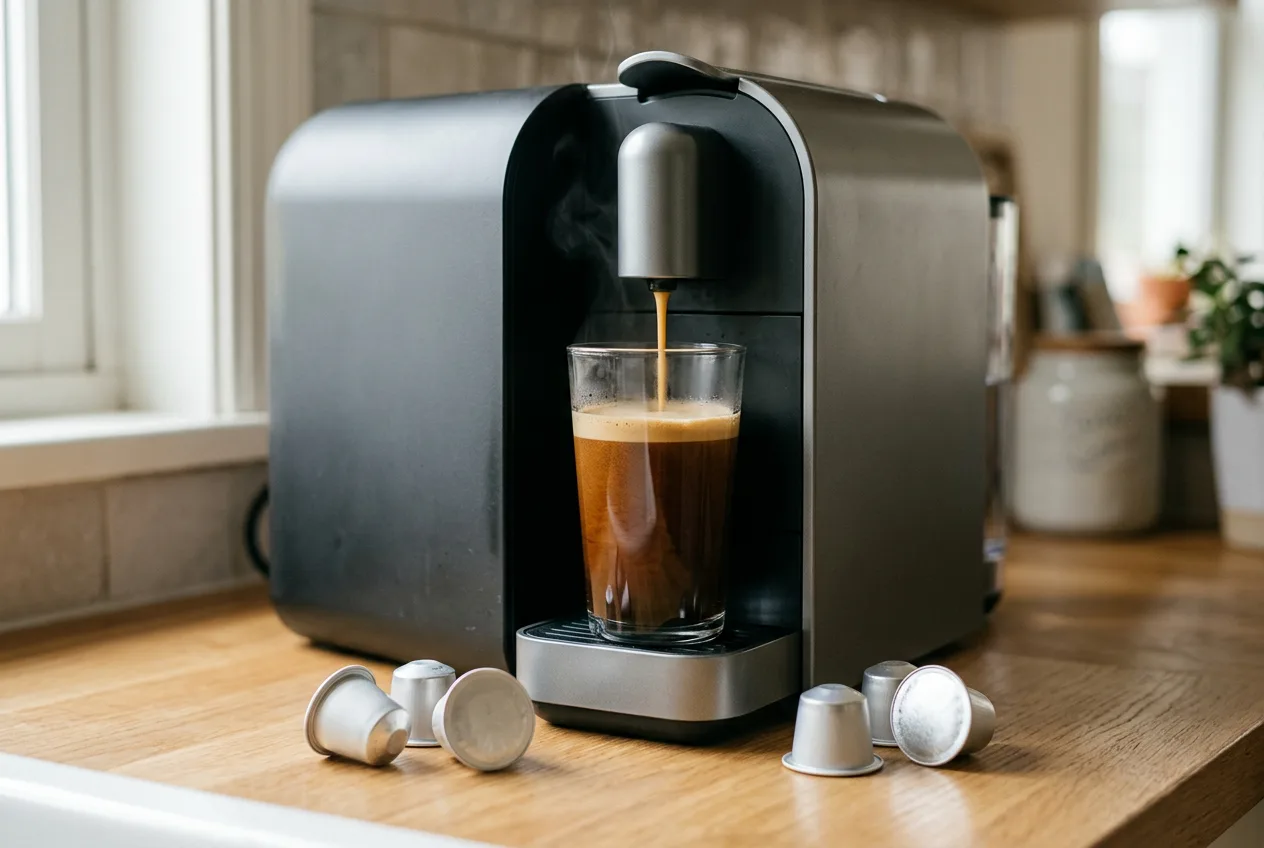
| Button or capsule | Typical volume | Notes |
|---|---|---|
| Ristretto | About 0.85 fl oz (25 ml) | Intense and short |
| Espresso | About 1.35 fl oz (40 ml) | Longer than a café espresso |
| Lungo | About 3.7 fl oz (110 ml) | Use lungo capsules for this size |
A common mistake is running a small espresso capsule on the lungo setting. Lungo capsules are blended and ground for the longer flow. Pushing that much water through an espresso capsule usually tastes thin and bitter.
How Italians order these shots
In Italy, coffee is usually drunk standing at the bar, quickly, and without much fuss. The words are simple.
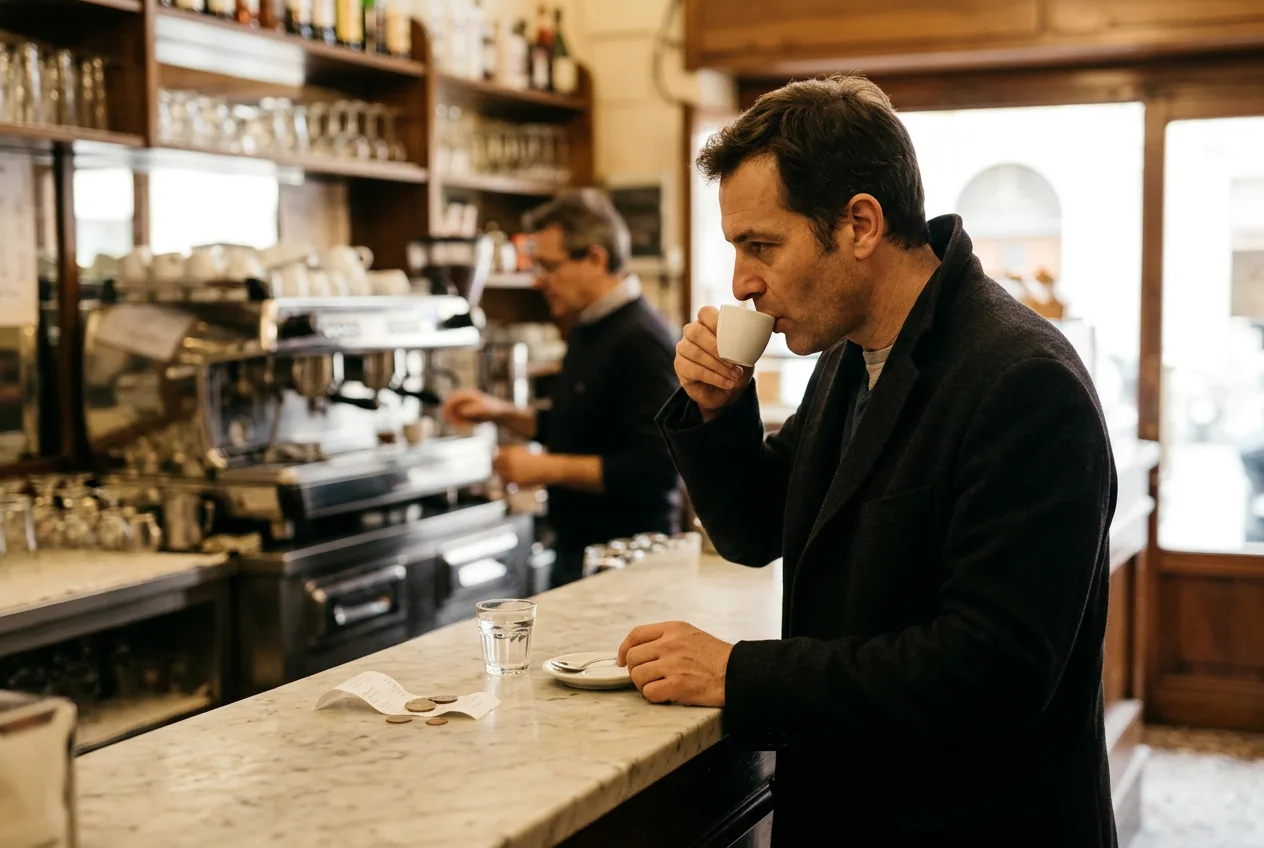
- "Un caffè" gets you a single espresso. You don't need to say "espresso."
- "Un caffè ristretto" or "un caffè corto" gets a shorter, stronger shot.
- "Un caffè lungo" gets a longer shot, made with more water through the coffee.
- "Un caffè doppio" gets a double.
Italian ristretto is often made by restricting the water rather than weighing to a ratio, and Italian espresso is typically smaller than the doubles served in many other countries. Don't be surprised if a café espresso in Rome is about half the size of one at home.
Which one should you order?
My everyday choice is a double espresso at about 1:2. For flat whites I switch to a ristretto. And when a bright, light-roasted coffee lands on my desk, I like to try it as a lungo, which can taste almost like a concentrated pour-over.
Where these shots come from
Espresso was born in Italy in the early 1900s, but the shot as we know it took shape after the Second World War, when lever machines began brewing at high pressure. Those machines had a natural limit. One pull of the lever pushed a fixed amount of water through the coffee, so a "normal" shot was a short, intense drink.
The ristretto grew out of that tradition. In parts of southern Italy especially, customers liked their coffee short and strong, and baristas restricted the water to give it to them.
The lungo moved in the other direction. As espresso spread across Europe, many drinkers wanted something a little bigger that still came from the espresso machine. Letting more water run through the coffee was the simplest way to do it. In France and Switzerland, longer espresso-machine coffees became everyday drinks, known as café allongé or café crème.
Later, the specialty coffee movement brought scales and ratios into the picture. Baristas started defining shots by weight rather than by the length of the pour, and the 1:1, 1:2 and 1:3 rules of thumb became the common language they are today.
Single vs double: dose and basket size
All three shots can be made as a single or a double. The basket you use sets the dose, and the ratio sets the output.
| Basket | Typical dose | Ristretto out | Espresso out | Lungo out |
|---|---|---|---|---|
| Single | 7 to 9 g | 8 to 13 g | 14 to 18 g | 24 to 32 g |
| Double | 16 to 20 g | 18 to 27 g | 32 to 40 g | 54 to 72 g |
| Triple | 20 to 22 g | 22 to 33 g | 40 to 44 g | 66 to 88 g |
Single baskets are notoriously hard to get right, because the puck is shallow and easy to channel. Most home baristas get more consistent results by always pulling a double and splitting it if they want a smaller drink.
Whatever basket you use, keep the dose the same and change only the output. That's how you get a fair comparison between the three shots.
Temperature and pressure for each shot
Most home machines don't let you change pressure, and you don't need to. But temperature is worth a thought if your machine allows it.
- Ristretto: a slightly higher temperature can help extract more sweetness in the short time, especially with medium roasts.
- Espresso: around 195 to 205°F is the usual range. Lighter roasts like the top end, darker roasts the bottom.
- Lungo: a slightly lower temperature helps keep the extra water from pulling out too much bitterness, especially with darker beans.
Pressure stays at the standard 9 bars or so for all three. Some advanced machines can profile pressure, starting low and ramping up, which can make lungos noticeably smoother. That's a nice extra, not a requirement.
Related short and long espresso drinks
Ristretto, espresso and lungo sit inside a wider family of espresso drinks. Here's how the most common relatives fit in.
| Drink | What it is | Closest to |
|---|---|---|
| Doppio | A double espresso | Espresso |
| Caffè corto | A short espresso | Ristretto |
| Café allongé | French name for a long espresso | Lungo |
| Café crème (Swiss style) | A long espresso-machine coffee, often 4 to 6 fl oz | A very long lungo |
| Americano | Espresso plus hot water | Diluted espresso |
| Long black | Espresso poured over hot water | Diluted espresso |
| Cortado | Espresso with a similar amount of warm milk | Espresso or ristretto base |
The key split is whether extra liquid passes through the coffee (lungo, allongé, café crème) or gets added afterwards (americano, long black). The first changes the extraction; the second only changes the strength.
Cheat sheet: my starting recipes
Use these as a starting point, then trust your taste. Every coffee and every machine is a little different.
Pros and cons of each shot
Ristretto
- Pros: sweetest and most intense; low bitterness; excellent in milk drinks; highlights chocolate and fruit.
- Cons: very small; can taste sharp or sour if under-extracted; easy to choke the machine with too fine a grind.
Espresso
- Pros: balanced; the ratio most beans are roasted for; the easiest to dial in and the most versatile.
- Cons: can be too intense for some people black; less forgiving of stale beans than a milk drink.
Lungo
- Pros: bigger, gentler black drink; brings out a different side of light roasts; slightly more caffeine.
- Cons: easily turns bitter and dry; works poorly with dark roasts; usually not great with milk.
Which is gentlest on your stomach?
People with sensitive stomachs often ask me which shot is easiest to drink. There isn't a medical answer for everyone, but a few patterns hold.
A ristretto has less liquid and slightly less caffeine, which some people find easier. But it's also the most concentrated and can taste more acidic, which others notice more.
A lungo is more diluted, but it carries more of the bitter, drying compounds and a little more caffeine. Some people find that harsher.
If coffee bothers your stomach, drinking it with food, choosing a medium roast and keeping the total caffeine moderate usually matter more than which shot you choose. If it's a regular problem, check with your doctor. My guide to caffeine myths covers the gut side of coffee in more detail.
Ordering outside Italy
The names travel, but the drinks don't always match. A few things to expect:
- In the US, UK and Australia, "espresso" in a specialty café is usually a double, around 1.5 to 2 fl oz. A ristretto may be a double ristretto unless you ask for a single.
- In France, "un café" is an espresso, and "un allongé" is a lungo-style coffee.
- In Switzerland and Germany, a café crème or Schümli is a long, mild espresso-machine coffee, closer to a very long lungo.
- In chain coffee shops, "lungo" may not appear at all, but most baristas will pull one if you ask for a "long shot."
When in doubt, describe what you want: "a short, strong shot" or "a longer, lighter shot." A good barista will know what to do.
When I drink each one
For what it's worth, here's how these fit into my own day. A double espresso is my first coffee, usually black, to taste whatever I'm testing.
Mid-morning, if I want something with milk, I make a flat white with a double ristretto. It keeps the coffee front and center.
In the early afternoon, when I want a longer drink but not a full mug of filter coffee, I'll pull a lungo of a light roast. It's a slower, more relaxed cup. After that, it's decaf.
Is a ristretto just an under-extracted espresso?
This is a long-running debate among coffee people. Technically, a ristretto does extract a smaller share of the coffee than a standard espresso, because less water passes through. By the numbers, it's "less extracted."
But under-extracted, as a criticism, means the coffee tastes sour, thin and unfinished. A well-made ristretto doesn't. It tastes sweet, rich and complete, because a finer grind or a longer contact time lets it reach the sugars even with less water.
The same goes for the lungo. It's "more extracted," but a good lungo isn't harsh. It's balanced for its length.
So the useful question isn't how extracted a shot is. It's whether it tastes balanced for what it's meant to be. If a ristretto is sour, push it a bit further. If a lungo is bitter, pull it back. The labels matter less than the cup.
Quick glossary
Try a three-shot tasting at home
The fastest way to understand these drinks is to pull all three from the same bag and taste them side by side. It takes ten minutes and teaches more than any article.
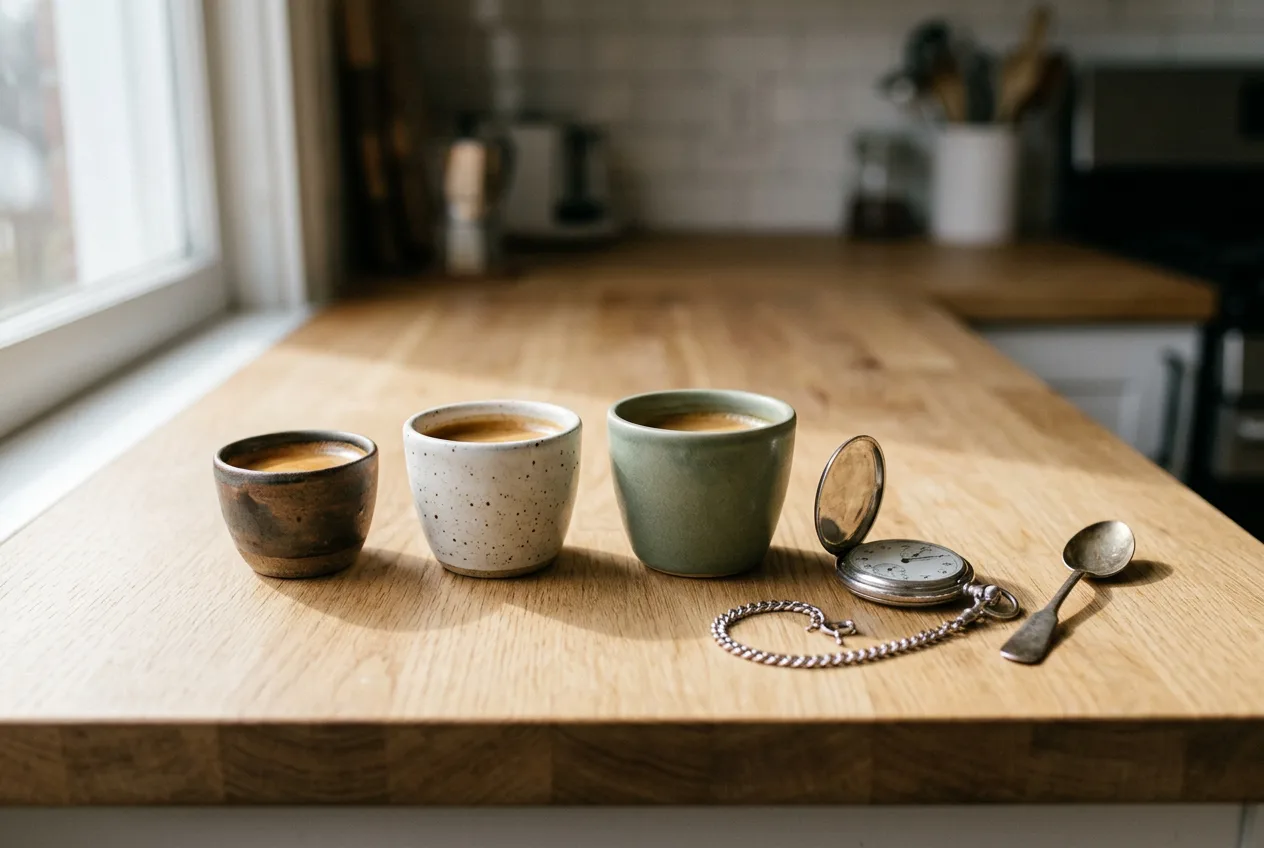
- Dial in a normal espresso firstGet a 1:2 shot you like, in about 25 to 30 seconds. Note the grind setting.
- Pull a ristrettoSame grind and dose, but stop at about 1:1. Taste it.
- Pull a lungoSame grind and dose, but run to about 1:3. Taste it.
- CompareNote intensity, sweetness, acidity, bitterness and body for each. Then taste them again after a minute, as they cool.
- Adjust and repeatTry the ristretto a step finer and the lungo a step coarser. See how much better each gets with its own grind.
Most people come away surprised by two things: how sweet a ristretto can be, and how quickly a lungo turns bitter if you don't adjust the grind.
Common mistakes with each shot
Ristretto mistakes
- Only cutting the shot short without grinding finer, which often tastes sour.
- Using very light roasts that need more water to taste sweet.
- Choking the machine with a grind that's far too fine.
Espresso mistakes
- Judging by volume instead of weight, which crema makes unreliable.
- Letting the shot blond into the cup after it turns pale.
- Changing grind, dose and tamp all at once.
Lungo mistakes
- Using the espresso grind, which leads to a very long, bitter shot.
- Using dark roasts that turn ashy with extra water.
- Running a normal capsule on the lungo button.
The verdict
Ristretto, espresso and lungo are the same drink at three points on a scale. Less water gives you a thick, sweet, intense ristretto. The classic 1:2 ratio gives you a balanced espresso. More water gives you a lighter, longer and more bitter lungo.
None is better than the others. Match the shot to the beans and the drink you're making: ristretto for sweetness and milk drinks, espresso for everyday balance, and lungo for light roasts and a gentler black coffee. Then adjust the grind for each one, and you'll be surprised how good all three can be.
New to espresso? Start with the standard shot until it tastes reliably good. Then try a ristretto and a lungo with the same beans. One morning of side-by-side tasting teaches you more about your coffee, your grinder and your own taste than weeks of reading.
Frequently asked questions
What is the difference between ristretto, espresso and lungo?
They use the same dose of coffee but different amounts of water. A ristretto is about a 1:1 ratio, an espresso about 1:2 and a lungo about 1:3 or more. Less water makes a sweeter, more intense shot; more water makes a lighter, more bitter one.
Which has more caffeine, ristretto or lungo?
With the same dose, a lungo has slightly more total caffeine, because the extra water extracts a little more. A ristretto is more concentrated per sip but has slightly less caffeine overall.
Is a ristretto stronger than an espresso?
It's more concentrated and more intense in flavor, so it tastes stronger. In total caffeine it's similar or slightly lower.
Is a lungo the same as an americano?
No. A lungo pushes more water through the coffee, so it extracts more bitter compounds. An americano is a normal espresso with hot water added afterwards, so it tastes cleaner.
How many ounces is a ristretto?
A single ristretto is usually around 0.5 to 0.7 fl oz, and a double around 0.7 to 1 fl oz. Capsule ristrettos are about 0.85 fl oz.
Why does my lungo taste bitter?
Usually because it's over-extracted. Grind a little coarser than for espresso so the extra water flows faster, and avoid very dark roasts.
Which shot is best for a flat white?
Ristretto shots are a popular choice. Their sweetness and body stand up to milk without adding much bitterness.
What does "corto" mean?
Corto means "short" in Italian. In practice, a caffè corto is very similar to a ristretto.

Related guides
Espresso crema explained Why coffee tastes bitter or sour Acidity and bitterness in coffee Caffeine myths debunked Burr vs blade grinderWritten by Michael Reynolds. Last updated November 19, 2026.