Mushroom Coffee Explained: What It Is, How It Tastes, Caffeine and What the Science Says
Mushroom coffee promises calm energy, better focus and fewer jitters. I drank it every morning for several weeks to see what it's really like. Here's what's in it, how it tastes, how much caffeine it has, what the research actually supports and whether it's worth the price.
We choose products independently. We may earn a commission through links on this page; your price stays the same. Affiliate policy
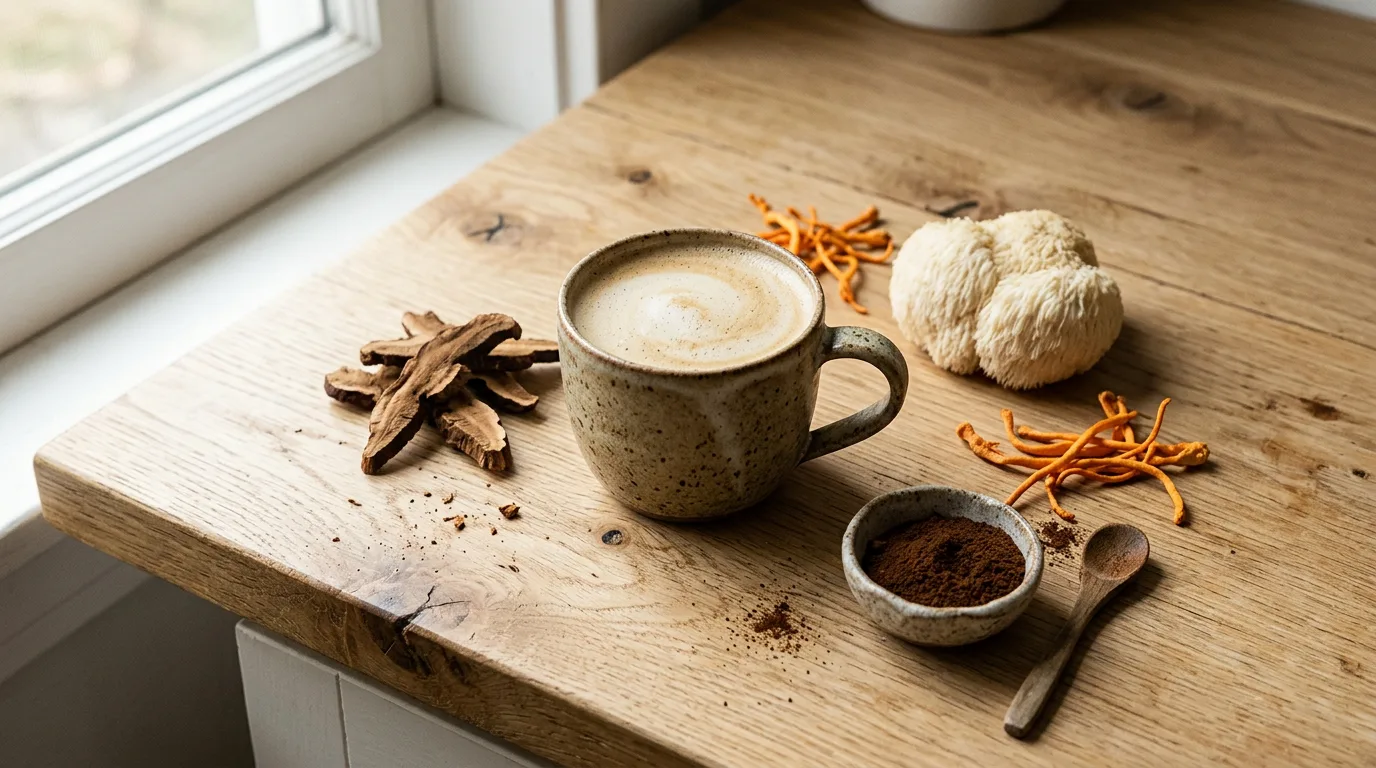
Mushroom coffee is usually a powder that mixes a smaller amount of coffee with dried mushroom powders and often coconut milk and MCT oil. A typical serving has about half the caffeine of a regular cup, so it feels gentler. It tastes earthy rather than like coffee, especially black. There's little solid human evidence that the mushrooms in these drinks, at these doses, deliver the big health benefits often advertised. It can be a pleasant, lower-caffeine morning drink, but it's expensive for what it is.
Why I tried it
If you've spent any time on social media lately, you've probably seen the ads. Someone holds up a mug, explains they quit coffee jitters, lost their afternoon crash, fixed their bloating and feel sharper than ever, all thanks to mushroom coffee.
I'm a coffee person. I love espresso, filter coffee and everything in between. But I also know that a third cup in the afternoon can make me jittery and ruin my sleep. So I was genuinely curious whether mushroom coffee could replace some of my caffeine without leaving me feeling like I'd given something up.
I bought a popular mushroom coffee blend and drank it every morning for several weeks. I tried it black, with milk, with cream and with oat milk. I tracked how I felt, how it tasted and how my energy held up. I also read through the research on the mushrooms it contains.
I went in with an open mind but a skeptical eye. I didn't expect a powder to transform my health, but I also didn't want to dismiss something so many people say they love. I wanted to know three simple things: does it taste good, does it feel different from coffee, and is there any solid reason to pay more for it? Those three questions shape everything that follows, and I've tried to separate what I personally experienced from what the evidence can actually support.
This guide is the honest result: what I liked, what disappointed me and what the evidence actually says.
What you'll learn
- What's actually in mushroom coffee and why.
- How it looks, smells and tastes, black and with milk.
- How much caffeine it has compared with coffee and tea.
- What the research supports, and what it doesn't.
- Whether it's worth the money, and cheaper ways to get similar results.
What is mushroom coffee?
Mushroom coffee is a coffee-like drink made by blending coffee with powders made from so-called functional mushrooms. These aren't the mushrooms you put on pizza, and they're definitely not psychedelic. They're species like lion's mane, reishi and cordyceps, which have a long history in traditional Asian medicine.
Most popular products are sold as an instant powder you mix with hot water. Many also include coconut milk powder and MCT oil, a type of fat derived from coconut or palm oil, for creaminess.
The pitch is simple: keep the comforting ritual of a warm morning drink, cut the caffeine roughly in half, and add ingredients that are marketed as supporting focus, calm, immunity and digestion.
There are other formats too: ground coffee mixed with mushroom extract for brewing, coffee pods, and caffeine-free "mushroom coffee" made from mushrooms and roasted grains with no coffee at all. This guide focuses on the popular instant powder type, but most of what follows applies to all of them.
Where mushroom coffee came from
Medicinal mushrooms have been used in teas and tonics in China, Japan, Korea and Siberia for centuries. Reishi, in particular, has a long history in traditional Chinese medicine.
Mushroom coffee as a drink has a more practical origin story. During the Second World War, when real coffee was scarce or rationed in places like Finland, people brewed chaga, a hard, dark fungus that grows on birch trees, as a coffee substitute. It was dark, bitter-ish and warm, which was close enough in hard times.
The modern version took off in the 2010s, when wellness brands began blending coffee with mushroom extracts and marketing them as "functional" drinks for focus and calm. Social media advertising did the rest, and mushroom coffee became one of the most visible wellness trends of the 2020s.
For more on the long history of drinks made to stand in for coffee, see coffee substitutes and alternatives.
The different kinds of mushroom coffee
Not every product called mushroom coffee works the same way. These are the main formats you'll see.
| Format | How you make it | Caffeine | Notes |
|---|---|---|---|
| Instant powder | Stir into hot water | Low to moderate | Most popular, often with coconut milk and MCT |
| Ground coffee blend | Brew like normal coffee | Close to regular coffee | Tastes most like coffee |
| Pods | Pod machine | Varies | Convenient, but adds pod waste |
| Coffee-free blend | Stir or brew | None or very low | Mushrooms with cacao, chicory or grains |
| Add-in powder | Add to your own coffee | Whatever your coffee has | Most control and often cheapest |
If you love real coffee flavor but want to try mushrooms, the ground blend or an add-in powder in your usual coffee is the gentlest introduction. If your goal is cutting caffeine, the instant powders or coffee-free blends make more sense.
Why people switch to mushroom coffee
Most people who try mushroom coffee aren't looking for a new flavor. They're looking for relief from side effects of regular coffee.
- Jitters and racing heart after a strong cup.
- Anxiety that seems worse with caffeine.
- Acid reflux or an upset stomach from coffee.
- The afternoon crash after a morning caffeine high.
- Sleep problems from caffeine late in the day.
These sensitivities often change with age, stress or health. People who once drank three strong cups without a thought may find that one now makes them shaky. Mushroom coffee offers a middle path: not quitting caffeine entirely, like switching to herbal tea or decaf, but cutting it down while keeping the ritual.
If you want to understand caffeine sensitivity better, my guides to how much coffee is too much and coffee and sleep cover the basics.
What's inside a typical blend
Recipes vary between brands, but the best-known instant blends follow a similar formula.
| Ingredient | Why it's there |
|---|---|
| Coffee (often organic) | Flavor and a reduced dose of caffeine |
| Mushroom powders | The "functional" ingredients the drink is named for |
| Coconut milk powder | Creaminess and a subtle sweetness |
| MCT oil powder | Body, creaminess and fast-absorbed fat |
| Sometimes cacao, cinnamon or turmeric | Flavor and marketing appeal |
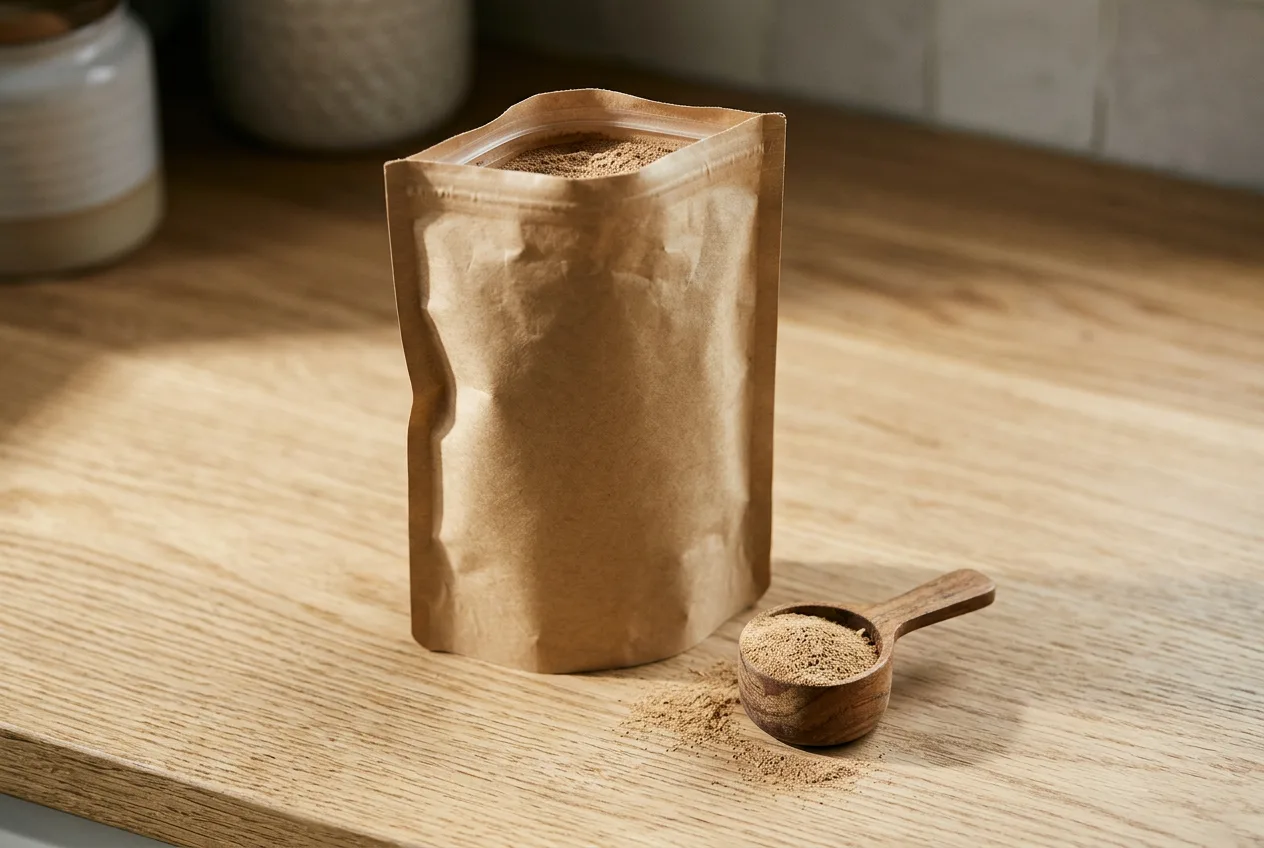
The coffee is there for flavor and some caffeine, but it's a smaller share than in a normal cup. The mushrooms are the headline, but as we'll see, they're often present in fairly small amounts. The coconut milk and MCT oil do most of the work in making the drink taste creamy.
The six mushrooms you'll often see
Many popular blends use some combination of these six mushrooms. Here's what each is traditionally associated with, and how strong the evidence really is.
| Mushroom | Marketed for | Human evidence |
|---|---|---|
| Lion's mane | Focus, memory, nerve health | Some small, early studies |
| Cordyceps | Energy, stamina, exercise | Some small, mixed studies |
| Reishi | Calm, stress, sleep | Limited and mixed |
| Turkey tail | Immunity, gut health | Mostly lab or specialized medical use |
| Shiitake | Immunity, general wellness | Limited |
| King trumpet | Antioxidants, general wellness | Very limited |
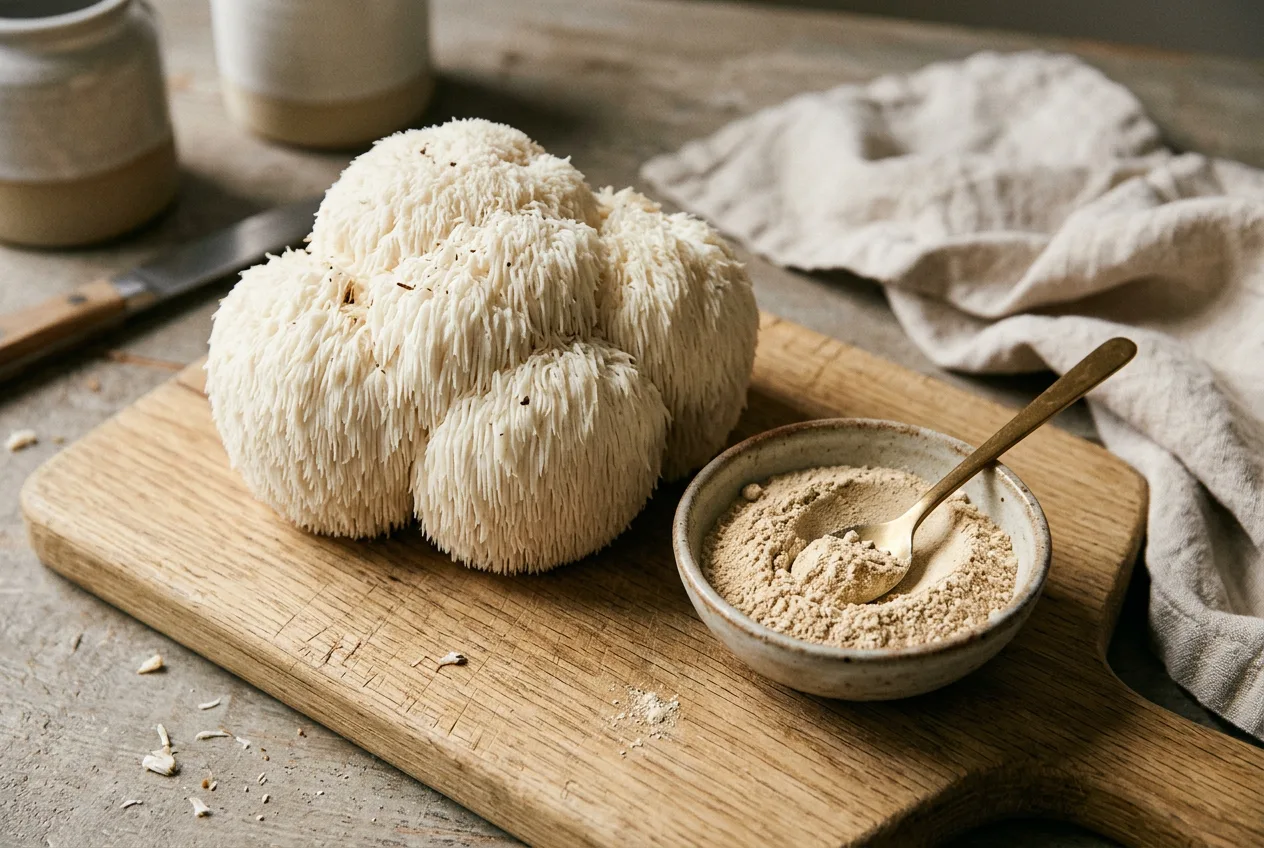
Lion's mane is the darling of the "focus" crowd. It's a shaggy white mushroom with cascading spines, and it's also a delicious cooking mushroom in its own right.
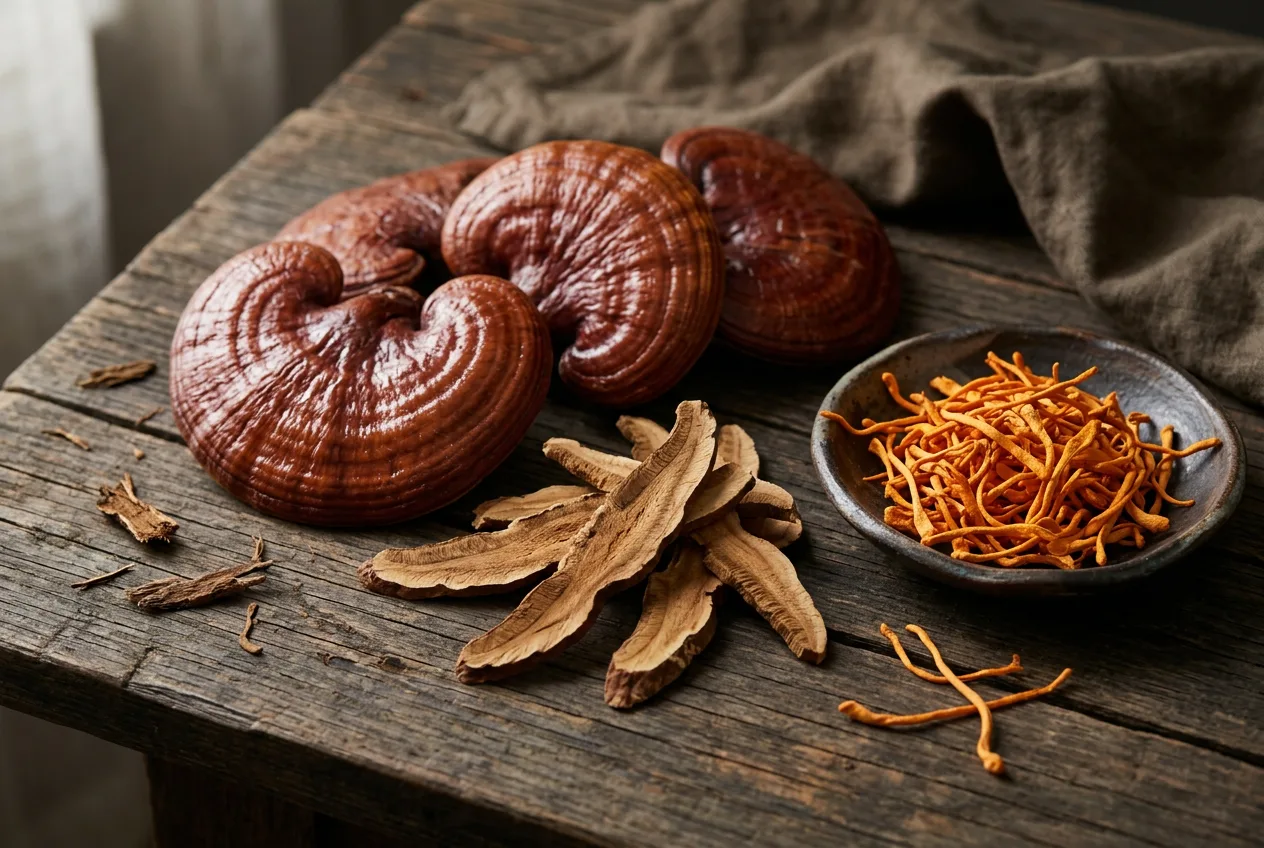
Reishi is a hard, glossy, woody mushroom that's far too tough to eat. It's traditionally used in teas and extracts and is associated with calm and stress relief. Cordyceps, often bright orange, is marketed for energy and endurance.
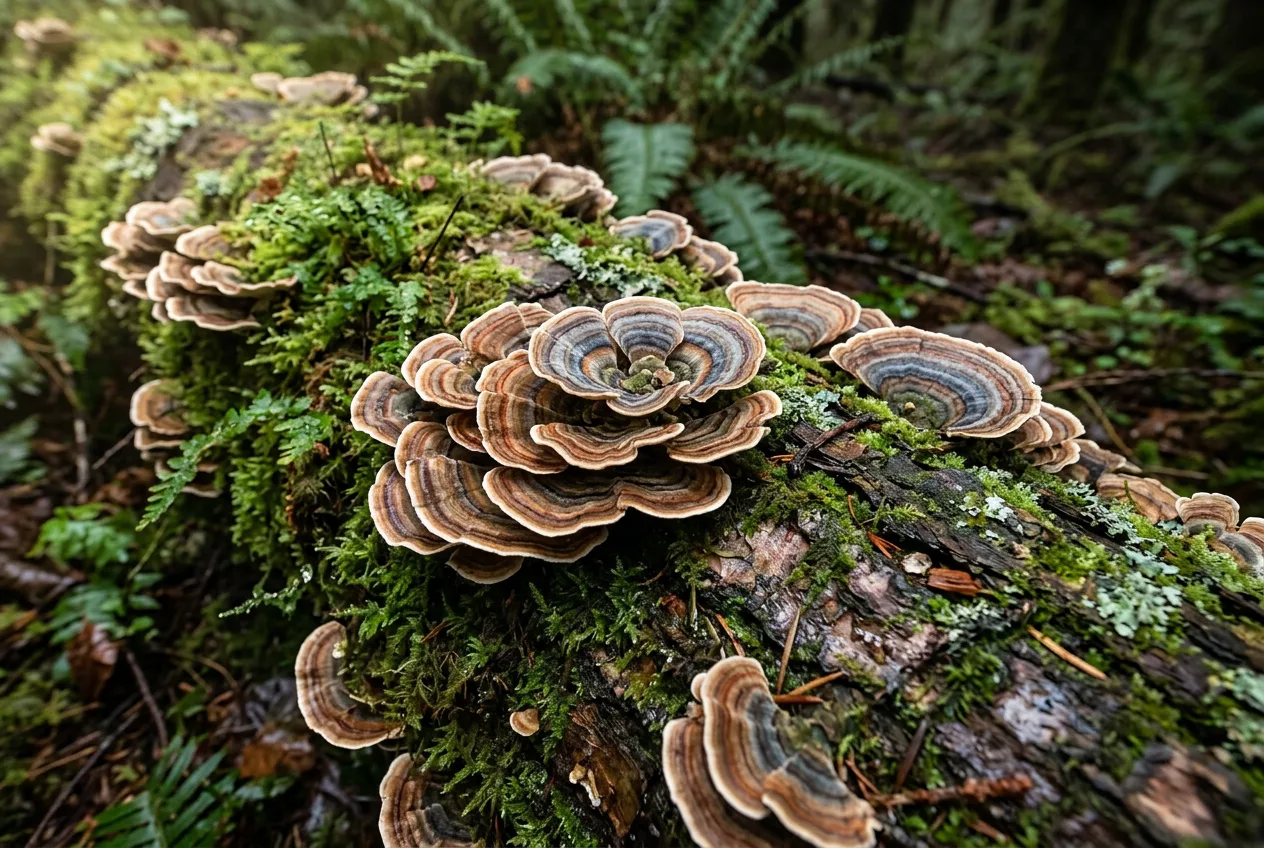
Turkey tail grows in striped, fan-like layers on dead wood. Specific extracts from it have been studied in medical settings, but that's very different from a sprinkle of powder in your morning drink.
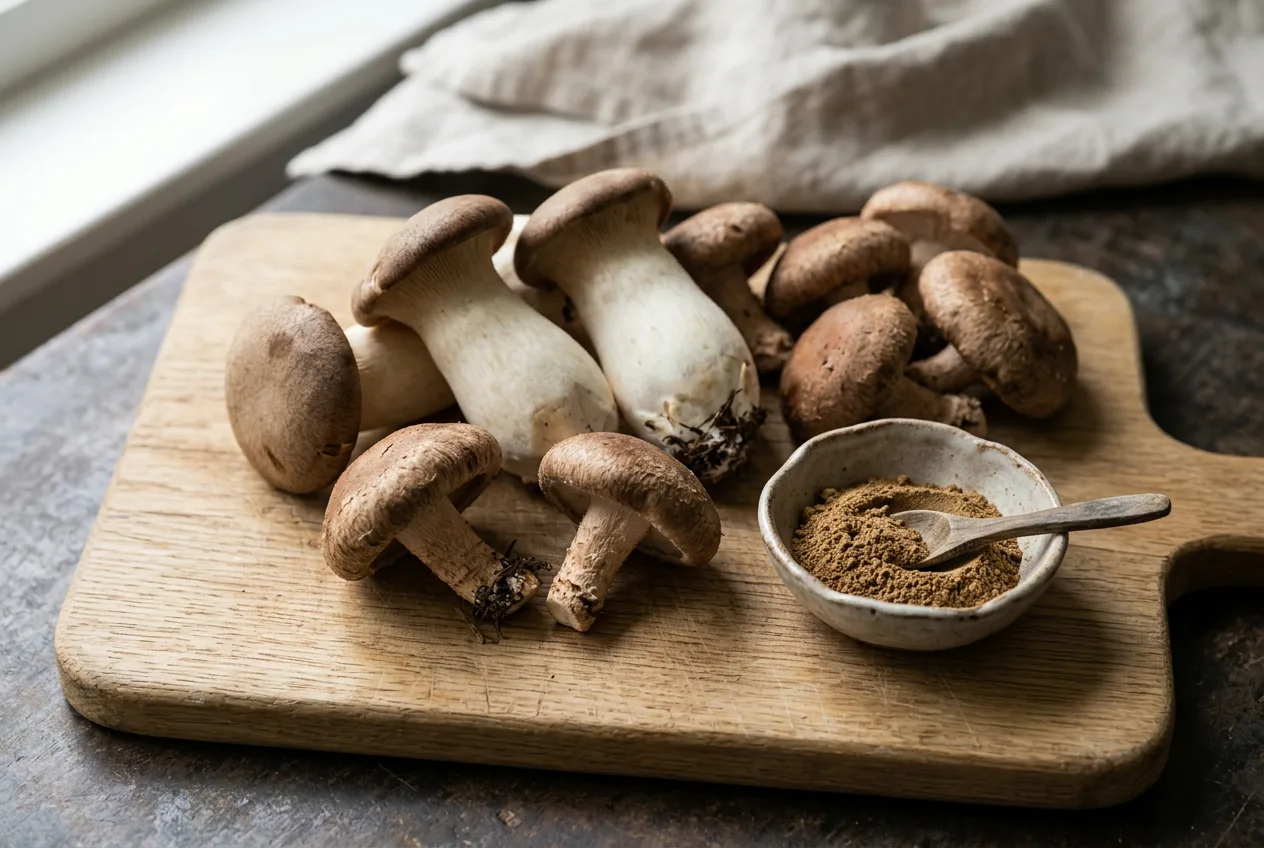
Shiitake and king trumpet are familiar culinary mushrooms. They're nutritious foods, but there's little evidence that a small amount in a coffee blend does anything special.
What it looks and smells like
The moment you open the pouch, you can tell this isn't regular coffee. Ground coffee is coarse, dark and glossy. Instant coffee is made of crystals or granules designed to dissolve. Mushroom coffee powder is something else: a very fine, light brown powder that looks more like cocoa mixed with flour, or even fine sawdust.
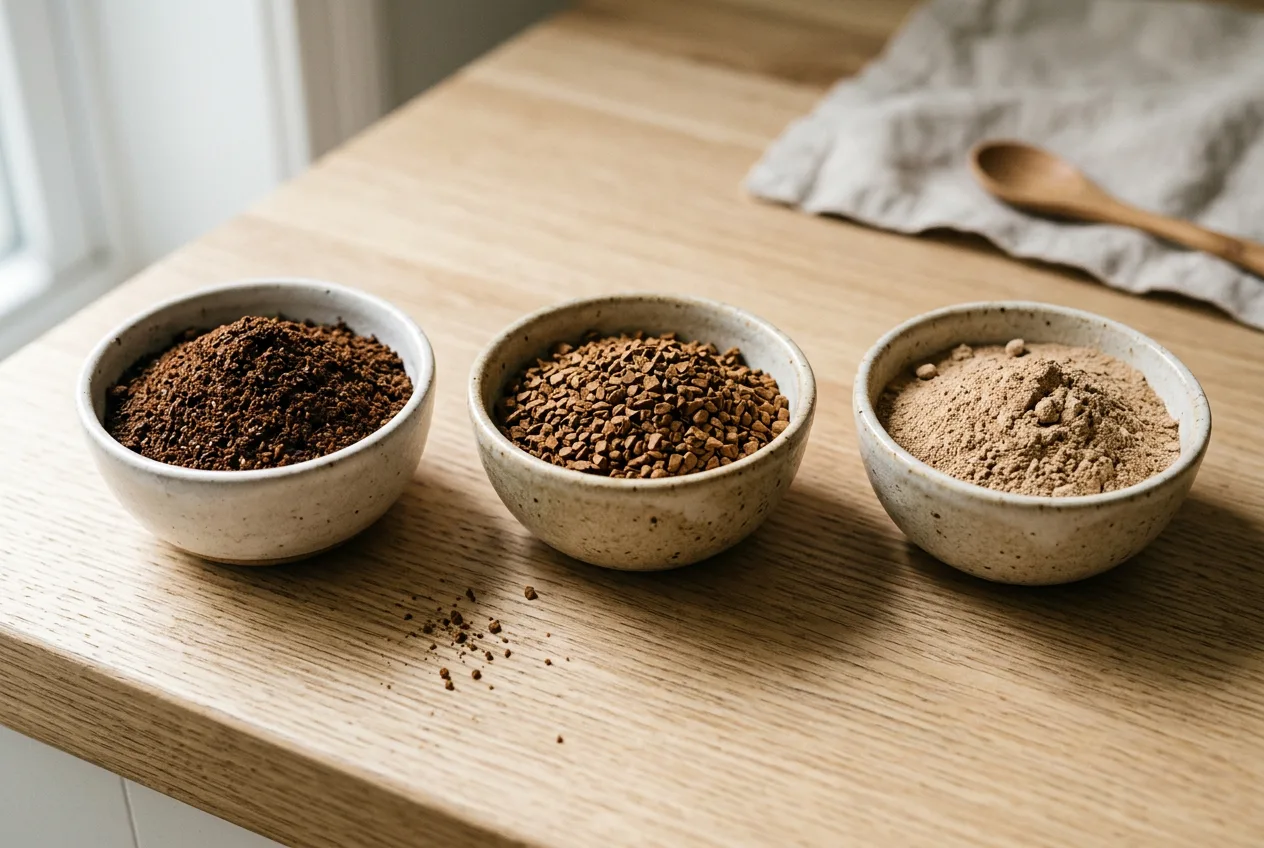
The smell is different too. Instead of roasted nuts, caramel and chocolate, you get a strong, earthy smell of dried mushrooms, with a faint sweetness from the coconut milk. If you're used to opening a fresh bag of beans, it's a surprise.
How to make it properly
Preparation matters more than you'd expect, because the mushroom powder doesn't truly dissolve. Here's what worked best for me.
- Use hot waterAbout 6 to 8 fluid ounces of hot water, so the coconut milk and MCT oil melt and blend in.
- Add the powder graduallySprinkle in one serving while stirring, rather than dumping it in.
- Stir thoroughly, or frothStir for 20 to 30 seconds, or use a small handheld milk frother for a smoother, foamy drink.
- Add milk or cream if you likeA splash of milk, cream or oat milk rounds out the earthy flavor.
- Swirl as you drinkGive the mug a swirl every few sips to keep the particles suspended.
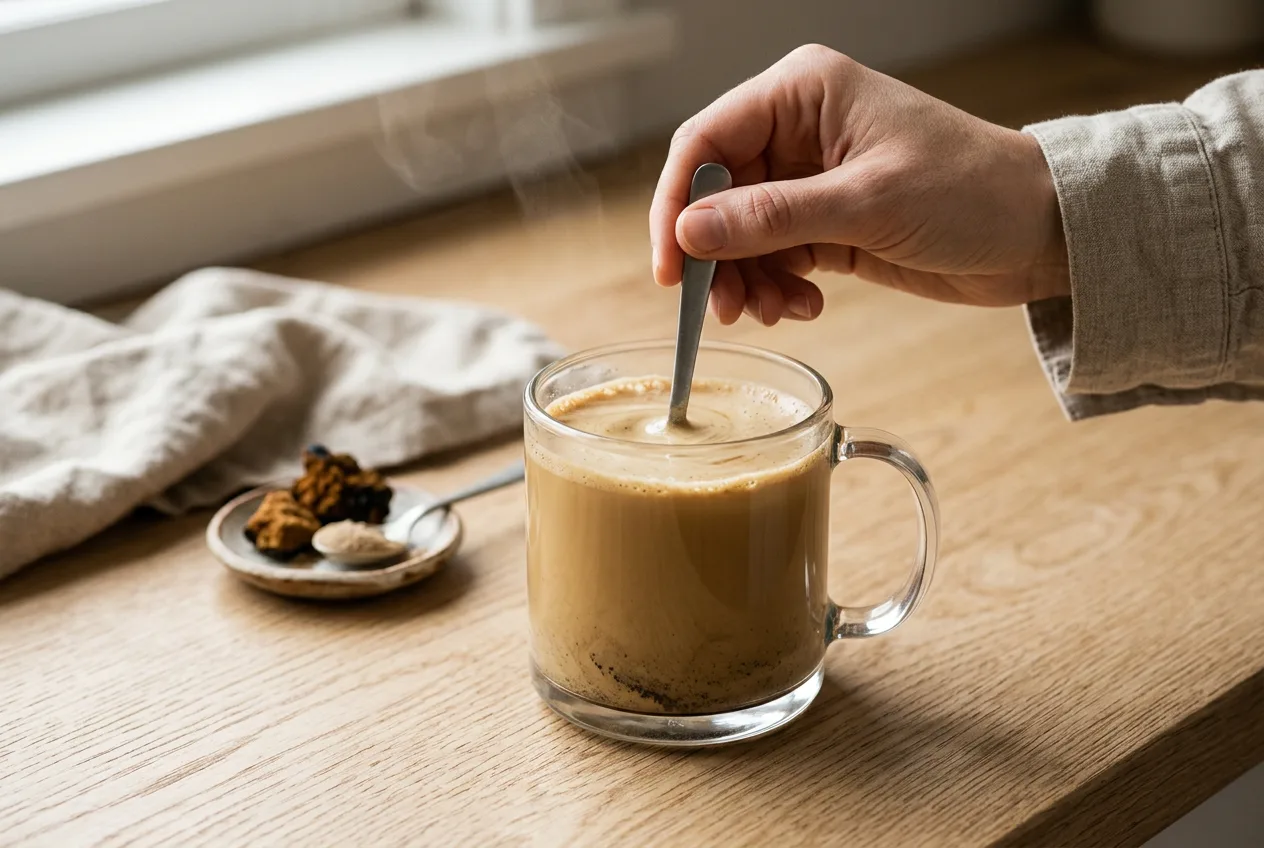
If you stir once and then let it sit, the heavier mushroom particles sink. By the last few sips, you'll hit a thick, gritty layer of sludge at the bottom of the mug. The packaging warns you about this, and it's not exaggerating.
Our tip: A $10 handheld milk frother makes a big difference. It whips the powder into a smooth, latte-like drink and keeps the sediment suspended much longer.
How mushroom coffee tastes
This is where marketing and reality part ways. Ads often say mushroom coffee tastes exactly like regular coffee and that you'd never know there were mushrooms in it. In my experience, that simply isn't true.
Black
Made with just hot water, mushroom coffee does not taste like black coffee. It lacks the roasted bitterness, bright acidity and caramelized notes of real coffee. Instead it tastes earthy, woody and savory, closer to a thin, unsalted mushroom broth than an espresso. My honest first impression was "slightly dirty water."
If you go in expecting coffee, that first sip can be a shock.
Texture
The texture is the pleasant surprise. Even black, it's smooth and velvety, thanks to the coconut milk powder and MCT oil. It feels more like a light latte than a watery cup.
With milk or cream
Adding dairy or plant milk changes things a lot. The earthiness softens, the faint coffee flavor comes through more, and it becomes a cozy, savory-sweet drink. With heavy cream, it reminded me of a mild cream-of-mushroom soup with a hint of coffee, which sounds odd but was oddly comforting on a cold morning.
My taste scores (out of 10)
Creamers and add-ins
Brands often recommend pairing their mushroom coffee with their own branded creamer, sold separately. You don't need it. Any milk or creamer does the same job.
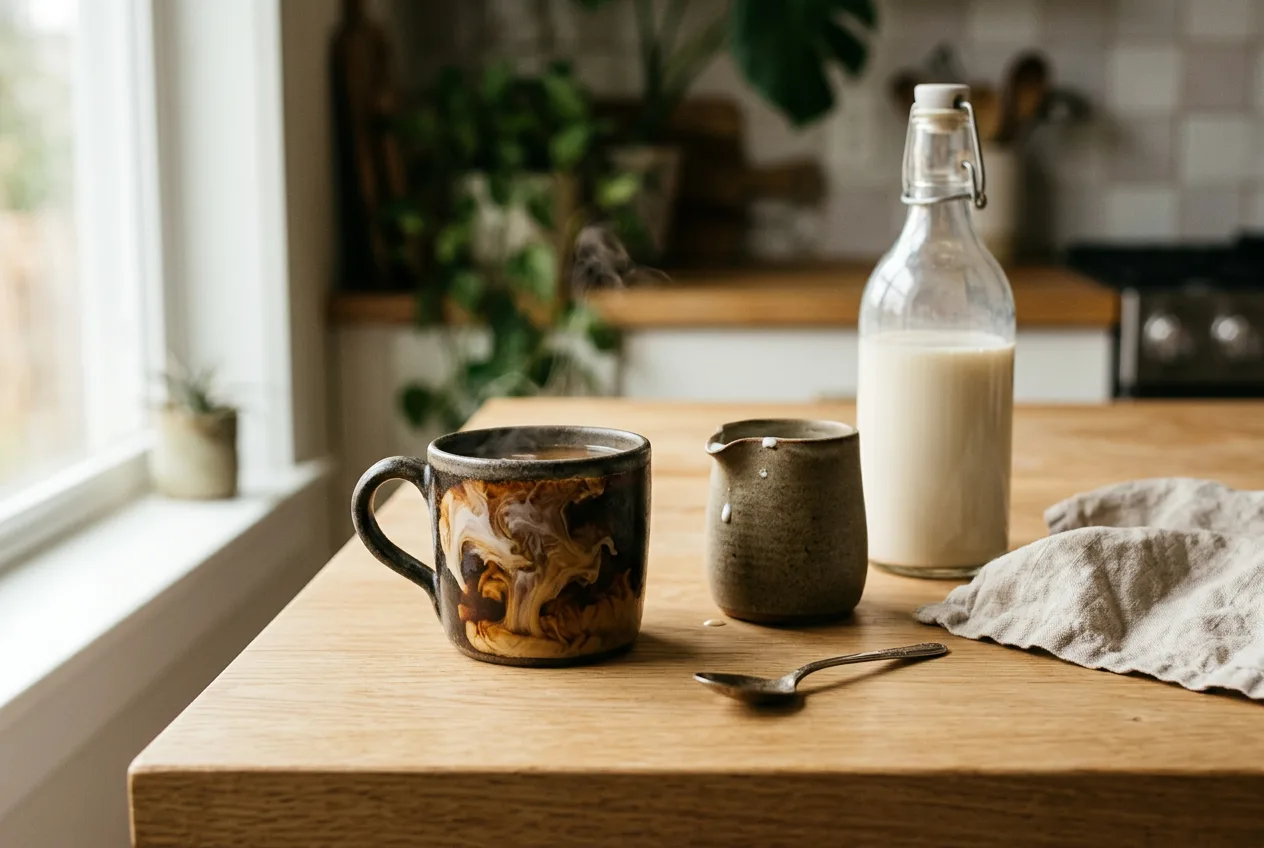
- Whole milk: rounds out the earthiness well.
- Heavy cream or half-and-half: the richest option, very soup-like.
- Oat milk: my favorite, slightly sweet and smooth.
- A little honey or maple syrup: helps if you find it too savory.
- Cinnamon or cacao: adds warmth and makes it taste more like a mocha.
How it grew on me over the weeks
Something interesting happened during my test. In the first few days, I didn't enjoy it at all. By the second week, I'd found how I liked it: frothed, with oat milk and a pinch of cinnamon.
By week three, I actually looked forward to it. The savory, umami warmth became a comforting part of the morning, even though I never once thought it tasted like coffee.

That seems to be common. Many people who stick with mushroom coffee describe the same shift: skepticism, then tolerance, then a genuine liking for it as its own drink. My advice is to judge it as a new drink, not as a coffee replacement, and give it at least a week.
Caffeine: how much is in it?
For many buyers, this is the most important question. A typical serving of a popular mushroom coffee blend contains roughly 45 to 50 mg of caffeine. A standard 8-ounce cup of home-brewed coffee has around 95 mg.
| Drink (about 8 oz) | Approximate caffeine |
|---|---|
| Brewed coffee | ~95 mg |
| Single espresso (1 oz) | ~63 mg |
| Instant coffee | ~60-80 mg |
| Mushroom coffee | ~45-50 mg |
| Green tea | ~30-50 mg |
| Decaf coffee | ~2-5 mg |
So one serving is roughly half a cup of coffee, or about the same as a strong cup of green tea. That's the main reason it feels gentler.
But if you drink two servings, you're back at around 90 to 100 mg, the same as one regular cup. Any extra buzz from a second mug is ordinary caffeine, not magic mushrooms.
How to read a mushroom coffee label
If you decide to buy, a few details on the label tell you a lot about what you're getting.
- Amount of each mushroomA "proprietary blend" with a single total weight hides how much of each mushroom is in there. Specific amounts per mushroom are better.
- Fruiting body or myceliumThe fruiting body is the mushroom itself. Mycelium is the root-like network, often grown on grain. Products made mostly from mycelium on grain may contain a lot of starch.
- Extract or plain powderExtracts are concentrated; plain powders are just dried, ground mushroom. Studies usually used extracts.
- Beta-glucan contentSome brands list the percentage of beta-glucans, one of the compounds of interest. A stated, tested figure is a good sign.
- Caffeine per servingLook for an actual number, not just "low caffeine."
- Third-party testingIndependent testing for purity and heavy metals adds confidence.
Few products tick every box. But the more transparent the label, the more you know about what you're paying for.
What my test mornings looked like
To keep things fair, I followed the same routine for most of the test. I made one serving of mushroom coffee at around 7 a.m., frothed with hot water and a splash of oat milk, and drank it with breakfast. I skipped my usual second coffee and, most days, had nothing caffeinated after noon.
On a few days I had a regular coffee instead, to compare. The difference in alertness was noticeable in the first hour: real coffee gave me a sharper lift, mushroom coffee a softer one. By mid-afternoon, though, I felt steadier on mushroom coffee days, and I fell asleep more easily at night.
That's a real benefit, but it's the benefit of less caffeine, not something unique to mushrooms. I got almost the same effect in a later week drinking half-caf coffee instead.
Energy and focus: what I noticed
With one serving in the morning, I felt a mild, steady lift. No racing heart, no shaky hands, no sudden crash mid-afternoon. It felt a lot like having a cup of green tea or a half-caf coffee.
Did I feel sharper or more focused than usual? Honestly, not in any way I could separate from the caffeine itself and the fact that I was paying more attention to my mornings. Some days I felt great, some days I didn't, much as with regular coffee.
What I did notice was better sleep on days I'd normally have had a second or third strong coffee. But that's easily explained by drinking less caffeine overall, which you can achieve with any lower-caffeine drink.
What the science actually says
Mushroom coffee brands often say these fungi have been used for thousands of years to boost brain function, immunity and energy. Traditional use is real. But traditional use isn't the same as clinical proof.
- No strong trials on the drinks themselves: the finished mushroom coffee blends sold to consumers generally haven't been tested in large, rigorous human trials.
- Mixed evidence by mushroom: of the six common mushrooms, most lack solid human research for the specific benefits printed on packaging.
- Some early promise: lion's mane, cordyceps and reishi have small studies suggesting possible effects on mild cognitive support, stress or exercise recovery.
- Dose matters: those studies typically used concentrated, standardized extracts at specific, often fairly high daily doses. A spoonful of blended powder usually contains much less, often well below the amounts studied.
The mushrooms still add small amounts of fiber, antioxidants and compounds called beta-glucans, like other mushrooms. They're perfectly fine food ingredients. But the evidence doesn't support the idea that a daily mug of mushroom coffee will noticeably improve your brain, immunity or metabolism.
It's also worth remembering that coffee itself is one of the better-studied drinks in nutrition research. Moderate coffee drinking has been linked in large observational studies with a range of possible health benefits. Ironically, by cutting the coffee in half, mushroom coffee may give you less of the ingredient with the strongest evidence behind it, in exchange for mushroom ingredients with much weaker evidence.
That doesn't make mushroom coffee bad. It just means the health argument for switching is weaker than the marketing suggests. The best reason to switch is that you enjoy it and want less caffeine.
For a balanced look at coffee's own health effects, which are better studied, see health benefits of coffee.
The "superfood" label
Many mushroom coffees are sold as a "superfood latte." It sounds impressive, but "superfood" has no official definition. Food regulators don't recognize it as a scientific category, and there's no nutrient threshold a product has to meet to use the word.
In practice, almost any plant, berry, seed or mushroom with some vitamins or antioxidants can be called a superfood, and the label is often used to justify a higher price.
Research on food marketing shows that calling something a superfood creates a "health halo": people assume it's far healthier than ordinary foods, even when it isn't. Mushrooms, coconut milk and MCT oil can be part of a healthy diet. But no powder can make up for poor sleep, chronic stress, a poor diet or no exercise.
Digestion and bloating
Some ads claim mushroom coffee fixes gut problems and bloating within weeks. My experience, and that of many others, is more mixed.
Regular coffee can increase stomach acid and bother sensitive stomachs, so some people do find a lower-coffee drink easier. But mushroom coffee isn't a guaranteed cure. For some people it actually causes mild bloating, fullness or cramping, especially in the first couple of weeks.
The usual suspects are the MCT oil and coconut milk powder. MCT oil is absorbed quickly and is well known for causing digestive upset, especially on an empty stomach. In my first week, I noticed some fullness on mornings when I had it before breakfast; it settled once I started having it with food.
Our tip: If you're prone to stomach upset, start with half a serving with breakfast rather than on an empty stomach, and build up slowly.
Does mushroom coffee help with weight loss?
On its own, no. Swapping black coffee for mushroom coffee doesn't cause weight loss, and because most blends contain coconut milk powder and MCT oil, they add calories and fat that plain black coffee doesn't have.
If your diet, activity and overall calories stay the same, a daily mushroom coffee won't change your weight. Any weight change people report is more likely due to other changes they made at the same time, such as cutting sugary coffee drinks or snacks.
Who should be careful
Mushroom coffee is a food product and generally considered safe for most healthy adults. Still, some people should check with a doctor or pharmacist first.
- People on medication: some mushroom extracts may interact with blood thinners, blood sugar or blood pressure medications, or immune-suppressing drugs.
- People with mushroom allergies.
- Pregnant or breastfeeding people: there's little safety research on concentrated mushroom products.
- People with sensitive digestion: because of the MCT oil.
- Anyone trying to avoid caffeine entirely: most mushroom coffees still contain caffeine.
This isn't medical advice. If you have a health condition, ask a professional before adding any supplement-style product to your routine.
Ads, influencers and paid testimonials
Mushroom coffee is heavily advertised through short social media videos. Many show dramatic before-and-after stories: bloated and exhausted one week, lean and energized two weeks later. They're often filmed to look like spontaneous personal reviews.
In reality, many of these are paid ads or sponsored creator partnerships, carefully scripted to drive clicks. The claims in them usually go well beyond what a low-caffeine mushroom drink can realistically do.
It's worth watching any wellness ad with that in mind. If a drink promises to fix your energy, digestion, focus, immunity and weight all at once, be skeptical.
Is mushroom coffee a scam?
The overhyped marketing makes some people wonder whether the whole category is a scam. Based on my experience with a major brand, that's too harsh.
Genuine scams in the wellness space tend to use hidden subscriptions that are hard to cancel, fake ingredients or no real customer service. The established mushroom coffee brands I looked at deliver a real, food-safe product with the ingredients on the label, clear subscription management and responsive customer support.
So it's a legitimate product. The fair criticism is that it's expensive for what it does, and the advertising promises far more than the evidence supports.
Mushroom coffee vs other morning drinks
It helps to see mushroom coffee next to the drinks people usually compare it with.
| Drink | Caffeine | Taste | Texture | Cost |
|---|---|---|---|---|
| Regular coffee | ~95 mg | Roasty, bitter, aromatic | Thin unless you add milk | Low to moderate |
| Mushroom coffee | ~45-50 mg | Earthy, savory | Creamy | High |
| Bulletproof coffee | ~95 mg | Rich, buttery | Very creamy | Moderate |
| Green tea | ~30-50 mg | Grassy, fresh | Light | Low |
| Half-caf coffee | ~45-50 mg | Like coffee | Depends on milk | Low |
| Chicory or barley drink | 0 mg | Roasty, bitter or sweet | Medium | Low |
Bulletproof coffee is the other big "functional coffee" trend, but it goes the opposite way: full caffeine plus a lot of added fat. I cover it in bulletproof coffee explained.
Tips to make mushroom coffee taste better
- Froth it: a handheld frother makes it smoother and lighter.
- Use hot, not boiling, water: just off the boil mixes well without tasting flat.
- Add milk: oat milk and whole milk both soften the earthiness.
- Season it: cinnamon, cacao, vanilla or a pinch of cardamom all work.
- Sweeten lightly: a little honey or maple syrup balances the savory notes.
- Try it iced: blended with milk and ice, it tastes more like a mocha shake.
- Mix with real coffee: half a serving stirred into a small cup of regular coffee is a good compromise.
My favorite version ended up being half a serving whisked into a small, freshly brewed coffee with steamed oat milk and cinnamon. It kept the comforting earthiness, tasted much more like coffee and had less caffeine than a full cup.
Cost and value
Mushroom coffee is firmly in premium wellness territory. A month's supply of a leading brand typically costs several times more per cup than good whole-bean coffee brewed at home, and adding a branded creamer pushes the monthly cost higher still.
| Option | Relative cost per cup | Caffeine |
|---|---|---|
| Mushroom coffee + branded creamer | Highest | ~45-50 mg |
| Mushroom coffee + regular milk | High | ~45-50 mg |
| Specialty whole-bean coffee | Moderate | ~95 mg |
| Half-caf home brew | Low | ~45-50 mg |
| Good green tea | Low | ~30-50 mg |
If you love the taste and ritual and can comfortably afford it, that's a perfectly fine choice. But if your goal is simply less caffeine and fewer jitters, there are much cheaper routes.
Cheaper alternatives that do the same job
Green tea
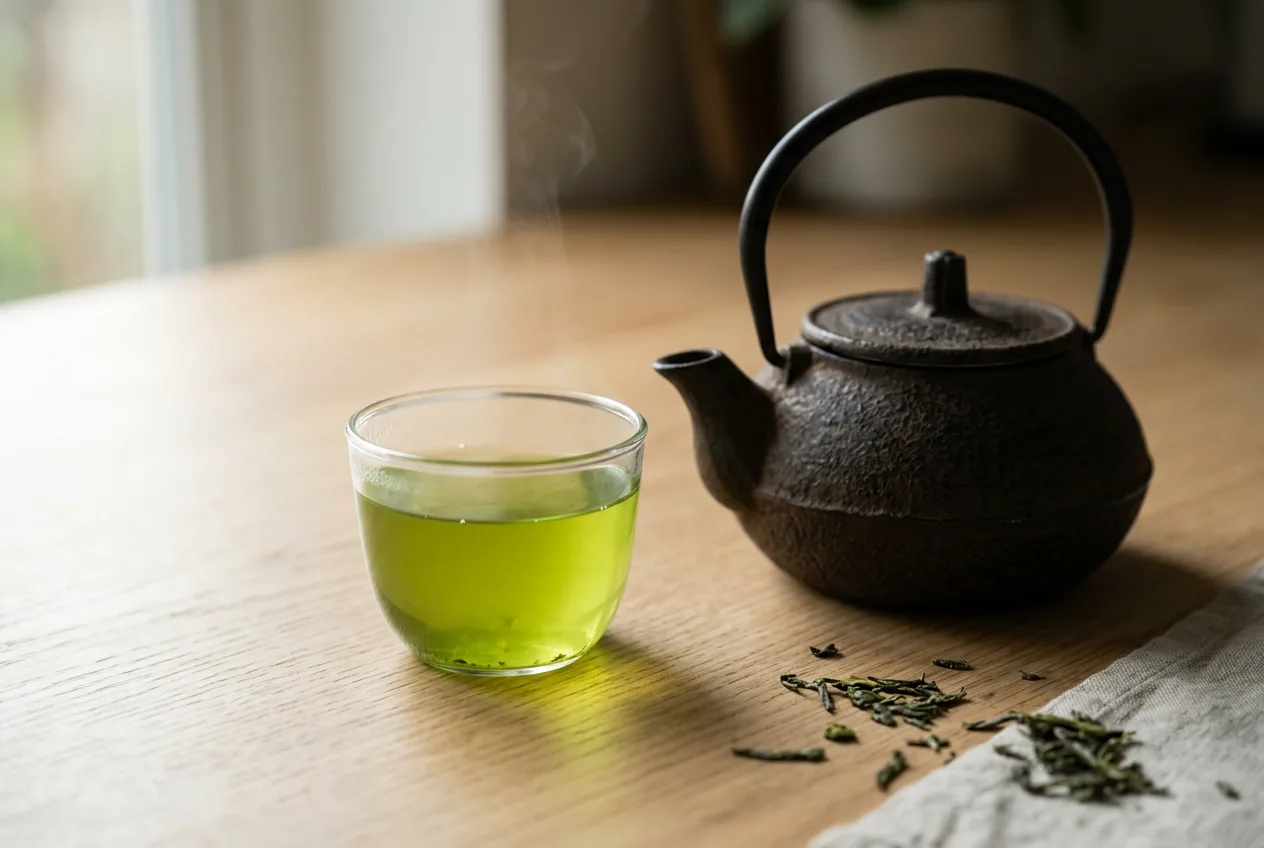
Green tea has a similar, gentle dose of caffeine, around 30 to 50 mg a cup, plus L-theanine, an amino acid that's been studied for promoting calm focus. Many people find it gives smooth energy without jitters, at a fraction of the cost.
Half-caf coffee
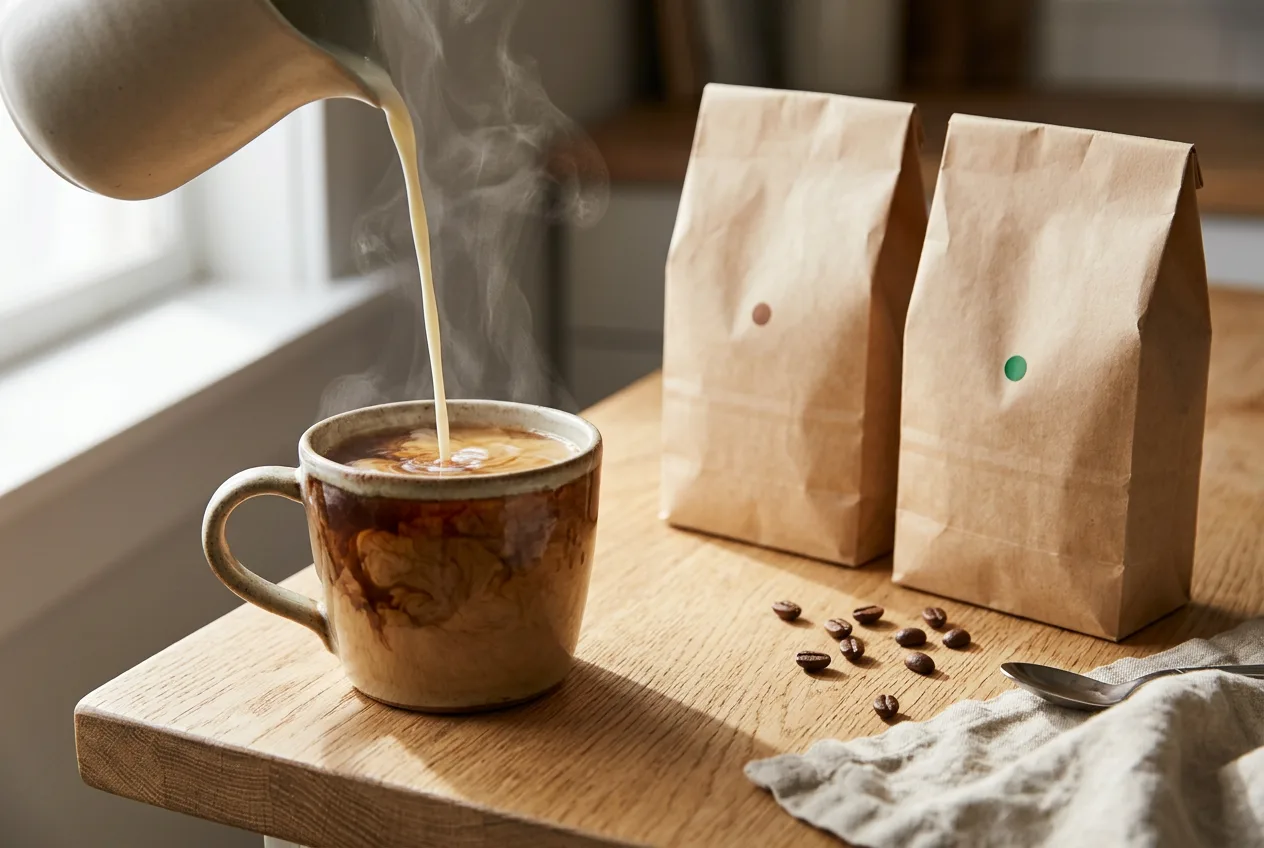
Mix regular and decaf beans 50:50, or buy a half-caf blend. You get real coffee flavor with about half the caffeine. Add a splash of cream or coconut milk, or even a little MCT oil, if you want the same creamy body.
Decaf
Modern decaf can taste excellent, and it's almost caffeine-free. If you want to know how it's made, see how decaf coffee is made.
Coffee substitutes
If you want something warm, dark and caffeine-free, try roasted chicory, barley or other substitutes. I tested several in coffee substitutes and alternatives.
Make your own gentler morning blend
If you like the idea of a creamy, lower-caffeine morning drink, you can make your own version at home for much less.
- Brew a smaller or half-caf coffeeUse half your usual dose, or a 50:50 regular and decaf mix.
- Add creaminessA splash of coconut milk, oat milk or cream.
- Optional: a little fatA teaspoon of coconut oil or MCT oil if you like the richer texture. Start small.
- Optional: mushroom powderIf you're curious, buy a single-mushroom powder like lion's mane and add a small amount.
- Froth itUse a handheld frother for a smooth, latte-like drink.
- SeasonCinnamon, cacao or a little honey to taste.
A homemade version also lets you experiment. Some mornings I used more oat milk and a pinch of cardamom for something like a spiced latte; on others, a little cacao and a drop of maple syrup turned it into a light mocha. If you do buy a single-mushroom powder, start with a small amount and see whether you notice anything at all before adding more, and treat any claimed benefits with healthy skepticism.
You'll control the caffeine, the flavor and the cost, and you can still enjoy the same cozy ritual.
Who mushroom coffee suits, and who it doesn't
Myths about mushroom coffee
- "It tastes exactly like coffee." It tastes earthy and mushroomy, especially black.
- "It's caffeine-free." Most blends contain coffee, about half the caffeine of a regular cup.
- "It contains psychedelic mushrooms." No. Functional mushrooms like lion's mane and reishi are not psychedelic.
- "The mushrooms give you energy." The energy mainly comes from caffeine.
- "It's proven to boost immunity and focus." Evidence for the finished drinks is weak, and doses are often low.
- "It helps you lose weight." Not on its own, and it adds calories compared with black coffee.
The verdict
Mushroom coffee is a real, pleasant, lower-caffeine drink with a creamy texture and an earthy flavor that can grow on you. If you want to cut caffeine without giving up a warm morning ritual, it does that job well.
What it isn't is a miracle. It doesn't taste like coffee, the health claims are far ahead of the evidence, it won't make you lose weight, and it's expensive for what it does. Most of its effects come from simply drinking less caffeine.
My recommendation: if you're curious and the price doesn't bother you, try it for a few weeks with milk and a frother, and judge it as its own drink. If your main goal is calmer energy, start with green tea or a half-caf coffee first. You may get exactly what you were looking for, for a fraction of the cost.
As for me, I still keep a pouch in the cupboard for afternoons when I want something warm but don't want a full cup of coffee. Mornings, though, still belong to freshly brewed beans.
Frequently asked questions
What is mushroom coffee?
A drink that blends coffee with powders from functional mushrooms such as lion's mane, reishi and cordyceps, often with coconut milk and MCT oil.
Does mushroom coffee have caffeine?
Most do. A typical serving has about 45 to 50 mg, roughly half a regular cup of brewed coffee.
Does mushroom coffee taste like regular coffee?
Not really. It tastes earthy and savory, especially black. Milk or cream makes it taste more like a mild latte.
Is mushroom coffee healthy?
It can be part of a healthy diet, but there's little strong evidence that the finished drinks deliver the big benefits often advertised.
Will mushroom coffee help me lose weight?
Not by itself. Many blends add calories and fat compared with black coffee.
Can mushroom coffee cause bloating?
Yes, in some people, often because of MCT oil or coconut milk powder. Starting with a smaller serving with food can help.
Is mushroom coffee a scam?
Established brands sell a legitimate product, but the marketing often overpromises and it's expensive for what it does.
What's a cheaper alternative?
Green tea or a half-caf coffee gives similar caffeine levels for much less money.

- Michael Reynolds, several weeks of daily mushroom coffee testing
- Mushroom coffee, Wikipedia
- Lion's mane (Hericium erinaceus), Wikipedia
- Reishi (Lingzhi), Wikipedia
- Medium-chain triglyceride, Wikipedia
- Superfood, Wikipedia
Related guides
Bulletproof coffee explained Caffeine myths debunked How much coffee is too muchWritten by Michael Reynolds. Last updated November 20, 2026.