Bulletproof Coffee Explained: Recipe, Calories, Which Fats to Use and Who It's For
Bulletproof coffee, coffee blended with butter and oil, has gone from a niche biohacker trend to a morning staple for many people on low-carb and fasting diets. Here's what it is, how to make it properly, how many calories it really has, how different fats compare and what to watch out for.
We choose products independently. We may earn a commission through links on this page; your price stays the same. Affiliate policy
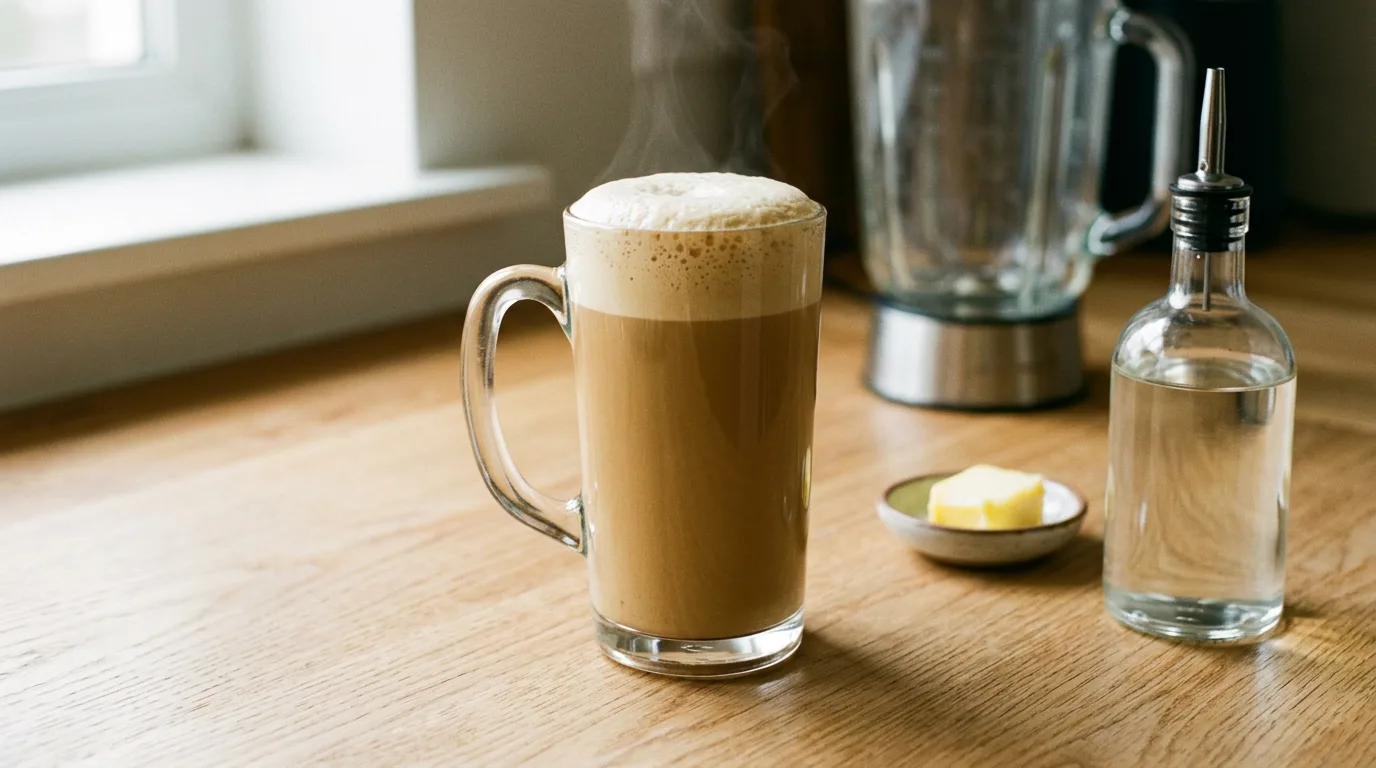
Bulletproof coffee is hot coffee blended with butter or ghee and MCT or coconut oil until it's creamy and frothy. It's popular with people on low-carb, keto or intermittent fasting diets as a filling, caffeinated breakfast replacement. A carefully measured cup has about 350 calories, but eyeballed portions can easily double that. Rotating the fats you use, measuring every time and paying attention to how your body responds make it a much better tool. It's not a magic weight-loss drink, and it isn't right for everyone.
Why I wrote this
I first tried bulletproof coffee years ago during a phase of low-carb eating. I loved how creamy it was and how it kept me full until lunch. Then, slowly, I stopped measuring. A tablespoon of butter became "a knob," and the oil went in with a generous pour. My "breakfast" quietly became a 700-calorie drink.
Since then, I've gone back to it with a more careful approach: measuring every time and rotating through different fats week by week. It's become a better, more balanced habit, and it still tastes great.
I also wanted to answer the questions friends kept asking me: does it really keep you full, does it taste like butter, will it make you gain weight, and is MCT oil necessary? After six weeks of careful testing, I have fairly clear answers, and most of them come down to portions and preparation rather than special ingredients.
This guide covers what bulletproof coffee is, how to make it properly, how six different fats compare, and the honest pros and cons. It's not medical advice, and if you have heart, cholesterol, liver or digestive issues, talk to your doctor before making it a daily habit.
What you'll learn
- The basic recipe and how to blend it properly.
- How many calories it really has, and how portions creep.
- Six fats to rotate, and what each brings.
- Why blending changes how fat is absorbed.
- Who it suits, and who should skip it.
What is bulletproof coffee?
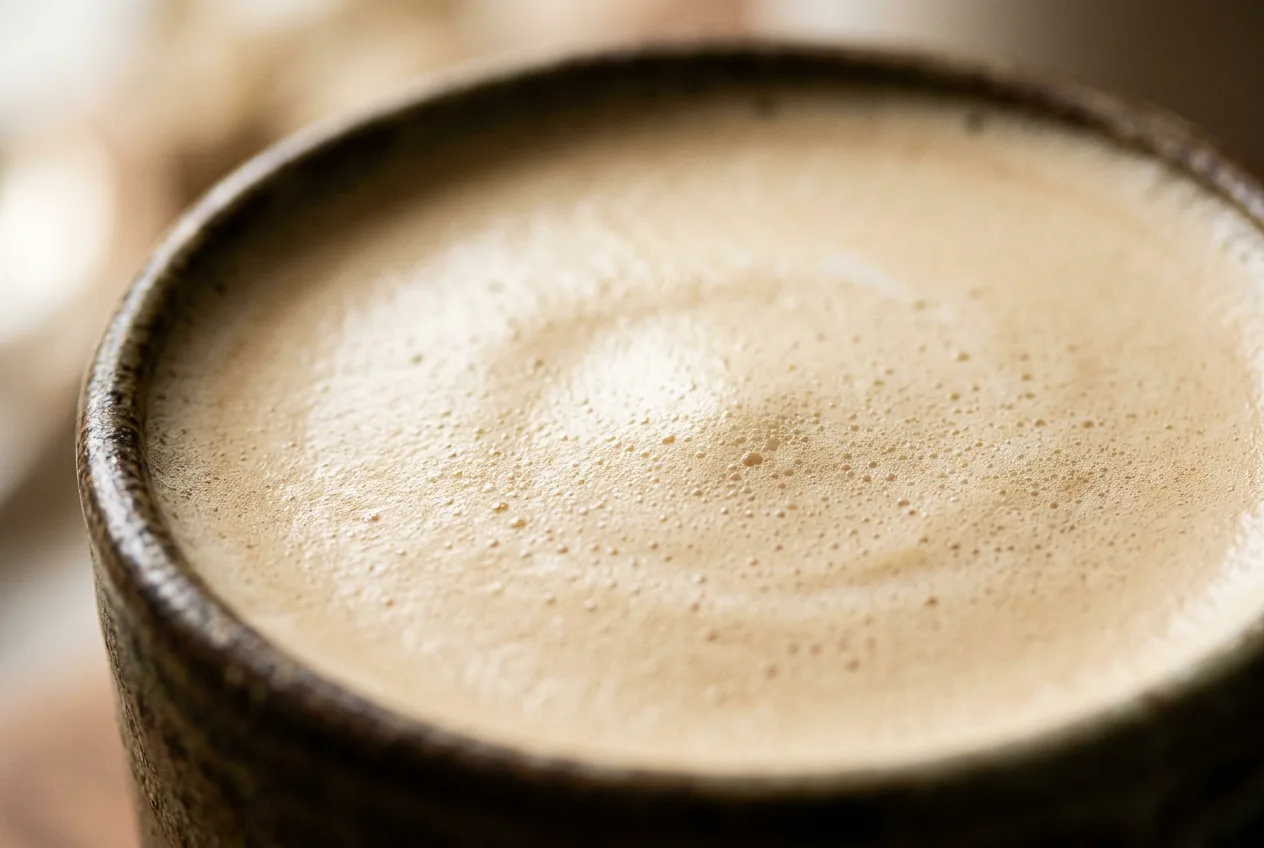
At its simplest, bulletproof coffee is three ingredients: hot coffee, a fat like butter or ghee, and an oil like MCT or coconut oil. You blend them together until the fat is completely mixed in, which turns the coffee into a pale, creamy, latte-like drink with a thick foam.
The term "Bulletproof" is actually a brand name, from the company that popularized the drink, but it's become a general name for any butter-and-oil blended coffee. You'll also hear "butter coffee," "keto coffee" or "fat coffee."
It's usually drunk instead of breakfast, not with it. The fat makes it filling, and for people eating very few carbohydrates, it can provide a lot of energy without raising blood sugar.
Where it came from
Adding fat to hot drinks is an old idea. In Tibet and the Himalayas, people have long drunk po cha, tea churned with yak butter and salt, as a warming, high-energy drink for cold, high-altitude life. In parts of Ethiopia, coffee has traditionally been drunk with butter or ghee too.
The modern bulletproof coffee came from an American entrepreneur, Dave Asprey, who said he was inspired by yak butter tea while traveling in Tibet. He developed his recipe with grass-fed butter and MCT oil, launched a brand around it in the early 2010s, and promoted it heavily as a "biohacking" drink for focus and energy.
The rise of keto and intermittent fasting diets in the 2010s did the rest. Butter coffee became one of the best-known low-carb drinks in the world.
Why people drink it
- It's filling: fat is satisfying and slows down hunger for many people.
- It fits low-carb and keto diets: it's almost zero carbohydrates.
- Steady energy: many people report a smoother energy curve than coffee with sugar.
- Focus: people often describe mental clarity, though caffeine is a big part of that.
- Convenience: a quick, drinkable breakfast that's easy to take to work.
- Taste and texture: it's rich, creamy and frothy without milk.
Used well, it can be a useful tool during weight-loss phases or busy, demanding work periods. Used carelessly, it can become a big source of hidden calories and saturated fat. The difference is mostly in how you make it.
The basic recipe
Any brewing method works for the coffee. French press, drip, pour-over, moka pot or an Americano are all fine. Use coffee you like drinking black, because the fat will round it out but won't hide stale or poor coffee.
Our tip: If you're new to MCT oil, start with one teaspoon. It can cause stomach cramps or loose stools in larger amounts, especially at first.
How to make it, step by step
- Brew hot coffeeMake 8 to 12 ounces of fresh, hot coffee.
- Measure the fatsUse real measuring spoons. Level them off. Don't eyeball it.
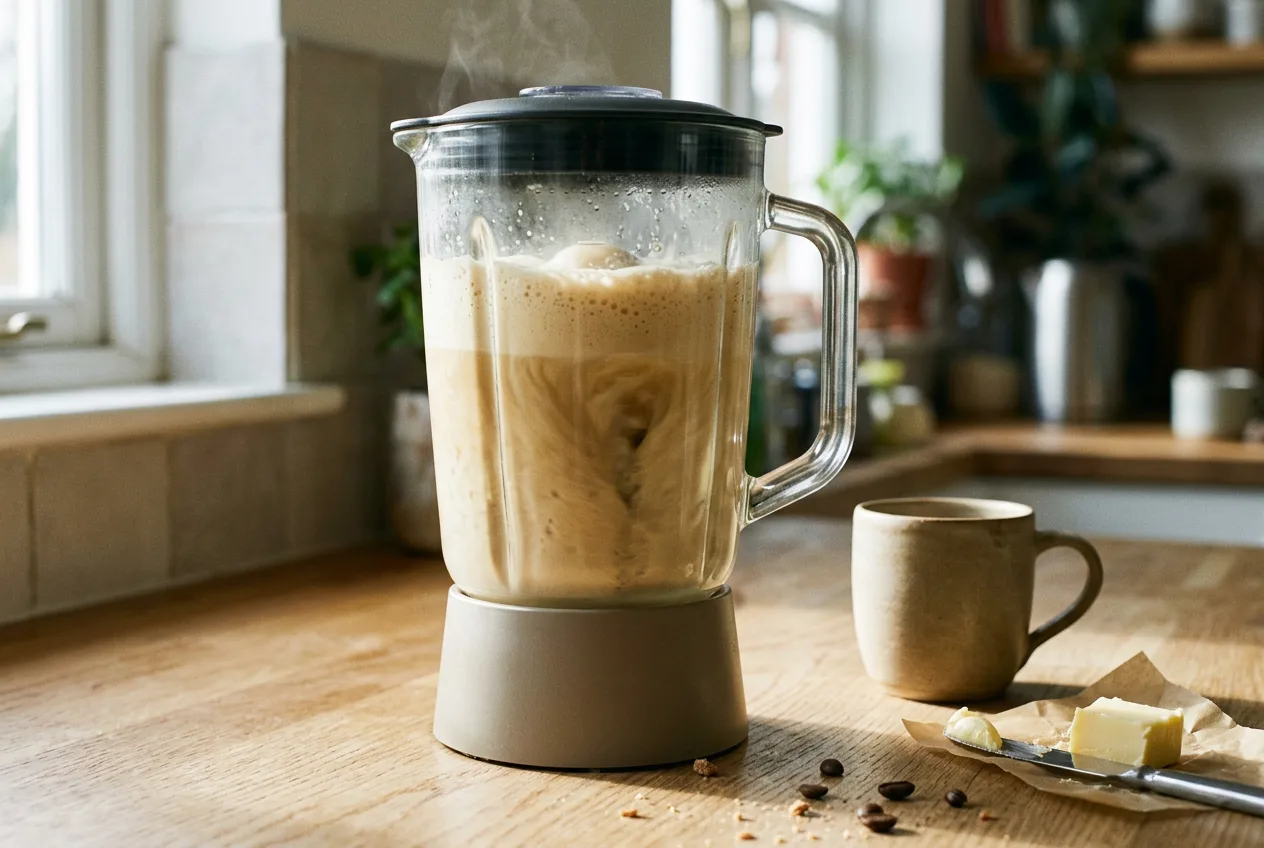
- Combine in a blenderAdd coffee, butter or ghee, and oil to a blender. Hot liquids expand, so don't overfill, and vent the lid if your blender allows.
- Blend 20 to 30 secondsBlend until the drink is pale, creamy and topped with thick foam, with no oil floating on top.
- Pour and drink while hotThe emulsion is best fresh. Stir if it starts to separate.
A handheld milk frother works too, especially for smaller cups. Melt the butter in the hot coffee first, then froth for 20 to 30 seconds.
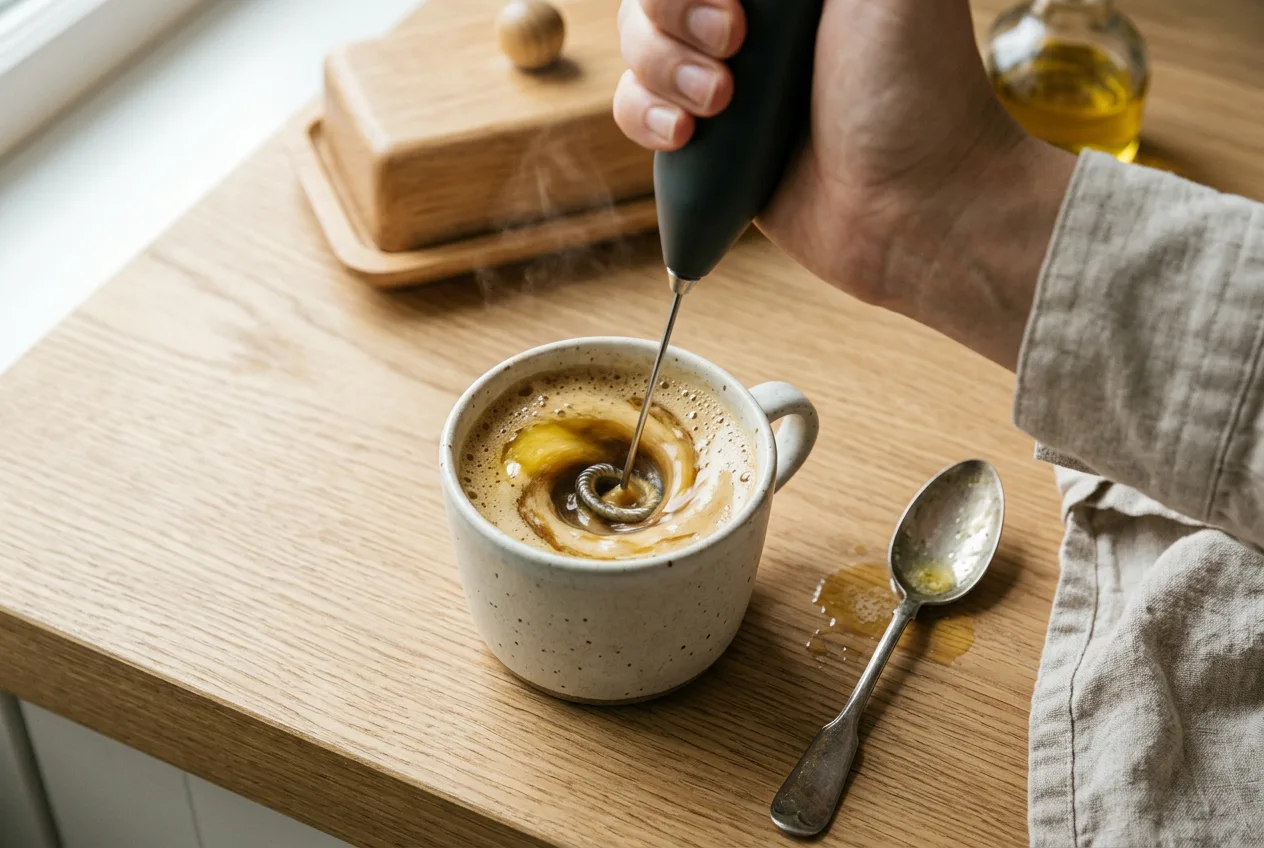
Whichever tool you use, add the fat to the coffee while it's still very hot. Butter and coconut oil need heat to melt fully, and a hot liquid emulsifies much more easily than a lukewarm one. If your coffee has cooled while you were measuring, give it a quick reheat before blending. Pre-warming your mug with hot water also helps the drink stay creamy for longer, because the emulsion holds better while the coffee is hot.
Simply stirring butter into coffee doesn't work well. You'll end up with a greasy slick on top. Blending is what makes the drink smooth and creamy.
Which coffee to use
Because bulletproof coffee has no sugar and only a little sweetness from butter, the coffee itself matters. Here's what I've found works best.
- Medium to medium-dark roasts: chocolatey, nutty coffees pair naturally with butter. Very light, fruity roasts can taste a bit odd with fat.
- Fresh beans: stale coffee tastes flat and bitter, and fat amplifies that. See how to store coffee beans.
- Full-bodied brewing methods: French press, moka pot and an Americano give a robust base. Drip and pour-over work too.
- A slightly stronger brew: fat softens coffee flavor, so brew a touch stronger than you would for black coffee.
- Decaf is fine: if you want the creamy drink in the afternoon, use decaf.
If you want to fine-tune strength, my guide to coffee brewing ratios has easy starting points for every method.
Blender, frother or shaker?
| Tool | Result | Notes |
|---|---|---|
| Countertop blender | Best emulsion, thick foam | Don't overfill with hot liquid; vent the lid |
| Immersion blender | Very good | Blend in a tall jug to avoid splashes |
| Handheld frother | Good for single mugs | Melt the butter first; froth 30 seconds |
| Shaker bottle | Fair | Risky with hot liquids; pressure can build up |
| Spoon | Poor | Leaves an oily layer on top |
Safety note: hot liquids expand when blended. Fill your blender no more than halfway, remove the center cap or vent the lid, and cover it with a folded towel. A burst blender lid full of hot coffee is not a fun way to start the day.
The golden rule: measure everything
The most common mistake with bulletproof coffee, and the one I made myself, is slowly abandoning measuring. When you make it every day, it's tempting to scoop butter straight from the block and pour oil from the bottle.
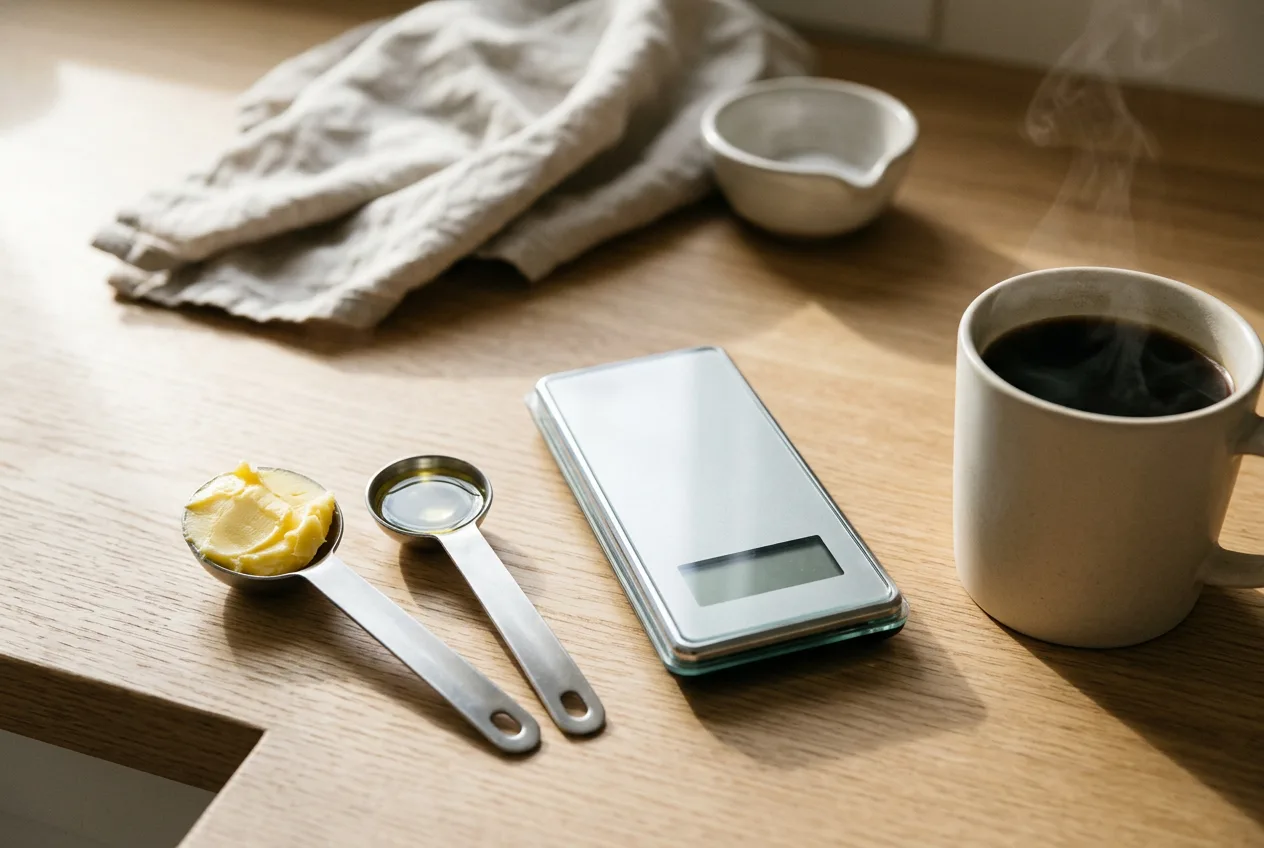
Fats are extremely calorie-dense. A well-measured cup is roughly 250 to 350 calories, depending on how much fat your recipe uses. Generous, unmeasured scoops can push that to 750 calories or more without you noticing.
How portion creep adds up (approximate calories)
750 calories in liquid form before you've even started your day is a big surplus for most people. It can stall weight loss or cause weight gain, even if you're in ketosis. It can also mean you've had most of a day's saturated fat in one mug, leaving little room for whole-food fats later.
Our tip: Keep a dedicated set of measuring spoons next to your coffee station. It removes the temptation to eyeball it.
Calories and nutrition
| Ingredient | Amount | Approx. calories |
|---|---|---|
| Black coffee | 8-12 fl oz | ~2-5 |
| Butter | 1 tbsp | ~100 |
| Ghee | 1 tbsp | ~120 |
| MCT oil | 1 tbsp | ~115-130 |
| Coconut oil | 1 tbsp | ~120 |
| Olive, avocado or macadamia oil | 1 tbsp | ~120 |
A typical recipe of one tablespoon of butter plus one tablespoon of MCT oil lands around 220 to 250 calories. Larger recipes with up to two tablespoons of each push past 350 to 450.
Almost all of those calories are fat. There's essentially no protein, fiber or carbohydrate. That's why it works for keto, but it's also why it's not a complete breakfast nutritionally.
The six-week fat rotation
For many people on low-carb or fasting diets, the morning coffee is where most of the day's fat comes from. If you use the same butter and MCT oil every single day, you're getting a narrow range of fatty acids and nutrients.
A simple fix is to rotate your main fat every week. When fats are properly blended into hot coffee, the texture is so uniform that switching oils changes the flavor much less than you'd expect, so it's easy to do.
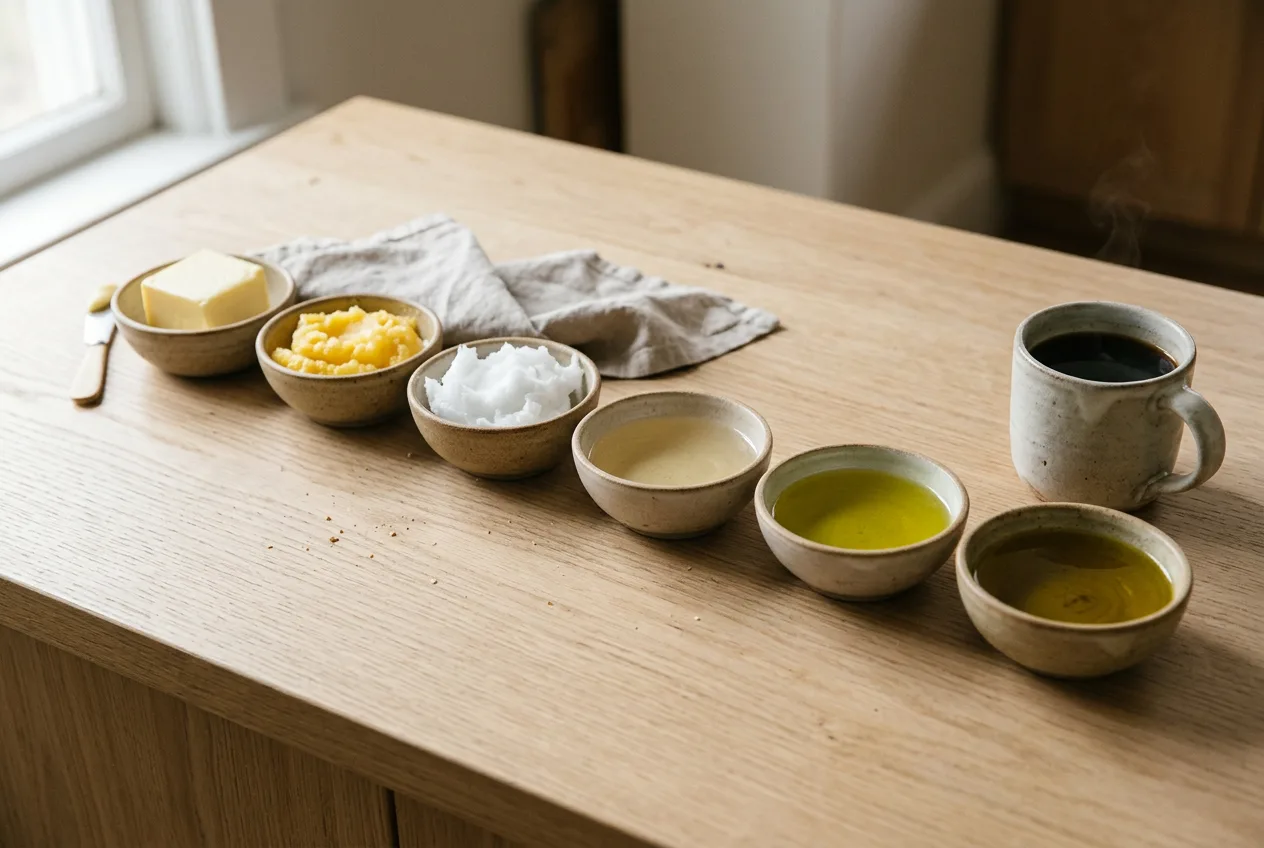
| Week | Main fat | Type of fat | Why include it |
|---|---|---|---|
| 1 | Grass-fed butter | Mostly saturated | Classic taste, fat-soluble vitamins, butyrate |
| 2 | Ghee | Mostly saturated | Like butter without milk solids |
| 3 | Coconut oil | Saturated, medium-chain | Lauric acid and natural MCTs |
| 4 | Macadamia oil | Monounsaturated | Rich in omega-7 palmitoleic acid |
| 5 | Avocado oil | Monounsaturated | Neutral taste, oleic acid |
| 6 | Extra virgin olive oil | Monounsaturated | Polyphenols, Mediterranean-style fats |
Keep the total amount of fat the same each week, roughly 1 to 1.5 tablespoons in total (about 120 to 180 calories from fat), and adjust for your size and goals. Take quick notes on energy, hunger, digestion and focus each week.
Week 1: grass-fed butter
Butter is the classic base. Good-quality grass-fed butter provides fat-soluble vitamins such as A, D, E and K2, plus a little butyrate, a short-chain fatty acid that cells in the gut use for energy.
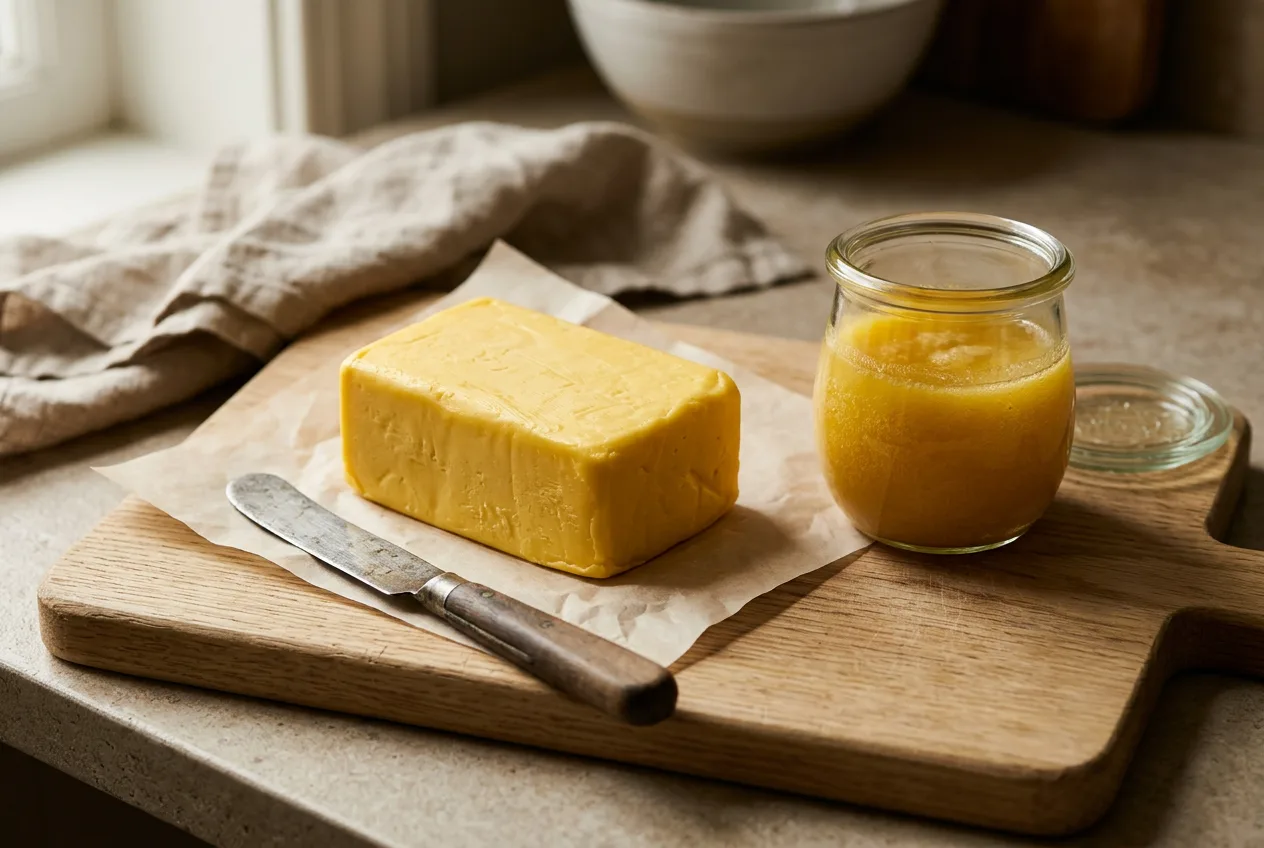
Some people avoid butter because it contains small amounts of milk solids and casein. For most people without dairy sensitivities, measured amounts are fine. The key this week is portion control, because butter is high in saturated fat.
Week 2: ghee
Ghee is clarified butter: butter that's been simmered until the water evaporates and the milk solids separate and are removed. It has a rich, nutty flavor and a fat profile very close to butter.
Because the milk solids, casein and almost all lactose are gone, ghee is often easier on the stomach for people with mild dairy sensitivities. It also contains short-chain fatty acids that help nourish the cells lining the gut.
How to make ghee at home
Ghee is easy to make and much cheaper than buying it in jars.
- Melt unsalted butterPut a pound of butter in a heavy saucepan over low to medium heat.
- Let it bubble gentlyThe water will foam and evaporate. Don't stir much.
- Watch the milk solidsAfter 15 to 20 minutes, the solids sink and turn light golden. The liquid becomes clear.
- Take it off the heatStop before the solids turn dark brown, unless you want a nuttier, browned-butter ghee.
- StrainPour through a fine sieve lined with cheesecloth into a clean glass jar.
- StoreKeep it covered at room temperature for a few weeks or in the fridge for longer.
Homemade ghee has a lovely, nutty aroma that works beautifully in coffee.
Week 3: coconut oil and MCT oil
Coconut oil brings a different kind of saturated fat with shorter carbon chains. It's rich in lauric acid, which the body converts partly into monolaurin, a compound studied for its antimicrobial properties.
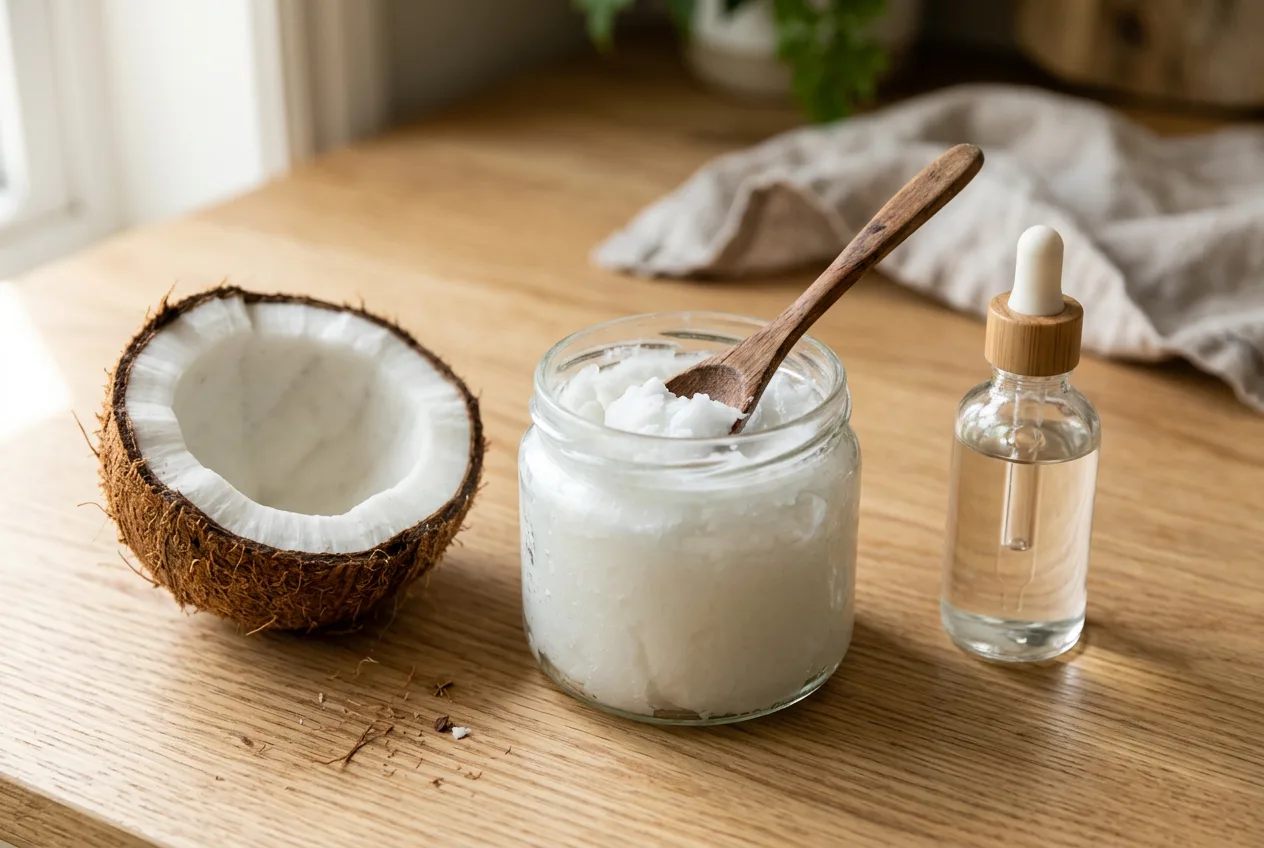
Coconut oil also contains medium-chain triglycerides, or MCTs, naturally. MCT oil is a concentrated version. MCTs are absorbed quickly and sent straight to the liver, where they can be turned into ketones, which is why they're popular on keto diets.
The downside: MCT oil is notorious for causing stomach cramps and loose stools if you take too much, too fast. Build up slowly.
Week 4: macadamia nut oil
Macadamia oil isn't a traditional choice, but it blends beautifully and adds a subtle richness. Nutritionally, it shifts the drink away from saturated fat toward monounsaturated fats, the kind associated with heart health.
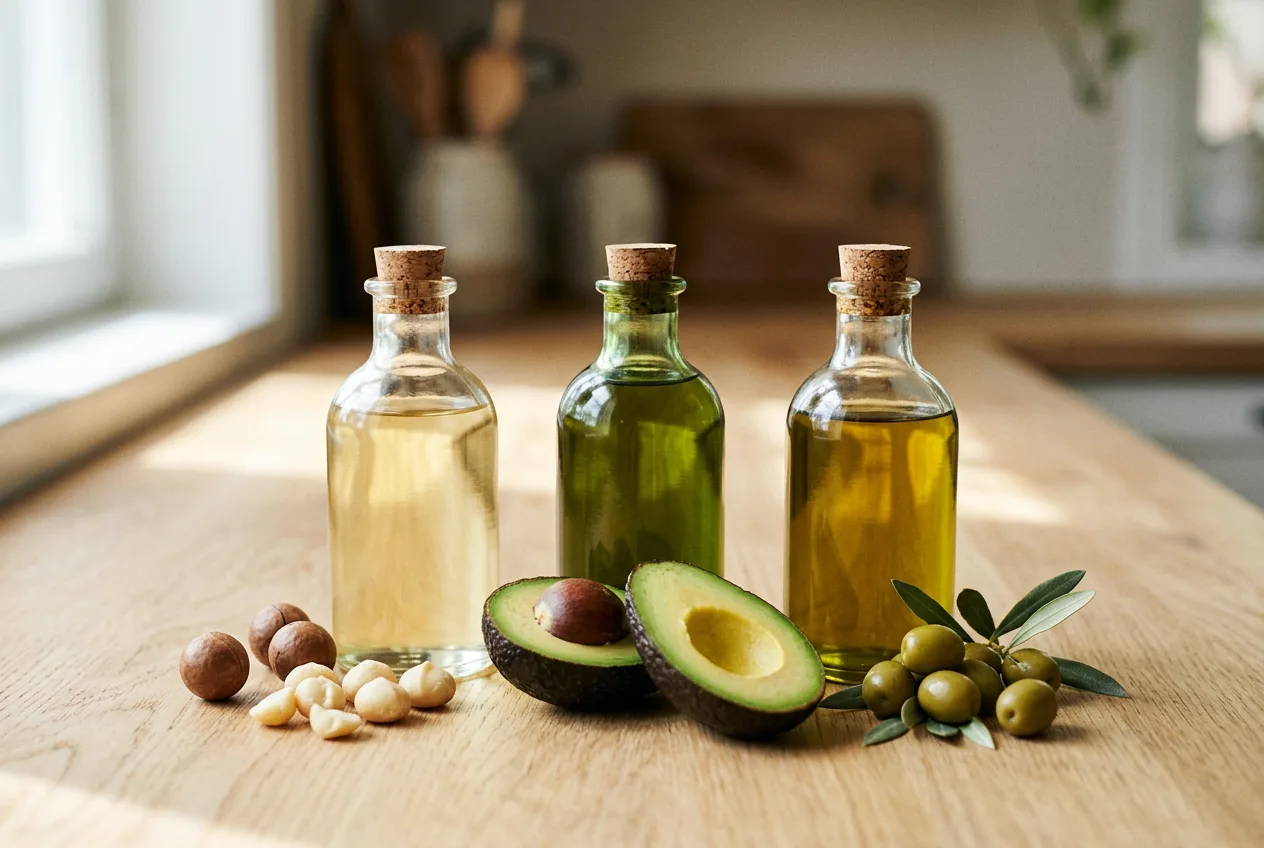
It's one of the richest dietary sources of omega-7 fatty acids, mainly palmitoleic acid, which researchers have studied for possible roles in metabolism and inflammation. The research is still early, but it's a good way to add variety.
Week 5: avocado oil
Avocado oil is another monounsaturated fat with a very neutral flavor that disappears into blended coffee. It's rich in oleic acid.
Oleic acid is linked to a compound called oleoylethanolamide, or OEA, a signaling molecule involved in appetite and satiety. Some research suggests it may help you feel full, though how much a spoonful of oil in coffee contributes is unclear.
Week 6: extra virgin olive oil
Olive oil in coffee sounds strange, but it works better than you'd think. Blended thoroughly, its peppery edge softens and you get a smooth, silky drink.
Extra virgin olive oil adds polyphenols and antioxidants along with monounsaturated fat. It's a simple way for people on high-fat, low-carb diets to include some of the fats associated with the Mediterranean diet.
Our tip: Use a mild, fruity extra virgin olive oil rather than a very peppery one. And blend for the full 30 seconds; olive oil needs it.
The fats compared
| Fat | Flavor in coffee | Digestion | Main nutritional note |
|---|---|---|---|
| Butter | Rich, creamy, classic | Fine for most | High in saturated fat |
| Ghee | Nutty, buttery | Gentler for dairy-sensitive | High in saturated fat, no milk solids |
| Coconut oil | Faint coconut | Fine for most | Lauric acid, some MCTs |
| MCT oil | Neutral | Can upset stomach | Fast-absorbed, ketogenic |
| Macadamia oil | Subtle, buttery | Fine for most | Omega-7, monounsaturated |
| Avocado oil | Neutral | Fine for most | Oleic acid, monounsaturated |
| Olive oil | Slightly peppery | Fine for most | Polyphenols, monounsaturated |
My six-week rotation: what I noticed
I followed the rotation myself, with about one tablespoon of the main fat plus one teaspoon of MCT oil in 10 ounces of coffee each morning. These are personal impressions, not science, but they might help you plan.
| Week | Taste | Fullness | Digestion |
|---|---|---|---|
| Butter | Richest, most "latte-like" | Full until lunch | Fine |
| Ghee | Nutty, slightly toasty | Full until lunch | Felt lighter than butter |
| Coconut oil | Faint coconut, thinner foam | Slightly less full | Fine at this amount |
| Macadamia | Smooth, subtly buttery | Full | Fine |
| Avocado | Very neutral | Full | Fine |
| Olive oil | Silky, faint pepper | Full | Fine |
The biggest surprise was how little the flavor changed. Once blended, all six made a creamy, pale coffee. Butter and ghee were the most indulgent; avocado oil was the most neutral. Olive oil was the one I expected to dislike and ended up enjoying most.
What made the biggest difference wasn't which fat I used, but sticking to measured amounts. In weeks where I was careful, I felt steady and light. When I tested a "generous" version one morning for comparison, I felt heavy and sluggish by mid-morning.
What the research says
There's very little research on bulletproof coffee as a drink. Most of what we know comes from research on its ingredients.
- MCT oil: studies show MCTs are rapidly absorbed and can raise ketone levels. Some small studies suggest modest effects on fullness or energy expenditure, but effects on weight are small.
- Fat and fullness: fat slows stomach emptying, which helps many people feel full, though responses vary.
- Saturated fat: in many people, a high intake of saturated fat raises LDL cholesterol. That's the main reason to keep amounts measured and rotate in unsaturated oils.
- Coffee itself: moderate coffee intake has been linked with possible health benefits in large studies. See health benefits of coffee.
In short: the evidence supports bulletproof coffee as a filling, low-carb drink, especially for people on keto. It doesn't support claims that it's a fat-burning or brain-boosting miracle. Any focus boost is largely caffeine plus not being hungry.
Why blending matters: emulsification
Blending does more than make bulletproof coffee taste nicer. It changes the physical state of the fat.
Normally, solid fats like butter, ghee and coconut oil are digested fairly slowly. Your body has to break them up with bile, then package the fat into particles called chylomicrons, which carry fat from the gut into the lymph system and bloodstream.
When you melt fat into hot coffee and blend it at high speed, it's broken into tiny droplets suspended evenly in the liquid. Some of the mechanical work of digestion has already been done, so the fat may be absorbed faster.
That can be a double-edged sword:
- The upside: fats reach the liver quickly, especially MCTs, supporting ketone production and a fast feeling of energy without raising blood sugar.
- The downside: if your body is slower at clearing fat from the blood, a large, fast dose may temporarily raise blood fat levels.
Everyone responds differently
Just as people respond differently to the same amount of sugar, they also handle dietary fat differently. Genetics, liver health, activity level and overall diet all affect how quickly fat is cleared from the bloodstream.
Some people may see a noticeable rise in blood triglycerides after a large, butter-heavy bulletproof coffee. That doesn't automatically mean the drink is harmful, but it's a sign that the fat is arriving faster than the body is using it.
If that's you, practical options include using less fat (half a tablespoon instead of two), favoring monounsaturated oils like olive or macadamia, or not having bulletproof coffee every day.
If you're curious about your own response, especially if you have a family history of heart disease or high cholesterol, the sensible step is to talk to your doctor. They can arrange appropriate blood tests and interpret them in context. Please don't try to diagnose yourself.

A simpler self-check is to keep notes during your weekly rotation: how full you feel, how your energy holds up, how your digestion responds and whether you feel heavy or sluggish. Favor the fats that make you feel best.
Health concerns to know about
- Saturated fat: butter, ghee and coconut oil are high in saturated fat. In some people, a lot of saturated fat raises LDL cholesterol. Rotating in monounsaturated oils helps.
- Missing nutrients: replacing breakfast with a fat-only drink means missing out on protein, fiber, vitamins and minerals from whole foods.
- Calories: easy to overdo, especially without measuring.
- Digestion: MCT oil in particular can cause cramps, nausea or diarrhea.
- Caffeine: it's still a full cup of coffee. See how much coffee is too much.
If you have high cholesterol, heart disease, gallbladder problems, pancreatitis, or liver or kidney conditions, check with your doctor before making bulletproof coffee a regular habit.
Bulletproof coffee, keto and intermittent fasting
On a ketogenic diet, bulletproof coffee fits neatly: lots of fat, almost no carbs, and MCTs that the body readily turns into ketones.
With intermittent fasting, it's more debated. Strictly speaking, a 250- to 350-calorie drink breaks a fast. Some people use it as a "fat fast" bridge to make a long morning easier because it doesn't raise insulin much. Others prefer black coffee during the fasting window and save fats for their first meal.
If you do drink it during a fasting window, pay attention to your hunger later in the day. Some people find a mid-morning butter coffee makes them less hungry at lunch, so they naturally eat less overall. Others find it simply adds calories on top of normal meals. Tracking your intake for a week or two, honestly and without judgment, is the easiest way to find out which group you're in.
Neither approach is wrong. It depends on why you're fasting and what works for you. If your goal is weight loss, remember that calories in the coffee still count.
How it tastes
Made properly, bulletproof coffee tastes like a rich, creamy latte with a slightly buttery, savory edge. The foam is thick and silky. There's no sweetness unless you add it, so the coffee's own flavor still matters.
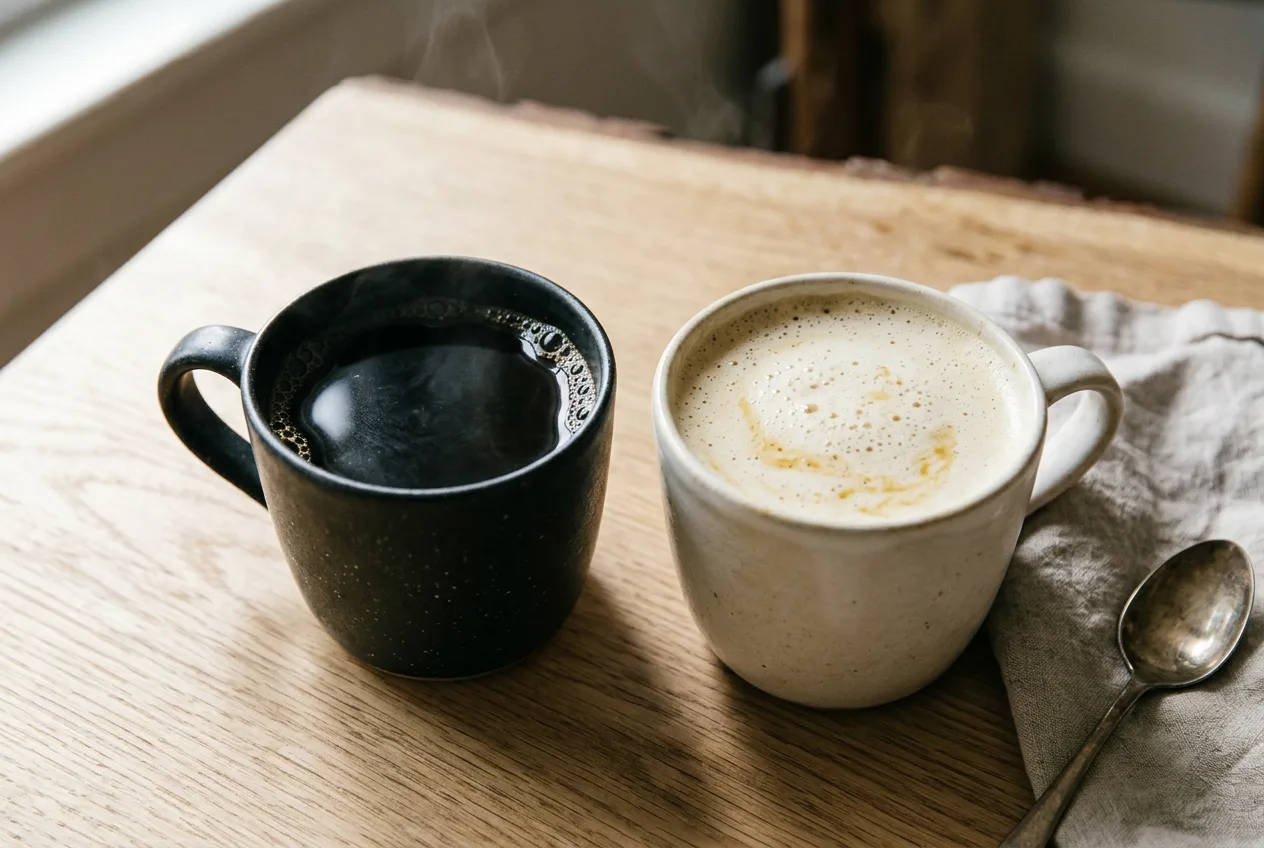
Badly made, it's a greasy mess: an oil slick on top, separation as it cools and an unpleasant coating on your lips. Almost every bad bulletproof coffee I've had came from not blending long enough or using too much fat.
For flavor, a pinch of cinnamon, a drop of vanilla or a tiny pinch of salt all work well. Cacao powder turns it into something like a keto mocha.
Variations worth trying
Cinnamon vanilla
Add a pinch of cinnamon and a few drops of vanilla extract before blending. It tastes sweeter without any sugar.
Keto mocha
Blend in a teaspoon of unsweetened cacao powder. Add a pinch of salt to bring out the chocolate.
Dairy-free
Skip butter and ghee, and use coconut oil plus a splash of unsweetened coconut milk or almond milk for creaminess.
With protein
Many people add a scoop of unflavored collagen or protein powder to make the drink more of a complete meal. It also helps with fullness.
Iced
Blend the hot version first so the fat emulsifies, then pour over plenty of ice. Butter can solidify into small flecks when chilled, so coconut or MCT oil works better for iced versions.
Spiced
A pinch of cardamom, nutmeg or pumpkin pie spice turns it into a cozy winter drink.
Bulletproof coffee vs other breakfasts
| Breakfast | Calories (approx.) | Protein | Fiber | Fullness |
|---|---|---|---|---|
| Bulletproof coffee | 250-350 | ~0 g | 0 g | High for many people |
| Large latte | ~200 | ~12 g | 0 g | Moderate |
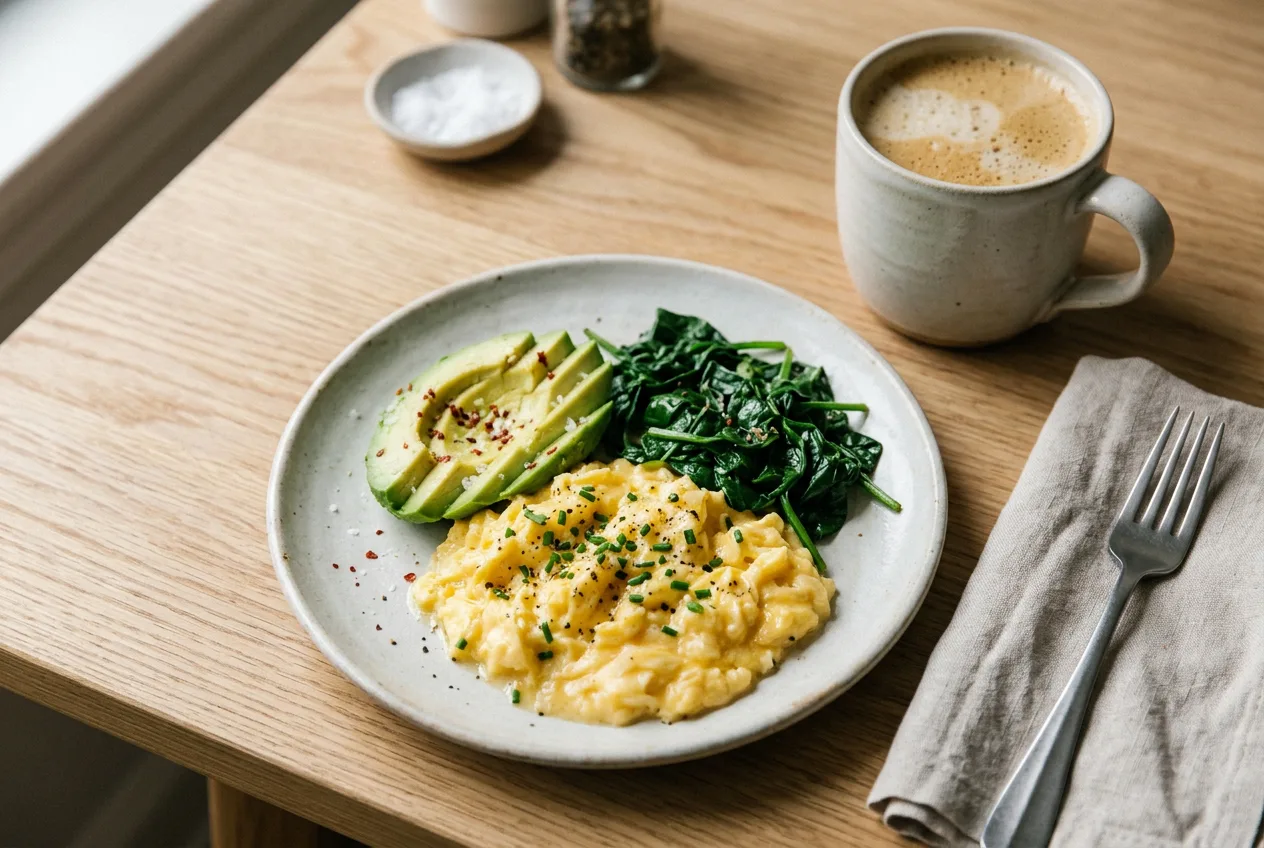
| Two eggs and avocado | ~300 | ~14 g | ~5 g | High |
| Oatmeal with nuts | ~350 | ~10 g | ~6 g | High |
| Mushroom coffee | ~50-100 | ~1 g | ~1 g | Low |
The table shows bulletproof coffee's strength and weakness. It's very satisfying for many people, but it offers almost nothing besides fat and caffeine. If you drink it most mornings, make sure your other meals are rich in protein, vegetables and fiber. For a lower-caffeine, lighter alternative, see mushroom coffee explained.
When to drink it
Most people drink bulletproof coffee first thing in the morning, in place of breakfast. That's when its fullness and steady energy are most useful.
Some people use it before a long meeting or a busy work block, or before a morning workout if they train fasted. Others prefer it mid-morning, after a glass of water, to stretch the time until lunch.
Avoid having it late in the day unless you use decaf. It still contains a full cup's worth of caffeine, which can affect sleep. For more, see coffee and sleep.
What it costs
Made at home with regular butter and a supermarket oil, bulletproof coffee is cheap: the coffee plus a tablespoon or two of fat. Branded MCT oils, grass-fed butter and premium ghee raise the cost but are still far cheaper than buying the drink at a cafe.
Ready-made bottled and powdered versions are the most expensive per cup. They're convenient for travel, but you'll get a better, fresher drink by making it yourself in a minute and a half.
Common mistakes
- Eyeballing the fat. Measure every time.
- Stirring instead of blending. You need a blender or frother for a proper emulsion.
- Too much MCT oil, too soon. Start with a teaspoon.
- Using it alongside a full breakfast. It's meant to replace a meal, not add to one.
- Using bad coffee. Fat won't hide stale or burnt coffee.
- Overfilling the blender with hot liquid. Leave space and vent the lid.
- Never changing the fat. Rotate for variety.
A simple two-week starter plan
If you've never had bulletproof coffee, jumping straight to two tablespoons of butter and two of MCT oil is a recipe for an unhappy stomach. Here's a gentler way in.
- Days 1-31 teaspoon of butter or ghee and 1 teaspoon of coconut oil, blended into your usual coffee. Eat a light breakfast later if you're hungry.
- Days 4-7Increase to 2 teaspoons of butter or ghee and 1 teaspoon of MCT or coconut oil. Notice how full you feel.
- Week 2Move to 1 tablespoon of butter or ghee plus 1 teaspoon of MCT oil. Use it in place of breakfast if it keeps you satisfied.
- After thatSettle on the smallest amount that keeps you full and energized, then start rotating fats weekly.
Many people find they need less fat than they expected. The goal isn't to drink as much fat as possible; it's to find the amount that keeps you comfortable and full until your next meal.
Can you make it ahead?
You can, but it's not ideal. As bulletproof coffee cools, the emulsion slowly breaks and fat starts to separate and rise. Butter can also firm up into small flecks.
If you need it on the go, blend it fresh and pour it into a preheated insulated travel mug. Shake or swirl before drinking. Reheating in a microwave works, but re-blend or froth it afterward to bring back the creamy texture.
Your daily checklist
- MeasureUse a spoon or scale, never eyeball.
- Keep saturated fat in proportionLeave room for whole-food fats later in the day.
- Blend fully20 to 30 seconds, no oil slick.
- Rotate weeklyButter, ghee, coconut, macadamia, avocado, olive.
- Listen to your bodyScale down if you feel sluggish, heavy or bloated.
- Stay flexibleAdjust for your goals, season and health advice.
Who it's for, and who should skip it

Myths about bulletproof coffee
- "It burns fat by itself." It doesn't. Weight loss still depends on your overall diet and energy balance.
- "More butter is better." More fat just means more calories and saturated fat.
- "It doesn't break a fast." It contains calories, so strictly speaking it does.
- "You need special branded ingredients." Any good butter, ghee or oil works.
- "It's just coffee with butter." Blending to an emulsion is what makes it work.
The verdict
Bulletproof coffee can be a genuinely useful tool: filling, satisfying, low in carbs and good at getting you through a long morning. It's especially handy on keto or low-carb diets.
But it's not magic. The benefits depend on making it carefully. Measure every time, blend properly, rotate your fats to get a wider range of nutrients, and notice how your body responds. Treat it as a meal replacement, not an extra, and don't let it crowd out the protein and vegetables your body needs.
If you're new to it, start small and go slowly, especially with MCT oil. If you've been drinking it for years, it might be time to dust off the measuring spoons, check how much fat you're really using and try a few weeks with olive, avocado or macadamia oil. You may find, as I did, that a lighter, more varied version keeps you just as full and feels better through the morning.
And if it simply doesn't suit you, that's fine too. A good cup of black coffee and a protein-rich breakfast is still one of the best ways to start the day.
Done that way, a mug of creamy, frothy coffee can be one of the most enjoyable and practical parts of a low-carb morning.
Frequently asked questions
What is bulletproof coffee?
Coffee blended with butter or ghee and MCT or coconut oil until creamy, usually as a breakfast replacement.
How many calories are in bulletproof coffee?
Usually around 220 to 350 calories when measured, but it can exceed 750 if you eyeball the fats.
Can I use regular butter?
Yes. Grass-fed is popular, but any good unsalted butter works.
Do I need MCT oil?
No. Coconut oil or other oils work. MCT oil is popular on keto but can upset the stomach.
Does bulletproof coffee break a fast?
Technically yes, because it contains calories, though some people use it as a low-insulin bridge.
Is bulletproof coffee healthy?
It can fit a healthy diet if measured and balanced, but it's high in saturated fat and lacks protein and fiber.
Can I make it without a blender?
A handheld milk frother works well. Stirring alone leaves an oily layer.
Can I use olive oil in coffee?
Yes. Blended well, mild extra virgin olive oil makes a smooth, silky drink.

- Michael Reynolds, six weeks of home testing with different fats
- Bulletproof coffee, Wikipedia
- Medium-chain triglyceride, Wikipedia
- Ghee, Wikipedia
- Butter tea, Wikipedia
- Palmitoleic acid, Wikipedia
Related guides
Mushroom coffee explained Coffee brewing ratios explained Health benefits of coffeeWritten by Michael Reynolds. Last updated November 20, 2026.