Italian Coffee Culture: How Italians Drink Coffee, What to Order and the Unwritten Rules
In Italy, coffee isn't a lifestyle accessory or a large cup to carry around. It's a quick, social ritual at a marble counter, repeated several times a day. Here's how it works, what the drinks are called, and how to order like a local.
We choose products independently. We may earn a commission through links on this page; your price stays the same. Affiliate policy
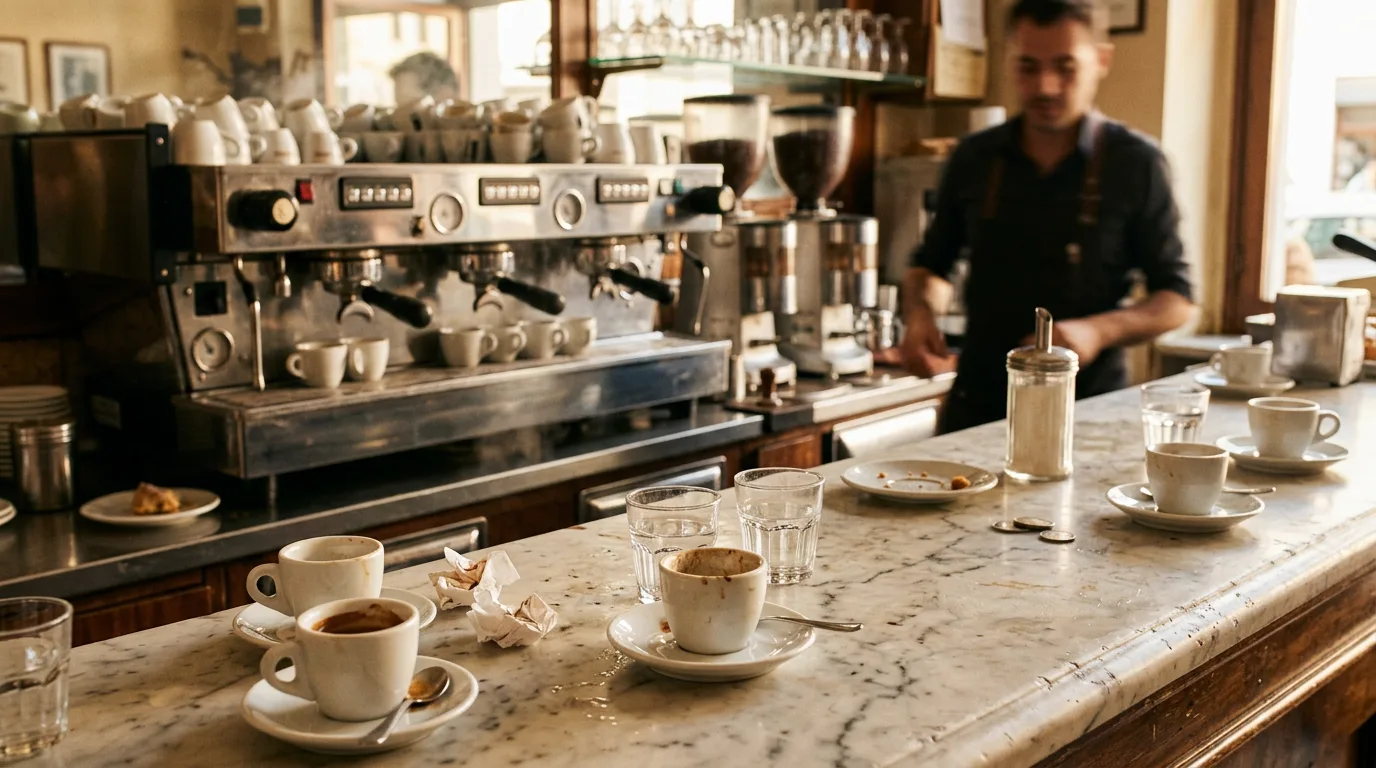
In Italy, "un caffè" means a single espresso, usually drunk standing at the bar in a few sips. Milky coffees like cappuccino are mostly a breakfast thing, rarely ordered after late morning or after a meal. Coffee is quick, cheap and social: you often pay first, show your receipt at the counter, drink and go. Sitting at a table usually costs more.
Why I wrote this
My first morning in Milan, I walked into a bar, waited politely to be seated, and ordered "a latte" at the table. I got a glass of warm milk and a bill that was twice what the people at the counter were paying.
Italian coffee culture is simple once you know it, but it runs on unwritten rules that nobody explains to visitors. They're not snobbery. They're habits built around short, strong coffee, fast service and a daily rhythm.
I've been back many times since, and the bar has become my favorite part of any trip. This guide is everything I wish I'd known on that first morning.
It also changed how I drink coffee at home. I now keep a moka pot next to my espresso machine, drink smaller cups more often, and save milky drinks for the morning. None of it is about rules for their own sake. It is about enjoying coffee as a small, regular pleasure rather than a giant cup you forget to finish. That shift alone has made my everyday coffee taste better and feel more special.
What you'll learn
- How an Italian bar works, from paying to drinking.
- What every drink on the menu means, with the right Italian names.
- The milk rules and the daily coffee rhythm.
- Regional specialties worth seeking out.
- How to bring the experience home.
The Italian bar: not a café, not a pub
In Italy, coffee is served at the "bar." It's not a pub, though most bars also serve alcohol. It's a neighborhood spot where people stop for coffee in the morning, a pastry, a sandwich at lunch, and an aperitivo in the evening.
The heart of every bar is the long counter and the espresso machine behind it. The barista, often the same person for years, works fast and knows regulars by their order.
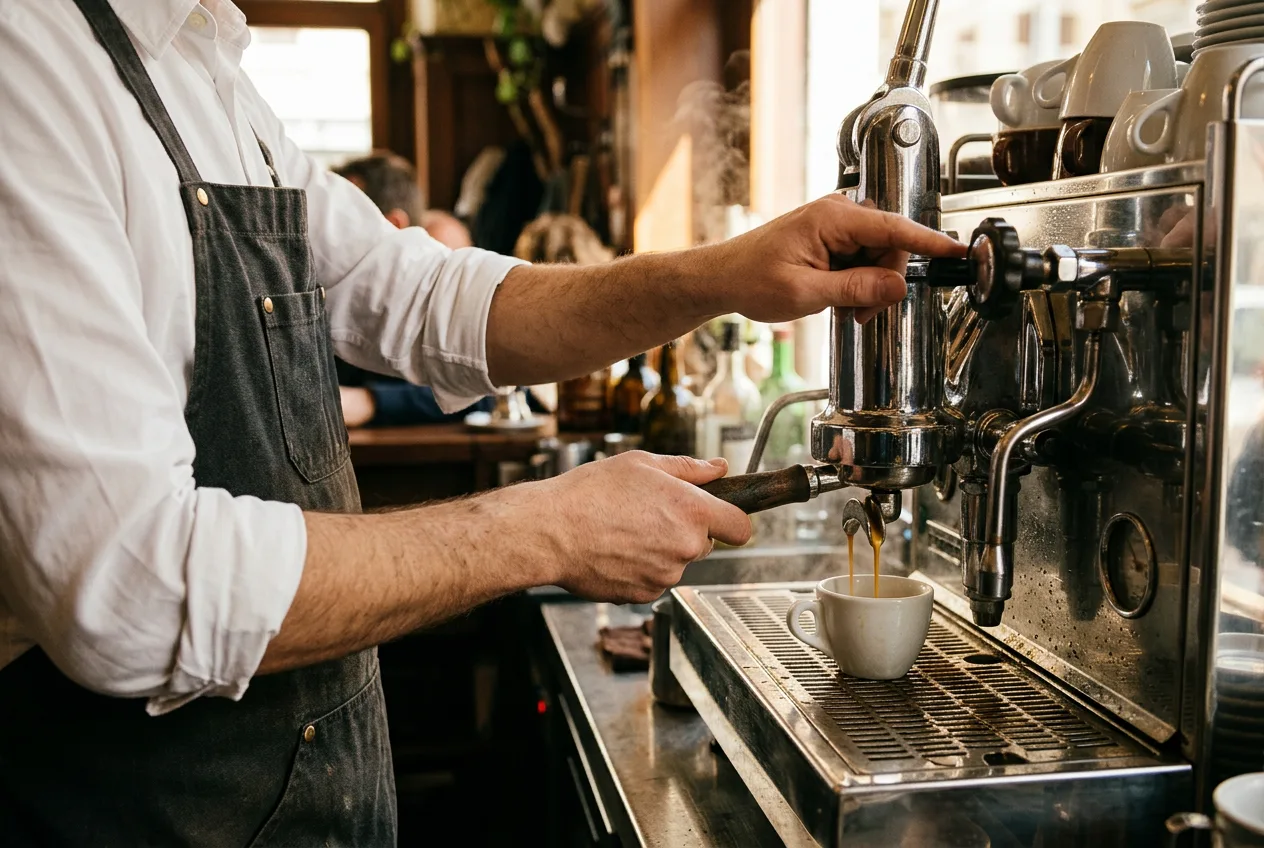
There are tens of thousands of bars in Italy, and many people visit the same one every day. It's less a place to linger with a laptop and more a quick stop for a coffee, a few words with the barista and then back to the day.
Our tip: The busier the counter with locals in the morning, the better the coffee usually is. Follow the crowd.
Standing at the counter: "al banco"
Most Italians drink their coffee standing at the counter, "al banco." You order, the barista sets a small cup on a saucer in front of you, and you drink it right there in two or three sips.
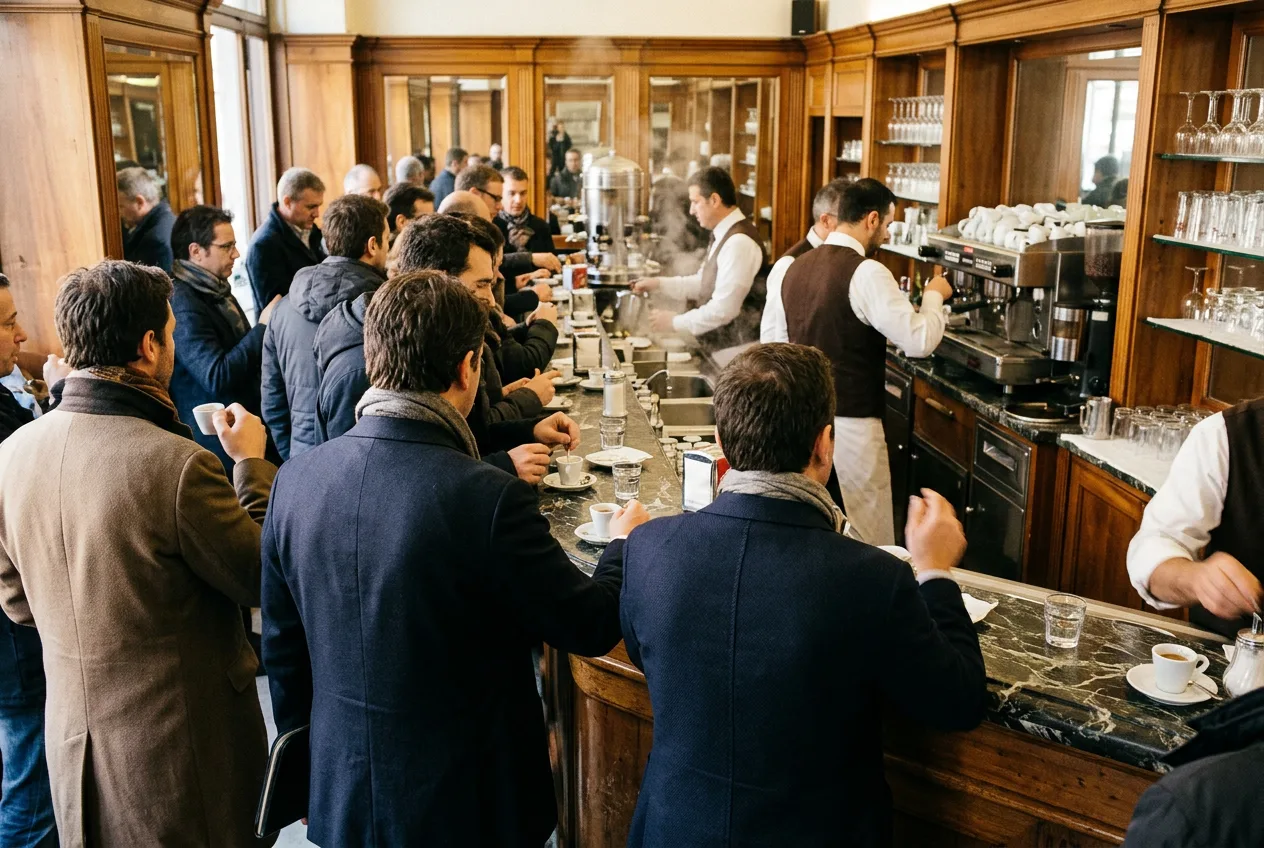
There's a practical reason for that. Coffee at the counter is usually cheaper than at a table. Many bars charge more for table service, "al tavolo," and in tourist areas the difference can be large.
| Where | What to expect | Price |
|---|---|---|
| Al banco (at the counter) | Quick, standing, the local way | Lowest |
| Al tavolo (at a table inside) | Waiter service, more relaxed | Often higher |
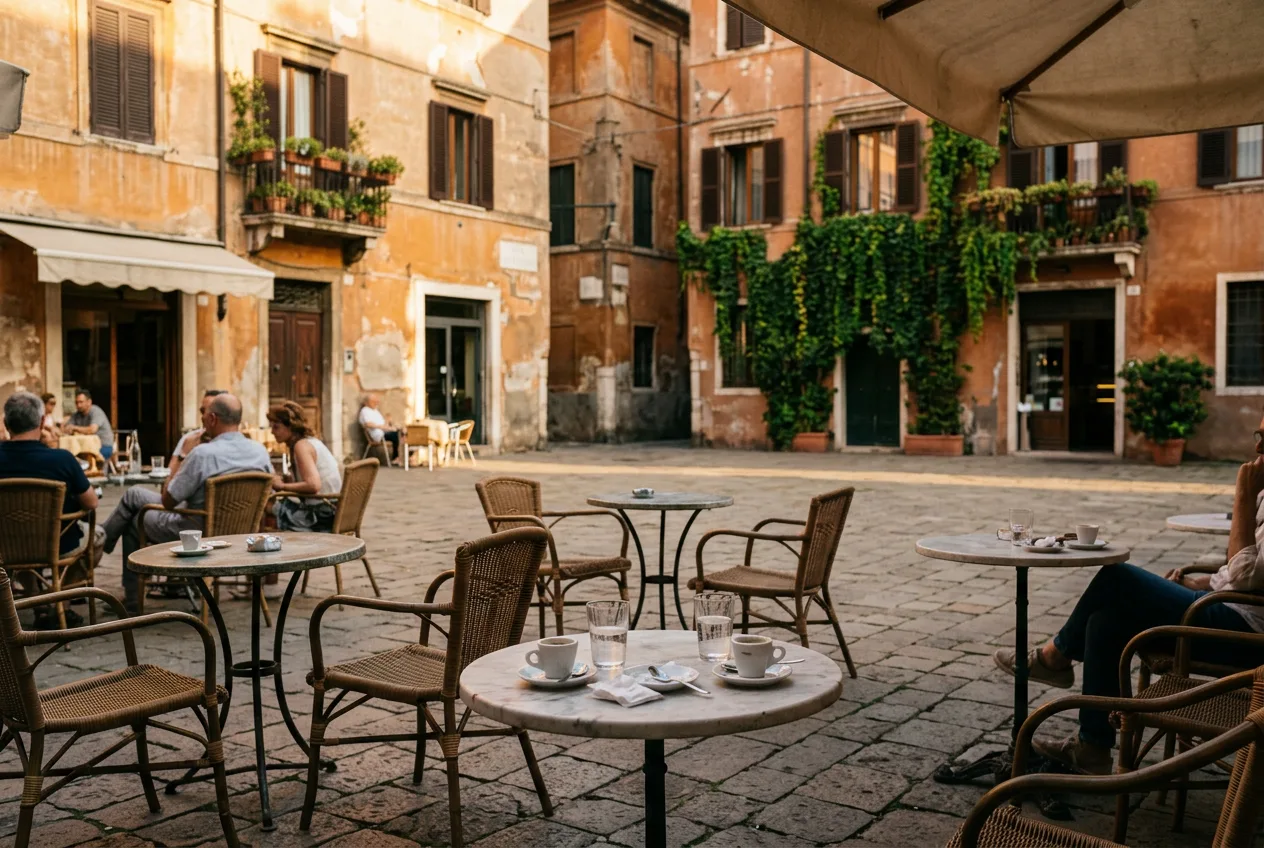
| Outside on a piazza | The view, people-watching | Highest, especially in famous squares |
Neither is wrong. If you want to sit and watch the world go by, a table is lovely, just know you're paying for the seat.
How to order and pay
Ordering at a busy Italian bar can feel chaotic at first. There's often no line, just a crowd at the counter. Here's how it usually works.
- Check if you pay firstIn many city bars, especially busy ones, you pay at the cash desk ("la cassa") first and get a receipt ("lo scontrino"). In smaller or quieter bars, you order first and pay on the way out.
- Go to the counter with your receiptPlace the receipt on the counter, catch the barista's eye and say what you'd like.
- Order simply"Un caffè, per favore" is all you need. Add "grazie" when it arrives.
- Drink at the counterSip it there. It's normal to finish in a minute or two.
- Leave the cup and goA small coin left on the receipt is a welcome tip, but not expected.
If you're not sure whether to pay first, look around. If people are holding receipts at the counter, head to the cash desk.
Un caffè: the heart of it all
In Italy, coffee means espresso. You don't ask for "an espresso"; you ask for "un caffè," and that's what you get. It's a single shot, small, strong and served in a thick porcelain cup that's been kept warm on top of the machine.
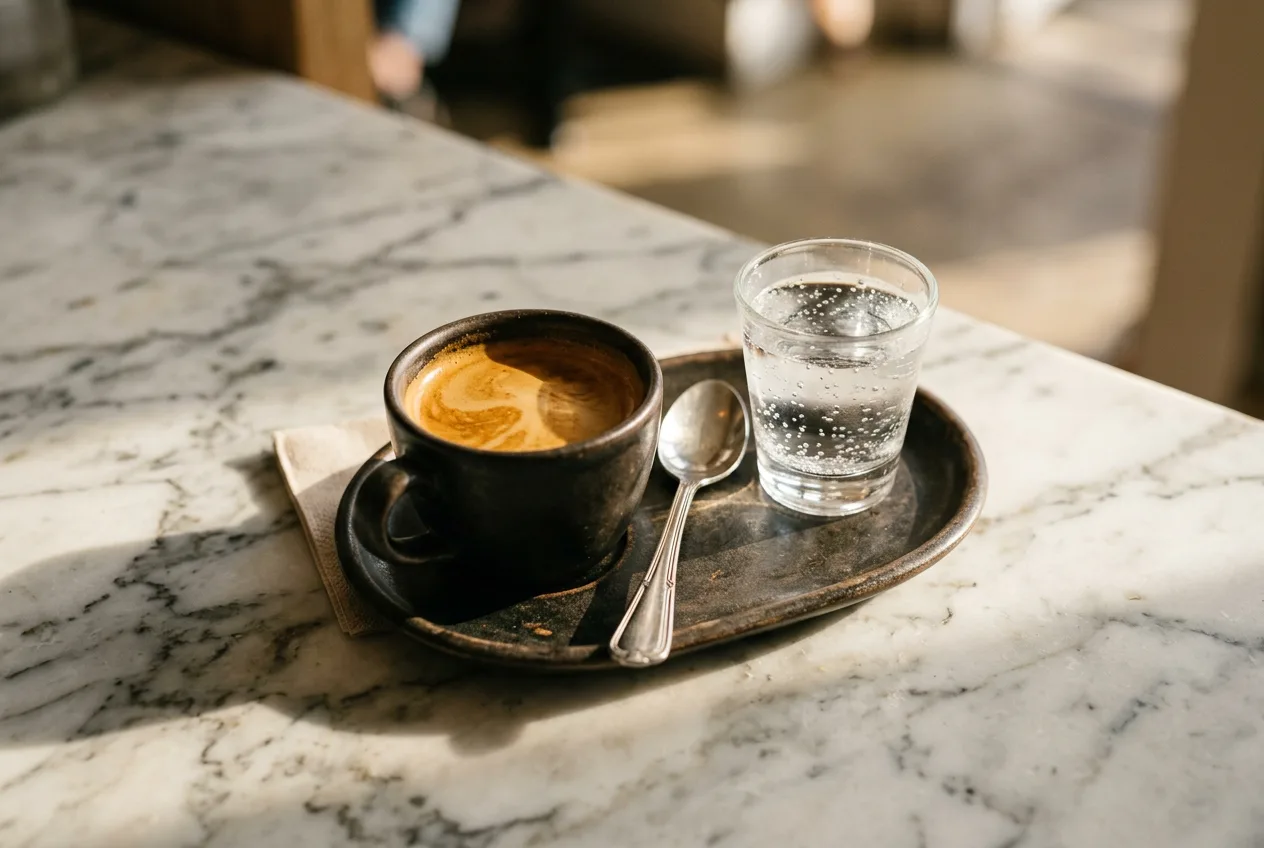
A typical Italian espresso is shorter than the doubles common in many other countries. It's often a dark, rich, slightly bitter cup, traditionally made from blends that include some robusta, though lighter specialty roasts are becoming more common in big cities.
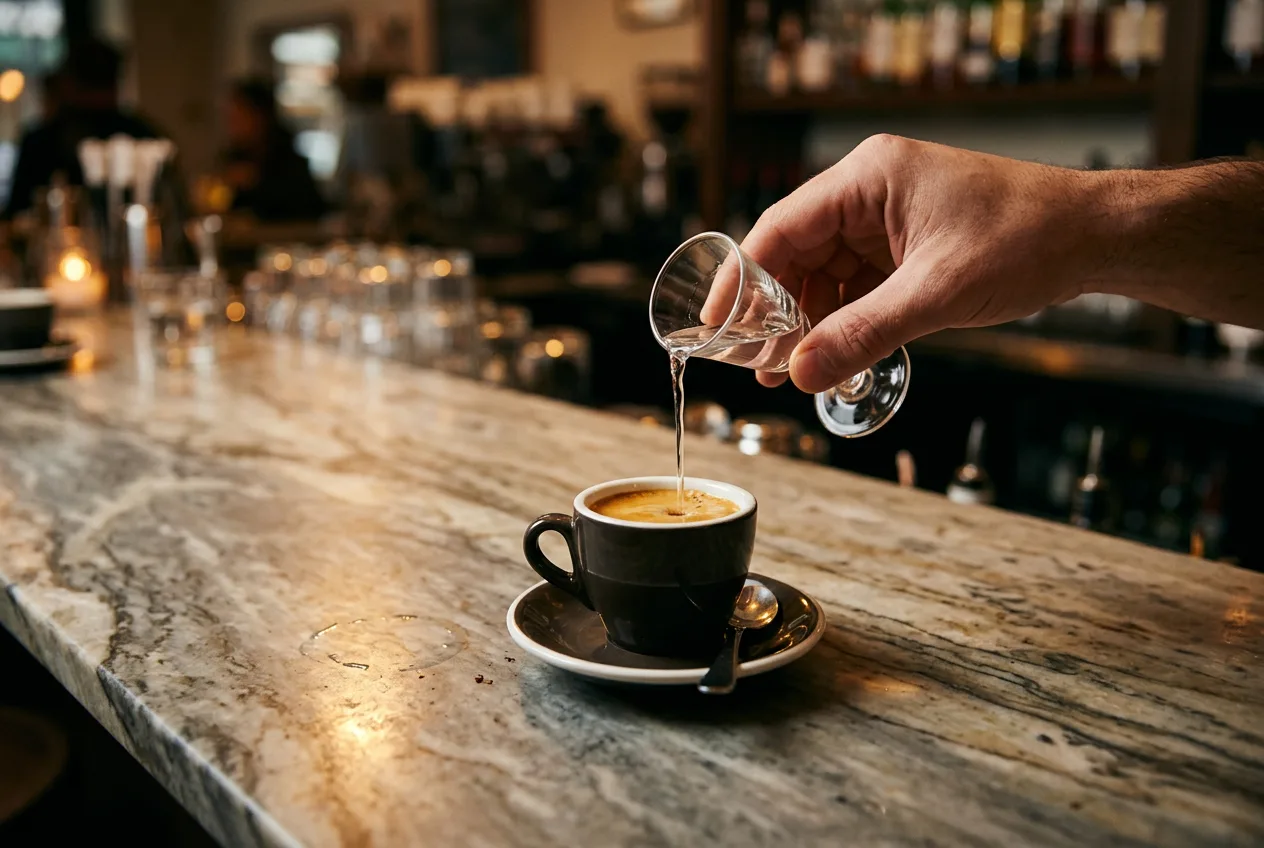
Many bars serve a small glass of water alongside. Italians usually drink the water first, to clear the palate, then the coffee. Sugar is common, and many people stir in half a packet or a spoonful.
It's also cheap. In most of Italy, an espresso at the counter still costs only a little over a euro, far less than in many other European cities. Many Italians feel strongly that coffee should stay an everyday, affordable pleasure.
For more on shot sizes, see ristretto vs espresso vs lungo.
The Italian coffee menu, decoded
Italian bars rarely have big printed menus for coffee, because everyone knows the drinks. Here are the ones you'll hear most.
| Order | What you get | When people drink it |
|---|---|---|
| Caffè | A single espresso | Any time of day |
| Caffè ristretto | A shorter, stronger espresso | Any time |
| Caffè lungo | A longer, milder espresso | Any time |
| Caffè doppio | A double espresso | Less common among locals |
| Caffè macchiato | Espresso "stained" with a little milk foam | Any time, a popular afternoon choice |
| Cappuccino | Espresso with steamed milk and foam | Breakfast |
| Caffè latte | Espresso with lots of hot milk | Breakfast |
| Latte macchiato | Hot milk "stained" with espresso, in a tall glass | Breakfast |
| Caffè corretto | Espresso "corrected" with a splash of liquor, often grappa | After meals, among older locals |
| Caffè americano | Espresso with hot water | Mostly tourists |
| Caffè d'orzo | A caffeine-free roasted barley drink | Any time |
| Caffè decaffeinato | Decaf espresso, often just "un deca" | Evenings |
Our tip: If you order "un latte," you'll get a glass of milk. Always say "caffè latte" or "latte macchiato."
The milk rules
The most famous Italian coffee "rule" is that you don't drink cappuccino after 11 a.m. or after a meal. It's not a law, and no barista will refuse you. But you'll notice most locals follow it.
The reasoning is cultural and partly digestive. Milky coffee is seen as part of breakfast, a small meal in itself, often with a pastry. After lunch or dinner, a big milky drink feels heavy. A short espresso is seen as the perfect way to finish a meal and help digestion.
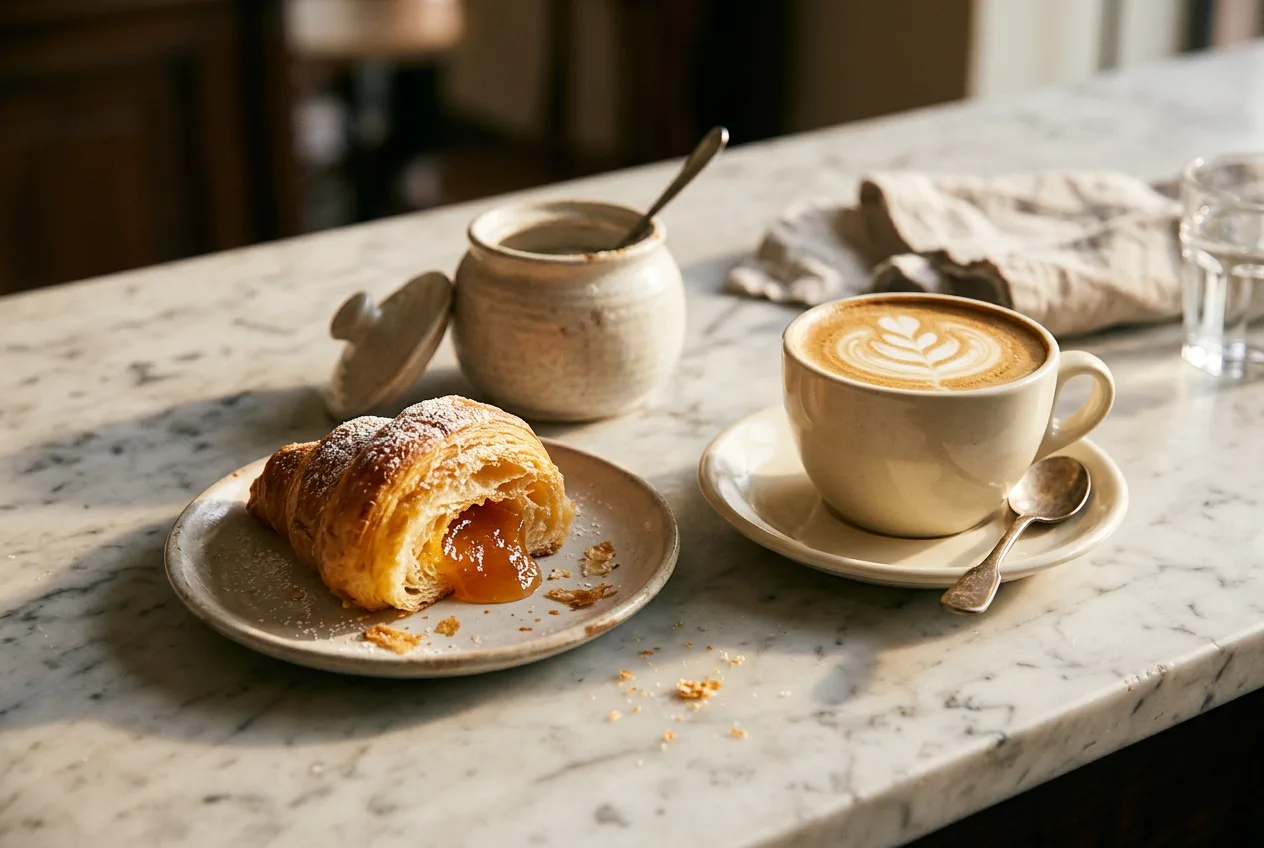
- Morning: cappuccino, caffè latte or latte macchiato, often with a cornetto.
- Late morning and afternoon: espresso or caffè macchiato.
- After meals: espresso, never cappuccino.
- Evening: espresso or decaf, sometimes caffè corretto.
The macchiato is the small loophole. A spoonful of milk foam on an espresso is fine at any hour. I compare cappuccinos, lattes and flat whites in detail in cappuccino vs latte vs flat white.
Coffee through the Italian day
Italians often drink several small coffees a day rather than one or two big ones. A typical rhythm might look like this:
- Early morning at homeA small moka pot coffee, sometimes with milk, before leaving the house.
- Breakfast at the barA cappuccino and a cornetto at the counter on the way to work.
- Mid-morning breakA quick espresso with colleagues, often around 10 or 11.
- After lunchAn espresso to finish the meal.
- AfternoonA caffè macchiato or another espresso to get through the afternoon.
- After dinnerAn espresso or a decaf, sometimes followed by a digestivo.
Because each cup is a single short shot, the total caffeine across the day is often moderate. Several small espressos can easily add up to less caffeine than two large mugs of filter coffee. For more on caffeine amounts, see caffeine myths debunked.
Coffee at home: the moka pot
Most Italian homes don't have an espresso machine. They have a moka pot, the octagonal aluminum stovetop brewer invented in Italy in 1933. It's in almost every kitchen in the country.
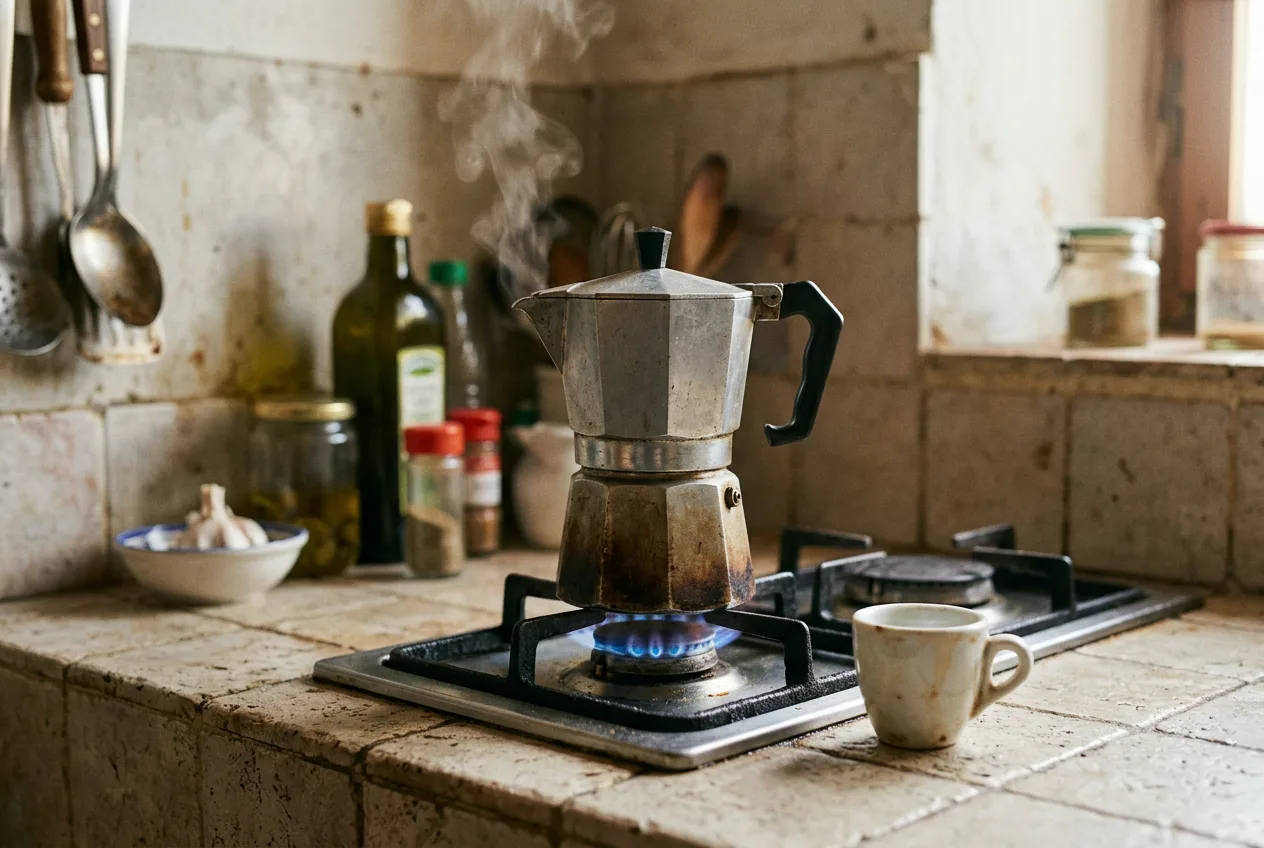
A moka pot pushes steam-pressured water up through the coffee and into the top chamber. It makes a strong, rich coffee that's similar to espresso, though at much lower pressure and without true crema.
How Italians use a moka pot
- Fill the base with water up to just below the valve.
- Fill the basket with ground coffee without pressing it down, leveling the top.
- Heat on a low to medium flame, with the lid open so you can watch.
- Take it off the heat as soon as the coffee turns pale and starts to gurgle.
- Stir the coffee in the top chamber before pouring, so it's even.
Many Italian families never wash their moka pot with soap, only rinsing it with water, believing the coffee oils season it like a cast-iron pan. If you try this, make sure it dries fully to avoid stale flavors.
Our tip: Starting with hot water in the base shortens the time on the stove and gives a sweeter, less bitter moka coffee.
Regional specialties worth seeking out
Italy's regions each have their own coffee habits and drinks. These are some of my favorites.
| Drink | Where | What it is |
|---|---|---|
| Bicerin | Turin, Piedmont | Layers of hot chocolate, espresso and cream in a small glass |
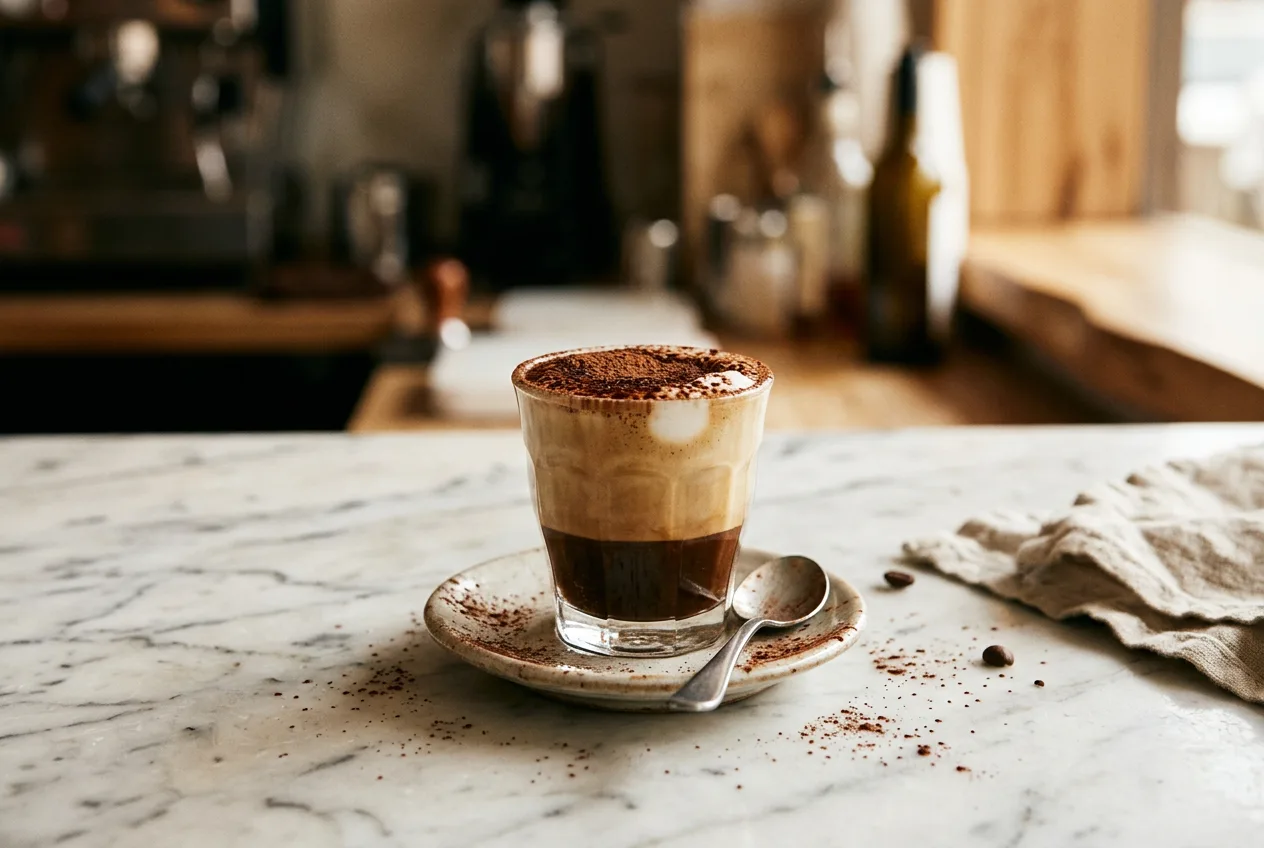
| Marocchino | Piedmont and the north | Espresso with cocoa and milk foam, in a small glass |
| Caffè alla nocciola | Naples | Espresso with a sweet hazelnut cream |
| Caffè leccese | Lecce, Puglia | Espresso over ice with almond syrup |
| Caffè del nonno | Various | A frozen, creamy coffee dessert drink |
| Caffè con panna | Throughout Italy | Espresso topped with whipped cream |
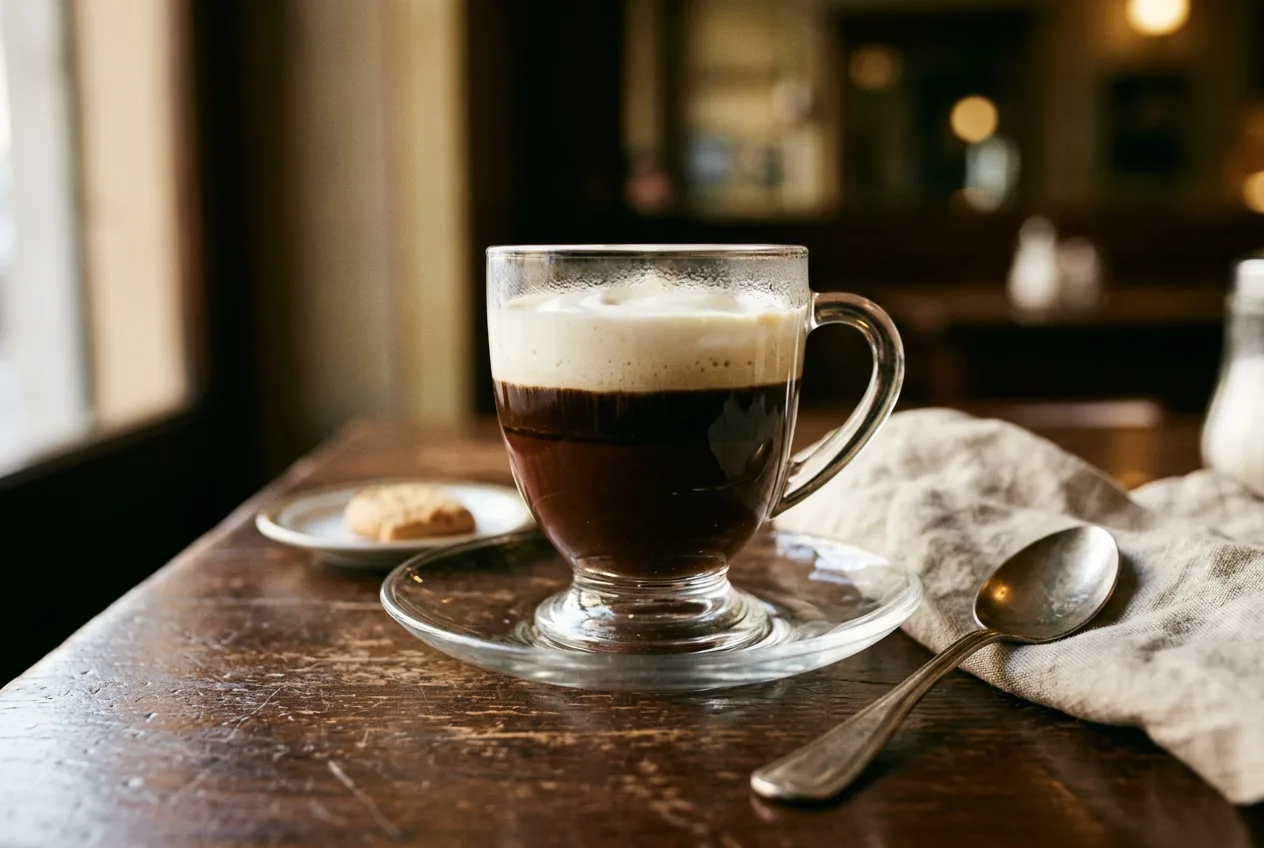
Naples deserves a special mention. Neapolitans are famously proud of their coffee, which is often strong, dark and sweet. The city is also known for the tradition of the "caffè sospeso," or suspended coffee: paying for an extra coffee so a stranger who can't afford one can have it later.
Summer coffee, Italian style
Italian summers are hot, and the coffee menu adapts.
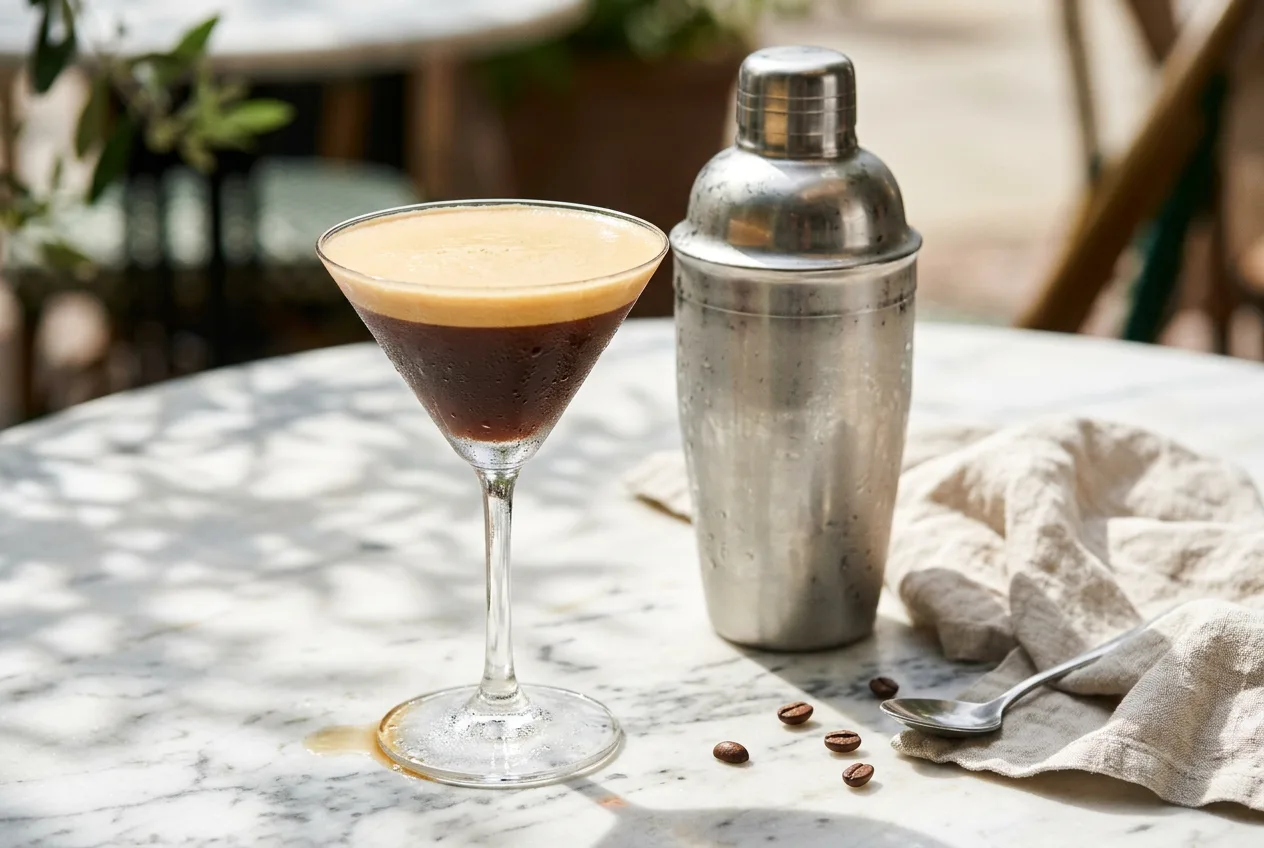
- Caffè shakerato: espresso shaken hard with ice and a little sugar until frothy, then strained into a chilled glass. Elegant and refreshing.
- Caffè freddo: pre-sweetened, chilled espresso kept in the fridge and poured to order.
- Crema di caffè: a soft, whipped, frozen coffee cream, served in a small cup with a spoon.
- Granita di caffè: coffee granita, often topped with whipped cream, especially in Sicily and the south.
If you're used to big iced coffees, these may seem small. They're meant to be a quick, cold hit of coffee rather than a drink to sip for an hour. For more cold coffee ideas, see iced coffee vs cold brew.
Coffee desserts
Coffee also shows up at the end of Italian meals in sweet form.
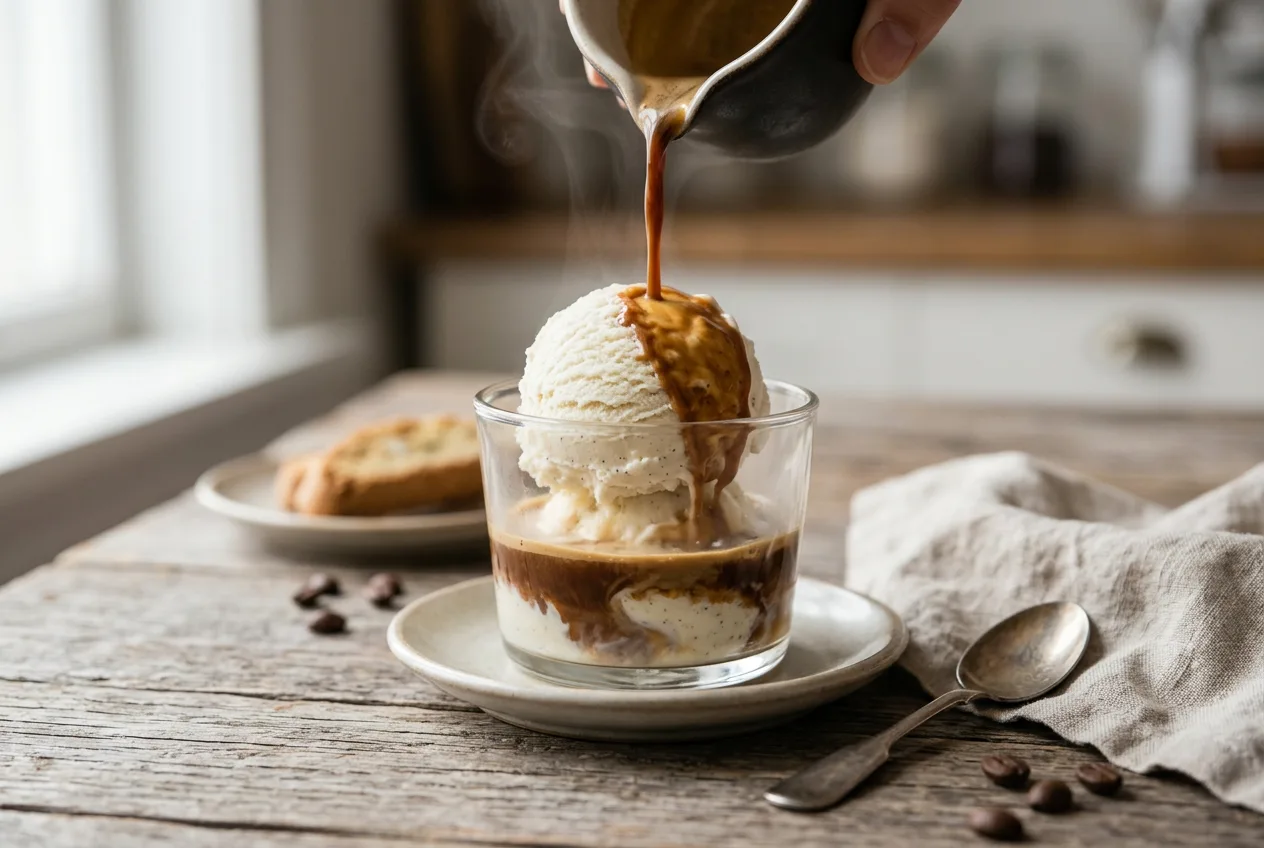
- Affogato: a scoop of vanilla gelato "drowned" in a hot shot of espresso. Simple and perfect.
- Tiramisù: layers of coffee-soaked ladyfingers and mascarpone cream, dusted with cocoa.
- Coffee gelato: a standard flavor at almost every gelateria.
An affogato is my favorite way to end a summer meal at home. It takes thirty seconds if you have an espresso machine, and it feels like a treat.
Tiramisù, which means "pick me up," is a more recent invention than many people assume, generally dated to the second half of the 20th century in the Veneto region. Today it is one of the most famous Italian desserts in the world, and it is a lovely way to use up strong leftover espresso or moka pot coffee at home.
The barista's craft
Watching a good Italian barista during the morning rush is a show in itself. Cups clatter onto saucers, the grinder runs almost nonstop, milk is steamed in small pitchers, and orders are remembered without anything written down.
In many bars, being a barista is a long-term profession rather than a student job. Some have worked the same counter for decades. They know which regular takes sugar, who wants their macchiato "caldo" or "freddo," with hot or cold milk, and who will want a second coffee in an hour.
The craft is about speed and consistency more than experimentation. The goal is the same reliable cup, dozens or hundreds of times a morning. Cups are kept warm on top of the machine, shots are pulled fast, and the counter is wiped between every customer.
That focus on routine is part of the charm. You're not paying for a coffee "experience" with tasting notes. You're paying for a familiar, well-made espresso, served quickly, by someone who probably knows your name if you come back twice.
What Italian espresso tastes like, and why
If you're used to modern specialty espresso, a traditional Italian espresso can taste quite different. It's usually darker, heavier and more bittersweet, with notes of dark chocolate, toasted nuts and caramel rather than bright fruit.
There are a few reasons. Many traditional Italian blends include some robusta alongside arabica. Robusta adds body, a thick crema and a strong, slightly bitter backbone. Roasts also tend to be medium-dark to dark, especially in the south.
Style also varies across the country. As a broad generalization, northern Italy tends to prefer slightly lighter, more arabica-heavy blends, while the south, especially around Naples, favors darker, stronger, more robusta-rich coffee, often drunk with sugar.
The result is designed to taste great in a few quick sips, with or without sugar, and to stand up to milk at breakfast. It's a different goal from specialty coffee, and it does that job very well. For more on why robusta tastes the way it does, see arabica vs robusta.
The price of a coffee, and why it matters
In much of Italy, an espresso at the counter still costs only a little over a euro. Compared with coffee prices in many other European and American cities, it's remarkably cheap.
For many Italians, that low price is almost a principle. Coffee is seen as an everyday necessity, not a luxury. When bars raise the price of an espresso by even a few cents, it can make local news, and customers notice.
The flip side is that bars earn very little per cup, which is one reason table service costs more and why bars rely on volume, pastries, sandwiches and evening drinks to stay in business. It's also one reason traditional bars haven't rushed to switch to expensive specialty beans.
If you're traveling, the counter price is one of the best bargains in the country. A morning espresso and pastry at the bar is a cheap, delicious way to start the day like a local.
Sugar, water and other little rituals
Italian coffee comes with small habits that make it feel like a ritual rather than just a drink.
- Water first: a small glass of water is often drunk before the coffee to clear the palate.
- Sugar, stirred well: many Italians add sugar and stir it thoroughly. Some leave the last sweet, syrupy sip at the bottom and scoop it up with the spoon.
- Hot or cold milk on the side: for a macchiato, you can ask for "latte caldo" (hot milk) or "latte freddo" (cold milk).
- Glass or cup: some people ask for their espresso or macchiato "al vetro," in a small glass, to watch the layers and cool it slightly.
- A quick chat: a few words with the barista or a neighbor at the counter is part of the experience.
None of these are required, but noticing them makes a visit to the bar much more fun.
Specialty coffee in Italy today
For a country so closely tied to espresso, Italy has been slower than many others to embrace third-wave specialty coffee. Light roasts, single origins, filter coffee and latte art are still niche outside the big cities.
That's changing. Milan, Rome, Turin, Florence and Bologna now have specialty cafés serving light-roasted single origins, pour-over and oat milk flat whites. Some young baristas are bringing new ideas into traditional bars too.
There's some friction. Specialty coffee usually costs more, which clashes with the idea that a coffee should be cheap. And bright, fruity espresso can surprise people raised on dark, bittersweet blends.
For visitors, it means you can now enjoy both: the classic neighborhood bar for a quick, traditional espresso, and a specialty café when you want something different.
Naples vs Milan: two coffee cities
To see how much coffee culture varies within Italy, compare two of its great coffee cities.
| Feature | Naples | Milan |
|---|---|---|
| Typical espresso | Strong, dark, often pre-sweetened | Slightly lighter and smoother |
| Cup | Often served very hot, cups kept in hot water | Warm porcelain cup |
| Pace | Lively, chatty, many stops a day | Fast, efficient, on the way to work |
| Traditions | Caffè sospeso, hazelnut cream coffee | Historic cafés, aperitivo culture |
| Specialty scene | Small | Growing quickly |
Both are wonderful. If you can, try a coffee at the counter in each and notice the difference in taste, pace and atmosphere.
What Italians eat with coffee
Italian breakfast is usually small and sweet, eaten quickly at the bar with a cappuccino or espresso. Each region has its favorites.
- Cornetto: the Italian cousin of the croissant, softer and sweeter, plain or filled with jam, custard, chocolate or pistachio cream. Found everywhere.
- Brioche col tuppo: a soft brioche from Sicily, often eaten in summer with granita.
- Maritozzo: a sweet bun split and filled with whipped cream, a Roman classic.
- Sfogliatella: a crisp, shell-shaped pastry filled with ricotta, famous in Naples.
- Pasticciotto: a shortcrust pastry filled with custard, from Lecce in Puglia.
- Biscotti: simple dry biscuits for dunking at home.
Savory breakfasts are rare. If you ask for eggs at a bar, you may get a puzzled look. Save savory food for lunch, when bars serve panini and small dishes.
Decaf, barley and ginseng coffee
If you want something coffee-like without the caffeine, Italian bars have a few options that are much more common than in many other countries.
- Un deca: a decaffeinated espresso. Widely available and very popular in the evening.
- Caffè d'orzo: a drink made from roasted barley, brewed like espresso or served as a long drink. It's caffeine-free, slightly toasty and very popular with children, older people and anyone avoiding caffeine.
- Caffè al ginseng: a sweet, creamy drink made from a ginseng and coffee mix, served in a small cup. It contains some coffee, and it's a favorite afternoon treat for many.
Ordering any of these is completely normal, and you'll see plenty of locals doing so. For how decaf is made, see how decaf coffee is made.
The "pausa caffè": coffee at work
In Italian workplaces, the coffee break is something close to sacred. Colleagues head out together to the nearest bar, or gather around the office machine, for a quick espresso and a chat.
It's short, often less than ten minutes, but it's an important part of working life. Business is discussed, problems are smoothed over and new colleagues get to know the team. Turning down an invitation to coffee too many times can seem a bit unfriendly.
Many offices also have capsule or bean-to-cup machines, and in some regions the moka pot still comes out in smaller workplaces. Either way, the ritual matters more than the equipment.
Two Italian coffee recipes to try at home
Caffè shakerato
- Make a double espressoOr a strong moka pot coffee.
- Add sugar while it's hotAbout one to two teaspoons, or a little simple syrup.
- Shake hard with icePour into a shaker or jar full of ice and shake vigorously for 15 to 20 seconds.
- Strain into a chilled glassA martini or small wine glass is traditional. You'll get a thick, light foam on top.
Marocchino
- Dust a small glass with cocoaA thin layer of unsweetened cocoa on the bottom, or a little chocolate sauce.
- Add a shot of espressoPour it over the cocoa.
- Top with milk foamAdd a spoonful or two of thick foam.
- Dust with more cocoaFinish with a light sprinkle on top. Drink it while hot.
Both take just a couple of minutes and taste like a trip to an Italian bar.
Historic cafés worth a visit
Alongside everyday bars, Italy has grand historic cafés that have served coffee for centuries. They're more expensive and touristy, but they're beautiful places to sit once and soak up the history.
- Caffè Florian, Venice: opened in 1720 on St. Mark's Square, often called one of the oldest cafés in continuous operation in Italy.
- Antico Caffè Greco, Rome: near the Spanish Steps since the 1760s, once frequented by writers and artists.
- Caffè Pedrocchi, Padua: a grand 19th-century café once known as "the café without doors" because it stayed open day and night.
- Gran Caffè Gambrinus, Naples: a Belle Époque café linked to the city's suspended coffee tradition.
- Al Bicerin, Turin: a tiny historic café famous for the bicerin, the layered coffee and chocolate drink.
Go once for the atmosphere, sit at a table and enjoy it. Then go back to the neighborhood bar for your everyday coffee.
Your first morning at an Italian bar, step by step
If it's your first trip, here's exactly how your first coffee stop might go.
- Walk in and say "buongiorno"A greeting goes a long way, even if you speak no other Italian.
- Look for the cash deskIf there's a separate till and people are holding receipts, pay there first.
- Order at the till"Un cappuccino e un cornetto, per favore." Take your receipt.
- Find a spot at the counterPut your receipt down. The barista will tear it slightly and start your order.
- Pick your cornettoOften you point to it in the glass case, or the barista hands it to you on a napkin.
- Enjoy, then leaveFive minutes later, say "grazie, buona giornata" and head off into your day.
By your second or third morning, it'll feel completely natural.
Myths about Italian coffee
- "Italians never drink milk in coffee after breakfast." Most avoid big milky drinks later, but a caffè macchiato is perfectly normal all day.
- "Italian espresso is always the best in the world." Many bars make excellent coffee, but quality varies like anywhere else. Busy local bars are usually your best bet.
- "Italians drink coffee all day, so they must have huge caffeine intakes." The cups are small, so several espressos often add up to a moderate total.
- "You must drink espresso in one gulp." Most people drink it in two or three sips. Nobody is timing you.
- "Italians hate flavored coffee." Traditional bars rarely use syrups, but regional drinks like the marocchino, bicerin and hazelnut cream coffee are full of flavor.
A short history of Italian coffee
Coffee reached Italy through Venice in the 1500s and 1600s, carried by merchants trading with the Ottoman Empire. Venice soon had coffee houses, and the drink spread through Italy's cities as a fashionable, social habit.
The big change came around the turn of the 20th century, when Italian inventors in Turin and Milan developed machines that used steam pressure to brew coffee quickly, one cup at a time. The word "espresso" captured the idea: coffee made expressly for you, on the spot.
After the Second World War, lever machines that brewed at much higher pressure created the espresso we know today, with its layer of crema. Around the same time, the moka pot brought espresso-style coffee into almost every Italian home.
Through the post-war decades, the neighborhood bar became the center of daily life, and the quick espresso at the counter became a national ritual. Today, there are even efforts to have the Italian espresso ritual recognized as part of the world's cultural heritage. More on how crema came to define espresso in espresso crema explained.
Etiquette: dos and don'ts
| Do | Don't |
|---|---|
| Say "buongiorno" when you walk in | Wait silently to be noticed |
| Order "un caffè" for an espresso | Order "un latte" expecting coffee |
| Drink at the counter for a quick, cheap coffee | Sit at a table and expect counter prices |
| Enjoy cappuccino in the morning | Order cappuccino with your pasta at dinner |
| Drink your coffee while it's hot | Ask for it "to go" in a big paper cup |
| Say "grazie" and leave small change if you like | Expect to camp at the counter with a laptop |
Takeaway coffee does exist, especially in big cities and train stations, but it's far less common than elsewhere. Most Italians would rather spend two minutes drinking at the bar than walk around with a cup.
Common tourist mistakes
- Ordering a "latte" and getting a glass of milk.
- Asking for an "espresso" and expecting a double. You'll get a single unless you ask for a "doppio."
- Sitting down in a famous square and being surprised by the bill.
- Expecting huge sizes. Italian cups are small, by design.
- Looking for flavored syrups and seasonal specials. Traditional bars rarely have them.
- Lingering at a busy counter. Drink, chat briefly, and make room for the next person.
None of these will get you thrown out. Italians are used to visitors. But following the local rhythm makes the experience much more enjoyable, and usually cheaper.
Bringing Italian coffee culture home
You don't need to live in Rome to enjoy coffee the Italian way. A few habits capture most of the spirit.
- Get a moka pot or an espresso machineA moka pot is cheap and authentic. An espresso machine gets you closer to bar coffee.
- Choose an Italian-style blendLook for a medium-dark espresso roast, perhaps with a little robusta, for that classic chocolatey, bittersweet taste.
- Use small, thick cupsPre-warm them so the coffee stays hot.
- Drink it quickly and oftenSmall cups through the day instead of one big mug.
- Save cappuccino for breakfastMake it with a cornetto or a croissant on a weekend morning.
- Finish dinner with an espressoOr an affogato in summer.
If you're choosing beans, my guides to roast levels and arabica vs robusta explain why traditional Italian blends taste the way they do.
The verdict
Italian coffee culture is about small, strong coffees, drunk quickly and often, as part of a social daily rhythm. The espresso at the counter is the heart of it. Milky drinks belong to breakfast. And the bar is a place to stop, not to settle in.
Learn a few words, stand at the counter, and order "un caffè." You'll pay less, drink better and feel, for a few minutes, like a local. And when you get home, a moka pot and a small warm cup are all you need to bring a little of it with you.
The beauty of the Italian approach is how simple it is. There is no app, no loyalty card, no long menu of sizes and syrups. Just a counter, a barista, a small warm cup and a few minutes of pause in the middle of a busy day. Once you have experienced it, a quick espresso standing at a bar becomes one of the things you miss most when you leave, and one of the easiest to recreate in your own kitchen.
Frequently asked questions
What do you call an espresso in Italy?
Just "un caffè." In Italy, coffee means espresso by default.
Is it rude to order a cappuccino after 11 a.m. in Italy?
It's not rude, and you'll be served. It's simply not what most Italians do, because milky coffee is seen as a breakfast drink.
Why is coffee cheaper at the counter?
Many bars charge extra for table service. Drinking at the counter, "al banco," is the standard local way and usually the cheapest.
Do you pay before or after in an Italian bar?
In many busy city bars you pay first at the cash desk and show the receipt at the counter. In smaller bars you often order first and pay as you leave.
What is a caffè corretto?
An espresso "corrected" with a small amount of liquor, usually grappa, sambuca or brandy. It's traditionally an after-meal drink.
What is the difference between a caffè macchiato and a latte macchiato?
A caffè macchiato is an espresso with a spoonful of milk foam. A latte macchiato is a tall glass of hot milk with a shot of espresso poured in.
Do Italians drink coffee to go?
Rarely. Most prefer to drink quickly at the bar. Takeaway cups are more common in big cities and stations.
What coffee do Italians make at home?
Most use a moka pot, a stovetop brewer that makes strong, espresso-like coffee.

- Michael Reynolds, notes from visits to Italian coffee bars and home brewing
- Coffee culture, Wikipedia
- Moka pot, Wikipedia
Related guides
Cappuccino vs latte vs flat white Ristretto vs espresso vs lungo Espresso crema explained Americano vs long black Arabica vs robustaWritten by Michael Reynolds. Last updated November 19, 2026.