Arabica vs Robusta vs Liberica (and Excelsa): The Coffee Species Compared
Almost all the world's coffee comes from two species, arabica and robusta. But two rarer types, liberica and excelsa, have devoted followings in Southeast Asia and some of the most unusual flavors in coffee. I tasted all four side by side. Here's how they differ in flavor, caffeine, beans and growing conditions, and how to brew each one.
We choose products independently. We may earn a commission through links on this page; your price stays the same. Affiliate policy
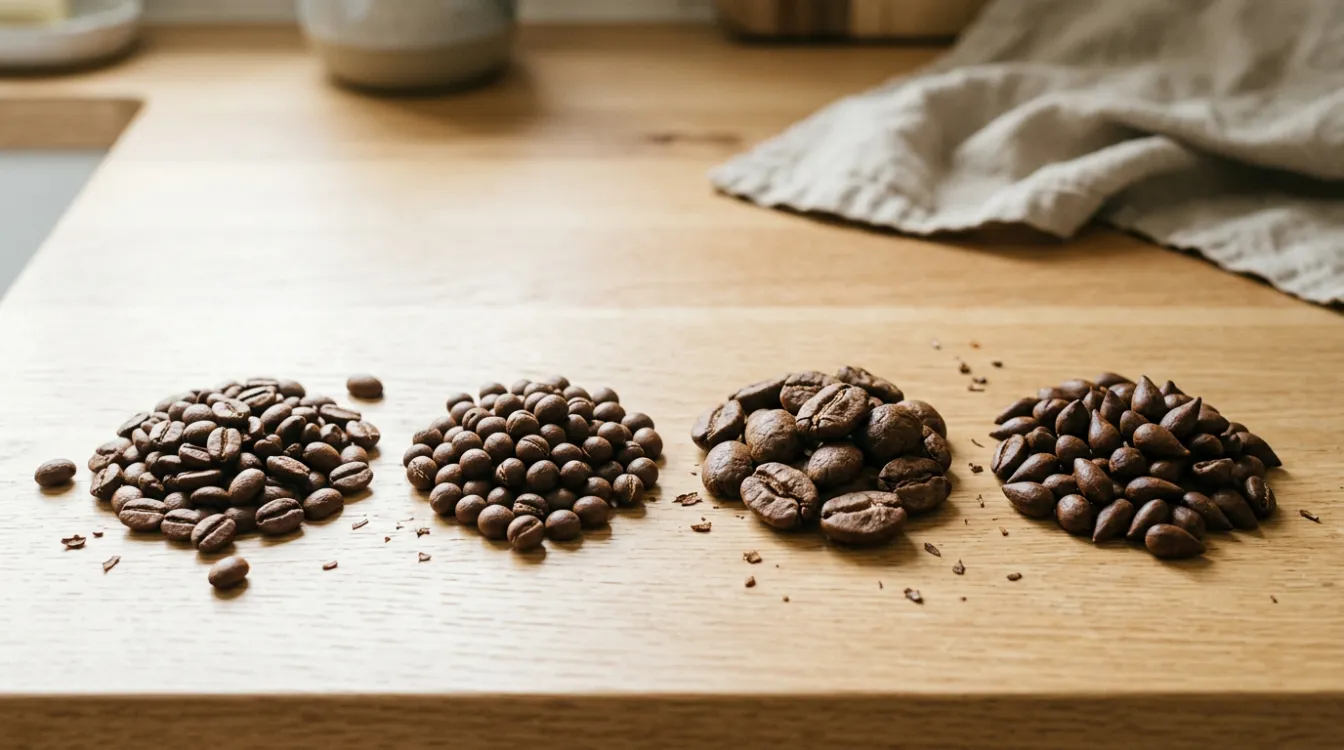
Arabica is sweet, complex and acidic, grows at high altitude and makes up about 60 percent of world coffee. Robusta is bold, bitter and heavy, has about twice the caffeine and grows in hot lowlands. Liberica is a rare species with huge, irregular beans and a smoky, woody, fruity flavor, beloved in the Philippines and Malaysia. Excelsa, now classified as a variety of liberica, is tart and fruity. For everyday drinking, arabica is the most versatile. Robusta shines in espresso and milk drinks, and fine robusta can be excellent. Liberica and excelsa are well worth trying for their unique character.
Why the coffee species matters
Most coffee drinkers know the word "arabica" from coffee bags, and many have heard that robusta is the cheaper, stronger one. Far fewer have tasted liberica or excelsa, two rare species that are mainly grown and drunk in Southeast Asia.
Yet the species is the most basic fact about any coffee. It shapes the plant, the bean, the caffeine content, the growing conditions and, above all, the flavor.
The global coffee industry is built on an enormous agricultural and commercial chain, from millions of smallholder farms to roasters, cafés and supermarkets. Almost all of it rests on just two species. The others survive in niches, often prized locally and largely unknown elsewhere.
Knowing the species also helps you read labels. "100% arabica," "espresso blend," "kopi" and "barako" all tell you something about the beans inside, if you know what to look for. And it explains why two coffees at very different prices can taste so different, even before roast and origin come into play.
I've brewed and tasted all four main types side by side: arabica, robusta, liberica and excelsa. This guide explains how they differ, how to recognize them and how to brew each one at its best.
The four main coffee species at a glance
| Feature | Arabica | Robusta | Liberica | Excelsa |
|---|---|---|---|---|
| Scientific name | Coffea arabica | Coffea canephora | Coffea liberica | C. liberica var. dewevrei |
| Share of world coffee | About 60% | About 40% | Under 2% | Under 1% |
| Altitude | High | Low | Low | Low to mid |
| Caffeine | About 1-1.5% | About 2-2.5% | About 1.2-1.5% | Low to moderate |
| Flavor | Sweet, complex, acidic | Bold, bitter, earthy | Smoky, woody, fruity, floral | Tart, fruity, dark |
| Bean shape | Oval, curved crease | Small, round, straight crease | Very large, irregular | Smaller teardrop |
| Main regions | Latin America, Africa | Vietnam, Brazil, Indonesia | Philippines, Malaysia | Southeast Asia |
How the coffee world is divided
Botanists have identified well over a hundred species in the Coffea genus, but only a handful are grown commercially. Each evolved in a different environment, which explains their very different characters.
The four main types are:
- Arabica (Coffea arabica)The quality leader, originally from the Ethiopian highlands.
- Robusta (Coffea canephora)The hardy workhorse from West and Central Africa.
- Liberica (Coffea liberica)A rare, large-beaned species from West Africa, now mainly grown in Southeast Asia.
- Excelsa (C. liberica var. dewevrei)A distinctive relative of liberica, once considered a separate species.
Each has its own anatomy, chemistry, agricultural needs and flavor. Understanding them makes the whole coffee world easier to navigate, from supermarket shelves to specialty cafés. And beyond these four, a peaberry isn't a species at all, but a natural bean shape that can occur in any of them. My guide to peaberry coffee explains that quirk.
How the coffee species spread around the world
Coffee's story begins in Africa. Arabica grew wild in the highland forests of Ethiopia, while robusta and liberica grew in the lowland forests of West and Central Africa.
Arabica was the first to travel. By the fifteenth century it was cultivated in Yemen, and from there it spread to India, Java and, in the eighteenth century, the Caribbean and Latin America. For centuries, "coffee" simply meant arabica.
The turning point came in the 1860s and 1870s with coffee leaf rust. The fungus destroyed arabica plantations across Ceylon, Java and the Philippines. Planters urgently looked for alternatives.
Liberica came first. Its resistance to rust made it a popular replacement in Asia for a few decades. In the Philippines, Batangas became famous for it. But liberica turned out to be vulnerable too, and it had a strong, unusual flavor that many export buyers disliked.
Robusta followed in the early twentieth century and proved more successful. It resisted rust well, yielded heavily and grew easily in lowland plantations. It spread rapidly through Indonesia, then to Vietnam, India, Brazil and Africa.
Excelsa was described by botanists in the early twentieth century in Central Africa and planted in parts of Asia, where it found a niche in local blends.
The botany behind the differences
The four types differ at a genetic level.
- Arabica is tetraploid, meaning it has four sets of chromosomes. It's actually a natural hybrid of two other species, Coffea canephora and Coffea eugenioides. It pollinates itself, which keeps varieties stable but limits genetic diversity.
- Robusta is diploid, with two sets of chromosomes, and needs cross-pollination from other plants. That gives it far more genetic diversity.
- Liberica and excelsa are also diploid and cross-pollinating, with large trees and large fruit.
Arabica's low genetic diversity is one reason it's so vulnerable to disease and climate change. Robusta's diversity is part of why breeders see it as a resource for future, more resilient coffees.
How to identify species by looking at the beans
You can often tell species apart just by looking closely at whole beans.
- Check the sizeLiberica beans are noticeably large; robusta beans are small.
- Look at the shapeArabica is a regular oval, robusta round and dome-like, liberica irregular and asymmetrical, excelsa often teardrop-shaped.
- Look at the center lineArabica's crease is curved or S-shaped; robusta's is straight; liberica's is jagged.
- Compare uniformityArabica and robusta lots tend to look uniform; liberica lots often look more varied.
- Smell the beansLiberica often has a striking fruity, floral aroma even before brewing.
It's a fun exercise with a few bags of different coffees, and a good way to train your eye.
Roasting differences
Each species behaves differently in the roaster.
Arabica
Its higher sugar content caramelizes beautifully. Light roasts highlight fruit and acidity; darker roasts bring chocolate and caramel.
Robusta
Lower sugar means less caramelization. It's usually roasted medium to dark to develop chocolate notes and avoid harsh, raw flavors.
Liberica
Its large, irregular beans can roast unevenly, so roasters often use slower, gentler profiles. Medium roasts usually balance its smoky and fruity sides.
Excelsa
Often roasted medium to highlight dark fruit while keeping its tart brightness.
Arabica (Coffea arabica)
Market dominance
Arabica is the most widely consumed and commercially prized coffee in the world, making up roughly 60 percent of global production. Almost all specialty coffee is arabica, and most premium supermarket coffees advertise "100% arabica" on the label.
Flavor profile
Arabica is celebrated for its mild, nuanced and complex flavors. Depending on origin, variety, processing and roast, it can taste of berries, citrus, stone fruit, flowers, caramel, chocolate and nuts. It has noticeable, often bright acidity and a smooth, sweet finish.
How to recognize the beans
- Shape: larger, distinctly oval beans with one flat side.
- Size: usually about 0.35 to 0.45 inches long.
- Center crease: a curved, S-shaped line down the flat side.
Origins and growing needs
Arabica originated in the forested highlands of southwestern Ethiopia and South Sudan. It spread to Yemen and then around the world.
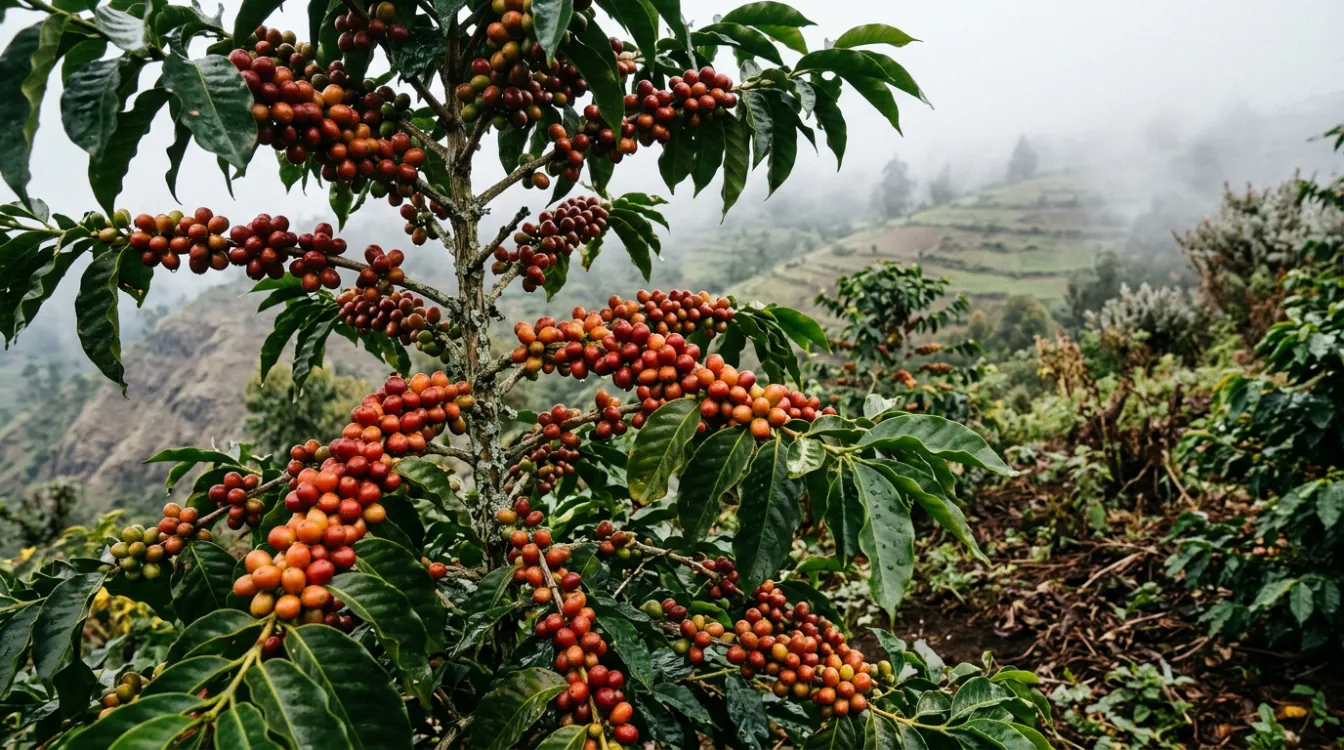
It's notoriously demanding to grow:
- Altitude: thrives at higher elevations, often between about 2,000 and 7,000 feet depending on latitude.
- Temperature: ideal daytime temperatures of roughly 64 to 75°F.
- Rainfall: steady, predictable rainfall with a clear dry season to trigger flowering.
- Shade: it evolved as an understory plant, so partial shade often improves quality.
It's also vulnerable to coffee leaf rust, coffee berry borer and other pests, which makes it expensive to farm. My guide to how altitude affects coffee flavor explains why high-grown arabica tastes the way it does.
Notable varieties
- Typica: one of the oldest heirloom varieties, prized for clean, sweet cups but low yields.
- Bourbon: a natural mutation of Typica from the island of Bourbon (now Réunion), known for sweetness and complexity.
- Gesha (Geisha): discovered in Ethiopia's Gori Gesha forest and made famous in Panama, with intense floral and tea-like flavors. See my guide to Geisha coffee.
My guide to coffee varieties covers many more.
Robusta (Coffea canephora)
Market position
Robusta is the world's second most important coffee, about 40 percent of production. It dominates instant coffee and many commercial blends, and plays a supporting role in traditional Italian espresso.
Flavor and chemistry
Robusta tastes bold, assertive and heavy compared with arabica. Commercial robusta often has earthy, woody, rubbery and bitter flavors, with low acidity and a thick body. Carefully grown fine robusta can taste of dark chocolate, nuts and spice.
The reasons are chemical:
- Caffeine: robusta contains roughly twice as much caffeine as arabica.
- Sugars and lipids: roughly half the natural sugars and fewer oils, meaning less sweetness and aromatic complexity.
- Chlorogenic acids: higher levels add bitterness and act as natural antioxidants and pest defenses.
How to recognize the beans
- Shape: smaller, rounder, more dome-shaped beans.
- Size: around 0.25 to 0.35 inches long.
- Center crease: a straight, clean line down the middle.
Growing conditions
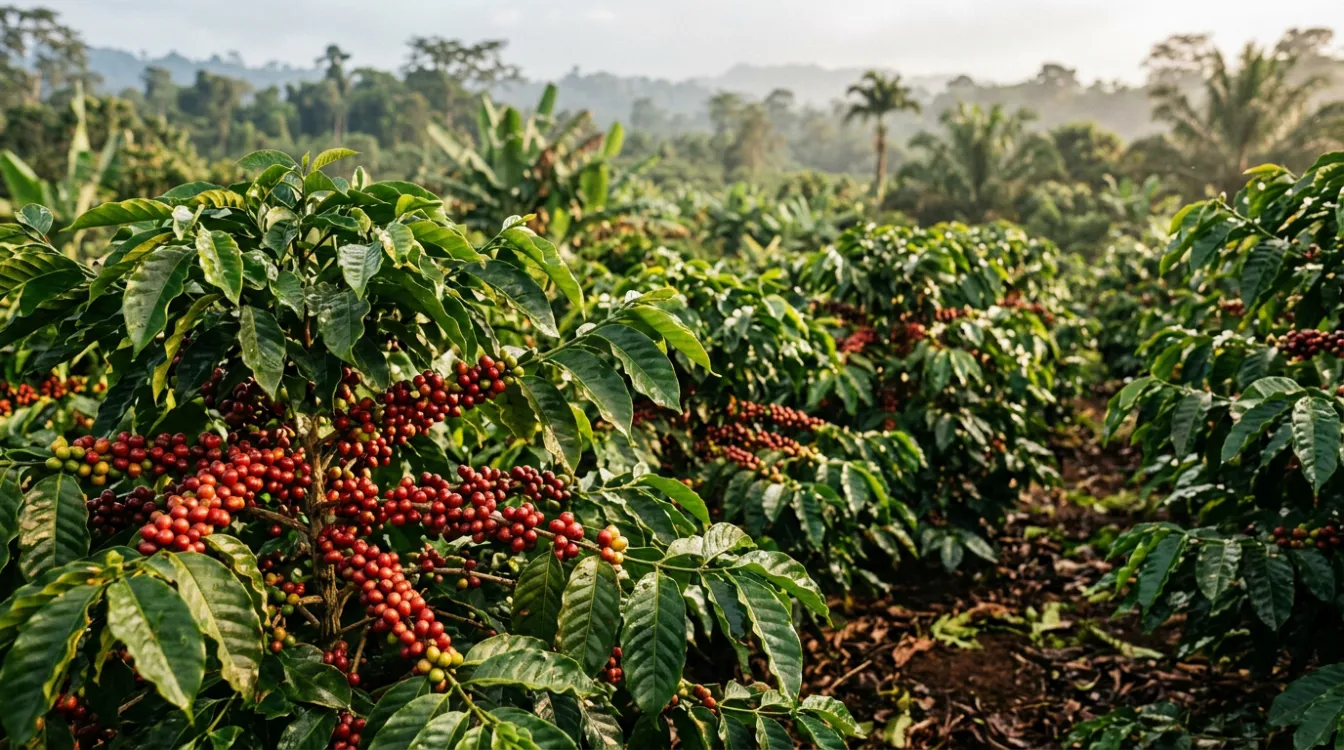
True to its name, robusta is tough:
- Low altitudes: from sea level to around 3,000 feet.
- Heat tolerance: comfortable in temperatures that stress arabica.
- Disease and pest resistance: helped by its high caffeine and chlorogenic acids.
- Higher yields: trees grow faster, mature earlier and produce more coffee.
Regions and uses
Robusta is grown mainly in Vietnam, Brazil (where it's called conilon), Indonesia, Uganda and India. It's used in:
- Espresso blends, often 10 to 30 percent, for crema, body and caffeine.
- Instant coffee, because it's affordable and yields a lot of soluble solids.
Robusta also has a long history as a home-brewing staple in places like Vietnam, India and parts of Africa, where its strength and affordability made coffee an everyday drink for millions of people. In those cultures, its bitterness is balanced with sugar, condensed milk or spices rather than seen as a flaw.
A new generation of carefully processed robusta is changing its reputation. My guide to fine robusta explains how.
Liberica (Coffea liberica)
A rare, niche species
Liberica accounts for only a tiny share of world coffee, probably under 2 percent. Most coffee drinkers outside Southeast Asia have never knowingly tasted it, yet in the Philippines and Malaysia it's a cherished part of local coffee culture.
Flavor profile
Liberica has one of the most polarizing flavors in coffee.
- Aroma: intensely floral and fruity, often compared to jackfruit, with a sweet, almost perfumed smell.
- Taste: smoky, woody and sometimes nutty or dark chocolatey, with a heavy body and a lingering finish.
Part of what makes liberica so distinctive is the size and fleshiness of its cherries. They take a long time to dry, and the long contact between fruit and seed adds to its intense, sometimes almost fermented aroma. Careful drying makes the difference between a fragrant, fruity cup and a harsh, musty one.
People tend either to love its bold, unusual character or find it strange. Traditional preparation with sugar or condensed milk softens its intensity.
How to recognize the beans
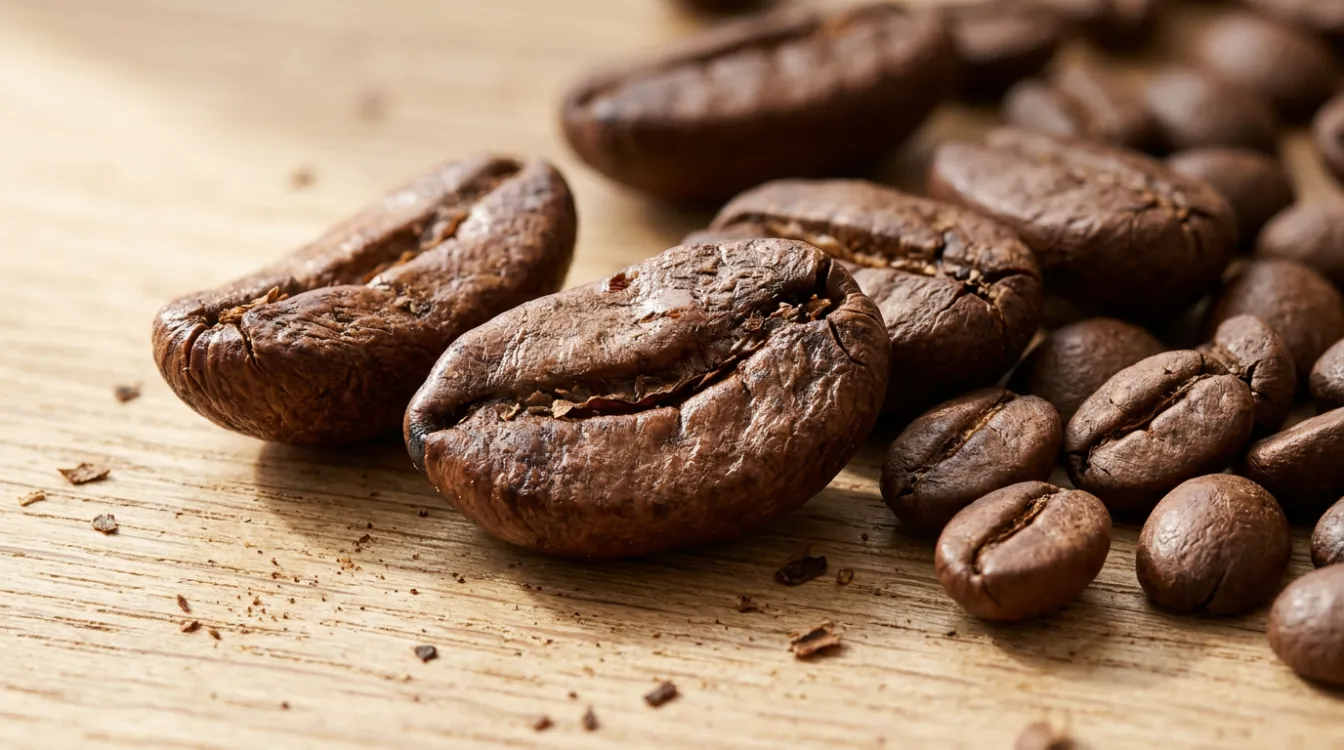
- Size: the largest beans of any commercially grown coffee, often noticeably bigger than arabica.
- Shape: irregular and asymmetrical, sometimes almost teardrop or almond-shaped.
- Center crease: jagged and uneven, following the bean's irregular shape.
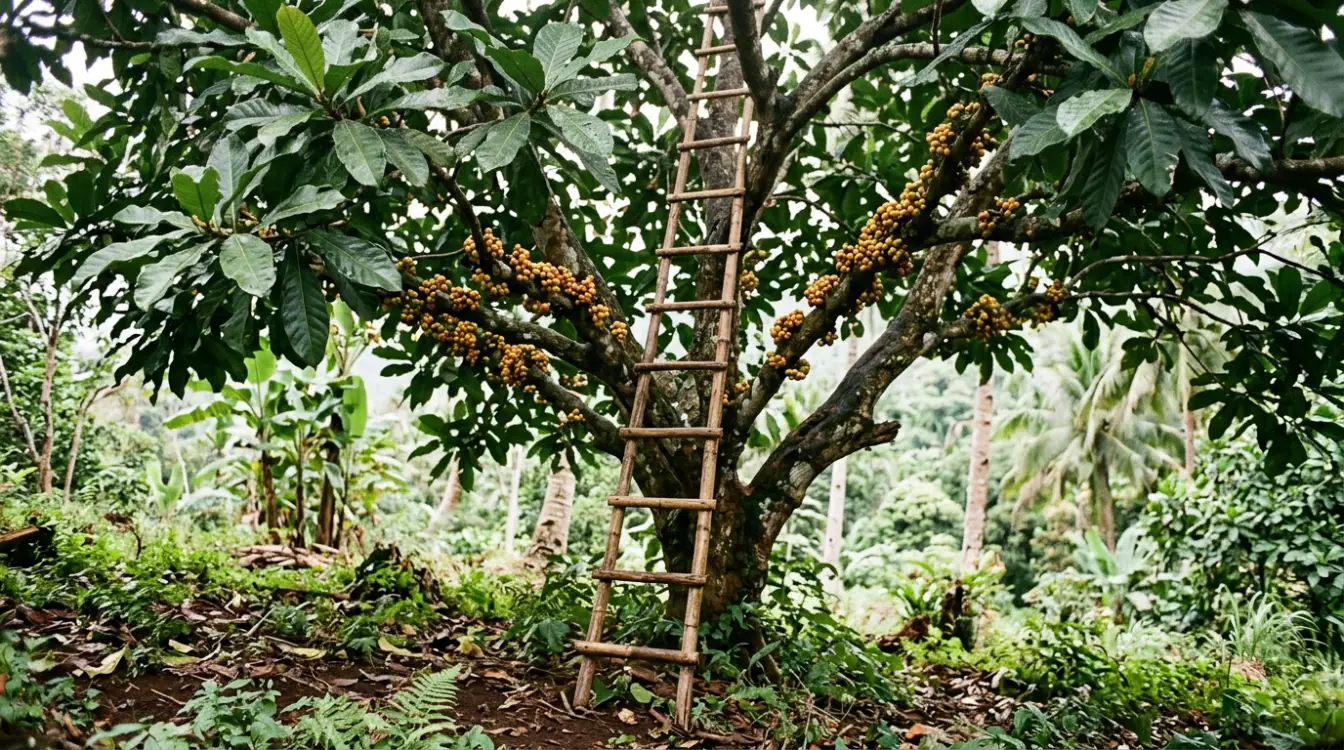
The tree
Liberica trees are huge, growing up to 30 feet or more if not pruned, with large, leathery leaves and big cherries. Harvesting often requires ladders.
Origins and history
Coffea liberica is native to Liberia in West Africa, which gave it its name. In the late nineteenth century, when coffee leaf rust destroyed arabica plantations across Asia, liberica was planted as a hardier replacement in places like the Philippines and Malaysia.
Where it grows today
- The Philippines: famously in Batangas and Cavite, where liberica is known locally as "kapeng barako," a strong, bold coffee that's part of national identity.
- Malaysia: one of the largest producers, where liberica is used in traditional "kopi" served with condensed milk.
- Indonesia: grown in pockets of Sumatra and Java, often among other crops.
Excelsa (Coffea liberica var. dewevrei)
A puzzling relative
Excelsa was long treated as its own species, Coffea excelsa. Botanists now classify it as a variety of liberica. Many in the coffee world still treat it separately because its flavor and beans are so different.
Flavor and use in blends
Excelsa is known for a tart, fruity, sometimes almost sour character, with dark fruit notes and a light body that still has depth. It's often described as having both light-roast brightness and dark-roast richness.
Roasters in Southeast Asia often use it in blends to add complexity, brightness and aromatic intrigue.
Anatomy and cultivation
- Beans: smaller than typical liberica, often teardrop-shaped.
- Trees: tall and vigorous, reaching about 20 to 30 feet.
- Regions: mainly Southeast Asia, especially the Philippines, Vietnam and Malaysia.
Caffeine compared
| Species | Typical caffeine (green bean) | What it feels like |
|---|---|---|
| Arabica | About 1.0-1.5% | Standard coffee lift |
| Robusta | About 2.0-2.5% | Strong kick |
| Liberica | About 1.2-1.5% | Similar to arabica |
| Excelsa | Low to moderate | Gentle |
Caffeine varies by variety, growing conditions and brew method, so treat these as typical ranges. Robusta is the clear outlier. My guide to caffeine myths explains what else affects caffeine.
Liberica and the Philippines
No country is more closely associated with liberica than the Philippines. In the nineteenth century, Batangas province was one of the world's major coffee regions, and its liberica, known as kapeng barako, was exported widely.
The name barako roughly means "strong man" or "stud," a reference to the coffee's bold, powerful character. For many Filipinos, a cup of barako, often sweetened with brown sugar or muscovado, is a taste of home.
When coffee leaf rust and coffee berry borer hit in the late nineteenth century, Philippine coffee production collapsed. Liberica survived in Batangas and Cavite, kept alive by local demand. Today, there's a revival, with young farmers and roasters promoting barako and other Philippine coffees as specialty products.
Malaysia's kopi culture
In Malaysia, liberica and robusta are the backbone of traditional "kopi," served in old-style coffee shops called kopitiams.
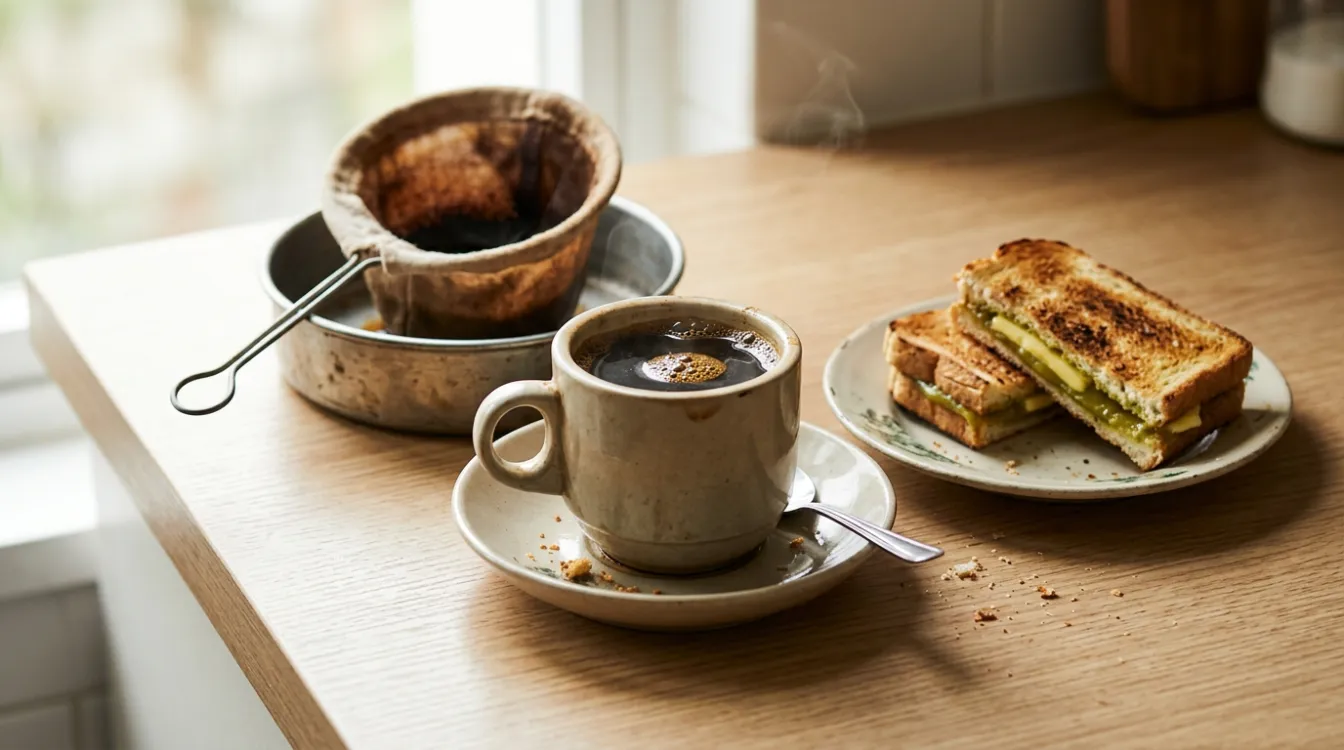
The beans are often roasted with butter, margarine or sugar, which caramelizes around them and adds richness. The coffee is brewed strong through a cloth sock filter and served with condensed milk, evaporated milk or sugar.
A cup of kopi with kaya toast and soft-boiled eggs is a classic Malaysian breakfast. If you get the chance to try it, it's a great introduction to liberica's bold flavor.
What species is in your everyday coffee?
- Specialty coffee: almost always arabica, sometimes fine robusta.
- Supermarket whole beans and ground coffee: often arabica or arabica-robusta blends; check for "100% arabica."
- Italian-style espresso blends: frequently include robusta.
- Instant coffee: usually mostly robusta, sometimes blended with arabica.
- Pods and capsules: depends on the brand and blend; stronger options often contain robusta.
- Southeast Asian kopi and barako: robusta, liberica and excelsa.
When a coffee is described as "strong," "intense" or "crema-rich," that's often a hint that robusta is involved.
Price differences between species
On commodity markets, arabica usually trades at a higher price than robusta, reflecting its flavor reputation and higher production costs. That gap can widen or narrow dramatically with weather events and supply shortages.
Liberica and excelsa are traded in much smaller volumes, often locally, so prices vary widely. In specialty markets, good liberica and excelsa can be quite expensive because they're rare outside Southeast Asia.
Specialty grades of every species cost more than commodity coffee because of the extra work involved: selective picking, careful processing and sorting.
Beyond the big four: wild coffee species
There are well over a hundred wild coffee species, most never cultivated commercially. Some are attracting new attention:
- Coffea stenophylla: a West African species rediscovered in Sierra Leone, praised for arabica-like flavor while tolerating higher temperatures.
- Coffea racemosa: a low-caffeine species from Mozambique.
- Coffea eugenioides: one of arabica's parents, with very low caffeine and a sweet, unusual flavor, now appearing in specialty competitions.
These species could become important for breeding more climate-resilient coffee in the future.
My side-by-side tasting
To compare the four directly, I brewed a medium-roast example of each as espresso and as a simple pour-over. Here's what I found.
Arabica (a washed Colombian) was sweet and balanced: caramel, red apple, a little citrus and a clean finish. It was the easiest to enjoy black.
Robusta (a fine robusta from Uganda) was heavy and intense: dark chocolate, roasted nuts, a pleasant bitterness and thick crema on the espresso. With milk it was outstanding.
Liberica (from Batangas, Philippines) was the most surprising: a floral, jackfruit-like aroma, then a smoky, woody, almost whisky-like taste with a long finish. Black it was a lot; with a little condensed milk it was delicious.
Excelsa (from the Philippines), which I brewed last, was tart and fruity, with dark cherry and a slightly winey note, a lighter body and a dry finish. It was the one that changed most as it cooled, becoming juicier and more complex over ten minutes.
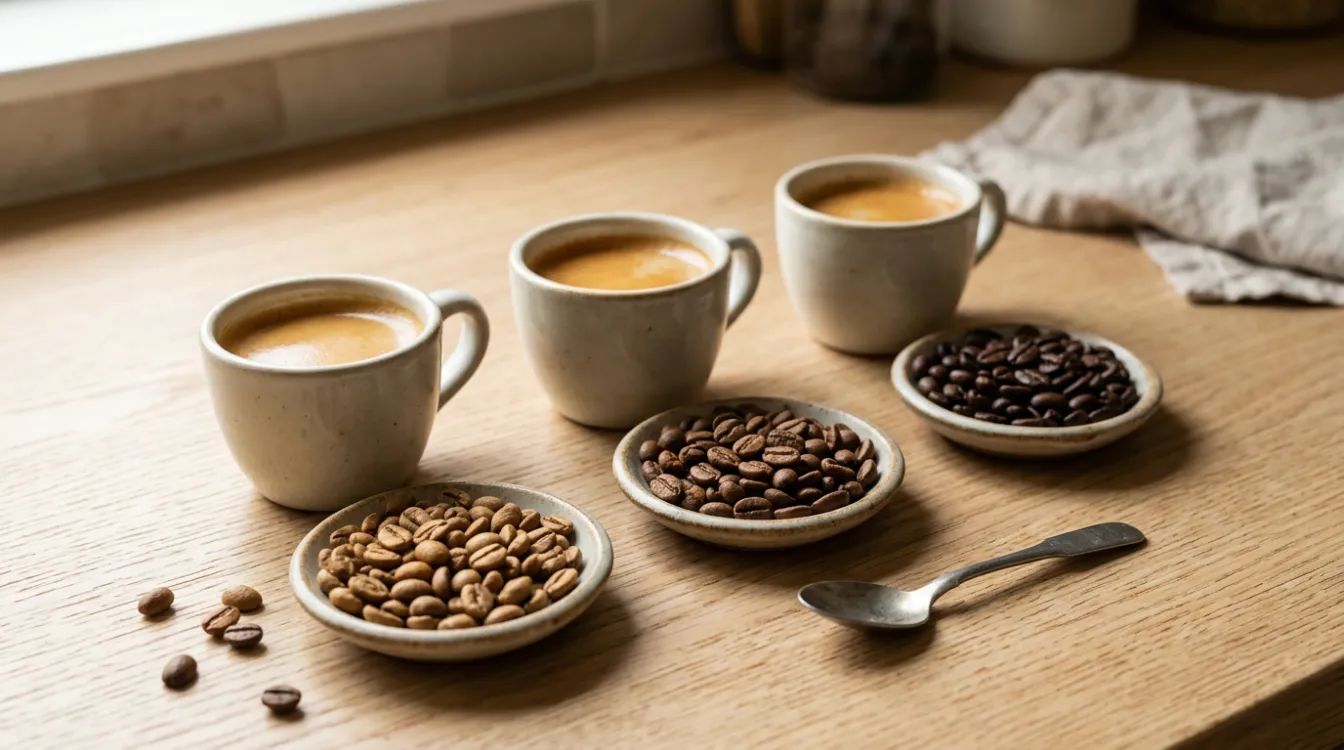
My impressions of the four species
How to brew each species
Arabica
Works with every method. Light roasts shine in pour-over; medium and dark roasts in espresso and milk drinks.
Robusta
Best as espresso, in milk drinks, or Vietnamese-style with a phin and condensed milk. Use slightly cooler water to limit bitterness.
Liberica
Traditionally brewed strong, often through a cloth "sock" filter or a simple drip, and served with sugar or condensed milk. A French press also works well. Try slightly cooler water, around 195°F.
Excelsa
Great in pour-over to highlight its tart fruitiness, or as part of an espresso blend for complexity.
Blends that combine species
Many coffees you buy are blends of more than one species, even if the label doesn't say so prominently.
- Italian espresso blends often combine arabica with 10 to 30 percent robusta for crema and body.
- Southeast Asian kopi blends may combine robusta, liberica and excelsa, often roasted with butter or sugar.
- Instant coffee is frequently mostly robusta.
If a bag says "100% arabica," it contains no robusta. If it just says "coffee" or "espresso blend," it may contain robusta, especially at lower prices.
Where each species is grown
| Region | Main species |
|---|---|
| Central and South America | Arabica (Brazil also grows robusta) |
| East Africa | Arabica (Uganda mostly robusta) |
| West and Central Africa | Robusta, some liberica |
| Vietnam | Robusta, some arabica and excelsa |
| Indonesia | Arabica and robusta, some liberica |
| Philippines | Robusta, liberica (barako), excelsa, arabica |
| Malaysia | Liberica, robusta |
| India | Arabica and robusta |
My guide to coffee growing regions and flavor explores the major origins.
A species tasting you can do at home
The easiest way to understand the three species is to taste them side by side. Here's how I set it up.
- Buy small bagsGet a washed arabica, a fine robusta and a liberica or excelsa if you can find one, ideally at similar medium roasts.
- Brew identicallyUse the same grinder setting, ratio, water and method for each, such as a simple French press or cupping.
- Taste blindAsk someone to number the cups so you don't know which is which.
- Taste as they coolFlavors change as coffee cools, so taste each cup several times.
- Take notesWrite down sweetness, acidity, bitterness, body and any distinct flavors.
Most people can identify robusta quickly by its heavier body and bitterness, while liberica often surprises tasters with its smoky, fruity, almost jackfruit-like character. It's one of the most eye-opening coffee experiments you can do at home.
What happened when I tasted them with friends
After my own tasting, I repeated it with six friends who drink coffee every day but don't think much about species. I served each coffee blind as a small black cup and a small flat white.
Black, almost everyone preferred the arabica. Two people liked the excelsa's fruitiness, and one, who grew up drinking strong Turkish coffee, loved the liberica.
With milk, the results flipped. The fine robusta flat white was the clear favorite: "like a chocolate drink with a kick," as one friend put it. The liberica with condensed milk came a surprisingly close second.
The lesson was clear: there's no single best species. It depends on how you drink your coffee, what you grew up with and what you're in the mood for.
Quick summary of the four species
- Arabica: high altitude, sweet and complex, about 60 percent of world coffee, the specialty standard.
- Robusta: low altitude, bold and bitter, about twice the caffeine, great crema, rising in quality.
- Liberica: huge irregular beans, smoky and fruity, a cultural treasure in the Philippines and Malaysia.
- Excelsa: a liberica variety with tart, fruity character, valued for blending.
Which species suits which brewing method
| Method | Arabica | Robusta | Liberica | Excelsa |
|---|---|---|---|---|
| Pour-over | Excellent | Fair | Good | Very good |
| Espresso | Excellent | Excellent | Good | Good in blends |
| Milk drinks | Very good | Excellent | Very good | Fair |
| French press | Very good | Good | Very good | Good |
| Cold brew | Very good | Very good | Good | Good |
| Phin or sock filter | Good | Excellent | Excellent | Good |
These are my impressions after brewing all four many ways. Arabica is the all-rounder, robusta the milk and espresso specialist, liberica the strong, traditional brew, and excelsa a pour-over and blending curiosity.
How processing differs by species
Every species can be washed, natural or honey processed, but traditions differ.
- Arabica is often washed in Latin America and East Africa, natural in Ethiopia and Brazil, and increasingly processed experimentally.
- Robusta has traditionally been dried as a natural, often quickly and on the ground, which contributes to harsh flavors. Washed and honey robustas are now growing.
- Liberica is usually processed as a natural or semi-washed. Its large, fleshy cherries take a long time to dry, which makes careful drying important.
- Excelsa is often processed naturally, which enhances its dark fruit character.
My guide to coffee processing methods explains the basics, and anaerobic and experimental processing covers newer methods.
How I like to drink each species
- Arabica: a washed Ethiopian as a pour-over on a slow weekend morning, or a Brazilian natural as espresso.
- Robusta: a fine robusta flat white on a cold, busy morning, or Vietnamese iced coffee in summer.
- Liberica: kapeng barako brewed strong in a French press, with a spoon of brown sugar.
- Excelsa: a light pour-over in the afternoon, when I want something fruity and a bit unusual.
Having all four in the cupboard isn't practical for most people, but trying each at least once is one of the most eye-opening coffee experiences I know.
Sustainability and the coffee species
Arabica's sensitivity to heat and disease often means more inputs, such as fungicides, and more vulnerability to climate change. Shade-grown arabica in diverse agroforestry systems can be very sustainable, though.
Robusta's resilience means fewer inputs, but large-scale expansion has sometimes driven deforestation and heavy irrigation, especially in parts of Vietnam and Brazil.
Liberica and excelsa are often grown in mixed smallholder systems, intercropped with fruit trees and other crops, which can support biodiversity. Their tolerance for heat makes them interesting for the future.
Common mistakes when exploring species
- Judging robusta by cheap blends. Try a fine robusta before deciding.
- Brewing liberica like a delicate arabica. It shines strong, often with sweetener or milk.
- Expecting excelsa to taste like liberica. They're related but taste quite different.
- Ignoring labels. "Espresso blend" can hide a lot of robusta.
- Comparing different roast levels. Use similar roasts when tasting species side by side.
Do the species differ for health?
Robusta's higher caffeine and chlorogenic acid content are the main differences. Chlorogenic acids are antioxidants, and caffeine has well-known stimulating effects.
For most people, the practical difference is simply caffeine: a robusta-heavy espresso blend can contain noticeably more than a 100 percent arabica shot. If you're sensitive to caffeine, check what's in your blend. My guide to the health benefits of coffee covers the bigger picture.
Which species should you choose?
Coffee species glossary
Questions to ask when buying
- What species is it?Especially important for blends and lower-priced coffees.
- Where was it grown?Origin tells you a lot about flavor.
- How was it processed?Processing shapes flavor as much as species.
- What roast level is it?Each species suits different roasts.
- How should I brew it?Roasters know which method shows it best.
How terroir shapes each species
Borrowed from winemaking, "terroir" describes how place shapes flavor: altitude, soil, climate and local farming practices. It matters for every species, but in different ways.
Altitude and temperature
Arabica gains complexity from cool, high-altitude growing. Robusta, liberica and excelsa grow mostly at lower, warmer elevations, where they're healthier and more productive.
Soil
Volcanic soils, rich in minerals, are prized in many regions for all species. Liberica in the Philippines often grows in volcanic soils around Taal and Batangas.
Climate and rainfall
Steady rainfall with a clear dry season triggers flowering and even ripening. Robusta and liberica tolerate heavier, more continuous rainfall than arabica.
Farming practices
Shade, picking, processing and drying decisions affect every species. Many of the quality gains in robusta and liberica in recent years come from better farming and processing rather than from the species itself.
Climate change and the future of coffee species
Climate change is one of the biggest threats to coffee, and arabica is the most vulnerable. Rising temperatures, unpredictable rainfall and spreading diseases are squeezing many arabica regions.
That's renewed interest in hardier species. Robusta, liberica and excelsa all tolerate heat better. Researchers are also studying wild species, such as Coffea stenophylla, which tastes surprisingly like arabica but grows at higher temperatures.
It's possible that the coffee of the future will be more diverse, with quality robusta, liberica and new species playing bigger roles alongside arabica. My guide to climate change and coffee explains the challenges.
How to buy each species
- Arabica: widely available; look for single origins and roast dates from specialty roasters.
- Robusta: look for "fine robusta" or single-origin robusta from specialty roasters, not anonymous blends.
- Liberica: specialty importers and Filipino or Malaysian roasters often sell it; "kapeng barako" from Batangas is a classic.
- Excelsa: rare outside Southeast Asia; look for specialty roasters importing directly from the Philippines or Vietnam.
Our tip: Buy small bags of liberica and excelsa first. Their flavors are distinctive, and it's worth knowing you like them before buying more.
Myths about coffee species
"All good coffee is arabica"
Most specialty coffee is arabica, but fine robusta and well-made liberica can be excellent.
"Robusta is always bitter and cheap"
Commercial robusta often is, but careful farming and processing transform it.
"Liberica is just a curiosity"
In the Philippines and Malaysia, it's a cherished everyday coffee with deep cultural roots.
"Excelsa is its own species"
Botanists now classify it as a variety of liberica, though it tastes quite different.
The verdict
Arabica remains the quality leader: sweet, complex and endlessly varied. Robusta is the bold workhorse, now proving it can be fine coffee too. Liberica is a smoky, fruity, unforgettable rarity, and excelsa a tart, fruity wildcard.
Each of these species has its own history, culture and community of farmers behind it. Arabica fills specialty cafés around the world; robusta fuels much of the planet's everyday coffee; liberica and excelsa sustain proud local traditions in Southeast Asia. Learning about them adds depth to every cup, whichever one you choose.
If you only ever drink arabica, you're missing part of coffee's story. Try a fine robusta espresso, a cup of kapeng barako or an excelsa pour-over. Buy small bags, brew them the way they are traditionally enjoyed, and compare them with your usual arabica. Even if they don't become your daily coffee, they'll change how you think about what coffee can be.
If you only remember one thing from this guide, let it be this: species is just the starting point. Arabica, robusta and liberica each have a typical character, but farming, processing, roasting and brewing can push any of them toward something surprising. Tasting widely is the best way to find what you enjoy, and some of my favorite discoveries have come from coffees I expected to dislike.
Frequently asked questions
What is the difference between arabica and robusta?
Arabica is sweeter and more complex, grows at high altitude and has less caffeine. Robusta is bolder, more bitter and has about twice the caffeine.
What does liberica taste like?
Smoky, woody and heavy, with a floral, fruity aroma often compared to jackfruit.
Is excelsa a separate species?
Botanists now classify it as a variety of liberica, though it tastes quite different.
Which coffee has the most caffeine?
Robusta, with roughly twice as much as arabica.
Which is the best coffee species?
Arabica is the most versatile, but the best choice depends on your taste and brewing method.
Where is liberica grown?
Mainly in the Philippines, Malaysia and Indonesia.
What is kapeng barako?
A strong liberica coffee from Batangas in the Philippines.
Is a peaberry a species?
No. It's a bean shape that can occur in any species.

- Michael Reynolds, side-by-side tasting of arabica, robusta, liberica and excelsa
- Coffea arabica, Wikipedia
- Coffea canephora, Wikipedia
- Coffea liberica, Wikipedia
- Barako coffee, Wikipedia
Related guides
Arabica vs robusta Fine robusta Coffee varietiesWritten by Michael Reynolds. Last updated November 20, 2026.