Fine Robusta Explained: How Robusta Is Becoming Specialty Coffee
For decades, robusta was dismissed as harsh, rubbery coffee fit only for instant and cheap blends. Fine robusta is changing that. With selective picking, careful processing and its own scoring system, robusta can taste of dark chocolate, nuts and dried fruit. I've tasted fine robustas from Uganda, Indonesia and Vietnam. Here's what makes a robusta "fine," why it's so hard to produce and how to enjoy it.
We choose products independently. We may earn a commission through links on this page; your price stays the same. Affiliate policy
Fine robusta is robusta (Coffea canephora) that scores 80 points or more on a dedicated robusta cupping protocol, the robusta equivalent of specialty coffee. It requires selective picking of ripe cherries, careful processing and sorting, and is judged on its own terms, including salt-to-acid and bitter-to-sweet balance. Fine robustas taste of chocolate, nuts, dried fruit and spice with a heavy body and great crema, and shine in espresso, milk drinks and Vietnamese-style coffee. They're harder to produce than specialty arabica because robusta has less sugar and more caffeine, and breeding long focused on yield rather than flavor.
A tale of two piles of robusta
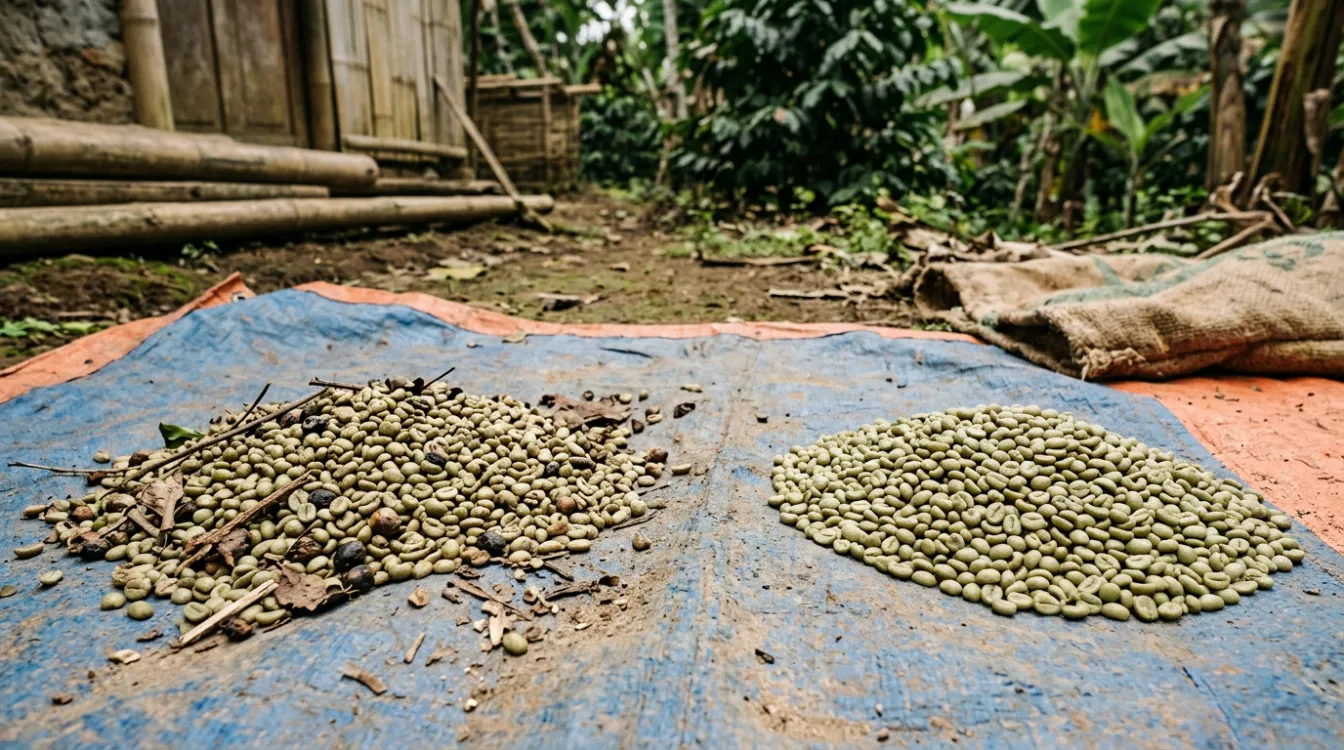
Imagine two piles of green robusta beans on a farm in Central Java. They come from the same district, the same species and the same harvest. One sells for roughly 40 percent more than the other.
The cheaper pile is "asalan," the local term for unsorted coffee: ripe and unripe cherries picked together, dried quickly, with broken beans, stones and defects mixed in. The more expensive pile has been sorted by hand, removing defects and leaving clean, uniform beans.
That simple act of sorting creates a meaningful premium. But there's an even bigger step beyond it: producing robusta good enough to be called "fine robusta," scored by trained tasters and sold to specialty buyers.
In this guide, I will explain what robusta is, why its reputation is so poor, what it takes to make it "fine," how it is scored and what it tastes like. I will also share the tasting notes from my own experiments and practical tips for brewing robusta at home.
For decades, robusta has had a poor reputation among coffee lovers: harsh, rubbery, bitter, fit only for instant coffee and cheap blends. Fine robusta is changing that story, and I've been fascinated to taste how good robusta can actually be.
Fine robusta at a glance
| Feature | Commercial robusta | Fine robusta |
|---|---|---|
| Picking | Mixed ripe and unripe | Selective, ripe cherries only |
| Sorting | Little or none | Careful, defects removed |
| Processing | Fast drying, often on the ground | Controlled natural, honey or washed |
| Quality score | Not scored | 80+ points on a robusta protocol |
| Flavor | Harsh, rubbery, woody | Chocolate, nuts, dark fruit, spice |
| Main use | Instant, cheap blends | Specialty espresso, single origins |
| Price | Commodity | Premium |
What is robusta?
Robusta is the common name for Coffea canephora, the second most important coffee species after arabica (Coffea arabica). It produces roughly 40 percent of the world's coffee.
Robusta earned its name: it's a robust plant. It grows at lower altitudes, tolerates heat, resists many diseases and pests, and yields more coffee per tree than arabica.
Those strengths made it the backbone of instant coffee and affordable blends. Vietnam is by far the largest producer, followed by Brazil, Indonesia, Uganda and India.
My guide to arabica vs robusta compares the two species in depth, and arabica vs robusta vs liberica adds the rarer species.
The two-tier robusta market
Most robusta is traded as a commodity. Price depends mainly on the global market, not on how the coffee tastes. Farmers are paid by weight, which rewards picking everything at once, ripe or not.
That creates a two-tier system:
- Asalan or ungraded robusta: strip-picked, quickly dried, unsorted. Cheapest, and the bulk of the market.
- Sorted or graded robusta: defects removed, beans sorted by size. A clear premium for the extra work.
- Fine robusta: selectively picked, carefully processed, scored by trained tasters. The highest premium, sold to specialty roasters.
Moving up each tier requires more labor and care. The question every producer faces is whether the market will pay enough to make that effort worthwhile.
A short history of robusta
Robusta grows wild across central and western Africa, from Guinea to Uganda. Local communities used it long before it entered global trade, but it wasn't widely cultivated until the late nineteenth century.
That changed with coffee leaf rust. In the 1860s and 1870s, the disease devastated arabica plantations in Ceylon (now Sri Lanka), Java and elsewhere in Asia. Planters looked for a hardier alternative and found it in canephora, which resisted rust far better.
Robusta spread quickly through Indonesia and later to Vietnam, India, Brazil and Africa. Its high yields and resilience made it ideal for the growing mass market.
After the Second World War, instant coffee boomed, and robusta's high soluble content made it the perfect raw material. Robusta's identity as a cheap, functional coffee was set for decades.
Only in the last twenty years or so have producers, researchers and specialty buyers started treating robusta as a coffee worth tasting on its own terms.
Inside the robusta plant
Robusta plants differ from arabica in several important ways.
- Pollination: robusta needs cross-pollination from other plants, while arabica pollinates itself. That gives robusta more genetic diversity, and more variation in the cup.
- Size: robusta grows as a larger shrub or small tree, often up to 30 feet if not pruned.
- Cherries: robusta cherries grow in dense clusters and can take nine to eleven months to ripen, often longer than arabica.
- Beans: smaller, rounder beans with a straighter center line than arabica.
- Climate: prefers warm temperatures, roughly 72 to 86°F, and plenty of rain, often at low altitudes.
That genetic diversity is a hidden opportunity. Researchers believe there are robusta types with much better flavor potential than the clones farmers have traditionally planted for yield.
A farmer's perspective
For a robusta farmer, every quality step is a gamble. Selective picking means more trips through the farm, more labor and the risk of losing ripe cherries to theft or birds. Raised drying beds cost money to build. Sorting takes days of careful handwork.
In return, farmers need buyers who will reliably pay more for better coffee. When that happens, as with many fine robusta projects in Indonesia and Uganda, the results can transform both coffee quality and family income.
When it doesn't, farmers understandably return to strip-picking and quick drying. That's why stable relationships between farmers, processors and roasters are so important. Quality grows from trust as much as from technique.
I've always found it striking that the farmers doing this work are often the least likely to drink fine robusta themselves. Much of it is exported, while local markets still mostly sell commercial coffee.
Sorting and grading in practice
Sorting is where many of the visible quality improvements happen. After drying and hulling, green robusta is graded by size using screens, then sorted for defects.
- Black beans: over-fermented or dead beans with harsh, rotten flavors.
- Sour beans: brownish beans with vinegary off-flavors.
- Broken beans and chips: roast unevenly and can burn.
- Insect-damaged beans: often from coffee berry borer.
- Foreign matter: stones, sticks and husks.
In many fine robusta projects, sorting is done by hand on long tables, often by women from the community. It's slow, skilled work that makes an immediate difference in the cup.
What makes a robusta "fine"?
To understand fine robusta, it helps to know how coffee quality is usually judged.
For commercial coffee, grading focuses on physical defects: broken beans, insect damage, black or sour beans, stones and sticks. Fewer defects mean a better grade and price.
Fine robusta adds sensory evaluation. Trained tasters cup the coffee, scoring its aroma, flavor, sweetness, body, balance and aftertaste on a 100-point scale.
A dedicated scoring system
Robusta can't simply be judged with arabica's scoring form. Its chemistry is different, so a separate robusta protocol was developed. It includes attributes designed for robusta's character, such as:
- Salt-to-acid ratio: the balance between savory, saline minerality and fruity acidity.
- Bitter-to-sweet ratio: how well natural sweetness balances robusta's stronger bitterness.
Judging robusta on its own terms was a turning point. It meant a great robusta could be recognized for what it is, rather than as a weaker version of arabica.
Specialty vs fine
| Score | Arabica term | Robusta term |
|---|---|---|
| 80-89.99 | Specialty coffee | Fine Robusta |
| 90-100 | Outstanding specialty | Outstanding Fine Robusta |
The professionals certified to score robusta this way are called Q Robusta graders, the robusta counterpart of arabica's Q graders.
Why fine robusta is so hard to achieve
Scoring 80 points is significantly harder for robusta than for arabica. Part of the reason is chemistry, and part is history.
Chemical differences
In one comparison of green beans from Lombok, Indonesia, robusta contained about 2.09 percent caffeine by weight, nearly double the arabica's level. Robusta also typically contains much less sucrose and fewer lipids, and more chlorogenic acids.
That means more bitterness and less natural sweetness to work with. Caffeine and chlorogenic acids are partly why robusta resists pests: they're natural defenses.
| Compound | Arabica | Robusta |
|---|---|---|
| Caffeine | About 1-1.5% | About 2-2.5% |
| Sugars (sucrose) | Higher | Roughly half |
| Lipids (oils) | Higher | Lower |
| Chlorogenic acids | Lower | Higher |
The breeding gap
For generations, robusta breeding focused on:
- Maximizing yield per acre.
- Increasing soluble solids for instant coffee.
- Improving resistance to pests, nematodes and diseases.
Flavor was rarely a priority. According to the Specialty Coffee Association's technical leadership, that narrow focus left robusta's flavor potential largely untapped. New breeding programs launched in recent years aim to change that, selecting robusta plants for cup quality as well as hardiness.
Harvest discipline: picking only ripe cherries
Plant genetics set the ceiling for quality, but harvesting decides how close a farm gets to it.
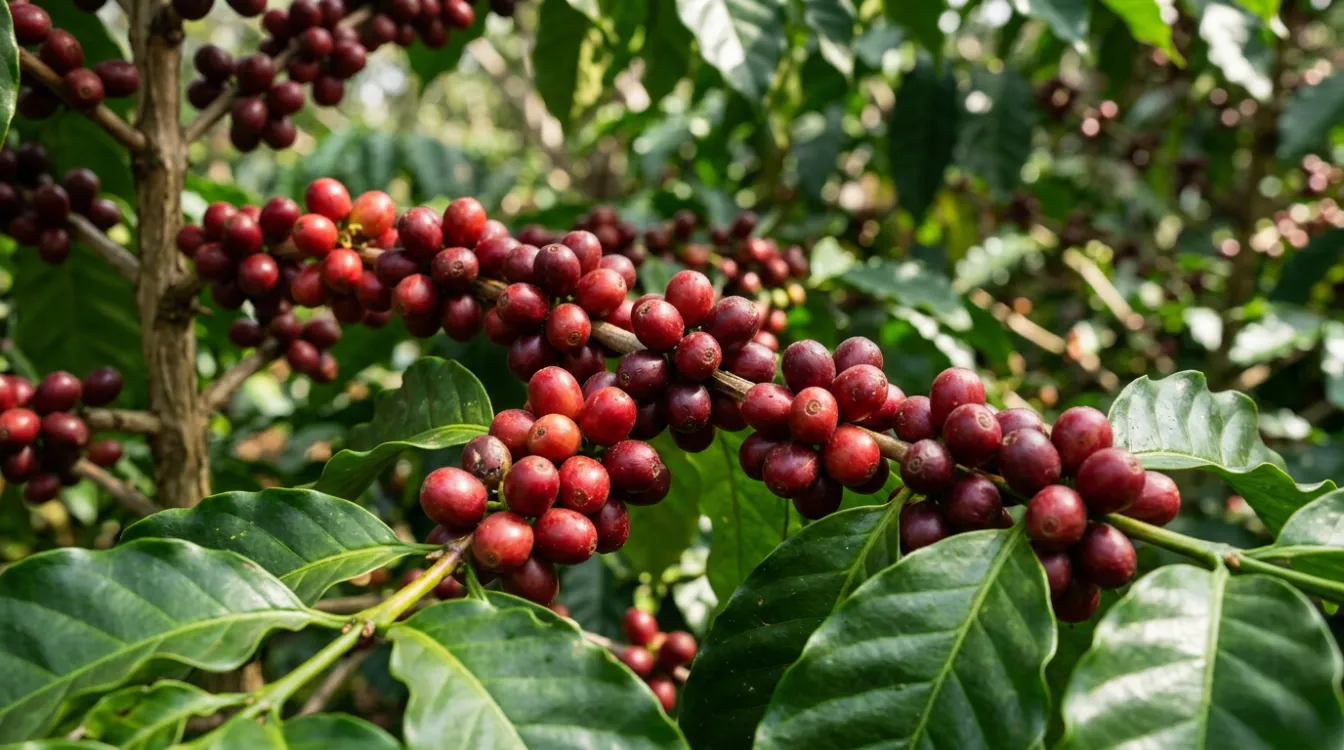
Like arabica, robusta cherries ripen from green to yellow to deep red. Fully ripe cherries contain the most sugar and the best flavor precursors. Unripe cherries add harsh, grassy and astringent flavors.
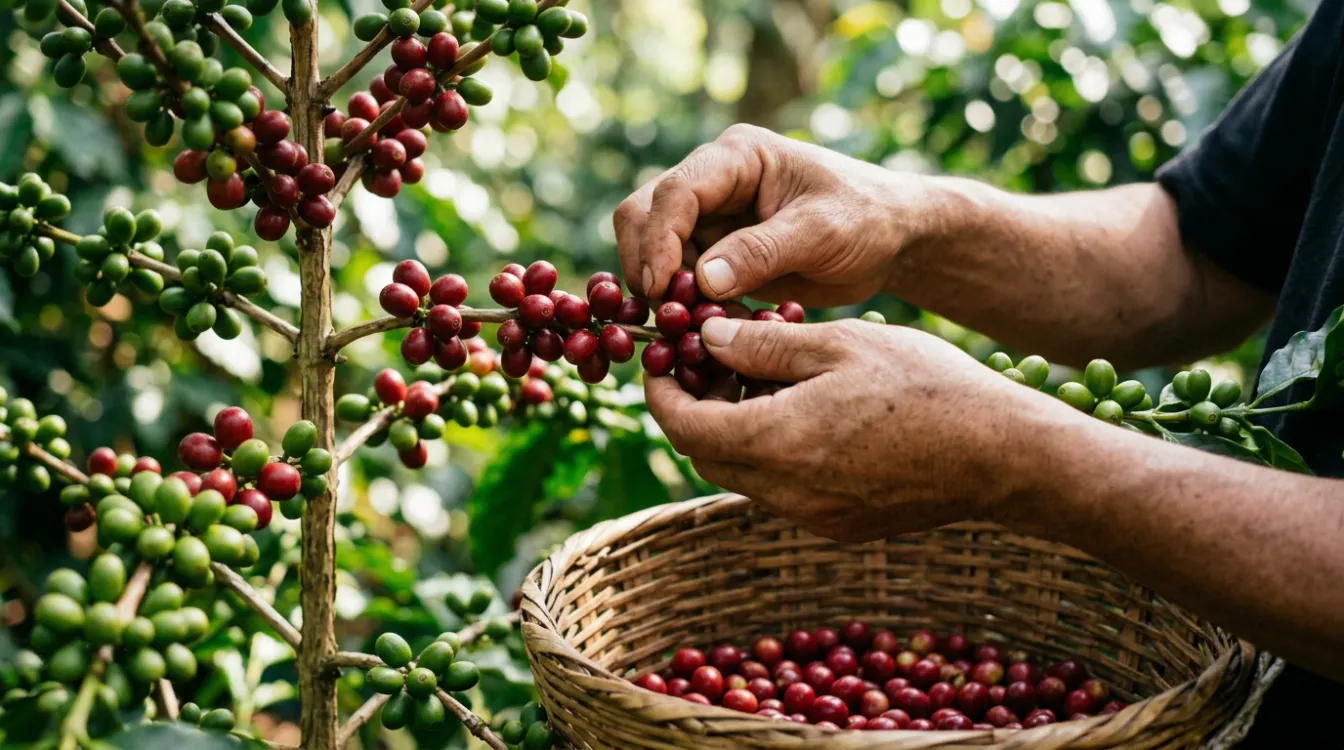
Progressive producers pick selectively, returning to the same trees several times to harvest only ripe fruit. Some use refractometers to measure the sugar content (Brix) of cherries and pick at peak ripeness.
Why selective picking is hard
In many robusta regions, selective picking is difficult. Farmers may worry about theft of ripe cherries left on the tree, need cash quickly, or lack labor for multiple passes. Strip-picking everything at once is simply more practical.
When farmers can protect their crops and commit to selective harvesting, the reward is clear. In one Indonesian example, selectively red-picked robusta sold for roughly 16 percent more than mixed-picked robusta from the same area, before any further processing.
Processing: natural, honey and anaerobic robusta
Once ripe cherries are harvested, processing becomes the main way to shape flavor.
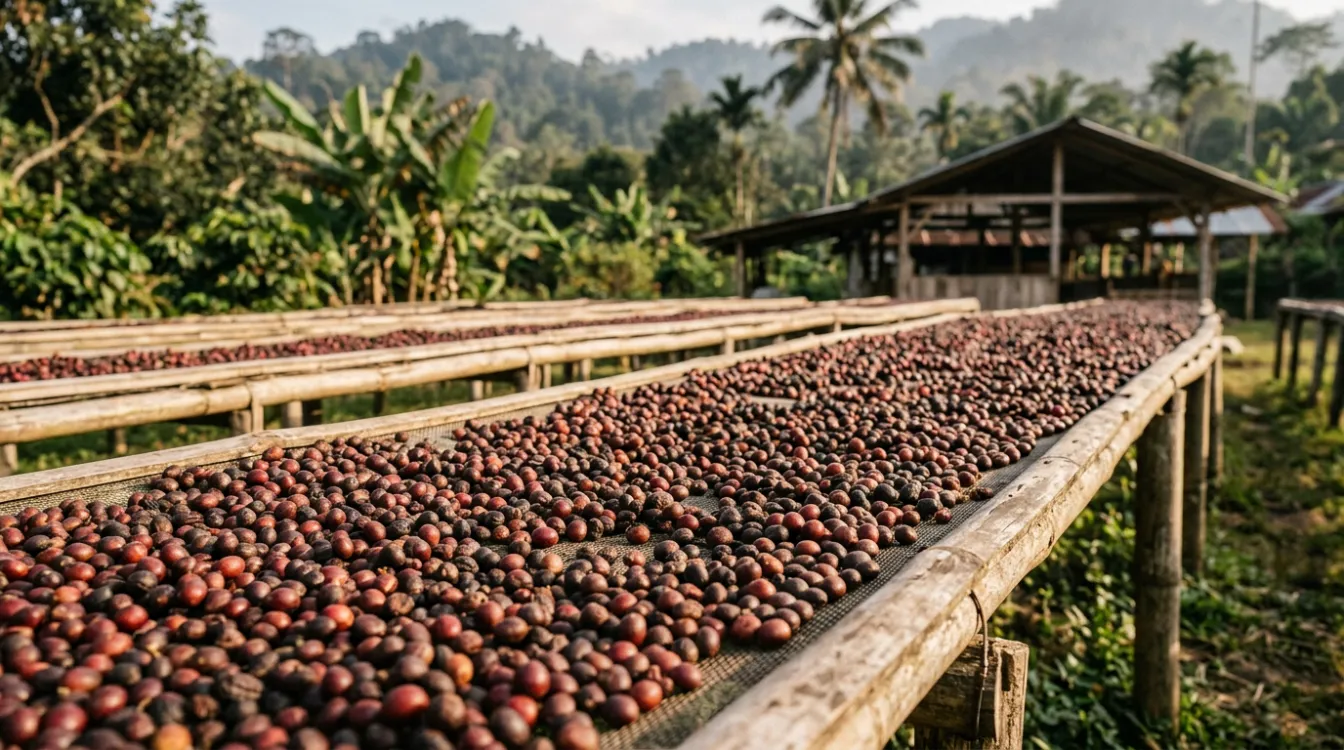
The natural process
In Lahat, South Sumatra, an agricultural research team worked with farmers to dry ripe robusta cherries whole on raised beds instead of on the ground. Cleaner, slower drying reduced defects and brought out fruity, chocolatey sweetness.
The honey process
In Temanggung, Central Java, producer Faizal Kamay experimented with honey processing: removing the skin but leaving sticky mucilage on the beans while they dry. The result was sweeter, rounder robusta with less harshness.
Anaerobic fermentation
Experimental fermentation is producing remarkable results too. A Vietnamese producer processed ripe robusta using anaerobic fermentation and achieved high cupping scores with notes of dark fruit and chocolate.
In Brazil, researchers ran controlled trials on robusta fermentation, showing that carefully managed fermentation can consistently raise quality scores. My guide to anaerobic and experimental processing explains how these methods work.
Competitions and national recognition
As quality improved, competitions began recognizing robusta on its own terms.
Indonesia
Indonesia's national specialty coffee contest, first held in 2008, includes a robusta category judged separately from arabica. Winning robustas have scored 88.63 points in 2021 and 86.70 points in 2022, firmly in fine robusta territory. A separate national contest in 2024 also highlighted top robustas.
Uganda
Uganda, one of the world's leading robusta producers and the birthplace of many wild canephora varieties, holds a robusta-only championship to showcase its best lots.
Judged separately
In these competitions, arabica and robusta are evaluated separately, with their own protocols. That's essential: comparing them directly would be like judging red and white wine on the same scale.
The market paradox: when commodity prices soar
In theory, the economics of fine robusta are simple: better coffee earns a better price, so farmers invest in quality. In practice, the market is more complicated.
The 2018-2019 baseline
Back in 2018 and 2019, commodity robusta prices were low. For farmers like Faizal Kamay, quality premiums made a real difference to income, and the incentive to pick selectively and process carefully was strong.
The 2024 surge
By mid-2024, supply shortages pushed global robusta prices to historic highs. In parts of Indonesia, ordinary commercial robusta briefly sold for more than some ungraded quality lots had a few years earlier. With base prices that high, the extra effort for quality seemed less worthwhile to many farmers.
The 2026 correction
By 2026, the market cooled. Ordinary asalan robusta prices fell back, while selectively picked and sorted robusta again earned a clear, reliable premium.
For producers, these swings are more than numbers on a chart. A farmer who invested in raised beds, extra pickers and careful sorting in 2019 might have watched commodity prices jump past their quality premium in 2024, then fall back again two years later. Planning a farm around that kind of volatility is extremely difficult, and it explains why some promising quality projects stall when markets move.
The lesson is that fine robusta needs stable, long-term buyers. Quality takes years of investment; it can't depend on short-term commodity swings.
How a fine robusta cupping works
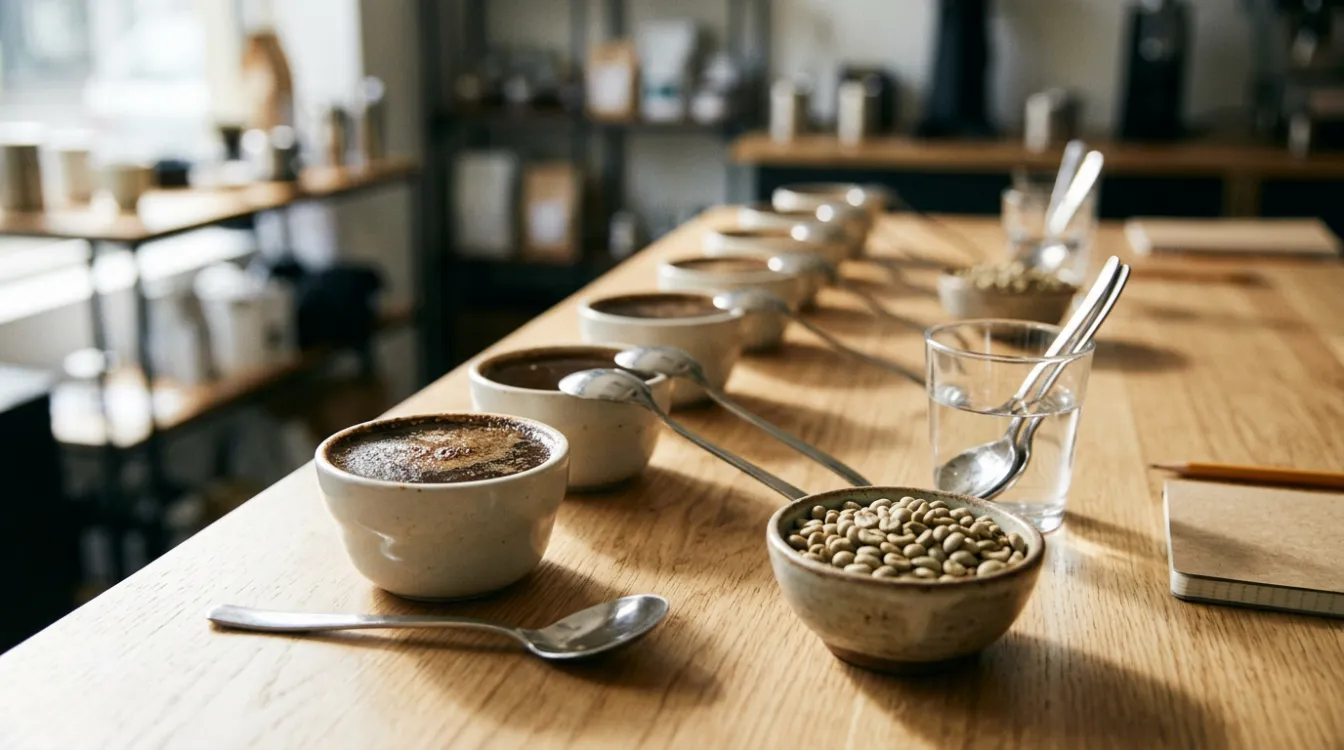
Cupping is coffee's standard tasting method. Coffee is ground into bowls, hot water is poured over it, and after a few minutes the crust of grounds is broken and tasters slurp the coffee from spoons.
For fine robusta, Q Robusta graders score attributes such as fragrance and aroma, flavor, aftertaste, salt-to-acid ratio, bitter-to-sweet ratio, mouthfeel, balance, uniformity, clean cup and overall impression.
Robusta cuppings often look for qualities arabica cuppers might not, like a pleasant savory or saline character, a chocolatey bitterness and a heavy, creamy mouthfeel.
A good fine robusta doesn't need bright acidity to score well. It needs balance: sweetness that tames bitterness, clean flavors without defects and a long, pleasant finish.
My guide to coffee cupping explains the process for arabica in more detail.
Try a robusta tasting at home
Here's a simple tasting I recommend to anyone curious about robusta.
- Buy two coffeesA fine robusta single origin and a commercial robusta or supermarket blend that contains robusta.
- Brew them identicallyEspresso or a moka pot works best; keep dose, ratio and grind similar.
- Taste black firstNote bitterness, sweetness, body and any off-flavors.
- Add milkTry each as a small flat white or with condensed milk.
- Compare with arabicaAdd a medium-roast arabica for reference.
- Write three words for eachYou'll be surprised how different the two robustas taste.
Fine robusta vs specialty arabica
| Feature | Fine robusta | Specialty arabica |
|---|---|---|
| Body | Very heavy, syrupy | Light to medium |
| Acidity | Low | Low to very bright |
| Sweetness | Moderate | Moderate to high |
| Bitterness | Noticeable, balanced | Usually lower |
| Typical flavors | Chocolate, nuts, spice, dried fruit | Fruit, floral, caramel, chocolate |
| Caffeine | About twice as much | Standard |
| Best for | Espresso, milk drinks, phin | Pour-over, espresso, everything |
Neither is better. They're different coffees for different moments. On a cold morning with a big flat white, fine robusta is hard to beat. For a delicate pour-over, a floral arabica is the obvious choice.
Fine robusta and sustainability
Robusta has some natural sustainability advantages. It needs fewer pesticides thanks to its natural defenses, tolerates heat better and often grows in diverse smallholder systems.
At the same time, large robusta expansion in some regions has been linked to deforestation and heavy irrigation. Fine robusta projects that focus on smallholders, agroforestry and fair prices can help steer robusta toward a more sustainable future.
When buying, look for roasters that share where their robusta comes from and how farmers are paid. My guide to coffee certifications explains common sustainability labels.
What fine robusta tastes like
The first time I tasted a genuinely fine robusta, it didn't taste like robusta at all, at least not the robusta I knew. There was no rubbery harshness, no burnt-tire note, no dusty bitterness.
Instead, I found dark chocolate, roasted nuts, a hint of dried fruit and a gentle spice. The body was heavy and syrupy. The bitterness was still there, but it was balanced by real sweetness, like very dark chocolate rather than burnt toast.
My impressions: commercial vs fine robusta
Typical tasting notes
- Dark and milk chocolate, cocoa nibs.
- Roasted peanut, hazelnut, almond.
- Dried fruit: prune, date, raisin.
- Spices: clove, black pepper, tobacco.
- Sometimes tropical or red fruit in natural or anaerobic lots.
It's never going to taste like a floral Ethiopian arabica. It's a different coffee, with its own strengths.
How to brew fine robusta
Fine robusta shines in methods that celebrate body and intensity.
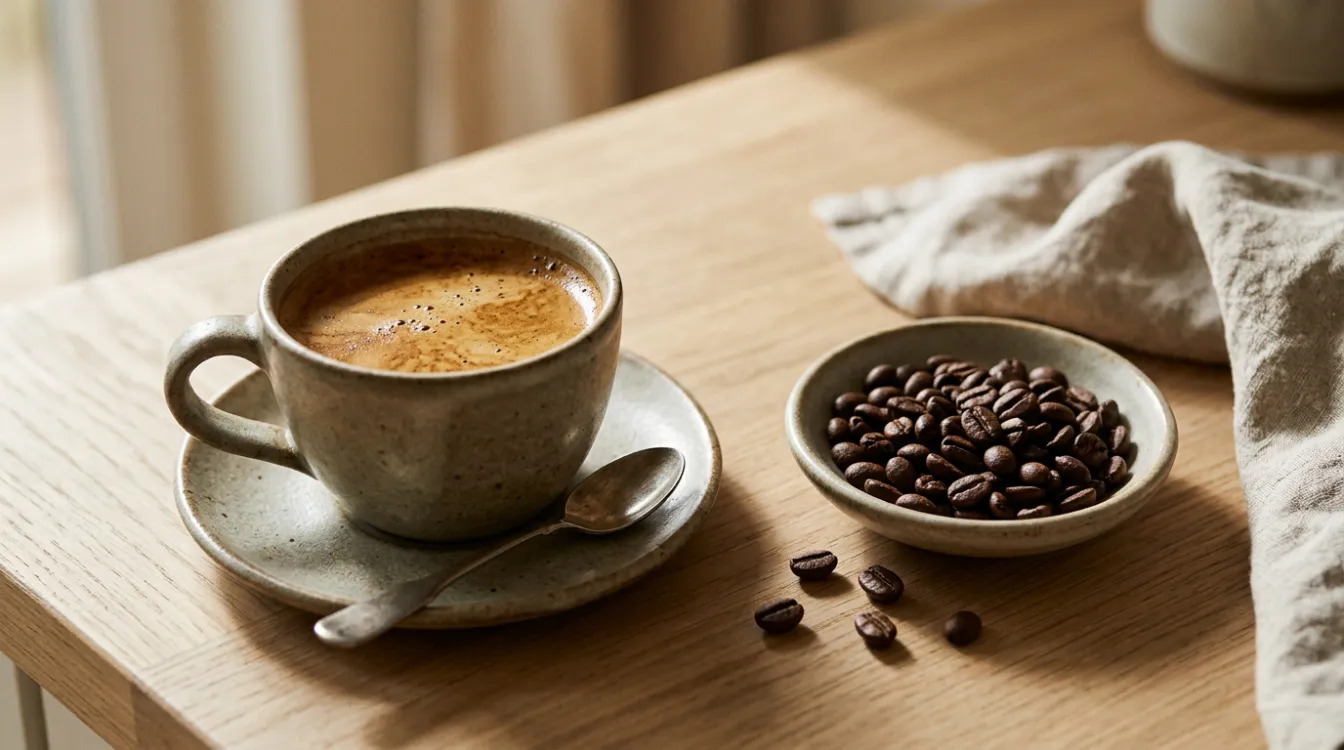
Espresso
This is where it really excels. Fine robusta produces thick, long-lasting crema and a heavy, syrupy body. Try it as a single origin, or blended 10 to 30 percent with arabica for extra body and crema.
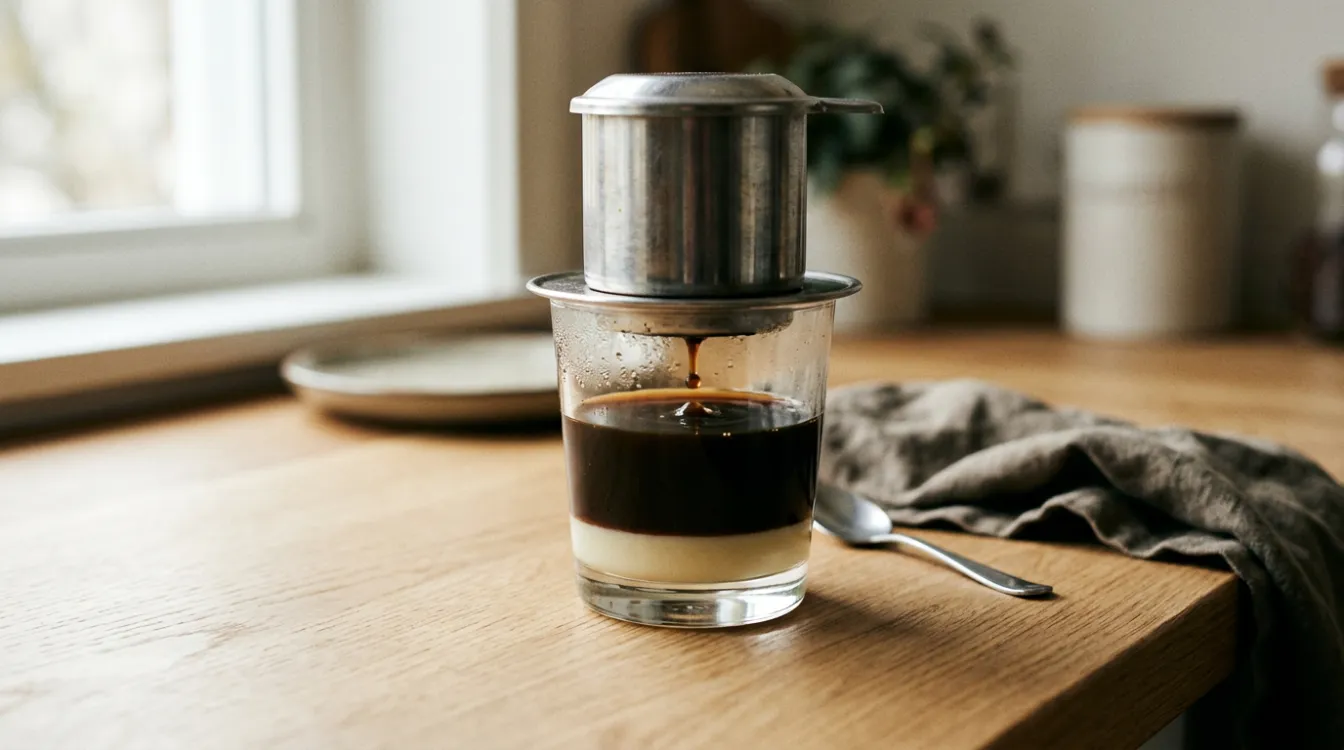
Vietnamese phin
A slow-drip phin filter with condensed milk is the classic robusta drink. Fine robusta makes it sweeter and cleaner, with less bitterness to hide. My guide to Vietnamese coffee culture explains the tradition.
Milk drinks
Robusta's strength and body cut through milk beautifully. A fine robusta flat white is rich and chocolatey.
Cold brew
Cold brewing softens bitterness and highlights chocolate and nuts. It's a great way to enjoy robusta in summer.
Brewing tips
- Use slightly cooler water, around 190 to 198°F, to limit bitterness.
- For espresso, try a slightly longer ratio and a touch coarser grind than for arabica.
- Pair with milk, condensed milk or dark chocolate to balance its intensity.
Robusta in espresso blends
Even before fine robusta, many Italian espresso blends included a share of robusta. Roasters value it for:
- Crema: robusta produces thicker, longer-lasting crema.
- Body: a heavier, fuller mouthfeel.
- Caffeine: a stronger kick.
- Cost: traditionally, a cheaper component.
Using fine robusta instead of commercial robusta in blends keeps those strengths while removing much of the harshness. Several specialty roasters now proudly list a fine robusta component in their espresso blends.
Our tip: If you love classic Italian-style espresso, look for a blend with 10 to 20 percent fine robusta. It adds body and crema without overwhelming sweetness.
Caffeine: the strong side of robusta
Robusta contains roughly twice the caffeine of arabica. A fine robusta espresso can contain noticeably more caffeine than an arabica shot of the same size.
That's great if you want a stronger kick, but worth remembering if you're sensitive to caffeine or drink coffee late in the day. My guide to caffeine myths explains what affects caffeine content.
Using fine robusta in home blends
One of my favorite ways to use fine robusta at home is in small amounts in an espresso blend. Even a modest share can change a shot noticeably.
- 10 to 20% robusta adds body, crema and a chocolatey depth without dominating.
- 30 to 40% gives a bold, Italian-style espresso with more bitterness and caffeine.
- 50% or more suits people who love strong, heavy espresso or milk drinks with lots of sugar.
I start by blending roasted beans by weight just before grinding, so I can adjust easily. A fruity arabica with 15% fine robusta is my go-to for cappuccinos: the arabica brings sweetness and brightness, and the robusta brings body that stands up to milk. My guide to espresso crema explains why robusta adds so much crema.
Keep notes on each ratio. After a few weeks, you'll know exactly how much robusta you like in your cup.
A closer look at Vietnam
Vietnam produces more robusta than any other country, mostly in the Central Highlands around Buon Ma Thuot, Dak Lak and Lam Dong. Coffee arrived with French colonists in the nineteenth century, but production exploded only in the 1990s.
Most Vietnamese robusta is still commercial: strip-picked, sun-dried and sold in bulk for instant coffee and blends. But a growing group of producers is changing that, with selective picking, honey and natural processing and even anaerobic fermentation.
Vietnam's own coffee culture runs on robusta: strong phin-brewed coffee with sweetened condensed milk, iced coffee, egg coffee and salt coffee. As fine robusta improves, many of these traditional drinks taste even better, with less harsh bitterness and more chocolate.
A closer look at Uganda
Uganda is the spiritual home of robusta. Wild canephora still grows in its forests, and the country has some of the greatest robusta genetic diversity in the world.
Ugandan robusta is often grown by smallholders alongside bananas and other crops. Fine robusta projects there focus on selective picking, careful natural processing and building direct links with specialty buyers.
Many of the most celebrated fine robustas I've tasted came from Uganda: fruity, chocolatey and remarkably clean.
How roasters treat fine robusta
Robusta roasts differently from arabica. Its lower sugar content means it caramelizes less, and its higher chlorogenic acid content can turn harsh if roasted carelessly.
Many specialty roasters take fine robusta to a medium or medium-dark roast to develop chocolate and nutty sweetness, avoiding the very dark, oily roasts typical of commercial robusta, which emphasize burnt and rubbery notes.
Some roasters experiment with lighter roasts for natural or anaerobic fine robustas, revealing fruitier flavors. The results can be surprising, though most people still prefer robusta a little darker than a typical specialty arabica.
Why robusta makes such good crema
Robusta's famous crema comes partly from its chemistry. It contains more of certain compounds that stabilize foam, and less oil, which tends to break foam down.
The result is a thick, tight, long-lasting crema with a reddish-brown color, a big reason traditional Italian blends include robusta. If you love a dense layer of crema on your espresso, fine robusta is a great way to get it. My guide to espresso crema explains how crema forms.
Questions to ask about a robusta
- Where exactly was it grown?Region and farm tell you a lot about quality.
- Was it selectively picked?Ripe cherries are the foundation of fine robusta.
- How was it processed?Natural, honey, washed or anaerobic each taste different.
- Has it been cupped and scored?A score above 80 points indicates fine robusta.
- How do you recommend brewing it?Most roasters suggest espresso or milk drinks.
Robusta glossary
Robusta in Indonesia
Indonesia grows both arabica and robusta, but robusta dominates in lowland areas of Java, Sumatra, Bali and Lampung. Much of it has traditionally gone into local coffee, often brewed as "kopi tubruk," where finely ground coffee is boiled or steeped with sugar and drunk once the grounds settle.
The fine robusta movement in Indonesia is closely tied to its specialty coffee scene. Young roasters and cafés in Jakarta, Bandung and Yogyakarta now serve local fine robustas proudly, often alongside arabicas from the same islands.
The national competitions mentioned earlier have helped producers in places like Temanggung and Lahat gain recognition and new buyers. It's one of the most exciting examples of a coffee-producing country celebrating its own robusta.
Common mistakes when trying robusta
- Judging it like arabica. Don't expect floral brightness; look for balance, body and sweetness.
- Brewing too hot. Very hot water exaggerates bitterness. Try 190 to 198°F.
- Using very dark roasts. They hide fine robusta's sweetness behind burnt flavors.
- Over-extracting espresso. Robusta extracts quickly; slightly coarser grinds help.
- Giving up after commercial robusta. One harsh supermarket blend isn't a fair test.
Pairing fine robusta with food
Fine robusta's chocolatey bitterness and heavy body pair beautifully with rich, sweet foods.
- Dark chocolate and brownies echo its cocoa notes.
- Condensed milk desserts and flan balance its bitterness with creamy sweetness.
- Nutty pastries like almond croissants or baklava match its roasted nut flavors.
- Spiced cakes with cinnamon or clove pick up its spice notes.
- Savory breakfasts with eggs and bread stand up well to its intensity.
The road ahead for fine robusta
Fine robusta is still a small share of the market, but it's growing. Better plant breeding, more experienced farmers, dedicated cupping standards and curious roasters are all pushing quality upward.
The biggest challenge is economic. Farmers need consistent premiums to justify the extra work, especially when commodity prices swing wildly. Long-term contracts, direct trade and transparent pricing will decide how fast fine robusta grows.
As a coffee drinker, the simplest way to help is to buy it, talk about it and give robusta a fair chance in your cup.
Why fine robusta matters for the future of coffee
Fine robusta isn't just a curiosity for coffee enthusiasts. It may be important for the future of coffee itself.
Climate resilience
Arabica is sensitive to heat and disease. As temperatures rise, many arabica regions are under pressure. Robusta tolerates warmer conditions and resists diseases like coffee leaf rust much better. Higher-quality robusta could help keep good coffee available as the climate changes. My guide to climate change and coffee explores this further.
Farmer income
Millions of smallholder farmers grow robusta. If quality is rewarded with reliable premiums, fine robusta offers a path to better incomes without switching crops.
A more diverse coffee world
Coffee drinkers benefit from more variety. Fine robusta adds flavors and textures that arabica simply can't provide.
Fine robusta regions to know
- Vietnam: the world's largest robusta producer, increasingly experimenting with honey and anaerobic lots in the Central Highlands.
- Indonesia: Java and Sumatra produce fine robustas with chocolate, spice and earthy depth, plus a growing competition scene.
- Uganda: home to wild robusta diversity and some of the most celebrated fine robustas, often fruity and complex.
- India: known for washed robustas, including "Kaapi Royale," prized for clean, chocolatey profiles.
- Brazil: "conilon," as robusta is known there, is improving fast thanks to research and careful processing.
How to buy fine robusta
- Look for specialty roasters that list robusta as a single origin, not hidden in a blend.
- Check the details: region, farm, processing method and ideally a cupping score.
- Start with espresso or a phin, where robusta naturally shines.
- Buy small bags first; fine robusta is still a niche product.
- Ask about the farmer. Many fine robusta projects are built on direct relationships.
My experience tasting fine robusta
My first fine robusta came from a small roaster's experimental espresso flight. I expected to dislike it. Instead, I asked for a second shot.
Since then, I've tried naturals from Uganda, honey-processed lots from Java and an anaerobic robusta from Vietnam. The Ugandan natural was my favorite: dark cherry, cocoa and a long, sweet finish. The Vietnamese anaerobic was wild and fruity, almost like a dark rum truffle.
The biggest surprise was how good fine robusta was with milk. A flat white made with it tasted like a rich chocolate drink with a pleasant bitter edge, more satisfying than many arabica blends.
Myths about robusta
"Robusta is always bad coffee"
Commercial robusta often is. Carefully grown and processed fine robusta can be excellent.
"Robusta is just for instant coffee"
Much robusta goes to instant coffee, but fine robusta is used by specialty roasters for espresso and single origins.
"Robusta can't be sweet"
It has less sugar than arabica, but ripe picking and good processing bring out real sweetness.
"Robusta and arabica should be judged the same way"
Their chemistry differs, which is why a separate scoring protocol exists.
The verdict
Fine robusta turns a commodity reputation upside down. With selective picking, careful processing, sorting and its own scoring system, robusta can deliver chocolate, nuts, dark fruit and spice with a heavy, satisfying body.
It's not arabica, and it doesn't try to be. If you love bold espresso, strong milk drinks or Vietnamese-style coffee, fine robusta is well worth seeking out.
Start with an espresso or a phin, add a little milk if you like, and judge it as robusta rather than as a substitute for arabica. Approached that way, fine robusta is one of the most rewarding discoveries in coffee today. It also changes how you think about the coffee aisle: a cheap, harsh blend no longer represents everything robusta can be, just as a stale supermarket arabica does not represent a carefully grown Ethiopian.
And by buying it, you support farmers investing in quality, and help build a more resilient, more diverse coffee future.
Frequently asked questions
What is fine robusta?
Robusta that scores 80 points or more on a robusta cupping protocol, the equivalent of specialty arabica.
Does fine robusta taste good?
Yes. Good examples taste of chocolate, nuts, dried fruit and spice, with a heavy body.
How is fine robusta different from regular robusta?
Selective picking, careful processing and sorting remove the harsh, rubbery flavors of commercial robusta.
Does robusta have more caffeine?
Yes, roughly twice as much as arabica.
What is a Q Robusta grader?
A professional certified to score robusta using the robusta cupping protocol.
Where does fine robusta come from?
Uganda, Vietnam, Indonesia, India and Brazil are notable origins.
How should I brew fine robusta?
Espresso, a Vietnamese phin or milk drinks show it best; use slightly cooler water.
Is robusta good in espresso blends?
Yes. It adds crema, body and caffeine; fine robusta does so without harshness.

- Michael Reynolds, tasting fine robustas from several origins
- Coffea canephora, Wikipedia
- Coffee production in Indonesia, Wikipedia
- Coffee production in Vietnam, Wikipedia
- Coffee cupping, Wikipedia
Related guides
Arabica vs robusta Vietnamese coffee culture Anaerobic and experimental processingWritten by Michael Reynolds. Last updated November 20, 2026.