Anaerobic and Experimental Coffee Processing Explained: From Washed to Carbonic Maceration
Specialty coffee bags now mention anaerobic fermentation, carbonic maceration, yeast inoculation and co-fermentation. These experimental processing methods can create some of the fruitiest, most surprising coffees you'll ever taste, and some of the most controversial. I've brewed dozens of them. Here's what each process really means, how fermentation works and how to choose and brew these coffees.
We choose products independently. We may earn a commission through links on this page; your price stays the same. Affiliate policy
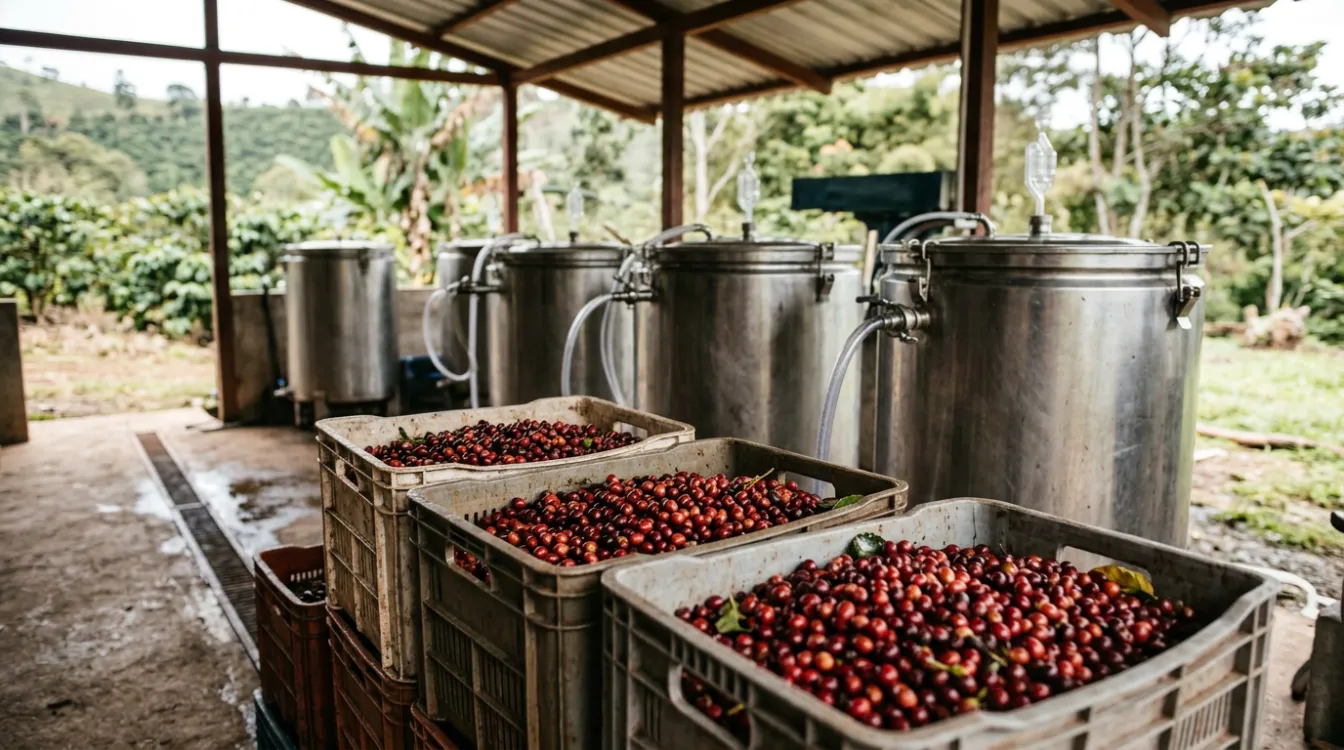
Anaerobic coffee is fermented in a sealed, low-oxygen tank, which favors lactic bacteria and yeasts and often creates intense tropical fruit, winey and creamy flavors. Other experimental methods include carbonic maceration (whole cherries in carbon dioxide), yeast inoculation (adding selected yeasts) and co-fermentation (adding fruit or spices). All of them build on the classic choices of washed, natural and honey processing. They can produce thrilling cups, but labels are often vague, and co-fermented or infused coffees divide opinion. Read labels closely, ask roasters what was done, and brew these coffees as light-roast pour-overs with slightly cooler water.
Why coffee labels got so complicated
Not long ago, a specialty coffee bag usually said one of two things: washed or natural. Today you might see "Gesha, anaerobic natural, 96 hours," "thermal shock washed," "carbonic maceration" or "co-fermented with passion fruit."
These labels describe what happened to the coffee between picking and drying. That stage, called post-harvest processing, has become one of the most creative and controversial areas in specialty coffee.
I've brewed dozens of experimental coffees over the past few years, from subtle washed lots to wildly fruity co-ferments that tasted more like candy than coffee. Some were among the best cups I've ever had. Some felt like a magic trick.
In this guide I will start with the fundamentals that every producer works with, then move through honey processing, fermentation science and the modern experimental methods, and finish with practical advice on buying, brewing and judging these coffees for yourself.
Experimental-coffee specialists like Christopher Feran, who runs a subscription focused on unusual lots, often point out that the labels themselves don't tell you much. To understand what you're buying, you need to understand the basic decisions every producer makes.
Processing methods at a glance
| Method | What happens | Typical flavor |
|---|---|---|
| Washed | Fruit removed, beans fermented and washed before drying | Clean, bright, clear |
| Natural | Whole cherry dried with fruit on | Fruity, heavy, sweet |
| Honey | Skin removed, some mucilage left on during drying | Sweet, round, fruity |
| Anaerobic | Fermented in a sealed, low-oxygen tank | Intense, fruity, winey, sometimes boozy |
| Carbonic maceration | Whole cherries in CO2-filled sealed tanks | Juicy, candy-like, vivid |
| Yeast inoculation | Selected yeast strains added to fermentation | More controlled, often cleaner fruit |
| Co-fermentation | Fruit, spices or other matter added | Very intense, sometimes flavored |
| Infusion | Flavors or oils added without fermentation | Often unmistakably flavored |
The basic decision: wet or dry
Classically, every processing decision starts with one question: is the cherry pulped or not?
Pulping is the mechanical process of squeezing the seeds out of the cherry, separating them from the skin and most of the fruit flesh. A pulping machine does this with rotating discs or drums.
Dry processing (natural): if the producer doesn't pulp the cherry, the whole fruit dries with the seeds inside. This is the oldest method, still common in Ethiopia, Brazil and Yemen.
Wet processing: if the producer pulps the cherry, the seeds, still coated in sticky mucilage, go on to the next stages wet. Washed and honey coffees both start this way.
Wet is not the same as washed
People often use "wet" and "washed" as if they mean the same thing. They don't. "Wet" only means the cherry was pulped. "Washed" means the remaining mucilage was then removed, usually by fermentation and rinsing, before drying. A honey coffee is wet processed, but not washed.
Fermentation can happen at every stage
For a long time, the rule was simple: process cherries as quickly as possible after picking to avoid uncontrolled fermentation. Experimental processing deliberately breaks that rule, and fermentation can now happen at several points.
Pre-drying aerobic (oxidized) processing
Producers can hold whole cherries in open bags or tanks for a day or more before pulping or drying. Oxygen is present, so different microbes dominate. This can add fruity complexity, but it's easy to overdo.
Pre-drying anaerobic processing
Alternatively, cherries or pulped beans go into a sealed tank or bag with a one-way valve. As microbes consume oxygen, the environment becomes low-oxygen, changing which compounds develop. This is what most labels mean by "anaerobic."
Mid-drying and post-drying fermentation
Fermentation doesn't stop once drying begins. Coffee drying outdoors on patios or raised beds keeps fermenting slowly until the moisture drops. Some producers pause drying, bag the coffee, then resume, creating another fermentation window.
Kenya's accidental double fermentation
Kenya's famous double fermentation started almost by accident. Wet mills often couldn't process everything at once, so pulped coffee sat in tanks overnight, was washed, then soaked again in clean water. That extra step became part of the classic Kenyan profile: clean, bright and intensely juicy.
Decoding the washed process
"Washed" sounds like one standard method, but in practice it varies a lot between countries and mills.
Mechanical pulping and mucilage removal
At large washing stations, common in Colombia and Central America, cherries are pulped and the mucilage is then removed either by fermentation in tanks or by machines called demucilagers that scrub it off.
Temperature and duration
Fermentation speed depends heavily on temperature. In warm lowlands, it might take 12 hours; in cool highlands, 36 to 72 hours. Producers judge readiness by feel: the beans should feel gritty rather than slippery.
Regional variations
- Ethiopia and Kenya: coffee is usually fermented underwater in large concrete tanks, then washed in long channels.
- Burundi: producers often ferment pulped coffee dry, without water, in tiled tubs, then wash and soak it.
- Central and South America: many mills ferment dry in tanks; others use demucilagers and skip fermentation almost entirely.
These small differences help explain why washed coffees from different countries taste so different, even before you consider variety and altitude.
Honey processing: black, red and yellow
For decades, specialty coffee revolved around two poles: washed and natural. Honey processing, popularized in Costa Rica, sits between them.
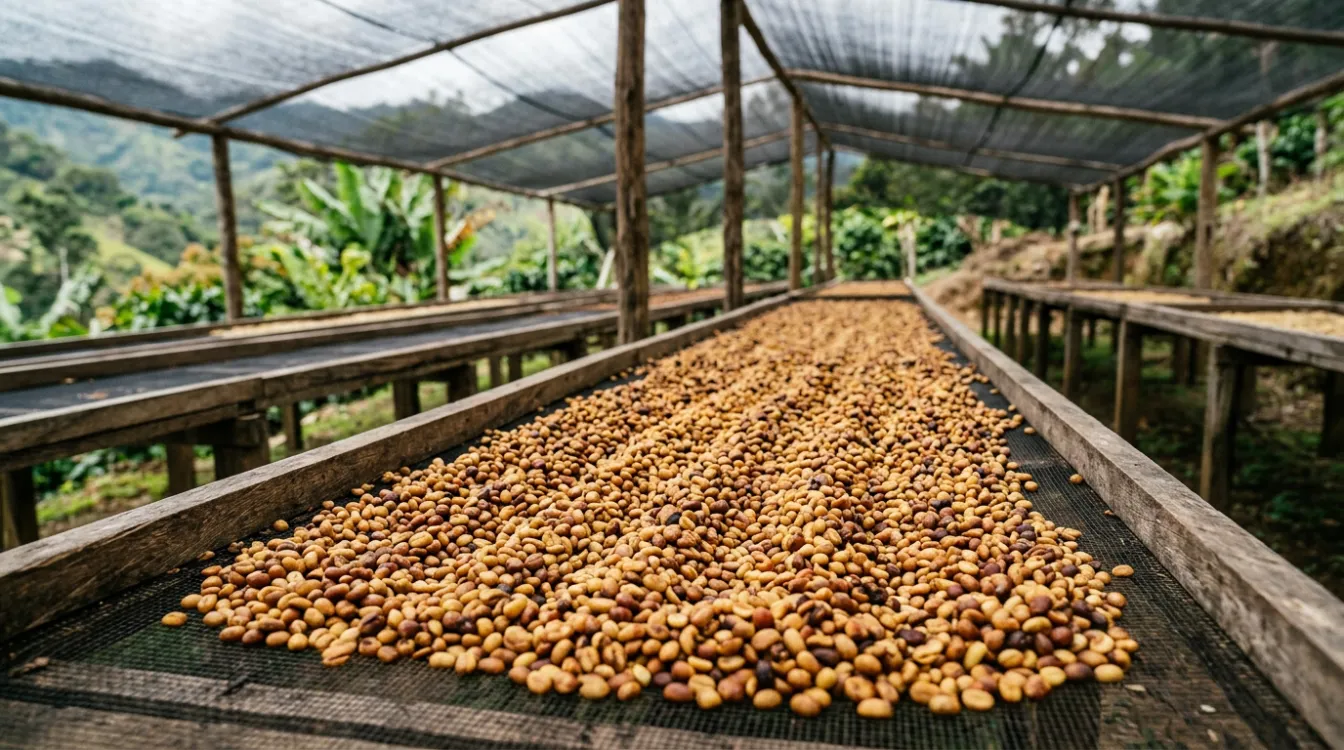
The skin and most of the flesh are removed, but some sticky mucilage stays on the beans while they dry. The name comes from that sticky texture, not from added honey.
The reality of color grades
Honey coffees are often labeled yellow, red or black, usually explained as different percentages of mucilage left on the bean, with black having the most.
In practice, producers control this by adjusting the gap between the discs of the pulper. A tighter gap scrapes off more mucilage; a wider gap leaves more.
Because coffee cherries vary in size, any batch contains seeds with very different amounts of mucilage. A lot labeled "red honey" will always include some beans that look yellow and some that look black. The labels are useful guides, not precise measurements.
Our tip: Honey coffees are a great entry point into processing. They usually offer more fruit and sweetness than washed coffees without the wildness of many anaerobic lots.
A short history of coffee processing
Natural processing is the oldest method. In Ethiopia and Yemen, people simply dried whole coffee cherries in the sun, then removed the dried husk. It required little equipment and almost no water.
Washed processing spread in the eighteenth and nineteenth centuries, especially in the Caribbean and Latin America. Pulping machines and fermentation tanks produced cleaner, more consistent coffee that buyers in Europe valued highly.
For most of the twentieth century, that was the story: washed coffee for quality, natural coffee for cheaper or traditional markets. Honey processing gained attention in Costa Rica in the early 2000s, partly as a way to save water.
The experimental era began in the 2010s. Producers and competition baristas started borrowing ideas from winemaking, brewing and food science. When coffees processed with carbonic maceration and long anaerobic fermentations began winning major competitions, the rest of the industry took notice.
The natural process in depth
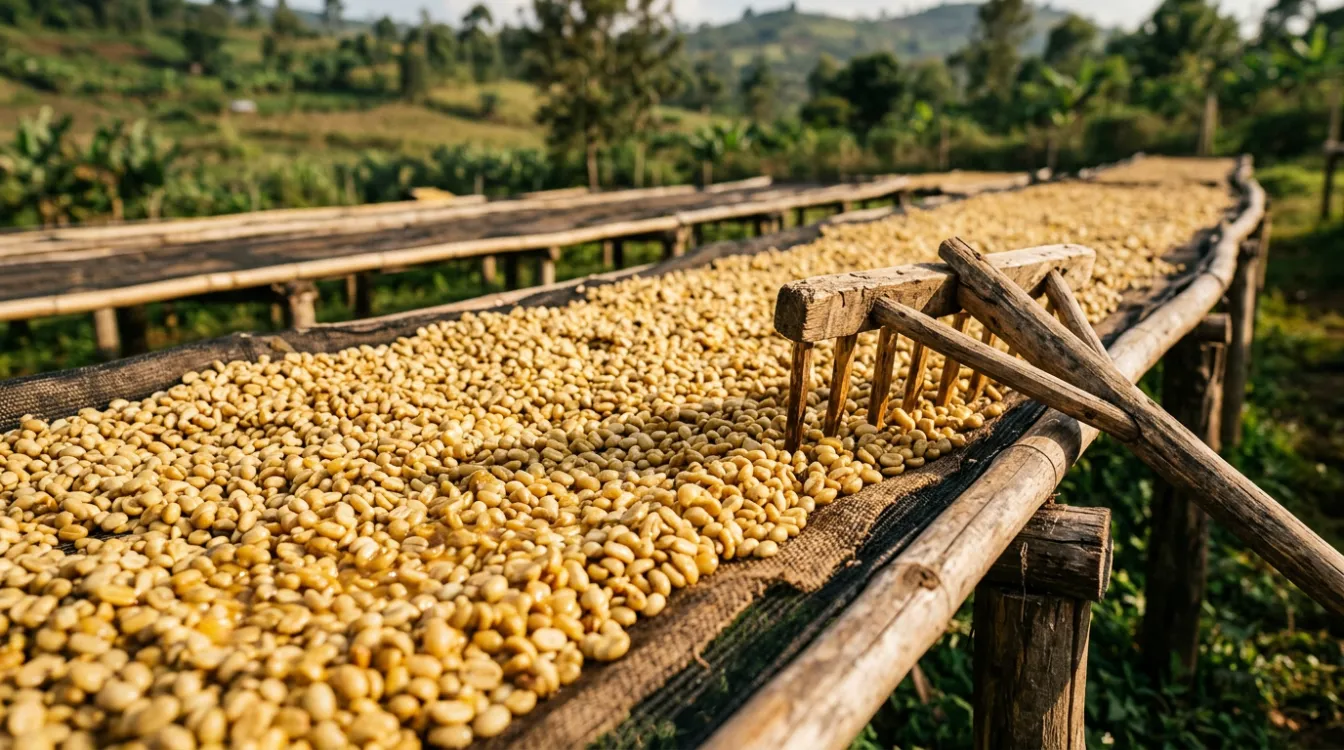
Natural coffees are dried whole, with the fruit still around the seeds. On raised beds or patios, cherries are turned regularly for two to four weeks until they're dry and dark, almost like raisins.
During that time, the fruit's sugars ferment slowly and some of their flavor moves into the seeds. That's why naturals often taste of berries, tropical fruit and wine.
The risks are real. If drying is too slow or uneven, mold and over-fermentation create musty or vinegary defects. Good naturals need careful sorting, thin layers and constant turning.
Many anaerobic coffees are actually "anaerobic naturals": whole cherries fermented in sealed tanks first, then dried as naturals. That combination produces some of the most intense flavors in coffee.
Why drying matters as much as fermentation
Every process ends with drying, and drying shapes flavor more than most labels admit.
- Patios: concrete or brick surfaces, common in Brazil and Central America. Fast and cheap, but can dry unevenly.
- Raised beds: mesh tables, common in East Africa. Better airflow and more even drying.
- Shade drying: slows the process for more even results and, many believe, more sweetness.
- Mechanical dryers: fast and controllable, used where weather is unreliable or volumes are large.
Coffee is usually dried to around 10 to 12 percent moisture. Dried too fast, it can taste flat and age quickly. Dried too slowly, it risks mold and defects.
Some experimental producers now control drying as carefully as fermentation, using slow, shaded drying to "lock in" the flavors created in the tank.
Thermal shock, double anaerobic and other variations
As experimentation spread, producers began combining and refining methods.
Thermal shock
After fermentation, the coffee is rinsed with hot water, then cold water. Supporters say the rapid temperature change helps the beans absorb aromatic compounds and stops fermentation sharply. Thermal shock is often paired with co-fermentation.
Double anaerobic
The coffee goes through two separate anaerobic stages, for example whole cherries first, then pulped beans, often with different times or temperatures.
Lactic process
Fermentation conditions are tuned to favor lactic acid bacteria, giving creamy, rounded acidity. It's sometimes called "lactic fermentation" on labels.
Extended or controlled fermentation
Some producers now use temperature-controlled stainless steel tanks with sensors, treating fermentation like a winery would.
These names aren't standardized, so one farm's "double anaerobic" can be quite different from another's.
Water use and sustainability
Processing also has an environmental side. Traditional washed processing uses a lot of water for fermentation, washing and channeling, and the wastewater can pollute rivers if it isn't treated.
That's one reason honey and natural processing are attractive in dry regions. Modern eco-pulpers and demucilagers can cut water use dramatically, and many mills now treat wastewater or reuse pulp as compost.
Experimental methods don't automatically use more or less water. Sealed anaerobic tanks can actually use very little water, but they need investment in equipment and careful monitoring.
The microbes behind fermentation
The most important idea in modern processing is that fermentation isn't one thing. It's the work of living microbes, and which microbes dominate decides the flavor.
Bacteria vs yeast
Two main families drive coffee fermentation. Yeasts tend to produce alcohols and fruity, estery aromas. Bacteria produce acids, which can add brightness or, if uncontrolled, sourness and vinegar notes.
Lactic vs acetic acid bacteria
- Lactic acid bacteria thrive in cooler, low-oxygen conditions and produce lactic acid, associated with creamy, yogurt-like or rounded acidity.
- Acetic acid bacteria thrive in warmer, oxygen-rich environments and produce acetic acid, the acid in vinegar. A little adds sparkle; too much tastes sharp and sour.
That's why sealing tanks and controlling temperature matters so much. Low oxygen and cooler temperatures favor lactic bacteria and yeasts, which is one reason many anaerobic coffees taste creamy and fruity rather than vinegary.
Whole cherry vs pulped fermentation
Fermenting whole cherries gives microbes lots of fruit sugar to work with. The results can be intense and boozy, but the risk of over-fermentation is high.
Pulping first removes much of the fruit, dramatically reducing risk and giving cleaner, more controlled results.
Labels can be ambiguous
A label like "Washed Anaerobic 72 Hours" tells you less than it seems. Was it 72 hours of whole cherries or pulped beans? At what temperature? In water or dry? With added yeast? Two coffees with identical labels can taste completely different.
Simple water tricks that improve quality
Some of the most effective quality steps are very simple.
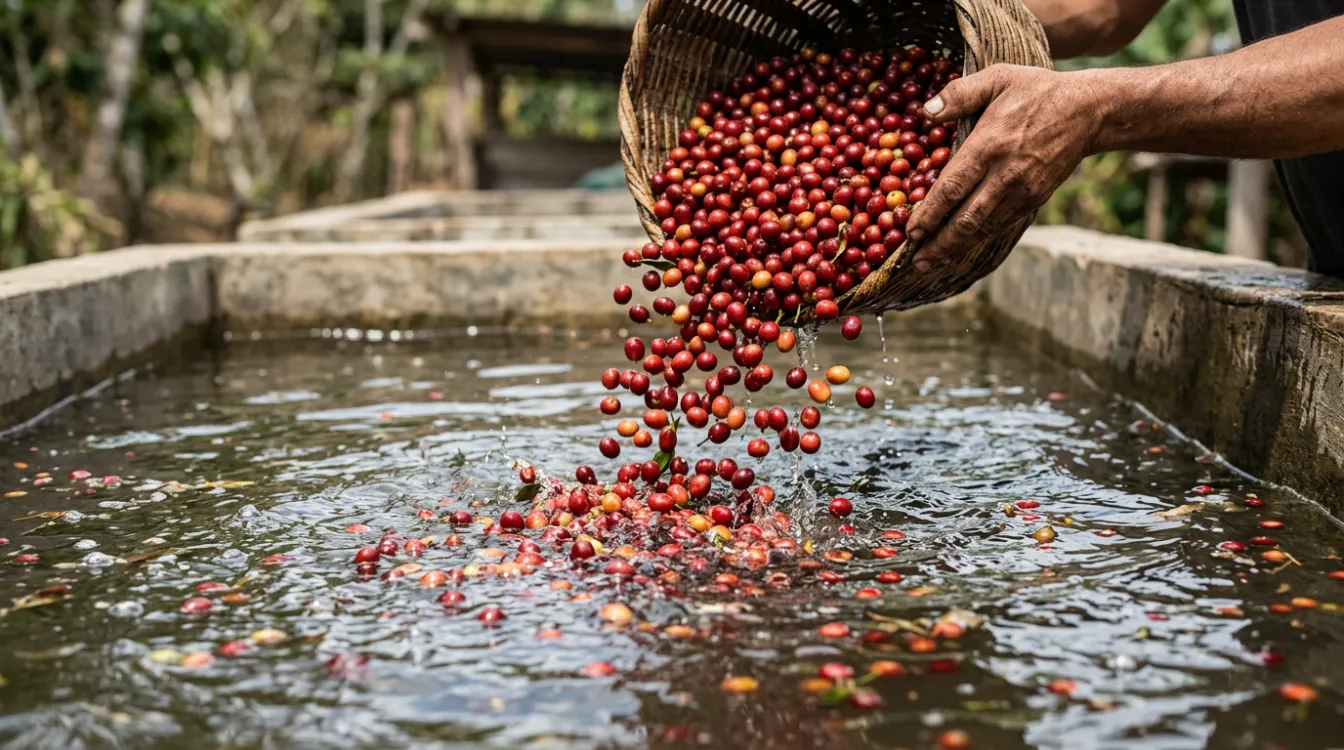
Removing floaters
When freshly picked cherries go into a water tank, underripe, damaged or insect-damaged cherries tend to float. Skimming them off removes many defects before processing even begins.
Water as a lot equalizer
After pulping and fermentation, soaking the parchment coffee in clean water for roughly 16 to 24 hours can even out differences within a batch and help produce a cleaner, more consistent cup. It's part of the Kenyan method and is used in many other origins too.
Anaerobic fermentation explained
Anaerobic means "without oxygen." In coffee, it usually means fermenting cherries or pulped beans in a sealed tank, barrel or bag, often with a one-way valve that lets carbon dioxide escape without letting air in.
As microbes consume the remaining oxygen, the environment shifts. Lactic acid bacteria and certain yeasts take over, and pressure and carbon dioxide build up.
Producers control time, temperature, whether the coffee is whole or pulped, and sometimes the pH. Fermentations can last anywhere from 24 hours to well over 100.
What anaerobic coffees taste like
- Intense tropical fruit: mango, passion fruit, pineapple.
- Red wine, rum or liqueur notes in longer fermentations.
- Creamy, yogurt-like acidity.
- Sometimes cinnamon, clove or other spice-like aromas.
When done well, they're thrilling. When overdone, they can taste fermented in an unpleasant way: boozy, vinegary or like overripe fruit.
Carbonic maceration: borrowed from wine
Carbonic maceration comes straight from winemaking, especially the Beaujolais region of France, where whole grapes ferment in carbon dioxide.
The mechanism
Producers place whole, intact coffee cherries into a sealed tank and fill it with carbon dioxide, often from a gas cylinder.
The purpose
Because carbon dioxide is heavier than air, it pushes oxygen out of the tank. Fermentation starts inside the intact cherries, producing very distinctive flavors.
Carbonic maceration coffees are often described as juicy, vivid and candy-like, with intense red fruit and a clean finish. Some of the most famous competition coffees of the past decade used this method.
Yeast inoculation: controlled fermentation
Instead of relying on whatever wild microbes are present, some producers add selected yeast strains, much like winemakers and brewers.
The goal is control. A chosen yeast can dominate the fermentation, crowding out unwanted microbes and steering flavors in a predictable direction. Some producers use wine yeasts; others use strains isolated from their own farms.
Results are often fruit-forward but cleaner and more consistent than wild anaerobic fermentations. For producers, that consistency can mean fewer lost lots.
Co-fermentation and infusion
This is where processing becomes truly controversial.
Co-fermentation
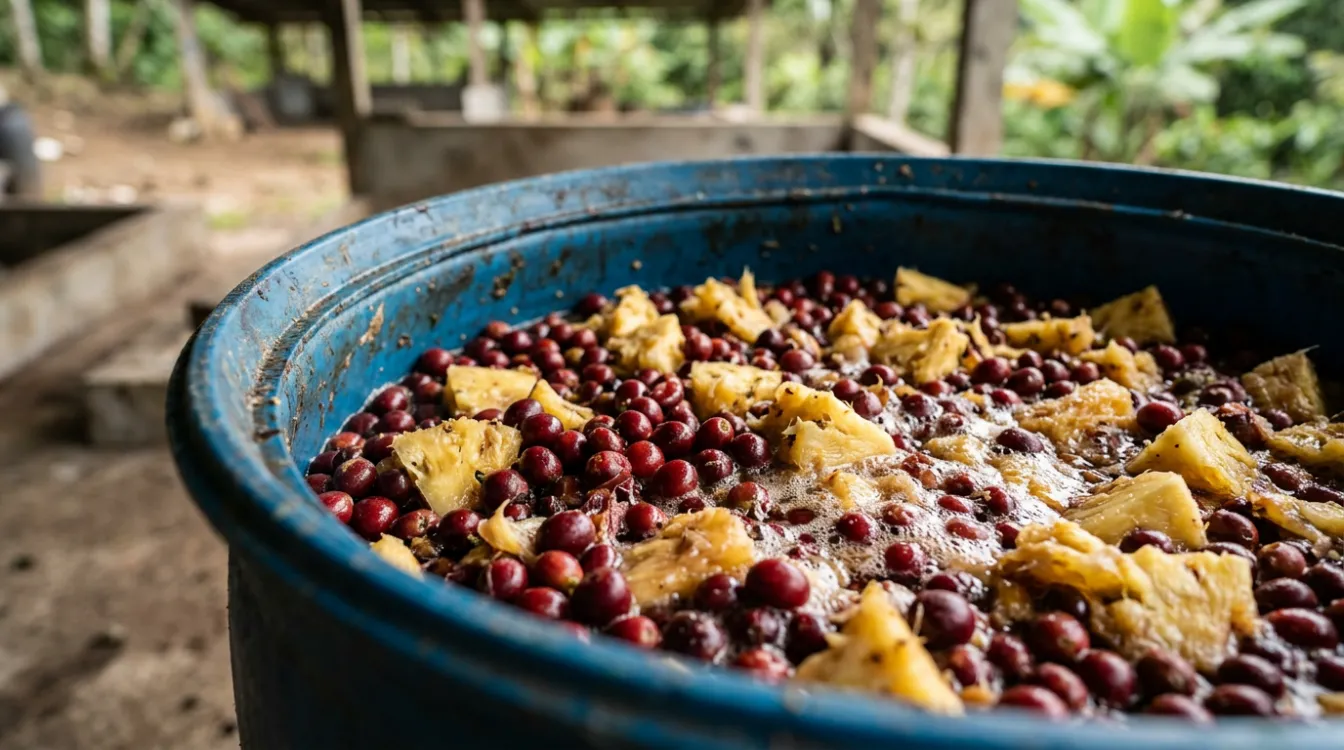
Producers add other organic matter to the fermentation: pineapple, mango, passion fruit, cinnamon, hops, even rum barrels. The coffee absorbs flavor compounds from these additions during fermentation.
Infusion
Infusion goes further. Flavors, extracts or oils are added without relying on fermentation, often during or after drying. The resulting coffee can taste overwhelmingly of strawberry, peach or cinnamon.
Why it's controversial
Supporters see it as creativity and a way for producers to earn more. Critics argue that it masks the coffee's origin, blurs the line with flavored coffee and isn't always disclosed honestly.
I've tasted co-fermented coffees that were genuinely delicious, and others that tasted like candy with coffee in the background. My view: they're fine as long as the label tells you exactly what was added.
Good fermentation vs fermentation defects
There's a fine line between a delicious fermented flavor and a defect. Learning to tell them apart makes buying experimental coffee much easier.
| Pleasant | Defect |
|---|---|
| Ripe tropical fruit, jam | Rotten or mushy fruit |
| Red wine, port | Vinegar, nail polish |
| Creamy, yogurt-like acidity | Sour milk, cheesy |
| Rum, liqueur sweetness | Harsh alcohol, solvent |
| Spice, cinnamon | Musty, moldy, earthy-dirty |
Over-fermentation usually happens when time or temperature runs too long, or oxygen gets in when it shouldn't. Acetic bacteria and unwanted yeasts take over, and the coffee turns sharp, sour or funky.
If your experimental coffee tastes like vinegar or nail polish, it's not your brewing. Try a slightly cooler water temperature to soften it, but the flavor is largely in the bean.
Natural vs anaerobic natural: a side-by-side
One of the most useful tastings I've done compared a natural and an anaerobic natural from the same Colombian farm and harvest.
The natural was sweet and clean, with strawberry, milk chocolate and a gentle winey note. It was easy to drink and very balanced.
The anaerobic natural was louder in every way: strawberry jam, passion fruit, cinnamon and a creamy, almost yogurt-like acidity. It was exciting for the first cup and a bit much by the third.
Both were good coffees. The anaerobic simply turned the volume up. That's a fair summary of what anaerobic processing often does.
Are experimental coffees worth the price?
Experimental lots usually cost more, sometimes much more. Producers invest in tanks, valves, monitoring and labor, and they take on real risk: a single failed fermentation can ruin a whole lot.
Small volumes and strong demand from competition baristas and specialty roasters push prices up further.
Whether that's worth it depends on what you value. If you love bold, unusual flavors and enjoy coffee as an adventure, an occasional experimental bag is a treat. If you prefer balanced daily coffee, a well-made washed or natural coffee will usually give you more satisfaction per dollar.
How competitions drove experimentation
Barista and brewing competitions played a big role in the rise of experimental processing. Competitors look for coffees with unusual, memorable flavors that stand out to judges.
When competitors began winning with carbonic maceration and anaerobic coffees, producers saw that these processes could bring higher prices and recognition. Demand spread from competition stages to specialty cafés and home brewers.
My guide to the World Barista Championship explains how competitions work and why coffee selection matters so much.
Storing and resting experimental coffees
Experimental coffees are often roasted light and can benefit from resting. Many taste best one to four weeks after roasting, when harsh edges have softened.
Store them like any specialty coffee: whole beans, airtight, away from light and heat. Because they're often expensive, buying smaller bags and finishing them while fresh makes sense. My guide on how to store coffee beans covers the details.
How roasters roast experimental coffees
Experimental lots are usually roasted light to medium-light. The goal is to keep the delicate fruit and fermentation aromas without letting them turn harsh.
Many roasters find these coffees develop quickly, because fermentation changes the sugars and acids inside the bean. A roast profile that works for a washed coffee from the same farm can taste flat or burnt on an anaerobic lot.
Good roasters cup each lot several times at different roast levels before deciding how to present it. If you find an experimental coffee you love, it's often worth buying it again from the same roaster rather than chasing the same process elsewhere.
Experimental processing beyond arabica
Experimental processing isn't limited to arabica. Robusta producers in Vietnam, Indonesia, Brazil and Uganda now use honey, natural and anaerobic methods to raise quality.
In my tastings, anaerobic robusta can be surprisingly pleasant: still bold and full-bodied, but with dark fruit and chocolate rather than the rubbery bitterness of commercial robusta. My guide to fine robusta covers this movement in detail.
The experiments I keep coming back to
After years of trying these coffees, a few styles have earned a permanent place in my rotation.
- Washed anaerobic Colombians: clean, sweet and creamy, with a gentle extra fruitiness. Great for everyday pour-over.
- Carbonic maceration from Central America: vivid red fruit and a candy-like sweetness that's thrilling as a weekend treat.
- Honey-processed Costa Ricans: balanced, sweet and easy, perfect as espresso.
- Long anaerobic naturals: an occasional adventure, never an everyday coffee.
Heavily co-fermented coffees I buy rarely, and only when the roaster explains exactly what was added. They're fun, but I miss tasting the coffee itself.
Questions to ask your roaster
- Was it whole cherry or pulped during fermentation?This changes intensity and risk enormously.
- How long, and at what temperature?Time and temperature shape flavor.
- Was anything added?Yeast, fruit, spices or flavors should be disclosed.
- How was it dried?Drying method and speed affect clarity and stability.
- How do you recommend brewing it?Roasters often have tested recipes.
Processing glossary
Resting and storing experimental coffees
Experimental coffees often behave differently after roasting than classic washed coffees. In my experience, many anaerobic and fruit-forward lots taste a little sharp or muddled in the first days after roasting, then open up beautifully after one to three weeks of rest.
- Give them time. I usually wait at least a week before brewing an anaerobic coffee as pour-over, and longer for espresso.
- Taste across the bag. Notice how the fruit and fermentation notes change from week to week. It's a great way to learn what you like.
- Store carefully. Keep the bag sealed, away from light and heat. Intense aromatic coffees can fade quickly once opened.
- Freeze if you can't finish it. Splitting a special bag into small airtight portions and freezing them preserves those fragile aromas. My guide on how to store coffee beans explains how.
Because these coffees are often small, rare lots, I treat each bag as an experience rather than an everyday coffee. Brewing them slowly over a few weeks lets me enjoy every stage of their development.
How to explore processing at home
The best way to understand processing is to taste it. Here's a simple plan I recommend to friends.
- Start with a washed coffeeChoose a clean washed coffee from a region you like, such as Colombia or Ethiopia.
- Add a natural from the same regionNotice the extra fruit, sweetness and body.
- Try a honey processCompare its sweetness and balance with the other two.
- Try one anaerobic coffeeIdeally from the same country, to isolate the effect of fermentation.
- Brew them the same waySame ratio, water and brewer, adjusting grind only for similar brew time.
- Taste as they coolWrite down three words for each coffee.
After this flight, labels stop being mysterious. You'll know which processes you love, and which you'd rather avoid.
Reading an experimental coffee label
Here are some common label phrases and what they usually mean:
When a label gives only a process name and a number of hours, remember how much information is missing. That's why a good roaster's tasting notes and a conversation at the counter are often more useful than the label itself.
Who will enjoy experimental coffees?
You'll probably love experimental coffees if you enjoy natural wines, sour beers, tropical fruit or bold flavors, and if you see coffee as something to explore.
You may prefer to stick with washed and classic naturals if you love chocolatey, nutty, balanced coffee, drink mostly milk-based drinks or want a dependable everyday cup.
Many coffee lovers, me included, end up somewhere in between: a balanced everyday coffee in the cupboard, and an experimental bag now and then for a weekend adventure.
Debates, producer realities and buying ethics
Experimental processing divides opinion, and the debate isn't only about flavor.
Origin vs flavoring
Historically, flavored coffees were often a way to disguise cheap beans. Specialty coffee built its identity on the opposite: tasting the true character of a place. Heavily co-fermented and infused coffees challenge that idea.
The burden of trends on producers
When buyers visiting farms ask for "anaerobic" or "something funky," producers feel pressure to experiment. Experiments cost money: tanks, valves, thermometers, extra labor and lost lots when fermentations go wrong. If the trend moves on, producers can be left with equipment and coffee nobody wants.
Contract integrity
A serious ethical issue arises when buyers commission an experimental lot and then walk away from the deal because the result didn't match their expectations, or the market cooled. Producers carry the risk while buyers keep the option to say no.
What responsible buying looks like
- Long-term relationships rather than one-off trend chasing.
- Honest, detailed labels about what was done to the coffee.
- Shared risk when commissioning experiments.
- Paying fairly for the extra work and risk involved.
My tasting notes from experimental coffees
Over the past few years, I've kept notes on every experimental coffee I've brewed. A few patterns stand out.
How intense the fruit was in my tastings
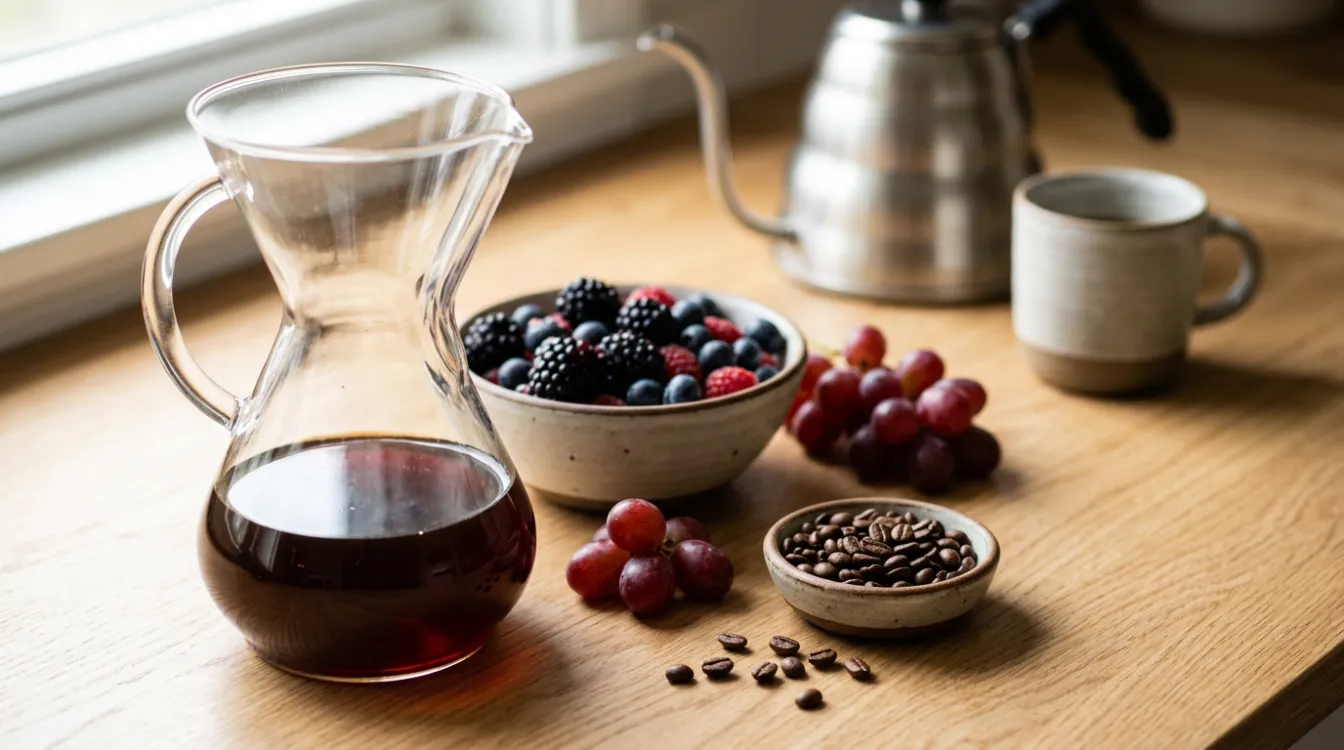
Washed anaerobic coffees often surprised me most: clean like a washed coffee, but with a creamy, almost yogurt-like acidity and extra sweetness.
Long anaerobic naturals were the most polarizing. My favorite tasted of strawberry jam and dark chocolate. My least favorite tasted like over-ripe banana and rum.
Carbonic maceration coffees were consistently vivid and clean, often my favorites for pour-over.
Co-fermented coffees were the easiest to recognize blind, and the hardest to place by origin.
How to brew experimental coffees
Experimental coffees are usually roasted light to highlight their fruit. A few adjustments help them shine.
- Pour-over is my favorite method; it shows off clarity and aroma.
- Use slightly cooler water for very fruity, boozy lots, around 195 to 200°F, to keep harsh fermented notes in check.
- Try a slightly longer ratio, such as 1:16 to 1:17, for clarity.
- For espresso, pull longer ratios; intense fruit can become overwhelming in a short shot.
- Taste as it cools. Many of these coffees change dramatically as they cool.
If you want to understand how roast and extraction affect these flavors, my guide to coffee extraction is a good next step.
How to buy experimental coffees
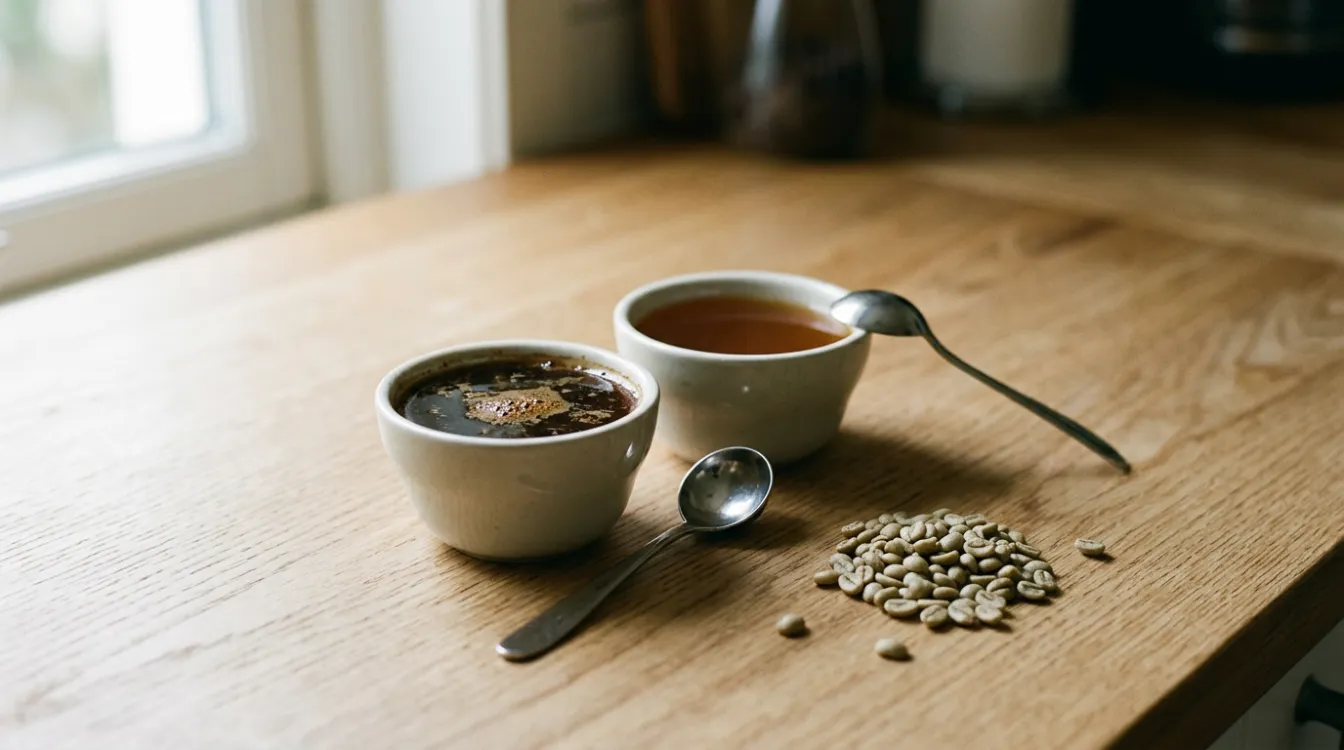
- Read the full label. Look for process details: whole cherry or pulped, time, added yeast or fruit.
- Ask the roaster. Good roasters know exactly how the coffee was processed.
- Start with a small bag. These coffees can be expensive and polarizing.
- Try a washed and an anaerobic from the same farm to taste the processing difference directly.
- Expect variety. Two "anaerobic" coffees can taste nothing alike.
Our tip: If a co-fermented coffee doesn't say what was added, ask. A responsible roaster will always tell you.
Where processing is heading
Processing will keep evolving. Producers are learning from winemakers, brewers and food scientists, using temperature control, pH monitoring and selected cultures to make fermentation more predictable.
Some of the most exciting work isn't about extreme flavors at all, but about making traditional washed and natural coffees cleaner, sweeter and more consistent with less waste.
At the same time, the debate about co-fermentation and infusion will continue. Clear labeling, honest communication and fair contracts will decide whether experimentation benefits producers as much as it excites drinkers.
My guide to coffee processing methods covers the classic methods in more detail.
Myths about experimental processing
"Anaerobic means one specific method"
It describes low-oxygen fermentation, which can be done in many different ways.
"Experimental coffees are always better"
They're different, and sometimes spectacular, but a great washed coffee can be just as complex.
"Fruity coffee must be flavored"
Many intensely fruity coffees come purely from processing and variety, with nothing added.
"Labels tell you everything"
Labels are short summaries. The details behind them vary enormously.
The verdict
Post-harvest processing is where much of coffee's modern creativity happens. Understanding the basics, wet or dry, washed or honey, aerobic or anaerobic, helps you decode labels and choose coffees you'll enjoy.
Anaerobic and other experimental methods can produce some of the most exciting cups in specialty coffee. They can also produce coffees that taste more of process than of place.
Processing is also a reminder that coffee is an agricultural product shaped by people. Every fermentation tank, drying bed and label reflects decisions made by a producer trying to balance flavor, risk and income. When you enjoy a remarkable experimental coffee, you are tasting that work as much as the bean.
Try them with curiosity, ask questions, and support roasters and producers who are open about what they do.
Frequently asked questions
What is anaerobic coffee?
Coffee fermented in a sealed, low-oxygen environment before drying, which changes which microbes dominate and how it tastes.
Does anaerobic coffee taste different?
Usually yes: more intense fruit, winey or creamy acidity and sometimes spice or boozy notes.
What is carbonic maceration?
Whole cherries fermented in a sealed tank filled with carbon dioxide, a method borrowed from winemaking.
What is co-fermented coffee?
Coffee fermented together with added fruit, spices or other ingredients that add flavor.
Is co-fermented coffee flavored coffee?
It's debated. Flavor comes from added ingredients, so many argue it should be clearly labeled.
What is the difference between wet and washed?
Wet means the cherry was pulped; washed means the mucilage was then removed before drying.
Is honey processed coffee made with honey?
No. The name refers to the sticky mucilage left on the beans.
How should I brew anaerobic coffee?
Pour-over with water around 195 to 200°F and a ratio near 1:16 works well.

- Michael Reynolds, brewing and tasting dozens of experimental coffees
- Coffee processing, Wikipedia
- Carbonic maceration, Wikipedia
- Fermentation in food processing, Wikipedia
- Lactic acid bacteria, Wikipedia
Related guides
Coffee processing methods Coffee varieties How altitude affects coffee flavorWritten by Michael Reynolds. Last updated November 20, 2026.