Coffee Certifications Explained: Fairtrade, Rainforest Alliance, Organic, Bird Friendly and What They Really Mean
Coffee bags are covered in logos promising a better deal for farmers and the planet. I've read the standards, compared what labels promise with what they deliver and talked with roasters and importers about how they work in practice. Here's what each major coffee certification guarantees, who pays for it and how to choose coffee that matches your values.
We choose products independently. We may earn a commission through links on this page; your price stays the same. Affiliate policy
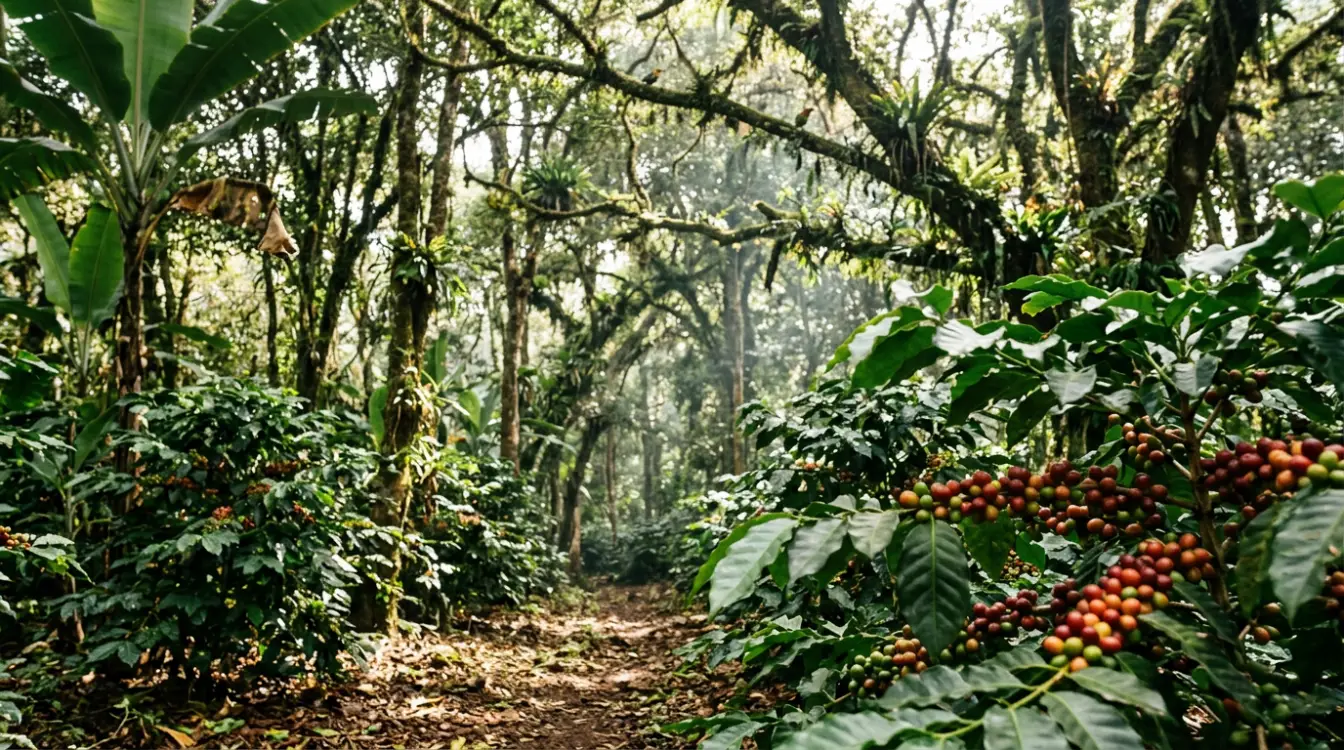
Coffee certifications each focus on different goals. Fairtrade sets a minimum price and pays a community premium to small-producer cooperatives. Rainforest Alliance (merged with UTZ in 2018) certifies sustainable farm practices. Organic bans synthetic inputs. Smithsonian Bird Friendly requires organic plus strict shade: at least 10 tree species, three canopy layers and 40% shade. Company programs like Starbucks C.A.F.E. Practices and Nespresso AAA set their own standards. None guarantees a living income or better taste, and premiums don't always reach farmers directly. Transparency about the farm and price paid matters as much as any logo.
What do all those coffee labels mean?
Pick up a bag of coffee and you'll often see a cluster of small logos: Fairtrade, Rainforest Alliance, USDA Organic, Bird Friendly, sometimes a company's own sustainability seal. Each promises that your coffee is better for farmers, the planet or both.
But what do they actually guarantee? Who pays for them, who checks them and how much difference do they make to the people who grow coffee?
I've spent a lot of time reading certification standards, talking with roasters and importers, and comparing what labels promise with what they deliver. In this guide I'll explain the major coffee certifications, how they work, their strengths and weaknesses, and how to choose coffee that matches your values.
The major certifications compared
| Certification | Main focus | Key requirement | Who pays for certification |
|---|---|---|---|
| Fairtrade | Farmer income and fair trade | Minimum price plus premium for cooperatives | Producer organizations, with costs shared along the chain |
| Rainforest Alliance | Environment, workers, farm management | Sustainable agriculture standard | Usually farms or groups |
| USDA Organic | No synthetic inputs | Organic farming practices, certified land | Farms or groups |
| Smithsonian Bird Friendly | Shade habitat and biodiversity | Organic plus strict shade criteria | Farms |
| Starbucks C.A.F.E. Practices | Company sourcing standard | Verified social and environmental practices | Company program |
| Nespresso AAA | Company sourcing program | Quality and sustainability with partner farms | Company program |
Each label covers different things. None of them guarantees everything, and many coffees carry more than one.
Why coffee certifications exist
Coffee is grown mainly by smallholder farmers in tropical countries, many of whom farm only a few acres. They often sell to local buyers and have little bargaining power. Prices on commodity markets swing wildly, and in some years fall below the cost of production.
Certifications emerged to address problems such as:
- Low and volatile farmer incomes.
- Deforestation as farms expand into forests.
- Loss of biodiversity when shade trees are cleared for sun-grown coffee.
- Pesticide use and its effects on workers and ecosystems.
- Poor labor conditions, including child labor in some regions.
- Lack of transparency in long supply chains.
Each certification tackles a different part of this picture. My guide to climate change and coffee explains some of the pressures farmers now face.
Fairtrade: minimum prices and community premiums
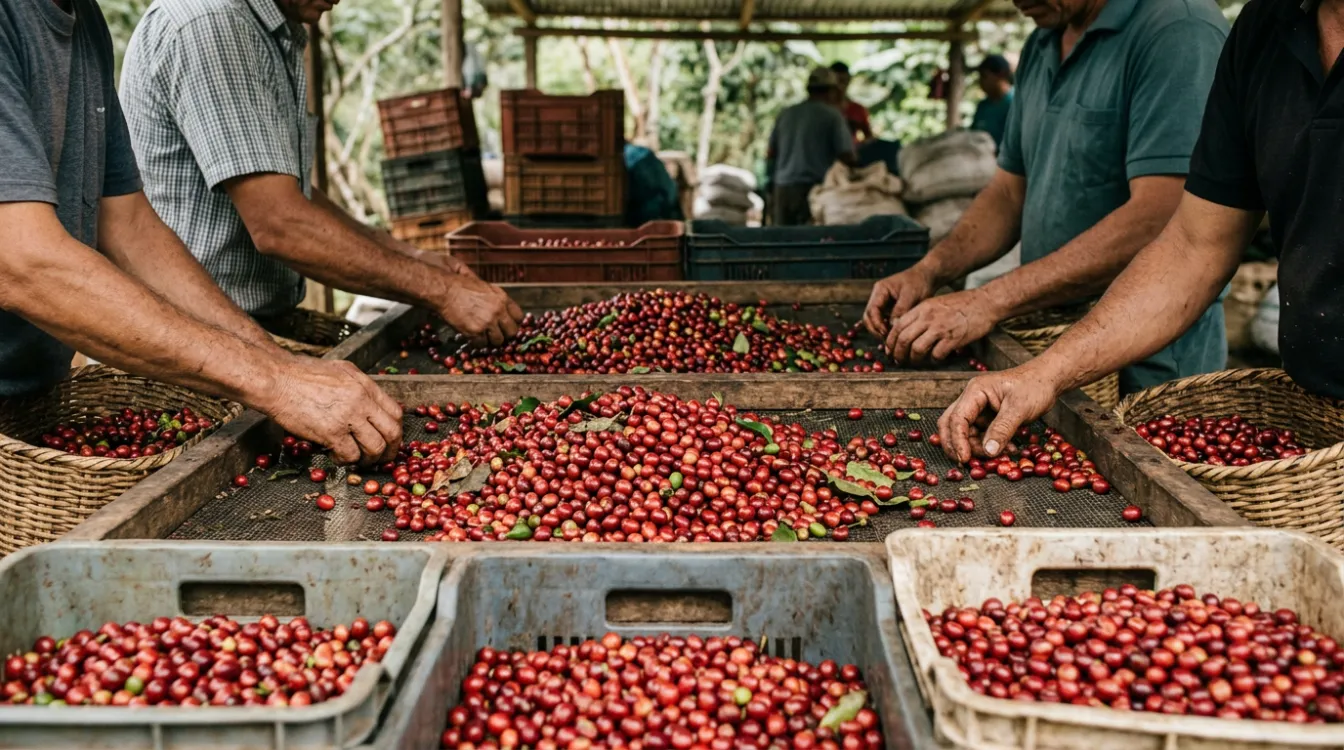
Fairtrade is probably the best-known coffee certification. Its main goal is to improve farmers' incomes and strengthen their organizations.
How it works
- Minimum price: Fairtrade sets a minimum price per pound for certified coffee. If the market price falls below this floor, buyers must pay the minimum. If the market is higher, they pay the market price.
- Fairtrade premium: on top of the price, buyers pay an additional premium per pound to the producer organization.
- Productivity and quality investment: a set portion of the premium must be invested in improving productivity and quality on farms.
- Organic differential: Fairtrade coffee that is also certified organic earns an extra differential per pound.
- Democratic organizations: members decide together how to spend the premium, for example on schools, health care, processing equipment or training.
Who can be certified
Fairtrade coffee certification focuses on small producers. Producer organizations must be made up mostly of small farmers; more than 66% of the coffee must come from small producers in many cases. That means large estates generally can't become Fairtrade certified for coffee.
Strengths
- A price floor that protects farmers when markets crash.
- A premium that funds community projects.
- Stronger, democratic cooperatives.
Weaknesses
- The minimum price may still be below the cost of production in some regions.
- Only part of a cooperative's coffee may sell as Fairtrade; the rest sells at market prices.
- Certification costs and administration can be burdensome.
- Benefits depend heavily on how well each cooperative is run.
A short history of coffee certifications
Coffee certifications are younger than many people think.
- Organic farming movements grew through the 20th century, and formal organic standards and labels spread from the 1970s onward. National rules followed later; the USDA's National Organic Program set US standards in the early 2000s.
- Fair trade labeling began in 1988 in the Netherlands with the Max Havelaar label, created to help Mexican coffee farmers get a better price. Similar labels appeared in other countries and later came together under Fairtrade International.
- Bird Friendly was developed by the Smithsonian Migratory Bird Center in the late 1990s, after research showed that shade coffee farms were important habitat for migratory birds.
- Rainforest Alliance began certifying farms in the 1990s, expanding into coffee and many other crops. UTZ, founded in the Netherlands, focused on good agricultural practices and traceability, and the two organizations merged in 2018.
- Company programs such as Starbucks C.A.F.E. Practices emerged in the early 2000s, as large buyers sought their own ways to manage sourcing.
Since then, certifications have become a familiar sight on supermarket shelves, and sustainability claims have become part of how coffee is marketed worldwide.
How a farm gets certified, step by step
The details differ between labels, but most certifications follow a similar process.
- Learn the standardThe farm or producer group studies the requirements, often with help from a cooperative, exporter or support organization.
- Make changesThe farm adjusts its practices, which might mean reducing chemicals, planting shade trees, improving record-keeping or changing labor policies.
- Internal managementGroups of small farms often set up an internal control system, where the group checks its own members before outside audits.
- External auditAn independent auditor visits the farm or group, inspects fields, processing areas and records, and interviews workers.
- Corrective actionsIf problems are found, the farm must fix them within a set time.
- CertificationOnce requirements are met, the farm or group is certified, usually for a fixed period.
- Ongoing auditsRegular audits, sometimes including unannounced visits, check that standards are maintained.
- Chain of custodyExporters, importers and roasters handling certified coffee must also be certified or registered so the coffee stays traceable.
This process takes time, training and money. For a small farm with a few acres, the paperwork alone can be a significant burden, which is why many smallholders certify as part of a cooperative or group.
Certification from a farmer's point of view
Importers and roasters who work closely with producers have described to me how farmers weigh up certification.
- Market access: some buyers only purchase certified coffee, so certification can open doors.
- Price: premiums and minimum prices can help, but only for coffee that actually sells as certified.
- Costs: audits, training, record-keeping and changes in practices all cost money and time.
- Yields: organic and shade requirements can reduce yields, at least in the short term.
- Training: many farmers value the agronomy training that comes with certification programs.
- Community benefits: Fairtrade premiums can fund schools, clinics, roads or processing equipment that benefit everyone.
One importer told me the decision often comes down to a simple question: "Will enough of my coffee sell as certified to make it worth it?" If a cooperative certifies all its coffee but sells only a fraction under the label, the benefits may not cover the costs.
Rainforest Alliance: environment and farm management
The Rainforest Alliance certification, recognized by its green frog seal, focuses on sustainable farming practices that protect forests, wildlife, workers and communities.
The UTZ merger
In 2018, the Rainforest Alliance merged with UTZ, another major certification program focused on good agricultural practices and farm management. The two programs have since been combined into a single standard.
What it covers
- Forest protection: no deforestation or conversion of natural ecosystems.
- Biodiversity: protecting wildlife and natural habitats on and around farms.
- Climate-smart farming: practices that help farmers adapt to and reduce climate change.
- Worker rights: fair working conditions, safety and protection against child and forced labor.
- Farm management: better record-keeping, efficiency and productivity.
- Reduced agrochemicals: limits on hazardous pesticides.
How it differs from Fairtrade
Rainforest Alliance doesn't set a minimum price in the same way Fairtrade does. Instead, it focuses on farm practices. Farmers are expected to benefit through better productivity, efficiency and access to buyers who prefer certified coffee, and the standard includes a sustainability differential and investment payments negotiated with buyers.
Who pays
Farmers or farmer groups typically pay for certification and audits, although buyers and programs sometimes help. This can be a barrier for small farms.
Strengths
- Broad environmental and social standards.
- Open to farms of all sizes, including large estates.
- Widely recognized by consumers and companies.
Weaknesses
- No guaranteed minimum price.
- Certification costs can fall on farmers.
- Some critics argue standards are less strict than specialized labels like Bird Friendly.
Organic certification: no synthetic inputs
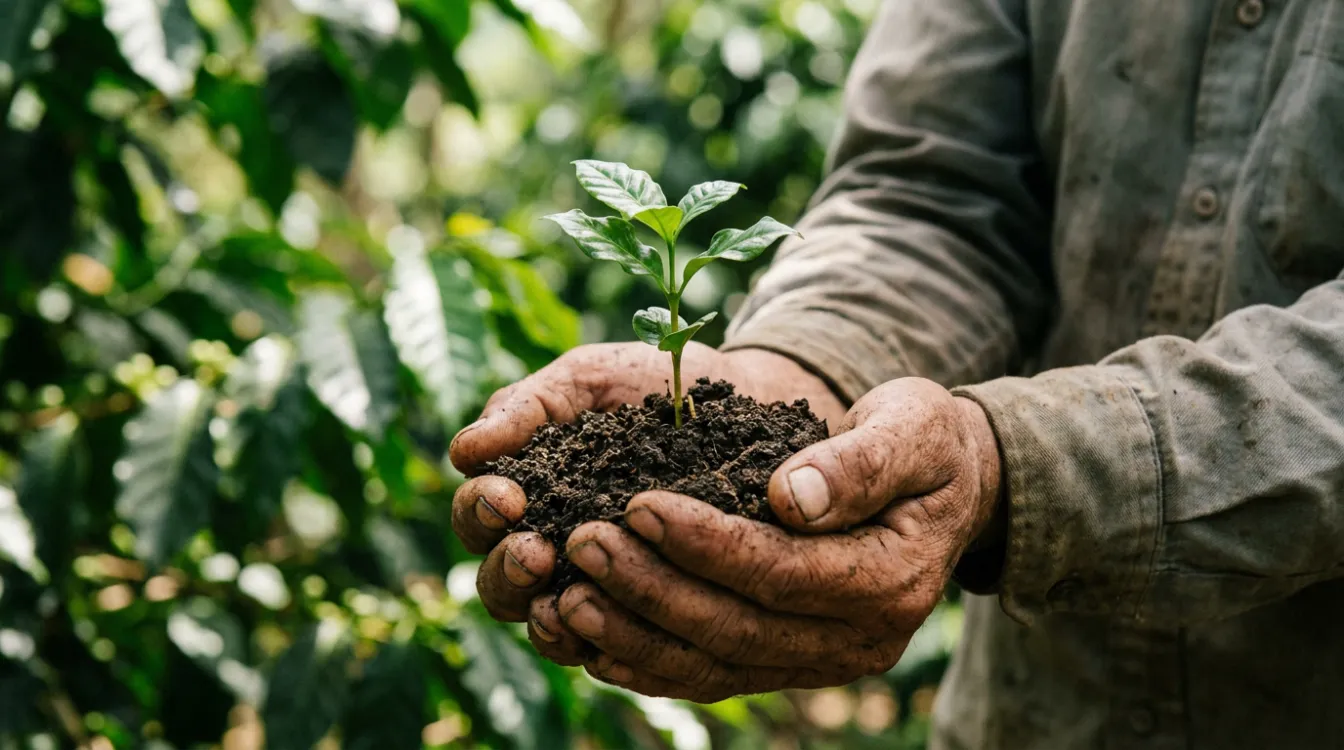
Organic coffee is grown without synthetic fertilizers, pesticides or herbicides. In the United States, the USDA Organic seal is the main organic label; other countries and regions have their own organic standards.
Key requirements
- No synthetic fertilizers or pesticides on certified land.
- Transition period: land typically must be free of prohibited substances for several years before the coffee can be certified organic.
- Soil health: practices like composting, mulching and cover crops to build fertility.
- Separation: organic coffee must be kept separate from non-organic coffee during processing, storage and roasting.
- Certified chain: importers and roasters handling organic coffee must also be certified to label it organic.
The organic premium
Organic coffee generally earns farmers a premium over conventional coffee, although the size of the premium varies and may not cover lower yields and higher labor costs.
Strengths
- Reduces chemical exposure for workers and ecosystems.
- Encourages healthy soil and natural farming methods.
- Clear, regulated standards.
Weaknesses
- Lower yields for many farms.
- Higher labor costs, since weeding and fertilizing take more work.
- Harder to fight pests and diseases such as leaf rust without synthetic inputs.
- Certification costs and paperwork can be prohibitive for small farmers.
My guide on whether organic coffee is better explores organic coffee in more depth.
Bird Friendly: the strictest shade standard
The Smithsonian Bird Friendly certification, developed by the Smithsonian Migratory Bird Center, is often considered the most demanding environmental coffee certification.
Why shade matters
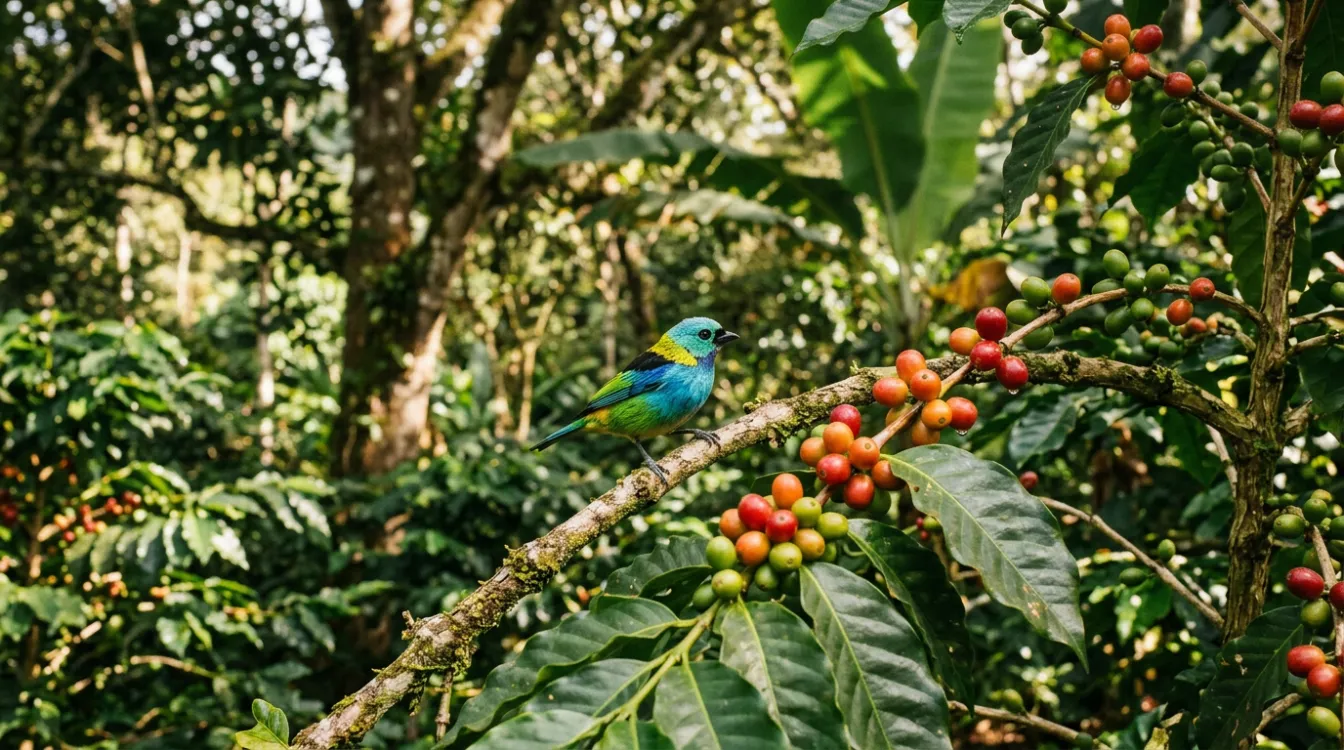
Coffee evolved as an understory plant in forests. Traditionally, it was grown under a canopy of shade trees. These shade farms provide habitat for birds, including migratory songbirds, and support high biodiversity.
Many modern farms switched to sun-grown coffee, clearing shade trees to increase yields. This can reduce biodiversity and harm bird populations.
Requirements
- Organic certification is required first.
- At least 10 tree species in the shade canopy, on average.
- Three canopy layers, mimicking a natural forest structure.
- At least 40% shade cover, even after pruning.
- Tall trees: the main canopy is typically around 40 feet or higher.
- Other habitat features such as leaf litter, epiphytes and natural vegetation.
Strengths
- Very strong environmental benefits, especially for biodiversity.
- Strict, science-based criteria.
- Combines organic requirements with habitat protection.
Weaknesses
- Few farms qualify, so Bird Friendly coffee can be hard to find.
- Shade-grown coffee often yields less.
- Certification requirements are demanding and costly.
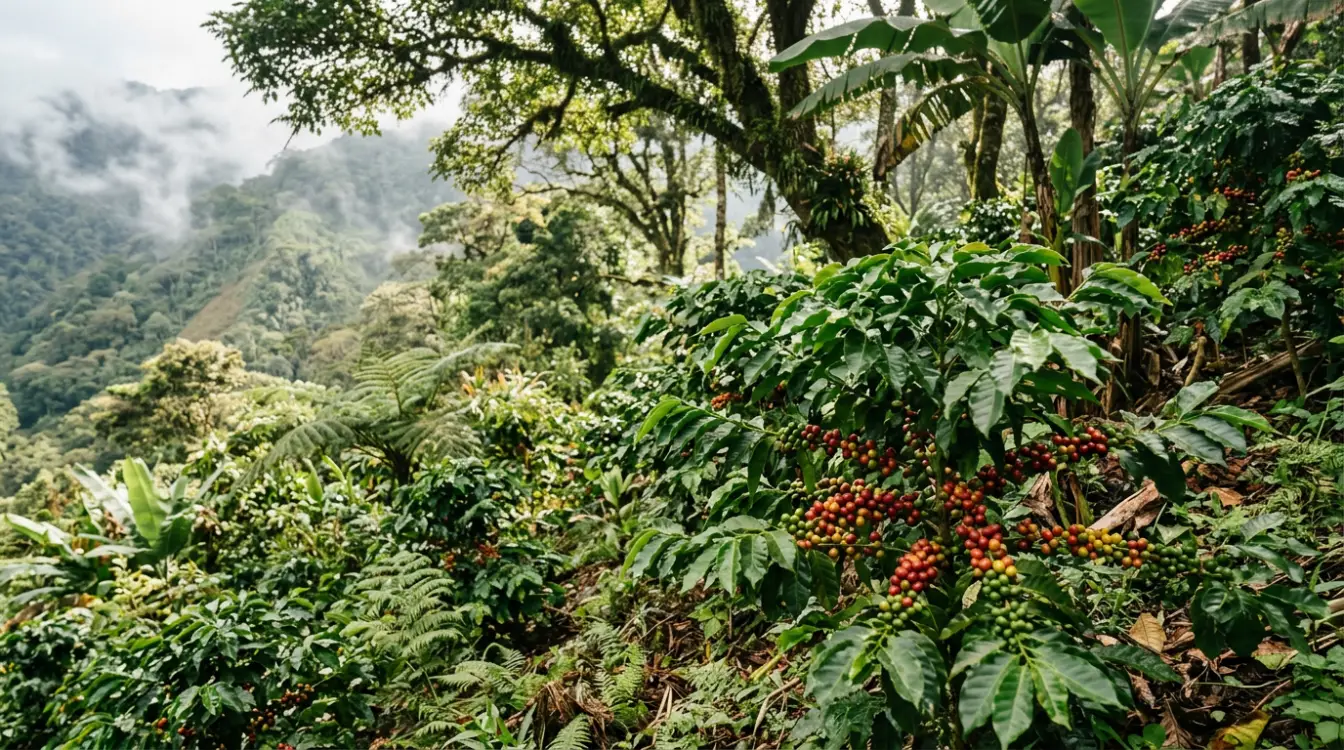
Bird Friendly coffee is a good example of how one label can protect much more than the coffee itself. A single shaded farm can support dozens of bird species, along with insects, bats and plants, and it can link patches of forest into wider corridors that wildlife can move through. For people who care about nature, that makes it one of the most meaningful labels to look for.
A closer look at shade-grown coffee
"Shade-grown" can mean very different things, from a few scattered trees to a farm that looks almost like a forest. Bird Friendly's requirements help define the most biodiverse end of that range.
- Upper canopy: tall native trees, often around 40 feet or more, providing the main shade and habitat for birds.
- Middle layer: smaller trees, fruit trees and plants such as bananas or citrus.
- Lower layer: the coffee shrubs themselves, along with herbs, shrubs and ground cover.
This layered structure mimics a natural forest. It supports birds, insects, bats and other wildlife, keeps soils cooler and moister, reduces erosion and can provide farmers with extra income from fruit and timber.
Sun-grown coffee, by contrast, removes most or all shade trees. It can produce higher yields, especially with fertilizers, but generally supports far less biodiversity and may need more inputs.
Finding certified coffee in different formats
Certified coffee isn't limited to whole beans from specialty shops.
- Supermarket ground coffee: many mainstream brands offer Fairtrade, Rainforest Alliance or organic options.
- Instant coffee: certified instant coffees are available, often from larger brands.
- Capsules and pods: some capsule ranges carry certifications or company sourcing programs; check the packaging for details.
- Decaf: certified coffee can be decaffeinated, and organic decaf uses methods that avoid chemical solvents, such as water or CO2 processes.
- Cafés: many cafés serve certified coffee, and some display the labels on their menus.
If you can't find the information on the package, check the brand's website or ask the café or roaster.
Questions to ask your roaster or café
- Where does this coffee come from, down to the farm or cooperative?
- Is it certified, and by whom?
- How long have you bought from this producer?
- Do you know the price paid at the farm gate or FOB?
- How do you support producers beyond the price?
- What happens to your coffee if market prices crash?
A roaster with good answers to these questions is usually one worth supporting, whether or not there's a logo on the bag.
Company programs: C.A.F.E. Practices and Nespresso AAA
Some of the world's biggest coffee buyers have created their own sourcing programs instead of, or in addition to, independent certifications.
Starbucks C.A.F.E. Practices
Starbucks' Coffee and Farmer Equity (C.A.F.E.) Practices program sets standards for product quality, economic transparency, social responsibility and environmental leadership. Farms and suppliers are verified by third-party organizations against a scorecard.
The company has also invested in farmer support centers, agronomy research and sustainability financing, including a large sustainability bond, to support its sourcing commitments.
Nespresso AAA Sustainable Quality Program
Nespresso's AAA program works with farmers to improve quality, productivity and sustainability. It combines agronomic support, premiums for quality and partnerships with organizations such as the Rainforest Alliance.
Strengths
- Large scale: these programs reach many thousands of farms.
- Direct investment in training and agronomy.
- Can create long-term buying relationships.
Weaknesses
- They're designed and controlled by the companies themselves, even when verified by third parties.
- Standards and results can be harder for consumers to compare with independent labels.
- They focus on the company's own supply chains.
Other labels you might see
- Fair Trade USA: a separate organization from Fairtrade International since 2011. Its standards differ in some ways; for example, it certifies some larger farms and estates.
- 4C: a baseline sustainability standard used widely in mainstream coffee supply chains.
- B Corp: certifies companies, not coffee, based on overall social and environmental performance.
- Climate or carbon labels: claim that emissions have been measured and reduced or offset; standards vary widely.
- Direct trade: not a certification, but a term roasters use to describe buying directly from farms or producer groups. Its meaning depends entirely on the roaster.
Following the money: FOB vs farm gate
To understand certifications, it helps to know two key price terms.
- Farm gate price: what the farmer actually receives for their coffee cherries or parchment at the farm.
- FOB price ("free on board"): the price of green coffee when it's loaded onto a ship for export. It includes the farm gate price plus processing, transport, export costs and margins along the way.
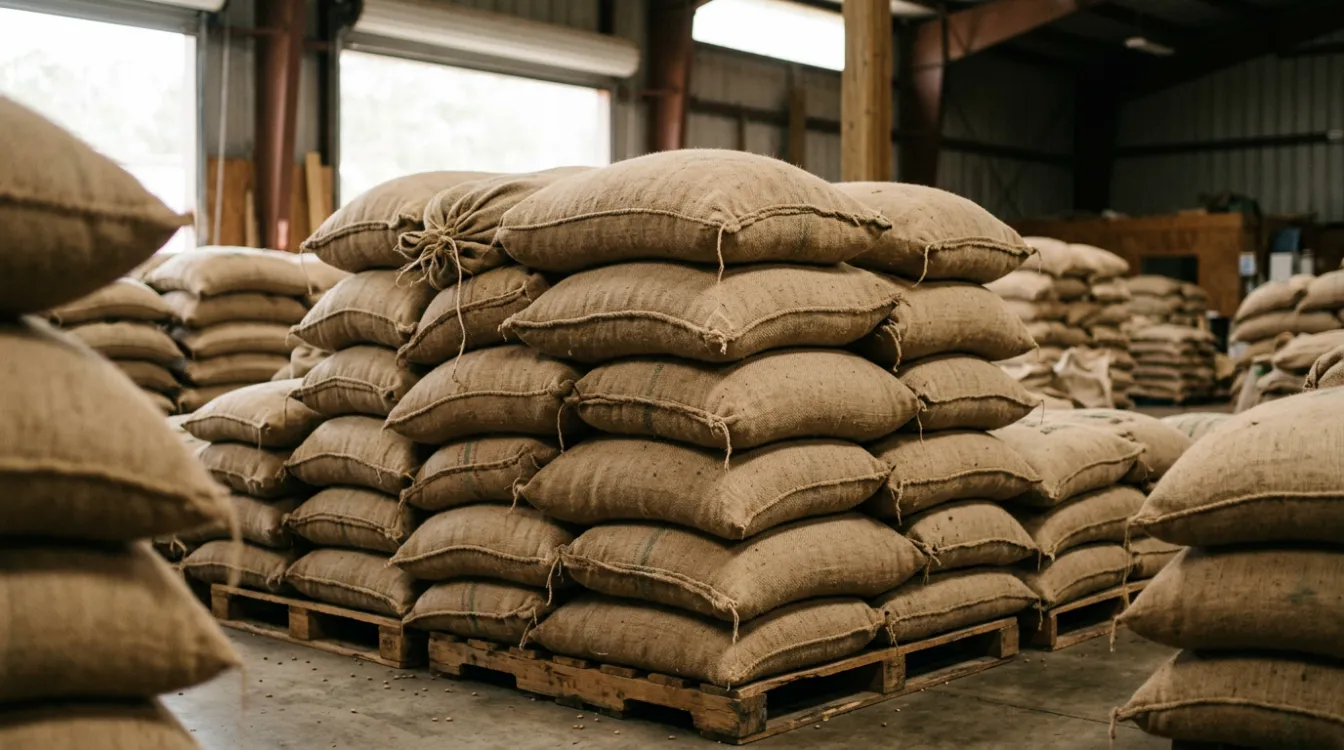
Certification premiums and minimum prices are often set at the FOB level and paid to cooperatives or exporters, not directly to individual farmers. How much reaches the farm depends on the cooperative's costs, management and decisions.
That's why two farms selling the same certified coffee can receive very different amounts. Transparency about farm gate prices is one of the biggest gaps in many certification systems.
Do certifications actually help farmers?
Research on certification impacts shows mixed results.
- Some studies find certified farmers have higher prices, better access to training and stronger organizations.
- Others find small or no income gains once certification costs, lower yields and the share of coffee sold as certified are taken into account.
- Environmental benefits, such as more shade trees, better soil and less pesticide use, are often clearer than income gains, especially for strict labels like Bird Friendly.
- Results depend heavily on context: the country, the cooperative, market prices and how much certified coffee actually sells as certified.
In my view, certifications are a useful tool but not a complete solution. They work best alongside fair prices, long-term relationships and transparent sourcing.
For me, the most useful question is not whether a coffee is certified, but whether the company behind it can explain clearly how its sourcing helps the people who grow it.
Worker welfare and labor standards
Farmers aren't the only people in coffee. On many farms, hired workers do much of the picking, pruning and processing, often seasonally.
Certifications address labor in different ways:
- Rainforest Alliance includes requirements on wages, working hours, health and safety, housing and protection from child and forced labor.
- Fairtrade includes labor standards for hired workers on member farms, along with its focus on small producers.
- Company programs such as C.A.F.E. Practices include social responsibility criteria for workers.
- Organic focuses mainly on farming inputs and doesn't cover labor in the same depth, though reduced pesticide use benefits workers' health.
Audits can't catch everything. Seasonal workers move between farms, and conditions can change between audits. Labor issues remain one of the hardest areas for any certification to guarantee.
Deforestation, traceability and new regulations
Deforestation has become one of the biggest sustainability issues in coffee. As demand grows and climate change shifts suitable growing areas, some farms expand into forests.
Certifications such as Rainforest Alliance and Bird Friendly prohibit deforestation or require forest-like habitat. But regulators are also stepping in. The European Union has adopted rules requiring companies to show that coffee and other commodities sold in the EU don't come from recently deforested land, with detailed traceability to the plot where they were grown. The timing of these rules has been debated and adjusted, but the direction is clear: buyers will need much more detailed information about where coffee comes from.
This could make traceability, long a strength of specialty coffee, a requirement for the whole industry. It also raises concerns that small farmers without the tools to map and document their land could be shut out of some markets unless they get support.
Certifications in a changing climate
Climate change is reshaping coffee farming, with more extreme weather, rising temperatures and new pest and disease pressures. Certifications are adapting.
- Climate-smart agriculture is now part of several standards, encouraging practices like shade trees, soil conservation and water management.
- Shade-grown systems can help keep farms cooler and protect soils, as well as supporting biodiversity.
- Carbon and climate labels are emerging, but standards vary widely and claims can be hard to verify.
- Variety renovation: some programs support farmers in planting more resilient varieties.
My guide to climate change and coffee explains the challenges in more detail, and my article on coffee varieties covers new resilient varieties.
How to spot vague or misleading claims
Not every sustainability claim on a coffee bag is backed by a certification or clear evidence. Some phrases sound reassuring but don't mean much on their own.
- "Ethically sourced" or "responsibly sourced" without details about how.
- "Sustainable" with no explanation or standard behind it.
- "Direct trade" without information about the farm, relationship or price.
- "Eco-friendly packaging" that may or may not be recyclable or compostable where you live.
- Self-made logos that look like certifications but are created by the brand itself.
Questions to ask:
- Which farm or cooperative does this coffee come from?
- Is the claim certified by an independent organization?
- Does the company publish information about prices paid or sourcing practices?
- Has it been buying from the same producers over time?
Brands that are genuinely committed usually explain their practices clearly and in detail.
How retailers and cafés use certifications
Supermarkets, roasters and cafés use certifications in different ways. Some supermarkets make all their own-brand coffee certified, which can bring large volumes of certified coffee to market. Cafés may highlight certifications on menus or bags. Specialty roasters often rely more on detailed origin information and long-term relationships than on logos.
For shoppers, this means the same certification can appear on very different coffees, from mass-market blends to small specialty lots. The label tells you about how the coffee was produced and traded; the rest of the information on the bag tells you about quality and freshness.
Why some coffees carry several labels
It's common to see coffee carrying two or more certifications, such as Fairtrade and organic, or Rainforest Alliance and organic. Each certification covers different ground, so combining them can provide broader assurance.
| Combination | What it covers |
|---|---|
| Fairtrade + organic | Minimum price and premium, plus chemical-free farming and the organic differential |
| Rainforest Alliance + organic | Farm practices and environment, plus chemical-free farming |
| Bird Friendly (always organic) | Strict shade and biodiversity, plus chemical-free farming |
| Specialty + certified | Traceable quality coffee with independent sustainability assurance |
Multiple certifications also mean multiple audits and costs for farmers, which is one reason many producers choose only the labels their buyers ask for.
What you can do as a coffee drinker
You don't need to become a certification expert to make a difference. A few simple habits help:
- Choose labels that match your priorities, using the table above.
- Support transparent roasters who share farm names, details and prices paid.
- Buy whole beans from specialty roasters you trust, and ask how they source their coffee.
- Accept that responsible coffee costs a bit more. Since the coffee itself is a small part of what you pay in a café, paying more for responsible sourcing makes a big difference to farmers with only a small change in your cup. My article on why café coffee is so expensive explains why.
- Avoid waste. Store coffee well so none of it goes stale. My guide on how to store coffee beans shows how.
- Stay curious. Learning about coffee origins and processing makes every cup more interesting. My guide to coffee processing methods is a good place to start.
How I choose my own coffee
After years of reading standards and talking with people in the trade, my own approach is fairly simple.
For everyday supermarket coffee, I look for at least one independent certification, usually Fairtrade or Rainforest Alliance, and ideally organic too. These labels aren't perfect, but they offer some assurance where I have little other information.
For specialty coffee, I care more about transparency than logos. I buy from a handful of roasters who tell me the farm, the producer, the variety and how long they've worked together. Some of them publish the prices they pay. Most of these coffees carry no certification at all, and that doesn't worry me, because the information on the bag tells me more than a logo would.
When I want to support biodiversity specifically, I look for Bird Friendly coffee. It's harder to find, but I like knowing exactly what the label requires.
And I've accepted that responsibly sourced coffee costs a little more. Considering how many people's work goes into every bag, from the pickers to the roaster, I think that's fair.
Our tip: Keep a note of coffees you've enjoyed and the roasters behind them. Over time, you'll build your own shortlist of producers and sellers you trust.
Where coffee certifications are heading
Certifications are changing as the coffee industry faces new pressures.
- More traceability: regulations and buyer demands are pushing for plot-level traceability.
- Living income: discussions are moving from minimum prices toward what farmers need to earn a decent living.
- Climate focus: standards increasingly include climate adaptation and carbon.
- Digital tools: apps and digital records may cut paperwork and audit costs for farmers.
- Price transparency: more roasters publish what they pay, putting pressure on the whole industry.
These changes could make certifications more meaningful, but only if the costs don't fall mainly on the farmers they're meant to help.
Great coffee without a label
Some of the most responsibly sourced coffees carry no certification logo at all.
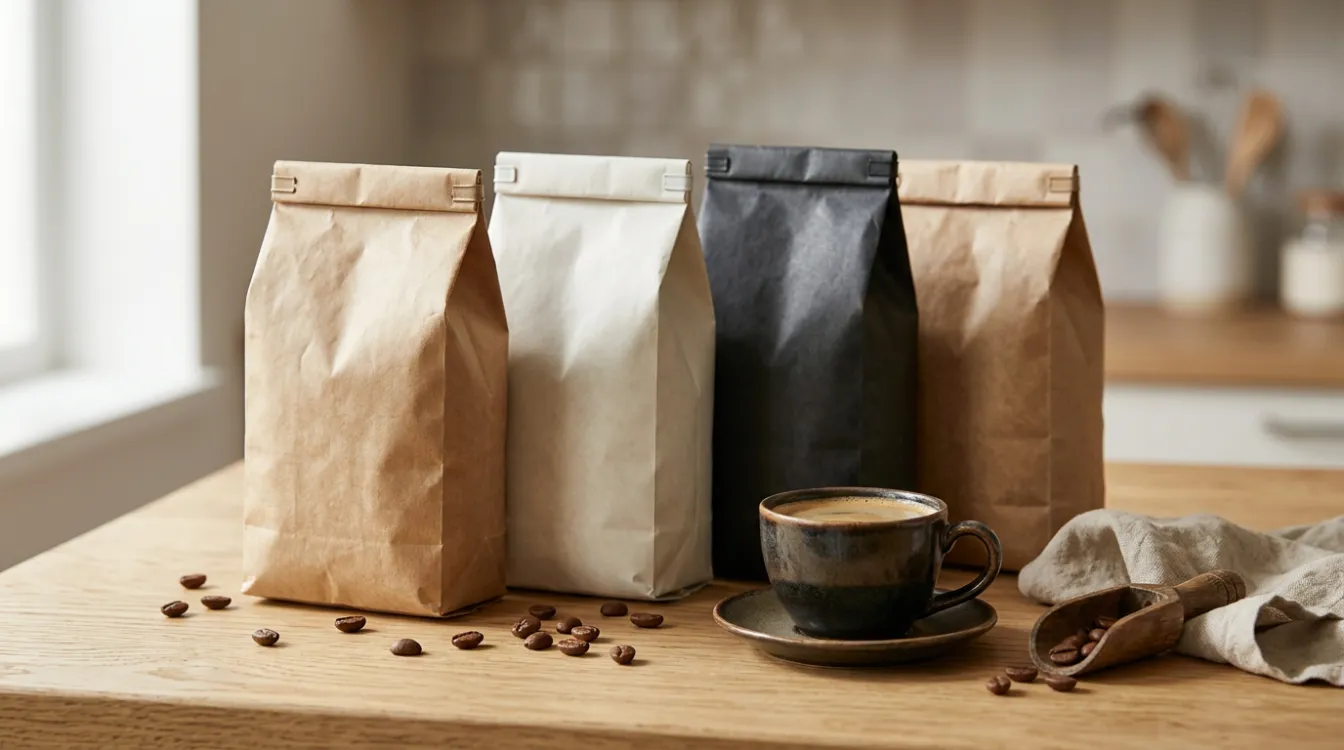
Many small specialty roasters buy directly from farms or through trusted importers, pay prices well above certification minimums and publish details about the farm, variety and price paid. Some farms practice organic or shade-grown methods but don't pay for certification, because the cost and paperwork don't make sense for their size.
For these coffees, transparency replaces the logo. Look for:
- The farm or producer's name.
- The region, altitude and variety.
- Processing method and harvest date.
- Information about the price paid, sometimes published as a farm gate or FOB price.
- Long-term relationships, such as buying from the same farm year after year.
My article on why single-origin coffee is so expensive explains the costs behind traceable coffee.
Whatever you choose, remember that certifications are a starting point for questions, not the end of them. The more you ask about where your coffee comes from, the more roasters and brands are encouraged to share, and that transparency benefits farmers, roasters and coffee drinkers alike. Over time, those small choices add up across millions of cups.
How to choose coffee that matches your values
| If you care most about | Look for |
|---|---|
| Farmer income and stable prices | Fairtrade, transparent price information |
| Forests, wildlife and farm practices | Rainforest Alliance |
| No synthetic chemicals | USDA Organic or equivalent |
| Birds and biodiversity | Smithsonian Bird Friendly |
| Traceability and quality | Specialty roasters with farm details |
| All of the above | Coffees with multiple certifications or full transparency |
Our tip: Ask your roaster how they source their coffee. A good roaster will be happy to explain, with or without a logo on the bag.
Do certifications make coffee taste better?
Certifications are about how coffee is produced and traded, not how it tastes. A certified coffee can be excellent or ordinary.
Some practices encouraged by certifications, such as healthy soils, shade trees and careful farm management, can support quality. But flavor depends on variety, altitude, processing, roasting and freshness. My guide to how altitude affects coffee flavor explains one of the biggest factors.
If flavor is your priority, look at the roast date, origin and processing details as well as the certifications.
Myths about coffee certifications
"Certified means farmers are paid fairly"
Some labels set minimum prices, but none guarantees a living income for every farmer.
"Certifications guarantee better taste"
They focus on production practices and trade, not flavor.
"No label means irresponsible"
Many excellent, ethical coffees are uncertified but fully transparent.
"All labels mean the same thing"
Each certification focuses on different goals and requirements.
"Farmers get certification for free"
Farmers or their organizations often pay for audits and compliance.
The verdict
Coffee certifications each tackle part of a complex problem. Fairtrade focuses on minimum prices and community premiums; Rainforest Alliance on farm practices and environment; organic on chemical-free farming; Bird Friendly on shade and biodiversity; company programs on their own supply chains.
None is perfect. Costs, premiums that don't always reach farmers and lower yields are real challenges. But certifications have helped raise awareness, improve practices and support many farming communities.
The best approach is to choose coffee that matches your values, look for transparency as well as logos, and support roasters who build long-term, fair relationships with farmers.
Frequently asked questions
What is Fairtrade coffee?
Coffee from small-producer organizations that receive a minimum price and a community premium.
What does Rainforest Alliance mean?
The farm meets a standard for environmental protection, worker welfare and farm management.
Is organic coffee certified differently in each country?
Yes. The USDA runs the US label; other regions have their own organic standards.
What is Bird Friendly coffee?
Organic, shade-grown coffee meeting strict Smithsonian canopy and biodiversity criteria.
Do certifications make coffee taste better?
No. They cover production and trade practices, not flavor.
Who pays for certification?
Often farmers or their organizations, though buyers and programs sometimes help.
Is uncertified coffee unethical?
Not necessarily. Many transparent specialty coffees are uncertified.
What is the difference between FOB and farm gate price?
Farm gate is what the farmer receives; FOB is the export price including processing and transport.

- Michael Reynolds, review of certification standards
- Fairtrade International: Coffee, Fairtrade
- Rainforest Alliance, Rainforest Alliance
- USDA Organic, USDA
- Smithsonian Bird Friendly coffee, Smithsonian's National Zoo
- Fair trade coffee, Wikipedia
Related guides
Is organic coffee better? Why single-origin coffee is so expensive Climate change and coffeeWritten by Michael Reynolds. Last updated November 20, 2026.