Is Organic Coffee Better? Health, Taste, Farmers and the Environment Compared
Organic coffee usually costs more and promises something cleaner and kinder to the planet. But is it really better for your health, for the farmers who grow it or for the taste in your cup? I've compared organic and conventional coffees in blind tastings and dug into how organic coffee is grown and certified. Here's what the label really means and when it's worth it.
We choose products independently. We may earn a commission through links on this page; your price stays the same. Affiliate policy
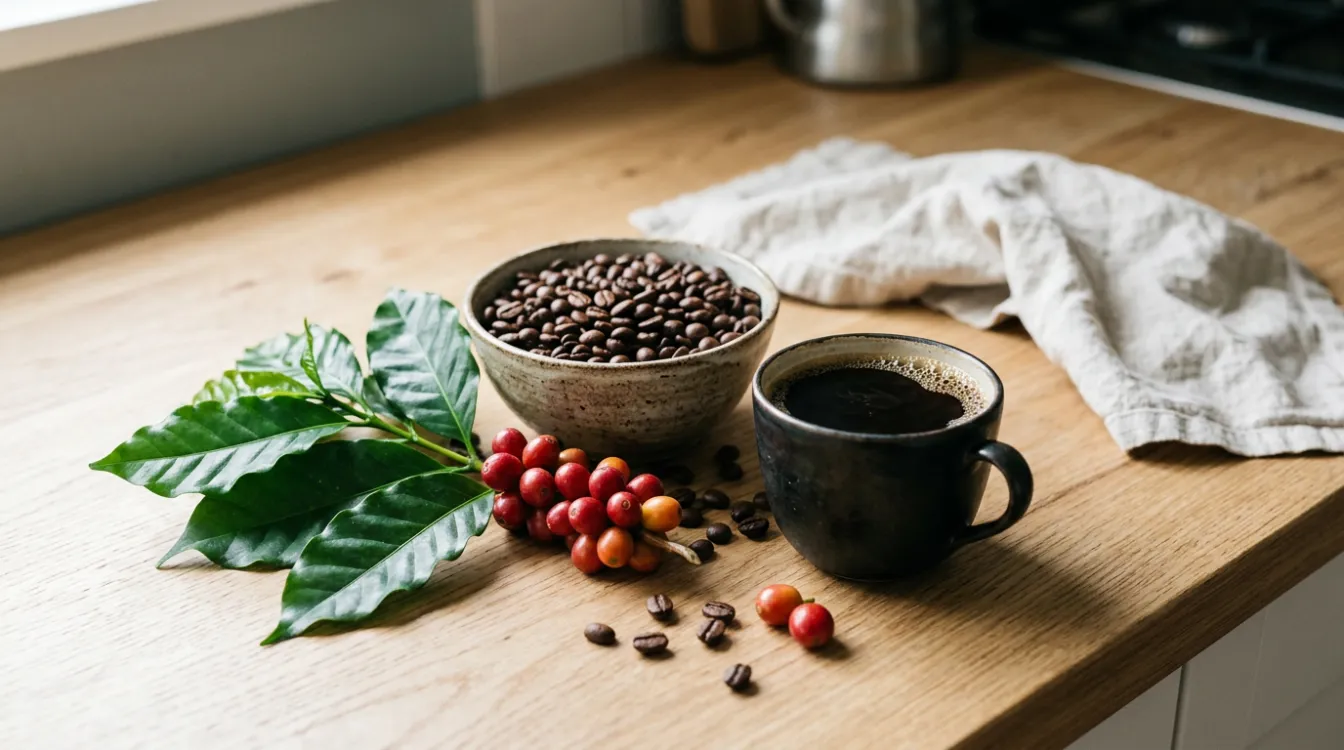
Organic coffee is grown without synthetic fertilizers, pesticides or herbicides and must be certified, for example under the USDA National Organic Program, after a three-year transition. Its clearest benefits are environmental: healthier soil, less chemical runoff and lower pesticide exposure for farmers and workers. For drinkers, the health difference is small, because pesticide residues in brewed conventional coffee are usually very low. Organic doesn't automatically taste better; flavor depends on variety, altitude, processing, roast and freshness. For farmers, organic can bring premiums but also lower yields, higher labor costs and certification hurdles.
Is organic coffee really better?
Walk down the coffee aisle and organic options are everywhere, usually costing a bit more than conventional coffee. The label suggests something healthier, cleaner and kinder to the planet. But is organic coffee actually better, and if so, better for whom?
The honest answer is that it depends on what "better" means to you. Organic coffee has clear advantages for ecosystems and farm workers, some possible benefits for drinkers, and real challenges for the farmers who grow it. It doesn't automatically taste better.
I've been buying, brewing and comparing organic and conventional coffees for years, and I've read a lot about how organic coffee is grown and certified. In this guide I'll explain what the organic label really means, what the research says about health and the environment, how organic affects farmers, and how to decide whether it's worth it for you.
Organic vs conventional coffee at a glance
| Factor | Organic coffee | Conventional coffee |
|---|---|---|
| Synthetic fertilizers | Not allowed | Allowed |
| Synthetic pesticides and herbicides | Not allowed | Allowed |
| Certification | Required to use the label | Not required |
| Typical yields | Often lower | Often higher |
| Labor needs | Often higher | Often lower |
| Price to consumer | Usually higher | Usually lower |
| Taste | Depends on farm, variety, processing and roast | Same |
| Pesticide residues in brewed coffee | Very low or none | Usually very low |
| Environmental impact | Often lower on chemicals, soil and water | Varies widely |
What does "organic coffee" actually mean?
Organic coffee is grown without synthetic fertilizers, pesticides, herbicides or fungicides. Instead, farmers rely on natural methods to feed the soil and manage pests.
In the United States, coffee sold as organic must be certified under the USDA National Organic Program. Other countries and regions, including the European Union, have their own organic standards and labels. The rules are broadly similar, although details differ.
Key USDA requirements
- No prohibited substances: synthetic fertilizers and most synthetic pesticides are banned.
- Transition period: the land must have been free of prohibited substances for three years before harvest.
- Soil fertility plan: farmers must manage soil health through natural practices such as composting and cover crops.
- Buffer zones: organic fields must be protected from contamination from neighboring conventional farms.
- Records and inspections: farms must keep detailed records and pass regular inspections by an accredited certifier.
- Certified handling: importers, roasters and packers must also be certified to maintain organic integrity.
Organic doesn't mean "no inputs"
Organic farmers still use fertilizers and pest controls, just natural ones: compost, manure, coffee pulp, mineral fertilizers, natural pesticides and biological controls such as beneficial insects.
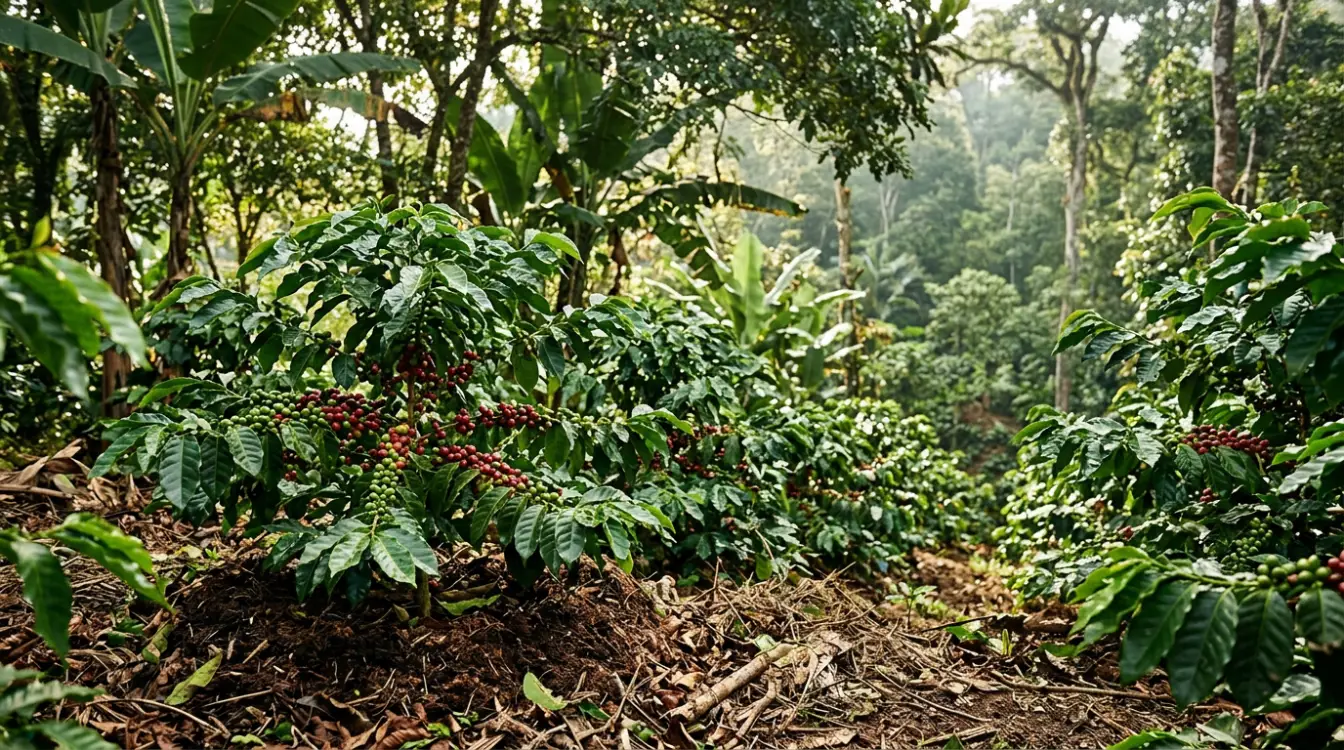
A short history of organic coffee
For most of coffee's history, all coffee was effectively organic. Synthetic fertilizers and pesticides only became widespread in the 20th century, especially from the 1950s onward, when "modernization" programs encouraged farmers to clear shade trees, plant high-yield varieties and use chemical inputs.
In the following decades, concerns about pesticides, soil degradation and biodiversity loss grew. Organic farming movements developed standards, and organic coffee began to appear in specialty shops and health food stores, particularly from Mexico, Peru and Central America.
Mexico became one of the early leaders in certified organic coffee, often grown by indigenous smallholder cooperatives using traditional methods. Peru, Honduras, Ethiopia and other countries also became major organic producers.
Formal national standards followed, including the USDA National Organic Program in the early 2000s, which created a single US organic label. Today organic coffee is available almost everywhere, from specialty roasters to supermarket own-brand ranges.
What it takes for a farm to convert
Converting a conventional coffee farm to organic is a big commitment.
- Stop synthetic inputsThe farmer stops using synthetic fertilizers, pesticides and herbicides.
- Build soil fertilityComposting, mulching, cover crops and shade trees replace chemical fertilizers.
- Manage the yield dipYields often fall in the early years as the soil and ecosystem adjust.
- Keep recordsThe farm documents everything it does, from inputs to harvests.
- Wait out the transitionThe land must be free of prohibited substances for three years before harvest can be certified.
- Pass inspectionAn accredited certifier inspects the farm and records.
- Find buyersThe farm needs buyers willing to pay for certified organic coffee.
During the transition years, the farm bears the costs of organic farming but can't yet sell its coffee as organic. Some programs offer "transitional" support or premiums to help farmers through this period.
How organic coffee is grown
Organic coffee farming relies on building healthy, living soil and creating a balanced ecosystem on the farm.
Feeding the soil
- CompostingFarmers compost coffee pulp, manure, leaves and other organic matter to create nutrient-rich fertilizer.
- MulchingPruned branches and leaves are spread under coffee plants to protect soil, retain moisture and add organic matter.
- Cover cropsPlants such as legumes grow between coffee rows, fixing nitrogen and preventing erosion.
- Shade treesLeaves from shade trees fall and decompose, feeding the soil. Some shade trees, such as Inga, also fix nitrogen.
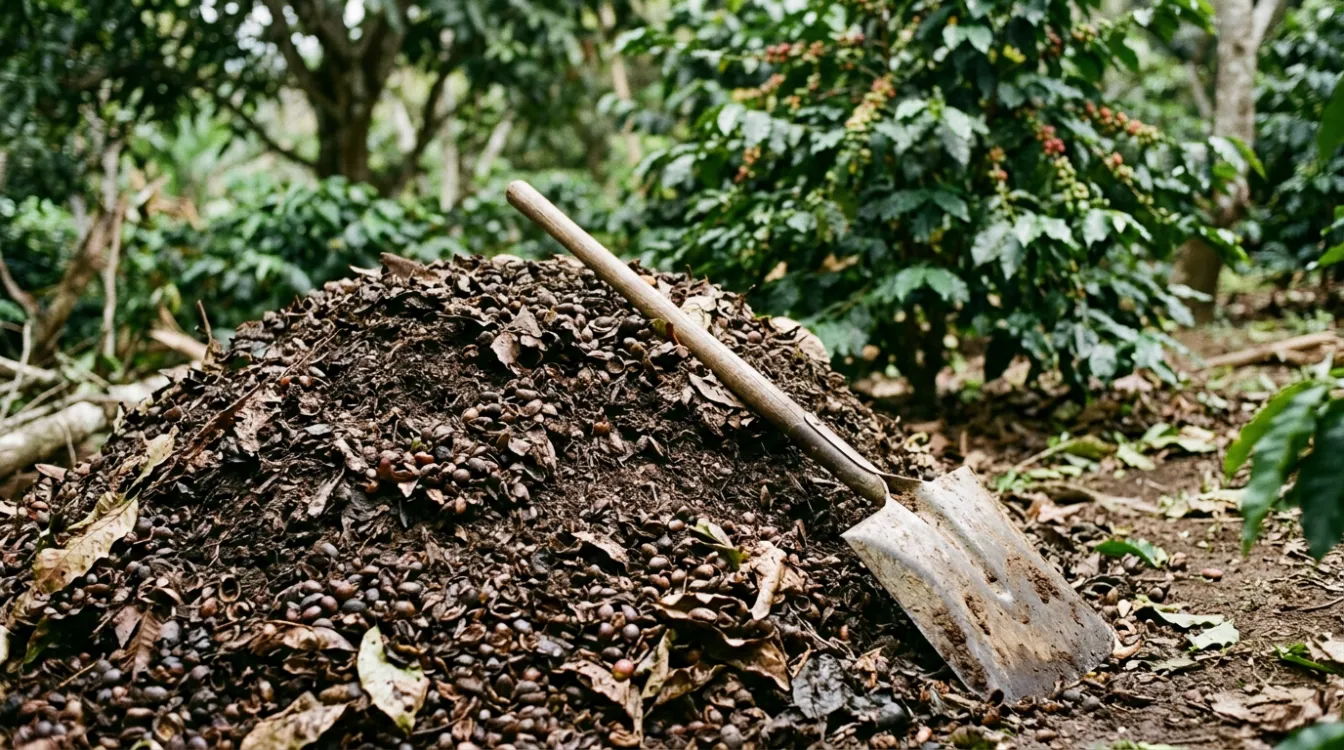
Managing pests and diseases
- Biological controls: encouraging birds, insects and fungi that prey on coffee pests.
- Traps: for example, traps that attract the coffee berry borer, a major coffee pest.
- Cultural practices: pruning, careful harvesting of all ripe cherries and removing fallen cherries to break pest cycles.
- Approved natural treatments: some copper-based fungicides and natural products are allowed under organic rules, with restrictions.
- Resistant varieties: planting varieties less susceptible to diseases such as leaf rust.
Weeding by hand
Without herbicides, weeds must be controlled by hand, with machetes, mulching or ground cover. This is one of the main reasons organic coffee needs more labor.
The advantages of organic coffee
For the environment
- Fewer synthetic chemicals in soil, water and surrounding ecosystems.
- Better soil health, thanks to compost, mulch and cover crops.
- More biodiversity, especially on organic farms with shade trees.
- Less water pollution from fertilizer runoff and pesticides.
For workers and communities
- Less exposure to pesticides for farmers, pickers and their families, which is one of the clearest benefits of organic farming.
- Safer drinking water in some farming communities.
For drinkers
- Lower pesticide residues, although residues on brewed conventional coffee are usually very low anyway, as I'll explain below.
- Peace of mind for people who prefer to avoid synthetic chemicals.
For farmers
- Price premium: organic coffee usually sells at a premium over conventional coffee.
- Lower input costs: farmers don't have to buy synthetic fertilizers and pesticides, though they may spend more on labor and compost.
- Long-term soil fertility that can make farms more resilient.
The disadvantages and challenges
Organic coffee isn't a simple win. Farmers face real challenges.
Lower yields
Without synthetic fertilizers, many organic farms produce less coffee per acre, especially in the first years after converting. Yield gaps vary widely depending on the farm, region and practices, and well-managed organic farms can narrow the gap.
Leaf rust and other diseases
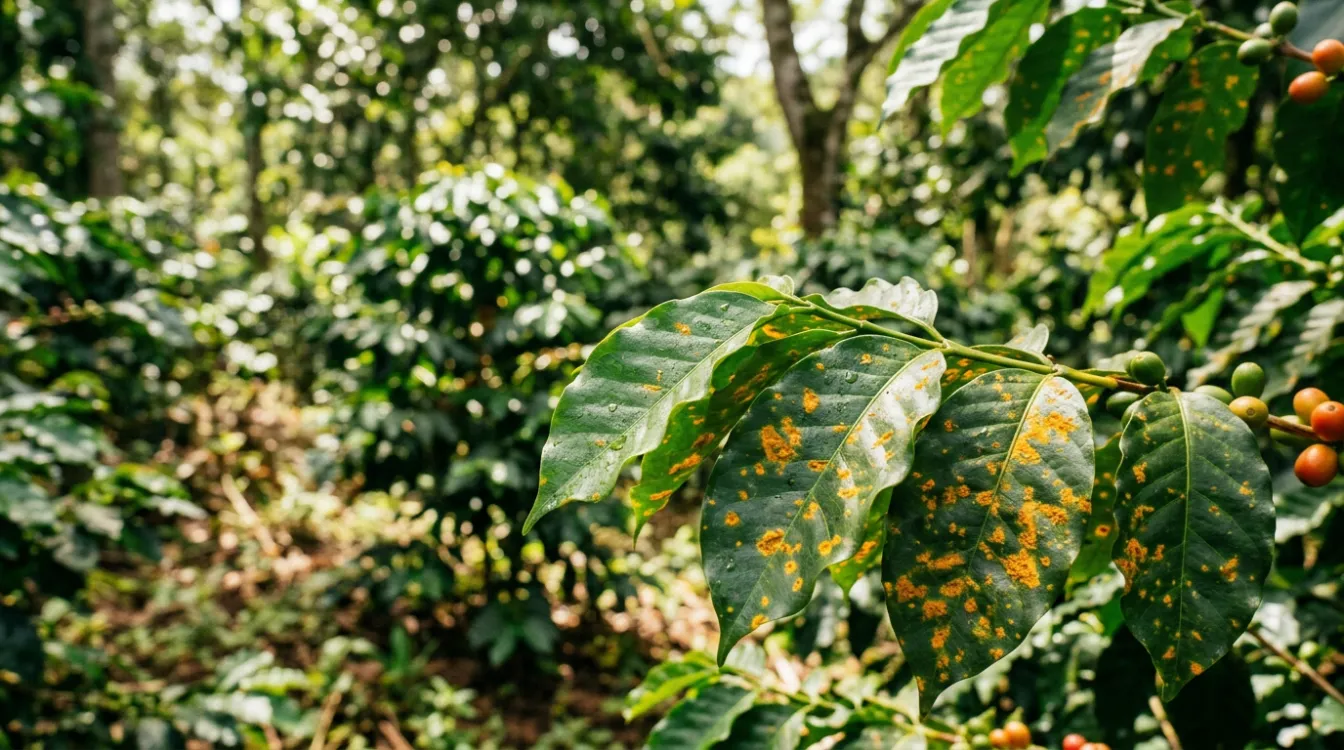
Coffee leaf rust, a fungal disease, has devastated farms across Latin America in recent years. Conventional farms can use a wider range of fungicides; organic farms have fewer tools, which can make outbreaks harder to control.
Higher labor costs
Hand weeding, composting, mulching and careful pest management take time and workers. In regions with labor shortages or rising wages, this can be a major cost.
Certification costs and paperwork
Becoming certified organic means paying for inspections, keeping detailed records and waiting through the three-year transition period, during which the coffee can't yet be sold as organic. For a small farm, these costs and delays can be prohibitive.
The premium isn't always enough
Organic coffee typically earns a premium, but it may not fully compensate for lower yields and higher costs. Some farmers have abandoned organic certification because it didn't pay.
Market access
Organic coffee only earns a premium if buyers want it. If a farm can't find enough organic buyers, it may have to sell some coffee at conventional prices.
Is organic coffee healthier?
This is the question I get asked most. The answer is more nuanced than the label suggests.
Pesticide residues
Conventional coffee may be grown with pesticides, but several factors reduce residues in your cup:
- The coffee bean is a seed inside a fruit, protected by layers of pulp, mucilage and parchment that are removed during processing.
- Roasting at high temperatures breaks down many residues.
- Brewing extracts only some compounds into the cup, and the grounds are discarded.
Testing generally finds pesticide residues in brewed conventional coffee to be very low and within regulatory limits. Organic coffee can still contain trace residues from drift or contamination, but usually less.
Antioxidants and nutrients
Some studies suggest organic coffee may have slightly different levels of certain compounds, but there's no strong evidence that organic coffee is significantly more nutritious than conventional coffee. Coffee's main health-related compounds, such as caffeine and chlorogenic acids, depend mostly on variety, roast and brewing. My guide to the health benefits of coffee covers what research says.
Mold and mycotoxins
Organic certification doesn't specifically address mold or mycotoxins, which depend on how coffee is processed, dried and stored. Careful drying and storage matter more than organic status.
The bottom line on health
For drinkers, the health difference between organic and conventional coffee appears small. The clearest health benefits of organic farming are for the farmers and workers who handle pesticides directly.
Does organic coffee taste better?
Not automatically. Organic certification is about how coffee is grown, not how it tastes.
Flavor depends on:
- Variety: different coffee varieties have different flavor potential. My guide to coffee varieties explains them.
- Altitude and climate: high-altitude coffees often develop more complex acidity and sweetness. See my guide on how altitude affects coffee flavor.
- Ripeness at harvest: careful selective picking of ripe cherries improves flavor.
- Processing: washed, natural and honey processing create very different flavors. See my guide to coffee processing methods.
- Drying and storage: careful drying, for example on raised beds, protects quality.
- Roasting and freshness: roast profile and freshness have a huge effect on taste.
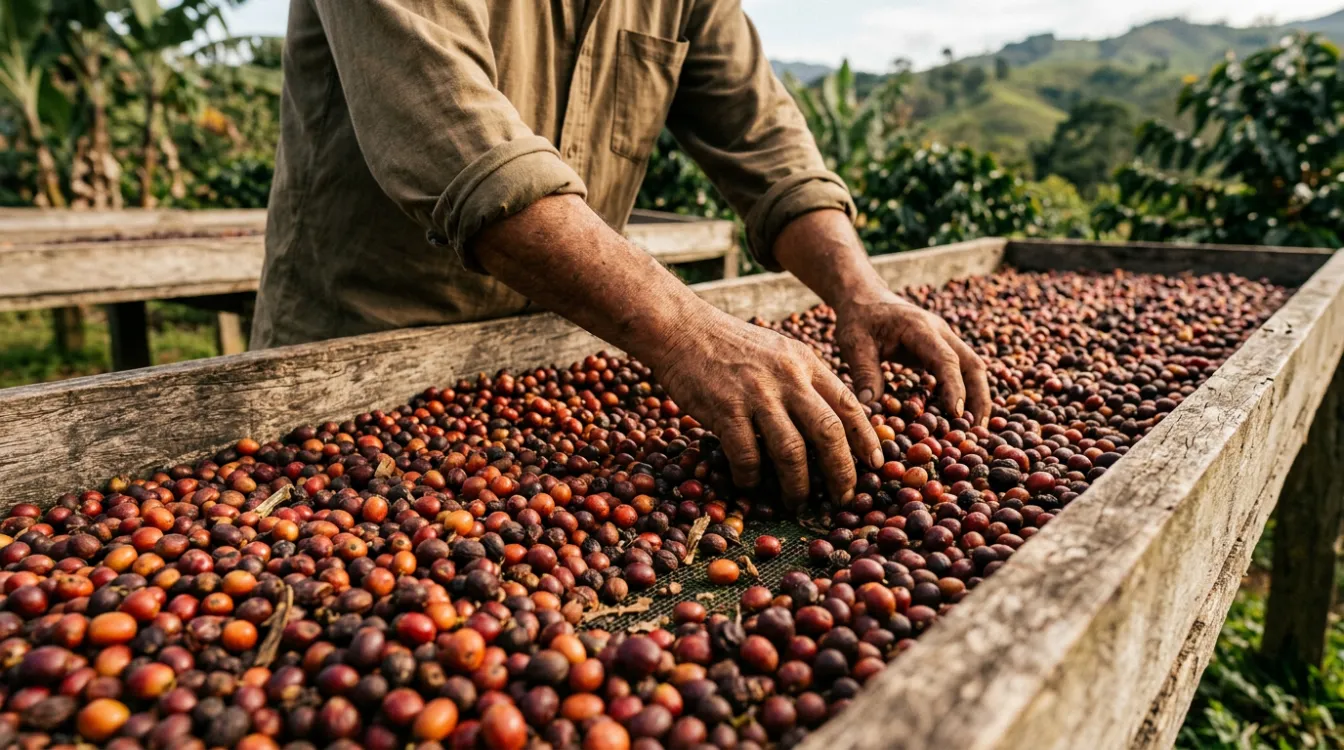
Some organic farms produce outstanding specialty coffee; others produce ordinary coffee. The same is true of conventional farms. Healthy soils, shade and careful farming can support quality, but they don't guarantee it.
My blind tasting: organic vs conventional
To see whether I could tell the difference, I ran a few blind tastings at home. I compared organic and conventional coffees from the same countries and similar roast levels, brewed identically as pour-over.
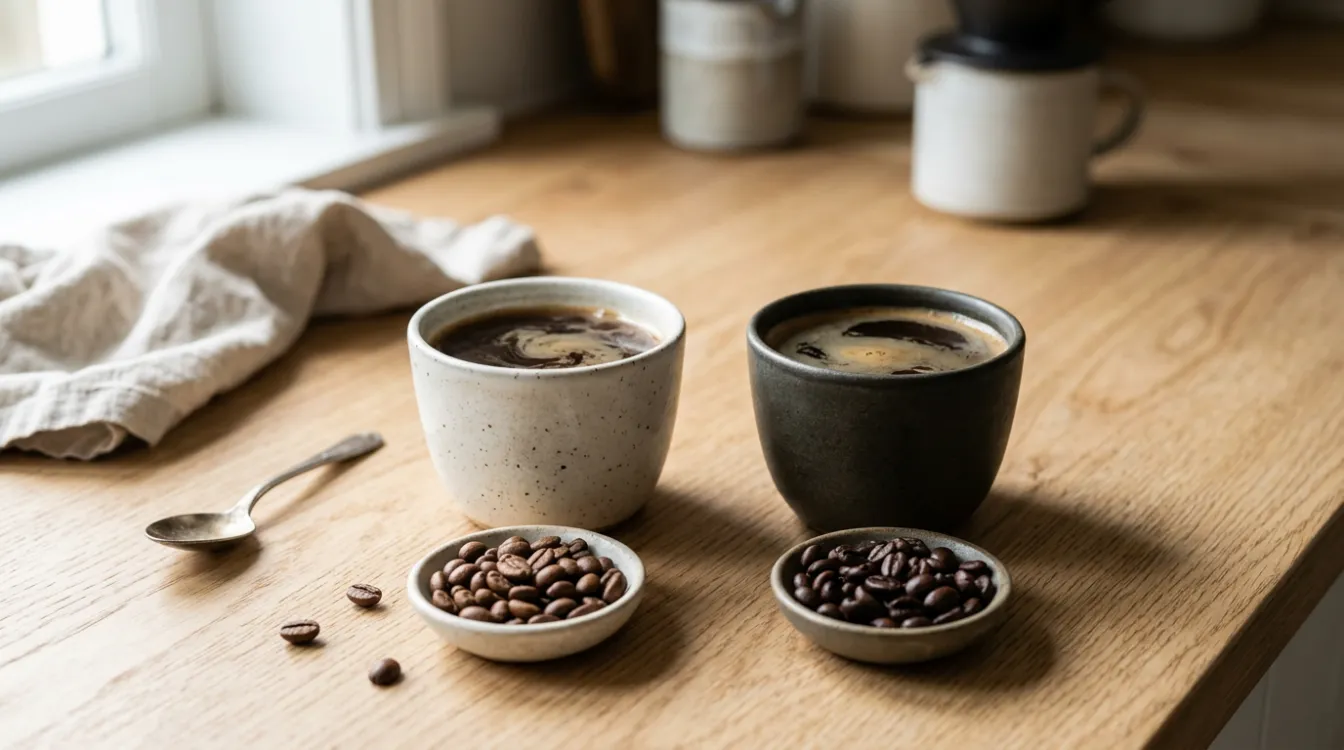
- Round one, two Colombian coffees: the conventional coffee was slightly sweeter and cleaner, but the difference seemed to come from freshness; it had been roasted more recently.
- Round two, two Ethiopian coffees: the organic coffee was brighter and more floral, likely because it came from a higher-altitude farm with careful processing.
- Round three, two supermarket blends: both were dark-roasted and tasted similar, with roast flavors dominating.
I couldn't consistently pick organic coffee by taste. What I could pick was freshness, altitude, processing and roast. For me, that confirmed that the organic label tells you about farming methods, not flavor.
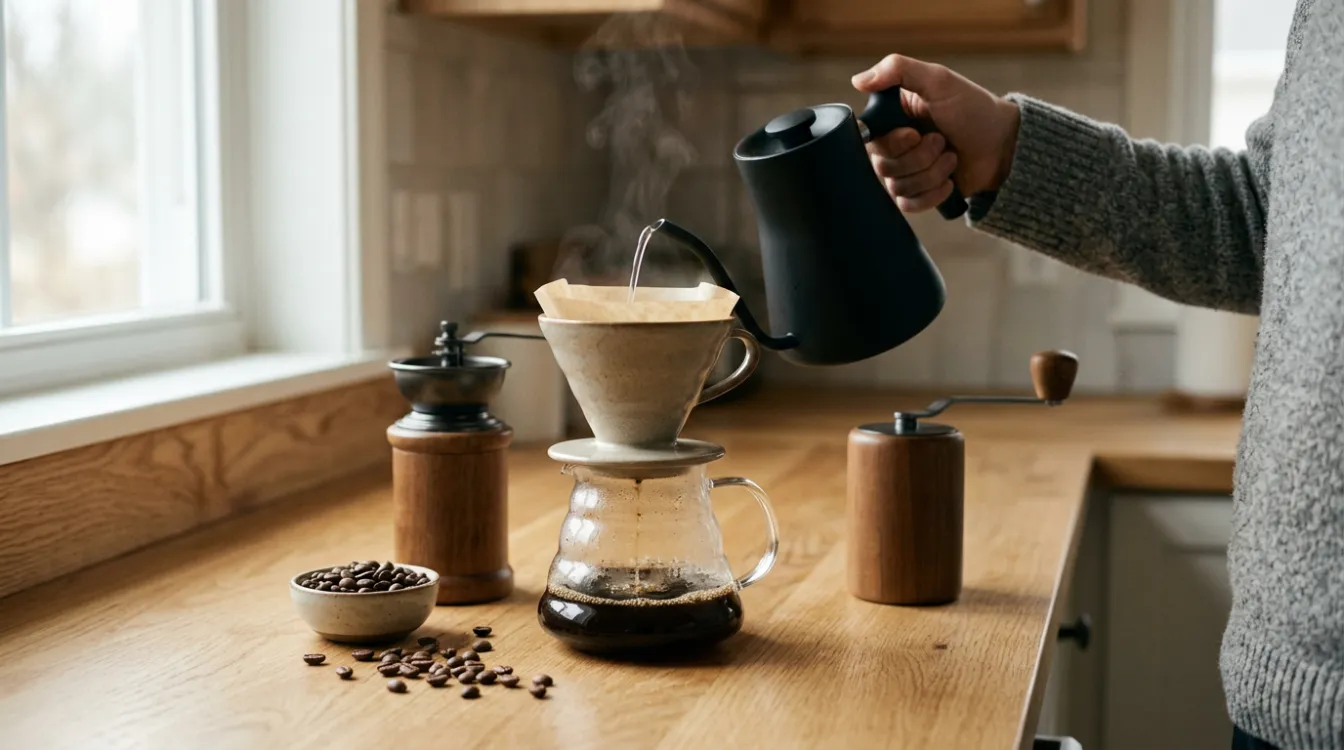
My guide to pour over vs drip coffee explains the brewing method I used for these tests.
Environmental impact: the bigger picture
Organic farming has clear benefits for chemical use and soil health. But the environmental picture also depends on other factors.
- Shade vs sun: an organic sun-grown farm may support less biodiversity than a conventional shade-grown farm. Shade is one of the most important factors for wildlife.
- Land use: if organic farms have lower yields, more land may be needed to produce the same amount of coffee, which can put pressure on forests unless productivity improves.
- Carbon: shade trees and healthy soils can store carbon, while fertilizer production and transport add emissions.
- Water: organic farms avoid fertilizer and pesticide runoff, protecting rivers and streams.
That's why some labels combine organic with other criteria. Smithsonian Bird Friendly coffee, for example, must be organic and meet strict shade requirements. My guide to coffee certifications compares the major labels.
Is organic better for farmers?
For farmers, organic can be a good choice, but it's not right for everyone.
When organic works well
- Farms already using few chemicals, often traditional smallholder farms in remote areas.
- Cooperatives with strong organic markets and buyers willing to pay premiums.
- Farms with access to compost materials, labor and technical support.
- Regions where pest and disease pressure is manageable.
When it's harder
- Farms facing severe leaf rust or pest outbreaks.
- Regions with high labor costs or labor shortages.
- Farmers who can't afford the three-year transition period without a premium.
- Markets with few buyers for organic coffee.
Many smallholder farmers around the world grow coffee with few or no synthetic inputs, simply because they can't afford them, but aren't certified because certification is too costly. Their coffee may be organic in practice without carrying the label.
What surprised me most
The biggest surprise from my tastings was how much freshness mattered compared with everything else. A two-week-old conventional coffee beat a two-month-old organic one every time, and the reverse was also true. If you want to judge organic coffee fairly, compare bags with similar roast dates, similar origins and similar roast levels. Otherwise you're really tasting freshness, not farming methods.
Where organic coffee is grown
Organic coffee is grown in many producing countries, but some regions have become especially well known for it.
| Region | Organic coffee profile |
|---|---|
| Peru | One of the largest organic coffee producers, often from smallholder cooperatives in the Andes |
| Mexico | An early organic leader, especially in Chiapas and Oaxaca, often shade-grown |
| Honduras and Central America | Growing organic production, from cooperatives and specialty farms |
| Ethiopia | Much coffee is grown with few inputs in forest and garden systems, though not all is certified |
| Colombia | Organic production alongside a large conventional sector |
| Indonesia and Timor-Leste | Smallholder coffees often grown with few synthetic inputs |
In many of these regions, organic coffee comes from smallholders who farm traditionally on small plots. Cooperatives help them pool resources for certification, processing and export. My guide to coffee growing regions and flavor explains how each region's coffee tastes.
Regenerative and biodynamic coffee
Some farmers and roasters are moving beyond organic toward broader approaches to farming.
Regenerative agriculture
Regenerative farming focuses on actively improving soil health, biodiversity and water cycles, rather than just avoiding synthetic inputs. Practices include cover crops, minimal soil disturbance, agroforestry, composting and integrating animals. Regenerative standards and labels are still developing, so claims vary widely. Some regenerative farms are also certified organic; others use limited synthetic inputs while focusing on soil regeneration.
Biodynamic farming
Biodynamic farming is an older holistic approach that treats the farm as a self-sustaining organism, with its own compost preparations and planting calendars. It includes organic requirements plus additional practices. Biodynamic coffee is rare but available from a few farms.
Agroforestry
Agroforestry combines coffee with trees and other crops, creating diverse farms that resemble forests. It overlaps strongly with shade-grown coffee and can support biodiversity, carbon storage and farmer income from fruit and timber.
Organic coffee in a changing climate
Climate change is making coffee farming harder: rising temperatures, irregular rainfall and new pest and disease pressures. Organic practices can help in some ways and make things harder in others.
- Helps: healthy, organic-rich soils hold more water and resist erosion. Shade trees common on organic farms keep coffee plants cooler.
- Harder: outbreaks of leaf rust and pests like the coffee berry borer are harder to control without synthetic chemicals, and these problems are worsening in some regions.
- Mixed: lower yields can reduce income, making it harder for farmers to invest in adaptation.
Many experts see diverse, shaded, well-managed farms, whether certified organic or not, as the most resilient systems. My guide to climate change and coffee covers the challenges in detail.
A closer look at the coffee berry borer
The coffee berry borer is a tiny beetle that bores into coffee cherries to lay its eggs, damaging the bean inside. It's one of the most damaging coffee pests worldwide.
Organic farmers manage it with:
- Thorough harvesting: picking all ripe and overripe cherries so the beetle has fewer places to breed.
- Cleaning up fallen cherries from the ground after harvest.
- Traps using attractants to catch adult beetles.
- Biological control: a fungus called Beauveria bassiana infects and kills the beetle, and some farms use parasitic wasps.
- Shade and habitat: birds and ants on shaded farms can help reduce beetle numbers.
These methods work, but they take time and labor. Conventional farms may use chemical insecticides, although integrated pest management increasingly combines several approaches on both types of farm.
Organic and pollinators
Coffee flowers are visited by bees and other pollinators, and studies have linked better pollination to higher yields. Farms that avoid synthetic insecticides and keep flowering shade trees and hedgerows often support more pollinators, which can benefit both the coffee and the surrounding landscape.
Coffee pulp, compost and circular farming
Coffee processing produces huge amounts of waste: the cherry's skin and pulp can make up a large share of the fruit's weight. On many organic farms, this "waste" becomes a resource.
- Compost: pulp is mixed with other organic matter and composted to fertilize coffee plants.
- Vermicompost: some farms use worms to turn pulp into rich fertilizer.
- Cascara: dried coffee cherry skins can be brewed as a fruity tea, creating an extra income stream.
- Biogas and energy: some processing mills use pulp and wastewater to generate energy.
Returning pulp to the soil closes the nutrient loop and reduces water pollution, which is a serious problem when pulp and wastewater are dumped into rivers. This kind of circular approach is one of the most attractive parts of organic coffee farming.
Does organic coffee have more or less caffeine?
No. Caffeine content depends mainly on the coffee species and variety, along with roast and brewing method. Robusta has roughly twice the caffeine of arabica, and that difference is far bigger than anything related to organic farming.
Organic coffee comes in the same range of species, varieties and roasts as conventional coffee, so its caffeine content is the same. My guide to arabica vs robusta vs liberica explains the differences between species.
Getting the most from organic coffee at home
Organic coffee benefits from the same care as any good coffee.
- Buy fresh: look for a recent roast date.
- Buy whole beans and grind just before brewing.
- Store properly in an airtight container away from light, heat and moisture. My guide on how to store coffee beans explains how.
- Use good water, filtered if your tap water tastes off.
- Match the brew method to the coffee: light organic single origins shine as pour-over; darker organic blends work well as espresso or French press.
- Compost your grounds: organic coffee grounds make great compost for your garden, continuing the cycle.
Our tip: If you're switching to organic, compare it side by side with your usual coffee, brewed the same way. You'll quickly learn whether the differences you taste come from organic farming or from freshness, origin and roast.
How I choose organic coffee
My own approach combines the label with other information.
For supermarket coffee, I usually choose organic or another independent certification, because it gives me at least some assurance about how the coffee was grown. If I can find organic plus Fairtrade, I'm happier still.
For specialty coffee, I look at the farm, region, processing and roast date first. If a coffee is organic and shade-grown, that's a bonus. If it's uncertified but the roaster explains that the farm uses few or no chemicals, I'm comfortable with that too.
I've learned not to pay more for the organic label alone if the coffee is stale or poorly roasted. A fresh, carefully sourced coffee usually brings more pleasure, and often more benefit to farmers, than an old bag with a seal on it.
Switching to organic without losing flavor
If you decide to buy organic, you don't have to give up great taste. A few habits help:
- Choose a specialty roaster that offers organic coffees with full origin details.
- Look for recent roast dates, just as you would for any coffee.
- Try different origins. Organic coffees from Peru, Mexico and Ethiopia can taste very different.
- Adjust your brewing. A new coffee may need a slightly different grind or ratio.
- Compare side by side with your usual coffee for a week or two before deciding.
Many people find an organic coffee they love quickly. If not, keep exploring; organic is a farming method, not a single taste.
Organic standards around the world
Organic rules are broadly similar across major markets, but there are differences worth knowing.
| Market | Main label | Notes |
|---|---|---|
| United States | USDA Organic | Run by the National Organic Program; three-year transition; certified handlers required |
| European Union | EU organic leaf logo | EU rules apply to products sold as organic in the EU; imports must meet equivalent standards |
| Canada | Canada Organic | Has equivalence arrangements with some other markets |
| Japan | JAS Organic | Japan's own organic standard |
| Other countries | National labels | Many producing countries also have domestic organic standards |
Some countries recognize each other's standards through equivalence arrangements, which makes it easier for certified coffee to be sold across borders. Exporters selling to several markets may need multiple certifications.
Independent organic associations in some countries run their own labels, often with stricter rules than the legal minimum. These can be a good sign, but the official national seal is what legally allows a product to be called organic.
Mold, storage and quality: what organic doesn't cover
A common claim online is that organic coffee is "mold-free" or "mycotoxin-free." Organic certification doesn't make that promise.
Molds can grow on coffee if cherries or beans are dried too slowly, stored in damp conditions or kept too long. Some molds can produce mycotoxins, such as ochratoxin A. Whether coffee is organic or conventional, the key protections are:
- Fast, even drying after harvest, ideally on raised beds or patios with good airflow.
- Proper moisture content in green coffee before storage and shipping.
- Dry, ventilated storage in warehouses and during transport.
- Quality control, including sorting out damaged or moldy beans.
- Roasting, which reduces, though doesn't fully eliminate, some mycotoxins.
Specialty coffee, with its focus on careful processing and sorting, tends to have strict quality controls whatever its certification status. Regulators in many markets also set limits for mycotoxins in coffee.
Organic coffee in cafés
Some cafés serve only organic coffee, while others use it for one blend or decaf. For cafés, choosing organic involves trade-offs.
- Customer appeal: many customers like seeing an organic label on the menu.
- Cost: organic coffee usually costs cafés more, though coffee is only a small part of a café drink's price.
- Supply: finding consistent organic coffee that also meets quality standards can be harder.
- Milk and food: some cafés extend organic to milk and food, which raises costs further.
- Certification: in some markets, cafés or roasters need certification themselves to advertise drinks as organic.
If organic matters to you, ask your café what they use. Many specialty cafés can tell you which of their coffees are organic and how they're sourced. My article on why café coffee is so expensive explains how coffee costs fit into the price of every cup.
How small farmers afford organic certification
For a farmer with only a few acres, paying for an individual organic inspection every year would often cost more than the premium could bring in. That's why most organic coffee from smallholders is certified through group certification.
Under group certification, a cooperative or producer organization is certified as a whole. It runs an internal control system: trained staff or members inspect each farm, keep records and make sure everyone follows the organic rules. The external certifier then audits the system and visits a sample of farms rather than every single one.
This approach spreads the costs across many members and makes organic certification possible for farmers who could never afford it alone. It also brings other benefits: shared training, shared processing equipment and stronger bargaining power with buyers.
The system depends on trust and good management. If one member breaks the rules, the whole group's certification can be at risk, so cooperatives take internal inspections seriously.
Questions to ask before you buy
- Is this coffee certified organic, and by whom?
- Is it also shade-grown or Bird Friendly?
- Does it carry a Fairtrade or other social certification?
- Which farm or cooperative grew it, and where?
- When was it roasted?
- If it's uncertified, how does the farm manage pests and fertility?
The answers tell you far more than the label alone, and a good roaster or café will be glad to share them.
What to look for on the bag
- The official organic seal: the USDA Organic seal in the US, the EU organic leaf in Europe, or the equivalent national label.
- Certifier name: organic products usually list the certifying organization.
- "Made with organic" vs "organic": check the wording; "100% organic" or "organic" means stricter requirements than "made with organic ingredients" on blended or flavored products.
- Additional labels: Fairtrade, Rainforest Alliance or Bird Friendly can show additional social or environmental standards.
- Roast date: freshness matters more for flavor than organic status.
- Origin details: farm, region, variety and processing method help you judge quality.
Is the organic label mandatory?
Not for coffee in general. Farms can grow coffee using organic methods without being certified, but they can't legally market it as "organic" in countries like the US without certification. That's why some excellent coffees grown with organic methods don't carry the label.
In the end, the best coffee for you is one that matches both your taste and your values. Organic is a meaningful part of that picture for many people, but it works best alongside freshness, transparency and care at every step from farm to cup, which is true of any coffee you buy.
Organic flavored and decaf coffee
- Flavored coffee: organic flavored coffees must use flavorings that meet organic standards. Check the label if this matters to you.
- Decaf: organic decaf can't use conventional chemical solvents for decaffeination. It's usually processed with water-based methods such as the Swiss Water Process or with CO2.
- Instant and pods: organic instant coffees and capsules are widely available; look for the same official seals.
Is organic coffee worth the extra cost?
It depends on your priorities.
| If you care most about | Is organic worth it? |
|---|---|
| Reducing pesticide exposure for farm workers | Yes, it's one of organic's clearest benefits |
| Soil and water health on farms | Usually yes |
| Biodiversity | Look for organic plus shade, such as Bird Friendly |
| Your own pesticide intake | Small difference, since residues in brewed coffee are low |
| Taste | Not on its own; focus on freshness, origin and roast |
| Farmer income | It can help, but look for Fairtrade or transparent pricing too |
For me, organic is one good factor among several. I value it most when it comes with shade-grown practices and transparent sourcing.
Myths about organic coffee
"Organic coffee tastes better"
Taste depends on variety, altitude, processing, roast and freshness, not organic status alone.
"Conventional coffee is full of pesticides"
Residues in brewed coffee are usually very low thanks to processing, roasting and brewing.
"Organic means no pest control"
Organic farmers use natural fertilizers and approved pest controls.
"Organic coffee is always shade-grown"
Not necessarily. Shade is a separate factor; look for Bird Friendly if it matters to you.
"Uncertified coffee can't be organic"
Many small farms use organic methods without being certified, although they can't label it organic.
"Organic guarantees fair prices"
Organic certification doesn't set minimum prices; combine it with Fairtrade or transparent sourcing if farmer income matters to you.
The verdict: is organic coffee better?
Organic coffee is better in some important ways. It reduces synthetic chemical use, protects soil and water, and lowers pesticide exposure for the farmers and workers who grow it. For many people, those benefits alone make it worth choosing.
But it isn't automatically better tasting, and the health difference for drinkers appears small. For farmers, organic can bring premiums but also lower yields, higher labor costs and certification hurdles.
My advice: choose organic if environmental and worker health matter to you, combine it with shade-grown or Fairtrade labels if biodiversity or farmer income matter too, and judge taste by freshness, origin and roast, not by the organic seal.
Frequently asked questions
What is organic coffee?
Coffee grown without synthetic fertilizers, pesticides or herbicides, certified by an accredited organization.
Is organic coffee healthier?
The difference for drinkers is small, since residues in brewed coffee are low. Farm workers benefit most.
Does organic coffee taste better?
Not automatically. Taste depends on variety, altitude, processing, roast and freshness.
Why is organic coffee more expensive?
Lower yields, more labor and certification costs.
Is all organic coffee shade-grown?
No. Look for Bird Friendly if shade matters to you.
Is organic decaf made with chemicals?
No. Organic decaf uses methods like the Swiss Water Process or CO2.
Can coffee be organic without a label?
Many farms use organic methods without certification, but can't sell it as organic.
Is organic coffee better for farmers?
It can be, but premiums don't always cover lower yields and higher costs.

- Michael Reynolds, blind tastings of organic and conventional coffee
- USDA Organic, USDA
- Organic farming, Wikipedia
- Coffee leaf rust, Wikipedia
- Shade-grown coffee, Wikipedia
Related guides
Coffee certifications explained Health benefits of coffee Coffee processing methodsWritten by Michael Reynolds. Last updated November 20, 2026.