De'Longhi Stilosa vs Dedica Duo
The De'Longhi Stilosa and the De'Longhi Dedica Duo are both 15-bar manual espresso machines with a steam wand and no grinder. The Stilosa is the simple one, with a small stainless steel boiler, a rotary knob and a foam-friendly wand. The Dedica Duo is slimmer, heats up in under a minute, has a touch panel and makes cold brew in about five minutes. Michael Reynolds and I used each one as our everyday machine for four weeks to find out which one belongs on your counter.
We choose products independently. We may earn a commission when you buy through our links. Affiliate policy
Jargon helpNew to espresso? Tap any dotted term to see what it means.
In this comparison
If you drink cappuccinos and lattes most days, buy the De'Longhi Stilosa. Its steam wand made far better milk than the Dedica Duo’s, its boiler lets you bloom shots like a pro, and with a burr grinder and a better basket its espresso reached 8.6 in my tastings. Buy the De'Longhi Dedica Duo if you mostly drink espresso, Americanos and cold coffee, have a narrow counter, or want a machine that is ready in under a minute and makes cold brew in about five.
The two machines
Specs checked November 24, 2026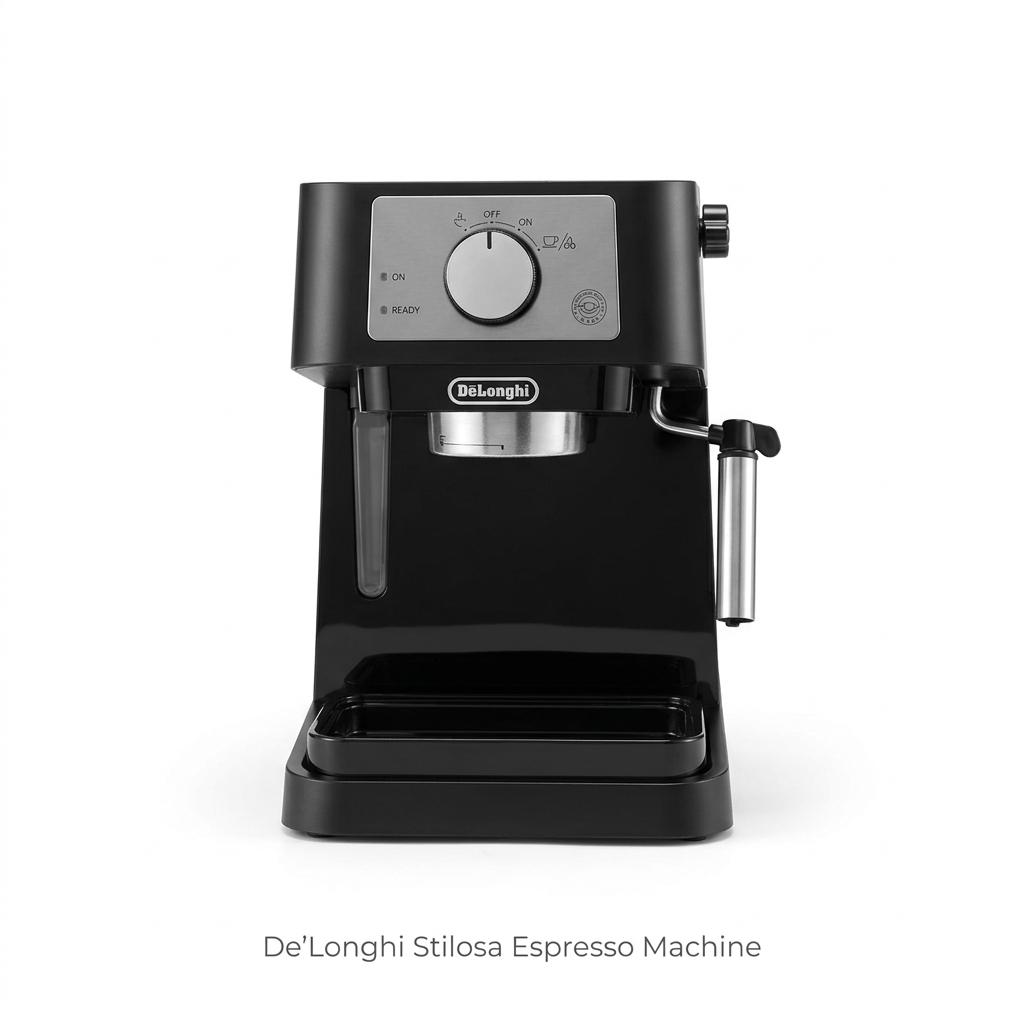
15-bar pump, small stainless steel boiler, rotary knob, Panarello-style steam wand and no solenoid valve, so you can bloom your shots.
Check price on Amazon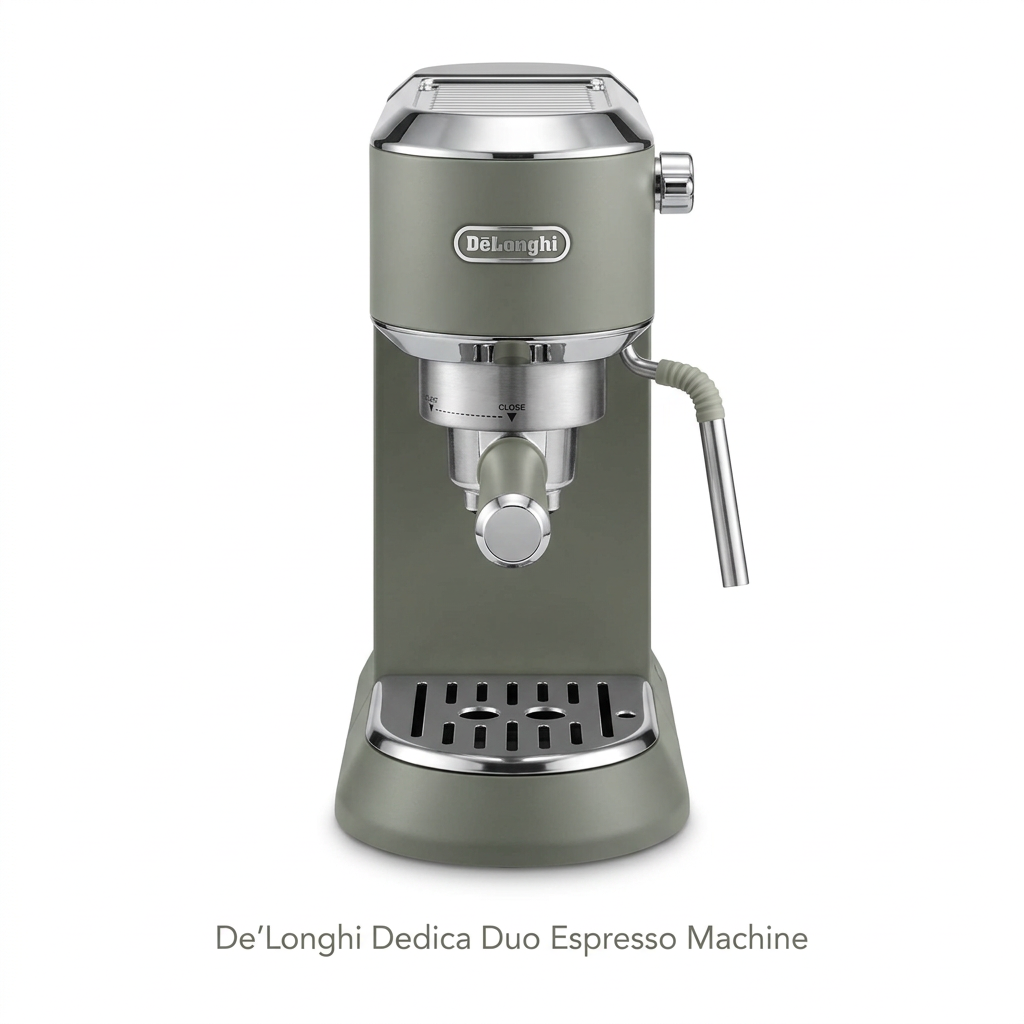
About 6 inches wide, with a fast thermoblock, a touch panel, a five-minute cold brew mode, a milk pitcher and a better tamper in the box.
See Today’s PriceStilosa vs Dedica Duo at a glance
- Both are 15-bar manual machines with pressurized baskets and no grinder.
- The Stilosa makes much better cappuccino foam and lets you bloom shots.
- The Dedica Duo is slimmer, faster to heat and adds five-minute cold brew.
- With a burr grinder and a non-pressurized basket, both reached 8.6 for espresso.
Head to head
The best result in each row is marked, based on four weeks with each machine and the manufacturer specs.
The Dedica Duo wins more rows on convenience and size. The Stilosa wins the row that matters most to milk drinkers, and it scored higher overall.
| Spec | Stilosa | Dedica Duo |
|---|---|---|
| Espresso, stock basketpre-ground, my tasting | 6.2 | 6.8 ✓ Best |
| Espresso, upgradedburr grinder, better basket | 8.6 | 8.6 |
| Milk drinks | 7.4, easy foam ✓ Best | 5.8, slow wand |
| Cold coffee | Espresso over ice only | 5-min cold brew ✓ Best |
| Heat-up from cold | A few minutes | Under 1 min ✓ Best |
| Brew to steam | About 1 min | About 30 to 40 s ✓ Best |
| Ease of use | 6.8 | 8.0 ✓ Best |
| Cleaning | 7.8 | 8.0 ✓ Best |
| Width | About 8.1 in | About 5.9 in ✓ Best |
| Tallest cup | About 4.3 in | About 6 in ✓ Best |
| Shot blooming | Easy, via the knob ✓ Best | Possible, less hands-on |
| Overall score | 7.8 ✓ Best | 7.5 |
| Rows won | 3 | 8 |
Eight rows to the Dedica Duo, three to the Stilosa and one tie. Do not read that as a knockout.
If your mornings start with a cappuccino, the milk row outweighs most of the others put together. That is why the Stilosa still finished ahead on my overall score.
Is It On Sale? Check NowStilosa vs Dedica Duo pros and cons
De'Longhi Stilosa
- Easy, thick cappuccino foam from the Panarello wand
- Stainless steel boiler and no solenoid, so you can bloom shots
- Very good espresso once you add a grinder and a better basket
- Basic plastic scoop-tamper and a light portafilter
- Small boiler cools during a long shot
- Takes a few minutes to heat up
De'Longhi Dedica Duo
- About 6 inches wide and ready in under a minute
- Five-minute cold brew without a second appliance
- Better accessories: weighty tamper, milk pitcher, cleaning pin
- Weak, slow steam wand for lattes
- After-drip adds weight to your shot
- Touch panel lacks physical feedback with wet fingers
Who should buy which machine?
- Daily cappuccino and latte drinkers
- Tinkerers who want to bloom and upgrade
- Learners on a budget who will add a grinder
- Espresso and Americano drinkers
- Cold brew and iced coffee fans
- Narrow counters and fast mornings
How they differ inside
Both machines use a vibration pump rated at 15 bar, both have 51 mm-style portafilters with single and double pressurized baskets✕Pressurized basketA double-wall basket with one tiny exit hole that builds pressure for you, so even pre-ground coffee makes foamy crema., and neither has a grinder. The 15-bar figure is the pump’s maximum. Good espresso is brewed at around 9 bar at the coffee, so the number on the box says little about the shot in your cup.
The real difference is how they heat water. The Stilosa has a small stainless steel boiler✕BoilerA small tank that holds and heats a batch of water. It stores heat well but takes longer to warm up and can cool as fresh water flows in during a shot. bolted to the group head, rated at about 1,100 watts. It holds a little reservoir of hot water, which is good for steam power but slow to warm from cold.
The Dedica Duo uses a 1,450-watt thermoblock✕ThermoblockA compact heater that warms water as it flows through, instead of keeping a boiler hot. Fast to heat, but steam can be weaker., which heats water on the way through. That is why it was ready in under a minute every morning, and also why its steam felt thinner and slower to get going.
| Inside | Stilosa | Dedica Duo |
|---|---|---|
| Heater | Stainless steel boiler, about 1,100 W | Thermoblock, about 1,450 W |
| Pump | Vibration, 15 bar | Vibration, 15 bar |
| Solenoid valve | None | None |
| Steam wand | Panarello-style sleeve | Single-hole wand with cleaning pin |
| Cold brew | No | Yes, about 5 min |
| Measured free flow | About 4 to 4.5 g/s | Not measured |
Neither machine has a solenoid valve✕Solenoid valveA valve that releases leftover pressure after a shot. Machines with one give a dry puck and stop dripping right away; machines without one drip a little after you stop.. On the Stilosa, that turned out to be a hidden strength, because it let me bloom the coffee by hand. On the Dedica Duo, it mostly showed up as after-drip, a few extra grams that kept landing in the cup after I stopped the shot.
My guide to espresso pressure explains why a 15-bar rating matters less than it seems. And if you want to know what is happening inside the puck, coffee extraction explained walks through it.
Design and size
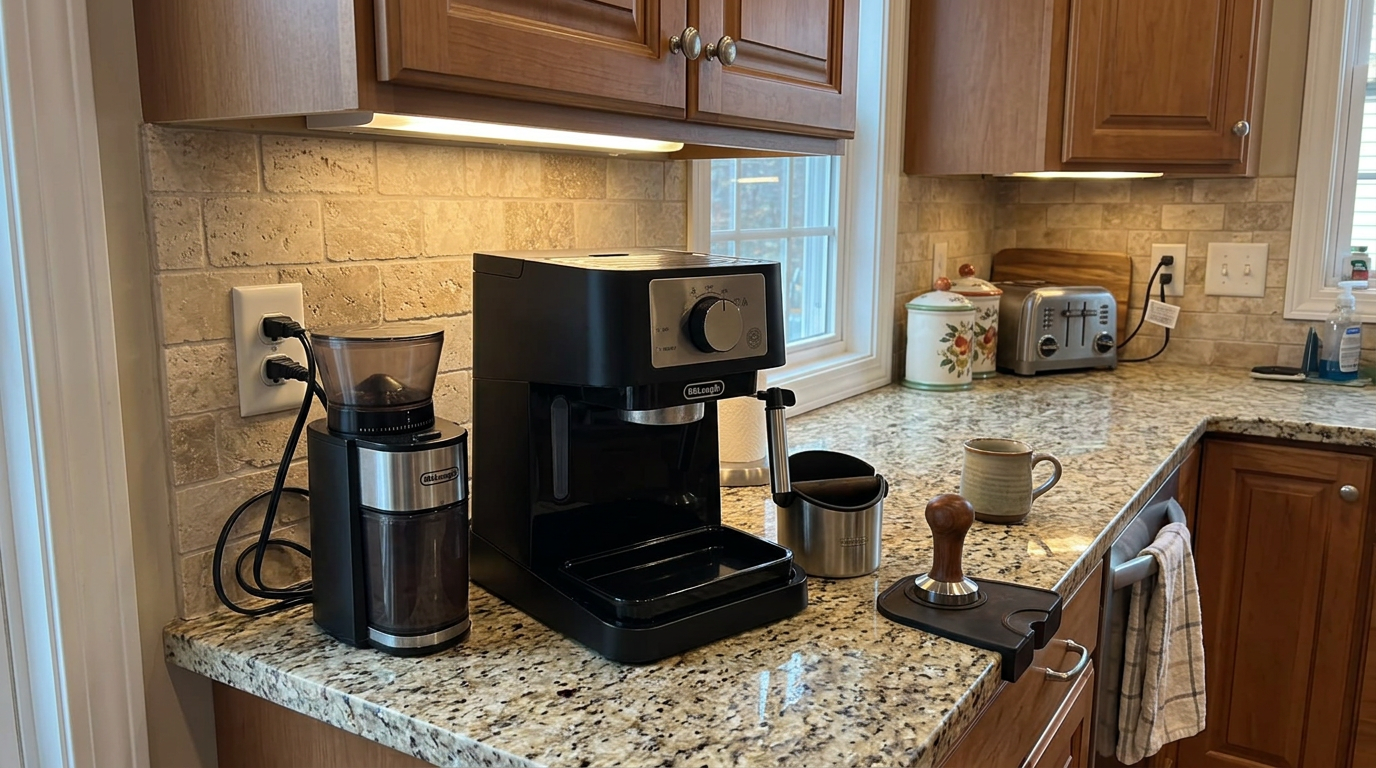
The Stilosa is about 8.1 inches wide, 13.5 inches deep and 11.2 inches tall, at roughly 9.5 pounds. It is a squat, practical machine with a black body, steel accents, a chunky rotary knob on the front and the steam wand on the right side.
The Dedica Duo is the tall, skinny one: about 5.9 inches wide, 13 inches deep and 12 inches tall, at about 9.6 pounds. It comes in steel and in soft pastel colors, and the touch panel sits flush on top.
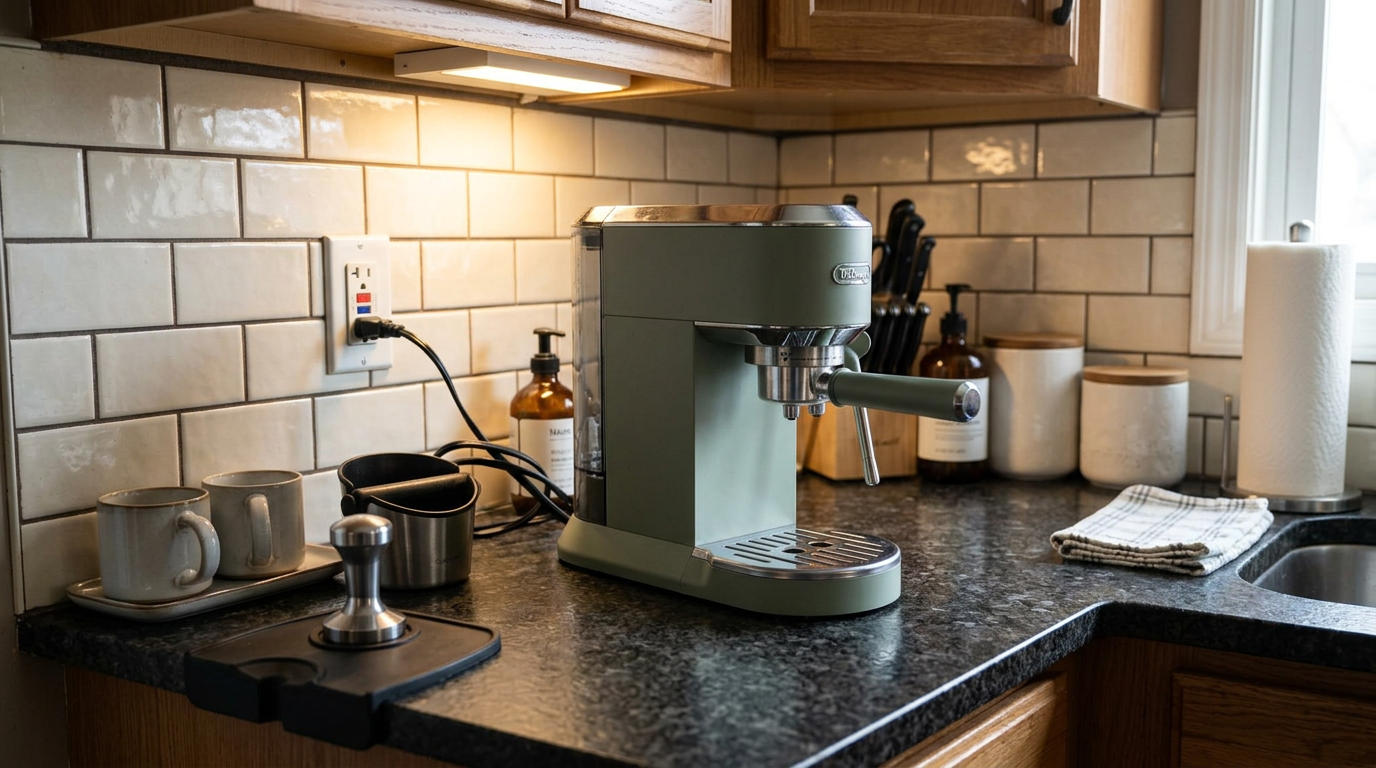
The Dedica Duo takes up barely more width than a cereal box.
Counter width you give up
Manufacturer widths. The Duo is about 27 percent narrower.
Both tanks sit at the back. The Stilosa’s holds about 34 oz, and the Dedica Duo’s about 37 oz, so in practice I refilled them at the same pace: every second or third day with two people drinking espresso.
On my counter, the Duo slid into the gap between the kettle and the wall, with room for a grinder beside it. The Stilosa needed a proper spot of its own. If you live in a small apartment, that two-inch difference is the kind of thing you notice every day.
Our tip: Measure from the counter to the bottom of your wall cabinets before you buy; you need a few inches above either machine to lift the tank out.
Setup and first drinks
The Stilosa took about 10 minutes from box to first shot. Washing the parts took about four minutes, filling and priming two, a steam flush one, and the rest was heat-up and pulling the first shot.
In the box: a portafilter with a plastic insert, single and double pressurized baskets, and a plastic scoop-and-tamper. My first two shots with supermarket pre-ground coffee tasted papery and flat, even though the crema looked convincing.
The Dedica Duo also took about 10 minutes, but felt more complete. It comes with single and double pressurized baskets, a tamper with a metal base, a small thick-walled milk pitcher and a pin for clearing the steam tip.
The Duo’s first double was chocolatey and simple. It was decent, but it lacked the depth I got later with a better basket.
| Setup step | Stilosa | Dedica Duo |
|---|---|---|
| Unbox to first drink | About 10 min | About 10 min |
| First shot | Papery with pre-ground | Chocolatey, simple |
| Tamper in the box | Plastic scoop-tamper | Metal base, plastic top |
| Milk pitcher in the box | No | Yes, small |
| Missing from the box | Pitcher, metal tamper, scale | Non-pressurized basket, scale |
One small hiccup with the Stilosa: during week two, an airlock stopped the pump from drawing water. Filling the tank, running the pump and opening the steam valve for a few seconds cleared it, and it never came back.
Knob vs touch panel
The Stilosa is as analog as espresso gets. There is a spring-loaded power switch, a ready light, a steam toggle and one rotary knob: turn it one way for coffee, the other for steam, and back to the middle to stop.
Because you start and stop every shot yourself, there are no presets to save. That made it the harder of the two for a beginner, and it is why it scored 6.8 for ease of use. But it is also the reason it is so flexible.
The Dedica Duo has a capacitive touch panel on top with icons for single and double espresso, steam and cold brew. Tap and the machine runs a set volume, which you can adjust and save.
It was easier to live with, scoring 8.0 for ease of use. My one complaint: with wet or milky fingers the panel sometimes ignored a tap, and there is no click to tell you it registered.
| Control | Stilosa | Dedica Duo |
|---|---|---|
| Interface | Rotary knob, switch, steam toggle | Capacitive touch panel |
| Presets | None, you stop the shot | Single, double, steam, cold brew |
| Saved volumes | No | Yes |
| Feedback | Physical, clear | No click; wet fingers misfire |
Our tip: Keep a dry towel next to the Dedica Duo and wipe your fingers before you tap; a dry panel never missed a press.
See Today’s PriceHeat-up and speed
This is where the two heaters really show. The Dedica Duo was ready to brew in under a minute from cold, and ready to steam about 30 to 40 seconds after a shot. Switching from steam to cold brew needed no cool-down at all.
The Stilosa needed a few minutes from cold for the ready light, and I gave it a few more for the group and portafilter to warm through. After a shot, it was back to ready in under a minute, and steam was ready about a minute after brewing.
Hands-on time per drink
My average hands-on times on a warm machine, including grinding and quick cleanup.
For straight espresso, the two were neck and neck once warm. For milk drinks, the Stilosa was faster in practice, because its steam got going quickly while the Duo spent its first 25 seconds mostly blowing bubbles.
On a rushed weekday, though, the Duo’s under-a-minute start mattered more than I expected. I could switch it on, grind and tamp, and it was already waiting for me.
Grind, dose and tamp
Neither machine has a grinder, and both made only so-so shots with supermarket pre-ground coffee. Both improved dramatically with fresh beans from a burr grinder. My guide to burr vs blade grinders explains why a blade grinder will not get you there.
On the Stilosa, I dosed 16 to 18 grams once I had a larger non-pressurized basket, and adjusted the recipe by roast. On the Dedica Duo, the stock double basket held about 14 grams, and a standard non-pressurized basket took about 16 to 16.5 grams.
| Roast | Stilosa recipe | Water trick on the Stilosa |
|---|---|---|
| Light | 18 g in, 54 g out (1:3) | Hotter: a short steam blip first |
| Medium | 16 to 18 g in, 34 to 38 g out (about 1:2.2) | Normal |
| Dark | 16 to 17 g in, 32 to 34 g out (about 1:2) | Cooler: flush until the light goes off |
That temperature trick is one of the Stilosa’s small joys. Because the boiler is so small, a quick blip of steam before the shot nudges the water hotter for light roasts, and a short flush cools it down for dark ones.
The Duo’s thermoblock gives you no such lever, but it also gave me steadier results without thinking. Its target was simple: about 16.5 grams in, about 32 grams out, in 25 to 30 seconds.
Tamping mattered more on the Stilosa, because its plastic scoop-tamper is small and light. A metal tamper sized to its basket made my pucks flatter and my shot times steadier within a day.
The Duo’s tamper, with its metal base, was good enough that I kept using it. A dosing funnel and a needle distribution tool still helped both machines, especially with the deeper non-pressurized baskets.
Espresso quality
As they come, with pressurized baskets, the Dedica Duo made the slightly better espresso. Its doubles with fresh-ground coffee were chocolatey and smooth, if a bit one-note, and scored 7.2.
The stock Stilosa looked impressive, with a tall cap of crema, but with pre-ground coffee it tasted papery and thin. The crema comes from the pressurized basket, not from a well-extracted shot.
Once I upgraded each one, the picture changed completely. With a standard basket, fresh Arabica-Robusta blend and a fine burr grind, the Duo’s doubles had thick crema, a velvety body and notes of bittersweet chocolate and nougat.
The upgraded Stilosa matched it. With a burr grinder, a quality non-pressurized basket, a metal tamper, a puck screen and a scale, its shots were sweet, layered and syrupy.
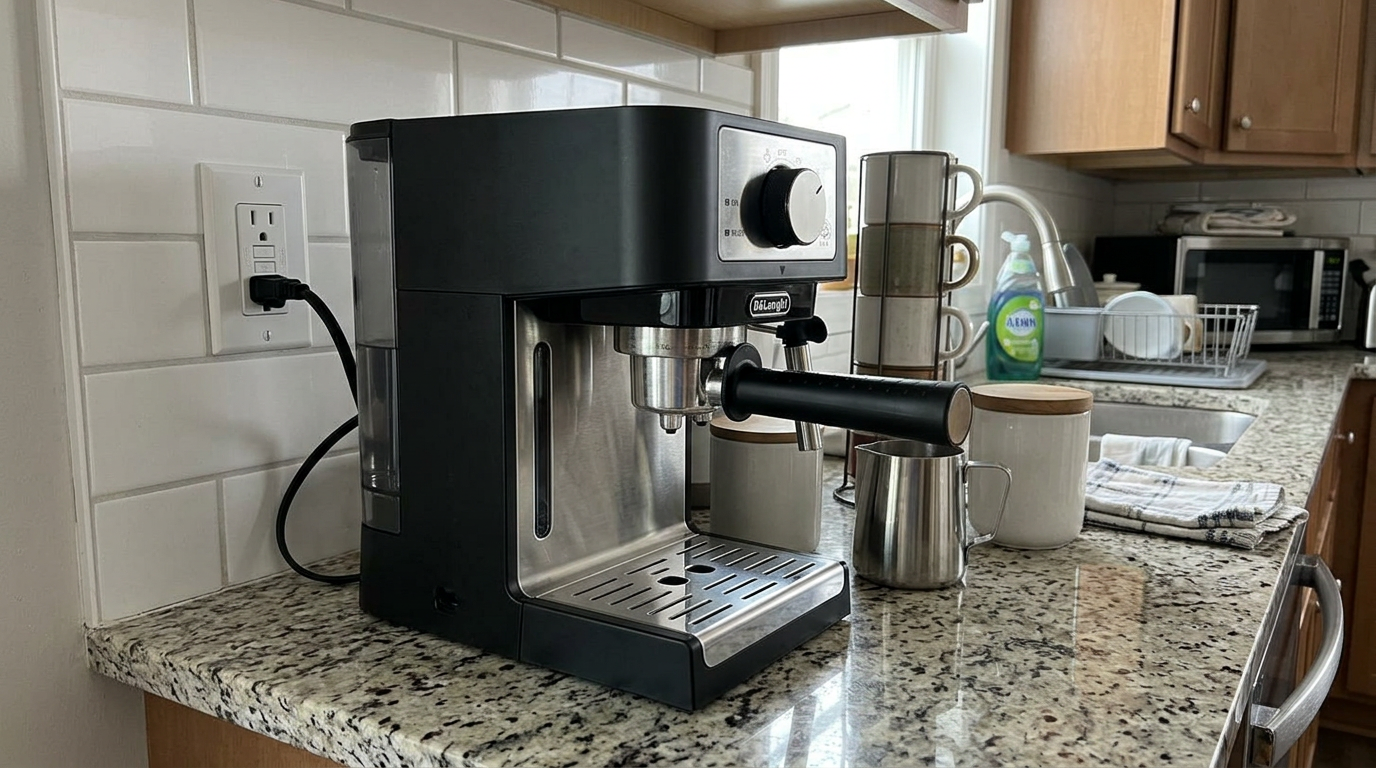
With a good grinder and a better basket, the Stilosa punches well above its size.
Espresso ratings by setup
My flavor ratings out of 10.
So the honest answer is that they make equally good espresso at their best. The Duo is a little better straight out of the box, and the Stilosa gives you more ways to steer the shot once you know what you are doing.
Both scored 8.0 for espresso in my single reviews, which averages those setups. If straight espresso is your thing, either machine will reward a good grinder far more than any other change.
Reveal Today’s DealBlooming and after-drip
Here is a quirk that separates these machines more than any spec sheet. Neither has a solenoid valve, but the Stilosa’s simple knob lets you use that to your advantage.
On the Stilosa, I could start the pump for a moment, stop it, and let the coffee soak before running the full shot. That bloom✕BloomA short pause after the first water hits the coffee, so the grounds can soak and release gas. The shot that follows flows more evenly and often tastes sweeter. made a noticeable difference with the same light-medium coffee.
Stilosa: what a bloom did to the same coffee
My taste ratings out of 10, light-medium roast.
Ten seconds was the sweet spot. A short pump pause at the start was more consistent than opening the steam valve to drop the pressure.
On the Dedica Duo, the missing valve showed up as after-drip. When I stopped a pressurized double at about 25 grams, the final cup weighed about 40 grams once the dripping ended.
Our tip: On the Dedica Duo, stop the shot 10 to 15 grams before your target weight; the after-drip will make up the rest.
With the pressurized double, stopping around 20 to 22 grams gave me the shot I wanted. Once I knew that rule, the after-drip stopped being a problem and became just another step in the routine.
Upgrades
Both machines have a clear upgrade path, and both reward it. The Stilosa has the longer road and the more satisfying climb.
Its stock pressurized basket can be depressurized, and its two-notch portafilter takes compatible aftermarket baskets. I went step by step to see what each change was worth.
Stilosa espresso after each upgrade
My average ratings out of 10, same beans.
The Dedica Duo needed fewer steps, because its tamper is already decent. A non-pressurized basket and a burr grinder took it from 7.2 to 8.6; a scale, a dosing funnel and a needle tool made it easier to repeat.
| Upgrade, in order | Stilosa | Dedica Duo |
|---|---|---|
| 1. Burr grinder | Biggest jump | Biggest jump |
| 2. Non-pressurized basket | Yes, larger for 17 to 18 g | Yes, for 16 to 16.5 g |
| 3. Metal tamper | Essential | Included tamper is fine |
| 4. Puck screen | Helped | Optional |
| 5. Scale | Yes | Yes, for after-drip |
| 6. Milk pitcher | Needed | Included |
Our tip: If you can only afford one extra for either machine, buy a burr grinder first; nothing else comes close.
One thing I would not bother with on either machine: anything that promises more pressure. Both already have plenty, and the gains are all in the coffee, the grind and how evenly it sits in the basket.
Milk drinks
This is the heart of the comparison, and it is not close. The Stilosa’s Panarello✕Panarello wandA steam wand with a sleeve that sucks in air for you, so you get thick foam with very little technique. Easy, but less control over texture.-style wand made thick, stable cappuccino foam almost from the first try, scoring 7.8 for cappuccinos.
For lattes, where you want silkier, less foamy milk, it was a little harder to control and scored 7.2. Still, with a cold pitcher and about 7 oz of milk, I got a perfectly good latte every morning.
The Dedica Duo’s wand looks more serious, with a single hole that should, in theory, make better microfoam✕MicrofoamMilk foam with bubbles too small to see, silky enough for latte art.. In practice it was weak and slow. After purging, it took about 24 to 25 seconds before the milk even started to spin, and for most of that time it just blew bubbles.
Milk ratings
My ratings out of 10 for texture, ease and consistency.
The Duo can make decent milk, but only if you treat it gently. Four to five ounces of very cold milk in its small pitcher worked best, and latte art was possible but hard and inconsistent.
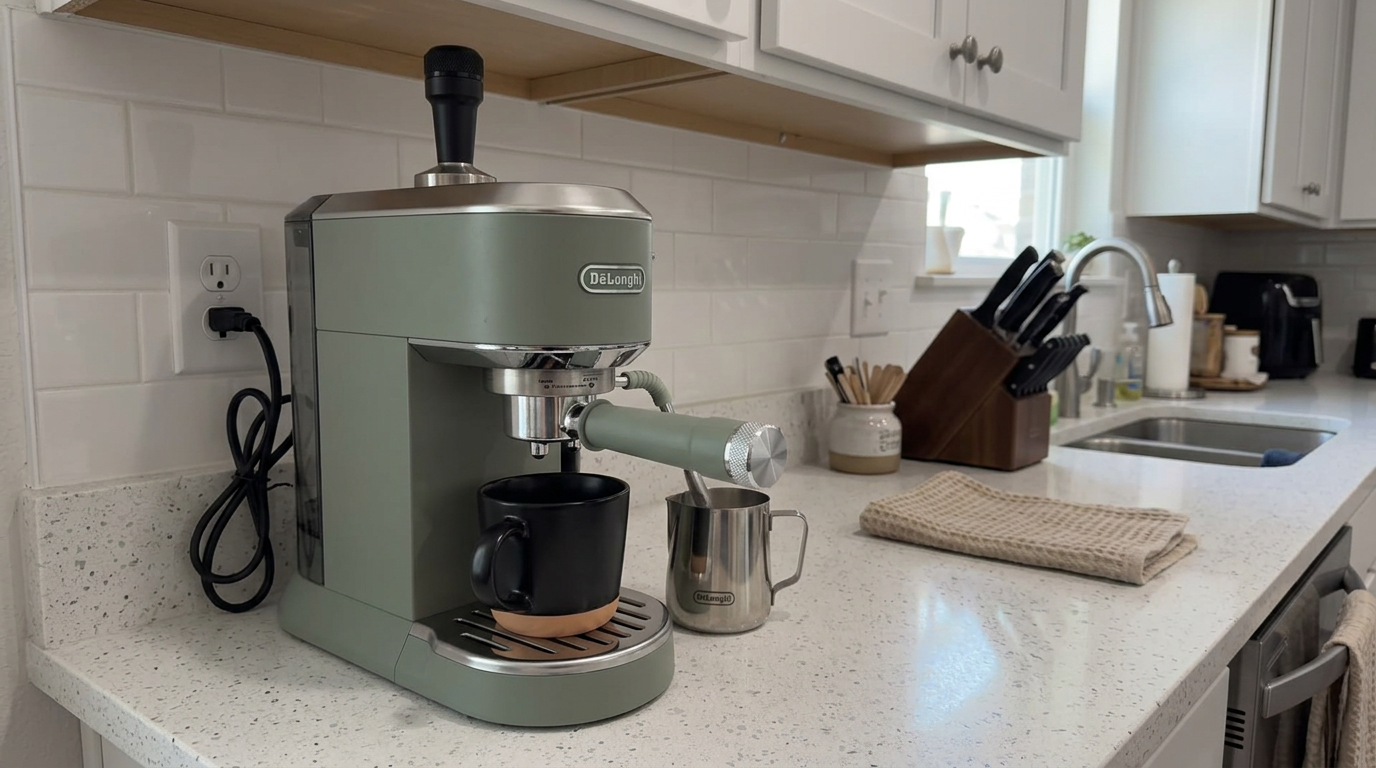
The Dedica Duo’s wand works best with a small, very cold batch of milk.
| Milk | Stilosa | Dedica Duo |
|---|---|---|
| Wand type | Panarello sleeve | Single-hole wand |
| Learning curve | Short | Long, and slow to start |
| Best batch | 4 oz cappuccino, 7 oz latte | 4 to 5 oz, very cold |
| Latte art | Limited, foam is thick | Possible, inconsistent |
| Workflow | Shot first, then steam | Shot first, then steam |
For a cortado, I barely stretched the milk on the Stilosa, and for a flat white I aimed for about 4 oz of thinner foam. Both were easier on the Stilosa simply because its steam got going right away.
If you love the science, my guide to the science of steamed milk explains why cold milk and a cold pitcher matter so much. Milk tastes sweetest at around 140 to 150°F, and on both machines I stopped steaming when the pitcher got too hot to hold comfortably.
See How Much You’ll SaveCold brew and iced coffee
This is the Dedica Duo’s party trick, and it is a good one. Tap the cold brew icon and the Dedica Duo pushes room-temperature water through the puck slowly for about five minutes, with the heater apparently off.
The result tasted refreshing and slightly sweeter than hot espresso poured over ice, which tends to taste sharper and more diluted. Medium roasts worked best, rounder and sweeter than dark ones.
Cold coffee ratings
My taste ratings out of 10.
A proper overnight cold brew from a jar in the fridge was still smoother and heavier. But it takes 12 hours and planning, and the Duo got me 90 percent of the way there in five minutes, with about one minute of hands-on time.
The Stilosa has no cold mode, so iced coffee means a hot shot over ice. To make it taste better, I brewed a slightly shorter, stronger double and poured it over a big glass of ice to chill it fast.
If you drink iced lattes or cold brew most of the summer, this one feature may decide it for you. My guide to iced coffee vs cold brew explains why the two taste so different.
Cups and clearance
The Stilosa has a two-tier drip tray. Lift off the top section and you can fit cups up to about 4.3 inches tall, which took my cappuccino cups and a short mug, but not a tall latte glass.
The Dedica Duo’s adjustable drip tray goes further, up to about 6 inches, and its flatter, wider tray fits two espresso cups side by side. That made a real difference for iced drinks in tall glasses.
| Cup | Stilosa | Dedica Duo |
|---|---|---|
| Espresso cup | Yes | Yes, two side by side |
| Cappuccino cup | Yes | Yes |
| Short mug | Yes, tray removed | Yes |
| Tall glass for iced drinks | No | Up to about 6 in |
| Travel mug | No | Short ones only |
Measure your favorite mug before you buy either. On the Stilosa, I brewed into a small cup and poured, which takes ten seconds but adds one more thing to rinse.
Drinks I made most
Cappuccino: the Stilosa, with thick, easy foam every time.
Latte: the Stilosa again; the Duo got there but took longer.
Espresso: the Duo straight out of the box; a tie once upgraded.
Americano: either, with a slight edge to the Duo for its quick heat-up.
Cold brew and iced coffee: the Duo, easily.
| Drink | Better machine | Why |
|---|---|---|
| Cappuccino | Stilosa | Easy, stable foam |
| Latte | Stilosa | Faster, stronger steam |
| Flat white | Stilosa, narrowly | Steam gets going quickly |
| Espresso, stock | Dedica Duo | Smoother pressurized shots |
| Espresso, upgraded | Tie | Both reached 8.6 |
| Cold brew | Dedica Duo | Five-minute cold mode |
If you want to know what each of those drinks actually is, my guide to the essential coffee drinks breaks them down by shot and milk.
Beans and water
Medium roasts were the easiest to dial in on both machines. Light roasts liked the Stilosa’s hotter steam-blip trick and a longer 1:3 ratio, while dark roasts liked cooler water and a tighter 1:2.
For the Duo’s cold brew, medium roasts beat dark roasts clearly. Dark roasts tasted flat and a little ashy without heat to lift them.
Our tip: Buy beans with a roast date and use them within about a month; on both machines, old beans made flat shots even when the timing looked perfect.
I used filtered water in both tanks throughout. Soft-but-not-distilled water tastes better and slows scale, which matters for the Stilosa’s small boiler and for the Duo’s thermoblock alike. My guide to water chemistry for coffee goes deeper, and my explainer on roast levels helps you pick beans.
Cleaning and care
Both are easy to keep clean, with no automatic milk system and no grinder to brush out. The Dedica Duo edged it at 8.0 to the Stilosa’s 7.8.
On the Duo, daily cleaning took about 2 minutes on espresso and cold brew days and about 3 minutes with milk. If milk dried on the wand, it took about 7. Once a week, I cleared the steam tip with the included pin.
On the Stilosa, I knocked out the puck, rinsed the basket and puck screen, wiped and purged the wand and emptied the drip tray. The Panarello sleeve pulls off for a rinse, which kept it from clogging.
| When | Stilosa | Dedica Duo |
|---|---|---|
| After each shot | Knock out, rinse basket | Knock out, rinse basket |
| After milk | Wipe, purge, rinse sleeve | Wipe and purge at once |
| Daily | Empty drip tray | Empty drip tray, dry the touch panel |
| Weekly | Soak basket and portafilter | Soak basket, clear steam tip with pin |
| Descale | Every 1 to 3 months | When prompted, or every 1 to 3 months |
Cleaning ratings
My single-review scores out of 10.
My guide to coffee machine cleaning and descaling has a step-by-step routine that works for both. On the Stilosa, some tubing and the steam valve are plastic and may need replacing eventually, though parts should stay easy to find.
Serving guests
For a round of cappuccinos, the Stilosa was the better host. Its steam was strong enough for one pitcher at a time, and the Panarello made each cap of foam look the same.
Its small boiler does mean you work one drink at a time: pull a shot, steam, then flush before the next shot. For espresso-only guests, the Dedica Duo was quicker, with its saved volumes and fast recovery.
Four drinks for guests, warm machines
Estimated from my per-drink hands-on times.
On a summer afternoon, the Duo’s cold brew was a nice surprise for guests. While one batch ran, I poured the previous one over ice, and nobody had to wait for a pitcher to steam.
Our tip: When hosting on the Stilosa, flush a little hot water through the group between drinks so every guest’s shot starts at the same temperature.
Noise
Both machines use vibration pumps, so both buzz during a shot, about as loud as a blender on its lowest setting. Neither will wake the house from a closed bedroom, but you will hear them in an open-plan kitchen.
Steaming was the loudest part on the Stilosa, a sharp hiss for about a minute. The Dedica Duo’s cold brew was the quietest thing either machine did, a low, slow hum while it ran.
Build and reliability
The Stilosa has a stainless steel boiler, which is unusual at its level and a good sign for longevity. The rest is more basic: the portafilter feels light, with a plastic insert, and the scoop-tamper is plastic.
The Dedica Duo feels more finished, with metal panels and a sturdier set of accessories. In my first three weeks I logged about 40 espressos, 15 cold brews and 12 milk drinks with no faults and no leaks, and week four was just as uneventful.
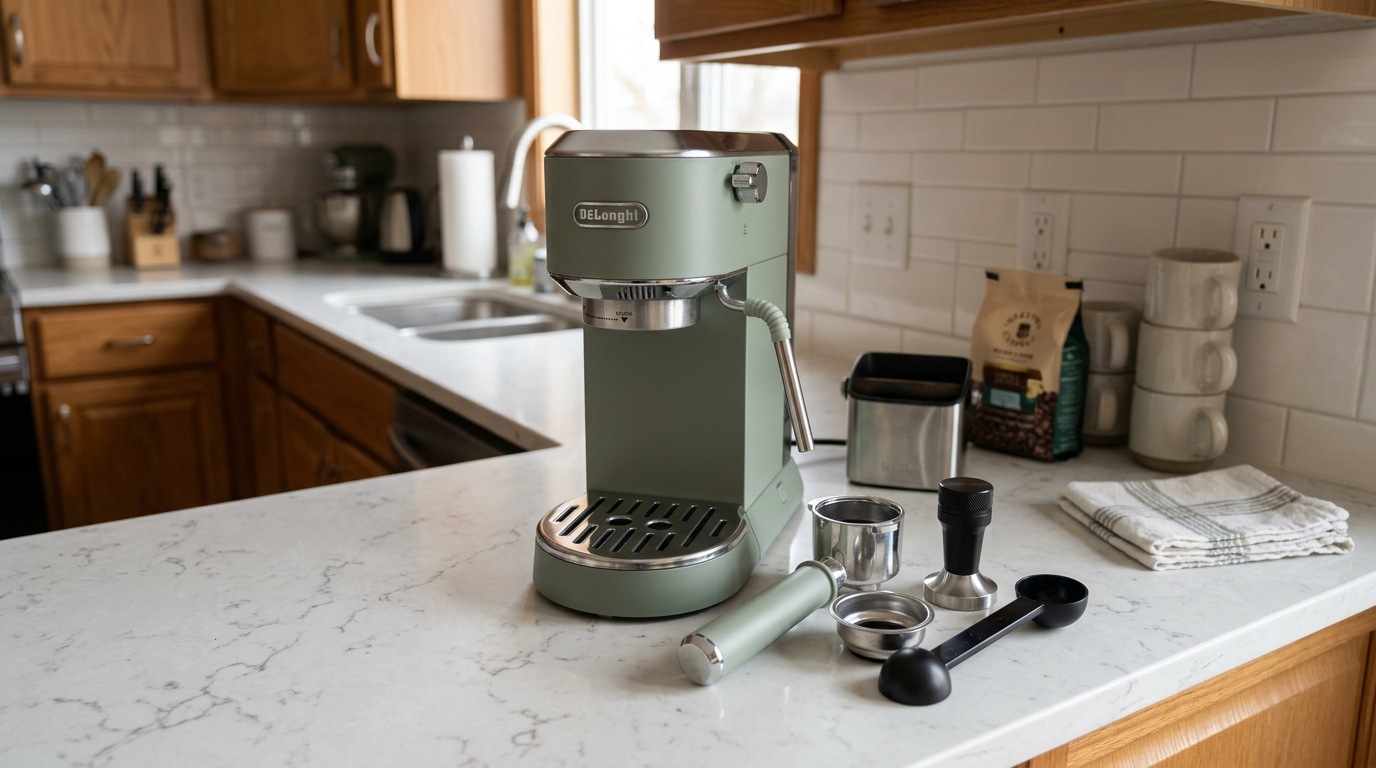
The Dedica Duo’s accessories feel a step up from the Stilosa’s.
Neither developed a fault in four weeks. The Stilosa’s simpler parts are easier to understand and fix, while the Duo’s touch panel and thermoblock are tidier but less serviceable at home.
Mistakes to avoid
Judging the Stilosa by its first shots. The stock basket with pre-ground coffee tastes papery; add a grinder.
Filling the Duo’s pitcher too high. Its wand wants 4 to 5 oz of very cold milk.
Stopping the Duo’s shot at your target weight. After-drip adds 10 to 15 grams.
Brewing straight after steaming on the Stilosa. Flush first, or the shot will scorch.
Using dark roasts for the Duo’s cold brew. Medium roasts taste rounder and sweeter.
| Problem | Fix |
|---|---|
| Stilosa pump hums but no water | Fill the tank, run the pump, open the steam valve to clear the airlock |
| Duo wand only blows bubbles | Purge longer, use less, colder milk |
| Shot runs from one spout | Level the grounds and tamp flat; alone, it is not a fault |
| Duo ignores a tap | Dry your fingers and the panel |
| Thin, fast shots on either | Grind finer, fill the basket properly |
A typical morning on each
On the Stilosa: switch on first thing and let it heat while the kettle boils. Grind 17 grams, tamp, lock in, bloom for 10 seconds and run the shot by hand to about 36 grams. Flip to steam, wait about a minute, foam 4 oz of milk and pour. About six minutes for a cappuccino.
On the Dedica Duo: switch on, and by the time I had ground 16.5 grams it was ready. Tap double, stop about 15 grams early, and let the after-drip finish the shot. On summer days, I tapped cold brew instead and poured it over ice five minutes later.
| Step | Stilosa | Dedica Duo |
|---|---|---|
| Heat-up | A few minutes | Under 1 min |
| Shot | By hand, with bloom | Tap, stop early |
| Milk | Quick, easy foam | Slow start, small batch |
| Cold option | Shot over ice | 5-min cold brew |
| Typical drink | Cappuccino, about 6 min | Espresso, about 2.5 to 5 min |
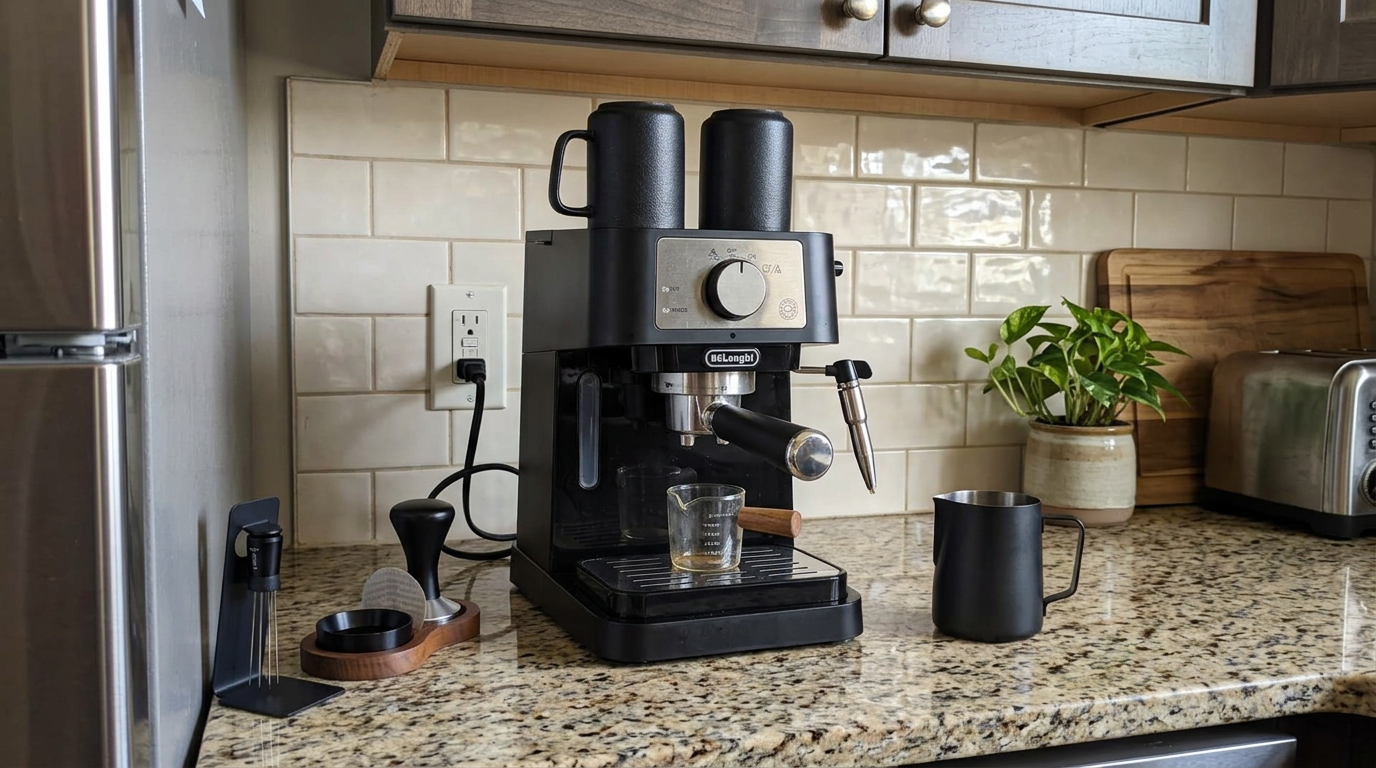
The Stilosa turned my weekend cappuccino into a small ritual.
On weekends, I enjoyed the Stilosa more. Blooming, adjusting water temperature by roast and foaming by hand felt like a small, satisfying craft. On weekdays, the Duo’s fast start won almost every time.
Which makes the better first machine?
If you are coming from café cappuccinos and want the same at home, the Stilosa. Its foam is the most forgiving I have used on a machine this simple, and it grows with you as you learn.
If you are coming from pods and mostly want espresso, Americanos and iced coffee, the Dedica Duo. It is easier from day one, fits anywhere and adds a summer drink the Stilosa cannot make.
| Coming from | Better pick | Why |
|---|---|---|
| Café cappuccinos | Stilosa | Easy, thick foam |
| Pods, espresso only | Dedica Duo | Fast, tap-and-go |
| Iced coffee habit | Dedica Duo | Five-minute cold brew |
| Wants to learn the craft | Stilosa | Bloom and temperature control |
| Tiny kitchen | Dedica Duo | About 6 in wide |
Either way, both are real pump machines that teach dose, grind and tamp. The habits you build on them carry straight over to a bigger machine later, which is the best thing a first machine can do.
Four weeks with each: our diary notes
These are the notes Michael and I kept as each machine settled into our routines.
De'Longhi Stilosa
Week 1: Papery first shots with pre-ground; great cappuccino foam from day one.
Week 2: Burr grinder and depressurized basket; one airlock, fixed in a minute.
Week 3: Metal tamper, puck screen and 10-second blooms; shots hit 8.2.
Week 4: Quality basket and scale; 8.6 shots and roast-matched water temperature.
De'Longhi Dedica Duo
Week 1: Ready in under a minute; learned to stop shots early for after-drip.
Week 2: Standard basket and burr grinder; velvety 8.6 doubles.
Week 3: Cold brew most afternoons; medium roasts worked best.
Week 4: Still fighting the slow wand for lattes; no faults or leaks.
Real-life scenarios
These are the situations where one machine fit better in our four weeks.
Milk score 7.4 vs 5.8.
Five-minute cold brew.
About 5.9 in wide.
Bloom, temperature tricks, upgrades.
Ready in under a minute.
Up to about 6 in.
My scorecard
These are my scores out of 10 from the single reviews.
De'Longhi Stilosa
De'Longhi Dedica Duo
Overall, I rate the Stilosa 7.8 and the Dedica Duo 7.5. The Duo’s score does not include its cold brew, which scored 8.2 on its own and would lift it for anyone who drinks cold coffee often.
Find Out the Price TodayWhich one is right for you?
4 quick questionsWhich one should you buy?
For daily cappuccino and latte drinkers, and anyone who enjoys learning the craft, the De'Longhi Stilosa. Its milk is much better, and once upgraded its espresso is every bit as good.
For espresso and cold coffee drinkers, small kitchens and fast mornings, the De'Longhi Dedica Duo. For the full detail, read my reviews of the De'Longhi Stilosa and the De'Longhi Dedica Duo.
- You drink cappuccinos daily
- You want to bloom and tweak shots
- You will add a burr grinder
- You want tap-and-go presets
- You want cold brew
- You drink espresso and iced coffee
- Your counter is narrow
- You want it ready in under a minute
- You make lattes every day
- You hate touch controls
Our pick for most people is the De'Longhi Stilosa. It makes far better milk drinks, and with a burr grinder and a better basket its espresso matched the Duo’s best.
Choose the De'Longhi Dedica Duo if you mostly drink espresso and cold coffee, need the slimmest machine, or want it ready in under a minute.
Whichever you choose, use fresh beans, a burr grinder and filtered water.
Stilosa vs Dedica Duo specifications
From manufacturer specifications and our own testing.
| De'Longhi Stilosa | De'Longhi Dedica Duo | |
|---|---|---|
| Model | EC260BK | EC890 |
| Type | Manual, steam wand | Manual, steam wand, cold brew |
| Pump | Vibration, 15 bar | Vibration, 15 bar |
| Heater | Stainless steel boiler, about 1,100 W | Thermoblock, about 1,450 W |
| Baskets | Single and double, pressurized | Single and double, pressurized |
| Steam wand | Panarello-style sleeve | Single-hole wand, cleaning pin |
| Controls | Rotary knob, switch, steam toggle | Capacitive touch panel |
| Water tank | About 34 oz, removable | About 37 oz, removable |
| Cup clearance | About 4.3 in | About 6 in |
| Size | About 8.1 x 13.5 x 11.2 in | About 5.9 x 13 x 12 in |
| Weight | About 9.5 lb | About 9.6 lb |
| In the box | Portafilter, 2 baskets, scoop-tamper | Portafilter, 2 baskets, tamper, pitcher, pin |
How we tested and compared them
Michael Reynolds here. Alex van Gog and I used each machine as our everyday espresso maker for four weeks, with the same medium-roast blend, a light roast and a dark roast, cold whole milk and barista oat milk, and we kept shared notes throughout.
On both, we compared pre-ground coffee in the stock pressurized baskets with fresh beans from a burr grinder in non-pressurized baskets. On the Stilosa, we added each upgrade one at a time and rated the shots after each step, and tested 0-, 10- and 20-second blooms.
We weighed doses and shots on a kitchen scale, timed heat-up, steam and hands-on time, ran the Duo’s cold brew against espresso over ice and overnight cold brew, and followed every cleaning routine in the manuals.
- Espresso: body, crema, flavor and consistency.
- Milk: foam texture, speed and learning curve.
- Workflow: heat-up, prep and daily routine.
- Ownership: cleaning, noise, water and footprint.
You can read more about our process on our how we test page.
Stilosa vs Dedica Duo FAQ
What is the difference between the De'Longhi Stilosa and the Dedica Duo?
The Stilosa has a small stainless steel boiler, a rotary knob and a Panarello-style wand that makes easy foam. The Dedica Duo is slimmer, uses a fast thermoblock and a touch panel, and adds a five-minute cold brew mode, but its steam wand is weaker.
Which is better for cappuccinos and lattes?
The Stilosa. It scored 7.4 for milk drinks against the Dedica Duo’s 5.8, with thick foam from the first try.
Which makes better espresso?
The Dedica Duo is slightly better with the stock pressurized baskets. With a burr grinder and a non-pressurized basket, both reached 8.6 in our tastings.
Can the Stilosa make cold brew?
No. For iced coffee on the Stilosa, pour a short, strong double over plenty of ice.
How long does the Dedica Duo’s cold brew take?
About five minutes, with about a minute of hands-on time.
Which heats up faster?
The Dedica Duo, in under a minute. The Stilosa needs a few minutes from cold.
Which is smaller?
The Dedica Duo, at about 5.9 inches wide against the Stilosa’s 8.1 inches.
Do I need a grinder?
Not to start, but both machines improve dramatically with fresh beans from a burr grinder. It was the single biggest upgrade on both.
Why does the Dedica Duo keep dripping after the shot?
It has no solenoid valve, so leftover pressure pushes out a little more coffee. Stop the shot 10 to 15 grams before your target weight.
Do tall mugs fit?
The Dedica Duo takes cups up to about 6 inches. The Stilosa takes up to about 4.3 inches with the top tray removed.

- Our hands-on De'Longhi Stilosa review
- Our hands-on De'Longhi Dedica Duo review
- De'Longhi manufacturer specifications for the EC260BK and EC890