Essential Coffee Drinks Explained: From Espresso and Cortado to Flat White, Latte and Cold Brew
Café menus can feel like a test you didn't study for. But most drinks are built from a few building blocks: brewed coffee, espresso, milk, sometimes chocolate or syrup, and ice. Here's what's in each essential coffee drink, how they differ and how to choose the right one for your taste.
We choose products independently. We may earn a commission through links on this page; your price stays the same. Affiliate policy

Most café drinks are variations on brewed coffee or espresso. Drip and pour-over are filter coffees, and café au lait adds steamed milk to brewed coffee. Espresso drinks differ by milk: a macchiato has a splash, a cortado equal parts, a cappuccino milk plus foam, a flat white silky milk in a small cup and a latte lots of milk. A mocha is a latte with chocolate. Iced coffee is brewed hot and chilled, while cold brew is steeped cold for hours, making it smoother and less bitter. Choose by how strong you like coffee, how much milk you want and whether you prefer foam or silky milk.
Decoding the coffee shop menu
Standing in line at a busy café, staring at a board full of macchiatos, cortados, flat whites and cold brews, can feel like taking a test you didn't study for. I've watched plenty of friends panic and order "just a latte" every time, because it's the one drink they're sure about.
The good news is that most café menus are built from a small number of building blocks: brewed coffee, espresso, milk (steamed or foamed), sometimes chocolate or syrup, and ice. Once you understand how those pieces fit together, every menu starts to make sense.
In this guide I'll explain the essential coffee drinks you'll find in almost every café, what's in each one, how they differ, and how to choose the right drink for your taste.
The essential drinks at a glance
| Drink | What's in it | Typical size | Taste and texture |
|---|---|---|---|
| Drip coffee | Brewed coffee | 8-16 oz | Classic, straightforward |
| Pour-over | Hand-brewed coffee | 8-12 oz | Clean, nuanced |
| Café au lait | Brewed coffee + steamed milk (2:1) | 8-12 oz | Soft, creamy, mild |
| Espresso | Concentrated coffee | ~2 oz double | Intense, syrupy |
| Macchiato | Espresso + a little milk or foam | ~3 oz | Strong, softened slightly |
| Cortado | Espresso + equal steamed milk | ~4 oz | Balanced, smooth |
| Cappuccino | Espresso + steamed milk + foam | ~6 oz | Balanced, foamy |
| Flat white | Espresso + silky steamed milk | ~6.5-7 oz | Creamy, coffee-forward |
| Latte | Espresso + lots of steamed milk | 8 oz and up | Mild, milky, customizable |
| Mocha | Espresso + steamed milk + chocolate | 8 oz and up | Sweet, chocolatey |
| Iced coffee | Hot-brewed coffee, chilled | Varies | Bright, refreshing |
| Cold brew | Coffee steeped cold for hours | Varies | Smooth, rich, low bitterness |
The building blocks of every coffee drink
Before diving into individual drinks, it helps to know the main ingredients.
- Brewed coffee: coffee made by passing hot water through grounds, as in drip or pour-over. Served in larger cups.
- Espresso: a small, concentrated coffee made by forcing hot water through finely ground coffee under pressure.
- Steamed milk: milk heated with a steam wand, which also adds tiny bubbles for a smoother, sweeter texture.
- Milk foam: the airy layer on top of steamed milk; how much there is defines many drinks.
- Flavorings: chocolate, syrups and spices.
- Ice or cold water: for cold drinks.
The main differences between drinks come down to the coffee base (brewed or espresso), how much milk, the texture of the milk and the size of the cup.
Filter coffee: drip and pour-over
Drip coffee
Drip coffee is the backbone of American coffee culture. Hot water drips through grounds in a filter, and the coffee collects in a pot or urn. Cafés brew it in large batches so they can serve customers quickly.

- Brewed in larger batches.
- Quick to serve.
- Consistent from cup to cup.
- Enjoyed black or with milk, cream and sugar.
If you want a classic, no-fuss cup of coffee, drip is the obvious choice.
Pour-over
Pour-over uses the same filtration principle but is made one cup at a time. A barista pours hot water over coffee in a cone-shaped dripper, controlling the pour, temperature and timing.
Pour-over lets cafés highlight specific coffees, so you can taste fruity, floral, nutty or chocolatey notes. The downside is time; each cup takes several minutes. My guide to pour over vs drip coffee compares the two in detail.
In short: drip prioritizes speed and consistency; pour-over prioritizes control and exploring different coffees.
Café au lait
Café au lait is simply brewed coffee with steamed milk, traditionally around two parts coffee to one part milk. For example, eight ounces of coffee with about four ounces of steamed milk.
The steamed milk adds body, softens the coffee's sharper edges and brings natural sweetness, without needing sugar or syrup.
It's a great choice if you like regular coffee but want something creamier, and it's often cheaper than a latte because it uses brewed coffee instead of espresso.
The key difference to remember: café au lait is brewed coffee plus milk; a latte is espresso plus milk. They can look similar but taste quite different.
Espresso
Espresso is the foundation of most café drinks. Hot water is forced through finely ground coffee under pressure, producing a small, concentrated shot. A double espresso is about two ounces.

Espresso has an intense flavor, a thicker texture and a strong aroma. It's topped with crema, a golden layer of tiny bubbles and oils. Traditional espresso is often served with a small spoon to stir the crema into the coffee. My guide to espresso crema explains what crema tells you.
Does espresso have more caffeine?
Espresso tastes stronger, but that's because it's concentrated, not because a serving has much more caffeine. A double espresso contains roughly as much caffeine as an eight-ounce cup of brewed coffee, though it varies with the beans and recipe.
Macchiato
A traditional espresso macchiato is a double espresso "marked" with a small amount of milk. A typical serving is about three ounces: two ounces of espresso and roughly one ounce of milk or foam.
Some cafés add a splash of steamed milk; others spoon a dollop of foam on top. Both are common. The milk softens the espresso slightly without changing its character.
Don't confuse it with a caramel macchiato, which is a much larger, sweeter, milk-heavy drink with caramel flavoring.
Order a macchiato if you love espresso but want to take the edge off.
Cortado
A cortado is equal parts espresso and steamed milk, usually two ounces of each for a drink of about four ounces.

The milk is steamed to a smooth texture with little foam. The result is balanced: enough milk to soften the espresso, but not so much that the coffee disappears.
It sits neatly between a macchiato and a cappuccino, and it's my go-to order when I want to taste a café's espresso without drinking it straight.
Cappuccino
The cappuccino is one of the world's most recognizable coffee drinks. A classic guideline is equal thirds: espresso, steamed milk and foam. For a six-ounce cappuccino, that's about two ounces of each.
In reality, cappuccinos vary a lot between cafés.
Traditional or dry cappuccino
A thicker, airier layer of foam sits on top, sometimes spooned on from the pitcher. There's a clear separation between milk and foam.
Modern or wet cappuccino
Many specialty cafés steam the milk to a fine, silky texture that blends into the espresso, with a thinner layer of foam. It feels closer to a small latte.
Cocoa-topped cappuccino
Some cafés dust the top with cocoa powder or occasionally cinnamon. It's especially common in Australia and adds a slightly bitter chocolate note.

If you have a preference, ask for a "dry" or "wet" cappuccino.
When you're comparing espresso drinks, it helps to remember that they usually start with the same shot of espresso. A café's macchiato, cortado, cappuccino and latte might all use exactly the same coffee and the same double shot. What changes is the amount and texture of the milk, and that alone transforms the flavor from intense to mellow.
Flat white
The flat white comes from the coffee cultures of Australia and New Zealand and has become popular worldwide.
A typical flat white is about six and a half to seven ounces: espresso with steamed milk textured to a smooth, velvety microfoam, with only a thin layer of foam on top. It's closer to a latte in texture than to a dry cappuccino, but smaller, so the espresso flavor stays prominent.
Some large chain versions serve big flat whites that are really lattes with a different name. A traditional flat white is small, smooth and coffee-forward.
Choose a flat white if you want creaminess without losing the taste of the espresso. My guide to the science of steamed milk explains how baristas create that silky texture.
Latte
The latte is one of the most popular drinks in American cafés. It's espresso with a larger amount of steamed milk and a thin layer of foam. Lattes start around eight ounces and go up to 12, 16 or even 20 ounces or more.
In larger sizes, many cafés add extra espresso shots so the coffee doesn't get lost.
Lattes are smooth, mild and milk-forward, which makes them approachable for people who don't love strong coffee. They're also the base for many flavored drinks:
- Vanilla.
- Caramel.
- Hazelnut.
- Brown sugar.
- Seasonal flavors.
A plain latte is just espresso and milk. Adding flavor changes the taste, not the basic structure. Choose a latte if you want something creamy, mild and customizable.
Mocha
A mocha is essentially a chocolate latte: espresso, steamed milk and chocolate sauce or syrup. Some cafés add whipped cream or chocolate powder on top.
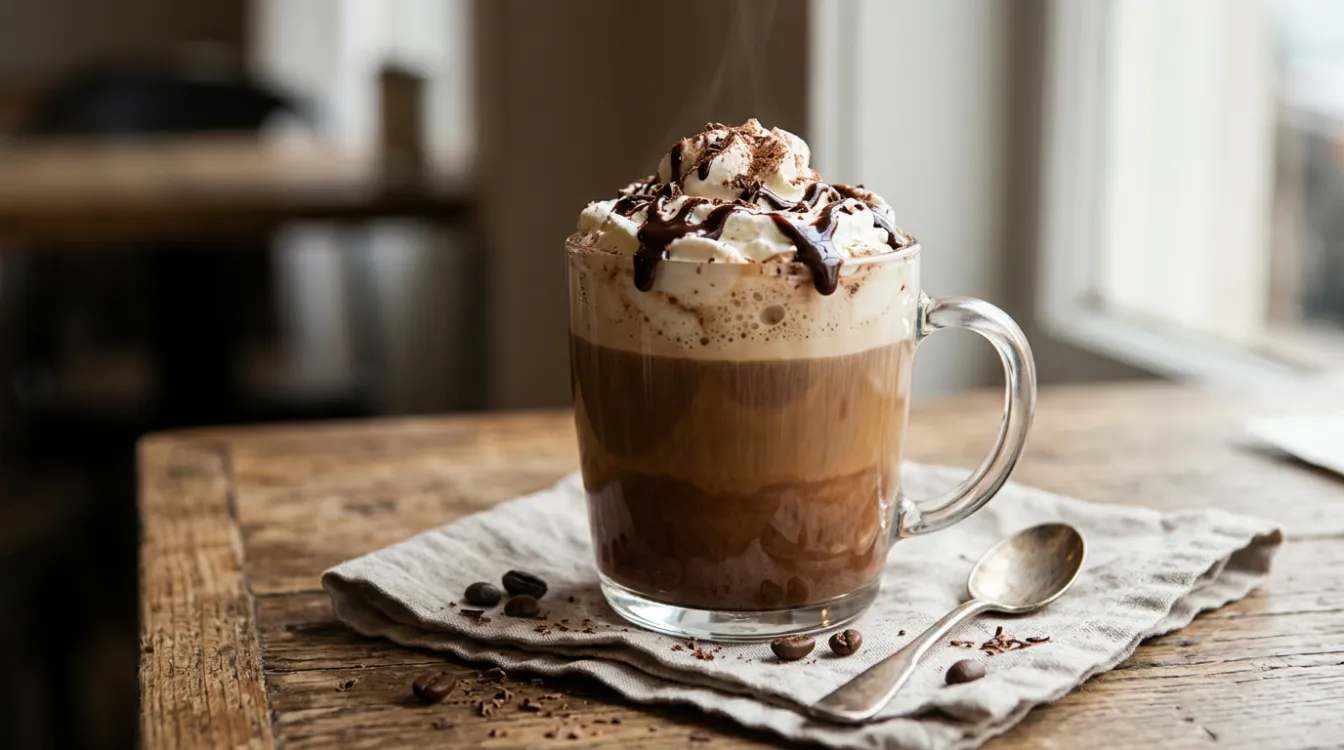
Coffee and chocolate are natural partners, sharing roasted, slightly bitter and sweet flavors. The chocolate softens the espresso and makes the drink richer and sweeter, closer to a dessert.
If you like hot chocolate as much as coffee, a mocha is a great middle ground.
Iced coffee vs cold brew
Most cafés offer two kinds of cold coffee, and they're not the same.

Iced coffee
Traditional iced coffee is brewed hot, then chilled and served over ice. It keeps many characteristics of hot coffee, including brighter acidity and a lighter, refreshing feel. You can add milk, cream, sugar or syrup.
Cold brew
Cold brew is made by steeping coffee in cool or room-temperature water for many hours, then filtering. It tends to be smoother, richer and lower in perceived acidity and bitterness, often with chocolatey notes.
Cold brew is often associated with more caffeine, especially when served strong or in large sizes, but it depends on the recipe and dilution.
The key difference is brewing temperature: iced coffee is brewed hot and cooled; cold brew is brewed cold from the start. My guide to iced coffee vs cold brew goes into more detail, and the science of cold brew explains why cold brew tastes the way it does.
Which drinks are easiest to make at home?
If you're new to making coffee at home, some drinks are much easier than others.
- Easiest: drip coffee, pour-over, French press, cold brew and café au lait need no espresso machine at all.
- Moderate: Americanos, lattes and mochas are forgiving, because the milk and chocolate soften small mistakes in the espresso.
- Harder: cortados, flat whites and macchiatos are small and coffee-forward, so any problem with the shot or the milk texture shows clearly.
- Hardest: a straight espresso, where there's nothing to hide behind.
Starting with the forgiving drinks lets you build confidence before moving on to the smaller, more demanding ones. It's exactly the path I followed when I first started making espresso at home, and I still think a good latte is the best way to learn milk steaming.
Cappuccino vs flat white vs latte: the most confusing trio
These three cause the most confusion, because they all contain espresso and steamed milk. The differences come down to size, foam and strength.
| Cappuccino | Flat white | Latte | |
|---|---|---|---|
| Typical size | About 6 oz | About 6.5-7 oz | 8 oz and up |
| Foam | Most foam | Thin layer | Thin layer |
| Milk texture | Airy to silky, depending on style | Velvety microfoam | Smooth |
| Coffee taste | Balanced | Strongest of the three | Mildest |
| Best for | Foam lovers | Coffee-forward milk drinkers | Mild, creamy, customizable |
If you're unsure which to order, start with a flat white. It shows off the espresso while still being creamy, and it's a good way to discover whether you prefer more foam (cappuccino) or more milk (latte).
More cold coffee drinks to try
- Iced latte: espresso poured over cold milk and ice; refreshing and mild.
- Iced Americano: espresso with cold water and ice; bold and light-bodied.
- Espresso tonic: espresso poured over tonic water and ice, often with citrus; bitter, bubbly and surprisingly refreshing.
- Shakerato: espresso shaken hard with ice and a little sugar until frothy, then strained into a glass; an Italian summer classic.
- Frappé: Greek-style shaken instant coffee with ice, or a blended iced coffee drink in some cafés.
- Cold brew with milk: smooth and naturally sweet-tasting, great with oat milk.
- Nitro cold brew: creamy, cascading and served from a tap.
Cold drinks are a great way to taste coffee differently, as cold temperatures soften bitterness and highlight sweetness.
Other common drinks you'll see on menus
Beyond the essentials, a few more drinks show up on many menus. They're all variations on the same building blocks.
- Americano: espresso diluted with hot water, giving a drink similar in strength to brewed coffee but with espresso's flavor.
- Long black: popular in Australia and New Zealand; hot water first, then espresso poured on top, keeping more crema.
- Ristretto: a "restricted" shot of espresso made with less water, shorter and sweeter.
- Lungo: a "long" espresso made with more water, larger and often more bitter.
- Red eye: brewed coffee with a shot of espresso added for extra strength.
- Affogato: a scoop of vanilla ice cream "drowned" in a shot of espresso.
- Piccolo: a small, strong latte, often made with a ristretto shot in a tiny glass.
- Breve: a latte made with half-and-half instead of milk, richer and creamier.
- Iced latte: espresso poured over cold milk and ice.
- Nitro cold brew: cold brew infused with nitrogen for a creamy, cascading texture. My guide to nitro cold brew explains how it works.
Plant-based milks in espresso drinks
Most cafés now offer oat, almond, soy and sometimes coconut or pea milk. They behave differently from dairy:
- Oat milk: creamy and naturally sweet, steams well and is the most popular dairy alternative for lattes and flat whites.
- Soy milk: good foam and body, with a slightly beany flavor that some people love.
- Almond milk: lighter and nuttier; can be harder to foam and may separate in hot coffee.
- Coconut milk: distinct tropical flavor; works well in iced drinks.
"Barista" versions of plant milks are formulated to steam and foam like dairy, so they're usually the best choice for espresso drinks. Many contain added oils, sugars or stabilizers, so check labels if that matters to you. My guide to plant-based milks in coffee compares them in detail.
Common ways to customize your drink
- Extra shot: for a stronger coffee flavor, especially in larger lattes.
- Ristretto shots: for a sweeter, less bitter espresso base.
- Half-caf or decaf: for less caffeine without losing the drink.
- Extra hot or kids' temperature: to change how hot the milk is.
- Dry or wet: more or less foam in a cappuccino.
- Less sweet: fewer pumps of syrup.
- Iced: most espresso drinks can be made over ice.
Baristas are used to these requests. Being clear and specific helps them get your drink right the first time.
Which drinks are lightest?
If you're watching calories or sugar, the basic structure of each drink makes a big difference:
| Drink | Calories (typical, unsweetened) | Why |
|---|---|---|
| Espresso, Americano, drip coffee, cold brew | Very low | No milk |
| Macchiato | Very low | Just a splash of milk |
| Cortado | Low | Small amount of milk |
| Cappuccino, flat white | Low to moderate | Moderate milk |
| Latte | Moderate | Lots of milk |
| Mocha and flavored lattes | Higher | Milk plus chocolate or syrup |
Using skim milk or an unsweetened plant milk lowers calories further, while whipped cream and syrups raise them. My guide on whether decaf coffee is healthy covers creamers and sweeteners in more detail.
What about latte art?
Latte art is the pattern poured into the surface of milk drinks: hearts, tulips and rosettas. It's created by pouring well-textured microfoam into espresso with a steady hand and precise movements.
Beyond looking good, latte art shows that the milk was steamed properly and the espresso had good crema. You'll usually see it on cortados, flat whites, cappuccinos and lattes, but not on macchiatos, where the milk is just a small mark.
My article on a day in the life of a barista features a barista who competes in latte art.
Other brewed coffee styles
Besides drip and pour-over, some cafés offer other brewing methods:
- French press: full-bodied, rich coffee with more oils, because it uses a metal filter.
- AeroPress: clean, concentrated coffee made quickly with pressure from a plunger.
- Chemex: a pour-over with thick paper filters for a very clean, bright cup.
- Siphon: a theatrical vacuum brewer that makes clean, aromatic coffee.
- Batch brew: high-quality drip coffee made in larger batches, often featuring the café's best filter coffees.
These are all variations on brewed coffee, each with its own texture and flavor.
Where the drink names come from
Many coffee drink names come from Italian, Spanish and French, and their meanings help you remember what's in them.
| Name | Language | Meaning | Clue to the drink |
|---|---|---|---|
| Espresso | Italian | "Pressed out" or "express" | Coffee forced out under pressure, made quickly |
| Macchiato | Italian | "Stained" or "marked" | Espresso marked with milk |
| Cortado | Spanish | "Cut" | Espresso cut with milk |
| Cappuccino | Italian | Linked to the Capuchin friars | Named for the color of their robes |
| Latte | Italian | "Milk" | Short for caffè latte, coffee with milk |
| Café au lait | French | "Coffee with milk" | Brewed coffee with milk |
| Ristretto | Italian | "Restricted" | A shorter shot |
| Lungo | Italian | "Long" | A longer shot |
| Affogato | Italian | "Drowned" | Ice cream drowned in espresso |
The flat white's origins are disputed between Australia and New Zealand, with both claiming cafés that served it in the 1980s. The name likely refers to the flat, smooth surface of the milk compared with a foamy cappuccino.
Coffee drinks around the world
The essentials above are common in Western cafés, but every coffee culture has its own classics.
- Italy: espresso drunk standing at the bar, cappuccino in the morning, and a small macchiato or espresso after lunch.
- Spain: café con leche (espresso with lots of hot milk) and cortado.
- France: café au lait at breakfast and a small "café" (espresso) after meals.
- Australia and New Zealand: flat white, long black and piccolo.
- Vietnam: strong coffee dripped through a phin filter over sweetened condensed milk, often iced. My guide to Vietnamese coffee culture explores it.
- Turkey and the Middle East: finely ground coffee simmered in a small pot, sometimes with cardamom.
- Greece: frappé, a shaken iced instant coffee, and boiled Greek coffee.
- Cuba: cafecito, a sweet, strong espresso whipped with sugar.
- Ireland: Irish coffee, hot coffee with whiskey, sugar and a layer of cream.
- Japan: meticulous pour-over in kissaten cafés and iced pour-over in summer.
Exploring these drinks is one of the joys of traveling as a coffee lover.
Why drink sizes vary so much
In Italy, a cappuccino is typically around five or six ounces, and nobody orders a 20-ounce latte. In many American cafés, a "small" may be 12 ounces and a large 20 ounces or more.
Size changes the drink. A bigger cup with the same amount of espresso means a milkier, milder drink. Many cafés add extra shots to larger sizes, but not always. If you want a strong coffee flavor, choose a smaller size or ask for an extra shot.
Specialty cafés often keep sizes smaller to preserve the intended ratios. A cortado, macchiato or flat white served in a big cup simply isn't the same drink.
Approximate caffeine by drink
| Drink | Approximate caffeine |
|---|---|
| Single espresso | 60-75 mg |
| Double espresso | 120-150 mg |
| Macchiato, cortado, cappuccino, flat white (double shot) | 120-150 mg |
| Small latte (one or two shots) | 60-150 mg |
| Drip coffee, 12 oz | 120-180 mg |
| Cold brew, 16 oz | 150-250 mg or more |
| Decaf espresso drink | Usually under 15 mg |
These are rough ranges. Caffeine depends on the coffee, the recipe and the number of shots. Milk doesn't change the caffeine; it just dilutes the flavor. My guide on how much coffee is too much explains daily caffeine limits.
One thing that surprises many people is how much caffeine large café drinks can contain. A big cold brew or a large drip coffee can easily carry more caffeine than two or three espressos. If you're sensitive, smaller sizes, decaf or half-caf versions of your favorite drink are easy ways to enjoy it without overdoing it, and almost every café can make them.
How to make the essentials at home
With an espresso machine and a steam wand, you can make almost every drink on a café menu. Here are simple starting recipes, assuming a double espresso of about two ounces.
| Drink | Espresso | Milk | Milk texture |
|---|---|---|---|
| Macchiato | Double shot | About 1 oz | A spoonful of foam |
| Cortado | Double shot | About 2 oz | Smooth, little foam |
| Cappuccino | Double shot | About 4 oz | Thick, airy foam |
| Flat white | Double shot | About 4-5 oz | Silky microfoam, thin top |
| Latte | Double shot | About 6-10 oz | Smooth, thin foam |
| Mocha | Double shot | About 6-8 oz | Smooth, plus chocolate sauce |
| Café au lait | 8 oz brewed coffee | About 4 oz | Steamed, smooth |
No espresso machine? A moka pot or strong AeroPress coffee makes a decent espresso substitute for milk drinks, and a handheld frother or French press can foam milk. My guide to espresso machine types explains your options if you're thinking of upgrading.
Why milk texture makes or breaks a drink
The same espresso can become a cappuccino, flat white or latte just by changing how the milk is steamed.
- Dry foam: more air, bigger bubbles, light and fluffy. Typical of a traditional cappuccino.
- Microfoam: tiny, even bubbles that make milk glossy and velvety. Essential for flat whites, modern cappuccinos and latte art.
- Flat steamed milk: minimal air, just heated. Used in some lattes and café au lait.
Milk temperature matters too. Milk tastes sweetest around 140 to 150°F. Much hotter, and it starts to taste cooked and loses sweetness. If you like your drinks very hot, ask for "extra hot," but you'll lose a little sweetness. My guide to the science of steamed milk explains why.
Seasonal and flavored drinks
Many cafés build seasonal menus on top of the essentials: pumpkin spice lattes in autumn, peppermint mochas in winter, iced lavender lattes in spring and summer. They're usually lattes or mochas with added syrups and toppings.
These can be delicious treats, but they're often much sweeter and higher in calories than the basic drinks. If you enjoy them, a smaller size or fewer syrup pumps keeps them in treat territory.
My personal favorites
After years of ordering, making and testing drinks:
- To taste a café's coffee: a cortado. It's small enough to taste the espresso but softened enough to drink easily.
- For a cozy morning: a flat white with whole milk.
- On a hot day: cold brew over ice, black.
- After dinner: a decaf macchiato or an affogato as dessert.
- At home on weekends: a pour-over of a fruity Ethiopian coffee.
Your favorites will depend on your taste, and they may change with the seasons. That's half the fun.
Common ordering mistakes
- Ordering a macchiato expecting a big sweet drink: in many specialty cafés, you'll get a small espresso with a dot of milk.
- Ordering a large flat white: many cafés only make one size, because the drink depends on its small ratio.
- Assuming cold brew and iced coffee are the same: they taste quite different.
- Asking for an extra-hot cappuccino: very hot milk loses its sweetness and foam structure. Try it at the normal temperature first.
- Forgetting the milk type: if you want oat or another alternative, say so at the start.
None of these are serious, of course. Baristas see them every day, and most are happy to explain what you'll get before they make it.
Café etiquette and culture
Every coffee culture has its own unwritten rules. A few that are worth knowing:
- In Italy, cappuccino is traditionally a morning drink; ordering one after a meal marks you as a visitor, though nobody will refuse to make it. Espresso is often drunk quickly, standing at the bar.
- In Australia and New Zealand, café coffee is taken seriously, and flat whites and long blacks are everyday orders.
- In specialty cafés, baristas may recommend drinking a coffee black first to taste its character, but they'll happily add milk or sugar if you prefer.
- In busy cafés, knowing your order and stepping aside after ordering helps everything move smoothly.
There's no wrong way to enjoy coffee, but understanding local habits can make ordering abroad more fun.
Pairing coffee drinks with food
- Espresso or macchiato: dark chocolate, biscotti or a small pastry.
- Cortado or flat white: a croissant or buttery toast.
- Cappuccino: breakfast pastries, especially with fruit.
- Latte: muffins, banana bread or granola.
- Mocha: desserts, brownies or berries.
- Pour-over: lighter pastries or fruit, so you can taste the coffee's subtle notes.
- Cold brew: chocolate cake, cookies or a sunny afternoon.
A simple way to explore the menu
If you always order the same drink and want to branch out, try moving one step at a time:
- Start with your usualFor example, a latte.
- Go one step smallerTry a flat white for a stronger coffee taste.
- Go smaller againTry a cortado.
- Try a macchiatoTaste espresso with just a touch of milk.
- Try espressoTaste the coffee on its own.
- Try filter coffeeOrder a pour-over of a coffee with interesting tasting notes.
Each step helps you understand how milk changes the drink and what you enjoy most.
A quick glossary of café terms
- Shot: a single serving of espresso, about one ounce.
- Double or doppio: two shots of espresso.
- Crema: the golden foam on top of espresso.
- Microfoam: finely textured steamed milk with tiny bubbles.
- Dry / wet: more foam / less foam, usually for cappuccinos.
- Split shot: half regular, half decaf espresso.
- Single origin: coffee from one country, region or farm.
- Blend: a mix of coffees from different origins.
- Batch brew: filter coffee made in larger quantities.
- Barista: the person who makes your coffee and can usually help you choose.
Knowing these few words makes it easier to understand menus and to ask for exactly what you want.
Espresso and milk ratios compared
Approximate share of milk in espresso drinks
Think of it as a scale: the further down the list, the milder and milkier the drink.
How to choose the right drink
Ask yourself a few questions:
- How strong do you want the coffee? Espresso, macchiato and cortado are strongest; lattes are mildest.
- How much milk do you like? Little (macchiato), some (cortado, flat white) or lots (latte).
- Foam or silky milk? Foamy (traditional cappuccino) or smooth (flat white, latte).
- Sweet or not? Mocha and flavored lattes are sweet; the rest are unsweetened unless you add sugar.
- Hot or cold? Iced coffee and cold brew for cold drinks.
- Brewed or espresso? Drip, pour-over and café au lait use brewed coffee; the rest use espresso.
| If you like... | Try... |
|---|---|
| Strong coffee, no milk | Espresso or Americano |
| Strong coffee, a little milk | Macchiato or cortado |
| Balanced coffee and milk | Cappuccino or flat white |
| Mild and creamy | Latte |
| Sweet and chocolatey | Mocha |
| Regular coffee, but creamier | Café au lait |
| Cold and smooth | Cold brew |
| Cold and bright | Iced coffee |
Tips for ordering with confidence
- Name the size and milk: for example, "a small oat flat white."
- Ask what they recommend: baristas love sharing favorites.
- Ask about the coffee: many cafés offer different beans for espresso and filter.
- Be specific about sweetness: "half the usual syrup" or "no sugar."
- Don't worry about getting it wrong: every café interprets drinks slightly differently, and trying different versions is part of the fun.
My guide to plant-based milks in coffee helps you choose a milk alternative.
Myths about café drinks
"Espresso has way more caffeine than drip coffee"
Per serving, a double espresso has roughly as much as an eight-ounce cup of drip coffee.
"A macchiato is a big caramel drink"
A traditional macchiato is a small espresso with a little milk. The caramel macchiato is a different drink.
"Flat whites and lattes are the same"
A flat white is smaller with silkier milk and a stronger coffee taste.
"Cold brew is just cold coffee"
Cold brew is brewed cold for many hours; iced coffee is brewed hot and chilled.
"Café au lait and latte are the same"
Café au lait uses brewed coffee; a latte uses espresso.
The verdict
Most café menus are built from a handful of ingredients: brewed coffee or espresso, milk in different amounts and textures, sometimes chocolate or syrup, and ice. Drip and pour-over are the filter coffees; café au lait adds steamed milk to brewed coffee; espresso is the concentrated base for macchiatos, cortados, cappuccinos, flat whites and lattes; mocha adds chocolate; and iced coffee and cold brew offer two different ways to drink coffee cold.
Once you know how strong you like your coffee, how much milk you want and whether you prefer foam or silky milk, ordering becomes easy. Try a few different drinks, find your favorites and enjoy exploring the menu.
Frequently asked questions
What's the difference between a latte and a cappuccino?
A cappuccino is smaller with more foam; a latte has more steamed milk and a thin foam layer.
What is a flat white?
A small espresso drink with silky steamed milk and very little foam.
What is a cortado?
Equal parts espresso and steamed milk, about four ounces total.
What is a macchiato?
A double espresso with a small amount of milk or foam.
Is a mocha coffee?
Yes, it's espresso with steamed milk and chocolate.
What's the difference between café au lait and a latte?
Café au lait uses brewed coffee; a latte uses espresso.
Does espresso have more caffeine?
Per serving, a double espresso has roughly as much as an eight-ounce cup of brewed coffee.
What's the difference between iced coffee and cold brew?
Iced coffee is brewed hot and chilled; cold brew is steeped cold for hours.

- Michael Reynolds, café and home barista experience
- List of coffee drinks, Wikipedia
- Espresso, Wikipedia
- Flat white, Wikipedia
- Cappuccino, Wikipedia
Related guides
The science of steamed milk Iced coffee vs cold brew Pour over vs drip coffeeWritten by Michael Reynolds. Last updated November 20, 2026.