Nitro Cold Brew Explained: How Nitrogen Creates the Cascade, the Creaminess and the Hype
Nitro cold brew looks like a stout, feels like a milkshake and is just coffee and gas. I've ordered it in cafés, tested it side by side at home and made it with my own small keg. Here's what nitrogen actually does to coffee, why the bubbles seem to fall, why temperature matters and how to make nitro at home.
We choose products independently. We may earn a commission through links on this page; your price stays the same. Affiliate policy
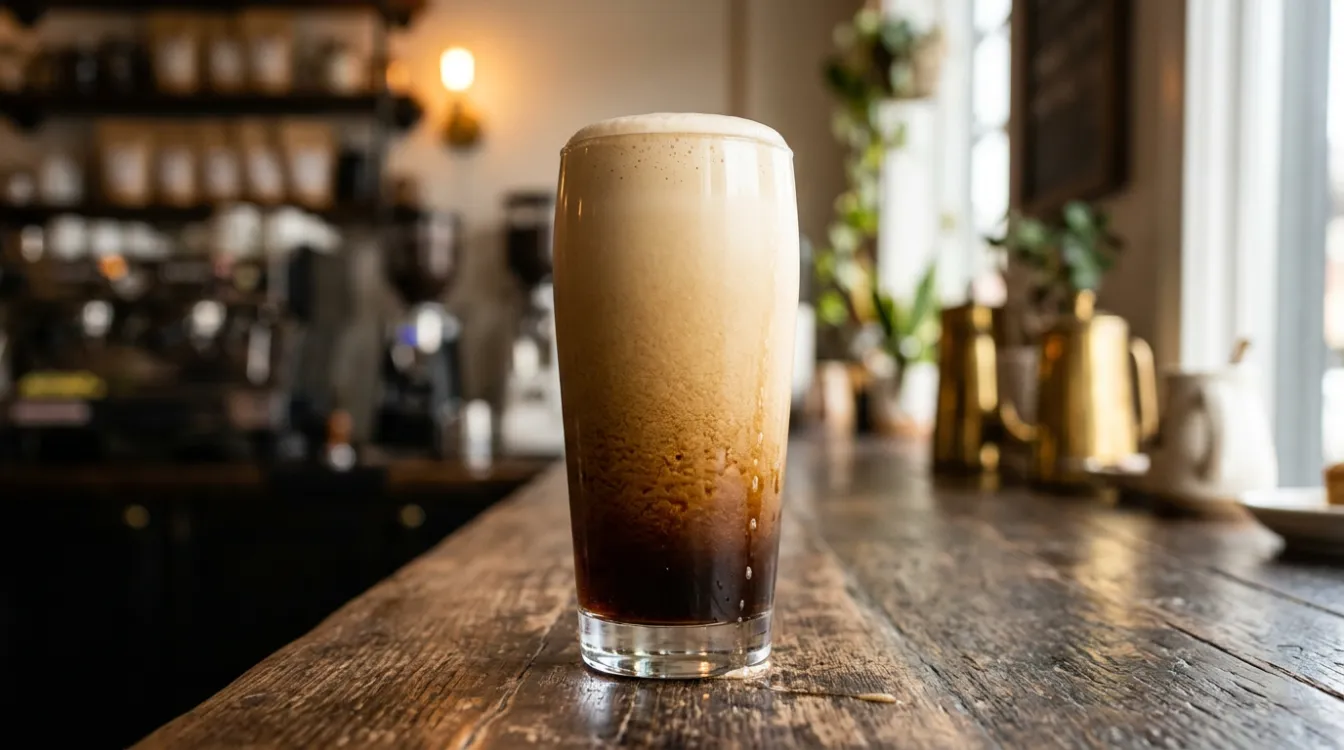
Nitro cold brew is cold brew coffee infused with nitrogen under pressure and poured through a stout faucet. Nitrogen dissolves poorly and doesn't form acid, so when it escapes it creates tiny, dense bubbles: a cascading pour, a thick creamy head and a velvety body. That texture makes coffee taste sweeter and less bitter without sugar or milk. Nitro has the same caffeine as its cold brew base, but because it's served without ice a glass can contain more. Cold temperatures, the right pressure and pure nitrogen are the keys to good nitro.
Why nitro cold brew feels so different
The first time I ordered a nitro cold brew, I thought the barista had poured me a stout by mistake. The glass filled with a swirling, cascading cloud that slowly settled into a dark drink topped with a thick, creamy head. It looked like beer and felt almost like a milkshake, yet it was just coffee and gas.
Nitro cold brew is cold brew coffee infused with nitrogen gas and served from a tap, much like a draft beer. The nitrogen changes the texture, appearance and even the perceived flavor of the coffee.
In this guide I'll explain what nitrogen actually does, why it creates that famous cascade, how temperature and pressure affect the result, how much caffeine nitro contains and how you can make or serve it at home.
Nitro has also become one of the easiest ways for coffee drinkers to taste how much texture matters. The same coffee can feel like a completely different drink once nitrogen is added, and that experience changed how I think about mouthfeel in every cup.
Nitro cold brew vs regular cold brew
| Feature | Regular cold brew | Nitro cold brew |
|---|---|---|
| Gas | None | Nitrogen (often with a little CO2) |
| Served | Over ice, poured | From a tap, usually without ice |
| Texture | Smooth, still | Velvety, creamy, silky |
| Appearance | Dark, clear | Cascading bubbles, creamy head |
| Perceived sweetness | Moderate | Higher |
| Perceived bitterness | Low | Lower still |
| Aroma | Gentle | Slightly enhanced at the head |
| Milk and sugar | Often added | Often enjoyed black |
What exactly is nitro cold brew?
Nitro cold brew starts as regular cold brew: coffee steeped in cold water for many hours, filtered and diluted to drinking strength. My guide to the science of cold brew explains how that base is made.
The difference comes at the end. The cold brew is placed in a keg, infused with nitrogen under pressure and served through a special stout faucet. As it leaves the tap, the dissolved gas forms millions of tiny bubbles that give nitro its texture and look.
Many cafés serve nitro without ice, because ice can knock out the bubbles and dilute the drink. It's usually served cold, straight from a refrigerated keg.

Why nitrogen, not carbon dioxide?
Nitrogen makes up about 78% of the air we breathe. It's inert, meaning it doesn't easily react with other substances, and it has no taste or smell of its own.
Nitrogen vs carbon dioxide
Most fizzy drinks, like soda and most beers, are carbonated with carbon dioxide (CO2). Nitro drinks use nitrogen instead, and the two gases behave very differently.
| Property | Carbon dioxide | Nitrogen |
|---|---|---|
| Solubility in liquid | High | Low |
| Bubble size | Larger | Very small |
| Mouthfeel | Prickly, fizzy | Smooth, creamy |
| Taste | Slightly acidic, sharp | Neutral |
| Typical drinks | Soda, most beer, sparkling water | Stout, nitro coffee |
CO2 dissolves easily in water and forms carbonic acid, which adds a sharp, tangy bite. That's great in soda but would make coffee taste sour and harsh.
Nitrogen barely dissolves in water and doesn't form an acid. Instead of a prickly fizz, it creates a soft, velvety texture. That's why it pairs so well with coffee's flavors.
Why low solubility matters
Because nitrogen doesn't dissolve easily, it has to be forced into the coffee under high pressure. When the pressure is released at the tap, the gas rushes out of solution, forming tiny, dense bubbles all at once. Those bubbles create the creamy head and silky body.
The science of tiny bubbles
Bubble size is the key to nitro's texture.
Nitrogen bubbles are far smaller than CO2 bubbles. Small bubbles have a large surface area relative to their volume, and they pack closely together. On the tongue, this dense foam feels smooth and creamy rather than fizzy.
Small bubbles are also more stable. They rise slowly and hold together, forming a thick, long-lasting head on top of the drink, similar to the head on a stout.
Mouthfeel and perception
The creamy texture tricks the brain. Many people perceive nitro cold brew as richer, sweeter and less bitter than the same coffee served still, even though no sugar or dairy has been added.
This happens because texture and taste are linked. A creamy, full mouthfeel is something we associate with milk, fat and sweetness, so the brain fills in the gaps. Nitro also slightly reduces the perception of acidity and bitterness, making the coffee taste rounder.
That's why many nitro drinkers who normally add milk and sugar find they enjoy nitro black.
Aroma at the surface
As bubbles rise and burst at the surface, they release aroma compounds into the air above the glass. This can make nitro smell more pronounced at the head, especially when you take the first sip through the foam.
The cascade effect explained
The cascade is the most striking thing about nitro coffee. Right after pouring, the glass fills with a swirling, cloudy mix of bubbles that seem to fall downward, before the drink settles into a dark body under a creamy head.
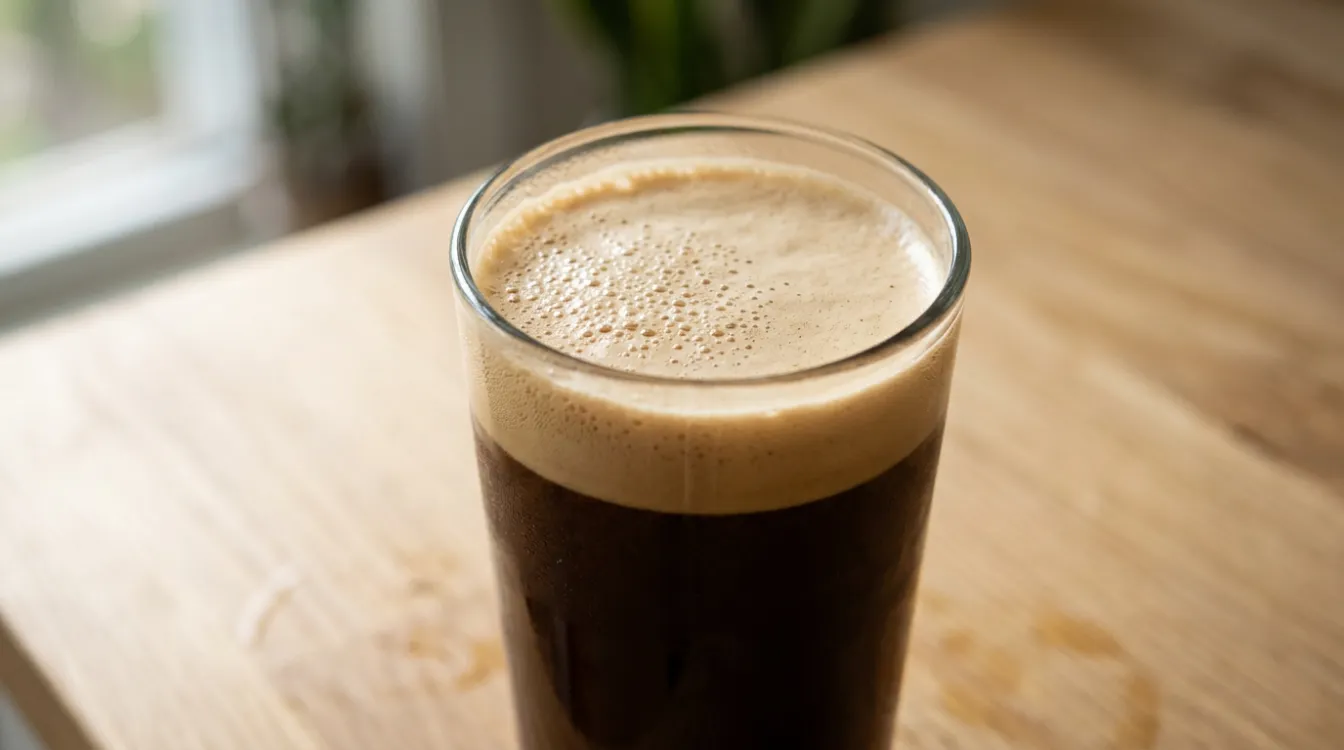
Why bubbles seem to sink
Bubbles always rise, so why do they appear to fall? The answer lies in the shape of the glass and the flow of liquid.
- Bubbles rise fastest in the centerIn the middle of the glass, bubbles rise quickly and drag liquid upward with them.
- Liquid flows down the sidesThat upward flow pushes liquid out to the edges, where it circulates back down along the walls.
- Tiny bubbles get carried alongNear the walls, the small bubbles are carried down by this current faster than they can rise.
- The illusion appearsFrom the outside, you mostly see bubbles near the glass wall, so it looks as if they're sinking.
This is the same phenomenon that creates the famous cascade in stout beers. Scientists have studied it in detail, and the glass shape strongly affects how dramatic it looks. Tall, slightly tapered glasses usually give the best show.
How long does it last?
The cascade usually settles within a minute or two. The head can last much longer, especially when the coffee is cold and the nitrogen is well infused.
Why temperature and pressure matter
Temperature has a big effect on nitro cold brew.
- Colder coffee holds gas better. Gases dissolve more easily in cold liquids, so very cold cold brew absorbs more nitrogen and keeps it longer.
- Warm coffee loses gas quickly. If the keg or lines warm up, the nitro goes flat and the head disappears fast.
- Pressure controls infusion. Higher pressure forces more gas into the liquid. Too little pressure gives a weak head; too much can cause excessive foaming.
- Time matters too. Nitrogen dissolves slowly. Kegs are often left to infuse for hours, or shaken, to reach full saturation.
Most cafés keep nitro kegs in a refrigerator at around fridge temperature and serve at high pressure, often far higher than a standard beer tap. This combination creates the thick, stable head customers expect.
Our tip: If nitro at home looks flat, check temperature first. A colder keg almost always pours better.
Nitro equipment: kegs, gas and taps
The basic setup
- A kegA stainless steel keg, often a corny keg (originally used for soda), holds the cold brew.
- A gas sourceNitrogen comes from a high-pressure cylinder or from a nitrogen generator that separates nitrogen from air.
- A regulatorControls the pressure of the gas entering the keg.
- A refrigerator or kegeratorKeeps the coffee cold.
- A stout faucetA special tap with a restrictor plate that forces the coffee through tiny holes, breaking the gas into fine bubbles.
Pure nitrogen vs beer gas
Some setups use pure nitrogen. Others use a blend called beer gas, typically around 70% nitrogen and 30% carbon dioxide, or similar mixes. A little CO2 can help carry flavor and stabilize the foam, but too much adds a sour, fizzy edge to coffee. Many coffee shops prefer pure or nearly pure nitrogen for the smoothest result.
Inline infusion
Some modern systems infuse nitrogen as the coffee flows through the line, instead of pre-charging a keg. These are popular in busy cafés because they can turn regular cold brew into nitro on demand and use less storage space.

The stout faucet
The faucet is just as important as the gas. Inside a stout faucet, a restrictor plate with tiny holes forces the coffee through at high speed. This sudden pressure change knocks nitrogen out of solution, creating dense, tiny bubbles. A standard beer faucet won't create the same creamy texture.
Can you make nitro cold brew at home?
Yes, and there are several ways to do it, from simple to elaborate.
Option 1: A nitro whipped cream dispenser
Some cream dispensers are designed for nitro coffee. You fill them with cold brew, add a small nitrogen (N2) cartridge, shake and dispense. It makes a few glasses at a time and is the easiest entry point.
Important: standard whipped cream chargers contain nitrous oxide (N2O), not nitrogen. N2O dissolves differently and makes coffee taste sweet and slightly odd, with a different texture. For true nitro, look for dedicated N2 cartridges and a dispenser designed for them.
Option 2: A home nitro keg
Small home nitro kegs, often around 2 liters, use N2 cartridges to pressurize the coffee and pour through a mini stout tap. They're great if you drink nitro regularly.
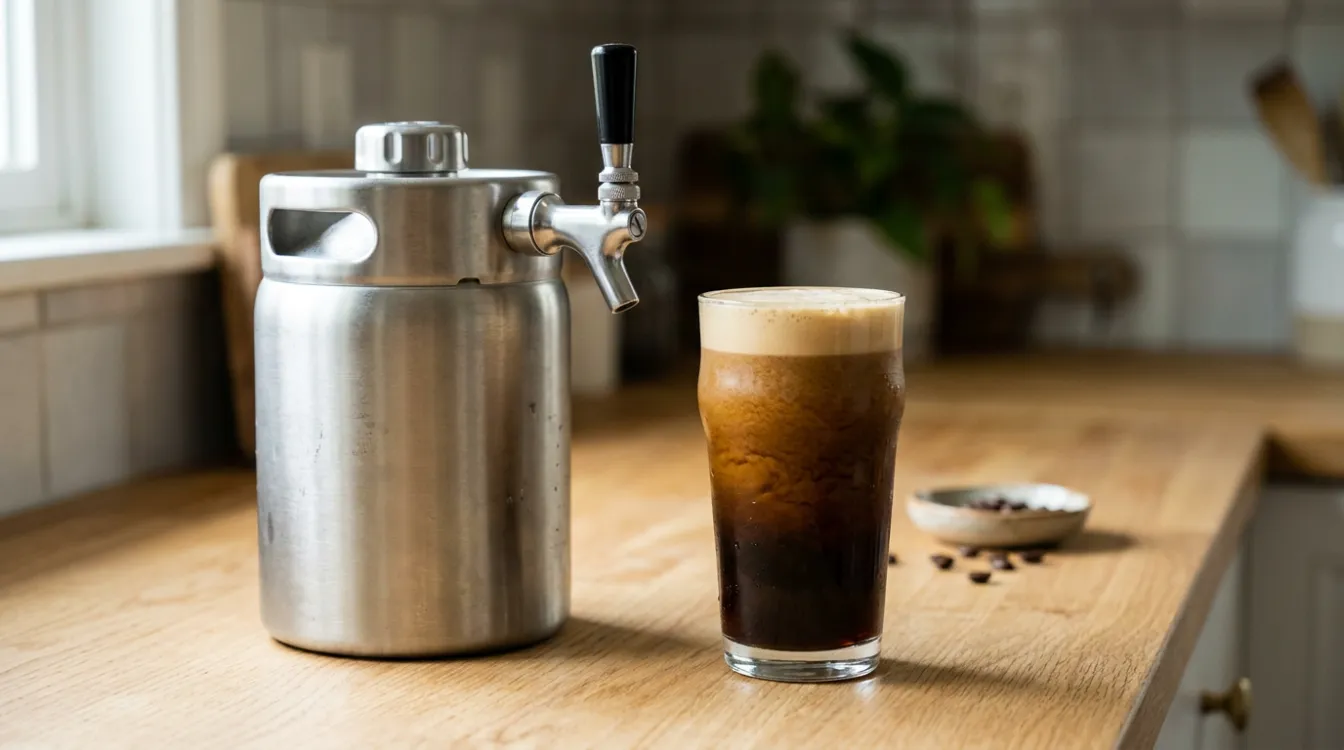
Option 3: A full kegerator setup
Coffee enthusiasts and home brewers sometimes build a full kegerator with a corny keg, nitrogen cylinder, regulator and stout faucet. It's the closest you'll get to café-quality nitro at home, but it's a bigger investment and needs space.
My home method
I use a small home keg. My routine:
- Brew a batch of cold brewSteep for about 14 to 16 hours, then filter twice for a clean brew.
- Dilute to drinking strengthNitro is usually served ready-to-drink, not as concentrate, so I dilute first.
- Chill thoroughlyThe colder the better. I chill the cold brew and keg in the fridge overnight.
- Fill and chargeI fill the keg, add a nitrogen cartridge and shake it well.
- RestI let it sit in the fridge for a few hours to infuse.
- Pour hardI open the tap fully and pour into a tall glass without ice.
Our tip: Don't overfill the keg. The gas needs headspace to mix with the coffee.
Which coffee works best for nitro?
Not every coffee shines as nitro. In my experience:
- Chocolatey, nutty coffees from Brazil, Colombia or Central America work beautifully. The creamy texture makes them taste like chocolate milk.
- Medium roasts usually give the best balance. Dark roasts can taste heavy and smoky; very light roasts may taste thin and sour.
- Fruity, floral coffees from Ethiopia or Kenya can be fascinating as nitro, but the creaminess sometimes mutes their delicate aromatics.
- Freshness matters. Old, stale beans make flat nitro, just as they make flat cold brew.
My guide to coffee growing regions and flavor explains how origin shapes taste.
How much caffeine is in nitro cold brew?
Nitrogen itself adds no caffeine. A nitro cold brew contains the same caffeine as the cold brew it's made from.
But there are two reasons nitro can feel stronger:
- Served without ice. A 16-ounce nitro is all coffee, while a 16-ounce iced cold brew is partly ice. So the nitro glass can contain more caffeine.
- Strong base recipes. Many cafés use a fairly strong cold brew base for nitro to keep flavor intense under the creamy texture.
Café nitro drinks often contain noticeably more caffeine than a regular brewed coffee of the same size. If you're sensitive, choose a smaller size. My guide on how much coffee is too much covers safe limits, and my article on caffeine myths clears up some common misconceptions.
How a typical café glass compares (relative caffeine, my rough estimate)
A short history of nitro coffee
Nitro coffee is a young drink. It emerged in the early 2010s, when a handful of specialty cafés and roasters in the United States began experimenting with serving cold brew on draft.
Several companies claim to have been first. Stumptown and Cuvée Coffee were among the early pioneers, and Stumptown helped popularize canned nitro. La Colombe launched a canned "draft latte" that used a widget-like technology to create foam when the can was opened.
Major chains soon followed, bringing nitro to a mass audience. Within a few years, nitro taps became a common sight in cafés, and nitro coffee appeared in cans and bottles in supermarkets.
The drink borrowed heavily from beer. The idea of nitrogenating a drink and pouring it through a stout faucet came directly from the brewing world, where nitro stouts like Guinness have used nitrogen for decades. The canned widget, a small plastic capsule that releases gas when the can opens, also came from beer.
How canned nitro works
Getting nitro into a can is harder than pouring it from a tap. Producers use several techniques:
- Liquid nitrogen dosing: a tiny drop of liquid nitrogen is added just before sealing. It turns to gas inside the can, pressurizing it.
- Widgets: a small capsule inside the can releases nitrogen when the can is opened, creating a burst of bubbles.
- High-pressure infusion: the coffee is infused with nitrogen before canning.
Many canned nitro drinks say "shake well" or "pour hard into a glass." The hard pour helps release the dissolved gas and create a head. Drinking straight from the can gives a much less creamy experience.
Canned nitro drinks are convenient, but in my experience they rarely match the texture of a fresh pour from a café tap.

How to enjoy nitro cold brew
- Black, no ice: the classic way. Taste it first before adding anything.
- Through the foam: sip through the head rather than using a straw. The foam carries aroma and creaminess. A straw skips it.
- With a splash of milk or cream: sweet cream nitro is popular, and it turns the drink into something close to a coffee float.
- Lightly sweetened: if you like it sweet, a small amount of simple syrup blends better than granulated sugar.
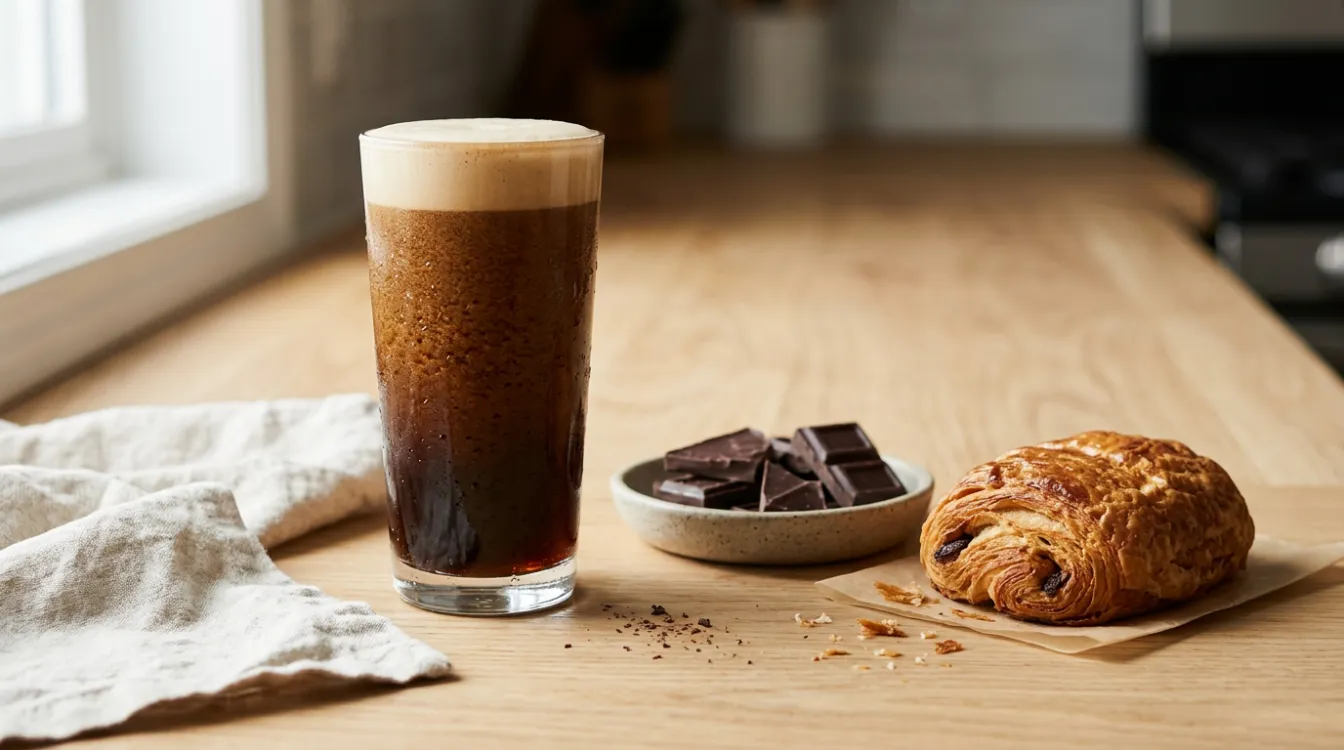
- With food: nitro pairs well with chocolate, pastries and rich desserts.
Nitro drinks beyond coffee
Nitro technology isn't limited to coffee. Cafés also serve nitro tea, nitro matcha and even nitro lemonade. Nitro tea, especially black tea or rooibos, can be surprisingly good, with a silky texture and sweet aroma.
Troubleshooting nitro cold brew
| Problem | Likely cause | Fix |
|---|---|---|
| Flat, no head | Coffee too warm, too little gas | Chill colder, check pressure |
| Too much foam | Pressure too high, warm lines | Lower pressure, chill lines |
| Sour, fizzy taste | Too much CO2 in gas mix | Use pure nitrogen |
| Weak flavor | Base cold brew too diluted | Brew a stronger base |
| No cascade | Wrong faucet, poor infusion | Use a stout faucet; let gas infuse longer |
| Sweet, odd flavor | Using N2O instead of N2 | Use proper nitrogen cartridges |
| Fades quickly | Glass warm or wide | Chill glass; use a tall glass |
Glassware and the perfect pour
The glass you use changes how nitro looks and feels.
- Tall, narrow glasses give the most dramatic cascade, because the bubbles have farther to travel and the flow along the walls is stronger.
- Slightly tapered glasses, like a classic stout or pint glass, help the head form and hold.
- Clean glass matters. Any oil or soap residue breaks bubbles and flattens the head. Rinse glasses in clean water and let them air-dry.
- Chilled glasses keep the coffee cold for longer, so the foam lasts.
For the pour itself, open the tap fully and let the coffee hit the bottom of the glass. Don't tilt the glass like you would with a carbonated beer. A hard, straight pour releases the gas and builds the head. Then wait a moment for the cascade to settle before taking the first sip.
Why no ice?
Ice gives bubbles something to cling to, which pops them early. It also dilutes the coffee and disrupts the cascade. That's why most cafés serve nitro "up," straight from a cold keg. If you want it colder, chill the glass rather than adding ice.
Nitro vs lattes and other creamy coffees
Nitro is often described as creamy, so how does it compare with drinks that really contain milk?
| Drink | Source of creaminess | Calories (black or plain) | Temperature |
|---|---|---|---|
| Nitro cold brew | Nitrogen bubbles | Very low | Cold |
| Iced latte | Milk | Moderate | Cold |
| Hot latte | Steamed milk foam | Moderate | Hot |
| Sweet cream nitro | Nitrogen plus sweetened cream | Higher | Cold |
| Frappé or blended drink | Ice, milk and often syrup | High | Very cold |
The appeal of black nitro is that it gives a creamy experience with almost no calories. If you love milk drinks, my guide to the science of steamed milk explains why milk foam feels so different from nitrogen foam: milk foam is stabilized by proteins and fat, while nitro foam is just gas trapped in coffee.
Is nitro sustainable?
Nitrogen itself is abundant and harmless; it's most of the air around us. The environmental questions are about how it's produced and delivered.
- Gas cylinders are filled at industrial plants, transported by truck and returned when empty. That adds transport and handling.
- Nitrogen generators produce nitrogen on site by filtering it from air. They need electricity but eliminate cylinder deliveries, which many busy cafés prefer.
- Home cartridges are small, single-use steel capsules. Many can be recycled as scrap steel once fully empty, but check your local rules.
- Kegs vs cans: reusable kegs create far less packaging waste than single-serve cans or bottles.
If sustainability matters to you, café nitro from a reusable keg, or a home keg with recycled cartridges, is the lower-waste choice compared with canned nitro.
What to look for when ordering nitro
After tasting nitro in many cafés, I look for a few signs of a good pour:
- A strong cascade that settles within a minute or two.
- A thick, tight head that lasts several minutes instead of disappearing almost instantly.
- A cold glass, without ice.
- A clean, sweet taste without sourness. A sour, fizzy edge often means too much CO2 or stale coffee.
- Knowledgeable staff who can tell you which coffee is on tap.
If the nitro is flat, it's fair to ask whether the keg is fresh or the lines are cold enough. Good cafés take nitro quality seriously.
Where nitro is going
Nitro has moved well beyond plain black coffee. Cafés now offer flavored nitro with vanilla or caramel, sweet cream nitro, nitro lattes made with oat milk, seasonal specials, and even nitro espresso drinks. Producers keep improving canning technology to bring the café texture home.
Home equipment has improved too. Compact home kegs and dispensers have made nitro accessible to anyone with a fridge and some cold brew. I expect nitro to keep spreading, both in cafés and in kitchens.
Common mistakes when making nitro at home
When I started making nitro at home, my first batches were disappointing. These are the mistakes I made, and what fixed them.
- Using concentrate. Nitro should be at drinking strength. Undiluted concentrate tastes harsh and overwhelming under the creamy texture.
- Pouring too soon. Nitrogen dissolves slowly. A keg charged and poured right away gives a thin head. Shaking well and resting for a few hours makes a big difference.
- Coffee not cold enough. Room-temperature or lightly chilled cold brew loses its gas almost immediately. Chill it thoroughly first.
- Overfilling the keg. Without headspace, the gas can't mix well with the coffee. Leave the space the manufacturer recommends.
- Using the wrong cartridges. Nitrous oxide chargers give a sweet, odd taste. Use nitrogen cartridges made for coffee.
- Skipping cleaning. Old coffee left in the tap or keg turns sour quickly. Rinse everything after each batch.
- Pouring gently. A slow, tilted pour won't release the gas. Open the tap fully and pour straight down.
Once I fixed these, my home nitro went from flat and fizzy to thick, creamy and surprisingly close to what I get in good cafés.
Tips for your first nitro cold brew
If you've never tried nitro, a few tips will help you enjoy it at its best.
- Order it black first. Taste the coffee and texture before adding anything.
- Watch the cascade. Give it a minute to settle; it's part of the fun.
- Skip the straw. Sip through the foam to get the full creamy effect and aroma.
- Drink it fairly soon. The head and texture fade as the drink warms up.
- Try it side by side. If the café also serves still cold brew, order a small of each to compare.
Most people are surprised by how sweet and smooth plain nitro tastes. If you usually take your coffee with milk and sugar, nitro might change your habit.
The chemistry: Henry's law in a glass
The behavior of nitrogen in coffee follows a principle chemists call Henry's law. In simple terms, the amount of gas that dissolves in a liquid depends on the pressure of that gas above the liquid. More pressure means more dissolved gas; less pressure means the gas escapes.
That's exactly what happens in a nitro system:
- Under pressure in the kegHigh nitrogen pressure forces gas into the cold brew, even though nitrogen dissolves poorly.
- Through the faucetThe restrictor plate creates a sudden pressure drop as the coffee is forced through tiny holes.
- In the glassAt normal air pressure, the coffee is suddenly "supersaturated" with nitrogen, holding more gas than it can keep.
- Bubbles formThe extra gas comes out of solution as countless tiny bubbles, creating the cascade and head.
Temperature fits into the same picture. Gases dissolve better in cold liquids, which is why cold coffee holds more nitrogen and why warm nitro goes flat so quickly.
The same principle explains why a bottle of soda fizzes when you open it, and why divers must rise slowly from deep water. It's one of those everyday pieces of chemistry that turns out to be hiding in a coffee glass.
How nitro coffee compares with nitro stout
Nitro coffee borrowed its technology from stout beer, and the two have a lot in common.
| Feature | Nitro stout | Nitro cold brew |
|---|---|---|
| Base | Beer | Cold brew coffee |
| Gas | Usually nitrogen and CO2 blend | Usually pure or mostly nitrogen |
| Alcohol | Yes | No |
| Flavor | Roasted malt, chocolate, coffee | Chocolate, nuts, fruit |
| Head | Thick, creamy | Thick, creamy |
| Serving temperature | Cool | Cold |
Stouts often use a blend with some CO2 because a little carbonation complements malt and hops. Coffee, with its natural acidity, generally tastes better with less CO2, so coffee systems lean toward pure nitrogen.
The roasted malt in stout tastes surprisingly coffee-like, which is part of why nitro coffee felt so familiar to many beer drinkers the first time they tried it.
My side-by-side tasting
To see how much the nitrogen really changes things, I poured the same cold brew three ways at home: still over ice, still without ice, and as nitro from my small keg. I served them blind to a few friends.
- Still, over ice: refreshing and clean, but everyone noticed it was the thinnest of the three, and it got weaker as the ice melted.
- Still, no ice: fuller and stronger, with a little more noticeable bitterness.
- Nitro: almost everyone picked it as the sweetest and creamiest, and several guessed there was milk in it. There wasn't.
The coffee was identical in all three glasses. The only differences were temperature, ice and gas. It was a great reminder of how much texture shapes the way we taste.
Why cafés love nitro
Nitro is popular with café owners for practical reasons as well as flavor.
- Speed: a nitro pour takes seconds. During a rush, it's one of the fastest drinks to serve.
- Consistency: a batch-brewed keg tastes the same from the first glass to the last.
- Theater: the cascade is eye-catching, and customers often order nitro after seeing someone else's glass.
- Shelf life: a sealed keg under nitrogen protects coffee from oxygen, helping it stay fresh longer than an open pitcher.
- Less waste: brewing in batches and pouring on demand reduces leftover coffee.
There are challenges too: equipment, gas supply, refrigeration, cleaning the lines and training staff. My article on why café coffee is so expensive explains how equipment and labor feed into the cost of every cup.
Why nitro feels colder
Many people say nitro tastes colder than still cold brew at the same temperature. The dense foam coats the tongue and carries aroma differently, and the creamy texture changes how we perceive temperature. It's another example of how strongly texture shapes our experience of a drink.
Cleaning, freshness and food safety
Because nitro cold brew is brewed without heat and served from lines and kegs, hygiene is essential.
- Clean kegs and lines regularly. Coffee oils and residue build up in lines and taps, causing off-flavors and potential bacterial growth. Cafés typically clean lines on a regular schedule with dedicated cleaners.
- Keep everything cold. Low temperatures slow bacterial growth and help keep the gas in solution.
- Use the coffee promptly. Even under nitrogen, cold brew slowly loses aroma. Most cafés aim to use a keg within several days to a week or two.
- Watch for warning signs. A sour, fermented or musty smell means the coffee should be discarded.
- Handle gas safely. Nitrogen cylinders are under very high pressure. Store them upright and secured, and use a proper regulator.
Nitrogen is also why kegged coffee can last longer than an open pitcher. Oxygen is one of coffee's main enemies, and a keg filled with nitrogen pushes oxygen out. My guide on how to store coffee beans explains how oxygen affects coffee before brewing, too.
Is nitro cold brew healthy?
Black nitro cold brew has essentially the same nutrition as black cold brew: very few calories, no sugar and no fat. The nitrogen adds nothing nutritionally; it simply escapes as you drink.
- Low in calories: black nitro is a great alternative to milky, sweet iced drinks for people who want creaminess without sugar.
- Caffeine: the main thing to watch, especially with large café servings.
- Gentle on the stomach: some people find cold brew and nitro easier to tolerate than hot coffee, though results vary.
- Sweet cream versions: once you add sweetened cream or syrups, calories and sugar rise quickly.
My guide to the health benefits of coffee covers what research says about coffee in general.
Myths about nitro cold brew
"Nitro has milk in it"
Plain nitro has no dairy. The creamy texture comes entirely from nitrogen bubbles.
"Nitrogen adds caffeine"
Nitrogen adds no caffeine. Nitro just tends to be served without ice, so a glass can contain more coffee.
"Nitro is carbonated"
It's nitrogenated, not carbonated. That's why it's creamy instead of fizzy and sour.
"Whipped cream chargers make nitro"
Most whipped cream chargers contain nitrous oxide, which behaves differently. Real nitro uses nitrogen.
"Nitro is sweetened"
Black nitro tastes sweeter, but that's a texture effect. There's no added sugar unless it's a flavored version.
The verdict
Nitro cold brew is a simple idea with clever science behind it. Nitrogen barely dissolves in coffee, so it's forced in under pressure and released through a stout faucet. The result is a cloud of tiny bubbles that creates the famous cascade, a thick creamy head and a velvety body.
That texture makes coffee taste sweeter, smoother and less bitter, without adding sugar or milk. Getting it right depends on good cold brew, cold temperatures, the right pressure and the right gas.
If you've never tried it, order a nitro black at a café and sip it through the foam. If you love it, a small home keg or nitro dispenser lets you make it yourself.
Nitro at home vs in a café
In my experience, café nitro usually wins on texture, because commercial systems run at higher pressure, colder temperatures and with properly designed stout faucets. Home kegs and dispensers come surprisingly close, though, especially if the coffee is very cold and well infused. For a weekend treat at home, a small keg is more than good enough, and it's a fun way to experiment with different coffees and see how each one changes under nitrogen.
Frequently asked questions
What is nitro cold brew?
Cold brew coffee infused with nitrogen and served from a tap, giving a creamy texture and cascading bubbles.
Does nitro cold brew have milk?
No. Plain nitro has no dairy; the creaminess comes from nitrogen bubbles.
Does nitro have more caffeine?
Nitrogen adds none, but nitro is served without ice, so a glass may contain more coffee.
Why does nitro taste sweeter?
The creamy texture reduces perceived bitterness and acidity, so sweetness stands out.
Why do the bubbles look like they sink?
Liquid flows down along the glass walls and carries tiny bubbles with it.
Can I make nitro at home?
Yes, with a nitro dispenser, a small home keg or a kegerator using nitrogen.
Can I use whipped cream chargers?
Most contain nitrous oxide, not nitrogen, so they give a different result.
Is nitro carbonated?
No. It's nitrogenated, which gives a creamy rather than fizzy texture.

- Michael Reynolds, home nitro testing and café tastings
- Nitro cold brew coffee, Wikipedia
- Henry's law, Wikipedia
- Nitrogen, Wikipedia
- Beer widget, Wikipedia
Related guides
The science of cold brew Iced coffee vs cold brew Caffeine myths debunkedWritten by Michael Reynolds. Last updated November 20, 2026.