Plant-Based Milks in Coffee Compared: Oat vs Almond vs Soy vs Coconut
Oat, almond, soy and coconut milk all behave differently in coffee. Some steam like whole milk, some curdle, some taste lovely but fight you at the steam wand. I tested barista versions of all four against whole milk, on a super-automatic and with a manual steam wand. Here's how each one foams, tastes and pours, and which to choose for your drink.
We choose products independently. We may earn a commission through links on this page; your price stays the same. Affiliate policy
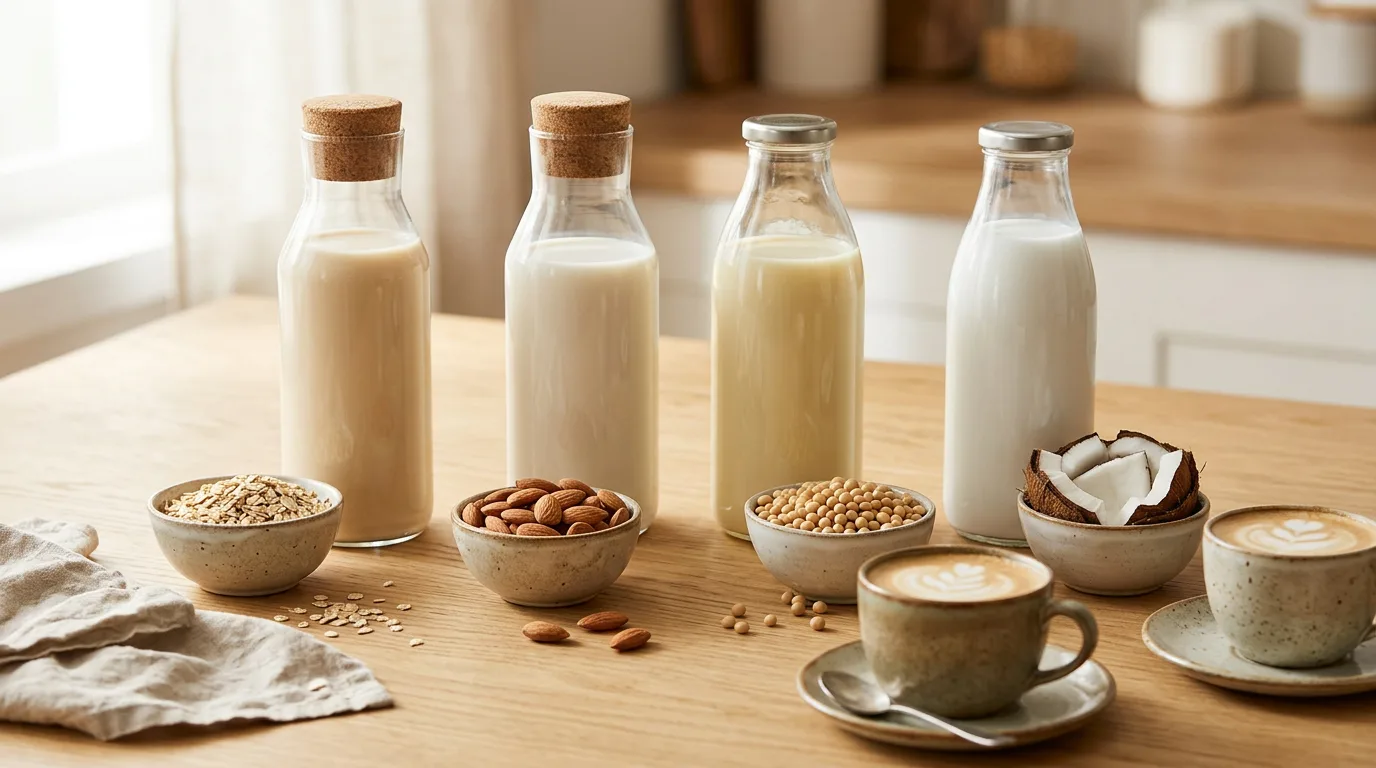
Barista oat milk is the best all-rounder: it steams most like whole milk and is the easiest for latte art. Barista almond milk tastes best to many people but is the hardest to steam and must stay cool. Barista soy milk holds layers best in super-automatic machines. Barista coconut milk is the lightest and most neutral. Always buy "barista" versions for coffee, steam plant milks a little cooler than dairy (about 130 to 140°F) and pair nutty milks with medium roasts. Regular plant milks rarely foam well and often curdle.
The rise of plant-based milks
Walk into almost any café today and you'll find at least two or three plant milks next to the dairy. A decade ago, soy was usually the only option.
People choose them for many reasons: lactose intolerance or dairy allergies, vegan diets, environmental concerns, or simply because they like the taste. In my household, half of the morning lattes are made with oat milk.
But plant milks aren't drop-in replacements for dairy. Their proteins, fats and sugars are completely different, which changes how they foam, how they react with hot, acidic coffee and how they taste.
That is why the same coffee can taste wonderful with one plant milk and disappointing with another, and why a technique that works perfectly with dairy can produce a bubbly mess with almond milk. Understanding the differences saves a lot of wasted cartons.
To find out how much those differences matter, I tested barista editions of almond, coconut, oat and soy milk side by side with whole cow's milk, using both a super-automatic machine and a traditional steam wand.
A short history of plant milks in coffee
Plant milks are much older than coffee shop menus suggest. Almond milk was a common ingredient in medieval European kitchens, and soy milk has been made in China for centuries.
In coffee, soy came first. Through the 1990s and 2000s, "soy latte" was often the only dairy-free option in cafés, and baristas learned to work around its tendency to curdle.
Almond and coconut followed in the 2010s as dairy-free diets grew. But the real turning point was oat milk. Swedish companies developed oat drinks designed for coffee, and barista oat milk spread through specialty cafés worldwide because it finally steamed and poured like dairy.
Today, many cafés sell as much plant milk as dairy, and manufacturers compete to make milks that foam, pour and taste better in coffee.
Plant milks at a glance
| Milk (barista) | Steaming | Latte art | Flavor | Body |
|---|---|---|---|---|
| Whole dairy (reference) | Easy | Excellent | Neutral, sweet | Rich |
| Oat | Easy | Very good | Mild cereal sweetness | Creamy |
| Almond | Hardest | Fair | Sweet, nutty | Medium |
| Soy | Good | Good | Beany, savory edge | Fairly rich |
| Coconut | Fair to good | Fair | Subtle, light | Thin |
How I tested
I used barista editions of each plant milk, because those are what most cafés and serious home baristas use, plus fresh whole milk as a reference.
On a super-automatic machine, I made layered latte macchiatos and watched how well each milk held its layers over five minutes. With a semi-automatic machine and a steam wand, I made 8-ounce lattes: a double shot of about 2 ounces and 6 ounces of milk steamed to around 140°F, and tried to pour latte art with each.
For each milk, I repeated every test at least three times on different days, using fresh cartons, so a single bad carton or a rushed steaming session would not skew the results. Where the results varied, I note it below.
I also paid attention to practical things that matter at home: how quickly each milk heated, how easy it was to clean from the wand and the frothing system, and how long an opened carton stayed fresh in the fridge.
I used a medium roast espresso blend for most tests and tried a lighter roast for flavor pairing. I tasted every drink hot and as it cooled, and asked family members for blind opinions on flavor.
The four main plant milks
Oat milk
Made from oats blended with water and usually treated with enzymes that break starches into natural sugars. That gives it a gentle sweetness and a creamy texture. Barista versions add a little oil and acidity regulators. It's become the café favorite for good reason.

Almond milk
Made from ground almonds and water. Naturally low in protein and fat, so standard versions foam poorly and taste thin. Barista versions add protein and stabilizers. Its flavor is the most distinctive: sweet and gently nutty.
Soy milk
Made from soaked, ground soybeans. It's the highest in protein of the four, close to dairy, which helps it foam well. Its flavor has a slight beany, savory edge that some love and some don't. It's also the most prone to curdling in acidic coffee.
Coconut milk
The drinking kind is much thinner than canned coconut milk for cooking. Barista versions are light, subtle and surprisingly neutral, without a strong tropical taste.
Other plant milks worth knowing
Beyond the big four, you'll find more and more options:
- Pea protein milk: high in protein and often very creamy; steams well in barista versions.
- Cashew milk: rich and nutty, though less common in barista form.
- Rice milk: naturally sweet but thin and hard to foam.
- Hemp and macadamia milks: distinctive flavors; results vary by brand.
- Blends: oat-coconut or almond-coconut blends aim to combine flavor and texture.
The same rules apply: choose barista versions, steam a little cooler, and taste with your usual coffee before committing.
The science of frothing: dairy vs plant
Milk foams because its proteins act as surfactants. They gather around air bubbles and form a thin, elastic film that keeps them from popping. Dairy has two excellent foaming proteins, caseins and whey, plus fat for creaminess.
Plant milks vary enormously. Soy and pea have plenty of protein. Almond, coconut and rice have very little. Oat has modest protein but contains soluble fibers called beta-glucans that thicken it.
Fat plays a role too. In dairy, milk fat gives a rich mouthfeel while still allowing proteins to build foam. Plant milks often get their creaminess from added oils instead, and the balance between oil and protein decides whether the foam is silky or loose.
Without enough protein, bubbles merge and pop quickly, so foam is big, loose and short-lived. Too much water and too little fat also make the milk taste thin against strong espresso.
My guide to the science of steamed milk explains how proteins, fat and temperature work in dairy.
Why barista editions matter
"Barista" versions of plant milks are specifically formulated for coffee. The difference is dramatic.
In my tests, regular almond milk produced a few big bubbles that collapsed within a minute and separated into watery streaks in the coffee. The barista version made usable foam and stayed smooth.
Standard plant milks are designed to be drunk cold or poured on cereal. Barista versions are designed to survive steam, heat and acidic espresso.
Our tip: Look for "barista," "for coffee" or "professional" on the carton. It's the single most important choice you'll make with plant milk.
What the additives actually do
Barista plant milks usually include a few extra ingredients. They sound technical, but each has a clear job:
- Added proteins (often pea or soy) help build stable foam.
- Plant oils such as sunflower or rapeseed add creaminess and body, similar to milk fat.
- Acidity regulators such as dipotassium phosphate buffer the milk against coffee's acidity, which helps prevent curdling.
- Stabilizers and emulsifiers like gellan gum or lecithin keep the milk smooth and the foam consistent.
- Calcium and vitamins are often added for nutrition.
If you prefer short ingredient lists, some barista milks keep additives minimal. They usually foam a little less, so it's a trade-off between simplicity and performance.
Two kinds of machines, two kinds of challenge
Super-automatic machines
Bean-to-cup machines froth milk automatically through a tube and small frothing chamber. You can't adjust technique, and many machines heat milk quite hot. That's a tough test for plant milks, which can curdle or thin out at high temperatures.
Semi-automatic machines with a steam wand
With a steam wand, you control how much air goes in and when to stop. That makes it much easier to keep plant milks in their comfort zone, and to adjust technique for each one.
My comparison of super-automatic vs semi-automatic machines explains these systems in more detail.
Electric frothers, handheld wands and pods
Not everyone uses an espresso machine's steam wand. Here's how plant milks behave with other frothing tools.
- Electric milk frothers (jug-style) heat and whisk milk automatically. Oat and soy work well; almond can overheat, so use a lower setting if your frother has one.
- Handheld battery frothers add air without heat. Warm the milk gently first, ideally to around 130°F, then froth. Great for cold foam too.
- French press frothing works surprisingly well: warm the milk, then pump the plunger quickly for 20 to 30 seconds.
- Capsule machine frothers are often tuned for dairy and run hot; barista oat milk is usually the safest choice.
Whatever the tool, the same principles hold: start cold, keep the temperature moderate and use barista milk.
Super-automatic results: layered latte macchiatos
A latte macchiato on a super-automatic is a great test. The machine pours frothed milk into a tall glass, pauses so the foam rises and the hot milk settles, then brews espresso into the glass. The espresso settles between the milk and foam, creating three layers.

Whole milk (the benchmark)
Three crisp layers: dense white milk at the bottom, a rich brown espresso band and a thick, stable foam cap. Over five minutes, the layers barely changed and the foam kept its volume. It drank beautifully, starting espresso-forward and finishing creamy.
Almond milk
The foam cap looked almost identical to dairy at first. Once the espresso went in, the middle band looked darker and more concentrated, and the hot almond milk layer rose higher in the glass. The foam held reasonably well over five minutes, but the espresso and milk integrated less.
Coconut milk
Lighter and thinner, with a smaller foam cap. Layers formed but were less defined and blurred faster over time.
Oat milk
Surprisingly, oat struggled more here than with a steam wand. At the machine's high frothing temperature, the foam was looser and the layers less sharp. Oat clearly prefers controlled, moderate heat.
Soy milk
The star of the super-automatic test. Soy formed clean, distinct layers, held them well over five minutes and didn't curdle under the machine's high steam temperatures.
Our tip: If your super-automatic lets you lower the milk temperature, do it for plant milks. Many curdle or thin out at the default setting.
Steam wand results: lattes and latte art
For each milk, I made an 8-ounce latte with a double shot and about 6 ounces of milk steamed to roughly 140°F, then tried to pour a heart or tulip.
Whole milk (the benchmark)
Easy to stretch, quick to form a smooth vortex, glossy microfoam and crisp latte art. Everything else is measured against this.
Almond milk
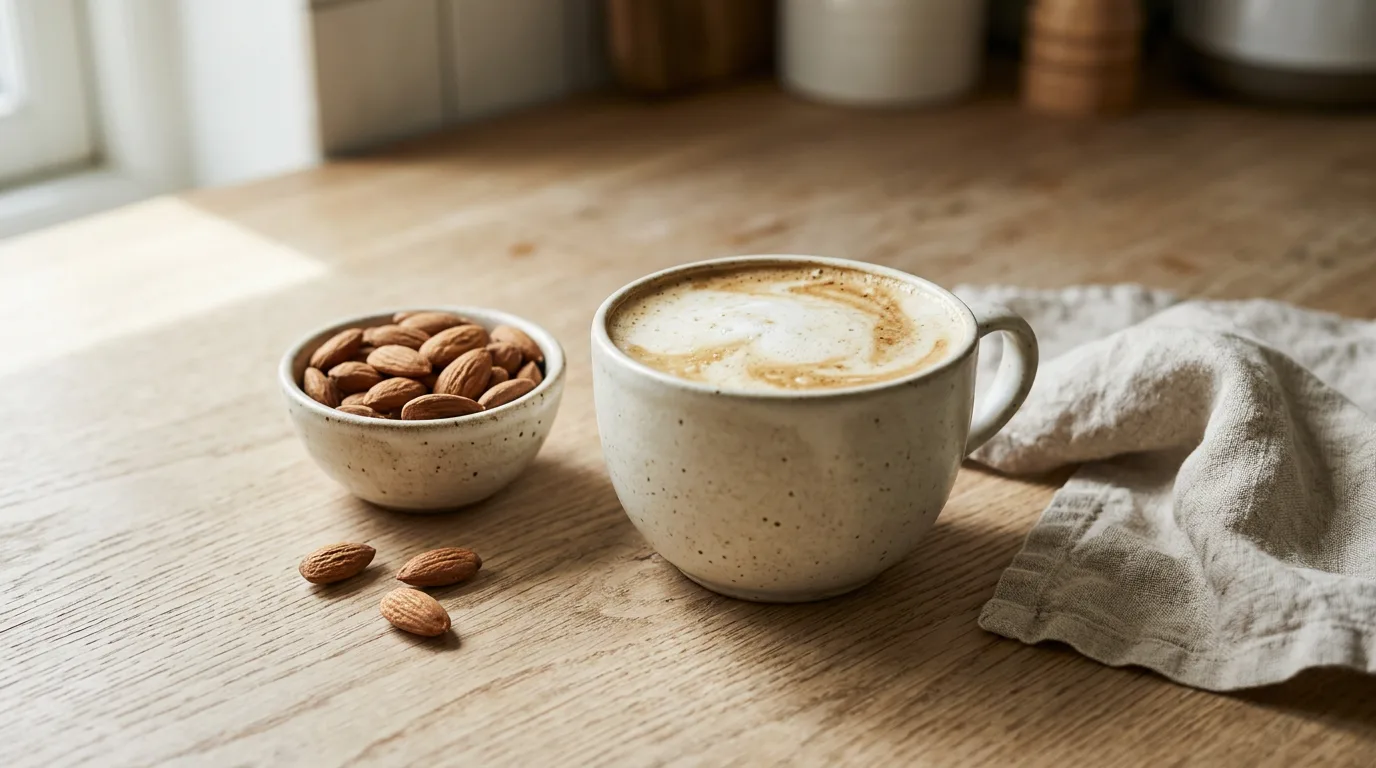
The trickiest. It foams quickly and tends to form large bubbles. The trick is minimal air: a very short stretch, then a vigorous whirlpool. It also needs a lower target temperature, around 130 to 135°F. With that technique I could pour a simple heart, but it took practice.
Coconut milk
Steamed easily and made decent foam, but its thin body made latte art soft and quick to fade. Pleasant, light drinks; not the best canvas.
Oat milk
The closest to dairy by far. It stretched smoothly, spun a clean vortex and poured crisp art. Manually steaming to a controlled 140°F avoided the looseness I saw in the super-automatic. This is the one I'd hand to a beginner.
Soy milk
Foamed well and held its texture, with art nearly as good as oat. The main risk was curdling with a brighter espresso, which I'll cover below.

How to steam plant milks
The basic technique is the same as for dairy, with a few important adjustments.
- Shake the carton wellPlant milks separate in the fridge.
- Start very coldPlant milks heat and foam quickly; cold milk gives you more time.
- Stretch lessAdd air briefly. Plant milks expand fast, and almond especially forms big bubbles.
- Texture vigorouslyA strong vortex breaks bubbles into microfoam.
- Stop earlierAim for 130 to 140°F; stop a second or two before the pitcher feels too hot.
- Pour quicklyPlant foam separates faster than dairy foam. Swirl and pour straight away.
Our tip: Pour the espresso into the cup first and let it cool for a few seconds while you steam. A slightly cooler shot reduces curdling with soy and almond.
Latte art with plant milk
Pouring art with plant milk is absolutely possible, but it behaves a little differently from dairy.
- Foam separates faster, so pour within a few seconds of steaming.
- Designs spread more, especially with thinner milks. Pour slightly slower and closer to the surface.
- Crema matters more. A fresh, well-extracted shot gives a better canvas.
- Simple shapes first. Hearts and tulips are much easier than detailed rosettas.
With barista oat milk, my art was almost as crisp as with whole milk. With soy it was close behind. Almond and coconut gave softer, blurrier shapes, but still recognizable hearts with practice.
If you're learning latte art, practice with oat milk. Its forgiving texture builds confidence before you try trickier milks.
Flavor and mouthfeel
Taste and texture are what really decide which milk you'll keep buying. Flavor also depends on your coffee and the brand, so treat this as a guide.
Whole milk
Neutral but supportive. It lets espresso flavors shine, and lactose adds a clean sweetness that balances bitterness. Rich, creamy and full-bodied.
Almond milk
The flavor favorite for many palates, including several in my family, despite being the hardest to steam. Its sweetness is slightly more pronounced than dairy without being cloying, and its gentle nuttiness pairs beautifully with medium roasts that have honey, caramel or nutty notes.
The catch: almond milk is very heat-sensitive. Past about 140°F, it quickly develops a scorched bitterness. Keep it at 130 to 135°F.
Coconut milk
Surprisingly subtle. Rather than a strong tropical flavor, barista coconut milk stays fairly neutral with a touch of sweetness. It has the thinnest body of the four.

Oat milk
Creamy, round and mildly sweet, with a soft cereal note. It blends easily with almost any coffee, which is why it's such a safe choice.
Soy milk
Full-bodied with a slightly savory, beany edge. It works well with darker, chocolatey roasts, which cover its flavor nicely.
My overall scores (barista versions)
What my family preferred in blind tastings
I served unlabeled lattes made with each milk to four family members and asked them to rank them.
Almond came out on top for flavor with three of the four, who loved its sweetness and nuttiness. Oat was a close second and was everyone's favorite for texture. Whole milk ranked in the middle, praised as "classic" and "creamy."
Soy split opinions: one person loved its richness, two noticed a beany note. Coconut was described as "light" and "easy," but nobody's first choice in a hot latte. Interestingly, two people preferred it in an iced coffee we tried later.
It's a small, unscientific test, but it matches what many baristas say: almond often wins on taste, oat wins on overall drink quality.
Why plant milk curdles, and how to stop it
Curdling happens when proteins in the milk clump together. Two things trigger it: acidity and heat. Coffee brings both.
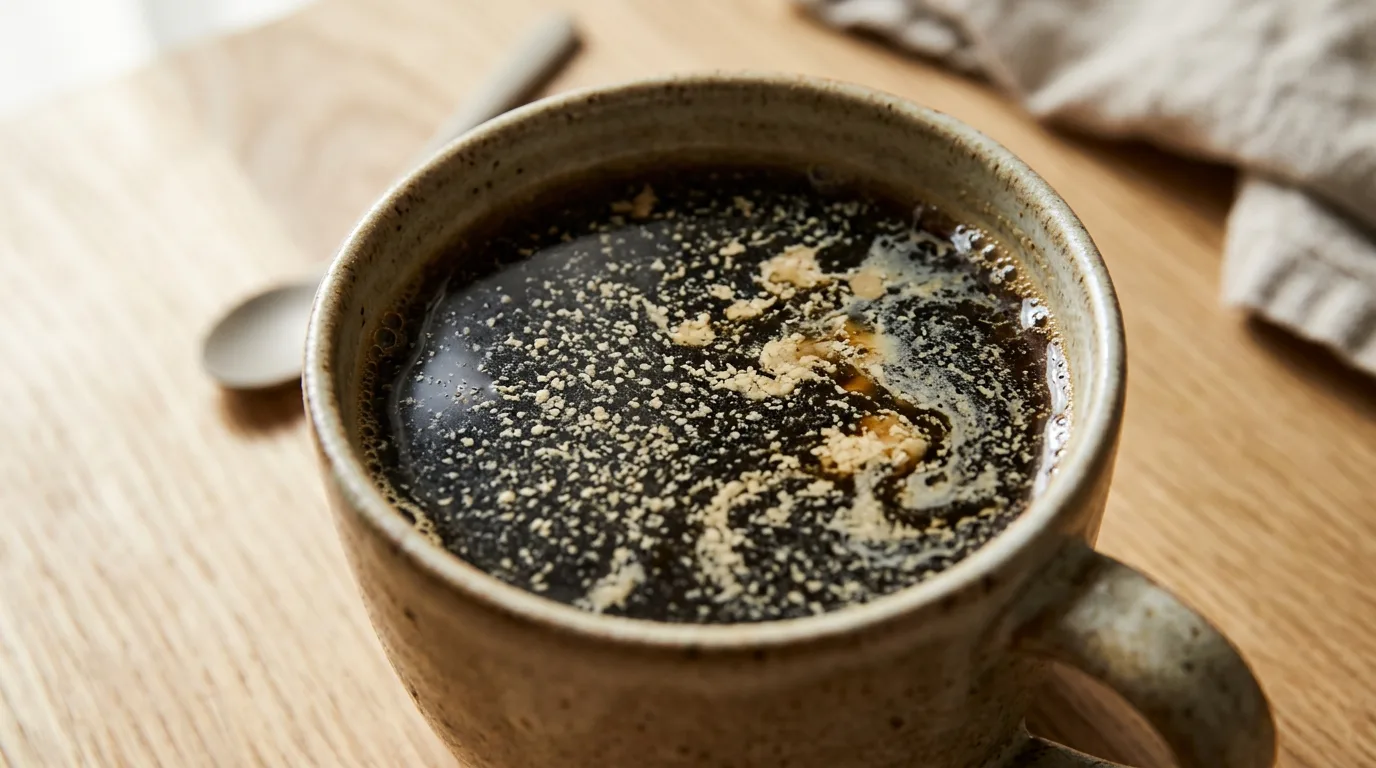
Soy is the most prone because of its high protein. Almond can also split, especially with bright, acidic coffee. Oat and coconut rarely curdle.
- Use barista versions with acidity regulators.
- Keep temperatures moderate, around 130 to 140°F.
- Let very hot coffee cool slightly before adding cold plant milk.
- Pour coffee into milk rather than milk into coffee, which tempers the change in temperature and acidity.
- Choose darker, less acidic roasts with soy and almond.
- Avoid big temperature shocks, such as very cold milk into very hot black coffee.
Curdled milk is safe to drink; it just looks and feels unpleasant.
Water hardness plays a small role too. Very hard water can make coffee interact differently with plant proteins, and some baristas notice more curdling in areas with mineral-heavy water. If you have tried everything else, filtered water for your espresso is worth testing.
Finally, freshness matters. A carton that has been open for many days is more likely to split than a fresh one, even with the same coffee and temperature.
Temperature guide for plant milks
| Milk | Target temperature | Main risk if too hot |
|---|---|---|
| Whole dairy | 135-145°F | Flat, eggy taste |
| Oat | About 140°F | Loose foam, curdling |
| Almond | 130-135°F | Scorched bitterness |
| Soy | 130-140°F | Curdling |
| Coconut | 130-140°F | Thin, separating foam |
Use the hand method: when the pitcher becomes too hot to hold, plant milks are usually close to done. Stop a second or two earlier than you would with dairy.
Matching milk to coffee
- Almond loves medium roasts with nutty, caramel or honey notes.
- Oat works with almost anything, and is lovely with chocolatey blends.
- Soy pairs best with darker, lower-acid roasts that hide its beany note and reduce curdling.
- Coconut suits bright, fruity coffees, where its light body lets the coffee shine.
Very acidic light roasts are the hardest partner for plant milks. If you love them, try oat or coconut first. My guide to acidity and bitterness in coffee explains why acidity matters.
Best plant milk for each drink
Iced and cold drinks
Cold drinks are much easier on plant milks. Without heat, curdling and scorching mostly disappear.
Oat milk makes rich, creamy iced lattes. Almond milk shines here, because you can enjoy its flavor without worrying about scorching. Coconut milk adds a refreshing lightness to iced coffee and cold brew.
For cold foam, barista oat and soy foam best with a handheld frother. My guide to iced coffee vs cold brew covers iced drinks in more detail.
A quick nutrition overview
Plant milks differ a lot nutritionally, and barista versions often differ from regular ones. Always check the label of the brand you buy, but here's the general picture.
- Soy: highest in protein of the four, closest to dairy.
- Oat: moderate calories, low protein, with natural sugars from processed oat starch.
- Almond: usually lowest in calories and protein; unsweetened versions have very little sugar.
- Coconut: low protein, with fat from coconut.
Many barista milks are fortified with calcium and vitamins. Some contain added sugar or oil to improve foam and taste, so unsweetened versions are worth looking for if you want to keep sugar low.
In a single latte, the differences are fairly small. They matter more if you drink several milk-based coffees a day.
Allergies and intolerances
If you choose plant milk for health reasons, check labels carefully.
- Nut allergies: almond and other nut milks are obviously off-limits, and some oat milks are made in facilities that also process nuts.
- Soy allergies: some barista milks, including some oat and almond versions, contain added soy protein or lecithin.
- Gluten: oats are naturally gluten-free but often cross-contaminated; look for certified gluten-free oat milk if needed.
- Lactose intolerance: all plant milks are lactose-free. Lactose-free dairy milk is another option that steams very well.
When ordering in a café, mention any allergy clearly, as pitchers and steam wands are often shared between milks.
Cost per cup
Barista plant milks usually cost more than regular dairy and more than standard plant milks. Cafés often add a small surcharge for them.
At home, the difference per drink is modest, since a latte uses only about 6 ounces of milk. The bigger cost is waste: an opened carton that goes off before you finish it. Buying smaller cartons, or choosing one milk for the whole household, keeps waste down.
Sustainability
Many people switch to plant milks partly for environmental reasons. In general, plant milks use less land and produce fewer emissions than dairy, but they differ from each other.
- Oat generally has a modest footprint and grows well in cooler climates.
- Soy is efficient, especially when grown for food rather than animal feed.
- Almond is often criticized for high water use in the regions where most almonds are grown.
- Coconut depends on tropical supply chains and transport.
If water use matters to you, it's worth weighing almond's footprint against its flavor when choosing a daily milk.
Ordering plant milk in cafés
Cafés usually use barista versions and steam them for you, but a few tips help you get a better drink.
- Ask which brand they use. Barista oat milks vary a lot between brands.
- Order oat for flat whites and lattes, where texture matters most.
- Ask for almond "not too hot" if you want to avoid scorched bitterness.
- Choose the house blend with soy, as darker blends curdle it less than bright single origins.
- Try iced drinks if you want almond or coconut at their best.
Most cafés charge a little extra for plant milk, partly because barista versions cost more than regular milk.
Three plant milk drinks to try at home
Oat milk flat white
Pull a double ristretto or short double shot. Steam about 4 ounces of barista oat milk to 140°F with a very short stretch, so the foam is thin and glossy. Pour into a 5- or 6-ounce cup. Creamy, sweet and coffee-forward.
Almond milk honey latte
Stir a small teaspoon of honey into a double shot of medium roast espresso. Steam 6 ounces of barista almond milk to 130 to 135°F with minimal air and a strong vortex. Pour gently. The honey and almond bring out caramel and nutty notes in the coffee.
Iced coconut cold brew
Fill a glass with ice, add cold brew concentrate and top with barista coconut milk. Stir and taste. Light, refreshing and great with fruity coffees.
Each recipe plays to the strength of its milk: oat's texture, almond's flavor and coconut's lightness.
Living with each milk for a week
Beyond one-off tests, I spent a week using each milk for all my milk drinks. Daily use reveals things a single latte doesn't.
Oat week was the easiest. Every drink worked, latte art was reliable and nobody in the house complained. The only downside was that very light roasts tasted a bit muted under its creaminess.
Almond week was the most delicious and the most frustrating. When I got the technique right, the lattes were wonderful. When I rushed, the milk got too hot or too bubbly, and the drink suffered noticeably.
Soy week was solid. Cappuccinos with thick foam were excellent. I had two curdled cups with a bright Kenyan coffee, and none with the house blend.
Coconut week felt lighter. Hot drinks were pleasant but a bit thin for my taste, while iced coffees were the best of the whole month.
By the end, I understood why so many cafés make oat their default plant milk: it simply removes friction from every step.
Plant milk vs lactose-free dairy
If your reason for avoiding dairy is lactose intolerance rather than a vegan diet or allergy, lactose-free cow's milk is worth considering.
It's regular milk with the lactose broken down into simpler sugars, so it steams, foams and pours almost exactly like normal milk. It also tastes slightly sweeter.
For latte art and classic café texture, it beats every plant milk. For people avoiding animal products or with a milk protein allergy, of course, it isn't an option.
Giving each milk a fair chance
If you try a plant milk once and dislike it, give it a second chance with adjusted technique. Many people write off almond or soy after a single scorched or curdled latte, when a cooler temperature or a different coffee would have made a lovely drink.
Change one thing at a time: first the temperature, then the amount of air, then the coffee. Within a few cups, you will know whether the milk really does not suit you or simply needed a gentler hand.
Which plant milk should you choose?
Best overall for latte art and ease: oat
Barista oat milk mimics the stretching and pouring of whole milk most closely. Keep it around 140°F to avoid curdling.
Best for flavor and sweetness: almond
Barista almond milk gives a rich, subtly nutty sweetness that enhances espresso. It needs minimal aeration, a vigorous whirlpool and a lower target of 130 to 135°F to avoid bitterness and large bubbles.
Best for super-automatic layered drinks: soy
Barista soy milk holds clean layers in a latte macchiato and copes with high automated steam temperatures without curdling.
Best for a light, neutral drink: coconut
Barista coconut milk offers a thin, light body, minimal flavor interference and decent manual frothing.
If you share a kitchen with people who prefer different milks, consider keeping two: oat as the everyday choice for texture, and almond or coconut for the drinks where flavor or lightness matters most.
Can you use homemade plant milk?
Homemade oat or almond milk can taste lovely, but it rarely steams well.
Without added proteins, oils and stabilizers, homemade milks foam poorly and separate quickly when heated. Homemade oat milk can also turn slimy when warmed, because of its starches.
For hot milk drinks, a barista carton is the practical choice. For iced coffee or cold brew, homemade milk can be a fresh, simple option.
Buying and storing plant milk
- Shelf-stable cartons keep for months unopened; refrigerate after opening.
- Use within about a week of opening, or as the carton says.
- Keep it cold. Warm plant milk foams poorly.
- Shake before each pour. Ingredients settle quickly.
- Stick to one brand once you find one you like; technique varies between brands.
Plant milk glossary
Common mistakes
- Using regular plant milk. It rarely foams and often splits.
- Steaming too hot. Plant milks scorch, thin out or curdle above about 140°F.
- Adding too much air. Especially with almond, which forms big bubbles quickly.
- Shaking the carton too little. Plant milks separate; shake well before pouring.
- Using old, opened cartons. Most should be used within a week or so of opening.
- Pairing very acidic coffee with soy. A recipe for curdling.
Myths
"Plant milk can't make latte art"
Barista oat and soy milk make very good latte art with the right technique.
"Coconut milk makes coffee taste like coconut"
Barista coconut milk is surprisingly neutral.
"Curdled milk is spoiled"
Usually it's just a reaction to heat and acidity, not spoilage.
"All plant milks behave the same"
They differ hugely in protein, fat, flavor and heat tolerance.
The verdict
If you want one plant milk that does everything well, choose barista oat milk. It steams like dairy, pours great latte art and tastes good with almost any coffee.
If flavor matters most, try barista almond milk, steamed cool and gently. If you use a super-automatic, soy holds up best. If you like light, delicate drinks, coconut is a pleasant surprise.
It is also worth keeping an open mind. Plant milk formulas improve every year, and a milk that disappointed you a few years ago may now be excellent. Trying a new barista brand every so often is an easy way to find a better match for your coffee.
Whichever you choose, buy the barista version, keep it cooler than dairy and match it to your coffee. Those three habits make the biggest difference.
Frequently asked questions
Which plant milk is best for coffee?
Barista oat milk is the best all-rounder for steaming and latte art.
Which plant milk tastes best in coffee?
Many people prefer barista almond milk for its sweet, nutty flavor.
Why does soy milk curdle in coffee?
Its high protein clumps when it meets heat and acidity. Barista versions and cooler, less acidic coffee help.
What temperature should I steam oat milk to?
About 140°F (60°C).
Can I use regular plant milk in a latte?
You can, but it usually foams poorly and may separate. Barista versions work far better.
Which plant milk works best in a super-automatic?
Barista soy milk held the cleanest layers in my tests.
Does coconut milk taste strongly of coconut?
Barista coconut milk is quite neutral, with only a hint of sweetness.
Is curdled plant milk safe?
Yes, it's generally just a reaction to heat and acidity, not spoilage.

- Michael Reynolds, side-by-side tests on super-automatic and semi-automatic machines
- Plant milk, Wikipedia
- Oat milk, Wikipedia
- Soy milk, Wikipedia
- Almond milk, Wikipedia
Related guides
The science of steamed milk Cappuccino vs latte vs flat white Super-automatic vs semi-automaticWritten by Michael Reynolds. Last updated November 20, 2026.