Best Espresso Machines with a Built-In Grinder
I used 18 espresso machines with built-in grinders as my everyday coffee maker for four weeks each, from machines where you tamp and steam by hand to ones that do everything at one touch. Five stood out. For most people, I recommend the Ninja Luxe Café Pro: it grinds by weight, tamps for you and steams milk hands-free, so you get real espresso from a portafilter without the learning curve.

Michael Reynolds
Buying Guide
18 models · 5 picks
4 weeks per machine
I choose products independently, based on hands-on testing. We may earn a commission through links on this page; your price stays the same. Affiliate policy
Jargon helpNew to espresso machines? Tap any dotted term to see what it means.
In this guide
The short answer
- Best overall: the Ninja Luxe Café Pro. Weight-based dosing, assisted tamping and hands-free milk make it the easiest way to great portafilter espresso.
- Best for hands-on control: the Breville Barista Pro. Ready in about three seconds, with 30 grind settings, a shot timer and a powerful steam wand.
- Best one-touch machine with a grinder: the De’Longhi Rivelia. Two swappable bean hoppers, four profiles and a milk carafe.
- Best classic: the Breville Barista Express. A conical burr grinder, pressure gauge and steam wand that rewards a little practice.
- Least effort: the Philips 3200. Five one-touch drinks and a tubeless milk jug that rinses clean in seconds.
Our picks at a glance
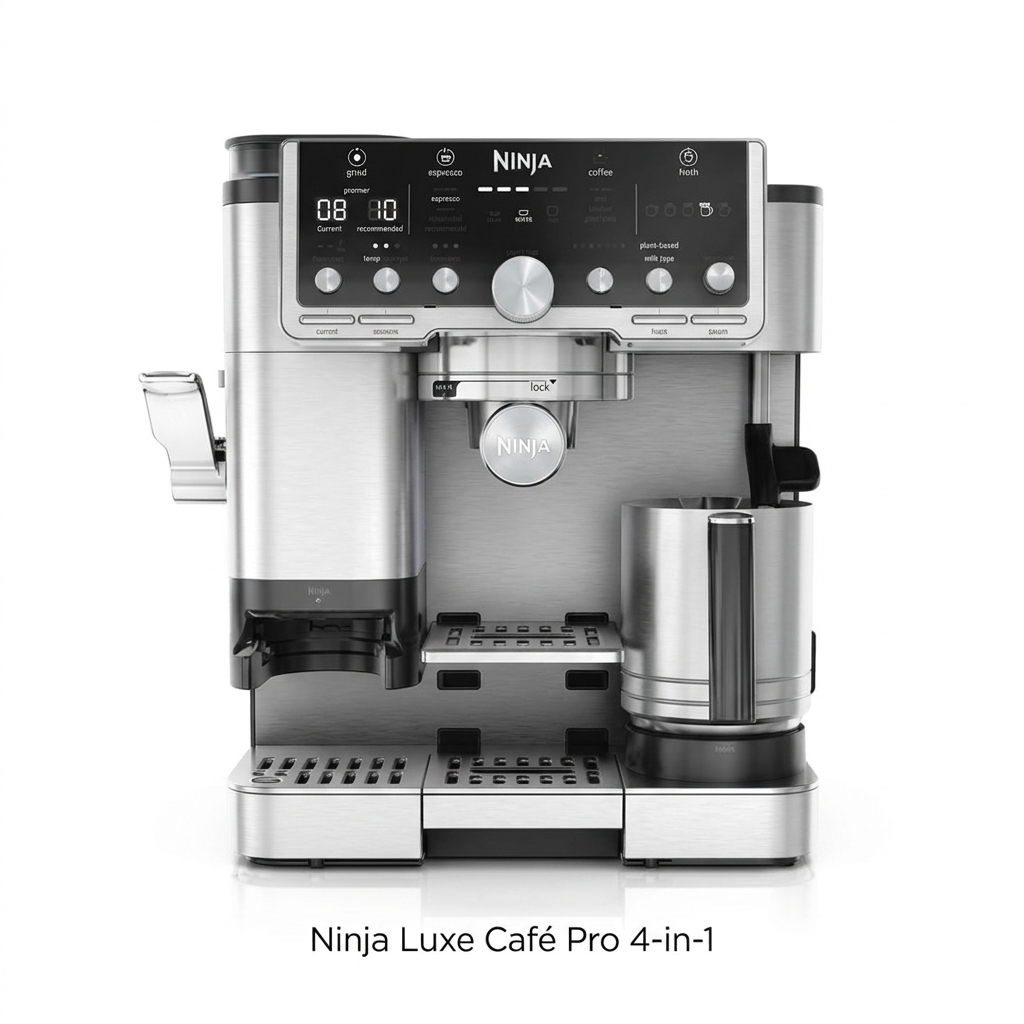
Ninja Luxe Café Pro
Grinds by weight, tamps for you and froths milk hands-free, with real hot water and cold brew on the side.
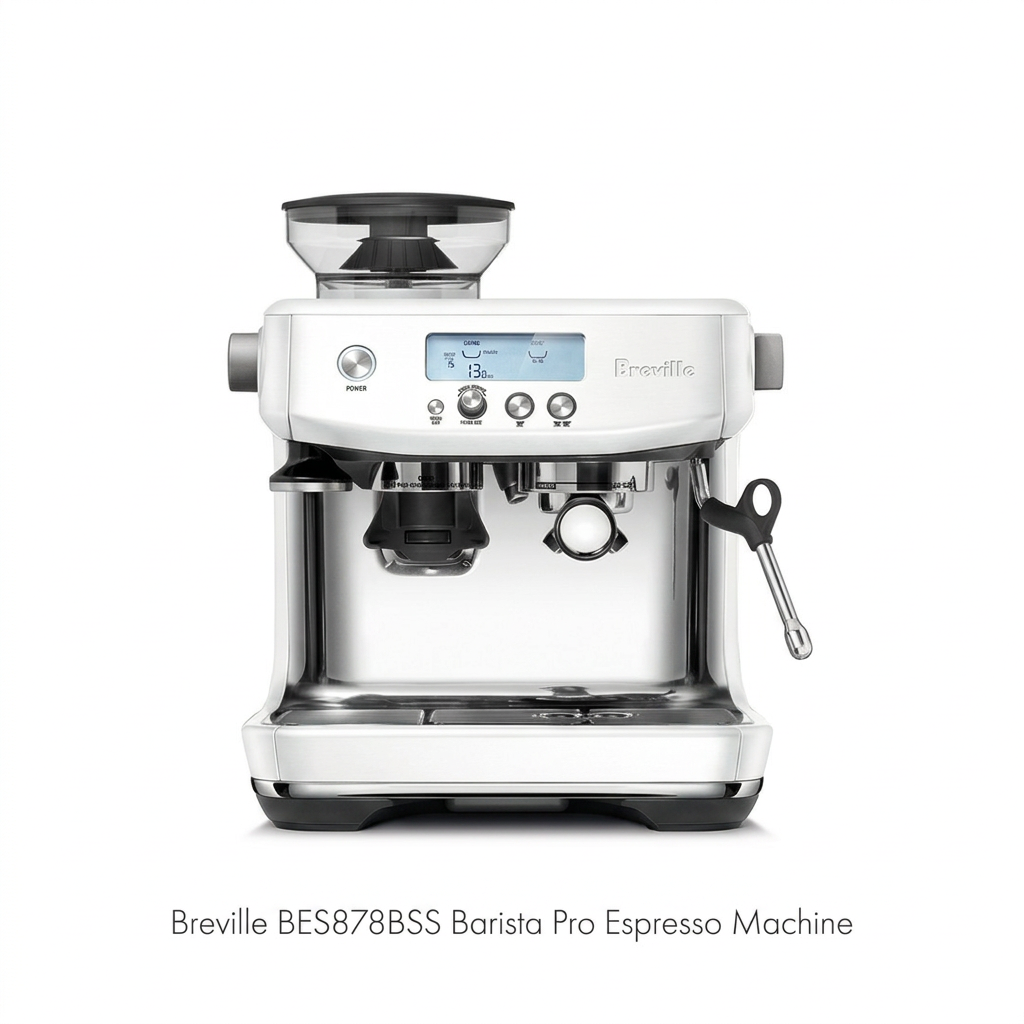
Breville Barista Pro
Ready in about three seconds, with 30 grind settings, a shot clock on the screen and a powerful four-hole steam tip.
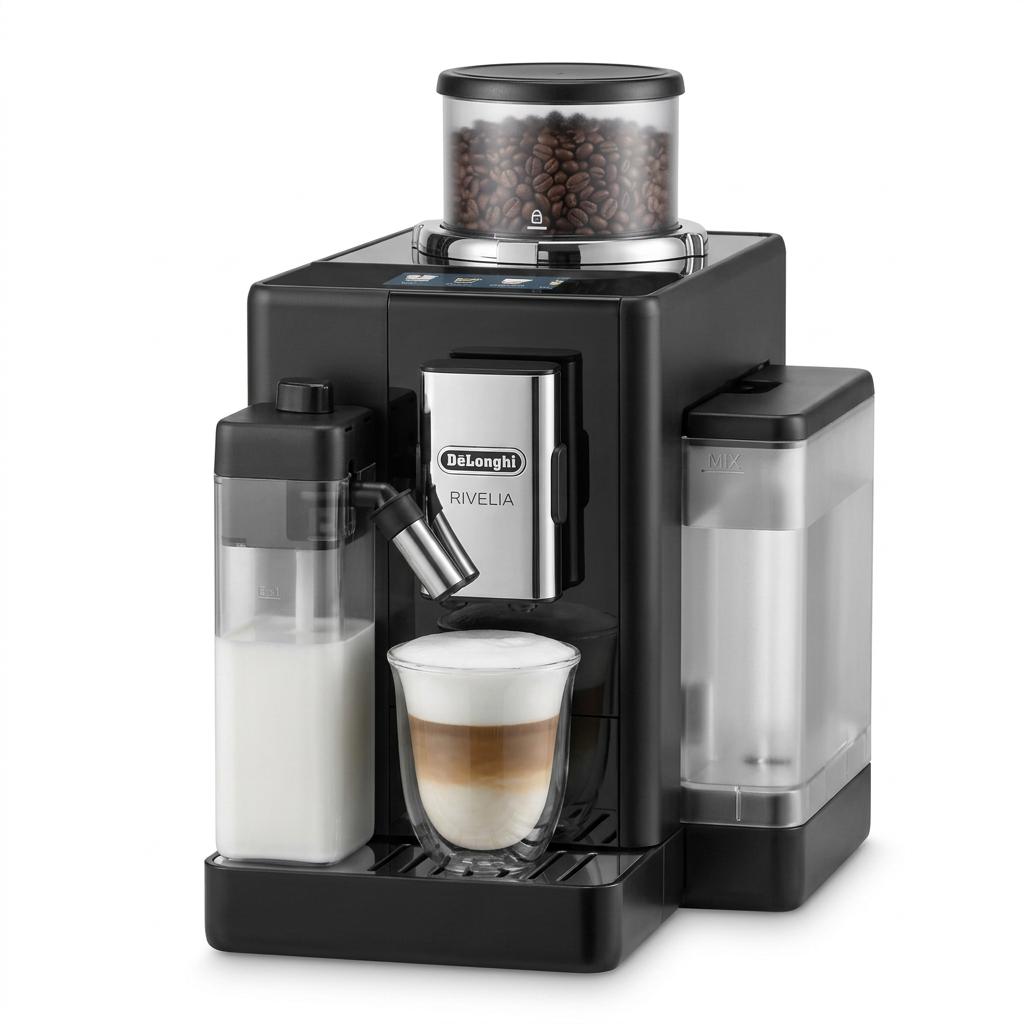
De'Longhi Rivelia
A super-automatic with two swappable bean hoppers, four profiles and a one-touch milk carafe.
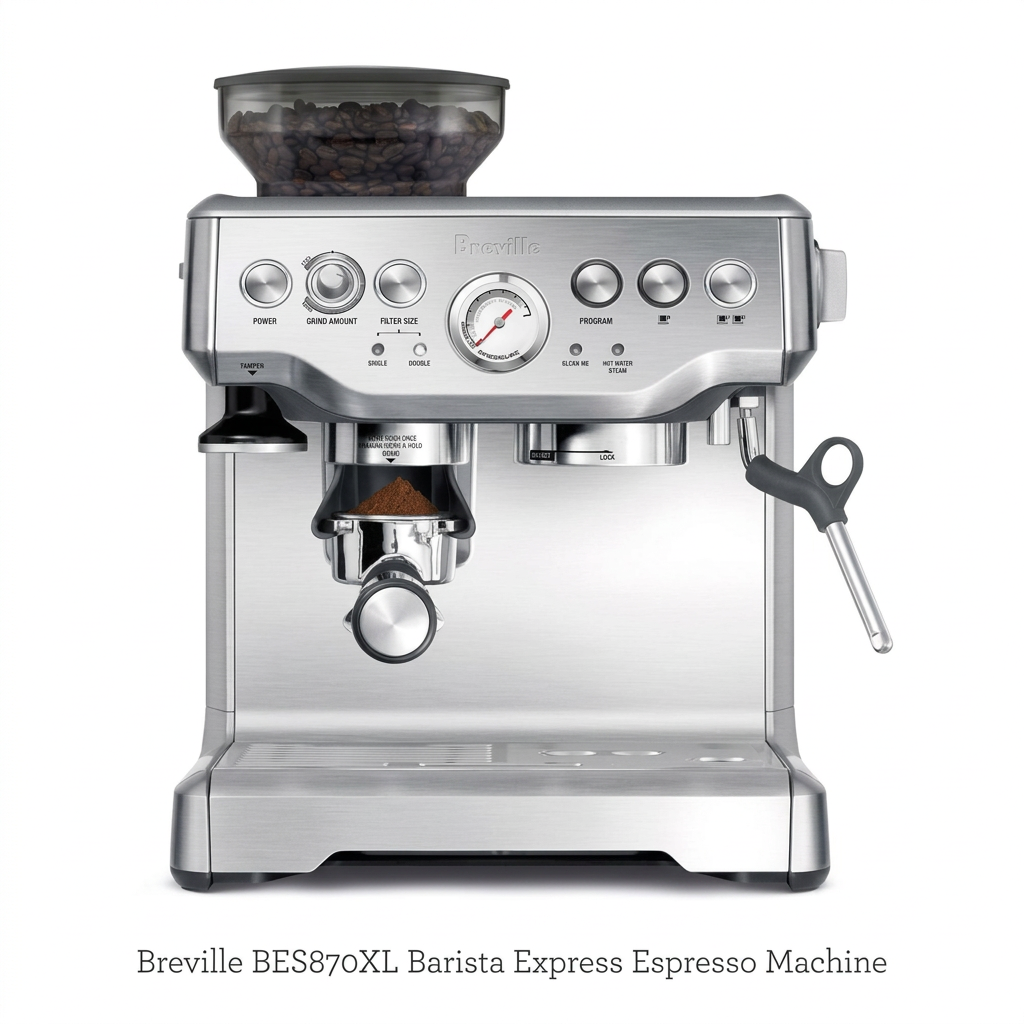
Breville Barista Express
The machine that made the category: a conical burr grinder, a pressure gauge and a manual steam wand.
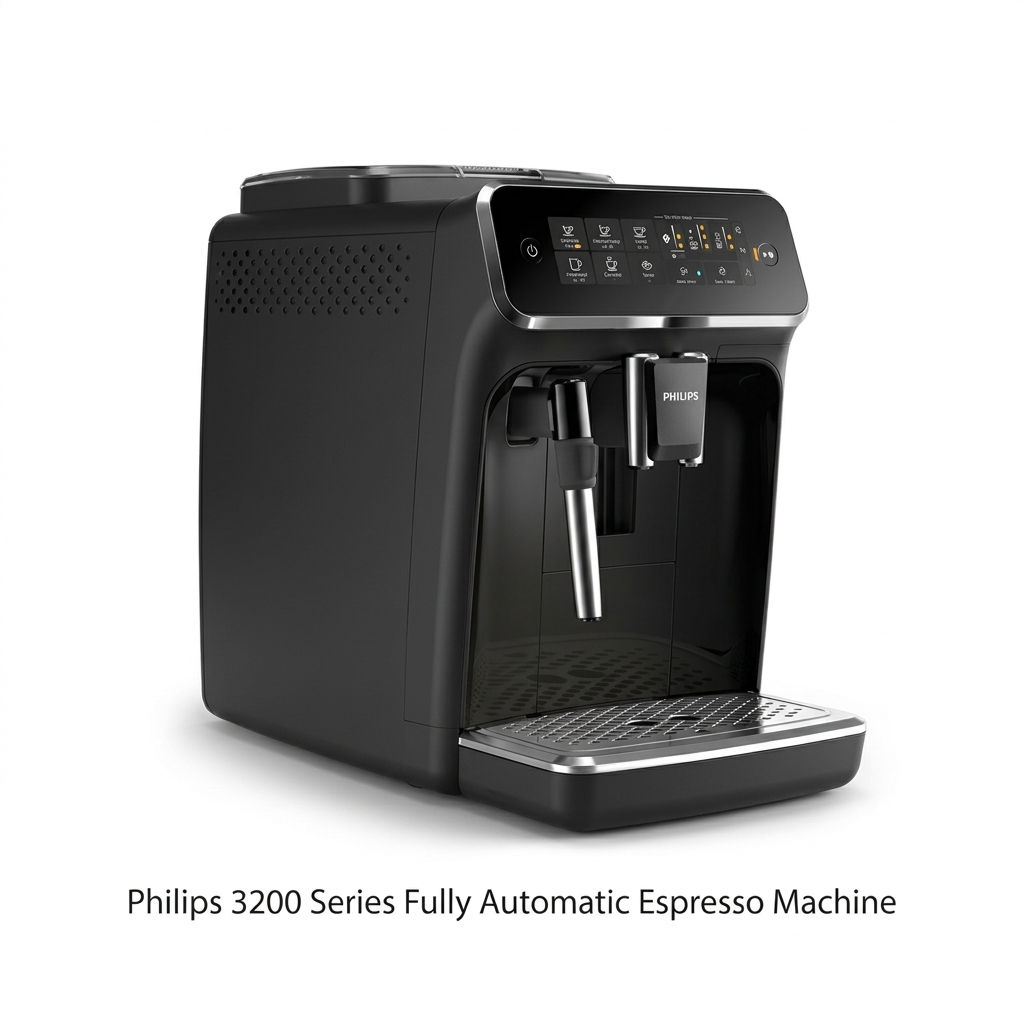
Philips 3200 Series
Five one-touch drinks, a ceramic grinder and a two-part milk jug with no tubes.
Prices change often. Click through to see the current price on Amazon.
Compare the best espresso machines with a grinder
Scores come from my four weeks with each machine. Specifications come from manufacturer documentation and my own measurements. "Not listed" means I couldn’t confirm the figure.
| 5 models compared | Best overall | Most control | Best one-touch | Best classic | Least effort |
|---|---|---|---|---|---|
| My test scores | |||||
| Overall score | 8.6 | 8.5 | 8.5 | 8.0 | 8.0 |
| Espresso | 8.7 | 8.7 | 8.3 | 8.4 | 7.2 |
| Milk drinks | 8.6 | 8.6 | 8.5 | 7.8 | 7.8 |
| Ease of use | 9.0 | 8.2 | 9.1 | 7.5 | 8.8 |
| Cleaning | 7.9 | 8.4 | 8.2 | 8.1 | 8.5 |
| How it works | |||||
| Type | Guided semi-automatic | Semi-automatic | Super-automatic | Semi-automatic | Super-automatic |
| Grind settings | 25 | 30 | Not listed | 16 | 12 |
| Portafilter | ✓ | 54 mm | ✕ | 54 mm | ✕ |
| Dosing | By weight, automatic | Timed grind | Automatic | Timed grind | Automatic |
| Tamping | Assisted lever | By hand | Automatic | By hand | Automatic |
| Milk | Hands-free steam wand | Manual steam wand | One-touch carafe | Manual steam wand | One-touch LatteGo jug |
| Extras | |||||
| Hot water spout | ✓ | ✓ | ✓ | ✓ | ✓ |
| Cold brew | ✓ | ✕ | ✕ | ✕ | ✕ |
| Saved profiles | ✕ | ✕ | 4 | ✕ | ✕ |
| Water tank | Not listed | 2 L | 1.4 L | 2 L | 1.8 L |
| Best for | Anyone who wants portafilter espresso without the guesswork. | People who want to learn and control every shot. | Households that want every drink at one touch. | Learners who like analog controls and a steam wand. | Anyone who wants the least work and the least cleaning. |
My test scores at a glance
Every machine was scored on espresso, milk drinks, ease of use and cleaning. For the semi-automatics, ease of use includes how long it took me to make a good drink reliably.
The Ninja and Barista Pro tied for the best espresso and milk drinks. The Ninja wins overall because it gets you there on day one, while the Barista Pro took me about a week of practice to match it.
Editorial scores from four weeks of daily use per machine.
| Best in each category | Winner | Score |
|---|---|---|
| Espresso | Ninja Luxe Café Pro and Breville Barista Pro (tie) | 8.7 |
| Milk drinks | Ninja Luxe Café Pro and Breville Barista Pro (tie) | 8.6 |
| Ease of use | De’Longhi Rivelia | 9.1 |
| Cleaning | Philips 3200 | 8.5 |
| Most grind settings | Breville Barista Pro | 30 |
Our tip: Be honest about how much time you’ll spend each morning, because that decides between a semi-automatic and a one-touch machine.
How I tested
I’m a former line cook with an SCA certificate in barista skills, and I’ve tested kitchen appliances for HouseholdMe since 2018. For this guide, I used 18 espresso machines with built-in grinders as my everyday coffee maker for four weeks each.
I dialed in every grinder with at least three bean types, weighed doses and yields on a scale, timed shots and drinks, and measured milk temperature with a probe thermometer. I also timed how long it took me, and a beginner in my household, to make a drink we were happy with.
Why a built-in grinder matters
Fresh grinding is the single biggest upgrade you can make to espresso. Ground coffee loses aroma fast, and within about 15 minutes of grinding, much of what makes a shot taste sweet and complex has faded.
A machine with a built-in grinder grinds seconds before brewing. It also saves counter space and money compared with buying a good espresso grinder separately.
Two very different kinds of machine
There are two ways to get an espresso machine with a grinder. A semi-automatic, like the Barista Pro or Barista Express, grinds into a portafilter✕Portafilterthe handle with a metal basket that holds ground coffee. You lock it into the machine, and hot water is pushed through the coffee inside it., and you tamp✕Tampingpressing the ground coffee into a firm, flat puck. An even tamp makes water flow evenly, which is the key to a balanced shot., brew and steam milk yourself.
A super-automatic✕Super-automatican espresso machine that grinds, doses, tamps, brews and usually froths milk on its own. You press one button., like the Rivelia or Philips 3200, does every step inside the machine. The Ninja Luxe Café Pro sits in between: it uses a portafilter, but it weighs the dose, guides the tamp and froths milk on its own.
| Semi-automatic | Guided semi-automatic | Super-automatic | |
|---|---|---|---|
| You grind into a portafilter | Yes | Yes | No |
| You tamp | Yes | With a lever | No |
| You steam milk | Yes | Hands-free | No, one touch |
| Skill needed | Practice | Very little | None |
| Time per latte | 3–4 minutes | 2–3 minutes | About 1 minute |
| Control over the shot | Full | Most | Limited |
Why more people want one
Home espresso is growing fast. A 2025 national coffee survey found 28% of American adults had an espresso-based drink in the past day, up from 24% in 2020, and ownership of espresso machines rose from 8% to 12% of coffee drinkers.
National coffee consumption survey data, 2020 and 2025.
The grinder spec that matters
Every pick uses a burr grinder, not a blade. The number of settings matters less than how fine the steps are: espresso needs tiny adjustments, and a grinder with big jumps between settings is harder to dialing in✕Dialing inadjusting grind size and dose until a shot runs at the right speed and tastes balanced. On a manual machine, you redo it whenever you change beans..
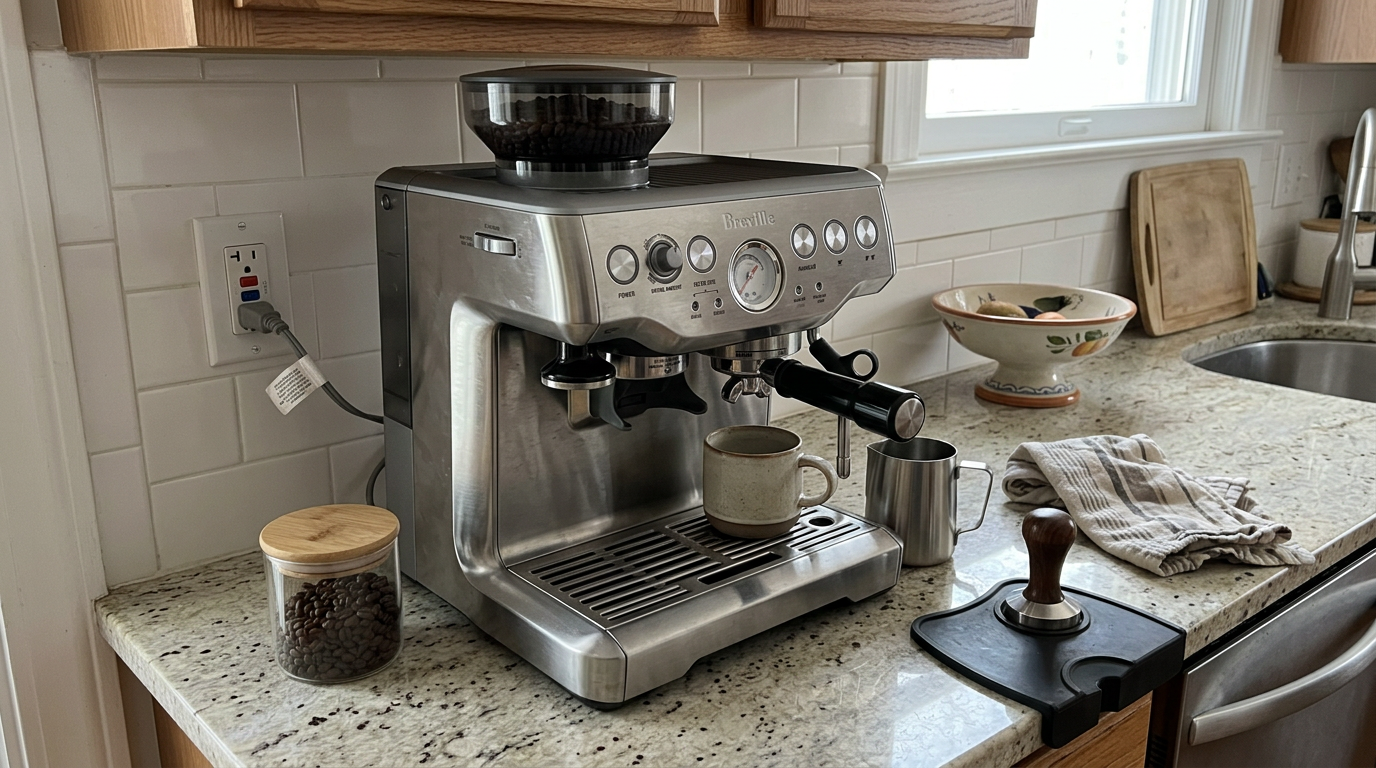
A built-in grinder grinds straight into the portafilter, seconds before brewing.
Who should buy an espresso machine with a grinder?
Anyone who drinks espresso daily and wants fresh-ground flavor without a second appliance. If you’ll only drink milky coffee and never want to touch a portafilter, skip straight to my guide to the best super-automatic espresso machines.
Our picks in depth
1. Ninja Luxe Café Pro
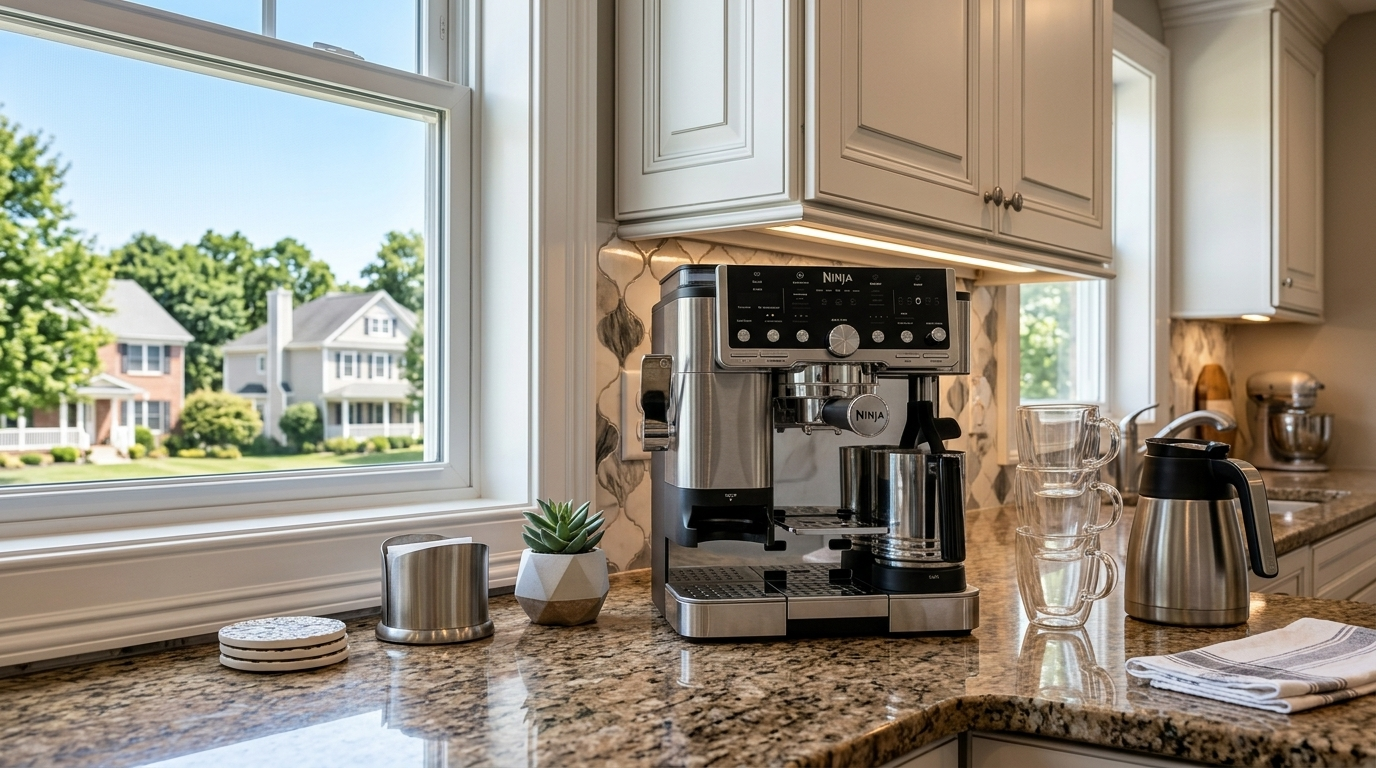
The Ninja Luxe Café Pro made the easiest good espresso of any machine in this guide. It grinds by weight, so every double gets the same dose✕Dosethe weight of ground coffee used for one brew. A classic double shot uses roughly 14 to 18 grams., and a built-in lever tamps the coffee evenly for you.
It also steams milk hands-free, pours hot water from its own spout and makes cold brew. The trade-offs are high water use and a drip tray that fills quickly.
Espresso without the guesswork
On a classic machine, the hardest part is getting the same amount of coffee in the basket every time. The Ninja weighs the grounds as it grinds, then stops at the right dose for a single, double or quad.
Its Barista Assist also suggests a grind change if a shot runs too fast or too slow. By day two, my shots were sweet, chocolatey and consistent, which took me a week on the Barista Pro.
Assisted tamping
After grinding, you pull a lever on the side, and the machine presses the coffee flat and level. It sounds like a small thing, but uneven tamping is the most common reason beginners get sour or bitter shots.
Our tip: Wipe the rim of the basket before locking in the portafilter, so stray grounds don’t break the seal.
Hands-free milk
The steam wand has a thick, non-burn tip and a temperature sensor. Put the jug under it, choose a froth preset, and it stops at the right temperature on its own.
My cappuccino foam was dense and silky, and the cold foam setting whipped cold milk into a thick topping for iced drinks. It isn’t quite as glossy as the Barista Pro in skilled hands, but it’s far more forgiving.
Drip coffee, cold brew and hot water
The Pro is a 4-in-1: espresso, drip-style coffee, cold brew and hot water. The drip coffee was clean and full, and the separate hot water spout made tea and americanos easy.
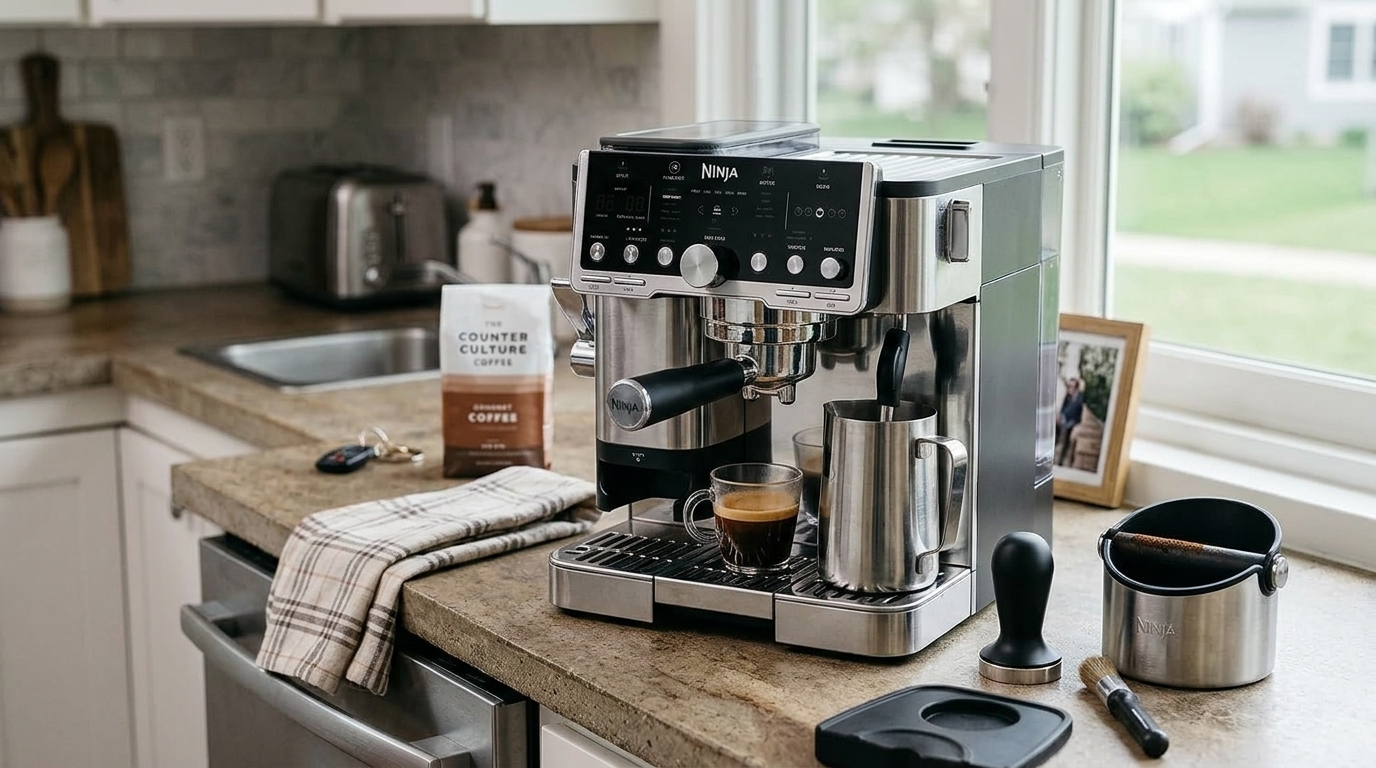
The hands-free steam wand stops at the right temperature on its own.
What to know before you buy
The machine flushes water before and after drinks, so the drip tray filled in about a day and a half. It’s also tall and deep, so check your counter space.
If you want café-quality espresso and milk drinks with the least learning, the Luxe Café Pro is the best machine with a grinder I’ve tested.
- Weight-based dosing for consistent shots
- Assisted tamping removes guesswork
- Hands-free steam wand with cold foam
- Drip coffee, cold brew and hot water
- Uses a lot of water
- Drip tray fills quickly
- Large footprint
- Beginners who want real espresso
- Latte and cold foam fans
- Homes that also drink drip coffee
- Small kitchens
- Anyone who wants full manual control
- Purists who prefer analog gauges
Choose this if you want portafilter espresso and great milk drinks from day one. Read my full Ninja Luxe Café Pro review.
2. Breville Barista Pro
The Breville Barista Pro is the machine I’d recommend to anyone who wants to learn real espresso. It’s ready in about three seconds, shows grind time and a shot clock on a clear LCD, and steams milk faster than any other pick.
You do the dosing, tamping and frothing yourself. In return, you control every part of the shot.
Heat-up in seconds
The ThermoJet✕ThermoJetBreville’s fast heating system. It heats water as it flows instead of keeping a boiler hot, so the machine is ready in about three seconds. system heats water as it flows, so there’s no boiler to warm up. I made a flat white within two minutes of switching on, including grinding and steaming.
There’s one catch: the group head needs a quick warm-up flush before the first shot. Without it, my first espresso of the day tasted slightly sour.
Our tip: Run a blank shot through the empty portafilter before your first espresso, so the group head is hot.
Grinding and dialing in
The grinder has 30 settings, finer and more evenly spaced than the Barista Express. The LCD shows grind time to a tenth of a second, so I could repeat a good dose exactly.
It took me about a week to get shots I loved with a new bag of beans. Once there, the espresso was syrupy and sweet, with caramel notes and a thick crema.
The steam wand
The four-hole tip produces a lot of steam fast, and it made the best manual microfoam of my picks. A cappuccino’s milk took about 25 seconds.
It does need technique: keep the tip just under the surface, then sink it once the milk has grown. The first few jugs were bubbly; by the second week, I was pouring basic latte art.
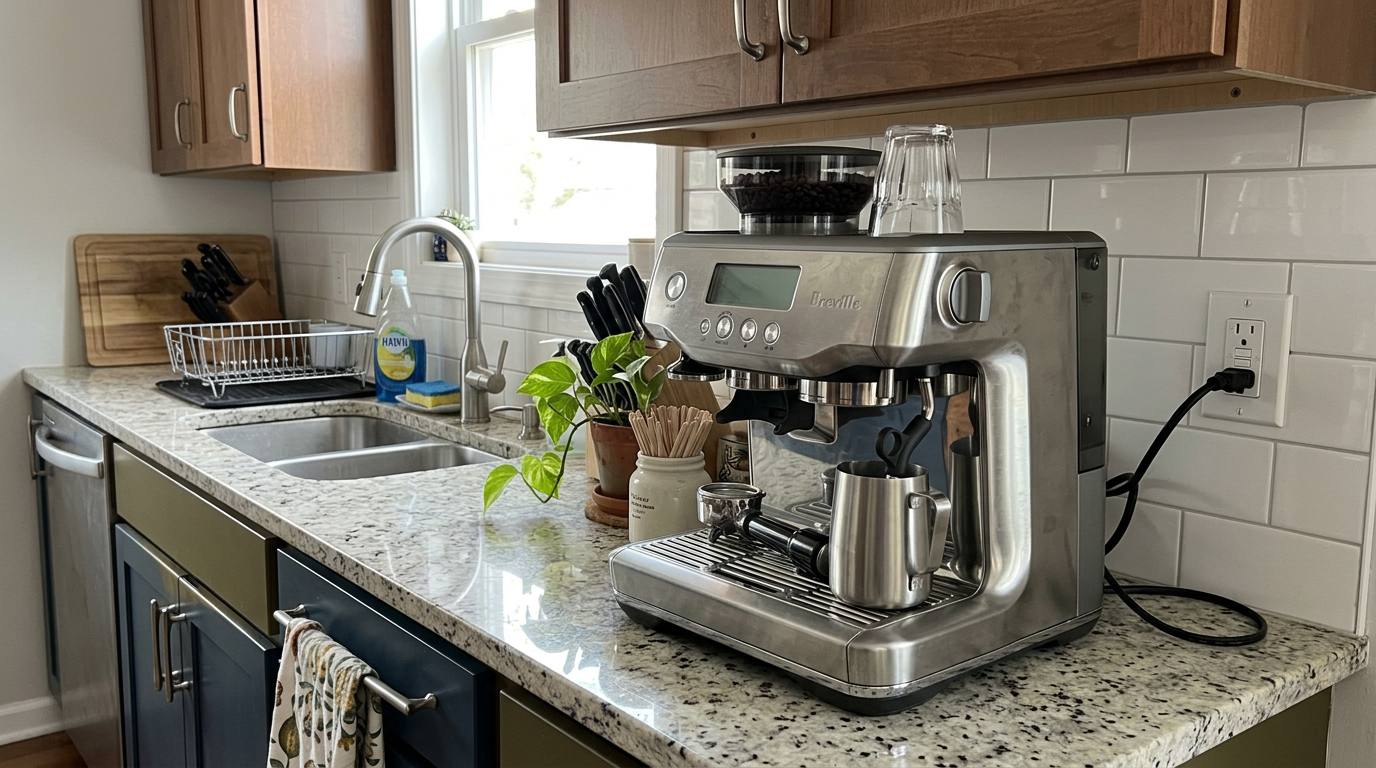
The LCD shows the grind time and the shot timer.
What to know before you buy
There’s no pressure gauge, which some learners miss. You also need a scale for best results, because the grinder doses by time, not weight.
If you want to learn espresso properly and enjoy the ritual, the Barista Pro is the machine with a grinder that will grow with you.
- Ready in about three seconds
- 30 finely spaced grind settings
- Powerful steam for silky milk
- Clear LCD with shot timer
- Needs practice to master
- No pressure gauge
- Group head needs a warm-up flush
- Aspiring home baristas
- Latte art learners
- Anyone who wants fast heat-up
- People who want one-touch drinks
- Anyone short on morning time
- Households with many users
Choose this if you want to learn espresso and control every shot yourself. Read my full Breville Barista Pro review.
3. De'Longhi Rivelia
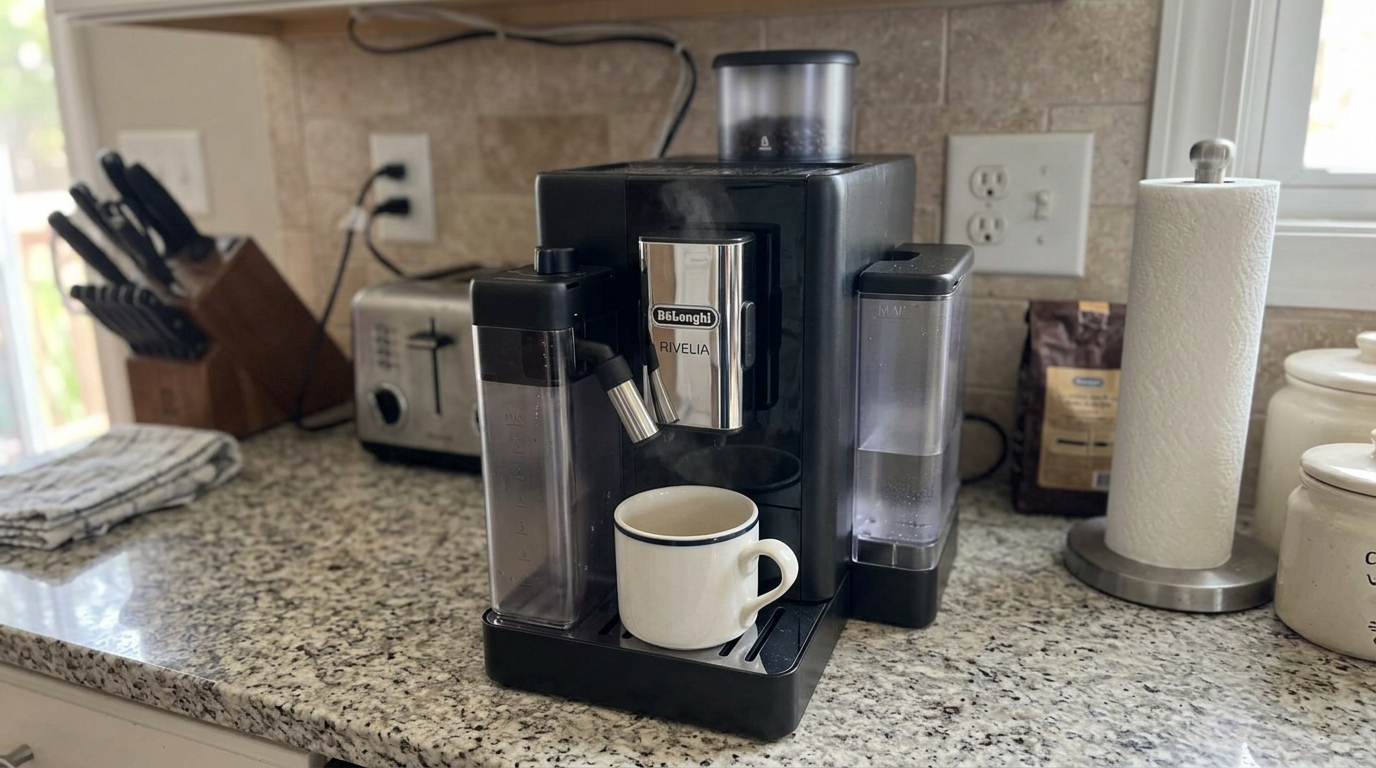
If you want a grinder built in but never want to touch a portafilter, the De’Longhi Rivelia is my pick. It’s a super-automatic: it grinds, doses, tamps and brews on its own, then froths milk at one touch.
Its party trick is two swappable bean hoppers. That made it the best machine in this guide for a household that drinks both regular and decaf.
Two hoppers, no mixing
Each hopper lifts off the top. Before you swap, the machine runs the grinder empty, so the next cup isn’t a blend of the old and new beans.
I kept espresso beans in one and decaf in the other, and switching took about 20 seconds. For strict caffeine needs, use the pre-ground chute for decaf instead, because a few grounds stay in the grinder path.
Espresso and milk
The espresso was smooth, nutty and low in bitterness, a crowd-pleaser rather than an intense shot. Milk drinks came from the LatteCrema carafe at around 60°C, with dense, creamy foam.
Profiles and touchscreen
Four profiles remember each person’s strength, volume and milk amount. The 3.5-inch touchscreen is the easiest menu I tested in this guide.
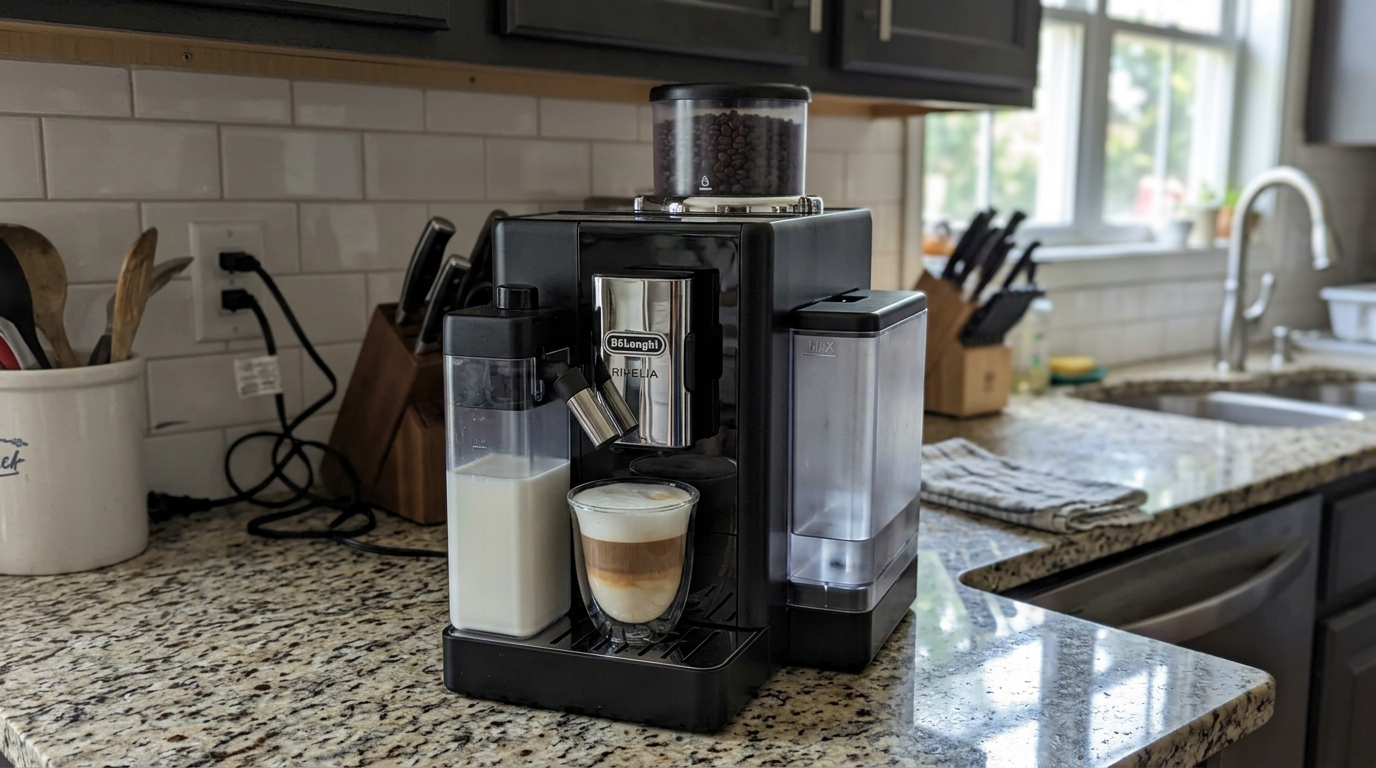
The Rivelia’s hoppers lift off for a bean swap in about 20 seconds.
What to know before you buy
The 1.4-liter tank is small for a busy home, and the carafe needs a rinse after each use. You also give up the control a semi-automatic offers.
For one-touch drinks with fresh-ground beans and easy bean swaps, the Rivelia is the best choice here.
- Every drink at one touch
- Two swappable bean hoppers
- Four saved profiles
- Very easy touchscreen
- Small water tank
- No control over the shot
- Carafe needs daily rinsing
- Households with a decaf drinker
- Families with different tastes
- Anyone who wants push-button drinks
- Aspiring baristas
- Espresso purists
- Heavy daily use
Choose this if you want fresh-ground drinks at one touch, with easy bean swaps. Read my full De'Longhi Rivelia review.
4. Breville Barista Express
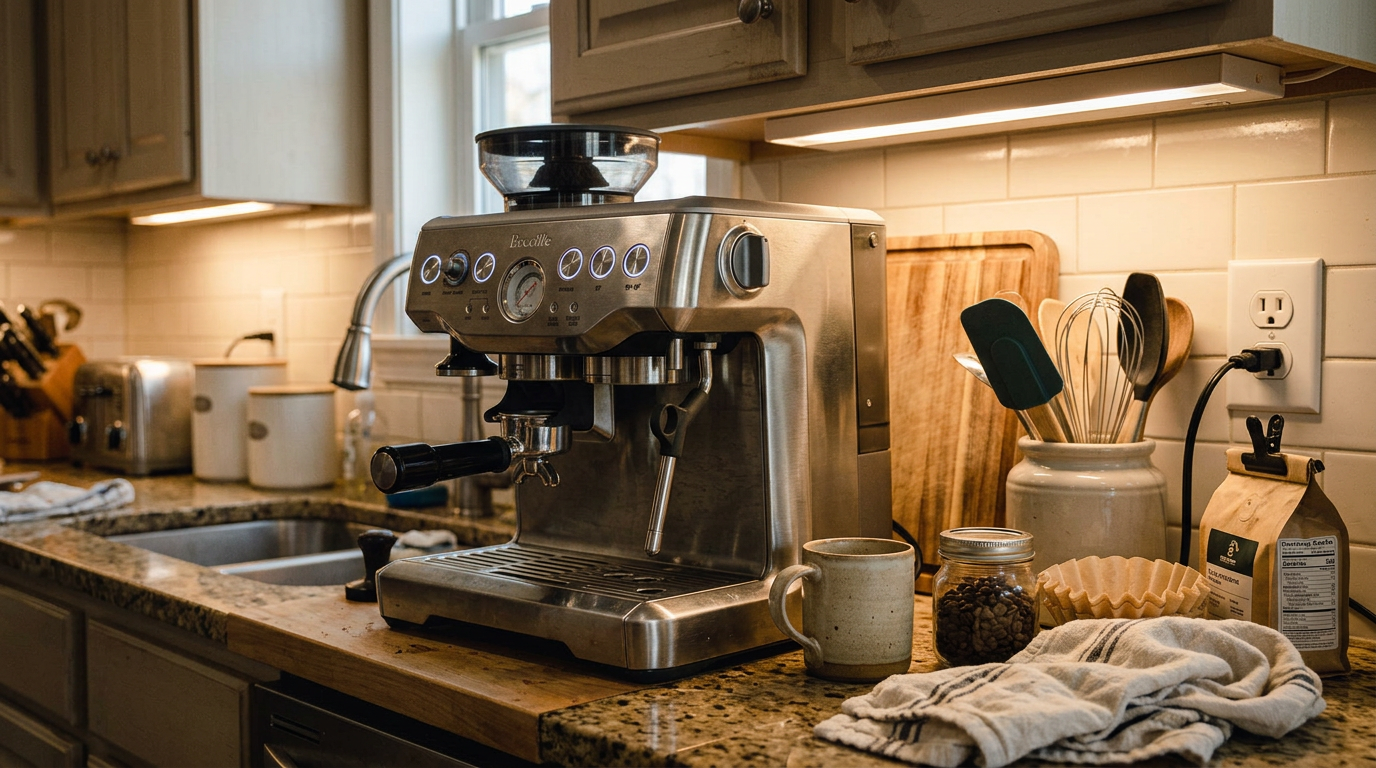
The Breville Barista Express is the machine that made built-in grinders popular, and it still makes excellent espresso once you learn it. It has a conical burr grinder✕Conical burr grindertwo cone-shaped grinding rings, one inside the other, that crush beans to an even size. Even grounds extract evenly, so the cup tastes less bitter and less sour., a 54 mm portafilter, an analog pressure gauge and a manual steam wand.
It’s slower and fussier than the Barista Pro. It’s also the most affordable way into proper hands-on espresso with a grinder built in.
Espresso
Once dialed in, the Express pulled sweet, syrupy shots with a thick crema. The pressure gauge was genuinely useful while learning: when the needle sat in the espresso range, the shot usually tasted right.
It has 16 grind settings, which is fewer than newer machines. With some beans, the right grind fell between two steps, and I adjusted the dose instead.
Milk
The steam wand is slower than the Barista Pro’s, taking about 40 seconds for a cappuccino’s milk. That extra time actually made it easier to learn, and with practice, the milk was genuinely silky.
Our tip: Start steaming with cold milk in a cold jug, because it gives you more time to texture the foam before it gets too hot.
Setup and learning
Plan on a few days and a bag of beans to dial it in. Weighing your doses on a cheap kitchen scale cuts that time dramatically.
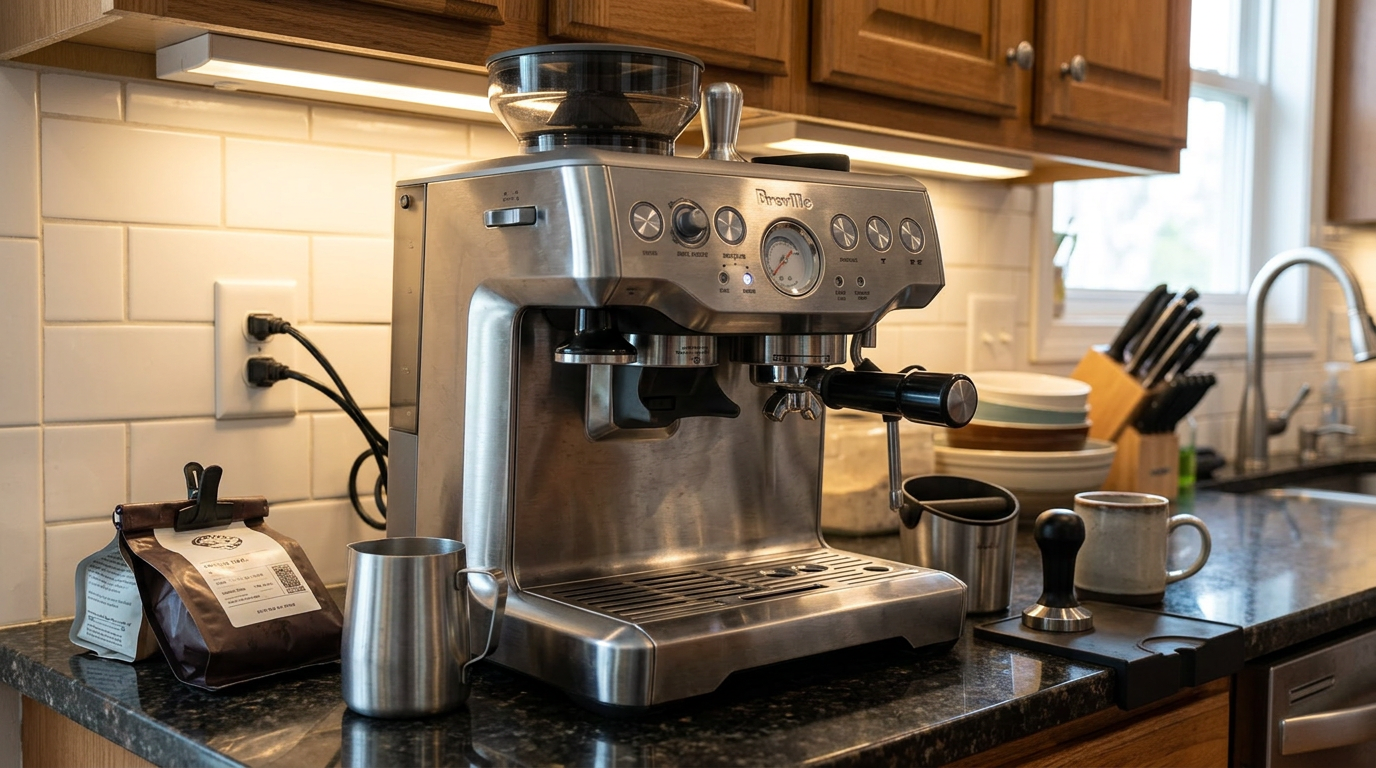
The analog pressure gauge helps beginners see when a shot is on track.
What to know before you buy
Heat-up takes longer than the Barista Pro, and the grinder needs an occasional clean to stay consistent. You do every step yourself.
If you want to learn espresso on a proven machine and enjoy the hands-on ritual, the Barista Express remains a great buy.
- Sweet, syrupy espresso once dialed in
- Helpful analog pressure gauge
- Proven, well-supported design
- Lowest outlay of the hands-on picks
- Only 16 grind settings
- Slower steam and heat-up
- Steeper learning curve
- Patient learners
- People who like analog controls
- Smaller budgets for hands-on espresso
- Anyone who wants one-touch drinks
- Busy mornings
- Very light roast fans
Choose this if you want to learn hands-on espresso on a proven, affordable machine. Read my full Breville Barista Express review.
5. Philips 3200 Series
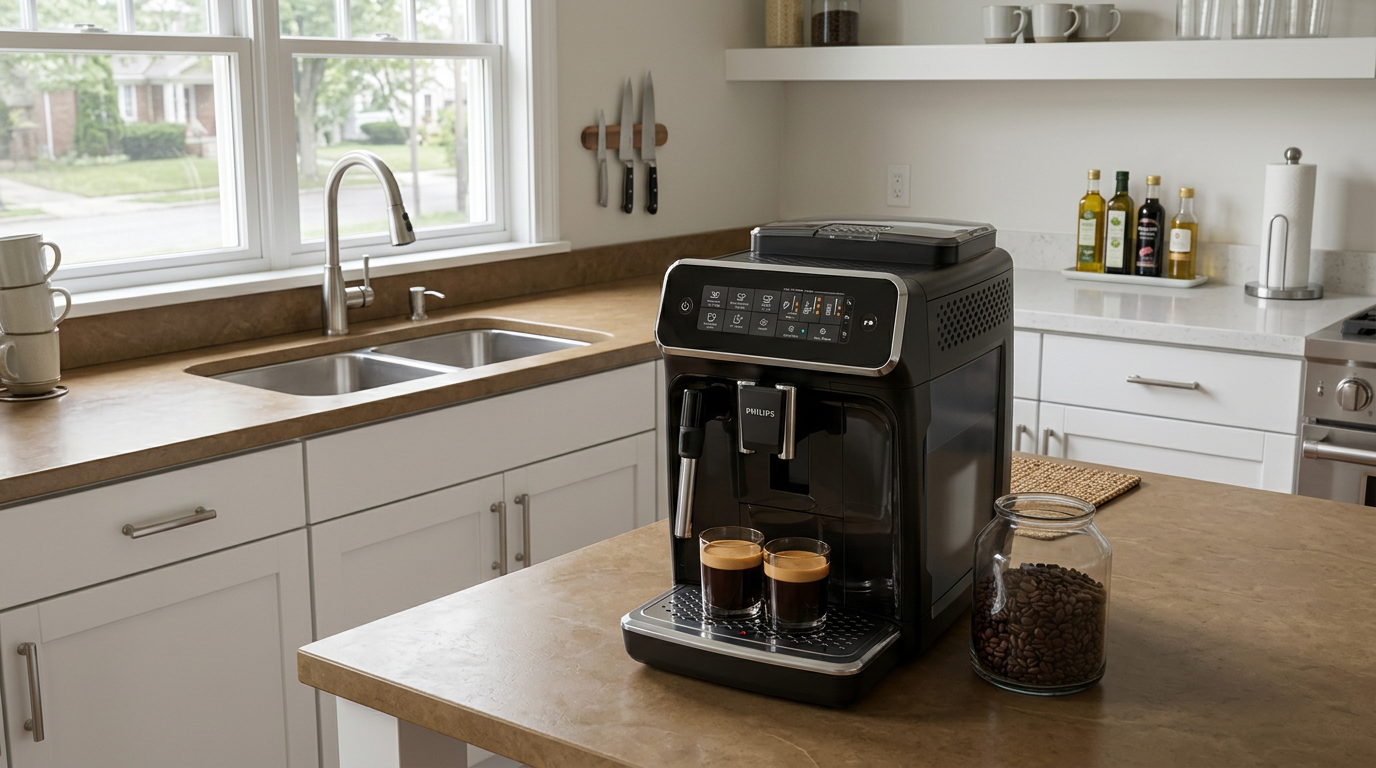
The Philips 3200 is for people who want fresh-ground coffee with the least effort. It makes five drinks at one touch, and its LatteGo milk jug has no tubes, so it rinses clean in about ten seconds.
Its espresso is mild because the dose is small. If you mostly drink cappuccinos and long coffee, you’ll barely notice.
Grinder and espresso
The ceramic burr grinder has 12 settings, adjusted with a knob inside the hopper. On the finest setting with a medium-dark roast, the espresso was smooth and gentle, with light body.
It never matched the semi-automatics for richness. But it never needed dialing in, and every cup tasted the same.
LatteGo milk
The two-part jug clicks onto the front and froths milk in a small chamber, with no tubes. The cappuccino foam was plentiful and airy.
After each drink, I pulled the jug apart and rinsed it under the tap. That made it the easiest milk system to clean in this guide.
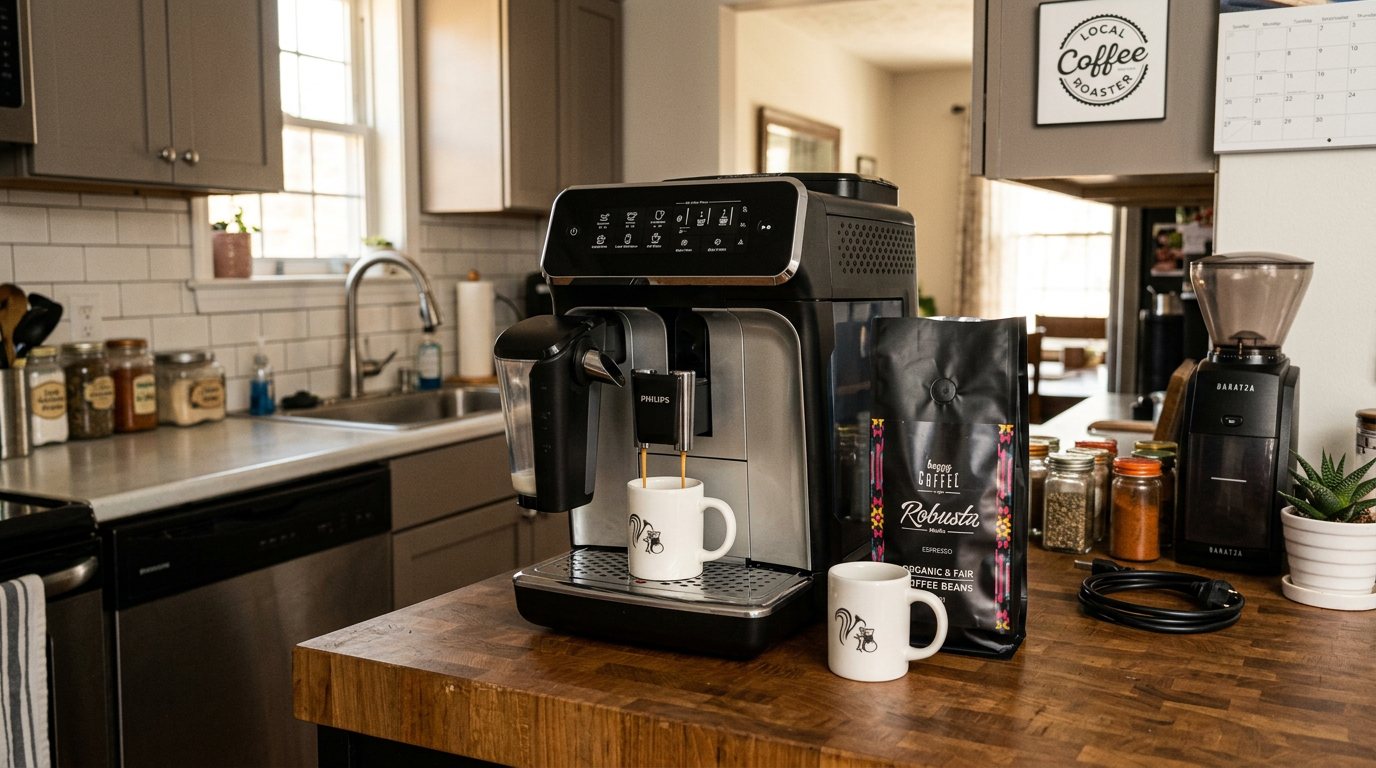
LatteGo’s two parts rinse clean in about ten seconds.
What to know before you buy
There are no profiles, and the milk came out a little cool, at about 55°C. Espresso purists should look at the Ninja or Barista Pro instead.
For simple, fresh-ground drinks with almost no cleaning, the Philips 3200 is hard to beat.
- Easiest milk system to clean
- Five one-touch drinks
- Ceramic burr grinder
- Lowest effort of my picks
- Mild espresso from a small dose
- Milk runs slightly cool
- No profiles
- First-time owners
- Cappuccino drinkers who hate cleaning
- Busy mornings
- Espresso purists
- People who want to learn barista skills
- Large households
Choose this if you want fresh-ground drinks with the least effort and cleaning. Read my full Philips 3200 Series review.
My test data: time, skill and grinders
Specs only tell part of the story. These are the numbers I recorded during four weeks with each pick.
Time to a finished latte
I timed every machine from a cold start to a finished latte, including grinding, tamping and steaming. The one-touch machines are fastest; the hands-on machines take longer but give you more control.
My times from a cold start to a finished 12-ounce latte, after the first week.
How long it took to make a drink I loved
This is the number that matters most for a hands-on machine. I recorded how many days it took a beginner in my household to make a latte we were both happy with.
One beginner, with my help, over four weeks per machine.
Grind settings
More settings usually means finer steps, which makes dialing in easier. The Barista Pro’s 30 steps were the easiest to fine-tune; the Express’s 16 sometimes left the perfect grind between two settings.
Grind settings on each grinder. The Rivelia adjusts in steps not listed by the maker.
Our tip: Weigh your beans and your shot on a small kitchen scale, because it cuts dialing-in time on a manual machine by half.
Milk temperature
I measured every latte with a probe thermometer. Milk tastes sweetest around 55 to 65°C.
| Machine | Milk method | Measured temperature |
|---|---|---|
| Ninja Luxe Café Pro | Hands-free wand | ~60°C, set by preset |
| Breville Barista Pro | Manual wand | Your choice, ~60°C |
| De’Longhi Rivelia | One-touch carafe | ~60°C |
| Breville Barista Express | Manual wand | Your choice, ~60°C |
| Philips 3200 | LatteGo jug | ~55°C |
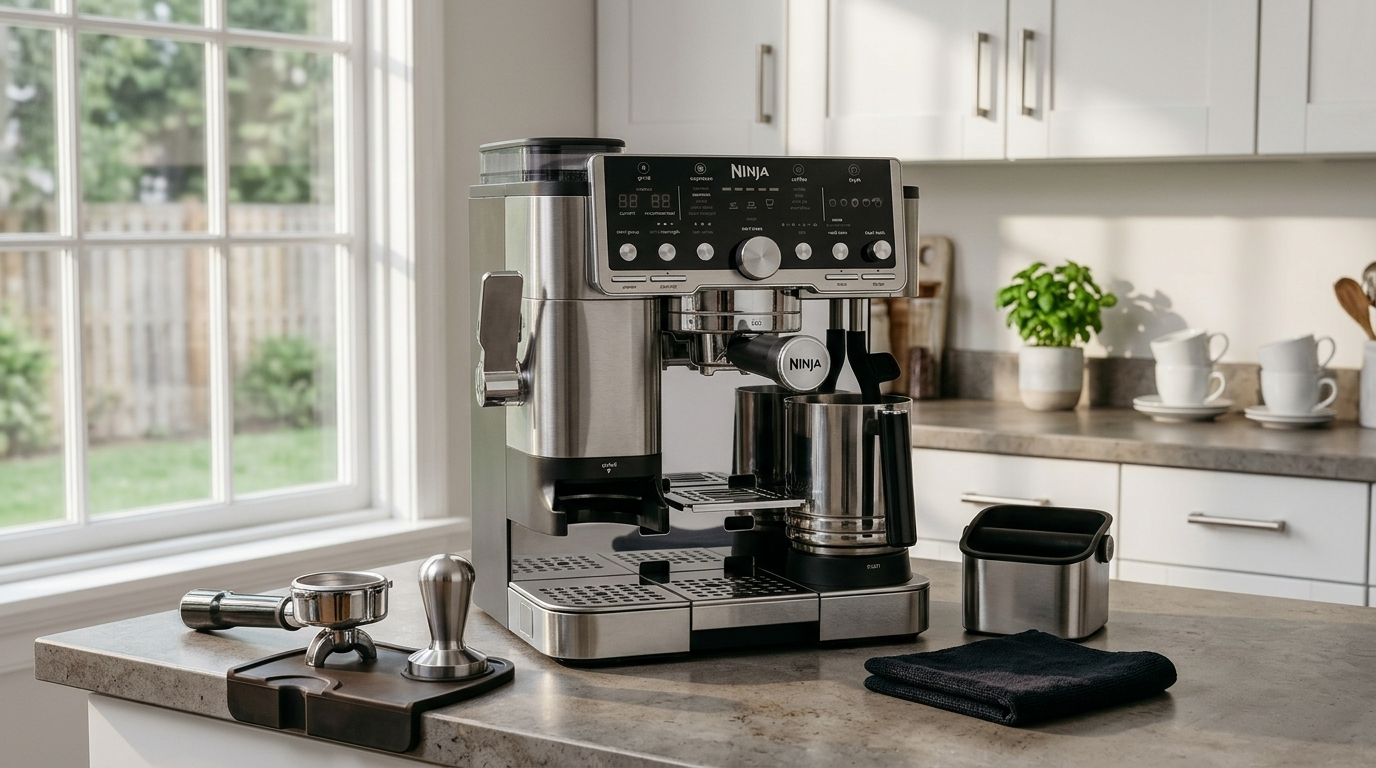
The Ninja doses by weight, which made it the fastest hands-on machine to learn.
Which one is right for you?
4 quick questionsAnswer four questions about how you like to make coffee, and I’ll point you to the machine with a grinder that fits best.
Or find your morning below
Cold brew and a cold foam preset, no extra gadgets.
A fast, powerful steam wand and a clear shot timer.
Two hoppers that swap in about 20 seconds.
A pressure gauge that shows when a shot is on track.
One touch, then a ten-second rinse.
Weight-based dosing means every double is the same.
What to look for in an espresso machine with a grinder
These are the differences that mattered most in my testing, in the order I’d check them.
How much you want to do
This decides everything else. If you want to learn, choose a semi-automatic with a portafilter; if you want one button, choose a super-automatic; if you want the best of both, a guided machine like the Ninja is the middle ground.
| You want | Choose | My pick |
|---|---|---|
| Full control and the ritual | Semi-automatic | Breville Barista Pro |
| Great results with help | Guided semi-automatic | Ninja Luxe Café Pro |
| One-touch drinks | Super-automatic | De’Longhi Rivelia |
| The lowest effort | Simple super-automatic | Philips 3200 |
| A proven learner machine | Classic semi-automatic | Breville Barista Express |
Grinder quality
Look for burr grinders with fine, evenly spaced steps. For semi-automatics, 25 or more settings makes dialing in easier.
Our tip: Change the grind setting only while the grinder is running, because turning it with beans trapped can jam the burrs.
Dosing: time or weight
Most built-in grinders dose by time, which varies with bean density. Weight-based dosing, like the Ninja’s, gives the same dose every time and makes consistent shots far easier.
Heating system
Fast heaters like Breville’s ThermoJet are ready in seconds. Thermocoil machines like the Barista Express take longer, and a few seconds of flushing helps stabilize temperature.
Look for PID✕PID temperature controla digital controller that holds brewing water at a set temperature, usually within a degree or two. Stable temperature means consistent shots. temperature control if you plan to experiment with different roasts. Every semi-automatic pick here has it.
Milk system
A manual steam wand makes the best milk in skilled hands, and a hands-free wand makes very good milk with no skill. One-touch carafes and jugs are fastest, with a little less control over texture.
Portafilter size
Most home machines use 54 mm baskets, and pro machines use 58 mm. A bigger basket isn’t automatically better, but it opens up more accessories.
What extra money buys you
Espresso machines with grinders span a wide range. This is what each step up added in my tests, and whether it changed the cup.
| Feature | Entry level | Mid-range | Premium | Does it change the coffee? |
|---|---|---|---|---|
| Grinder | 12–16 settings | 25–30 settings | 45 settings, finer steps | Yes, for dialing in |
| Dosing | Timed | Timed or by weight | By weight, automatic | Yes, for consistency |
| Tamping | By hand | Assisted | Automatic | Yes, for beginners |
| Heating | Thermocoil | Fast ThermoJet | Dual boiler or ThermoJet | Small difference |
| Milk | Manual wand or jug | Hands-free wand or carafe | Automatic, temperature-controlled | Yes, for latte lovers |
| Screen | Buttons | LCD | Touchscreen | No |
Up to the mid-range, extra money mostly buys better and more consistent coffee. Finer grind steps, weight-based dosing and assisted tamping all showed up in my cup.
Beyond that, it mostly buys automation and comfort. That’s worth it if several people use the machine and nobody wants to learn, but it doesn’t make a better espresso than a well-used Barista Pro.
Our tip: Spend on the grinder and dosing first, because they change the coffee more than any screen or extra drink.
Where my picks sit
The Barista Express and Philips 3200 are the entry points, and they make good coffee for the least outlay. The Barista Pro, Ninja Luxe Café Pro and Rivelia sit in the middle, which is the sweet spot for most homes.
If you want the premium step, the Oracle Jet automates grinding, dosing and tamping with a 58 mm portafilter. It made my best espresso, but it’s a big jump for a small gain in the cup.
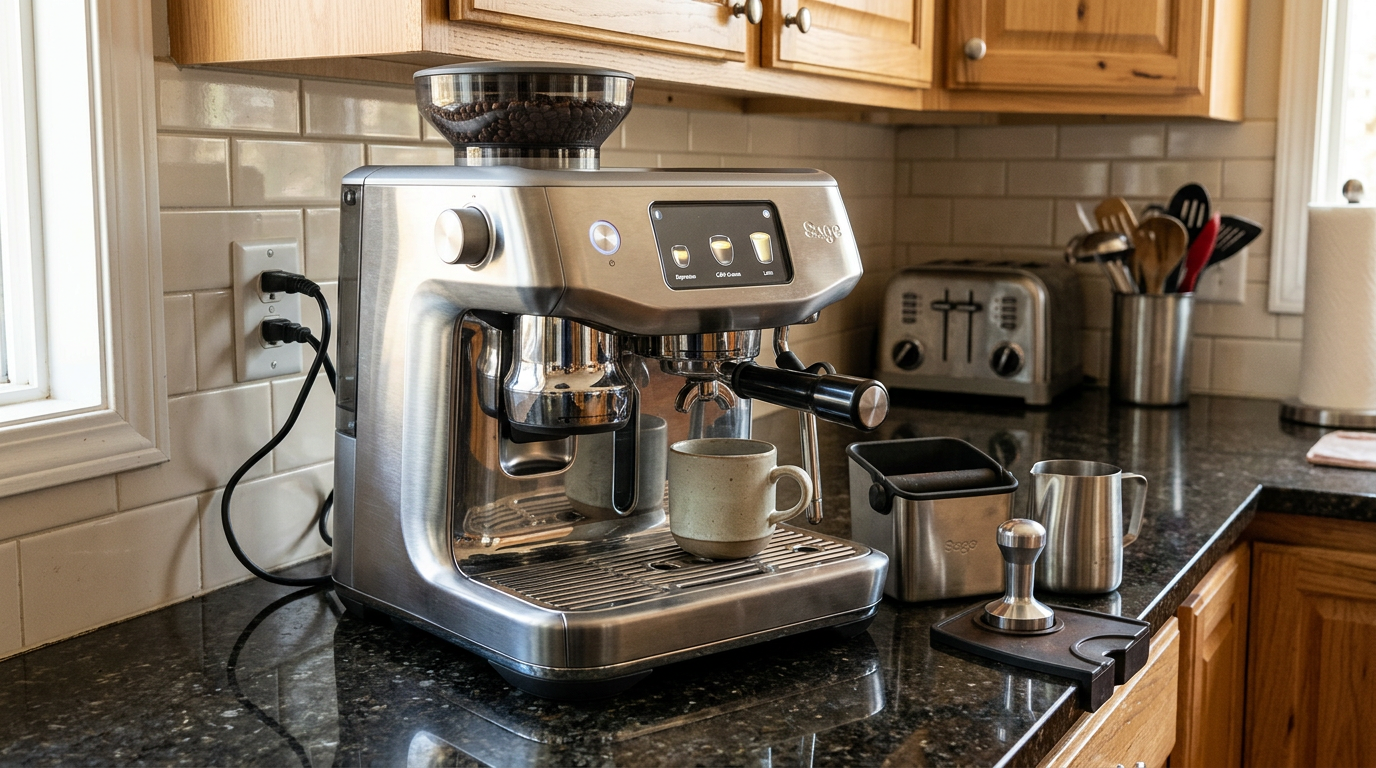
Premium machines automate more of the process, but the cup improves only slightly.
Built-in grinder vs a separate grinder
Many enthusiasts buy a separate espresso grinder. This is how a built-in grinder compares.
| Built-in grinder | Separate grinder | |
|---|---|---|
| Counter space | One appliance | Two appliances |
| Outlay | Lower overall | Higher for a good grinder |
| Grind quality | Good to very good | Very good to excellent |
| Upgrade path | Replace the whole machine | Upgrade one part |
| Convenience | Grinds straight into the basket | An extra step |
For most homes, a built-in grinder is the better choice. It’s simpler, smaller and plenty good for great espresso.
A separate grinder makes sense if you drink light roasts as straight espresso, or if you want to upgrade parts over the years.
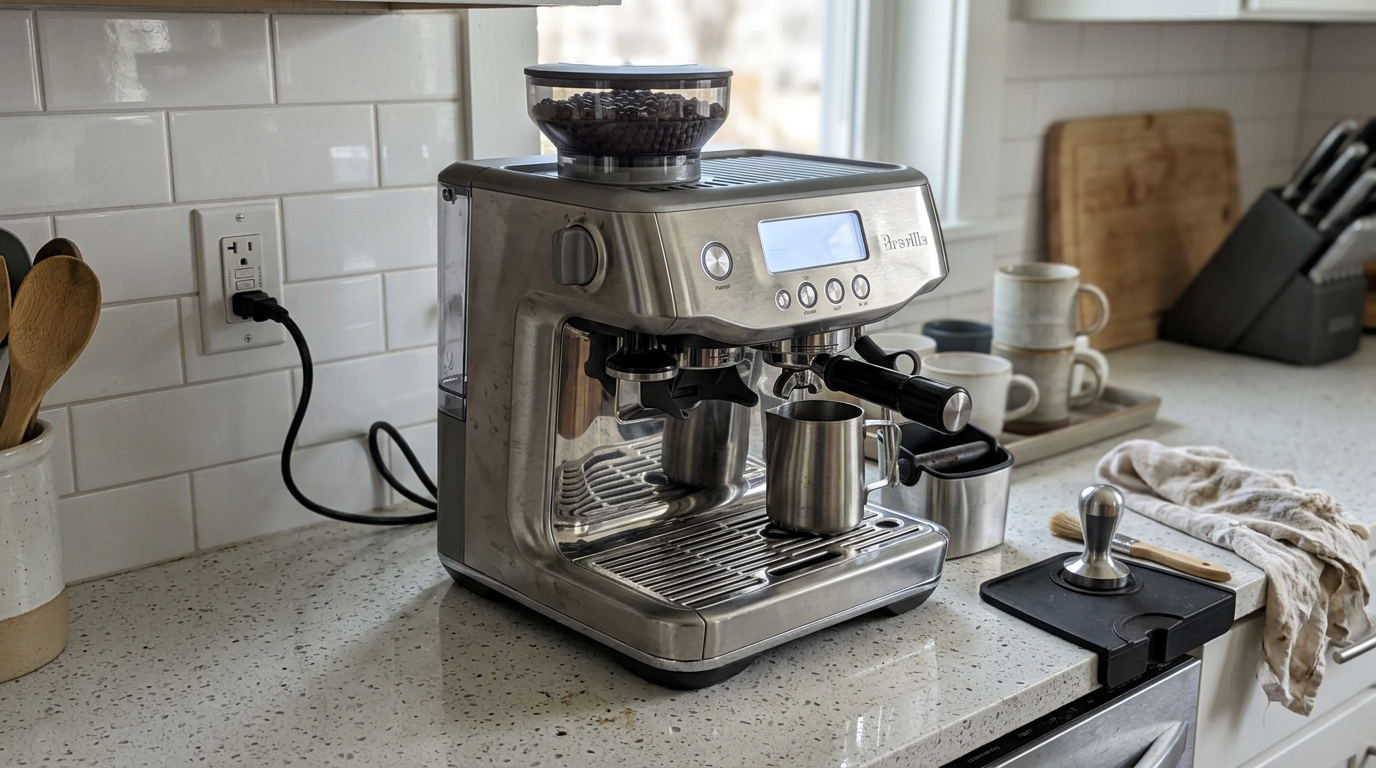
A built-in grinder saves a second appliance on the counter.
Maintenance and running costs
A grinder adds a few cleaning jobs. These habits kept my picks tasting good.
- Flush the group head after each shot
On the semi-automatics, run a second of water through the empty group to clear grounds.
- Purge and wipe the steam wand
Wipe it straight after steaming and purge for a second, so milk can’t dry inside.
- Brush out the grinder weekly
Old grounds and oils build up in the chute and make coffee taste stale.
- Backflush when prompted
The Breville machines come with a cleaning disc; use it with a tablet when the clean light comes on.
- Descale on schedule
Use a water filter and descale when the machine asks, especially in hard water areas.
| Consumable | Which picks | How often |
|---|---|---|
| Water filter | All five | Every 2–3 months |
| Cleaning tablets | All five | When the machine asks |
| Descaler | All five | When asked, less with a filter |
| Milk system cleaner | Rivelia | Weekly |
| Grinder brush | All five | Weekly use |
Beans that work best
Use fresh whole beans within a month of the roast date. Avoid very oily, dark roasts, which clog built-in grinders over time.
Our tip: Buy beans with a roast date on the bag, and use them within four weeks of it.
Common mistakes to avoid
I made most of these at least once. They’re easy to avoid once you know about them.
| Mistake | What happens | Better habit |
|---|---|---|
| Judging a new grinder on day one | Wasted beans and frustration | Give it a few shots to settle |
| Uneven tamping | Sour or bitter shots | Tamp level, with firm pressure |
| Skipping the warm-up flush | Sour first shot | Run a blank shot first |
| Steaming milk too hot | Flat, cooked taste | Stop at about 60°C |
| Oily dark beans | Clogged grinder | Stick to medium or medium-dark |
| Never cleaning the chute | Stale-tasting coffee | Brush it weekly |
Other espresso machines with grinders I tested
These all made good coffee. Each one was beaten by a pick that does the same job better, or suits more homes.
For more options, see my guide to the best Breville espresso machines, every model ranked, and my best espresso machines under $500.
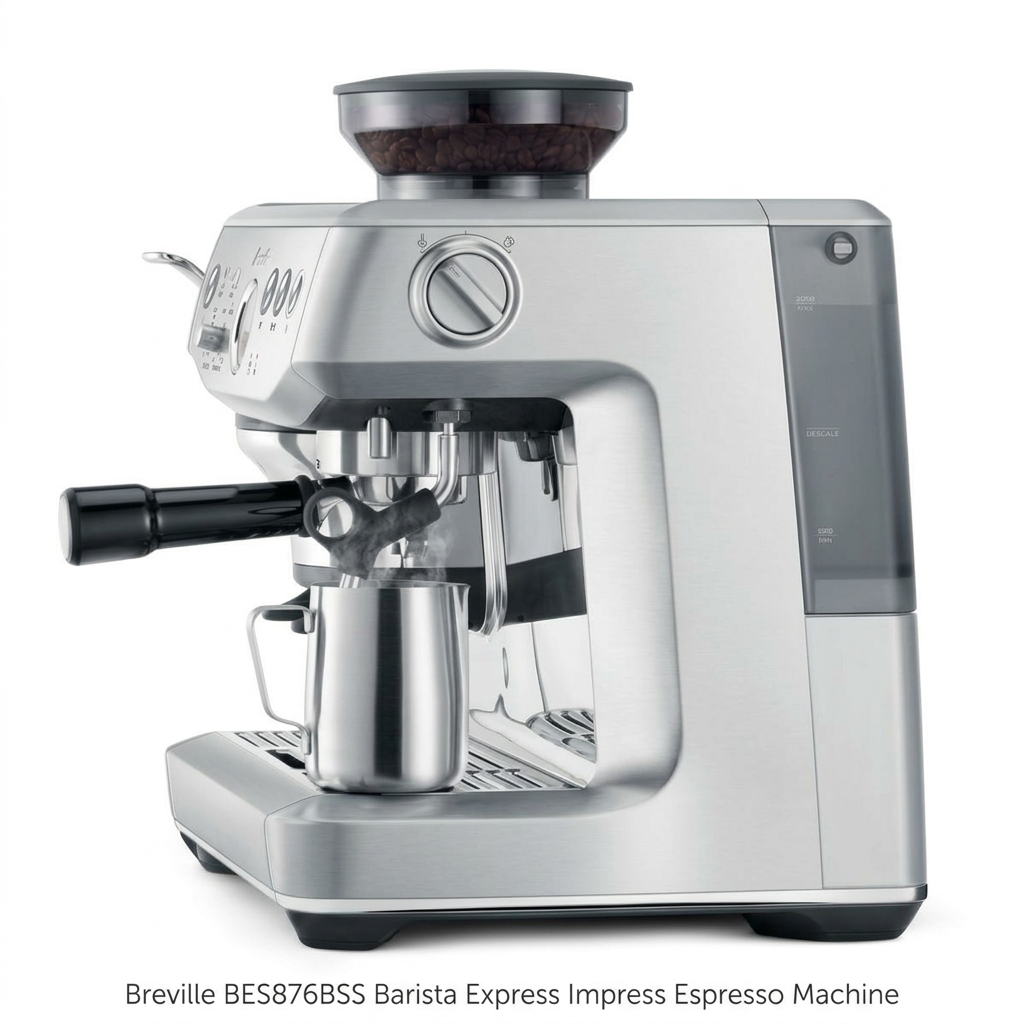
The Barista Express with Breville’s Impress tamping system. A great step up if you like the Express but hate tamping.
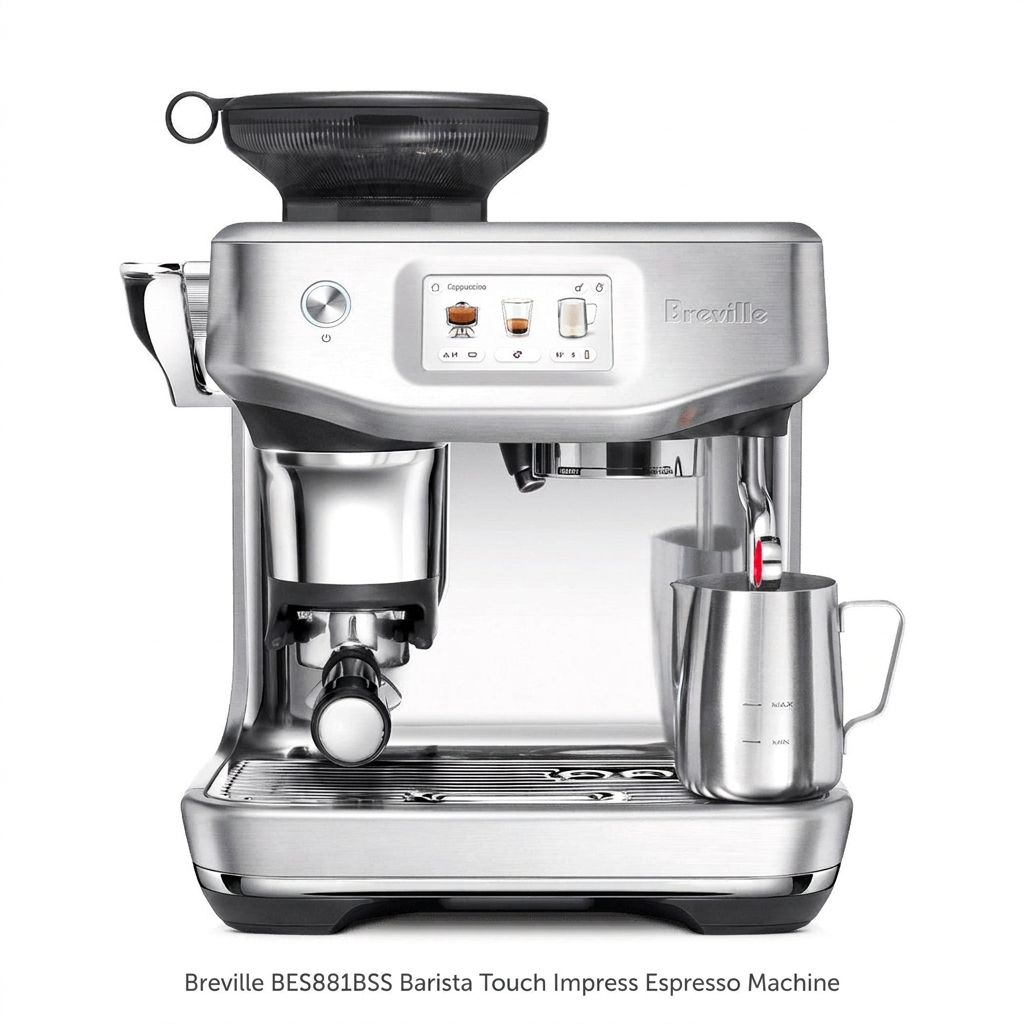
A touchscreen, assisted tamping and an automatic milk wand. Excellent, but a bigger outlay.
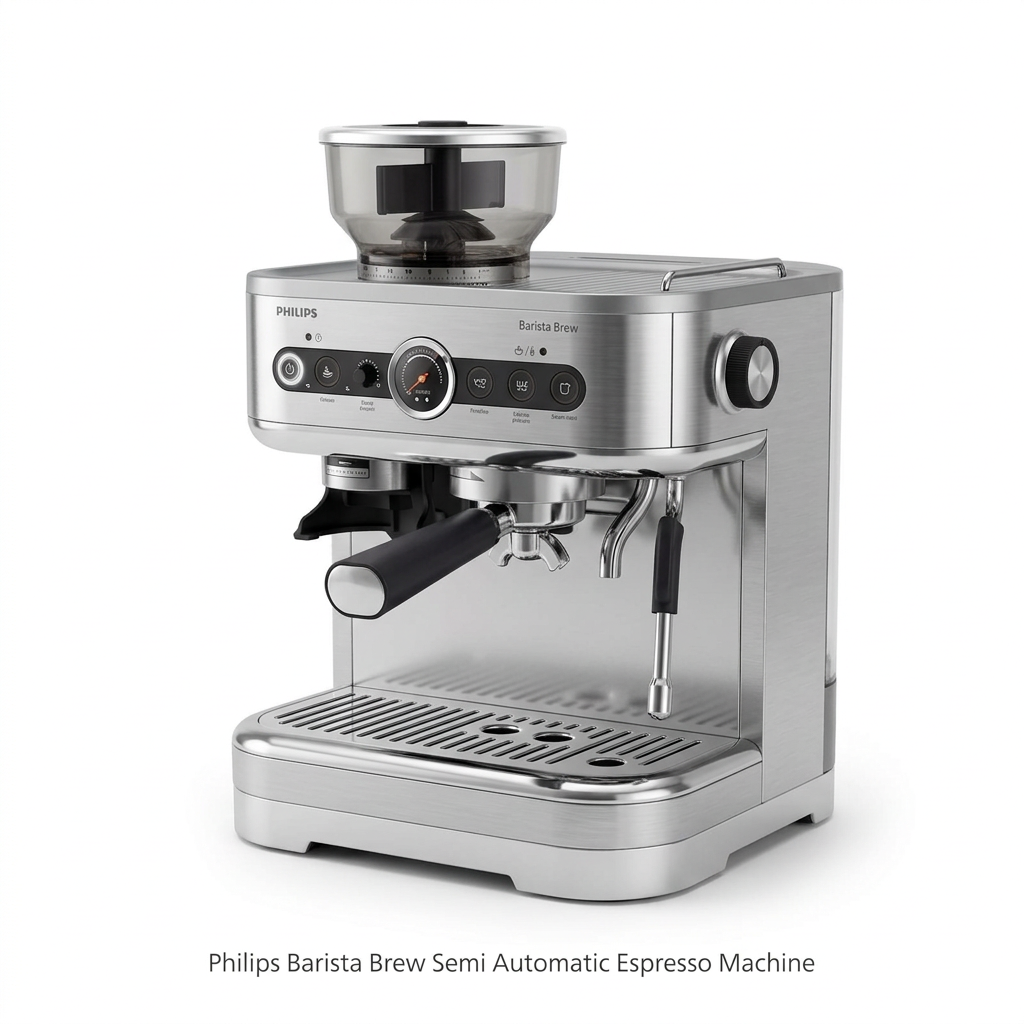
A 58 mm portafilter, an Americano button and an 80-ounce tank. Steaming is slow.
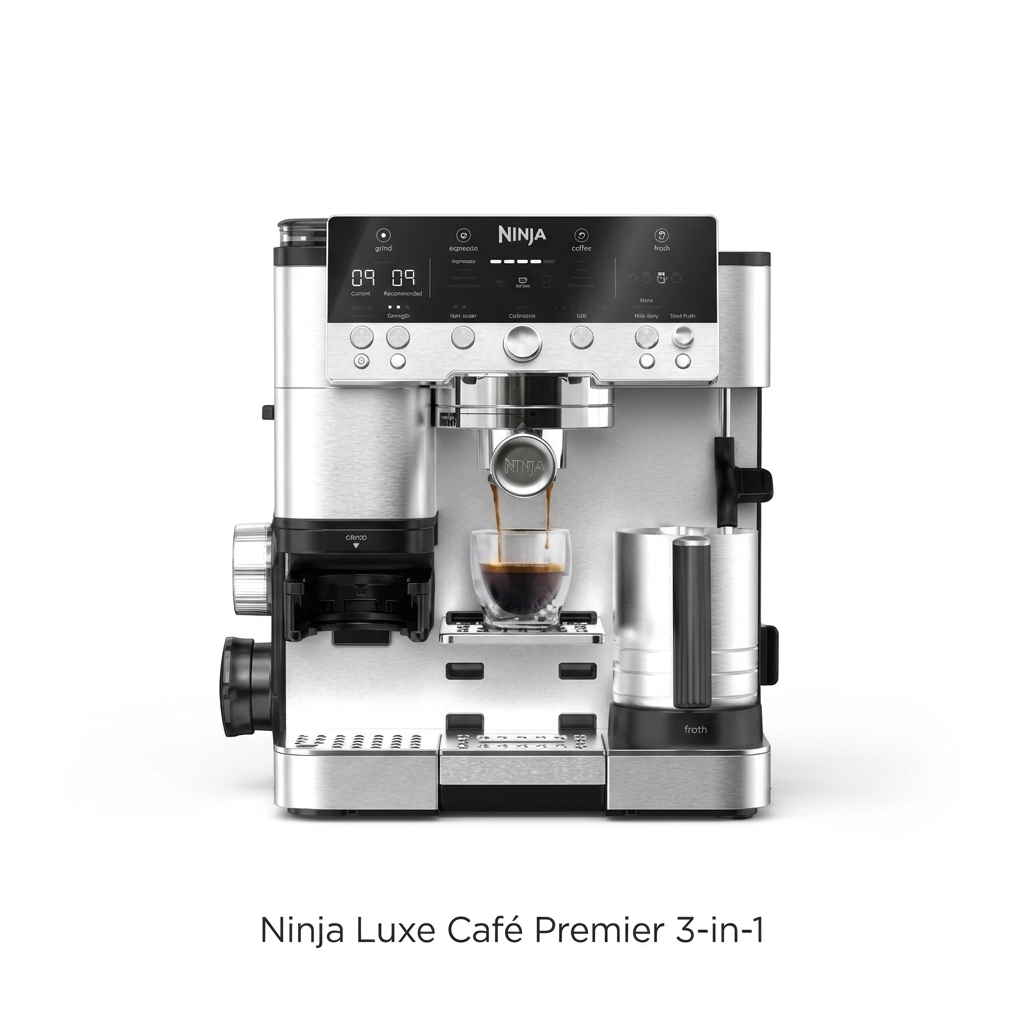
The Luxe Café Pro’s sibling, with 25 grind settings and drip coffee, minus the hot water spout.
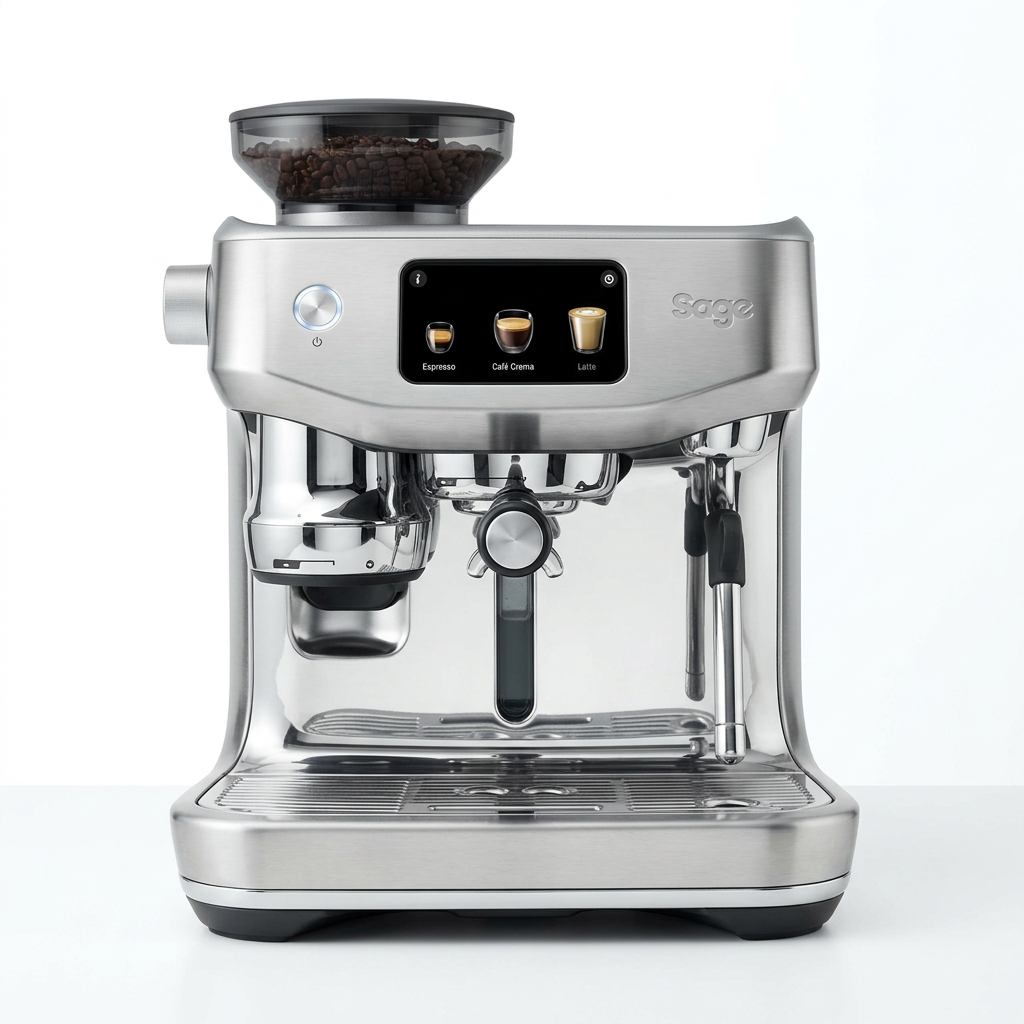
Automatic grinding, dosing and tamping with a 58 mm portafilter. My top espresso, at a premium.
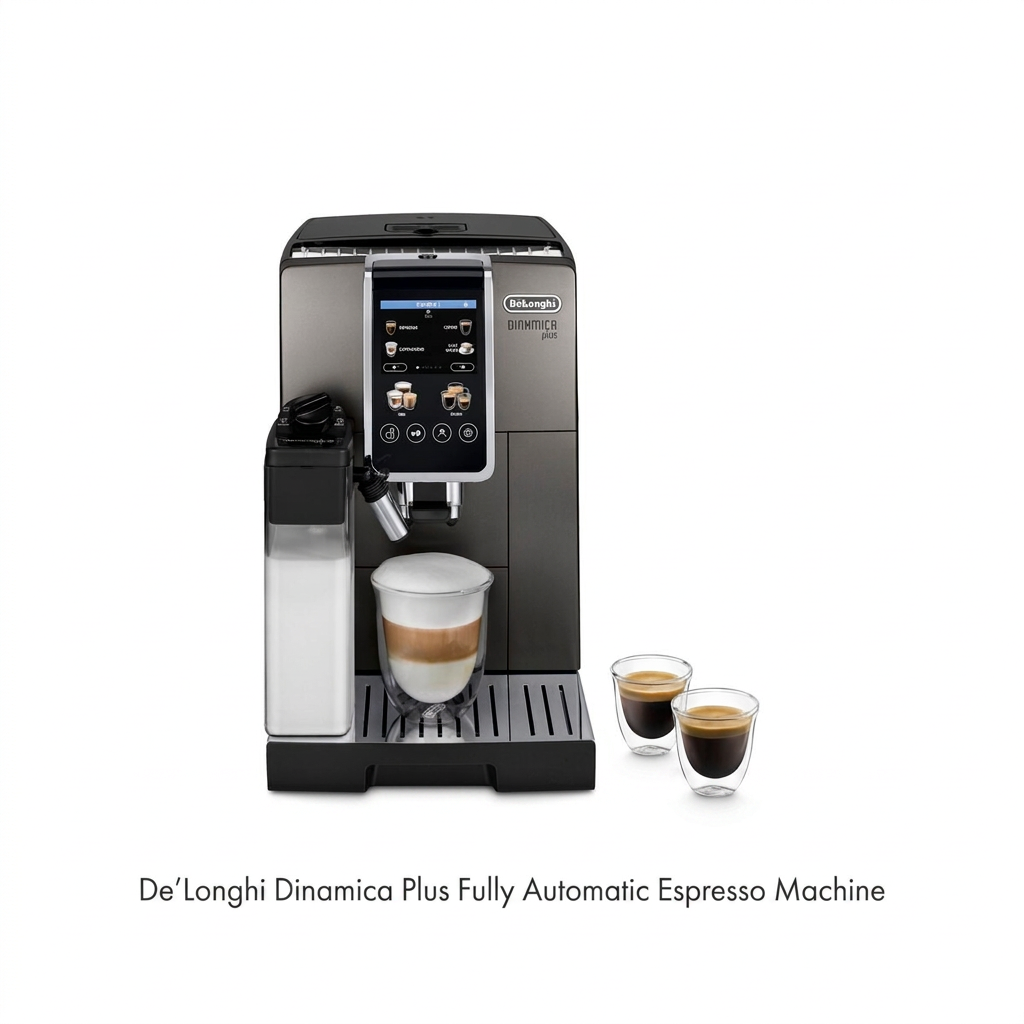
Syrupy espresso and a thermal milk carafe in a slim body.
Frequently asked questions
What is the best espresso machine with a built-in grinder?
For most people, the Ninja Luxe Café Pro. It grinds by weight, assists with tamping and froths milk hands-free, so you get great portafilter espresso without a learning curve.
Is a built-in grinder as good as a separate one?
For most people, yes. A separate high-end grinder can be more precise, especially for light roasts, but the built-in grinders in my picks make excellent espresso.
Which machine with a grinder is best for beginners?
The Ninja Luxe Café Pro if you want a portafilter, or the Philips 3200 or De’Longhi Rivelia if you want one-touch drinks.
Is the Breville Barista Pro better than the Barista Express?
For most people, yes. It heats up in about three seconds, has 30 finer grind settings and steams faster. The Express has a pressure gauge and a lower outlay.
Do I need a scale?
Not for the one-touch machines or the Ninja, which weighs for you. For the Barista Pro and Barista Express, a scale makes dialing in much faster.
How often should I clean the grinder?
Brush out the chute weekly and deep clean every month or two, depending on use. Oily beans need more frequent cleaning.
Can I use pre-ground coffee?
Yes. The semi-automatics accept pre-ground coffee in the portafilter, and the super-automatics have a bypass chute for one scoop.
Which machine makes the best milk?
The Ninja Luxe Café Pro and Breville Barista Pro tied at 8.6. The Ninja is hands-free; the Barista Pro needs technique but gives you more control.
Do built-in grinders work with light roasts?
Yes, but they’re harder to dial in. The Barista Pro’s fine steps handled light roasts best in my tests.
How long does a machine with a grinder last?
With regular cleaning and descaling, 5 to 10 years. Burrs may need replacing after several years of heavy use.
For most people, my pick is the Ninja Luxe Café Pro. It weighs every dose, helps with tamping and froths milk hands-free, so you get café-quality espresso without weeks of practice.
Choose the Breville Barista Pro to learn espresso yourself, the De’Longhi Rivelia for one-touch drinks and bean swaps, the Barista Express for a classic hands-on machine, or the Philips 3200 for the least effort.
Whichever you choose, buy fresh beans with a roast date, use a water filter and brush the grinder out every week.
Kitchen & coffee tester
Michael spent six years as a line cook in restaurants in Chicago and New York, and he has tested kitchen appliances for HouseholdMe since 2018, from air fryers to coffee makers. He holds an SCA certificate in barista skills and used 18 machines as his everyday coffee maker, 4 weeks each, for this guide.
- Four weeks of hands-on testing of each of 18 espresso machines with built-in grinders by HouseholdMe
- HouseholdMe reviews of the Ninja Luxe Café Pro, Breville Barista Pro, De’Longhi Rivelia, Breville Barista Express and Philips 3200
- Manufacturer specifications and owner documentation
- National Coffee Data Trends survey, 2020 and 2025
- Specialty coffee grinding and extraction guidance
- Buying guide published, based on hands-on testing of 18 machines with built-in grinders.