Breville Barista Touch Impress vs Oracle Jet: how much automation do you want?
These two sit at the top of Breville’s range, and they overlap more than you’d expect. The Breville Barista Touch Impress grinds into a 54 mm basket and helps you tamp with a lever that checks your dose, while the Breville Oracle Jet grinds, distributes and tamps into a 58 mm portafilter on its own and adds cold brew. I used each as my only espresso machine for four weeks, weighing every shot and probing every jug of milk, to find out how much automation is worth paying for.
We choose products independently. We may earn a commission through links on this page; your price stays the same. Affiliate policy
Jargon helpNew to espresso? Tap any dotted term to see what it means.
In this comparison
For most people, the Breville Barista Touch Impress is the smarter buy. It made balanced, chocolatey espresso from week one, its lever tamping and on-screen guidance remove most of the guesswork, and its automatic milk was reliable for everyday lattes. Buy the Breville Oracle Jet if you want puck prep done for you, a café-size 58 mm portafilter and cold brew in minutes, and you’re happy to steam milk by hand: its manual wand is superb, but its automatic milk made coarse foam in my testing.
The two machines
Specs checked November 14, 2026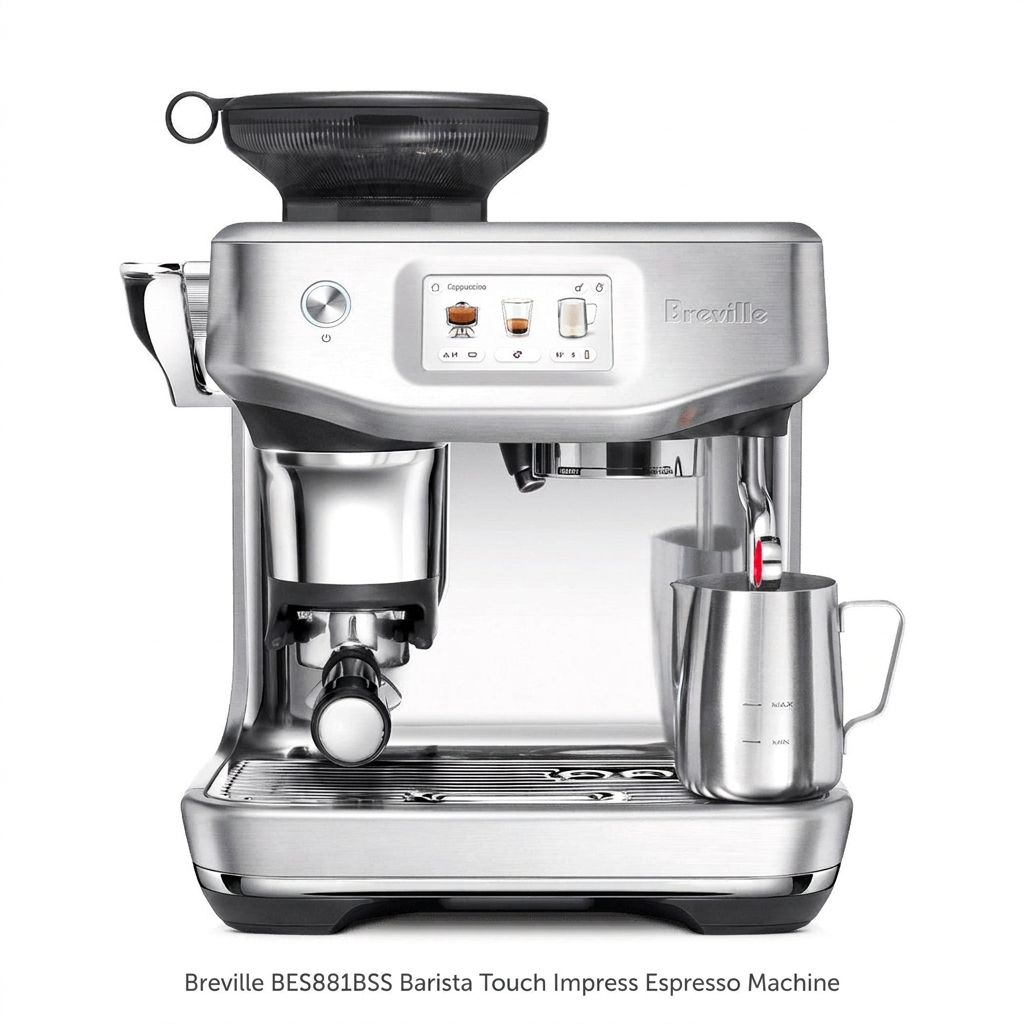
A 4-inch touchscreen with guidance, lever tamping that checks your dose, ThermoJet heat-up in about 3 seconds and reliable hands-free milk.
Check price on Amazon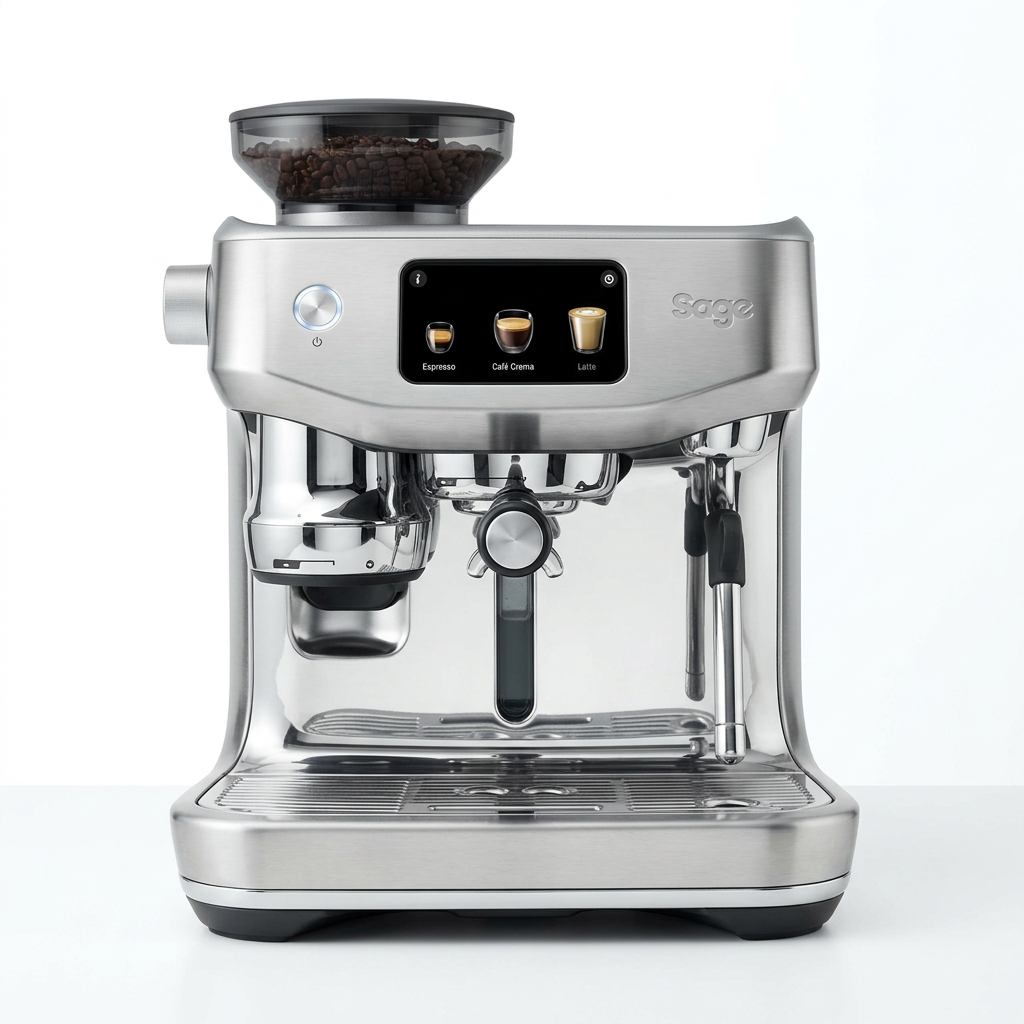
Automatic grind, distribute and tamp into a 58 mm portafilter, 45 grind settings, cold brew and cold espresso, and superb manual steam.
See Today’s PriceBarista Touch Impress vs Oracle Jet at a glance
- Buy the Touch Impress for guided espresso, reliable hands-free milk and the quickest start.
- Buy the Oracle Jet for automatic puck prep, a 58 mm portafilter, cold brew and the best manual steam.
- The Oracle Jet’s espresso was the best of the two, but only after warming the portafilter.
- If you want hands-free lattes, the cheaper Touch Impress actually did it better.
Head to head
The better result in each row is marked, based on my testing and Breville’s specs. Rows where they are equal have no winner.
The tally is not my verdict. Some rows, like automatic milk, matter enormously to one person and not at all to another.
| Spec | Breville Barista Touch Impress | Breville Oracle Jet |
|---|---|---|
| Espressomy tasting, same beans | Balanced, chocolatey | Rich and syrupy, once warm ✓ Best |
| Puck prep | Grind, then lever tamp | Auto grind, distribute and tamp ✓ Best |
| Dose feedback | Lever checks and corrects ✓ Best | Automatic, drifts by about 0.5 g |
| Portafilter | 54 mm | 58 mm ✓ Best |
| Grind settings | 30 shown on screen | 45 ✓ Best |
| Heat-up | About 3 s ✓ Best | Seconds, plus portafilter warm-up |
| Automatic milk | Reliable, a little coarser than manual ✓ Best | Coarse, bubbly foam |
| Manual steam | Good | Superb ✓ Best |
| Cold brew and cold espresso | No | Yes ✓ Best |
| Saved drinks | 8 | 20+ ✓ Best |
| Water use | Normal ✓ Best | High, frequent drip tray |
| Screen | 4-inch touchscreen | 5-inch touchscreen |
| Footprint | 14.2 x 13.4 x 16.3 in ✓ Best | 14.5 x 15 x 16.7 in |
| Rows won | 5 | 7 |
Barista Touch Impress vs Oracle Jet pros and cons
Breville Barista Touch Impress
- On-screen guidance and lever tamping make espresso easy
- Fast ThermoJet heat-up and quick steam
- Milk works hands-free or fully manual
- Grinder takes about 20 seconds for a double
- 54 mm basket limits some commercial accessories
- Automatic milk is a little coarser than manual
Breville Oracle Jet
- Automatic grind, distribute and tamp into 58 mm
- Excellent espresso once the portafilter is warm
- Superb manual steam, plus cold brew and cold espresso
- Automatic milk makes coarse, bubbly foam
- Dose drifts and drops as the hopper empties
- High water use and frequent drip tray emptying
Who should buy which machine?
- Beginners who want guidance
- Hands-free latte drinkers
- Quick weekday mornings
- People who want puck prep automated
- Manual-steam and latte-art fans
- Iced coffee and cold brew drinkers
How much automation each one gives you
Both are semi-automatic✕Semi-automaticA machine where you grind, dose and tamp into a portafilter yourself, and the machine controls the water and pressure. machines with a real portafilter✕PortafilterThe handle with a metal basket that holds the ground coffee. You lock it into the machine to brew., built-in grinder and touchscreen. The difference is how much of the puck prep you do yourself.
On the Breville Barista Touch Impress, the machine grinds into the basket, then you pull a lever on the left. A flat tamper presses at about 22 pounds and finishes with a 7-degree twist to polish the surface.
On the Breville Oracle Jet, you lock in the portafilter and the machine does everything. It grinds, spins a distributor across the rising bed of coffee, tamps and polishes, then you move the portafilter to the group.
| Step | Barista Touch Impress | Oracle Jet |
|---|---|---|
| Grind | Automatic into the basket | Automatic into the basket |
| Distribute | Lever tamp levels it | Automatic spinner |
| Tamp | Lever, about 22 lb | Automatic |
| Dose check | Lever reports too much or too little | Automatic target |
| Move to group | You | You |
| Brew | One touch | One touch |
| Milk | Automatic or manual | Automatic or manual |
In daily use, the Oracle Jet saves you one lever pull and the odd top-up. That’s less than it sounds, but it’s also the most repetitive part of making espresso.
There’s also a difference in how mistakes show up. On the Touch Impress, the lever tells you right away if the dose is off; on the Oracle Jet, a drifting dose only shows up in the cup, which is why I kept the hopper topped up.
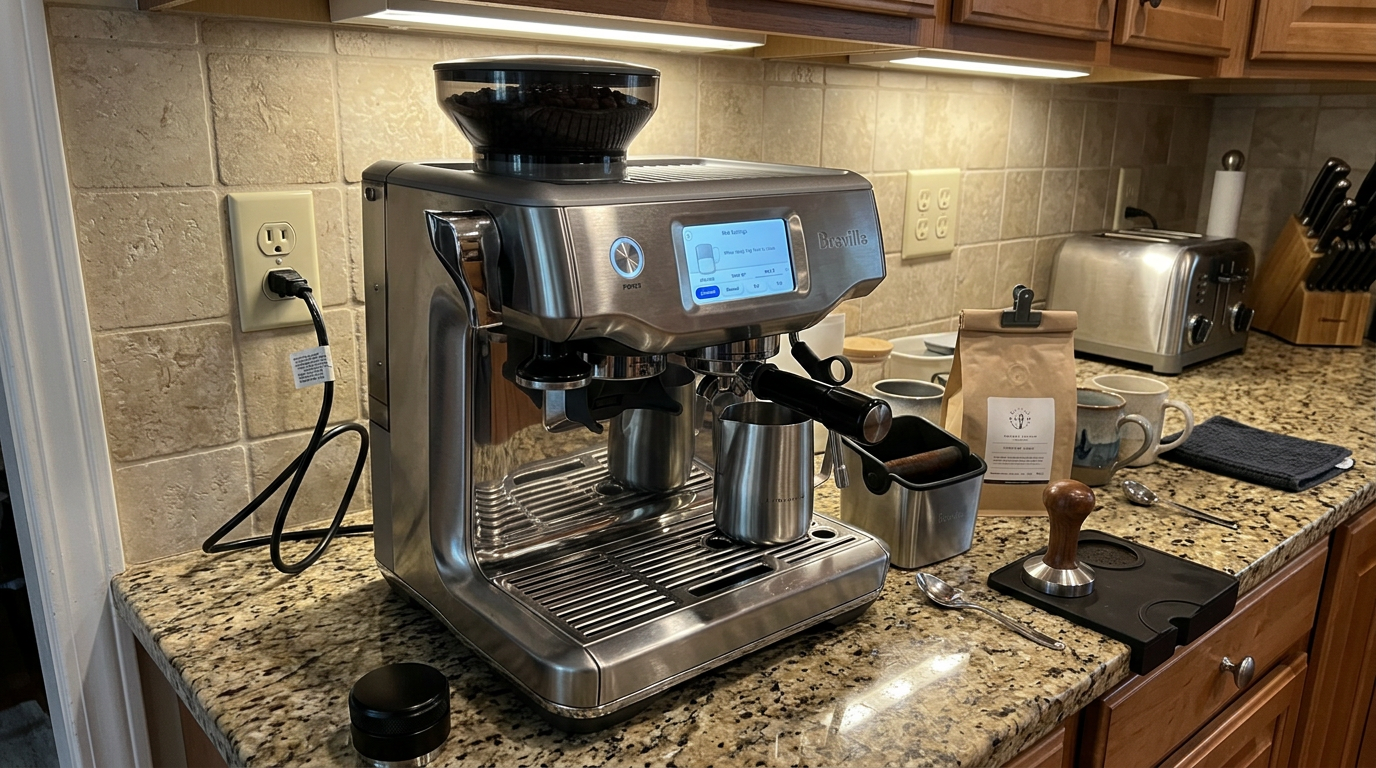
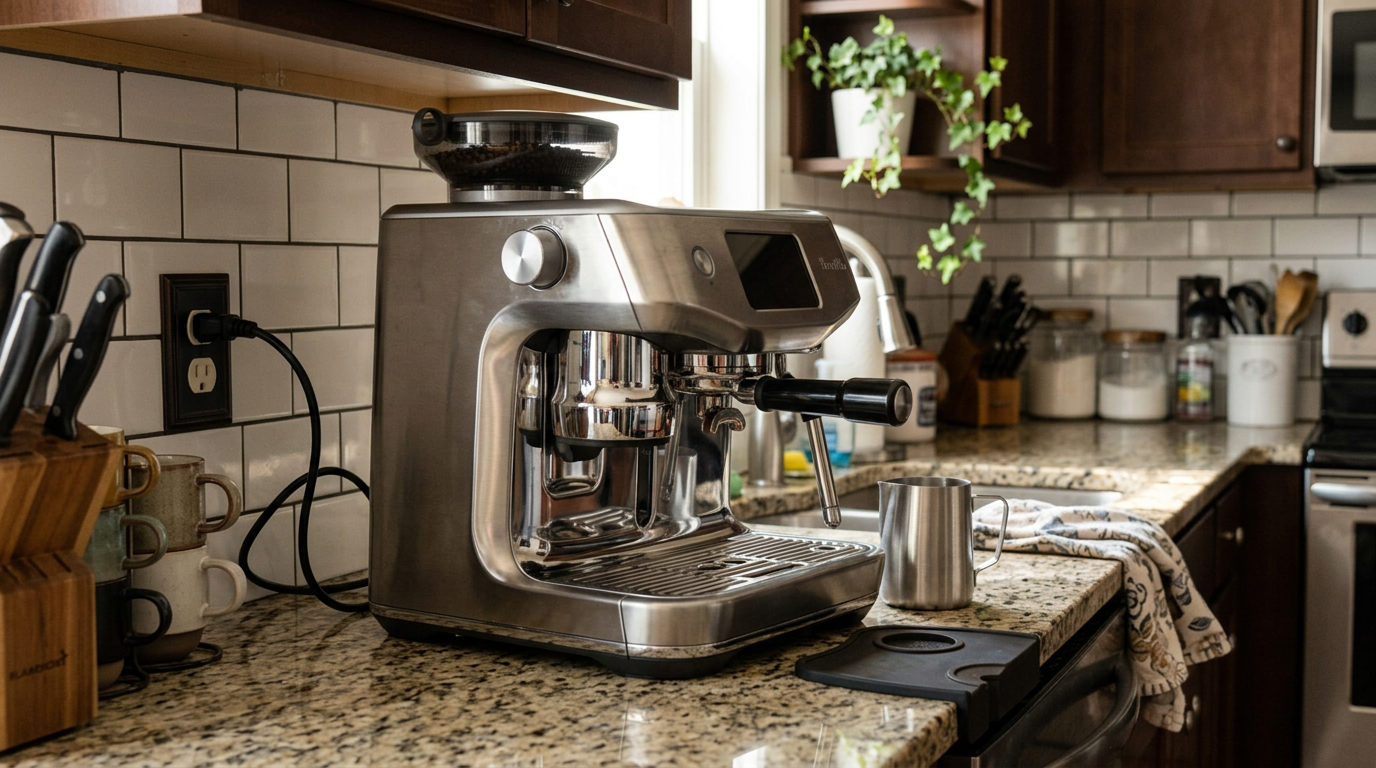
The Touch Impress tamps with a lever that checks and corrects your dose.
Our tip: Always pull the Touch Impress lever twice, because the second pull polishes the puck surface and gives a smoother, more even shot.
Design, size and build
Both are brushed stainless steel with a color touchscreen at the center, and both feel solid and premium.
The Breville Barista Touch Impress measures about 14.2 inches wide, 13.4 deep and 16.3 tall, and weighs about 24 pounds. The 67.6-ounce tank sits at the back with a magnetic float.
The Breville Oracle Jet is bigger: about 14.5 inches wide, 15 deep and 16.7 tall, and around 27 pounds. Its touchscreen is 5 inches against the Touch Impress’s 4.
Depth on the counter
Both fit a standard 24-inch counter.
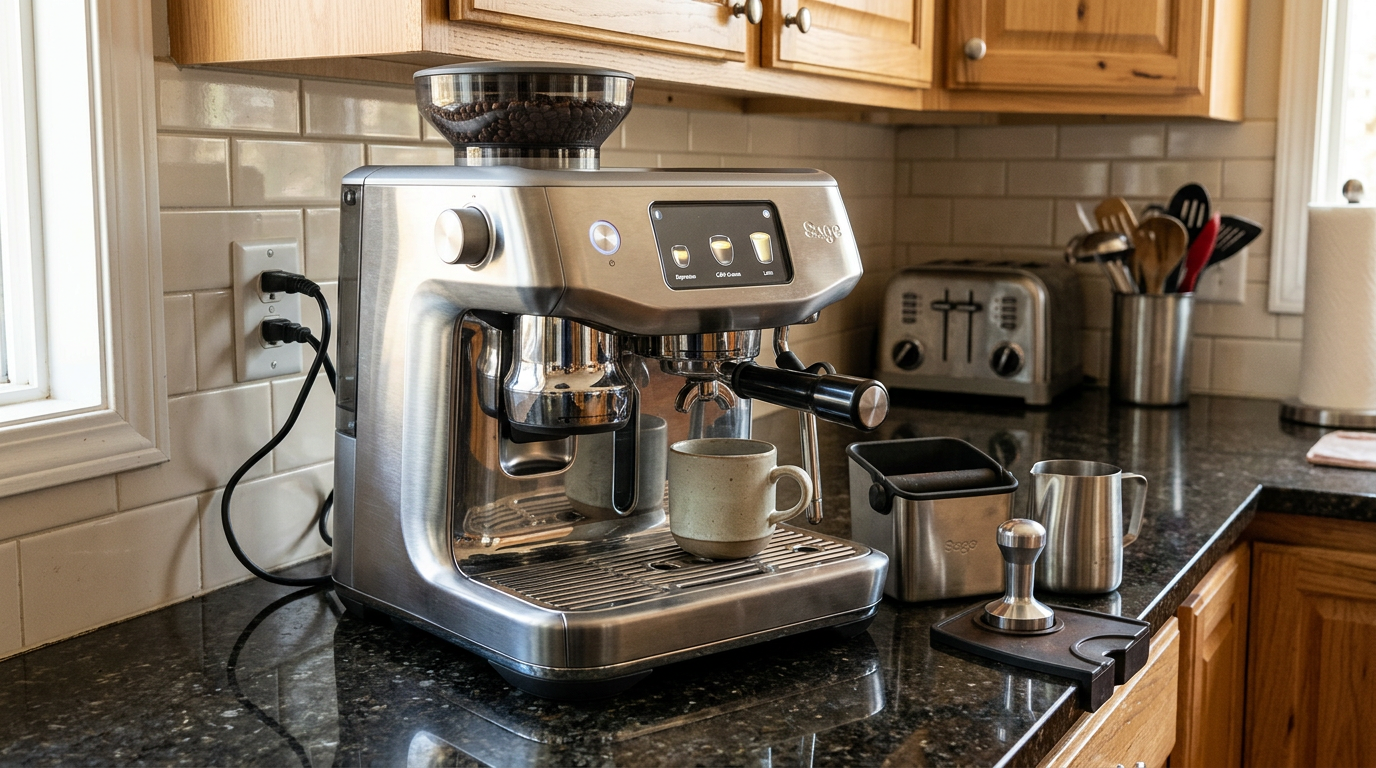
The Oracle Jet is a little bigger, with a 5-inch screen and a 58 mm group.
The Oracle Jet’s hopper has a gate that closes when you lift it off, so beans don’t spill. It’s a small detail that shows where the extra engineering went.
Our tip: Check the depth of your counter for the Oracle Jet, because at about 15 inches deep it needs more room front to back than the Touch Impress.
Setup and the first week
Both walk you through setup on the touchscreen: fill the tank, fit the filter, set water hardness and pick your beans.
On the Breville Barista Touch Impress, I chose the single-wall basket✕Single-wall basketA filter basket with many holes and no built-in pressure trick. It needs a fine, fresh grind but gives the richest shots. double basket for fresh beans and set the grind to 10, as the guide suggested. I ended up between 8 and 12 depending on the beans.
If the pump ran but coffee only dripped after 15 seconds, the grind was too fine. Moving two or three steps coarser, say from 8 to 11, and running one purge fixed it.
On the Breville Oracle Jet, setup included the dose calibration I describe below, and a Wi-Fi connection; it’s Breville’s first Wi-Fi espresso machine. Dialing in was quick once the dose was right.
How confident I felt, by week
My own rating of how reliably I got the drink I wanted. The Oracle Jet’s automatic milk held it back.
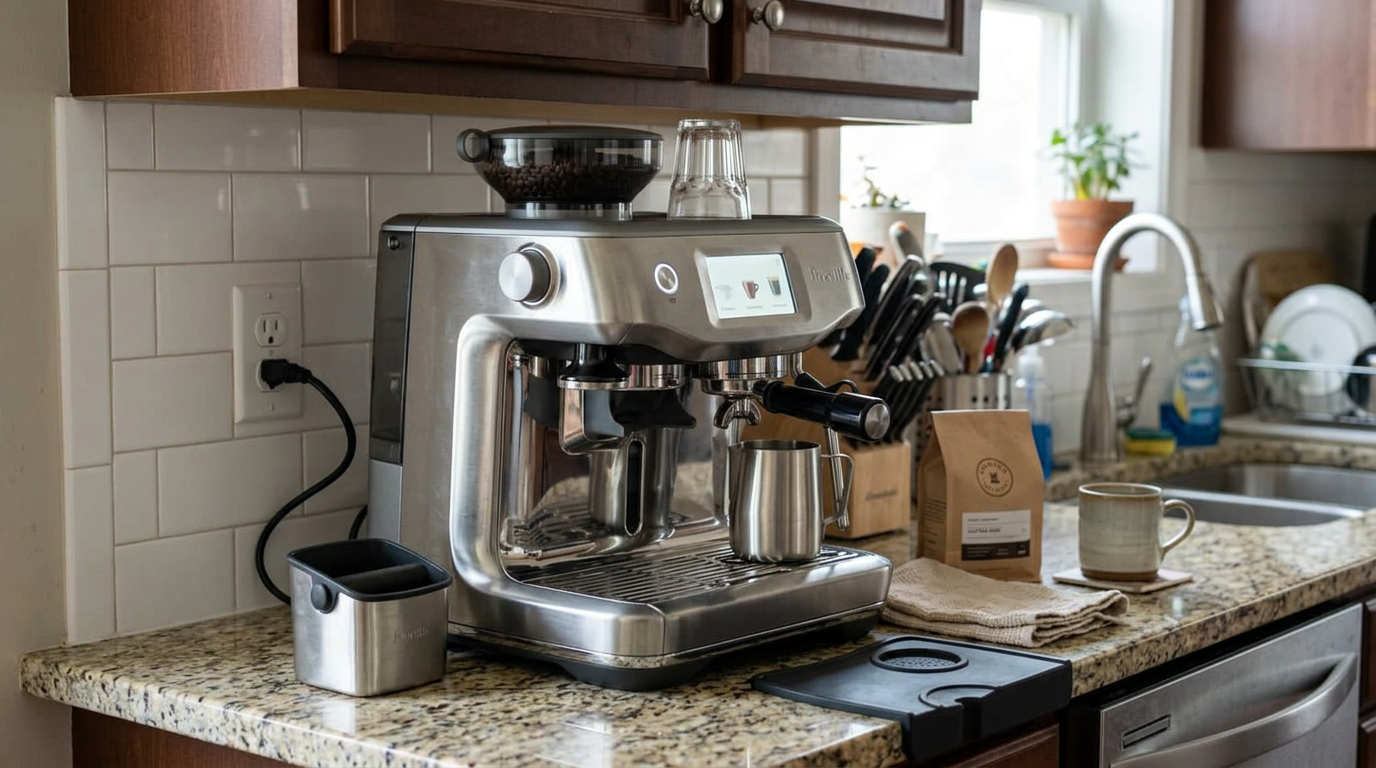
Both machines walk you through setup on the touchscreen.
Our tip: Start the Touch Impress at grind setting 10 with the single-wall basket, then move two or three steps at a time until a double takes 27 to 30 seconds.
Grinder and dose
Both use Baratza-designed burrs. The Oracle Jet’s precision burrs offer 45 settings, while the Touch Impress shows 30 numbered settings on a stepless dial.
On the Touch Impress, a full double dose took about 18 to 20 seconds, at about one gram per second. That was the slowest part of every drink.
The lever is the clever part. If the dose is too low, the screen asks you to grind a top-up; if it’s too high, it reduces the next dose automatically.
On the Oracle Jet, the factory target is around 22 grams. Bringing it down to 18 or 19 grams meant adjusting the dose mechanically with the included 2 mm Allen key, then confirming it in the software.
Even then, the dose drifted. A target of 17.5 grams crept to 18.0, 18.3 or 18.5 over several shots, and dropped to about 17 when the hopper ran low.
Oracle Jet dose, measured over a week
Target set to 17.5 g. Keep the hopper at least half full.
| Grinder detail | Barista Touch Impress | Oracle Jet |
|---|---|---|
| Burrs | Baratza-designed, conical | Baratza precision burrs |
| Settings | 30 shown, stepless | 45 |
| Double dose | About 18 g, my recipe | 18–19 g after calibration |
| Dose control | Lever feedback and top-up | Automatic, drifts slightly |
| Grind time, double | 18–20 s | Part of the auto sequence |
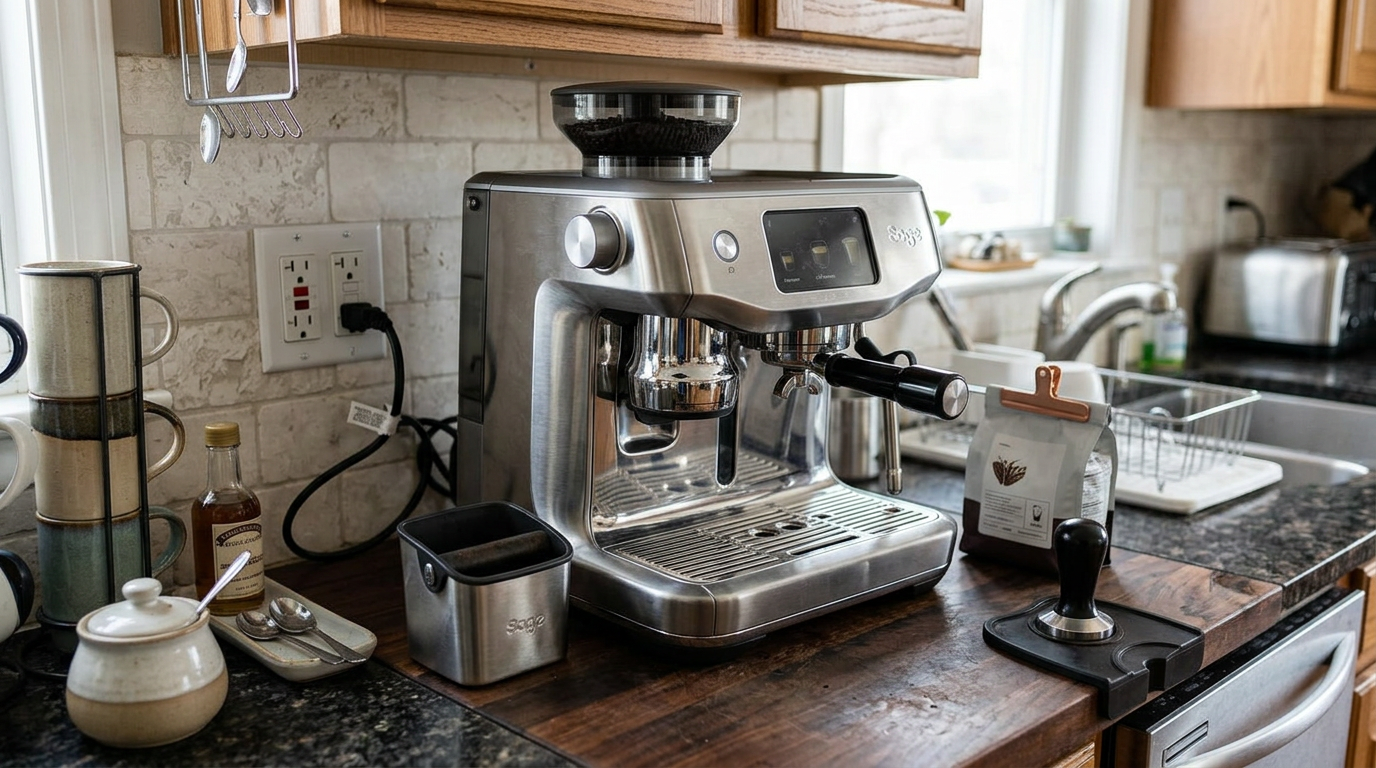
The Oracle Jet grinds, distributes and tamps on its own into the 58 mm basket.
Espresso quality
The Oracle Jet made the best espresso of the two, but with an important condition: the portafilter has to be warm.
Its 58 mm portafilter is heavy, and heavy metal takes time to heat. Straight after switching on, my first shot scored 5.0; after three hot water flushes, it scored 8.8, and after 20 minutes it reached 9.0.
Oracle Jet espresso by warm-up, my scores
Scores out of 10 with the same beans and recipe.
Once warm, it pulled rich, syrupy shots. Flow settled at about 1.7 to 2.0 milliliters per second, a classic, steady espresso pour, and I brewed between 194 and 203°F depending on roast.
Why the warm-up matters: a cold portafilter steals heat from the water as the shot runs, so extraction drops and the espresso tastes flat and muted. The Oracle Jet heats its group head with a small second ThermoJet, but the handle and basket still need a few flushes.
About once every 20 shots, the Oracle’s mechanism didn’t finish its final polishing rotation. It never ruined a shot, but it’s worth knowing about if you expect perfection from automation.
The Touch Impress was consistent from the first week. My standard recipe was about 18 grams in and 36 grams out, in 27 to 30 seconds, and from week two most shots landed right there.
Its default brew temperature is 200°F, adjustable from 192 to 207°F. A light roast needed 203°F to lose its sourness, and a very dark roast tasted softer at 196°F.
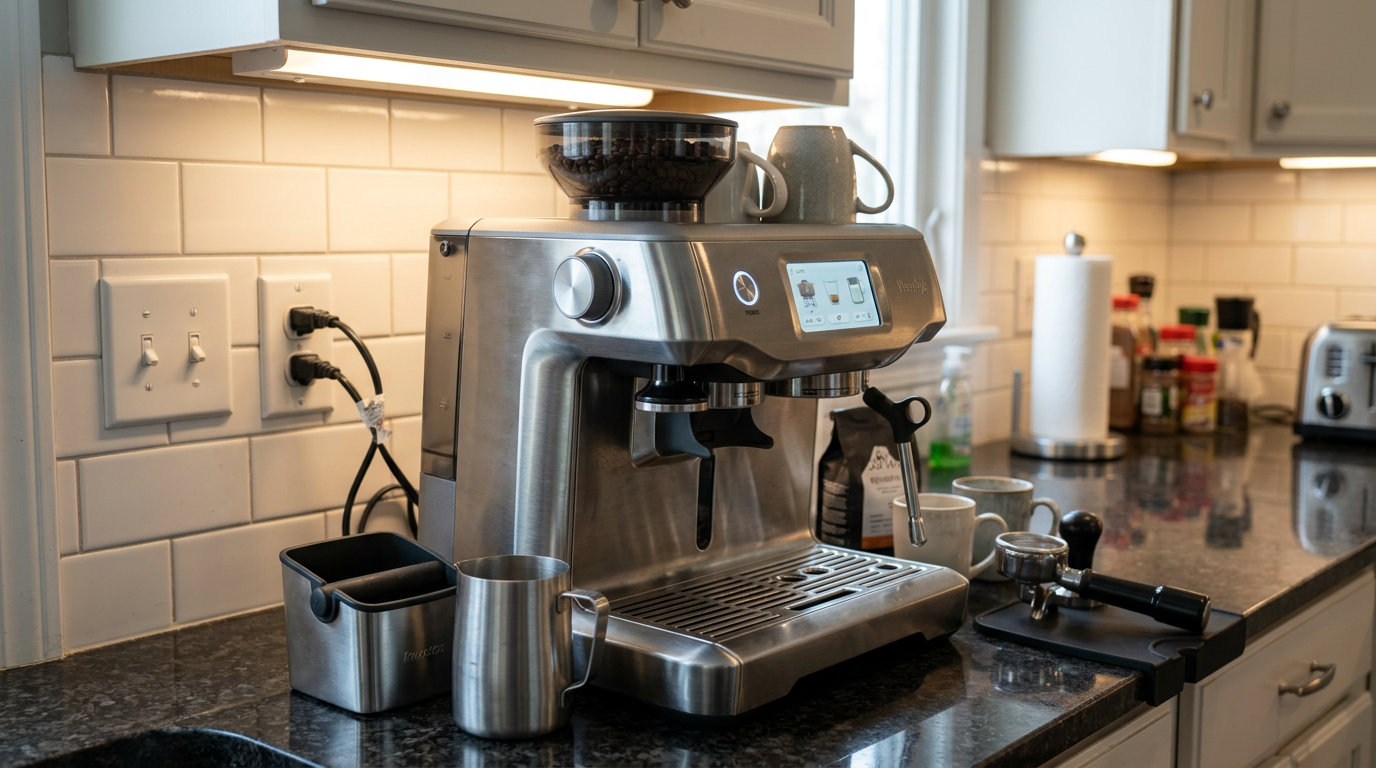
The Touch Impress made balanced, chocolatey espresso from the first week.
My espresso ratings, warmed up
Scores out of 10 for body, sweetness, crema and consistency.
Our tip: Run three hot water flushes through the Oracle Jet’s portafilter before your first shot, because a cold 58 mm portafilter makes the first espresso flat and muted.
Milk drinks
This section surprised me most. The cheaper machine made the better automatic milk, and the expensive one made the better manual milk.
Automatic milk
On the Touch Impress, you sit the jug on the sensor and pick a temperature and foam level. The default is 149°F, adjustable down to 140°F for sweeter milk, and foam level 4 was a good middle for cappuccinos and flat white✕Flat whiteA short milk coffee with a double shot and a thin layer of silky microfoam. Stronger and less foamy than a cappuccino..
The result was reliable and a little coarser than my best manual milk. It was easily good enough for everyday lattes.
Lower milk temperatures taste sweeter. Research from the University of Camerino found milk foam is most stable around 60°C, or 140°F.
On the Oracle Jet, I ran more than 50 automatic cycles with different jug sizes, milk types and positions. The foam was consistently coarse and bubbly, not the microfoam✕MicrofoamMilk foam with bubbles so small you can barely see them. It looks glossy, like wet paint, and blends into the coffee. I expected at this level.
Manual steam
In manual mode, the Oracle Jet’s steam wand made some of the best microfoam I’ve had from a home machine. It’s powerful, dry and easy to control.
The Touch Impress’s manual mode is good too, with quick steam from its ThermoJet✕ThermoJetBreville’s fast heating system. It heats water on demand and is ready to brew or steam within seconds of switching on.. It just isn’t as strong as the Oracle’s.
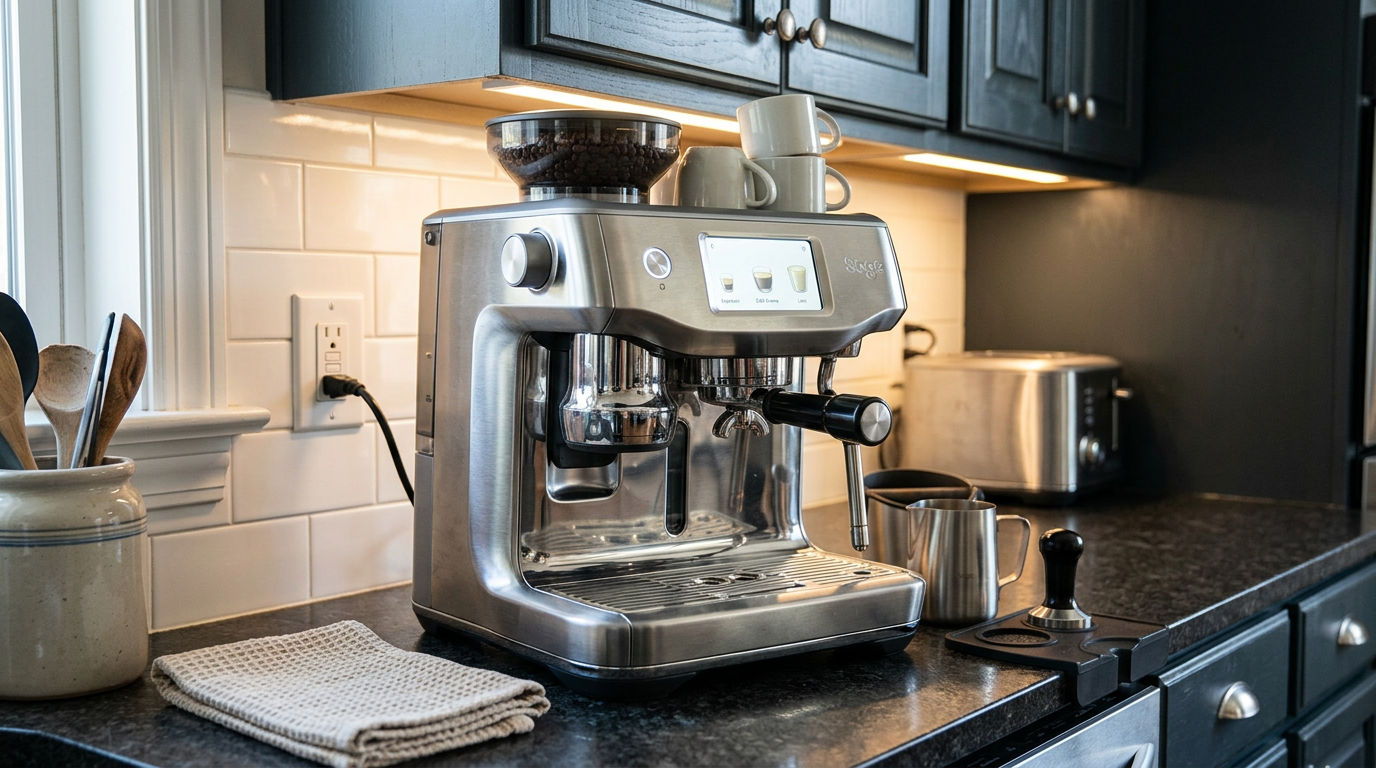
In manual mode, the Oracle Jet’s wand made superb microfoam.
| Milk detail | Barista Touch Impress | Oracle Jet |
|---|---|---|
| Automatic foam | Reliable, slightly coarse | Coarse and bubbly |
| Manual foam | Good | Superb |
| Temperature | Default 149°F, down to 140°F | Down to 140°F |
| Foam levels | 1–8 | Adjustable texture |
| Best for | Hands-free lattes | Hand-steamed flat whites |
Cold brew and iced drinks
Only the Oracle Jet has a cold mode, and it’s genuinely useful.
For cold drinks, it bypasses the main heater and pumps water at around 122°F, much cooler than a normal shot. Breville says cold brew takes under three minutes and cold espresso just over one.
Traditional cold brew✕Cold brewCoffee made with cool water instead of hot. It tastes smoother and less acidic than coffee brewed hot. takes 12 hours or more, so this was a big convenience on hot afternoons. Cold espresso over ice made the smoothest iced latte I had all month.
The Touch Impress makes iced drinks the usual way: a hot shot over ice. It works, with a little more bitterness and dilution.
| Cold drink | Barista Touch Impress | Oracle Jet |
|---|---|---|
| Cold brew | No | Yes, minutes |
| Cold espresso | No | Yes, about 1 minute |
| Iced latte | Hot shot over ice | Cold espresso over ice |
| Water temperature | Normal brew | About 122°F |
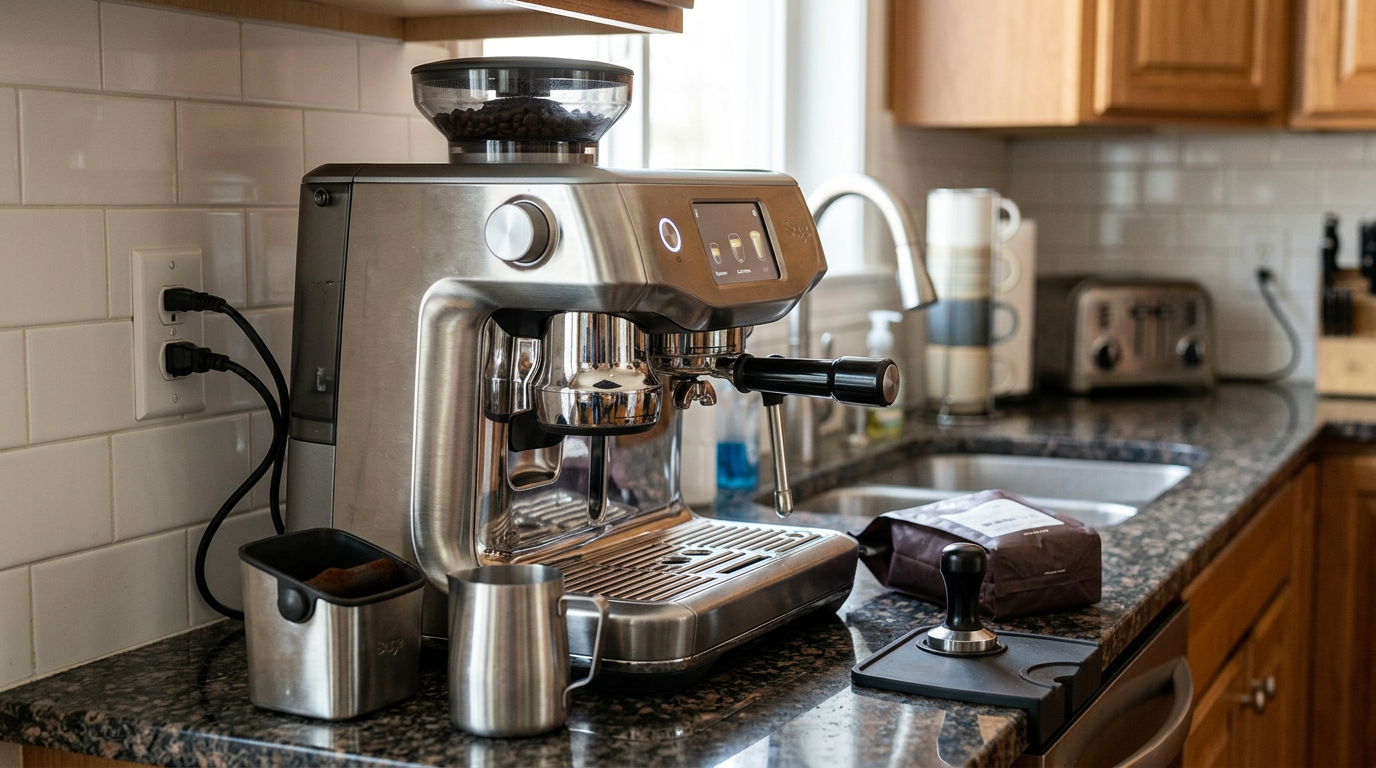
The Oracle Jet’s cold mode made cold brew in minutes instead of hours.
Is It On Sale? Check NowSpeed and daily workflow
On the Touch Impress, the ThermoJet heats in about 3 seconds. In practice I could switch on and start grinding straight away.
The Oracle Jet also heats in seconds, but its portafilter needs warming for the best shot. On busy mornings, that added a couple of minutes of flushes.
| Task | Barista Touch Impress | Oracle Jet |
|---|---|---|
| Heat-up | About 3 s | Seconds, plus portafilter warm-up |
| Espresso | About 1.5 min | About 1.5 min once warm |
| Two milk drinks | About 4.5 min | About 5 min |
| Espresso only, total | About 2.5 min | About 3 min |
Two milk drinks, start to finish
Including cleanup, from my timed mornings.
The touchscreens are both fast and clear. The Oracle Jet’s menus go deeper, and its on-screen grind suggestions after long drinks sometimes pointed me the wrong way, so I trusted my taste.
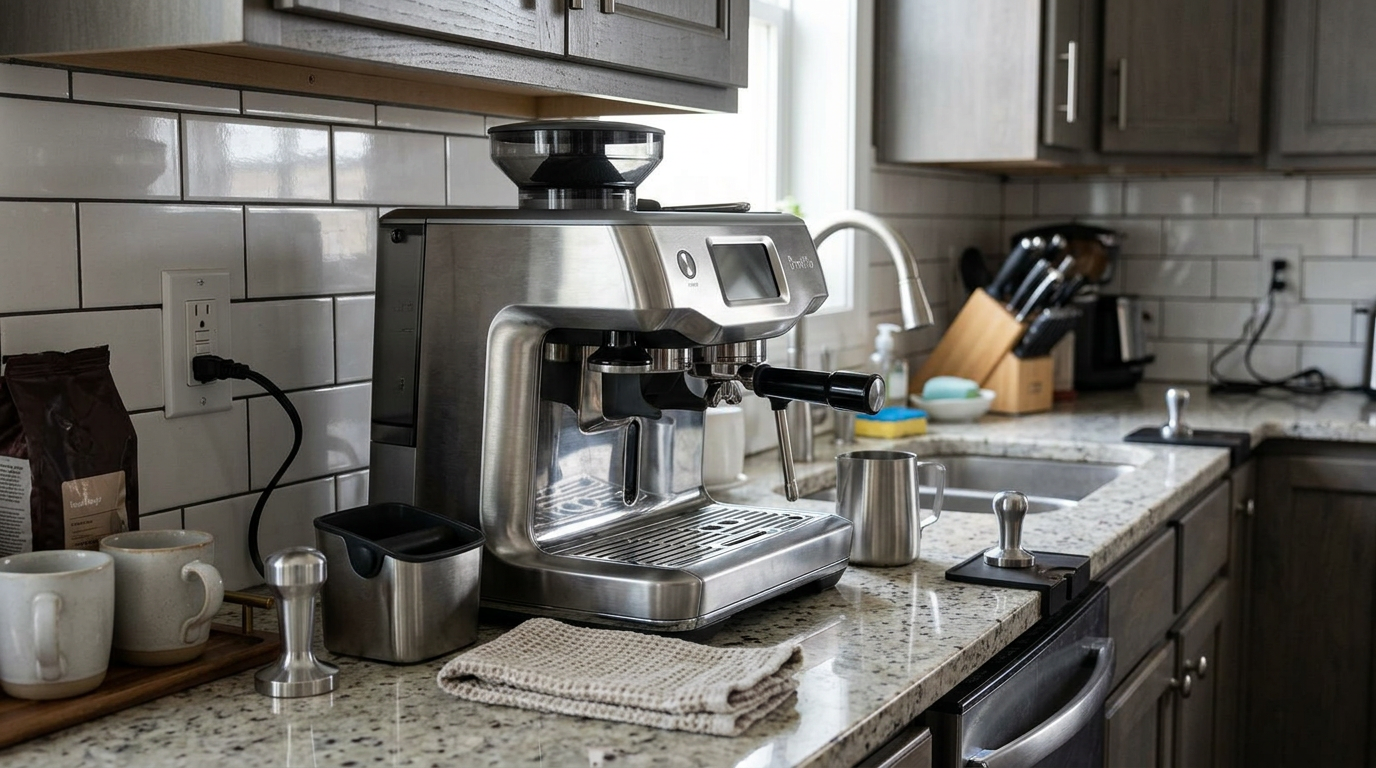
The Touch Impress’s 4-inch screen guides you through every step.
Our tip: Trust your taste over the Oracle Jet’s on-screen grind suggestions after long drinks, because it sometimes recommends a change you don’t need.
Cleaning and upkeep
Daily cleaning is similar: knock out the puck, wipe the basket, purge and wipe the steam wand, empty the drip tray.
The Oracle Jet used more water, through flushes and rinses, and its drip tray filled quickly. I emptied it every day without fail.
On the Oracle Jet, double-tapping the grinder icon purges about 3 grams of stale grounds from the chute. I did it each morning before the first shot.
| When | Barista Touch Impress | Oracle Jet |
|---|---|---|
| After milk | Wipe and purge the wand | Wipe and purge the wand |
| Daily | Empty tray, wipe the shower screen | Empty tray, purge the chute |
| Weekly | Brush the grinder chute | Brush the grinder chute |
| When prompted | Backflush✕BackflushRunning water backwards through the group head with a blank basket and cleaning tablet to clear coffee oils from the valve. with a tablet | Backflush with the included disc |
| When prompted | Descaling✕DescalingRunning a mild acid through the machine to dissolve the mineral scale that hard water leaves in the heater and pipes. | Descale |
The Oracle Jet’s flushes fill the drip tray quickly, so empty it daily.
Our tip: Empty the Oracle Jet’s drip tray every evening, because morning flushes can overflow a tray that’s already half full.
Beans, water and accessories
Both hoppers hold about 12 ounces. The Touch Impress’s tank holds 67.6 ounces; the Oracle Jet’s holds about 77 ounces, which it needs because it uses more water.
The 58 mm group is the Oracle Jet’s quiet long-term advantage. Most commercial accessories fit it, while the Touch Impress’s 54 mm basket limits your options.
| Bean type | Barista Touch Impress | Oracle Jet |
|---|---|---|
| Medium roast | 200°F, grind 8–12 | 194–203°F |
| Light roast | 203°F, finer | Very good, strong burrs |
| Dark roast | 196°F | Coarser, 194–196°F |
| Very oily | Clean the burrs more often | Clean the burrs more often |
Both hoppers hold about 12 ounces of beans.
Used pucks make a good addition to compost when mixed with other materials. Both machines produce a daily pile of them.
How four weeks went
First impressions can mislead at this level. Here is how each machine settled in over the month.
| Week | Barista Touch Impress | Oracle Jet |
|---|---|---|
| 1 | Guided setup; balanced shots by day three | Dose calibrated from 22 g; first-shot flatness noticed |
| 2 | Shots consistently 27–30 s; automatic milk for weekday lattes | Three-flush routine; espresso excellent |
| 3 | Manual steam for weekend flat whites | Cold brew most afternoons; manual milk superb |
| 4 | Fastest, most reliable machine for the household | Best shots, but automatic milk still frustrating |
By the end, my household split along a clear line. Anyone who wanted a latte without thinking used the Touch Impress; I used the Oracle Jet for espresso, cold brew and hand-steamed flat whites.
If you’ll only ever use automatic milk, that settles it. If you love steaming by hand and want the puck prep done for you, the Oracle Jet is the more rewarding machine.
Getting the most from each
- Touch Impress: pull the lever twice, grind any top-up it asks for and adjust temperature by roast.
- Touch Impress: use foam level 4 and 140 to 145°F for oat-milk flat whites.
- Oracle Jet: calibrate to 18 or 19 grams, keep the hopper half full and flush three times before the first shot.
- Oracle Jet: use manual mode for flat whites and cold espresso for iced lattes.
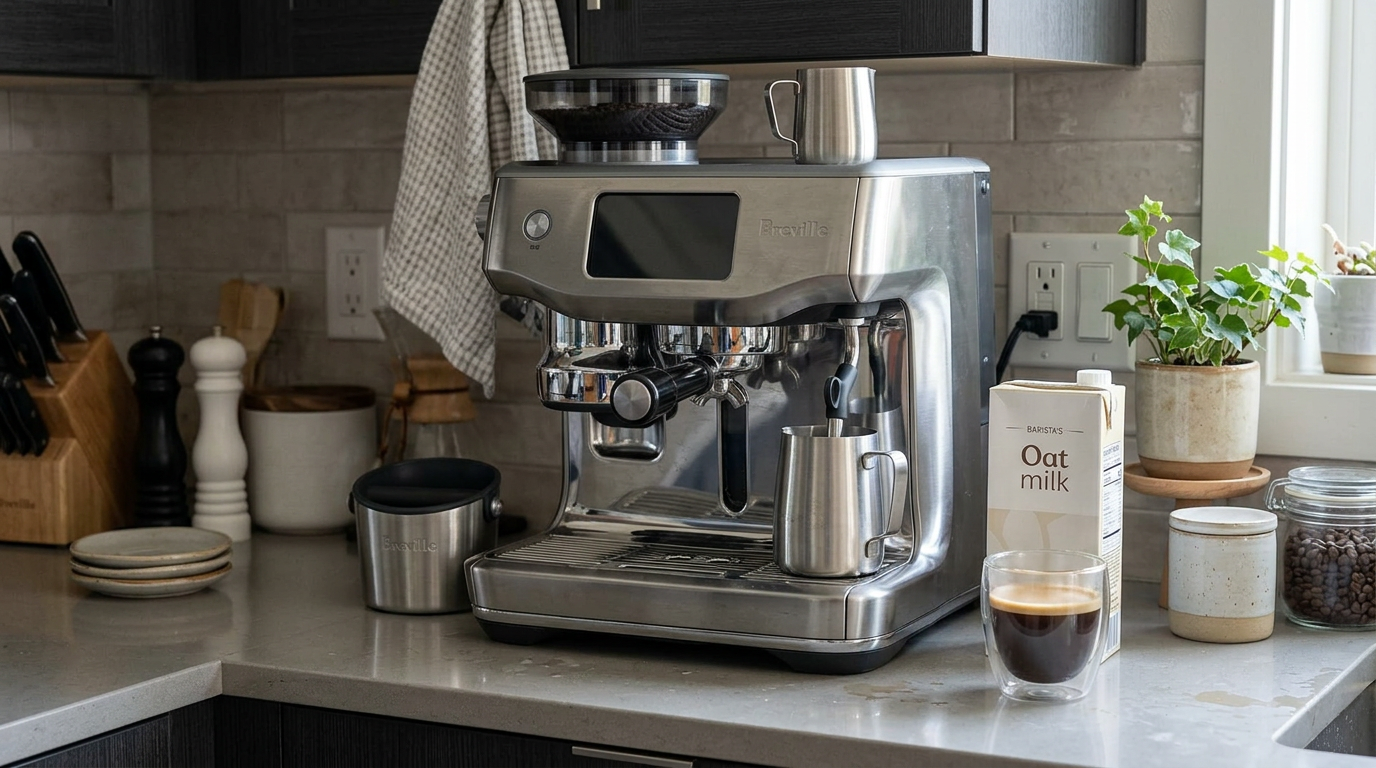
After a month, the Oracle Jet was my espresso and cold brew machine.
Mistakes to avoid on each
Both machines are clever, but cleverness doesn’t protect you from a few common mistakes. These were the ones that cost me the most.
| Machine | Mistake | Better habit |
|---|---|---|
| Touch Impress | Skipping the second lever pull | Always polish the puck |
| Touch Impress | Ignoring top-up prompts | Grind the top-up |
| Touch Impress | Jug not flat on the sensor | Sit the jug flat |
| Touch Impress | No blank flush in the morning | Warm the portafilter |
| Oracle Jet | Brewing straight after switch-on | Three hot water flushes |
| Oracle Jet | Keeping the 22 g default dose | Calibrate to 18–19 g |
| Oracle Jet | Letting the hopper run low | Keep it at least half full |
| Oracle Jet | Forgetting the drip tray | Empty it daily |
On the Touch Impress, ignoring the top-up prompt was the classic mistake. An under-dosed basket makes sour, fast shots, and the lever is telling you exactly why.
On the Oracle Jet, brewing straight after switch-on was the costliest habit. The first shot from a cold 58 mm portafilter scored half what a warm one did.
Three flushes before the first shot made the Oracle Jet’s espresso far better.
Our tip: Sit the milk jug flat on the Touch Impress’s sensor, because a tilted jug makes the milk stop at the wrong temperature.
Real-life scenarios
Specs only go so far. These are the situations where one machine clearly pulled ahead during my testing.
Sit the jug on the sensor and walk away. The Touch Impress made reliable foam; the Oracle Jet’s automatic foam was bubbly.
In manual mode, the Oracle Jet’s wand made some of the best microfoam I’ve had at home.
Cold espresso in about a minute, poured over ice. The Touch Impress can only pour a hot shot over ice.
On-screen guidance and lever feedback taught me more than the Oracle Jet’s hands-off routine.
About 3 seconds to heat and no portafilter warm-up. The Oracle Jet needed flushes for its best shot.
Once warm, the 58 mm group pulled the richest, most syrupy shots of the month.
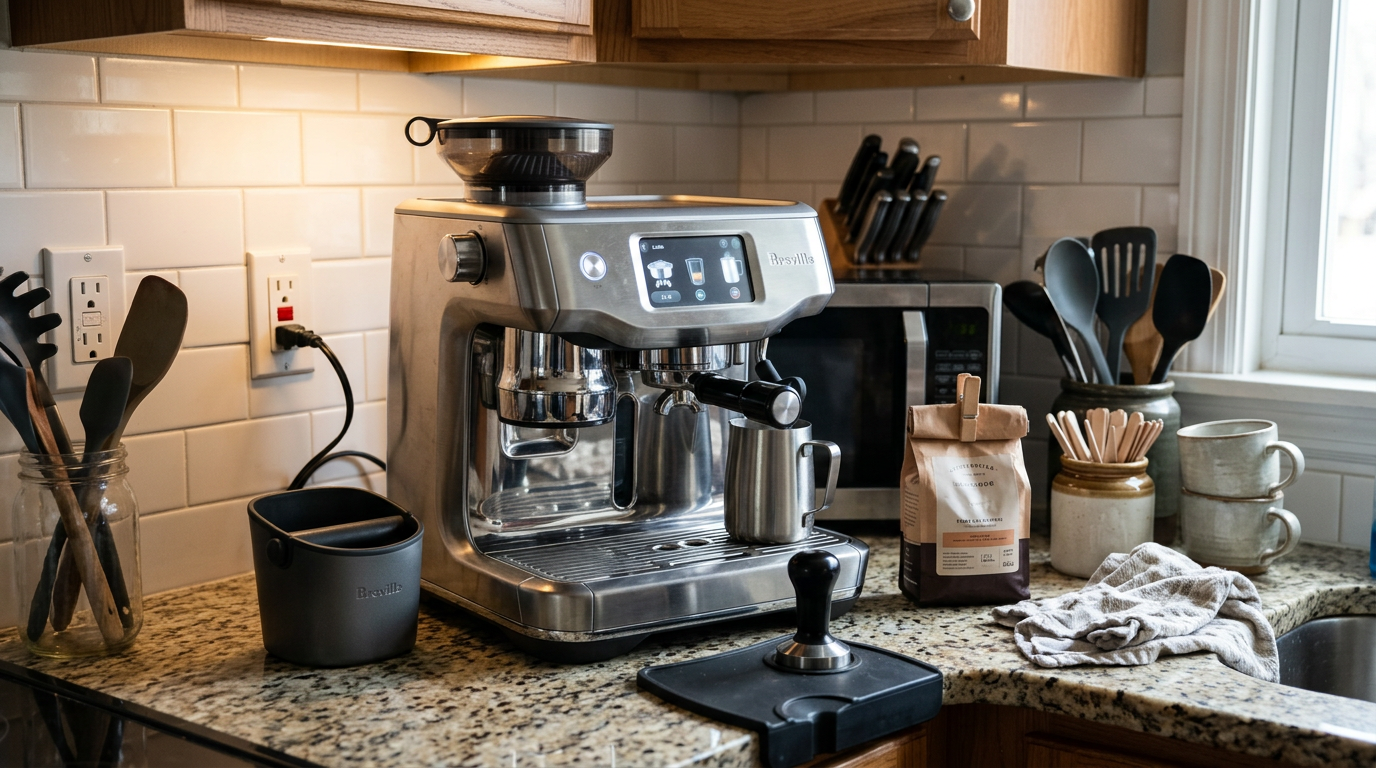
On slow weekends, the Oracle Jet’s espresso was the best of the two.
My scorecard
These are my own scores out of 10 after four weeks with each machine. I added automation and value for features because they decide this matchup.
Breville Barista Touch Impress
Breville Oracle Jet
Overall, I rate the Barista Touch Impress 8.6 and the Oracle Jet 8.4. The Oracle Jet does more and makes the better shot and manual milk. The Touch Impress does the everyday things more reliably, especially hands-free lattes.
See How Much You’ll SaveWhich one is right for you?
4 quick questionsWhich one should you buy?
It comes down to one question: do you want hands-free milk, or do you want to steam it yourself? Answer that honestly and the choice makes itself.
Think about how you drink milk, too. If every latte will be automatic, the Touch Impress is the clear pick; if you enjoy steaming by hand, the Oracle Jet’s wand is the best part of the machine. Still weighing other options? I rank every model I’ve tested in my guide to the best Breville espresso machines.
To see the whole touchscreen line, read my Barista Touch review. For more on each, see my Barista Touch Impress review and Oracle Jet review.
For most homes, the Touch Impress does the everyday things best.
- You want hands-free lattes
- You’re new to espresso
- You want the quickest start
- You want the better value
- You want a 58 mm portafilter
- You want cold brew
- You want zero puck prep
- You want puck prep automated
- You steam milk by hand
- You drink cold brew and iced coffee
- You want 58 mm accessories
- You rely on automatic milk
- You want espresso straight after switch-on
- You hate emptying the drip tray
For most people, my pick is the Breville Barista Touch Impress. It made balanced espresso from week one, its lever and guidance make dosing almost foolproof, it heats in about 3 seconds and its automatic milk is the more reliable of the two.
The Breville Oracle Jet is the better buy for enthusiasts who want the most automation. Once the portafilter is warm, its 58 mm shots were the best of the two, its manual steam is superb and cold brew in minutes is a genuine bonus. Just plan to steam your own milk.
Whichever you choose, calibrate your dose, warm the portafilter and use cold milk. Both reward that care with café-level coffee at home.
Barista Touch Impress vs Oracle Jet specifications
From manufacturer specifications and my own testing.
| Breville Barista Touch Impress | Breville Oracle Jet | |
|---|---|---|
| Model | BES881BSS | BES985BSS |
| Type | Semi-automatic, assisted tamping | Semi-automatic, automatic puck prep |
| Heating | ThermoJet, about 3 s | Two ThermoJets, including heated group |
| Grinder | Baratza-designed burrs, 30 shown | Baratza precision burrs, 45 settings |
| Tamping | Lever, about 22 lb with twist | Automatic grind, distribute and tamp |
| Portafilter | 54 mm | 58 mm |
| Brew temperature | 192–207°F | Adjustable in 1° steps |
| Milk | Automatic or manual wand | Auto MilQ or manual wand |
| Cold brew | No | Yes |
| Saved drinks | 8 | 20+ |
| Screen | 4-inch touchscreen | 5-inch touchscreen |
| Bean hopper | About 12 oz | About 12 oz |
| Water tank | 67.6 oz | About 77 oz |
| Dimensions (W x D x H) | 14.2 x 13.4 x 16.3 in | 14.5 x 15 x 16.7 in |
| Weight | About 24 lb | About 27 lb |
How I tested and compared them
I used each machine as my everyday coffee maker for four weeks, making espresso, long blacks, cappuccinos, lattes and flat whites, plus cold brew and cold espresso on the Oracle Jet.
I weighed doses and yields, timed shots and mornings, measured milk temperatures with a probe thermometer, ran more than 50 automatic milk cycles on the Oracle Jet and compared automatic with manual steaming on both.
I ran every cleaning routine and compared my notes with Breville’s specifications, owner documentation and published coffee research.
- Coffee: dose, flow, temperature and body.
- Milk: automatic and manual foam, temperature.
- Workflow: heat-up, puck prep and menus.
- Ownership: cleaning, water use and accessories.
Barista Touch Impress vs Oracle Jet FAQ
Is the Oracle Jet worth it over the Barista Touch Impress?
Only if you want automatic puck prep, a 58 mm portafilter and cold brew, and you’re happy to steam milk by hand. For hands-free lattes, the Touch Impress did better in my testing.
Which makes better espresso?
The Oracle Jet, once its portafilter is warm. My first shot straight after switch-on scored 5.0, and after three flushes it scored 8.8.
Which has better automatic milk?
The Barista Touch Impress. Its hands-free foam was reliable for everyday lattes, while the Oracle Jet’s automatic foam was consistently coarse and bubbly.
Which has better manual steam?
The Oracle Jet. Its manual wand made some of the best microfoam I’ve had from a home machine.
Does the Barista Touch Impress tamp automatically?
It uses a lever. You pull it to tamp at about 22 pounds with a 7-degree twist, and it tells you if the dose is too high or low.
What portafilter size does each use?
The Touch Impress uses 54 mm and the Oracle Jet uses 58 mm, the size used on most café machines.
Can the Barista Touch Impress make cold brew?
No. Only the Oracle Jet has a cold mode for cold brew and cold espresso.
How fast do they heat up?
The Touch Impress heats in about 3 seconds. The Oracle Jet heats quickly too, but its heavy portafilter needs a few flushes for the best shot.
What dose should I use on the Oracle Jet?
I calibrated it from the factory 22 grams down to 18 or 19 grams using the included Allen key. Keep the hopper at least half full to stop the dose dropping.
Which is bigger?
The Oracle Jet, at about 14.5 x 15 x 16.7 inches and 27 pounds, against about 14.2 x 13.4 x 16.3 inches and 24 pounds for the Touch Impress.
Do both use the same milk jug?
Both come with a stainless jug that sits on a temperature sensor for automatic milk. Manual steaming works with any jug.
Can I use pre-ground coffee?
Both are built around their integrated grinders. For the best results, use fresh whole beans and let the machine grind.

- Our hands-on Breville Barista Touch Impress review
- Our hands-on Breville Oracle Jet review
- Breville product specifications and owner documentation
- Effect of milk processing and steam frothing conditions on microfoam formation, University of Camerino
- Composting and Coffee Grounds, Cornell University