Breville Oracle Jet review: automatic puck prep, cold brew in minutes and superb manual steam
The Breville BES985BSS Oracle Jet Espresso Machine grinds, distributes and tamps for you into a 58 mm portafilter, heats with fast ThermoJet blocks and adds cold brew and cold espresso to the menu. Its espresso is excellent and its manual steam is superb, but the automatic milk makes bubbly foam, the dose drifts a little and it drinks a lot of water.

Michael Reynolds
Hands-on review
Hands-on testing, research, specs
4 weeks
22 minutes
Jargon helpNew to espresso? Tap any dotted term to see what it means.
In this review
Yes, if you want automated puck prep and excellent espresso, and you are happy to steam milk by hand. The Breville Oracle Jet grinds, distributes, tamps and polishes into a 58 mm portafilter, then pulls rich, syrupy shots once the portafilter is warm. Cold brew and cold espresso are genuinely useful extras. In manual mode, the steam wand makes some of the best microfoam I have had from a home machine. The automatic milk mode, though, made coarse, bubbly foam in my testing, the dose drifts by half a gram or so, and the touchscreen menus can slow you down.
Breville Oracle Jet at a glance
Breville Oracle Jet pros and cons
- Automatic grind, distribute and tamp into 58 mm
- Excellent espresso once the portafilter is warm
- Superb manual steam, plus cold brew and cold espresso
- Automatic milk makes coarse, bubbly foam
- Dose drifts and drops as the hopper empties
- High water use and frequent drip tray emptying
Who should buy the Breville Oracle Jet?
- Espresso lovers who want automated puck prep
- People who like cold coffee drinks at home
- Home baristas happy to steam milk by hand
- Latte drinkers who want perfect hands-free milk
- Anyone who prefers tactile buttons
- Kitchens where refilling water daily is a chore
First impressions of the Breville Oracle Jet
Breville's Oracle machines have always aimed at the same dream.
Real café espresso from a 58 mm portafilter, with the grinding, dosing and tamping done for you.
The Breville Oracle Jet is the newest take on that idea, and it changes a lot under the skin.
Instead of boilers, it uses Breville's fast ThermoJet heating.
Instead of physical buttons, almost everything runs through a high-resolution color touchscreen on top.
And it adds something no earlier Oracle could do: cold brew and cold espresso.
My first espresso, pulled straight after switching on, was flat and muted.
My fourth, after properly warming the portafilter, was sweet, heavy and syrupy, with the texture of a high-end café shot.
That pattern summed up my four weeks.
The Oracle Jet rewards you for understanding its quirks.
Once you do, it makes some of the best espresso I've had from an automated home machine.
The Oracle Jet's touchscreen sits on top of the machine, above the group head.
What the Breville Oracle Jet actually is
The Oracle Jet is a hybrid espresso machine.
It automates the hardest parts of espresso, but keeps a real portafilter that you move from the grinder to the group head.
The automated parts
It grinds whole beans, distributes the grounds evenly across the basket, tamps them and polishes the surface.
It can texture milk automatically, and it guides you on the touchscreen when a shot runs too fast or too slow.
The manual parts
You lock the portafilter into the grinding cradle, then move it to the group head.
You can switch the steam wand to manual mode and texture milk yourself.
Key hardware
The portafilter and basket are 58 mm, the size used by most café machines.
The grinder uses Baratza-designed precision burrs with 45 grind settings.
The heating uses two ThermoJet✕ThermoJetBreville's compact heating block. It heats water as it flows through, so it's ready in seconds without a boiler. elements rather than boilers.
Our tip: Think of the Oracle Jet as an automatic puck-prep machine with a great manual steam wand attached.
Breville Oracle Jet design and setup
The Oracle Jet measures about 14.5 inches wide, 15 inches deep and 16.7 inches tall.
It weighs around 27 pounds.
Built-in wheels
Underneath is a lever that changes how the machine sits.
Flip it, and the front feet extend while two rear rollers touch the counter.
Then the whole machine rolls, which made cleaning behind it easy.
Easy to wipe
The panels have smooth, bevelled transitions instead of sharp corners.
A cloth swept across the top, sides and front in one motion, and grounds had nowhere to hide.
Cord storage
There's a recess in the side for spare power cord.
It isn't retractable, but you can tuck the excess away.
Water filling
You can pour water into a funnel on top, which feeds the tank at the back.
Or pull the tank out from the rear using a release lever.
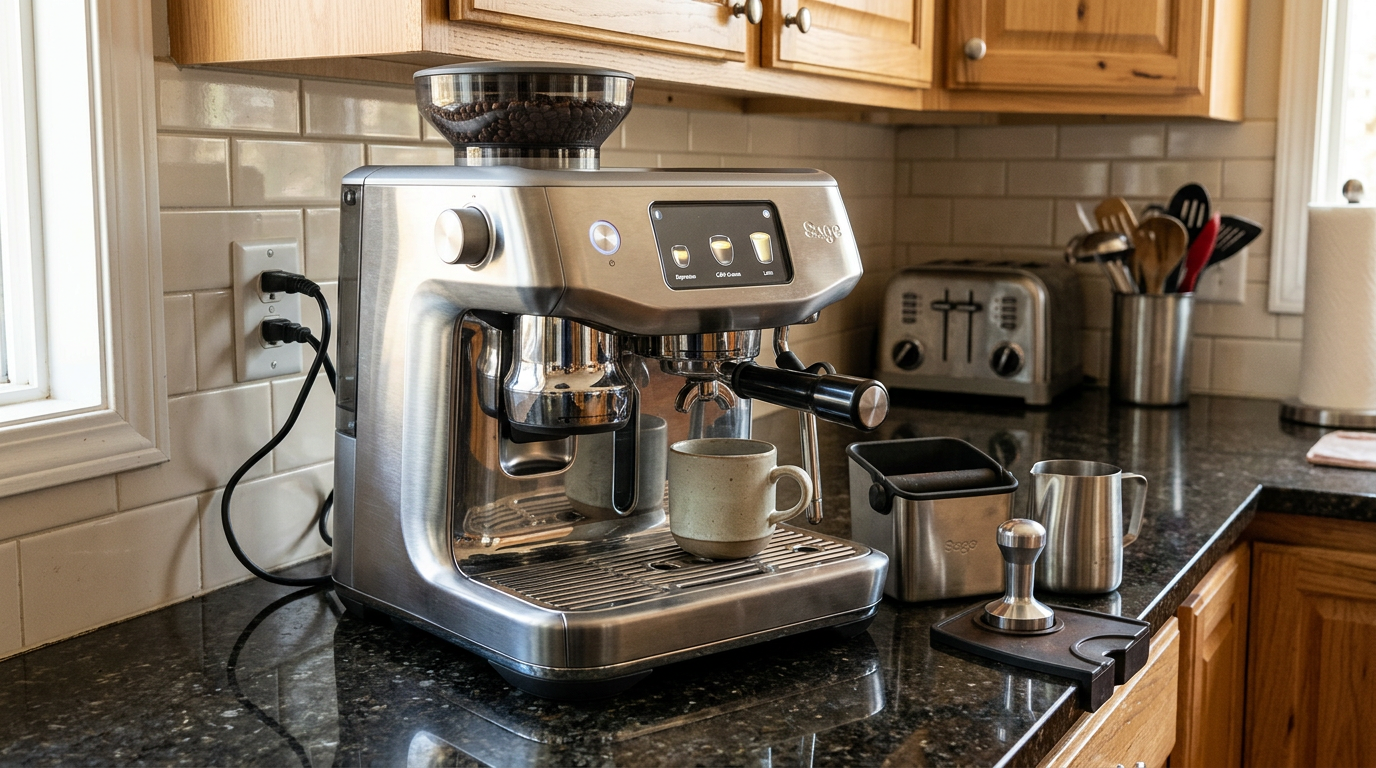
The hopper collar is wide, so leave room above the machine to fill it.
Our tip: Flip the roller lever before cleaning under the machine, so you can wheel it forward instead of lifting it.
The heating system: ThermoJet, not boilers
Despite having two heaters, the Oracle Jet isn't a dual-boiler machine.
Two ThermoJets
The main ThermoJet is a high-capacity element, around 1,300 watts, that heats water for brewing.
The second is a small heater of about 25 watts, right under the shower screen, that warms the group head.
The warm-up catch
The 58 mm portafilter is heavy, and heavy metal takes time to warm.
The small group heater helps, but a cold portafilter still steals heat from the first shot.
So you either leave the machine on for a while, or run a few hot water flushes through the portafilter before brewing.
What my first shots tasted like, on a 10-point scale.
How much power it uses
I measured the Oracle Jet's power draw in every mode.
The results show how efficient on-demand heating is.
| Mode | Power draw | What's happening |
|---|---|---|
| Standby | 4 to 5 W | Plugged in, switched off |
| Idle, switched on | About 27 W | Keeping the group head warm |
| Grinding | 140 to 150 W | Burrs and distribution spinner |
| Hot espresso | About 1,300 W | Main ThermoJet heating |
| Cold brew or cold espresso | 55 to 65 W | Pump only, heater bypassed |
| Steaming | 400 to 1,300 W | Varies with steam demand |
What that means
The machine only draws high power for the seconds it's actually heating water.
Idle power is low, and standby is tiny.
Over a normal week, my total energy use was modest, especially compared with boiler machines that keep large volumes of water hot.
Based on my usage of two hot drinks and one cold drink.
The touchscreen and workflow
The touchscreen on top is bright, sharp and the center of everything.
Where it shines
For maintenance, it's brilliant.
Animated step-by-step guides walk you through backflushing, descaling and cleaning the steam wand.
Where it slows you down
For quick multitasking, it can be frustrating.
If you're on the espresso screen and want to change the milk settings, you have to go back to the main menu and choose a different drink.
You also can't start the grinder from the idle screen; you have to choose a drink first.
After two weeks, I knew the menus well enough that this rarely bothered me.
But anyone who loves the speed of physical buttons will notice it.
Barista Guidance
When a shot runs too fast or too slow, the screen suggests a grind change.
It was mostly helpful, though it sometimes suggested going coarser after a long coffee crema cycle, which I ignored.
Our tip: Set up your favorite drink as the first item in the menu, so you spend less time swiping.
The grinder and stepless adjustment
The hopper holds about 12 ounces and has a gate that closes when you lift it off, so beans don't spill.
Inside are Baratza-designed precision burrs.
Stepless dial
The side dial doesn't click between fixed steps.
It drives a toothed belt that turns the burr carrier through a set of gears.
A sensor tracks the exact position and shows it on the screen as one of 45 settings.
In practice, you can make very small changes between numbers.
Light roasts
Light roasts are so dense that you can barely crush a bean between your fingers.
The Oracle Jet ground them without any audible strain or stalling.
Lower numbers are finer. Bars show how fine the setting is.
Our tip: Make small grind changes and pull two shots before judging, because a little old coffee stays in the chute.
How the automatic puck prep works
This is the Oracle Jet's headline feature, and it's clever.
Step by step
When you lock the portafilter in and start a drink, a spinner inside the cradle turns one way to clear any old grounds from the chute.
Then the grinder starts, and the spinner turns across the rising bed of coffee to spread it evenly across the 58 mm basket.
As the coffee builds up, a sensor above measures the resistance.
When it reaches the target, grinding stops.
Finally, the mechanism makes a polishing pass to smooth and seal the surface.
Why it matters
Even distribution and a level, polished surface are exactly what prevents channeling✕ChannelingWhen water finds a weak spot in the coffee puck and races through it, leaving the rest under-extracted..
The pucks also came out of the basket after brewing unusually dry and compact, which made knocking them out clean.
| Step | What the machine does | Why |
|---|---|---|
| Clear | Spinner clears the chute | Fresh coffee only |
| Grind and spread | Spinner distributes as it fills | Even density |
| Sense | Stops at target resistance | Consistent dose |
| Tamp and polish | Final rotation | Flat, sealed surface |
Dose quirks I had to manage
The automation is excellent, but it isn't perfect.
The default dose is big
Out of the box, the target dose is around 22 grams.
For my taste, that was too much.
Bringing it down to 18 or 19 grams meant adjusting the dose mechanically with the included 2 mm Allen key and then confirming it in the software.
Drift
Even after calibration, the dose wandered.
A target of 17.5 grams crept to 18.0, 18.3 or 18.5 grams over several shots, then dropped back.
Hopper level
As the hopper emptied, the dose got lighter, because there was less weight pushing beans into the burrs.
Occasional unfinished polish
About once every 20 shots, the mechanism didn't finish its final polishing rotation.
The puck looked rough on top, and I gave it a quick manual tamp.
How my dose wandered with a 17.5 g target, over 20 shots.
Our tip: Keep the hopper at least half full, because the dose gets lighter as the beans run low.
Breville Oracle Jet espresso performance
Once the portafilter was properly warm, the Oracle Jet made exceptional espresso.
Flow
The flow settled at about 1.7 to 2.0 milliliters per second, a classic, steady espresso pour.
Temperature
For medium and medium-dark roasts, I brewed between 194 and 203°F, adjusting the heated group head in one-degree steps.
How it tasted
The shots were sweet, full-bodied and silky, with a viscous texture that reminded me of commercial machines.
I tasted milk chocolate, caramel and toasted nuts, with a thick crema✕CremaThe golden-brown foam on top of an espresso, formed when pressure pushes gases and oils out of fresh coffee. that held for minutes.
| What you taste or see | Likely cause | First change |
|---|---|---|
| Flat, muted first shot | Cold portafilter | Three hot water flushes |
| Sour and thin | Grind too coarse or dose drifted low | Go finer, check hopper level |
| Bitter, slow | Grind too fine | Go coarser |
| Rough puck surface | Polish didn't finish | Tamp lightly by hand |
| Screen says go coarser after a crema cycle | Guidance misread a long drink | Ignore it and trust the taste |
Light roasts on the Oracle Jet
Light roasts are the toughest test for any home espresso machine.
They're dense, they need a fine grind and a high temperature, and they turn sour quickly if anything is off.
How it went
I overrode the screen's early suggestions and dialed in by taste.
With a fine grind and a temperature near the top of the range, the shot ran smoothly.
How it tasted
The result was bright and pleasant, not sour.
I tasted berry marmalade with a surprising undertone of dark chocolate.
It's the kind of light-roast espresso I usually only get from expensive manual setups.
My taste scores out of 10.
Our tip: For light roasts, trust your taste over the on-screen suggestions while you dial in.
Cold brew and cold espresso
The cold modes are the Oracle Jet's party trick, and they're genuinely useful.
How it works
For cold drinks, the machine bypasses the main heater and pumps water at around 122°F, much cooler than a normal shot.
That's also why power drops to 55 to 65 watts.
Cold espresso
Cold espresso takes just over a minute.
It comes out with a layer of crema and a smooth, rounded flavor with very little acidity.
Cold brew
Cold brew takes under three minutes.
Traditional cold brew takes 12 hours or more, so this was a big convenience on hot afternoons.
It tasted lighter than a true overnight cold brew, but smooth and refreshing over ice.
| Drink | Time | Taste |
|---|---|---|
| Cold espresso | About 1 minute | Smooth, low acid, light crema |
| Cold brew | Under 3 minutes | Light, smooth, refreshing |
| Hot espresso | About 30 seconds | Rich, syrupy, full crema |
Our tip: Pour cold espresso over ice with a splash of milk for a quick iced latte, no waiting for anything to cool.
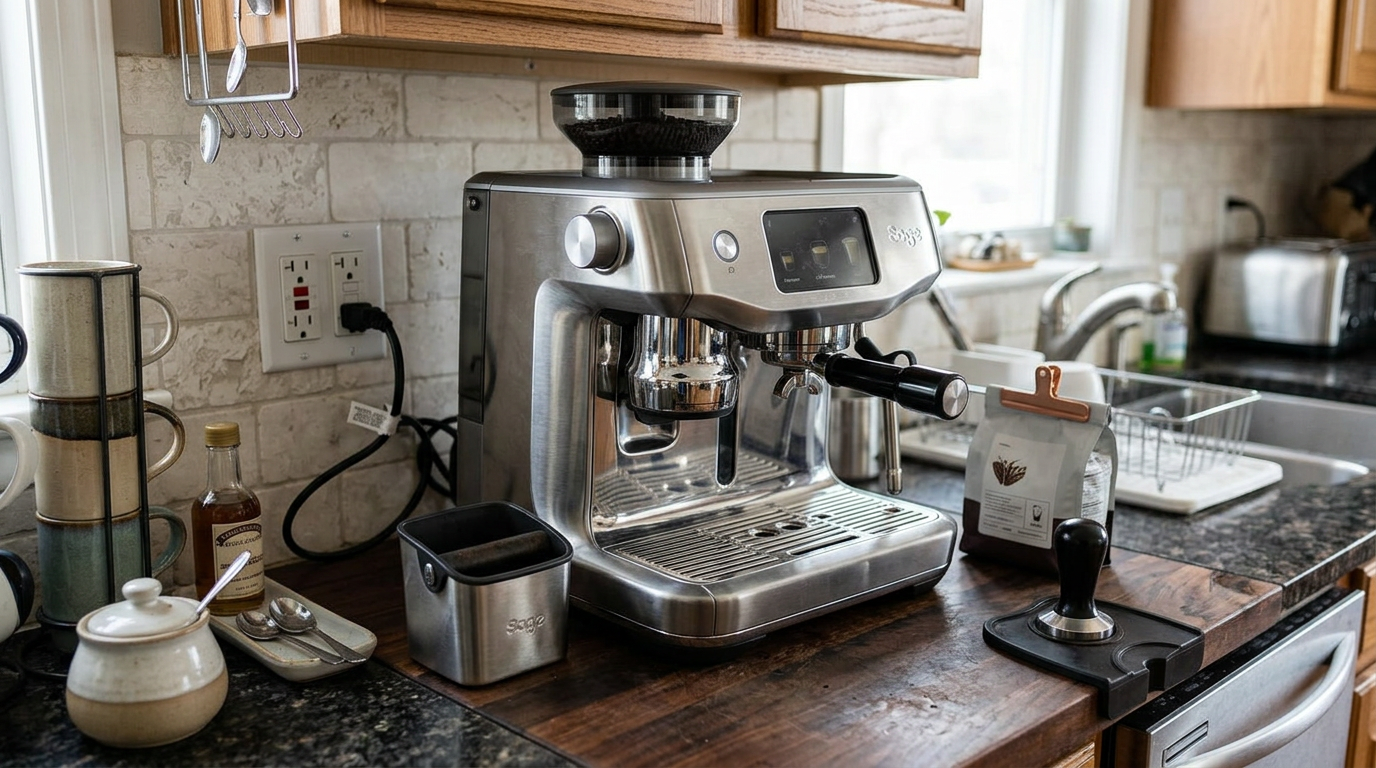
Cold brew is ready in under three minutes, straight into a glass of ice.
Coffee crema, hot water and other drinks
Beyond espresso, the menu has several other useful options.
Coffee crema
The coffee crema setting makes a larger cup, around 150 milliliters or more, with a longer extraction.
It produced a smooth morning coffee with lots of crema and no harsh bitterness.
Hot water
The hot water spout delivered water at about 194°F, perfect for tea.
Customizing
You can customize and save more than 20 drinks, so each household member can have their own.
| Drink | What it is | Best for |
|---|---|---|
| Espresso | Double shot | Straight or with milk |
| Coffee crema | Long extraction, about 150 ml+ | A big morning cup |
| Americano or long black | Espresso and hot water | Black coffee drinkers |
| Cold espresso | Low-temperature shot | Iced drinks |
| Cold brew | Fast low-temperature brew | Summer afternoons |
| Tea | Hot water at about 194°F | Green and herbal tea |
Automatic milk: the weak spot
In automatic mode, you choose the milk type, temperature and texture on the screen.
Temperature goes down to 140°F, which is great for sweetness, and texture defaults to level 5.
An internal air pump adds air while the steam wand heats the milk.
What went wrong
I ran more than 50 automatic cycles with different jug sizes, milk types and positions.
In almost all of them, the wand failed to build a proper rolling whirlpool.
Instead, it created surface turbulence and a layer of coarse, bubbly foam on top.
That foam was fine for a traditional cappuccino or a layered macchiato.
But it didn't have the silky microfoam✕MicrofoamMilk foam with bubbles too small to see. It looks like glossy wet paint and blends into the coffee. texture you need for a flat white or latte art.
My ratings out of 10.
Our tip: Use automatic milk for cappuccinos, where a lighter, airier foam is what you want anyway.
Manual steaming: the hidden strength
Switch the wand from the down position to the up position, and the Oracle Jet becomes a completely different milk machine.
In manual mode, you control the jug angle, the depth and the whirlpool.
Steam power
The steam was strong enough to stretch and heat milk quickly, but not so violent that it was hard to control.
I had plenty of time to set up a smooth, rolling whirlpool.
Temperature help
The wand tip has a temperature probe, which helps you stop at the right moment.
The result
The milk came out creamy, glossy and velvety, with very fine bubbles.
I poured clean, high-contrast hearts and rosettas with ease.
| Mode | Texture | Best for |
|---|---|---|
| Automatic | Coarse, bubbly on top | Cappuccinos and macchiatos |
| Manual | Creamy, glossy microfoam | Flat whites, lattes, latte art |
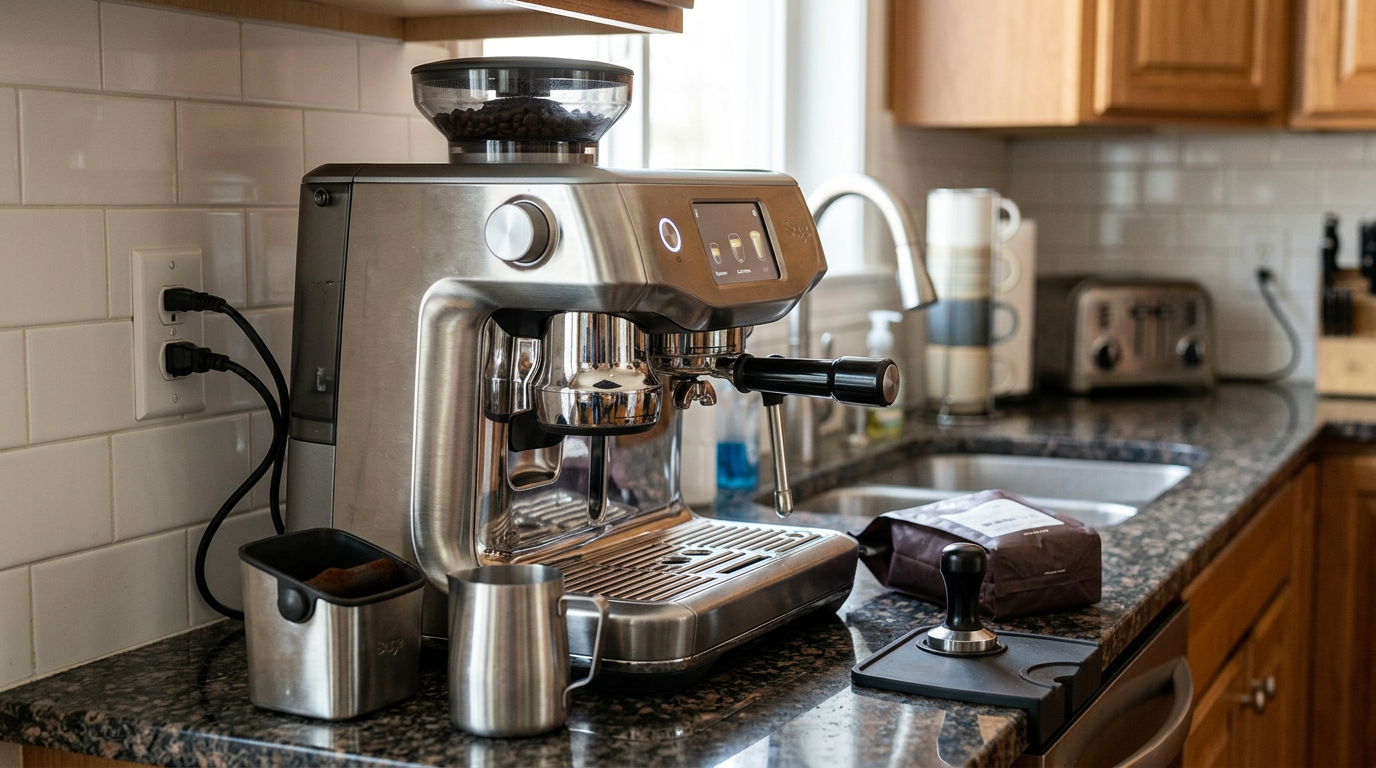
Flip the steam wand up for manual mode and full control of the milk.
Latte art with manual steam
In manual mode, the Oracle Jet is one of the best home machines I've used for latte art.
The steam is controllable, and the milk comes out with a fine, even texture.
My routine
I purged the wand, set the tip just under the surface and off-center, and opened the steam.
I stretched briefly, then sank the tip slightly and let the whirlpool spin until the probe showed my target temperature.
After a swirl, I poured into a fresh shot with plenty of crema.
| Stage | What I did | Result |
|---|---|---|
| Stretch | Tip at the surface for a few seconds | Small, controlled air intake |
| Spin | Tip slightly lower, whirlpool | Fine, glossy microfoam |
| Stop | At about 140 to 145°F | Sweet, pourable milk |
| Pour | High, then low and fast | Clean hearts and rosettas |
Who the Oracle Jet is really built for
After four weeks, I had a clear picture of the person who'll love this machine.
They care most about the espresso itself.
They want the consistency of automated distribution and tamping, without weighing, stirring and tamping every morning.
They're curious about cold coffee and like having more than one way to make a drink.
And they don't mind flipping the steam wand up and texturing milk by hand.
Who might be disappointed
If your main goal is a perfect latte with one press, the automatic milk will probably let you down.
If you love tactile buttons and fast multitasking, the touchscreen menus may feel slower than you expect.
And if refilling water and emptying the drip tray daily sounds like a chore, the Oracle Jet's thirst will annoy you.
Where it fits
It sits alongside Breville's boiler-based Oracle machines rather than replacing them.
Those warm up more slowly but have steadier hands-free milk.
The Jet is faster to heat, more energy efficient and more versatile, with better manual steam and cold drinks.
| You value most | Oracle Jet fit |
|---|---|
| Espresso quality with no puck prep | Excellent |
| Cold brew and iced drinks | Excellent |
| Latte art with manual steam | Excellent |
| One-press hands-free lattes | Fair |
| Tactile buttons | Fair |
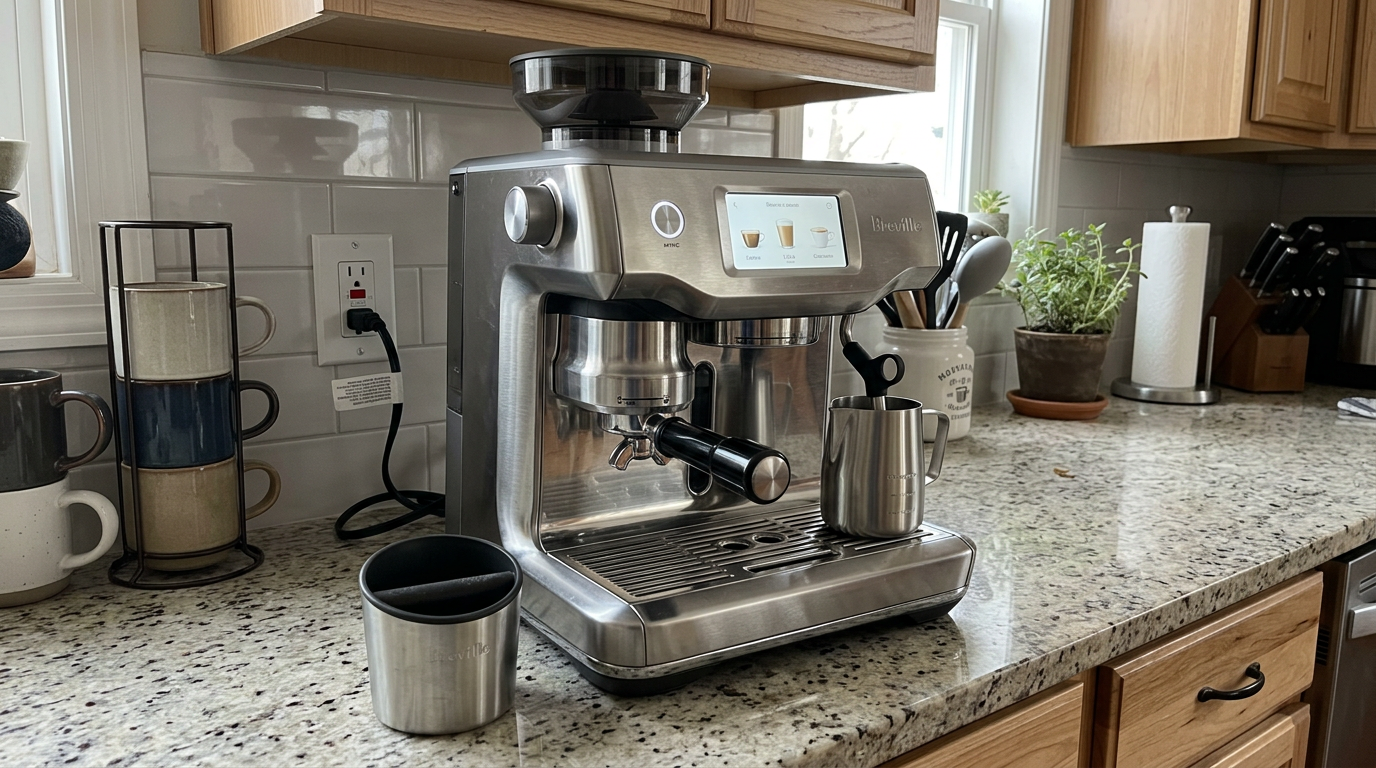
The Oracle Jet suits espresso lovers who want the prep done for them.
Cleaning and maintaining the Breville Oracle Jet
The software makes maintenance easier, with three quick purges you trigger by double-tapping icons.
Three quick purges
Double-tap the grinder icon, and it purges about 3 grams of stale grounds from the chute.
Double-tap the group head icon for a hot water flush that clears oils from the shower screen.
Double-tap the milk icon for a steam purge that clears milk from the wand tip.
The accessory kit
You get a double basket, a single basket, a backflush✕BackflushCleaning the group head by blocking the basket so water and cleaner are forced back through the valve. disc, a pin tool for the steam tip, a 2 mm Allen key for dose adjustment and a magnetic tool for removing the spinner from the cradle.
Water and drip tray
The Oracle Jet uses a lot of water.
Besides brewing and steam, it rinses and purges often.
I emptied the drip tray every day and refilled the tank often during busy sessions.
| When | Task | Why it matters |
|---|---|---|
| After each milk drink | Wipe the wand, double-tap to purge | Keeps the tip clear |
| Daily | Empty the drip tray, refill the tank | Frequent purges fill the tray |
| Daily | Group head flush | Clears oils |
| Weekly | Remove and brush the spinner | Prevents buildup in the cradle |
| When prompted | Backflush and descale | Protects valves and ThermoJets |
| Every 2 to 3 months | Replace the water filter | Slows down scale |
My estimate of hands-on cleaning time per day.
Repairability
Inside, the water lines use braided high-pressure hoses with single-use crimp connectors.
They're very reliable, but they make independent repairs harder, so the two-year warranty and authorized service matter.
Living with it as a household
Everyone in my house could make an espresso on the Oracle Jet from day one.
Lock in the portafilter, choose the drink, move the portafilter, press brew.
The automation removed the parts that usually need teaching.
Milk was the dividing line
Family members who wanted milk drinks without effort used automatic mode and were happy with cappuccinos.
For flat whites, I usually ended up steaming the milk manually for everyone, because the difference in texture was so clear.
Cold drinks were a hit
The cold espresso and cold brew settings were used more than I expected, especially on warm afternoons.
Being able to make a smooth iced coffee in a minute or two, without planning ahead, won over people who rarely drink hot espresso.
Saved drinks
With more than 20 customizable drinks, everyone had their own settings, from extra-hot cappuccinos to big coffee crema mugs.
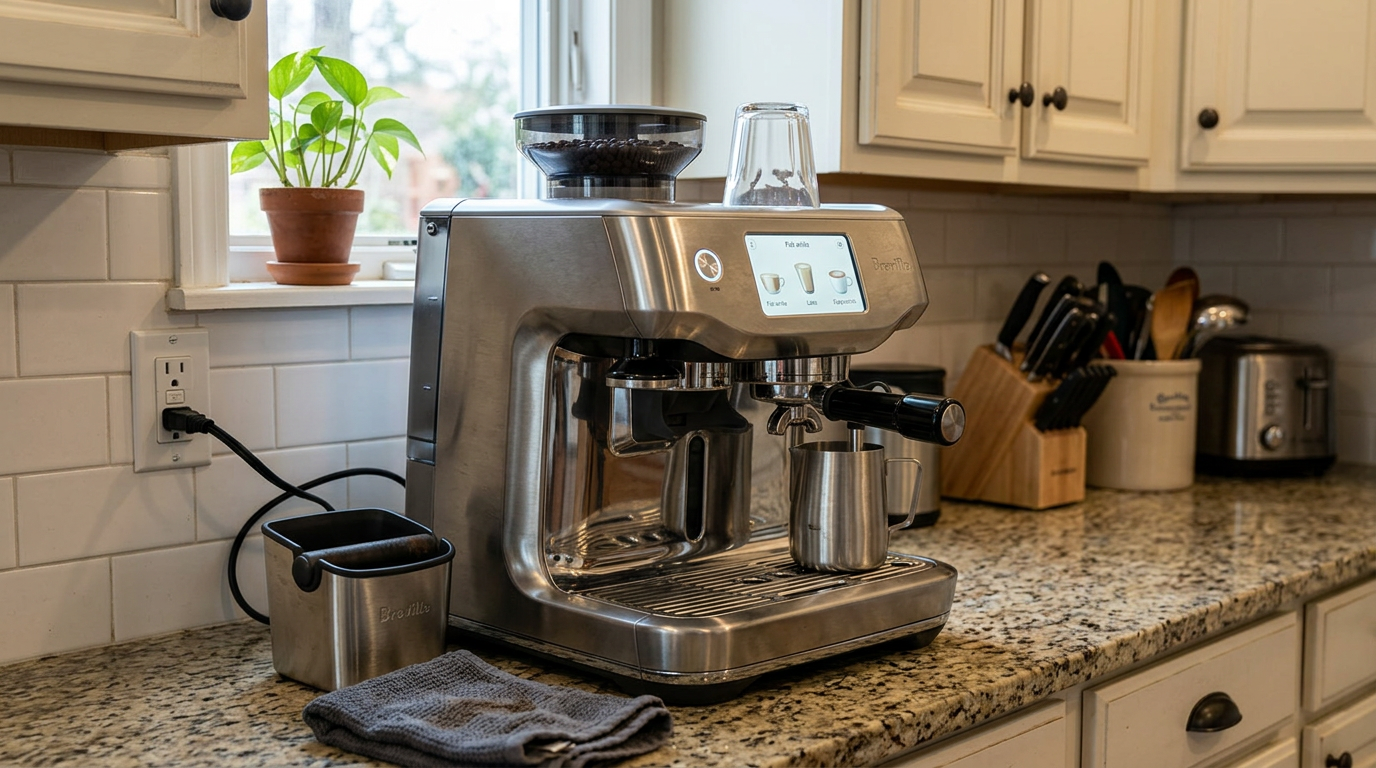
The cold brew setting turned the Oracle Jet into a summer favorite.
Our tip: Save a cold espresso drink for anyone who likes iced coffee, so it's always one tap away.
What daily use is really like
My weekday flat white took about three minutes.
Switch on, three flushes through the portafilter, select the drink, auto grind and tamp, brew, then steam manually.
On days I used automatic milk for a cappuccino, it was closer to two and a half minutes.
Water
The 77-ounce tank lasted two people about a day and a half, because of all the purging.
Rough maths from a 77 oz tank, allowing for flushes and frequent purges.
Noise
The grinder and spinner make a soft whirring sound, and the steam is strong but not shrill.
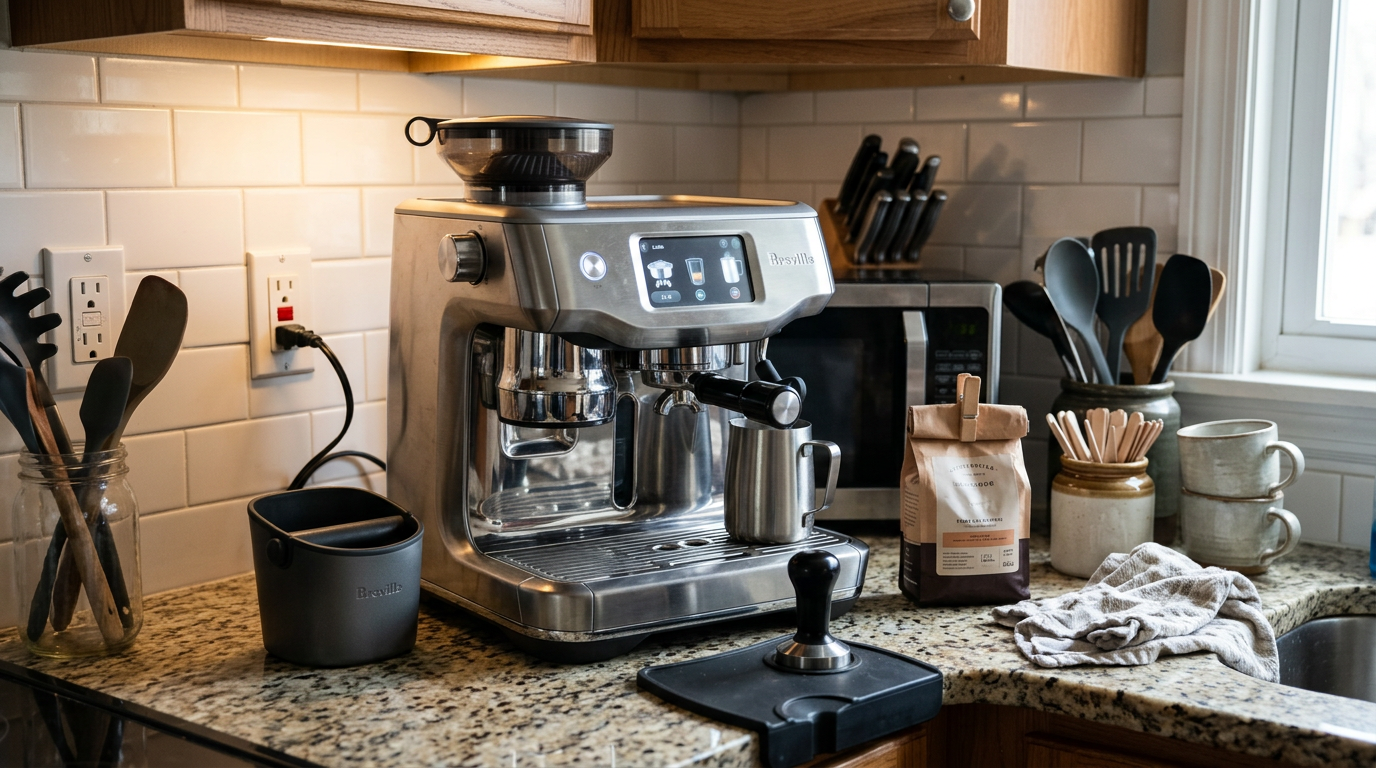
The top-fill funnel makes topping up the tank quick.
Our tip: Top up the tank every morning, because frequent purges use more water than you'd expect.
My four-week shot log
I logged every double espresso for four weeks, including dose weight and shot time.
Week one
The first week was mostly about the dose.
After bringing it down from about 22 grams to 18 grams, the shots became much more balanced.
Weeks two and three
With the warm-up routine in place, most shots landed between 27 and 32 seconds.
The main variation came from dose drift and the hopper level.
Week four
In the final week, I worked on light roasts and cold drinks.
Once dialed in, the light-roast shots were as consistent as the medium roast.
Share of shots inside my 27 to 32 second window, by week.
Compared with the boiler-based Oracle machines I've used, the Jet was slightly less consistent because of the dose drift.
But its best shots were among the best I've pulled at home.
Beans, water and milk
The Oracle Jet handled everything from very light to dark roasts.
Fresh whole beans used within a few weeks of roasting gave the best results.
Roasts
Medium and medium-dark roasts were easiest at around 194 to 200°F.
Light roasts needed a finer grind and a temperature near 203°F.
Water
Use the water filter or filtered water to slow down scale in the ThermoJets.
Avoid pure distilled water, because coffee needs minerals to taste full.
Milk
For manual steaming, cold whole milk gave the glossiest foam.
Barista oat milk was the best plant option in both modes.
| Bean type | Grind | Temperature |
|---|---|---|
| Light roast | Finer, around 15 to 18 | Near 203°F |
| Medium roast | Around 20 to 23 | 196 to 200°F |
| Dark roast | Coarser, around 25 to 28 | 194 to 196°F |
Our tip: Keep the hopper topped up with the same beans, because switching bags halfway changes the dose and the grind.
Common mistakes to avoid
The Oracle Jet is powerful, but a few habits make or break the results.
| Mistake | What happens | Better habit |
|---|---|---|
| Brewing straight after switch-on | Flat, muted first shot | Three hot water flushes |
| Keeping the 22 g default dose | Heavy, over-extracted shots | Calibrate to 18 to 19 g |
| Letting the hopper run low | Dose drops, shots run fast | Keep it at least half full |
| Relying on automatic milk for flat whites | Bubbly foam | Use manual mode |
| Following every on-screen suggestion | Wrong grind after long drinks | Trust your taste |
| Forgetting the drip tray | Overflow | Empty it daily |
Change one setting at a time and taste after each change.
What I would change
Better automatic milk would make this machine nearly perfect.
A more consistent dose, especially as the hopper empties, would remove the main frustration.
And a few physical shortcut buttons would speed up multitasking.
How long each drink really takes
I timed my most common drinks from power on to first sip, including the warm-up flushes.
The ThermoJet heats in seconds, so the warm-up is really about the portafilter, not the water.
My timings, from power on to first sip.
Where the time goes
The three hot water flushes take about 30 seconds.
The automatic grind, distribute and tamp takes another 20 to 30 seconds.
Manual steaming adds about 30 seconds, plus the time to wipe and purge the wand.
Compared with a boiler machine
A boiler-based machine would need several minutes to heat from cold, unless you used an auto-start timer.
The Oracle Jet is ready to go almost as soon as you walk into the kitchen, which made it easy to switch off between coffees.
Our tip: Start the flushes as soon as you switch on, and grind while you pour the milk, so nothing sits idle.
Is the Breville Oracle Jet worth the money?
The Oracle Jet sits at the top of Breville's automated range, and it has to earn its place.
For espresso lovers, it does.
Automatic distribution and tamping into a 58 mm portafilter give you café-level shots without the manual prep.
Cold brew and cold espresso add real versatility.
And the manual steam wand is excellent once you take control.
Ask yourself three questions.
Do you mainly want excellent espresso without puck prep? Are you happy to steam milk by hand for the best results? And do you like cold coffee drinks?
If yes, it's a strong choice.
If you mostly want perfect hands-free lattes, a machine with better automatic milk will suit you more.
In Europe, the same machine is sold as the Sage Oracle Jet.
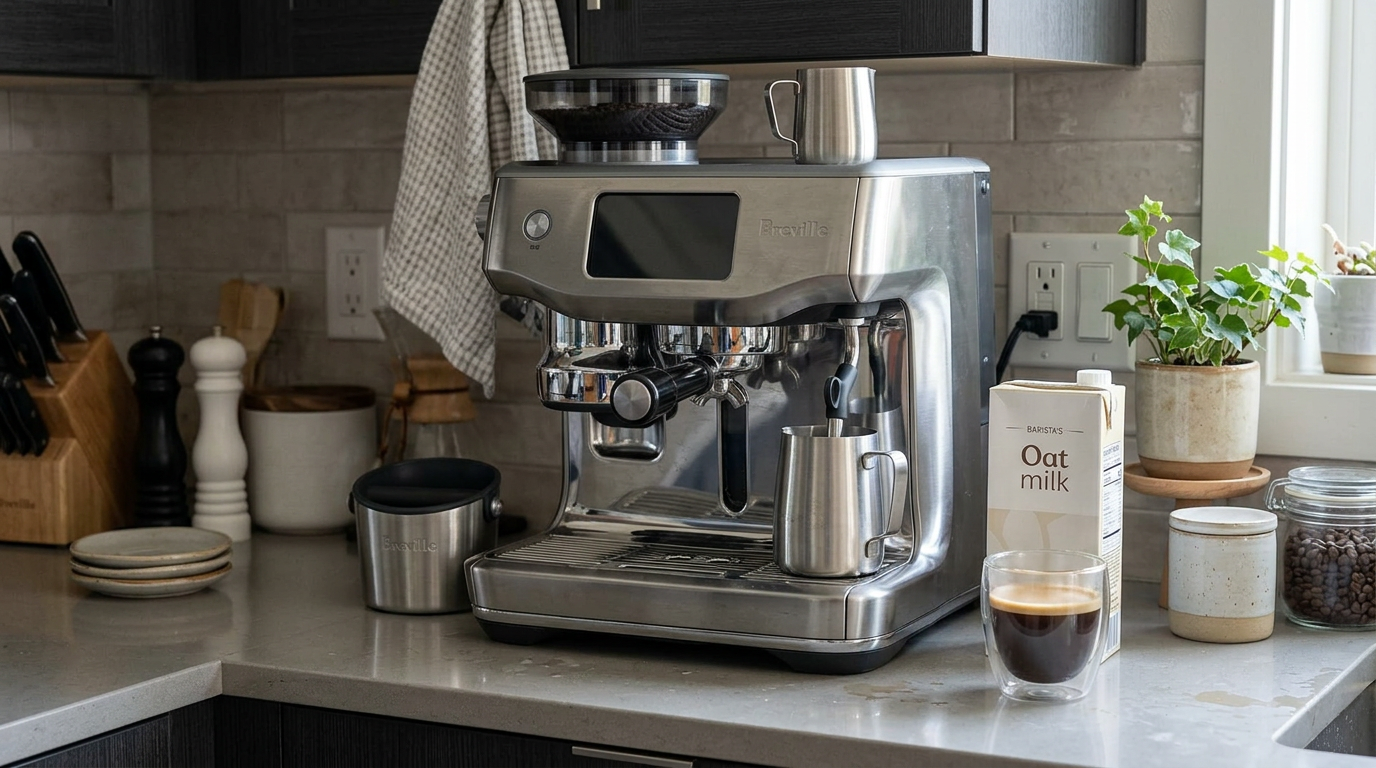
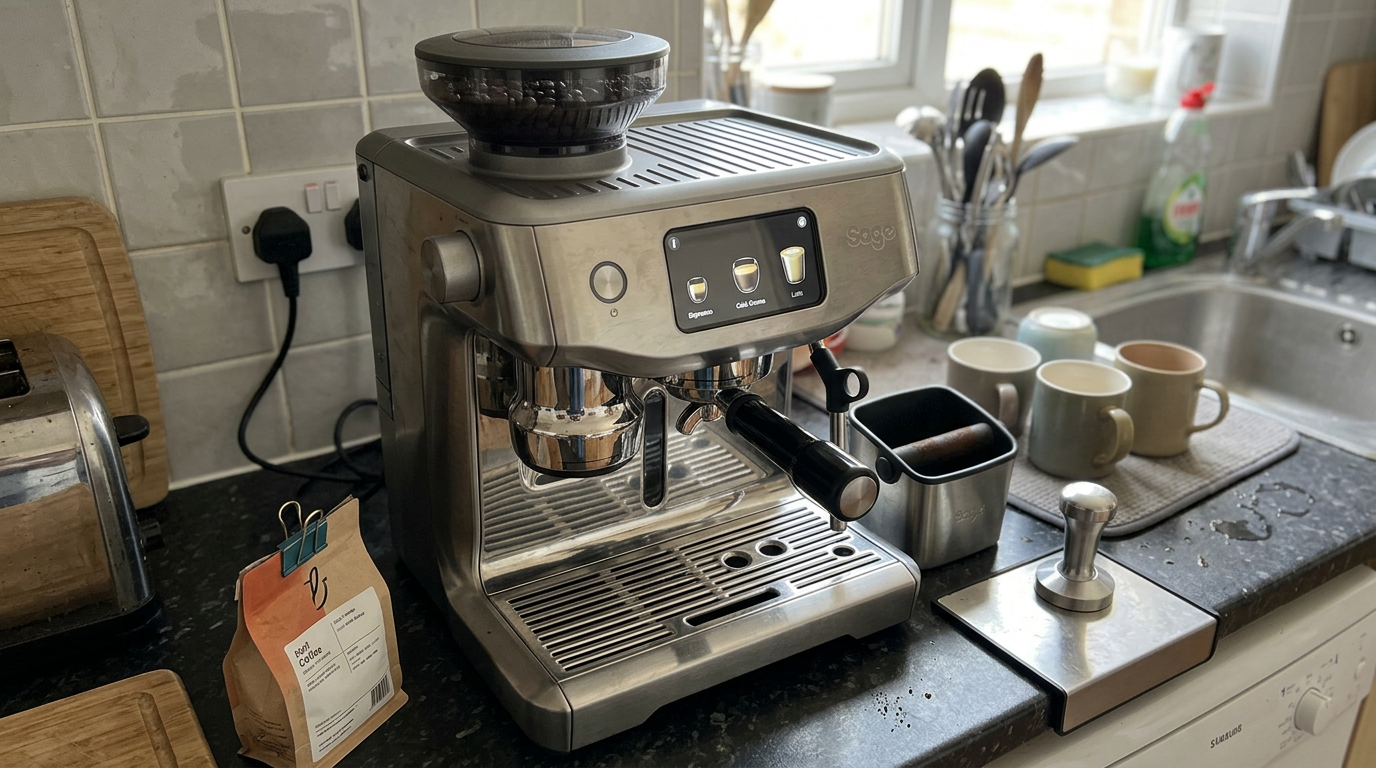
The Oracle Jet's brushed steel finish wipes clean in seconds.
How it compares with other espresso setups
The most useful comparison is with the setups you are likely choosing between.
The Breville Oracle Jet stands out for automated puck prep and cold drinks.
| Feature | Oracle Jet | Dual-boiler automated machine | Semi-automatic all-in-one |
|---|---|---|---|
| Puck prep | Auto grind, distribute, tamp | Auto grind and tamp | By hand |
| Portafilter | 58 mm | 58 mm | 54 mm |
| Heating | Two ThermoJets | Two boilers | One heater |
| Heat-up | Seconds, plus portafilter warm-up | Several minutes | Seconds to a minute |
| Cold brew and cold espresso | Yes | No | No |
| Automatic milk | Coarse foam | Silky foam | Manual only |
| Manual steam | Excellent | Limited | Good |
A boiler-based automated machine heats more slowly but has steadier automatic milk.
A semi-automatic all-in-one costs less, but you do all the prep yourself.
The Oracle Jet is the choice if espresso and versatility matter most.
| You mostly drink | Is it a fit? | Why |
|---|---|---|
| Espresso | Excellent | Auto puck prep, 58 mm basket |
| Flat whites with manual milk | Excellent | Superb manual steam |
| Hands-free lattes | Fair | Automatic foam is coarse |
| Cold coffee | Excellent | Cold brew and cold espresso |
| Light roasts | Very good | Strong burrs, high temperature |
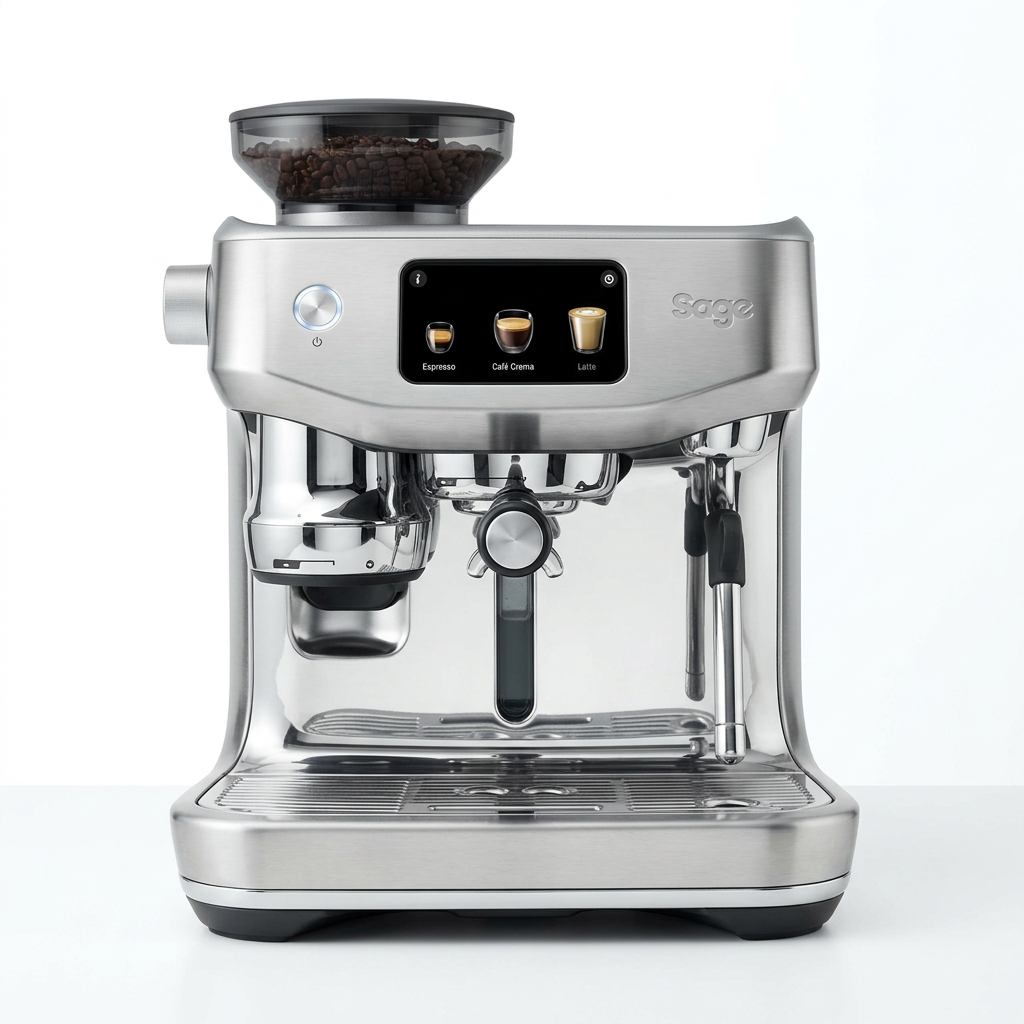
The full package: touchscreen, hopper, auto-tamping cradle and steam wand.
Other Breville machines I tested
For dual boilers and silky hands-free milk, see my Breville Oracle Touch review.
For the same automation with physical buttons, read my Breville Oracle review.
For assisted tamping in a smaller machine, see the Barista Touch Impress review.
Which one is right for you: is the Breville Oracle Jet your match?
4 quick questionsBreville Oracle Jet specifications
From manufacturer data and my own testing.
How I tested and scored the Breville Oracle Jet
For four weeks, I used the Breville Oracle Jet as my everyday coffee machine for espresso, coffee crema, americanos, cold espresso, cold brew, flat whites, lattes and cappuccinos.
I calibrated the dose, logged every double shot, dialed in light, medium and dark roasts and measured power draw in every mode.
I ran more than 50 automatic milk cycles with different jugs and milks, compared them with manual steaming, and followed the purge, backflush and descale routines.
I then checked my notes against Breville's specifications and owner documentation.
- Espresso (9.0): body, crema, flavor, light-roast performance and consistency.
- Milk drinks (7.9): automatic and manual texture, temperature control and speed.
- Ease of use (8.3): automation, touchscreen workflow, dose calibration and warm-up.
- Cleaning (8.1): purges, water use, drip tray and guided maintenance.
The overall score of 8.4 is an editorial rating that reflects those four areas.
Breville Oracle Jet FAQ
Is the Breville Oracle Jet worth it?
Yes, if you want excellent espresso with automated puck prep and are happy to steam milk manually. Its automatic milk is the weakest part.
Is the Oracle Jet a dual-boiler machine?
No. It uses two ThermoJet heaters, a large one for brewing and a small one under the group head, rather than boilers.
How does the automatic tamping work?
A spinner distributes the grounds as the basket fills, a sensor stops the grinder at the target resistance, and the mechanism polishes the surface.
How do I change the dose?
Use the included 2 mm Allen key to adjust the dose mechanically, then confirm it in the software. I lowered it from about 22 grams to 18 grams.
Can it make cold brew?
Yes. Cold brew takes under three minutes, and cold espresso takes just over a minute.
Is the automatic milk good for latte art?
In my testing, no. It made coarse, bubbly foam. Manual mode made excellent microfoam for latte art.
How many grind settings does it have?
45 settings on a stepless dial, tracked on the screen.
Why is my first shot weak?
The 58 mm portafilter is still cold. Run three hot water flushes before brewing.
How much water does it use?
More than most machines, because of frequent purges and rinses. Expect to empty the drip tray and refill the tank daily.
How big is the water tank?
About 77 ounces, or 2.3 liters, filled from a top funnel or the rear tank.
Is the Sage Oracle Jet the same machine?
Yes. The Sage Oracle Jet sold in Europe is the same machine.
Kitchen & coffee tester
Michael spent six years as a line cook in restaurants in Chicago and New York, and he has tested kitchen appliances for HouseholdMe since 2018, from air fryers to coffee makers. He holds an SCA certificate in barista skills and used the Breville Oracle Jet as his everyday coffee machine for four weeks for this review, working from testing notes he compiled together with the HouseholdMe team.
- Four weeks of hands-on testing of the Breville BES985BSS Oracle Jet
- Breville product specifications and owner documentation
- General espresso brewing, milk texturing and maintenance guidance