Philips 3200 Series review: five one-touch drinks, an easy-clean LatteGo jug and gentle, approachable coffee
The Philips 3200 Series Fully Automatic Espresso Machine makes espresso, coffee, Americano, cappuccino and latte macchiato at one touch, with a tubeless LatteGo milk jug that rinses clean in seconds. It is easy to live with and great for households with different tastes. Its espresso is mild, because the dose is small, and the milk foam is good rather than great.
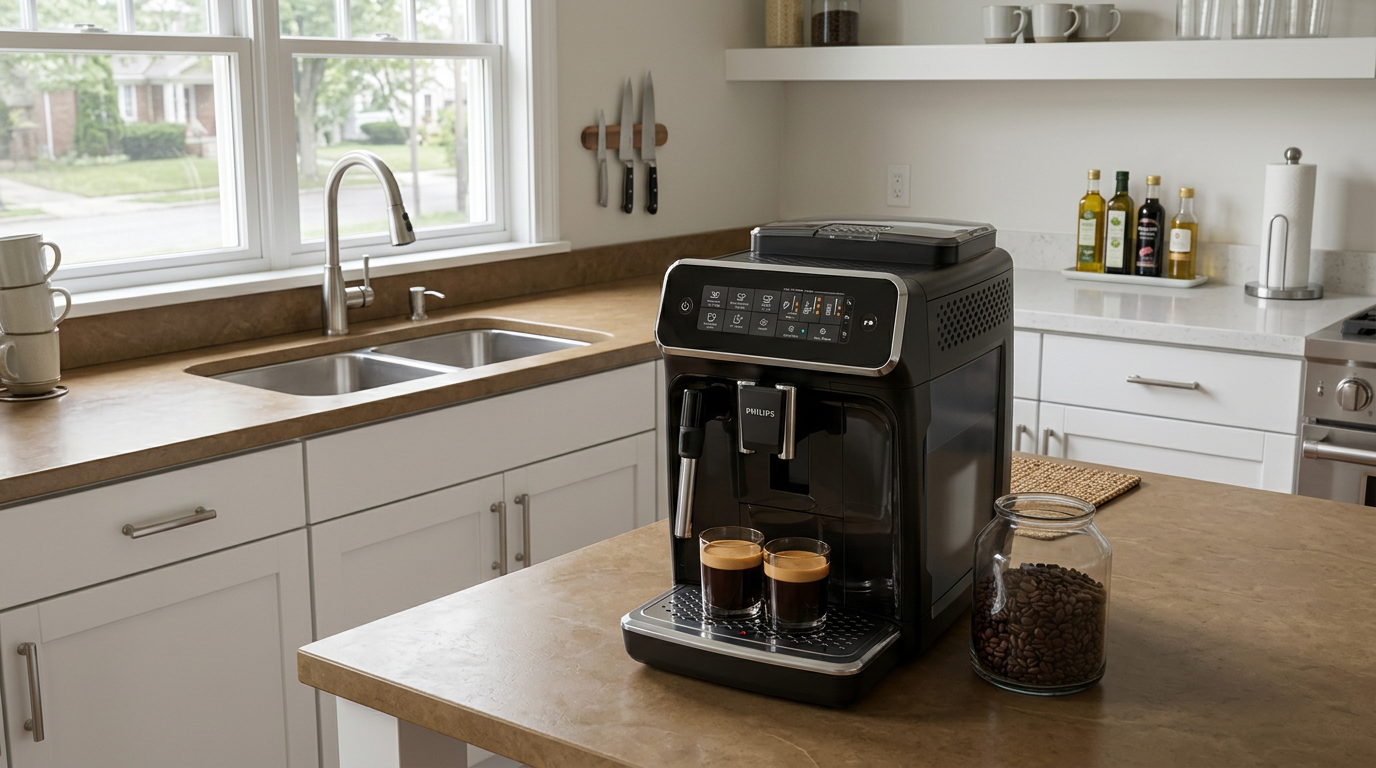

Michael Reynolds
Hands-on review
Hands-on testing, research, specs
4 weeks
22 minutes
Jargon helpNew to espresso? Tap any dotted term to see what it means.
In this review
Yes, if your household drinks a mix of black coffee and milk drinks and you value easy cleaning over intense espresso. The Philips 3200 Series covers five popular drinks at one touch, the LatteGo jug is the simplest milk system I know to clean, and the brew group comes out for rinsing. The coffee is gentle and the espresso closer to a lungo, so lovers of strong, syrupy shots should look elsewhere.
Philips 3200 Series at a glance
Philips 3200 Series pros and cons
- Five one-touch drinks, including latte macchiato
- LatteGo jug has no tubes and rinses clean fast
- Removable brew group and AquaClean filter included
- Mild espresso from a small coffee dose
- Milk foam is good, not café-smooth
- Mostly plastic body and a small drip tray
Who should buy the Philips 3200 Series?
- Households where everyone drinks something different
- People who prefer mild, easy-drinking coffee
- Anyone who hates cleaning milk tubes
- Fans of strong, short espresso
- Latte art and microfoam enthusiasts
- Buyers who want a metal, premium-looking machine
First impressions of the Philips 3200 Series
In a lot of homes, nobody drinks the same coffee.
One person wants a quick espresso, another a big mug, and someone else a milky latte macchiato.
The Philips 3200 Series is built for exactly that kind of household.
It's one of the most popular machines in Philips' range, and after four weeks I understand why.
It puts five drinks on simple touch icons and pairs them with the LatteGo milk jug, which has no tubes to clean.
Out of the box, the 3200 looks tidy and modern.
The front panel is glossy black, the body is mostly plastic, and the drip tray has a stainless steel cover.
It doesn't look or feel like a premium appliance, but it doesn't look cheap either.
My first latte macchiato came out in neat layers, with a soft cap of foam.
My first espresso was smooth, mild and pleasant, but lighter than I expected.
That pattern held for the whole test: excellent convenience, gentle coffee.
The 3200 Series fits neatly on a standard counter, even next to the sink.
What the Philips 3200 Series actually is
The 3200 is a fully automatic, bean-to-cup espresso machine with an automatic milk system.
It grinds whole beans with a ceramic grinder, doses and presses them, brews under 15 bar of pump pressure and drops the used puck into a drawer.
For milk drinks, the LatteGo jug froths milk and pours it straight into your cup.
The five drinks
| Drink | What it is | Milk? |
|---|---|---|
| Espresso | Short, pressurized coffee | No |
| Coffee | Long coffee brewed under pressure | No |
| Americano | Espresso topped with hot water | No |
| Cappuccino | Coffee with a thick layer of foam | Yes, LatteGo |
| Latte macchiato | Mostly milk, with coffee poured through it | Yes, LatteGo |
| Hot water | For tea and other drinks | No |
What's in the box
The US model comes with an AquaClean filter, a measuring scoop, a water hardness test strip, a tube of brew group grease and a storage lid for the LatteGo jug.
Our tip: Use the LatteGo storage lid to keep leftover milk in the jug in the fridge, so you can clip it straight on for the next drink.
Philips 3200 Series design and setup
The Philips 3200 Series measures about 24.6 × 37.1 × 43.3 cm, or 9.7 × 14.6 × 17 inches, and weighs about 8 kg, or 17.6 pounds.
That's compact for a machine with automatic milk.
Materials
Almost the entire body is plastic: the sides, the front, the panel surround and the top.
The exception is the stainless steel drip tray cover, which feels sturdy and wipes clean easily.
If you want a metal machine, this isn't it.
For everyday use, the plastic held up well, with no rattles or loose parts after four weeks.
The top of the machine
The bean hopper sits on top with its own lid, next to the pre-ground coffee chute.
The water tank also has an open area at the top.
A full cover over the top would keep out dust and light a little better, and it would look neater.
Our tip: Keep the machine away from a sunny window or the stove, because heat and light age the beans in the hopper faster.
Setup
Fill and rinse the tank, fit and activate the AquaClean filter, add beans and switch on.
Test your water hardness with the strip and set it.
With the machine off, you can press and hold certain buttons for three seconds to reach hidden settings, including water hardness on the aroma button.
Then pour away the first three or four drinks while the grinder settles.
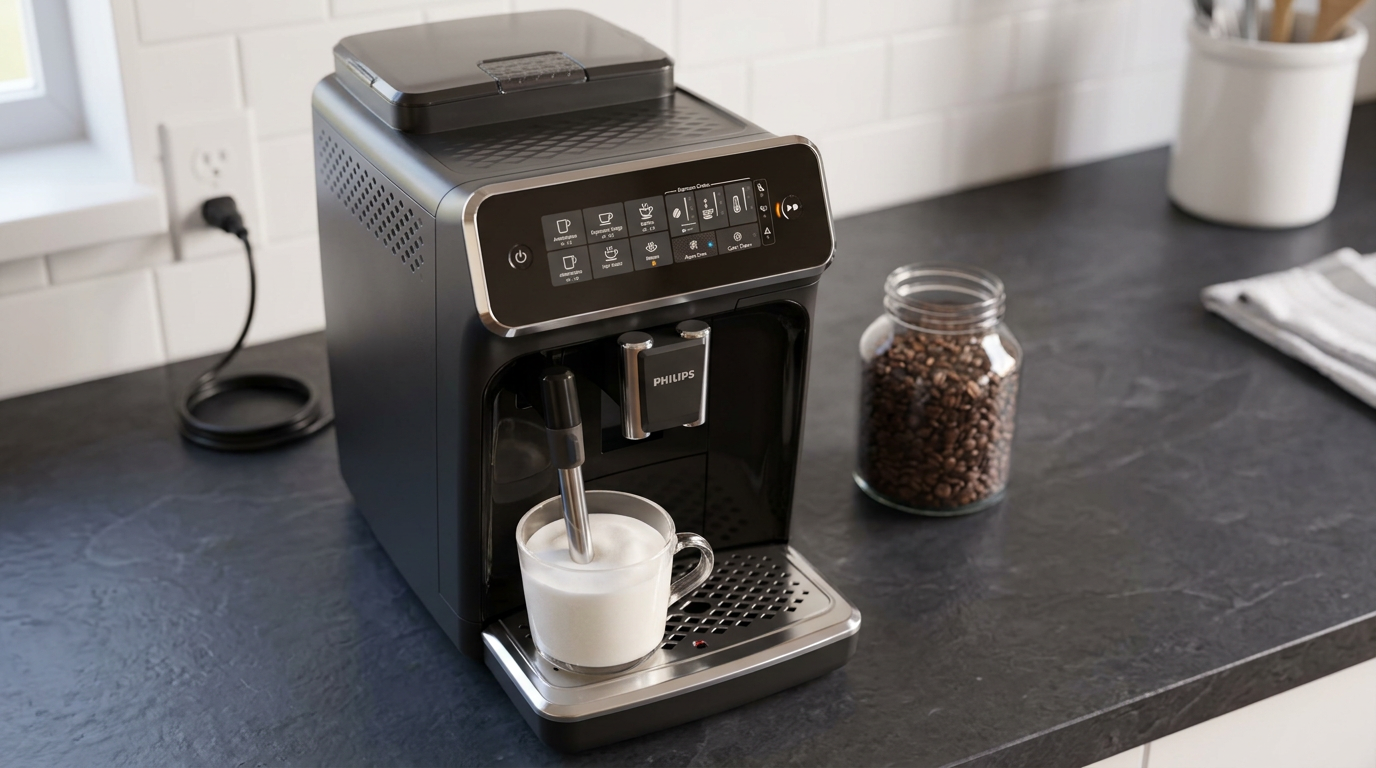
The stainless drip tray cover is the one metal accent on the body.
The ceramic grinder
The 3200 uses a 100% ceramic burr✕Ceramic burrsGrinding plates made of ceramic instead of steel. They wear slowly and stay cool, which helps keep the coffee's aroma intact during grinding. grinder with 12 settings, adjusted with a knob inside the bean hopper.
Ceramic burrs resist corrosion, grind consistently and stay cool during grinding.
Some coffee enthusiasts prefer steel burrs, but in a machine like this, the grinder is rarely the limiting factor.
The dose is, as you'll see below.
How to adjust it
Turn the knob only while the grinder is running, and only one step at a time.
Wait two drinks before judging the change, because old grounds are still in the chute.
From my notes with a medium-dark blend.
Bean choice
Very oily, dark beans leave residue in automatic grinders and can eventually cause clogs.
Medium and medium-dark roasts were the best match in my tests.
Our tip: Avoid shiny, oily beans in the 3200, because the oil builds up in the grinder and chute and can block them over time.
Dose and strength: why the coffee tastes mild
The most important thing to know about the Philips 3200 Series is how much coffee it uses.
I stopped the machine after grinding and weighed the dose on the strongest setting.
It came to about 0.28 ounces, or roughly 8 grams.
The default espresso produced about 1.1 fl oz of coffee from that dose.
That's a longer brew ratio✕Brew ratioThe weight of ground coffee compared with the weight of the drink. A café espresso is often about 1:2. A higher ratio gives a longer, lighter drink. than a classic espresso, and closer to a lungo✕LungoA long espresso, brewed with more water through the same coffee. It is lighter in body than a regular espresso..
Weighed doses on the 3200 compared with a typical café double.
What that means in the cup
The espresso has crema, and it looks like espresso.
But crema doesn't make a shot strong.
In the cup, it was soft, light and gentle, with less body and intensity than a traditional espresso.
If you find café espresso too bitter or too intense, you may well love this.
If you want a punchy, chocolatey, syrupy shot, you'll find it limited.
Getting the most from it
Choose the strongest aroma setting and the smallest volume.
Grind a couple of steps finer than the default.
And use fresh, medium-dark beans with natural sweetness and body.
These steps make a clear difference, but they don't turn the 3200 into a high-dose espresso machine.
Espresso, coffee and Americano
I drank the three black coffees on the 3200 daily, and each has its place.
Espresso
Smooth, mild and easy to drink, with a thin, even crema✕CremaThe golden-brown foam on top of an espresso. It forms when pressure pushes gases and oils out of freshly ground coffee..
I tasted gentle caramel and nut notes, with very little bitterness.
Coffee
The coffee button makes a longer drink under pressure, with a visible crema on top.
It's mellow and approachable, but it isn't the same as filter coffee, which has a cleaner, thinner body.
For people who don't like strong coffee, this was one of the most pleasant cups I made.
Americano
The Americano adds hot water to espresso, so it's lighter in body than the coffee button.
Because the base espresso is already mild, the Americano is very gentle.
For a bolder Americano, set the strongest aroma and the smallest volume.
| Drink | Taste in my tests | Best setting |
|---|---|---|
| Espresso | Mild, smooth, soft crema | Strongest, smallest |
| Coffee | Mellow, round, crema on top | Strongest, medium |
| Americano | Very gentle, clean | Strongest, smallest coffee part |
| Double espresso | Fuller than a single | Strongest, two cups |
| What you taste or see | Likely cause | First change |
|---|---|---|
| Thin and watery | Too much water for the dose | Smaller volume |
| Sour | Grind too coarse | One step finer while grinding |
| Bitter, dry | Volume too large | One size smaller |
| Weak in milk drinks | Mild aroma setting | Strongest aroma |
Our tip: For a stronger long drink, make two espressos into one mug and top them up yourself, instead of using the largest coffee size.
LatteGo milk and the milk drinks
The LatteGo jug is the 3200's best feature for milk lovers.
It's a two-part container that clips onto the front of the machine.
There's no milk tube to snake into a carton and no hidden pipes to clean.
How it works
Pour cold milk into the jug, clip it on and press cappuccino or latte macchiato.
Steam from the machine draws milk into a small chamber in the jug, mixes it with air and pours foam into your cup.
Then the coffee runs on top.
How the foam turned out
The foam was creamy and fairly fine, with a nice, soft texture in a cappuccino.
In a tall glass, the latte macchiato came out in clean layers.
It isn't the glossy, pourable microfoam✕MicrofoamMilk foam with bubbles so small you can't see them. It feels silky and blends into the coffee instead of sitting on top like froth. a skilled barista makes with a steam wand, and you can't pour latte art with it.
But it was clearly better than the foam from a basic frother sleeve, with no technique at all.
My scores out of 10 for the LatteGo system.
The two milk drinks
| Drink | Character | Cup |
|---|---|---|
| Cappuccino | Thick foam, balanced coffee | Wide cappuccino cup |
| Latte macchiato | Milk-forward, layered | Tall glass |
Handle the jug with care
The lid and frothing parts clip together firmly, but the smaller piece can pop loose if you don't seat it properly.
Line it up carefully every time you put the jug together.
And don't leave milk in the jug at room temperature for long.
Our tip: Pour the milk only up to the line for the drinks you are making now, and put the rest back in the fridge.
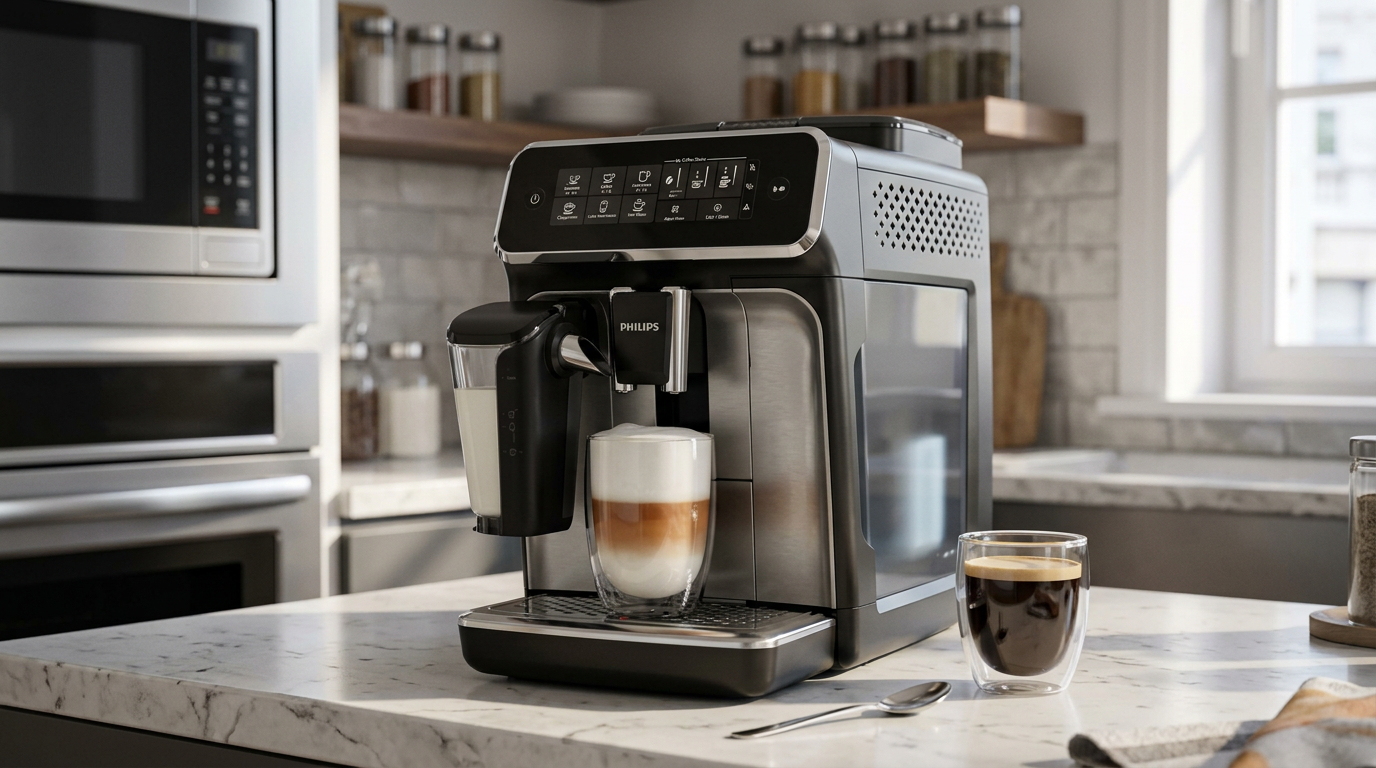
A layered latte macchiato in a tall glass, made with one touch.
My go-to drinks and settings
After four weeks, these were the drinks and settings we used most on the Philips 3200 Series.
| Drink | Settings I used | Why it worked |
|---|---|---|
| Morning espresso | Strongest aroma, smallest volume, grind 2 steps finer | Most body the dose allows |
| Breakfast mug | Coffee, strongest aroma, medium volume | Mellow but not watery |
| Mild Americano | Americano, medium aroma | Gentle, clean afternoon cup |
| Cappuccino | Strongest aroma, medium milk | Coffee taste comes through the foam |
| Latte macchiato | Strongest aroma, more milk, tall glass | Clean layers, sweet milk |
| Evening decaf | Pre-ground decaf, coffee button | No need to swap beans |
Making milk drinks taste stronger
Because the espresso is mild, milk can easily drown it.
Always use the strongest aroma for cappuccinos and latte macchiatos.
For a bigger coffee hit, make a cappuccino and add an extra espresso on top.
Making a flat-white-style drink
There's no flat white button, but you can get close.
Reduce the milk length on the cappuccino and use a small cup, then add a second espresso.
You won't get true microfoam, but you'll get a shorter, stronger milky coffee.
Iced coffee
There's no iced setting on this version.
For an iced latte, brew two strong espressos into a glass, let them cool for a minute, then pour over ice and cold milk.
General milk guidance. LatteGo output felt comfortably hot in my tests.
Our tip: Pour hot espresso over ice only after a short cool-down, because very hot coffee melts the ice fast and waters the drink down.
Customizing your drinks
Philips' My Coffee Choice menu lets you change strength and quantity for each drink.
Aroma strength has three levels, coffee length can be adjusted, and milk drinks have adjustable milk length too.
There are three temperature settings as well.
The limits
Settings change the balance of the drink, but not the machine's underlying capacity.
Raising the strength doesn't make it a high-dose espresso machine.
Lowering the volume makes the coffee more concentrated, but the beans and dose still set the ceiling.
There are no user profiles, so a household shares one set of defaults per drink.
Relative effect on body and intensity, from my tasting notes.
Pre-ground coffee and hot water
The pre-ground coffee✕Pre-ground bypassA separate chute that sends already-ground coffee straight to the brew unit, skipping the grinder. Handy for decaf without emptying the bean hopper. chute is handy for decaf in the evening without swapping the beans in the hopper.
Add one level scoop, choose the ground coffee option and your drink.
Keep the chute clean, because old powder can get stuck inside and go stale.
Hot water comes at the touch of a button, for tea, instant drinks or warming cups.
It's convenient for a cup or two, but I wouldn't replace a kettle with it.
Our tip: Wipe out the pre-ground chute with a dry brush once a week, so old coffee dust does not end up in your next decaf.
Cleaning and maintaining the Philips 3200 Series
The Philips 3200 Series is one of the easiest milk machines to keep clean.
LatteGo
After each milk drink, I rinsed the two LatteGo parts under the tap, which took about ten seconds.
Once a day, they went in the dishwasher.
The brew group
The brew group✕Brew groupThe part inside an automatic machine that receives the ground coffee, presses it into a puck, pushes hot water through it and then ejects the used grounds. comes out from the side for rinsing under the tap.
I rinsed it weekly and let it air-dry before putting it back.
Its moving parts need a thin layer of the included food-safe grease every couple of months.
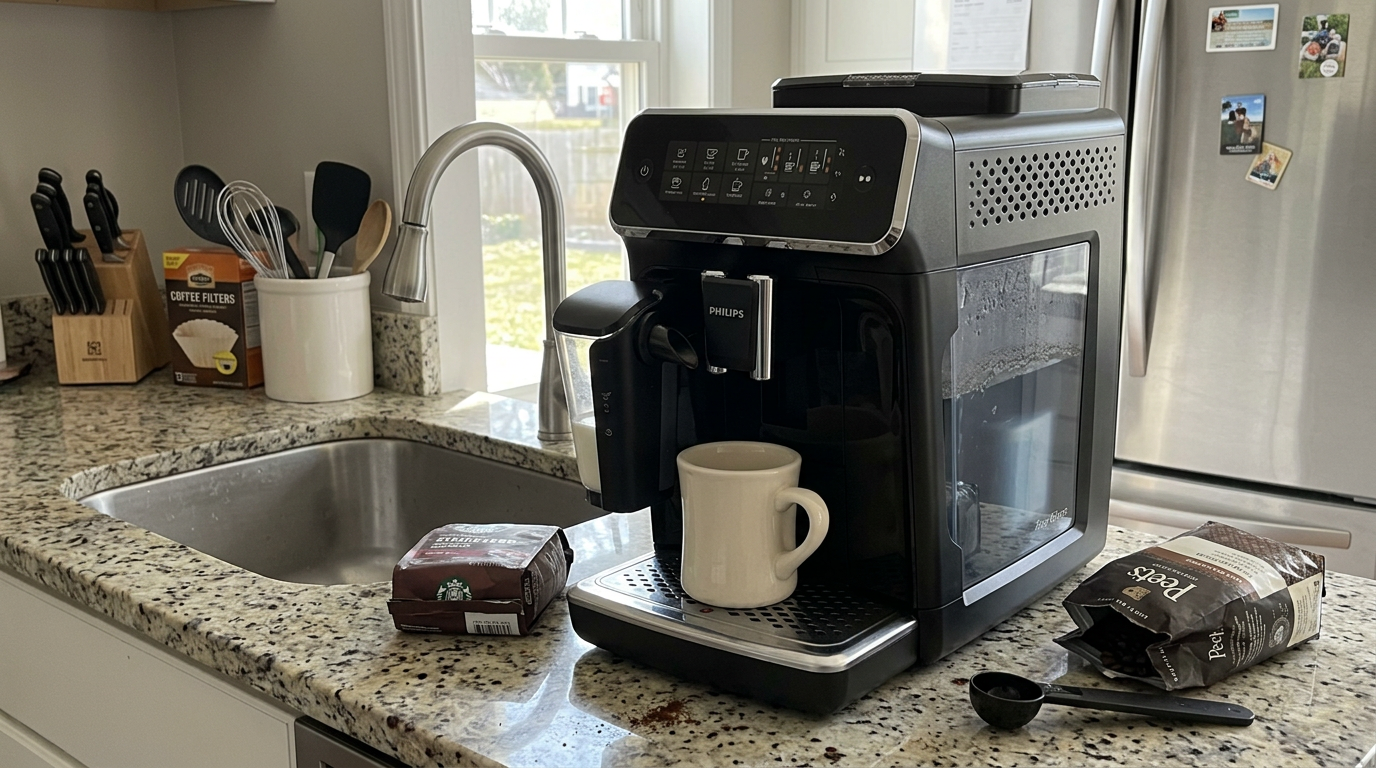
Living next to the sink made the weekly brew group rinse quick and easy.
Drip tray and grounds
The drip tray isn't very big, and the rinse cycles fill it steadily, so empty it daily.
The grounds drawer also needs emptying when the machine asks.
Water and descaling
With the AquaClean filter fitted and replaced when prompted, Philips says you can go up to 5,000 cups without descaling✕DescalingRunning a mild acid solution through the machine to dissolve mineral scale left by hard water. Scale slows heating and can block pipes..
The filter doesn't remove the need to clean the rest of the machine, and replacement filters are an ongoing cost.
| When | Task | Why it matters |
|---|---|---|
| After milk drinks | Rinse LatteGo | Stops milk spoiling |
| Daily | Empty drip tray and grounds, LatteGo in dishwasher | Hygiene and odors |
| Weekly | Rinse brew group, clean the tank | Coffee oils and residue |
| Every 2 months | Grease the brew group | Smooth movement |
| When prompted | Replace AquaClean or descale | Protects heating system |
My estimate of hands-on cleaning time per day.
What daily use is really like
In our house, the 3200 made three or four drinks every morning.
I had an espresso, Alex had a latte macchiato, and a guest often wanted a big coffee.
That's exactly where this machine shines: one button per person, no swapping settings, no milk tubes to clean afterwards.
A cappuccino took a little over a minute, and the latte macchiato slightly longer.
The 1.8-liter tank lasted about a day and a half with that kind of use.
Rough maths from a 1.8 L tank, allowing for rinses.
Noise
The grinder is a short, fairly loud burst, and the milk frothing makes a steady hiss.
It's normal for this type of machine, but noticeable in a quiet kitchen early in the morning.
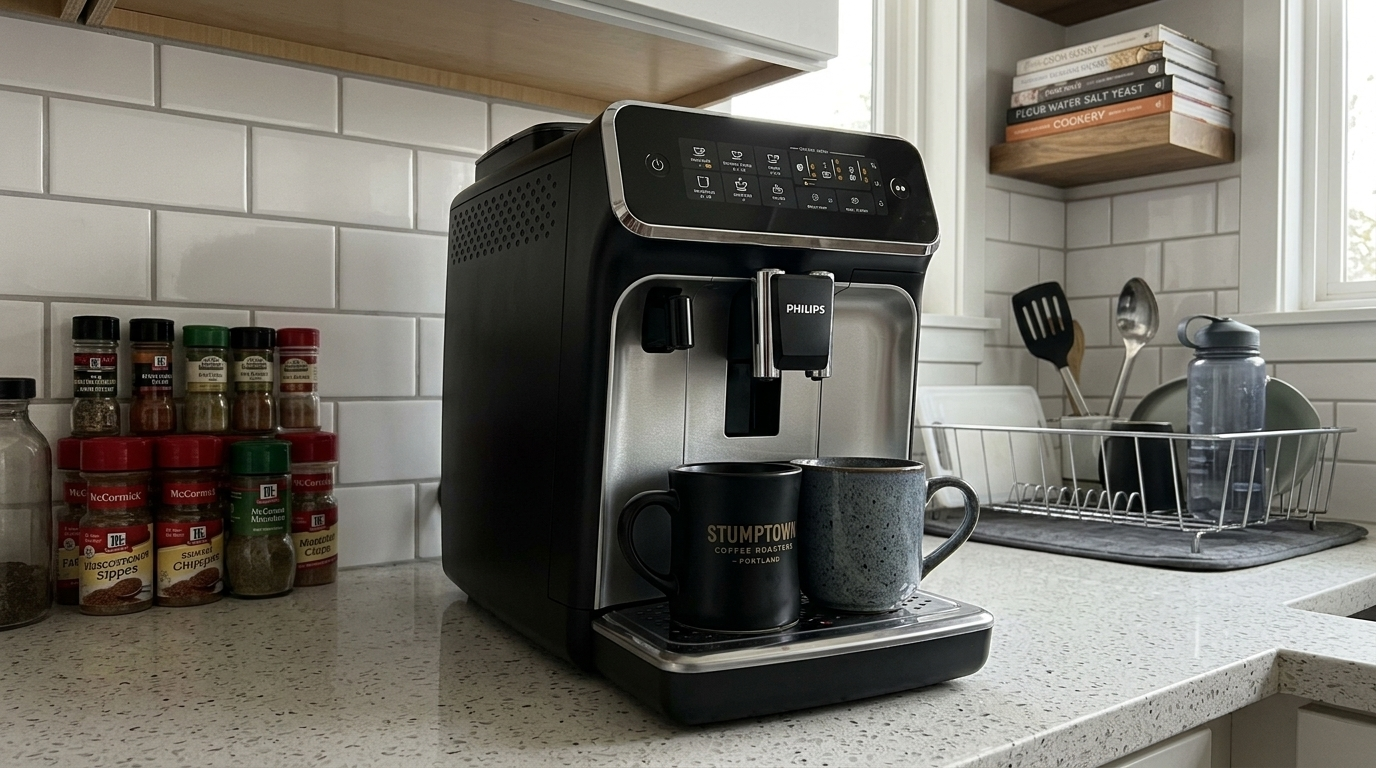
Two cups at once for espresso or coffee: handy on busy mornings.
Four weeks with the 3200, week by week
A machine can feel very different on day one and day thirty, so here's how our view of the Philips 3200 Series changed.
Week 1: settling in
The first few coffees were flat while the grinder settled, as with every new machine.
We left everything on the defaults and simply enjoyed how easy it was.
The latte macchiato was the instant favorite.
Week 2: dialing in
I moved the grinder two steps finer and switched espresso to the strongest aroma and smallest volume.
The espresso became rounder and sweeter, though still mild.
Alex lowered the coffee volume one step and found the breakfast mug much better.
Week 3: the routine
By now, the LatteGo rinse after every milk drink was a habit, and the jug went in the dishwasher every evening.
The first weekly brew group rinse washed out a surprising amount of brown residue.
Week 4: the verdict
Nothing broke, rattled or leaked, and the drinks tasted the same as in week two.
The one recurring annoyance was the small drip tray, which needed emptying every day.
Our combined feeling about the machine, from our shared notes.
Our tip: Give any new bean a week before you judge it, and change only one setting per day while you dial in.
Beans, water and milk
Beans matter a lot on a machine with a small dose.
Medium roasts gave a balanced, sweet cup.
Medium-dark roasts added more roasted, chocolatey notes and stood up better in milk.
Light roasts tasted bright but thin.
| Bean type | Espresso | Milk drinks |
|---|---|---|
| Medium-dark blend | Best body and sweetness | Excellent |
| Medium roast | Balanced, gentle | Good |
| Light roast | Bright, thin | Fades in milk |
| Arabica and Robusta blend | More crema and punch | Strong in milk |
| Oily or flavored | Avoid | Avoid |
Water
Use cold, fresh water, set your hardness and keep the AquaClean filter in if your water is hard.
Filtered drinking water also works, but not distilled water.
Milk
Cold whole milk gave the creamiest foam, and barista oat milk was the best non-dairy option.
Common mistakes to avoid
| Mistake | What happens | Better habit |
|---|---|---|
| Expecting café-strength espresso | Disappointment | Strongest aroma, smallest volume |
| Loose LatteGo parts | Leaks or poor foam | Seat the parts carefully |
| Milk left in the jug on the counter | Spoiled milk | Store the jug in the fridge |
| Letting the drip tray overflow | Water on the counter | Empty it daily |
| Oily beans | Clogged grinder | Medium or medium-dark, dry beans |
| Skipping the brew group rinse | Stale taste | Rinse it weekly |
What I would change
A slightly bigger dose would give the espresso more body.
A full cover over the top of the machine would keep dust out of the tank area.
And a larger drip tray would mean fewer trips to the sink.
Three households, three verdicts
Here's how I'd judge the Philips 3200 Series for three common kinds of home.
The mixed-taste family
One person drinks espresso, one wants a big mug, a teenager likes latte macchiatos.
This is where the 3200 is at its best.
Five buttons, no milk tubes, and everyone can make their own drink without help.
The espresso enthusiast
Someone who loves short, intense, chocolatey shots.
The small dose holds the espresso back, even on the strongest settings.
A machine with a bigger dose, or a manual setup, will make them happier.
The latte lover who hates cleaning
One or two milk drinks a day, and no patience for scrubbing a milk system.
The LatteGo jug is ideal: a ten-second rinse, then the dishwasher.
The foam isn't café-grade, but it's creamy and consistent.
| Household | Fit | Main reason |
|---|---|---|
| Mixed-taste family | Excellent | Five one-touch drinks |
| Espresso enthusiast | Fair | Mild, small-dose espresso |
| Latte lover who hates cleaning | Excellent | Two-part, tubeless milk jug |
| Small apartment, early riser | Good | Normal noise for the class |
Is the Philips 3200 Series worth the money?
The 3200 Series is a convenience machine first.
It replaces a grinder, an espresso machine and a milk frother with one appliance that anyone in the house can use.
For households that drink a mix of coffees and milk drinks, that's real value.
For espresso lovers, the small dose and mild flavor are the one big compromise.
Watch for sales, because it's often discounted, and compare it with similarly priced machines on dose and milk quality.
Three questions to ask:
Does your household drink a mix of black and milk drinks?
Do you prefer mild, easy-drinking coffee?
And is easy milk cleaning a priority?
If so, the 3200 is a very easy recommendation.
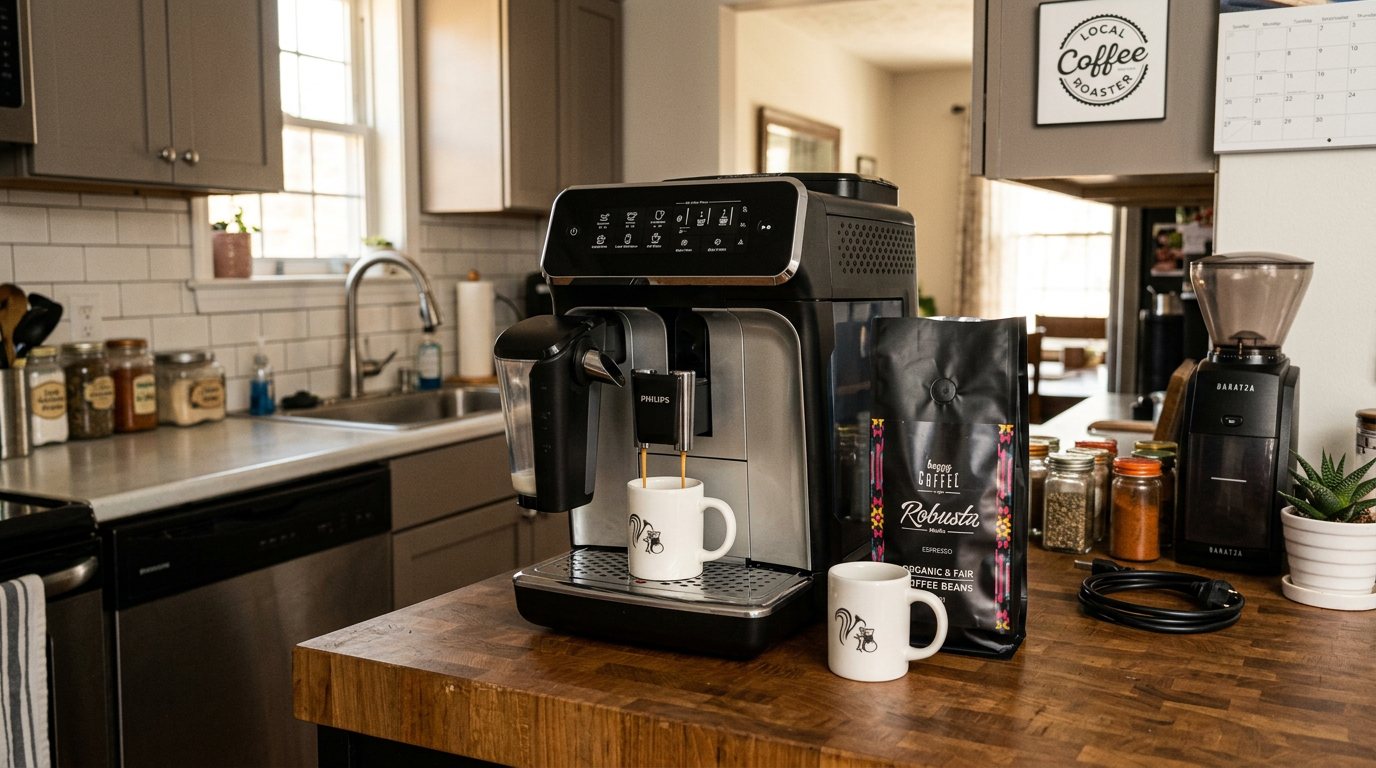
Bags of beans on the counter: fresh beans make the biggest difference on this machine.
How it compares with other coffee setups
Here's how the Philips 3200 Series compares with the setups it usually competes with.
| Feature | Philips 3200 Series | Higher-dose automatic machine | Manual machine and grinder |
|---|---|---|---|
| One-touch drinks | 5 | Varies | None |
| Espresso | Mild, lungo-style | Stronger, fuller | Strongest, skill-dependent |
| Milk | LatteGo, creamy foam | Varies | Steam wand, best texture |
| Milk cleaning | Two parts, no tubes | Often tubes | Wipe the wand |
| Ease of use | Very easy | Easy | Hard |
| Body | Mostly plastic | Varies | Often metal |
A machine with a bigger dose will make a stronger espresso, but many use milk tubes or carafes that take longer to clean.
A manual setup makes the best espresso and milk, but it's a hobby, not a shortcut.
The 3200 trades intensity for convenience, and does that very well.
| You mostly drink | Is the 3200 a fit? | Why |
|---|---|---|
| Latte macchiatos and cappuccinos | Excellent | One touch, easy cleaning |
| Mild black coffee | Excellent | Smooth, gentle cup |
| Americanos | Good | Dedicated button |
| Strong espresso | Fair | Small dose, mild shot |
| Latte art | Poor | Automatic foam only |
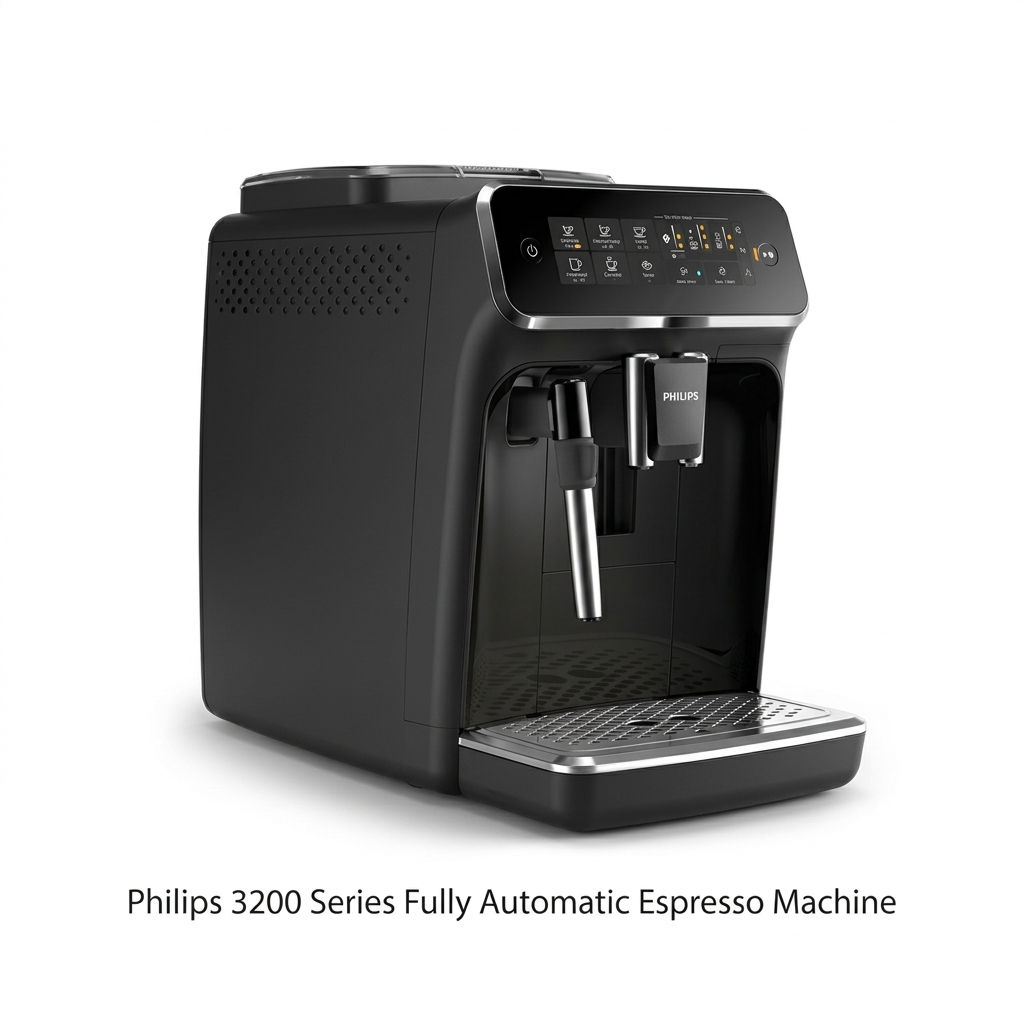
The full package: five drink icons, the LatteGo jug and an adjustable spout.
Other Philips machines I tested
For a simpler model with only a cappuccino button, see my Philips 2300 Series review.
The Philips 4300 Series adds a bigger display and more drinks.
And the Philips 4400 Series goes further still with more recipes and profiles.
If you don't mind frothing milk yourself, the Philips 2200 Series keeps a simple touch panel and hides a real steam tip under its frother.
Which one is right for you: is the Philips 3200 Series your match?
4 quick questionsPhilips 3200 Series specifications
From manufacturer data and my own testing.
How I tested and scored the Philips 3200 Series
For four weeks, the Philips 3200 Series was our main coffee machine at home, making every drink on its menu.
Alex van Gog and I shared the testing and kept joint notes.
We weighed the coffee dose, measured drink volumes and tried every strength, volume and temperature setting.
We made cappuccinos and latte macchiatos with dairy and oat milk, followed the full cleaning routine and tracked how often the tank and drip tray needed attention.
Finally, I checked our notes against Philips' specifications and user manual.
- Espresso (7.2): flavor, body, crema and how the small dose affects intensity.
- Milk drinks (7.8): foam texture, layering and convenience of LatteGo.
- Ease of use (8.8): touch panel, drink variety, customization and setup.
- Cleaning (8.5): LatteGo, brew group, drip tray and maintenance prompts.
The overall score of 8.0 is an editorial rating that reflects those four areas.
Philips 3200 Series FAQ
Is the Philips 3200 Series worth it?
Yes, if your household drinks a mix of black coffee and milk drinks and you value easy cleaning. If you want strong, concentrated espresso, look for a machine with a bigger dose.
What drinks does the Philips 3200 Series make?
Espresso, coffee, Americano, cappuccino and latte macchiato at one touch, plus hot water.
Why is the espresso mild?
The maximum dose is about 0.28 ounces, or 8 grams, which makes a longer, lighter extraction than a café espresso. Use the strongest aroma and smallest volume for more intensity.
How do I clean the LatteGo jug?
Separate the two parts and rinse them under the tap after use. Both parts are dishwasher-safe.
Is the milk foam good enough for latte art?
No. The foam is creamy and fairly fine for an automatic system, but it isn't pourable microfoam.
Does it come with a water filter?
Yes, the US model includes an AquaClean filter, plus a measuring scoop, a test strip, grease and a LatteGo storage lid.
Can I use pre-ground coffee?
Yes. Add one level scoop to the pre-ground chute and choose the ground coffee option.
Does it have a removable brew group?
Yes. Rinse it under the tap regularly and grease the moving parts every couple of months.
Is the Philips 3200 Series made of metal?
Mostly no. The body is plastic, with a stainless steel drip tray cover.
Does it have user profiles?
No. You can adjust each drink, but the settings are shared by everyone.
Can it make two drinks at once?
Yes, for espresso and coffee. Milk drinks are one at a time.
How big is the water tank?
It holds 1.8 liters, or about 61 fluid ounces. With three or four drinks a day, it lasted us about a day and a half.
Is the Philips 3200 Series good for beginners?
Very. Every drink has its own icon, the settings are simple, and the LatteGo jug needs no technique.
How often should I empty the drip tray?
Daily. The tray is fairly small and the automatic rinse cycles add water to it.
Does the Philips 3200 Series have a cup warmer?
The top is not an active cup warmer. Rinse your espresso cup with the hot water button first for a hotter drink.
Kitchen & coffee tester
Michael spent six years as a line cook in restaurants in Chicago and New York, and he has tested kitchen appliances for HouseholdMe since 2018, from air fryers to coffee makers. He holds an SCA certificate in barista skills and used the Philips 3200 Series as his everyday coffee machine for four weeks for this review.
- Four weeks of hands-on testing of the Philips 3200 Series Fully Automatic Espresso Machine
- Philips product specifications and user manual
- General espresso brewing and maintenance guidance