Philips 2300 Series review: one-touch cappuccinos from a two-part milk jug, fast drinks and SilentBrew in a slim body
The Philips 2300 Series Fully Automatic Espresso Machine is the cheapest way I know into one-touch cappuccinos from fresh beans. Its LatteGo milk jug has just two parts and no tubes, the drinks come out quickly, and the controls are as simple as they get. The milk frothing is loud, the menu is short, and cappuccinos come one at a time.

Michael Reynolds
Hands-on review
Hands-on testing, research, specs
4 weeks
22 minutes
Jargon helpNew to espresso? Tap any dotted term to see what it means.
In this review
Yes, if you want espresso, coffee and cappuccinos at one touch without spending on a big, complicated machine. The Philips 2300 Series made a 32-second espresso and a 72-second cappuccino in my tests, and its LatteGo jug rinses clean in seconds or goes in the dishwasher. The grinder and especially the milk frothing are loud, the brew group needs a weekly rinse, and the foam shoots far enough that wide cups work best.
Philips 2300 Series at a glance
Philips 2300 Series pros and cons
- One-touch cappuccino with an easy two-part milk jug
- Fast drinks, with espresso in about 32 seconds
- Simple controls and dishwasher-safe parts
- Milk frothing is loud, about 79 dB
- Only three coffee recipes, one cappuccino at a time
- Brew group needs weekly rinsing and greasing
Who should buy the Philips 2300 Series?
- Daily cappuccino drinkers who hate cleaning milk tubes
- Beginners who want simple one-touch controls
- Couples who want two coffees at once
- Light sleepers in small apartments
- Households that make several milk drinks in a row
- People who want lattes, flat whites and more on the menu
First impressions of the Philips 2300 Series
One-touch milk drinks used to be a feature you paid a lot for.
The Philips 2300 Series is Philips' attempt to bring them down to an entry-level machine without the usual cleaning headache.
The trick is the LatteGo milk jug.
It clips onto the front, holds the milk, froths it and pours it into your cup, and it has no tubes at all.
Out of the box, the 2300 looked more refined than the cheapest Philips machines.
The finish is a soft matte black with a chrome-look front panel around the spout.
The control panel is clear and uncluttered, with one icon per drink.
It's still a plastic machine, but it doesn't look like a cheap one.
Alex had the first cappuccino ready within twenty minutes of opening the box.
It was hot, creamy and well balanced, and it came out in a little over a minute.
Over the next four weeks, it became the machine our guests asked about most.
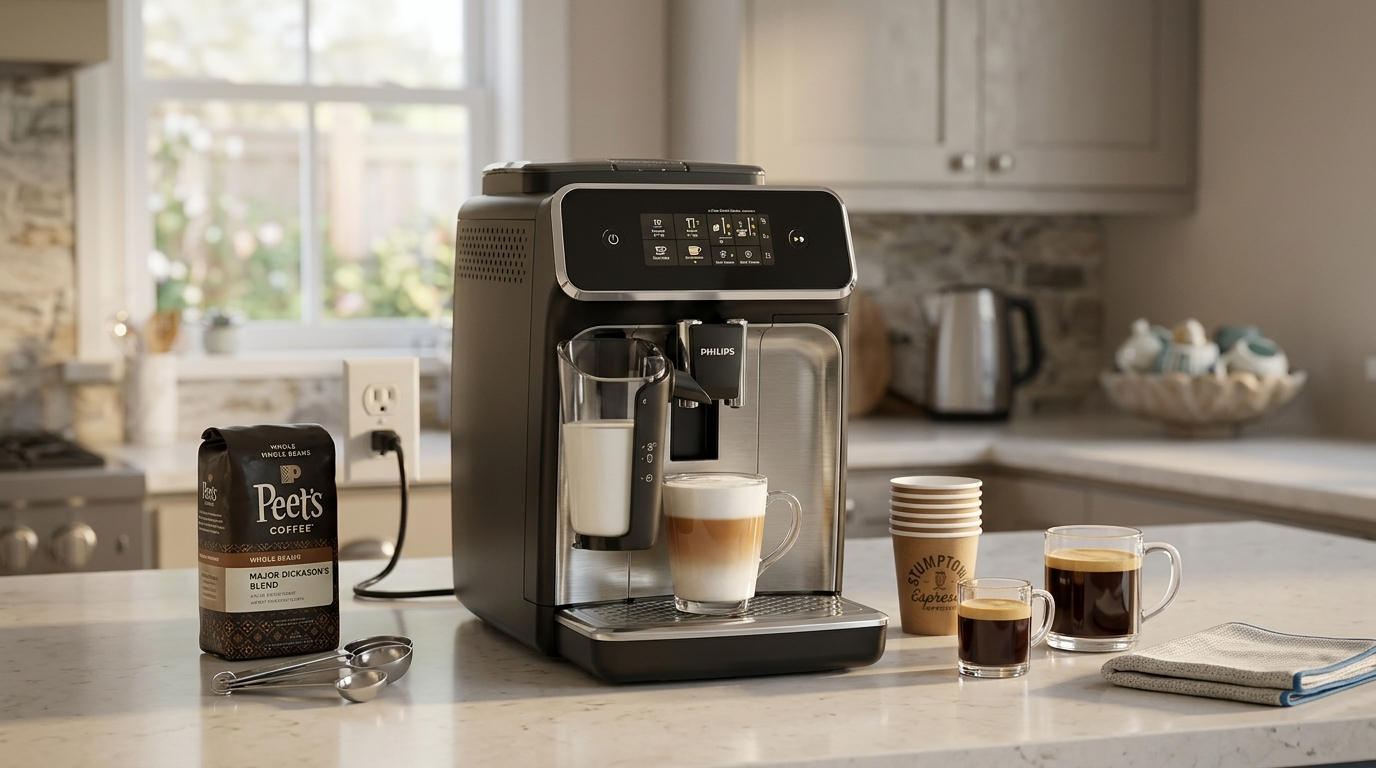
The LatteGo jug clips onto the front and pours foam straight into the cup.
What the Philips 2300 Series actually is
The 2300 is a fully automatic, bean-to-cup espresso machine with an automatic milk system.
It grinds whole beans, doses and presses them, brews under pressure and adds milk foam for cappuccinos.
The drink menu has three coffee recipes: espresso, coffee and cappuccino.
There's also a hot water button for tea.
Strength has three levels and so does volume, and the default for both is the middle level.
SilentBrew
Philips builds its SilentBrew✕SilentBrewPhilips' noise-reduction design for the grinder and brewing system. The brand says it makes brewing about 40% quieter than its earlier machines. technology into the 2300.
The brand claims it's about 40% quieter than its earlier machines.
In my tests, the grinder was quieter than the most basic Philips models, but the milk frothing was still loud.
More on that in the noise section.
Our tip: Leave strength and volume on the middle default for the first week, then change one at a time once you know how your beans taste.
Philips 2300 Series design and setup
The Philips 2300 Series measures about 9.4 inches wide, 14.6 inches high and 16.9 inches deep.
That's roughly 24 × 37 × 43 cm, slim for a machine with an automatic milk system.
Plan your space
Three things caught me out when placing it.
First, the LatteGo jug sticks out from the front, so the machine needs a little more depth than its body suggests.
Second, the power cord is only about 39 inches long, so it needs to sit fairly close to an outlet.
Third, the bean hopper is on top, so leave enough room under wall cabinets to lift the lid and pour in beans.
The water tank slides forward from the right side, which is handy if the machine sits in a corner.
Setup
Setup follows the usual Philips routine.
Rinse and fill the tank, add beans, switch on and let the machine prime and rinse.
Test your water hardness with the strip and set it, then fit and activate the AquaClean filter if you use one.
The first few drinks always taste a little flat while the grinder settles, so pour away three or four.
Our tip: Push the water tank fully home after refilling, because a tank that sits a few millimeters out stops the machine drawing water.
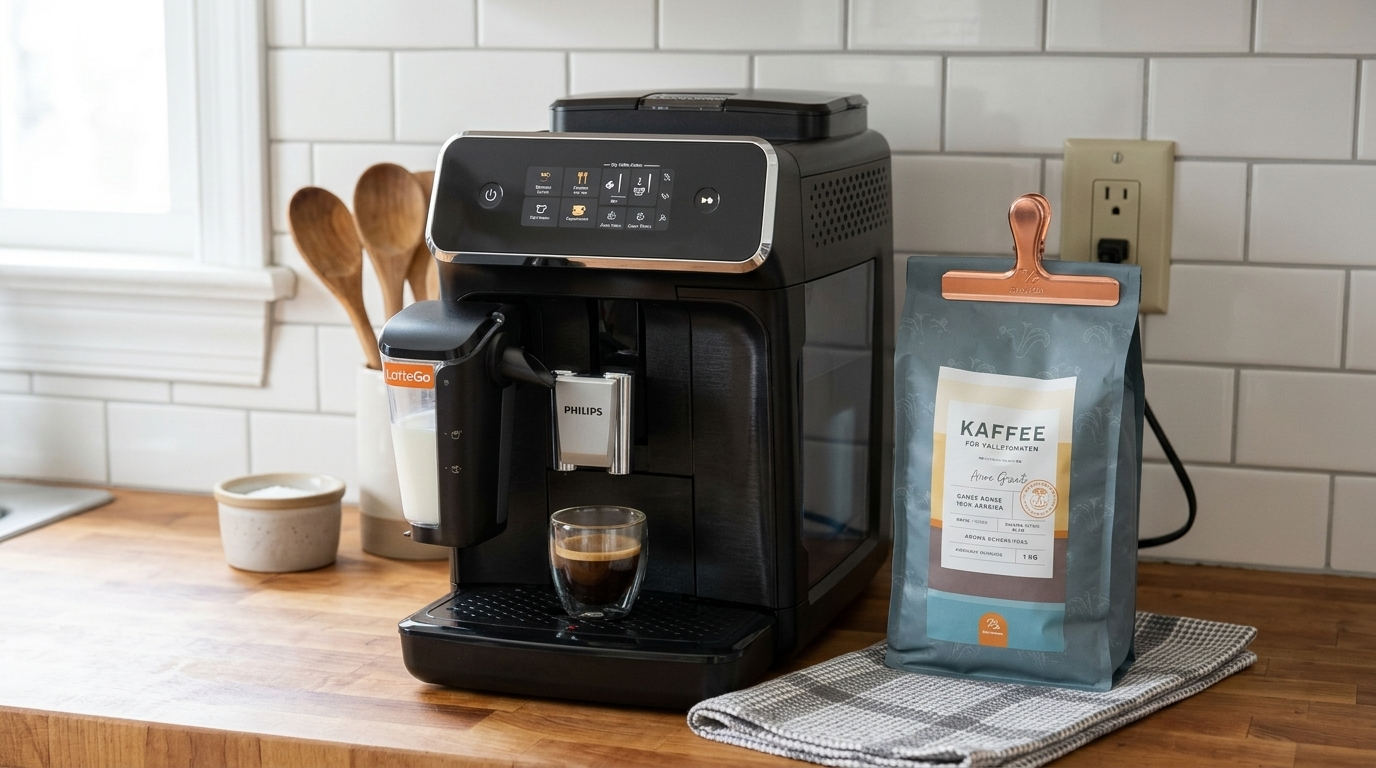
The water tank slides out forward from the right side.
The LatteGo milk system
The LatteGo jug is the reason to buy this machine over the cheaper Philips models.
It's a clear plastic container with a frothing chamber built into its lid.
There are just two main parts, and there's no milk tube running into the machine.
How it works
You pour cold milk into the jug, clip it onto the front and press cappuccino.
The machine sends steam into the frothing chamber, which pulls milk up, mixes in air and spins it into foam.
The foam pours straight out of the jug's spout into your cup, before the espresso runs in on top.
Cup position matters
The foam leaves the spout with some force and lands a short distance in front of the jug.
With a narrow glass, I got a few splashes on the drip tray before I learned to aim properly.
Wide cups and bowl-shaped cappuccino cups work much better.
The foam
The foam was creamy and fairly fine, with a smooth, slightly glossy surface.
It's an automatic system, so you can't make true latte art microfoam✕MicrofoamMilk foam with bubbles so small you can't see them. It feels silky and blends into the coffee instead of sitting on top like froth., but it was far better than the airy foam from a basic frother sleeve.
The milk came out hot enough for a cappuccino you can drink straight away.
My ratings on a 10-point scale for foam texture and stability.
Our tip: Keep the LatteGo jug in the fridge between drinks with its storage lid on, so the milk stays cold and you only clip it on when needed.
Getting the most from the cappuccino button
The cappuccino button is the one you'll press most, so it's worth tuning.
By default, it makes a balanced, medium-sized cappuccino with a generous cap of foam.
Adjusting it
Strength and volume work on the coffee part of the drink.
You can also change how much milk foam the cappuccino uses in its settings.
I raised the strength one step for darker beans and lowered the coffee volume for a richer, smaller drink.
| Goal | What to change | Result in my tests |
|---|---|---|
| Stronger coffee taste | Strength up one level | Clear coffee flavor through the milk |
| Smaller, richer drink | Coffee volume down one level | Short, creamy, more intense |
| Bigger morning drink | Volume up, wide mug | Milder, more milk |
| Hotter drink | Warm the cup, cold milk | Holds heat longer |
| Less foam, more latte-like | Reduce milk foam amount | Flatter, creamier texture |
Make a latte-style drink
There's no latte button, but you can get close.
Brew a cappuccino into a tall glass, then add a single coffee or espresso on top for a layered drink.
Or reduce the foam amount and use a larger cup for something closer to a café latte.
Milk temperature
The foam came out at a comfortable drinking temperature in my tests, around the classic 60 to 65°C, or 140 to 150°F, cappuccino range.
That keeps milk tasting sweet rather than cooked.
General milk guidance. The LatteGo output sat in the middle band in my tests.
Our tip: Fill the LatteGo jug only to the line for the number of drinks you are making, so leftover milk does not sit at room temperature.
Controls and customization
The control panel is one of the simplest I've used on a machine with milk.
Each drink has its own icon: espresso, coffee, cappuccino and hot water.
Strength and volume each have three levels, and the middle level is the default.
Two cups at once
For espresso and coffee, you can make two cups at once under the dual spout.
That's handy for couples on a busy morning.
Cappuccino is one at a time, because the LatteGo jug only feeds one cup.
My settings
I used espresso on the strongest setting and smallest volume.
Alex made coffee on the middle strength and largest volume.
For cappuccinos, the middle strength was enough because the milk is well balanced with the coffee.
| Drink | Setting I used | Result |
|---|---|---|
| Espresso | Strong, small | Fuller, sweeter shot |
| Coffee | Medium, large | Smooth breakfast mug |
| Cappuccino | Medium, medium | Balanced, creamy |
| Two espressos | Strong, small, two cups | Both cups ready in about 1:25 |
Dialing in the 12-step grinder
The grind knob sits inside the bean hopper, under the beans.
Press it down and turn it one click while the grinder is running.
The Philips 2300 Series ships on a middle setting, which suited most medium roasts in my tests.
I found two simple rules.
If the espresso tastes sour or thin, go one step finer.
If it tastes harsh or runs very slowly, go one step coarser.
Wait two drinks after each change, because some old grounds are still in the chute.
From my notes with a medium-dark blend. Lower numbers are finer.
Where I ended up
For espresso and cappuccino with a medium-dark blend, I settled about two steps finer than the default.
For a medium roast in the long coffee, the default was fine.
The ceramic burrs kept their consistency through the whole four weeks, with no change in the pucks.
Our tip: Change the grind only when the hopper is half full or less, because a full load of beans pressing down makes the knob stiffer to turn.
How fast it makes each drink
I timed every drink with the machine already warm, using the default middle settings.
The 2300 is quick, which matters on busy mornings.
Measured with a stopwatch, from pressing start to the last drip.
The first drink of the day takes longest because the machine heats up and rinses first.
After that, an espresso in about half a minute felt genuinely fast.
A cappuccino in 72 seconds, milk included, is quicker than I could make one by hand.
Our tip: Switch the machine on as soon as you walk into the kitchen, because the start-up rinse adds almost a minute to your first espresso.
Philips 2300 Series espresso and coffee
The Philips 2300 Series grinds with 100% ceramic burrs✕Ceramic burrsGrinding plates made of ceramic instead of steel. They wear slowly and stay cool, which helps keep the coffee's aroma intact during grinding., with 12 settings inside the bean hopper.
The hopper holds about 9.7 ounces, or 275 grams, of beans.
As with every Philips grinder, only turn the knob while the grinder runs, one step at a time.
How the espresso tasted
With a medium-dark blend, the espresso was concentrated and pleasant, with cocoa and a light caramel sweetness.
The crema✕CremaThe golden-brown foam on top of an espresso. It forms when pressure pushes gases and oils out of freshly ground coffee. was there, but it faded faster than I expected.
On the long coffee, the foam layer was more noticeable, though it also didn't last long.
If a thick, long-lasting crema matters to you, use fresh beans and try a blend with some Robusta.
Temperature
I measured my espresso at about 149°F, or 65°C, in the cup.
That's drinkable straight away, but on the cool side for people who like coffee very hot.
Warming the cup first and raising the temperature setting helped.
The cold-cup figure was measured at the top of the cup. The others show the direction of change in my tests.
| What you taste or see | Likely cause | First change |
|---|---|---|
| Sour, thin | Grind too coarse | One step finer while grinding |
| Bitter, harsh | Volume too large | Drop one volume level |
| Crema fades fast | Beans not fresh | Use beans within a month of roasting |
| Lukewarm | Cold cup, low setting | Warm the cup, raise temperature |
| Weak in cappuccino | Mild strength | Raise strength one level |
Our tip: Rinse your espresso cup with the hot water button first, because a warm cup kept my espresso noticeably hotter.
Noise: the 2300 Series' weak spot
Noise is the one area where the Philips 2300 Series disappointed me.
I measured it with a sound meter app at about 20 inches, or half a meter, from the machine.
Machine figures measured during testing. Reference levels are typical values.
The grinder, at about 71 dB, is noticeable but short.
SilentBrew helps, and it was less harsh than the most basic Philips machines I tested.
The milk frothing is the real issue.
At about 79 dB, it's a loud, rushing hiss that fills a small kitchen.
It only lasts for part of the cappuccino cycle, but it's long enough to wake someone in the next room.
Who should worry
If you make coffee before the rest of the house is awake, plan for this.
In an open-plan apartment, an early cappuccino will be heard.
For espresso and coffee only, the 2300 was perfectly livable.
Pre-ground coffee and hot water
There's a separate compartment for pre-ground coffee✕Pre-ground bypassA separate chute that sends already-ground coffee straight to the brew unit, skipping the grinder. Handy for decaf without emptying the bean hopper., with a measuring scoop in the box.
I used it for decaf in the evening without emptying the beans in the hopper.
Choose the ground coffee option, add one level scoop, then pick your drink.
It's meant for occasional use, not for replacing the grinder.
Hot water
The hot water button is handy for tea, instant drinks and warming cups.
Our tip: Add only one level scoop of pre-ground coffee per drink, because extra powder can clog the brew group.
Water tank and AquaClean filter
The water tank holds about 60.9 fluid ounces, or 1.8 liters.
It slides forward out of the right side of the machine, so you don't need to move the 2300 to refill it.
It's a good size for two people, and it's easy to carry to the sink.
The AquaClean filter clips into the bottom of the tank.
It reduces the limescale that gets into the machine and helps the water taste cleaner.
Philips figure for AquaClean. Unfiltered intervals depend on your water hardness.
Even with the filter, keep up with the rest of the cleaning, because AquaClean only deals with scale, not coffee oils or milk.
Cleaning and maintaining the Philips 2300 Series
Cleaning is where the 2300 makes life easy, with one exception.
The milk jug
LatteGo is the easiest automatic milk system I've cleaned.
Pull the jug off, separate the two parts and rinse them under the tap.
It took me about ten seconds after each cappuccino.
Once a day, I put both parts in the dishwasher.
What goes in the dishwasher, and what doesn't
| Part | Dishwasher-safe? | How I cleaned it |
|---|---|---|
| LatteGo milk jug | Yes | Quick rinse after use, dishwasher daily |
| Coffee grounds container | Yes | Emptied daily, dishwasher weekly |
| Drip tray and cup rest | Yes | Emptied daily |
| Water tank | No, hand wash | Rinsed with warm water weekly |
| Bean hopper lid | No, hand wash | Wiped with a dry cloth |
| Grounds container cover | No, hand wash | Wiped weekly |
The brew group
The exception is the brew group✕Brew groupThe part inside an automatic machine that receives the ground coffee, presses it into a puck, pushes hot water through it and then ejects the used grounds..
Philips asks you to rinse it once a week and grease it about every two months.
It comes out from the side and rinses clean under the tap in a couple of minutes, but it's a job you can't skip.
My estimate of hands-on cleaning time per day.
AquaClean and descaling
The 2300 works with the AquaClean filter.
With it fitted and replaced when the machine asks, Philips says you can go up to 5,000 cups without descaling✕DescalingRunning a mild acid solution through the machine to dissolve mineral scale left by hard water. Scale slows heating and can block pipes..
The grounds container holds about 12 pucks, and the machine tells you when it's full.
| When | Task | Why it matters |
|---|---|---|
| After each cappuccino | Rinse LatteGo | Stops milk residue |
| Daily | Empty drip tray and grounds, LatteGo in dishwasher | Hygiene and odors |
| Weekly | Rinse the brew group, wash the tank | Coffee oils and scale |
| Every 2 months | Grease the brew group | Smooth movement |
| When prompted | Replace AquaClean or descale | Protects the heater |
Our tip: Set a weekly phone reminder for the brew group rinse, because nothing on the machine prompts you to do it.
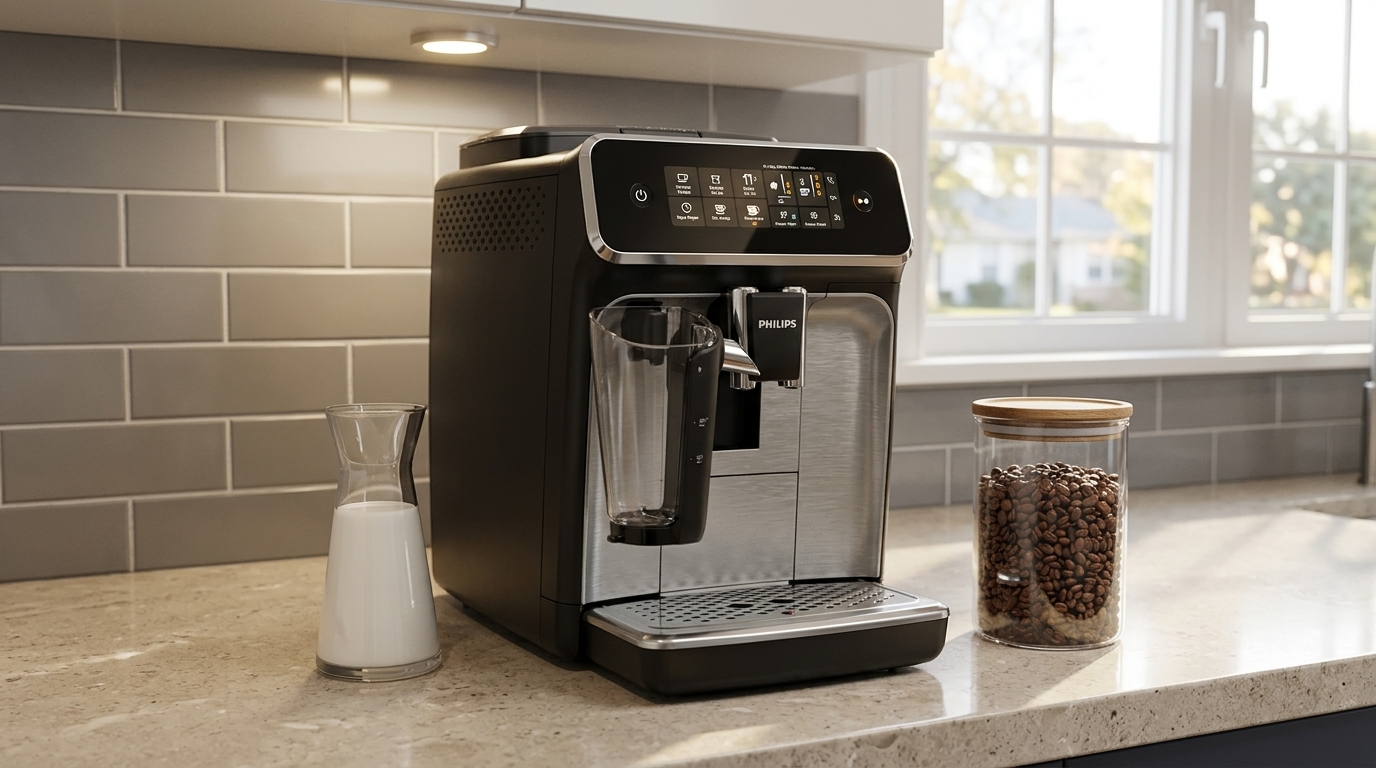
A jar of beans beside the machine: the hopper holds about 9.7 ounces.
What daily use is really like
A normal morning for us was a quick espresso for me and a cappuccino for Alex.
Switch on, wait for the rinse, espresso in half a minute, then clip on the jug for the cappuccino.
The whole thing, including rinsing the jug, took under five minutes.
The 1.8-liter tank, about 61 fluid ounces, lasted two of us about two days.
Rough maths from a 1.8 L tank, allowing for rinses.
Small annoyances
The jug only holds about 8.8 fluid ounces, enough for two cappuccinos before a refill.
Cappuccinos are one at a time, so serving four guests takes a few minutes.
And the short cord meant moving the machine closer to the outlet than I'd have liked.
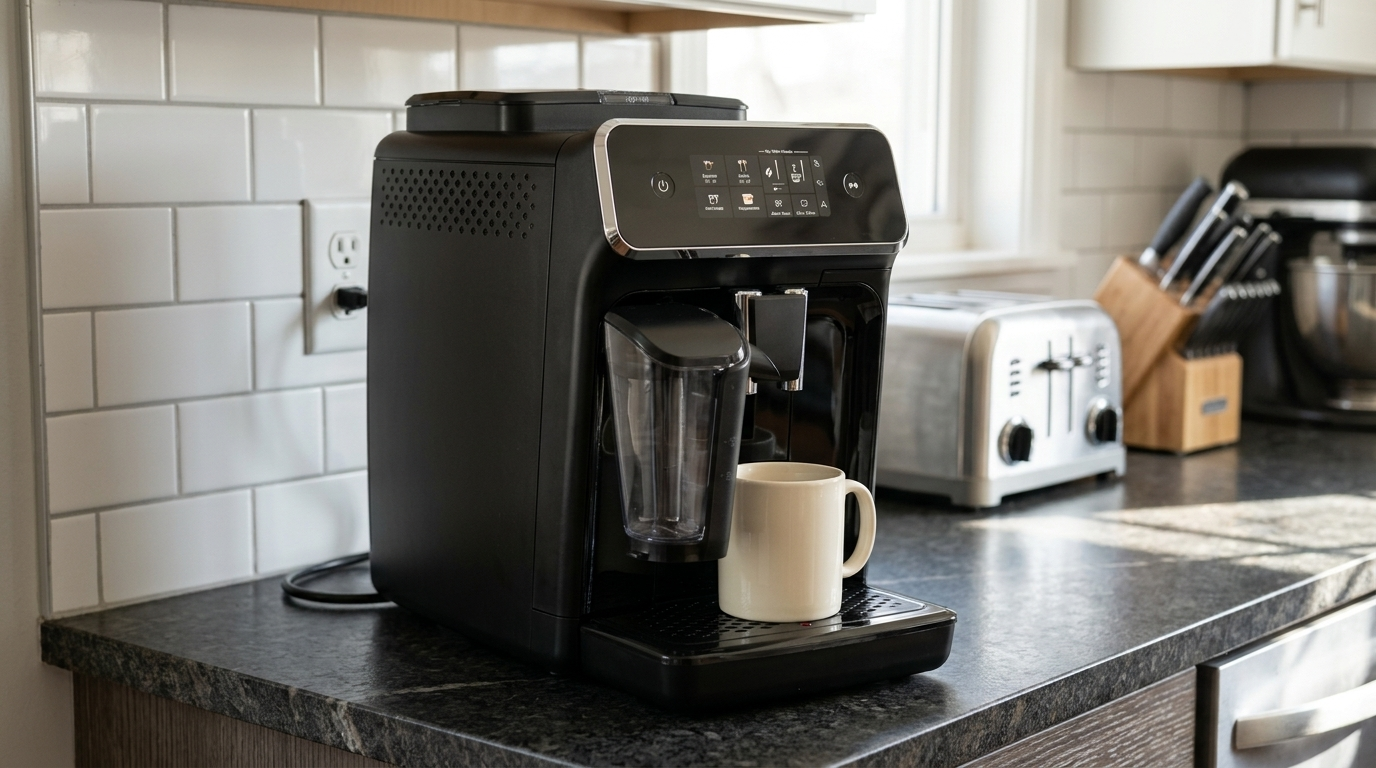
In a busy kitchen, the 2300's slim body barely takes up more space than the toaster.
Beans, water and milk
Fresh beans make the biggest difference on the Philips 2300 Series.
Medium and medium-dark espresso blends worked best for both espresso and cappuccino.
A blend with some Robusta gave a thicker, longer-lasting crema and more punch through the milk.
Avoid oily and flavored beans, which can clog the grinder over time.
| Bean type | Espresso | Cappuccino |
|---|---|---|
| Medium-dark blend | Best, sweet and full | Excellent |
| Arabica and Robusta blend | More crema | Cuts through milk |
| Medium roast | Brighter | Good |
| Light roast | Can taste sour | Fair, fades in milk |
| Oily or flavored | Avoid | Avoid |
Water
Use fresh, cold water every day.
Set your water hardness on day one and use AquaClean if your water is hard.
Milk
Use cold milk straight from the fridge for the best foam.
Whole milk gave the creamiest cappuccino, and barista oat milk was the best plant option.
Common mistakes to avoid
| Mistake | What happens | Better habit |
|---|---|---|
| Narrow glass under LatteGo | Foam splashes on the tray | Wide cup, pushed back |
| Leaving milk in the jug for hours | Warm milk, poor foam | Store the jug in the fridge |
| Skipping the weekly brew group rinse | Stale, bitter taste | Rinse it every week |
| Washing the water tank in the dishwasher | Possible warping | Hand wash only |
| Turning the grind knob while stopped | Strain on the grinder | Turn only while grinding |
| Placing it far from an outlet | Cord too short | Plan for about 39 inches of cord |
What I would change
I'd like a latte macchiato and an Americano button, which bigger Philips machines offer.
Quieter milk frothing would make the biggest difference to daily life.
And a slightly longer cord would make placement easier.
Three households, three verdicts
To make the decision easier, here's how I'd judge the Philips 2300 Series for three common kinds of home.
The cappuccino couple
Two people, one or two cappuccinos each morning, maybe an espresso after lunch.
This is the 2300's sweet spot.
The one-at-a-time cappuccinos are no problem at this pace, and LatteGo cleaning takes seconds.
The early riser in a small apartment
One person up at 6 a.m., someone else still asleep.
Espresso and coffee are fine, because the grinder burst is short.
The milk frothing is the problem, so either save the cappuccino for later or choose a quieter machine.
The busy family
Three or four coffee drinkers, plus guests at weekends.
The fast espresso and two-cup coffee help, but serving four cappuccinos takes about five minutes and two jug refills.
A bigger model with more drinks and a larger milk container may suit you better.
| Household | Fit | Main reason |
|---|---|---|
| Cappuccino couple | Excellent | Fast, simple, easy milk cleaning |
| Early riser, small apartment | Fair | Loud milk frothing |
| Busy family | Good for coffee, fair for milk | One cappuccino at a time |
Is the Philips 2300 Series worth the money?
The 2300 Series is one of the most affordable ways to get one-touch cappuccinos from fresh beans.
Its biggest strength is that it removes the two things people dislike about milk drinks at home: frothing by hand and cleaning milk tubes.
Its biggest weakness is the noise when it froths milk.
If you mostly drink cappuccinos and black coffee, it does everything you need, quickly and simply.
If you want lattes, flat whites and a long drink menu, a bigger model will serve you better.
Ask yourself three questions.
Do you drink cappuccinos most days?
Can you live with a loud few seconds of frothing?
And do you prefer a short menu you'll actually use?
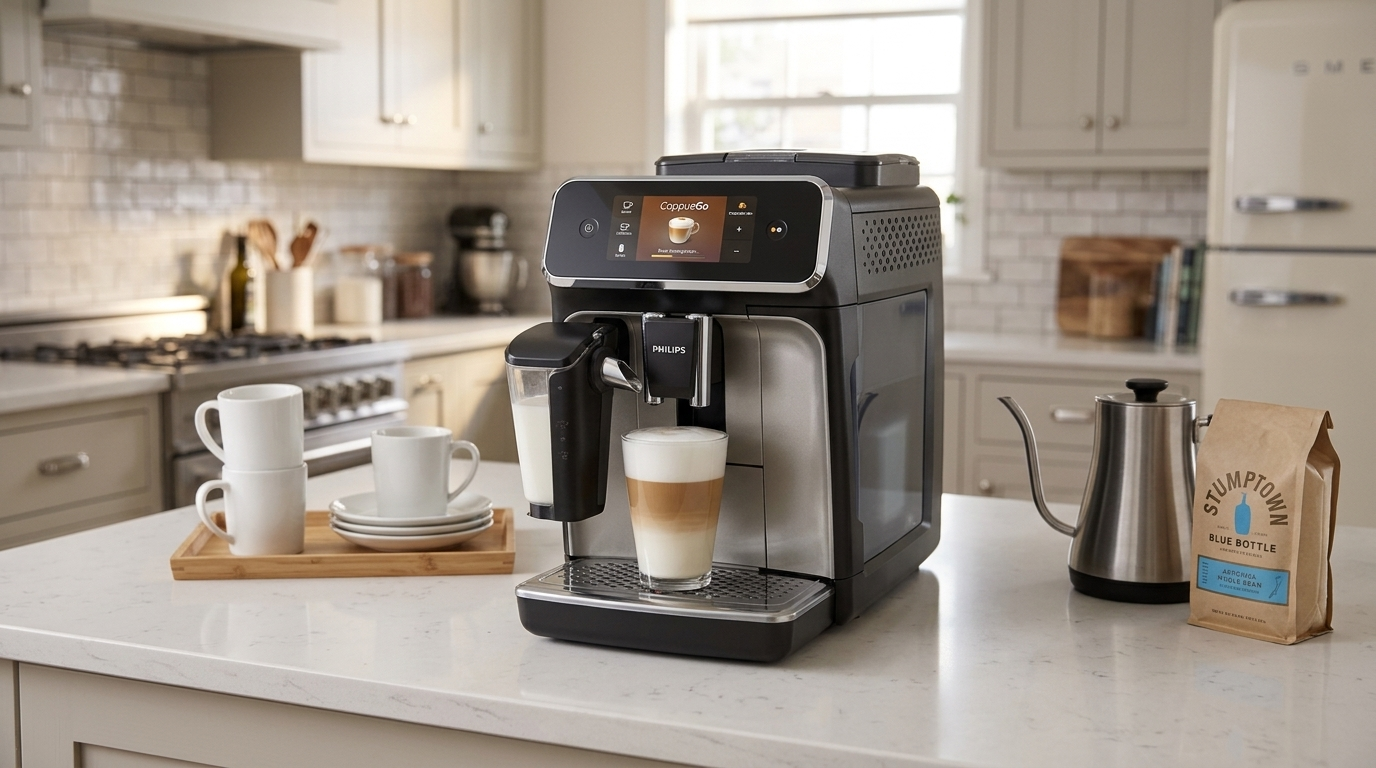
Cappuccino in a glass: the LatteGo foam is creamy enough to hold its layers.
How it compares with other coffee setups
Here's how the Philips 2300 Series compares with the setups most people weigh it against.
| Feature | Philips 2300 Series | Machine with manual steam wand | Bigger automatic machine |
|---|---|---|---|
| Cappuccino | One touch | By hand | One touch |
| Milk cleaning | Two parts, no tubes | Wipe the wand | Often tubes or carafe |
| Drink menu | Espresso, coffee, cappuccino | Espresso, coffee | Often 5 to 12 drinks |
| Speed | Fast | Slower for milk | Fast |
| Noise | Loud milk frothing | Loud steaming | Varies |
| Size | Slim | Slim | Usually larger |
Compared with a machine that has a manual steam wand, the 2300 saves you real effort every morning.
Compared with bigger automatic machines, it gives up drink variety and some refinement, but it's simpler and smaller.
| You mostly drink | Is the 2300 a fit? | Why |
|---|---|---|
| Cappuccinos | Excellent | One touch, easy to clean |
| Espresso | Good | Fast, pleasant, a little cool |
| Mugs of coffee | Good | Two at once |
| Lattes and flat whites | Fair | No dedicated buttons |
| Milk drinks for a crowd | Fair | One cappuccino at a time |
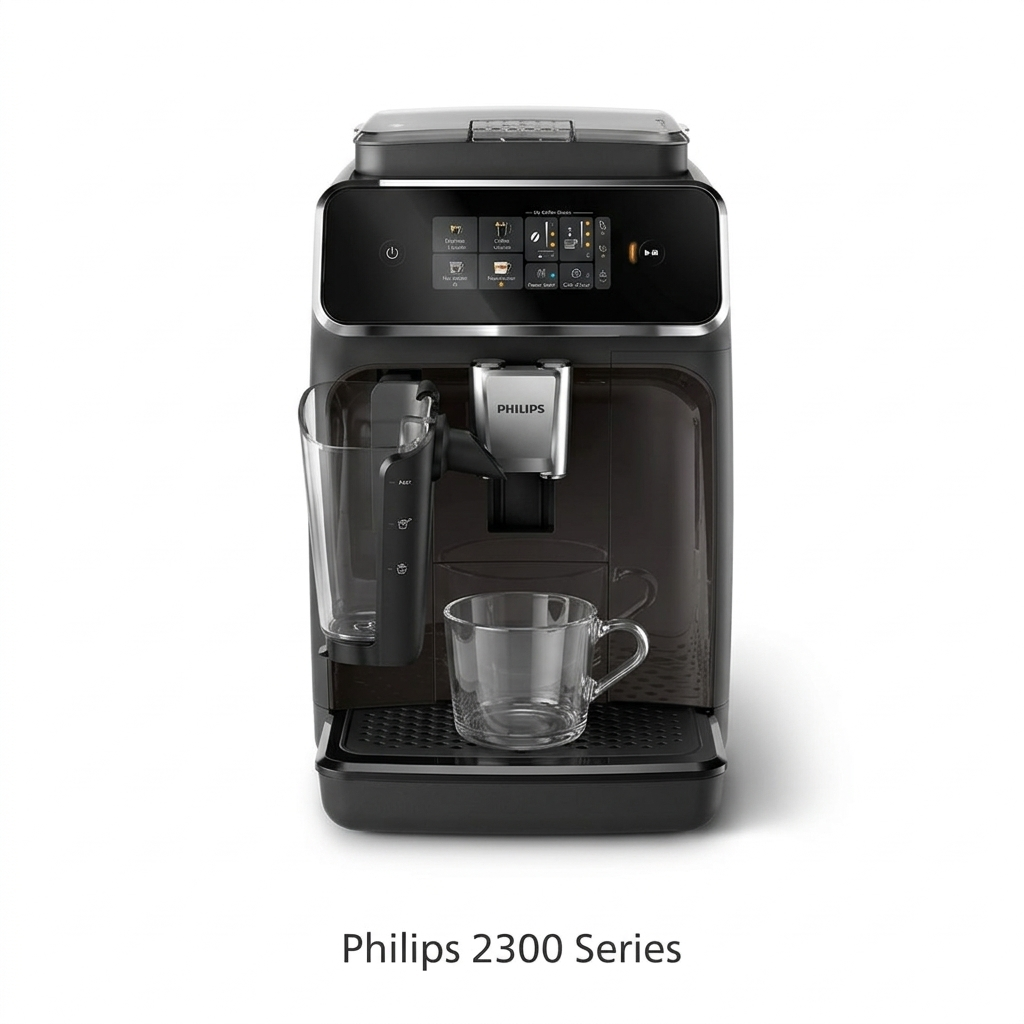
The full package: icon controls, the LatteGo jug and an adjustable spout.
Other Philips machines I tested
If you don't need milk at one touch, my Philips 2200 Series review covers the frother version.
The Philips 3200 Series adds more drinks to the same LatteGo idea.
And the Philips 4400 Series is a bigger step up with more recipes.
In between the 3200 and 4400 sits the Philips 4300 Series, with eight drinks, a display that shows real volumes and two saved profiles.
If you are happy to froth milk yourself and save some money, the Philips 1200 Series pairs a touch panel with a beginner-friendly frother.
Which one is right for you: is the Philips 2300 Series your match?
4 quick questionsPhilips 2300 Series specifications
From manufacturer data and my own testing.
How I tested and scored the Philips 2300 Series
For four weeks, the Philips 2300 Series was our everyday coffee machine for espresso, coffee, cappuccinos and tea.
Alex van Gog and I shared it and kept joint testing notes.
We timed every drink type, measured espresso temperature in the cup and took noise readings during grinding and frothing.
I tried four kinds of milk in the LatteGo jug, worked through the grind settings with three roasts and followed the full cleaning routine, including the weekly brew group rinse.
I then compared our notes with Philips' specifications and user manual.
- Espresso (7.8): flavor, crema, temperature and consistency.
- Milk drinks (8.0): foam texture, heat, speed and cup handling with LatteGo.
- Ease of use (8.9): controls, customization, speed and setup.
- Cleaning (8.2): LatteGo, dishwasher-safe parts and brew group care.
The overall score of 8.2 is an editorial rating that reflects those four areas.
Philips 2300 Series FAQ
Is the Philips 2300 Series worth it?
Yes, if you want one-touch cappuccinos from fresh beans with very easy milk cleaning. If you need a quiet machine or a long drink menu, look at other models.
What drinks does the Philips 2300 Series make?
Espresso, coffee and cappuccino at one touch, plus hot water.
How does LatteGo work?
You fill the two-part jug with cold milk and clip it on. The machine uses steam to pull milk into the jug's frothing chamber, where it is mixed with air and poured into your cup.
How do I clean LatteGo?
Separate the two parts and rinse them under the tap after use. Both parts are dishwasher-safe.
How loud is the Philips 2300 Series?
I measured about 71 dB while grinding and about 79 dB during milk frothing, at around 20 inches from the machine.
How fast is it?
In my tests, a single espresso took about 32 seconds, a coffee about 48 seconds and a cappuccino about 72 seconds.
Can it make two cappuccinos at once?
No. It can make two espressos or two coffees at once, but cappuccinos are one at a time.
How hot is the espresso?
I measured about 149°F in the cup. Warming the cup and raising the temperature setting makes it hotter.
Does it have a removable brew group?
Yes. Philips recommends rinsing it weekly and greasing it about every two months.
Can I use pre-ground coffee?
Yes. Select the ground coffee option and add one level scoop with the included measuring scoop.
How long is the power cord?
About 39 inches, so plan to place the machine fairly close to an outlet.
Kitchen & coffee tester
Michael spent six years as a line cook in restaurants in Chicago and New York, and he has tested kitchen appliances for HouseholdMe since 2018, from air fryers to coffee makers. He holds an SCA certificate in barista skills and used the Philips 2300 Series as his everyday coffee machine for four weeks for this review.
- Four weeks of hands-on testing of the Philips 2300 Series Fully Automatic Espresso Machine
- Philips product specifications and user manual
- General espresso brewing and maintenance guidance