Best Philips Espresso Machine: 800 to 5500 Series Ranked
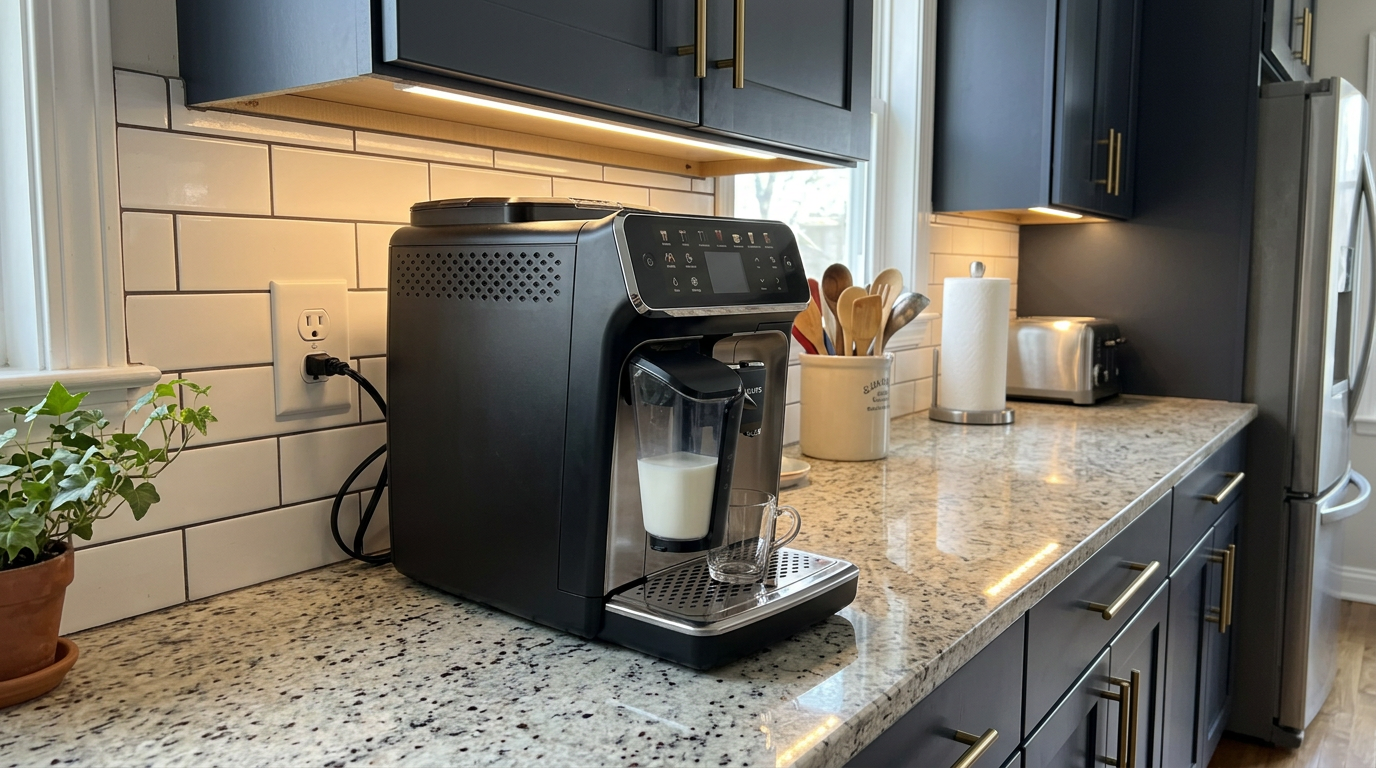
Philips names its espresso machines by number, and the numbers don’t tell you much about what changes. So I used all ten as my everyday coffee maker for four weeks each and ranked them. For most people, I recommend the Philips 4400 Series: 12 hot and iced drinks, a bigger coffee dose than the entry models, two profiles and the easy-clean LatteGo jug.

Michael Reynolds
Buying Guide
10 models · 5 picks
4 weeks per machine
I choose products independently, based on hands-on testing. We may earn a commission through links on this page; your price stays the same. Affiliate policy
Jargon helpNew to espresso machines? Tap any dotted term to see what it means.
In this guide
The short answer
- Best Philips overall: the 4400 Series. 12 hot and iced drinks, a stronger dose, two profiles plus a guest, and LatteGo milk.
- Best for families: the 5500 Series. 20 hot and iced drinks, profiles for the household and the best Philips milk.
- Easiest to clean: the 3300 Series. One-touch drinks, a quiet grinder and the lowest-effort cleanup I measured.
- Best value: the 2300 Series. One-touch cappuccinos from a two-part LatteGo jug in a slim, quiet body.
- Best for hands-on espresso: the Barista Brew. A 58 mm portafilter, built-in grinder and a real Americano button.
Our picks at a glance
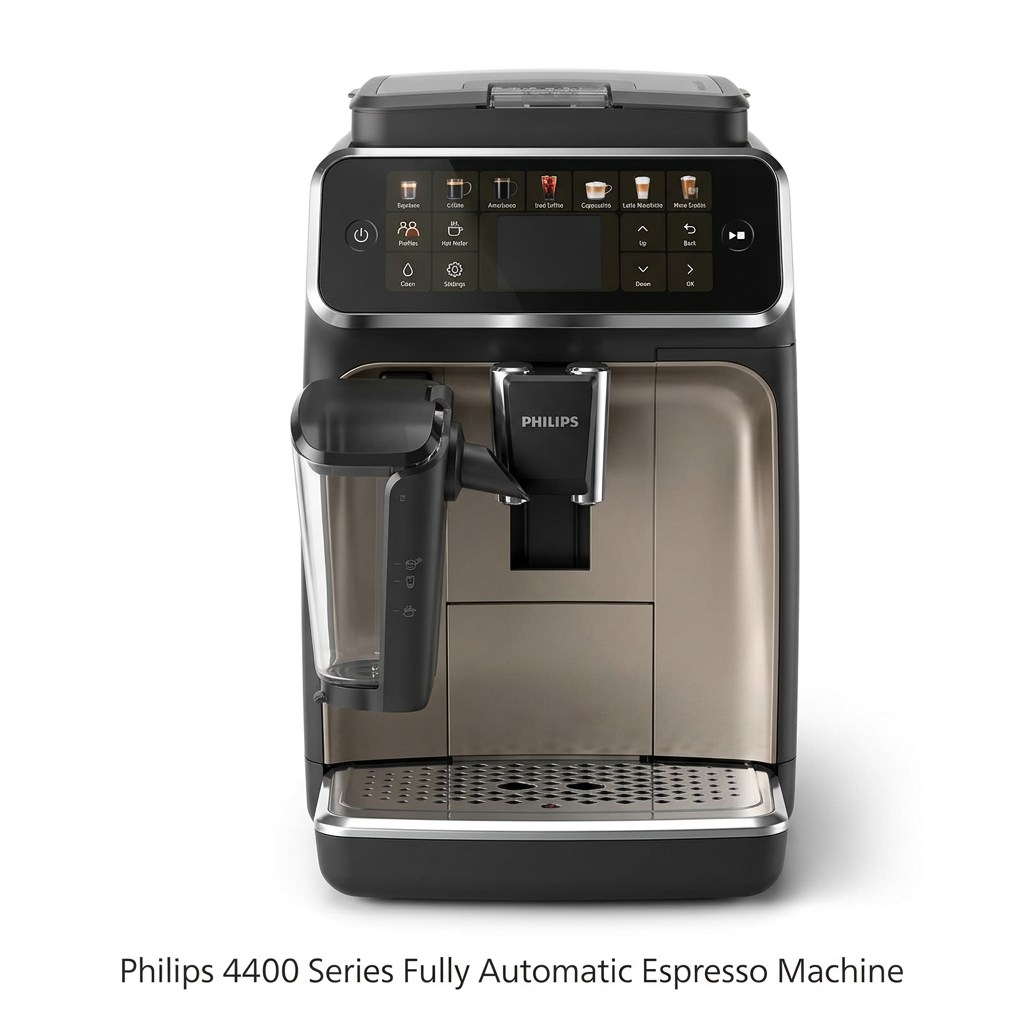
Philips 4400 Series
12 hot and iced drinks, a bigger coffee dose, two profiles plus a guest and the easy-clean LatteGo jug.
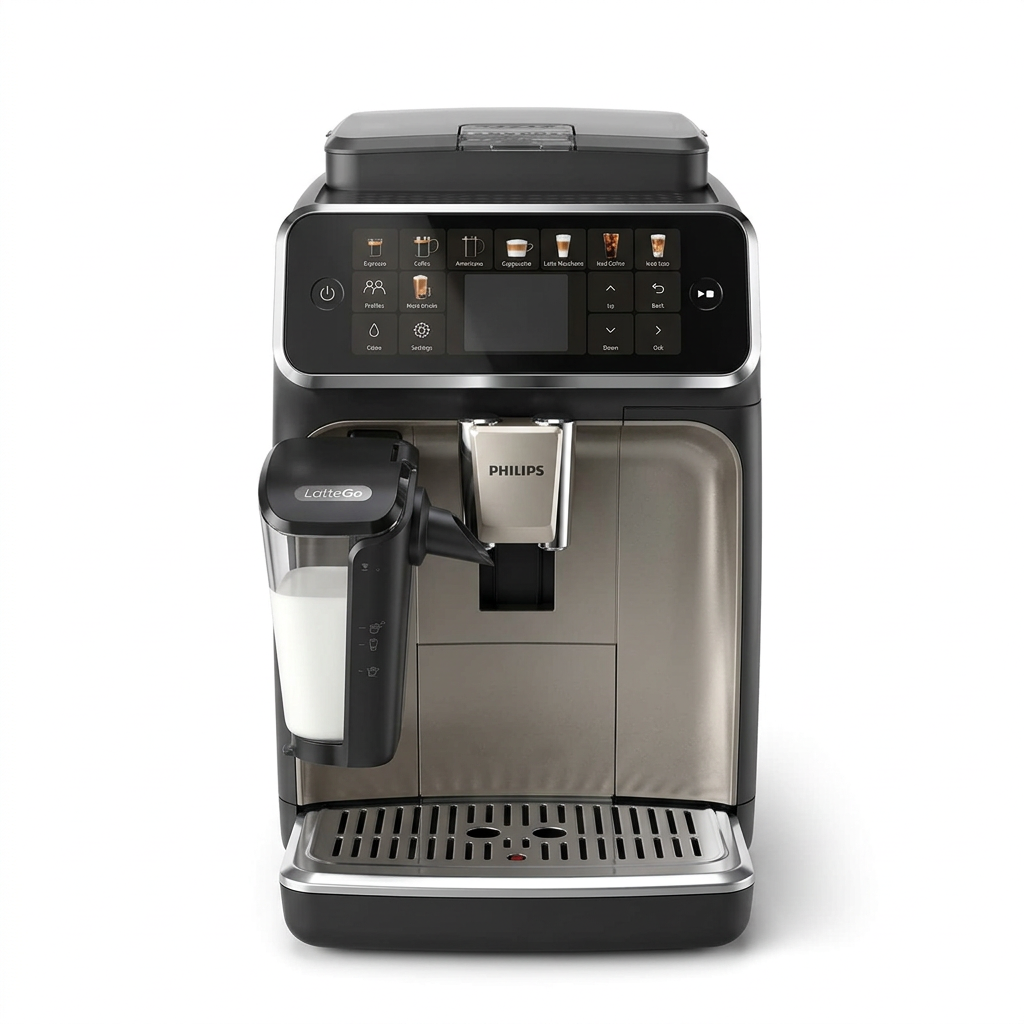
Philips 5500 Series
20 hot and iced drinks, profiles for the household and the best Philips milk, in a quiet, compact body.
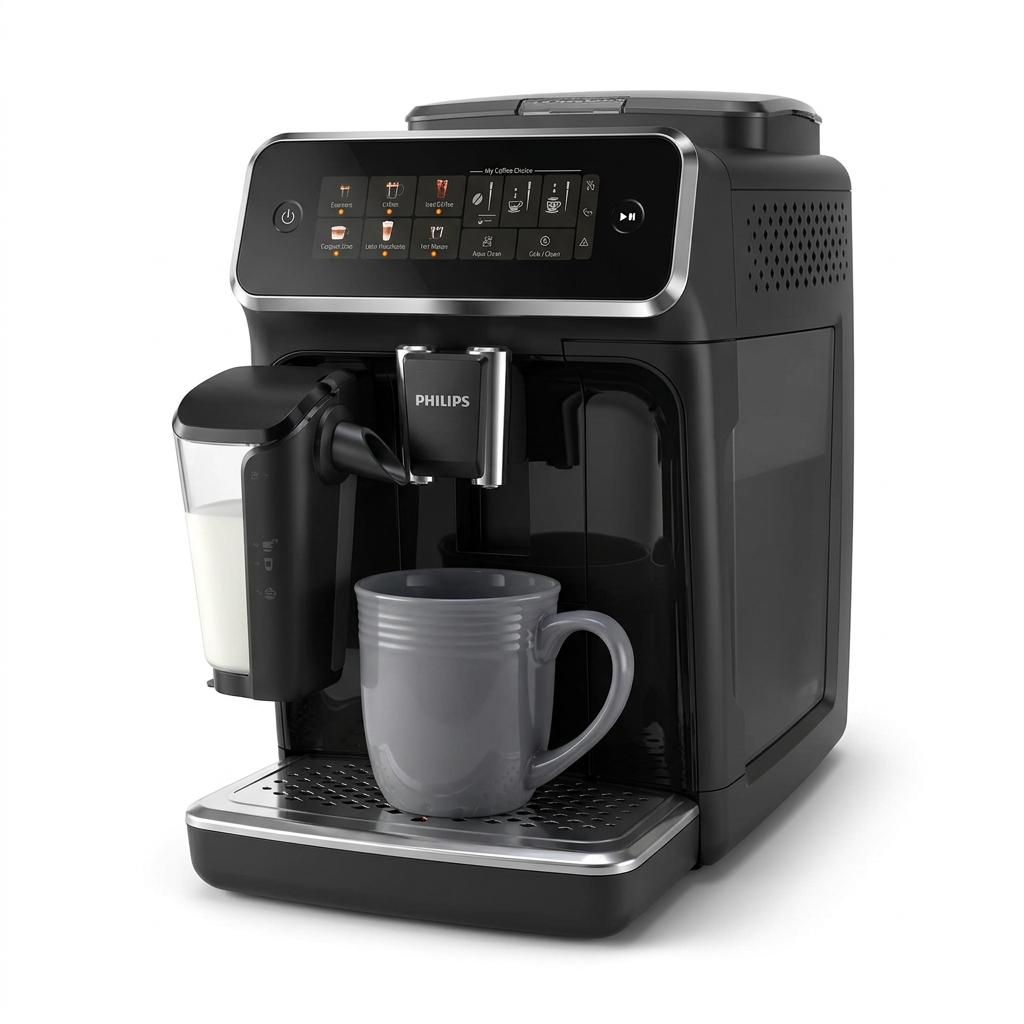
Philips 3300 Series
One-touch drinks, a surprisingly quiet grinder and the lowest-effort cleanup of any machine I’ve tested.
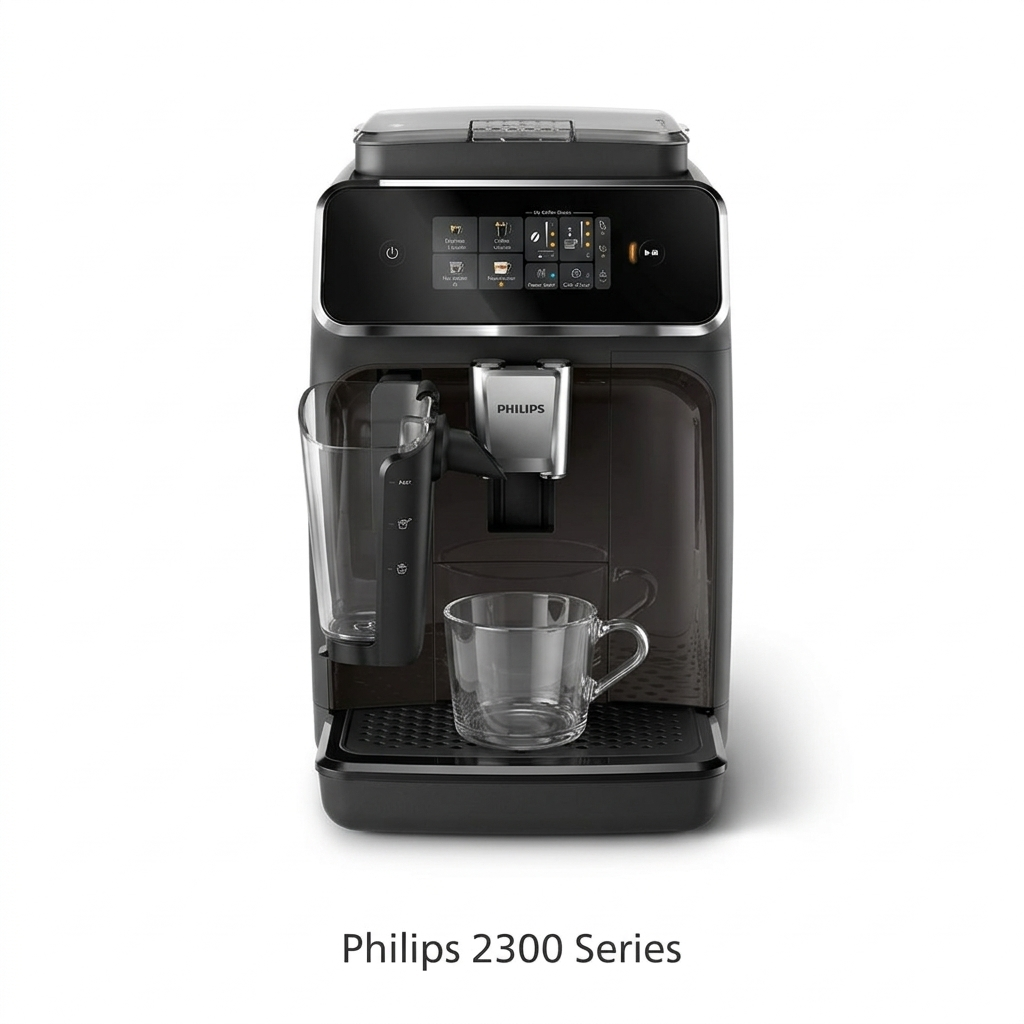
Philips 2300 Series
One-touch cappuccinos from a two-part LatteGo jug, fast drinks and SilentBrew in a slim body.
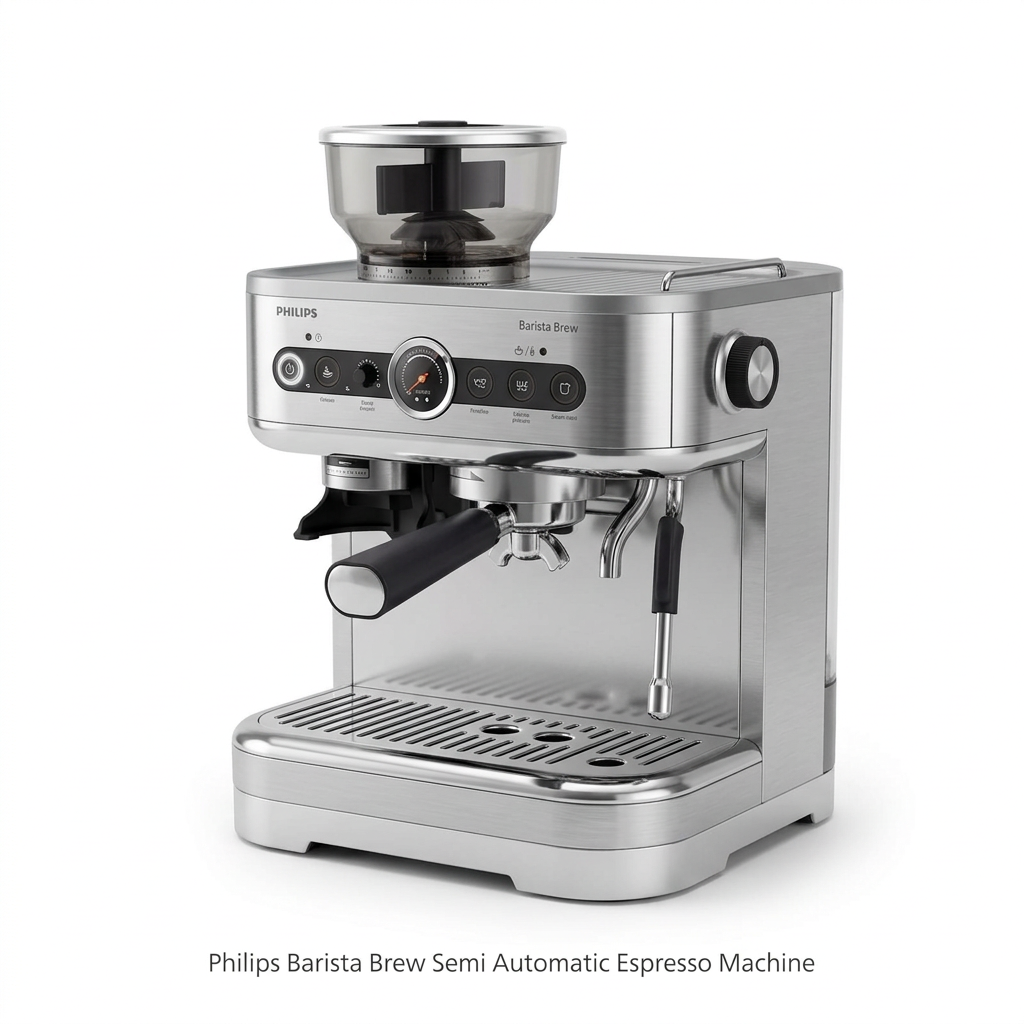
Philips Barista Brew
A 58 mm portafilter, built-in grinder, calibrated tamper and an Americano button.
Prices change often. Click through to see the current price on Amazon.
Compare the best Philips espresso machines
Scores come from my four weeks with each machine. Specifications come from Philips’ documentation and my own measurements. "Not listed" means I couldn’t confirm the figure.
| 5 models compared | Best overall | Best for families | Easiest to clean | Best value | Best manual |
|---|---|---|---|---|---|
| My test scores | |||||
| Overall score | 8.6 | 8.5 | 8.4 | 8.2 | 8.1 |
| Espresso | 8.2 | 8.2 | 7.4 | 7.8 | 8.4 |
| Milk drinks | 8.3 | 8.8 | 8.2 | 8.0 | 7.3 |
| Ease of use | 9.0 | 9.3 | 9.2 | 8.9 | 7.6 |
| Drinks and features | |||||
| One-touch drinks | 12 | 20 | Not listed | 3 | Americano button |
| Iced drinks | ✓ | ✓ | ✕ | ✕ | ✕ |
| Milk system | LatteGo | LatteGo | LatteGo | LatteGo | Steam wand |
| Profiles | 2 + guest | ✓ | ✕ | ✕ | ✕ |
| SilentBrew | ✓ | ✓ | ✓ | ✓ | ✕ |
| Grinder and capacity | |||||
| Grinder | Ceramic burr | Ceramic burr | Ceramic burr | Ceramic burr | Steel burr, 15 settings |
| Strongest dose | 11–12 g | Not listed | Not listed | Not listed | Portafilter, your choice |
| Water tank | 1.8 L | 1.8 L | 1.8 L | 1.8 L | 2.3 L |
| Best for | Couples and small families who want variety and stronger coffee. | Families with different tastes who want the biggest menu. | Anyone who wants great milk drinks with the least cleaning. | First-time owners who want one-touch cappuccinos. | People who want to make espresso themselves. |
My test scores at a glance
Every Philips was scored on espresso, milk drinks, ease of use and cleaning. The 4400 scored highest overall because it fixes the main weakness of the cheaper models: a small, mild coffee dose.
The 5500 was close behind, with the best milk and the biggest menu. The 3300 is the one to pick if cleaning is what you dread.
Every Philips, ranked by score
| Rank | Machine | Overall | Espresso | Milk |
|---|---|---|---|---|
| 1 | 4400 Series | 8.6 | 8.2 | 8.3 |
| 2 | 5500 Series | 8.5 | 8.2 | 8.8 |
| 3 | 3300 Series | 8.4 | 7.4 | 8.2 |
| 4 | 4300 Series | 8.3 | 7.8 | 8.0 |
| 5 | 2300 Series | 8.2 | 7.8 | 8.0 |
| 6 | Barista Brew | 8.1 | 8.4 | 7.3 |
| 7 | 3200 Series | 8.0 | 7.2 | 7.8 |
| 8 | 2200 Series | 7.9 | 7.6 | 7.4 |
| 9 | 1200 Series | 7.6 | 7.5 | 6.5 |
| 10 | 800 Series | 7.5 | 7.4 | 6.2 |
Editorial scores from four weeks of daily use per machine.
| Best in each category | Winner | Score |
|---|---|---|
| Espresso | Barista Brew | 8.4 |
| Milk drinks | 5500 Series | 8.8 |
| Ease of use | 5500 Series | 9.3 |
| Cleaning | 3300 Series | 9.4 |
| Value | 2300 Series | 8.2 |
Our tip: On a Philips, the dose matters most, so step up to the 4400 or 5500 if you drink straight espresso.
How I tested
I’m a former line cook with an SCA certificate in barista skills, and I’ve tested kitchen appliances for HouseholdMe since 2018. For this guide, I used all ten Philips espresso machines as my everyday coffee maker for four weeks each.
I weighed doses, timed drinks from a cold start, measured milk temperature with a probe thermometer and timed every cleaning step with a stopwatch. I counted how far each tank and hopper went and checked my notes against Philips’ manuals and specifications.
Philips’ range explained: what the numbers mean
Philips numbers its machines from 800 to 5500. Broadly, a higher number means more drinks, a better display and more features, but the jumps aren’t even.
The big dividing line: milk system
The 800, 1200 and 2200 Series use a simple frother or steam wand, so milk is semi-manual. From the 2300 up, every model uses LatteGo✕LatteGoPhilips’ two-part milk jug with no tubes. Milk is frothed in a small chamber at the front and poured straight into the cup; the jug pulls apart and rinses clean in seconds., Philips’ two-part jug with no tubes.
| Series | Milk | Drinks | Screen | Profiles |
|---|---|---|---|---|
| 800 | Steam wand | 2 | Buttons | No |
| 1200 | Classic frother | 2 | Touch panel | No |
| 2200 | Frother with steam tip | 2–3 | Touch panel | No |
| 2300 | LatteGo | 3 | Touch panel | No |
| 3200 | LatteGo | 5 | Touch panel | No |
| 3300 | LatteGo | Several | Touch panel | No |
| 4300 | LatteGo | 8 | Color display | 2 + guest |
| 4400 | LatteGo | 12 hot and iced | Color display | 2 + guest |
| 5500 | LatteGo | 20 hot and iced | Color display | Yes |
| Barista Brew | Steam wand | Americano button | Buttons and gauge | No |
What every Philips shares
Every fully automatic Philips uses a ceramic burr grinder with 12 settings, a removable brew group that rinses under the tap, and AquaClean✕AquaClean filterPhilips’ water filter. Replaced when the machine asks, it filters enough water that most homes never need to descale for thousands of cups. filter support. Aroma Extract✕Aroma ExtractPhilips’ system that balances brewing temperature and flow to pull out flavor without bitterness. It runs automatically on every drink. manages brewing temperature on every drink.
The weakness: dose
Entry Philips machines use about 6 to 8 grams of coffee per shot. That’s why their espresso tastes mild, and why the 4400 and 5500, with bigger doses, scored better for espresso.
Coffee per brew. More coffee usually means more body.
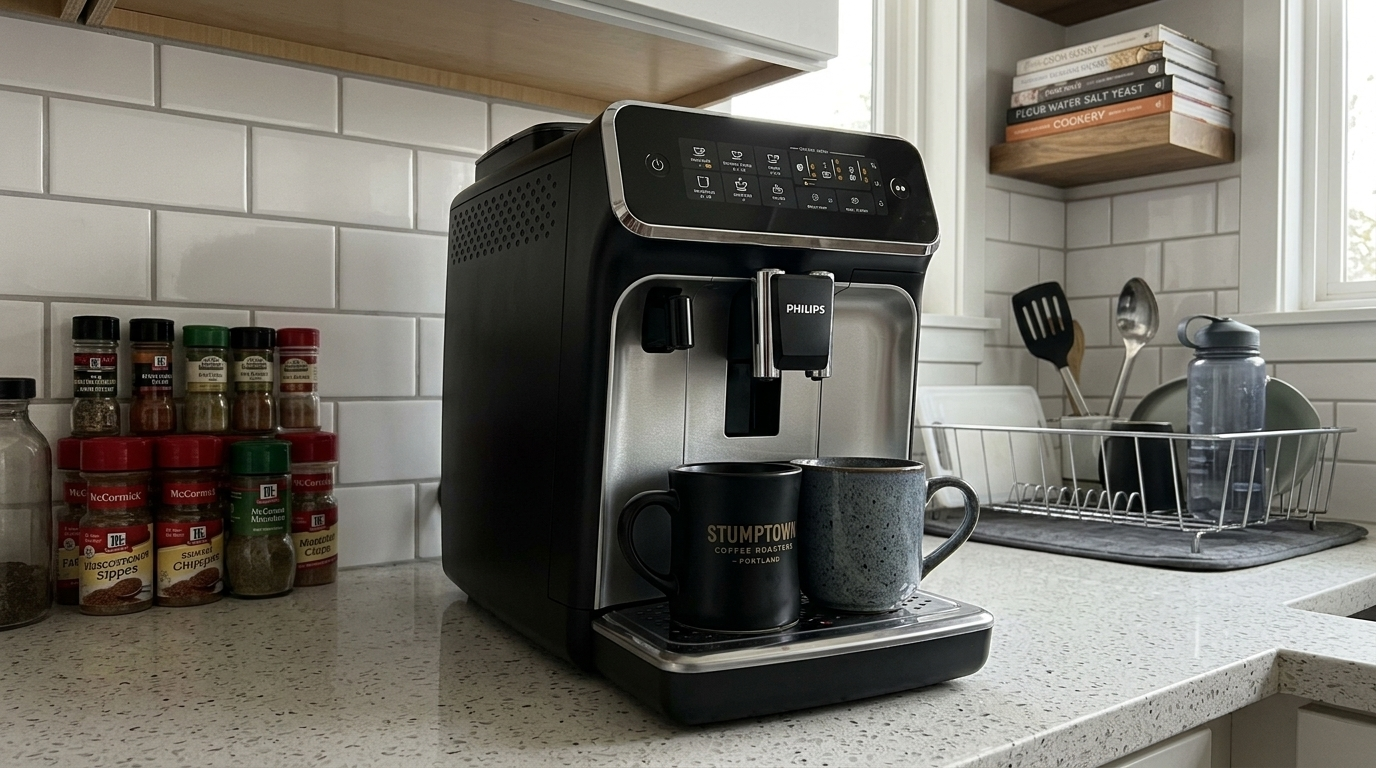
Every Philips from the 2300 up uses the tubeless LatteGo jug.
Why Philips is so popular
Philips machines are among the easiest automatic machines to own, mostly thanks to LatteGo. With bean-to-cup ownership among US coffee drinkers rising from 10% to 15% between 2020 and 2025, according to a national coffee survey, easy cleaning has become one of the most searched-for features.
Who should buy a Philips?
A Philips suits anyone who wants one-touch milk drinks with the least cleaning. It’s ideal for first-time owners and households that drink cappuccinos and lattes more than straight espresso.
If straight espresso is your main drink, choose the 4400 or 5500, or look at my guide to the best super-automatic espresso machines for richer options.
Our picks in depth
1. Philips 4400 Series
The Philips 4400 Series is the Philips I’d recommend to most people. It makes 12 hot and iced coffees at one touch, from ristretto to iced espresso, and it uses a noticeably bigger coffee dose✕Dosethe weight of ground coffee used for one brew. A classic double shot uses roughly 14 to 18 grams. than the entry models.
It starts in well under a minute, brews quietly and keeps the easy-clean LatteGo jug. Two profiles plus a guest mode cover most couples and small families.
A stronger espresso than cheaper Philips machines
The 4400’s strongest setting used 11 to 12 grams of coffee, about half as much again as the 3200. The difference was obvious: the espresso had more body, a thicker crema and a longer finish.
It still isn’t as rich as a big-dose machine, scoring 8.2. In a cappuccino or flat white, though, it cut through the milk nicely.
Hot and iced drinks
Iced drinks brew coffee designed to pour over ice, so they don’t taste watered down. My iced latte was pleasant and refreshing, though warmer coffee hitting ice is never as smooth as true cold brew.
The menu runs from ristretto and espresso lungo to cappuccino, latte macchiato and café au lait. There’s a drink for almost everyone.
LatteGo milk
The two-part jug froths milk in a small chamber, with no tubes. Foam was plentiful and creamy, scoring 8.3, and the jug rinsed clean under the tap in about ten seconds.
Profiles and display
The color display shows real volumes as you adjust them, so you know exactly what you’re getting. Two profiles and a guest mode kept my partner’s settings separate from mine.
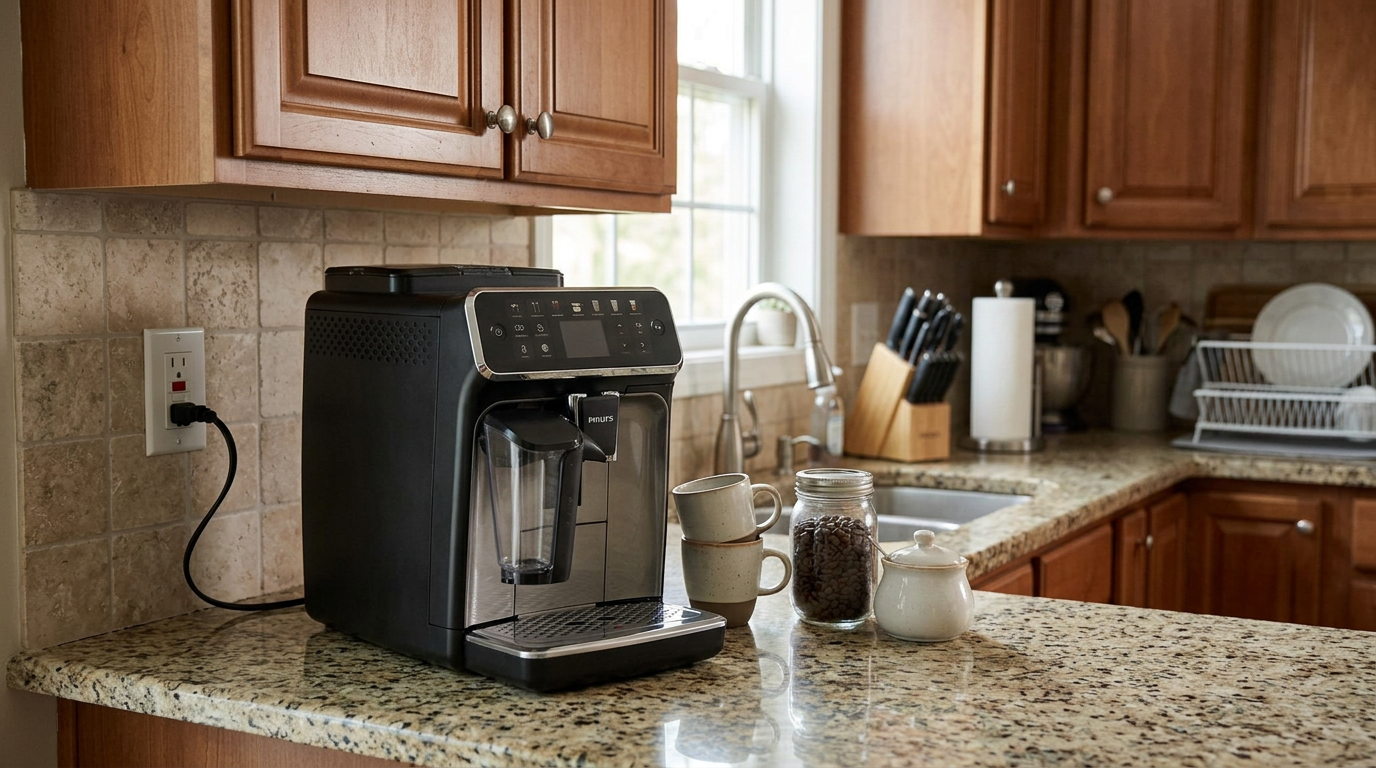
The color display shows real drink volumes as you adjust them.
Quiet and quick
SilentBrew kept grinding to a low hum, and the machine was ready to brew in 30 to 45 seconds. On weekday mornings, that speed mattered more than any extra drink.
What to know before you buy
Iced drinks are brewed warm, not cold-extracted. Larger families may want the 5500’s extra profiles.
For variety, stronger coffee and easy cleaning, the Philips 4400 is the best Philips.
- Bigger dose for stronger coffee
- 12 hot and iced drinks
- Two profiles plus a guest
- LatteGo cleans in seconds
- Iced drinks brewed warm
- Only two full profiles
- Espresso still lighter than big-dose machines
- Couples and small families
- Iced coffee drinkers
- Anyone who found the 3200 too mild
- Large families
- Cold brew fans
- Espresso purists
Choose this if you want stronger Philips coffee, hot and iced drinks and easy cleaning. Read my full Philips 4400 Series review.
2. Philips 5500 Series
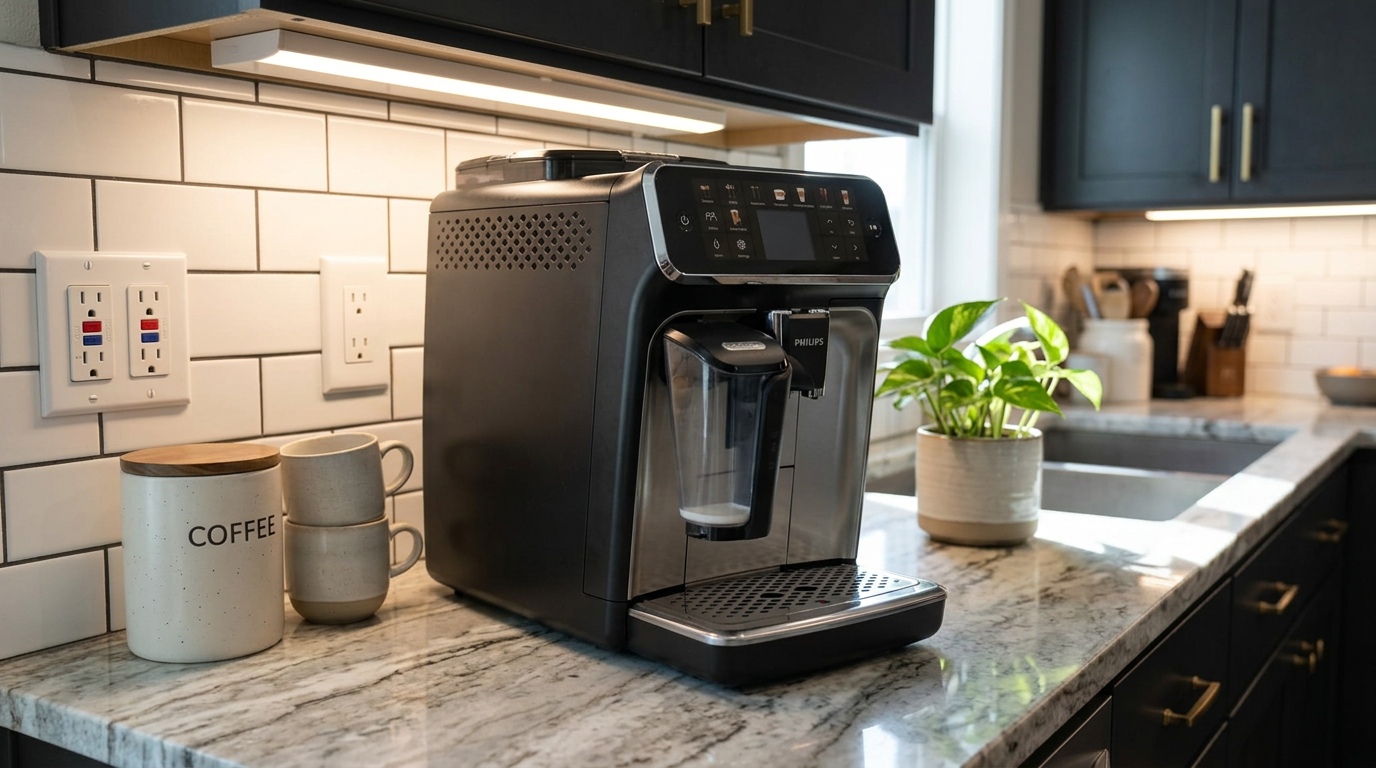
The Philips 5500 Series has the biggest menu and the best milk of any Philips. It makes 20 hot and iced drinks at one touch, and its LatteGo milk scored 8.8.
It’s quiet, compact and easy to share with a whole household. The espresso is lighter than a café shot, though, and iced drinks are brewed warm.
The best Philips milk
The 5500’s LatteGo produced the creamiest foam in the range, with smaller bubbles than the cheaper models. Cappuccinos had a dense cap, and lattes poured smoothly.
Milk came out hotter than on the 3200, at around 60°C. That small difference made milk drinks taste noticeably sweeter.
Twenty drinks
The menu covers everything from espresso and americano to flat white, latte macchiato and iced coffee. With profiles, each person’s favorites come first.
Our tip: Set each profile’s favorite drink to its own cup size, so nobody has to adjust volumes in the morning.
Easiest to use
The color display is the clearest in the range, with big drink icons and simple sliders. My parents used it without asking a single question.
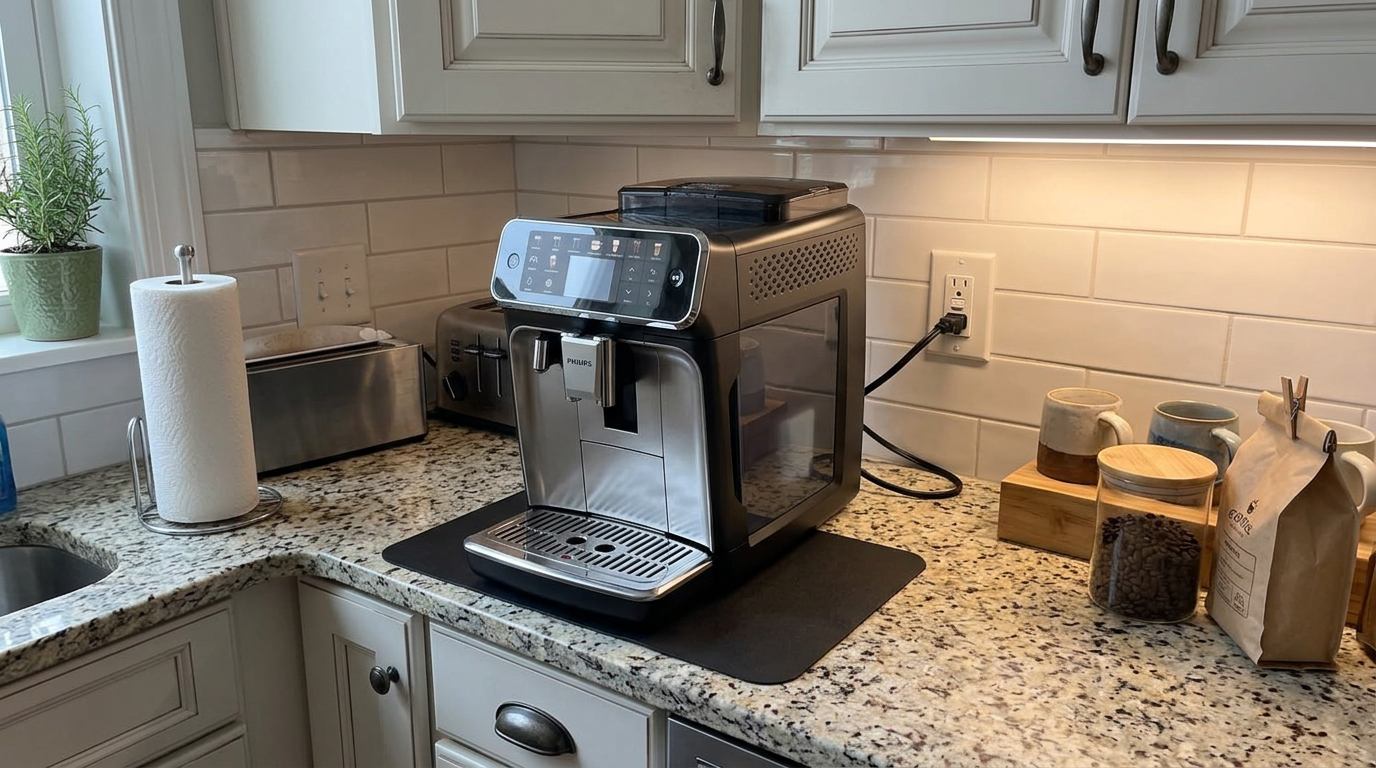
The 5500’s display is the clearest in the Philips range.
Espresso
The espresso was smooth and balanced, scoring 8.2, but lighter than a café shot. Using the extra shot option made long drinks much stronger.
Living with it as a family
In a four-person test week, the 5500 made around 14 drinks a day. Profiles meant each person tapped their name and their drink, with no arguments over settings.
The tank needed refilling about once a day at that pace, and the grounds drawer every other day. For a big family, that’s very manageable.
What to know before you buy
Iced drinks are brewed hot and poured over ice. If straight espresso is your main drink, the 4400 has a similar dose for less.
For a household that wants the biggest menu and the best milk, the Philips 5500 is the one.
- Best milk in the Philips range
- 20 hot and iced drinks
- Clearest display
- Profiles for the household
- Espresso lighter than a café shot
- Iced drinks brewed warm
- Bigger outlay than the 4400
- Families with different tastes
- Latte and cappuccino lovers
- Anyone who wants the simplest screen
- Espresso purists
- Cold brew fans
- Couples who don’t need 20 drinks
Choose this if your household wants the biggest menu and the best Philips milk. Read my full Philips 5500 Series review.
3. Philips 3300 Series
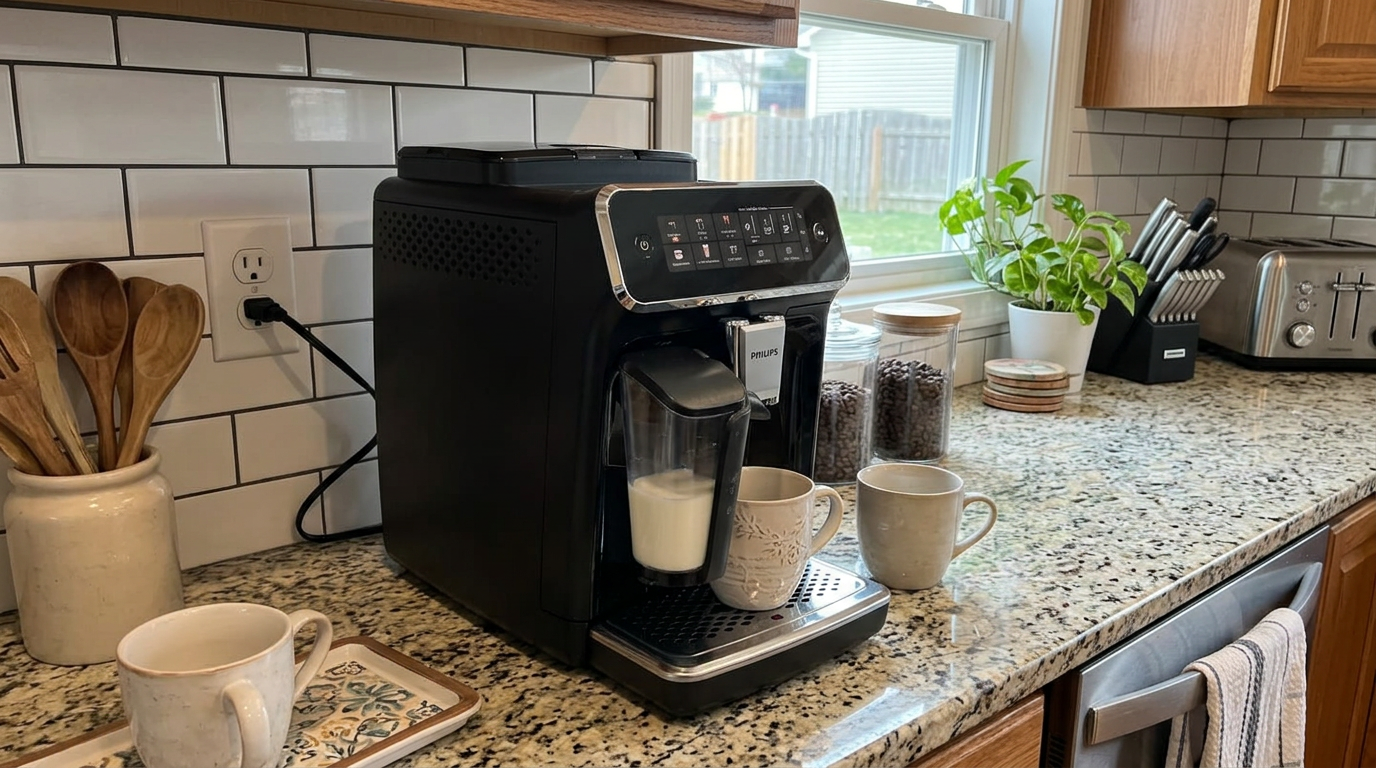
The Philips 3300 Series made my cleanup almost effortless. It scored 9.4 for cleaning, the highest of any machine I’ve tested, and it grinds and brews more quietly than I expected.
Its espresso is milder than a café shot unless you double up. For milk drinks with the least effort, it’s superb.
Cleaning in seconds
After each milk drink, I pulled the LatteGo jug apart and rinsed it, which took about ten seconds. The drip tray and grounds drawer slide out together from the front.
Once a week, the brew group slides out from the side for a rinse. It was the lowest-effort machine I’ve owned.
Milk drinks
Cappuccinos were creamy, with plenty of foam, scoring 8.2. Latte macchiatos layered well in a tall glass.
Espresso
The espresso was smooth but light, scoring 7.4. Double-shot drinks and the strongest setting made a real difference.
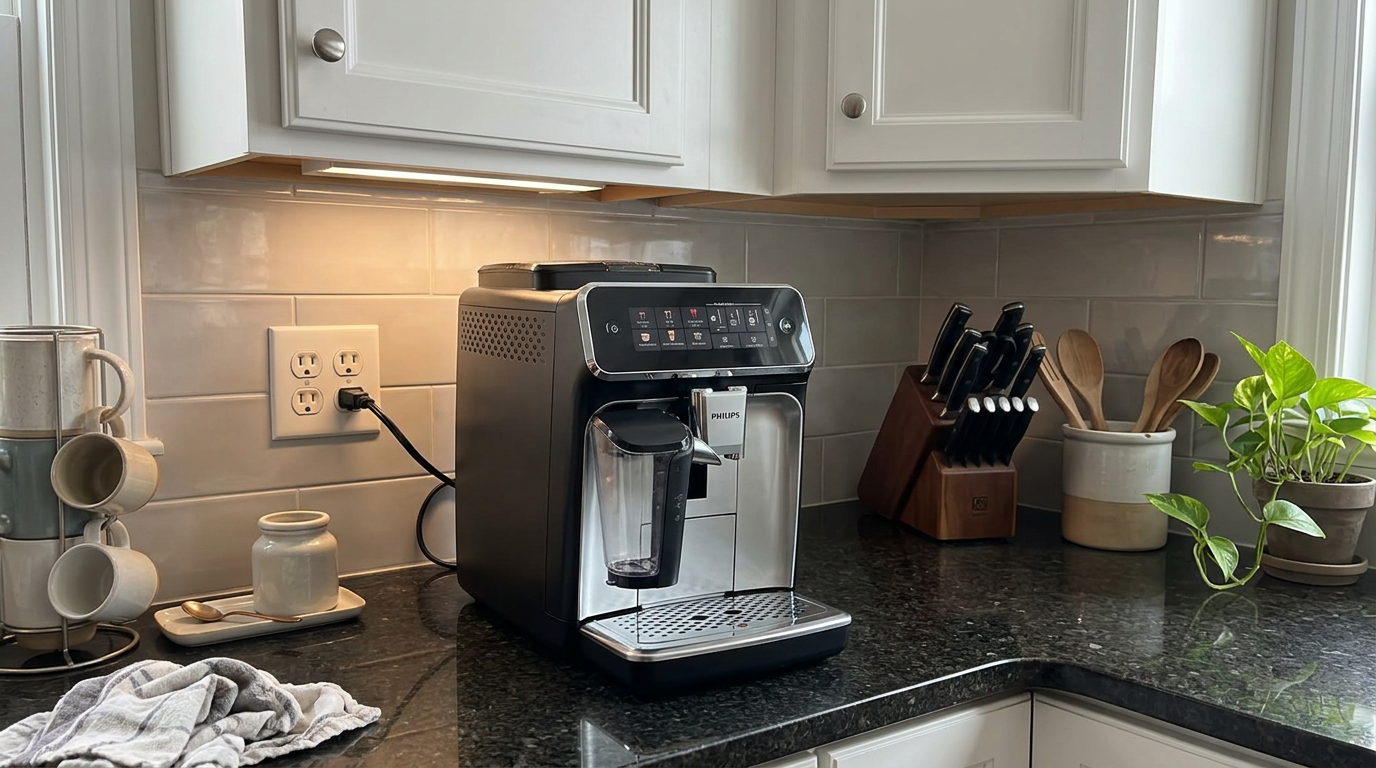
The 3300 scored 9.4 for cleaning, my highest ever.
Quiet mornings
SilentBrew made grinding a soft hum. I could make coffee early without waking anyone.
Getting a stronger cup
Set the aroma strength to maximum, grind one step finer and use the double-shot option for long drinks. Those three changes made the 3300’s coffee taste noticeably fuller.
What to know before you buy
There are no profiles and no iced drinks. If you drink straight espresso, step up to the 4400.
For milk drinks with the least cleaning, the Philips 3300 is unmatched.
- Easiest cleaning I’ve tested
- Quiet grinder
- Creamy one-touch milk
- Very simple controls
- Mild espresso
- No profiles
- No iced drinks
- People who hate cleaning
- Cappuccino and latte drinkers
- Early risers
- Espresso purists
- Families who want profiles
- Iced coffee fans
Choose this if you want great milk drinks with the absolute least cleaning. Read my full Philips 3300 Series review.
4. Philips 2300 Series
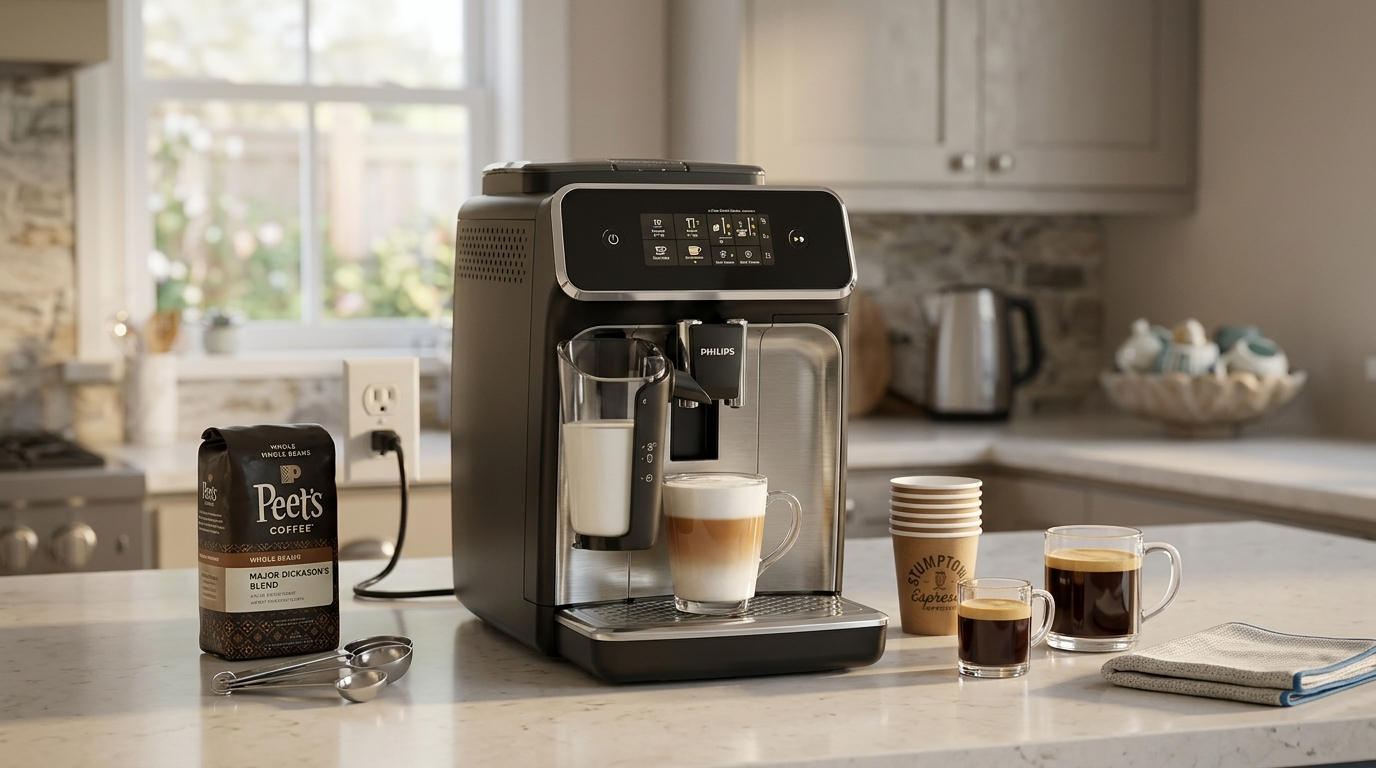
The Philips 2300 Series is the best-value way into one-touch cappuccinos. It uses the same two-part LatteGo jug as pricier models, with SilentBrew, in a slim body.
It makes three coffee recipes, and it makes them fast. There are no profiles and only one cappuccino at a time.
Fast drinks
A single espresso took 32 seconds from pressing the button, and a cappuccino took 72 seconds. That speed made it great for rushed mornings.
LatteGo on a budget
The jug is the same two-part design as the 5500’s, with no tubes. Foam was creamy, scoring 8.0, and it rinsed clean in about ten seconds.
Our tip: Fill the LatteGo jug only to the line you need, because leftover milk can’t go back in the fridge carton.
Espresso
The espresso was smooth and balanced, scoring 7.8, ahead of the 3200. The strongest aroma setting gave the best results.
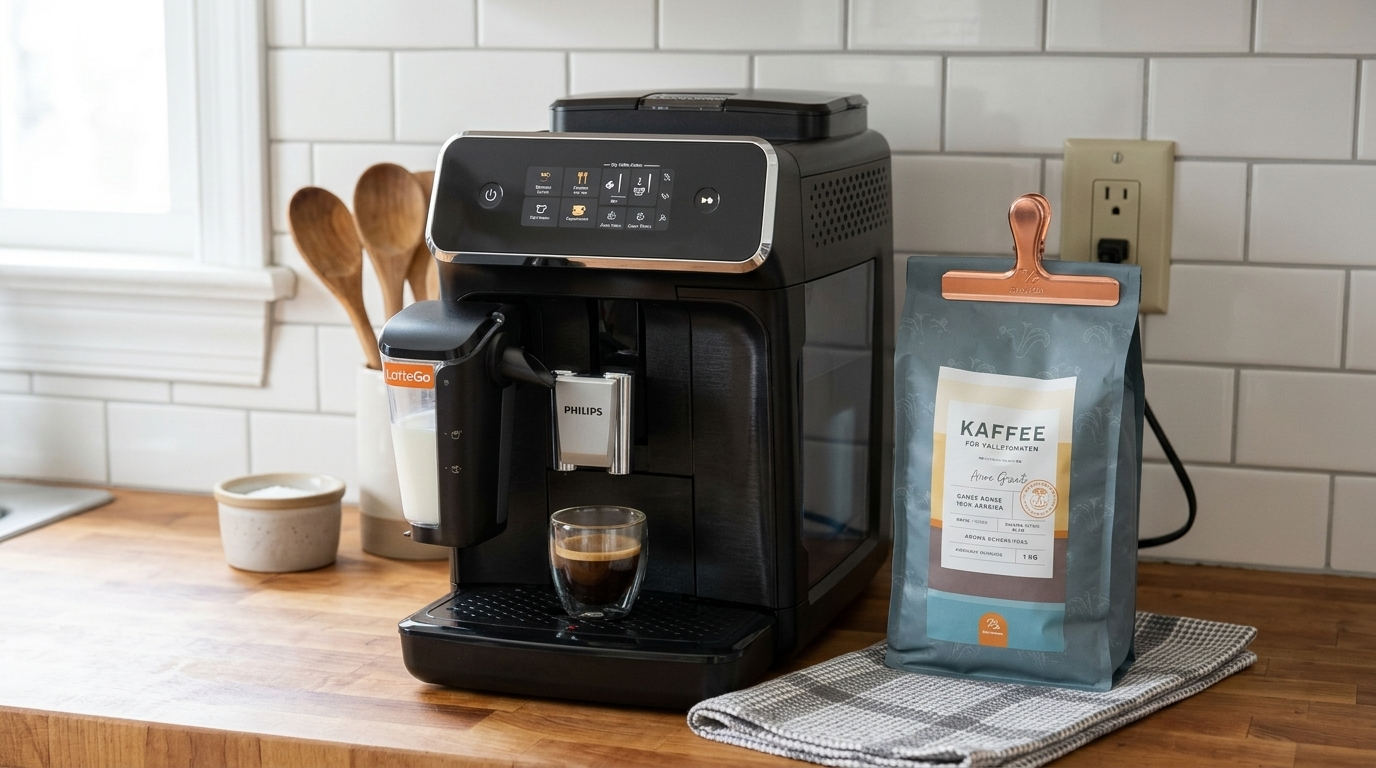
The 2300 makes a cappuccino in about 72 seconds.
Who it suits best
The 2300 is perfect for one or two people who drink cappuccinos and want the simplest routine. It’s also slim enough for a crowded counter.
If you want lattes in big mugs, the 3300 or 4400 handle larger drinks better.
What to know before you buy
Three recipes is a short menu, and there are no profiles. It makes one cappuccino at a time.
For one-touch cappuccinos at the lowest outlay, the Philips 2300 is the best value.
- LatteGo at the lowest outlay
- Fast drinks
- Quiet SilentBrew
- Slim body
- Only three recipes
- No profiles
- One cappuccino at a time
- First-time owners
- Cappuccino drinkers on a budget
- Small kitchens
- Families
- Iced coffee fans
- Anyone who wants a big menu
Choose this if you want one-touch cappuccinos for the lowest outlay. Read my full Philips 2300 Series review.
5. Philips Barista Brew
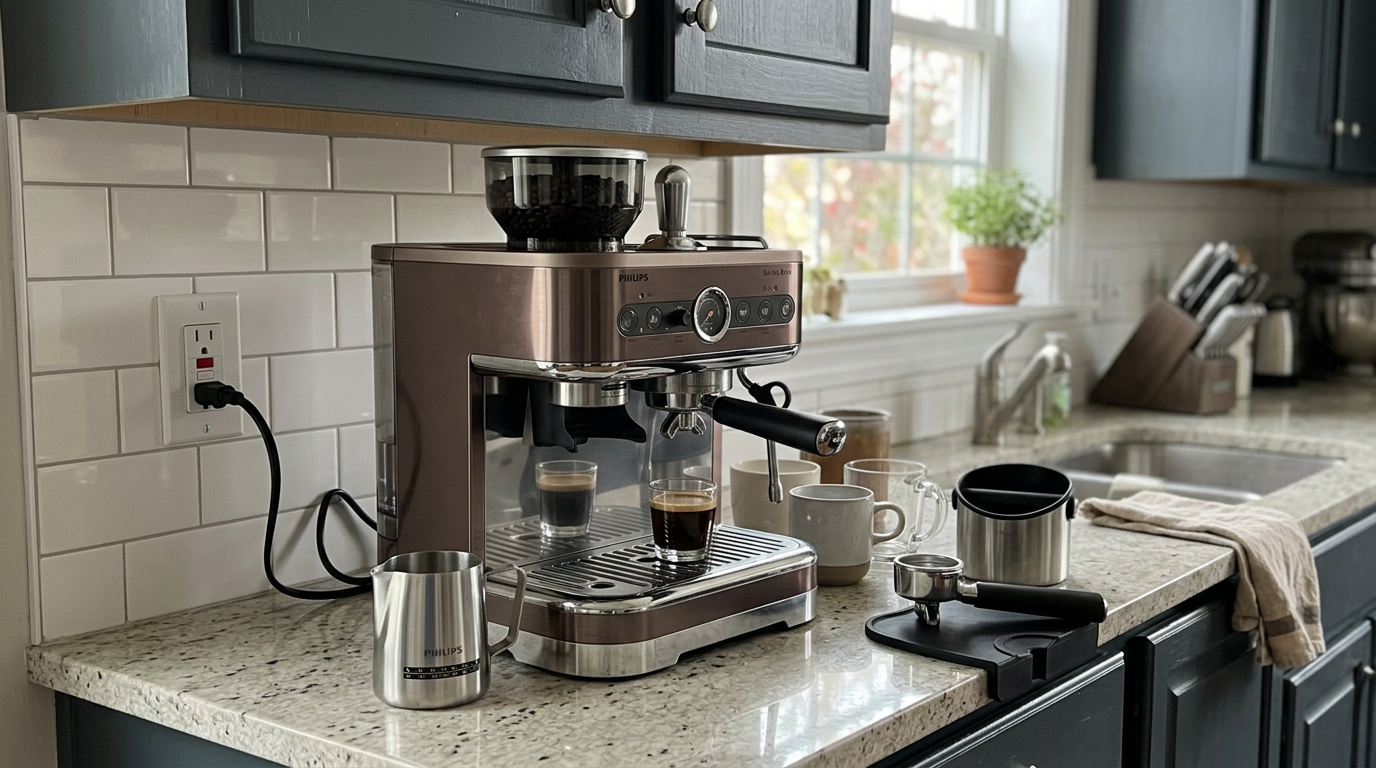
The Philips Barista Brew is Philips’ machine for people who want to make espresso themselves. It has a built-in grinder, a 58 mm portafilter✕Portafilterthe handle with a metal basket that holds ground coffee. You lock it into the machine, and hot water is pushed through the coffee inside it., a pressure gauge and a steam wand.
A calibrated tamper and pressurized baskets make the learning curve gentler. Its Americano button and 80-ounce tank are genuinely useful, but steaming is slow.
Espresso
With the unpressurized basket and fresh beans, the espresso was rich and sweet, scoring 8.4, the best in the Philips range. The pressure gauge helped me see when a shot was on track.
The pressurized baskets are forgiving for beginners. They make a decent shot even with an imperfect grind.
Grinder and tamping
The grinder has 15 settings, without fine micro-steps. The calibrated tamper clicks when you’ve pressed hard enough, which takes the guesswork out of tamp✕Tampingpressing the ground coffee into a firm, flat puck. An even tamp makes water flow evenly, which is the key to a balanced shot..
Our tip: Start with the pressurized basket for a week, then switch to the standard basket once your grind is consistent.
Americano and hot water
The Americano button brews espresso and adds hot water separately. My big mugs tasted clean, not over-brewed.
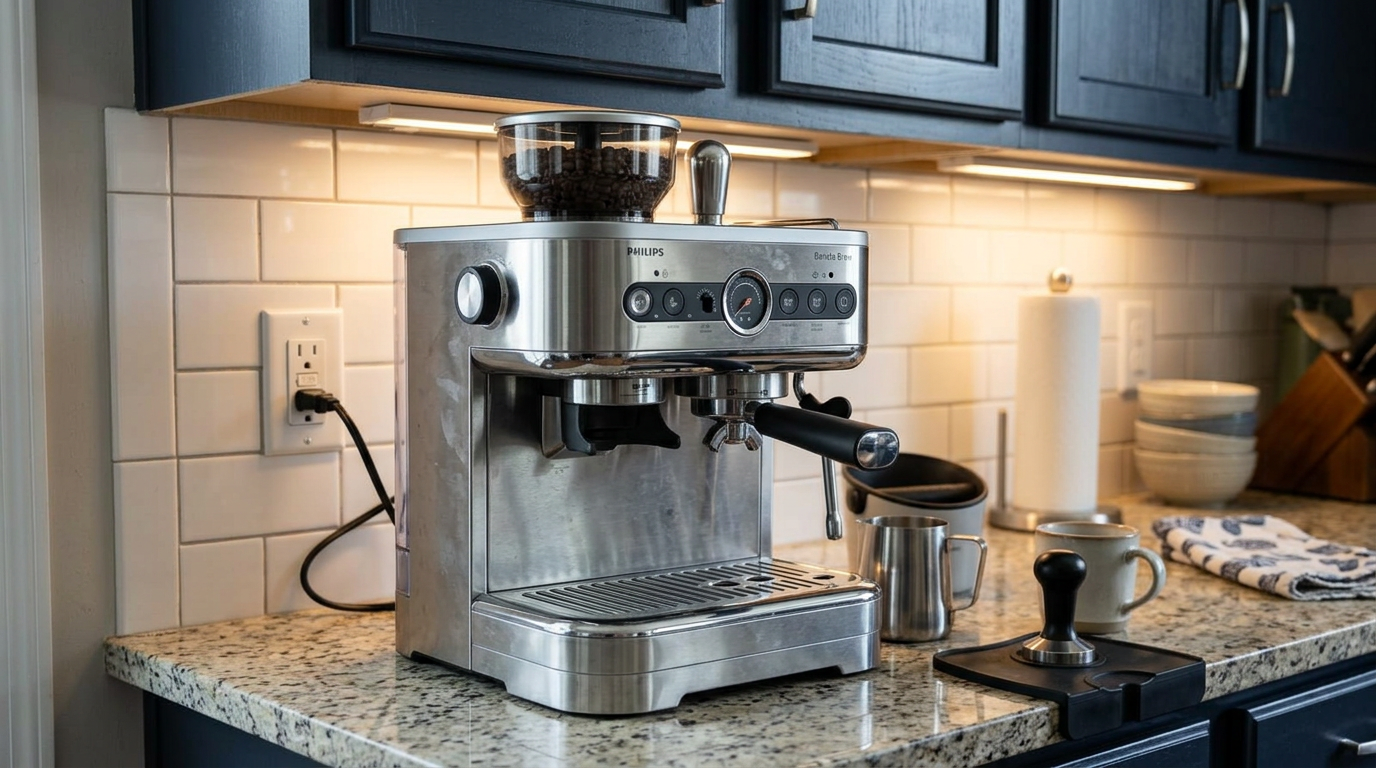
The calibrated tamper clicks when you’ve pressed hard enough.
Four temperatures
You can choose from four brewing temperatures. I used the hottest for light roasts and the coolest for dark roasts, which tamed bitterness noticeably.
What to know before you buy
Steaming is slow, taking about 50 seconds for a cappuccino’s milk. The grinder lacks fine steps for light roasts.
For hands-on espresso with helpful training wheels, the Barista Brew is a good start.
- Best espresso in the Philips range
- 58 mm portafilter and gauge
- Calibrated tamper
- Americano button and big tank
- Slow steaming
- No grinder micro-steps
- Needs practice
- Espresso learners
- Americano drinkers
- People who want control
- One-touch fans
- Daily latte makers in a hurry
- Light roast enthusiasts
Choose this if you want to make espresso yourself with some help. Read my full Philips Barista Brew review.
My test data: dose, milk, speed and cleaning
These are the numbers I recorded across four weeks with each Philips. They explain why the higher-numbered machines taste different.
Espresso scores across the range
Espresso scores tracked dose almost exactly. Machines with bigger doses tasted richer.
Editorial scores from four weeks of daily use.
Milk scores
LatteGo models clearly beat the older frothers. The 5500’s improved jug was the best.
Milk drink scores out of 10.
Speed
Philips machines are quick. The 2300 made a cappuccino in 72 seconds, and the 4400 was ready to brew 30 to 45 seconds after switching on.
| Machine | Switch-on to ready | Single espresso | Cappuccino |
|---|---|---|---|
| 4400 Series | 30–45 s | ~30 s | ~70 s |
| 5500 Series | ~40 s | ~30 s | ~70 s |
| 3300 Series | ~40 s | ~32 s | ~72 s |
| 2300 Series | ~40 s | 32 s | 72 s |
| Barista Brew | ~1 min | ~45 s, by hand | ~2.5 min, by hand |
Daily cleaning time
LatteGo is the reason Philips machines are so easy to own. Rinsing the jug took about ten seconds on every model that has it.
My estimate of hands-on daily cleaning on milk drink days.
Our tip: Choose a 4400 or 5500 if you drink straight espresso, because their bigger dose made the biggest taste difference in the range.
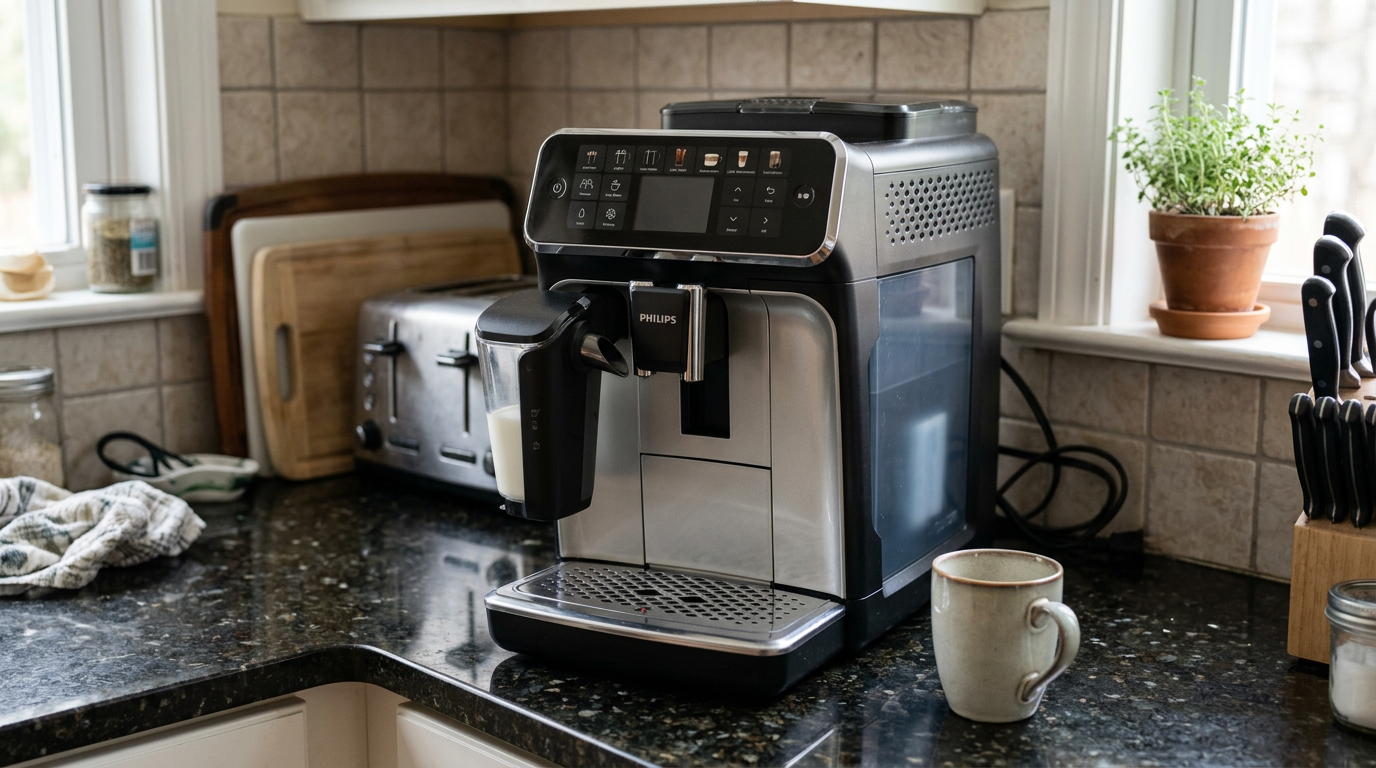
The 4400’s bigger dose was the clearest improvement over cheaper Philips models.
LatteGo explained: why it’s so easy to clean
LatteGo is the main reason people choose Philips, so it’s worth understanding how it works and where it falls short.
How it works
The jug has two parts: a milk container and a lid with a small frothing chamber. Steam shoots into the chamber, pulls milk up from the jug and mixes in air, then the foam pours straight into your cup.
There are no tubes, no hidden channels and no pumps. That’s why it rinses clean in seconds, while tube systems need a cleaning cycle and a daily strip-down.
Where it falls short
The foam has slightly bigger bubbles than the microfoam✕Microfoammilk foam with bubbles so small you can’t see them. It feels silky, pours smoothly and blends into the espresso. from a good tube system or steam wand. It’s creamy for cappuccinos, but a little airy for a silky flat white.
The jug also has to be emptied after each use. Unlike a carafe, you can’t store LatteGo in the fridge with milk inside and pull it out tomorrow.
| LatteGo | Tube and carafe | Steam wand | |
|---|---|---|---|
| Cleaning after each drink | About 10 seconds | Automatic rinse, plus daily wash | Wipe and purge |
| Foam texture | Creamy, slightly airy | Fine and silky | Silkiest, with skill |
| Store milk in it | No | Yes, in the fridge | No |
| Skill needed | None | None | Practice |
Our tip: Use cold whole milk or barista-style oat milk in LatteGo, because they foam far better than skim or regular plant drinks.
Milk types I tried
Whole milk gave the best foam on every LatteGo model. Barista-style oat milk was a close second; skim made lots of foam with little body.
My scores out of 10 for foam texture and stability.
Which one is right for you?
4 quick questionsAnswer four questions, and I’ll point you to the Philips that fits how you drink coffee.
Or find your morning below
12 hot and iced drinks with two profiles.
20 drinks and profiles for everyone.
The easiest cleanup I’ve tested.
LatteGo at the lowest outlay.
A calibrated tamper and a pressure gauge.
A bigger dose and the extra shot option.
How to choose the right Philips
Philips machines share most of their parts, so choose by these features, in this order.
Milk system
From the 2300 up, every model uses LatteGo. Below that, you froth milk semi-manually with a frother or steam wand.
| You want | Choose | My pick |
|---|---|---|
| One-touch milk, lowest outlay | 2300 Series | 2300 |
| One-touch milk, least cleaning | 3300 Series | 3300 |
| Milk plus iced drinks and profiles | 4400 Series | 4400 |
| The best milk and biggest menu | 5500 Series | 5500 |
| Steam milk yourself | Barista Brew | Barista Brew |
Dose and strength
This is the most important spec Philips doesn’t print on the box. The 4400 and 5500 brew noticeably stronger coffee than the 2000 and 3000 series.
Our tip: If you drink espresso straight, ignore any Philips below the 4400, because the smaller dose made it taste thin.
Profiles
The 4300 and 4400 have two profiles plus a guest; the 5500 has more. Cheaper models have none.
Iced drinks
The 4400 and 5500 brew iced drinks hot and pour them over ice. They’re pleasant, but not true cold brew.
Noise
SilentBrew models, including the 2300, 3300, 4400 and 5500, were noticeably quieter. If you make coffee early, it’s worth having.
Water filter
Every fully automatic Philips supports the AquaClean filter. Change it when the machine asks, and you can go thousands of cups without descaling.
What each step up the range adds
This is what each step up Philips’ range added in my tests, and whether it changed the coffee.
| Step | What you get | Does it change the coffee? |
|---|---|---|
| 800 to 1200 | Touch panel, three temperatures | Slightly |
| 1200 to 2200 | Frother with a real steam tip | Yes, for milk |
| 2200 to 2300 | LatteGo, SilentBrew | Yes, easy milk drinks |
| 2300 to 3200 and 3300 | More drinks, easier cleaning | Mostly convenience |
| 3300 to 4300 | Color display, two profiles | No |
| 4300 to 4400 | Bigger dose, iced drinks | Yes, stronger coffee |
| 4400 to 5500 | 20 drinks, better milk, more profiles | Yes, for milk |
The two jumps that changed my coffee most were from the 2200 to the 2300, for LatteGo, and from the 4300 to the 4400, for the bigger dose. Everything else mostly adds convenience.
Philips vs other one-touch machines
Philips is best known for easy cleaning. This is how it compared with other one-touch machines I tested.
| Philips with LatteGo | Carafe-and-tube machines | |
|---|---|---|
| Milk cleaning | About 10 seconds | 2–3 minutes |
| Foam texture | Creamy, larger bubbles | Finer microfoam |
| Espresso | Mild to medium | Medium to rich |
| Noise | Quiet on SilentBrew models | Varies |
| Learning curve | Very low | Low |
If you value easy cleaning above everything else, Philips wins. If you want the silkiest foam and the richest espresso, my guide to the best super-automatic espresso machines covers stronger options.
Editorial cleaning scores from four weeks of daily use.
Maintenance and running costs
Philips machines are among the easiest to maintain. These habits kept mine running smoothly.
- Rinse LatteGo after every milk drink
Pull the two parts apart and rinse under the tap, or put them in the dishwasher.
- Rinse the brew group weekly
Slide it out from the side and rinse it under warm water. No soap.
- Lubricate the brew group monthly
Use Philips’ food-safe grease on the rails, so it slides smoothly.
- Change the AquaClean filter when asked
It’s the easiest way to avoid descaling.
- Empty the grounds drawer daily
Leave it out for a few seconds so the counter resets.
| Consumable | Which models | How often |
|---|---|---|
| AquaClean filter | All automatic models | When the machine asks |
| Brew group grease | All automatic models | Monthly |
| Coffee oil remover tablets | All automatic models | Monthly |
| Descaler | All | Only without a filter |
Beans that work best
Philips’ ceramic grinders handle medium and medium-dark roasts best. Avoid very oily beans, which clog the chute.
Our tip: Grind one or two steps finer than the default on any Philips, because it gives a fuller espresso without raising the dose.
Common mistakes to avoid
These caught me out at least once across ten Philips machines.
| Mistake | What happens | Better habit |
|---|---|---|
| Leaving milk in LatteGo | Sticky film, poor foam | Rinse straight away |
| Skipping brew group rinses | Moldy smell, bitter coffee | Rinse weekly |
| Ignoring the filter prompt | Scale builds up | Change the filter when asked |
| Expecting café-strength espresso from a small dose | Disappointment | Use extra shot or step up to the 4400 |
| Changing the grind while idle | Grinder strain | Adjust only while grinding |
| Oily dark beans | Clogged chute | Medium or medium-dark roasts |
Other Philips machines I tested
These complete the range. They’re all reasonable machines; my picks simply do the same job better.
For direct comparisons, read Philips 3300 vs 5500, or see how Philips stacks up in De’Longhi Rivelia vs Philips 3300.
If you’re choosing between two of these and a pick, the deciding question is usually milk. Below the 2300, you froth milk yourself; from the 2300 up, LatteGo does it for you.
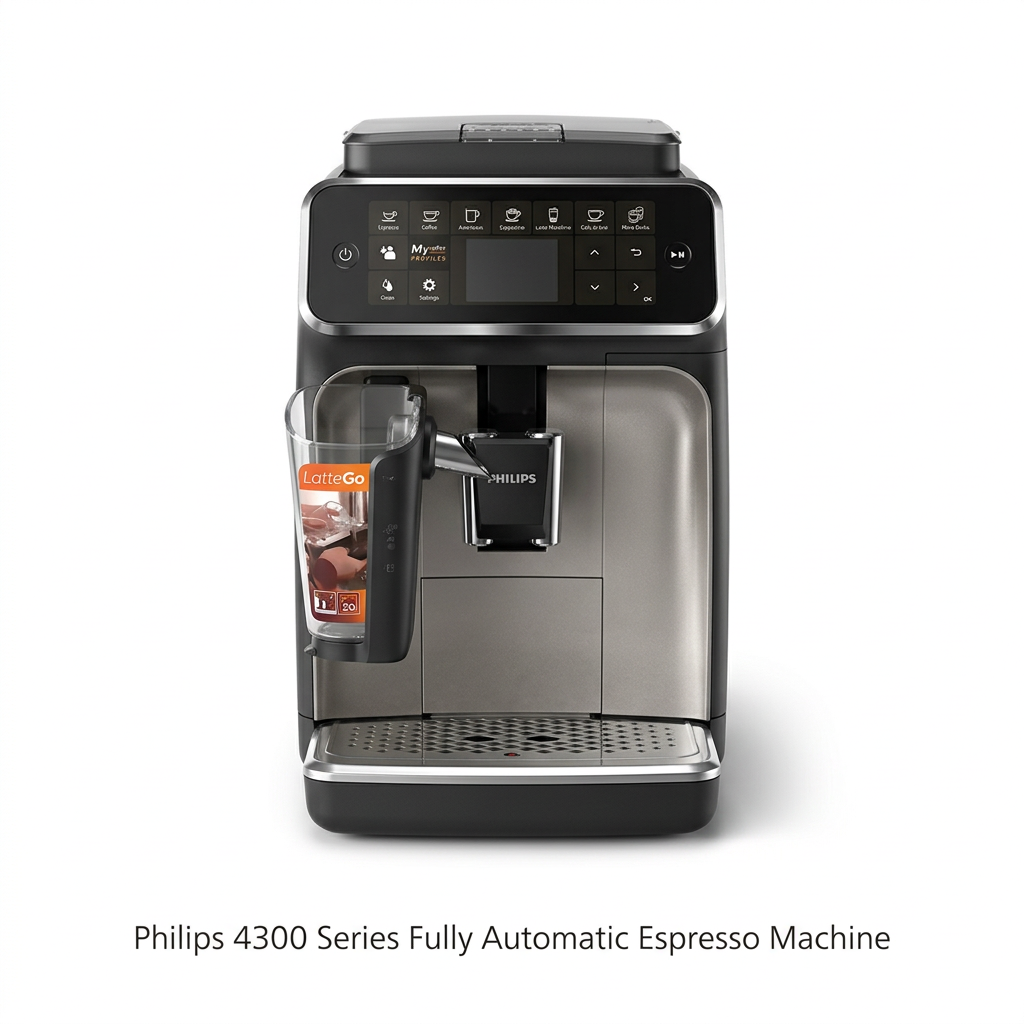
Eight drinks, two profiles and a display that shows real volumes. The 4400 adds a bigger dose and iced drinks.
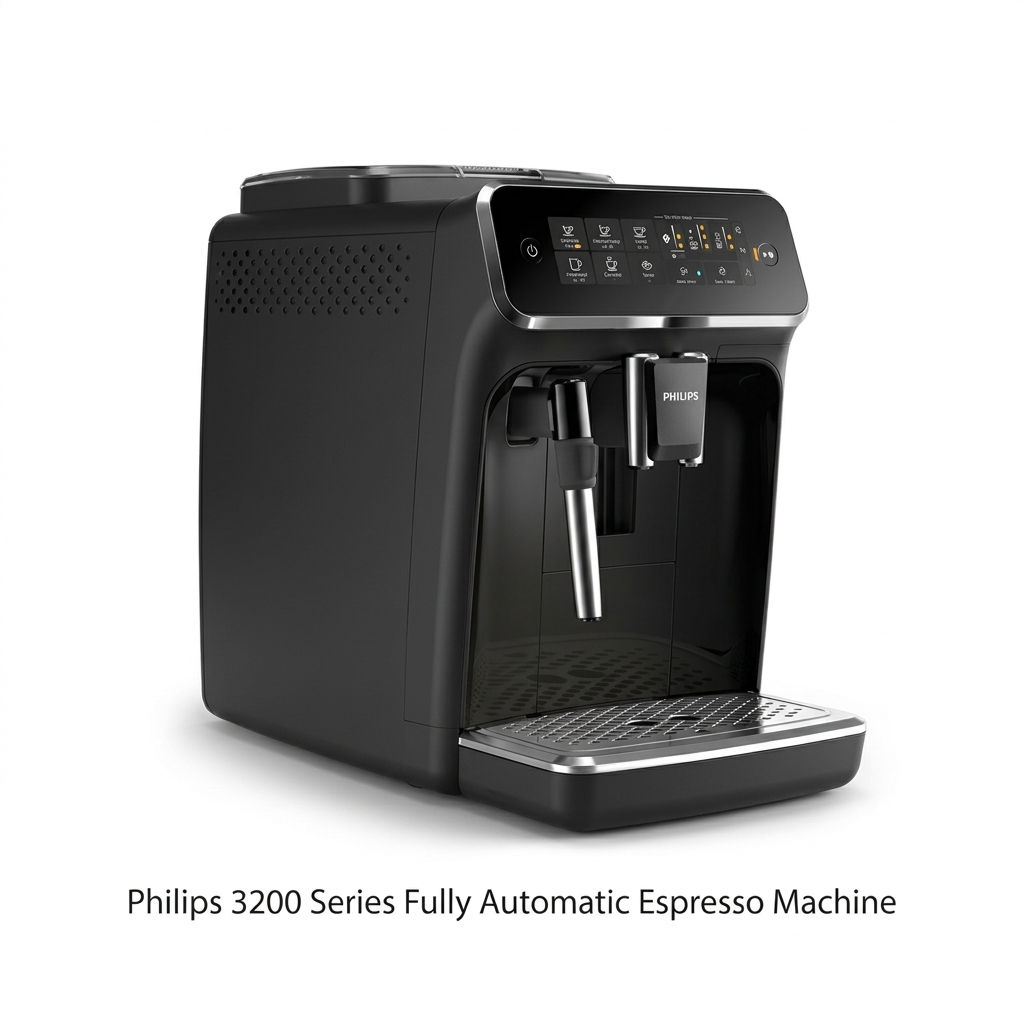
Five one-touch drinks and LatteGo. Easy to live with, but its espresso is mild.
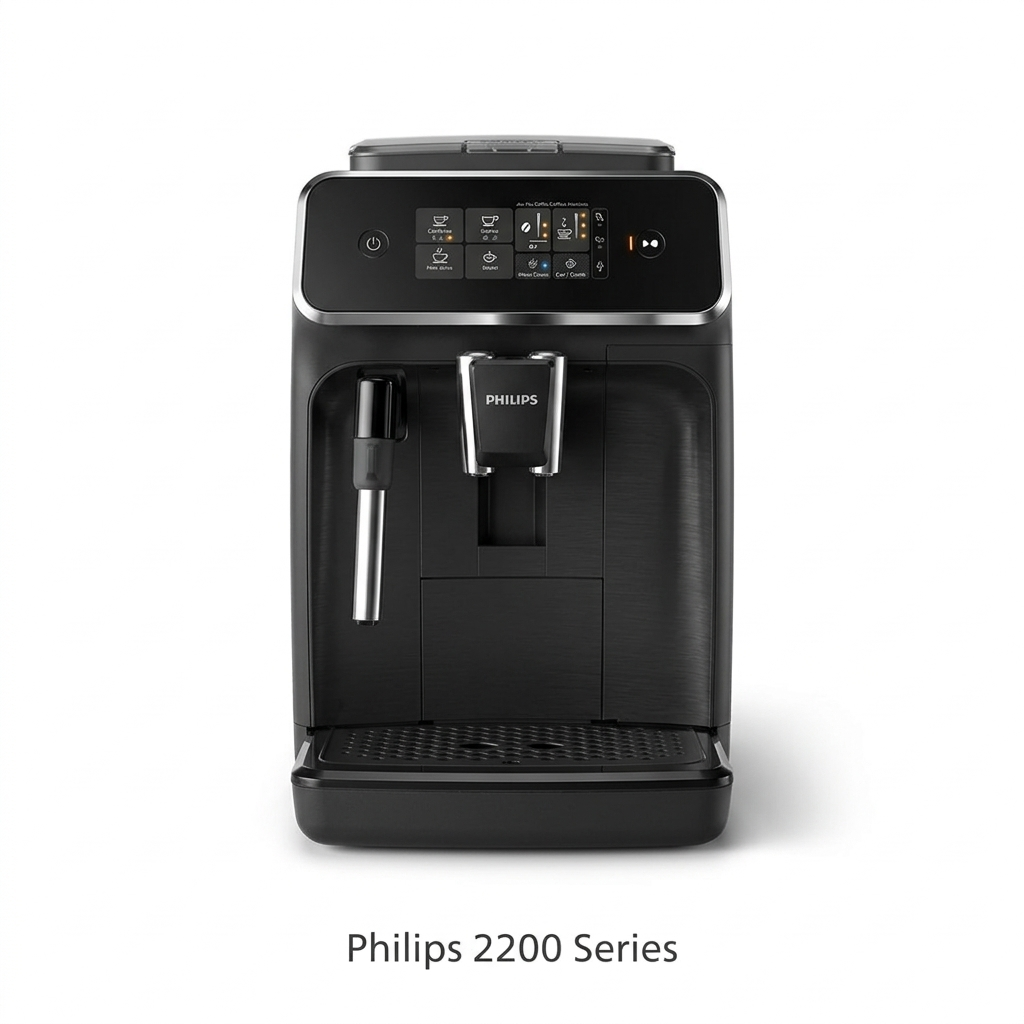
A simple touch-panel machine whose frother hides a real steam tip. Good black coffee.
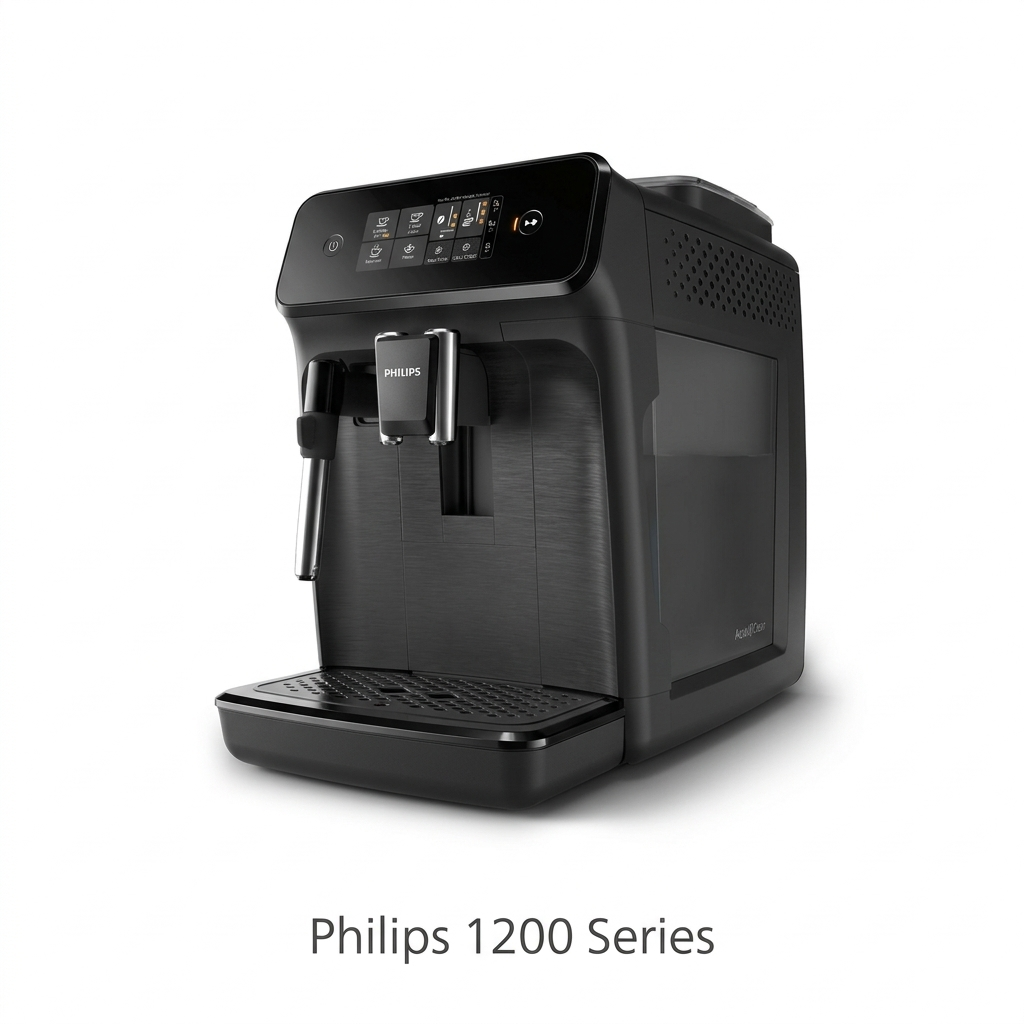
Two drinks and three temperatures. The simplest Philips with a frother.
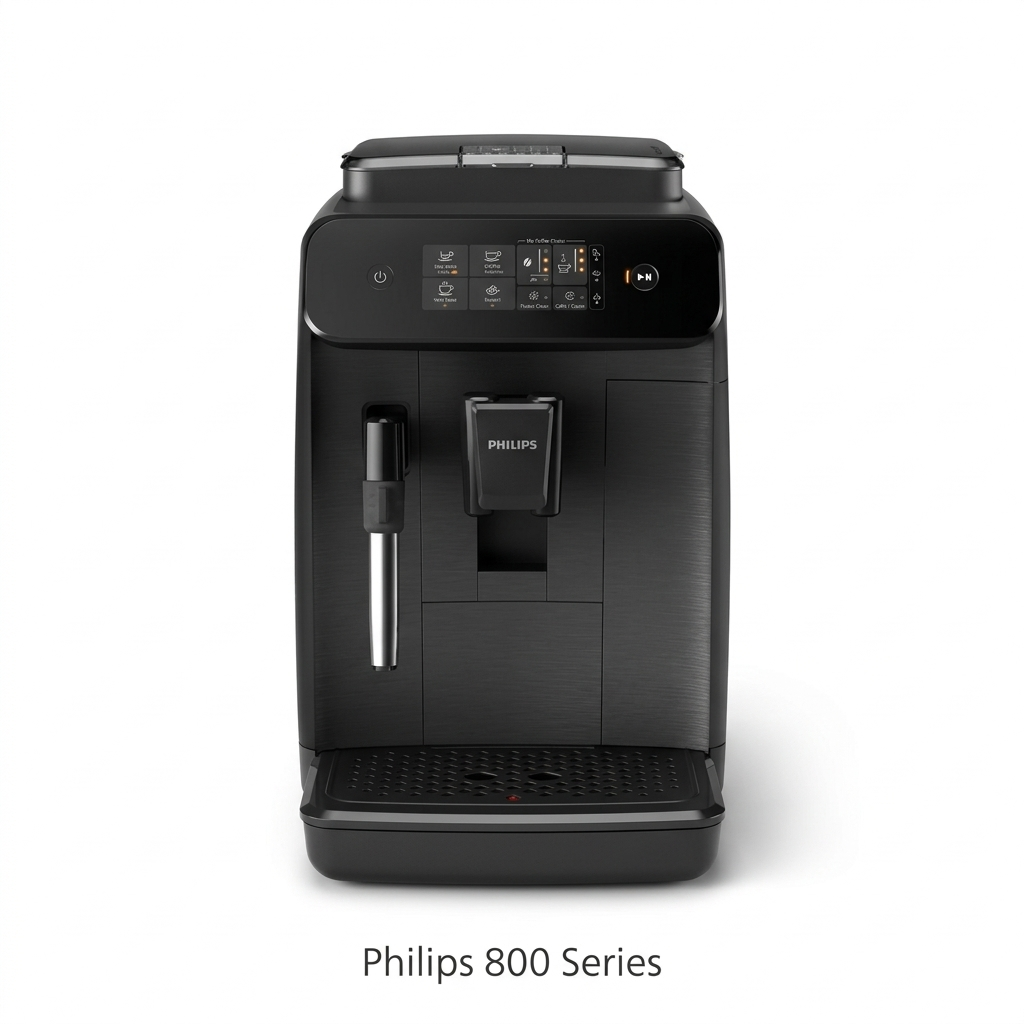
The simplest way into bean-to-cup, with a basic steam wand.
Frequently asked questions
What is the best Philips espresso machine?
For most people, the 4400 Series. It makes 12 hot and iced drinks, uses a bigger coffee dose than cheaper models and has two profiles plus a guest.
What is the difference between the Philips 3200 and 3300?
Both use LatteGo. The 3300 is quieter, with SilentBrew, and scored higher for cleaning and milk in my tests.
Is the Philips 5500 worth it over the 4400?
If you want 20 drinks, the best Philips milk and more profiles, yes. For couples, the 4400 is better value.
Which Philips makes the strongest coffee?
Among the automatics, the 4400 and 5500, with doses of 11 to 12 grams. The Barista Brew makes the strongest espresso overall.
Does LatteGo really clean in seconds?
Yes. On every LatteGo model, a rinse took about ten seconds, and the parts are dishwasher safe.
Which Philips makes iced coffee?
The 4400 and 5500. Both brew iced drinks hot and pour them over ice.
Do Philips machines need descaling?
Rarely, if you use the AquaClean filter and change it when asked.
How long do Philips espresso machines last?
With weekly brew group rinses, monthly greasing and a filter, typically 7 to 10 years.
Which Philips is best for beginners?
The 2300 or 3300 for one-touch milk drinks, or the Barista Brew if you want to learn espresso.
Is the Philips Barista Brew fully automatic?
No. It’s a semi-automatic with a built-in grinder and a portafilter. You tamp and steam yourself.
For most people, the best Philips is the 4400 Series. It makes 12 hot and iced drinks, brews noticeably stronger coffee than cheaper models and keeps the easy-clean LatteGo jug.
Choose the 5500 for families and the best milk, the 3300 for the least cleaning, the 2300 for one-touch cappuccinos at the lowest outlay, or the Barista Brew to make espresso yourself.
Whichever you choose, rinse LatteGo straight after each drink, rinse the brew group weekly and change the filter when asked.
Kitchen & coffee tester
Michael spent six years as a line cook in restaurants in Chicago and New York, and he has tested kitchen appliances for HouseholdMe since 2018, from air fryers to coffee makers. He holds an SCA certificate in barista skills and used 10 machines as his everyday coffee maker, 4 weeks each, for this guide.
- Four weeks of hands-on testing of each of 10 Philips espresso machines by HouseholdMe
- HouseholdMe reviews of every Philips machine in this guide
- Philips specifications and owner documentation
- National Coffee Data Trends survey, 2020 and 2025
- Buying guide published, ranking all 10 Philips espresso machines after hands-on testing.