Philips 5500 vs De’Longhi Rivelia: best mid-range super-automatic?
These two sit in the same price band and both save drinks for four people. Then they pull in opposite directions: the Philips 5500 is built around easy milk drinks, with 20 recipes including iced coffee and a two-part milk carafe that rinses clean in about 10 seconds, while the De’Longhi Rivelia is built around better coffee, with a 15-gram dose and two swappable bean hoppers. I used each as my everyday machine for four weeks to find out which strength matters more in your kitchen.
We choose products independently. We may earn a commission through links on this page; your price stays the same. Affiliate policy
Jargon helpNew to espresso? Tap any dotted term to see what it means.
In this comparison
If coffee flavor comes first, buy the De’Longhi Rivelia. Its 15-gram dose made noticeably stronger espresso and more coffee-forward milk drinks, and its two hoppers make regular and decaf easy. If your household mostly drinks lattes and cappuccinos and wants the least effort, the Philips 5500 is the better fit: 20 recipes including iced coffee, hotter milk, front-loading everything and a milk carafe you rinse in about 10 seconds. Espresso purists will find its shots light.
The two machines
Specs checked November 14, 2026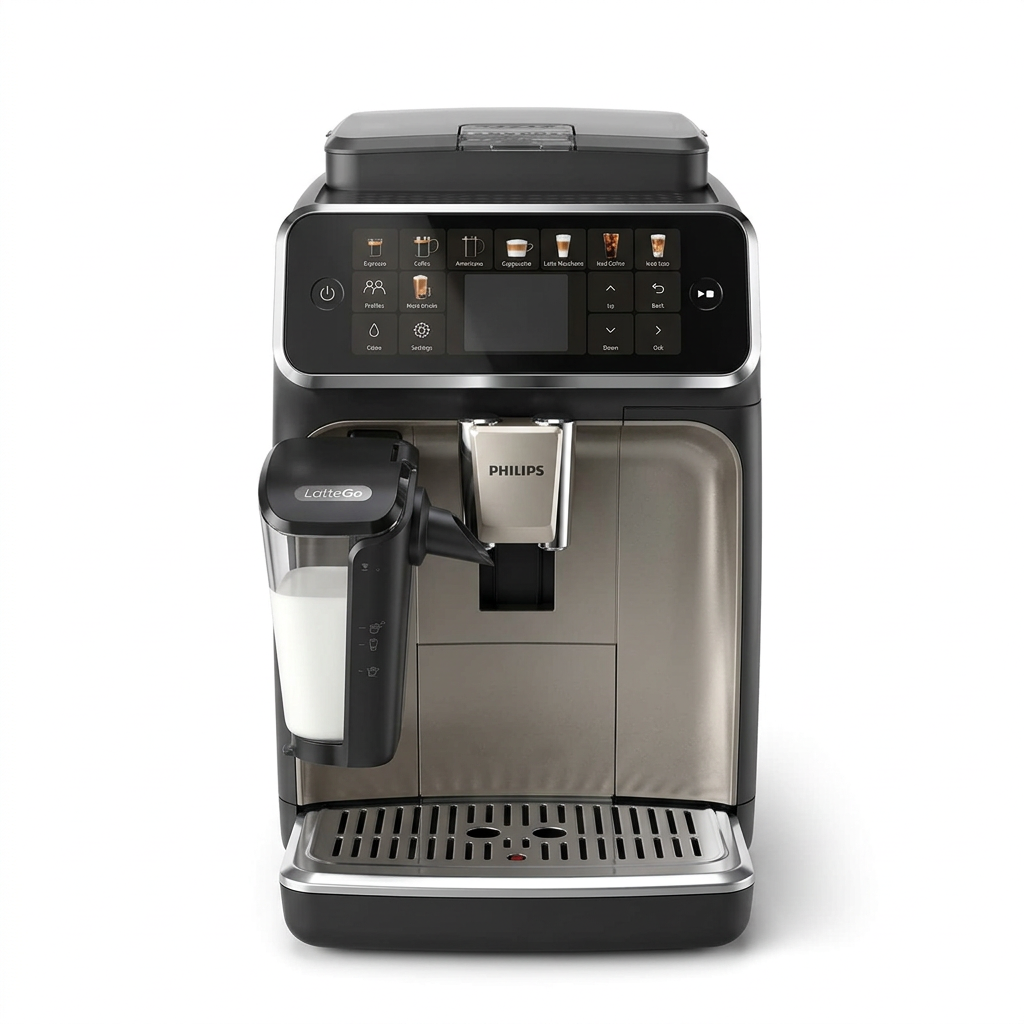
20 hot and iced recipes, four profiles, front-loading tank and drawers, quiet grinding and a two-part milk carafe that cleans in seconds.
Check price on Amazon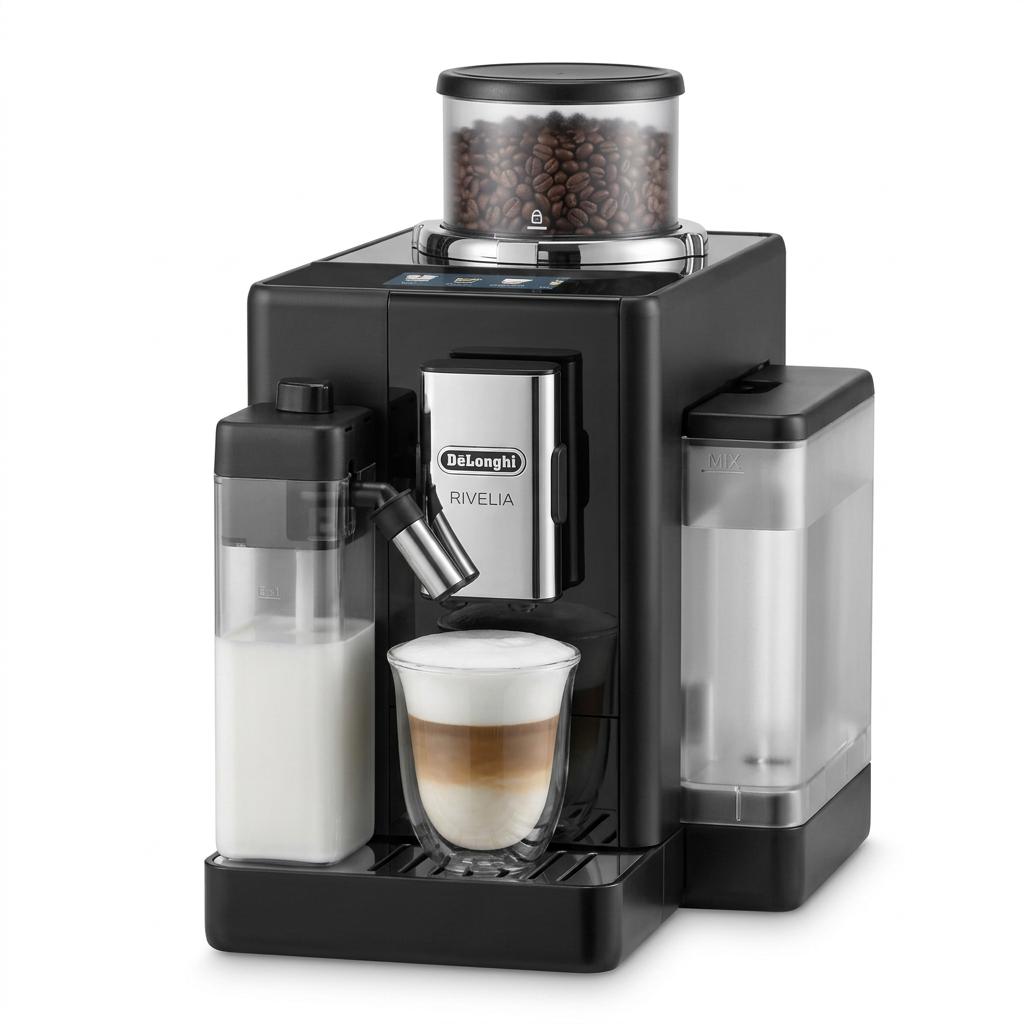
Two swappable bean hoppers, Bean Adapt, four user profiles, 18 one-touch recipes and a quiet grinder in a slim body.
See Today’s PricePhilips 5500 vs De’Longhi Rivelia at a glance
- Buy the Rivelia for fuller espresso, coffee-forward milk drinks and easy regular-plus-decaf.
- Buy the Philips 5500 for the easiest milk drinks, iced recipes and a quieter, front-loading machine.
- Both save drinks for four people and both are narrow enough for small kitchens.
- The biggest difference you’ll taste is dose: the Rivelia uses noticeably more coffee per shot.
Head to head
The better result in each row is marked, based on my testing and the manufacturer specs. Rows where they are equal have no winner.
The tally is not my verdict. Coffee drinkers and latte drinkers will weigh these rows very differently.
| Spec | Philips 5500 | De’Longhi Rivelia |
|---|---|---|
| Espresso strengthmy measurements | Light, 4.5–5.5% TDS | Fuller, about 15 g dose ✓ Best |
| One-touch recipes | 20, hot and iced ✓ Best | 18 |
| User profiles | Four | Four |
| Bean hoppers | One | Two, swap in about 3 s ✓ Best |
| Milk temperaturemeasured | About 167°F | 140–149°F |
| Milk cleaning | Two parts, about 10 s ✓ Best | Carafe clean cycle |
| Iced drinks | Built-in iced menu ✓ Best | Iced recipes |
| Noisemy meter | About 60 dB, lid closed ✓ Best | 66–68 dB |
| Front access | Tank, drawer and tray slide forward ✓ Best | Side tank |
| Water tank | 1.8 liters, about 61 oz ✓ Best | About 47 oz |
| Screen | Front touch display ✓ Best | 3.5-inch touchscreen on top |
| Grinder | Ceramic, 12 settings | Steel conical, 13 settings |
| Heat-up | About 20–25 s ✓ Best | Quick |
| Rows won | 8 | 2 |
Philips 5500 vs De’Longhi Rivelia pros and cons
Philips 5500
- Two-part milk carafe cleans in about 10 seconds
- 20 drinks, including iced, with four profiles
- Quiet grinding at around 60 dB with the lid closed
- Espresso is lighter than a café shot
- Iced drinks use warm coffee poured over ice
- Fixed milk spout means cup placement matters
De’Longhi Rivelia
- Two bean hoppers swap in a few seconds
- Four user profiles and 18 one-touch recipes
- Quiet, at 66 to 68 dB in my kitchen
- Each swap wastes or mixes around 10 g of beans
- Flat top screen is awkward for kids and seated users
- No cold extraction or cold foam
Who should buy which machine?
- Latte and cappuccino households
- Iced coffee drinkers
- Quiet kitchens and small spaces
- Espresso drinkers who want body
- Homes that drink regular and decaf
- People who want coffee-forward milk drinks
Design, size and build
Both are narrow machines designed for real kitchens rather than showrooms. The way you reach their parts is the biggest physical difference.
The Philips 5500 is listed at about 9.7 x 14.6 x 17 inches and weighs around 17.6 pounds. At under 25 centimeters wide, it slid into a gap that most bean-to-cup machines wouldn’t fit.
Its water tank, grounds container and drip tray all slide out from the front. Under low cabinets, that means you never move the machine.
The De’Longhi Rivelia measures about 9.6 x 16.9 x 15.2 inches, close to 10 inches wide with its side tank fitted, and weighs about 21 pounds. Its tank lifts out from the side, and its touchscreen sits flat on top.
Depth on the counter
Both fit a standard 24-inch-deep counter with room for the drip tray.
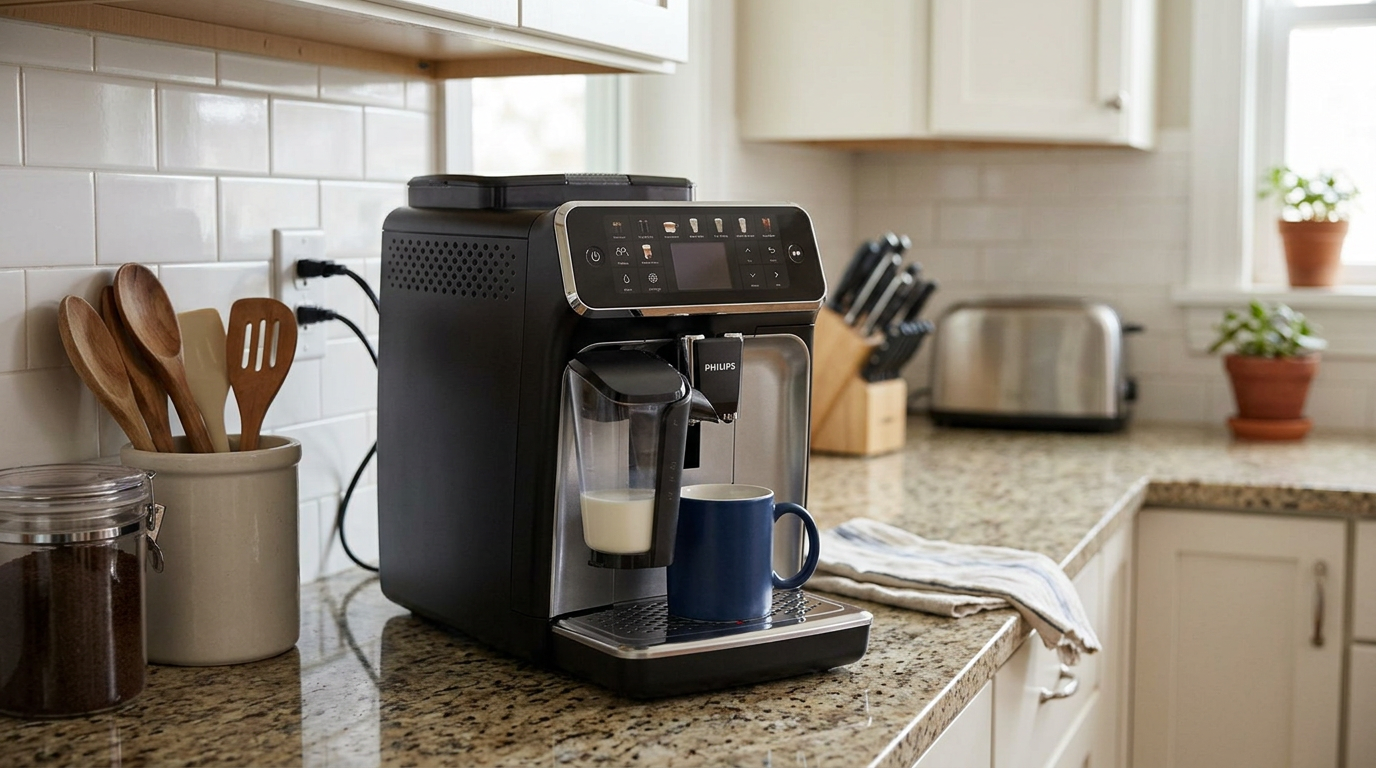
The Philips 5500 loads everything from the front, so it can stay under cabinets.
Both are mostly plastic with a solid feel. Neither rattled or flexed over the month, and both drip trays slid smoothly in and out.
The Rivelia’s top-mounted screen was the one design choice I didn’t love. My kids couldn’t see it, and I had to stand over the machine to read it.
Our tip: Measure the space under your cabinets before buying the Rivelia, because you need room above it to read the top screen and lift the hoppers.
Setup and the first week
Setup took about 15 minutes on each: rinse the tank, fit the water filter, set the hardness with the test strip and let the machine prime.
The Philips is built around a thermoblock✕ThermoblockA compact heater that warms water as it flows through a metal block, instead of keeping a whole boiler hot. It heats up fast., so it skips a slow warm-up and was ready to brew within about 20 to 25 seconds of switching on.
The Rivelia was quick too. On day one, I ran Bean Adapt for my medium roast, and it suggested a grind in the middle of the range.
The first drinks on both were a little flat. The Philips needed about a dozen drinks for its brew group to bed in, which its own guidance mentions, and the Rivelia settled after a few.
| Setup step | Philips 5500 | De’Longhi Rivelia |
|---|---|---|
| Water hardness | Test strip, entered on screen | Test strip, entered on screen |
| Filter | Fits in the front tank | Fits in the side tank |
| Bean setup | Grind dial in the hopper | Bean Adapt suggests settings |
| Profiles | Four | Four |
| Ready from cold | About 20–25 s | Quick |
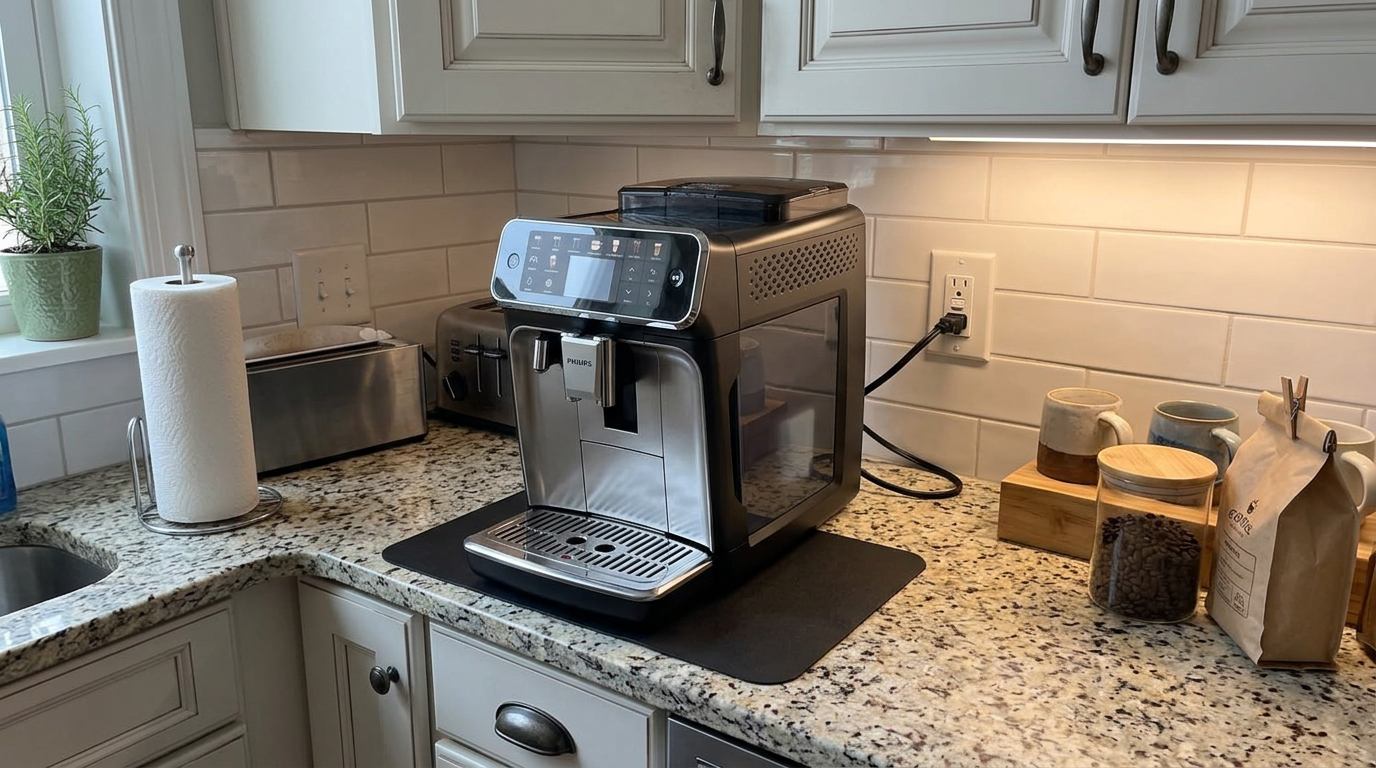
Setup on both took about 15 minutes, with a test strip and a water filter.
Our tip: Don’t judge the Philips on its first few drinks, because its brew group needs about a dozen cycles to bed in and early shots taste flat.
Screen, menus and profiles
Both save drinks for four people, and both make that easy. The difference is the number of recipes and where you look.
The Philips 5500 has 20 recipes, covering black coffees, milk drinks, hot water and a full iced menu. The display faces you on the front panel.
The De’Longhi Rivelia offers 18 one-touch recipes in the US version, from espresso and coffee to flat white✕Flat whiteA short milk coffee with a double shot and a thin layer of silky microfoam. Stronger and less foamy than a cappuccino., cortado✕CortadoA small drink of espresso cut with roughly the same amount of warm milk, with very little foam., cappuccino and latte macchiato. Its 3.5-inch color touchscreen is sharp, bright and responsive.
| Control detail | Philips 5500 | De’Longhi Rivelia |
|---|---|---|
| Recipes | 20, hot and iced | 18 |
| Profiles | Four | Four |
| Display | Front panel | 3.5-inch touchscreen, top |
| Bean guidance | Grind set by you | Bean Adapt suggests settings |
| Bean switching | No | Two hoppers |
Rivelia’s Bean Adapt asks a few questions about your beans and suggests a grind, then sets dose and temperature. Instead of guessing at 13 settings, you start somewhere sensible and adjust by taste.
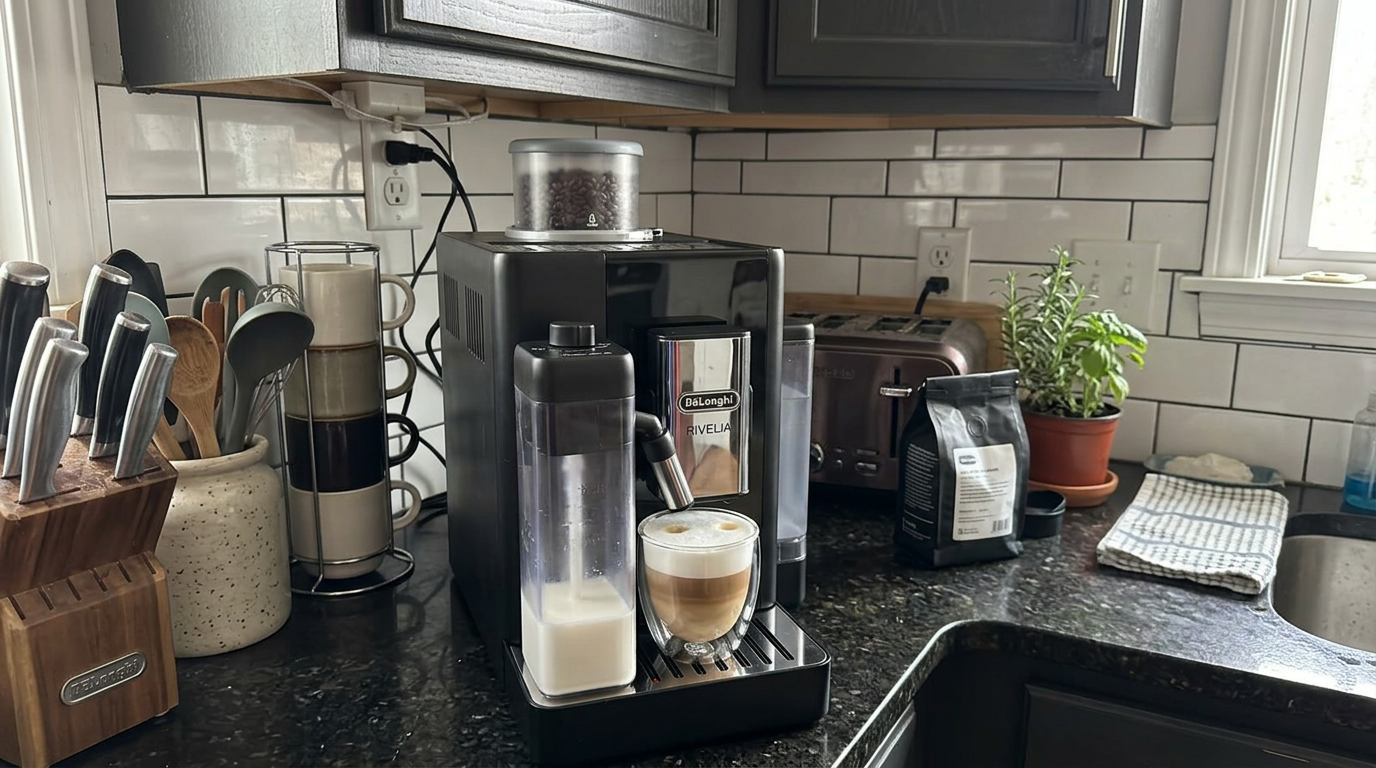
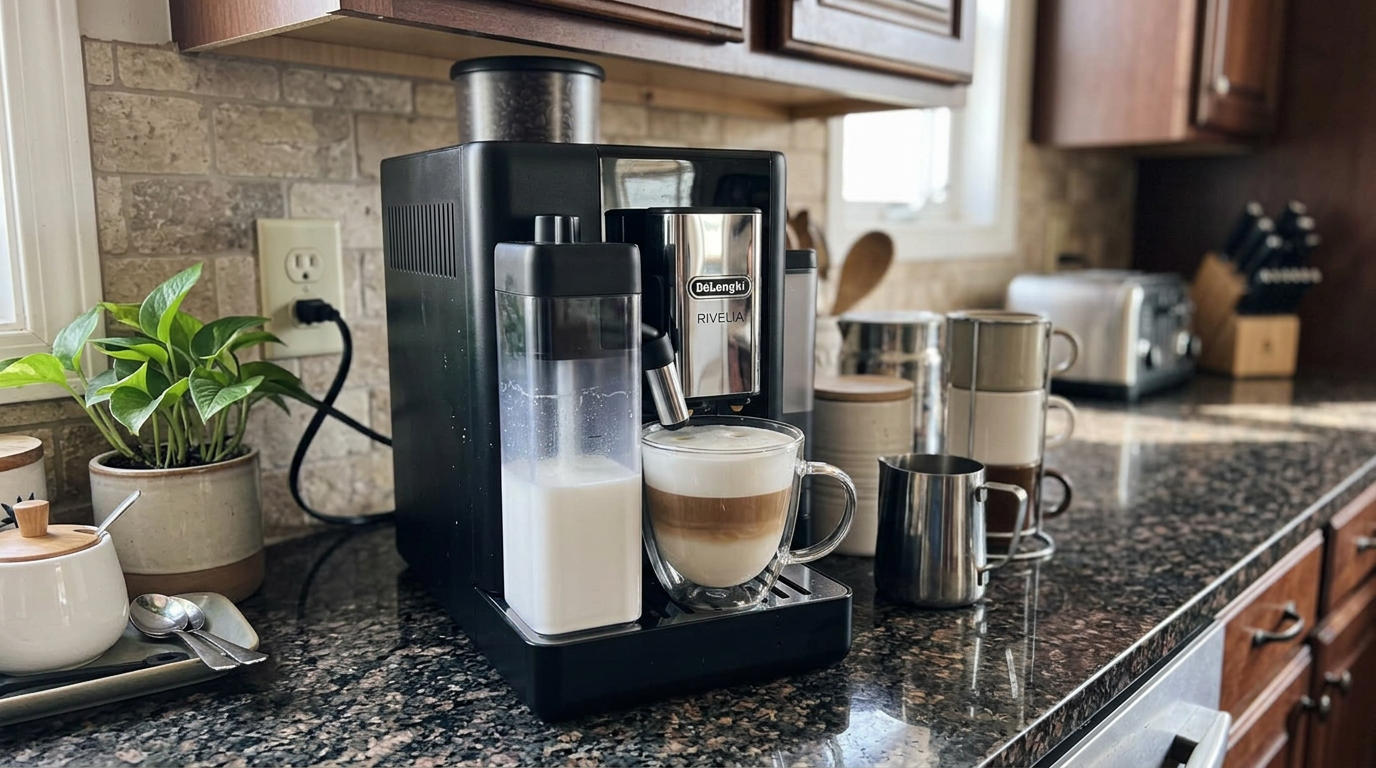
The Rivelia’s touchscreen is clear, but it sits flat on the top panel.
Our tip: Set up all four profiles on day one on either machine, because shared drinks get changed by accident and nobody remembers the old settings.
Grinder and dose
This is the difference you’ll taste every day. The Rivelia simply uses more coffee.
The De’Longhi Rivelia has a 44 mm brew chamber that holds up to about 15 grams. At intensity 5, the grinder ran about 10 seconds and produced roughly 15 grams on my scale.
The Philips 5500 uses flat ceramic burrs✕Ceramic burrsGrinding parts made of hard ceramic. They wear slowly and stay cool, which helps protect the coffee’s aroma. with 12 grind settings, adjusted by a dial inside the hopper. Its espresso tasted noticeably lighter, which points to a smaller dose✕DoseThe weight of ground coffee used for one drink. A bigger dose gives a stronger, fuller cup..
I measured that lightness directly. My Philips espresso shots read between 4.5 and 5.5 percent TDS✕TDS (total dissolved solids)The share of the drink that is dissolved coffee. Espresso usually lands somewhere around 8 to 12 percent., against the 8 to 12 percent a typical portafilter espresso lands in.
Espresso strength I measured (TDS)
Measured with a refractometer. The Rivelia tasted clearly fuller with its 15 g dose.
| Grinder detail | Philips 5500 | De’Longhi Rivelia |
|---|---|---|
| Burrs | Flat, ceramic | Conical, stainless steel |
| Settings | 12 | 13 |
| Dose | Lighter | Up to about 15 g |
| Hoppers | One | Two, 8.8 oz each |
| Adjust while | Grinding | Grinding |
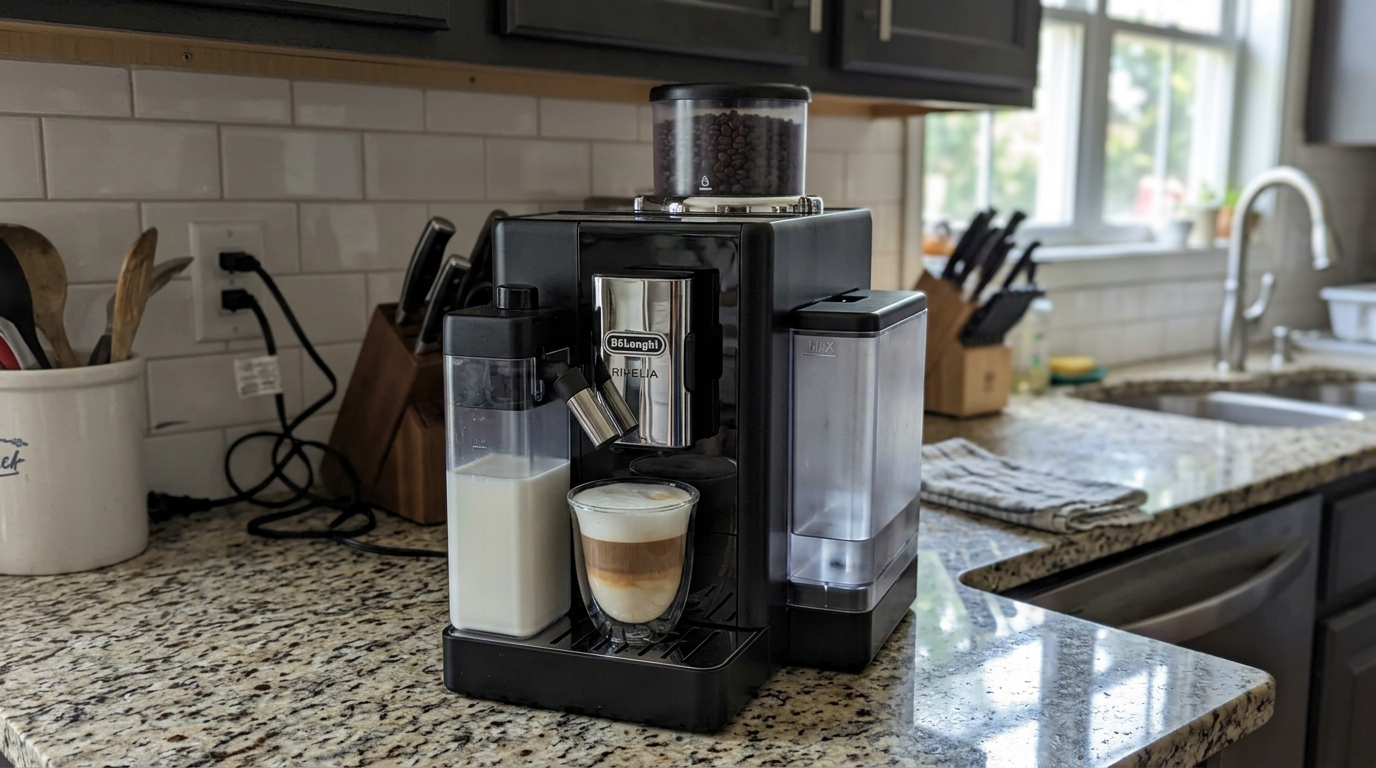
The Rivelia grinds about 15 g at intensity 5 for a fuller shot.
Our tip: Brew a double espresso and add hot water on the Philips for a big black coffee, because its longest coffee setting tastes thin and flat.
Espresso quality
With the same medium roast, the Rivelia made the better espresso. The Philips made a smooth, balanced cup that just isn’t as concentrated.
My Rivelia recipe was intensity 5 with a small cup, aiming for roughly a 1:2 brew ratio✕Brew ratioThe weight of dry coffee compared with the weight of liquid espresso. 1:2 means 18 g of coffee makes 36 g of espresso., about 30 grams of espresso from 15 grams of coffee. It came out round and sweet with good crema✕CremaThe golden, foamy layer on top of a fresh espresso. It forms when pressure pushes oils and gases out of the coffee..
The Philips espresso was easy to drink and pleasant, but lighter than a café pull. On its hottest setting, it reached about 80°C, or 176°F, at the spout.
I also ran a quick blind test with two daily coffee drinkers. Both picked the Rivelia’s espresso straight away, and one still picked it in a cappuccino.
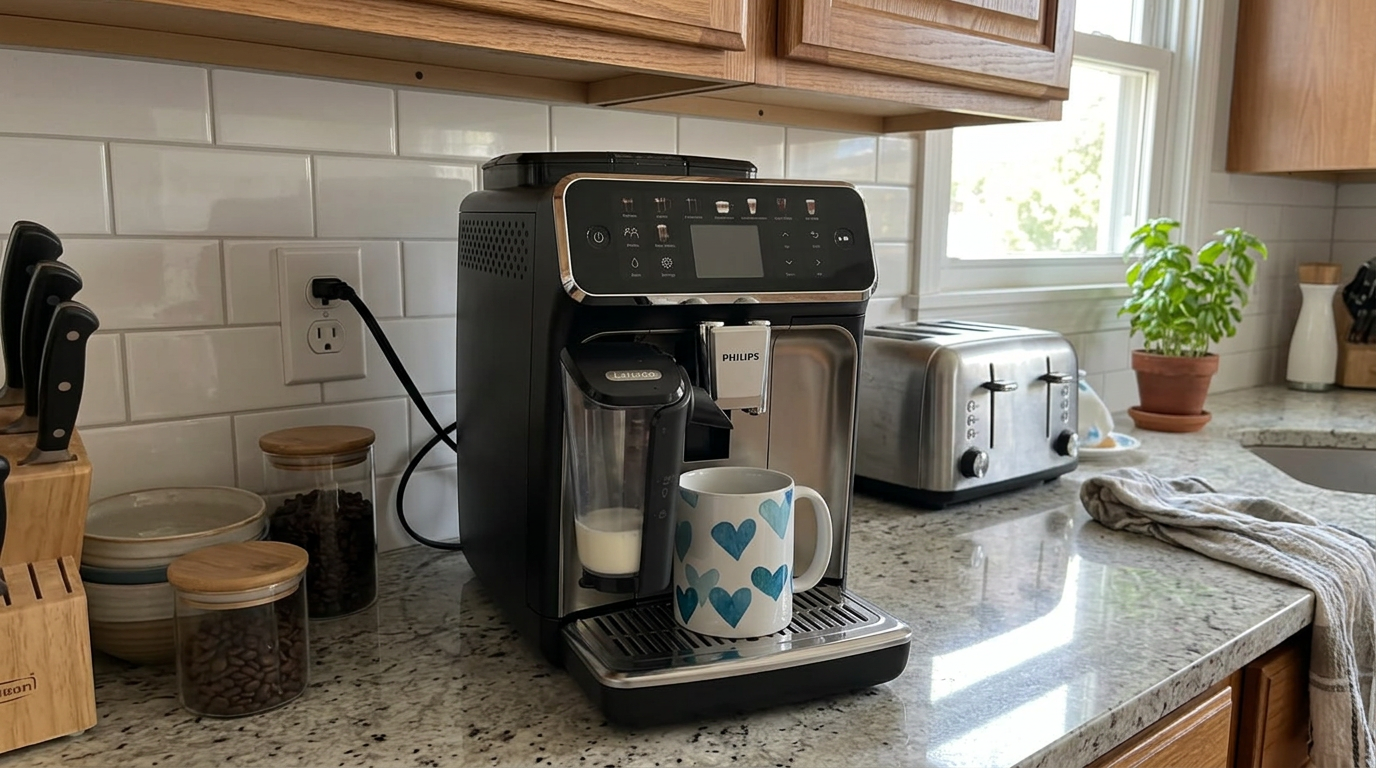
The Philips 5500 makes smooth, easy espresso that is lighter than a café shot.
My espresso ratings
Scores out of 10 for body, crema, flavor and consistency.
If you drink espresso straight, the gap is obvious. In a latte with 8 ounces of milk, it narrows, but the Rivelia’s drinks still tasted more like coffee.
| What you taste | Philips fix | Rivelia fix |
|---|---|---|
| Thin, light | Strongest setting, smallest size | Intensity 5, finer grind |
| Sour | Finer grind | Finer grind, Bean Adapt |
| Flat long coffee | Double espresso plus water | Americano |
| First shots flat | Make a dozen drinks first | Run a rinse first |
Milk drinks
Milk drinks are where the Philips earns its place in the kitchen. It’s the easier and faster machine for a latte household.
The Philips 5500 uses a two-part milk carafe. Milk came out at about 75°C, or 167°F, which is hot without tasting scalded.
Cleaning is the headline. The carafe came apart in two pieces, rinsed clean under the tap in about 10 seconds and went straight back on the machine; both pieces are dishwasher safe for a deeper wash.
The De’Longhi Rivelia draws milk from its carafe and builds the drink in the cup. Milk consistently came out between 140 and 149°F, right where milk tastes sweetest, and its foam was a touch finer.
I foamed whole, 2% and barista oat milk on both. Whole milk was sweetest on both machines; oat held up better on the Rivelia, where the cooler temperature kept it from thinning out.
For very hot drinks, the Philips wins. If you like your latte so hot you have to wait before sipping, its 167°F milk will suit you better.
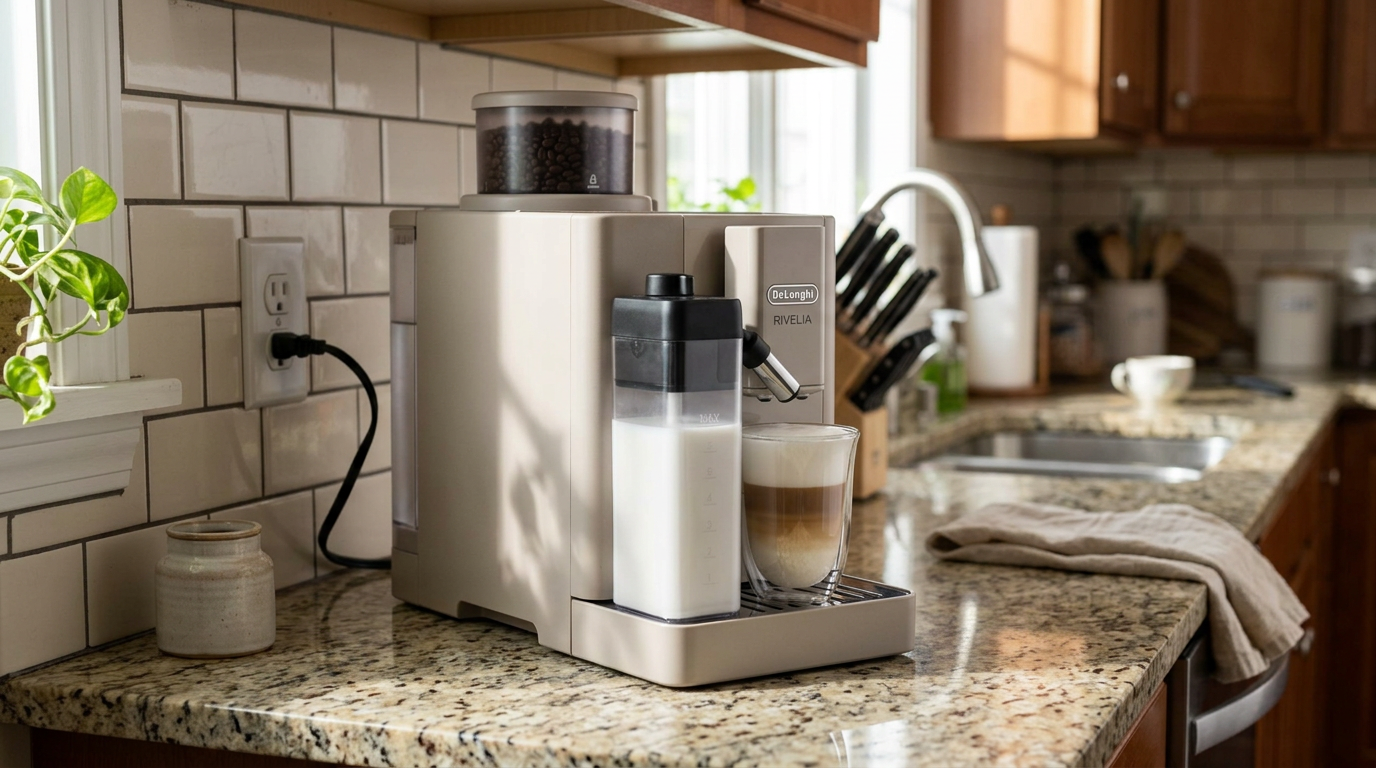
The Rivelia’s foam was slightly finer; the Philips’ milk was hotter.
Milk temperature I measured
Research from the University of Camerino found foam is most stable around 60°C, or 140°F.
The Philips carafe holds 260 milliliters, enough for one or two drinks. Its spout is fixed, so cup placement matters: push the cup too far back and the milk catches the rim.
| Milk detail | Philips 5500 | De’Longhi Rivelia |
|---|---|---|
| System | Two-part carafe | Carafe, automatic |
| Milk temperature | About 167°F | 140–149°F |
| Foam | Creamy, hot | Finer, sweeter |
| Cleaning | Rinse two parts, about 10 s | Clean cycle, confirm on screen |
| Carafe size | 260 ml | Larger |
Iced coffee
The Philips has a full iced menu, which makes it the better machine for summer. There’s a catch, though.
It doesn’t use cold extraction. Instead, it lowers its brewing temperature to about 60°C, or 140°F, compared with about 80°C for hot espresso, and pours over ice.
That works well for a quick iced latte, but some strength is lost to melting ice. A full glass of ice helps, because more ice melts more slowly.
The Rivelia has iced recipes too, brewing hot coffee over ice. Neither makes true cold brew✕Cold brewCoffee made with cool water instead of hot. It tastes smoother and less acidic than coffee brewed hot. or cold foam.
| On the Philips 5500 | Hot drinks | Iced drinks |
|---|---|---|
| Brew temperature | About 80°C / 176°F | About 60°C / 140°F |
| Dilution | None | Some, from melting ice |
| Best drink | Cappuccino | Iced latte |
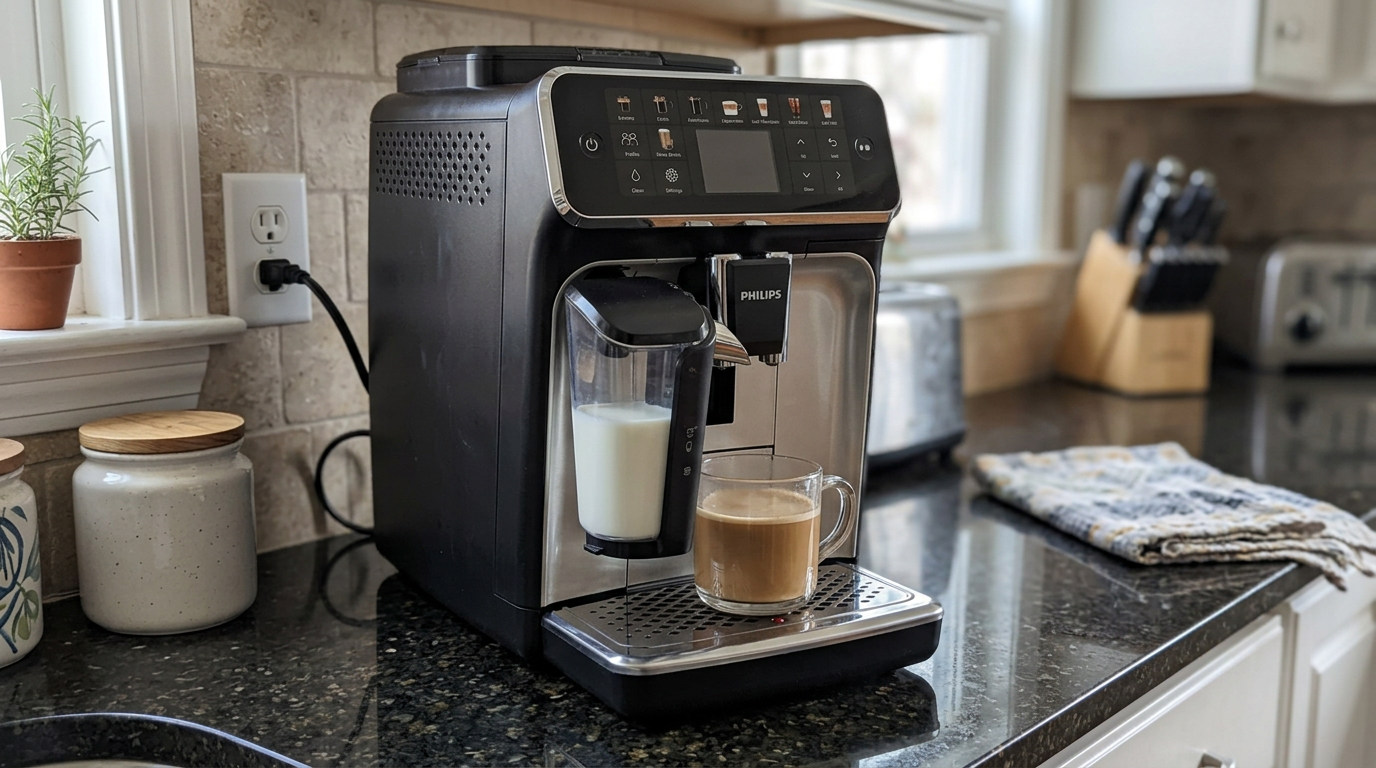
The Philips iced menu brews cooler coffee over ice, with some dilution.
Our tip: Fill the glass to the top with ice for iced drinks on either machine, because a few cubes melt fast and water the coffee down.
Is It On Sale? Check NowBean switching and decaf
This is the Rivelia’s headline feature, and the Philips has no answer to it.
The Bean Switch✕Bean Switch SystemDe’Longhi’s pair of swappable bean hoppers. You twist one off and the other on to change beans in seconds. system uses two 8.8-ounce hoppers that lock on with a 90-degree twist. Swapping took about three seconds.
About 10 grams of beans stay in the grinder after a swap. Choose grind and empty rather than a transition drink when you switch to decaf, or your afternoon cup still has caffeine.
On the Philips, decaf means pre-ground coffee or emptying the hopper. Both work, but neither is as easy.
Coffee lost per bean change
About two-thirds of a single shot per switch on the Rivelia.
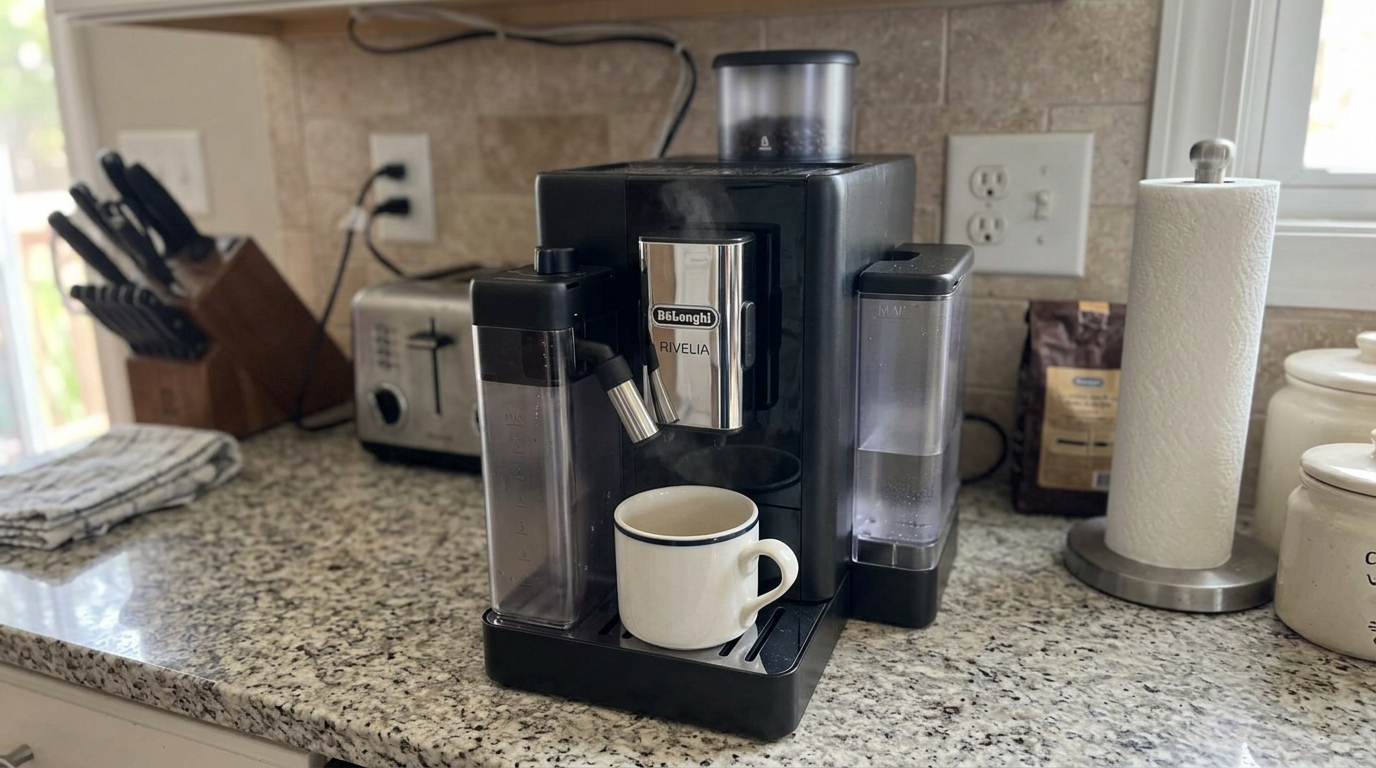
The Rivelia’s second hopper makes regular and decaf genuinely easy.
Our tip: Pair beans with similar roast levels in the Rivelia’s two hoppers, because a light and a dark roast won’t both taste right on the same grind setting.
Cleaning and upkeep
Both rinse on startup, drop pucks into a drawer and remind you to empty it. The milk side is where they differ.
The Philips’ two-part carafe is the fastest milk clean I know. The Rivelia runs a carafe clean cycle you confirm on screen, and the carafe needs a fuller wash regularly.
Both brew unit✕Brew unitThe part of an automatic machine that compresses the ground coffee, holds it while water passes through and ejects the used puck.s come out for rinsing. I rinsed the Philips every two weeks and the Rivelia weekly.
My daily hands-on cleaning time
My estimate of hands-on time per day, not counting automatic rinses.
| When | Philips 5500 | De’Longhi Rivelia |
|---|---|---|
| After milk | Rinse the two parts, about 10 s | Run the carafe clean |
| Daily | Empty tray and grounds | Empty pucks every day or two |
| Weekly | Wipe and check the group | Rinse the brew unit |
| Every two weeks | Rinse the brew group | Wash the carafe fully |
| When prompted | Descaling✕DescalingRunning a mild acid through the machine to dissolve the mineral scale that hard water leaves in the heater and pipes. or replace the filter | Descale or replace the filter |
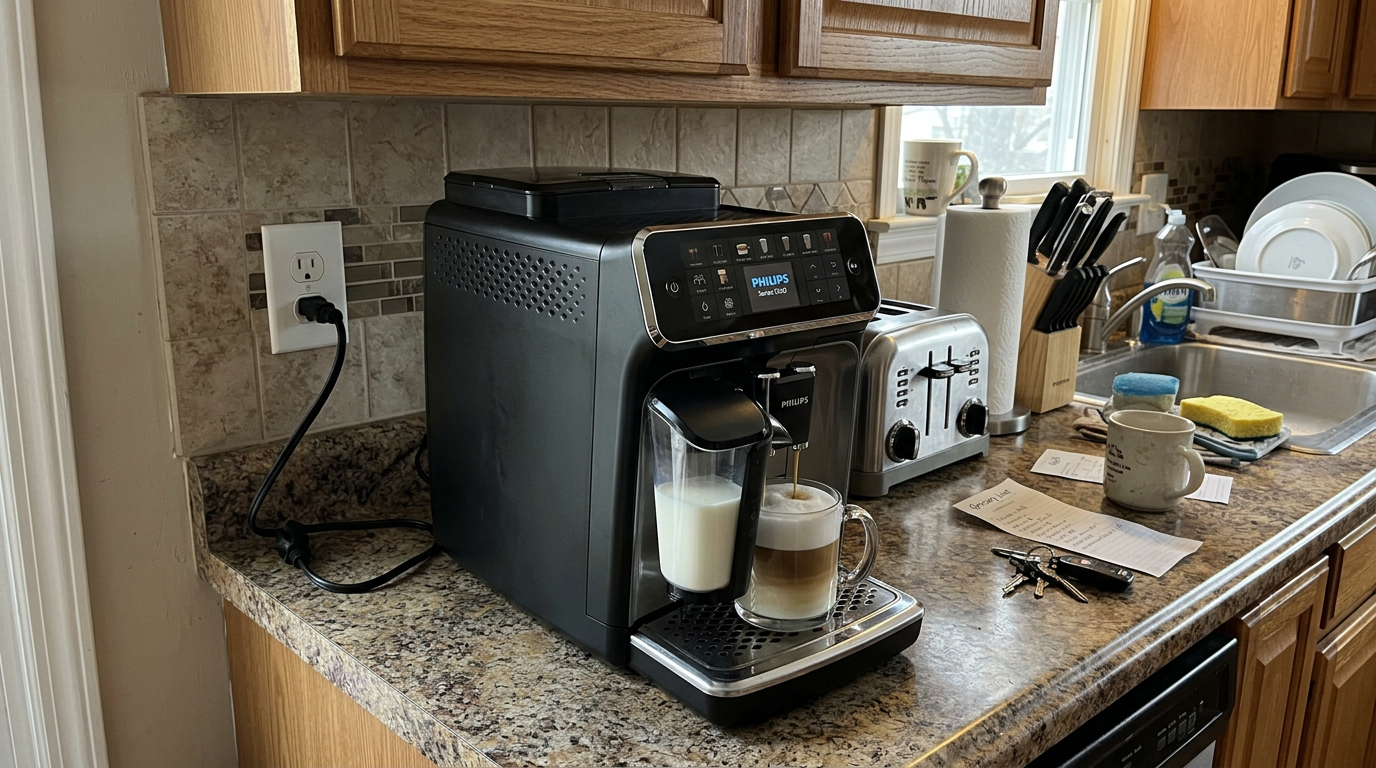
Two parts and about 10 seconds under the tap: the Philips milk clean is the easiest I know.
Our tip: Rinse the Philips carafe straight after use, because milk residue dries and sours if you leave it until the evening.
Noise
Noise is one area where the Philips 5500 genuinely surprised me. With the bean lid closed, its grinding measured around 60 dB.
The Rivelia measured between 66 and 68 dB during grinding and brewing. That is quiet for its class, but clearly louder than the Philips.
Noise I measured
Decibels are logarithmic, so 6 to 8 dB is a clearly audible difference.
In an open-plan apartment at 6 a.m., the Philips is the better neighbor. Keep its bean lid closed, because it makes a real difference.
The difference is partly the grinder and partly the brew group. The Philips’ ceramic burrs turn with a low hum, and its brew group moves with a soft click rather than a clunk.
The Rivelia’s grinder runs for only about 10 seconds per drink, so the louder part is short. If you make one drink at a time, the gap feels smaller than the numbers suggest; for four drinks in a row, it adds up.
Our tip: Close the Philips bean lid before you brew, because it keeps grinding noise down to around 60 dB in my measurements.
Water, beans and supplies
The Philips’ 1.8-liter tank is the bigger of the two and slides out from the front. The Rivelia’s 47-ounce tank needed refilling more often.
Because the Rivelia uses more coffee per drink, a bag of beans goes faster. That’s the price of its fuller flavor.
| Bean type | Philips 5500 | De’Longhi Rivelia |
|---|---|---|
| Medium roast | Best match | Espresso, cappuccino, latte |
| Medium-dark | Good | Milk drinks, coffee crema |
| Light roast | Thin | Finer, intensity 5 |
| Oily, dark | Avoid, beans clump | Not recommended |
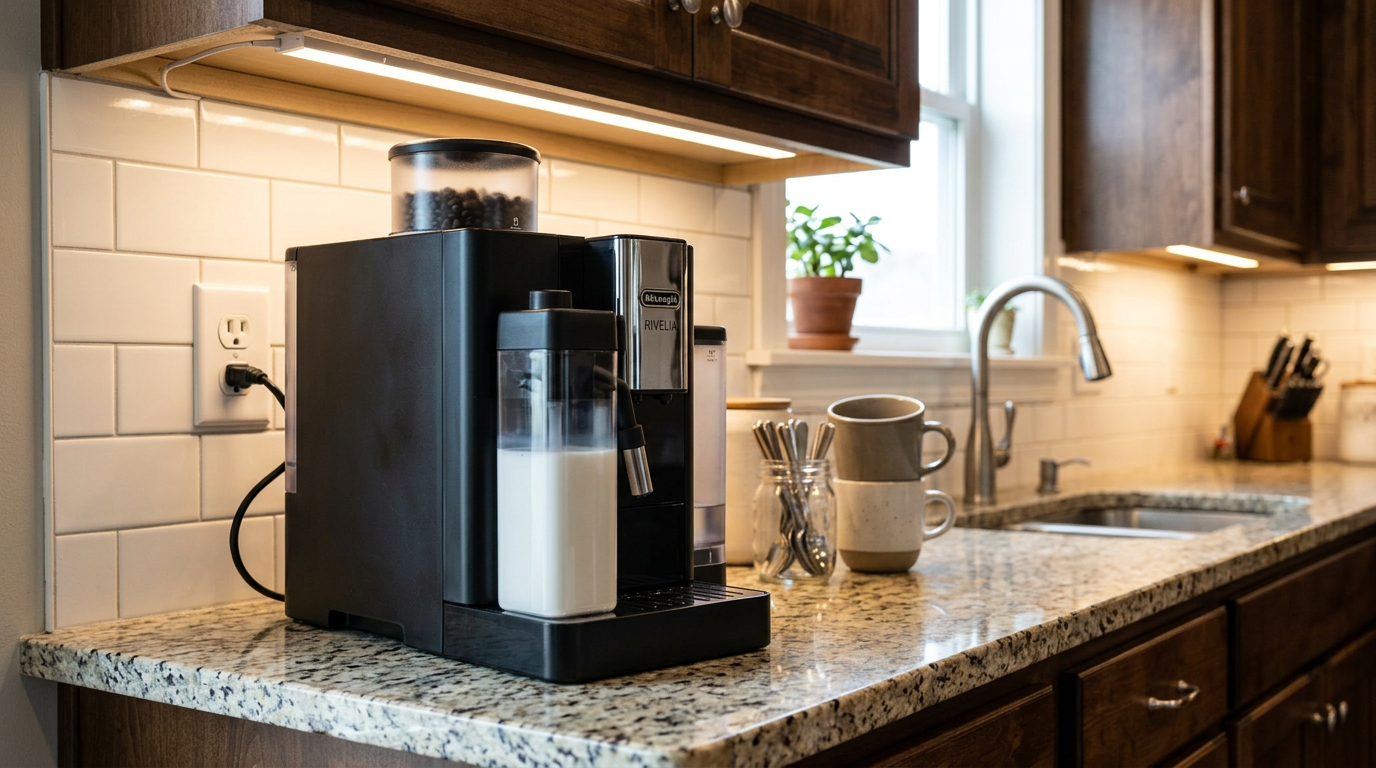
The Rivelia uses more coffee per drink, and you can taste it.
Our tip: Choose medium, dry-looking beans for the Philips, because oily dark roasts clump in its hopper and make the grinder struggle.
A morning with each
I timed real mornings for a household of three: a cappuccino, a latte and an espresso.
On the Philips, I switched on, clipped on the carafe and made the three drinks back to back. Then I rinsed the two carafe parts under the tap and put the milk back in the fridge.
On the Rivelia, I picked each profile, made the three drinks and ran the carafe clean. On a decaf afternoon, I swapped hoppers in about three seconds.
| Step | Philips 5500 | De’Longhi Rivelia |
|---|---|---|
| Heat-up | About 20–25 s | Quick |
| Three drinks | About 5 min | About 5 min |
| Milk clean-up | About 10 s rinse | Clean cycle plus wipe |
| Total hands-on | About 2.5 min | About 3 min |
Hands-on time, three-drink morning
Time I spent at the machine, not counting brewing.
The totals are close. The Philips saves you a few seconds of cleanup every day, and the Rivelia gives you better coffee for them.
Mornings took about the same time on both; the difference was in the cup.
How four weeks went
Here is how my view of each machine changed over the month.
| Week | Philips 5500 | De’Longhi Rivelia |
|---|---|---|
| 1 | Brew group bedded in after a dozen drinks | Bean Adapt set; espresso full from day two |
| 2 | Iced latte became the afternoon habit | Decaf in hopper two for the afternoons |
| 3 | Carafe rinse became a ten-second reflex | Profiles kept everyone’s drinks separate |
| 4 | Easiest machine I’ve lived with | Best espresso of any mid-range automatic I tested |
By the end, the split was clear. Latte drinkers in my house preferred the Philips for its hot milk and easy clean. I preferred the Rivelia every time I drank espresso or a flat white.
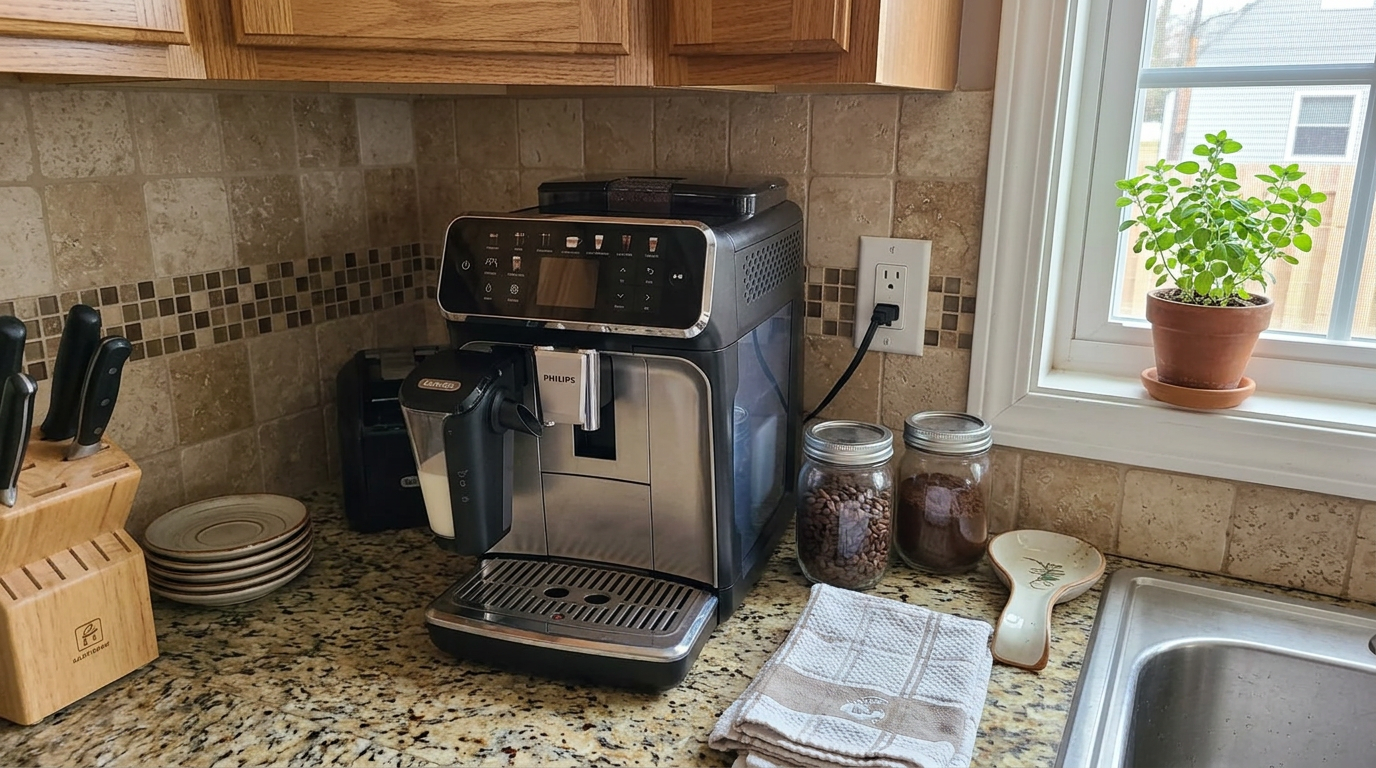
After a month, the Philips was the machine my latte-drinking household reached for.
Mistakes to avoid on each
Both machines are easy to live with, but each has a few habits that hold it back. These were the ones I hit during my test.
| Machine | Mistake | Better habit |
|---|---|---|
| Philips 5500 | Judging the first drinks | Give it a dozen drinks |
| Philips 5500 | Using the longest coffee setting | Double espresso plus hot water |
| Philips 5500 | Cup too far back | Move the cup forward on the tray |
| Philips 5500 | Leaving milk in the carafe | Rinse straight after use |
| Rivelia | Switching light and dark roasts without changing grind | Pair similar roasts |
| Rivelia | Transition drink when switching to decaf | Choose grind and empty |
| Rivelia | Skipping the carafe clean | Run the clean cycle every time |
| Rivelia | Waiting for the full-container alert | Empty pucks every day or two |
On the Philips, the long coffee setting was the trap. It tasted thin and flat, while a double espresso topped up with hot water made a much better mug.
On the Rivelia, the decaf transition drink is the one to watch. It mixes about 10 grams of leftover regular beans into your cup, so your “decaf” still has caffeine.
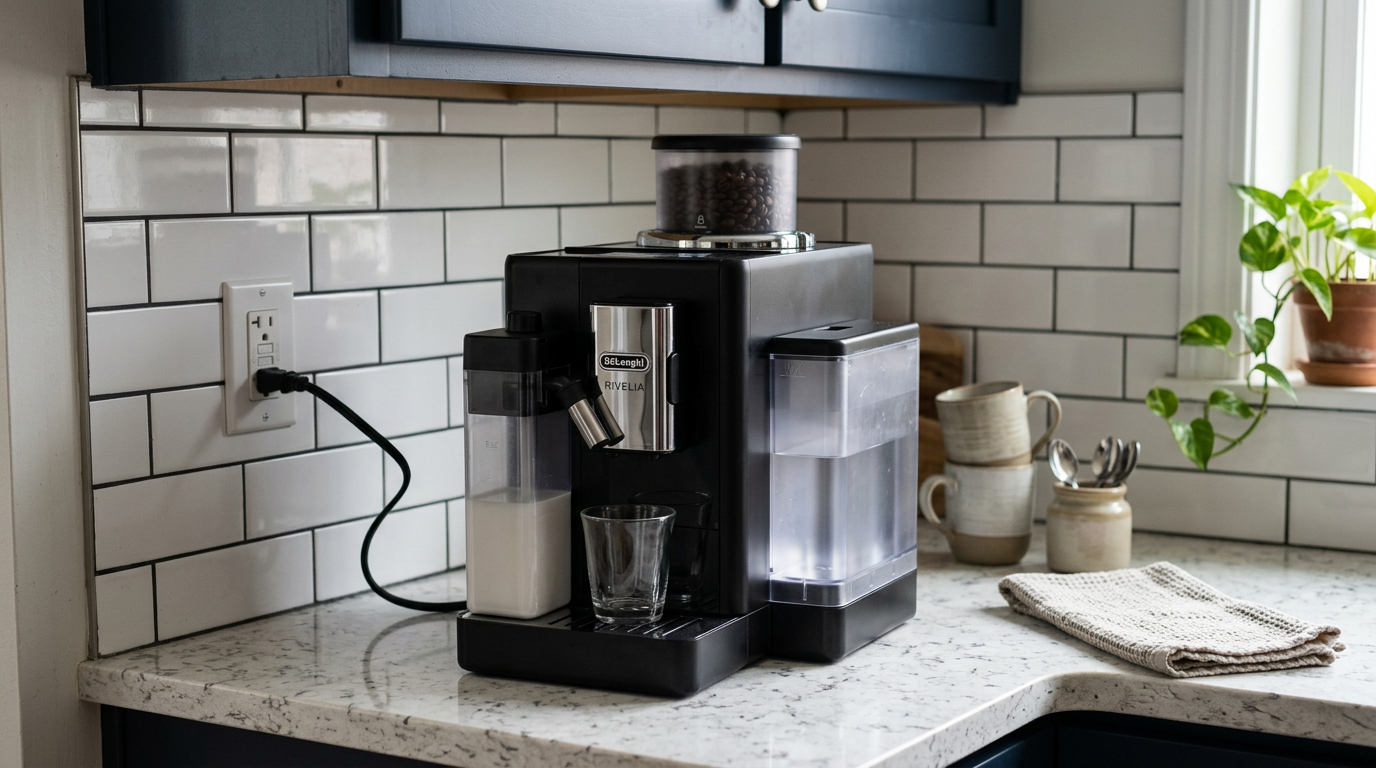
Choose grind and empty when switching the Rivelia to decaf.
Our tip: Fit the water filter and descale on time on both machines, because hard tap water builds scale faster than you’d expect.
Real-life scenarios
Specs only go so far. These are the situations where one machine clearly pulled ahead during my testing.
The Rivelia’s 15-gram dose made a round, sweet shot. The Philips tasted light by comparison.
Hot milk at one touch, then 10 seconds to rinse the carafe. The Philips won every busy morning.
Swap hoppers, choose grind and empty, done. The Philips needs pre-ground decaf.
The built-in iced menu made it one touch. Fill the glass with ice to limit dilution.
About 60 dB with the lid closed, against 66 to 68 dB on the Rivelia.
More coffee per drink meant the flat white tasted like coffee rather than warm milk.
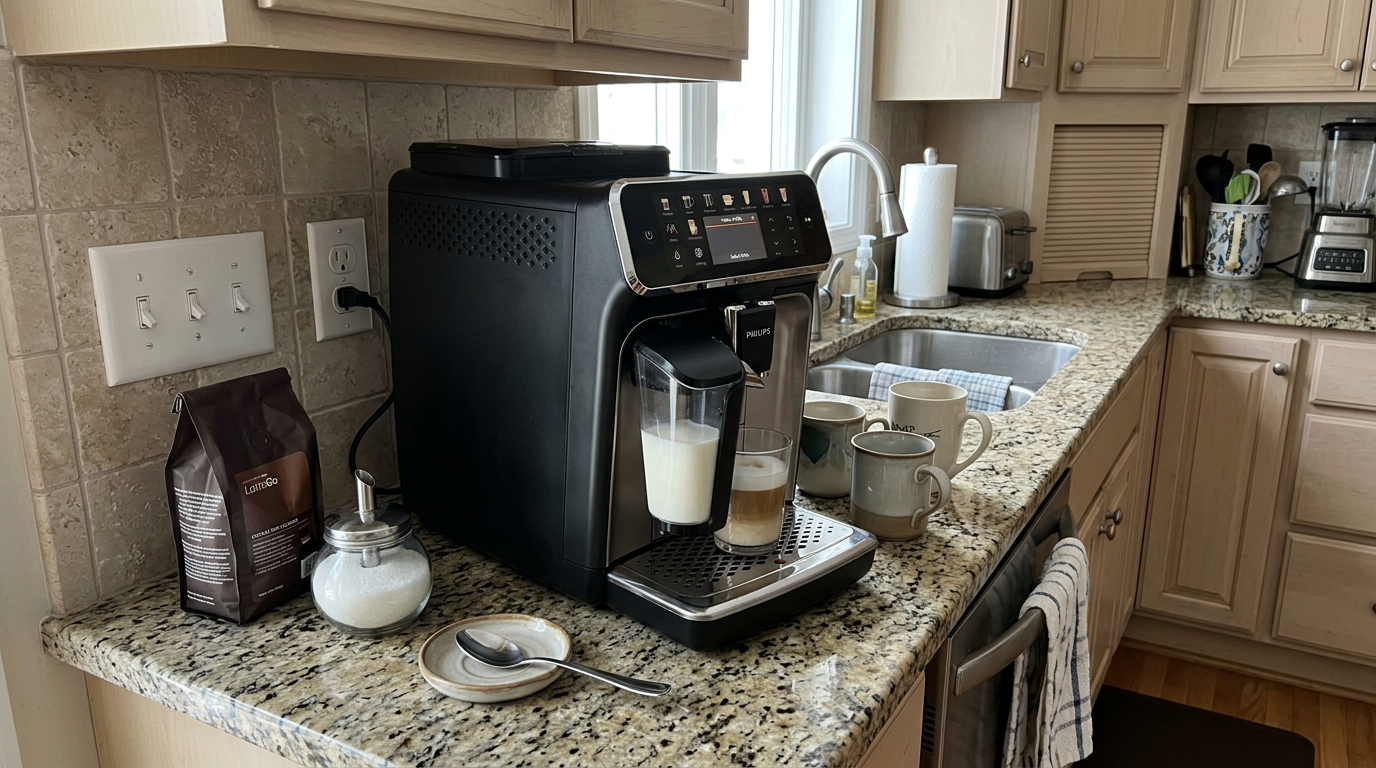
For latte-heavy households, the Philips 5500 was the easiest machine to live with.
My scorecard
These are my own scores out of 10 after four weeks with each machine. I added drink range and household features because they decide this matchup.
Philips 5500
De’Longhi Rivelia
Overall, I rate both about 8.7 in this matchup, for very different reasons. The Rivelia makes the better coffee and handles decaf; the Philips makes milk drinks easier, quieter and cleaner.
See How Much You’ll SaveWhich one is right for you?
4 quick questionsWhich one should you buy?
It comes down to one question: is your house about coffee or about milk? Answer that honestly and the choice makes itself.
Think about who drinks what, too. A house of latte drinkers with one espresso fan will be happier with the Philips; a house of coffee lovers who share milk drinks will be happier with the Rivelia. For the wider picture beyond this matchup, see my guide to the best Philips espresso machines.
If you want the strongest new super-automatic, see my Ninja AutoBarista vs Rivelia comparison. For a cheaper Philips, read my Philips 3300 vs 5500 head-to-head or the full Philips 5500 review.
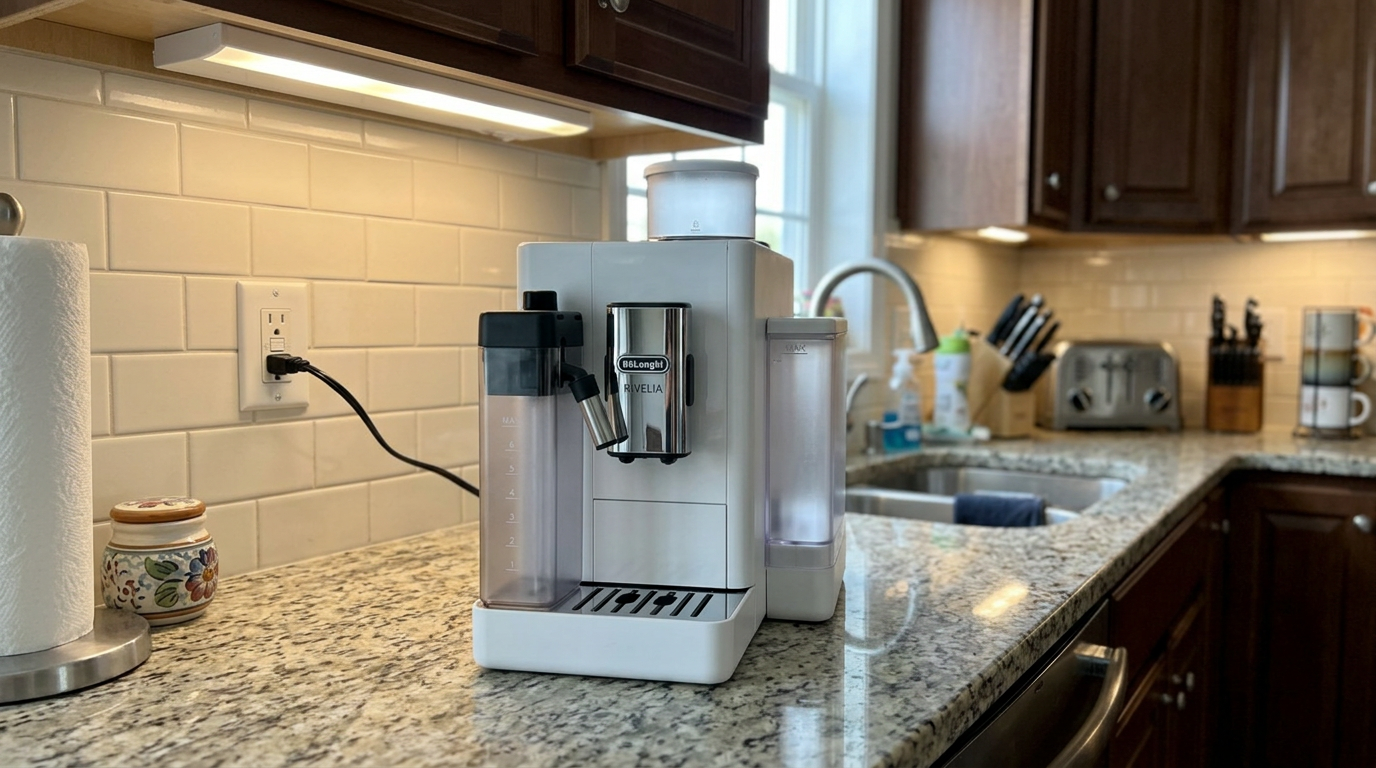
For coffee-first households, the Rivelia’s bigger dose makes the difference.
- You mostly drink milk drinks
- You want iced coffee at one touch
- You hate cleaning milk systems
- You want a quiet machine
- You drink espresso straight
- Someone drinks decaf daily
- You want the strongest coffee
- You want fuller espresso
- Someone drinks decaf
- You like coffee-forward flat whites
- You want bean guidance
- You want the easiest milk cleaning
- Noise matters a lot
- You need to see the screen from a seat
If coffee flavor is why you are buying a machine, my pick is the De’Longhi Rivelia. Its 15-gram dose made the stronger espresso and more coffee-forward milk drinks, and its two hoppers make decaf easy for the whole family.
The Philips 5500 is the smarter buy for latte households. It makes 20 drinks including iced, rinses its milk carafe in about 10 seconds, runs quieter and loads everything from the front. Just know its espresso is light.
Whichever you choose, use fresh medium-roast beans and cold milk. Both will make good drinks for years with a little care.
Philips 5500 vs De’Longhi Rivelia specifications
From manufacturer specifications and my own testing.
| Philips 5500 | De’Longhi Rivelia | |
|---|---|---|
| Type | Fully automatic with milk carafe | Fully automatic with milk carafe |
| One-touch recipes | 20, hot and iced | 18 |
| Profiles | 4 | 4 |
| Display | Front panel | 3.5-inch touchscreen, top |
| Grinder | Flat ceramic, 12 settings | Steel conical, 13 settings |
| Dose | Lighter | Up to about 15 g |
| Bean hoppers | One | Two, 8.8 oz each |
| Pump | 15 bar | 19 bar |
| Heating | Thermoblock, 20–25 s | Thermoblock |
| Milk temperature | About 167°F measured | 140–149°F measured |
| Milk carafe | Two parts, 260 ml | Automatic carafe |
| Noise | About 60 dB | 66–68 dB |
| Water tank | 1.8 liters, front | About 47 oz, side |
| Dimensions (W x D x H) | 9.7 x 17 x 14.6 in | About 9.6 x 16.9 x 15.2 in |
| Weight | About 17.6 lb | About 21 lb |
How I tested and compared them
I used each machine as my everyday coffee maker for four weeks, making espresso, americanos, cappuccinos, lattes, flat whites and iced drinks.
I weighed doses and shots, measured espresso strength with a refractometer, probed milk and coffee temperatures, logged noise with a meter and timed cleaning and hopper swaps.
I compared my notes with Philips and De’Longhi specifications, owner documentation and published coffee research.
- Coffee: dose, TDS, crema and body.
- Milk: foam texture, temperature and cleanup.
- Workflow: profiles, recipes, iced drinks and bean switching.
- Ownership: noise, cleaning, water care and footprint.
Philips 5500 vs De’Longhi Rivelia FAQ
Is the Philips 5500 or De’Longhi Rivelia better?
For coffee flavor and decaf, the Rivelia. For easy milk drinks, iced coffee and quiet operation, the Philips 5500.
Which makes stronger espresso?
The Rivelia. It grinds about 15 grams at its strongest intensity. My Philips 5500 shots measured 4.5 to 5.5 percent TDS, lighter than a café espresso.
Which milk system is easier to clean?
The Philips 5500. Its two-part carafe rinses clean in about 10 seconds and is dishwasher safe.
How hot is the milk?
I measured about 167°F on the Philips 5500 and 140 to 149°F on the Rivelia.
Can the Philips 5500 make iced coffee?
Yes. It brews at about 140°F instead of 176°F and pours over ice. Some strength is lost to melting ice.
Can the Rivelia make decaf?
Yes. Swap to the second hopper and choose grind and empty, so about 10 grams of leftover regular beans don’t end up in your cup.
Which is quieter?
The Philips 5500, at around 60 dB with the bean lid closed. The Rivelia measured 66 to 68 dB.
Do both have profiles?
Yes, both save drinks for four people.
Which is better under low cabinets?
The Philips 5500. Its tank, grounds container and drip tray all slide out from the front.
Do either make cold brew?
No. Both brew hot or warm coffee over ice for iced drinks.
Can either machine make two drinks at once?
Both can make two black coffees at once through twin spouts. Milk drinks are made one at a time on both.
Do both use whole beans and pre-ground?
Both grind whole beans. For decaf, the Rivelia’s second hopper is far easier than using pre-ground on the Philips.

- Our hands-on Philips 5500 review
- Our hands-on De’Longhi Rivelia review
- Philips and De’Longhi product specifications and owner documentation
- Effect of milk processing and steam frothing conditions on microfoam formation, University of Camerino