Ninja AutoBarista vs De’Longhi Rivelia: best new super-automatic?
Both are new, both grind and froth at one touch, and both promise to dial in your beans for you. Then they split: the Ninja AutoBarista weighs a generous dose, brews real drip coffee and makes cold brew, while the De’Longhi Rivelia gives you two swappable bean hoppers, four profiles and a quieter, slimmer body. I lived with each for four weeks and measured what matters to find out which belongs in your kitchen.
We choose products independently. We may earn a commission through links on this page; your price stays the same. Affiliate policy
Jargon helpNew to espresso? Tap any dotted term to see what it means.
In this comparison
If you want the strongest espresso from a one-touch machine and your household also drinks drip coffee or iced coffee, buy the Ninja AutoBarista. Its weighed doses gave me fuller shots, its drip coffee replaced our drip maker and its cold foam made iced lattes easy. If your home drinks two kinds of coffee, such as regular and decaf, or four people share the machine, the De’Longhi Rivelia is the better fit: two hoppers swap in seconds, four profiles keep everyone’s drinks saved, and it was the quieter machine.
The two machines
Specs checked November 14, 2026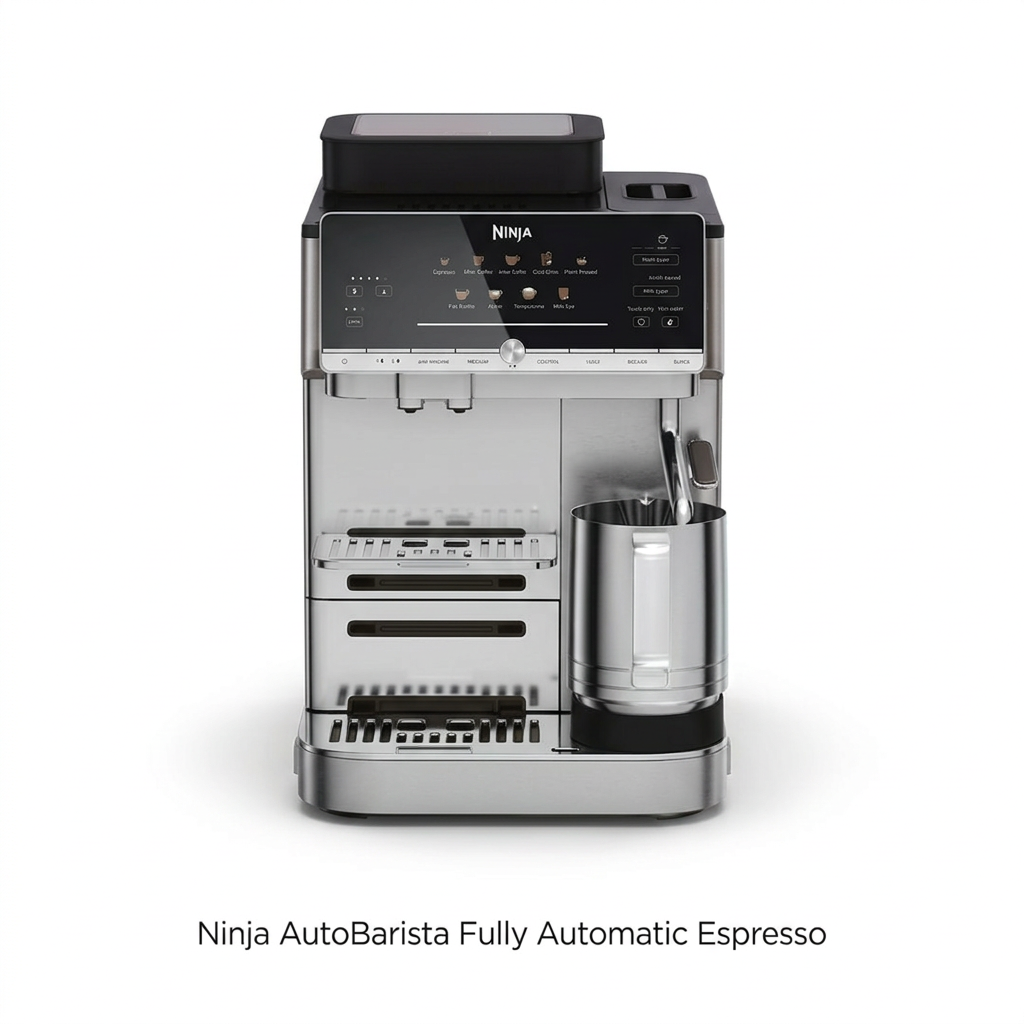
Grind IQ dial-in, weighed doses from single to triple, real drip coffee, cold brew and a hands-free whisking frother with cold foam.
Check price on Amazon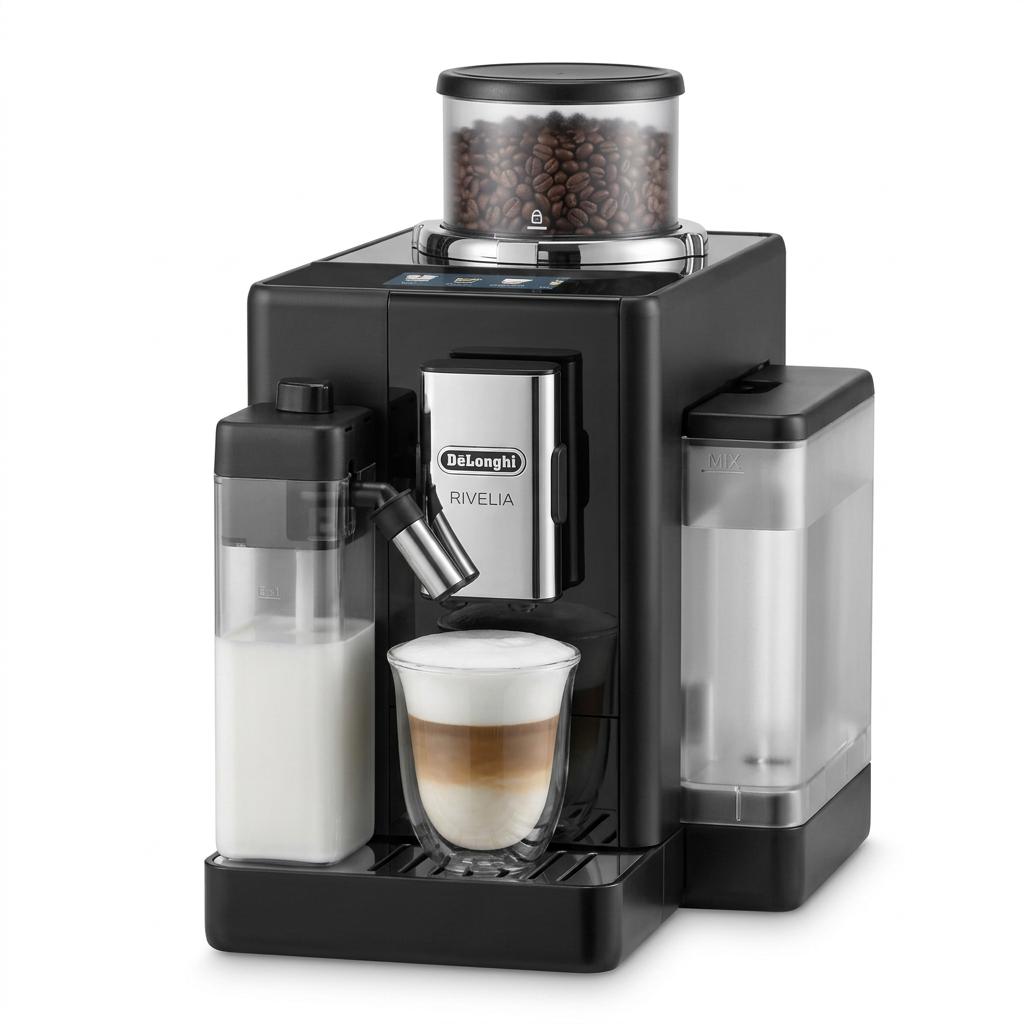
Two swappable bean hoppers, Bean Adapt, four user profiles, 18 one-touch recipes and a quiet grinder in a slim body.
See Today’s PriceNinja AutoBarista vs De’Longhi Rivelia at a glance
- Buy the AutoBarista for strong espresso, real drip coffee, cold brew and cold foam.
- Buy the Rivelia for regular plus decaf, four saved profiles and a quieter, narrower machine.
- Both dial in new beans for you, in different ways: the Ninja tests the flow, the De’Longhi asks about the beans.
- Neither is small. The AutoBarista is deep and heavy, and the Rivelia’s screen sits on top.
Head to head
The better result in each row is marked, based on my testing and the manufacturer specs. Rows where the two are equal have no winner.
The tally is not my verdict. Some rows matter far more than others depending on what you drink.
| Spec | Ninja AutoBarista | De’Longhi Rivelia |
|---|---|---|
| Espresso bodymy tasting, same beans | Full, generous dose ✓ Best | Full for an automatic, up to ~15 g |
| Dial-in | Grind IQ tests the flow, 50 settings ✓ Best | Bean Adapt asks about the beans, 13 settings |
| Bean hoppers | One, about 250 g | Two, 8.8 oz each, swap in ~3 s ✓ Best |
| User profiles | 2 | 4 ✓ Best |
| Drip coffee | Yes, real filter-style mode ✓ Best | Long coffee only |
| Cold drinks | Cold brew and cold foam ✓ Best | Iced recipes, no cold extraction |
| One-touch recipes | 10 | 18 ✓ Best |
| Milk temperaturemeasured | Hot, adjustable presets | 140–149°F |
| Noisemy meter | 70–72 dB grinding | 66–68 dB ✓ Best |
| Water tank | About 70 oz ✓ Best | About 47 oz |
| Width on the counter | About 10.7 in | About 9.6–10 in ✓ Best |
| Depth | About 17.8 in | About 16.9 in ✓ Best |
| Weight | About 36–40 lb | About 21 lb ✓ Best |
| Rows won | 5 | 7 |
Ninja AutoBarista vs De’Longhi Rivelia pros and cons
Ninja AutoBarista
- Full-bodied espresso from weighed, generous doses
- Real drip coffee and cold brew alongside espresso
- Grind IQ dials in new beans for you
- Only one bean hopper
- Large and heavy for a single-hopper machine
- Settings menu uses codes
De’Longhi Rivelia
- Two bean hoppers swap in a few seconds
- Four user profiles and 18 one-touch recipes
- Quiet, at 66 to 68 dB in my kitchen
- Each swap wastes or mixes around 10 g of beans
- Flat top screen is awkward for kids and seated users
- No cold extraction or cold foam
Who should buy which machine?
- Strong espresso and double-shot milk drinks
- Households that also drink drip coffee
- Iced lattes with cold foam
- Homes that drink regular and decaf
- Families of three or four with saved drinks
- Open-plan kitchens where noise matters
Design, size and build
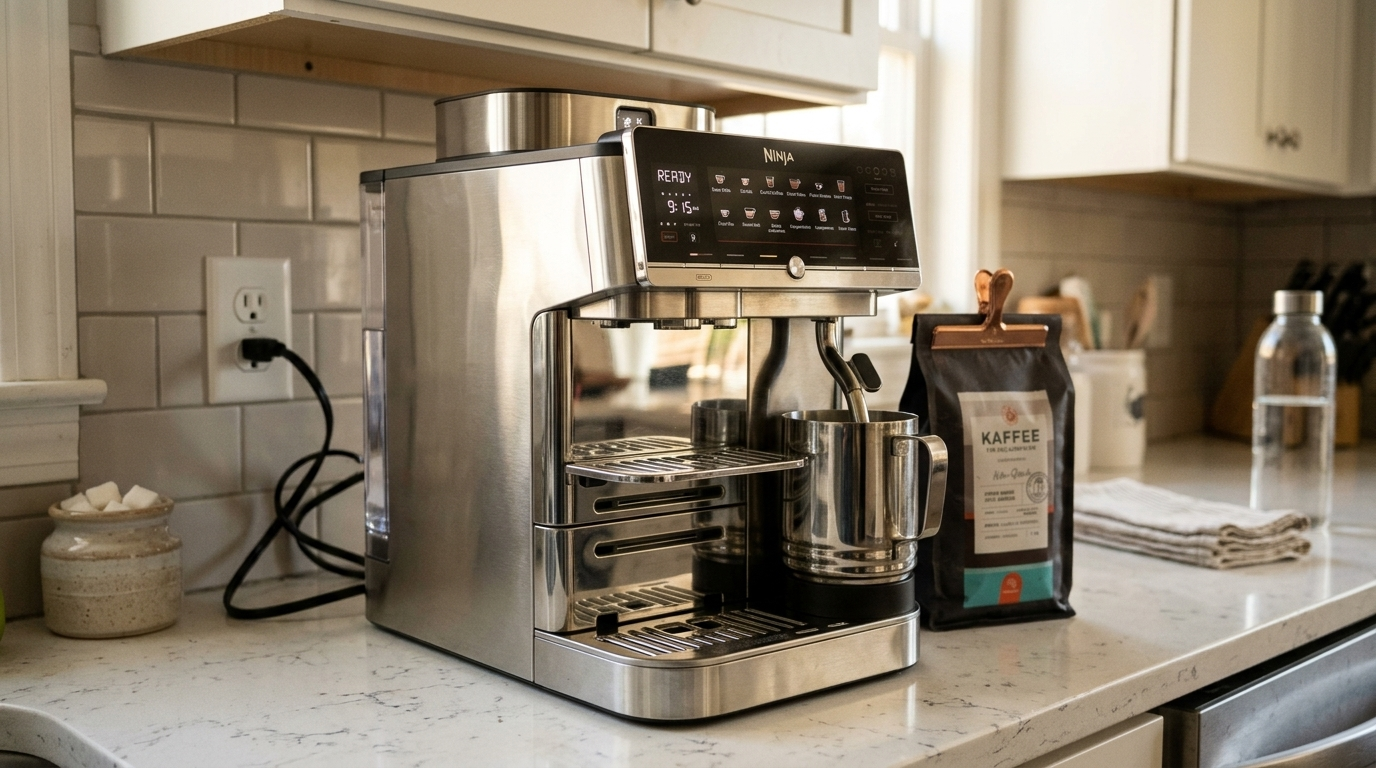
Side by side, these two look like they were designed for different kitchens. The Ninja AutoBarista is a big, square, stainless machine, while the De’Longhi Rivelia is slim, rounded and sits lower on the counter.
The Ninja measures about 10.7 inches wide, 17.8 inches deep and 15.8 inches tall. It weighs somewhere around 36 to 40 pounds, which is a lot for a super-automatic✕Super-automaticA machine that grinds, doses, tamps, brews and usually froths milk at the press of a button, with no portafilter to handle. with one hopper.
The Rivelia is listed at about 9.6 x 16.9 x 15.2 inches. With its side tank fitted, my tape measure showed close to 10 inches wide, and it weighs about 21 pounds.
Weight on the counter
Midpoint of the AutoBarista’s 36–40 lb range. Lighter is easier to slide forward for cleaning.
That weight matters more than it sounds. I slid the Rivelia forward every few days to refill beans and wipe behind it, and I barely moved the Ninja at all.
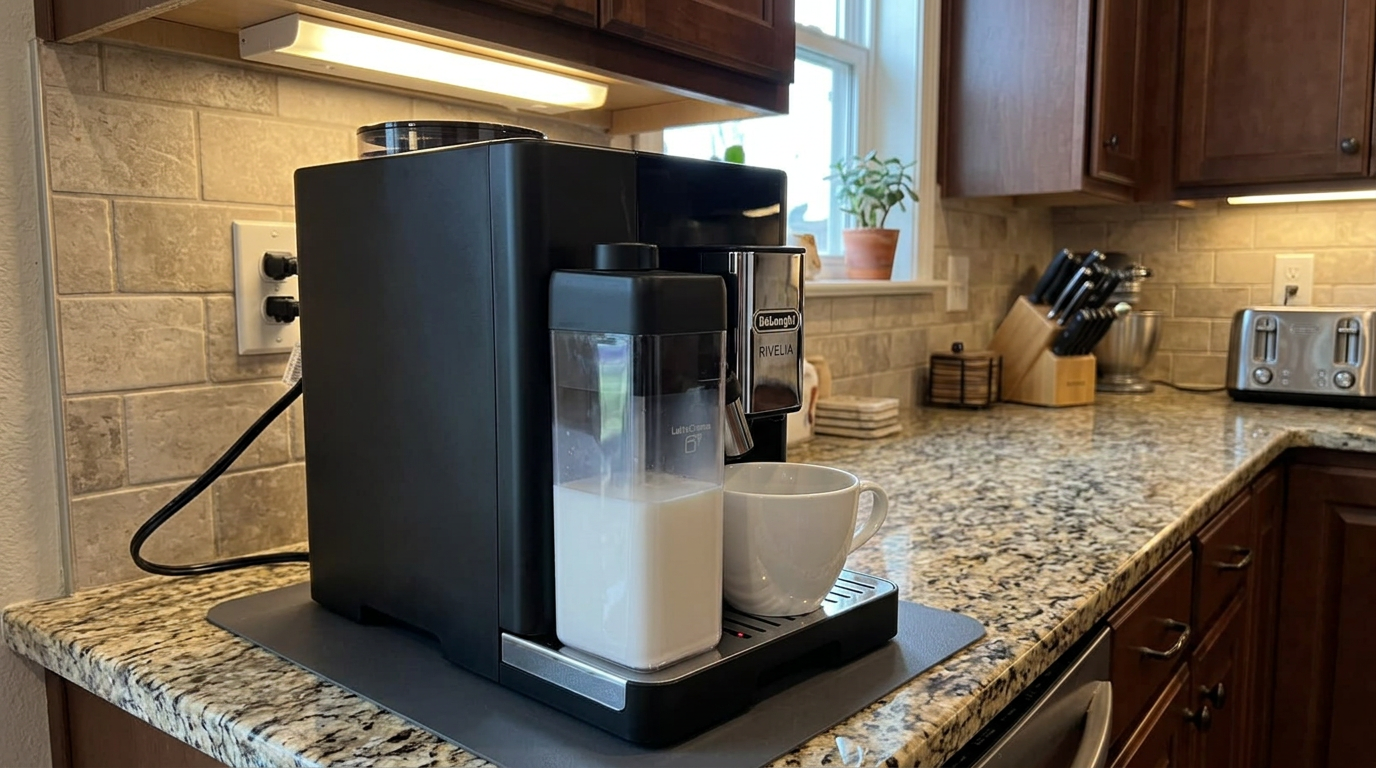
The Rivelia is slim and rounded, with its screen on the top panel.
The Rivelia’s 3.5-inch color touchscreen sits flat on the top panel. It is sharp and responsive, but you have to look down at it, which was awkward for my kids and anyone sitting at the counter.
The Ninja uses a front panel with a dial and buttons. It is easy to read from a distance, but the deeper settings use codes that sent me to the manual more than once.
Our tip: Check the space behind and above your cabinets before buying the Ninja, because it needs a gap at the back for heat and about 2 inches above the hopper lid.
Setup and dialing in
Both machines promise to dial in your beans for you. They go about it in completely different ways, and the difference shows up in the first week.
Ninja: Grind IQ tests the flow
On the Ninja AutoBarista, you fill the hopper and run Grind IQ✕Grind IQNinja’s automatic dial-in. The machine tests how your beans flow and picks the grind setting for you.. The machine grinds, brews test shots and measures how the coffee actually flows, then picks from 50 grind settings.
It took a few minutes and some coffee, but the result was balanced from the first real cup. Afterward you can nudge the grind from −2 to +2; I used +1 for a very dark roast and left everything else alone.
De’Longhi: Bean Adapt asks about the beans
The De’Longhi Rivelia uses Bean Adapt. You answer a few questions about your beans, such as roast level, and it suggests a grind, then sets the dose and temperature to match.
Instead of guessing at 13 grind settings, you start somewhere reasonable and fine-tune by taste. It’s less scientific than Grind IQ but faster, and it worked well with medium roasts.
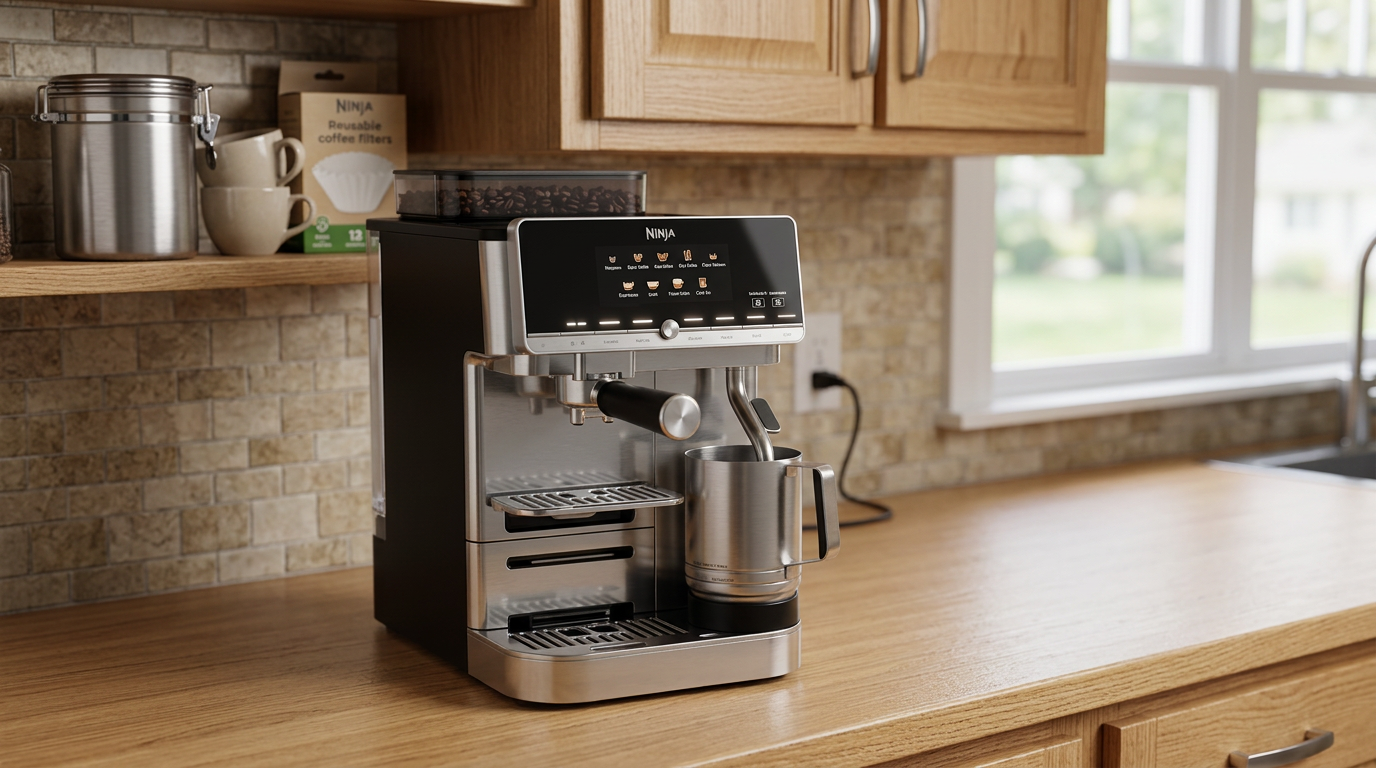
Grind IQ measures how your beans flow and picks the grind for you.
| Setup step | Ninja AutoBarista | De’Longhi Rivelia |
|---|---|---|
| Water hardness | Test strip, set on the machine | Test strip, set on the machine |
| Dial-in | Grind IQ, automatic test shots | Bean Adapt, guided questions |
| Grind range | 50 settings, −2 to +2 nudge | 13 settings, set by you |
| Profiles to set up | 2 | 4 |
| Time to first good drink | About 15 minutes | About 15 minutes |
Our tip: Run Grind IQ again every time you open a new bag on the Ninja, because even the same blend can flow differently from roast to roast.
Screen, controls and profiles
Day to day, you spend more time with the controls than with any spec on the box. Here the two machines feel very different.
The De’Longhi Rivelia runs everything from a 3.5-inch color touchscreen. Drinks appear as clear pictures, and once you pick a profile, your saved recipes come up first.
Four profiles meant my partner, my two kids’ hot chocolate settings and my own espresso never collided. Each profile remembers strength, cup size, milk amount and foam level.
The one thing I didn’t like was the position. Because the screen lies flat on top, my youngest couldn’t see it without a step stool, and I had to stand over the machine to read small text.
The Ninja AutoBarista uses a front panel with a dial, buttons and a small display. You turn the dial to a drink, choose the size and press start, which became second nature within a day.
It has two profiles, which is plenty for a couple. The problem is the deeper settings menu, which uses short codes rather than words, so changing standby time or water hardness meant checking the manual.
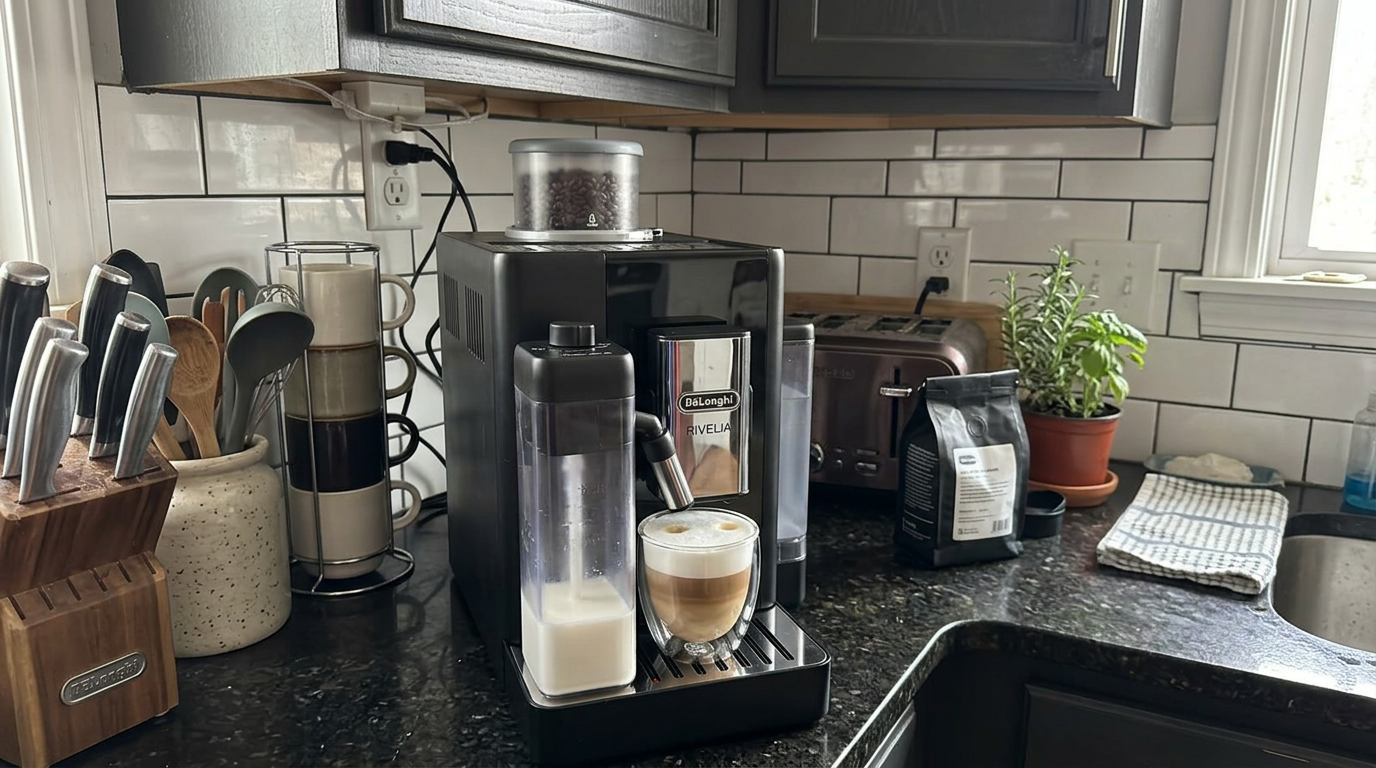
The Rivelia’s touchscreen is bright and sharp but sits flat on the top panel.
| Control detail | Ninja AutoBarista | De’Longhi Rivelia |
|---|---|---|
| Main control | Dial, buttons, small display | 3.5-inch color touchscreen |
| Where it sits | Front panel | Top panel |
| Profiles | 2 | 4 |
| One-touch recipes | 10 | 18 |
| Brew two at once | Yes, Brew Two | Two cups for black coffee |
| Settings menu | Coded | Plain words |
If you want to set up a drink once and forget it, both work. If several people will each tweak their own, the Rivelia is far easier to share.
Our tip: Give every person in the house their own profile on day one, because changing someone else’s saved drink by accident is the fastest way to start an argument over coffee.
Grinder and dose
Dose is the biggest reason automatic espresso tastes weak, and both of these do better than most. The Ninja does better still.
The Ninja AutoBarista weighs its dose✕DoseThe weight of ground coffee used for one drink. A bigger dose gives a stronger, fuller cup. and offers single, double and triple shots. My doubles tasted noticeably fuller than on most automatics, and the single was the only option I found thin.
The De’Longhi Rivelia has a 44 mm brew chamber that holds up to about 15 grams. At intensity 5, the grinder ran for about 10 seconds and produced roughly 15 grams on my scale.
That 15 grams is generous for a fully automatic machine. It is why the Rivelia’s milk drinks tasted like coffee rather than warm milk.
Typical dose for a strong double
Ninja doses by weight; the Rivelia figure is from my scale at intensity 5.
| Grinder detail | Ninja AutoBarista | De’Longhi Rivelia |
|---|---|---|
| Burrs | Conical burr grinder | Stainless steel conical burrs✕Conical burrsA cone-shaped burr that turns inside a ring-shaped burr. The gap between them sets how fine the coffee is ground. |
| Settings | 50, picked by Grind IQ | 13, set by you |
| Dosing | Weighed, single to triple | Up to about 15 g |
| Hoppers | One, about 250 g | Two, 8.8 oz each |
| Grind time | Quick | About 10 seconds |
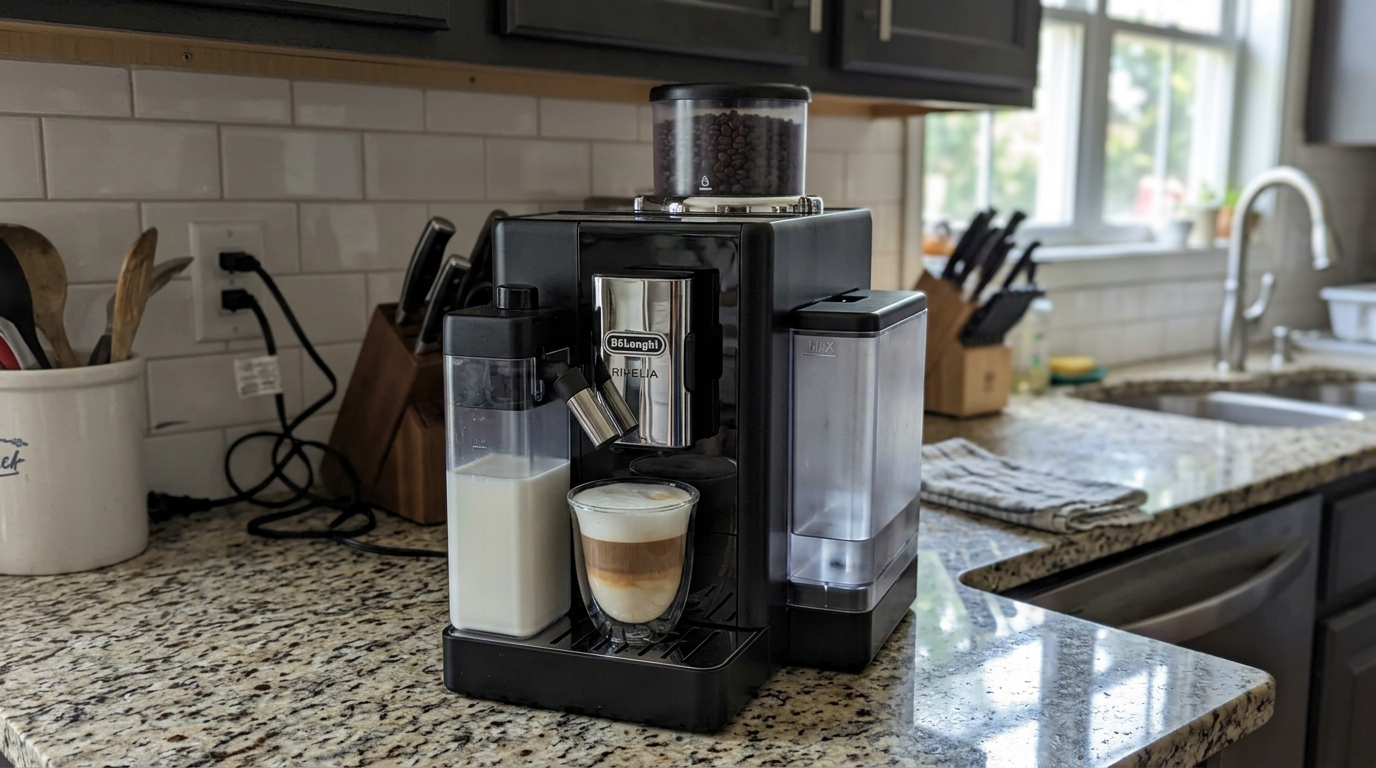
The Rivelia grinds about 15 g at its strongest intensity.
Our tip: Use the double shot on the Ninja for every espresso, because the single dose made the only thin, watery shots I got from it all month.
Espresso quality
Both make good espresso for a one-touch machine. The Ninja made the stronger, heavier shot, and the Rivelia made the smoother one.
Each Ninja shot starts with pre-infusion✕Pre-infusionA short, gentle soak of the ground coffee before full pressure, so water flows through the puck evenly., and the pressure at the coffee sits around the classic 9 bar. With a medium-dark blend, my doubles had a thick crema✕CremaThe golden, foamy layer on top of a fresh espresso. It forms when pressure pushes oils and gases out of the coffee. and a full, chocolatey body.
The Rivelia uses a 19-bar pump. My go-to was intensity 5 with a small cup, aiming for roughly a 1:2 brew ratio✕Brew ratioThe weight of dry coffee compared with the weight of liquid espresso. 1:2 means 18 g of coffee makes 36 g of espresso., about 30 grams of espresso from 15 grams of coffee.
The result was round and sweet with good crema, a touch lighter in body than the Ninja’s. In milk drinks, I struggled to tell them apart.
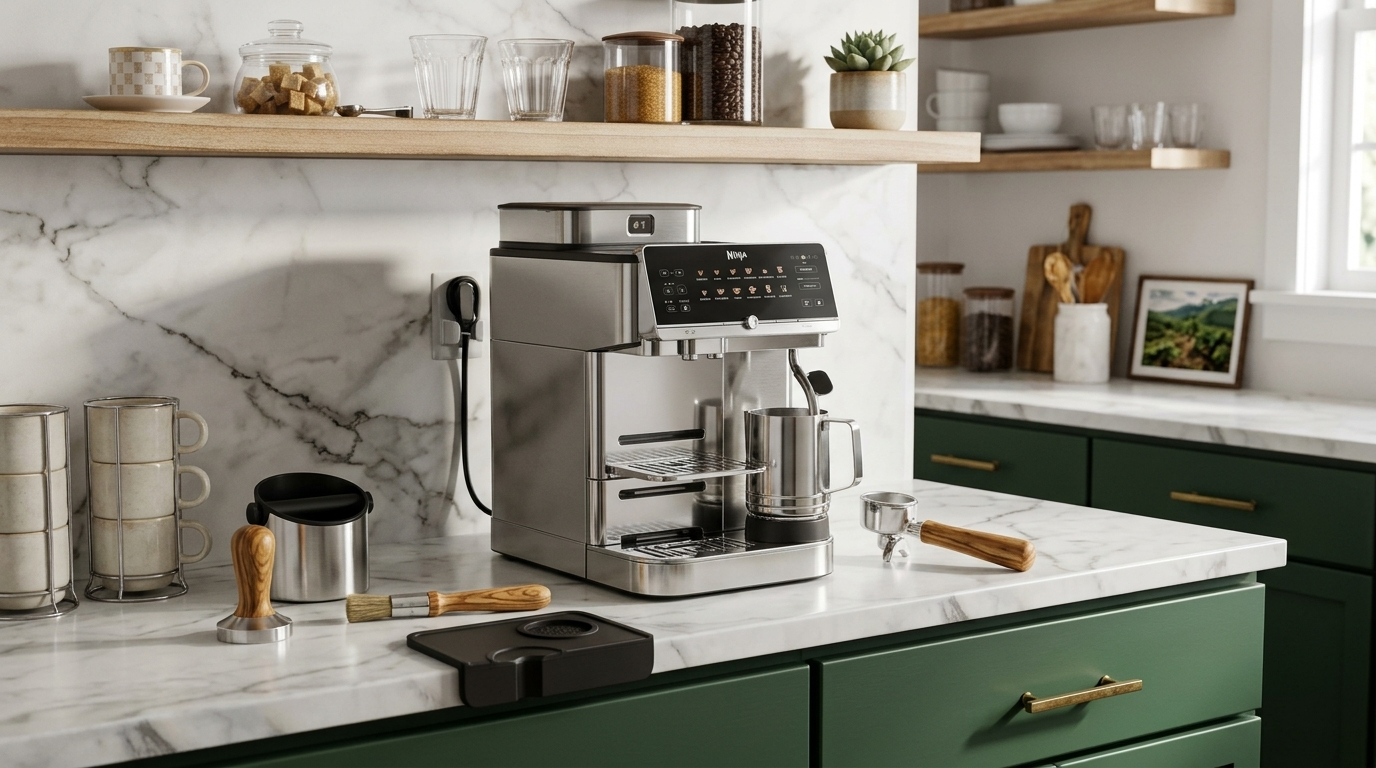
The AutoBarista’s weighed doubles gave me the fuller shot of the two.
My espresso ratings
My scores out of 10 for body, crema, flavor and consistency.
Espresso came out around 70°C, or 158°F, in a warmed cup on the Ninja. The Rivelia was similar, and both benefited from pre-warmed cups.
| What you taste | Likely cause | First fix |
|---|---|---|
| Sour, thin | Under-extracted✕Under-extractionWhen water does not pull enough flavor out of the coffee. The shot tastes sour, thin and watery., or a single shot | Use the double, or grind one step finer |
| Bitter, harsh | Over-extraction | Grind one step coarser |
| Flat after a bean change | Old grind setting | Re-run Grind IQ or Bean Adapt |
| Pale crema | Stale beans | Use beans within a few weeks of roasting |
Drip coffee, long coffee and cold drinks
This is the Ninja’s biggest advantage, and for many American kitchens it settles the matter.
The Ninja AutoBarista has a real drip-style mode. My 12-ounce mug came out at about 170°F and tasted like a clean, medium-bodied filter coffee, not a stretched espresso.
After two weeks, it replaced our drip coffee maker entirely. That freed up counter space and simplified mornings.
The Ninja also makes cold brew✕Cold brewCoffee made with cool water instead of hot. It tastes smoother and less acidic than coffee brewed hot., and pairing it with cold foam made the best iced drink of the month. The Rivelia has iced recipes, but it brews hot coffee over ice rather than using cold extraction.
The De’Longhi Rivelia makes a long coffee and an americano✕AmericanoEspresso topped up with hot water. It keeps the espresso flavor but gives you a longer, milder drink.. They were good, especially the americano, but a long coffee is still espresso-style coffee stretched with more water.
I also tested both with a pot-style morning: four mugs in a row for guests. The Ninja’s Brew Two and drip mode got through it faster, while the Rivelia needed four separate long coffees and a refill of its smaller tank.
| Drink | Ninja AutoBarista | De’Longhi Rivelia |
|---|---|---|
| 12 oz mug of black coffee | Real drip mode, about 170°F | Long coffee or americano |
| Americano | Yes | Yes, recommended |
| Cold brew | Yes, dedicated setting | No |
| Iced latte | Yes, with cold foam | Iced recipe, no cold foam |
| Hot water for tea | Yes | 194–203°F |
The AutoBarista’s drip mode made a proper filter-style mug.
Drink temperatures I measured
Probe thermometer readings in the cup.
Our tip: Choose the drip mode rather than a long espresso for big mugs on the Ninja, because drip-style brewing tastes cleaner and less bitter at 12 ounces.
Is It On Sale? Check NowMilk drinks
Both froth hands-free, but the hardware is different. The Ninja uses a wand with a whisk in its own jug, and the Rivelia uses a carafe system that pours straight into the cup.
On the Ninja AutoBarista, the jug sits under the wand and the milk froths while the shot brews. Four presets cover steamed, thin, thick and cold foam.
Whole milk made the richest cappuccinos and 2% made the silkiest flat white✕Flat whiteA short milk coffee with a double shot and a thin layer of silky microfoam. Stronger and less foamy than a cappuccino.s. Cold foam was the feature everyone in my house used most.
The De’Longhi Rivelia draws milk from its carafe and builds the drink in the cup. You choose milk amount and foam level, and it consistently came out between 140 and 149°F, right where milk tastes sweetest.
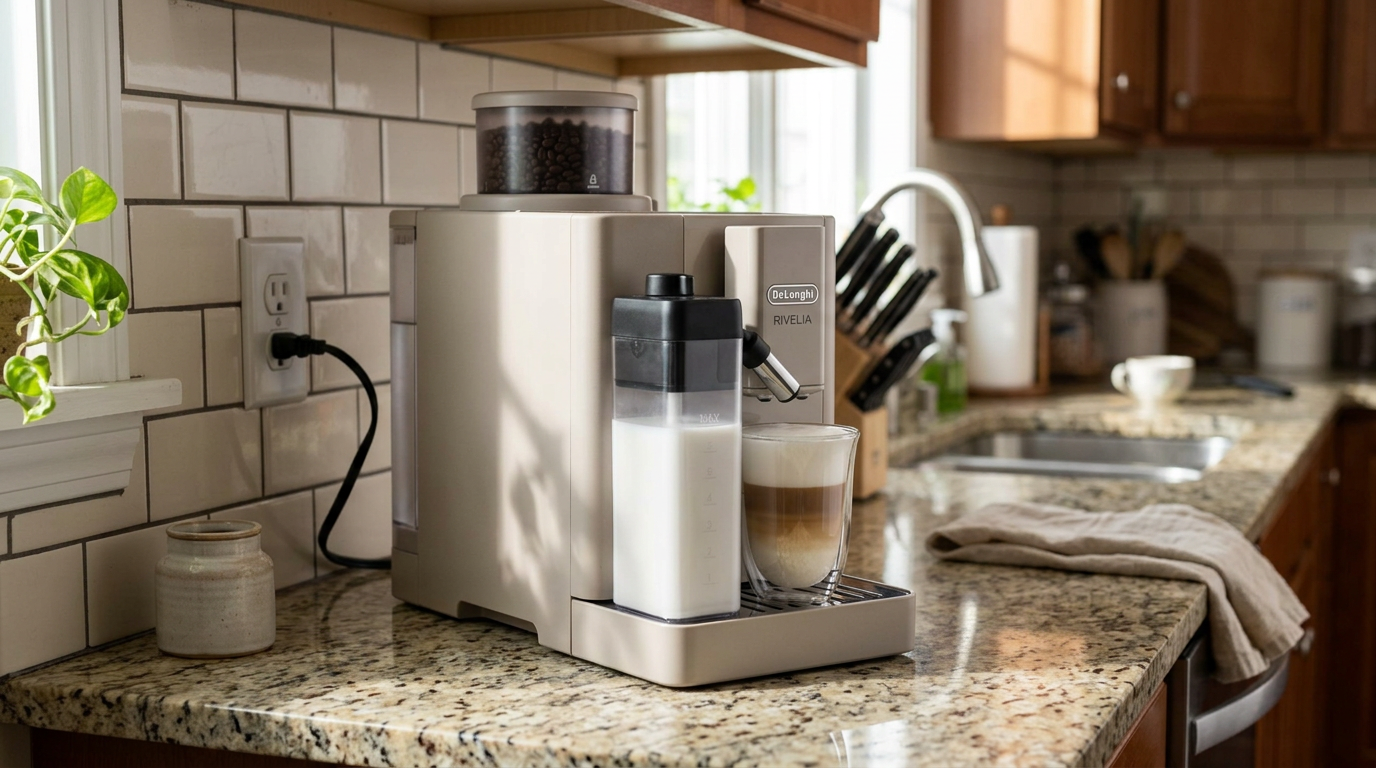
The Rivelia builds milk drinks straight in the cup from its carafe.
| Milk detail | Ninja AutoBarista | De’Longhi Rivelia |
|---|---|---|
| System | Hands-free wand with whisk | Carafe, automatic |
| Presets | Steamed, thin, thick, cold foam | Milk amount and foam level per drink |
| Cold foam | Yes | No |
| Milk temperature | Adjustable presets | 140–149°F measured |
| Cleaning after use | Rinse the whisk and jug | Carafe clean cycle |
For hot cappuccinos and lattes, I slightly preferred the Rivelia’s finer, more even foam. For iced drinks, the Ninja wins outright.
Bean switching and decaf
This is the Rivelia’s headline feature, and if you drink decaf in the afternoon it may decide everything.
The Bean Switch✕Bean Switch SystemDe’Longhi’s pair of swappable bean hoppers. You twist one off and the other on to change beans in seconds. system uses two interchangeable 8.8-ounce hoppers. Each locks onto the grinder with a 90-degree twist, and swapping took me about three seconds.
The catch is the beans left in the grinder. On my machine, that leftover amount weighed about 10 grams, or roughly two-thirds of a single shot.
You can either make a transition drink that mixes both beans, or run a grind-and-empty cycle. If you are switching to decaf at 3 p.m., always choose grind and empty, or your “decaf” still has caffeine.
The Ninja AutoBarista has one hopper. For decaf you use pre-ground coffee, which works but tastes flatter than fresh beans.
Coffee lost per bean change
On the Ninja, changing beans means emptying the hopper or using pre-ground.
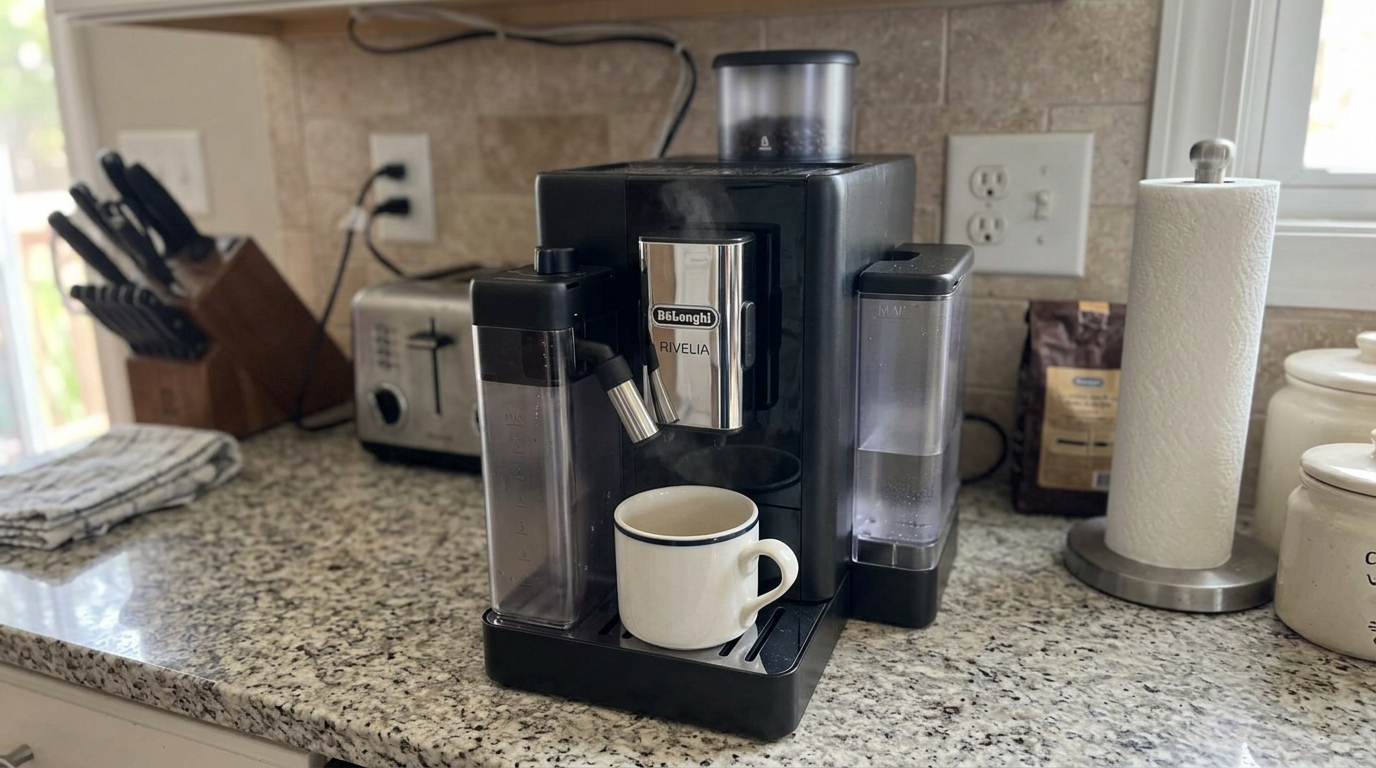
Swapping the Rivelia’s hoppers takes a quarter turn and a few seconds.
Our tip: Pair beans with similar roast levels in the Rivelia’s two hoppers, because the grind setting carries over and a light and a dark roast won’t both taste right on it.
Cleaning and upkeep
Both are easy to live with on the coffee side. They rinse on startup, drop pucks into a drawer and remind you when to empty it.
On the Ninja, the milk side is a wand, a whisk and a jug. I rinsed the whisk after every drink and ran the weekly brew group rinse.
On the Rivelia, the carafe runs a clean cycle that you confirm on screen. The brew unit✕Brew unitThe part of an automatic machine that compresses the ground coffee, holds it while water passes through and ejects the used puck. slides out for a rinse under the tap.
My daily hands-on cleaning time
My estimate of hands-on time per day, not counting automatic rinses.
| When | Ninja AutoBarista | De’Longhi Rivelia |
|---|---|---|
| After milk | Rinse whisk and jug | Run carafe clean |
| Daily | Empty drawer and tray | Empty pucks every day or two |
| Weekly | Rinse the brew group | Rinse the brew unit |
| When prompted | Descaling✕DescalingRunning a mild acid through the machine to dissolve the mineral scale that hard water leaves in the heater and pipes. | Descale, change the filter |
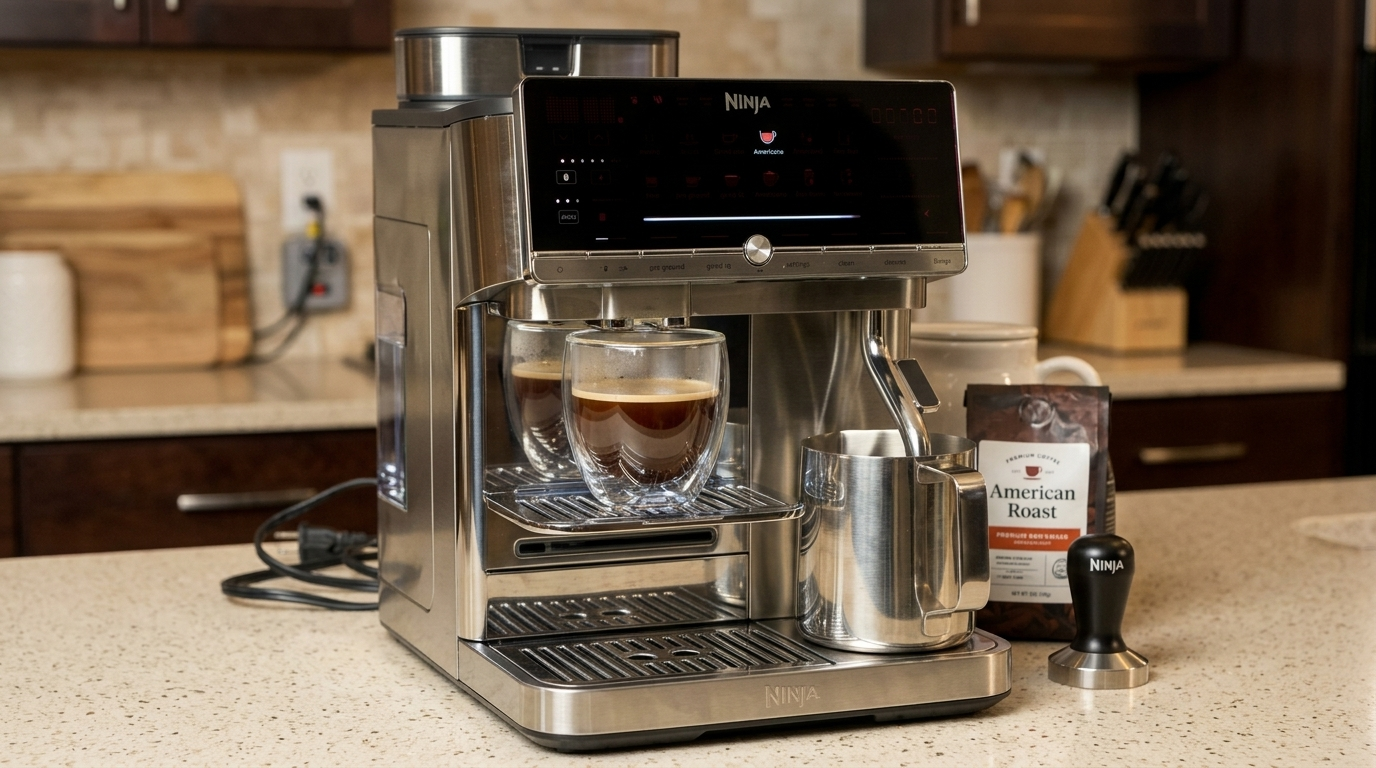
Both machines drop pucks into a drawer, so there is no knock box.
Our tip: Empty the Rivelia’s puck drawer every day or two even if the alert hasn’t come on, because damp grounds start to smell and grow mold.
Noise
The Rivelia is the quieter machine. I measured between 66 and 68 dB during grinding and brewing, and the grinder runs for only about 10 seconds per drink.
The Ninja’s grinding peaked around 70 to 72 dB on my meter, with brewing around 60 dB. It’s not loud for its class, but in an open-plan home it’s noticeable.
Peak noise I measured
Decibels are logarithmic, so a few dB is a clearly audible difference.
For early risers in a small apartment, that difference is real. It didn’t wake anyone with either, but the Rivelia was gentler.
Water, beans and supplies
The Ninja’s 70-ounce tank lasted about two days for two people, and its 250-gram hopper lasted about a week.
The Rivelia’s 47-ounce tank is smaller, so I refilled it more often. Its two 8.8-ounce hoppers hold about the same total beans.
| Bean type | Ninja AutoBarista | De’Longhi Rivelia |
|---|---|---|
| Medium-dark blend | Excellent espresso | Milk drinks, coffee crema |
| Medium roast | Excellent drip and cold brew | Espresso, cappuccino, latte |
| Light roast | Good after Grind IQ | Finer grind, intensity 5 |
| Very dark, oily | Not recommended | Not recommended |
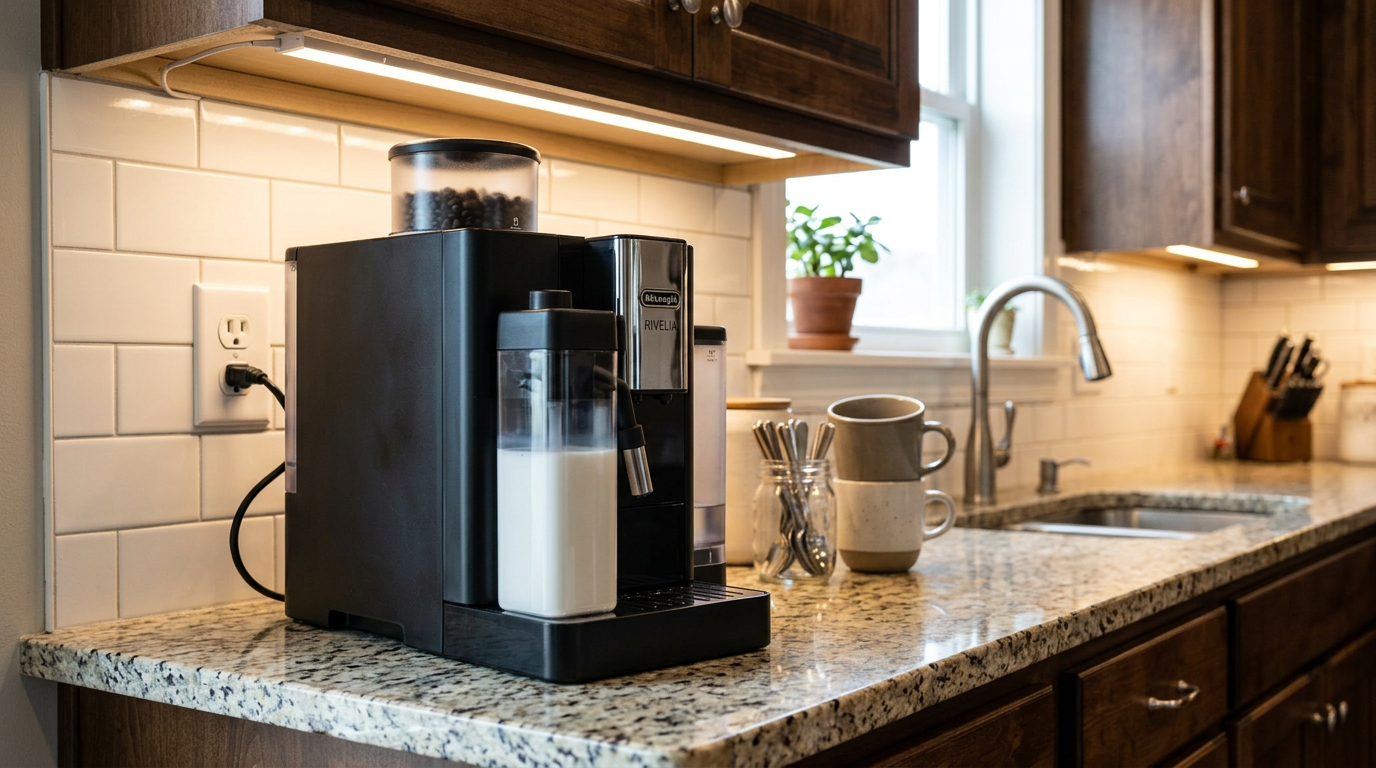
Fit the water filter on both machines if your water is moderately hard.
Used pucks don’t need to go in the trash. Coffee grounds are a well-studied addition to compost when mixed with other materials.
Avoid very oily beans on both machines. They clog grinders and chutes over time, and neither machine is happy with them.
Our tip: Fit the water filter and set the hardness on day one, because both machines time their descaling reminders from that setting.
Real-life scenarios
Specs only go so far. These are the situations where one machine clearly pulled ahead during my testing.
The weighed double gave the AutoBarista the heavier, more chocolatey shot. The Rivelia’s was smooth but lighter.
Swap the hopper, choose grind and empty, and the decaf is truly decaf. On the Ninja I had to use pre-ground decaf.
Real drip mode made a clean filter-style mug. It replaced our drip maker within two weeks.
Four saved profiles and 18 recipes meant nobody touched anyone else’s settings.
Cold brew or espresso over ice with cold foam. The Rivelia has iced recipes but no cold foam.
At 66 to 68 dB with a short grind, the Rivelia was the gentler machine to wake up to.
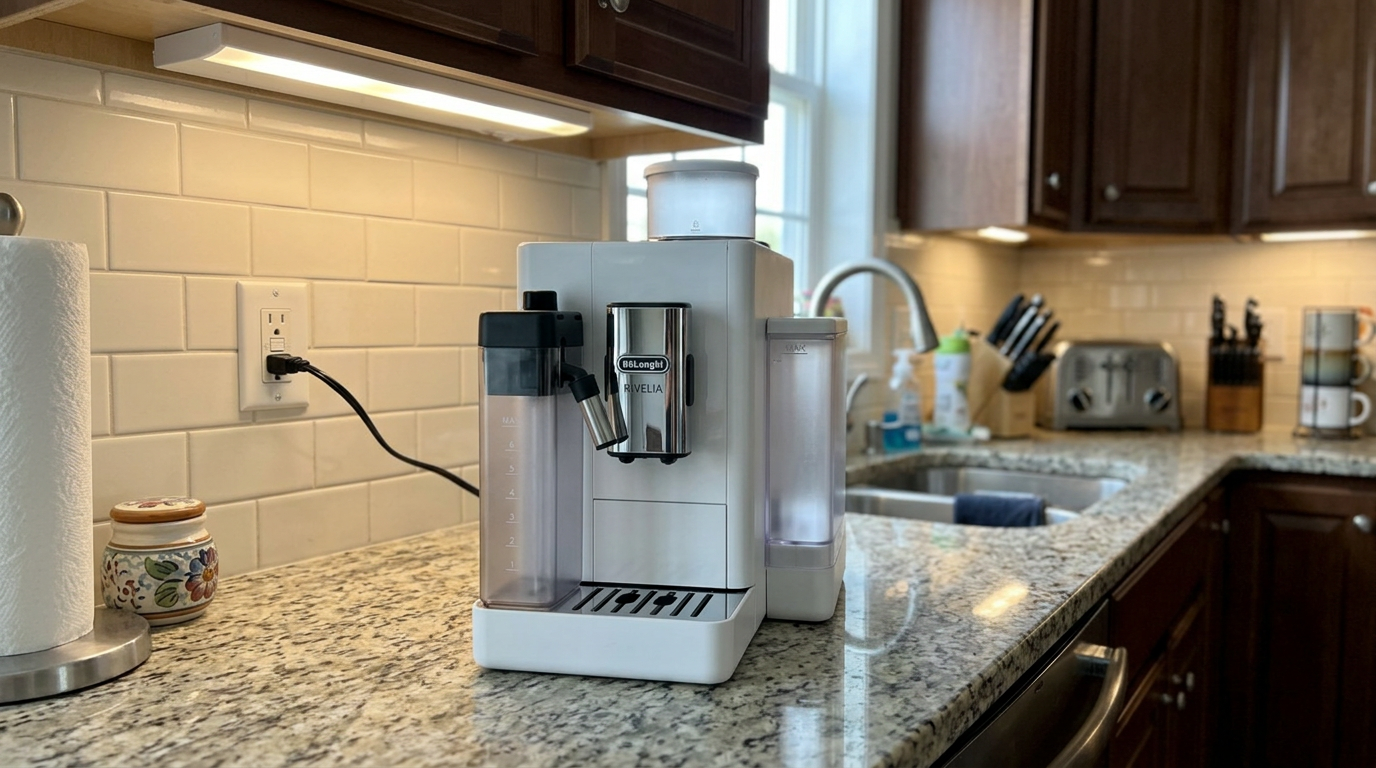
In a busy family kitchen, the Rivelia’s profiles kept everyone’s drink one tap away.
My scorecard
These are my own scores out of 10 after four weeks with each machine. In my single reviews they finished a hair apart, 8.4 for the AutoBarista and 8.5 for the Rivelia, so I added drink range and household features because they decide this matchup.
Ninja AutoBarista
De’Longhi Rivelia
Overall, both average out around 8.5 in this matchup. The AutoBarista does more kinds of coffee and makes it stronger. The Rivelia does a better job of sharing one machine between different people and different beans.
See How Much You’ll SaveWhich one is right for you?
4 quick questionsWhich one should you buy?
It comes down to one question: is your household one kind of coffee in many forms, or many people with different beans? Answer that and the choice makes itself. For the wider picture beyond this matchup, see my guide to the best Ninja espresso machines.
If you like the Ninja but want two hoppers, read my Ninja AutoBarista Pro review. If you are weighing the Rivelia against another De’Longhi, see my full Rivelia review or the best De’Longhi super-automatics.
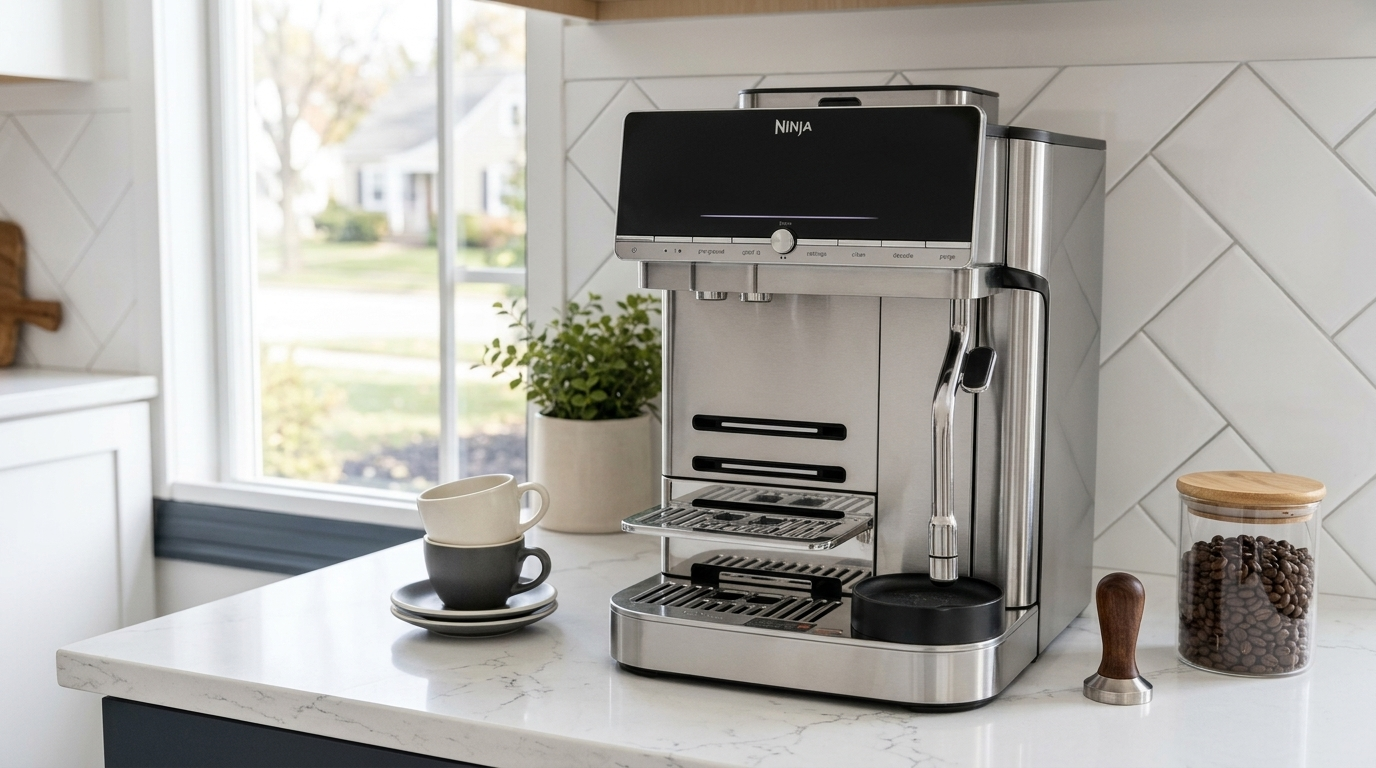
For strong coffee and drip mugs, the AutoBarista earns its counter space.
- You want the strongest one-touch espresso
- You also drink drip coffee
- You love iced lattes and cold foam
- One or two people share the machine
- You drink decaf every day
- Counter depth or weight is a problem
- You want more than two profiles
- You drink regular and decaf
- Three or four people share the machine
- You want a quieter machine
- Counter width is tight
- You want cold brew or cold foam
- You want drip-style coffee
- Kids need to reach the screen
For most American kitchens, my pick is the Ninja AutoBarista. It made the stronger espresso, its drip mode replaced a separate coffee maker and its cold foam made iced drinks a daily habit. If your house drinks coffee in lots of forms, it does more with every bean.
The De’Longhi Rivelia is the smarter buy for shared homes. Two hoppers make decaf easy, four profiles keep everyone’s drinks saved and it is quieter and lighter. If that describes your mornings, it is one of the friendliest machines I’ve used.
Whichever you choose, use fresh beans, fit the water filter and keep up with the milk cleaning. Both reward a little care with years of good coffee.
Ninja AutoBarista vs De’Longhi Rivelia specifications
From manufacturer specifications and my own testing.
| Ninja AutoBarista | De’Longhi Rivelia | |
|---|---|---|
| Type | Fully automatic with milk | Fully automatic with milk |
| Dial-in | Grind IQ, automatic | Bean Adapt, guided |
| Grind settings | 50 | 13 |
| Dose | Weighed, single to triple | Up to about 15 g |
| Pump and pressure | About 9 bar at the coffee, pre-infusion | 19-bar pump |
| Bean hoppers | One, about 250 g | Two, 8.8 oz each |
| One-touch drinks | 10 | 18 |
| Drip coffee | Yes | No |
| Cold brew | Yes | No |
| Milk system | Hands-free wand with whisk, 4 presets | Automatic carafe |
| Profiles | 2 | 4 |
| Display | Front panel, dial and buttons | 3.5-inch color touchscreen on top |
| Water tank | About 70 oz | About 47 oz |
| Dimensions (W x D x H) | About 10.7 x 17.8 x 15.8 in | About 9.6 x 16.9 x 15.2 in |
| Weight | About 36–40 lb | About 21 lb |
How I tested and compared them
I used each machine as my everyday coffee maker for four weeks, making espresso, americanos, cappuccinos, lattes, flat whites and iced drinks, plus drip coffee and cold brew on the Ninja.
I weighed doses and yields, measured drink and milk temperatures with a probe thermometer, logged noise with a meter, timed hopper swaps and weighed the beans lost per switch.
I ran every cleaning routine and compared my notes with each brand’s specifications, owner documentation and published coffee research.
- Coffee: dose, crema, body and consistency.
- Milk: foam texture, temperature and cold foam.
- Workflow: dial-in, profiles, bean switching and menus.
- Ownership: noise, cleaning, water care and footprint.
Ninja AutoBarista vs De’Longhi Rivelia FAQ
Is the Ninja AutoBarista better than the De’Longhi Rivelia?
For strong espresso, drip coffee and iced drinks, yes. For households that drink regular and decaf, or where three or four people share the machine, the Rivelia is the better fit.
Which makes stronger espresso, the AutoBarista or the Rivelia?
The AutoBarista. It weighs its doses and offers single, double and triple shots, and its doubles were fuller than the Rivelia’s. The Rivelia still grinds a generous 15 grams or so at its strongest intensity.
Can the De’Longhi Rivelia make decaf?
Yes, and it’s one of its best features. Swap to a second hopper of decaf and choose grind and empty, so about 10 grams of leftover regular beans don’t end up in your cup.
Does the Ninja AutoBarista make drip coffee?
Yes. It has a real drip-style mode, and my 12-ounce mug came out at about 170°F with a clean, medium-bodied taste.
Which one makes cold brew?
Only the Ninja AutoBarista. The Rivelia has iced recipes, but it brews hot coffee over ice.
Which is quieter?
The Rivelia. I measured 66 to 68 dB during grinding and brewing, against 70 to 72 dB for the AutoBarista’s grinder.
How many profiles do they have?
The AutoBarista has two user profiles and the Rivelia has four.
Which is smaller?
The Rivelia. It is about 10 inches wide with its tank fitted and weighs about 21 pounds. The AutoBarista is about 10.7 inches wide, 17.8 inches deep and weighs around 36 to 40 pounds.
What is Grind IQ?
Ninja’s automatic dial-in. The AutoBarista tests how your beans flow and picks from 50 grind settings, and you can nudge it two steps finer or coarser.
Is there a version of the AutoBarista with two hoppers?
Yes, the AutoBarista Pro adds a second swappable hopper, more presets and a bigger tank.

- Our hands-on Ninja AutoBarista review
- Our hands-on De’Longhi Rivelia review
- Ninja and De’Longhi product specifications and owner documentation
- Effect of milk processing and steam frothing conditions on microfoam formation, University of Camerino
- Composting and Coffee Grounds, Cornell University