Ninja AutoBarista review: self-calibrating espresso, real drip coffee and cold brew from one fully automatic machine
The Ninja AutoBarista Fully Automatic Espresso Machine dials in its own grind, weighs every dose and brews espresso with real body, then switches to proper drip coffee or cold brew at the press of a button. It froths milk hands-free in a jug, but it is big for one bean hopper and its settings menu takes some learning.

Michael Reynolds
Hands-on review
Hands-on testing, research, specs
4 weeks
22 minutes
Jargon helpNew to espresso? Tap any dotted term to see what it means.
In this review
Yes, if you want strong, self-calibrating espresso and a household that also drinks drip coffee or iced coffee. The Ninja AutoBarista gave me fuller-bodied espresso than most automatics, its drip coffee replaced our drip maker and the milk froth stayed creamy while the shot brewed. You get one bean hopper rather than two, fewer drinks and froth styles than the Pro, a deep footprint and a coded settings menu.
Ninja AutoBarista at a glance
Ninja AutoBarista pros and cons
- Full-bodied espresso with weighed, generous doses
- Real drip coffee and cold brew alongside espresso
- Grind IQ dials in new beans for you
- Only one bean hopper
- Large footprint for a single-hopper machine
- Settings menu uses codes
Who should buy the Ninja AutoBarista?
- Espresso drinkers who want more body
- Homes that also drink drip coffee
- Iced coffee and cold brew fans
- Regular and decaf households
- Small kitchens
- People who love latte art
First impressions of the Ninja AutoBarista
The AutoBarista looks like a semi-automatic espresso machine.
Brushed steel, a bean hopper on top, a steam wand on the side and a milk jug.
But there's no portafilter to lock in and no tamper to hold.
You press a button, and it grinds, weighs, tamps and brews by itself.
My first job was Grind IQ.
I filled the hopper and tank, put a cup under the spout and pressed the Grind IQ button.
The machine pulled a test shot, adjusted the grind, pulled another, adjusted again and then saved its setting.
It took a few minutes and a fair few beans, but I didn't have to guess at a single grind number.
The double espresso that followed was dense and sweet, with a thick crema and a proper chocolate depth.
That's not something I take for granted from a fully automatic machine.
The second thing I noticed was the menu.
Next to espresso and milk drinks sit drip coffee, cold brew and coffee over ice.
The Ninja AutoBarista is as much a drip machine and cold brewer as it is an espresso maker.
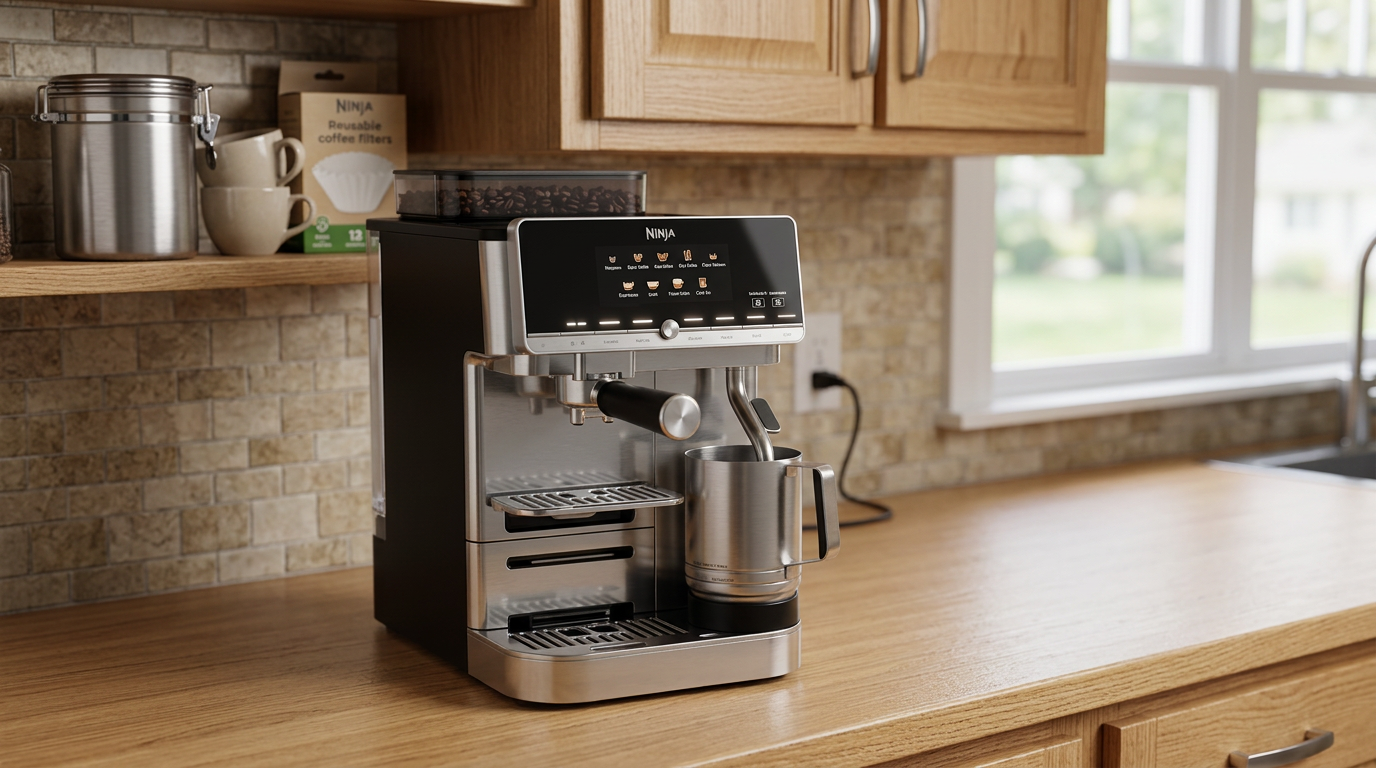
The AutoBarista looks like a manual machine but does everything at one touch.
What surprised me most
The drip coffee.
I assumed it would be a long espresso with a different name.
It isn't.
The machine switches to a coarser grind and a different brewing process, and the result tastes like a clean, medium-bodied filter coffee.
What the Ninja AutoBarista actually is
The AutoBarista is a fully automatic, bean-to-cup machine.
It grinds the beans, weighs the dose to the gram, compacts the coffee, brews it and ejects the used puck.
For milk drinks, an automatic steam wand froths milk in a jug, with a whisk that keeps stirring while the espresso finishes.
It can also brew drip coffee and cold drinks.
It's the standard version of Ninja's fully automatic machine.
Compared with the Pro, it has one bean hopper instead of two, ten drinks instead of thirteen and four froth presets instead of five.
The drink menu
| Drink | How it's made | Best use |
|---|---|---|
| Espresso | Single, double or triple dose | Straight shots |
| Americano | Espresso plus hot water | Clean long drink |
| Drip coffee | Coarser grind, filter-style brew | Morning mugs |
| Latte, cappuccino, flat white | Espresso plus hands-free froth | Milk drinks |
| Cold-pressed | Cool, concentrated extraction | Black over ice |
| Over ice | Espresso brewed for ice | Iced coffee |
| Cold brew | Slow, cool extraction | Smooth iced coffee |
| Hot water | Water only | Tea |
Ninja AutoBarista design and setup
The AutoBarista measures about 17.8 × 10.7 × 15.8 inches (depth, width, height).
It weighs somewhere around 36 to 40 pounds.
That's a big footprint for a single-hopper machine, mostly because of its depth.
Measure your counter before you order.
Practical touches
The 70-ounce tank sits on the side and lifts out by a molded grip.
A sensor warns you before a drink if there isn't enough water.
The side panel comes off without tools to reveal the brew group.
A light behind the spout lets you watch the shot.
The back of the machine gets warm, so leave a little breathing room.
Our tip: Leave a few inches behind and beside the machine, so you can reach the tank and the back can vent heat.
First-time setup
Test your water hardness, fit the filter, fill the hopper and tank, then run Grind IQ.
Grind IQ uses several shots' worth of beans, so don't judge the machine until it's done.
A deep body means you should measure your counter before buying.
Grind IQ and weighed doses
Grind IQ is the AutoBarista's party trick.
It picks from 50 grind settings based on how the coffee actually flows.
The machine pulls a shot, watches the extraction and adjusts the grind until the shot falls into its target range.
Then it saves that setting for your beans.
| Attempt | What the machine did | What I saw |
|---|---|---|
| Shot 1 | Started at an estimated grind | Slow, dark and a little bitter |
| Shot 2 | Went coarser | More balanced |
| Shot 3 | Fine-tuned and saved | About 36 g in about 30 seconds |
Weighing every dose
Under the hopper is a built-in scale.
The machine weighs each dose to the gram before grinding.
That's why my doubles tasted the same on Monday and Friday.
Manual tweaks
You can nudge the grind from −2 to +2 around the saved setting.
I used +1 for a very dark roast and left everything else alone.
Our tip: Re-run Grind IQ every time you switch to a new bag of a different coffee, so the machine recalibrates for those beans.
Ninja AutoBarista espresso performance
This is where the AutoBarista outperforms most automatic machines.
It offers single, double and triple doses.
The double and triple use far more coffee than a typical automatic, which gives the shots their body.
Each shot starts with pre-infusion✕Pre-infusionA short, gentle soak of the coffee before full pressure. It lets the puck swell evenly so water doesn't rush through weak spots., and the brewing pressure at the coffee sits around the classic 9 bar.
How it tasted
With a medium-dark blend, my double came out with a thick hazelnut crema✕CremaThe golden-brown foam on top of an espresso. It forms when pressure pushes gases and oils out of freshly ground coffee., a syrupy body and flavors of dark chocolate and caramel.
The used pucks came out firm and whole.
Strength is about water, not coffee
The strength setting, one to five beans, sets how much water runs through the coffee.
Five beans is the shortest, most concentrated shot.
The dose size sets how much coffee is used.
I kept espresso at a double and five beans.
My ratings on a 10-point scale for body, crema and flavor.
| What you taste or see | Likely cause | First change |
|---|---|---|
| Sour, thin, fast | Grind too coarse | Re-run Grind IQ or go −1 |
| Bitter, slow | Grind too fine | Go +1 |
| Watery | Single dose or low strength | Use the double at five beans |
| Odd shot after a change | Old grounds in the path | Run a manual rinse |
Why weighed doses and Grind IQ matter
Most automatic machines grind for a set time rather than to a set weight.
As beans age or the hopper empties, the same grind time can give a slightly different amount of coffee.
That's one reason automatic espresso often drifts from day to day.
The AutoBarista weighs every dose, so a double is a double whether the hopper is full or nearly empty.
Grind IQ tackles the other half of the problem.
Different beans need different grind sizes, and most people never adjust the grinder on an automatic machine at all.
By measuring how each test shot flows and adjusting until it lands in range, Grind IQ gets you close to a good shot without any guesswork.
On-screen shot weight and time for the same double espresso, same beans, across one week.
What the pucks tell you
The used pucks were the clearest sign that this machine is different.
Doubles and triples came out thick, firm and dry enough to lift out whole.
A firm puck means the coffee was compacted evenly and the water passed through it properly, rather than finding a weak channel.
On many automatic machines, pucks come out wet and crumbly, and the coffee tastes thinner for it.
Drip coffee and Americanos
The drip coffee setting is the AutoBarista's second big selling point.
Pick a size, and the machine changes to a coarser grind and a different brewing process.
My 12-ounce mug came out at about 170°F and tasted like a clean, medium-bodied filter coffee.
For people who start the day with a big mug rather than an espresso, that's a real advantage.
My ratings on a 10-point scale for flavor and balance in a mug.
Americano
The Americano adds hot water to a shot.
With a double, it was bolder than the drip coffee, with crema on top.
I drank drip in the morning and Americanos after lunch.
Cold brew and iced coffee
Cold brew, cold-pressed coffee and coffee over ice each have their own setting.
Cold brew was smooth and low in bitterness.
Cold-pressed was brighter and cleaner, great black over ice.
Over ice was the boldest, but a little bitter with dark roasts.
| Cold drink | What it tasted like | Tip |
|---|---|---|
| Cold brew | Smooth, low bitterness | Medium roast, large ice |
| Cold-pressed | Bright, clean | Drink it black |
| Over ice | Bold, a little bitter | Use a medium roast |
Our tip: Fill your glass to the top with large ice cubes before a cold drink, because big cubes melt slower and keep the coffee strong.
Hands-free milk froth
The steam wand is unusual: thick and rounded, with a temperature probe in the middle and several steam holes.
Pour milk into the XL jug, set it under the wand, choose a drink and a froth preset, and the machine does the rest.
Four froth presets
There are four presets: steamed milk, thin froth, thick froth and cold foam.
Dairy and plant settings change how much air goes into the milk.
| Preset | What it makes | Best for |
|---|---|---|
| Steamed milk | Hot milk, very little foam | Café au lait style drinks |
| Thin froth | Silky, pourable milk | Flat whites and lattes |
| Thick froth | Tall, stable foam | Cappuccinos |
| Cold foam | Cool, airy foam | Iced drinks |
The whisk
A whisk inside the jug stirs the milk as it heats.
It keeps stirring now and then while the espresso finishes, which stops the foam separating from the milk.
My milk stayed creamy and even right up to the pour.
My ratings on a 10-point scale for texture, stability and temperature.
The milk is creamy, but the jug's spout isn't designed for detailed latte art.
Milk tips from four weeks
Cold milk straight from the fridge gave the best foam on every preset.
Whole milk made the richest cappuccinos, 2% the silkiest flat whites.
Barista oat milk worked well on the plant setting, but regular oat milk was thinner and faded faster.
Fill the jug only to the line for the drink you're making, because too much milk can't build proper foam.
Rinse the jug as soon as you're done, so milk doesn't dry on the whisk.
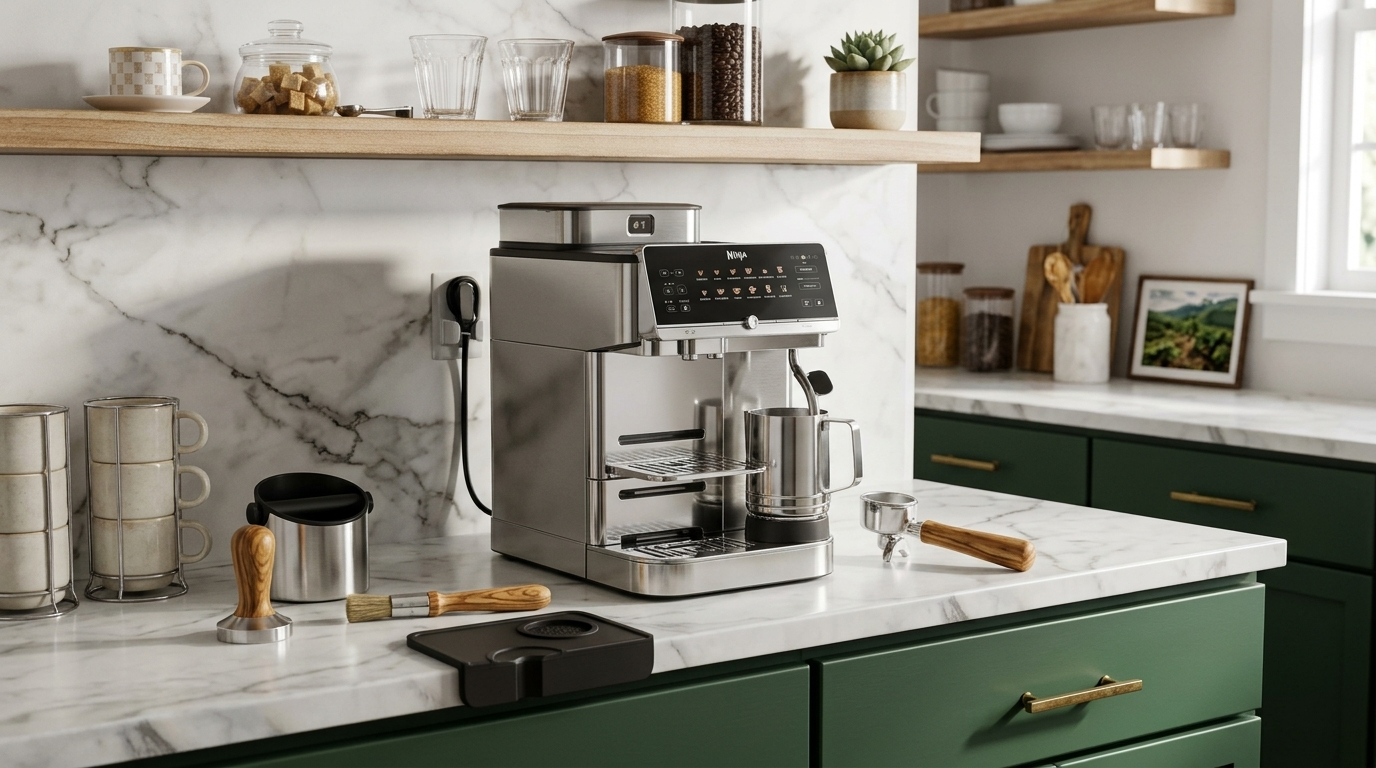
The whisking steam wand froths milk while the espresso brews.
Temperature
Drip coffee measured about 170°F, or 77°C.
Espresso came out around 70°C in a warmed cup.
Milk temperature has its own setting, and I raised it one step for hotter lattes.
Probe readings straight after brewing.
Profiles and the settings menu
There are two profiles.
Adjust a drink, then press and hold its button to save it.
My partner saved a cappuccino with thick froth, and I saved a double espresso and a 12-ounce drip.
The coded menu
The settings menu shows many options as numbers rather than words.
It covers froth temperature, grind adjustment, Grind IQ reset, grinder purge, manual rinse, water hardness, eco mode and standby.
Once you know the codes, it's fine, but it's not friendly.
Our tip: Write the settings codes you use most on a sticky note inside a cupboard door, so you don't need the manual every time.
Cleaning and maintaining the Ninja AutoBarista
The steam wand purges itself after frothing.
The side panel and brew group come out without tools for rinsing.
A cleaning brush with a pick for the wand holes comes in the box.
| When | Task | Why it matters |
|---|---|---|
| After milk drinks | Automatic purge, wipe the wand | Clears milk |
| Daily | Empty the drip tray and grounds bin | Prevents mold |
| Daily | Wash the milk jug | Removes milk residue |
| Weekly | Rinse the brew group, run a grinder purge | Removes oils and fines |
| When prompted | Descale | Keeps scale under control |
My estimate of hands-on cleaning time per day.
What daily use is really like
A double espresso took about a minute, a cappuccino about two.
Brewing is a little slower than some automatics, because the machine weighs, grinds and compacts in stages.
Grinding peaked around 70 to 72 dB on my meter, with brewing around 60 dB.
Phone sound meter readings at about 50 cm.
The 70-ounce tank lasted about two days for two people.
The 250-gram hopper lasted about a week.
A typical day
At 7:00, a double espresso.
At 7:15, a cappuccino for my partner from her profile.
At 10:00, a 12-ounce drip coffee.
On warm afternoons, cold brew over large ice with cold foam.
In the evening, a decaf Americano from the pre-ground chute.
| Time | Drink | Settings |
|---|---|---|
| 7:00 | Double espresso | 5 beans |
| 7:15 | Cappuccino | Thick froth, whole milk |
| 10:00 | Drip coffee, 12 oz | Default |
| 15:00 | Cold brew with cold foam | 2% milk |
| 20:00 | Decaf Americano | Pre-ground chute |
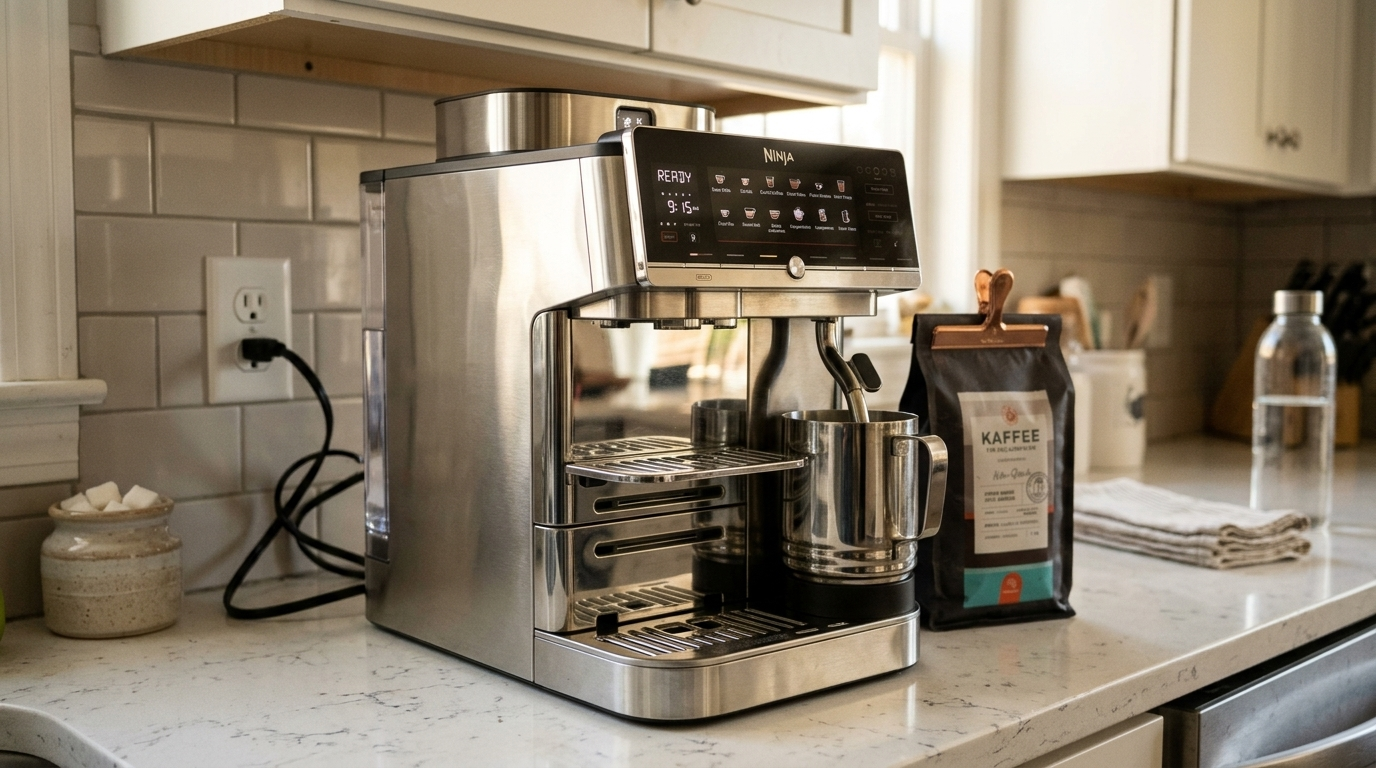
Weighed doses keep every double consistent.
AutoBarista or AutoBarista Pro?
Ninja sells two versions of this machine, and the differences are worth knowing before you buy.
They share the same core idea: Grind IQ, weighed doses, single to triple shots, drip coffee, cold brew and a whisking steam wand.
| Feature | AutoBarista | AutoBarista Pro |
|---|---|---|
| Bean hoppers | 1, about 250 g | 2 swappable, about 340 g each |
| Drinks | 10 | 13, adding lungo, cortado, iced latte and more |
| Froth presets | 4 | 5, adding extra-thick froth |
| Water tank | About 70 oz | About 80 oz |
| Brew Two | Not listed | Yes, back-to-back cycles |
| Grind IQ and weighed doses | Yes | Yes |
| Drip coffee and cold brew | Yes | Yes |
If you drink one coffee and want the same espresso quality, the standard AutoBarista is the sensible choice.
If decaf is part of your daily routine, the Pro's second hopper is the upgrade I'd pay for.
Our tip: Choose the standard AutoBarista if you use one coffee, and the Pro if you switch to decaf every day.
Small details that make a difference
The screen shows the weight and time of each espresso as it brews, which is a nice way to learn what a good shot looks like.
The light behind the spout lets you watch the color change from dark to golden.
The cleaning brush's pick is sized for the steam wand's holes.
The water level sensor stops a drink before it starts if the tank is low.
The XL milk jug holds enough for two large lattes in one go.
| Detail | Why it helped |
|---|---|
| Weight and time on screen | See how each shot ran |
| Light behind the spout | Watch the extraction |
| Brush with a wand pick | Clears the steam holes |
| Water level sensor | No half-made drinks |
| XL milk jug | Enough milk for two lattes |
The things I missed
A bean level window, plain-language settings and a jug spout made for pouring.
Weekends and guests
On weekends, the AutoBarista earned its place.
I made a pot's worth of drip coffee in two big mugs for a late breakfast, then espresso and cappuccinos for guests later.
Cold brew over ice with cold foam was a hit on a warm afternoon.
Because each drink is made fresh and one at a time, serving four people took about ten minutes in total.
| Guest request | What I made | Time |
|---|---|---|
| Big mug of coffee | Drip, 16 oz | About 3 min |
| Cappuccino | Double, thick froth | About 2 min |
| Iced latte | Double over ice, cold foam | About 2 min |
| Espresso | Double, 5 beans | About 1 min |
Our tip: When serving several guests, make the drip coffees first and the milk drinks last, so the milk is fresh and hot when it's poured.
How the AutoBarista fits different households
The espresso drinker
Big, weighed doses and Grind IQ make this one of the best automatic espresso experiences I've had.
The drip coffee drinker
If someone at home wants a mug of filter coffee, the drip mode means you don't need a second appliance.
The iced coffee fan
Cold brew, cold-pressed and cold foam make summer drinks easy.
The regular and decaf home
This is where the standard AutoBarista is weaker.
With one hopper, decaf means pre-ground coffee through the chute.
If you switch often, the Pro's second hopper is worth it.
| Household | How well it fits | Main reason |
|---|---|---|
| Espresso drinker | Excellent | Weighed, generous doses |
| Drip coffee drinker | Very good | Real filter-style mode |
| Iced coffee fan | Very good | Cold brew and cold foam |
| Regular and decaf drinkers | Fair | One hopper, decaf via pre-ground |
| Small kitchen | Poor | Deep footprint |
My four weeks with the AutoBarista, week by week
Week one was setup and calibration.
I let Grind IQ finish before judging anything and learned that the single dose is too small to show what the machine can do.
Week two was about doses and strength.
I compared single, double and triple at three, four and five beans, and the double at five beans became my default.
Week three was about drip and cold drinks.
The drip mode replaced our old drip maker, and cold brew with cold foam became the afternoon drink.
Week four was about milk, profiles and the cleaning routine.
| Week | What I focused on | Main change |
|---|---|---|
| 1 | Setup and Grind IQ | Calibrated on the main beans |
| 2 | Doses and strength | Double at five beans |
| 3 | Drip and cold drinks | Drip for mugs, cold brew with cold foam |
| 4 | Milk and routine | Thick froth for cappuccinos, weekly brew group rinse |
Beans, water and milk
Use whole beans within a few weeks of roasting.
Medium and medium-dark roasts suited espresso and milk drinks best.
For drip and cold brew, a medium roast was the most balanced.
| Bean type | Espresso | Drip | Cold brew |
|---|---|---|---|
| Medium-dark blend | Excellent | Very good | Good |
| Medium roast | Very good | Excellent | Excellent |
| Light roast | Good after Grind IQ | Very good | Good |
| Very dark, oily | Not recommended | Fair | Fair |
Use fresh water, the included filter and the right hardness setting.
Common mistakes to avoid
The Ninja AutoBarista is easy to live with, but a few habits hold it back.
| Mistake | What happens | Better habit |
|---|---|---|
| Judging it before Grind IQ finishes | Off-balance shots | Let calibration complete |
| Using the single dose | Thin, watery shots | Use the double |
| Skipping Grind IQ on new beans | Shots drift | Re-run it for each new coffee |
| Pouring before the whisk stops | Clumpy foam | Wait for the drink to finish |
| No room behind the machine | Heat build-up | Leave a gap |
What I would change
A second hopper, plain-language settings and a jug with a sharper spout.
Is the Ninja AutoBarista worth the money?
The AutoBarista replaces an espresso machine, a drip maker and a cold brewer.
Its espresso has more body than most automatics, and Grind IQ removes the hardest part of making good espresso at home.
Ask yourself three questions before you buy.
Do you want stronger espresso than a typical automatic?
Does your household also drink drip coffee or iced coffee?
Do you mostly use one kind of bean?
If the answers are yes, the AutoBarista is easy to recommend.
If you switch beans or decaf daily, look at the Pro.
Living with it long term
The tool-free brew group, self-purging wand and included brush make maintenance straightforward.
Running costs are filters, cleaning tablets and descaler.
Who should look elsewhere
If your counter is shallow or your cabinets are low, measure carefully, because the AutoBarista is deep and needs room above the hopper.
If you switch between regular and decaf every day, the single hopper will frustrate you, and the Pro makes more sense.
If pouring latte art is part of the fun, a manual steam wand and a proper pitcher will make you happier.
And if you only ever drink a mild mug of coffee, a simpler machine will cost less and take up less room.
The bottom line
For a household that drinks strong espresso, milk drinks, drip coffee and the odd cold brew from one kind of bean, the AutoBarista is one of the most capable machines I've used.
It does the hard part of espresso for you and does it consistently.
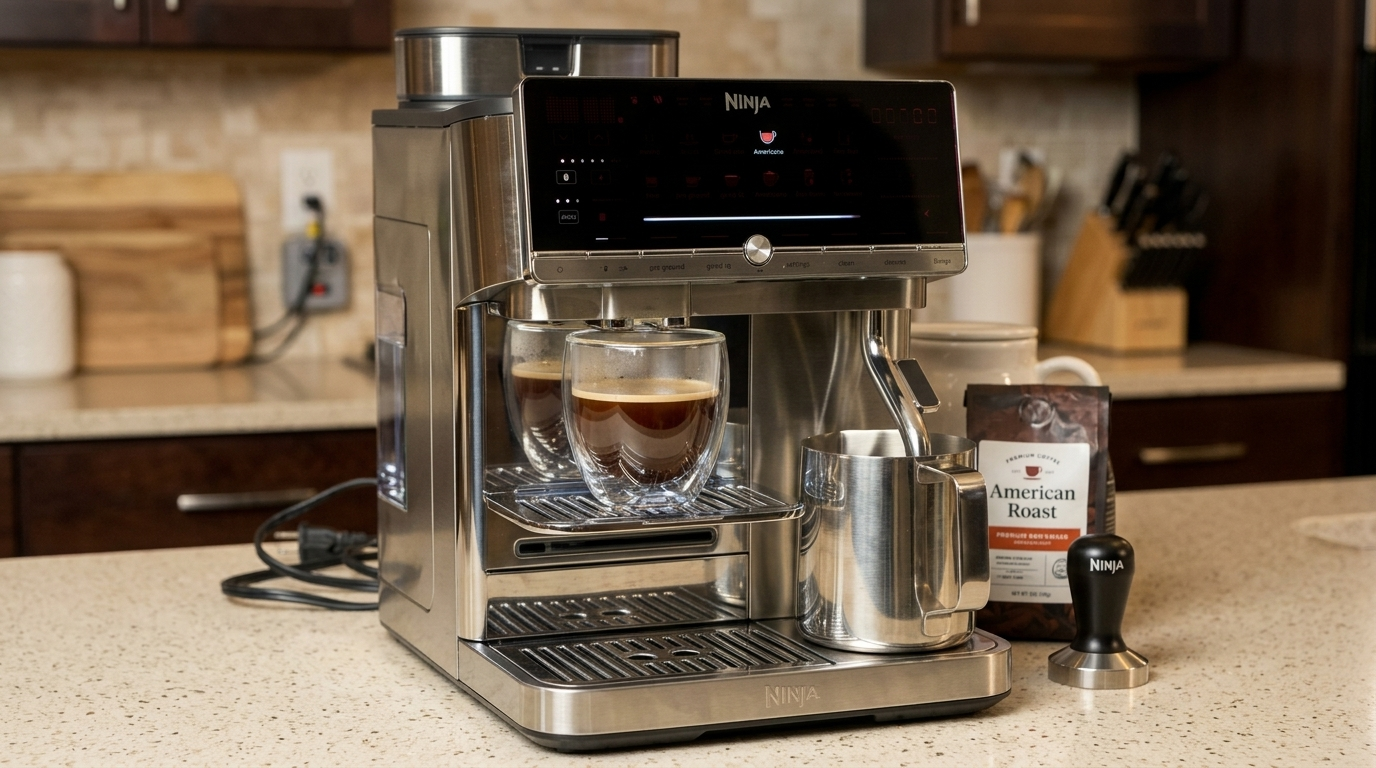
One machine for espresso, drip coffee and cold brew.
How it compares with other espresso setups
The Ninja AutoBarista stands out for its doses, Grind IQ and drip coffee.
| Feature | Ninja AutoBarista | Typical automatic | Manual machine and grinder |
|---|---|---|---|
| Grind setup | Grind IQ, automatic | Manual or fixed | You dial it in |
| Dose | Weighed, single to triple | Usually 10–12 g | You weigh it |
| Drip coffee | Yes | Rarely | No |
| Cold brew | Yes | Rarely | No |
| Milk | Hands-free wand with whisk | Hose or carafe | Manual wand |
| Bean hoppers | 1 | 1 | Grinder only |
| Profiles | 2 | Varies | No |
A typical automatic is often smaller and quieter, but its shots rarely have this much body.
A manual setup gives you total control, but it can't brew a mug of drip coffee or cold brew at a button press.
| You mostly drink | Is it a fit? | Why |
|---|---|---|
| Strong espresso | Excellent | Weighed, generous doses |
| Cappuccinos and lattes | Very good | Whisking milk system |
| Drip coffee | Very good | Real filter-style mode |
| Cold brew | Very good | Dedicated setting |
| Decaf every evening | Fair | Needs pre-ground decaf |
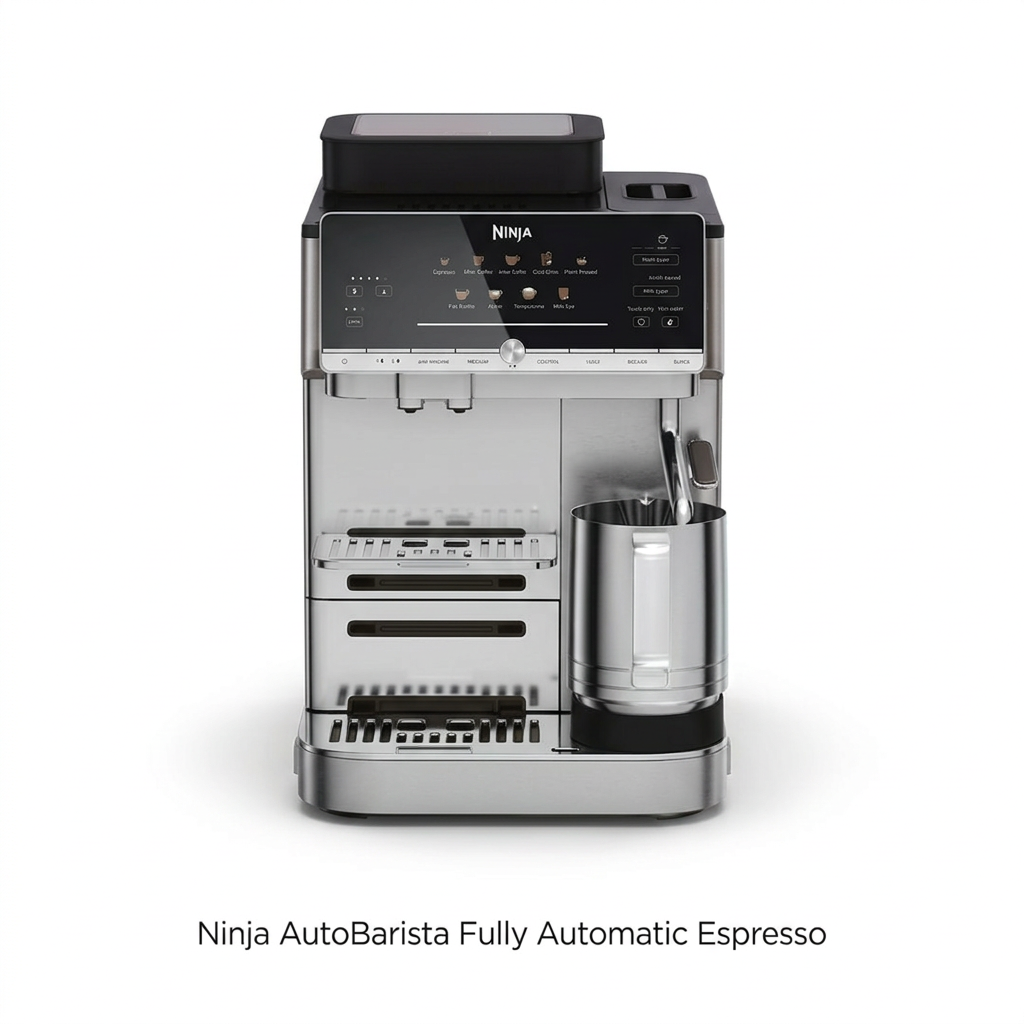
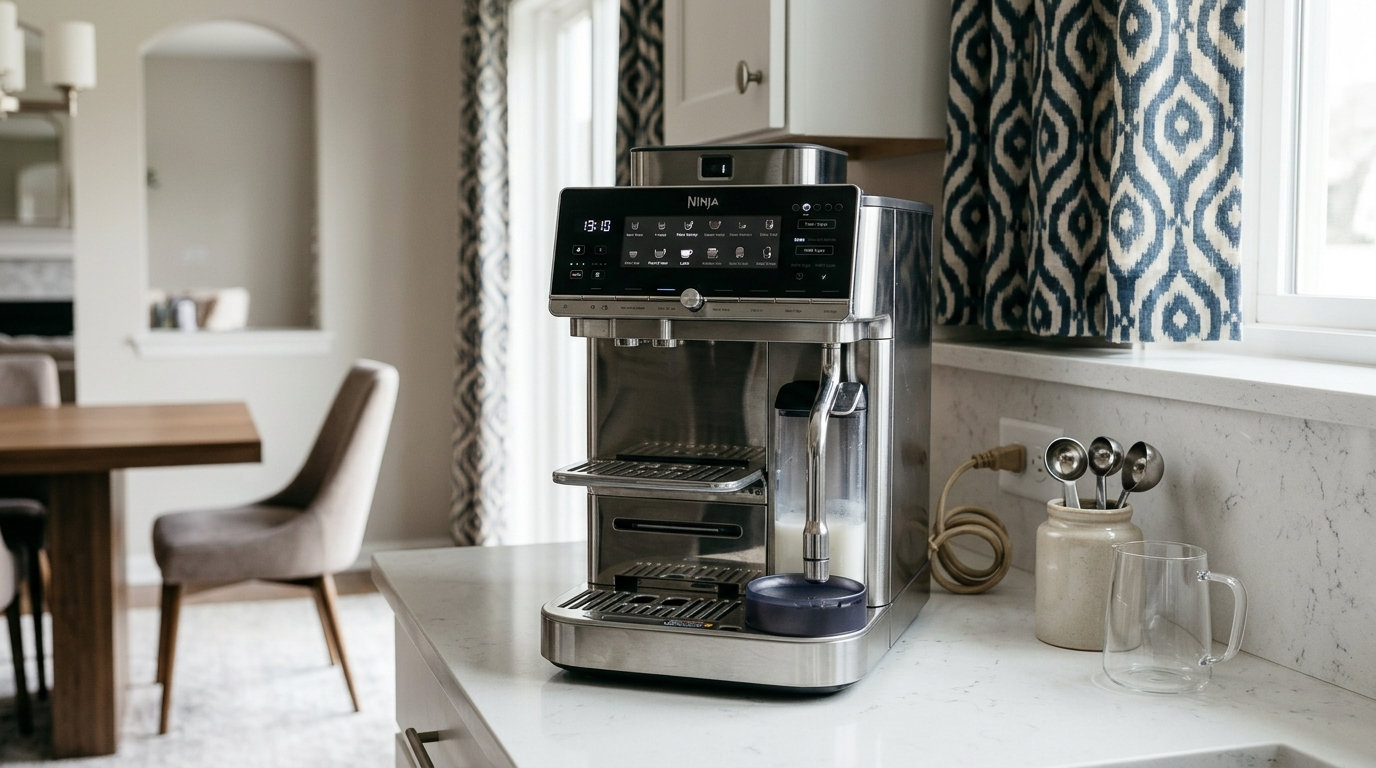
The full package: bean hopper, display, spout, steam wand and milk jug.
Other Ninja machines I tested
If you switch beans often, see my Ninja AutoBarista Pro review.
If you'd like to use a portafilter yourself, the Ninja Luxe Café Premier gives you more hands-on control.
For a compact option, see the Ninja Luxe Café Mini Plus.
Which one is right for you: is the Ninja AutoBarista your match?
4 quick questionsNinja AutoBarista specifications
From manufacturer data and my own testing.
How I tested and scored the Ninja AutoBarista
For four weeks, I used the Ninja AutoBarista as my everyday machine for espresso, Americanos, drip coffee, cold brew, coffee over ice, cappuccinos, flat whites and lattes.
I ran Grind IQ on three different beans, used single, double and triple doses at every strength, adjusted the grind manually and saved drinks to both profiles.
I made milk drinks with whole, 2% and barista oat milk on all four froth presets, measured drip coffee and espresso temperatures, logged shot weights and times and ran every cleaning program.
Michael and a second HouseholdMe tester shared the machine and wrote the notes together. We then checked our notes against Ninja's specifications and owner documentation.
- Espresso (8.8): body, crema, flavor and consistency, plus Grind IQ and the weighed doses.
- Milk drinks (8.2): foam texture, consistency while waiting, plant milk and the four presets.
- Ease of use (8.5): menu, profiles, Grind IQ setup, drip and cold modes and the coded settings.
- Cleaning (8.2): brew group access, wand purge, jug washing and cleaning programs.
The overall score of 8.4 is an editorial rating that reflects those four areas.
More Ninja coffee machine reviews
We tested each Ninja coffee machine for four weeks. If this model isn't the perfect fit, one of these may be.
Ninja AutoBarista Pro review: A 53 mm brew group, 17-gram doubles, two swappable hoppers and real drip coffee.
Ninja Luxe Café Mini Plus review: 60 grind settings, a built-in scale and filter coffee in a compact espresso machine.
Ninja Luxe Café Premier review: A guided espresso machine that makes great shots and cold foam, but weak big coffees.
Ninja Luxe Café Pro review: Hands-free tamping, a better steam wand and real hot water, but it’s thirsty.
Ninja Luxe Café Signature review: The Premier with a better wand, single shots and extra-thick foam.
Ninja AutoBarista FAQ
Is the Ninja AutoBarista worth it?
Yes, if you want strong espresso plus drip coffee and cold brew from one machine and you mostly use one coffee. If you switch beans often, the Pro's second hopper is worth considering.
What is the difference between the Ninja AutoBarista and the AutoBarista Pro?
The Pro adds a second swappable hopper, more drinks such as lungo, cortado and iced latte, an extra-thick froth setting and a larger tank. The core grinding, dosing and brewing are similar.
What is Grind IQ?
An automatic calibration that pulls test shots, measures how they flow and picks a grind from 50 settings, then saves it for your beans.
Does the Ninja AutoBarista make drip coffee?
Yes. It has a dedicated drip coffee mode that uses a coarser grind and its own brewing process.
Can it make cold brew?
Yes. It has cold brew, cold-pressed and over ice options.
How does the milk system work?
An automatic steam wand froths milk in the included jug, with a whisk that keeps stirring while the espresso brews. There are four froth presets and dairy or plant settings.
How many profiles does it have?
Two. Adjust a drink, then press and hold its button to save it.
How big is the bean hopper?
About 250 grams.
How big is the water tank?
About 70 fluid ounces, or 2.1 liters.
Can I use pre-ground coffee?
Yes. There is a chute for pre-ground coffee, handy for an occasional decaf.
Is it easy to clean?
Yes. The wand purges itself, the side panel and brew group come out without tools and Ninja includes a cleaning brush.
How hot is drip coffee from the Ninja AutoBarista?
My 12-ounce drip coffee measured about 170°F straight from the machine.
Is the Ninja AutoBarista loud?
Grinding peaked around 70 to 72 dB on my meter and brewing around 60 dB. Grinding is brief.
Can I use oat milk in the Ninja AutoBarista?
Yes. Choose the plant setting, which adjusts the air for plant milks. Barista oat milk frothed well in my testing.
Kitchen & coffee tester
Michael spent six years as a line cook in restaurants in Chicago and New York, and he has tested kitchen appliances for HouseholdMe since 2018, from air fryers to coffee makers. He holds an SCA certificate in barista skills and used the Ninja AutoBarista as his everyday coffee machine for four weeks for this review, writing up the testing notes together with a second HouseholdMe tester.
- Four weeks of hands-on testing of the Ninja AutoBarista AE1001
- Ninja product specifications and owner documentation
- General espresso brewing and maintenance guidance