Ninja AutoBarista vs Philips 5500: which fully automatic should you buy?
Two fully automatic machines aimed at the same busy kitchen, built on very different ideas. The Ninja AutoBarista weighs every dose, dials in its own grind and adds drip coffee and cold brew, while the Philips 5500 makes 20 drinks for four people and rinses its milk carafe clean in seconds. I used both every day for four weeks to find out which one belongs on your counter.
We choose products independently. We may earn a commission through links on this page; your price stays the same. Affiliate policy
Jargon helpNew to espresso? Tap any dotted term to see what it means.
In this comparison
If coffee flavor comes first, buy the Ninja AutoBarista. Its weighed doses made full-bodied espresso, its drip mode makes real filter coffee and its cold brew beats any iced drink the Philips can make. If you want the easiest machine for a busy family, the Philips 5500 is the better pick: 20 drinks, four profiles, quiet grinding and a LatteGo✕LatteGoPhilips’ two-part milk carafe. Steam pulls milk into it and mixes in air, so there are no tubes to clean. carafe that rinses clean in about 10 seconds. Its espresso is milder, but it never asks anything of you.
The two machines
Specs checked November 14, 2026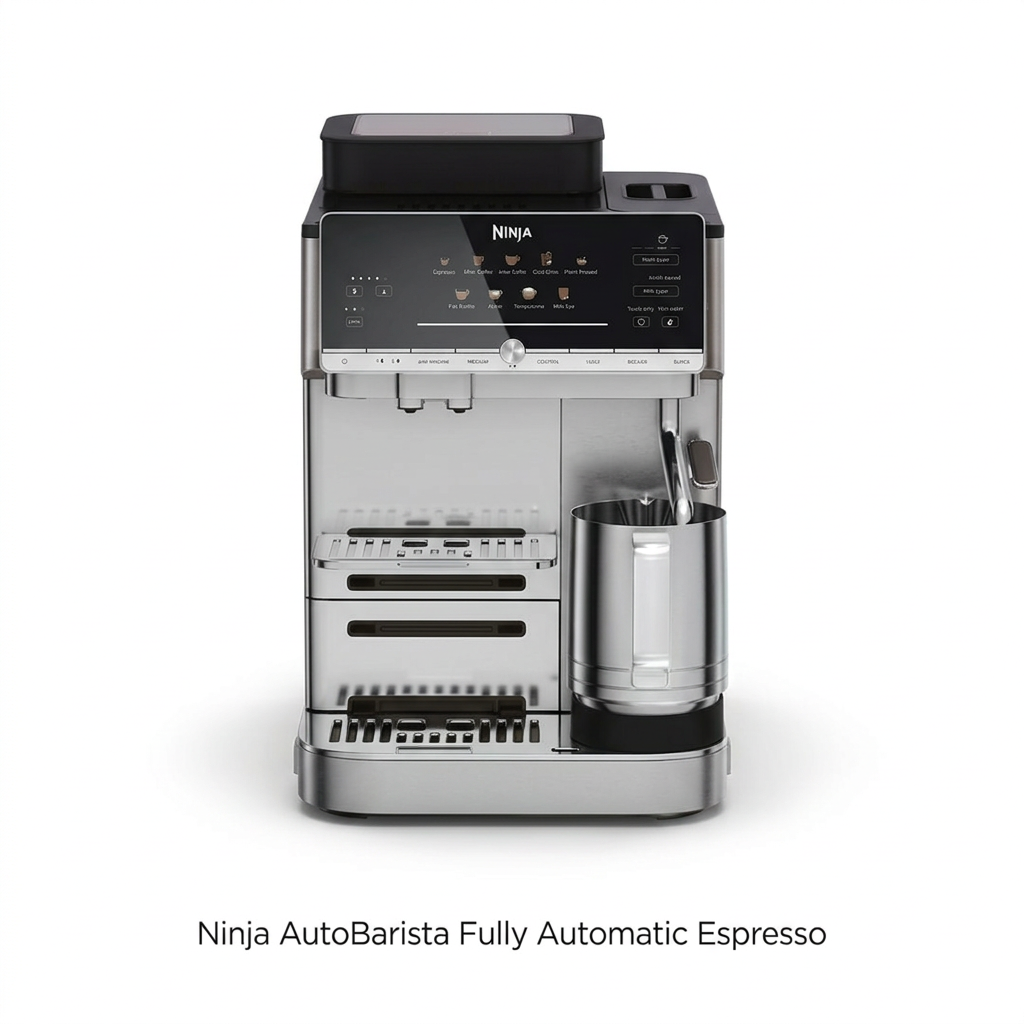
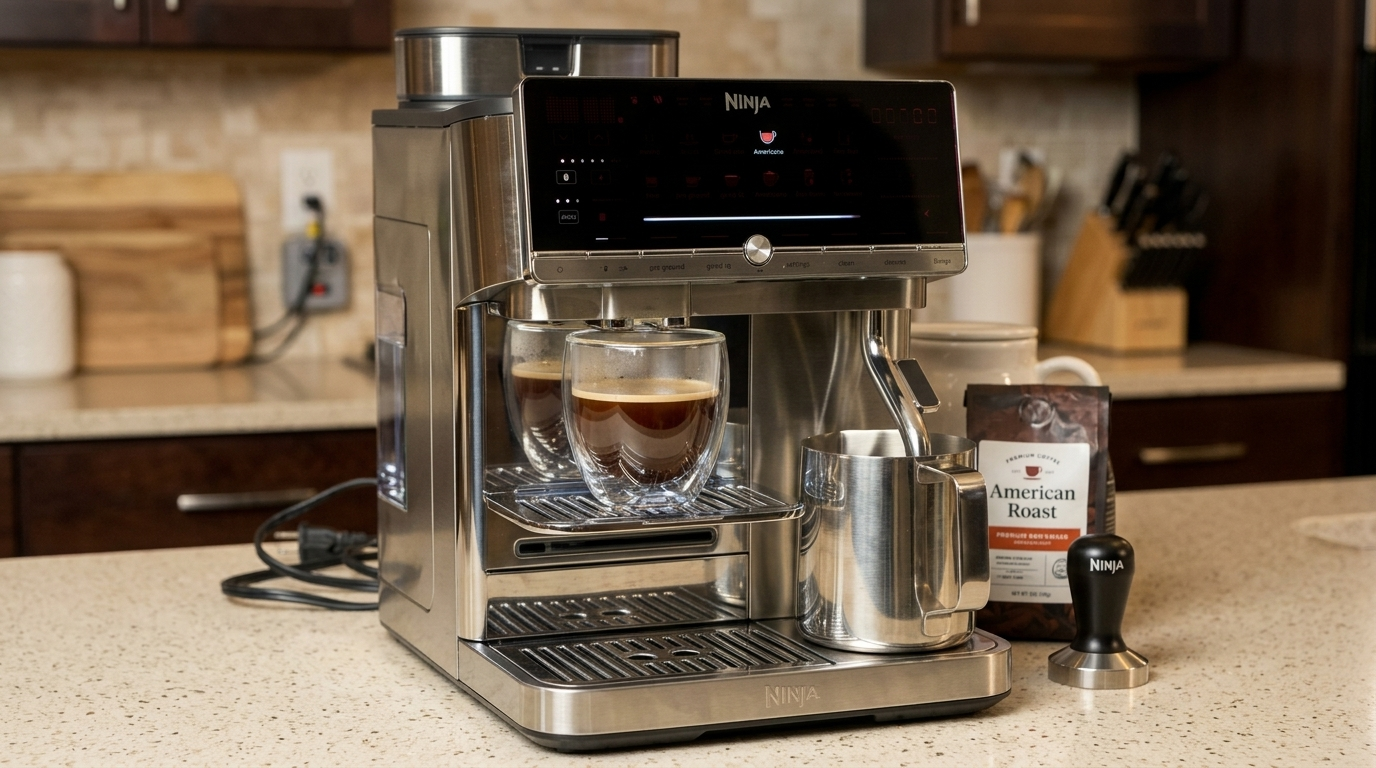
Grind iQ dials in from 50 settings, weighed single, double or triple doses, real drip coffee, cold brew and hands-free frothing.
Check price on Amazon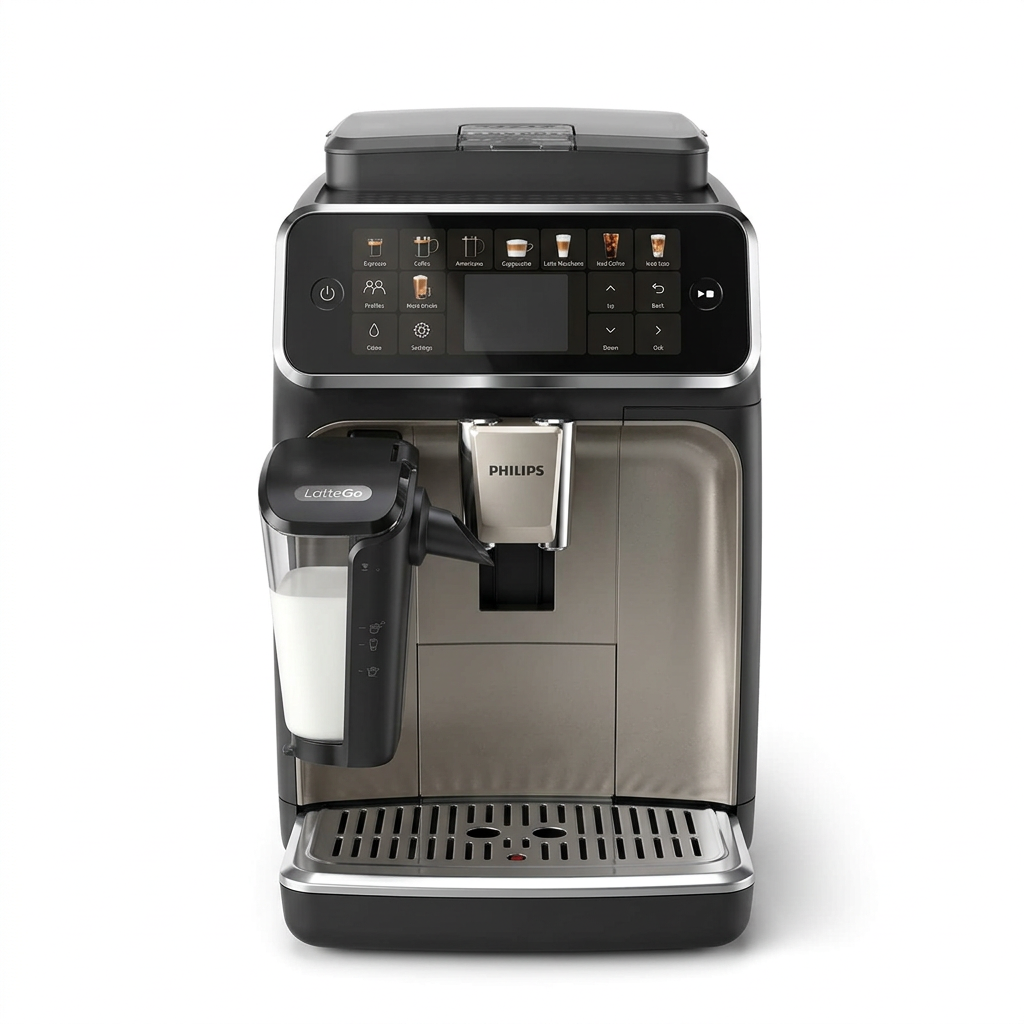
20 hot and iced drinks, four profiles, about 60 dB grinding and a two-part milk carafe with no tubes.
Reveal Today’s DealNinja AutoBarista vs Philips 5500 at a glance
- Buy the Ninja if you want strong espresso, real drip coffee and cold brew from one machine.
- Buy the Philips if several people share the machine and easy cleaning matters most.
- Both grind, tamp, brew and froth at one touch; only the Ninja weighs its doses.
- The Philips is narrower and quieter; the Ninja makes the better coffee.
Head to head
The better result in each row is marked, based on my four weeks with each machine and the manufacturer specs. Rows where they are even have no winner.
The tally is not my verdict. If you drink mostly milk drinks with a family, some Philips rows matter far more than the Ninja’s.
| Spec | AutoBarista | Philips 5500 |
|---|---|---|
| Espressomy scores | 8.8 ✓ Best | 8.2 |
| Milk drinksmy scores | 8.2 | 8.8 ✓ Best |
| Ease of usemy scores | 8.5 | 9.3 ✓ Best |
| Cleaningmy scores | 8.2 | 9.2 ✓ Best |
| Dose | Weighed, single to triple ✓ Best | About 8 g |
| Grind settings | 50, Grind iQ ✓ Best | 12, ceramic |
| One-touch drinks | 10 | 20, hot and iced ✓ Best |
| Drip coffee | Yes, real filter-style ✓ Best | Long coffee |
| Cold brew and cold foam | Yes, both ✓ Best | Iced drinks brewed warm |
| Profiles | 2 | 4 ✓ Best |
| Grinding noise | 70–72 dB | About 60 dB, lid closed ✓ Best |
| Bean hoppers | One | One |
| Width on the counter | About 10.7 in | About 9.7 in ✓ Best |
| Rows won | 5 | 7 |
Ninja AutoBarista vs Philips 5500 pros and cons
Ninja AutoBarista
- Full-bodied espresso with weighed, generous doses
- Real drip coffee and cold brew alongside espresso
- Grind iQ dials in new beans for you
- Only one bean hopper
- Large footprint for a single-hopper machine
- Settings menu uses codes
Philips 5500
- Two-part milk carafe cleans in about 10 seconds
- 20 drinks with four saved user profiles
- Quiet grinding at around 60 dB with the lid closed
- Espresso is lighter than a café shot
- Iced drinks use warm coffee poured over ice
- Fixed milk spout means cup placement matters
Who should buy which machine?
- Strong espresso and drip coffee drinkers
- Cold brew and iced latte fans
- Couples who want café-style coffee
- Families of three or four
- People who hate cleaning milk systems
- Open-plan homes and early risers
Design, size and build
These two are built for the same job and look nothing alike.
The Ninja AutoBarista is a tall, deep steel machine with a display, a coffee outlet, a frothing station with its own jug and a 70-ounce tank on the side. It measures about 10.7 inches wide, 17.8 inches deep and 15.8 inches tall.
The Philips 5500 is narrower and more compact, at about 9.7 inches wide, 17 inches deep and 14.6 inches tall, and weighs about 17.6 pounds. Its water tank, grounds drawer and drip tray all slide out from the front.
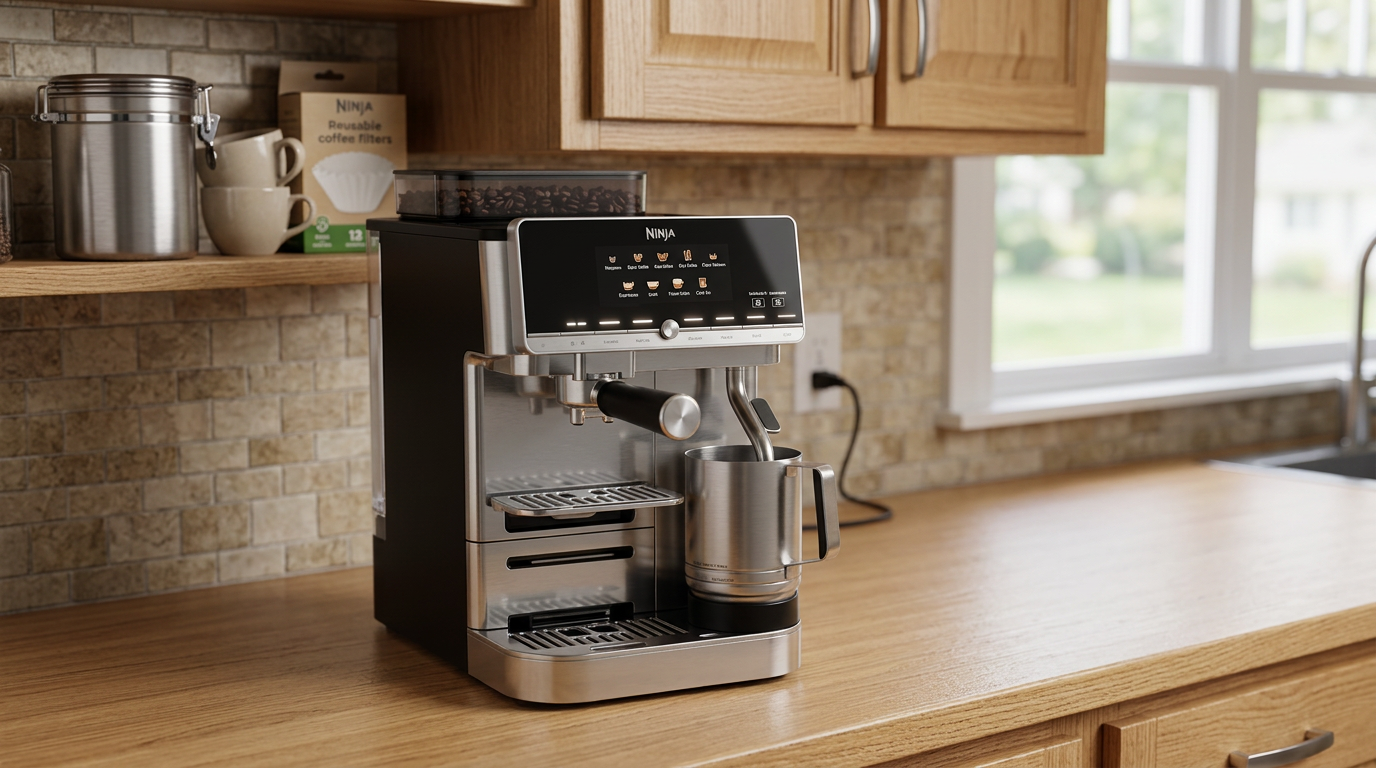
The AutoBarista is big for a single-hopper machine, but it feels solid.
Depth on the counter
Both use most of a standard 24-inch counter depth.
The Ninja feels more substantial, with a steel body and a heavier build. The Philips is mostly plastic but well made, and its housing stayed cool to the touch even after 20 minutes of drinks.
If your wall cabinets are low, the Philips is easier to live with, because everything you service comes out from the front.
Our tip: Measure the gap under your wall cabinets before buying the Ninja, because at about 15.8 inches tall, it needs more room than the Philips.
Setup and the first week
The Philips was the quicker start. I tested the water hardness, fitted the AquaClean filter, filled the tank and hopper, set up four profiles and made a drink within minutes.
The Ninja’s first hour took longer. After filling it, you press the Grind iQ✕Grind iQNinja’s automatic calibration. It pulls test shots, measures how they flow and picks a grind from 50 settings, then saves it for your beans. button, and it pulls test shots, measures how they flow and picks a grind. Its coded settings menu sent me to the manual twice.
After that, both disappeared into the morning routine. My partner saved a thick-froth cappuccino on the Ninja, and I saved a double espresso and a 12-ounce drip.
| Setup step | Ninja AutoBarista | Philips 5500 |
|---|---|---|
| Water | Hardness setting, filter included | Strip test, AquaClean filter |
| Grinder | Grind iQ calibration | Two steps finer, by hand |
| Profiles | 2 | 4 |
| Learning curve | Coded menu takes a day | Guided color display |
| Time to good coffee | After Grind iQ | About the fifth cup |
A typical morning on each
Both machines are fully automatic, so the routines look similar on paper. In practice, they felt different.
On the Ninja, I filled the milk jug, set it on the frothing station, chose a cappuccino and walked away. The machine ground, weighed, tamped and brewed, then frothed the milk in the jug. I poured the milk into the cup myself and rinsed the jug and whisk.
On the Philips, I filled the LatteGo carafe, clipped it on, tapped my profile and cappuccino and walked away. The foam poured straight into the cup, and I rinsed the two-part carafe under the tap in about 10 seconds.
| Morning step | Ninja AutoBarista | Philips 5500 |
|---|---|---|
| Fill milk | Jug on the frothing station | LatteGo carafe on the front |
| Choose drink | Profile and drink | Profile and drink |
| Coffee | Automatic, weighed | Automatic |
| Milk into cup | Pour from the jug | Automatic, into the cup |
| Cleanup | Rinse jug and whisk | Rinse carafe, about 10 s |
Hands-on steps per cappuccino, my count
Counted from my morning routine, including milk cleanup.
Grinder and dose
This is the biggest technical difference between these two machines, and it explains most of the flavor gap.
The Ninja grinds with conical burrs across 50 settings and weighs every dose✕DoseThe weight of dry ground coffee used for one drink. A café double espresso usually uses 14 to 18 grams. on a built-in scale. You can choose a single, double or triple, and the double uses around 18 grams of coffee.
The Philips grinds with ceramic burrs✕Ceramic burrsGrinding discs made of ceramic instead of steel. They stay cool and keep their edge for years, but usually offer fewer grind steps. across 12 settings. Its dose is small, around 8 grams per drink, so its coffee tastes smooth and mild rather than intense.
Coffee per espresso drink
Dry coffee weight per drink, from my scale and specs.
On the Philips, I turned the grinder two steps finer than the default while it was running, which added body without bitterness. On the Ninja, Grind iQ handled the grind for me.
Both have one hopper, so neither is ideal for switching to decaf beans. On the Ninja, I used pre-ground decaf in the evening; on the Philips, the pre-ground chute does the same job.
| Grinder detail | Ninja AutoBarista | Philips 5500 |
|---|---|---|
| Burrs | Conical | Ceramic, flat |
| Settings | 50, chosen by Grind iQ | 12, by hand |
| Dose | Weighed: single, double, triple | About 8 g, 5 strengths |
| Hopper | About 250 g | About 275 g, Aroma Seal lid |
| Pre-ground option | Yes | Yes |
Espresso quality
With the same medium-dark beans, the Ninja made the better espresso, and it wasn’t close.
Its doubles landed at about 36 to 37 grams in roughly 30 seconds every day of the week, from a full hopper to a nearly empty one. Each shot starts with pre-infusion✕Pre-infusionA short soak of the ground coffee at low pressure before full pressure starts, so water flows through the puck evenly. at around 9 bar, and the result was full-bodied, sweet and topped with real crema. Its triple was the richest drink I made all month.
The Philips’ espresso was smooth and clean, but light. My shots read between 4.5% and 5.5% TDS✕TDS (total dissolved solids)The share of the drink that is dissolved coffee. A higher percentage means a stronger, more concentrated cup., while a typical portafilter espresso lands around 8% to 12%. On its hottest setting, it reached about 80°C, or 176°F, at the spout.
My espresso ratings
My scores out of 10 for body, crema, flavor and consistency.
Ninja espresso by dose
My ratings for flavor and body. Doubles and triples are where the Ninja shines.
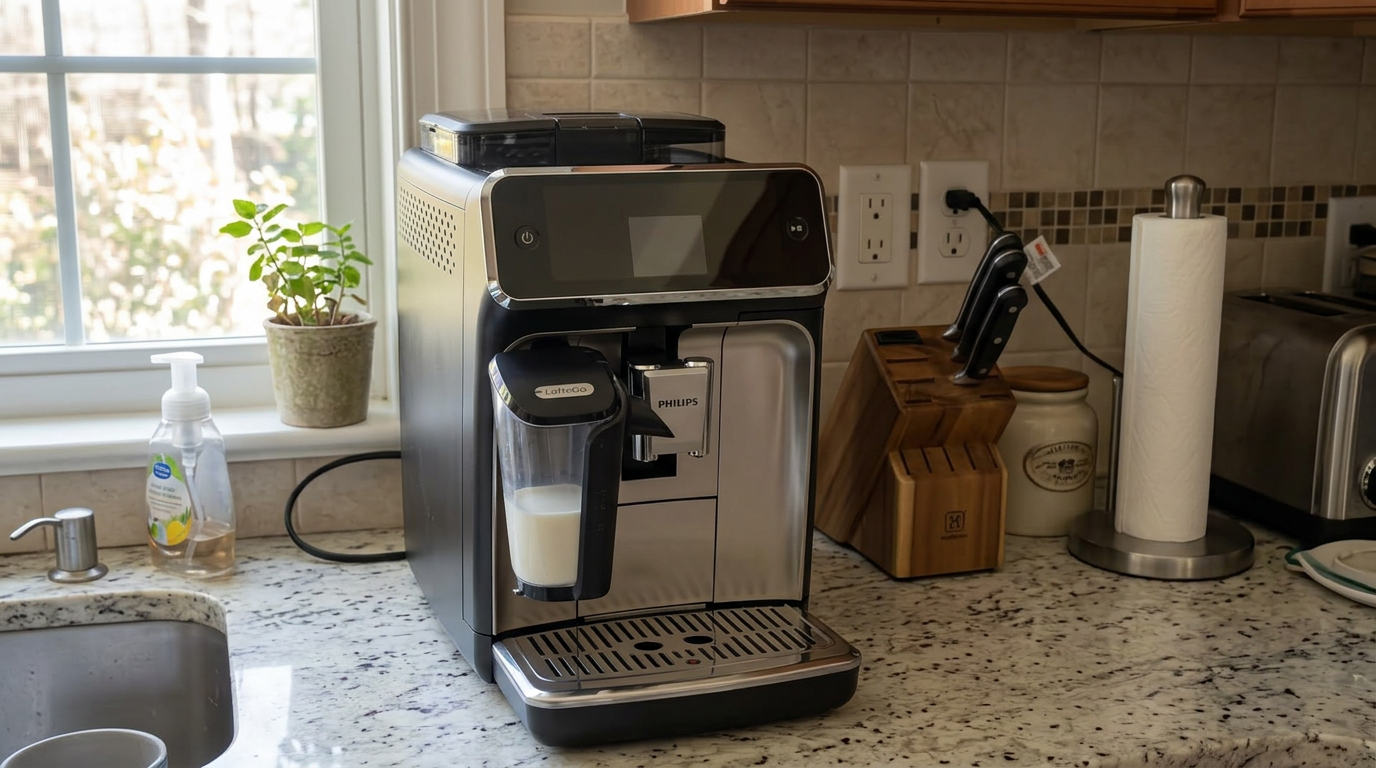
The Philips makes a smooth, mild espresso; it shines more in milk drinks.
Consistency matters as much as strength on a machine you use every day. The Ninja’s weighed doses meant my Monday shot and my Sunday shot tasted the same, even as the hopper emptied.
The Philips was consistent too, just consistently mild. With the grinder two steps finer and the strongest setting, it made a pleasant short coffee rather than a true espresso.
See Today’s PriceDrip coffee, Americano and iced drinks
For black coffee in a mug, the Ninja has a trick the Philips can’t match: a real drip mode. My 12-ounce mug came out at about 170°F and tasted like a clean, medium-bodied filter coffee.
A double Americano✕AmericanoEspresso topped up with hot water. Done properly, the water is added after the shot instead of being pushed through the coffee. on the Ninja was bolder, with crema on top. The Philips makes a proper Americano too, adding water after the shot, plus a one-touch coffee that was smooth and mild.
Ninja black coffee ratings
My notes from four weeks of morning mugs on the AutoBarista.
Iced drinks are where the difference is biggest. The Ninja makes cold brew✕Cold brewCoffee made with cool water and a slower, gentler extraction. It tastes smoother and less bitter than hot coffee poured over ice.-style coffee with a dedicated setting, and topped with cold foam✕Cold foamMilk whipped into foam without heating it, for spooning over iced coffee or cold brew. from 2% milk, it became my afternoon drink.
The Philips has iced drinks on its menu, but it brews them at about 60°C, or 140°F, instead of 80°C, then pours over ice. They were pleasant, but the ice melts and dilutes the drink; I scored its iced drinks 7.0.
| Drink | Ninja AutoBarista | Philips 5500 |
|---|---|---|
| Drip coffee | Yes, about 170°F | No, long coffee |
| Americano | Yes, bold | Yes, smooth |
| Cold brew | Yes | No |
| Iced latte | Cold brew plus cold foam | Brewed warm over ice |
| Cold foam | Yes | No |
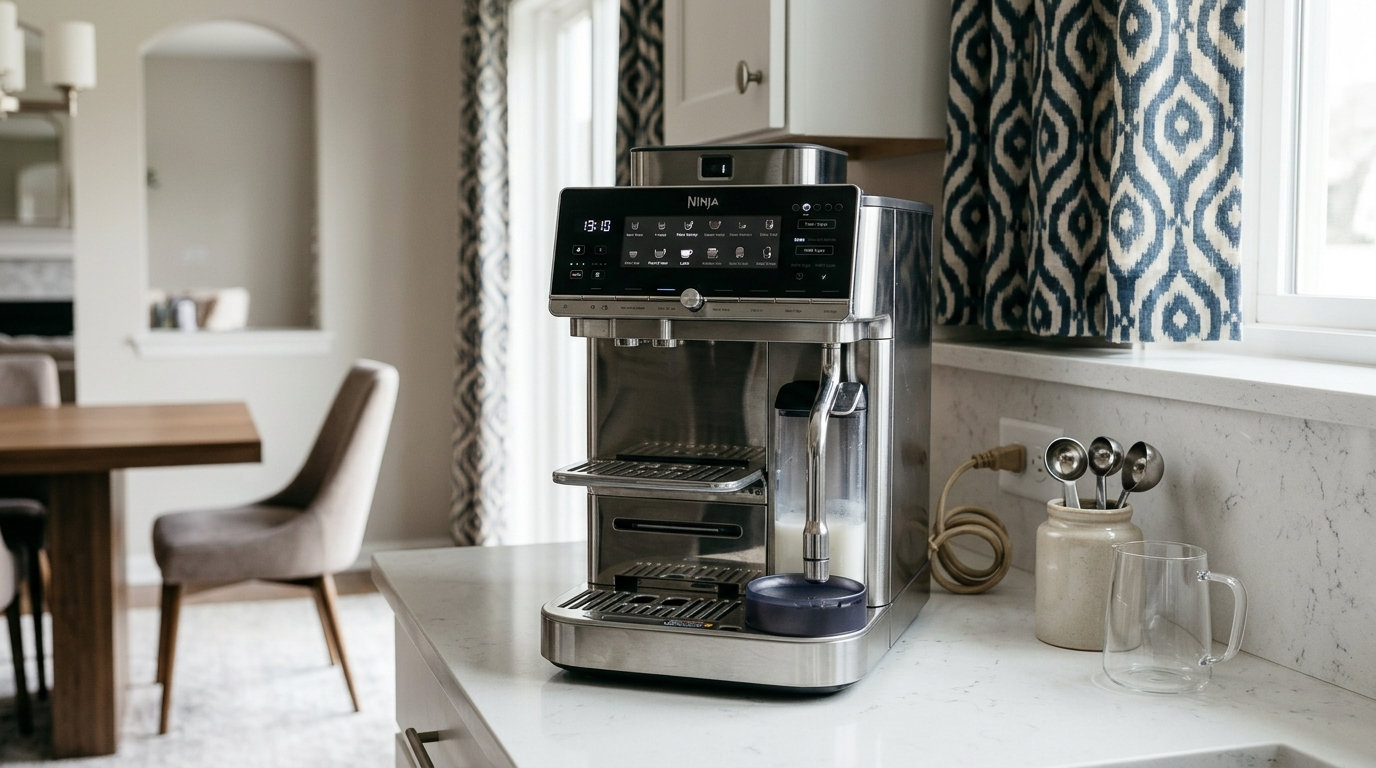
Cold brew with cold foam was my favorite Ninja drink of the month.
Our tip: Use big ice cubes for iced drinks on either machine, because they melt slower and keep the coffee from tasting watery.
Milk drinks
Milk is where the Philips fights back.
The Philips uses its LatteGo✕LatteGoPhilips’ two-part milk carafe. Steam pulls milk into it and mixes in air, so there are no tubes to clean. carafe. Milk came out at about 75°C, or 167°F, hot without tasting scalded, with thick, consistent foam. The carafe holds 260 milliliters, enough for one or two drinks.
The Ninja froths in a jug with a whisk. You choose steamed, thin, thick or cold foam, and it heats the milk hands-free while you get a cup. Whole milk made the richest cappuccinos, and 2% the silkiest flat whites.
Ninja foam by milk
My scores out of 10 for texture and stability.
Temperature favored the Philips. A default cappuccino on the Ninja came out at about 63°C, rising to about 66°C when I raised the froth temperature. Both are pleasant to drink straight away, but the Philips’ milk drinks were noticeably hotter.
The Philips also lets you add an Extra Shot to milk drinks. With its mild espresso, that one setting made its cappuccinos taste far more like coffee.
Milk drink temperature
Measured with a probe thermometer.
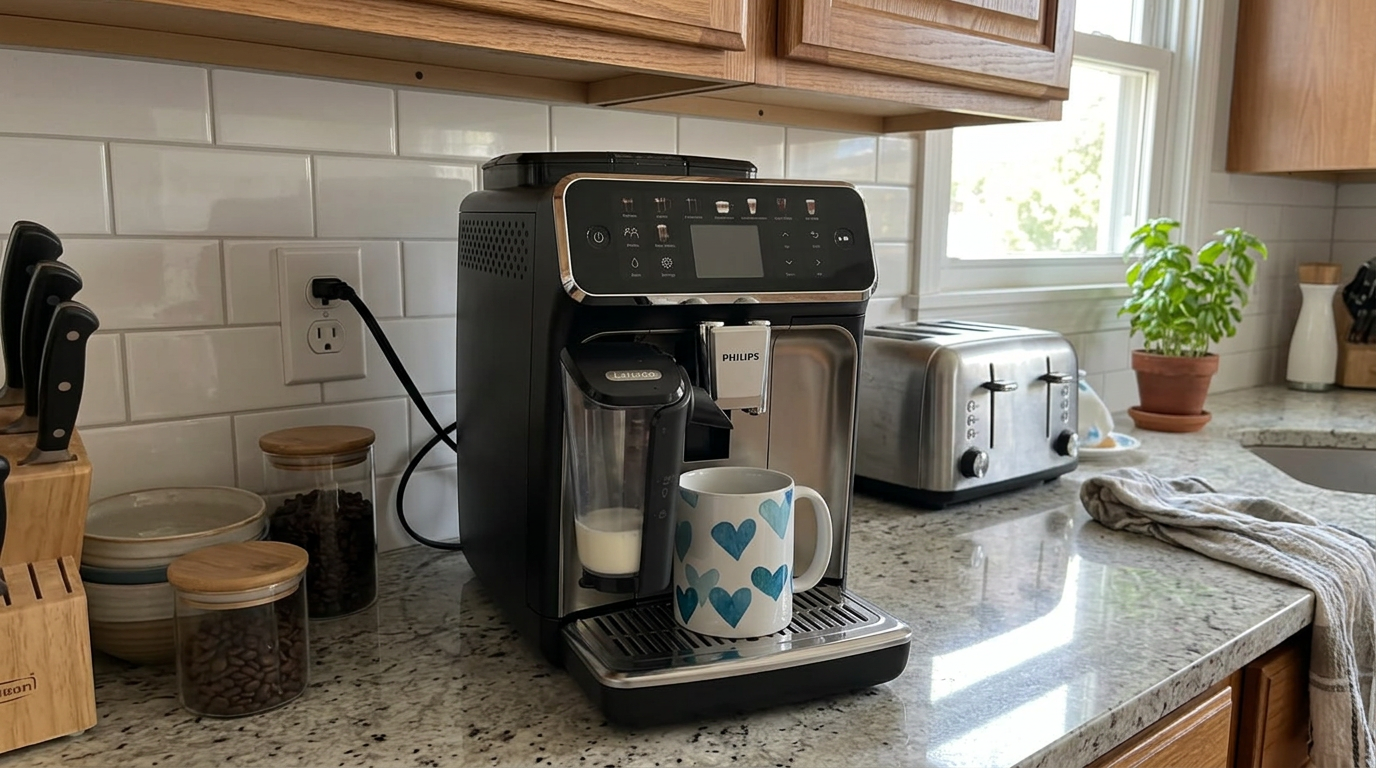
The Philips’ LatteGo carafe made hot, thick foam and rinsed clean in seconds.
Plant milk worked on both. Barista oat milk on the Ninja’s plant setting scored 8.1 and foamed creamy and stable. On the Philips, oat milk foamed lighter than whole milk but still layered well in a latte macchiato.
Regular almond and skim milk were the weak spots on both, with big bubbles that faded fast. If you drink plant milk daily, buy a barista version made for frothing.
Hot water and tea
Both machines dispense hot water for tea and Americanos, and both let you set the amount.
The Philips’ hot water was hot enough for black tea when I used its highest temperature and warmed the mug first. On the Ninja, hot water came out hot and steady, and its drip mode also doubles as a quick way to fill a mug for tea.
Neither has tea programs at set temperatures, so for delicate green tea, I let the water sit for a minute before steeping.
| Tea type | Ideal water | Ninja AutoBarista | Philips 5500 |
|---|---|---|---|
| Green tea | 158–176°F | Let it cool a minute | Let it cool a minute |
| Herbal tea | 194–212°F | Good | Good, highest setting |
| Black tea | 203–212°F | Good | Good, warm the mug |
Our tip: Warm your mug with a splash of hot water before tea or coffee on either machine, because a cold mug drops the temperature by several degrees.
Cleaning and upkeep
Both are easy to keep clean, but the Philips is easier.
Its LatteGo carafe came apart in two pieces, rinsed clean under the tap in about 10 seconds and went straight back on. With no milk tubes inside, keeping it clean took only minutes a week.
The Ninja rinses itself, has a self-drying fan inside and a removable brew unit✕Brew unitThe removable part that presses the ground coffee, brews it and ejects the used puck into the grounds drawer.. Its jug and whisk need a wash after milk drinks, and its steam wand purges itself.
Cleaning scores
My scores out of 10 from my single reviews.
With the AquaClean✕AquaCleanPhilips’ water filter. Replace it when the machine asks, and Philips rates it for up to 5,000 cups without descaling. filter replaced on time, Philips rates the 5500 for up to 5,000 cups without descaling. Without it, my rough guide was monthly with very hard water and every three to four months with soft water.
The Ninja comes with two water filters and runs its own descale program when prompted.
| When | Ninja AutoBarista | Philips 5500 |
|---|---|---|
| After milk | Rinse jug and whisk | Rinse LatteGo, about 10 seconds |
| Daily | Empty grounds and tray | Empty drawer and tray |
| Weekly | Rinse brew unit | Rinse brew group |
| When prompted | Clean cycle, descale | Replace AquaClean, or descale |
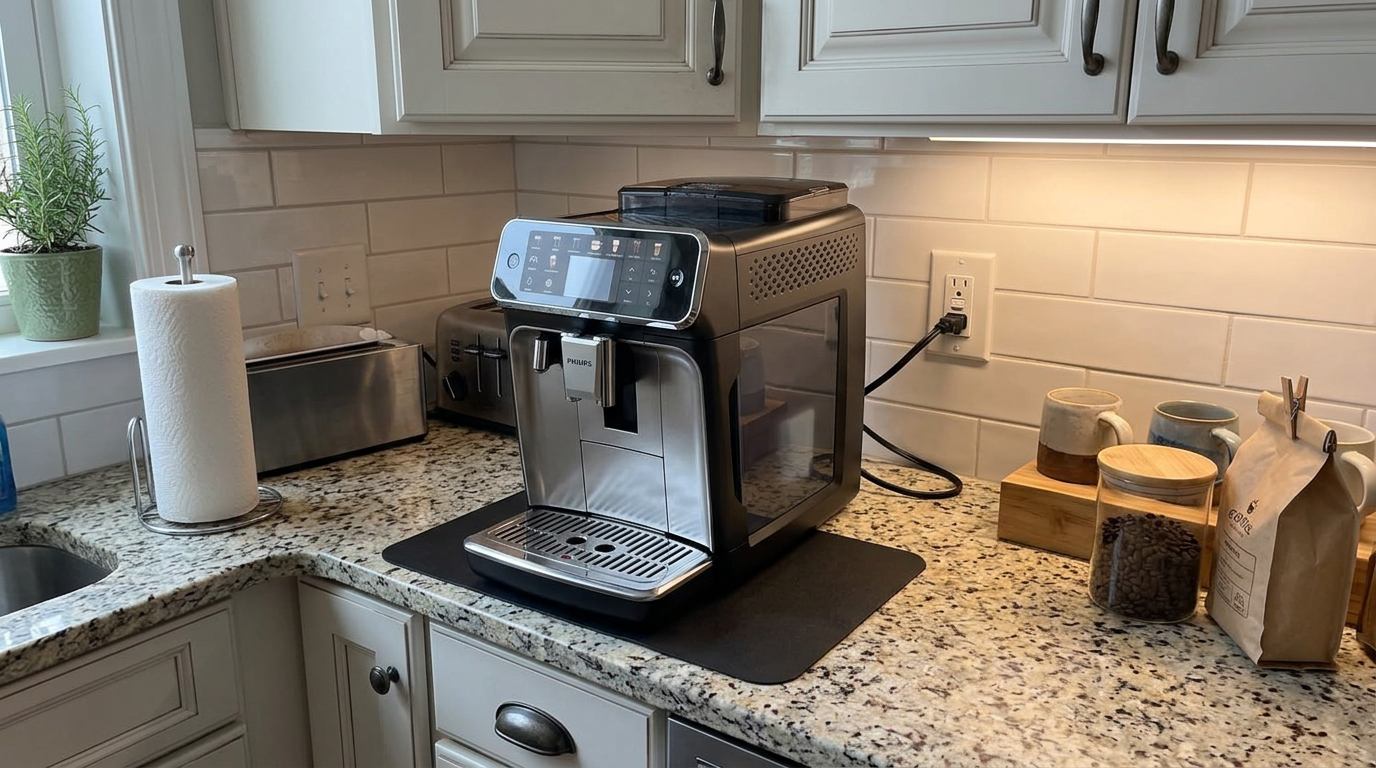
The two-part LatteGo carafe has no tubes and is dishwasher safe.
Our tip: Rinse the milk jug or carafe while the drink is still pouring, because milk that dries on takes minutes to clean instead of seconds.
Noise and speed
The Philips is the quieter machine by a clear margin. With the bean lid closed, grinding peaked at 59 to 60 dB on my meter, about the level of a normal conversation. With the lid off, it jumped to about 71 dB.
The Ninja’s grinding peaked at 70 to 72 dB, with brewing around 60 dB and whisking around 66 dB. It grinds more coffee per drink, so it grinds for longer.
Grinding noise, measured
Each 10 dB step sounds roughly twice as loud to the human ear.
For speed, the Philips’ thermoblock was ready to brew in about 20 to 25 seconds after switching on. Both machines made a cappuccino in a couple of minutes, and both let you walk away while they work.
In practice, the Ninja’s grinder is the one sound you notice. It runs for longer because it grinds more than twice as much coffee for a double, and in an open-plan apartment at 6 a.m., that matters.
The Philips’ Aroma Seal lid makes a real difference, so keep it closed. Its loudest moment was actually the milk frothing, which stayed around 60 dB.
Water, beans and supplies
The Ninja’s 70-ounce tank lasted about two days for two people, and its 250-gram hopper lasted about a week. The Philips’ 1.8-liter tank, about 61 ounces, lasted a similar time.
Both worked best with fresh medium and medium-dark beans. Avoid shiny, oily beans on the Philips, because they build up in the ceramic grinder.
How long a fill lasted for two people
Both include water filters in the box, and using them kept descaling alerts away for most of my test. The Philips’ AquaClean filter counts down on the display, and the Ninja’s filter sits inside its side tank.
Fill both tanks with fresh, cold water every day and skip distilled water, which can confuse water sensors and taste flat.
From my own use with a mix of espresso, drip and milk drinks.
| Bean type | Ninja AutoBarista | Philips 5500 |
|---|---|---|
| Medium-dark blend | Excellent, Grind iQ | Best all-rounder |
| Light roast | Good after Grind iQ | Thin at the default grind |
| Decaf | Pre-ground | Pre-ground chute |
| Very dark, oily | Clean burrs often | Avoid |
Four weeks with each, week by week
These were my notes as each machine settled into the routine.
| Week | Ninja AutoBarista | Philips 5500 |
|---|---|---|
| Week 1 | Grind iQ, learning the codes | Profiles set, quiet mornings |
| Week 2 | Drip coffee every morning | Iced Americanos most afternoons |
| Week 3 | Cold brew with cold foam daily | Extra Shot on every cappuccino |
| Week 4 | Reliable, best coffee | Easiest machine to share |
The Ninja had the steeper first day and the better coffee every day after. By week two, its 12-ounce drip had replaced my separate coffee maker.
The Philips was the machine everyone used without asking me anything. Four profiles, quiet grinding and the fastest milk cleanup made it the easiest to live with.
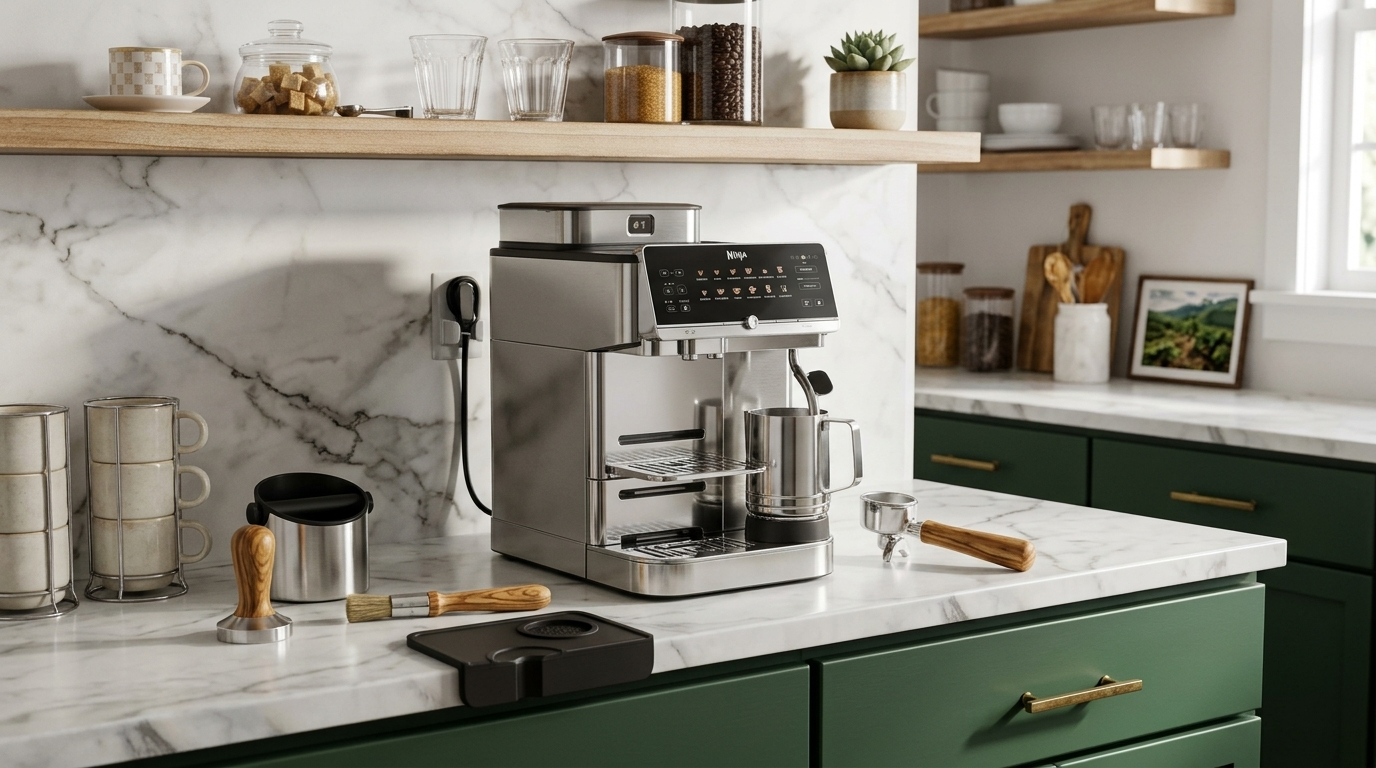
By week two, the Ninja had replaced my separate drip coffee maker.
Three households, three verdicts
After a month with each, I could picture exactly who each machine suits.
The coffee-loving couple: Ninja AutoBarista
Two people who drink espresso, a big mug of filter coffee in the morning and an iced coffee in summer. The Ninja covers all of that from one machine, with coffee that tastes noticeably stronger.
Two profiles are enough, and the bigger footprint is worth it for the range.
The family of four: Philips 5500
Four people, four different drinks, mostly cappuccinos and lattes, in a rushed morning. The Philips’ four profiles, 20 drinks and 10-second milk cleanup made it the calmer machine to live with.
Its quiet grinder also matters when kids are still asleep.
The mixed household
If one person is a coffee enthusiast and everyone else drinks lattes, I’d still lean toward the Philips, and suggest adding the Extra Shot to every milk drink. The Ninja only wins in mixed homes if someone drinks drip coffee or cold brew daily.
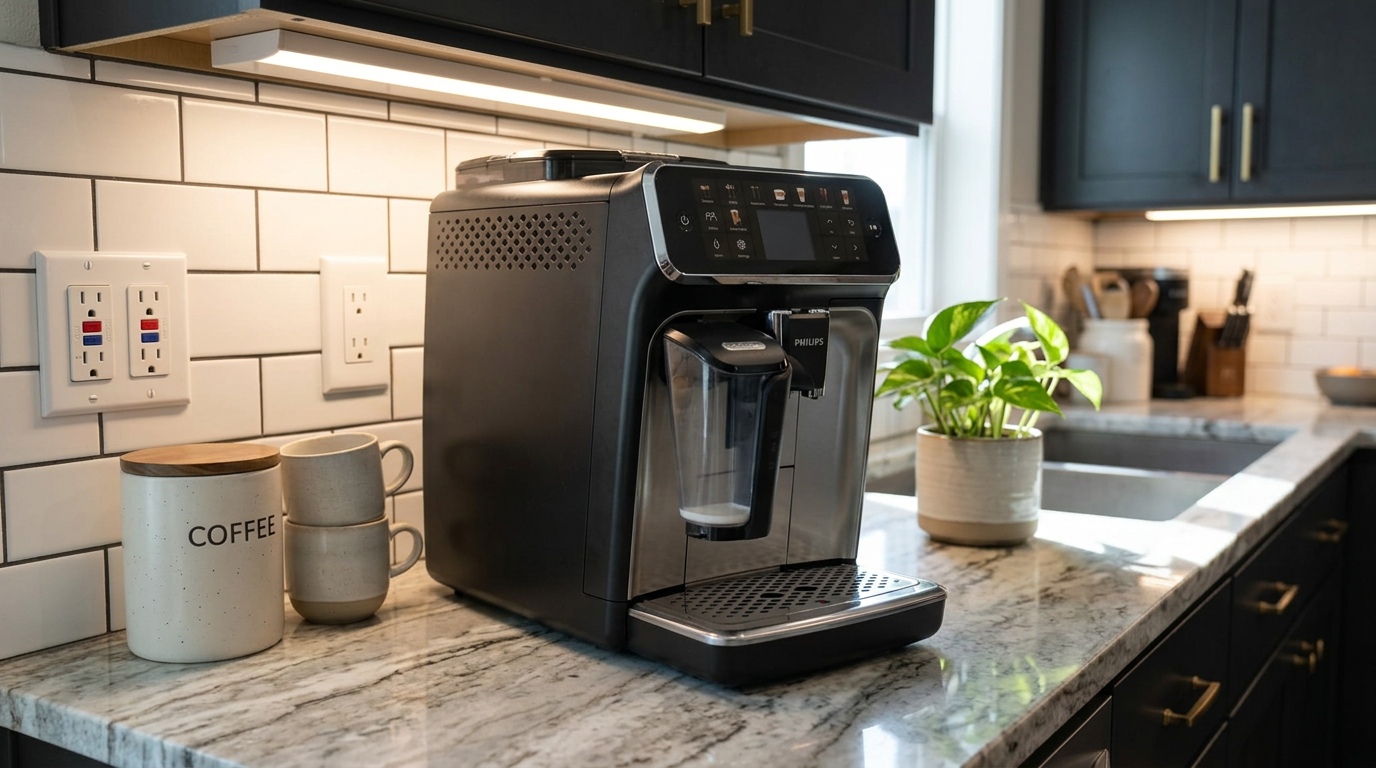
For busy households with mixed tastes, the Philips is the calmer machine.
Common mistakes to avoid
These habits cost me the most flavor and cleaning time on both machines.
| Mistake | What happens | Fix |
|---|---|---|
| Skipping Grind iQ on a new bag | Fast, thin shots | Calibrate with every bag |
| Leaving the Philips grind at default | Light, slightly sour coffee | Two steps finer, while grinding |
| Grinding with the Philips lid open | About 71 dB instead of 60 | Keep the Aroma Seal lid closed |
| Warm milk in the jug or carafe | Big, loose bubbles | Use fridge-cold milk |
| Single shots on the Ninja | Thin espresso | Use doubles or triples |
The one that surprised me was the Ninja’s single shot. It scored just 6.7 in my notes, against 8.8 for a double, so I stopped using singles altogether.
What I’d change on each one
On the Ninja AutoBarista, I’d replace the coded settings menu with plain text and shrink the body. It’s large for a machine with one bean hopper, and the codes sent me to the manual more than once.
On the Philips 5500, I’d add a bigger dose or true cold brew. Its espresso is mild because the dose is small, and brewing warm over ice will never taste like cold brew.
Our tip: Keep a small bag of pre-ground decaf beside either machine, because both have a single hopper and switching beans wastes coffee.
Real-life scenarios
These are the moments where one machine clearly pulled ahead in my kitchen.
A weighed 18-gram double with real body and crema.
Four profiles and 20 drinks meant nobody waited for me.
Its drip mode tasted like real filter coffee at about 170°F.
A drink the Philips simply can’t make.
About 60 dB with the lid closed didn’t wake anyone.
Ten seconds under the tap for the milk carafe.
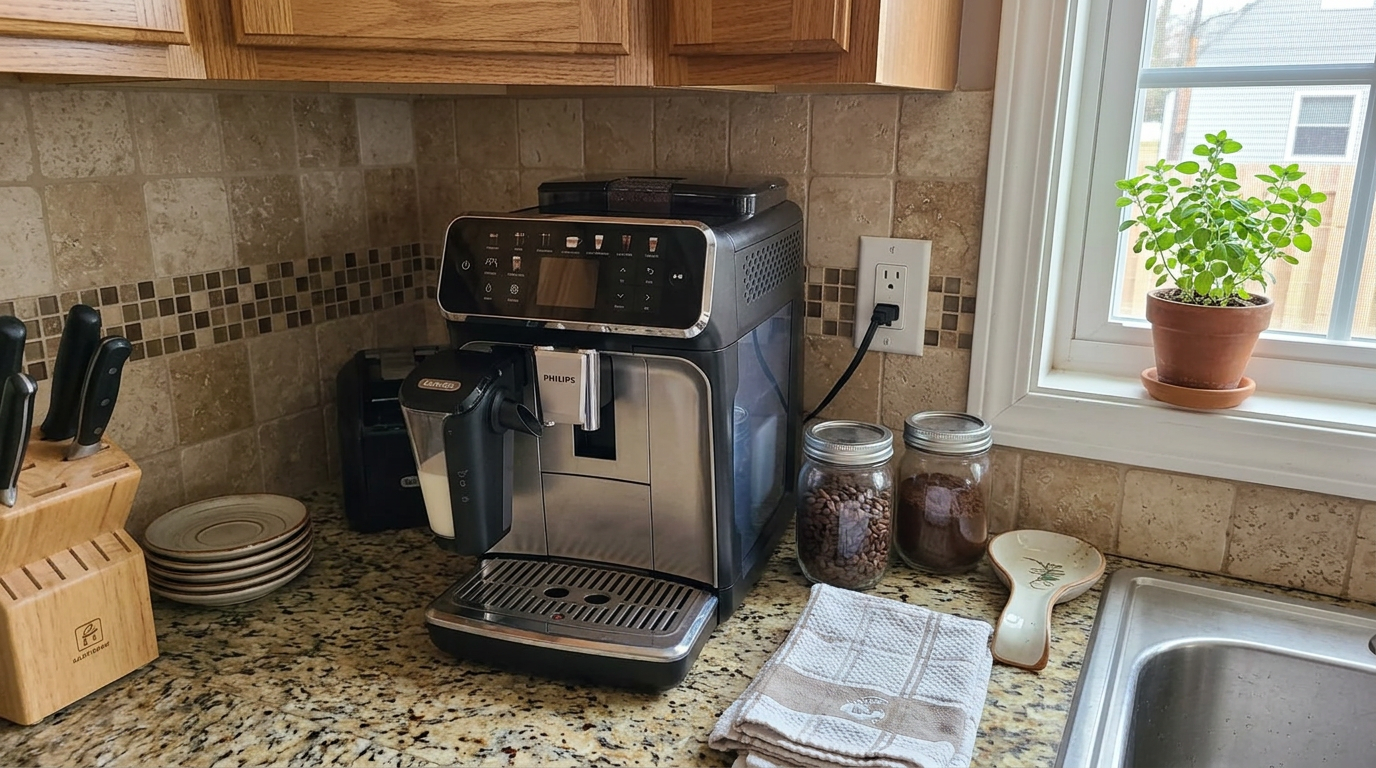
In a busy family kitchen, the Philips was the machine nobody needed help with.
My scorecard
These are my own scores out of 10. The first four come from my single reviews of each machine, and I added versatility because it decides this matchup for many buyers.
Ninja AutoBarista
Overall: 8.4 in my single review.
Philips 5500
Overall: 8.5 in my single review.
The overall scores are almost tied. The Ninja wins on coffee and range; the Philips wins on the things that make a machine easy to share.
See How Much You’ll SaveWhich one is right for you?
4 quick questionsWhich one should you buy?
It comes down to one question: is coffee flavor or household convenience your priority?
If you love espresso, drink drip coffee and want cold brew, the Ninja is the better machine. If several people share it, mostly drink milk drinks and want the easiest cleanup, the Philips is the one you’ll be happier with in a year. For the wider picture beyond this matchup, see my guide to the best Philips espresso machines.
For other matchups, see my Ninja AutoBarista vs De’Longhi Rivelia and Philips 5500 vs De’Longhi Rivelia comparisons.
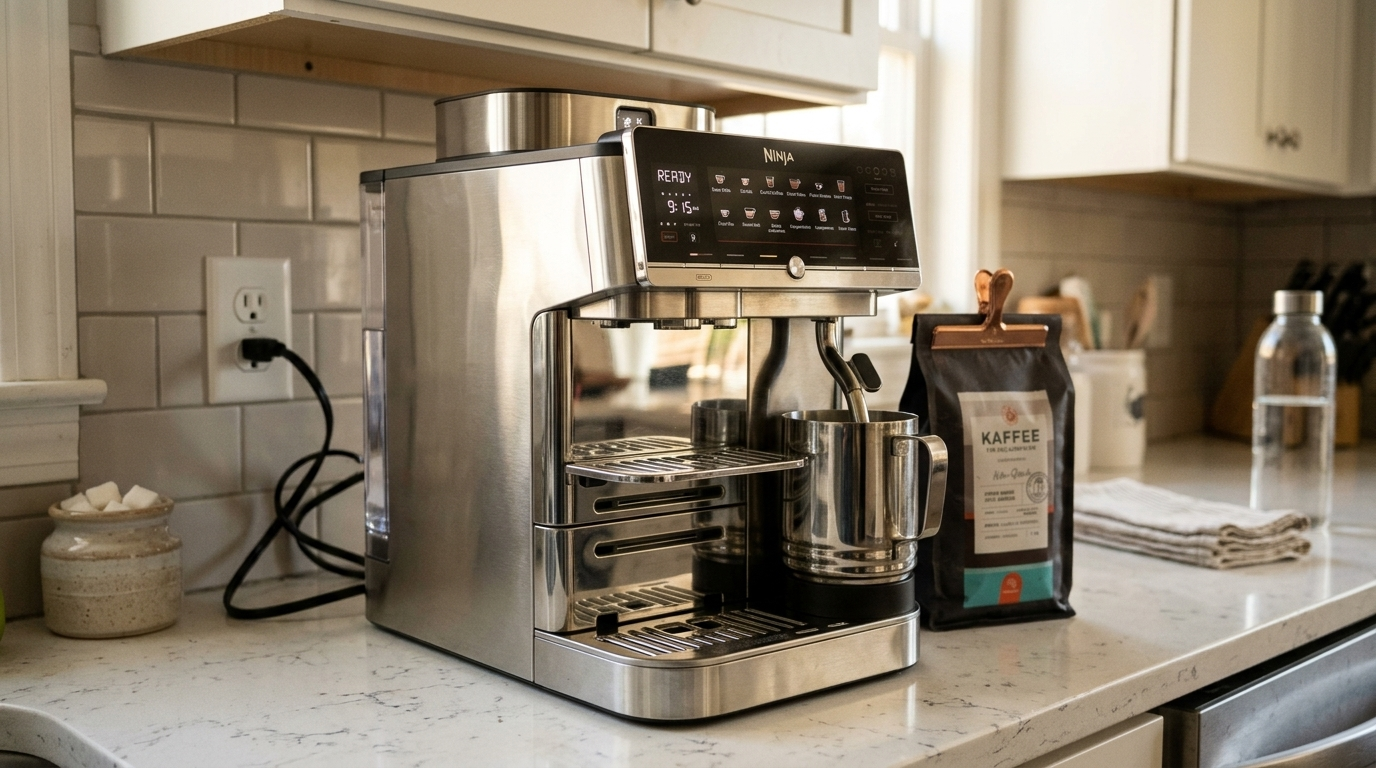
For coffee flavor and range, the AutoBarista earns its counter space.
- You love strong espresso
- You want real drip coffee and cold brew
- One or two people share it
- You don’t mind a big machine
- You need four profiles
- Noise matters early in the morning
- Counter depth is tight
- Three or more people share it
- You mostly drink milk drinks
- You want the easiest milk cleanup
- You want a quiet grinder
- You want café-strength espresso
- You want true cold brew
- You drink big mugs of filter coffee
For coffee lovers, my pick is the Ninja AutoBarista. It made the better espresso, the only real drip coffee and the only cold brew of the two, and Grind iQ means you never have to think about grind settings.
The Philips 5500 is the smarter buy for a busy family. Its espresso is milder, but 20 drinks, four profiles, quiet grinding and a milk carafe that rinses clean in seconds make it the easiest machine to share.
Whichever you choose, use fresh beans, cold milk and keep up with the quick daily rinse.
Ninja AutoBarista vs Philips 5500 specifications
From manufacturer specifications and my own testing.
| Ninja AutoBarista | Philips 5500 | |
|---|---|---|
| Model | AE1001 | 5500 Series LatteGo |
| Type | Fully automatic | Fully automatic |
| One-touch drinks | 10, incl. drip and cold brew | 20, hot and iced |
| Pressure | About 9 bar at the coffee, pre-infusion | 15-bar pump |
| Heating | Fast heat-up | Thermoblock, ready in 20–25 s |
| Grinder | Conical, 50 settings, Grind iQ | Ceramic, 12 settings |
| Dose | Weighed single, double, triple | About 8 g |
| Milk system | Jug with whisk, 4 presets | LatteGo carafe, 260 ml |
| Cold foam | Yes | No |
| Profiles | 2 | 4 |
| Water tank | About 70 oz | About 61 oz (1.8 L) |
| Bean hopper | About 250 g | About 275 g |
| Grinding noise | 70–72 dB | About 60 dB, lid closed |
| Size (W x D x H) | About 10.7 x 17.8 x 15.8 in | About 9.7 x 17 x 14.6 in |
How I tested and compared them
I used each machine as my everyday coffee maker for four weeks, making espresso, Americanos, cappuccinos, flat whites and lattes, plus drip coffee and cold brew on the Ninja and iced drinks on the Philips.
I weighed doses and shots, logged shot times, measured coffee and milk temperatures with a probe thermometer, espresso strength with a refractometer and noise with a phone meter, and foamed whole, 2%, skim and barista oat milk.
I ran every cleaning and descaling routine, then compared my notes with Ninja and Philips specifications, owner documentation and published test data.
- Coffee: dose, yield, strength and consistency.
- Milk: foam texture, temperature and cleanup.
- Workflow: menus, profiles and daily routine.
- Ownership: cleaning, noise, capacity and footprint.
Ninja AutoBarista vs Philips 5500 FAQ
Which makes better espresso, the Ninja AutoBarista or Philips 5500?
The Ninja AutoBarista. It weighs about 18 grams for a double and pulled full-bodied shots of about 36 to 37 grams in 30 seconds. The Philips 5500 uses about 8 grams, so its espresso is smooth but mild.
Which is easier to clean?
The Philips 5500. Its two-part LatteGo carafe has no tubes and rinses clean in about 10 seconds.
Can the Philips 5500 make cold brew?
No. It brews iced drinks at about 140°F and pours them over ice. The Ninja AutoBarista has a dedicated cold brew setting and cold foam.
Which is better for a family?
The Philips 5500, with 20 drinks and four profiles. The Ninja saves two profiles.
Which is quieter?
The Philips 5500, at about 60 dB while grinding with the lid closed. The Ninja measured 70 to 72 dB.
Does the Ninja AutoBarista make drip coffee?
Yes. My 12-ounce drip came out at about 170°F and tasted like a clean filter coffee.
Which has hotter milk?
The Philips 5500, at about 75°C. The Ninja’s cappuccino came out at about 63°C by default.
Do both have a removable brew unit?
Yes, both have a brew unit you can remove and rinse.
Which takes up less space?
The Philips 5500, at about 9.7 inches wide and 14.6 inches tall. The Ninja is about 10.7 inches wide and 15.8 inches tall.
Can I use decaf in either?
Yes, as pre-ground coffee. Both have a single bean hopper.

- Our hands-on Ninja AutoBarista review
- Our hands-on Philips 5500 Series review
- Ninja and Philips product specifications and owner documentation
- General espresso brewing and maintenance guidance